Summer Solstice (Litha) takes place this year on June 21
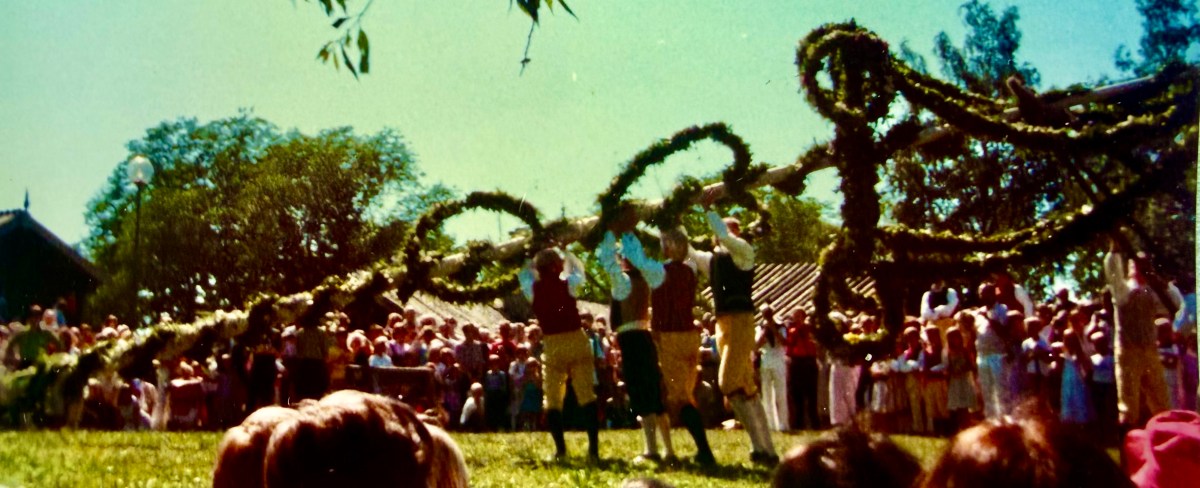
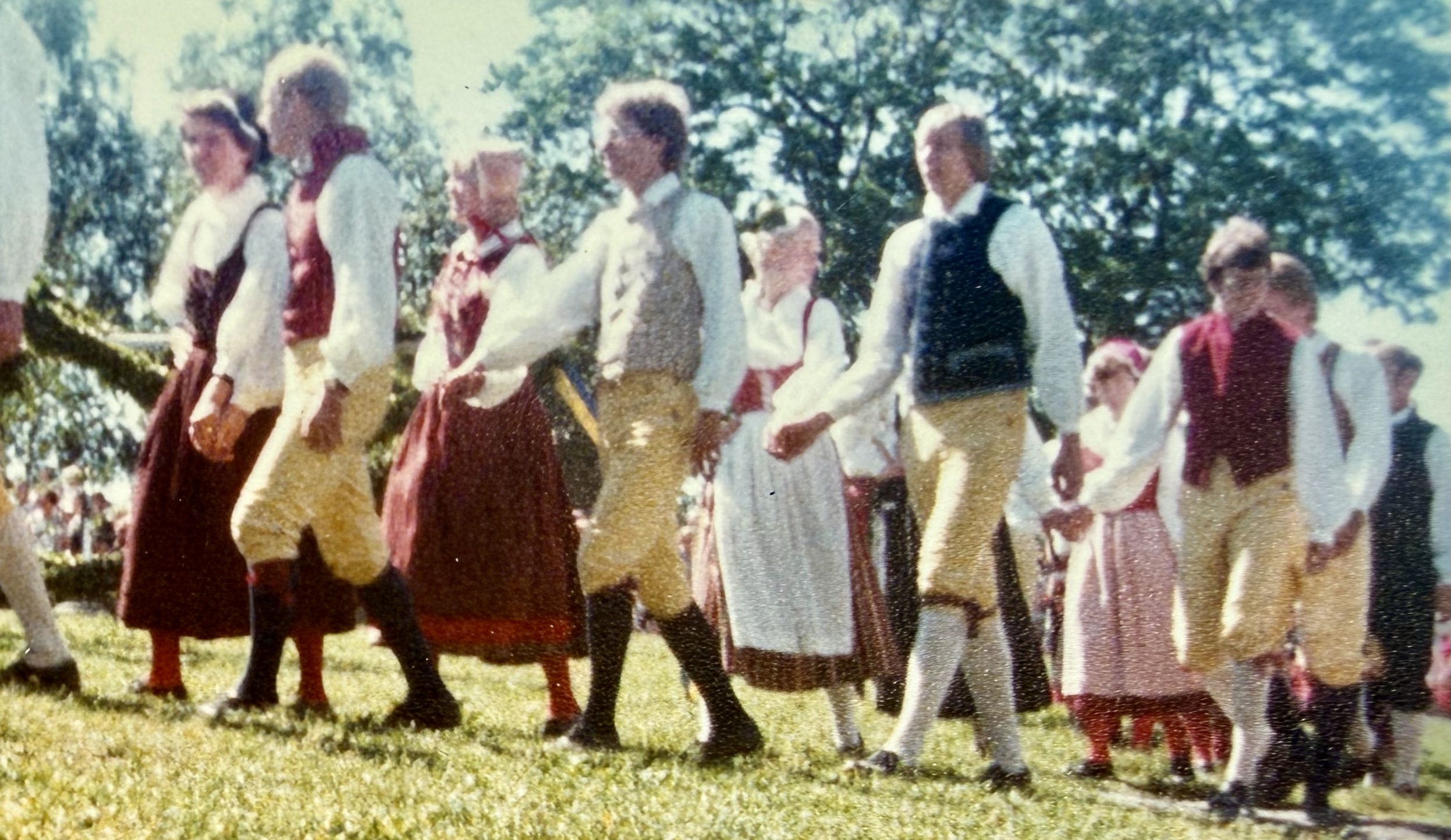
The pagan Scandinavian summer solstice festival, like winter solstice, was appropriated by christians. But, unlike christmas, the takeover never really stuck. They tried to turn midsummer into a birthday party for John the Baptist. Bonfires that once warded off evil spirits and celebrated the sun’s strength became “St. John’s fires,” but the essential ritual survived unchanged. As they did in pre-christian Viking times, Swedes, Norwegians and Danes continue to make flower wreaths, dance around the maypole, sing, eat, drink and light giant bonfires.
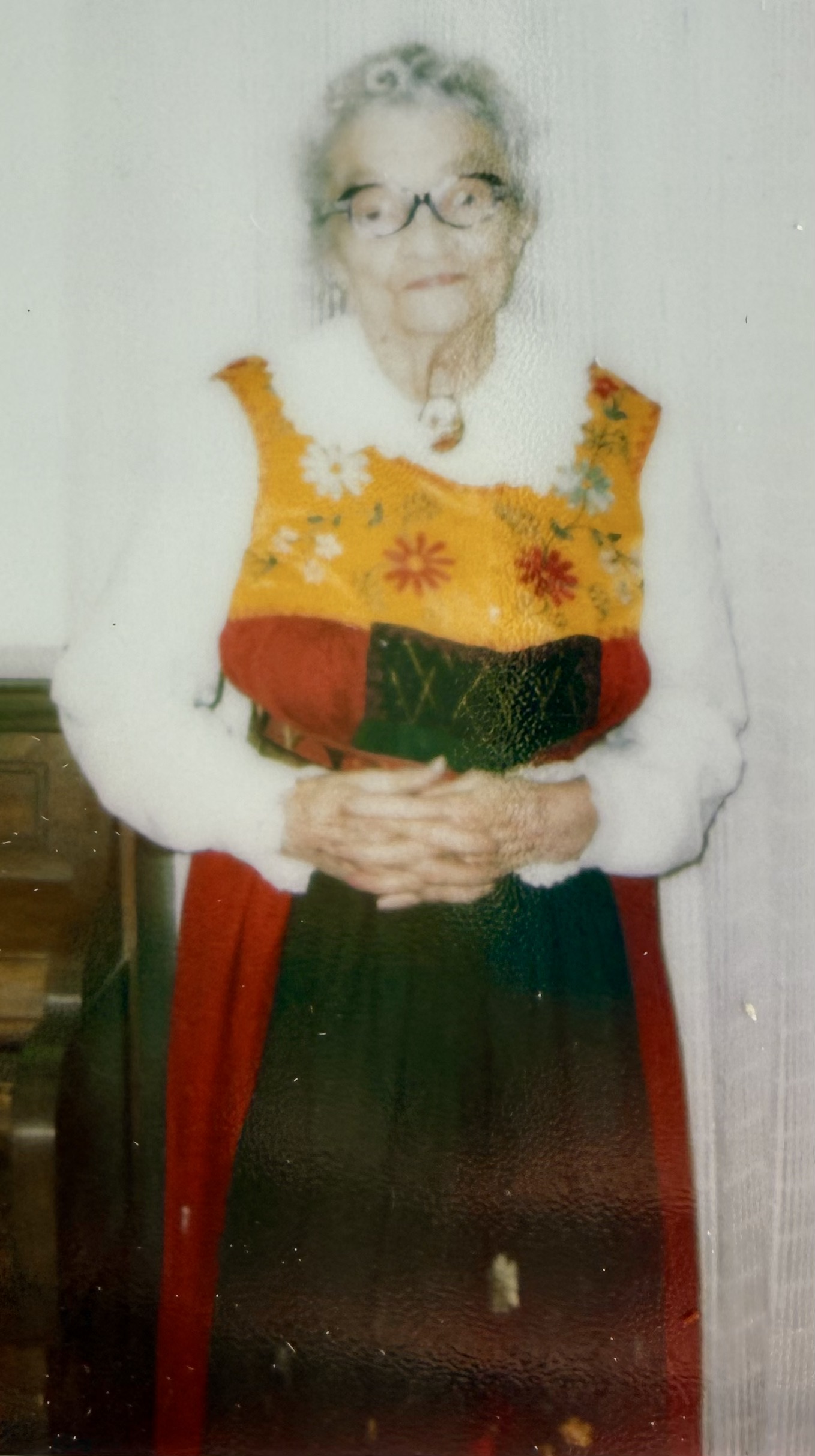
I identify as Swedish because of my grandmother Gerda, who instilled our family’s culture. My grandfather Bernt was Norwegian, so we absorbed some of that tradition too.
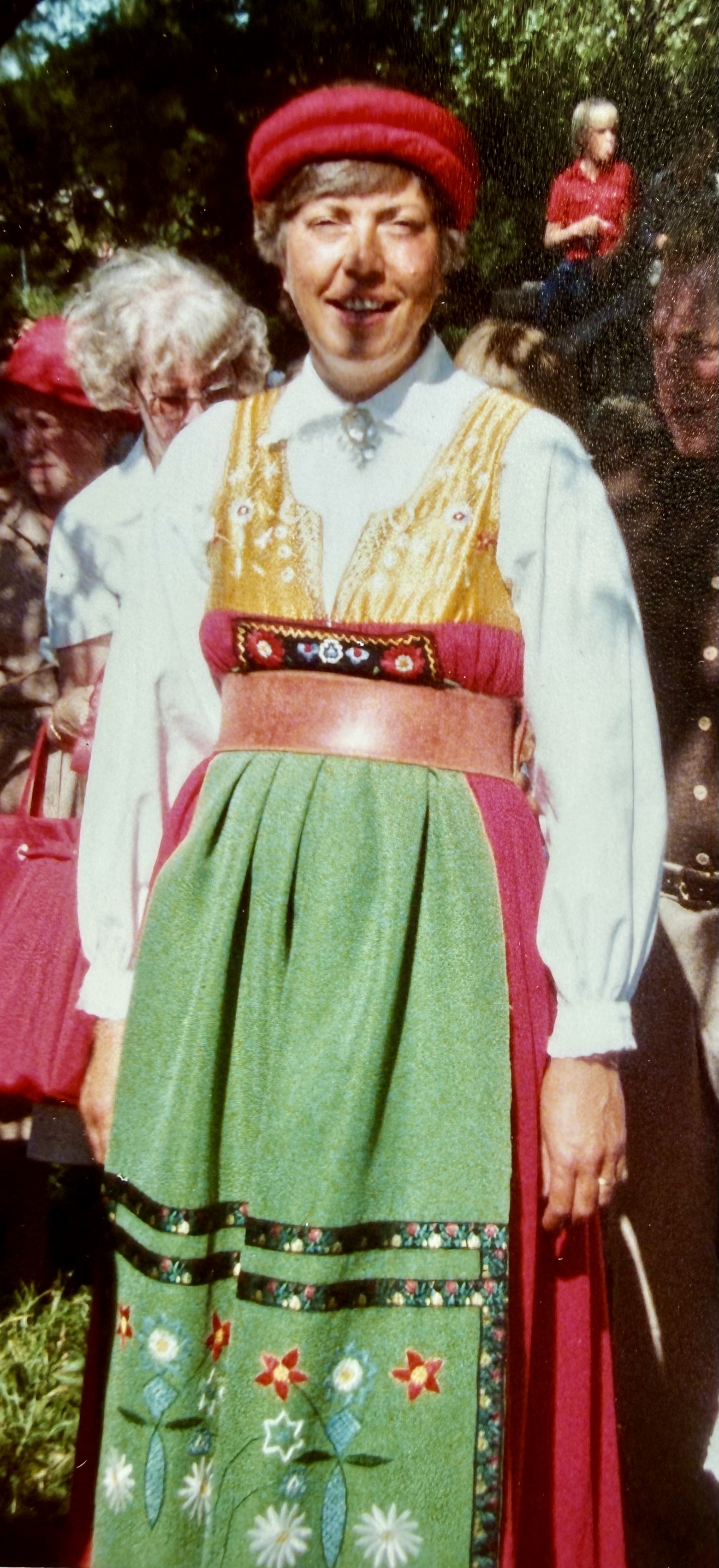
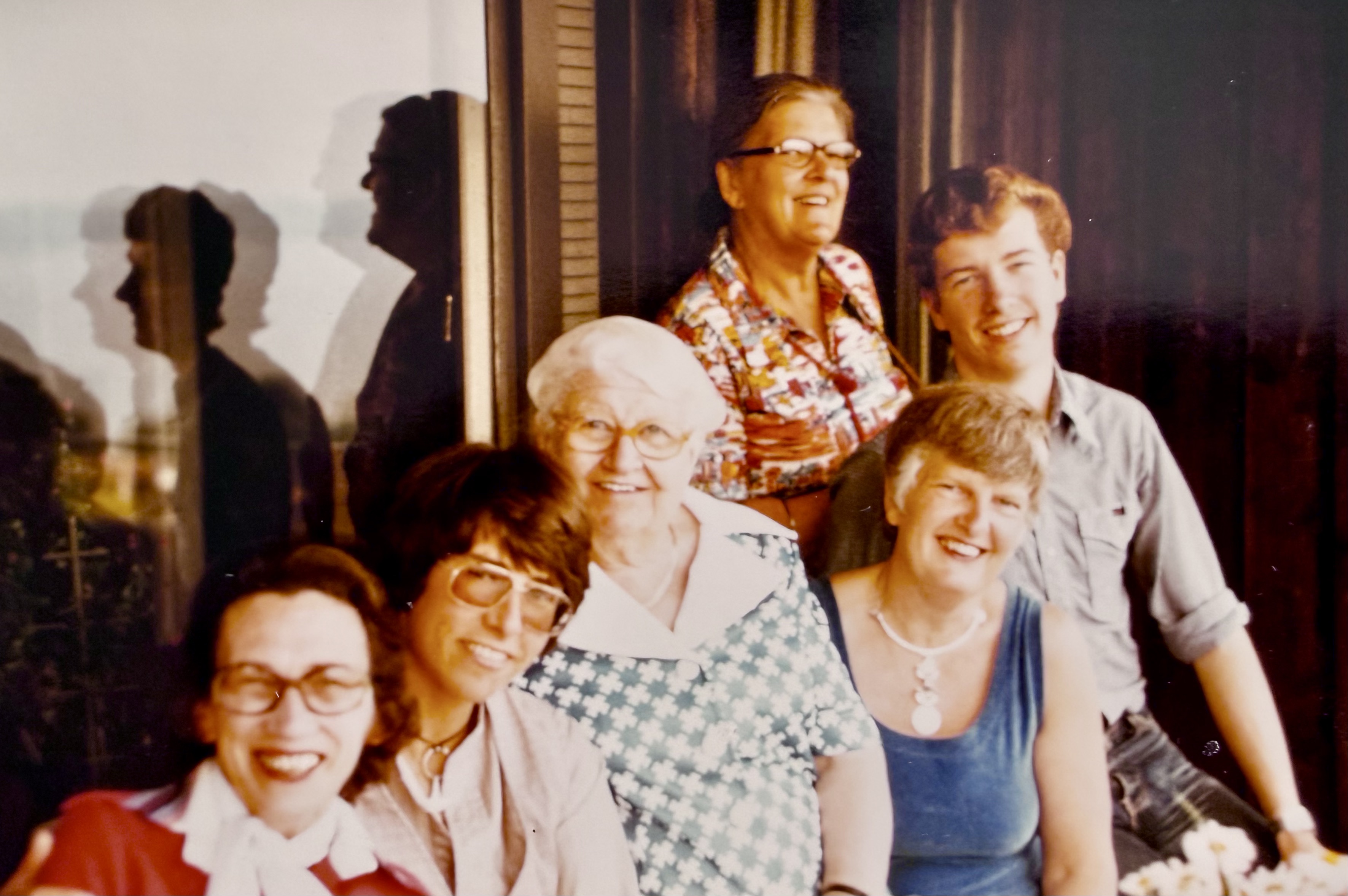
In her 90s Grandma Wick dressed in her Swedish costumeMy mother, Flo, photographed this woman in Swedish dress at a Midsomer festaval 1979
Growing up in Yakima, Washington, we simply picnicked and ate outdoors all summer, perhaps an American substitute for the ritual. But my brother remembers our mother, who was born at Midsommer, hosting parties in June with a maypole for us kids to wind ribbons around. She had never been to a Midsomer festival, but her Scandinavian parents had impressed upon her the importance of this holiday.
Flo took this picture and the one at top raising the maypole at a Swedih Midsomer festival when we visited in 1979
Swedes gather at big communal and family events. Norwegians build fires. Oslo’s most dramatic public showcase occurs at Sukkerbiten, the sauna wharves on the fjord, where massive burning displays light the water. The Slinningsbålet in Ålesund ranks among the world’s tallest bonfires—a striking coastal tradition. In some places a figure is built and then burned. Think Burning Man.
This year, we’ll mark the solstice on June 21 at Sonoma County’s first dyke march—marching, singing, eating, and drinking. Living in a fire-prone region, we’ll celebrate without bonfires, but the spirit of communal gathering remains.
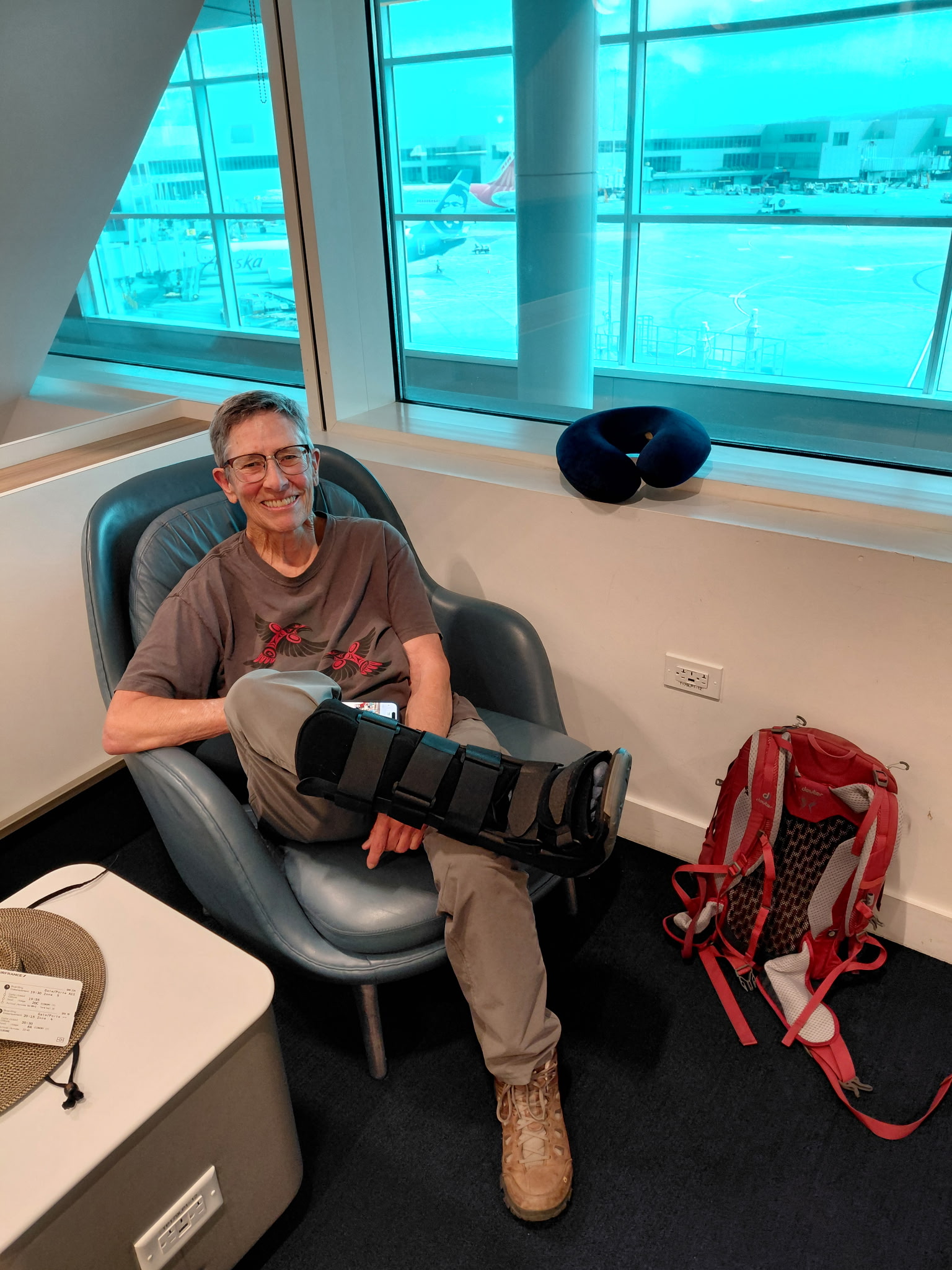
I should have canceled the hiking trip to Morocco and Portugal after falling on my deck. The X‑ray showed my ankle wasn’t broken — just a small fragment of displaced bone — and I convinced myself the pain would subside. They fitted me with a walking boot, and I left the hospital with cautious hope.
The trip was filled with mishaps, and so I have begun to frame it as a succession of silver linings. First thing: I forgot my passport and missed my flight. Unable to get on another, I took BART back to San Francisco, had a lovely dinner with old Bernal Heights buddies Judy and Diane, and slept on Judy’s blow‑up bed.
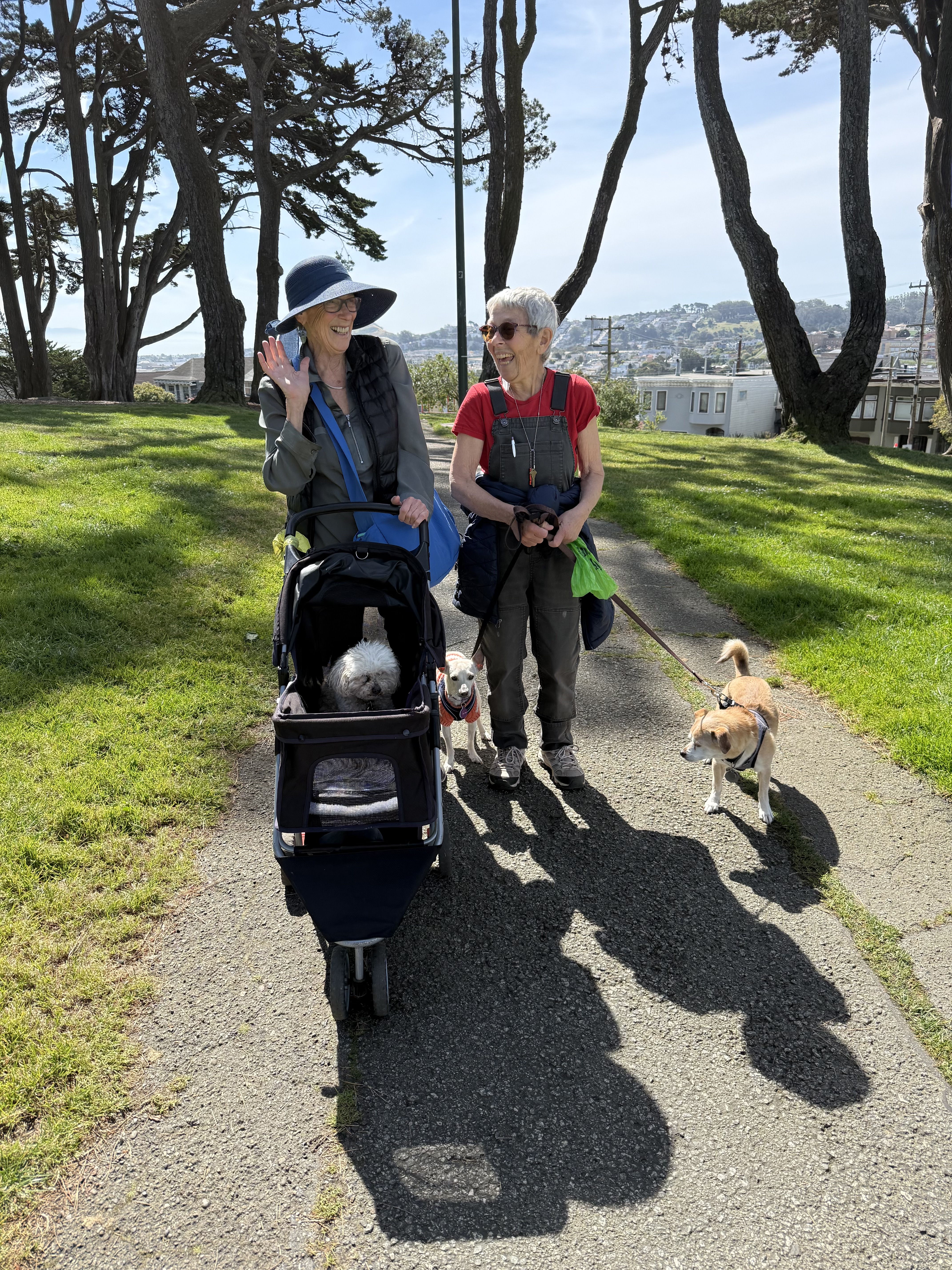
Judy K and I, Diane in her garden with Bernal Hill in the background, dog walking the next day at Holly Park with Judy K and Judy S
The next day, back at the airport with time to kill, I explored SFO’s International Terminal and found its quirkiest attractions: a low-rider bicycle exhibit, a roast‑your‑own coffee machine and a tiny theater showing shorts that felt like art‑school therapy. At a bar near the Lufthansa gates, the bartender poured a consolatory 20‑ounce IPA and chatted with me — mostly because I was the only customer. Lufthansa pilots were on strike and so their flights were canceled and the bar empty.
At SFO: part of a low rider bike exhibit, roast your own coffee
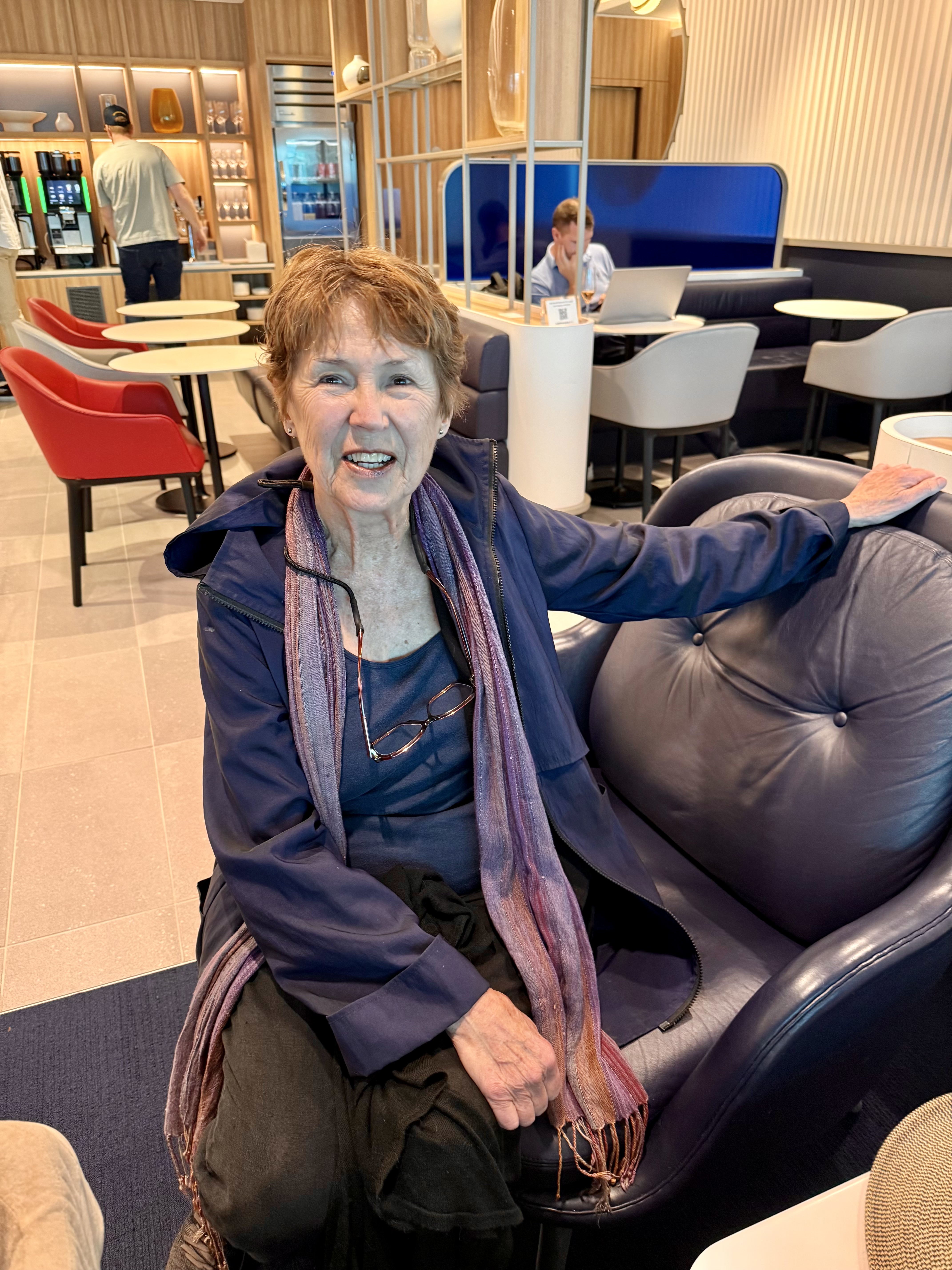
Standby meant more waiting, more near‑misses. I missed another flight because it was full, then met Lynn, a retired flight attendant of 35 years, who’d also left her passport at home. We were directed to the swanky Air France lounge, an oasis of free food and booze. Sometimes fortune favors the passport‑less.
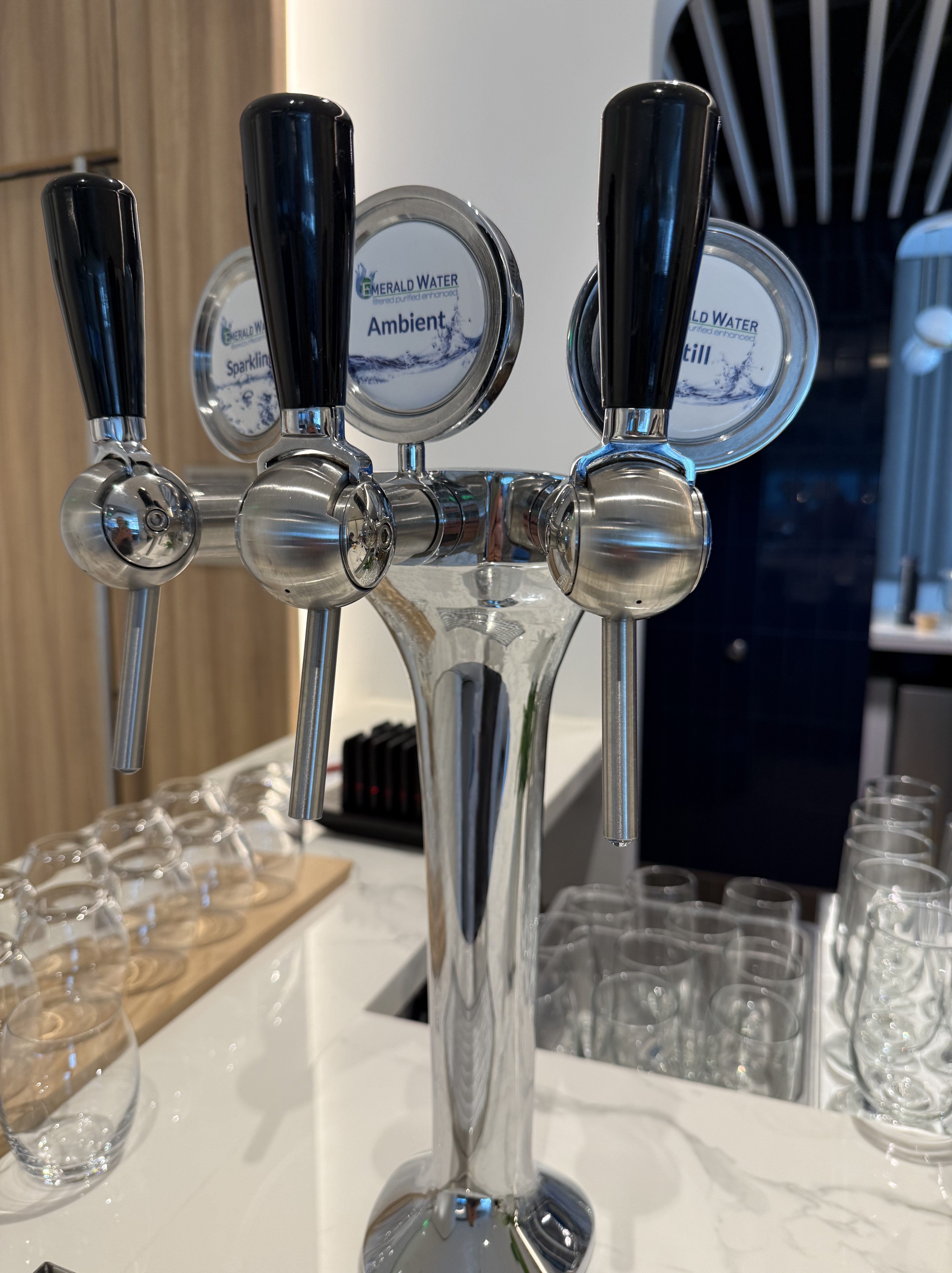
At the Air France lounge in my boot, new best friend Lynn, 3 kinds of water
My injured leg earned me VIP wheelchair treatment at airports. But the boot was not a fun accessory on the 12‑hour flight.
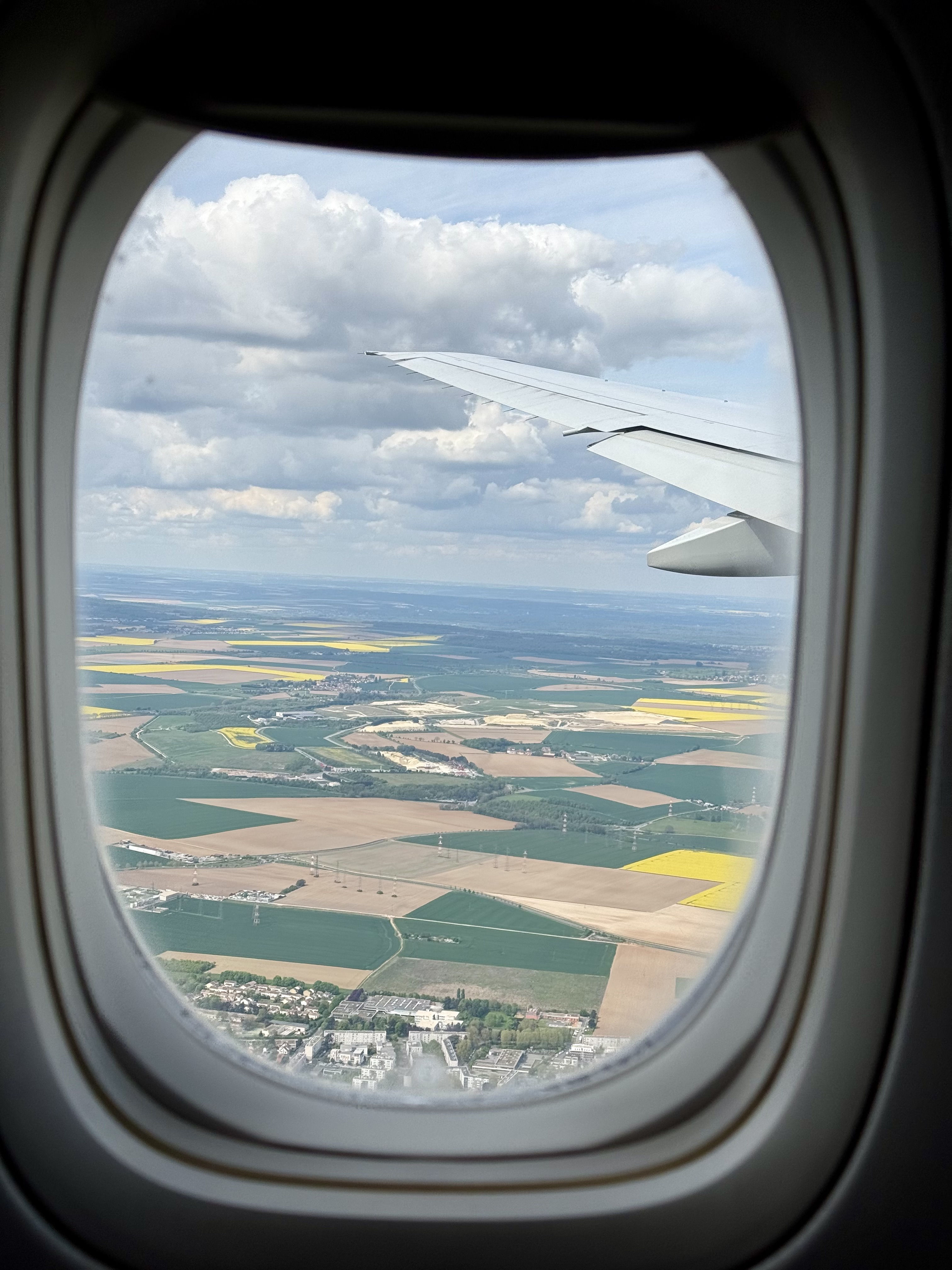
Stopover in Paris: arriving, rated highly, Charles de Gaulle had the coolest toilets
Midnight in Marrakesh: I swapped currency at the airport, shared a taxi to the old town medina with an amiable French couple and met Ali, the hotel night man, who navigated the medina’s narrow alleys like a supernatural GPS. I could never have found my riad (hotel) without him. Ali seemed never to sleep. He served us breakfast in the morning.
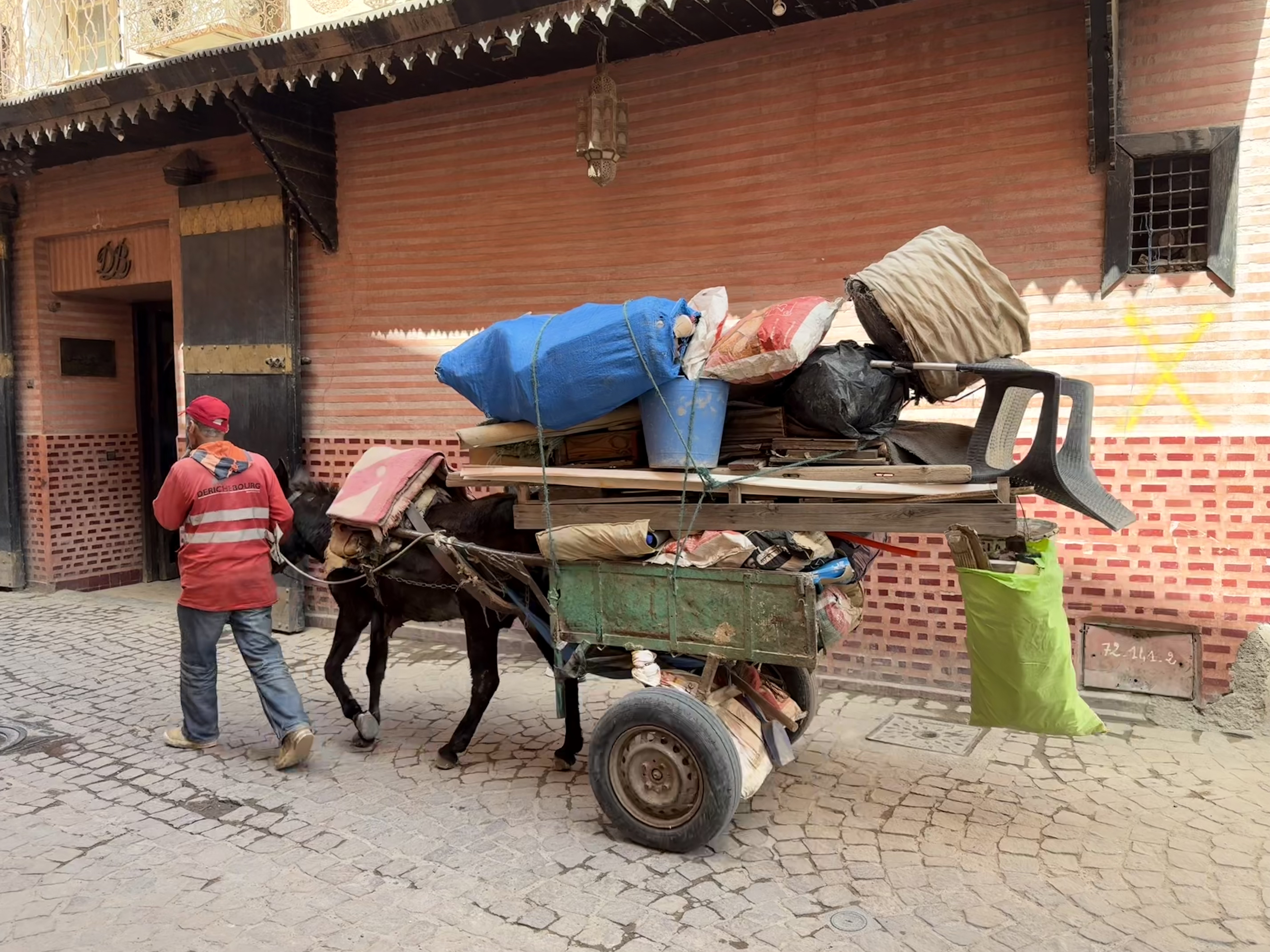
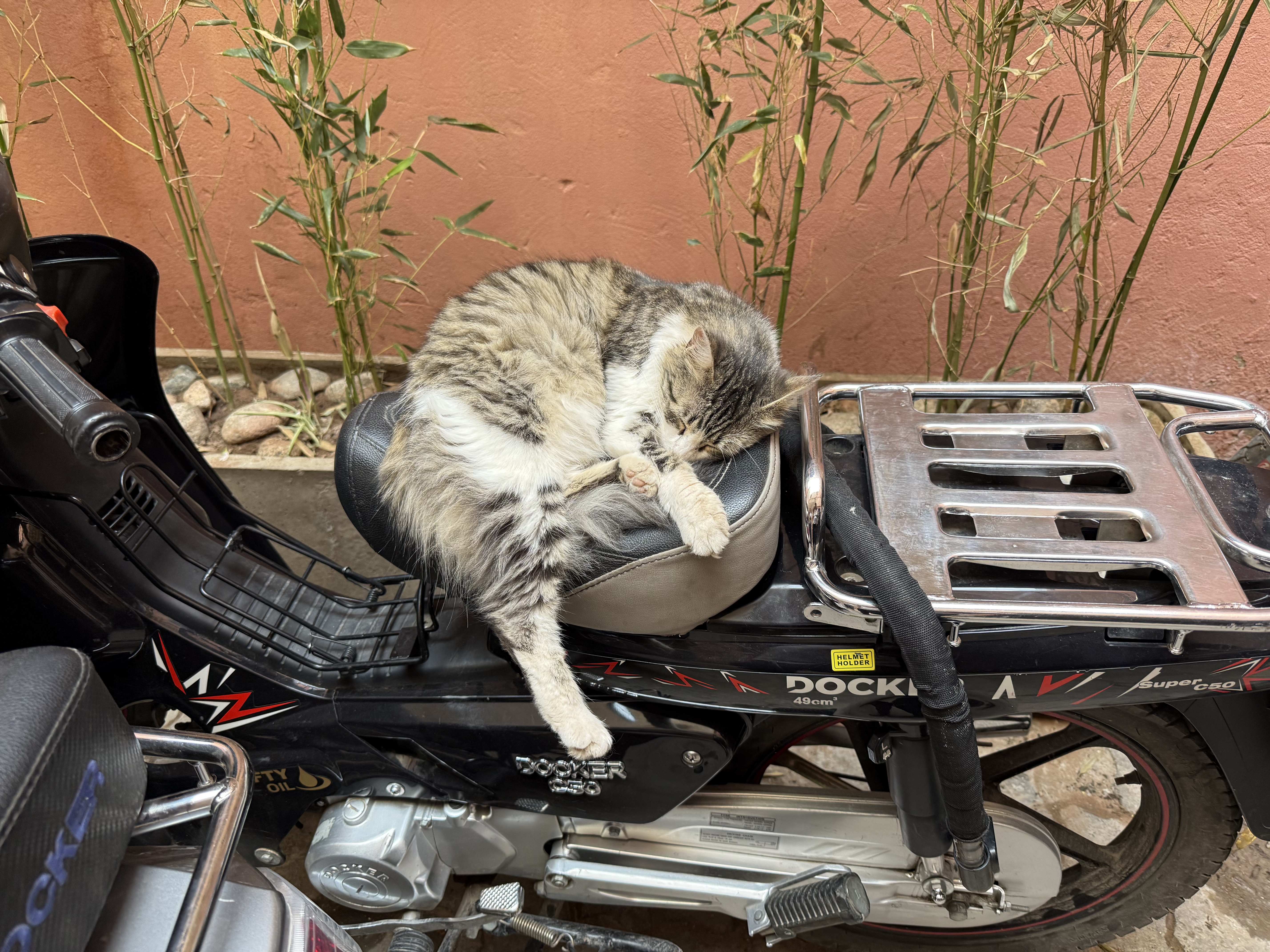
In the old walled city medina: cats and motorbikes, donkeys. No cars will fit
This all-women trip, sponsored by Lewis and Clark College, introduced us to Moroccan culture in ways that didn’t require hiking. I was delighted to chat with English language students whose cosmopolitan takes deepened my cultural understanding.
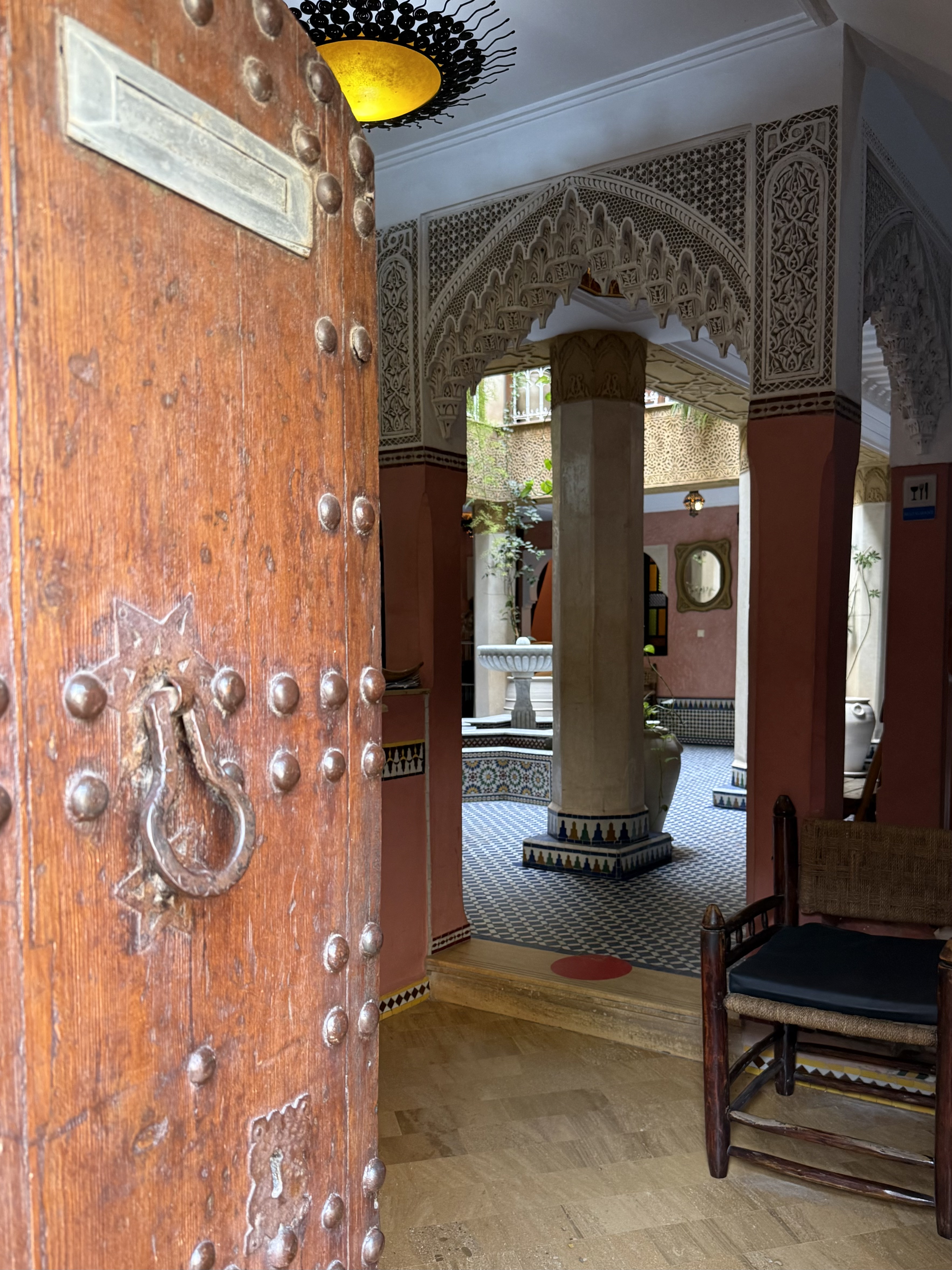
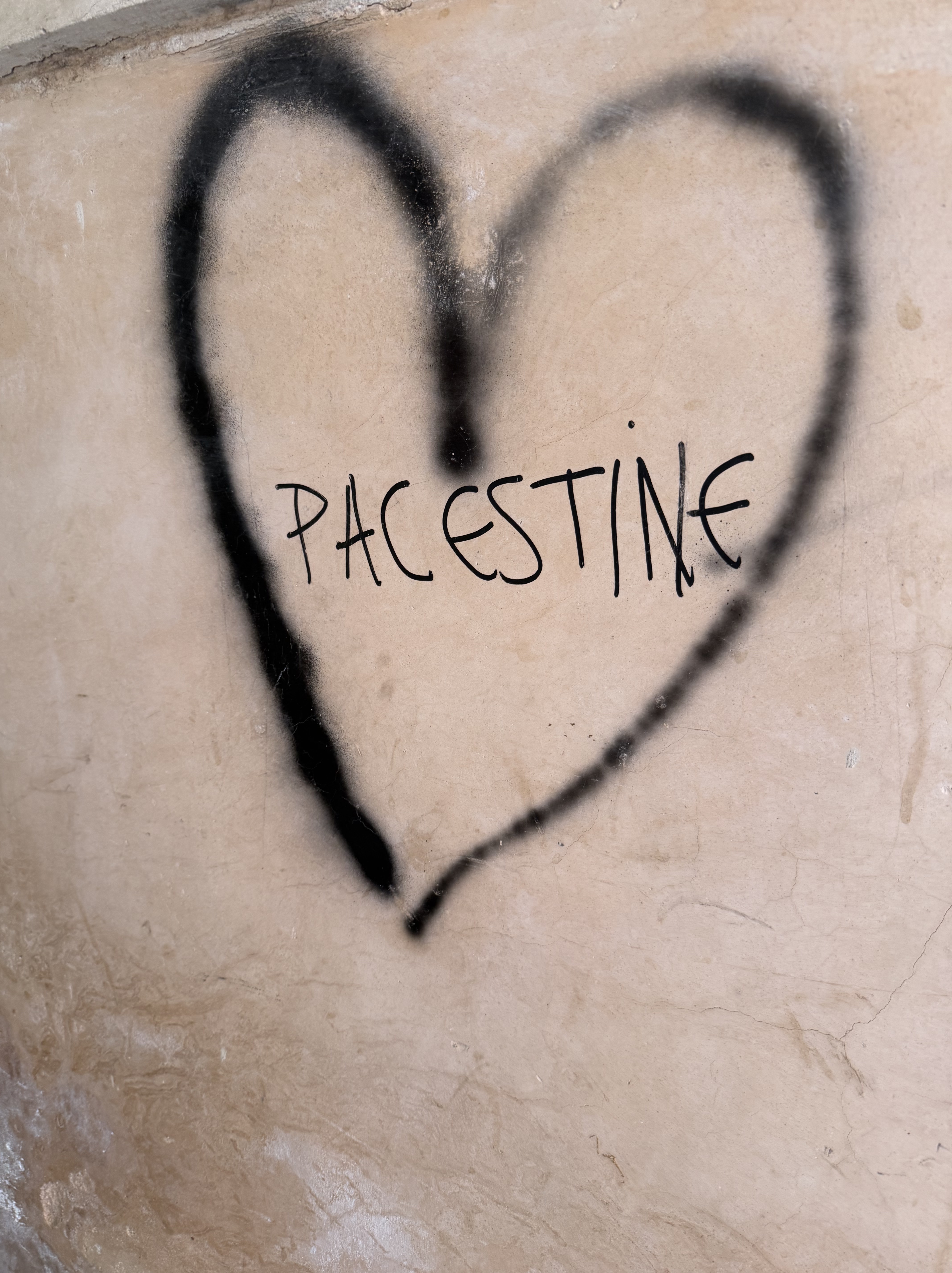
In the medina: door and interior, the only graffiti I saw
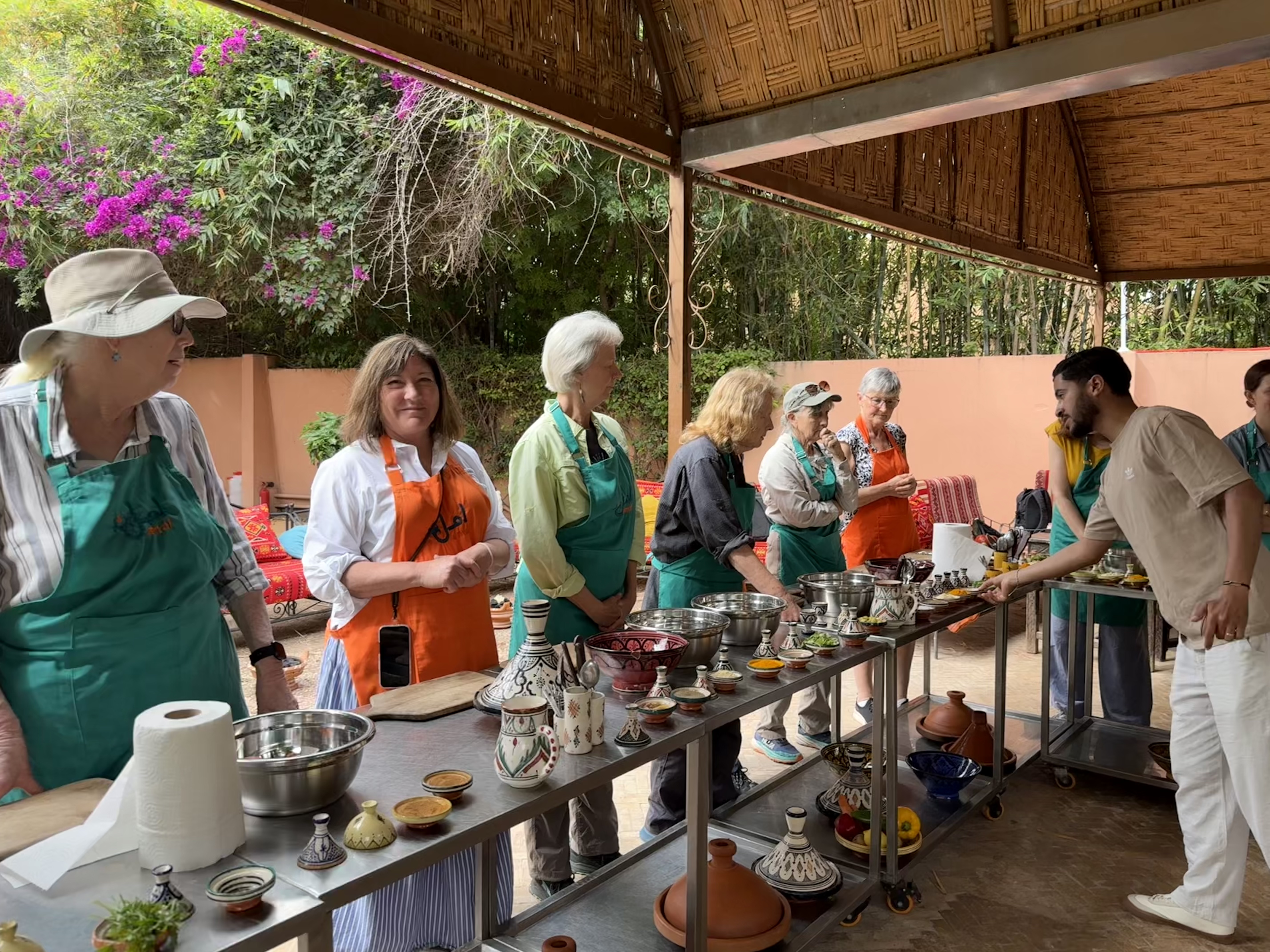
We met Nora Fitzgerald Belahcen, founder of the Amal Women’s Training Center, whose mission is to train indigent women to earn a living. Highlights included a tagine cooking class and a delicate tea ritual using herbs plucked from the garden. Dinner was cooked and served by a crew of deaf women in the Sign Language Café, one of many projects inspired by the Amal culinary school for women*.
The tagine cooking class
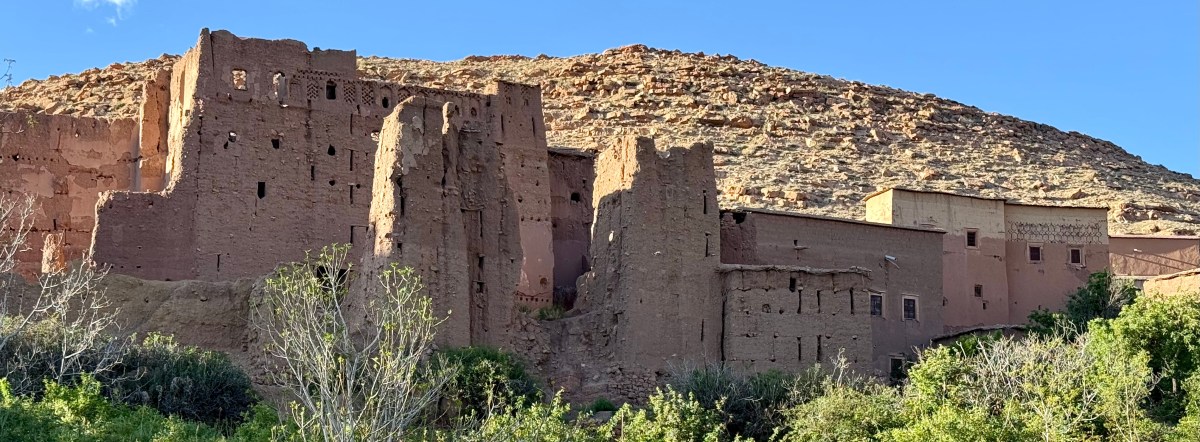
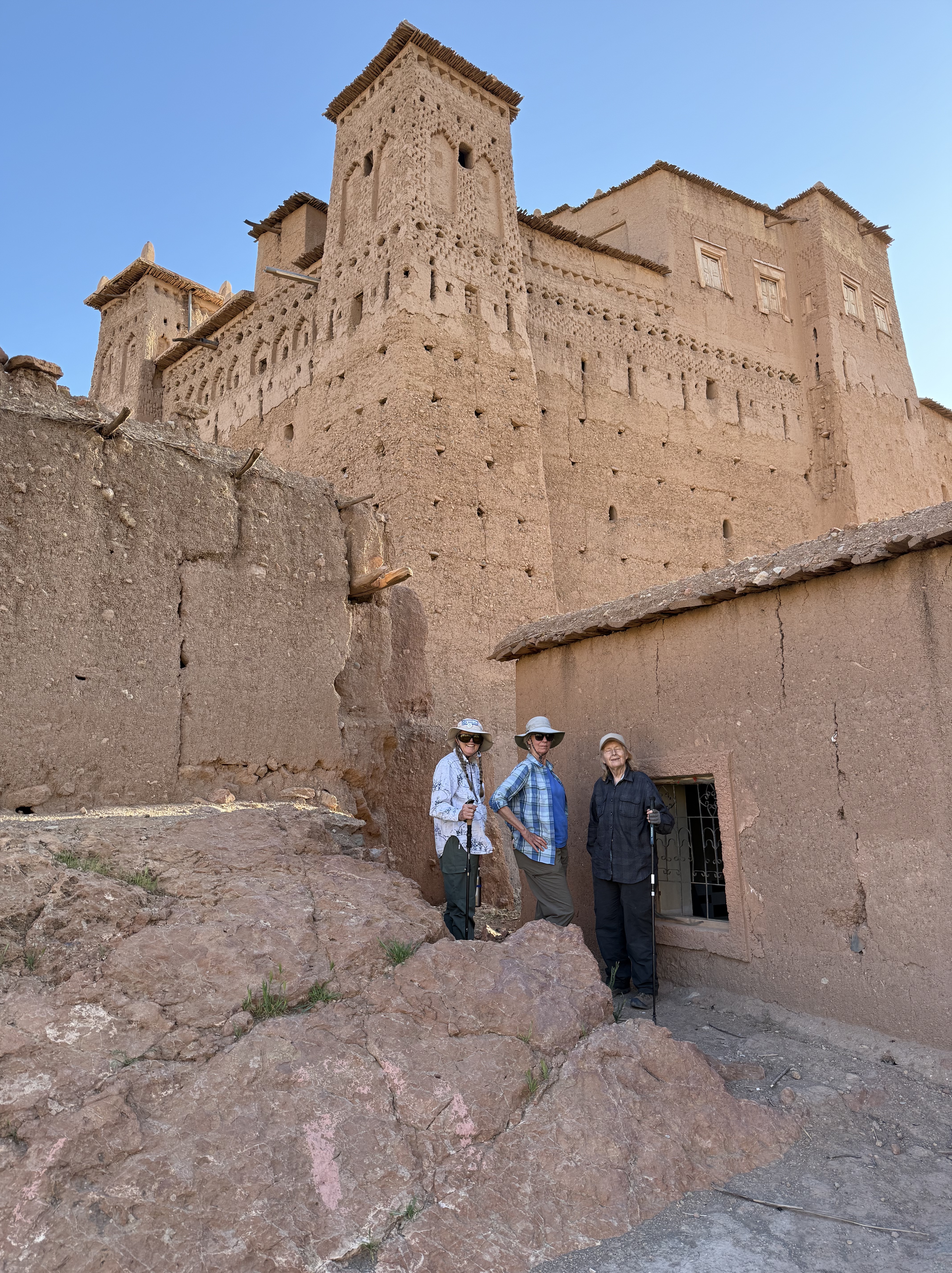
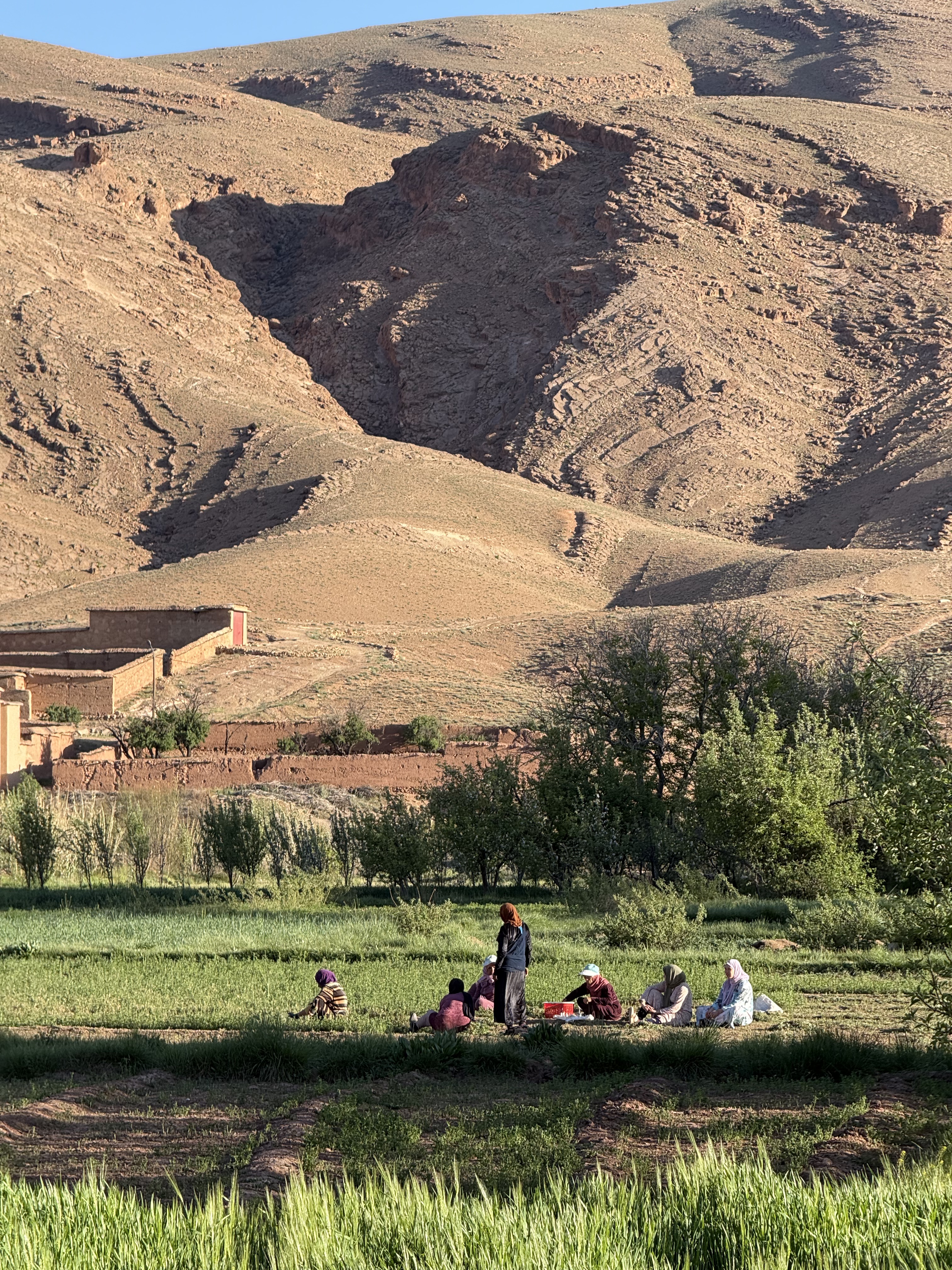
On a seven‑hour drive to the Atlas Mountains, motion sickness upgraded me to front‑seat conversationalist; the female Moroccan guide and I talked about Islamophobia, women’s roles in Morocco and architecture. I was amazed at the earthen buildings and walls. “We call this adobe,” I said. “What do you call the building material?” She replied, “Mud.”
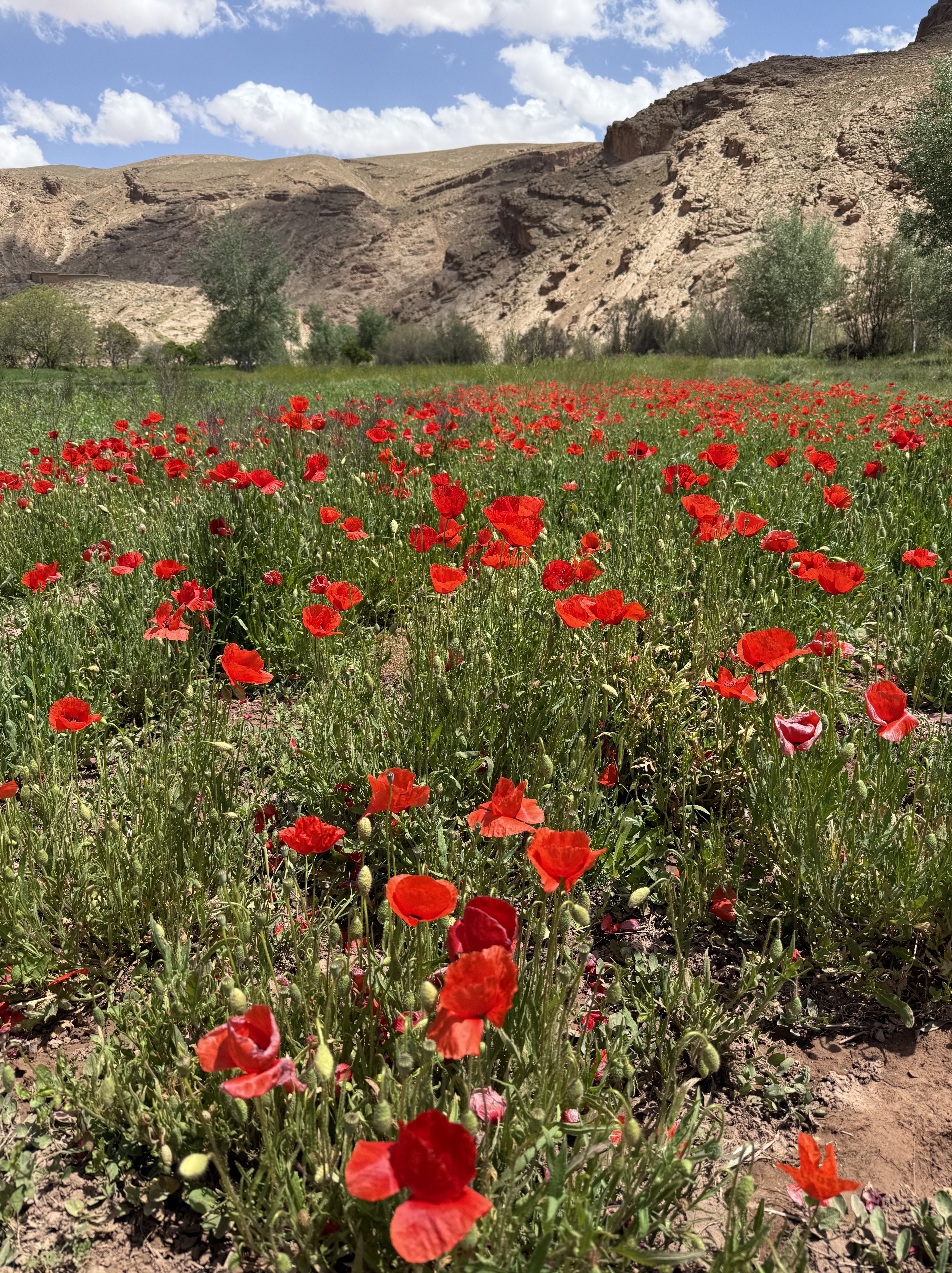
Poppies proliferatedAt a rest stop. The plant is woad, used as a blue dye and medicinal.
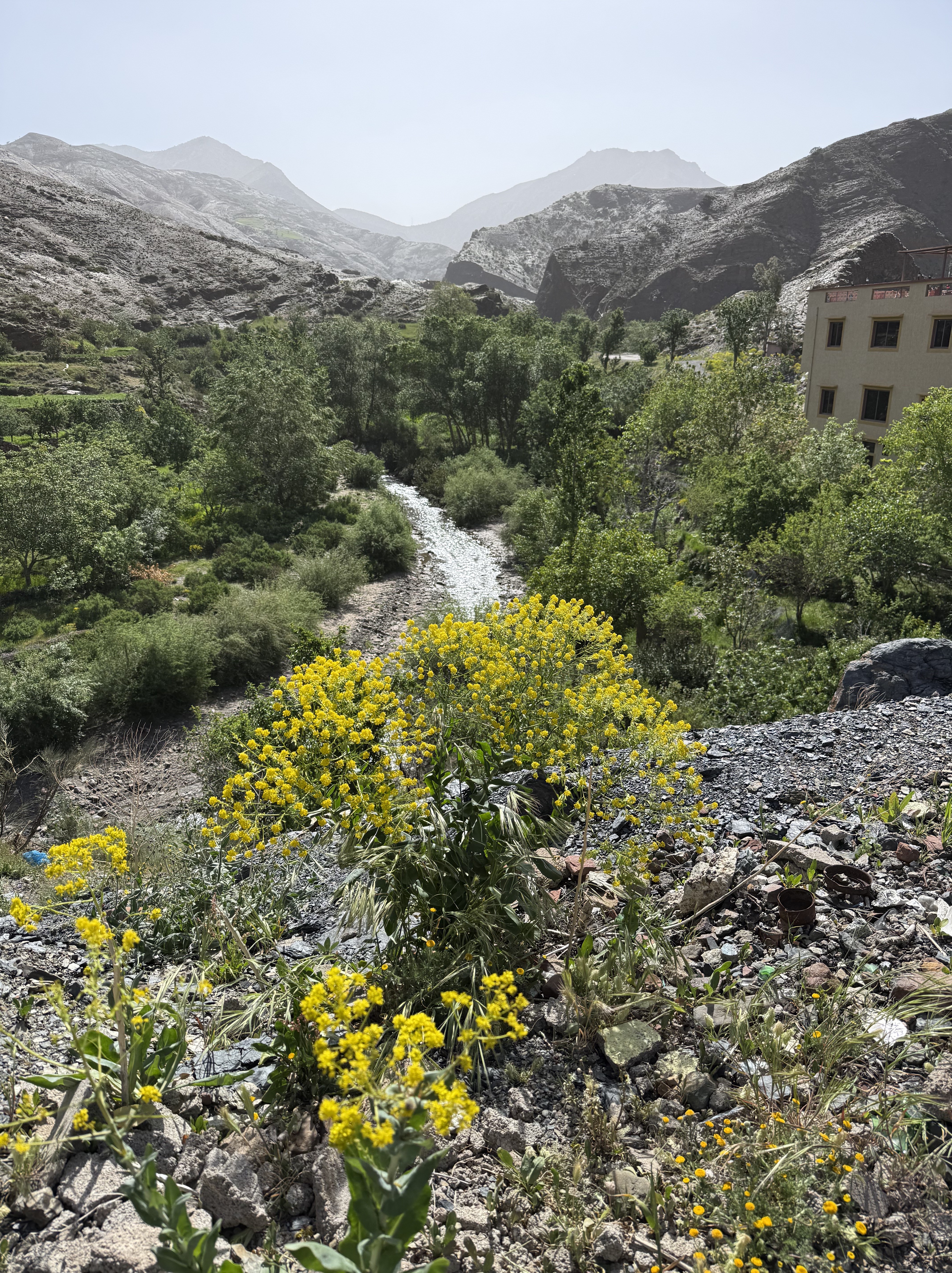
On the way to the Atlas Mountains
Limited mobility changed the trip but didn’t ruin it. I discovered lounging is an underrated travel activity. As my cohort hiked, a van whisked me to scenic spots so I could sit and be part of the (stunning) landscape.
Exploring the old kasbah. These mud buildings last hundreds of years.We greeted these women and they sang back to us
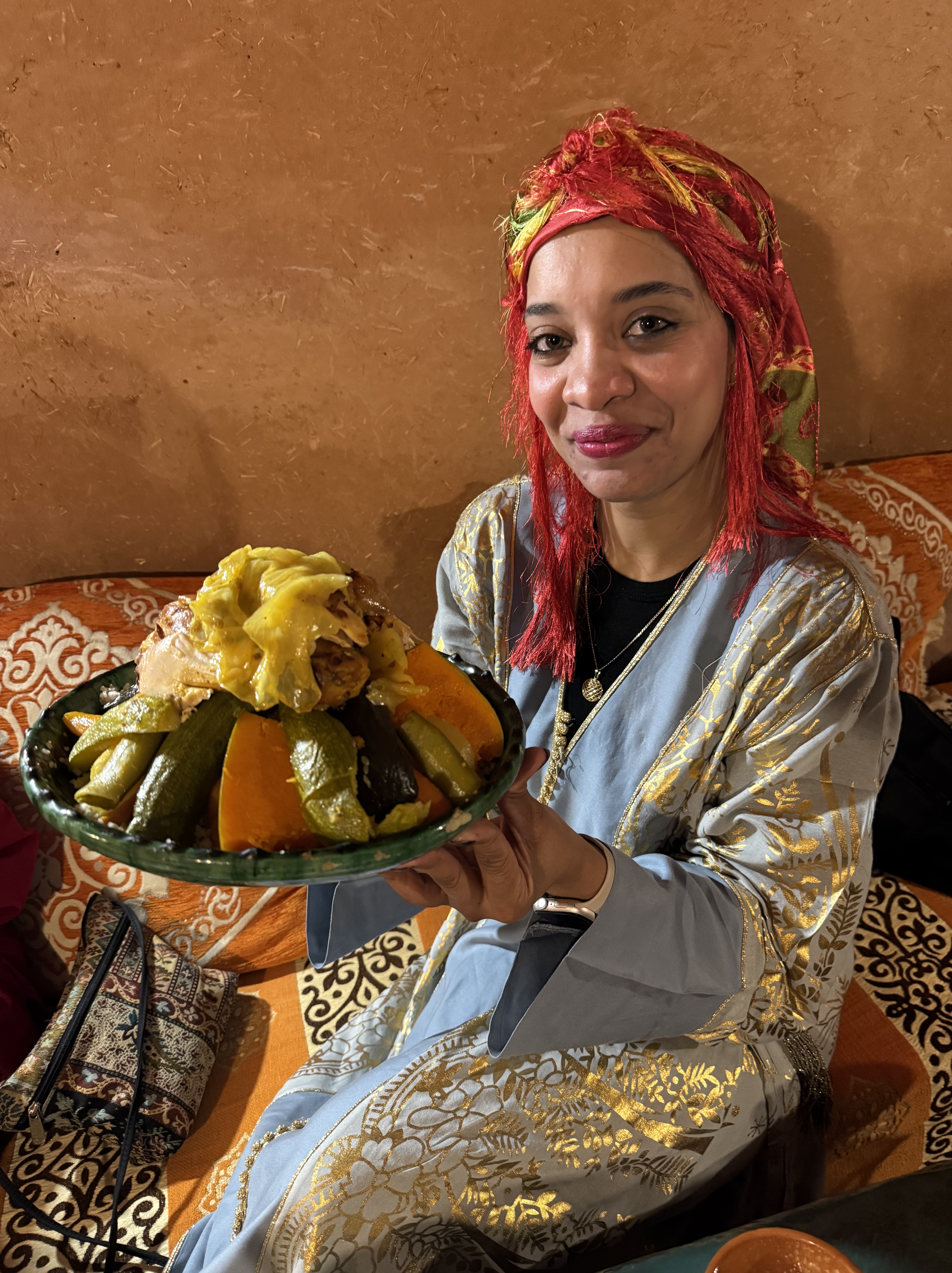
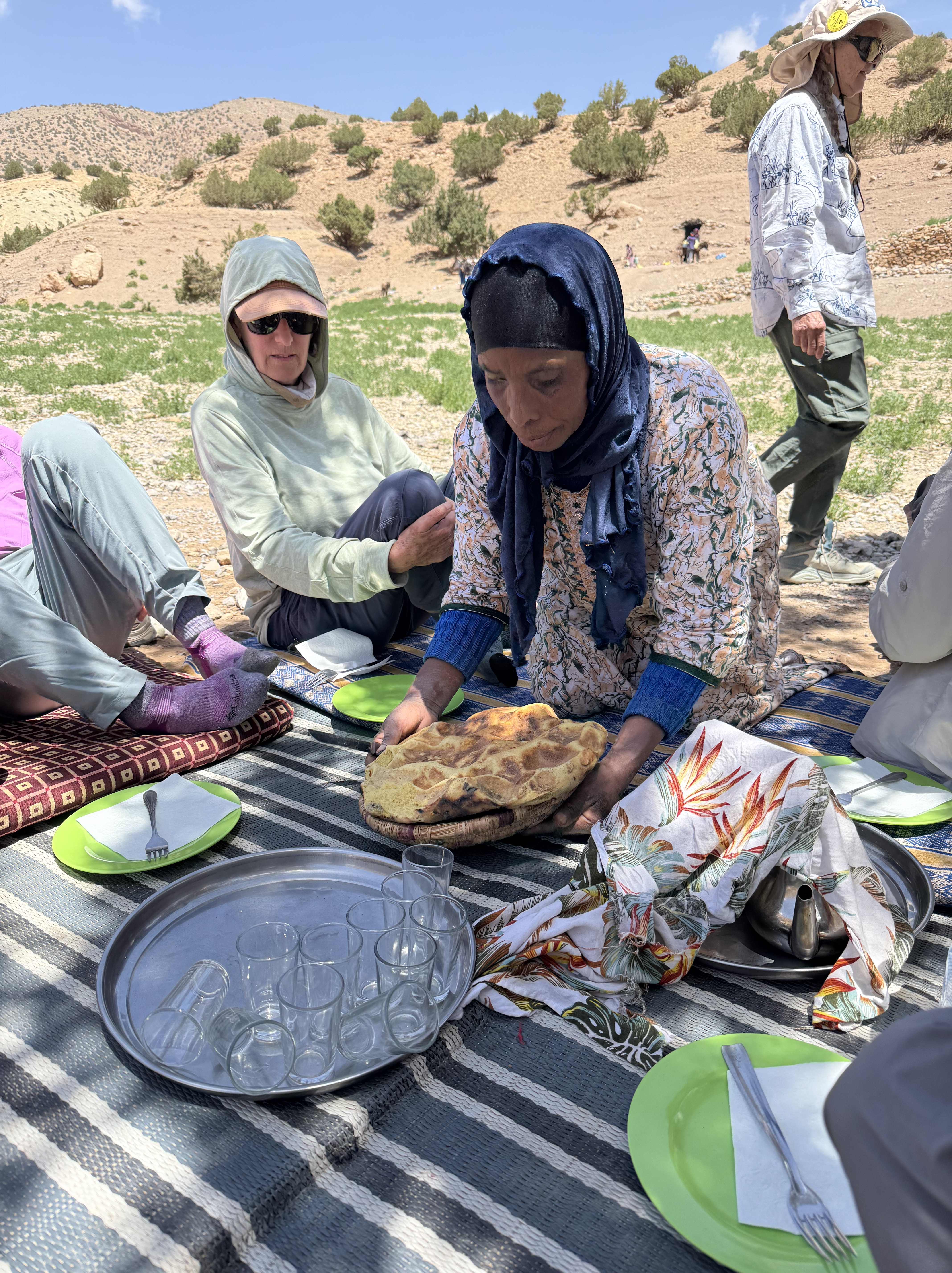
Indigenous guides introduced us to Amazigh (Berber) culture, inviting us for meals and entertainment in women’s homes. The women dressed us up for a mock wedding, drew us in to the song and dance, and in those moments we ten Americans weren’t tourists, we were favored guests.
Our guide Fatimazahra dressed up for the mock weddingMalika serves nomad bread she made over a fire and hot rocks
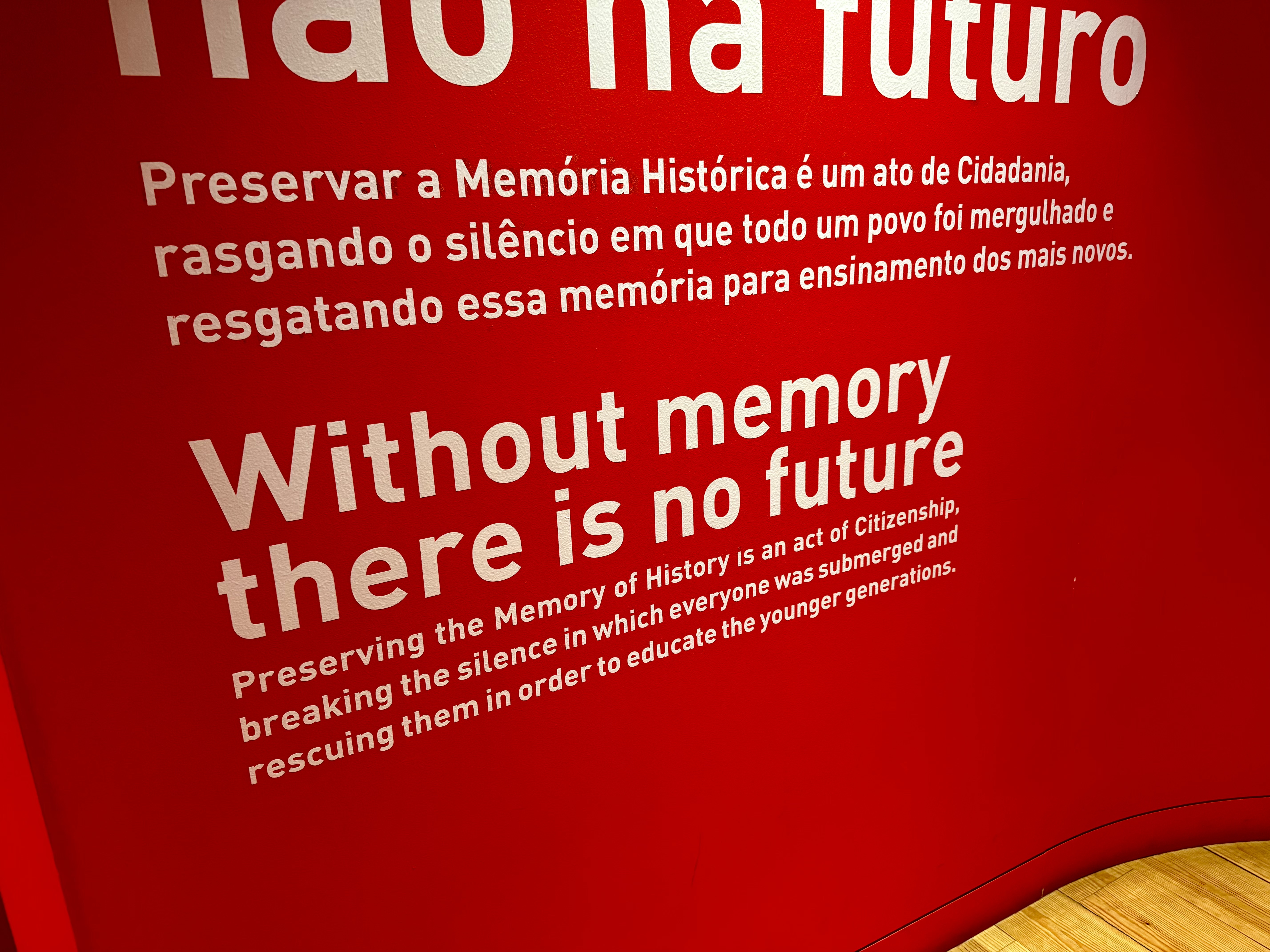
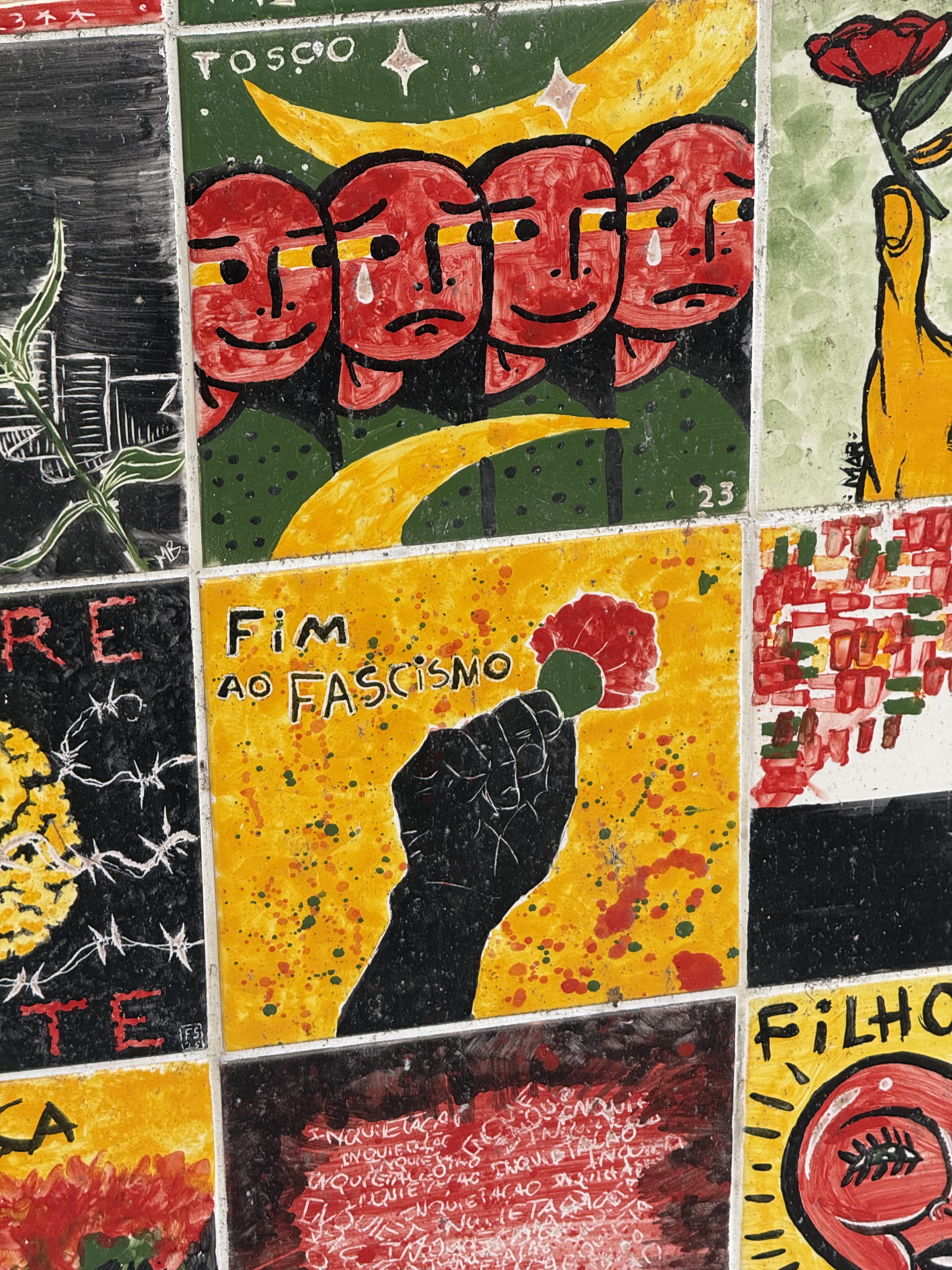
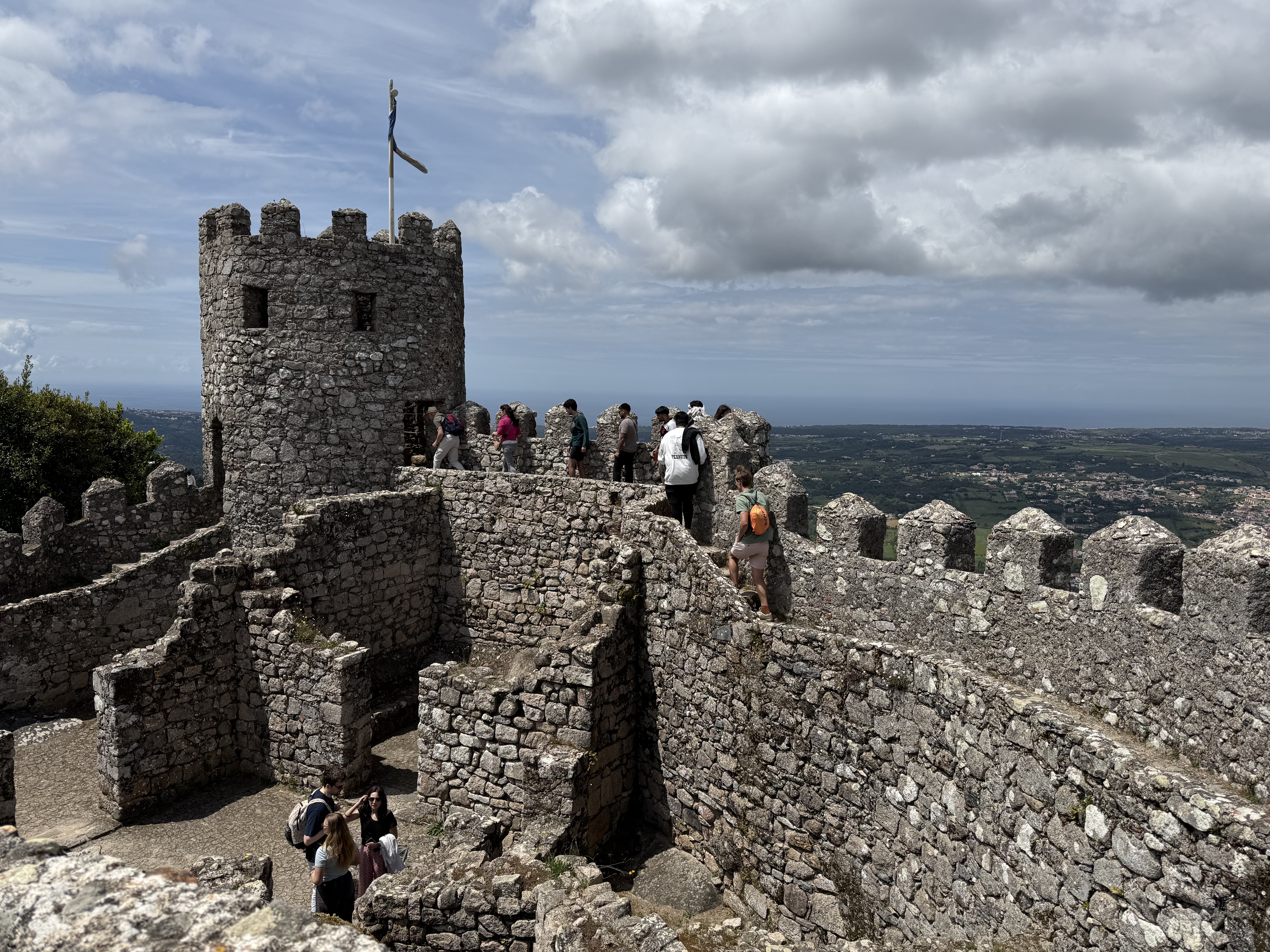
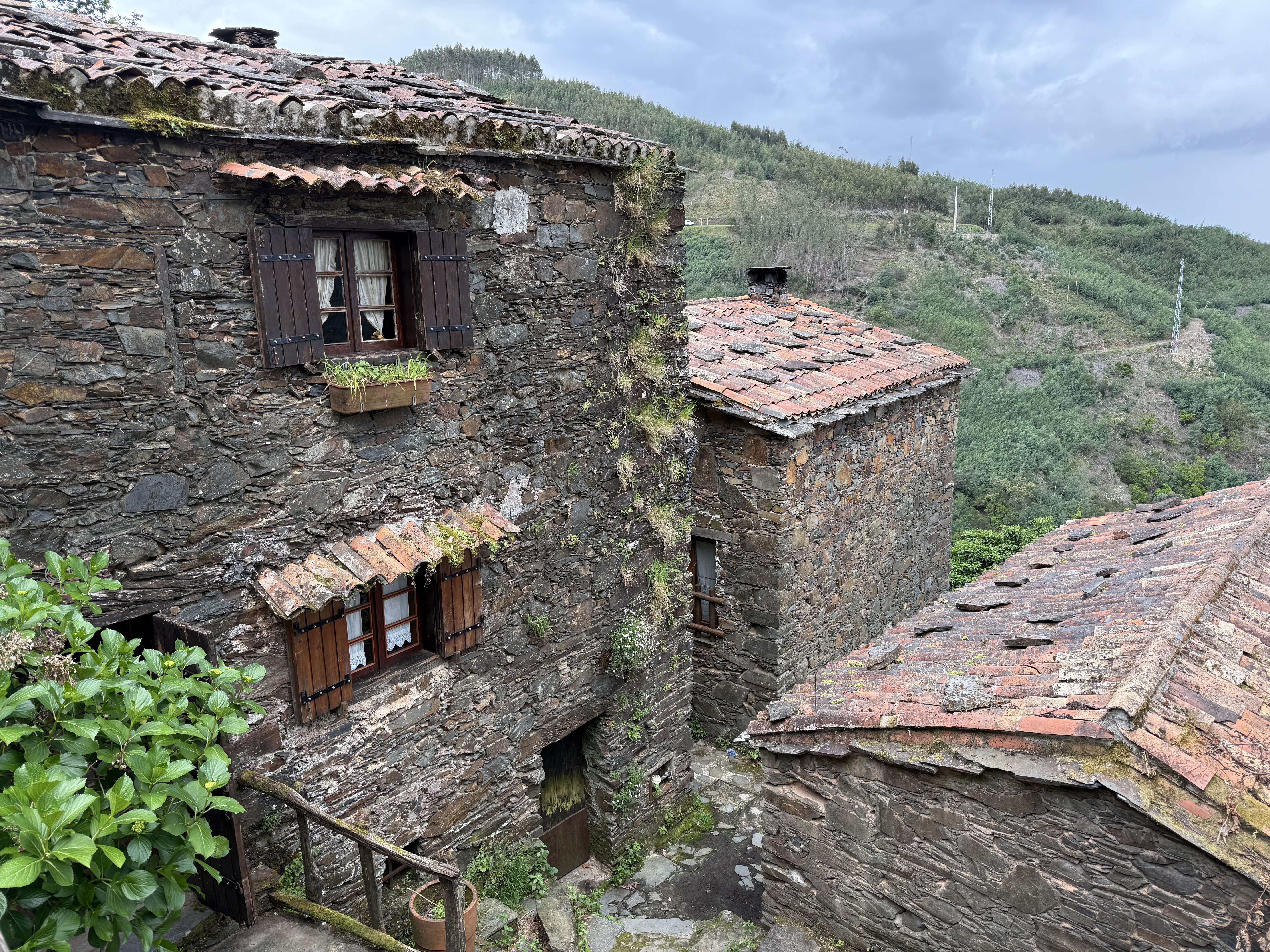
Three of us traveled on to Portugal, visiting Lisbon, Sintra and mountain schist villages. A highlight for me in Lisbon was the Resistance Museum where I could sit and take in the history of the Portuguese 1974 revolution and the concurrent freeing of their African colonies.
At the Resistance museumA wall of tiles commemorating the 1974 revolutionThe Moorish castle at SintraIn a Schist village
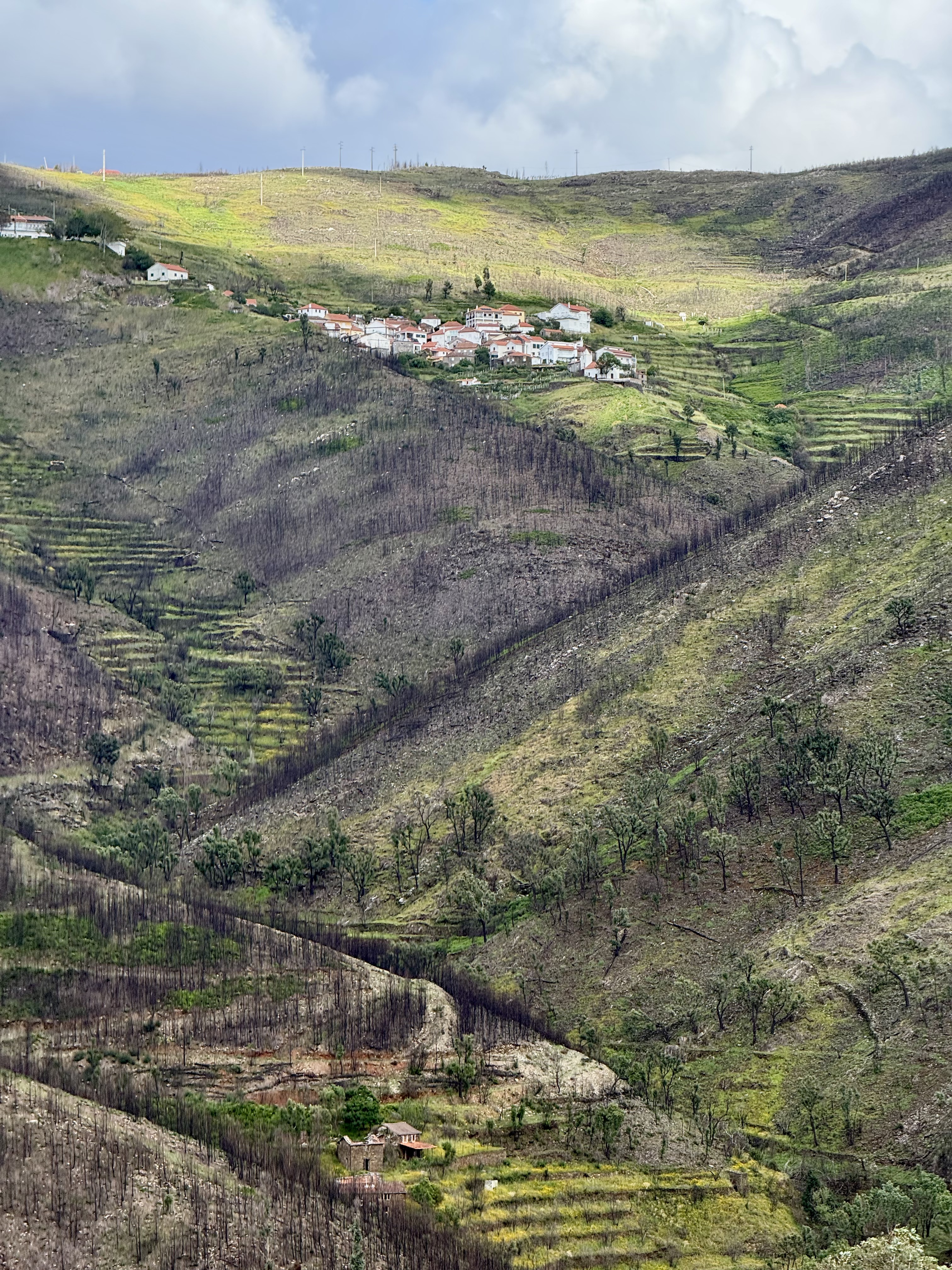
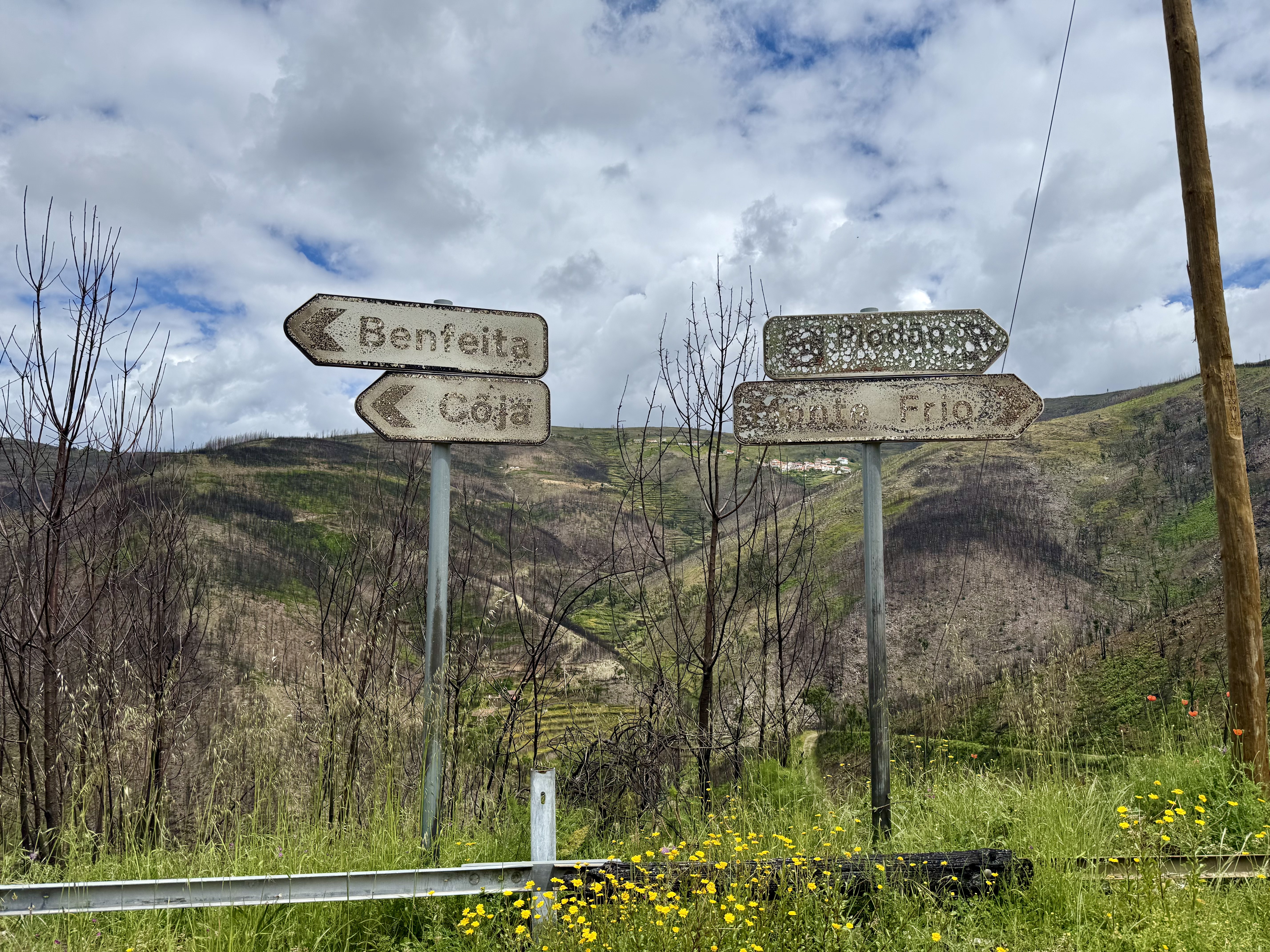
Driving out of the city, we were surprised to see the mountains planted in eucalyptus (for paper production), which burned in a terrible fire in 2025. Then, early this year, a huge storm knocked down trees and power lines and flooded villages, damaging the hiking trails. We Californians recognized this familiar pattern of climate’s cruelty and poor land use decisions.
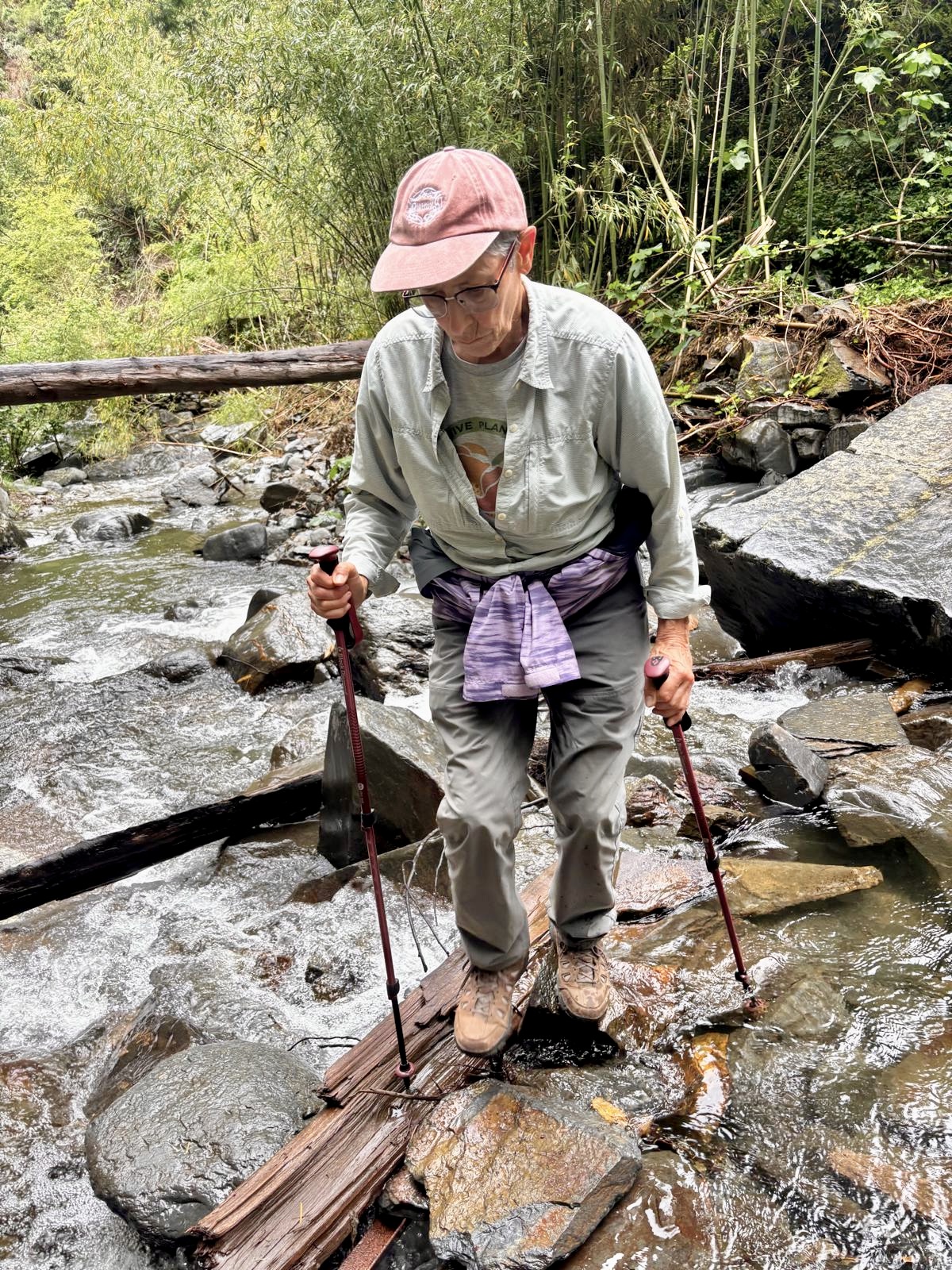
The fire barely missed this villageNavigating a ruined trail and bridgeBurned signs in the Portuguese mountains
We persisted; my ankle felt a bit better and I was able to hike among the old schist villages with the help of an ankle wrap and hiking poles.
On the way home and back in the boot, at the Madrid airport (I can now say I’ve been to Spain), planes were delayed and gates shuffled, yet an army of orange‑vested attendants formed a conveyor belt of compassion for the disabled. We were a support group on wheels. On packed planes I miraculously avoided catching anything despite the coughing babies.
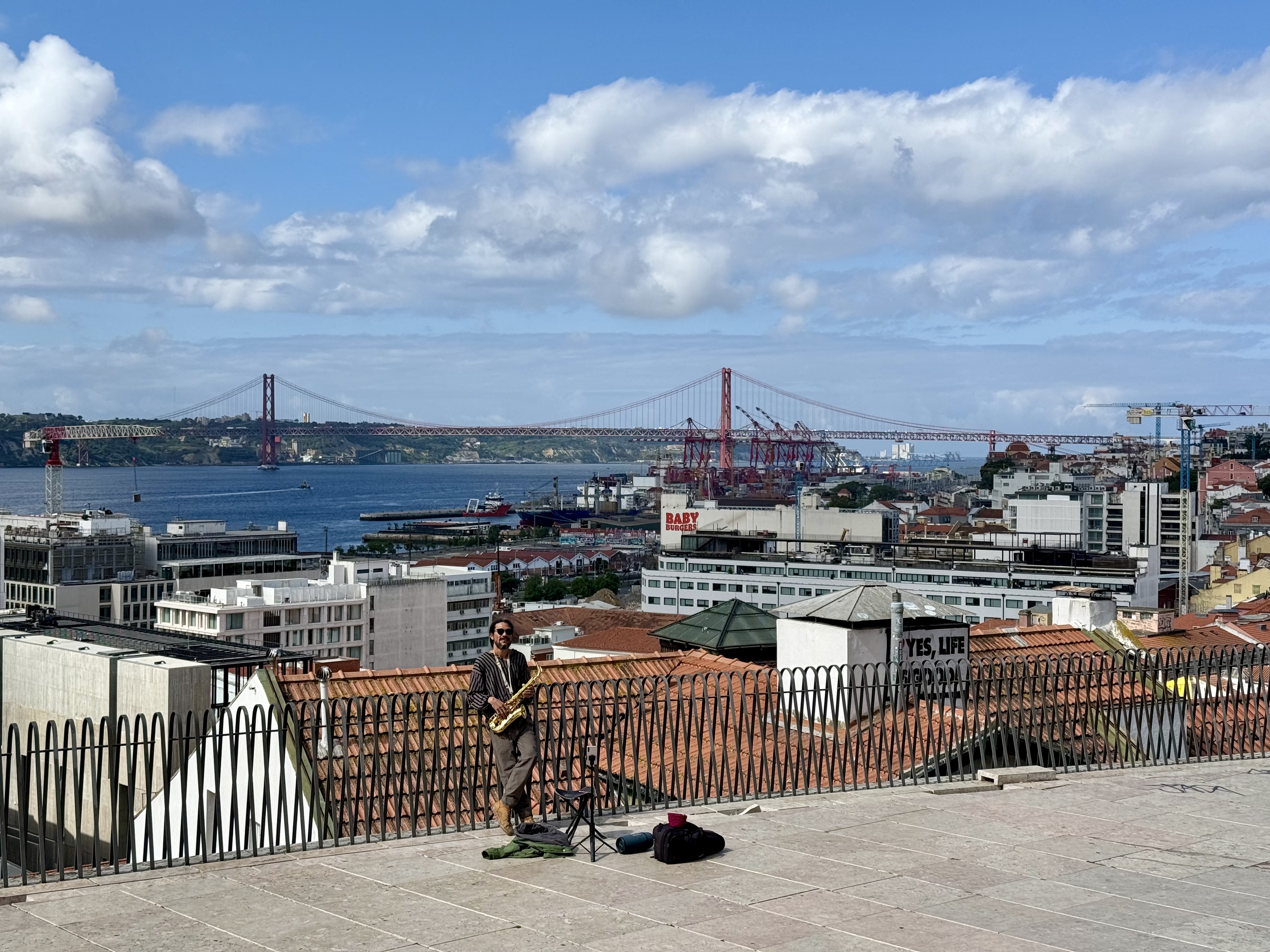
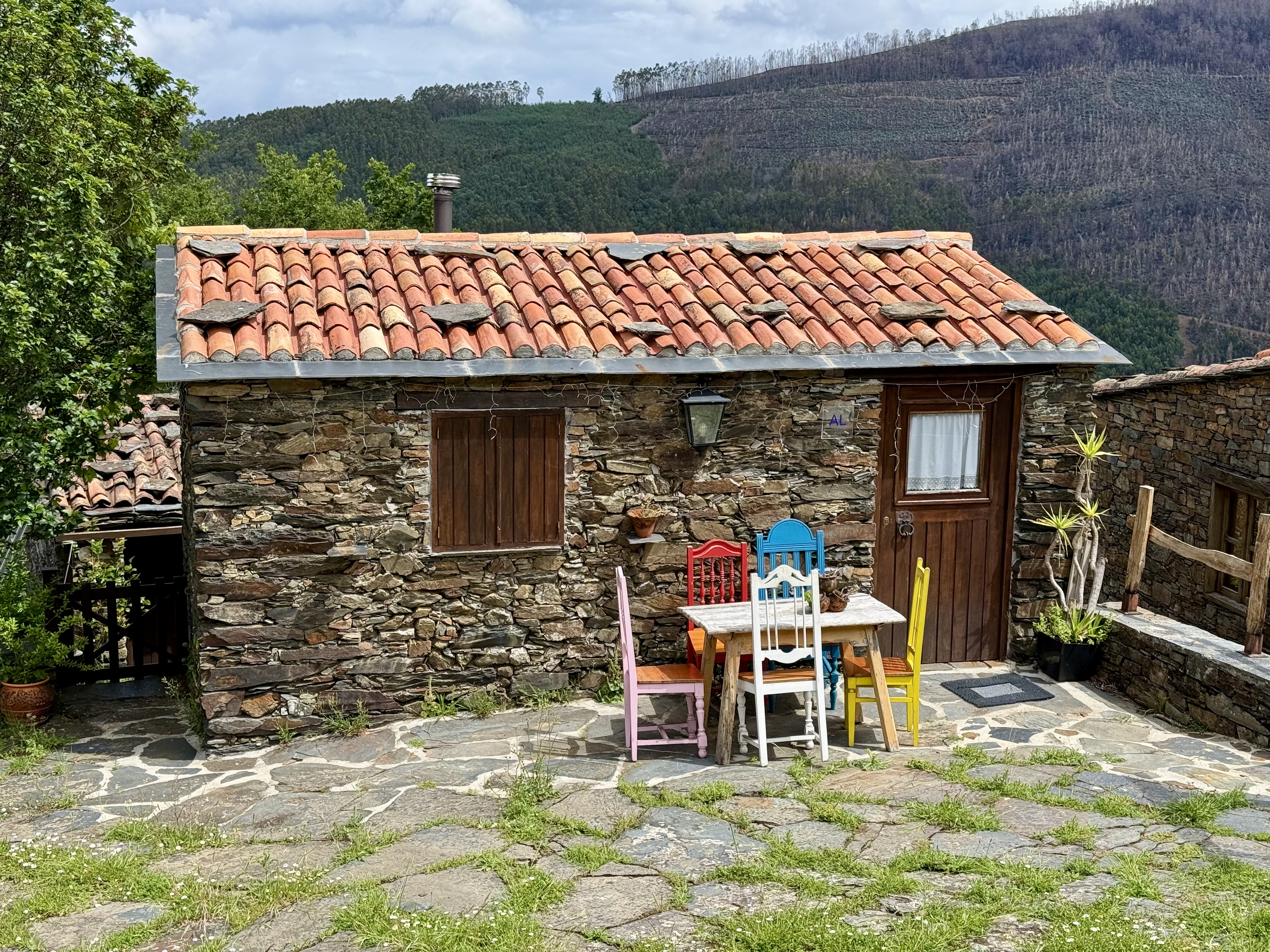
Lisbon’s bridge looks like the Golden GateSchist village cottage
The grand finale: midnight in Santa Rosa, about to be dropped off at the airporter bus stop, I strategized how to get home. Plan A: Lyft—no reply. Plan B: taxi—too late. Plan C: a heroic 2.5‑mile pilgrimage, halted when the bus driver passed me a phone number and I met Eric, the night driver‑cum‑savior who rescued me from walking‑home doom.
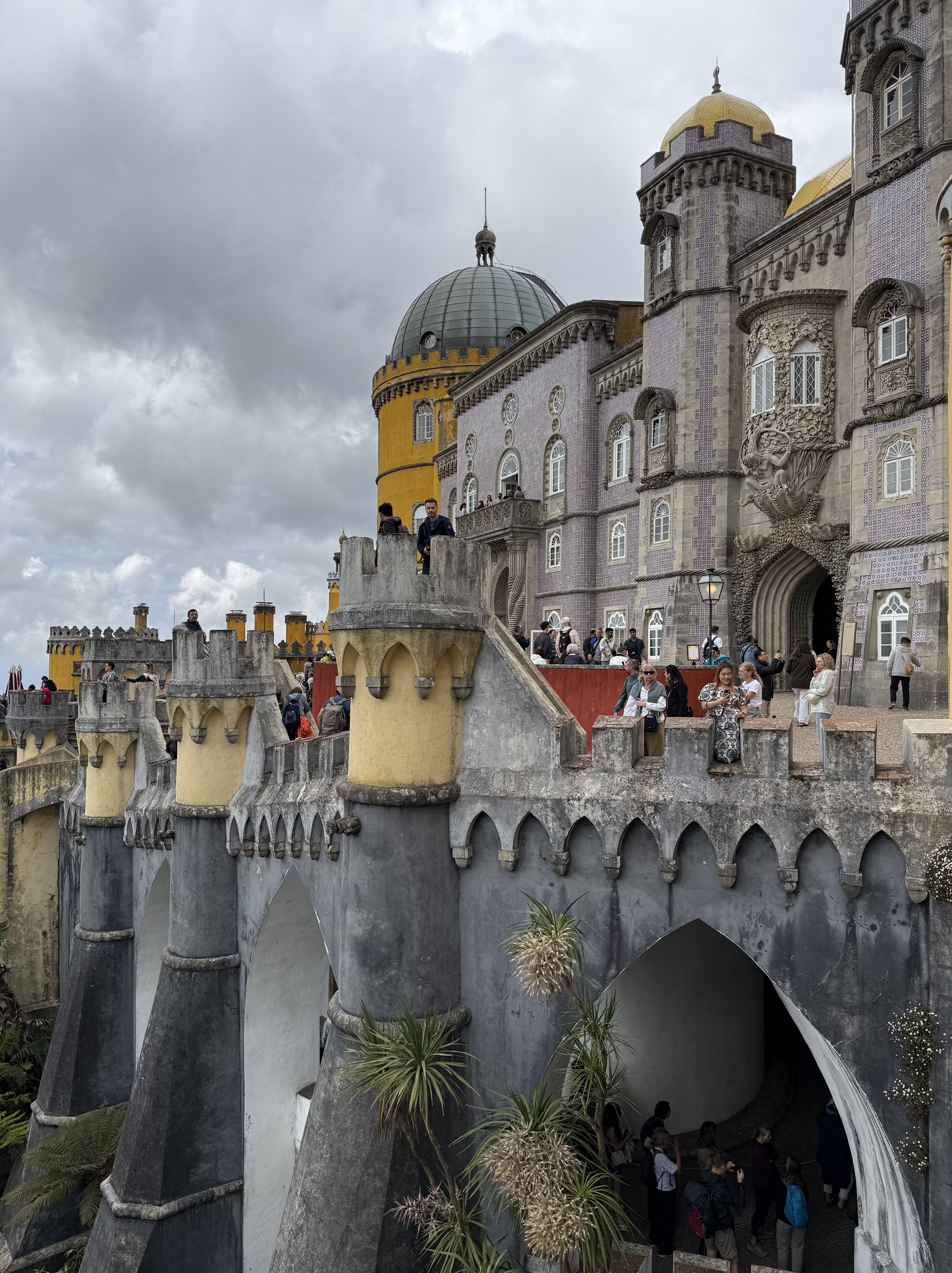
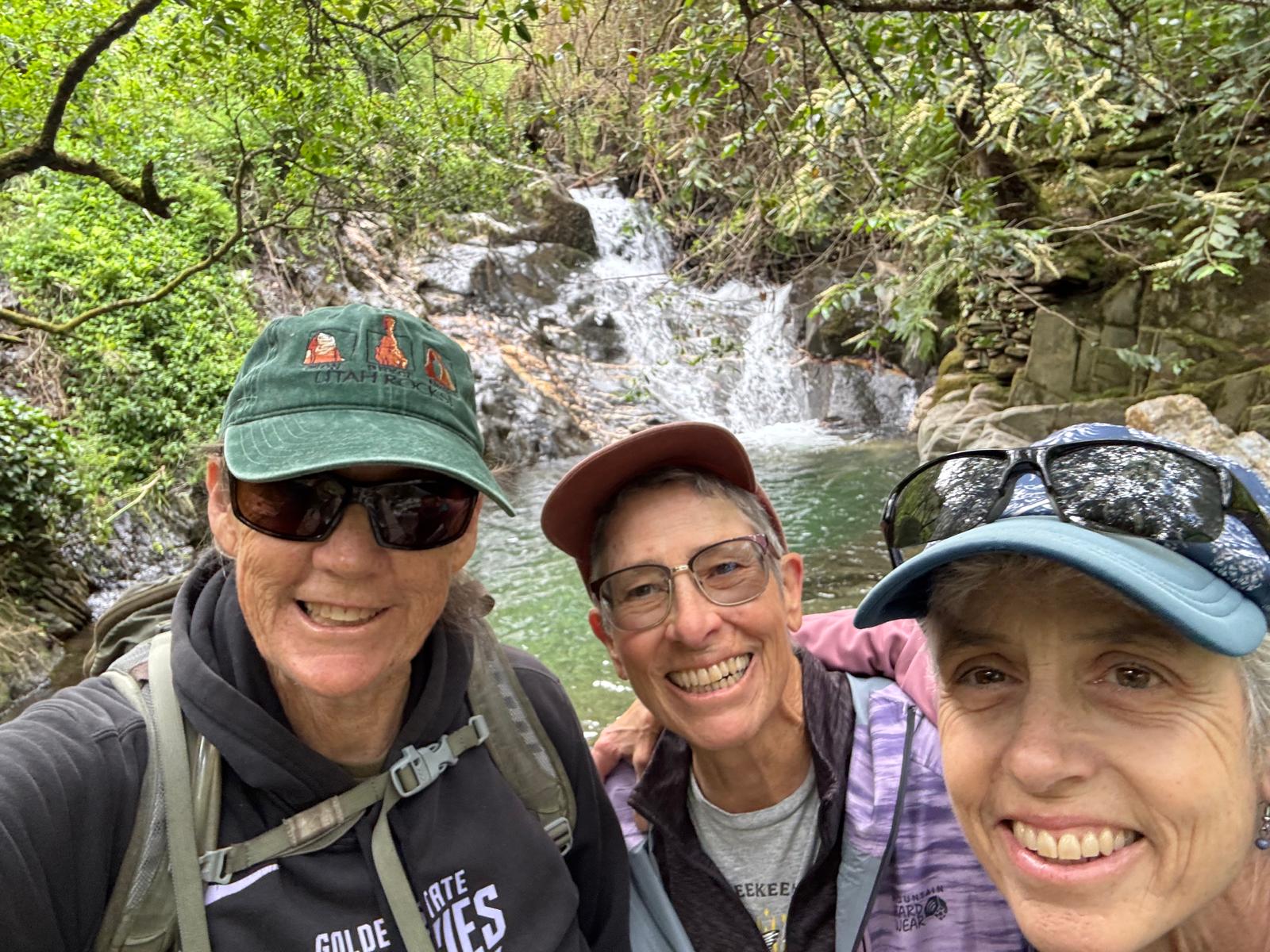
National Palace of Pena, SintraPaget, Mary and I at a national park
Silver linings: reunions that felt like coming home, friends new and ancient, strangers who became angels, tiny airport luxuries, lessons in culture, and real, workable tweaks for travel with an injury. But perhaps the best was bonding with my sister travelers and our knowledgeable guides.
No regrets. If anything, I’m grateful I muddled through—because the mess made room for unexpected warmth. I’m glad I didn’t cancel.
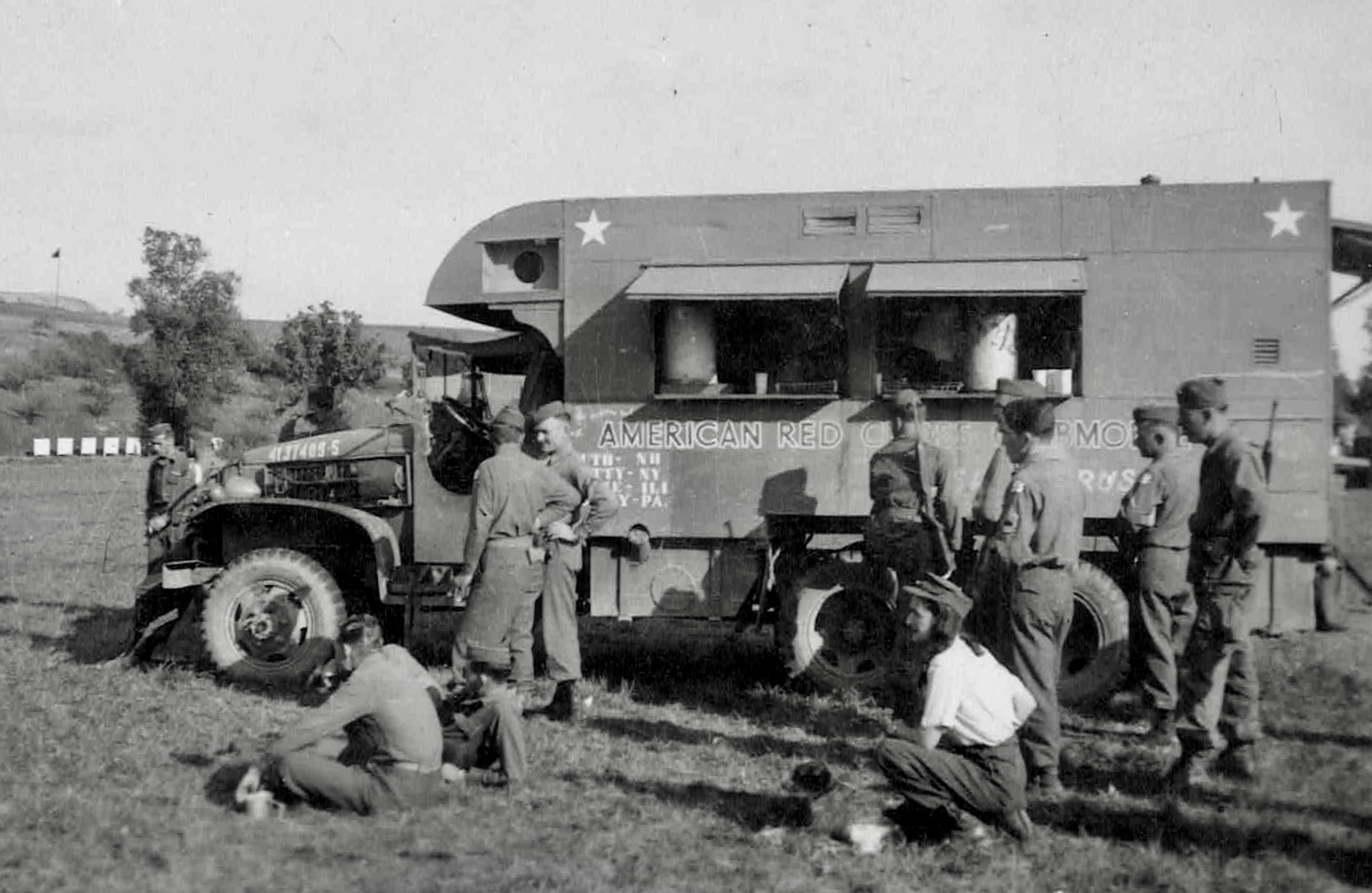
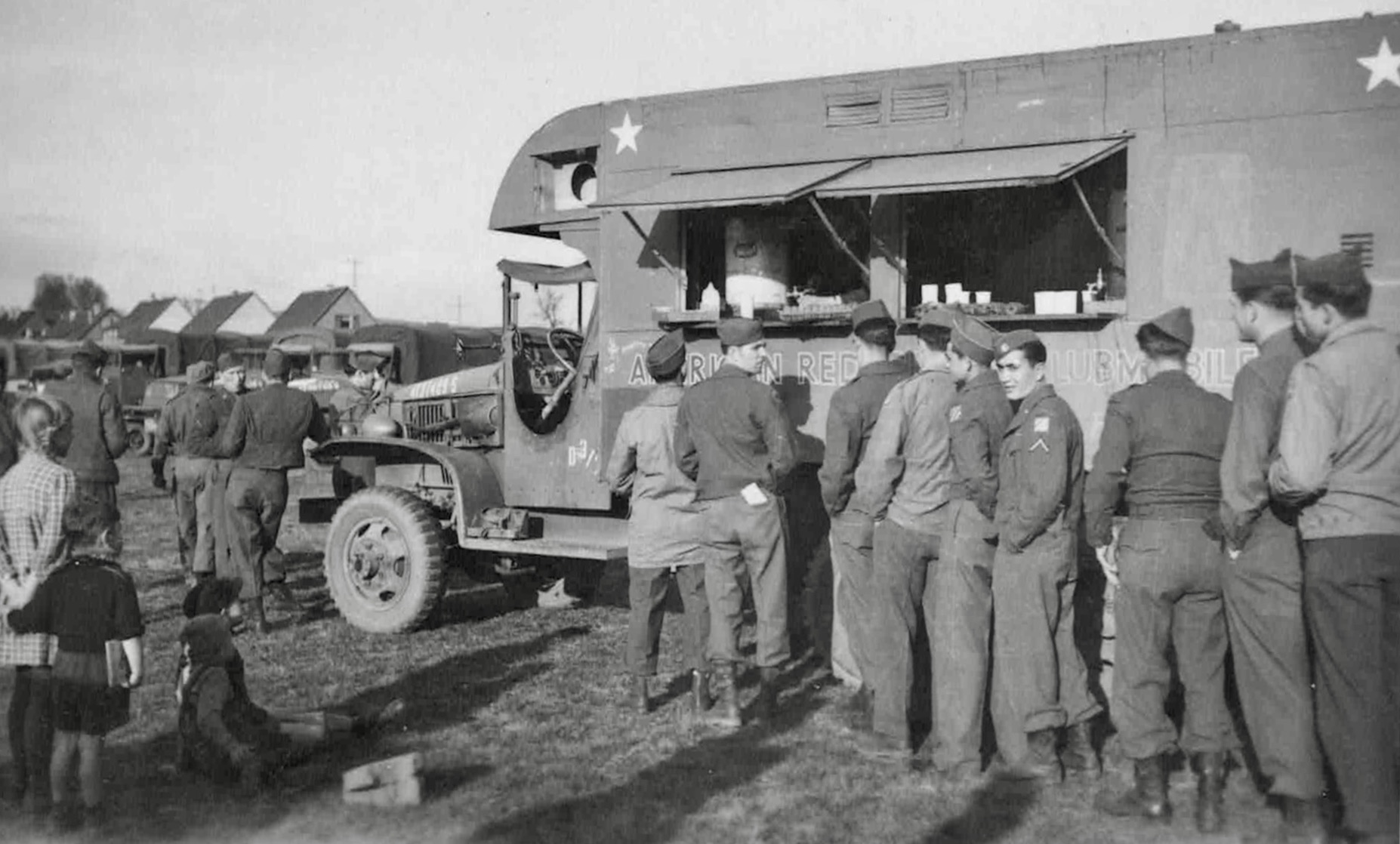
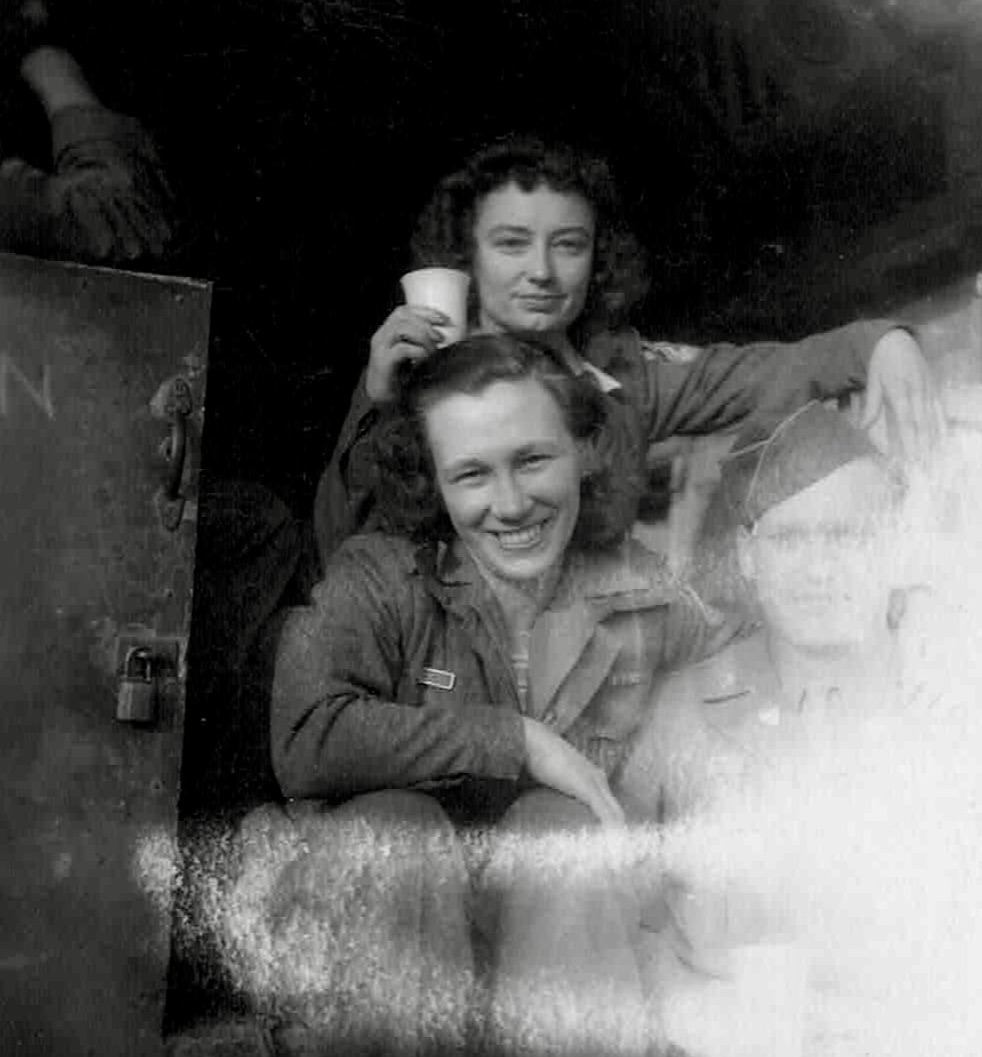
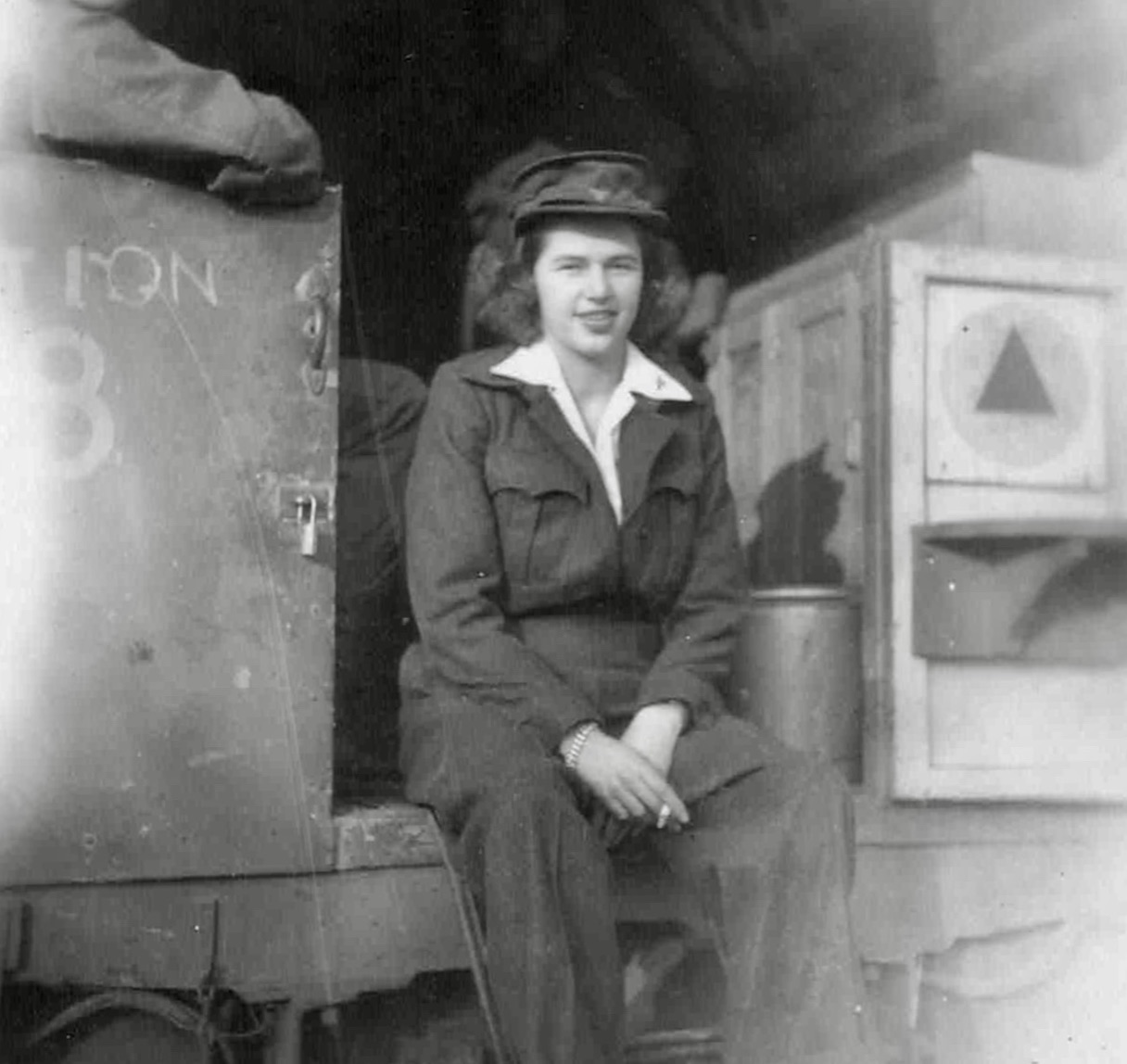
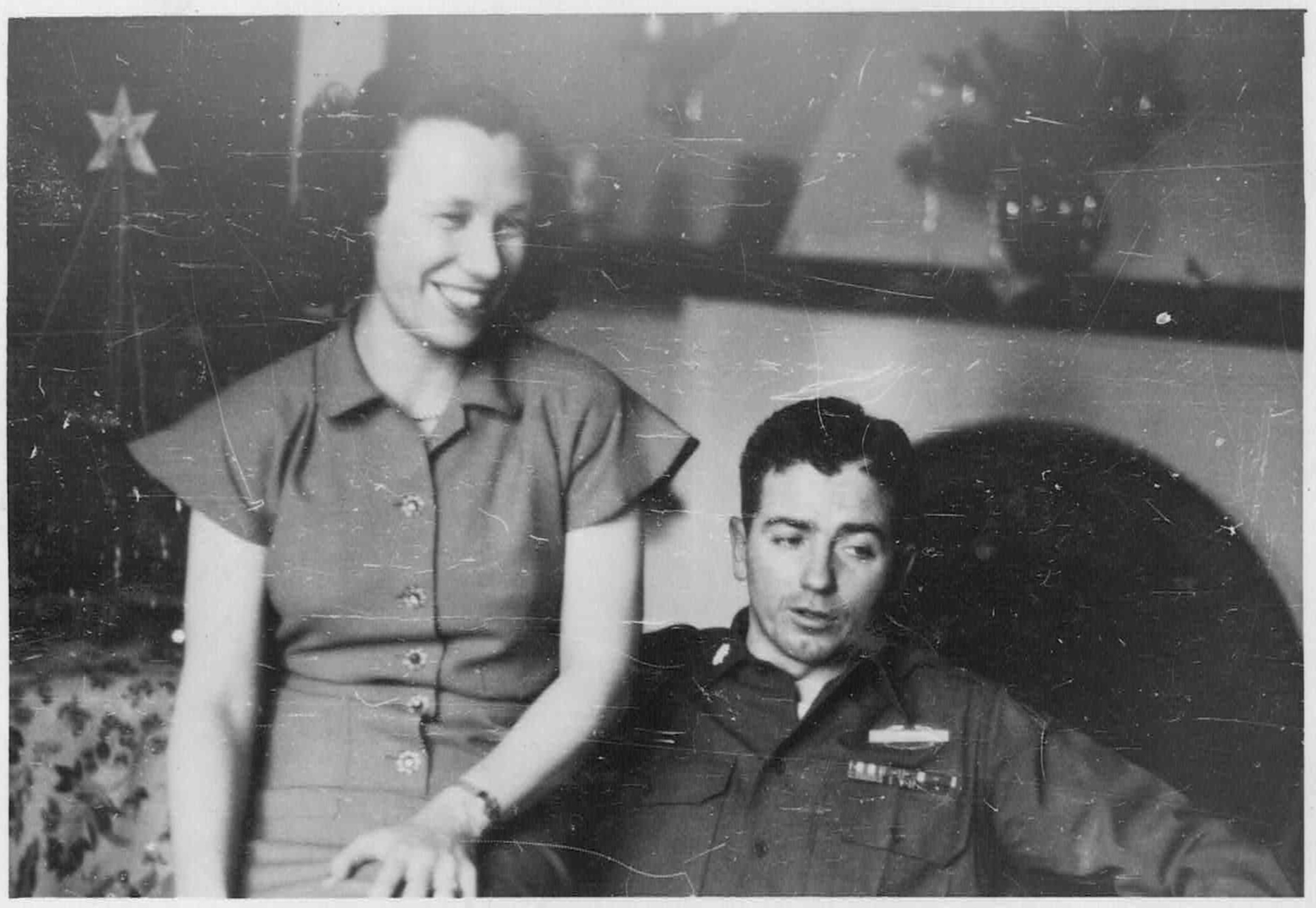
For the past year and a half, I’ve been tracing the life of my mother, Florence Wick, her service as a Red Cross clubmobiler, and her improbable intersection with the war hero Audie Murphy. Flo made a huge scrapbook after the war and I’ve been using that and her war diary to tell the story. I’m also telling Audie Murphy’s story using his autobiography To Hell and Back.
I’m pausing now to catch my breath, but the story is far from over.
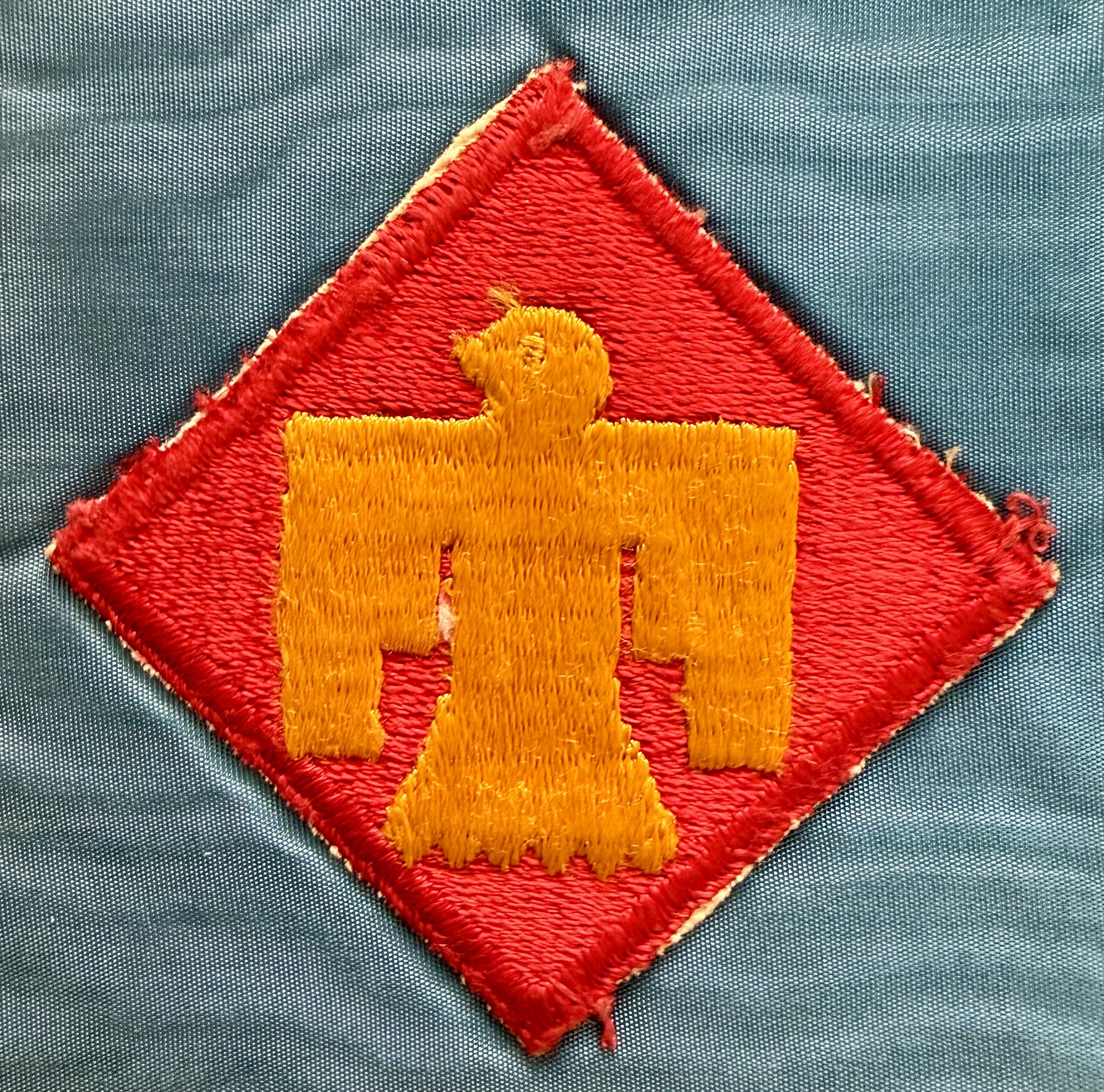
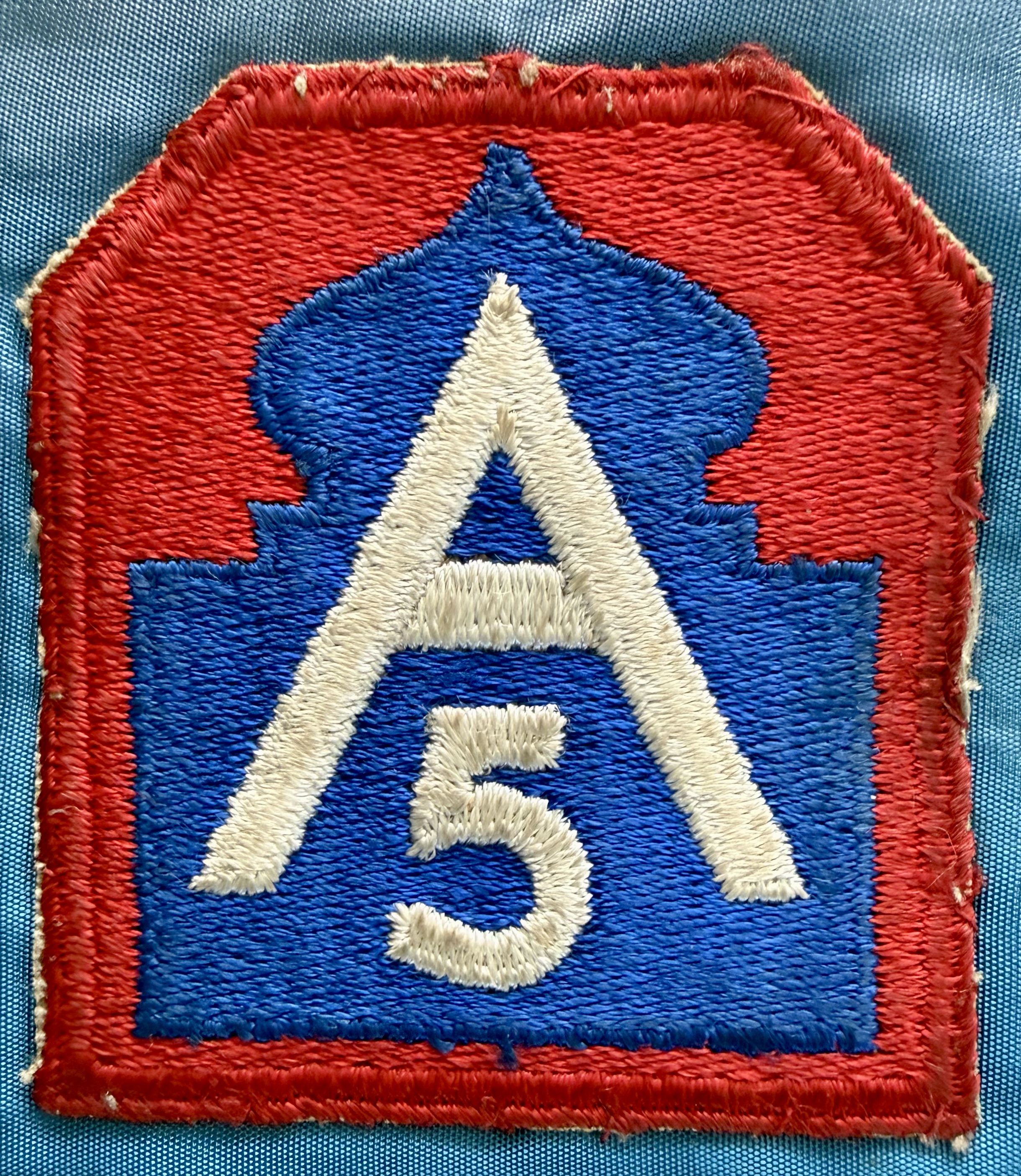
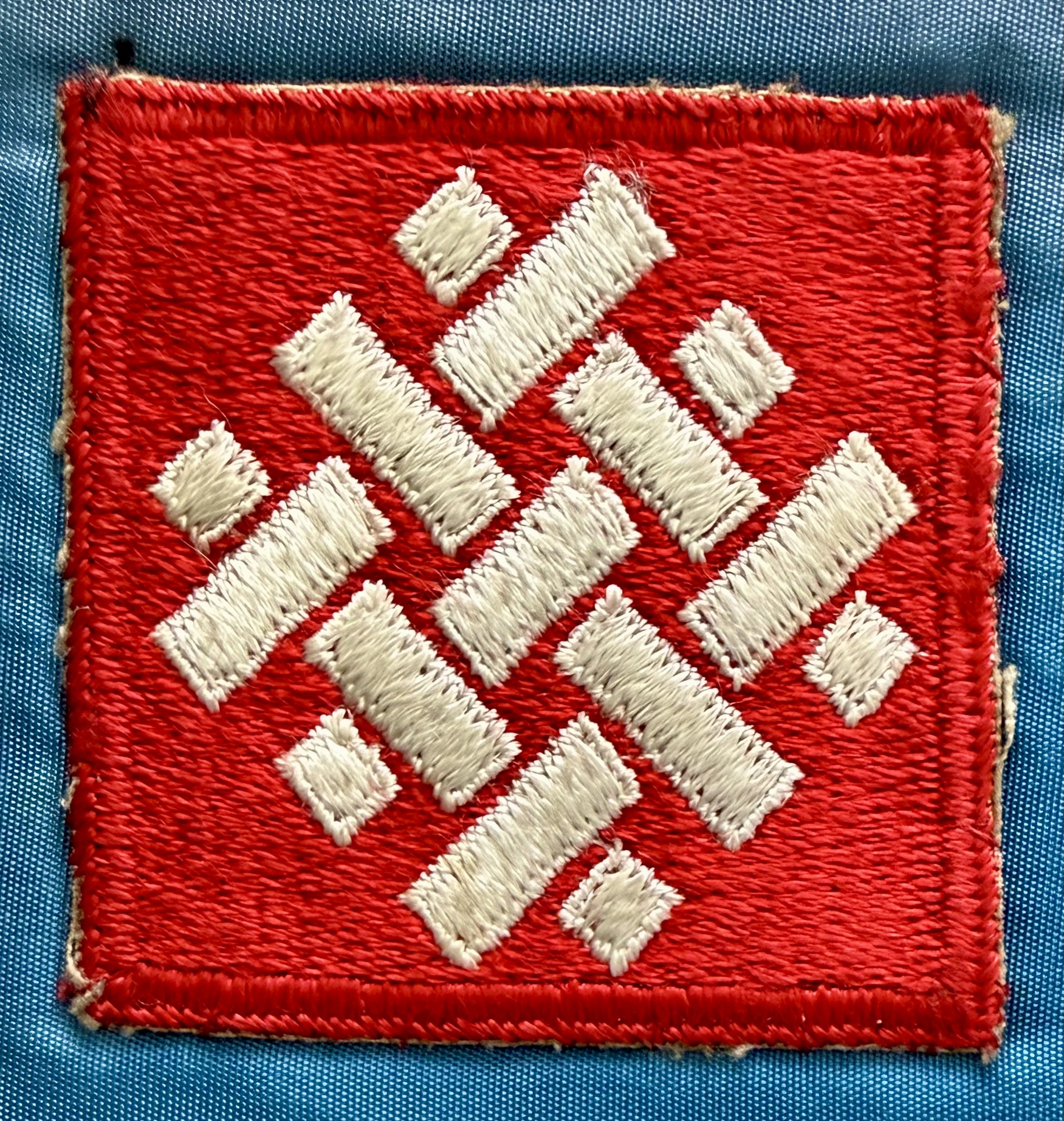
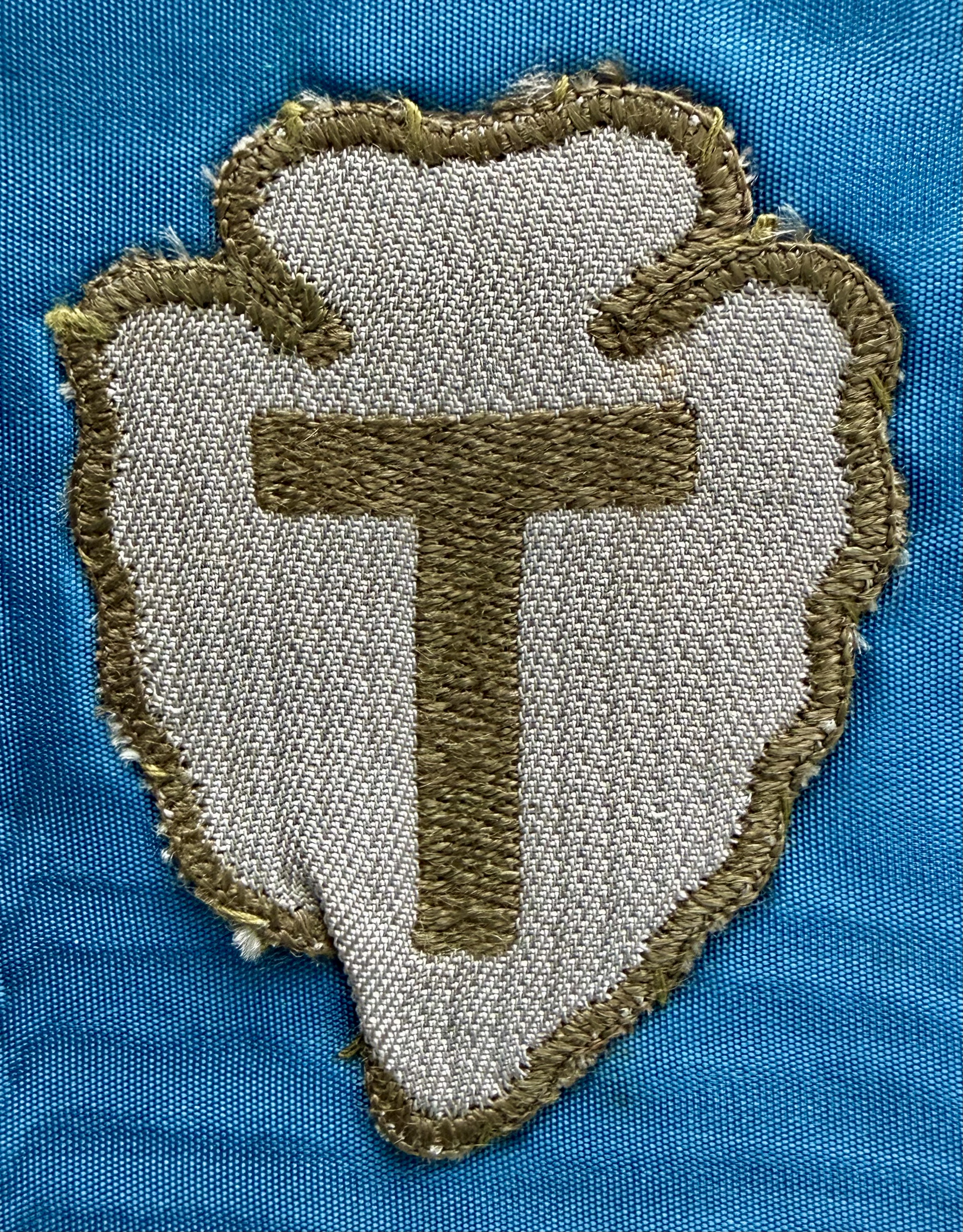
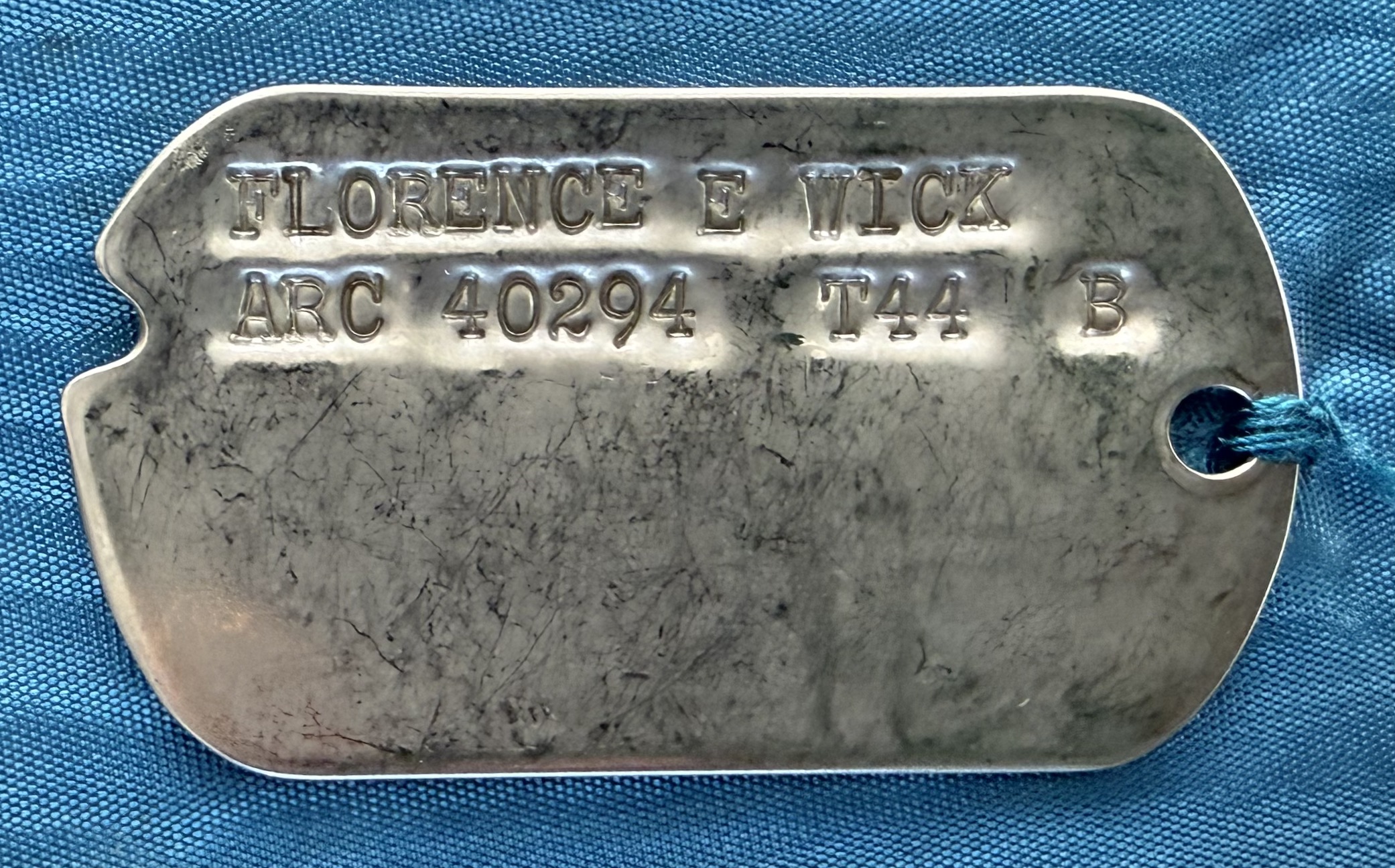
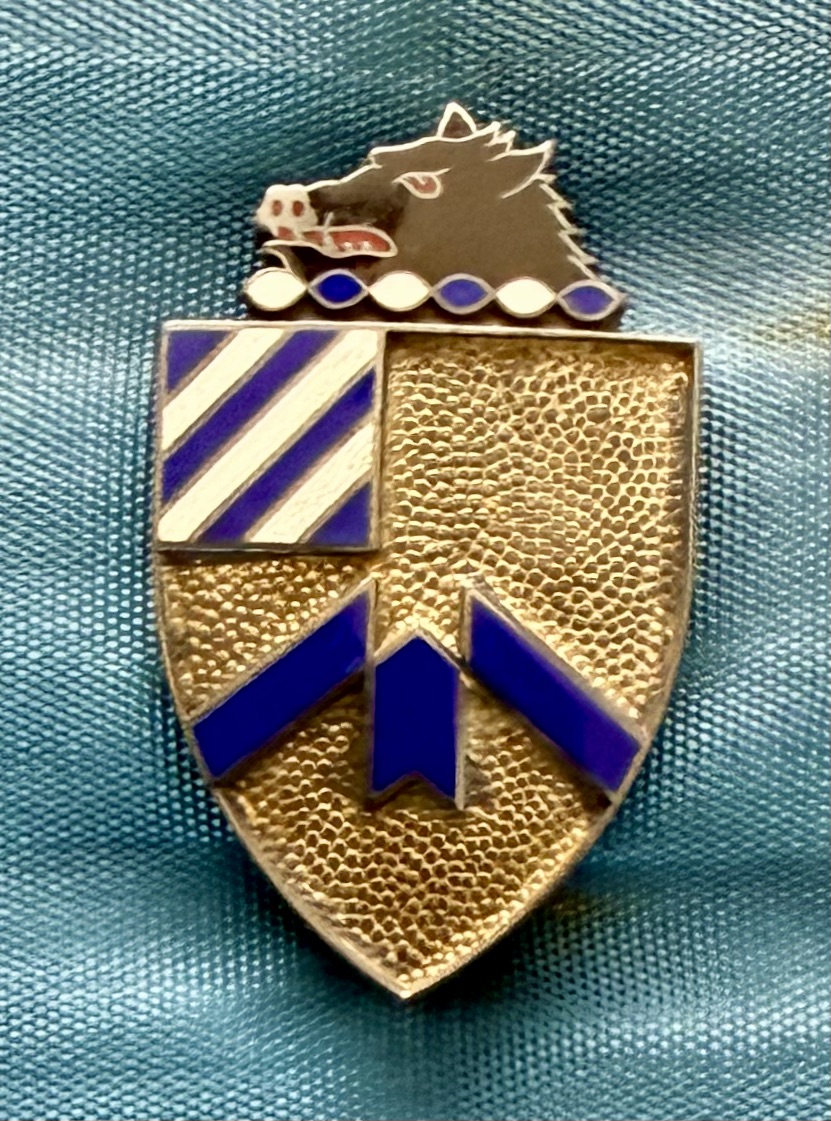
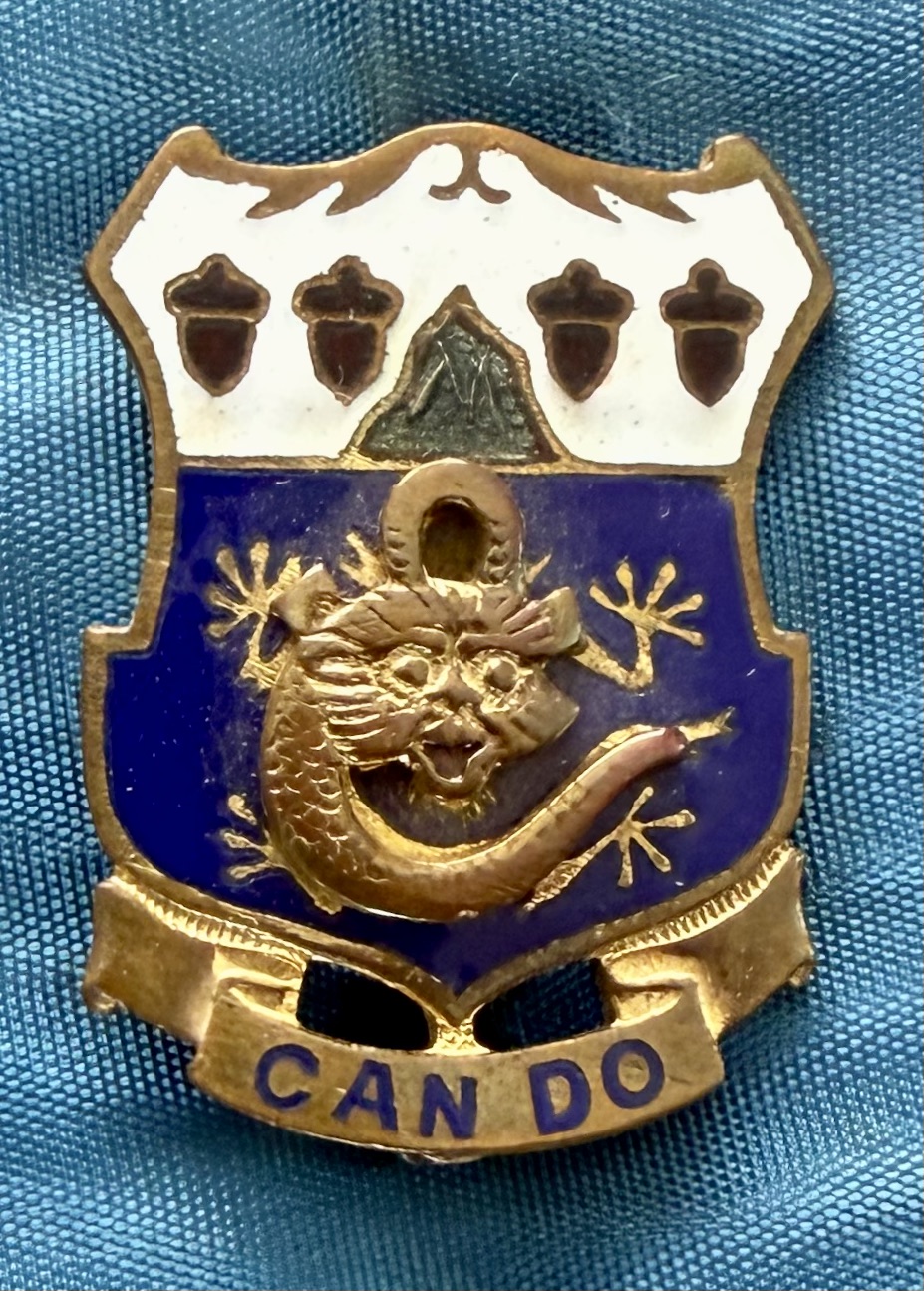
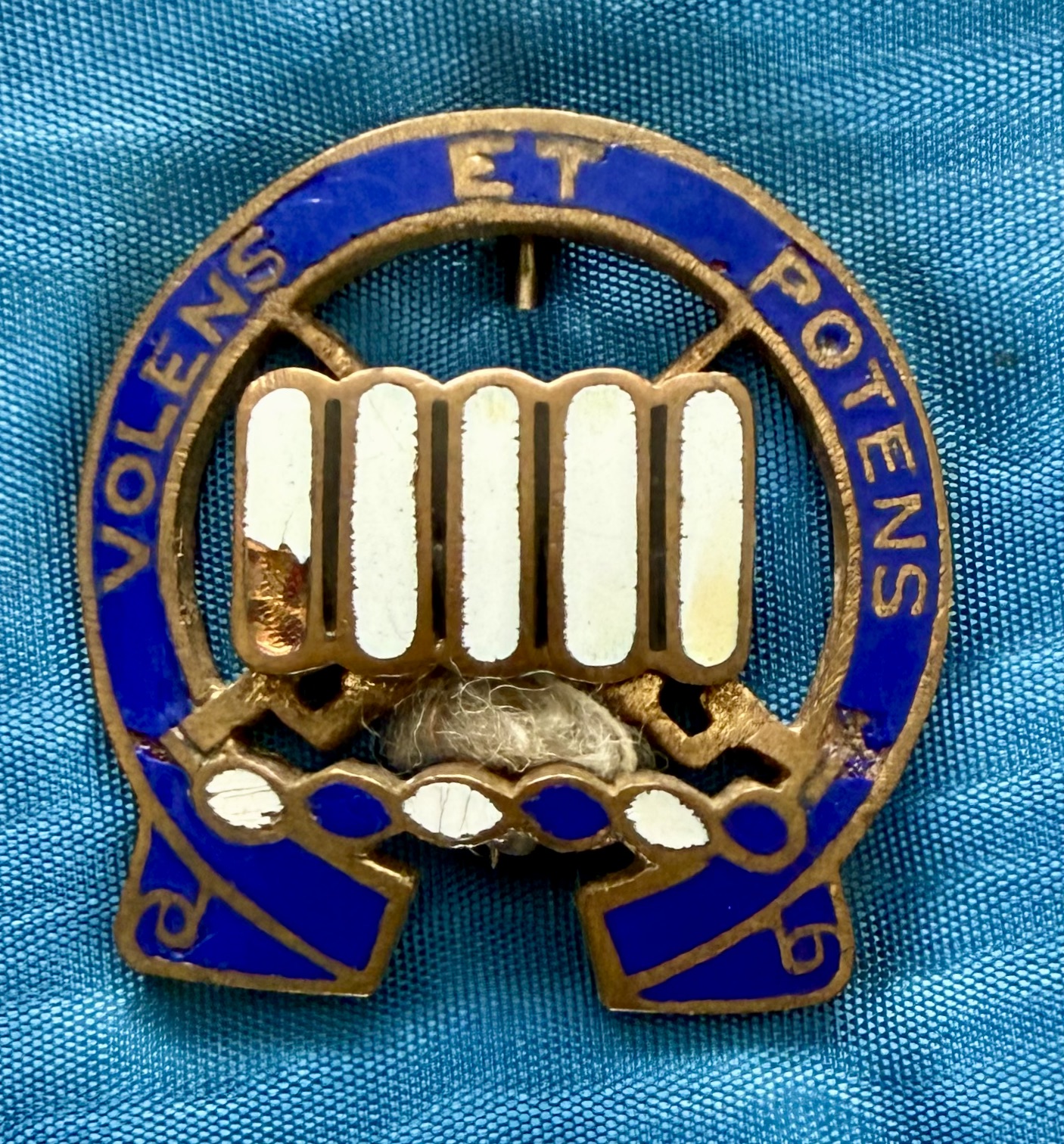
45th Infantry Div. patch5th Army patch10th mountain division.Tenth Corps patchFlo’s dog tag30th Infantry insignia15th Infantry badge7th inf Reg. Wiling and Able
Patches and insignia of some of the combat groups Flo served with, along with her dogtag, tacked onto the inside covers of her scrapbook
To recap:
In May 1944, Flo joined the American Red Cross Clubmobile program and sailed for Naples on a hospital ship. A month later, she stood in the streets of Rome as it was liberated, alongside General Mark Clark. By high summer, she was at an army camp near Pozzuoli, leading a four-woman crew, serving doughnuts and coffee to soldiers on the brink of the invasion of southern France.
By late August, they were in France, chasing a front that refused to hold still. Somewhere in that rush, Flo fell in love—with a lieutenant named Gene. They planned to marry in October. A mortar shell ended that future before it began.
Winter came hard—1944 into ’45—frigid, dangerous, unrelenting. Flo and her crew followed the Third Infantry Division through France, often within earshot of the guns. It was here she handed coffee and doughnuts to a young soldier named Audie Murphy—not yet a legend, but already carrying the weight of one.
He would become the most decorated American soldier of World War II. Flo, meanwhile, captured something just as lasting: she took the only photograph of Murphy at a field awards ceremony. The photo became a famous icon.
In January, the division crossed the Rhine and drove into Germany. Flo kept working—serving men rotating through rest camps, offering small comforts in a landscape torn apart. At the war’s end, she witnessed the liberation of Dachau concentration camp and Berchtesgaden, Hitler’s alpine retreat.
She stayed on through the occupation, stationed in Austria and Germany. When she could, she traveled—Switzerland, England, German cities and towns, Brussels, Copenhagen, Paris—brief glimpses of a world trying to knit itself back together. She ended her stay with a visit to relatives in Sweden.
And that’s where we are now.
There is still much to tell. Flo’s scrapbook is bursting with post-war miscellany. How did Flo and Audie adjust to peacetime back in the USA? How did the war affect them and those who fought in combat? How did Audie Murphy become a movie star?
I’ll come back to the rest—after a little rest of my own.
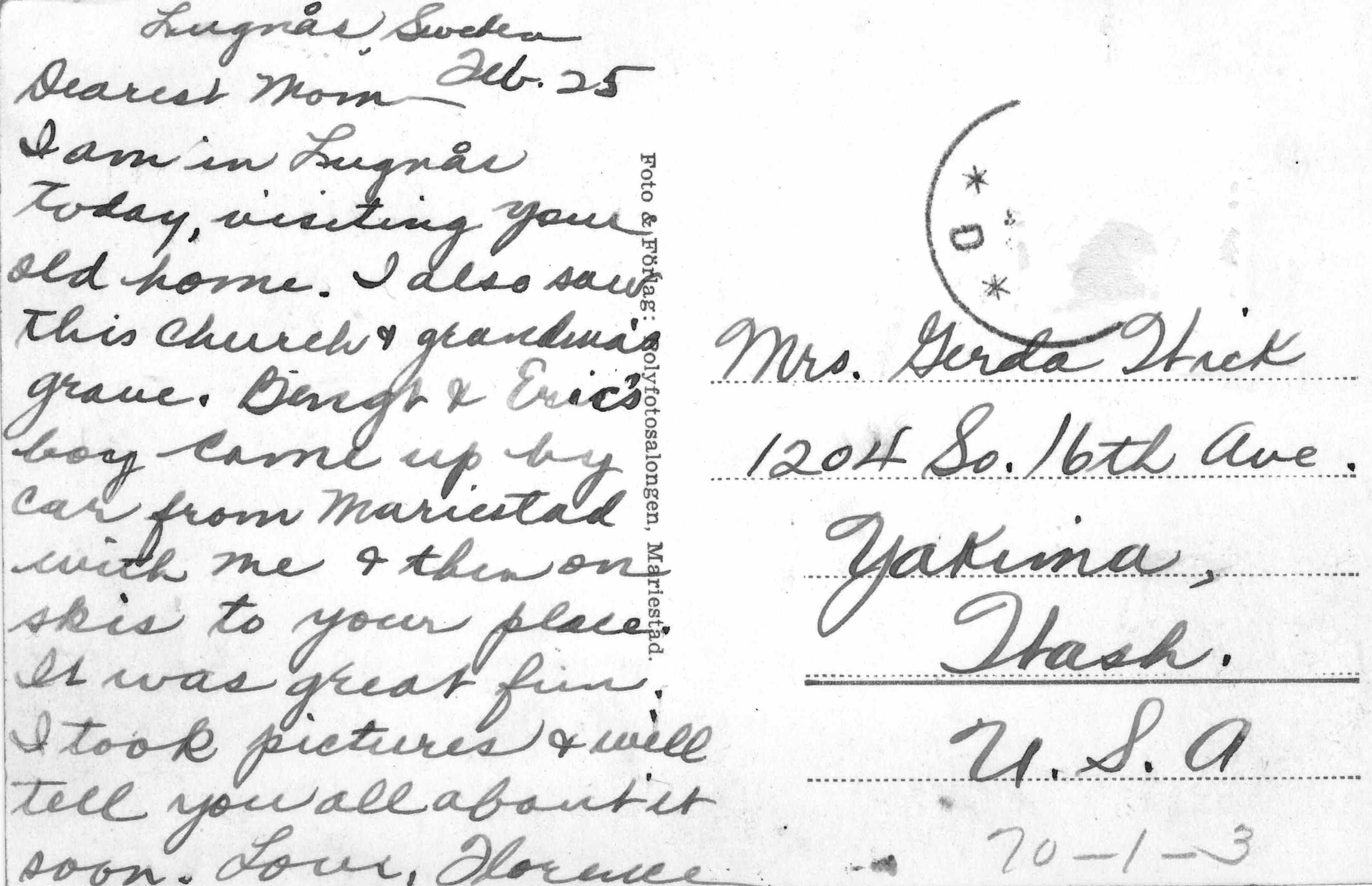
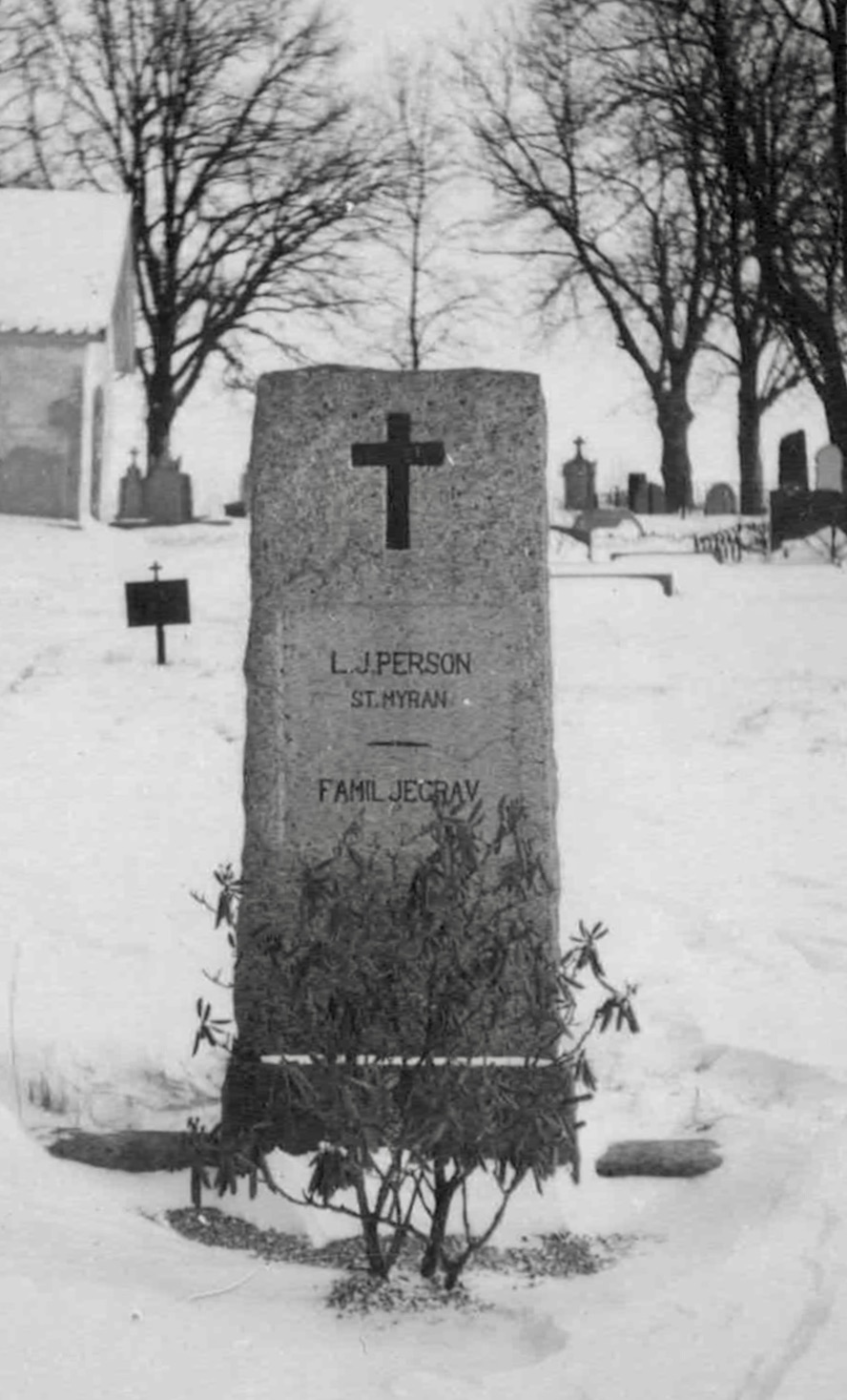
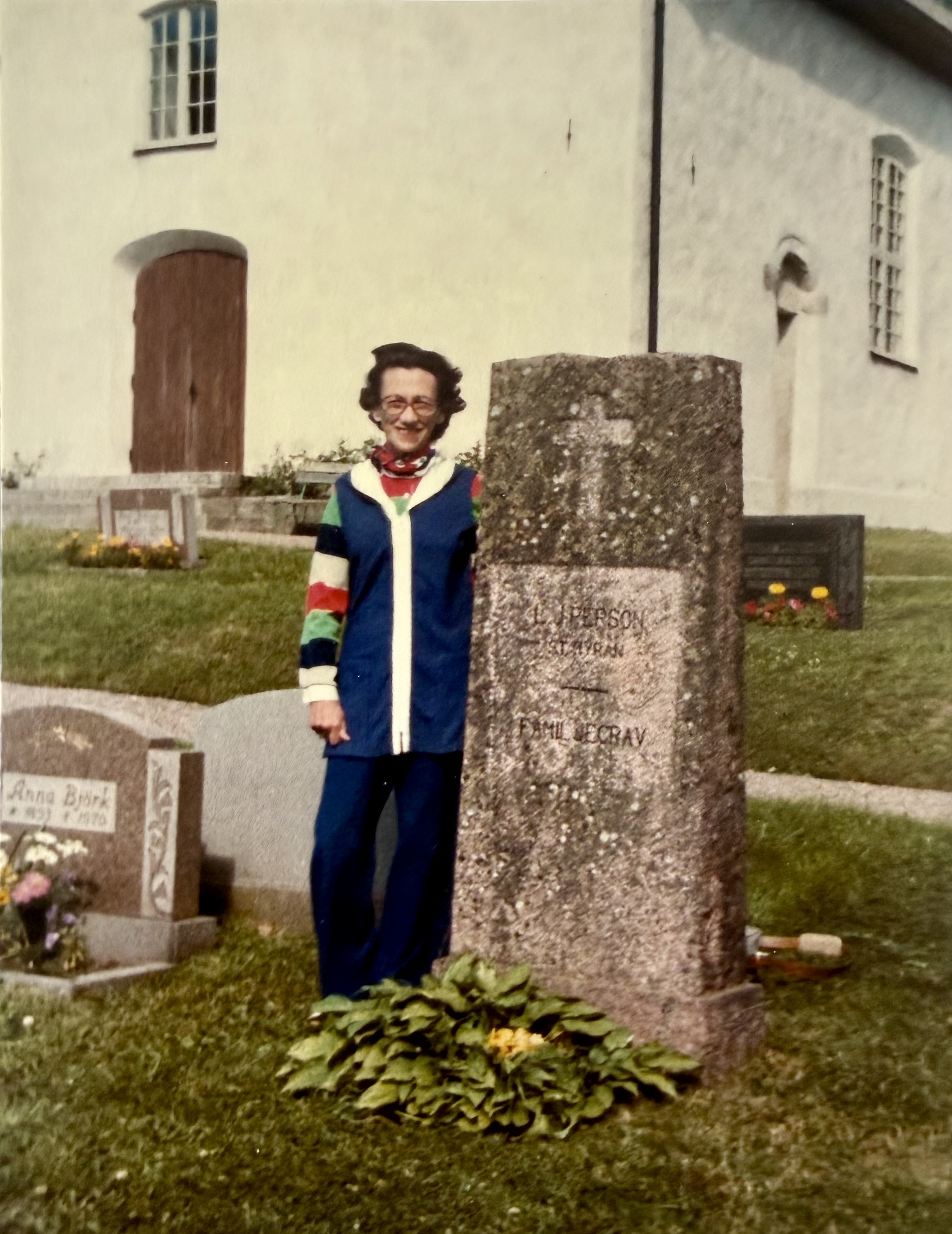
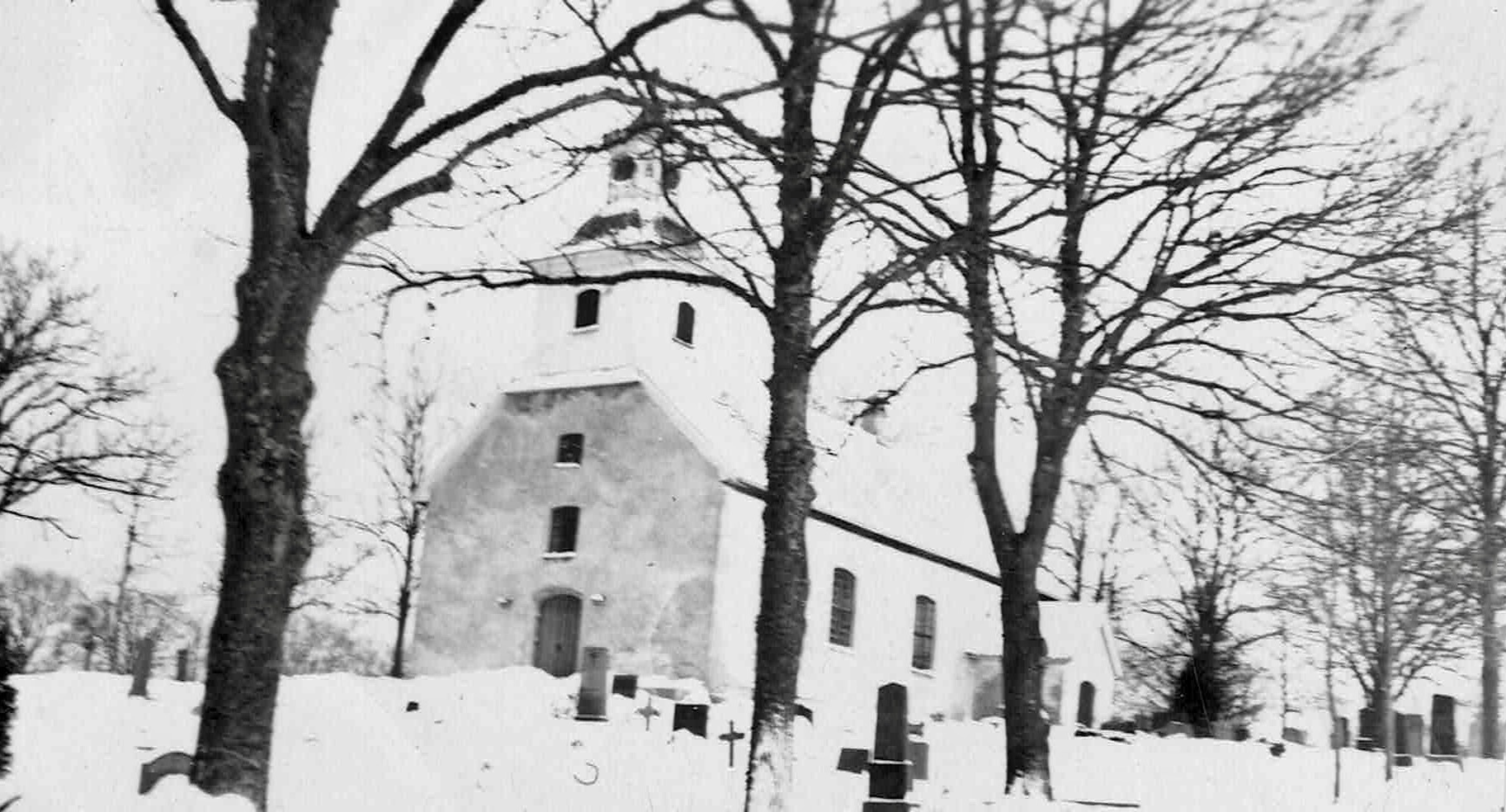
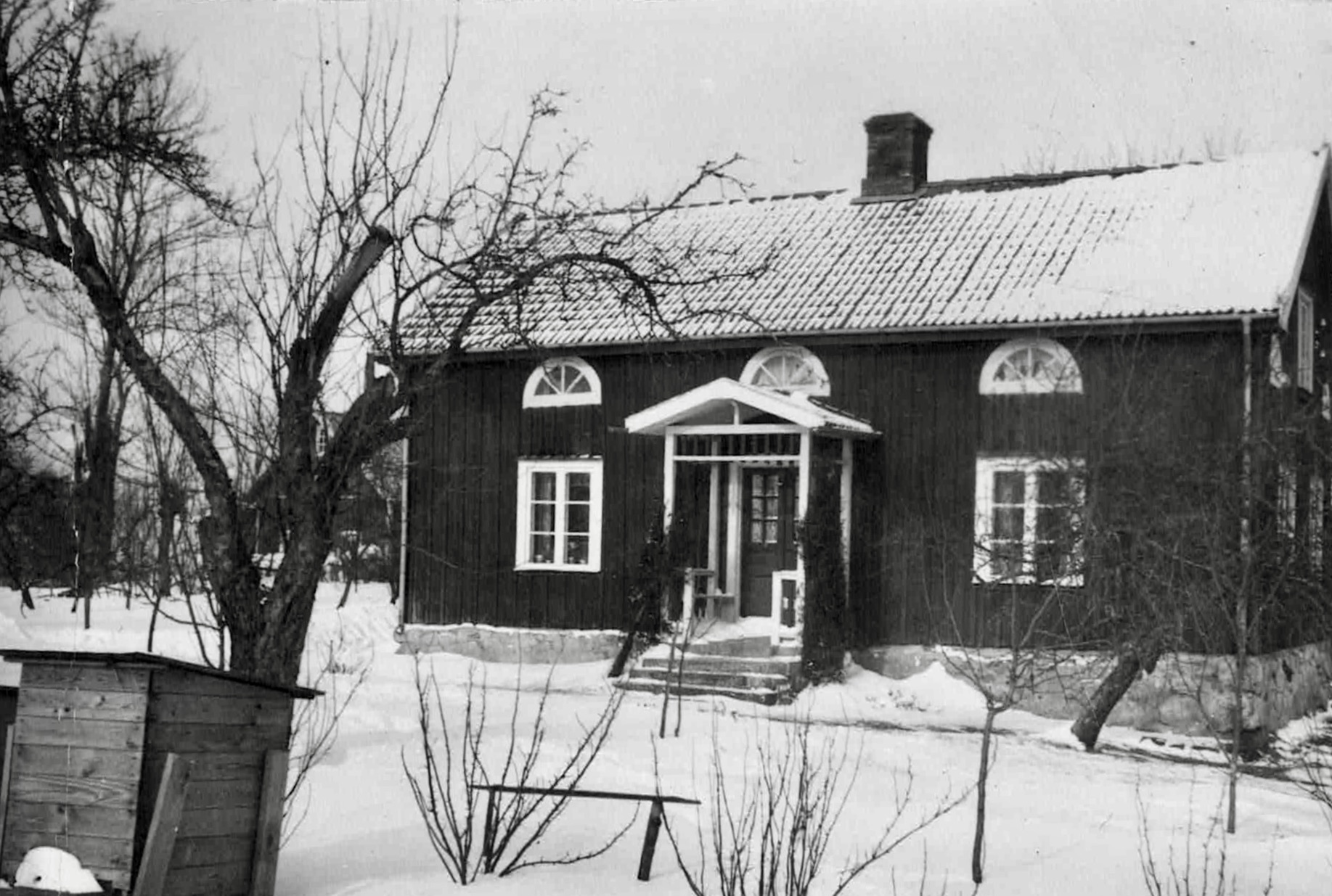
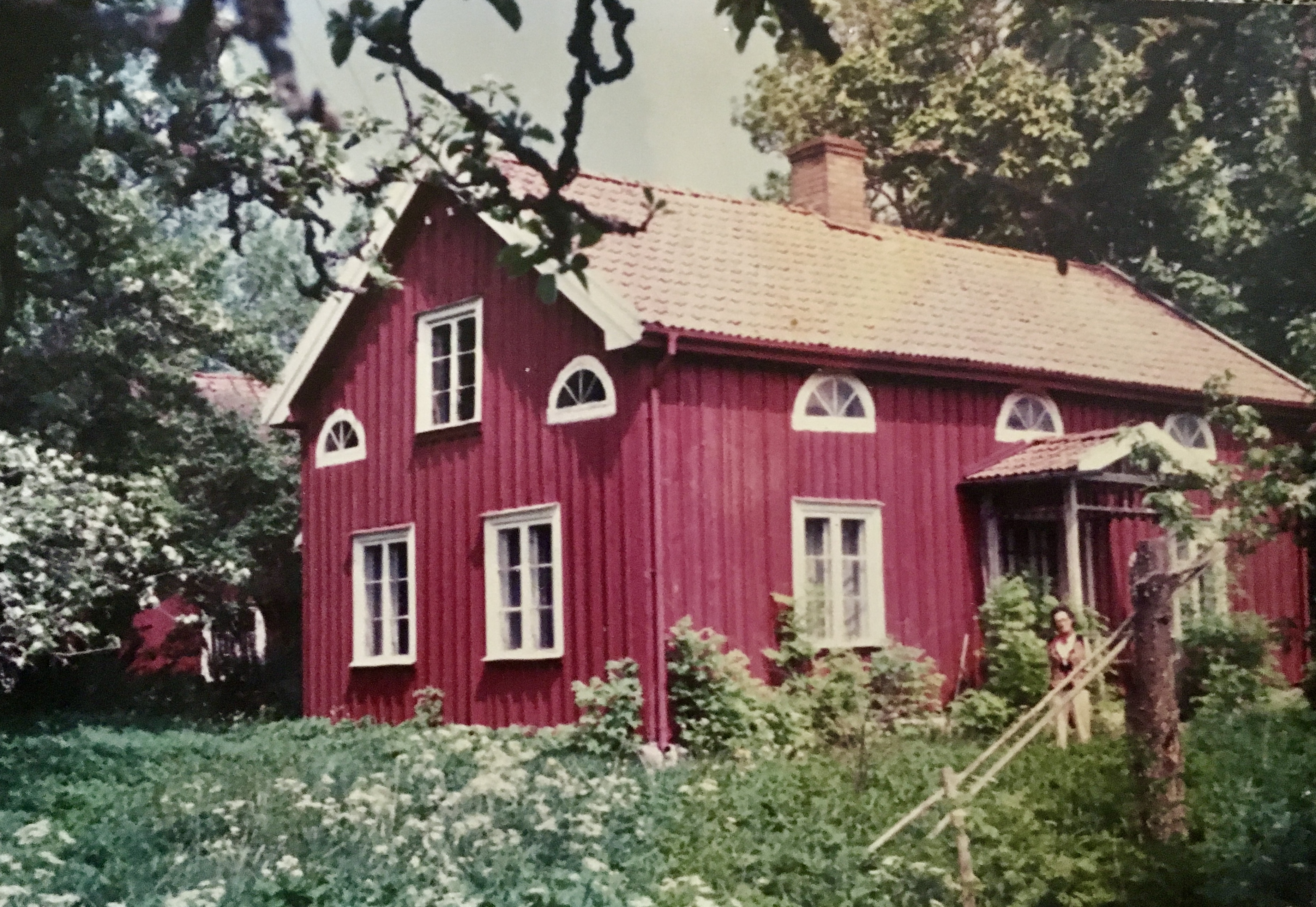
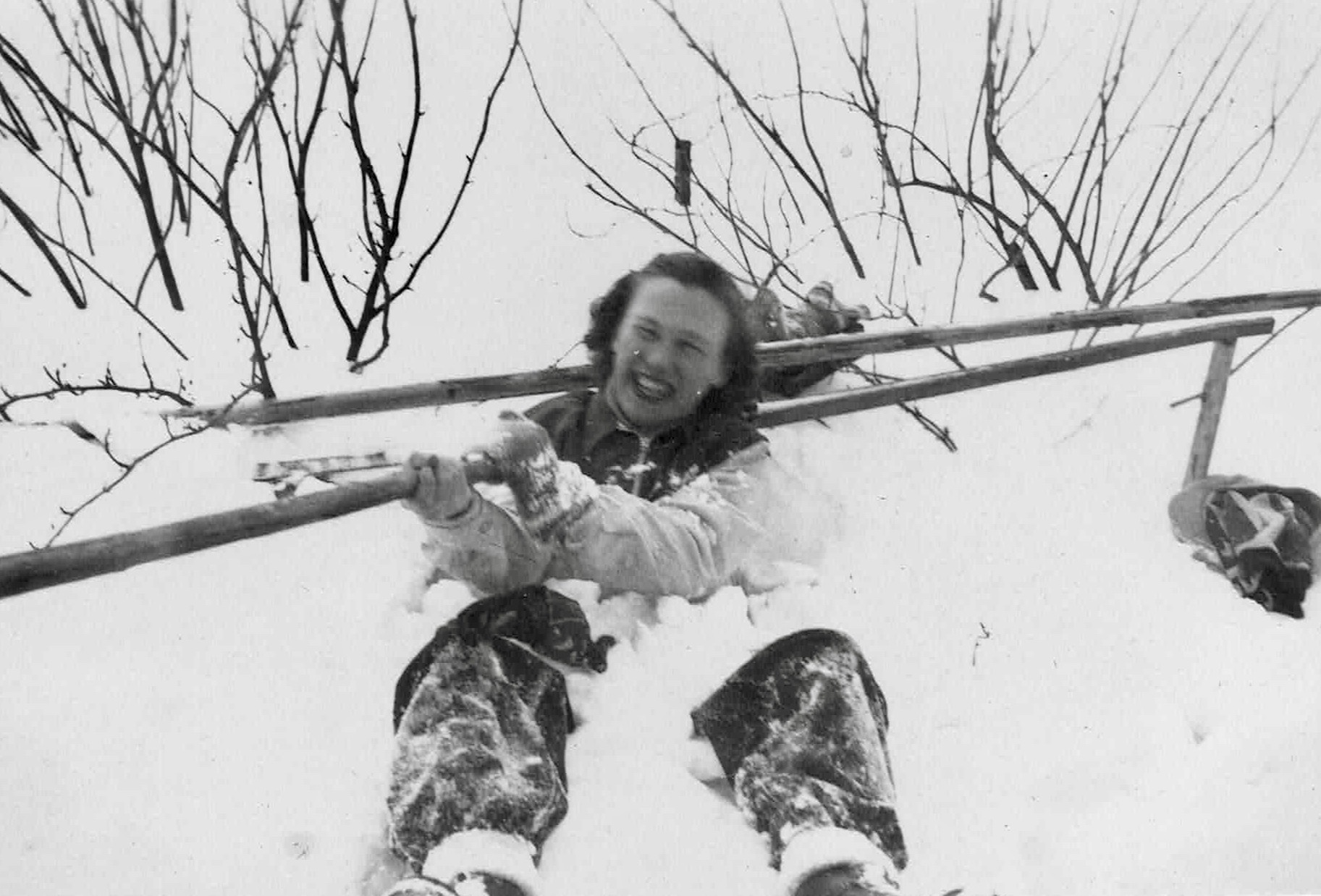
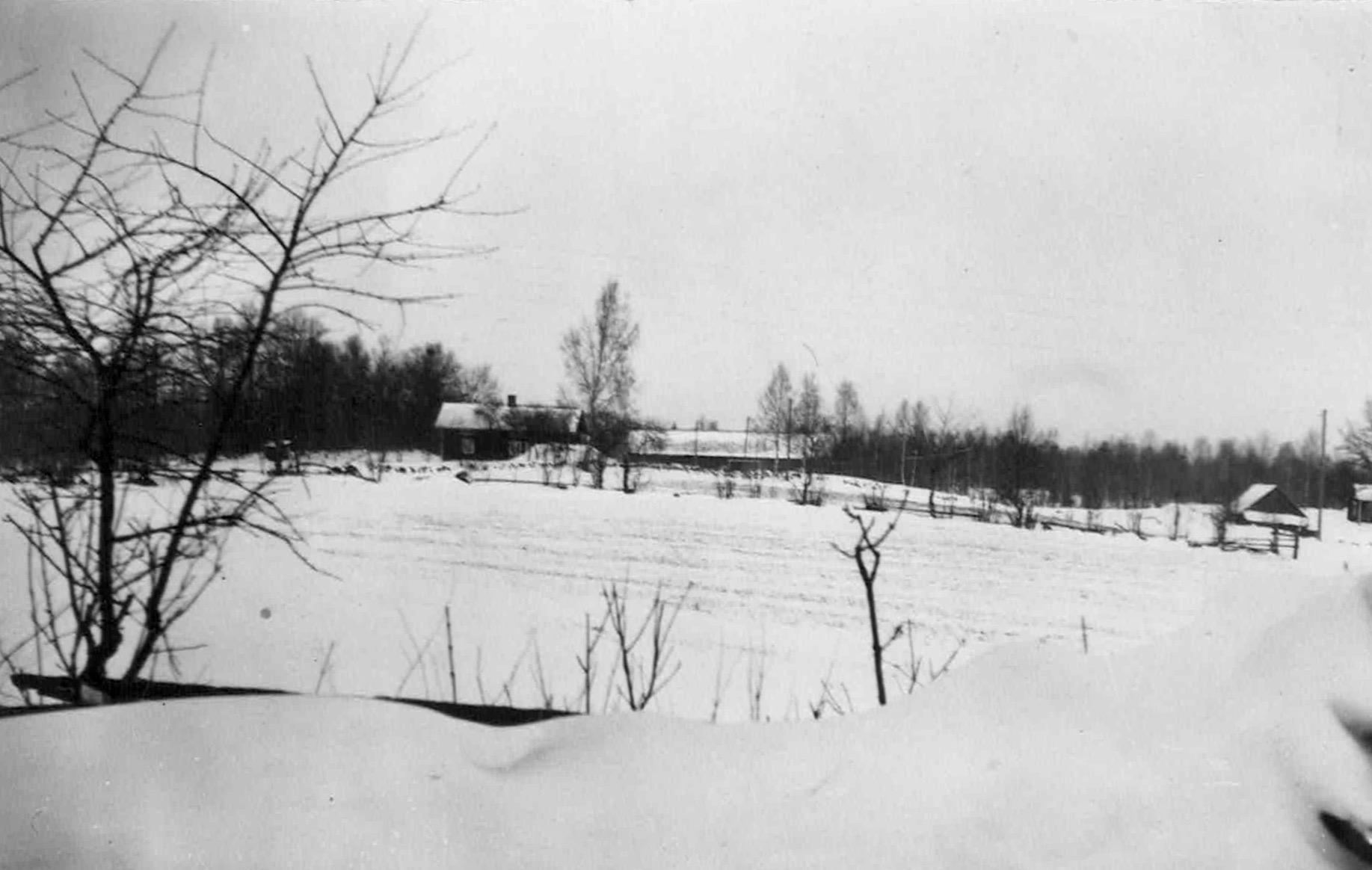
Flo got leave to visit Swedish relatives in Feb 1946. She and I returned in 1979. The family grave at LugnåsWe visited it in 1979.Church and cemetery at Lugnås. The church was built in the 12th century.Grandma’s family home at Stora MyranIt was still there when we visited in 1979.“Skiing (?) in Lugnås”The farm at Stora Myran
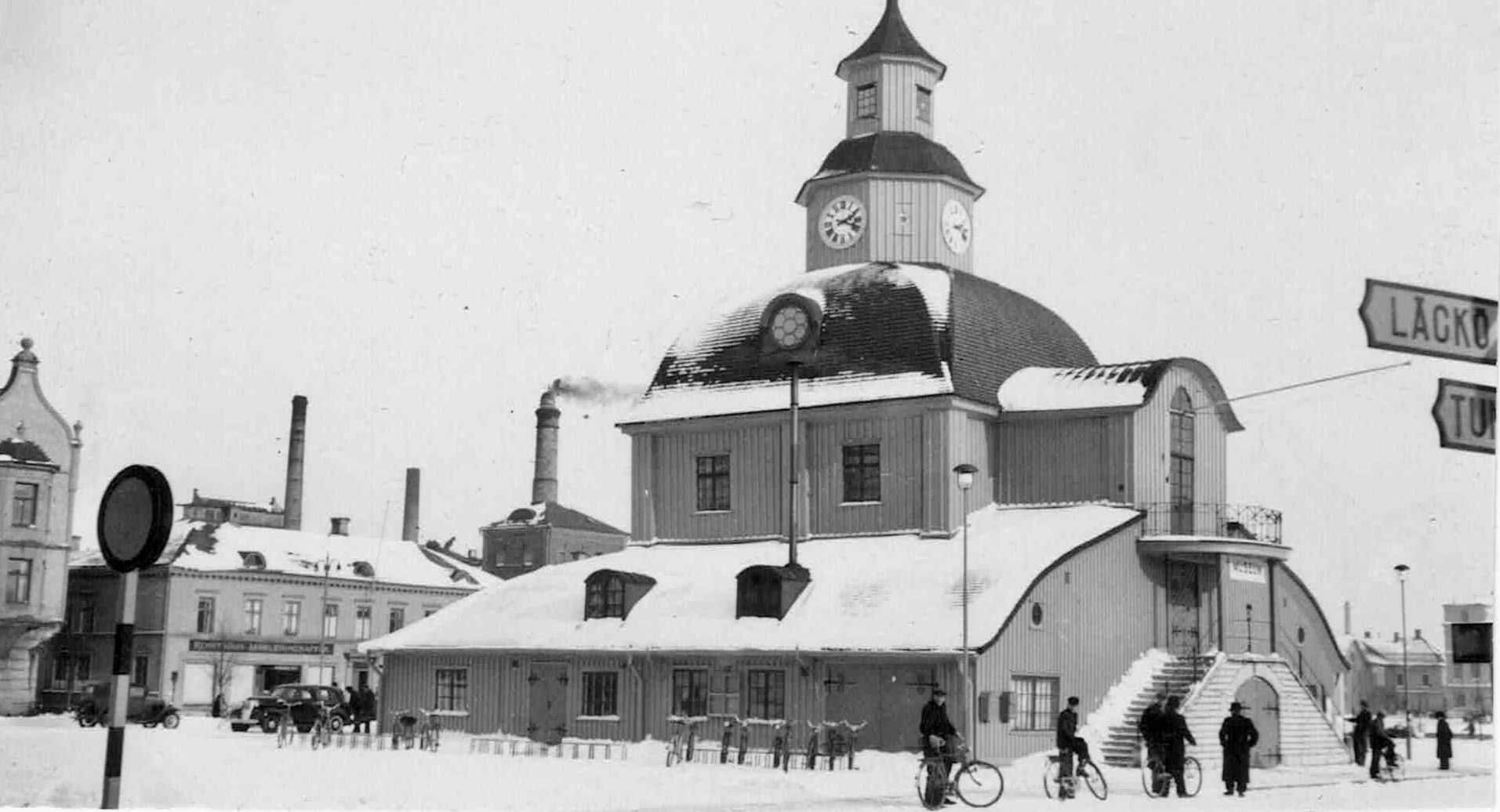
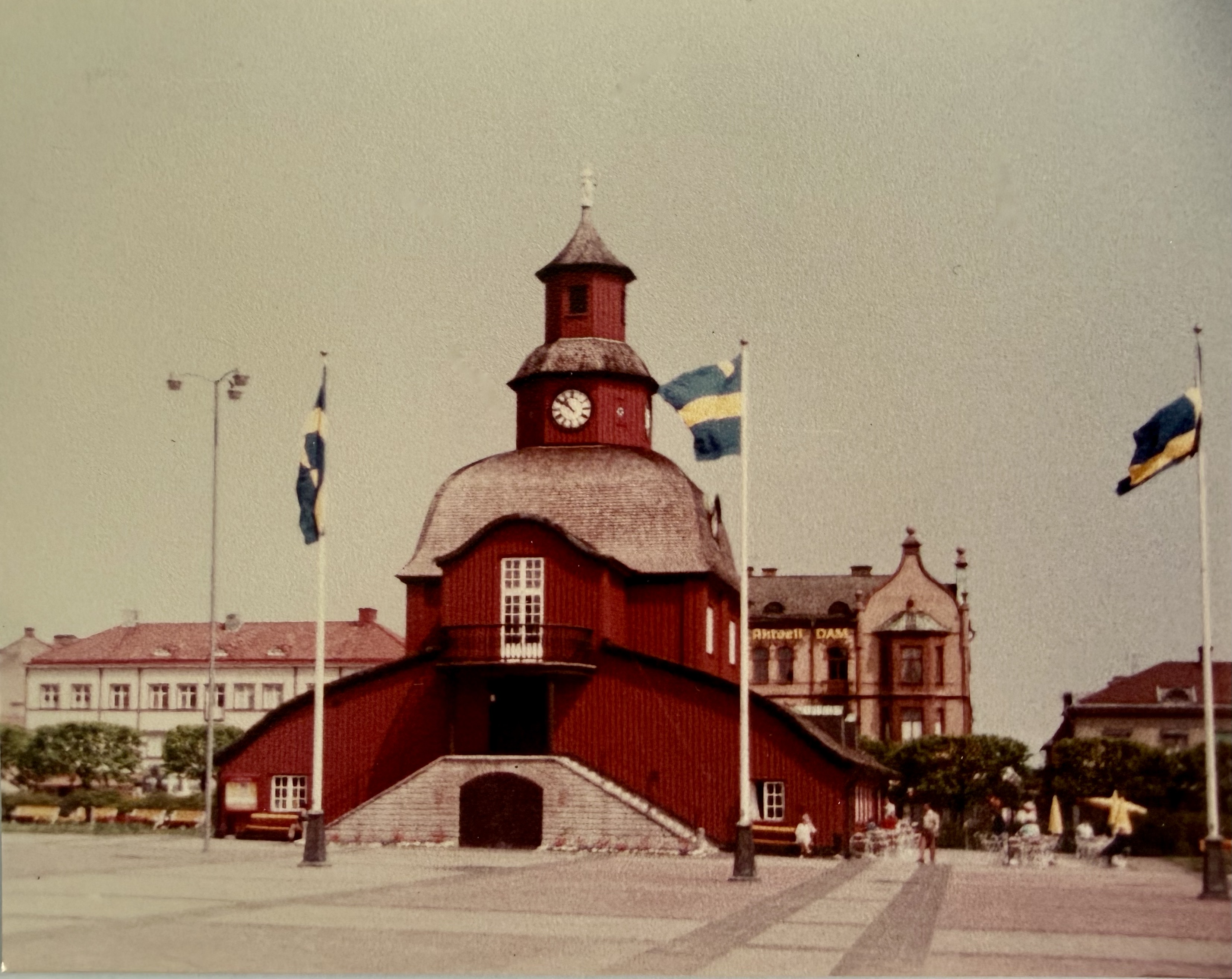
Lidköping
Flo visited cousin Karin in Lidköping and we saw her again in 1979. She was a lesbian who adopted her younger caregiver. They traveled the world together.
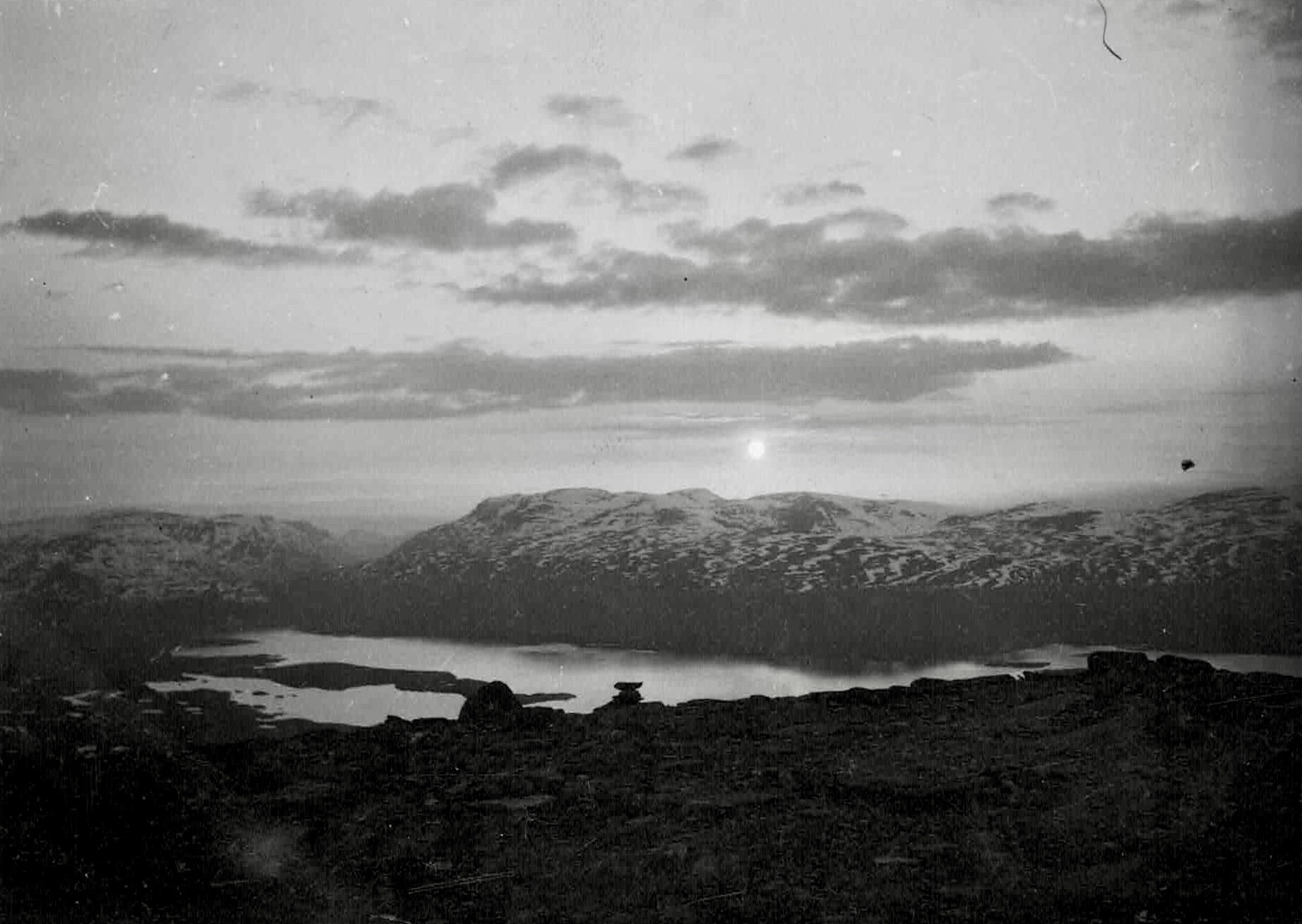
Vener Canal, LidköpingTown square Lidköping. “500 years old in 1946”Still there 1979. Smokestacks are gone.Flo and I with her first cousins Greta and Elizabeth, Ingebritt and son“Land of the midnight sun”
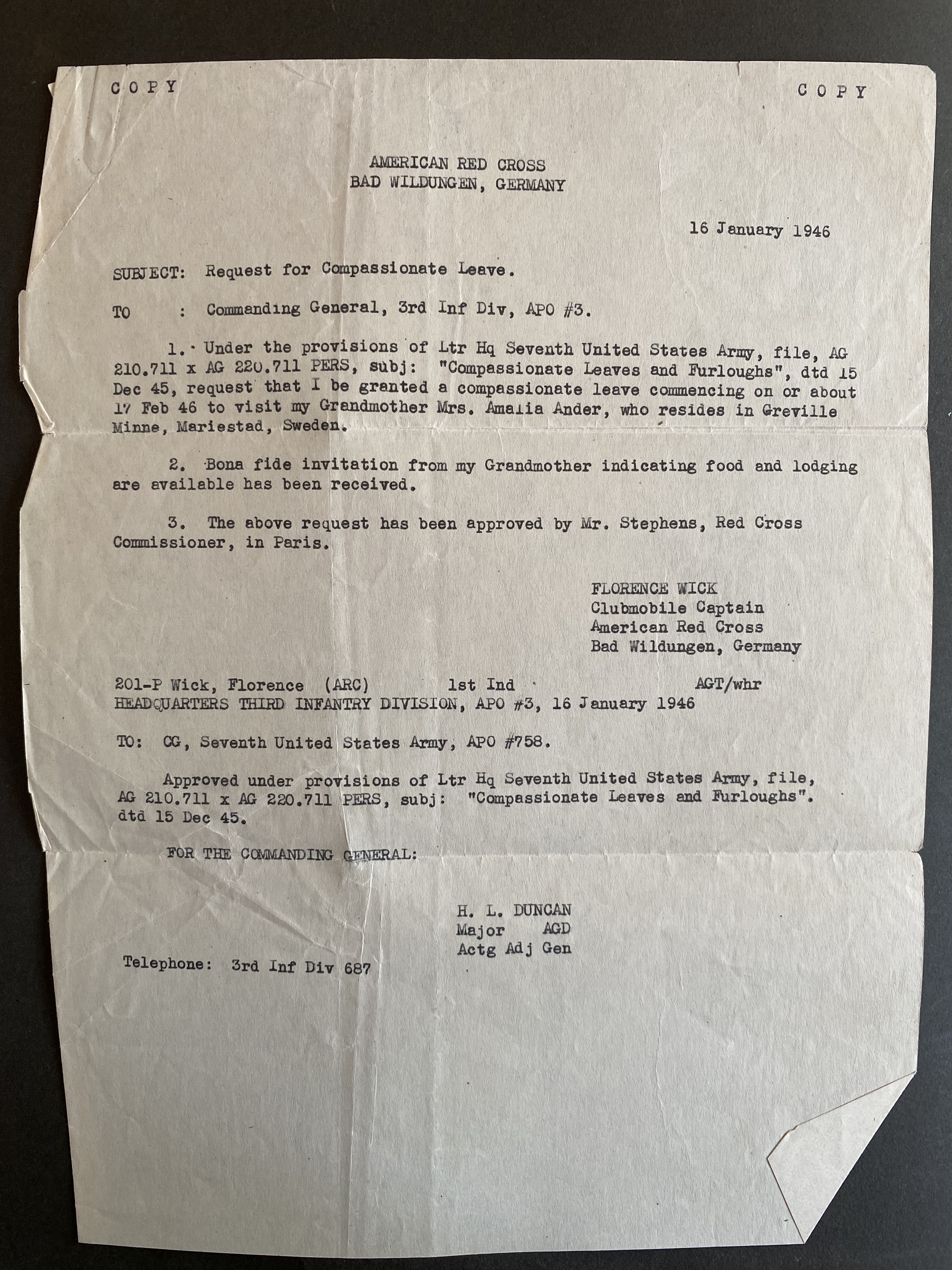
Flo Requests Compassionate Leave to Visit Relatives
My Mother and Audie Murphy Ch. 110
Sweden maintained official neutrality in the war but made pragmatic concessions to Nazi Germany—exporting crucial materials and allowing troop transits to occupied Norway and Finland—while also expanding its military, sheltering thousands of Jewish and political refugees, training Norwegian resistance fighters, and sharing intelligence with the Allies. As the war turned, Sweden steadily curtailed cooperation and nearly ended trade with Germany by late 1944. Historians debate this legacy: some see pragmatic neutrality that preserved independence and enabled humanitarian acts; others criticize compromises that prioritized economic interests over moral responsibility.
Flo and I traveled to Sweden and Norway in 1979, and we visited all the Swedish relatives still living that Flo saw in 1946. We saw Flo’s mother Gerda’s birthplace, and the towns Flo had visited. From talking to Norwegians I got the feeling then that they had not yet forgiven the Swedes for cooperating with the Nazis during their five-year occupation of Norway. In 1979 there were still those, like my mother, who remembered the war. Perhaps the younger generations no longer hold a grudge.
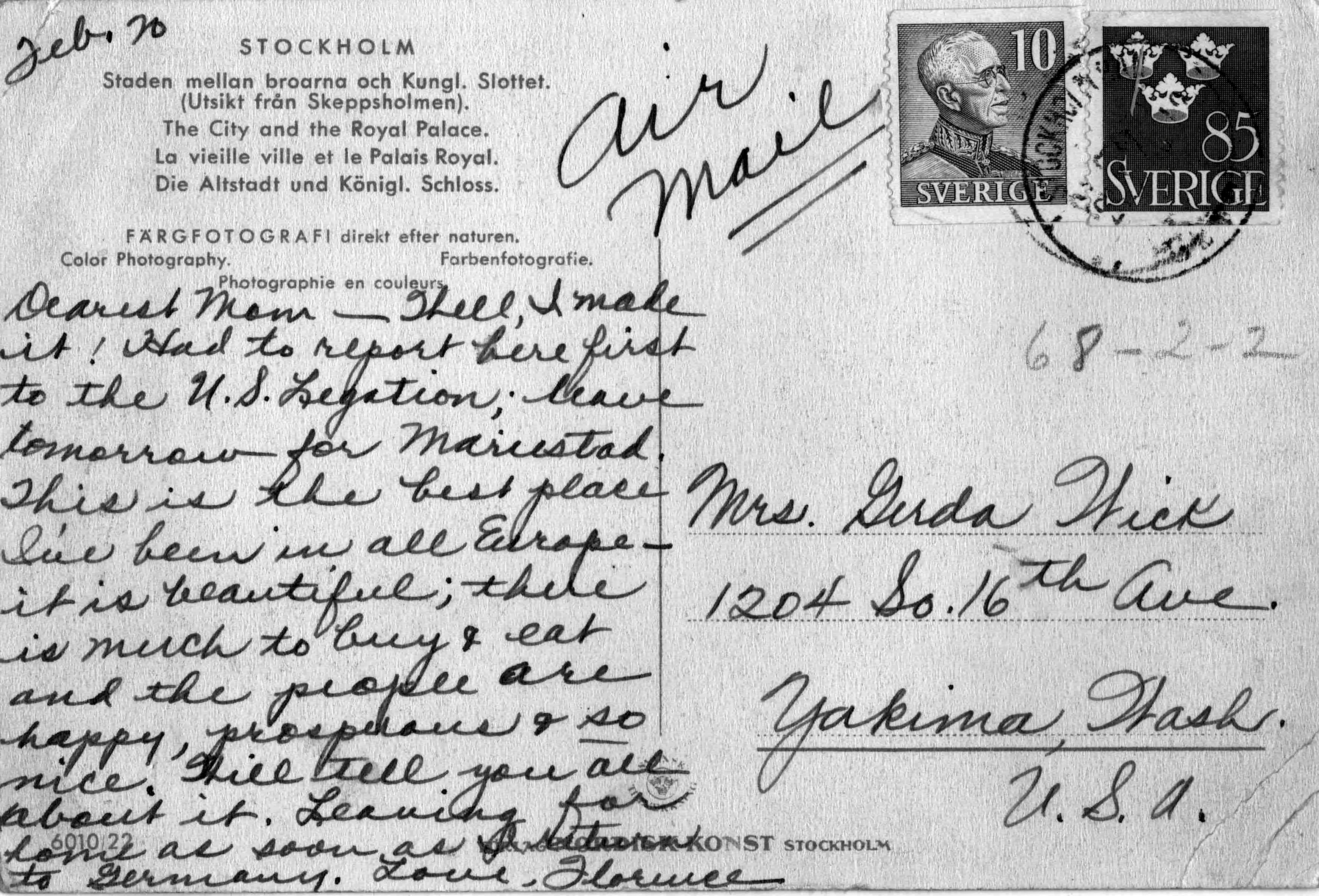
Request for Compassionate Leave“This is the best place I’ve been in all Europe,” wrote Flo
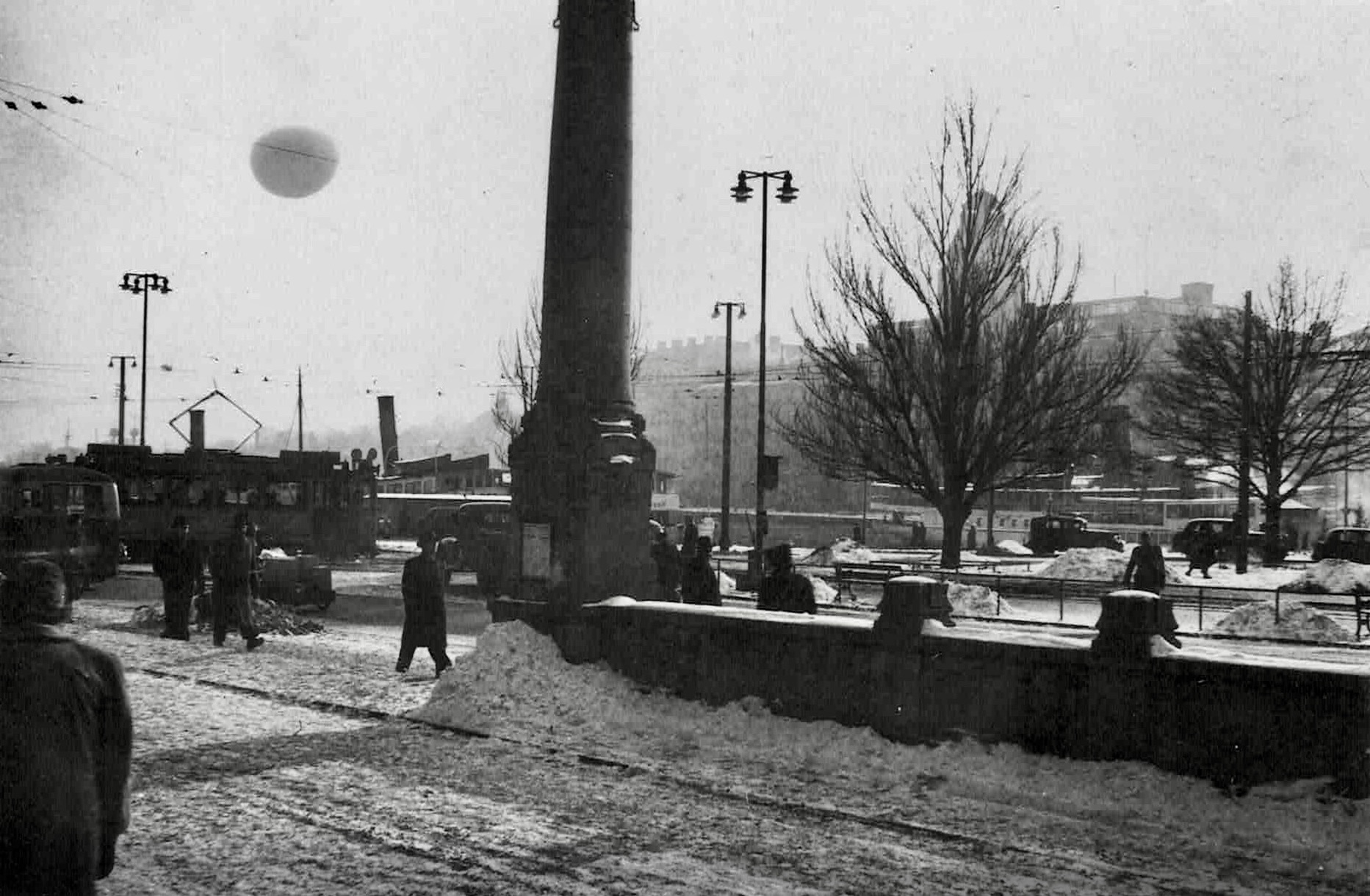
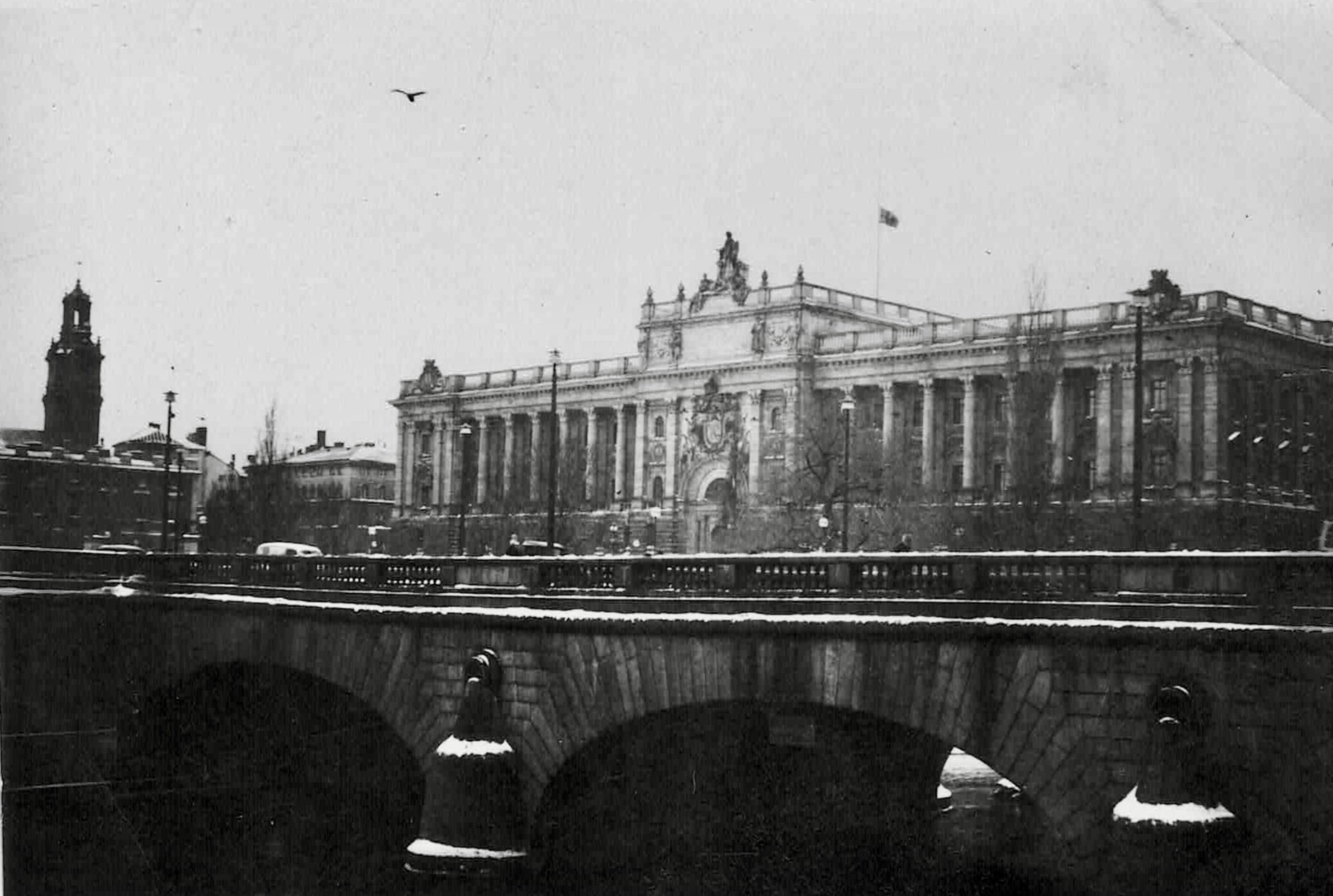
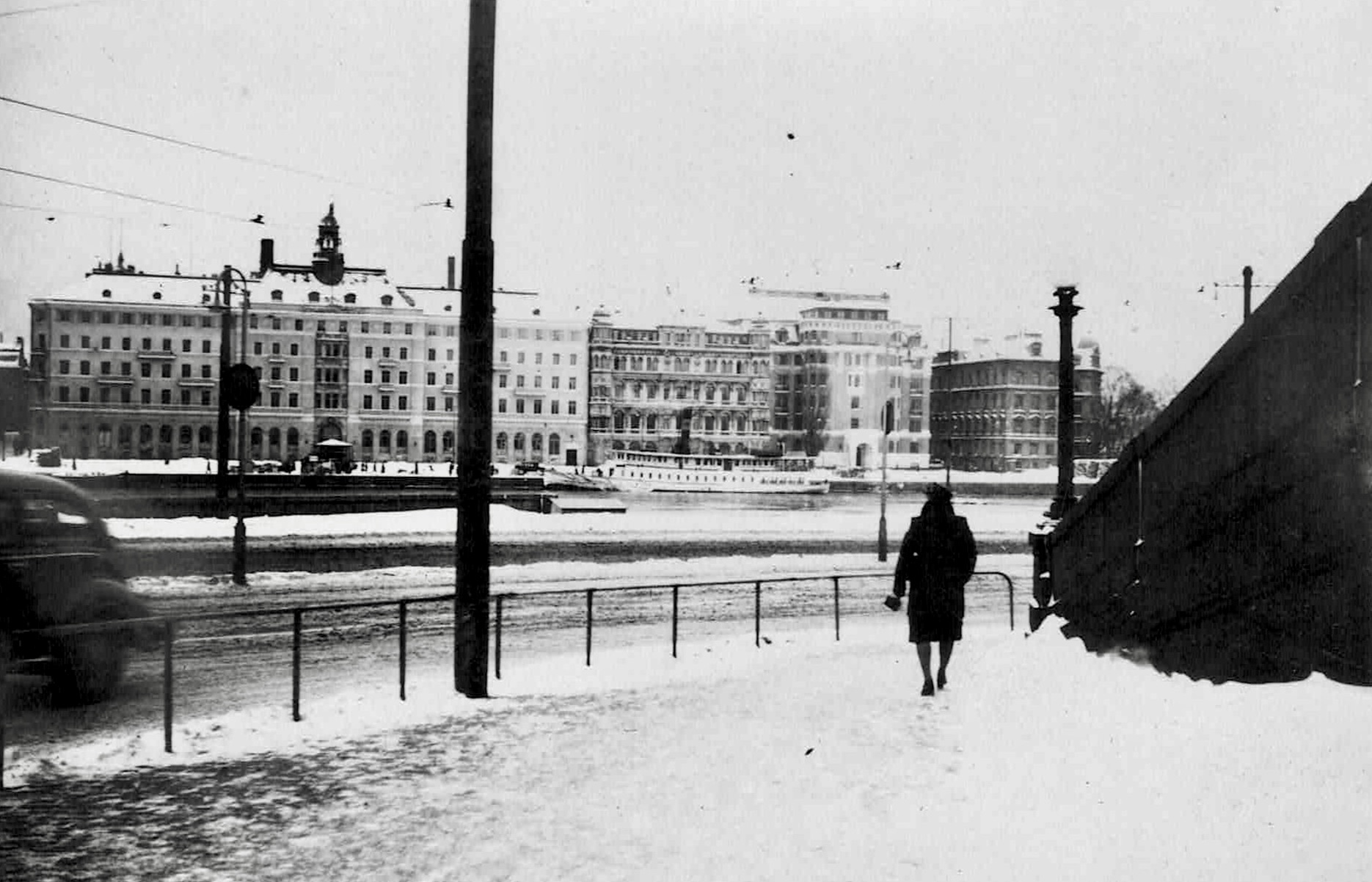
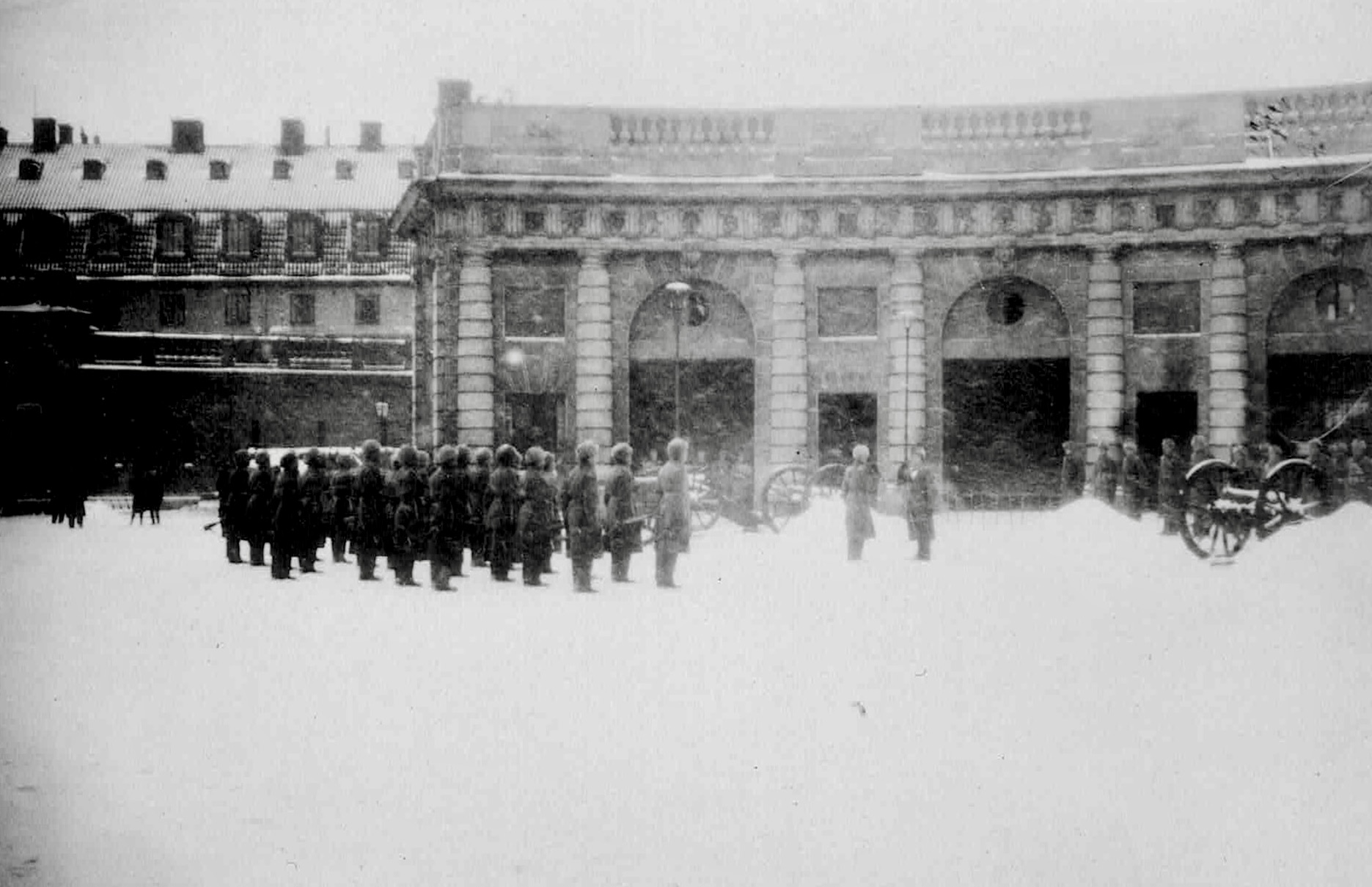
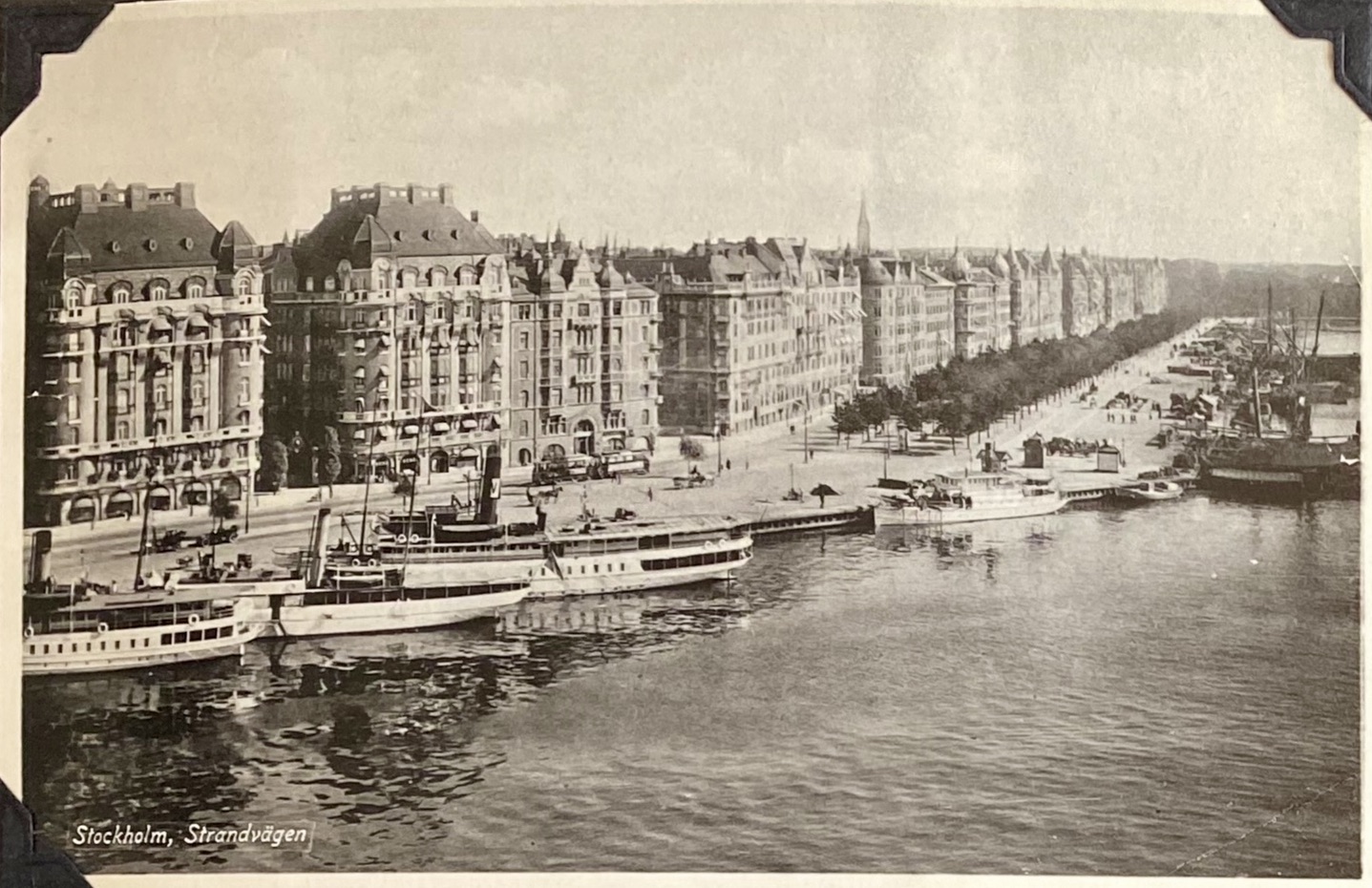
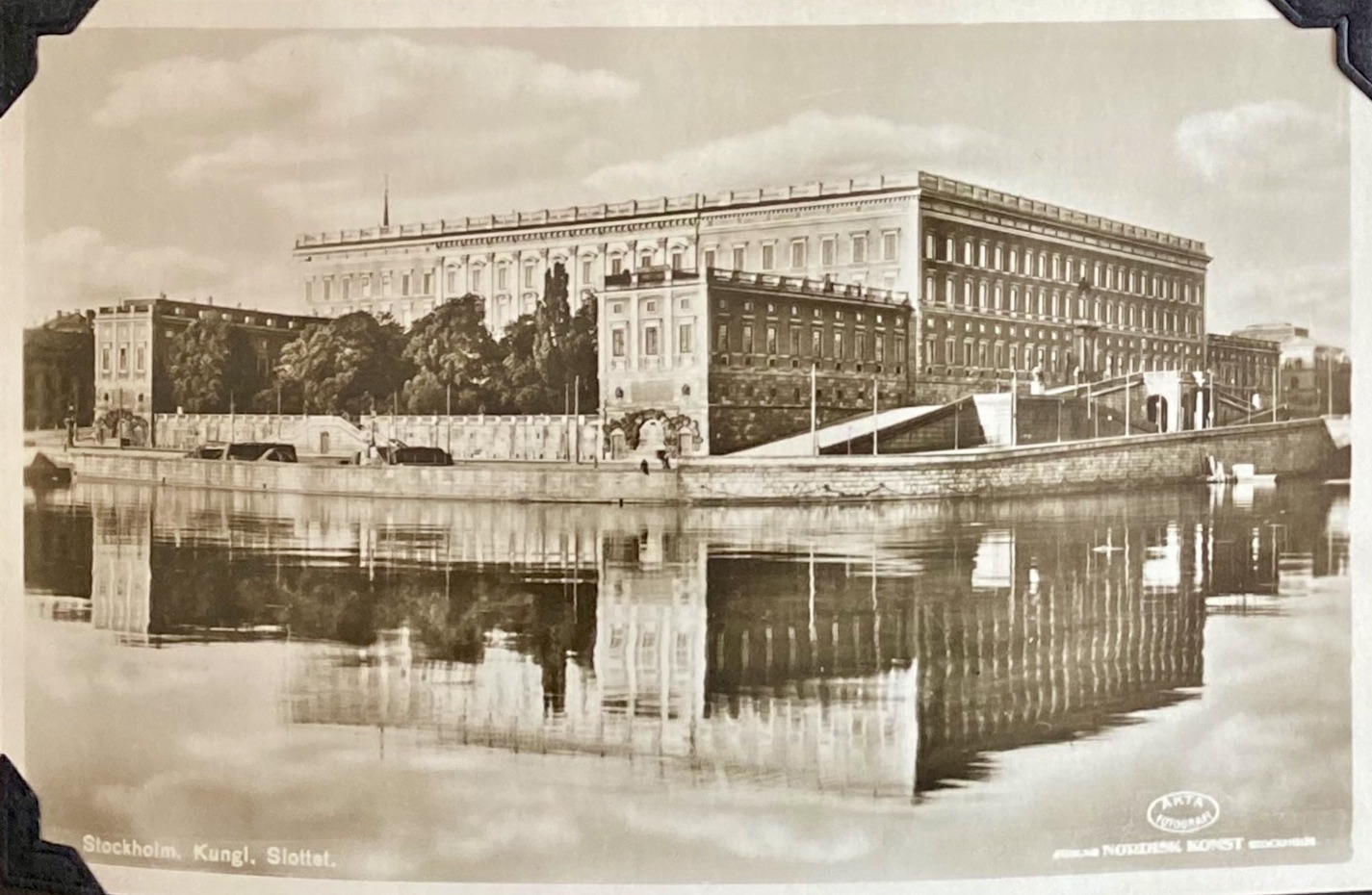
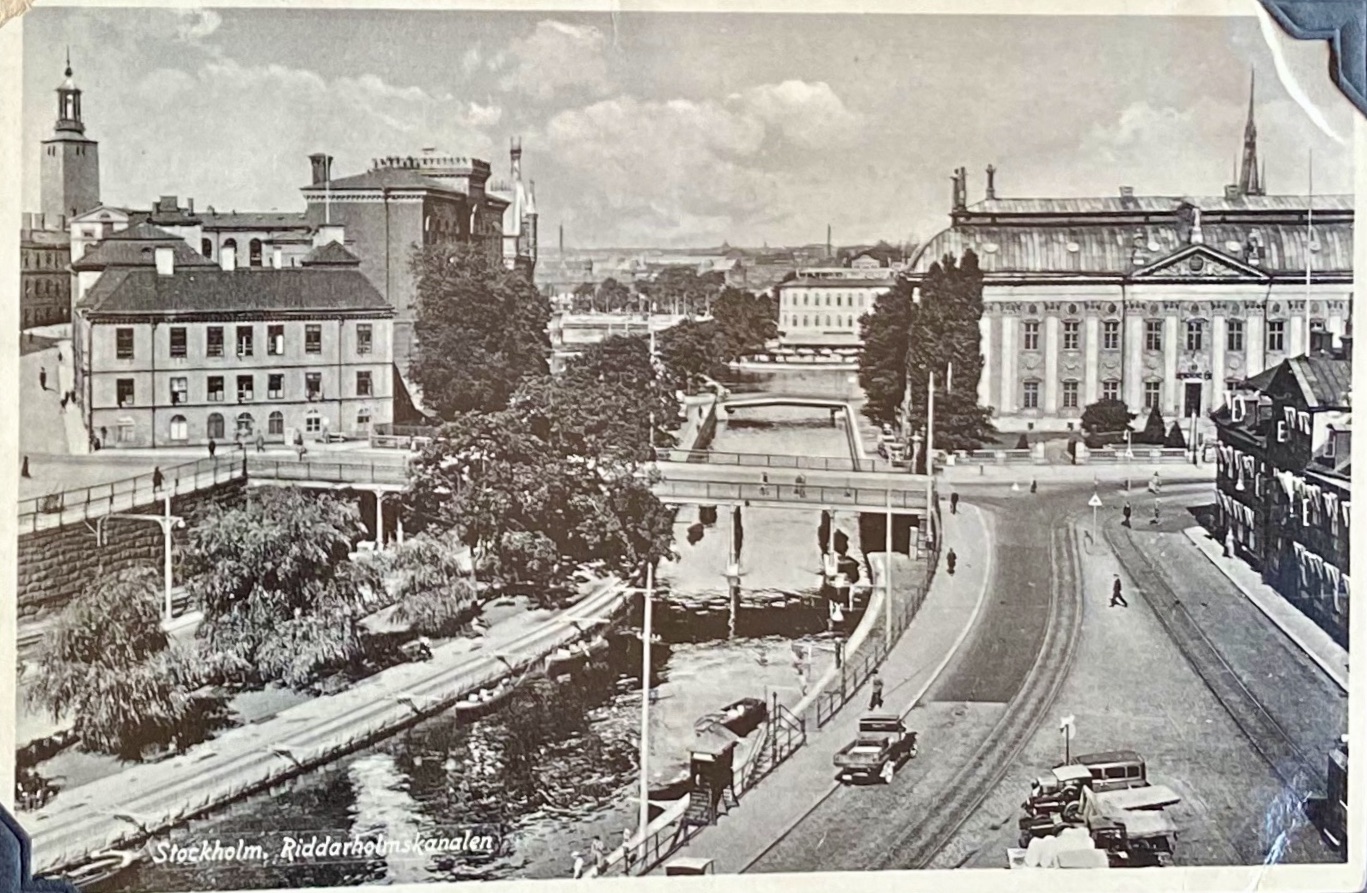
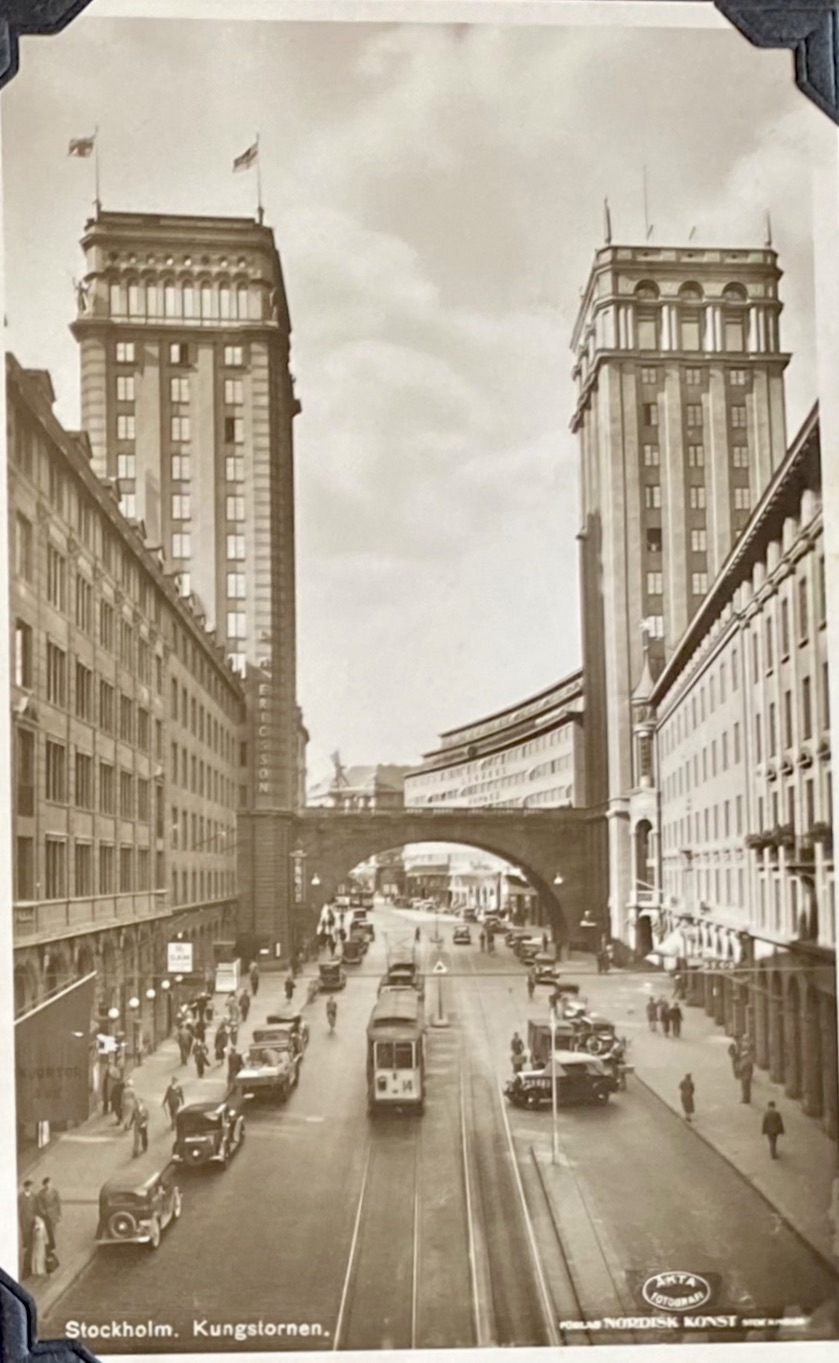
Flo’s Photos of StockholmFebruary 1946
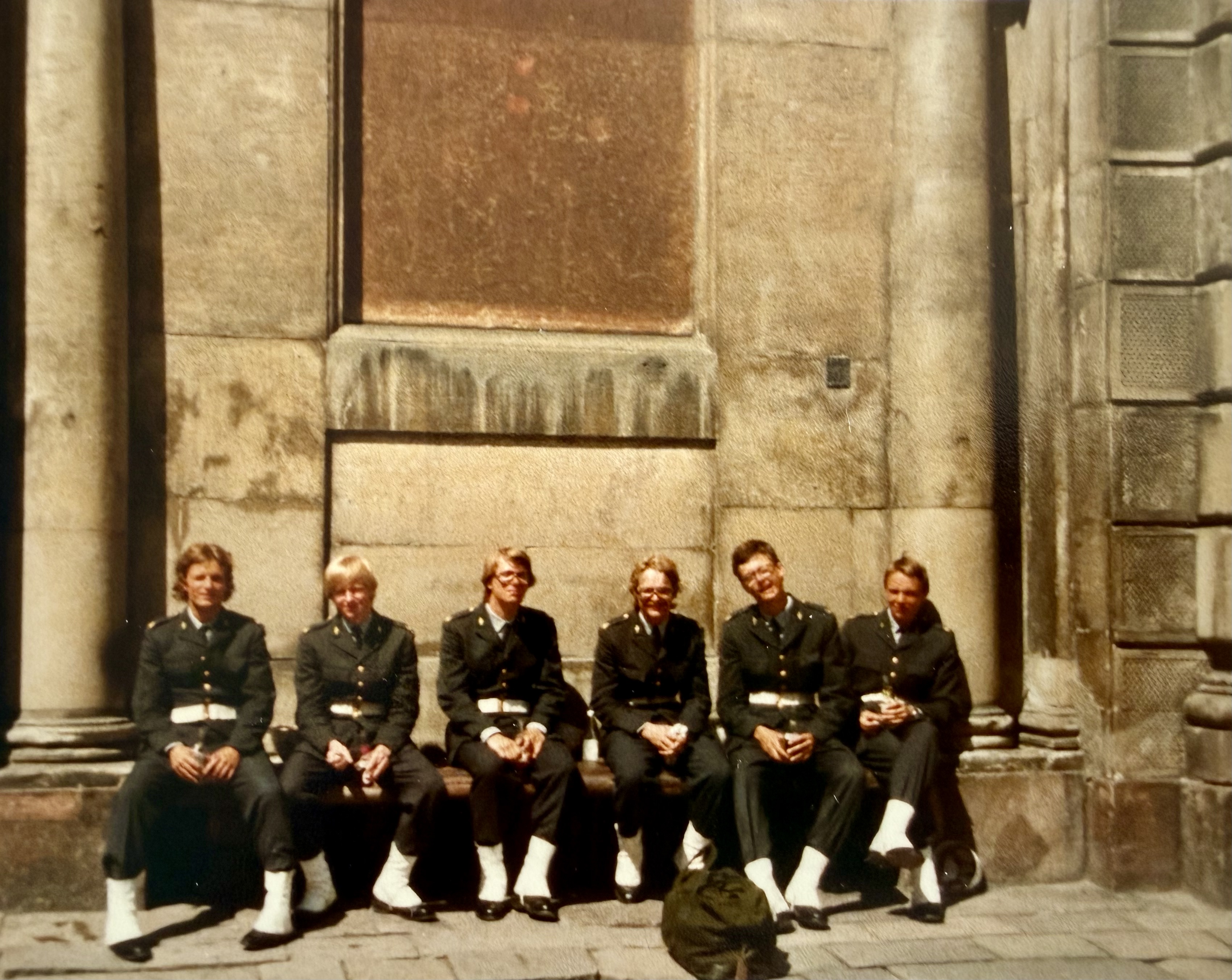
Changing guard at palace in snowstormGuards at the palace Midsommer 1979
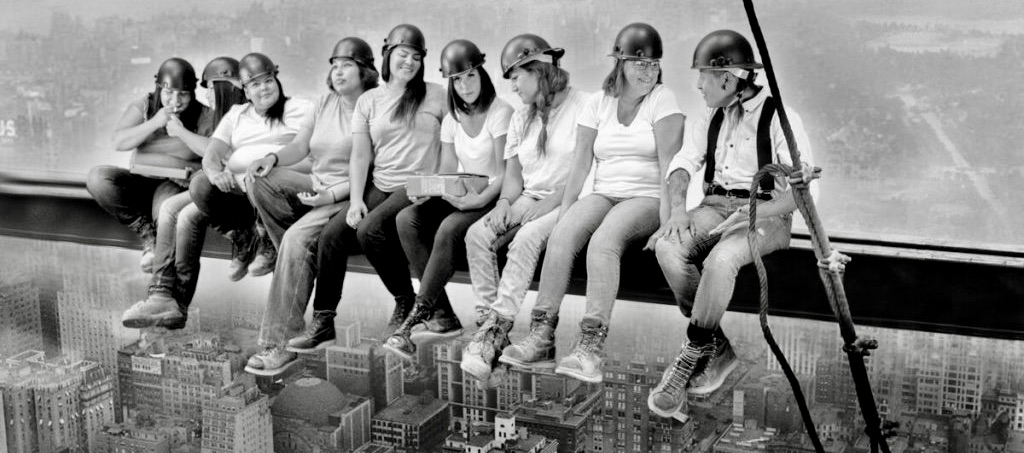
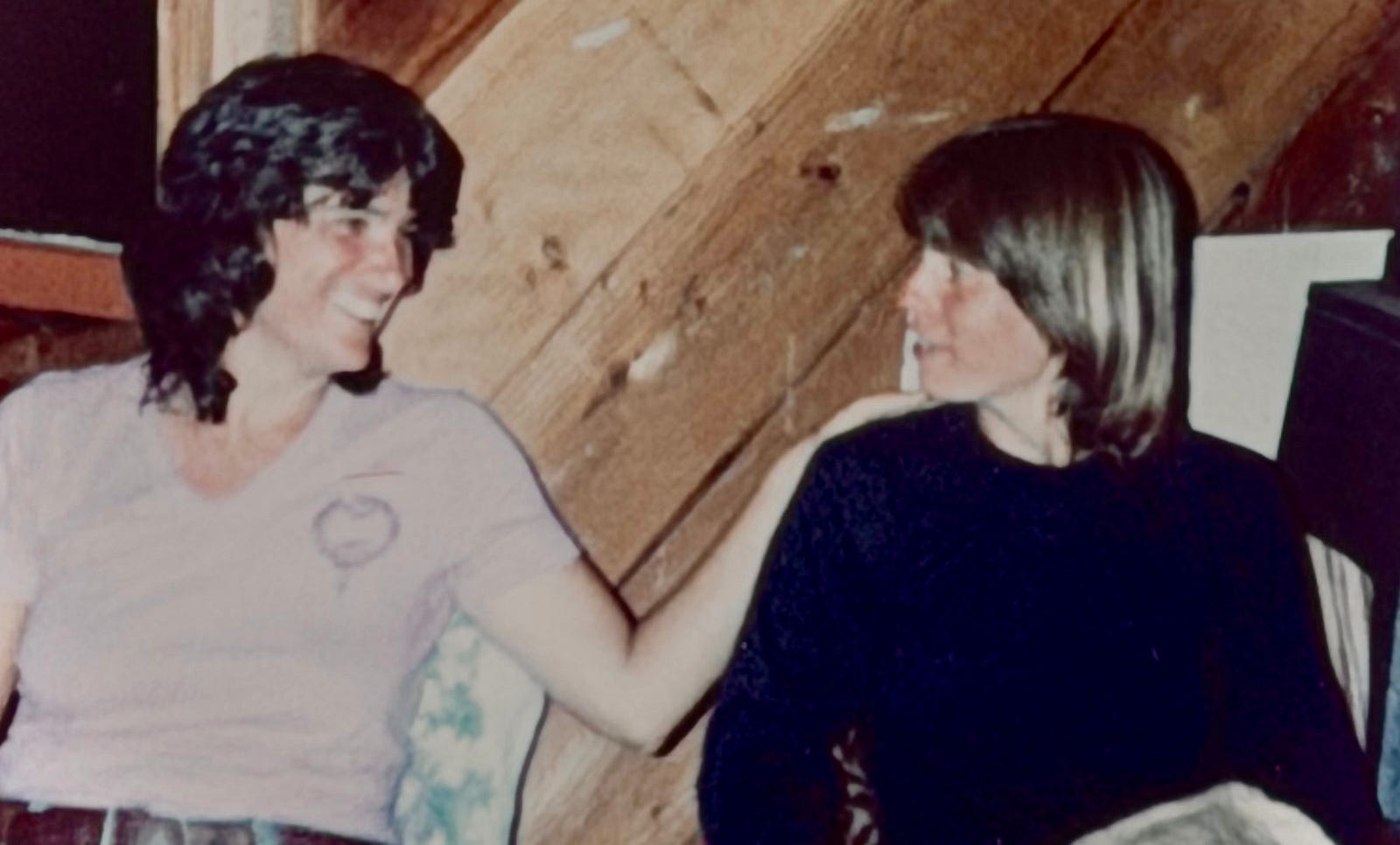
Opening Up the Building and Construction Trades to Women
Indigenous women in Ironworkers Local 725, Canada. Photo: Lightframe
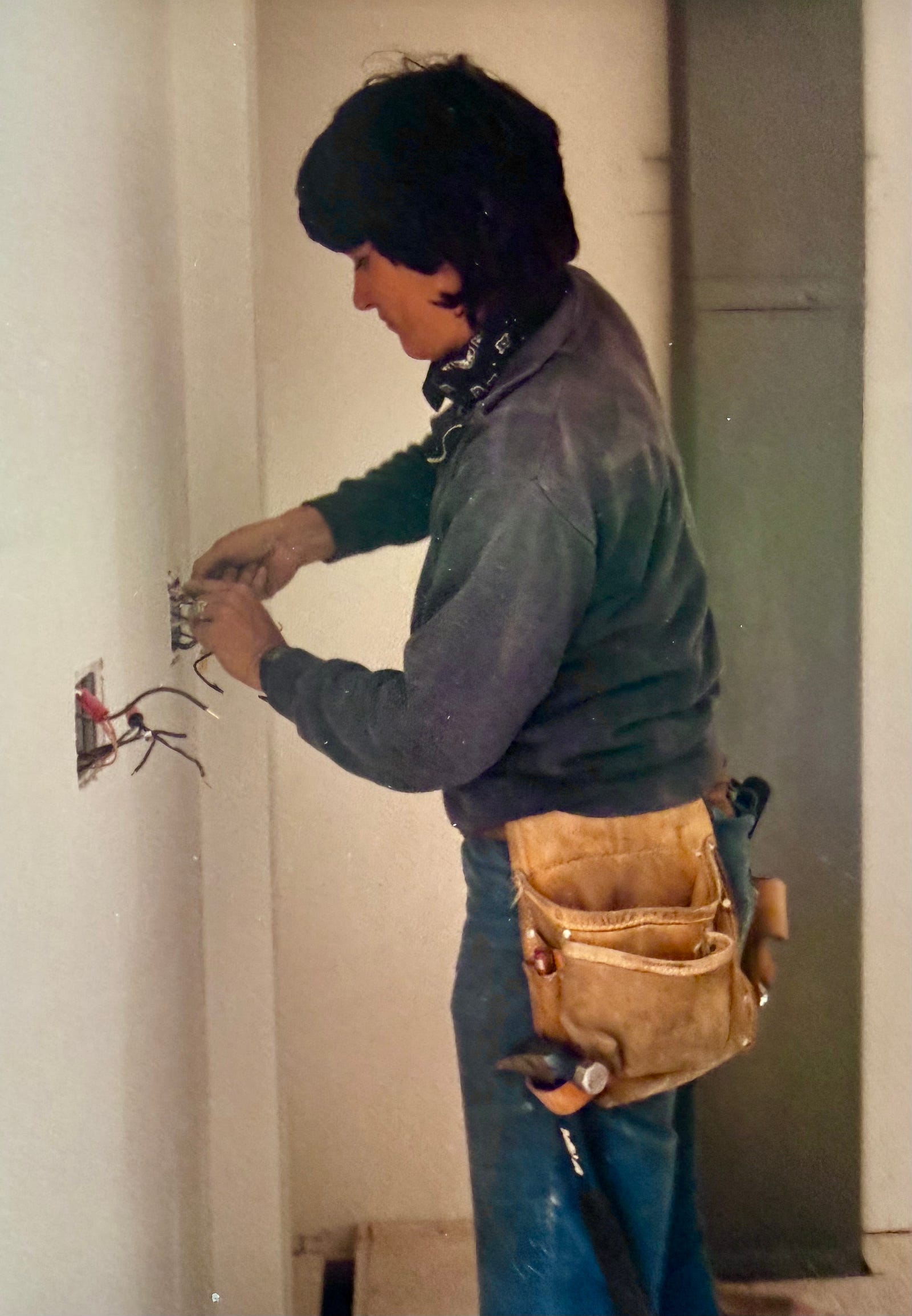
The Club for the Deaf’s attic on Valencia Street reeked of scorched timber. Char and blackened beams swallowed the light; soot clung to everything. We crawled, backs bent low, balancing on sheets of plywood stretched across the ceiling joists. As electricians rewiring the place after a fire, we worked while thunderous punk music rattled below — the deaf crowd savoring the music through their feet.
It was just one of many electrical jobs Cheryl Parker and I did together.
Cheryl on a Wonder Woman Electric job
Cheryl belonged to Sonoma County and the San Francisco Bay Area in a way that was both rooted and radical. She came from land and labor, and she spent her life insisting that women — especially lesbians — had a right to both. I knew her as a close friend, a sister tradeswoman, and a fellow building inspector. Our lives overlapped on jobsites, in lesbian bars, and in the long conversations that happen when you are trying to make a life where none has been laid out for you.
I first met Cheryl when she was working at Mare Island Naval Shipyard. She was already doing skilled electrical work there, and she was also helping to raise two daughters with her lover. That combination — determination on the job and deep commitment to chosen family — was classic Cheryl. She was grounded, political without posturing, and absolutely unwilling to shrink herself.
We later worked together through Wonder Woman Electric on several jobs. At lesbian bars in San Francisco, while everyone else was dancing, Cheryl and I would be off to the side talking about electrical work — arguing over grounding, circuitry, and the strange logic of systems hidden behind walls. No one wanted to sit with us. We didn’t care.
Cheryl came out of an Italian American family deeply tied to Northern California agriculture. Her grandparents emigrated from northern Italy, homesteading land outside Cloverdale. Her father was a fruit tramp who met her mother, Irene Gianoli, while picking fruit. Cheryl grew up in Cloverdale, one of three children. She had been a high school cheerleader and a member of the riding club, but she was never ornamental. Strength came naturally to her.
In the early 1970s, Cheryl entered the political and cultural ferment of the Bay Area. At City College of San Francisco, she met Joan MacQuarrie in a women’s history class. They became lovers and political partners, asking a question that would shape the rest of their lives:
How could women make a living wage without a college degree?
Cheryl (L) and Joan plotting revolution
That question led them straight into the building trades — places where women were barely tolerated. Cheryl went on to be a leader in the Tradeswomen Movement, organizing to bring more women into the construction trades and jobs that women had not been allowed to do.
In 1972, Cheryl became the first woman cabinetmaker in Local 550, hauling ninety-pound doors. She later became the first woman to enter the electrical apprenticeship at Mare Island, working in confined, dangerous spaces including nuclear submarines.
Cheryl went on to own her own business, teach at the Center for Employment Training in Santa Rosa, and receive Sonoma County’s Tradeswoman of the Year award. But her real legacy was collective. She was a founding member of Women United for Apprenticeship, and she fought — loudly and publicly — for enforceable standards to get women into union trades. When apprenticeship officials claimed women couldn’t do the work, Cheryl, a tall woman, stood over them with the authority of someone who already was.
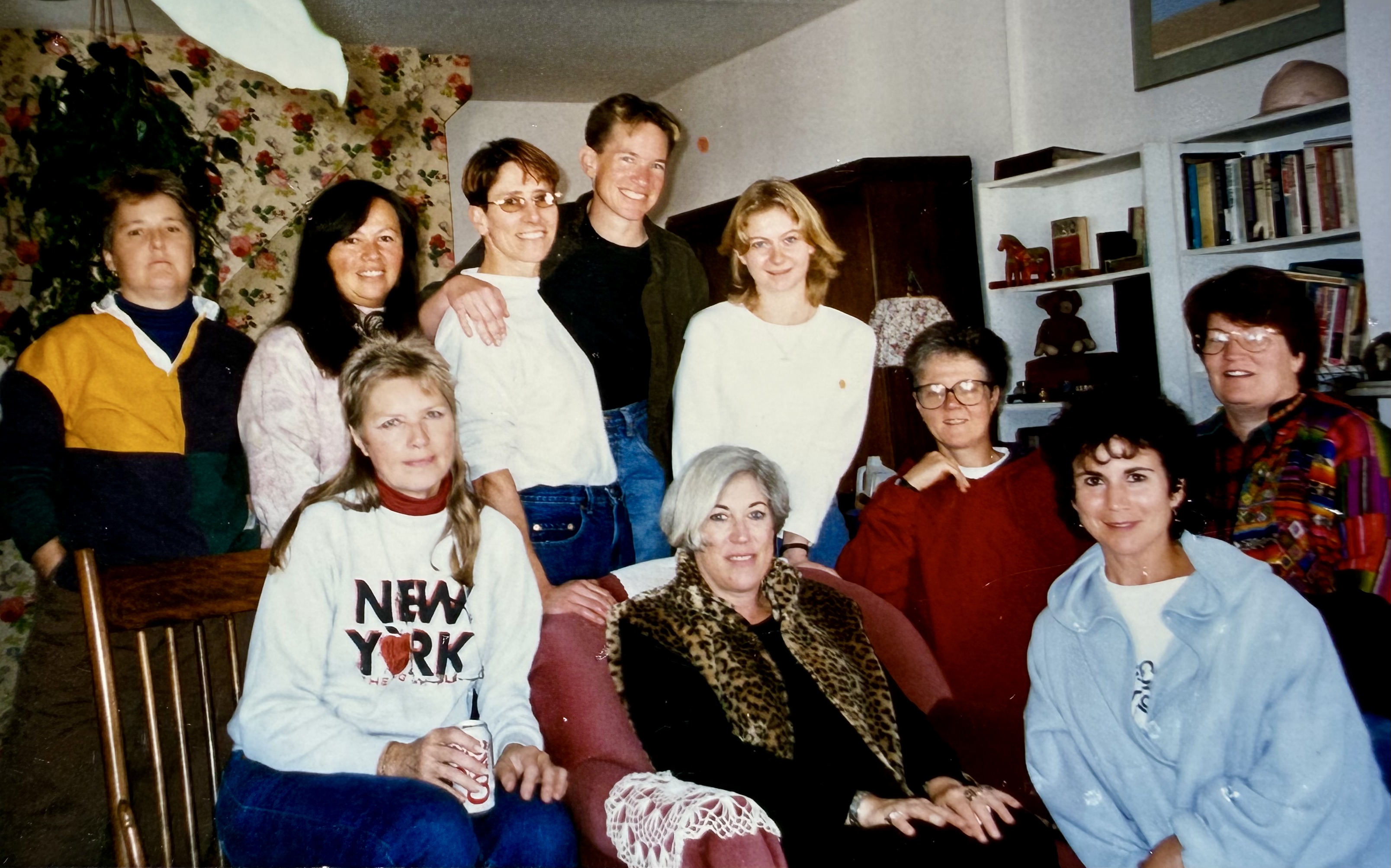
Her path also led to many firsts in public service. Cheryl became the first female building inspector in Richmond, then the first senior female building inspector in Oakland, and later the first supervising female building inspector in San Leandro. In Richmond she led the city’s comparable worth campaign, bringing feminist labor politics directly into municipal government. In the late-1980s, we founded a network of women inspectors, the FBI — Female Building Inspectors — mentoring others who were just beginning to cross barriers we had already broken.
Female Building Inspectors after Cheryl’s time
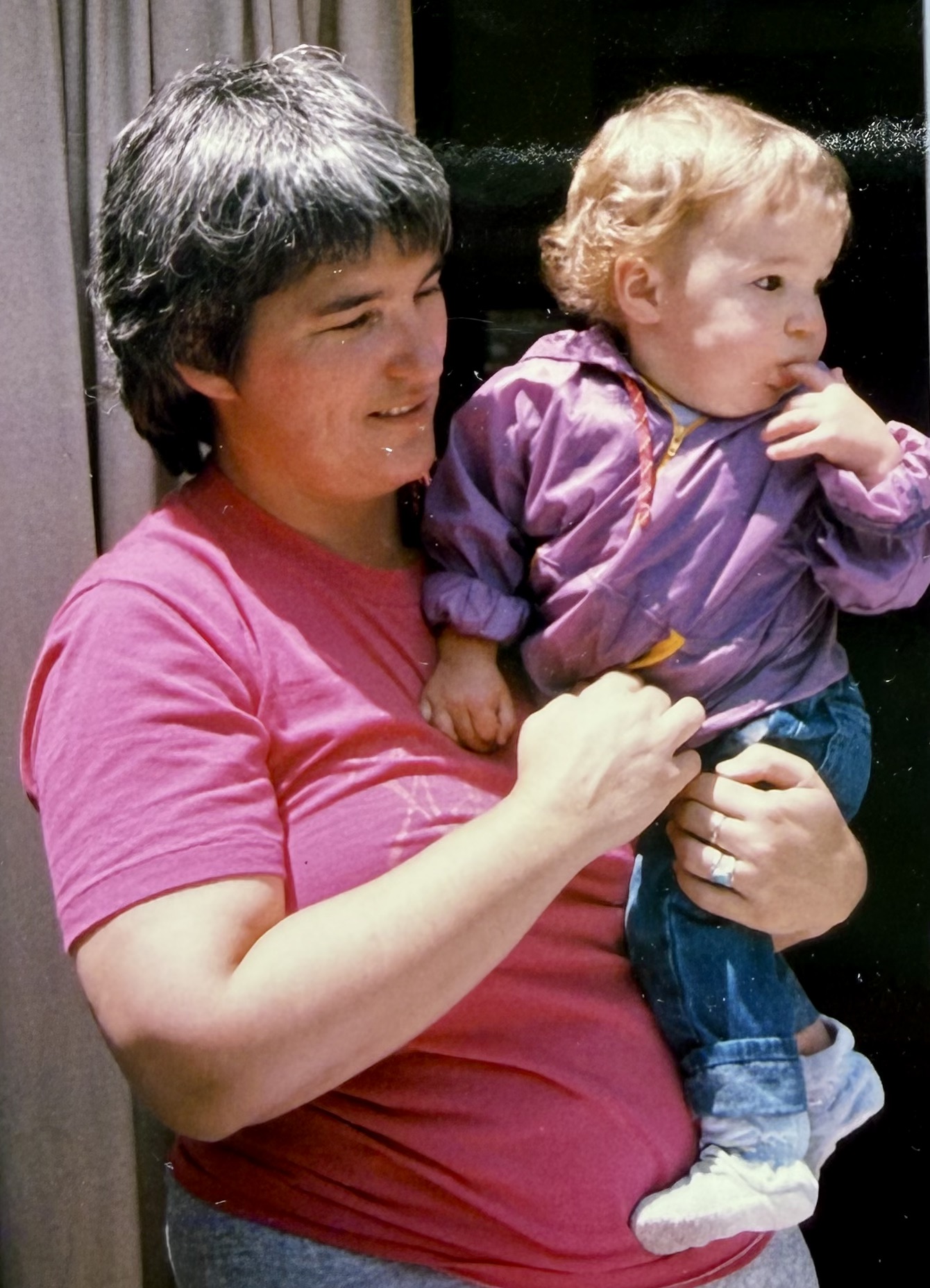
Cheryl lived openly as a lesbian, embedded in women’s and lesbian communities, from tradeswomen groups to the Oakland-Berkeley Women’s Union. She argued about everything. Friends said she should have been a lawyer. In 1986, at 38, she gave birth to her son Tyson, and he became another fierce center of her life. I got to be her birth coach, an amazing experience.
Tradeswomen Inc. started in 1979. The nonprofit is still going strong.
Cheryl Parker died of ovarian cancer on July 9, 1992, at the age of 44.
Visiting my friend as she was dying and sick from chemo, I repeated an old chestnut, that I’d prefer to die quickly of a heart attack rather than suffer. She said something profound: “Don’t be so sure. Just think of all the love I’ve received and all the love I’ve been able to give as I’m dying.” Cheryl lived just nine months from her diagnosis to her death. Much love flowed in all directions and my view of death was transfigured.
Cheryl with her son Tyson
Cheryl understood something early that many still resist: solidarity has to be built and no one breaks barriers alone. I carry her with me — in the work, in the arguments, in the memory of two women at a bar talking about grounding while the music played on.
Cheryl helped make a path where there wasn’t one before. I was lucky to walk part of it with her.
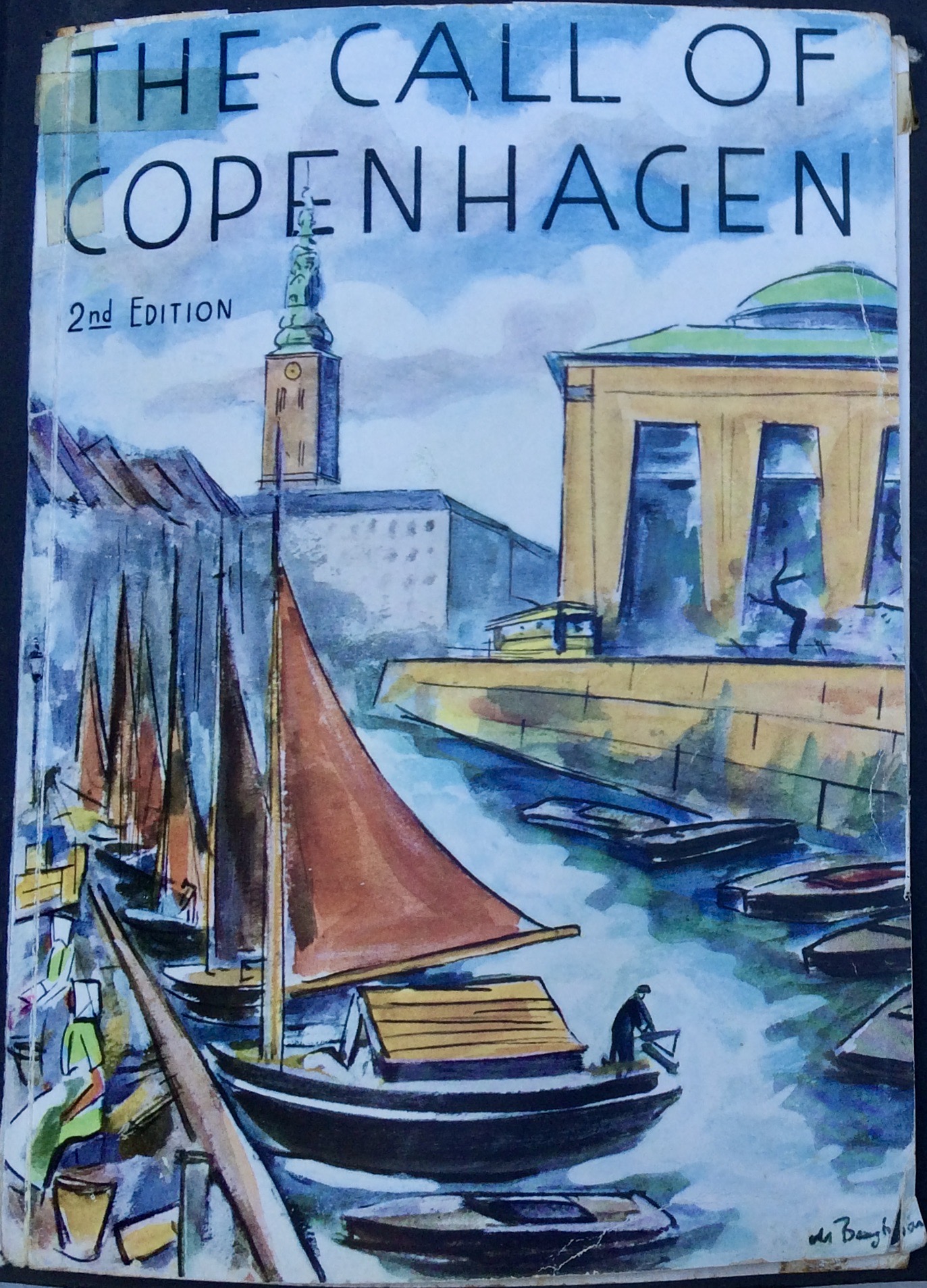
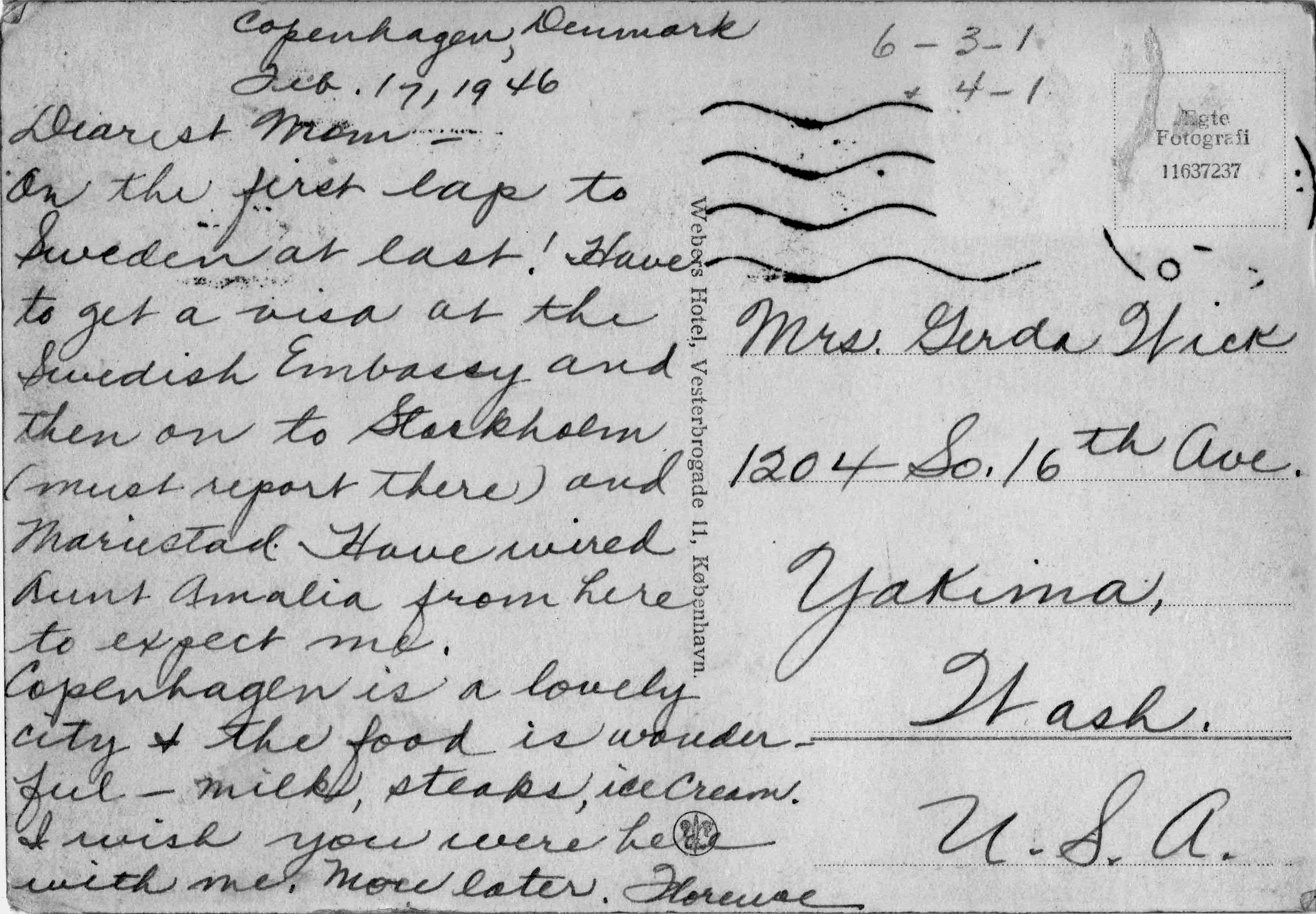
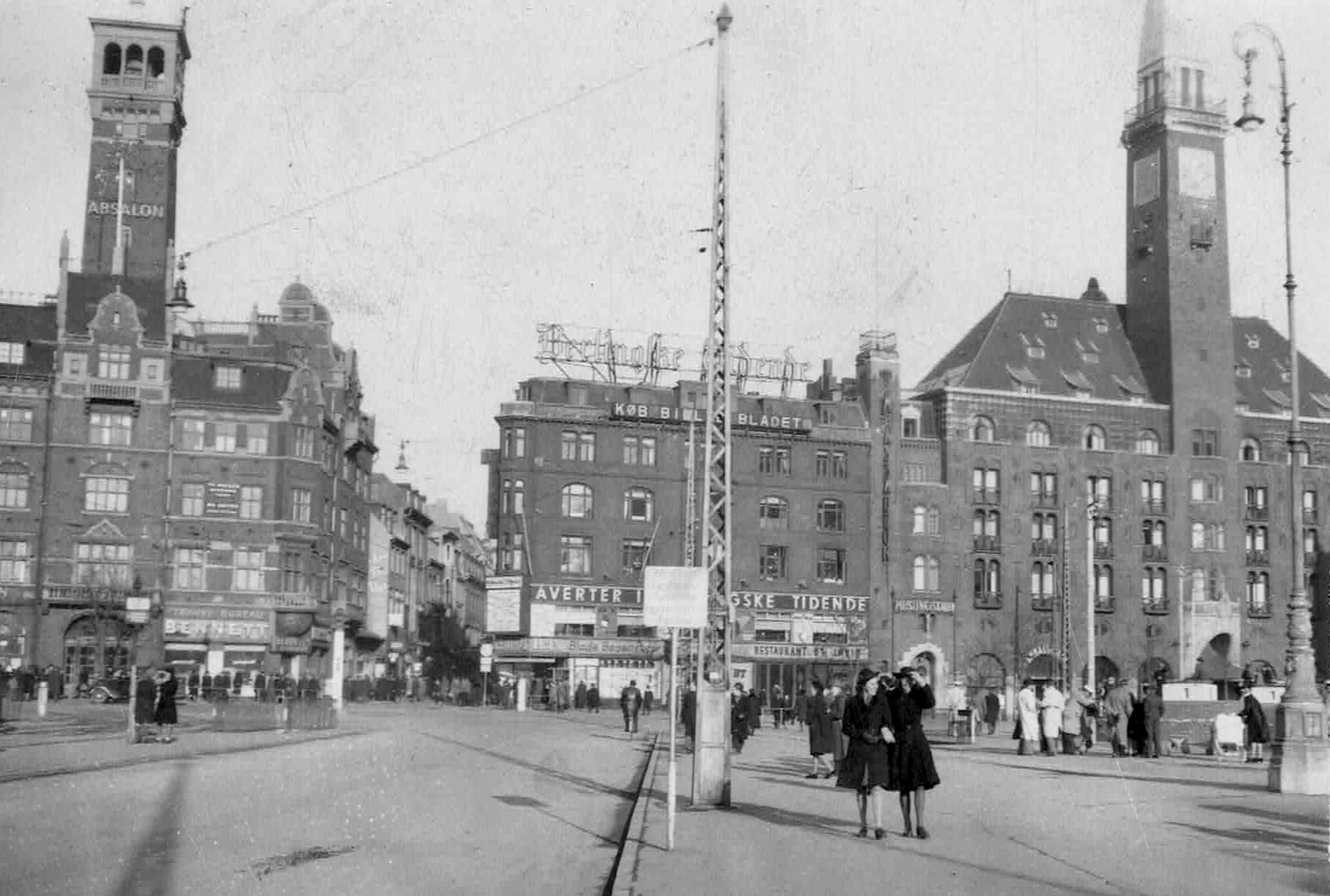
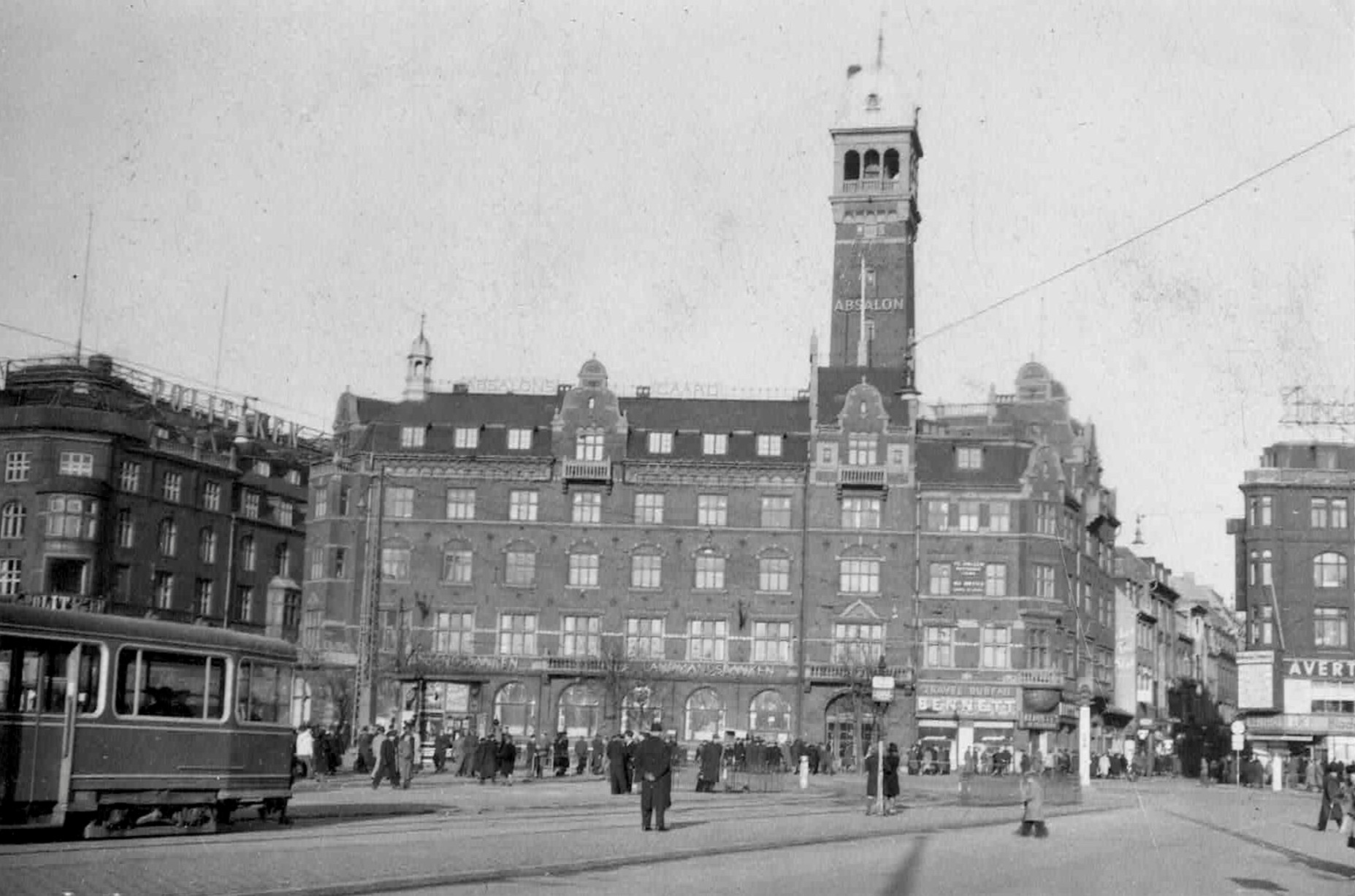
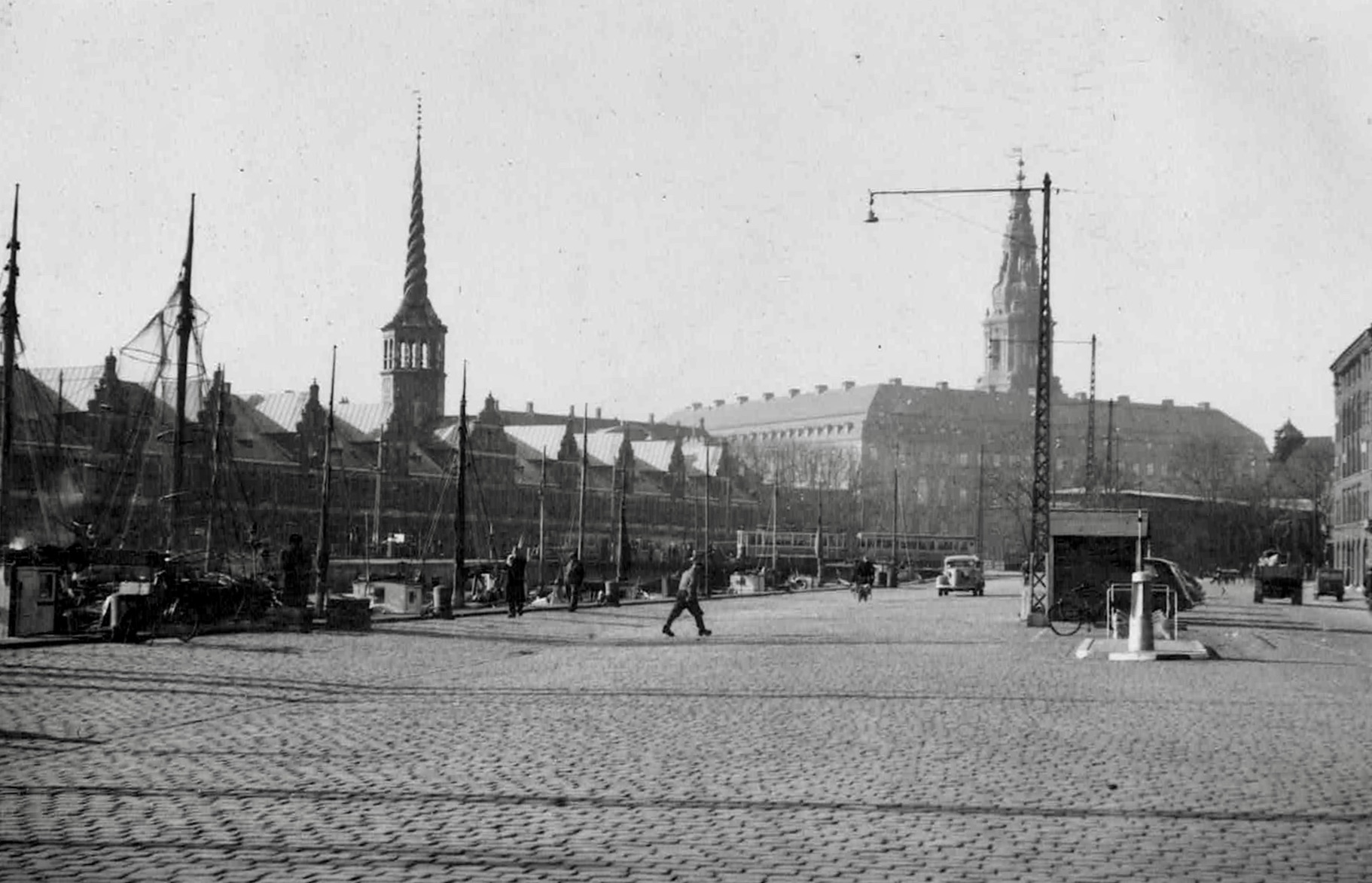
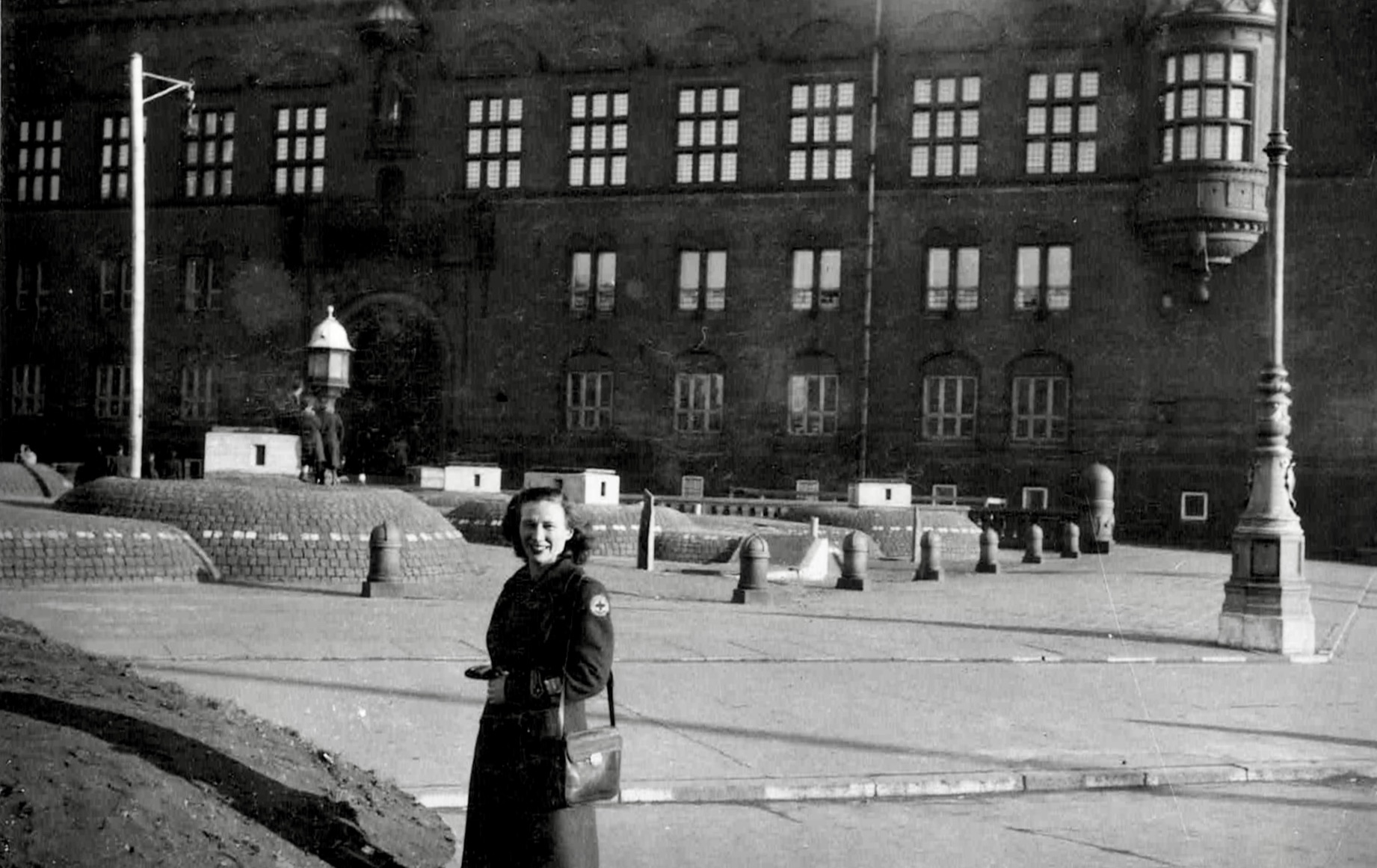
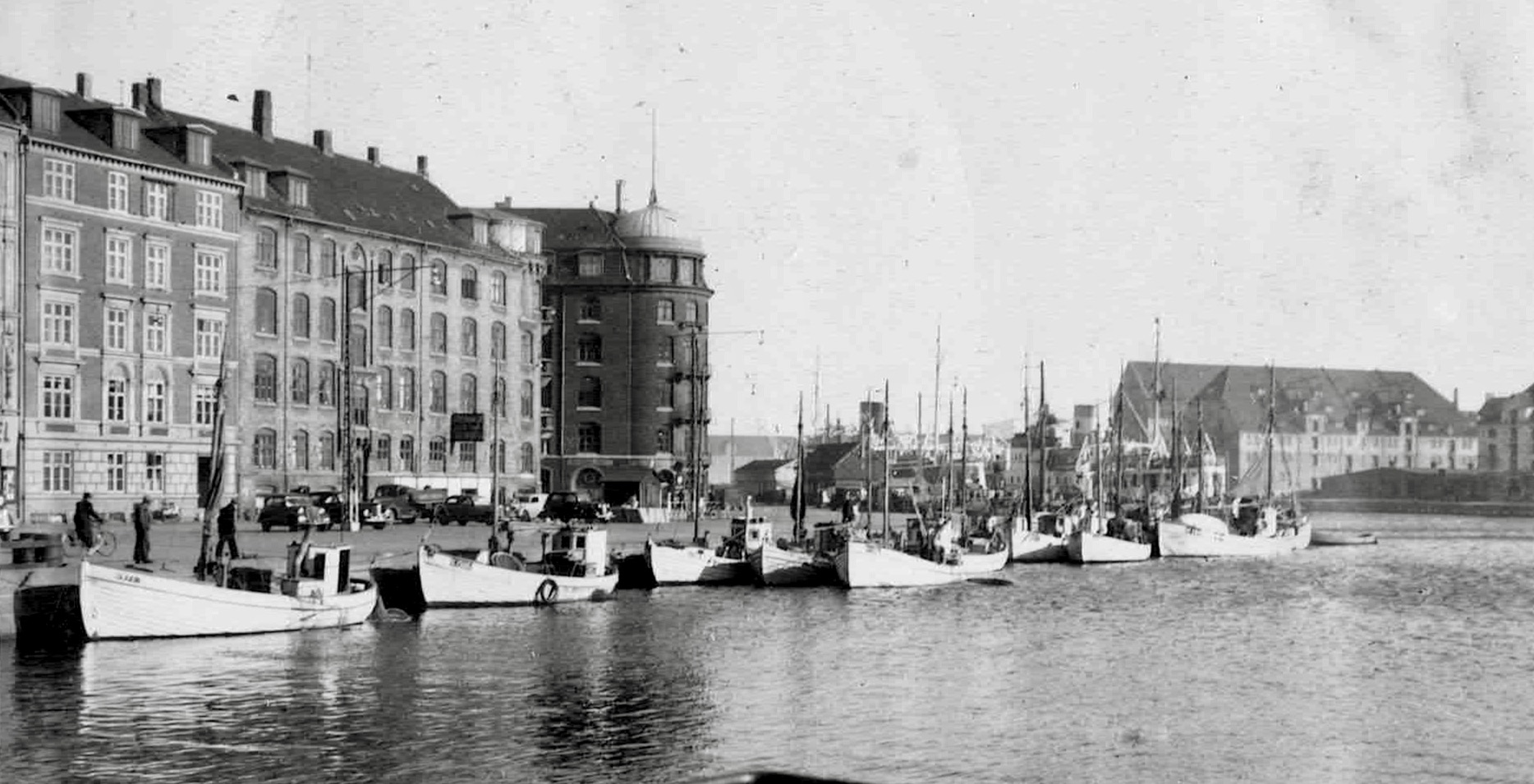
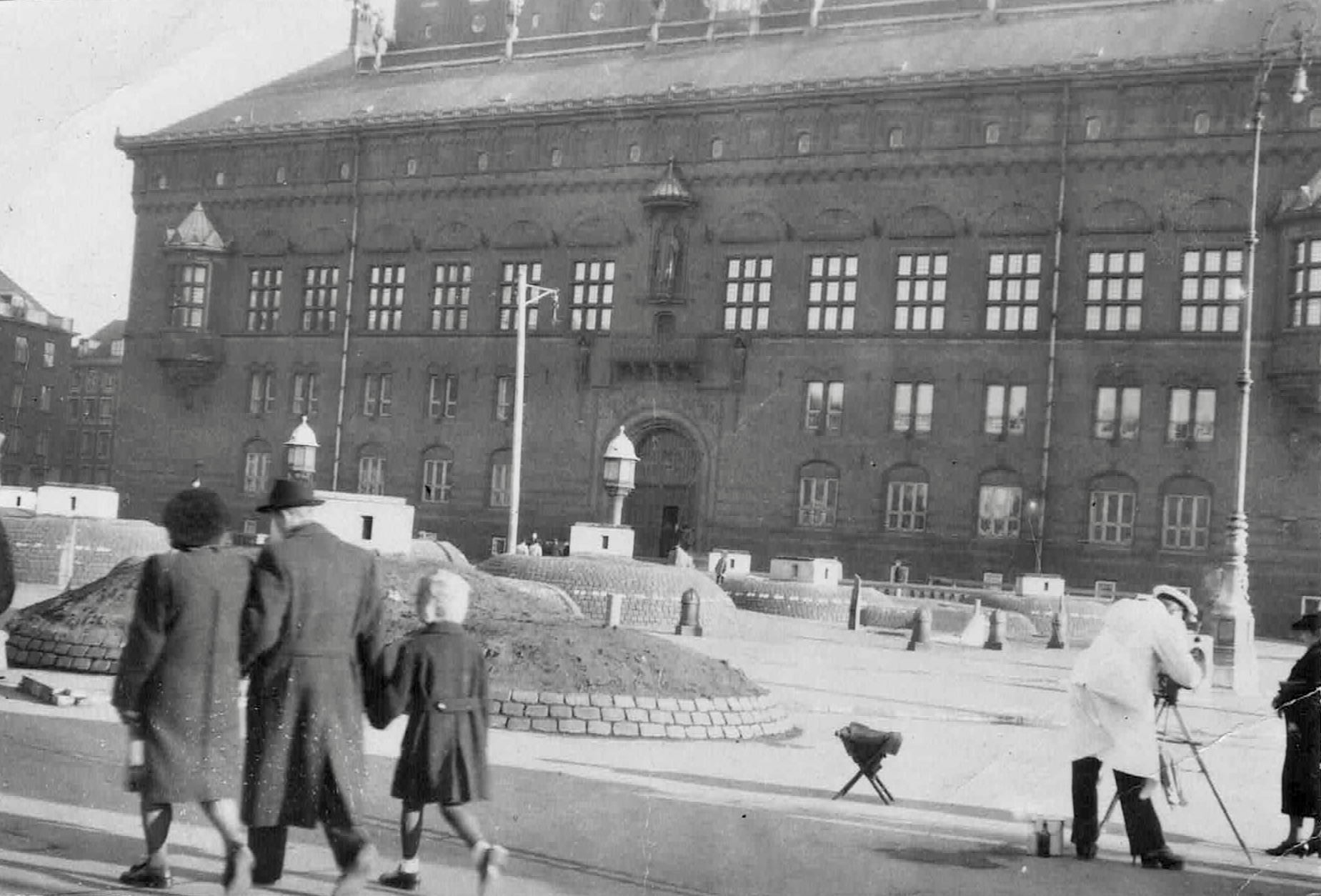
Flo stopped in Copenhagen on her way to visit relatives in Sweden. In a postcard home Flo wrote, “Copenhagen is a lovely city and the food is wonderful–milk, steaks, ice cream.” The city had escaped the ravages of war as few other European cities had.
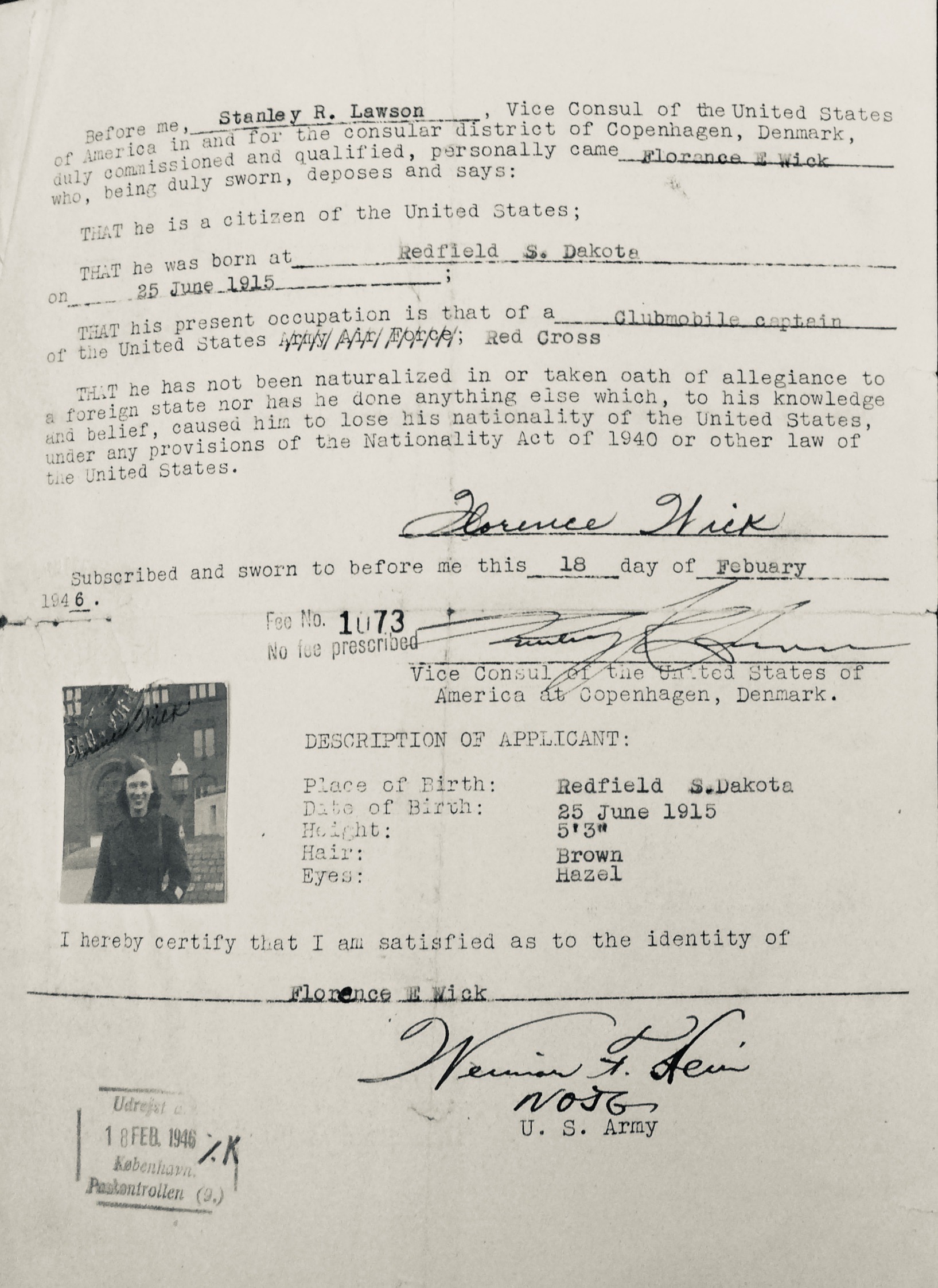
Permission from the consulate. Flo was born in 1913, not 1915.
Denmark was invaded by Germany on April 9, 1940. The Danish government opted for a swift surrender to avoid destruction, leading to a period of occupation where they maintained some autonomy and collaborated with German authorities. Denmark supplied food and resources to Germany, but resentment grew among the population against this cooperation.
As occupation continued, resistance movements emerged, notably organizing the rescue of around 7,200 Jews, who were smuggled to Sweden in 1943. Denmark was liberated by British forces on May 5, 1945, after five years of occupation. The aftermath prompted national discussions on collaboration and resistance, significantly influencing Danish society and identity in the post-war era.
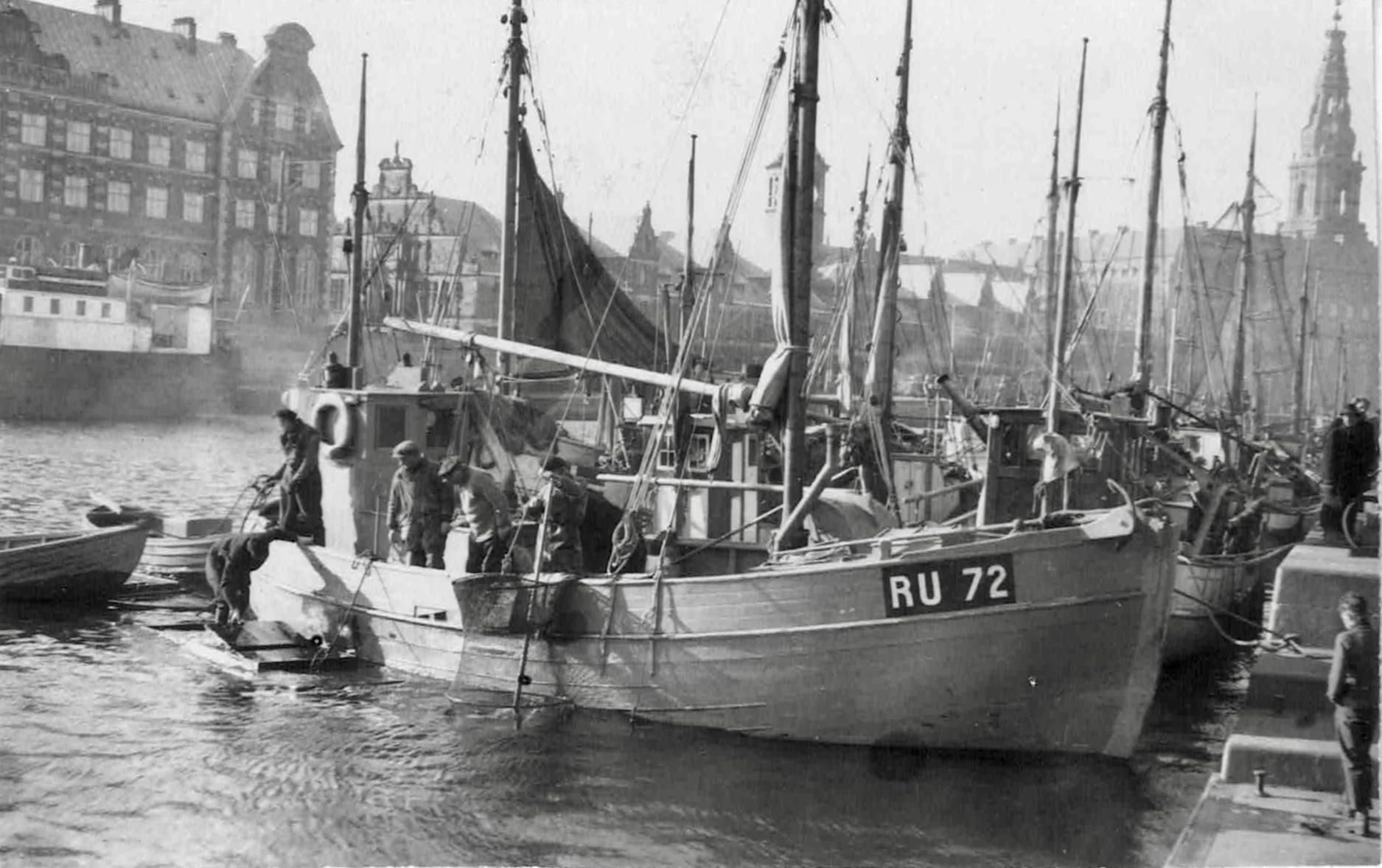
Flo’s photos of Copenhagen in her album“I wish you were here with me,” Flo wrote to her mother.Copenhagen street scenes
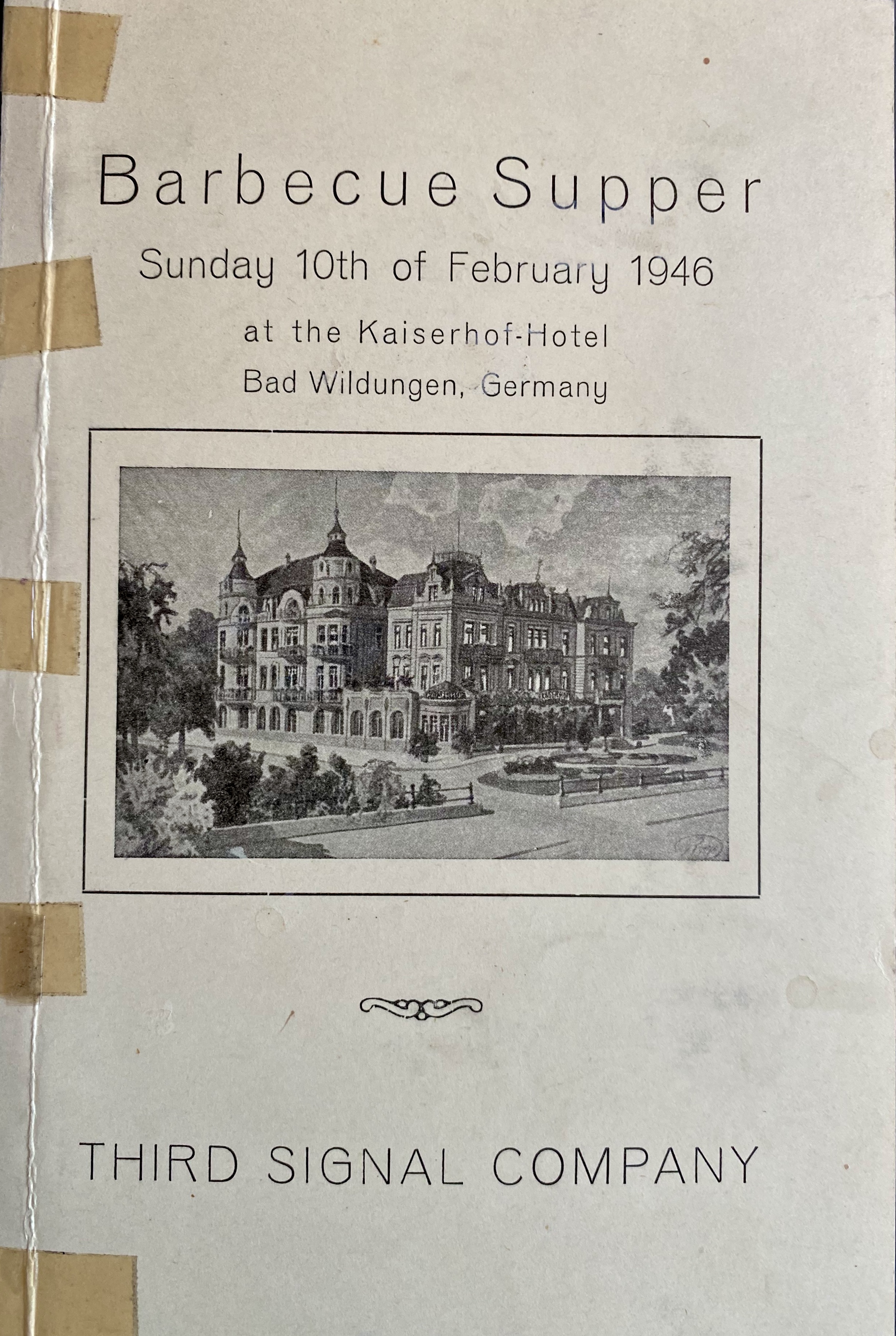
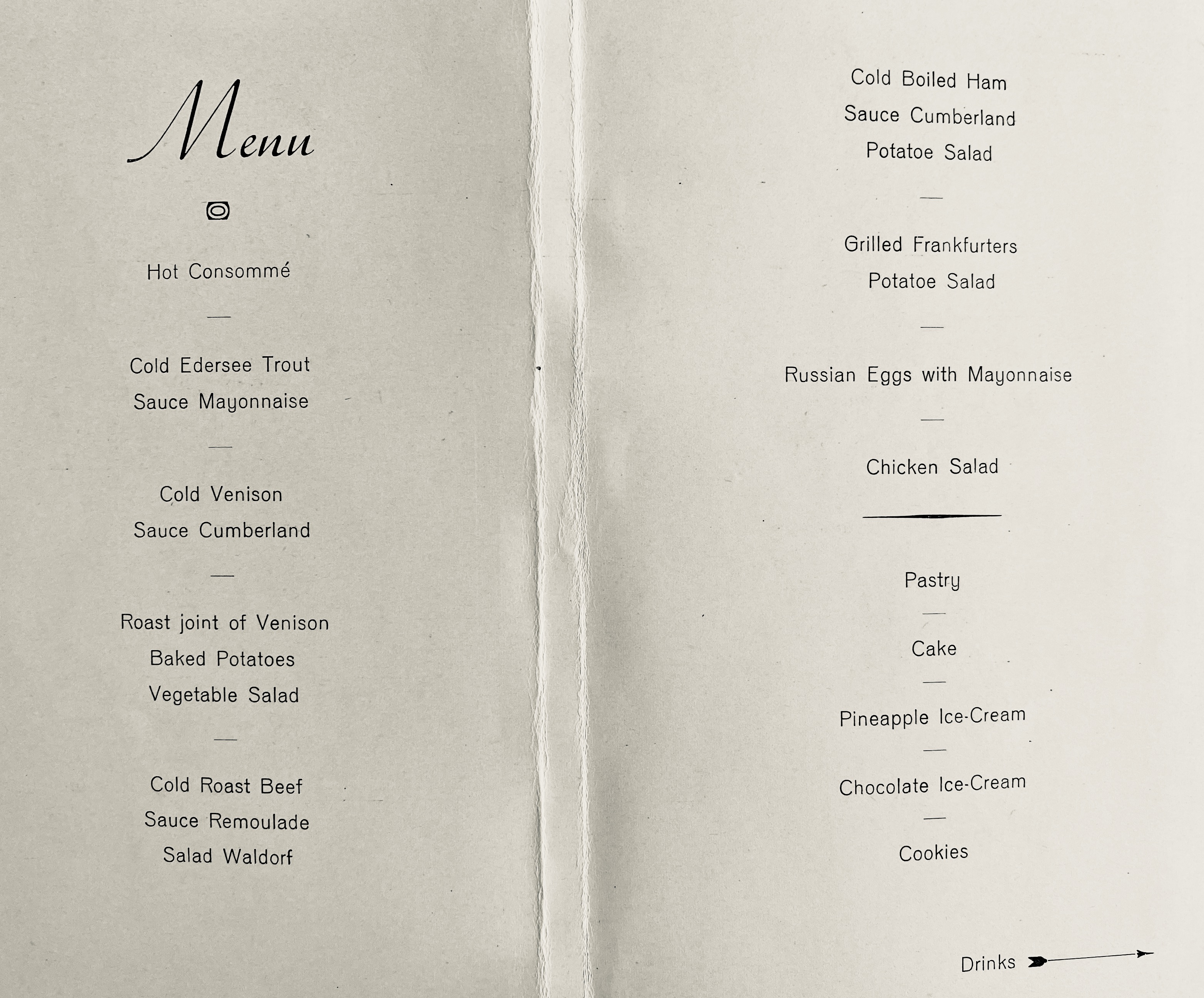
Flo and her comrades got together for an indoor BBQ supper in February probably in an effort to recreate an American picnic. It was sponsored by the Third Signal Company, the photographers attached to the Third Infantry Division who joined the division at Anzio. Their photographs are posted at dogfacesoldier.org.
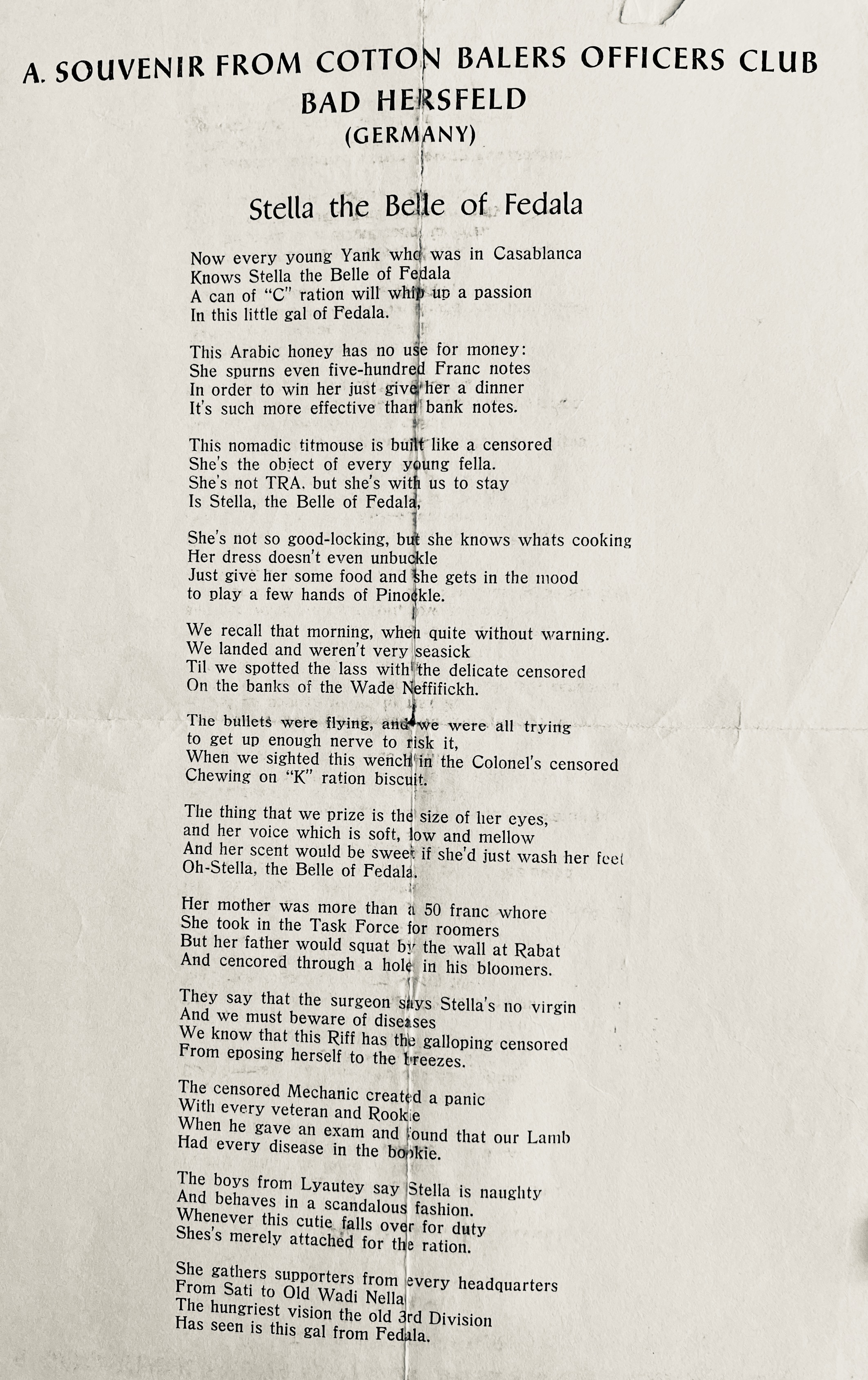
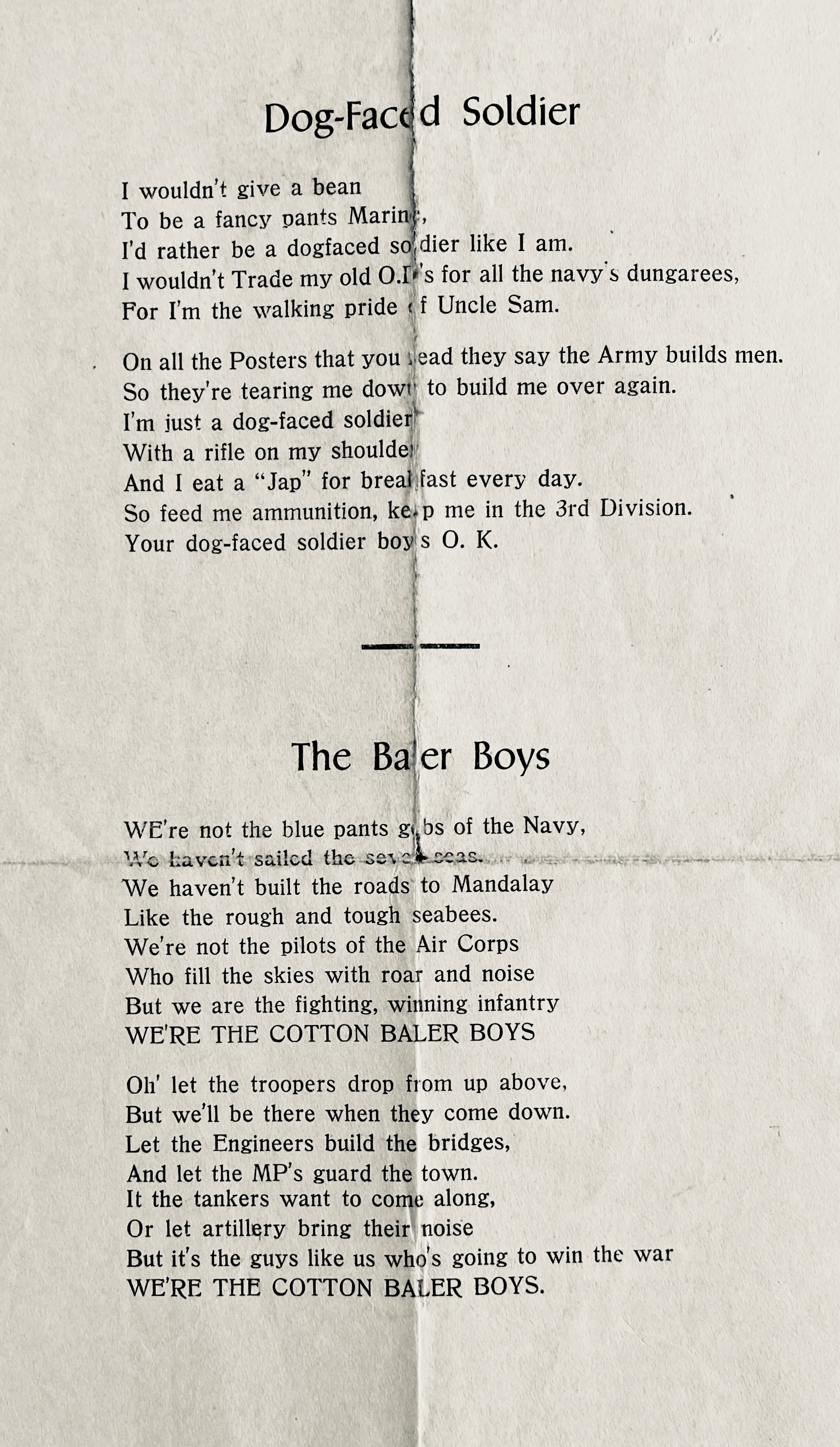
Cotton Balers. The 7th US Infantry Regiment is one of the five oldest continuously serving regiments in the U.S. Army, initially organized in July 1798. The regiment earned its nickname, “The Cottonbalers”, from its use of cotton bales as defensive works during the 1815 Battle of New Orleans. The regiment deployed early on in 1942’s assault on Morocco. They went on to serve across North Africa into Sicily and Italy, up through France, and then participating in the capture of Berchtesgaden.
Stella the Belle of Fidella is a song sung by soldiers who joined the war in Casablanca. Stella, it turns out, was just starving.
“This Arabic honey has no use for money: She spurns even five hundred Franc notes In order to win her just give her a dinner It’s much more effective than bank notes”
Still no wine
Dog-faced soldier is the official song of the Third Infantry Division. In this version the word “Jap” replaces the word “Kraut.”
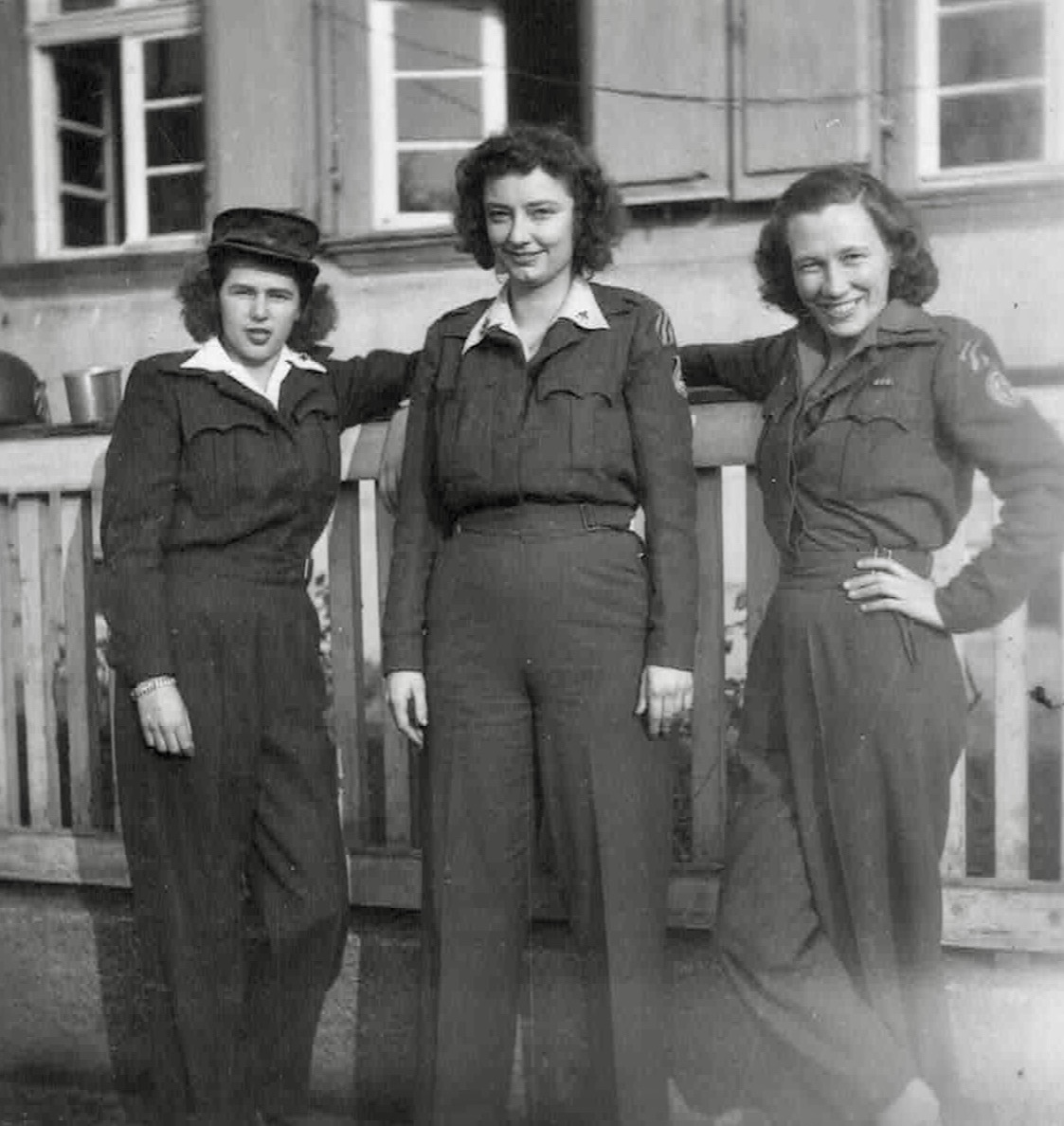
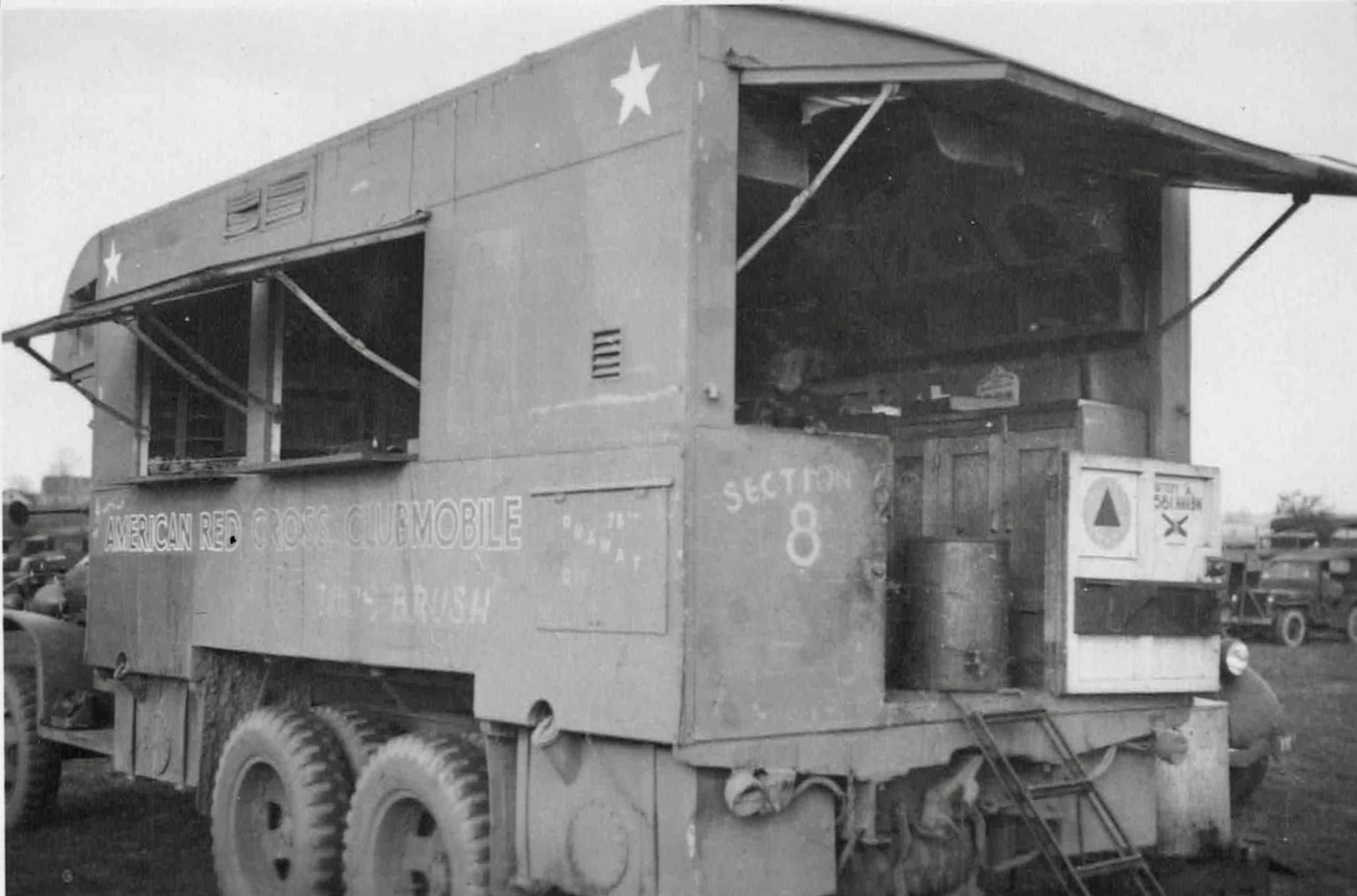
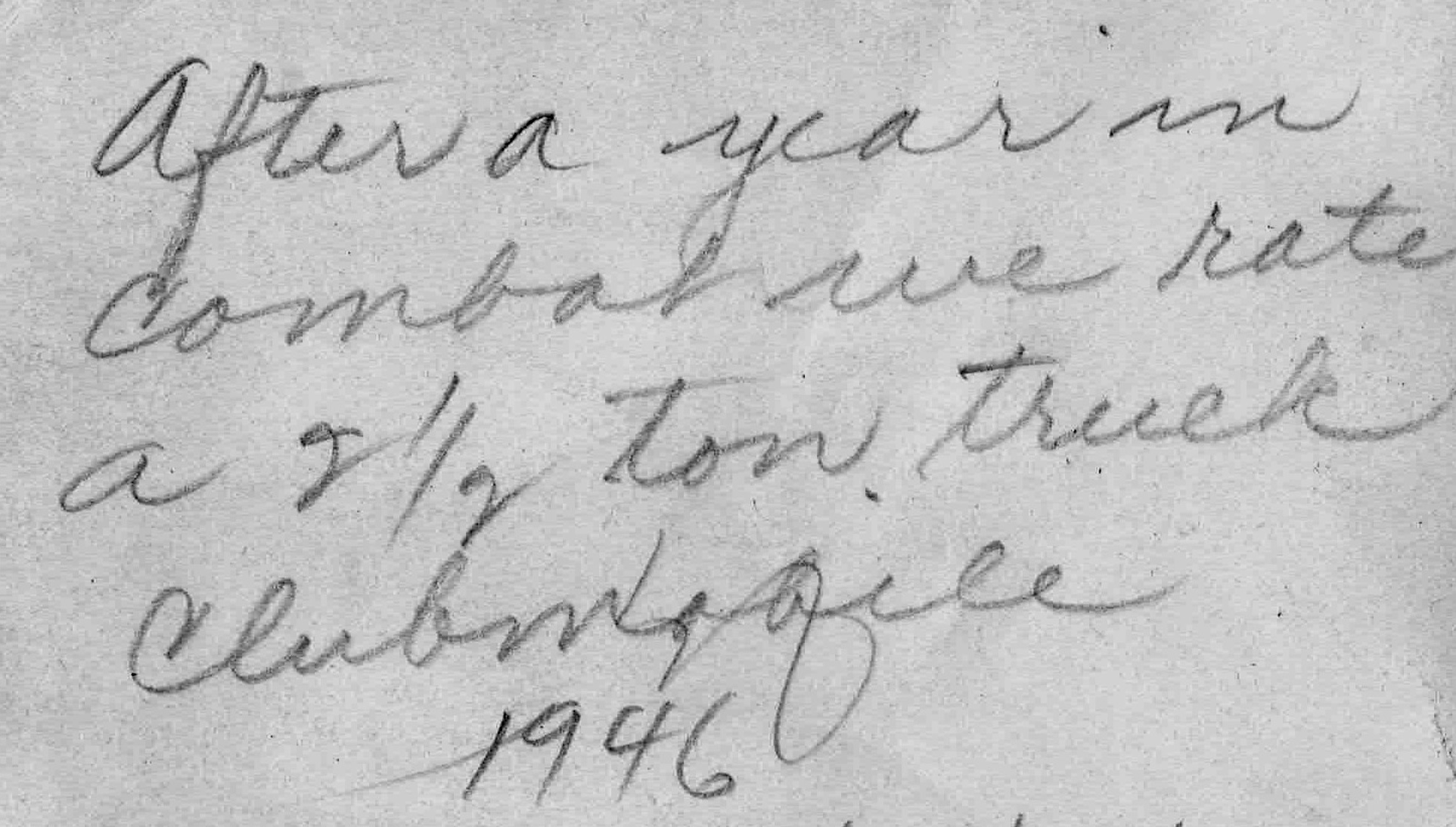
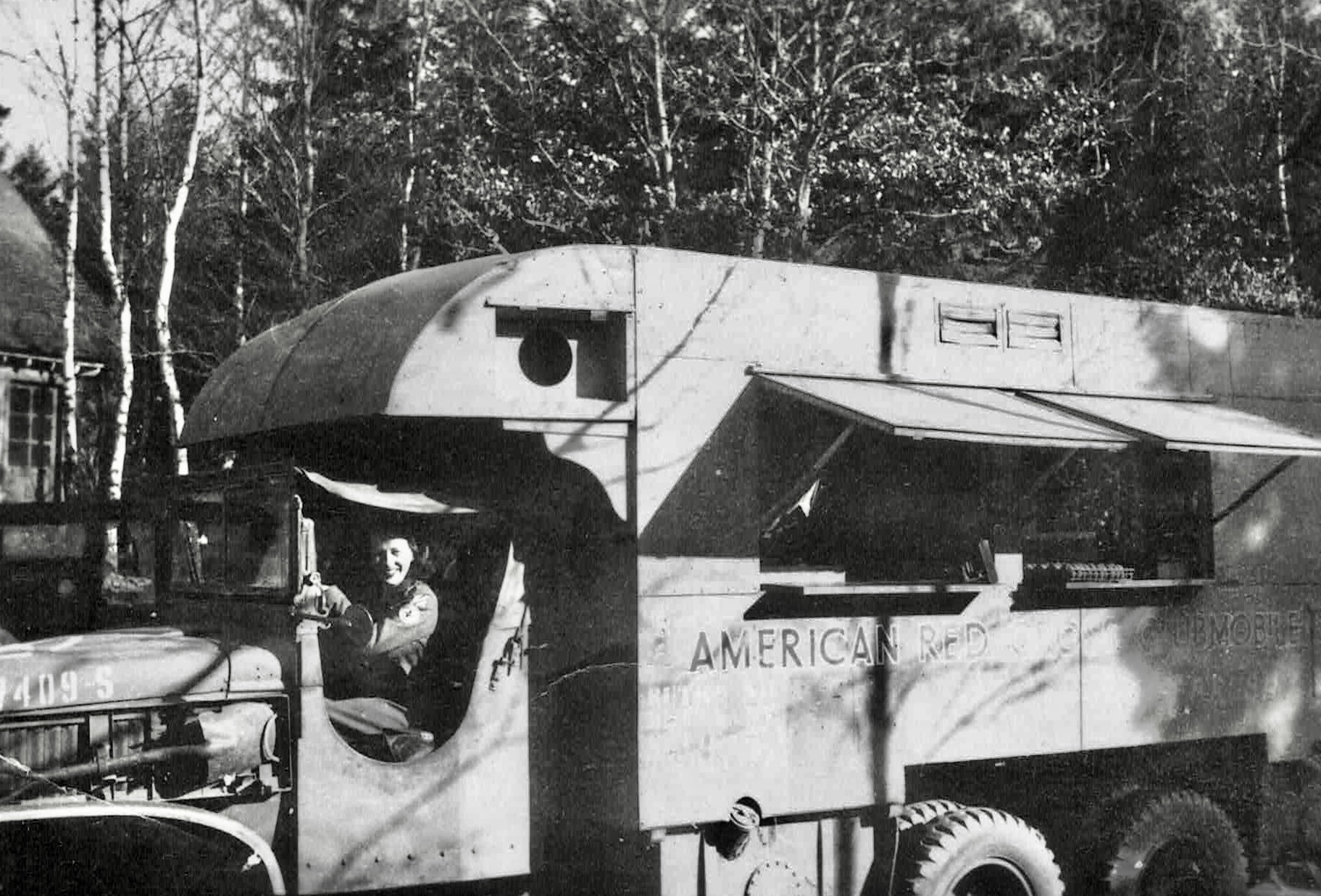
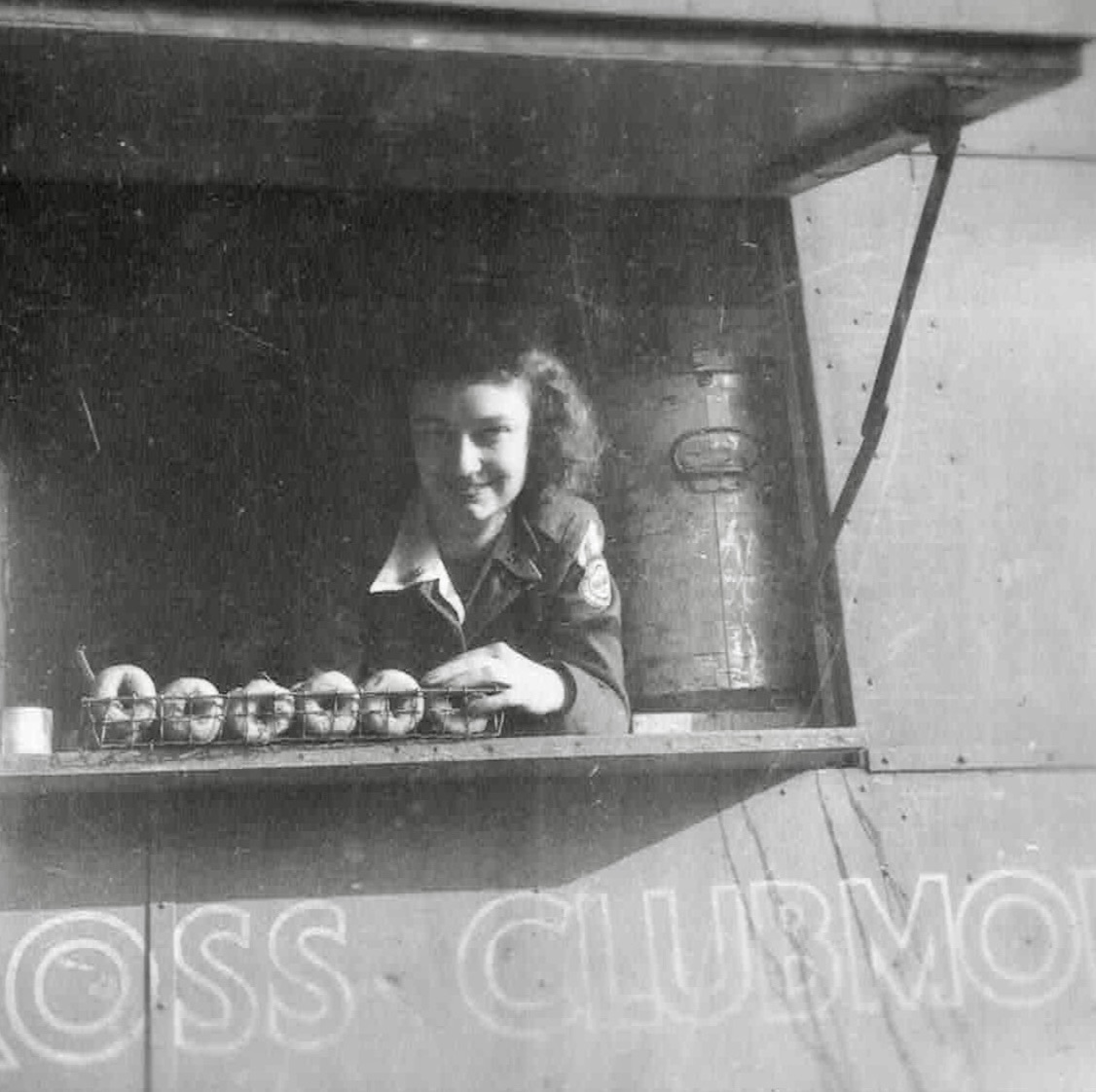
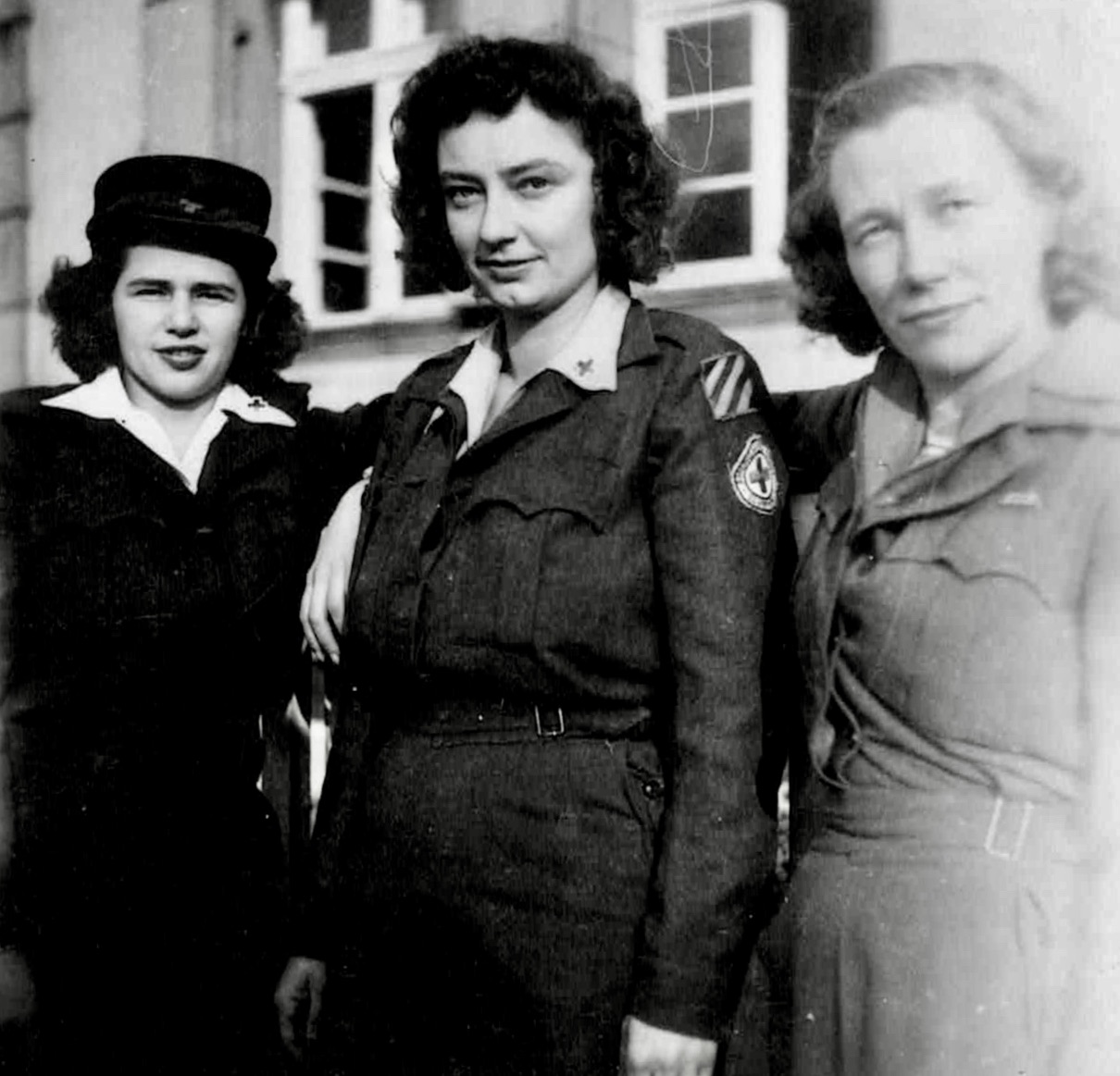
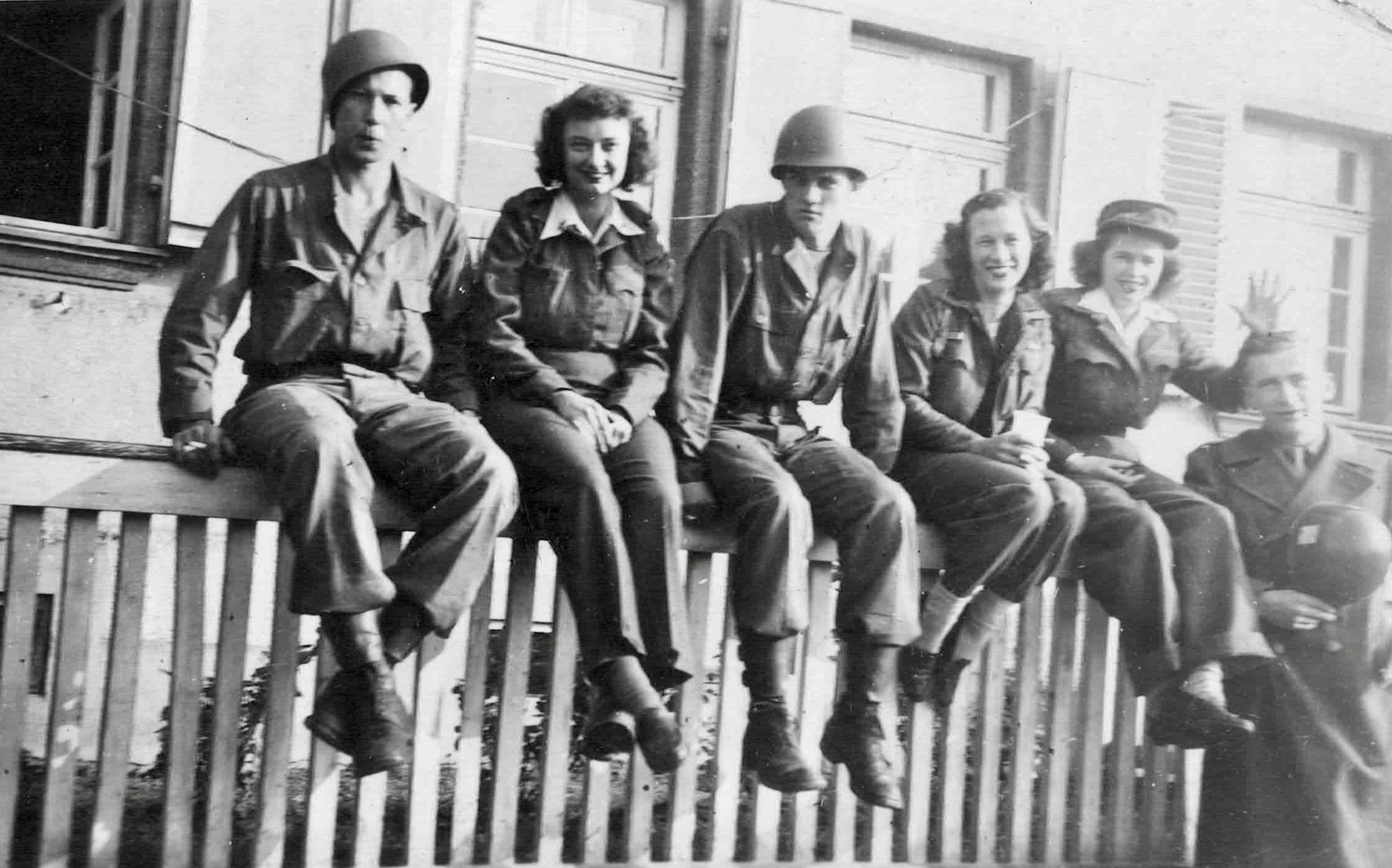
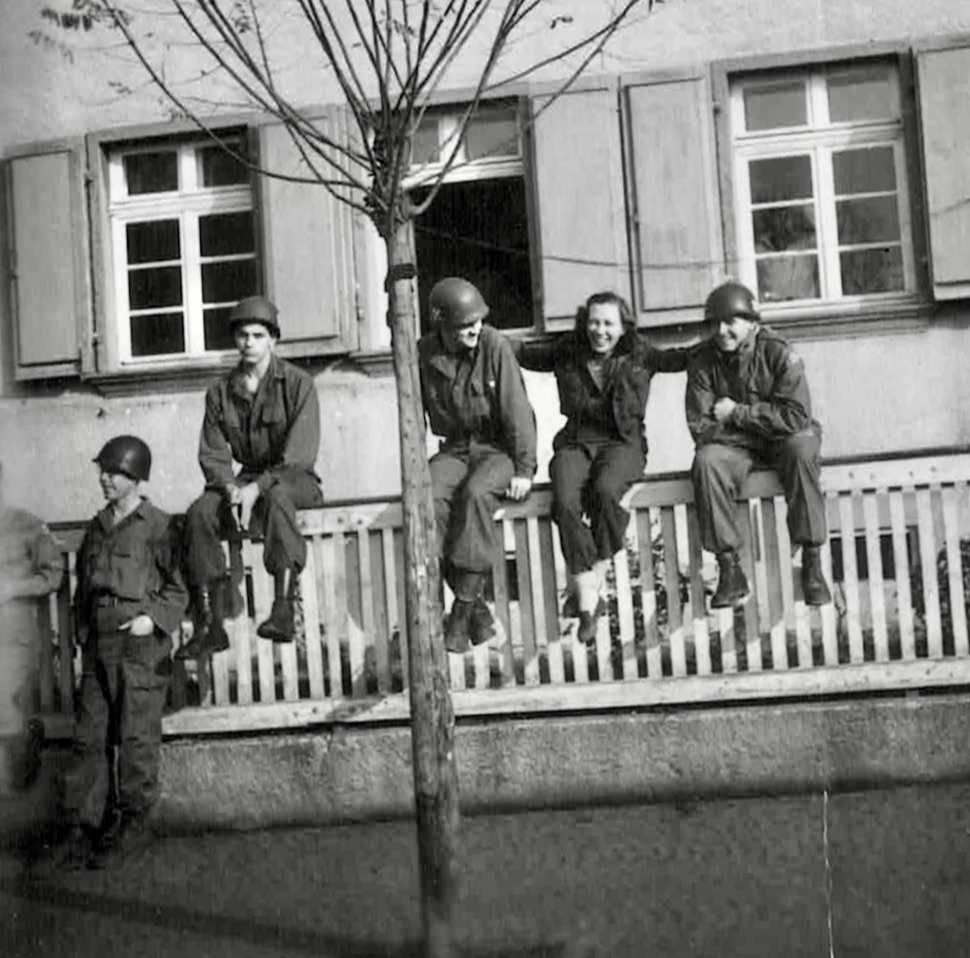
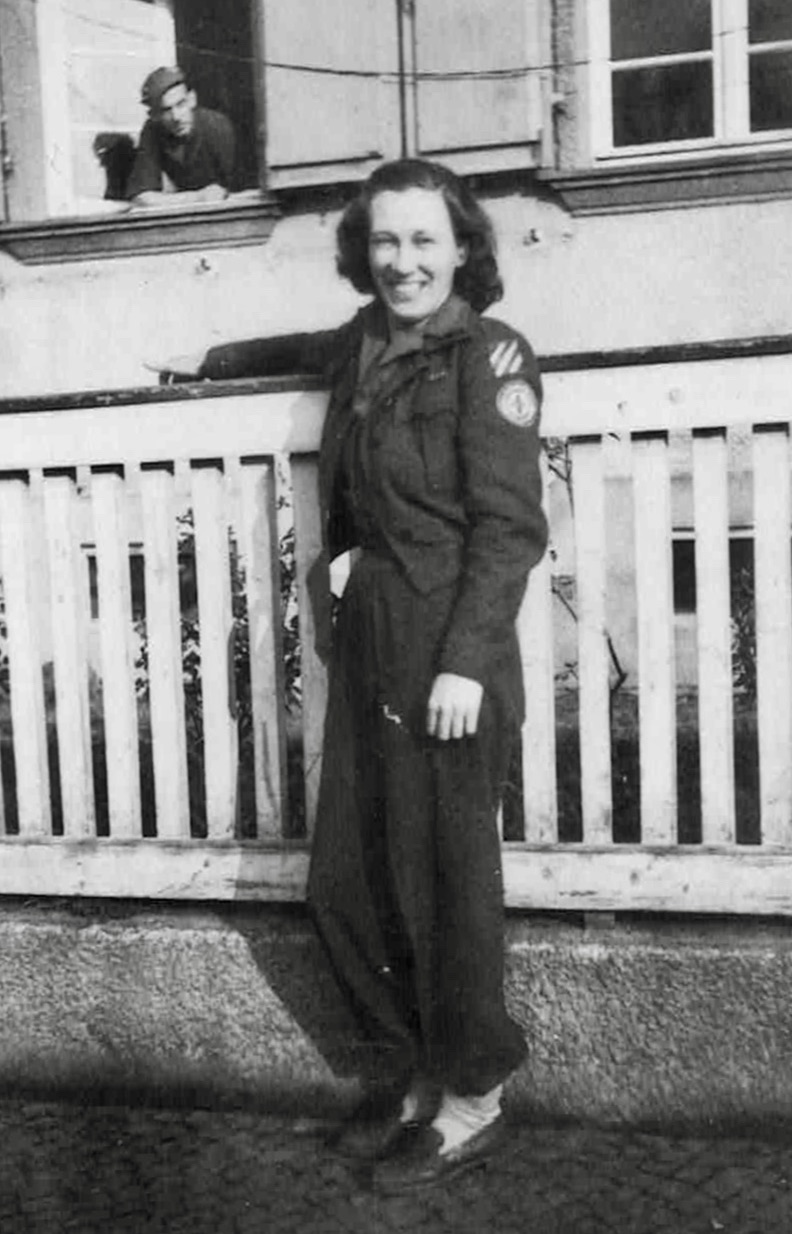
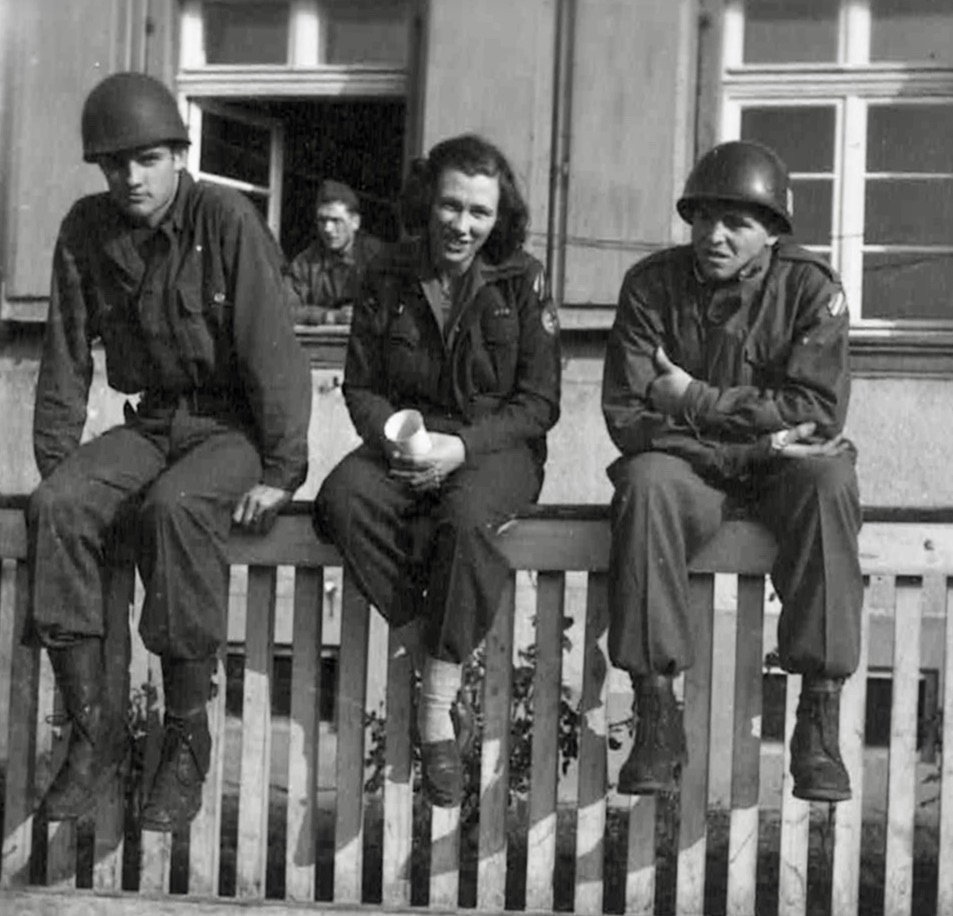
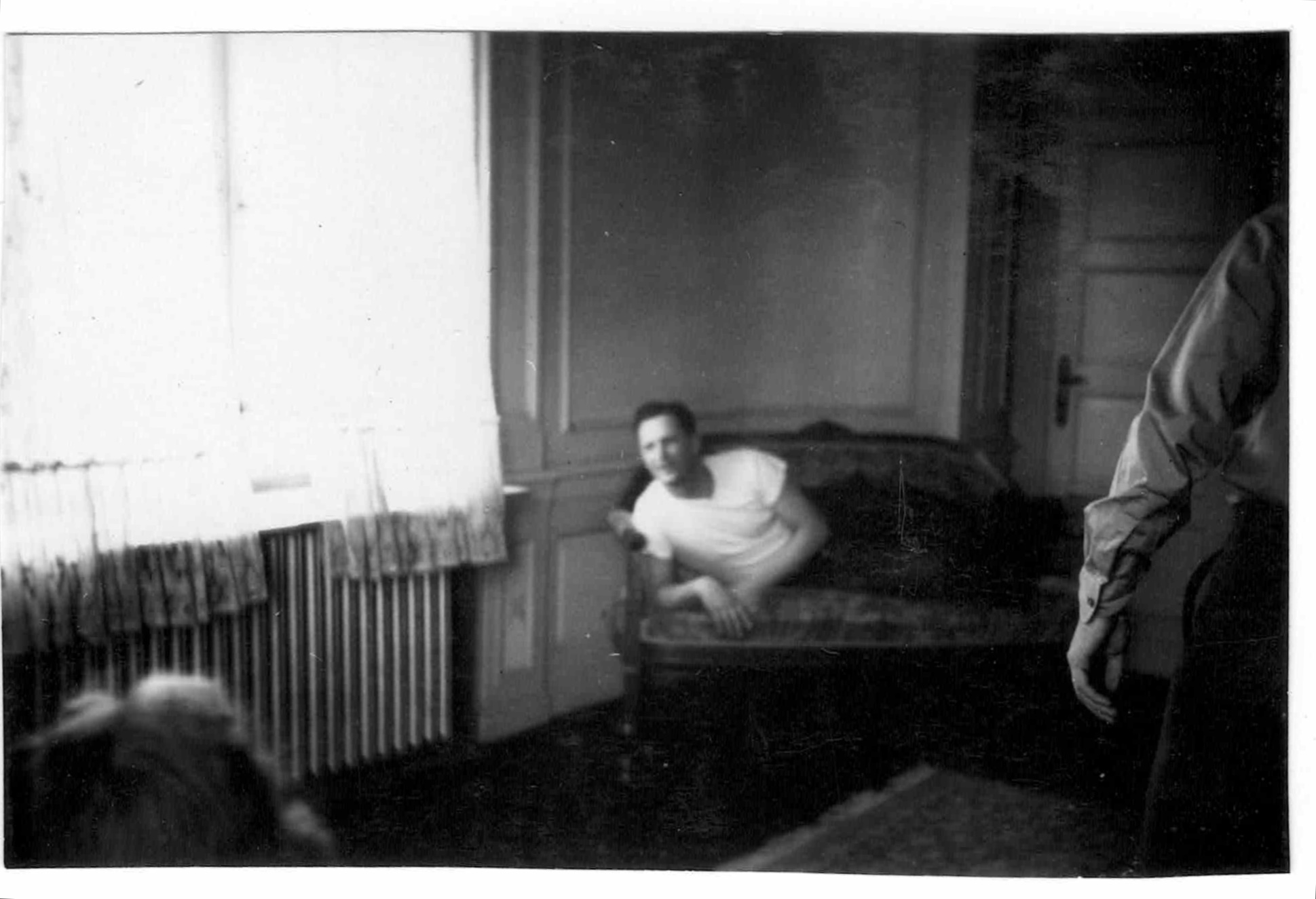
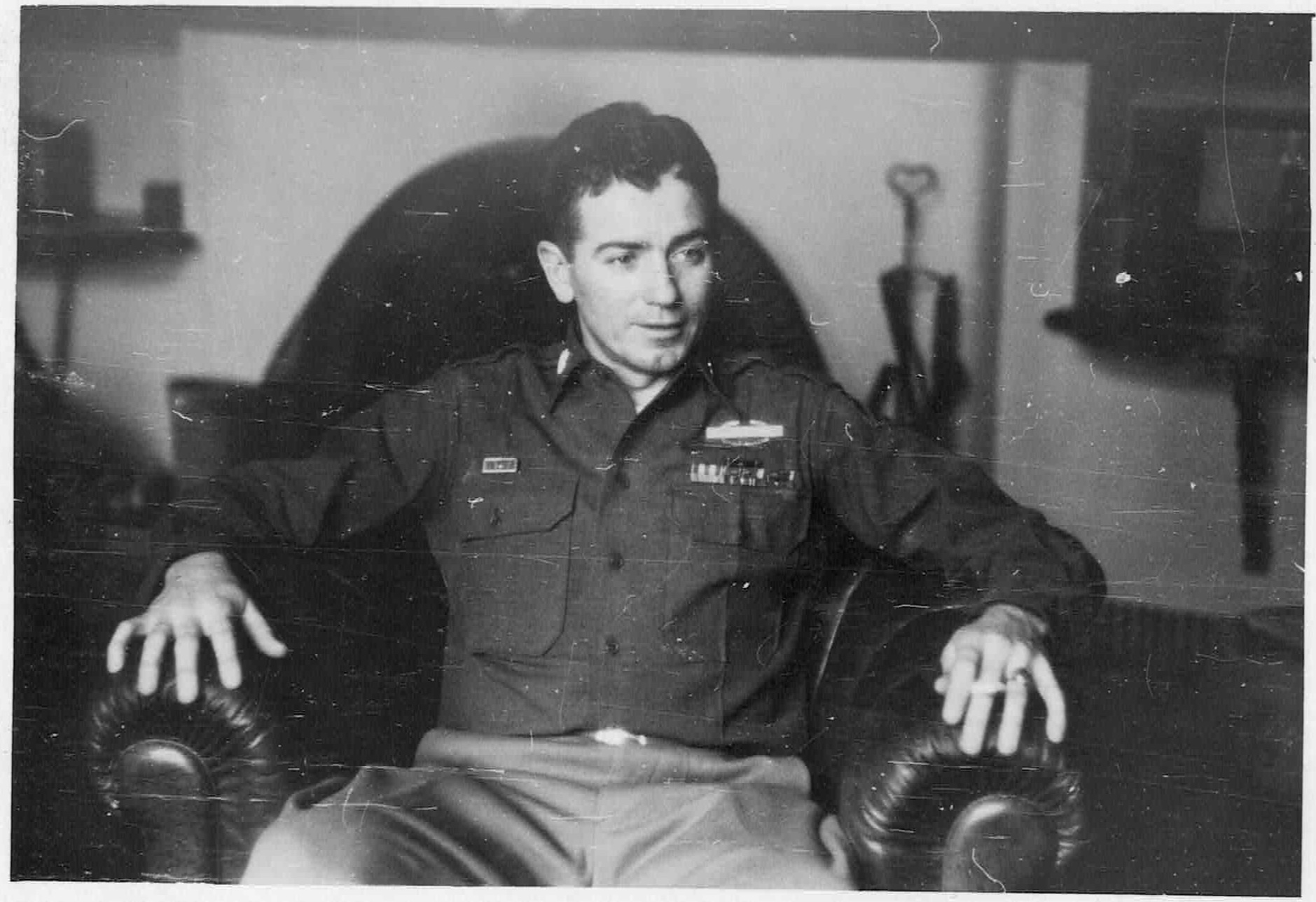
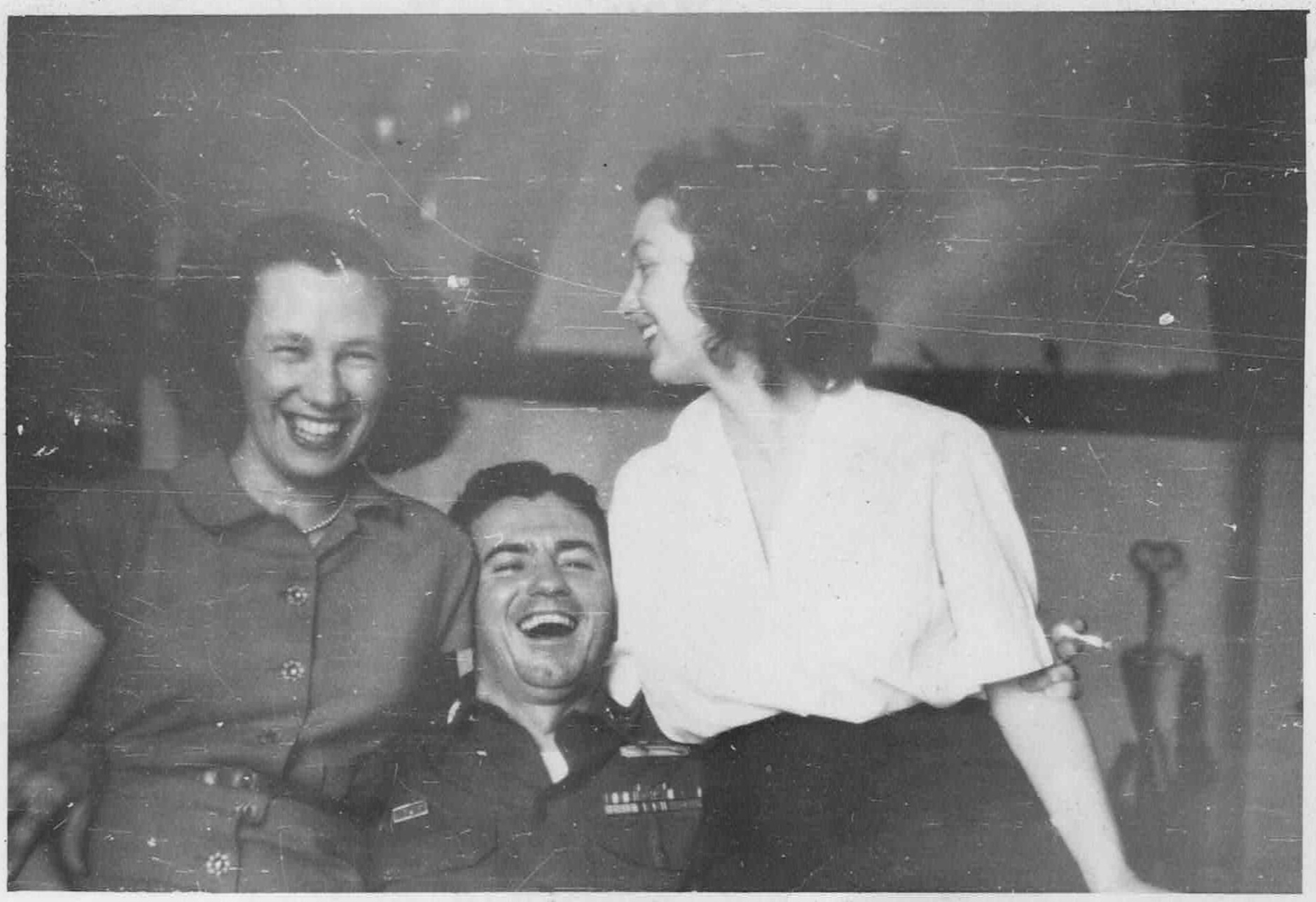
The clubmobile crew of Mary McAuliffe, Janet Potts and Florence Wick in occupied Borgen, Germany. The women are now allowed to wear pants and have been issued handsome uniforms. After having to scrounge vehicles to deliver donuts throughout 1944 and 45, the crew finally got its own clubmobile, the SageBrush. It had been attached to the 70th Infantry Division.Flo’s note on the back of the pictureReady for business in the SageBrushJanet poses with donuts in the new/used clubmobileServing coffee and donuts in what looks like a break in an archery or shooting competitionWorking during halftime at an army football gameFlo and Janet Mary McAuliff joined the crew in late 1945. She had probably served with another crew, but I can’t find more information about her. She doesn’t appear in “The Arc in the Storm,” the one book that lists the clubmobile women, but neither do most of the others who joined the North Africa/Italy campaign.Mary, Janet, FloWith “C” Company 3oth Infantry at Borken GermanyFlo and “her boys”I’ve no idea why the soldiers are wearing helmets in these pictures. The war was long over.
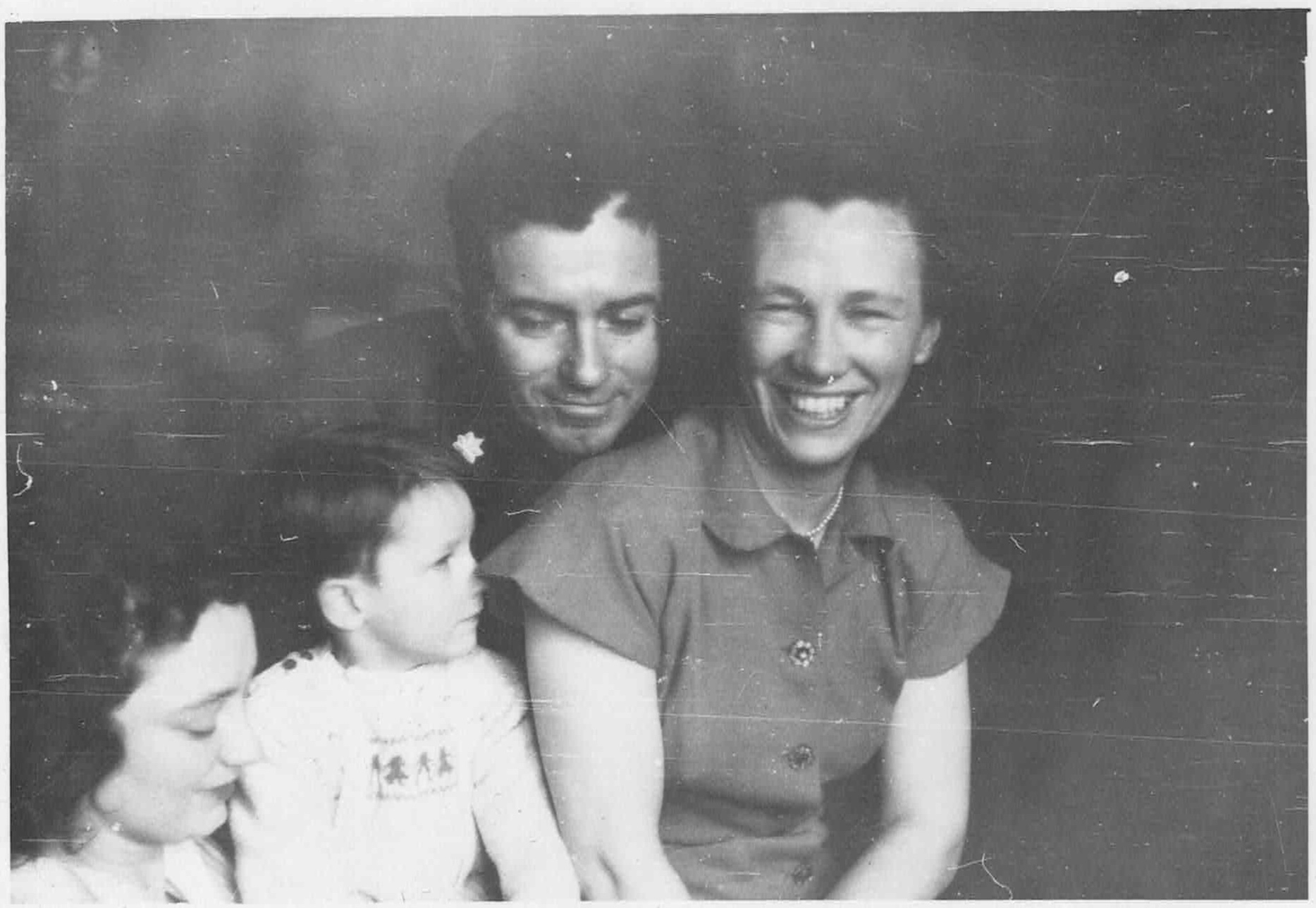
Flo did a good job of identifying the people in pictures on this page in her album relaxing at the 7th Infantry house. I’ve no idea where the child came from.
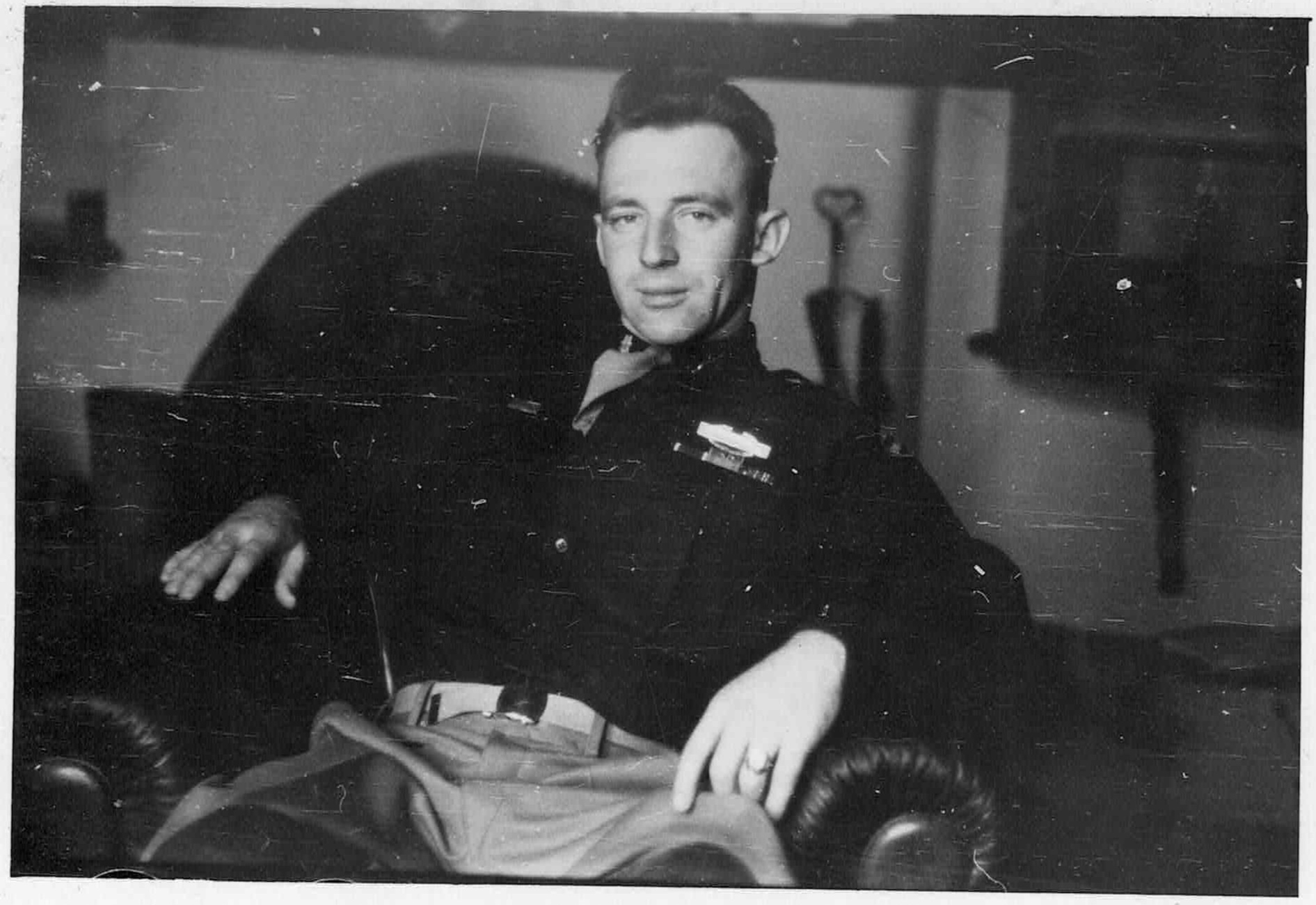
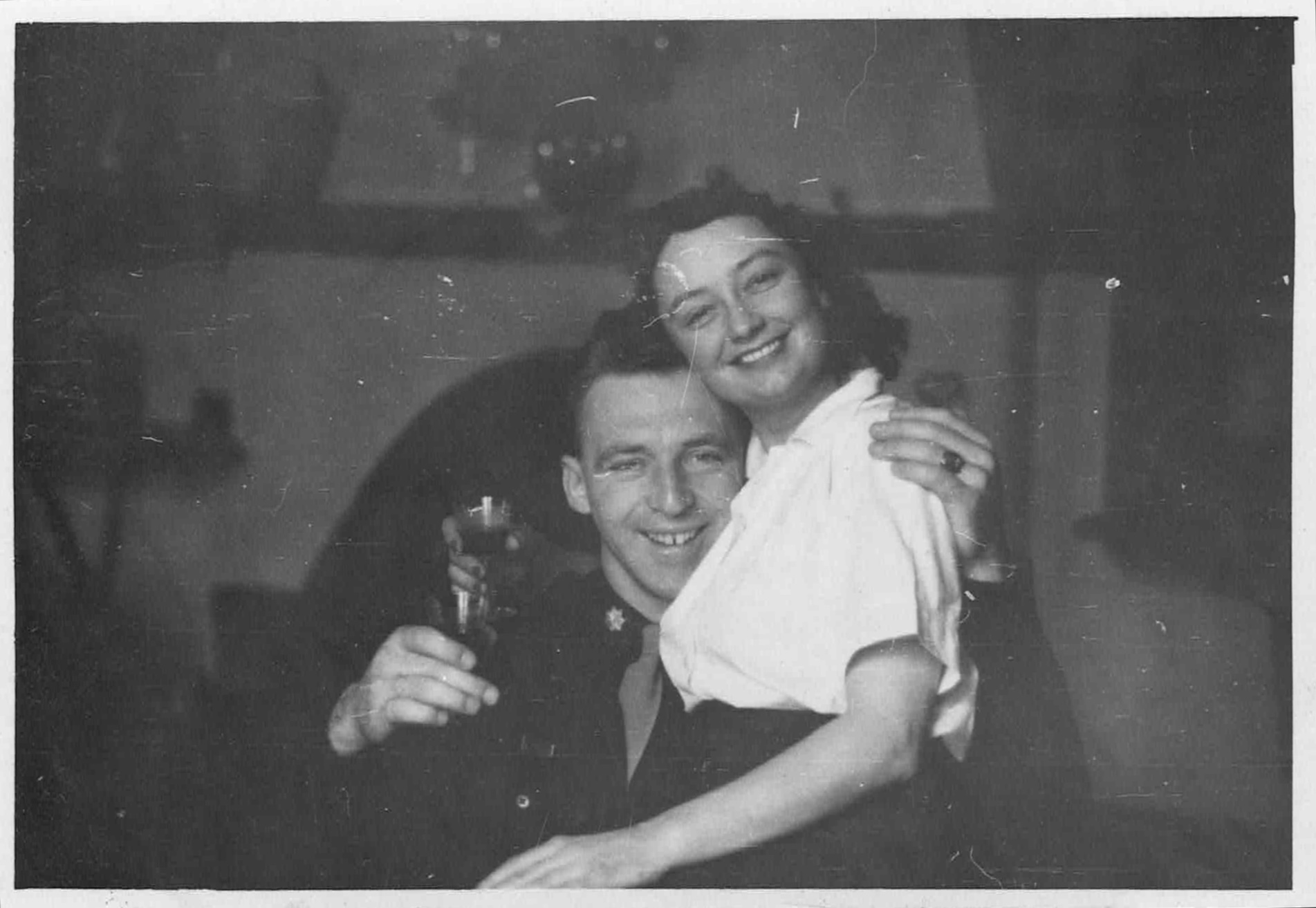
Maj. Win Whall (Kent WA)Jens and JanetLt. Col (CP) RamseyMaj. Kenneth WallaceWhose child is this?Flo and Maj. WallaceLt. Col. Ralph Flynn, 3rd Div, 7th Inf.
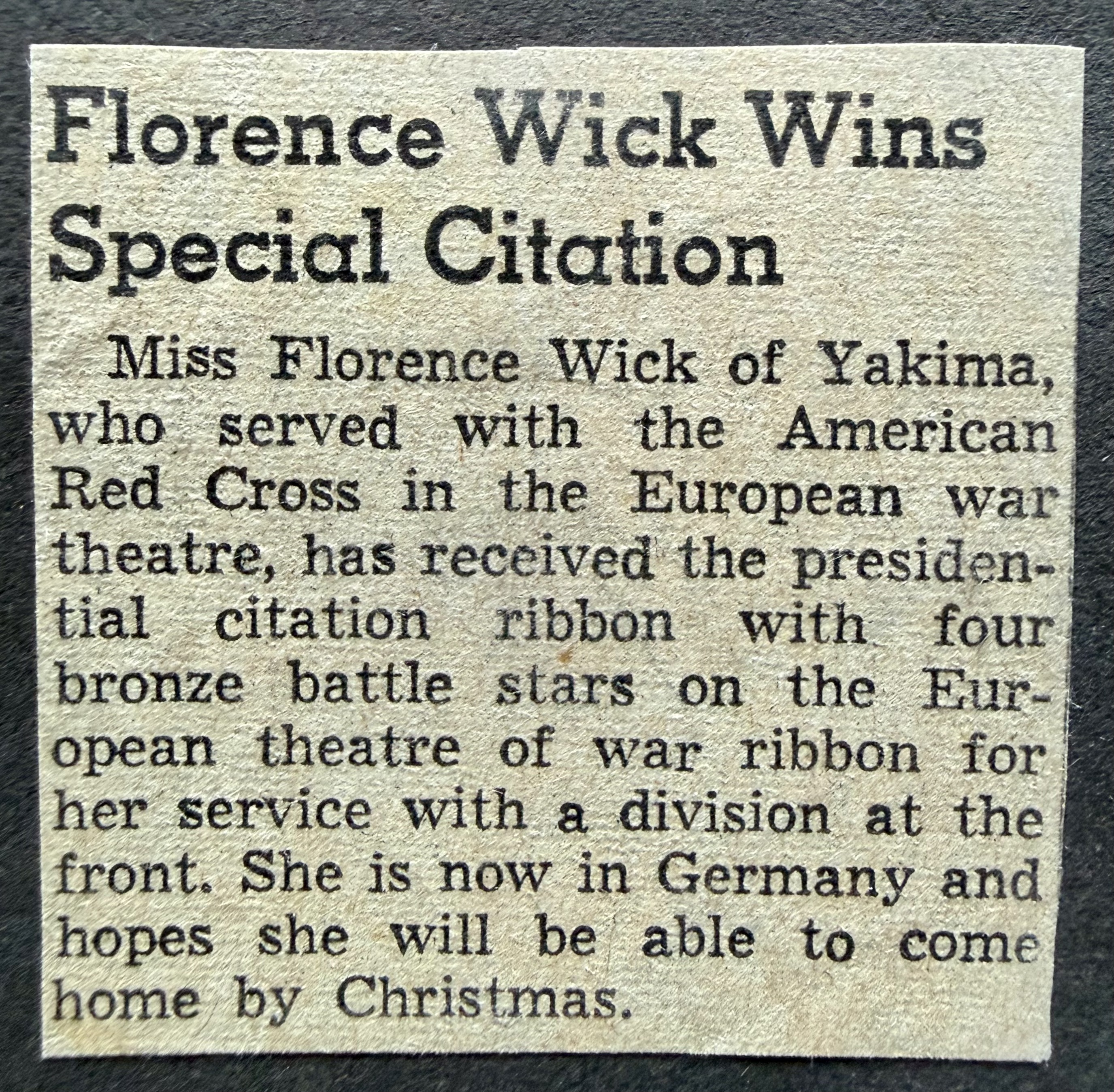
Flo pasted some ephemera on this page which includes a newspaper story about her receipt of an award. Flo was later awarded a bronze star. This is an award called a service star. The story reads: Miss Florence Wick of Yakima, who served with the American Red Cross in the European war theatre, has received the presidential citation ribbon with four bronze battle stars on the European theatre of war ribbon for her service with a division at the front. She is now in Germany and hopes she will be able to come home by Christmas.
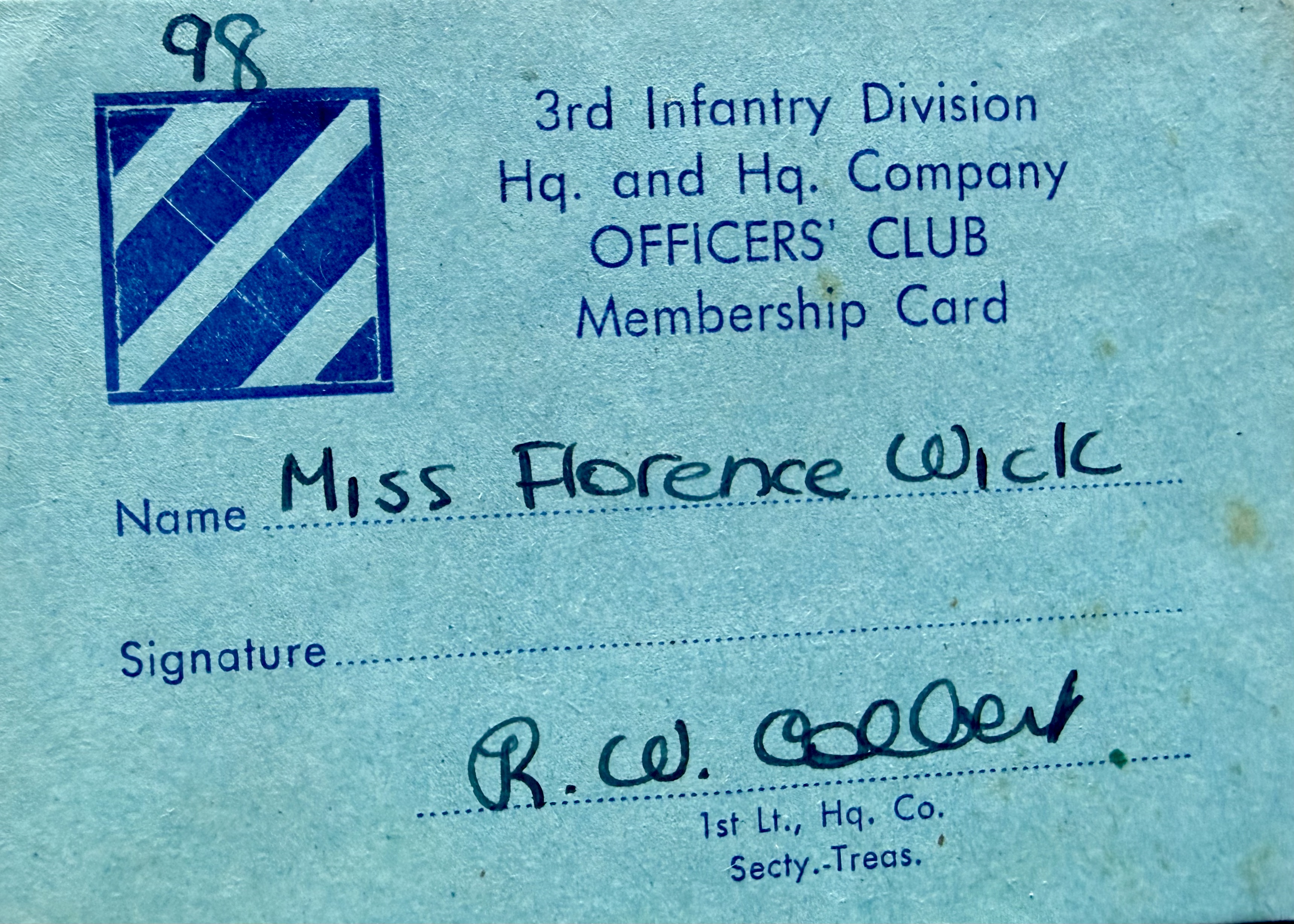
Flo’s 3rd Div. officers club membership card
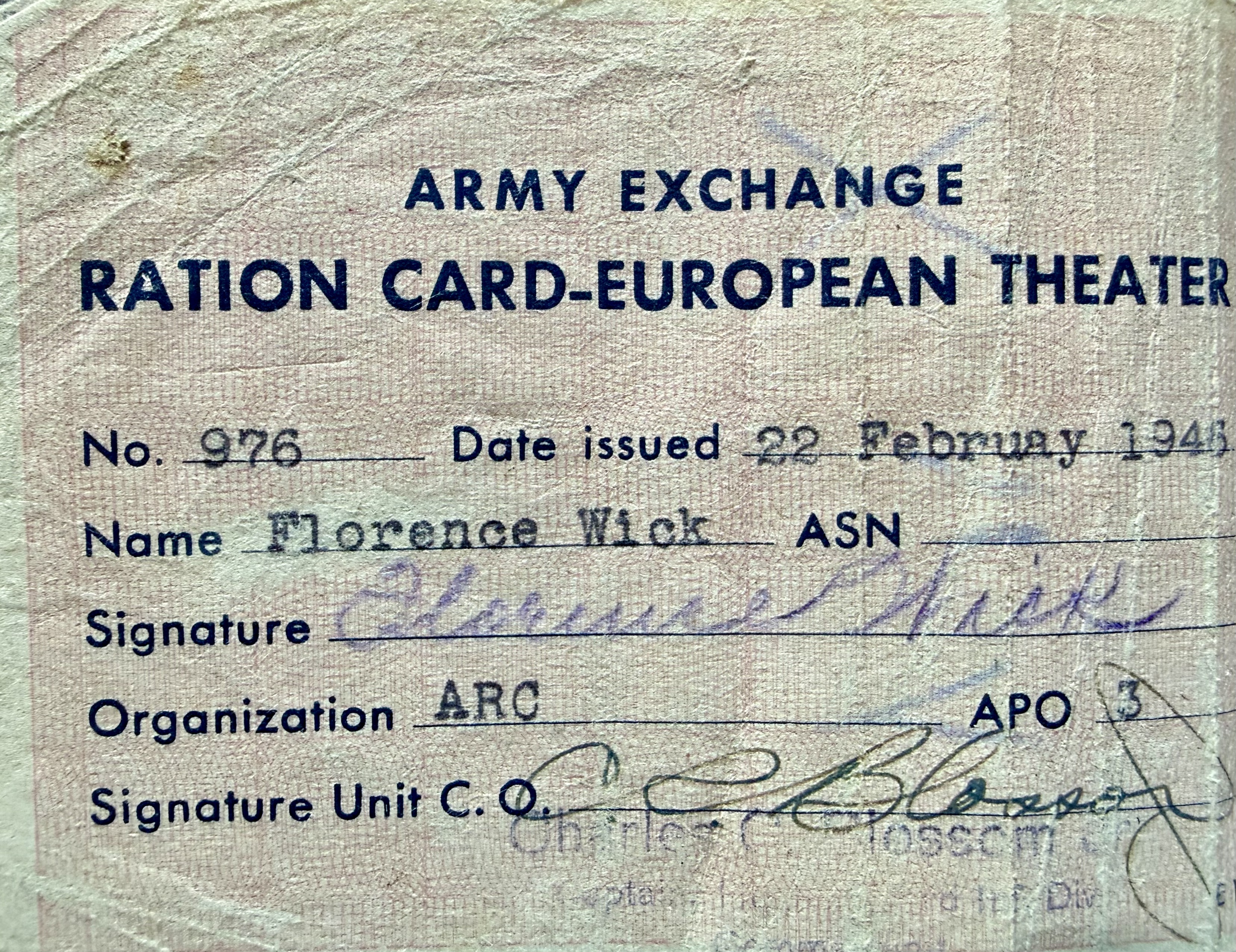
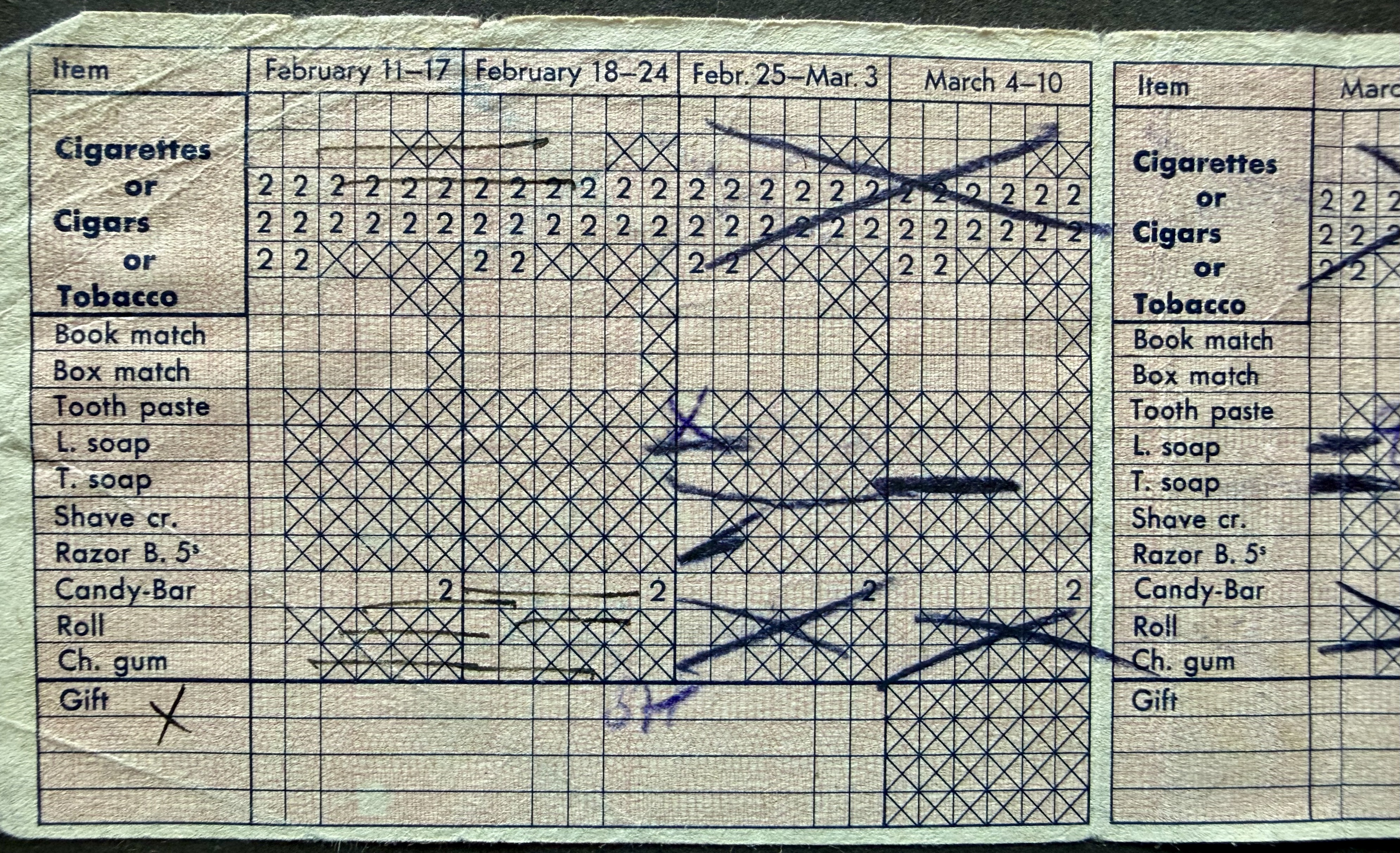
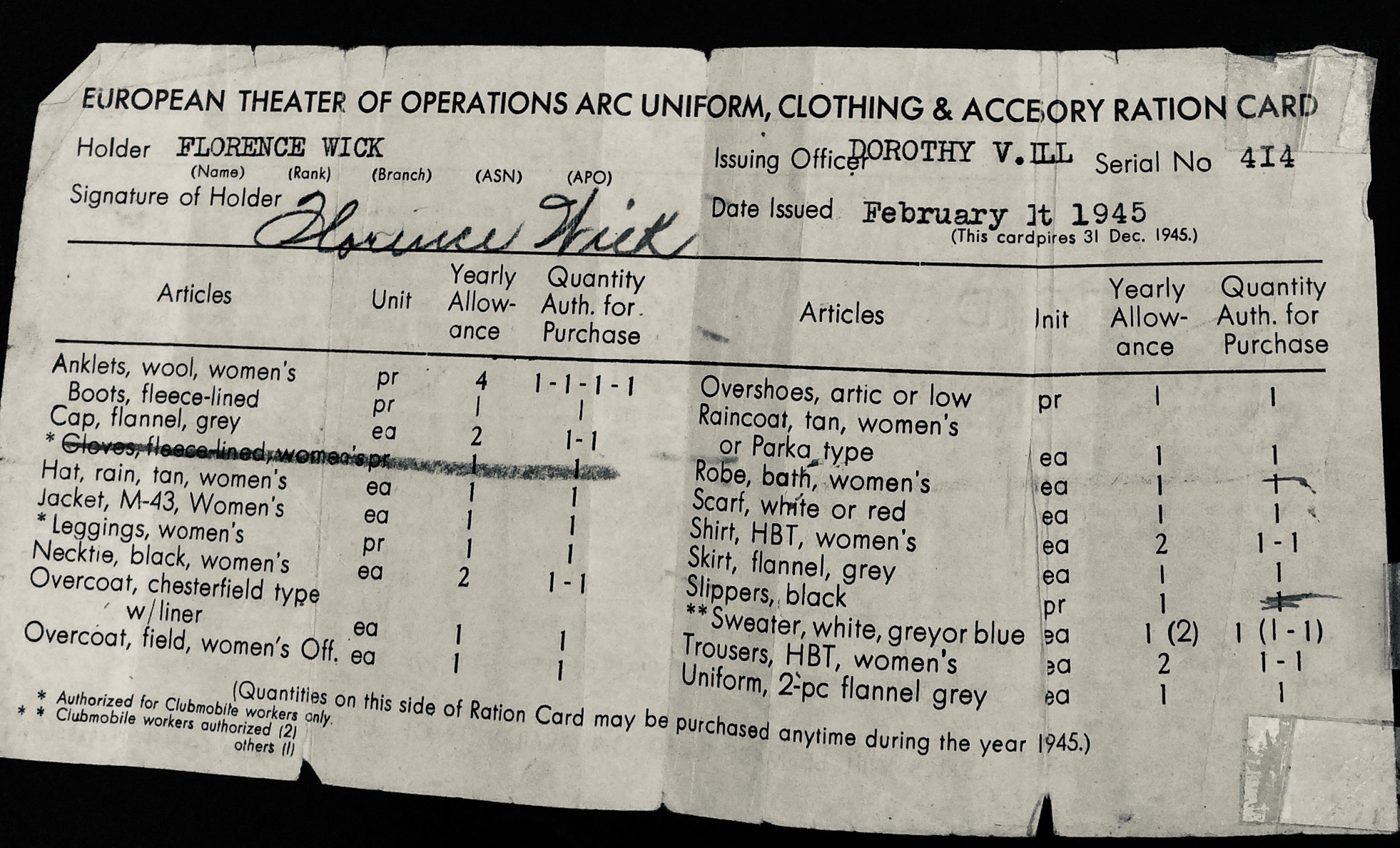
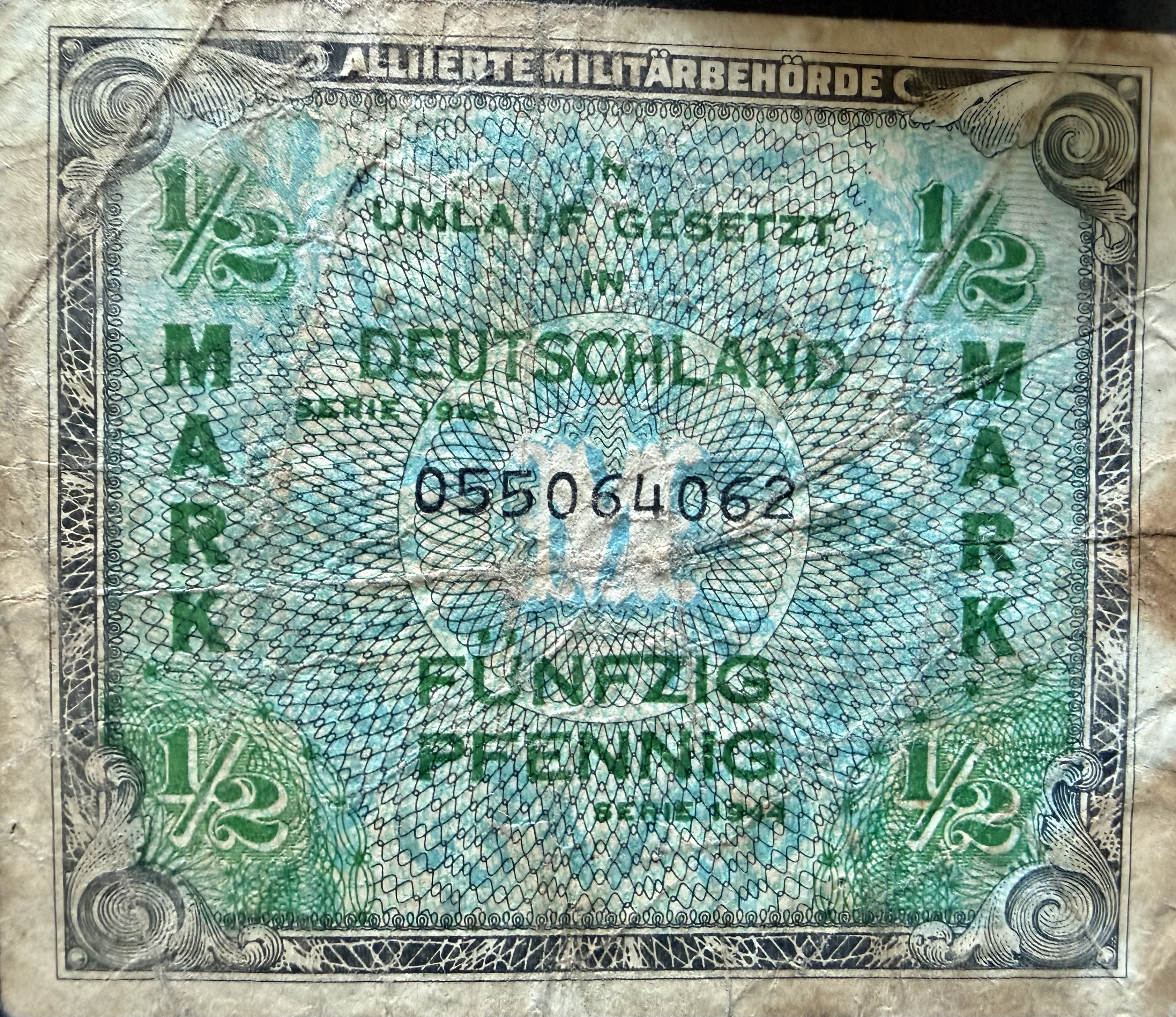
Army exchange ration cardWhat’s the difference between L. soap and T. soap?In February 1945 the clubmobilers were issued new uniformsThis currency was issued by the Allied Military Government during the occupation, replacing the German Reichsmark. It was used for transactions in the occupied zones of Germany and was a part of the effort to stabilize the economy and control inflation after the collapse of the Nazi regime. Fünfzig Pfennig means fifty pfennigs in German. AI says this type of currency is collectible and significant in the context of post-war German history.