A Civil Talk with a Trumper

In which I learn that propaganda works

After I made it clear in a blog post that I support Kamala Harris for president, my neighbor texted me saying we are on opposite sides of the political spectrum and did I want to talk about it? She is part of an organization called Braver Angels whose mission is to bring Americans together to “bridge the partisan divide and strengthen our democratic republic.”

Well, yeah. I’d love to understand why anyone is planning to vote for a criminal misogynist racist incompetent ignorant vindictive idiot. I truly do want to understand. 

We met at a local café where I asked her to lay out her thoughts.

We have much in common. We are about the same age (75). She has campaigned for social justice, and protested the Vietnam war. She was a student at SF State during the 1968 student and faculty strike. She voted against Hillary in 2016 because she was pro-war and Trump said he would end wars. Then she voted again for Trump in 2020.

She tells me she is a Quaker

Me: Do you go to quaker meetings? Are there Quakers who consider themselves Christian nationalists?

Yes, she has gone to meetings in many places. There are Quakers who want to walk a more middle line.

Where do you get your news?

Mostly from citizen journalists. People who report from the street. She mentions Tucker Carlson and other right-wing commentators.

She likes Vivek Ramaswamy. She says he went to Springfield Ohio to bring people together.

Why do you think he went there? What is he running for–a cabinet position?

He wanted to find out what is really going on.

He’s supporting Trump. How can he pretend to be nonpartisan?

He says they brought in too many immigrants.

The Haitians are legal immigrants.

No. they have “temporary protected status.” That’s different. They don’t all have jobs. Some of them hang out on the street.

Do you agree with trump’s plan to deport all immigrants?

There needs to be more oversight. We need to stop the rapists and felons. Send them back.

Trump is a convicted rapist. Should we send him back?

Social security. Trump wants to stop taxing it.

Yeah that’s what he says but the republicans have been saying for years they want to abolish it. 

What about Kamala’s economic plans? (A republican talking point.)

You are treating trump like a regular candidate instead of a crazy guy who can’t string a sentence together and who promotes violence.

What do I think about RFK? 

I liked him when he was an environmental lawyer. Now I think he’s lost his mind.

He only wanted people to have a choice about vaccination.

What about the republicans who would take away women’s vote? Who want to return to slavery?

She hasn’t heard much about them but knows about Mark Robinson in NC.

What about project 2025?

Trump is not involved with that.

You know that JD Vance, his VP candidate, wrote the introduction and the others involved were almost all on Trump’s staff?

She didn’t know that. It’s the Heritage Foundation she says.

We talked respectfully about many other issues. After an hour I have to go. I’m getting a little sick. We agree that we hate war. I shake her hand. She hugs me. She says see we do have something in common.

She tells me I should listen to Vivek. I tell her she should read and listen to different media. I send her a youtube clip from Trae Crowder the Liberal Redneck. Love that guy.

I still feel profoundly disturbed. We did not bridge the partisan divide nor strengthen the republic. For years the rest of us have been asking why any sane person could still support a con man like trump. My theory is that it’s the fault of the right wing media’s lies. And one thing this meeting has done is confirm my theory. Now I understand.

Propaganda works!

Californians Work to Turn Red Districts Blue

Gay Man Will Rollins Running Against Anti-Gay Incumbent

Californians will be sidelined again in the upcoming presidential election. With nearly 40 million residents, the state won’t play a decisive role in choosing the next president until the electoral college system is changed. Instead, the focus remains on swing states, leaving many Californians feeling left out, and me outraged again.

But we are not twiddling our collective thumbs. We’re shifting our attention to key down ballot races. A strong coalition, Mobilize—comprising Indivisible, California Grassroots Alliance, and others—is targeting six red districts in an effort to flip the House blue. 

One candidate I’m particularly excited about is Will Rollins, who is openly gay and has a great shot at winning. When the districts were reorganized, he gained the queer-friendly city of Palm Springs in California’s 41st District. Rollins, a former federal prosecutor, is running again after nearly defeating Republican Ken Calvert, an incumbent with a long anti-LGBTQ voting record, in the last election. Polls show Rollins with a six point lead. https://willrollinsforcongress.com

I can’t vote for Will. I’m in a safe blue Congressional district. But, like hundreds of other Californians, I’m writing postcards to voters, getting out the vote, posting yard signs, and wearing my Kamala swag. Let’s paint Congress blue!

Winter’s Coming and We Like It

My Regular Pagan Holiday Post: Autumn Equinox

You can shake your fist at heaven, you can file your appeal

You can try to rise above it, you can crawl and you can kneel

No matter what life gives you, no matter what you steal

You cannot stop the turning of the wheel

Chorus from Jennifer Berezan’s song Turning of the Wheel

Naked ladies (Amaryllis belladonna), a ubiquitous and favorite fall flower

Sitting out in our yard on a lovely evening at the ides of August, Holly and I luxuriated in the garden’s summer radiance. The day was cooling as the sun retreated. Colorful zinneas and cone flowers bloomed and the fragrance of the rockrose bush enveloped us. Hummingbirds zipped back and forth. Finches and oak titmice populated the feeder. Towhees scratched the ground as mourning doves bobbed and cooed. It was a perfect summer evening.

But as we sat in our twin rockers, we both said, almost in unison, “I’m looking forward to the turning of the seasons.”

Summer, with its long, warm days and bountiful harvests, has been beautiful, but we’re ready for the change. Holly says that humans evolved with the rhythm of change, and that’s why we appreciate the wheel of the year turning.

Now, with the autumn equinox upon us, the new season begins. Pagans call this time Mabon, after the Welsh God who is the son of the Earth Mother Goddess.

Recently, I learned about the lunistice, the moment when the moon seems to pause, similar to the way the sun appears to stop at solstices before shifting direction. It’s a fascinating event, though hard to observe unless you track the moon regularly.

The major lunar standstill is marked by observing the extreme points where the moon rises and sets on the horizon, akin to watching the sun at solstices. Just as the sun’s position reaches its furthest northern and southern points at solstice, the moon does something similar every 18.6 years during a maximum lunistice—an event that occurs near equinoxes and eclipses, and it’s happening now!

This 18.6-year cycle is due to the moon’s orbital tilt and the gravitational pull of the sun, causing the moon’s orbit to swivel and vary its angle relative to Earth.

Excited, I reached out to the folks at Ferguson Observatory at Sugarloaf State Park to learn more. I was intrigued by the idea of “maximum lunistice,” thinking it sounded particularly special. But I learned something surprising: the minimum lunistices are actually more significant, especially in relation to tides. 

The Observatory explained that during maximum lunistices, the moon is furthest from the celestial equator, resulting in less dramatic tides. However, minimum lunistices bring larger tides because the moon is closer to the equator’s gravitational bulge. But since “maximum” sounds more impressive, it tends to get more attention. The next minimum lunistice won’t be until 2034.

At an Old Lesbians retreat in the Mayacamas mountains as a group of us stargazed, I attempted to explain this lunar phenomenon but stumbled over the details. Honestly, I don’t fully grasp it myself. Yet, here’s what’s clear: ancient peoples understood this cycle.

Bronze Age societies, like those who constructed the megalithic monuments in Britain and Ireland, placed great significance on lunar standstills. Modern Neopagan religions find meaning in them too. Ancient cultures beyond the British Isles also recognized these events—sites like Chaco Canyon in New Mexico, Chimney Rock in Colorado, and the Hopewell sites in Ohio all feature alignments to the moon during lunar standstills.

As I write this, the full supermoon is rising with a partial lunar eclipse. The turning of the celestial wheel continues to fascinate us, just as it did our ancestors.

I’d like to call back summertime and have her stay for just another month or so

But she’s got the urge for going so I guess she’ll have to go.

From Joni Mitchell’s song Urge for Going

One of my favorite Joni Mitchell songs, Urge for Going, laments “summertime falling down.” Joni was thinking about snow and cold and pulling the blankets up to her chin. She sang, “All that stays is dying and all that lives is getting out.” But she was singing about winter coming in Canada. In California when I think about winter coming I think rain, which makes plants start to grow in the outdoors. It brings mushrooms, grass, new leaves and flowers. The cold coastal summer fog falls away and dust is dampend. 

David Douglas, the Scottish botanist who traveled in North America in the 1830s (after whom the Douglas fir and other plants were named) remarked on how dead the Sonoma area was in summer. He collected plants in the winter and spring when they were growing and flowering.

These are some of the reasons we here in summer-dry California exclaim with anticipation “Winter’s coming!”

The autumn equinox takes place Sunday September 22. Wishing you all a fabulous fall season.

Lewisia, a native in our garden, named for Meriwether Lewis who encountered the species in 1806

From Civil War Spy to Lesbian Collective

The Strange History of 386 Richland Avenue

In the 2000s, I began to deconstruct my Bernal Heights home. In opening up the walls, I started to uncover the house’s history, leading me to an investigation into its owners and architectural evolution from the distant past to its having been bought by my lesbian collective in 1980. The story of 386 Richland Avenue is one of Bernal Heights, San Francisco, and California more broadly, speaking to themes of land ownership and development, the legacies of slavery, and the role each person has in shaping their neighborhood.

386 Richland Avenue 1980. Photo: Molly Martin

An old house holds the ghosts and remnants of all the people who have occupied it over the years. When you live in an old house I believe you must acknowledge all the people who have lived there and the people who built and worked on the house.

When I got to San Francisco in 1976, I decided there was no place I’d rather live. I had never owned a house before and really had no hope of ever owning a building in San Francisco until my living collective of four lesbians agreed to pool our money. 

I got curious about the history of our Bernal Heights building as soon as we bought it in 1980. How old was it? Real estate records said it was built in 1900, but that is the default date for all San Francisco buildings built before the earthquake and fire of 1906 destroyed city building department records. So I knew it was probably built before 1900. It was always a weird looking building: three stories with three flats over a garage. Notice the weird roofline and window placement. What architect would design such a building? 

I wanted to know who had lived there before me.

The Land Underneath

Ohlone village

The first human residents of this land of gently rolling grassy hills were the Ramaytush Ohlone. Hundreds of shell mounds have been uncovered all around the San Francisco Bay and there is evidence of a great Ohlone settlement at the mouth of Islais Creek, which once flowed just down the hill south of my house where Alemany Blvd and Interstate 280 now flow with traffic. Before progress changed its course and buried it, Islais Creek formed a deep gorge on the south side of my neighborhood of Bernal Heights. The creek was long ago undergrounded and replaced by freeways but the gorge remains.

I was delighted to learn that islay is an Ohlone word naming a native bush called the islais cherry (Prunus ilicifolia) that grew along the creek and still grows in forgotten corners of San Francisco. The shiny leaves look like a cross between holly and oak. And the fruit is edible. They were eaten by the Ohlone along with plentiful bay creatures, shellfish, fish, birds, deer, and other land animals. 

Spain had laid claim to San Francisco and what it called Alta California in 1542. Starting in the 1760s the Spanish established missions from San Diego up to Sonoma along the king’s highway or El Camino Real, now Mission Street and Highway 82. The Spanish and the Indians they enslaved built San Francisco’s Mission Dolores in 1776, and so the road from San Jose and the south had come sometime before that. These are well-traveled pathways that extend quite far back in time.

After Mexico won independence from Spain in 1821, it secularized the Catholic missions. In order to receive a Mexican land grant, a man had to be a Catholic. But the land was not handed out to the church as it had been by Spain.

José Cornelio Bernal was granted a league, about 4,400 acres, by the Mexican government in 1839. José was the son of Juan Francisco Bernal who, with his family, arrived in San Francisco with the Spanish Anza expedition in 1776. José and his family were cattle ranchers, some of the original Californios. Over time they lost the land to squatters, lawyers, and bankers. The family first defaulted in 1859 to William Tecumseh Sherman, a banker before he became a Civil War general, who had loaned the Bernal patriarch money. The Bernals finally relinquished their last 25 acres to foreclosure in 1917. It marked the passing of the very last bit of San Francisco real estate from the families of original Mexican land grantees—the Californios.

The area south of the Mission including Bernal Heights was not platted until after the Civil War. At that time the lack of transportation infrastructure made lots hard to sell.

Large sections of southern San Francisco fell into the hands of the real estate developer François Louis Alfred Pioche. Pioche platted and developed much of southern San Francisco. A French financier, Pioche is described as a suave and cultured European who introduced fine French wine to San Francisco’s elite, an influential player who lived openly with his male lover and business partner, L.L. Robinson. No one is sure why he committed suicide in 1872.

Bernal Carleton Watkins 1875.png

Bernal Hill in 1875. Photo: Carleton Watkins, courtesy of California State Library

Carleton Watkins (1829-1916) was one of the most famous outdoor photographers of the American West. He also made many pictures of the growing city of San Francisco, like this one taken in 1875. From around Silver Avenue, looking north to Bernal Heights, the bare grasslands of southwest Bernal are revealed with the Mission District and the town of San Francisco in the distance. The prominent enclosure nearby is the site of St. Mary’s College. It faced Mission Road (now Street), the principal route at the time. College Hill Reservoir is the flat area near the center of the picture. The fenced circle denotes Holly Park, donated to the city in 1862 by the silver mining baron James Graham Fair. On the extreme right is the top of Bernal Heights. My house would be just to the right of this picture near the east edge of Holly Park.

Building 386 Richland

When we bought 386 Richland, the place was a mess. The most recent owner had “remodeled” by covering the walls and even wood window trim with quarter inch sheetrock. I’m an electrician. Trying to solve an electrical problem, I discovered live bare wiring between the sheetrock and tongue and groove finish wall in the kitchen of the lowest unit. This was very disturbing but I didn’t have time to demo the walls. That would have to wait 20 years until I retired. 

One day I drilled a hole in a closet wall to pull some low voltage wiring. I used a four-inch hole saw and was surprised that when the saw got through a layer of sheetrock, it hit wood. When I finished I pulled the four-inch-round block of wood out of the saw. It was inch-thick redwood. I turned it over and found newspaper pasted to the inside, a primitive type of insulation. It was a racing form dated 1893. Well, that was a clue.

Newspaper as Insulation.jpg

The San Francisco Call applied directly to redwood for insulation. Photo: Molly Martin

Someone told me the San Francisco Water Department records had been kept in a safe and survived the 1906 fire. All you had to do was ask at the headquarters. The clerk stepped into a big safe and brought out a single piece of paper, a Xeroxed copy of the permit, which said water was provided August 1, 1893. It was signed in a clear hand by the owner, G. Shadburne.

The document contained several other clues. The Spring Valley Water Company (we didn’t yet have a publicly-owned water department) supplied water to what was then a single-family building of 825 square feet. The property owner paid $10 in gold coin. Listed were two wash trays, one wash basin, one bath, one water closet and 30 square yards of irrigation. E. J. Fisk of the water company had charged for two cows and then apparently been convinced to erase them along with some other notes. Were the cows just visiting? Had a family been living at 386 Richland without running water? It would have been possible; there were several active springs on the hill and many early homes had been built without indoor plumbing. But while Shadburne could have bought the property earlier, all evidence points to 1893 as the year a building was first erected here.

George David Shadburne soldier.png

George David Shadburne during the Civil War

From the census record I learned that the house’s owner in 1900 was George David Shadburne, a lawyer originally from Texas who had moved to San Francisco in 1868. He did all right for himself in San Francisco, well enough to be published as a person of note in the city’s blue book in 1894-95. He never lived at Richland Avenue, which he developed and rented out to poorer tenants. He lived instead in a tonier neighborhood on “California Hill,” and his business address was 429 Montgomery in downtown San Francisco, a building which he owned.

Shadburne might have been the original slumlord.

Once I had his name, I went to the San Francisco History Center at the San Francisco Public Library main branch where helpful librarians point you to volumes of historical data. Even though building department records were lost in the earthquake and fire of 1906, the history room contains a wealth of other supporting historical documents. I learned about the Sanborn insurance maps (most every city has them) and found that my neighborhood had been surveyed in 1905 and 1915.

Holly Park Sanborn Map 1905.jpg

A Sanborn Fire Insurance map showing the Holly Park tract in 1905

386 Richland is part of the Holly Park Tract. Development in Holly Park had only just started in 1905. Except for a small addition that was added to the rear of our building in 1961 (there was a building permit), the footprint is the same as today. It was still a single family dwelling then. 

Holly Park Sanborn Map 1915.jpg

Sanborn map in 1915

By 1915 our neighborhood had been fully developed. Along with five neighbors I published a pictorial book about Bernal Heights history: San Francisco’s Bernal Heights. We learned that Bernal saw its greatest surge of development after the earthquake and fire of 1906. Some people moved earthquake shacks here and some built homes. By this time 386 had been turned into two flats, 386 and 386 1/2. Rather than a D, the map says 2F meaning two flats and adds the ½ to the address.

Deconstructing

Barb Schultheis 386 Richland.jpg

Barb Schultheis building a shoring wall after we discovered that there were no studs in existing walls. Photo: Molly Martin

It wasn’t until the year 2000, 20 years after my original collective had bought the building, that I had the time and inclination—and also a partner who wanted to get her hands dirty—to begin to open walls and really see the structure. My then-partner Barb Schultheis and I started just a little kitchen remodel in my unit on the third floor. We opened one wall in the kitchen, pulling off many layers of finishes including sheetrock, oil cloth, and newspaper. What we found was worse than anything I’d imagined. Underneath it all was one-inch coarse sawn redwood planks, some as wide as 20 inches, and under the redwood was cross bracing and nothing else: no studs in this part of the third story apartment. And there was another story on top! The redwood was structural. We quickly built a shoring wall. 

I’d never seen this building method. My carpenter girlfriend in New England called it a plank house, a more common style of building there in the 1800s.

Our demolition progressed to the front room of our unit. Here we found another construction method, more common in today’s buildings–platform construction. The walls had 2×4 studs 16 inches on center and the finish was lath and plaster. 

As we deconstructed the building, we kept wondering why it is so oddly shaped, why construction methods differed from floor to floor and room to room, why floors were different heights in adjacent rooms, why floor and ceiling joists sometimes went north and south, sometimes east and west, why when wall coverings were removed we could see sky through cracks in the exterior walls.

386 Richland Staircase.jpg

Another clue: the staircase had been open and was closed in to create a third unit. Photo: Molly Martin

Then one day when I was standing across the street looking at the building I had an epiphany. Our home was never a plan in some architect’s mind. The different construction methods told us that these were different buildings, constructed at different times and later nailed together. It was a collection of buildings set on top of one another, cut off, pushed together, raised up, and without benefit of removal of siding, spiked together with a few big nails. Suddenly all the mysteries we’d cataloged made sense. 

The old house had been turned so that its side, not the front, faced the street. Houses were often moved at the turn of the century. A builder would build a single-story house and later raise it up to add a second story. There were few systems like electrical and plumbing to disconnect as there are today. I believe this building was moved from another location where its rounded entryway faced the street. I propose that the three buildings were given to Shadburne or sold to him cheap.

Molly Many Buildings.jpg

Illustration of my “many buildings” theory

In this drawing I removed the double stairs to better see the different parts. I had always thought the oldest building, the yellow part, was the first house on the lot, but the square footage didn’t add up. Then I realized that the original 825 square foot house is the pink building turned so its side faces the street.

Here we can see three different buildings built with different construction methods: the yellow building had planks joined with square nails and no studs, insulated with 1893 newspapers. The pink building had modern platform construction, rolled nails (invented around the turn of the 20th century), and lath and plaster finish. The blue building below had old fashioned balloon framing with 4×4 studs 24 inches on center, also finished with redwood planks, but with rolled nails.

Our remodel progressed to the garage where we demolished a shelving unit made of old doors and metal pipes attached to a wall of sheetrock with no studs. Barb and I were standing at the base of a four-story building. We were right under three stories of kitchens with heavy appliances. We looked up to see the floor above bowing toward us. We rushed to build another shoring wall. That’s how we figured out that the bearing wall under all the kitchens had been removed! My search for building permits had uncovered a 1917 project to raise the building and add a garage. I believe the bearing wall was removed then. The building inspector didn’t notice. The building had been slowly falling down for a hundred years! So, with help from carpenter friends Carla Johnson and Pat Cull, we dug up the garage floor, poured a footing, jacked up the building, and built a new bearing wall.

Carpenter Pat Cull 386.jpg

Retired union carpenter Pat Cull oversaw our project and taught us much about carpentry. Photo: Molly Martin

Another shocking discovery resulted in more unplanned structural work: not one but two bearing walls had been removed to make way for the garage in 1917. Engineer Marg Hall helped us to understand the physics of load bearing (one test: have your girlfriend run up to the floor above and jump up and down) and did calculations required for the permit. I drew plans and waited in line at the Dept. of Building Inspection. This second un-wall we rebuilt as an engineered glue lam wood beam on posts. 

1903 Postcard 386 Richland.png

Postcard found in the ceiling, maybe from 1903. Photos: Molly Martin

When Barb and I opened the ceiling above unit B, the third story, we found a crib full of about a ton of plaster that had been discarded when the buildings were tacked together (no wonder the ceiling was bowing). We had to remove it by hand, scooping it into buckets to take to the dump. This was the most disgusting job of the whole project. This postcard was in there. I asked Ancestry buffs brother Don Martin and cousin Richard Juhl for help researching this. They found John Hargens at this address in a 1907 city directory. He was an immigrant from Germany, born about 1868. His wife Minnie was also German which might account for the florid cursive. They lived at 386 in 1907 with their five children but moved to Santa Marina (a nearby street) in 1908. Did they move because of construction on 386? How did this postcard get into a pile of plaster left in the attic?

Wall Objects 386 Richland.png

Some of the objects found in the walls, dating back as early as the 1800s, gave us clues to the tenants in different eras. Coffee can metal (bottom right) was used to patch holes in the fir floors. Photos: Molly Martin

Demolition was like an archeological dig and while we didn’t find anything valuable, we uncovered lots of clues about the building of the house. When I finally saw the wiring inside the walls, I couldn’t believe the building hadn’t burned down. In my time as an electrician and inspector I’ve seen the insides of a lot of walls in San Francisco but I’d never seen such hazardous wiring. Much of the building was wired with the equivalent of zip cord.

Thanksgiving 2000 was our last dinner party in my old apartment B. By Christmas I had moved up to Barb’s penthouse apartment and moved all my stuff out to the shed we’d built the year before, clearing room for the remodel. We spent the last days of December pulling apart my kitchen. Our four-story, three unit building required near complete rebuilding, a far more difficult task than simply constructing a new building from the ground up. If only I’d known what we were in for, I’d have sold the building. But there’s probably a real estate disclosure law requiring truth telling, so once we started, we had to forge ahead.

Rebuilding

In those first two years of destruction and construction of the lower two units, Barb and I did all the demolition, carpentry, and electrical work ourselves, with the help of many dear women friends. Scores of women helped us on this years-long project. We couldn’t look at the whole big project or we’d get depressed at the overwhelming amount of work ahead of us and think of suicide. Instead, we focused on each small project and celebrated whenever we finished framing a wall (virtually all the walls had to be reframed) or laying a subfloor in one room. 

Carla Johnson jackhammers for new footing

In November of 2002 we celebrated having gotten the house closed up for winter and ready for sheetrock. Barb had taken off a couple of weeks in October and we’d worked our butts off replacing siding, installing new windows, patching, caulking, weatherproofing, and painting the back and west side of the building and rear stairs.

We knew the building was funky—the three-story utility “shed” which enclosed bathrooms had been added on at the turn of the 20th century with no foundation, so it had gradually separated from the main building over four inches near the top. Bad carpenters and handyman homeowners had been plugging the gap for 100 years. But we figured 21st century caulk might buy us a few more years. We decided we would tackle rebuilding the back of the house after this remodeling project was complete.

386 Richland Before the Storm.jpg

The rear side of 386 Richland before the storm; all of this work had to be torn down. Photo: Molly Martin

Then in mid-November 2002, the winter’s first storm hit. The four-story wood frame building had always moved in the wind. You’d lie in bed in a storm and feel it shimmy and buck on any floor (I’ve lived on all three and lying in bed in the bottom unit I could tell when the couple in the top unit were having sex), but especially on top. I figured it had survived a century and two big earthquakes probably because of its profound flexibility.

That night of the storm it felt like the building was on the verge of falling down. Of course! We’d removed all the many layers of wall coverings and completely gutted the two floors below. Like scotch tape and gum, the interior finishes had been holding us up. Upstairs in the top unit, lamps were swaying and everything was moving. We could see the glass in our living room windows bow in the wind and worried they might shatter. So we closed the blinds and finally went to bed, though I don’t think either of us got much sleep.

The storm caused plenty of damage in San Francisco and the area. Folks in some places were without power for weeks. I guess we were lucky. The only thing we had was water in places it didn’t belong—lots of water. One corner looked like a waterfall, and of course had been leaking for years. Only now with all the walls open could we see it. For Barb and me, this was the lowest point. It seemed as if the project would never end.

The upshot is we spent the next year tearing off the whole back of the building, including deck and stairs, and rebuilding it. All the new windows and doors we’d hung and trimmed (making casing by planing the salvaged redwood) had to be taken out, projects we’d sweated and cried over for hours and redone time after time as we learned the rudiments of carpentry.

John Burton 386 roof.jpg

Contractor John Burton reframing the roof. Photo: Molly Martin

To demo and rebuild the back of the building we hired a contractor, my old friend John Burton, who I’d worked with to remodel the People’s Cultural Center on Valencia Street in 1978. 

We recycled the redwood stairs, reusing them as stairs when we could and building planter boxes with the rest. Barb and I bolted the foundation, put in hold-downs wherever we could to hold the various parts of the building together. Then we sheared all the open walls in the front of the building with plywood. The new rear walls have been sheared on the outside. Afterward in a windy storm I laid on the bed slightly disappointed that the house hardly moved at all.

Local 6 Women at 386 Richland.JPG

My Local 6 electrician sisters and I showing off our tools. We were some of the first women to get into our trade. Photo courtesy of Molly Martin

With help from my women electrician sisters from International Brotherhood of Electrical Workers (IBEW) Local 6 and Local 617 I rewired the building and installed a 200 amp four-meter electric service. The job was signed off by city electrical inspector Sylvia Montiel, who had worked with me when we were electricians wiring high rises back in 1981.

The building’s plumbing–water, drains, waste, gas, and venting had to be replaced. I calculated the size of piping and drew plans. We installed on-demand water heaters in all the units, as well as heating systems. The two chimneys were demo’d and the tons of bricks recycled. We replaced all the windows, keeping only the existing old growth redwood sills.

Our remodel (perhaps it should be called a rebuild) took nearly a decade. The San Francisco Building Department granted us a building final and certificate of occupancy in 2009.

Legacies of 386 Richland

I didn’t learn much more about the house’s original owner, G. Shadburne, until the Internet made researching so much easier. He was a Confederate soldier, a captain who had been wounded, had spied for the Confederacy. During the summer of 1864 Shadburne became one of Wade Hampton’s notorious “Iron Scouts,” who hid along the Blackwater River just two miles from Grant’s lines near City Point, Va. Wearing Yankee uniforms, they skillfully eluded capture while they killed and captured Union pickets and couriers and interfered with wagon trains and telegraph lines. Shadburne also helped lead the Beefsteak Raid, stealing 2,500 head of Union cattle, Union supplies, and capturing 304 Yankee prisoners. Shadburne was captured on March 6, 1865, near Fredericksburg. He was sent to Fort Monroe, Va., then to Wallkill, a Union prison barge at City Point. Charged with being a spy, he faced hanging, but escaped on March 10th and returned to the Iron Scouts. 

After the Civil War, like other Confederate slaveholders, he considered relocating to Brazil where slavery was still legal, but that didn’t work out. In 1868 Shadburne and his wife arrived in San Francisco where he opened a law practice. He gained a reputation as a bulldog litigator who never gave up until the last appeal failed and who was not above resorting to physical violence or verbal attacks on his opposing counsel.

Shadburne slaves.png

The back of an 1858 appraisal of Shadburne’s property lists the names of his 20 slaves and their values. Image: Xavier University of Louisiana

Then I found an appraisal of Shadburne’s property from 1858 in Louisiana in the online archives of Xavier University of Louisiana. It lists the land he owned as well as his 20 slaves. What happened to them? When Shadburne moved to San Francisco slavery was illegal. I could find no evidence that he brought any of them with him. Tracing the lives of enslaved people is made difficult because only their first names and ages are recorded, sometimes with a note saying “cook” or “lame.”

Many of California’s settlers were Southerners and slave owners who sought to make California a slave state. Shadburne, who founded the Southern Society and immersed himself in civic projects, certainly contributed to the culture of San Francisco. He presented himself as a Civil War hero. He lived in San Francisco until his death in 1921. 

Various owners followed Shadburne. Some actually lived there. But the property remained a rental, at least in part, in the working class neighborhood of Bernal Heights until my collective of four lesbians bought the building in 1980.

Lenders didn’t know what to do with four unmarried women buying a building together. Women had only just won the right to our own credit. We were tenants in common, not very common then, but now a common way for unrelated people to buy property together.

Dyke-collective Lesbians-Against-Police-Violence.jpg

Lesbians Against Police Violence. Photo: Ruth Mahaney

My collective household was part of a movement. The collective living movement developed from a critique of the nuclear family and patriarchy. We sought to build alternatives. We envisioned a world without war, police violence, discrimination, imperialism, capitalism, and private property. We protested. But we also worked to build new institutions and new ways to live. For nearly 40 years of its 130-year history the building was a center of lesbian and women-centered culture and activism. 

386 Richland Today.jpg

386 Richland after the remodel. Photo: Molly Martin

The lesbian collective slowly dissolved, but with numerous refinancings, 386 Richland helped the partners finance more woman-owned houses in San Francisco. I moved out of the building in 2018; today is a new chapter in Bernal history. The neighborhood, colonized by Californios, then working class immigrants from Ireland, Italy, and European countries, Communists and leftists, Mexicans and Latin Americans, and lesbians, is now being taken over by techies. The neighborhood of Bernal Heights has never been static since Europeans invaded.

As citizens and historians we don’t want to forget our own part in history. We all play an important part in shaping the culture of our neighborhood and our city.

Lammas and Kamala

My regular pagan holiday post: Celebrating the Harvest

August 1, a day that marks the halfway point between the summer solstice and the autumn equinox, is celebrated as the first harvest festival in many parts of the northern hemisphere. The Celts called it Lughnasa or Lammas. Besides Lammas, pagans celebrate two later harvest festivals, Mabon at the fall equinox, and Samhain on November 1.

In Sonoma County we can harvest food year-round, so I guess you could say every pagan holiday is a harvest fest here. By the time August rolls around, we’ve already been celebrating for months. The first bite of every ripe fruit calls for celebration.  

Still blooming in our garden: epilobium, native buckwheat, aster. Hydrangea in shade

Growing up in Yakima, Washington, on the eastern side of the Cascade Mountains, I always knew when the fruit was ripe. Cherries were picked on July 4th, and I would gorge until I was sick. Grandma had an old-fashioned peach tree with fuzzy skin that had to be peeled, and those peaches didn’t ripen until late August. Pears came later, and apples weren’t ready until the end of September.

Here in Sonoma County, our Gravenstein apples ripen at the beginning of August! We celebrate the harvest at the Gravenstein Apple Fair. It’s taken me years to adjust to California’s seasons. There’s no real winter here—just fall and then, magically, spring! Winter is the rainy season, and summer is dry. As Pam Peirce says in her book, Golden Gate Gardening, there’s a secret season here. Many seeds can and should be planted in the fall, but I have to remind myself every year.

Last October, I planted sugar snap and snow peas, and by February I was eating them right off the vine. When I’d eaten them all, I planted sweet peas just to enjoy their beauty and fragrance. Beans came next. Our beans didn’t fare so well this year, thanks to moles. They don’t eat veggies, just meat (like worms, that is—think “moles = meat, voles = veggies”), but they tunnel near the roots and leave air gaps that kill the plants. I even saw the soil moving where I had just planted seeds. Needless to say, those beans never stood a chance.

Sunflower, zinnias doing well in the heat

Sometimes, I think gardening is like throwing dice. You never know what the next season will bring, but that’s what makes it interesting. The garden has a mind of its own.

After a couple of disappointing years where our tomato plants succumbed to wilt, this year is shaping up to be a winner. As soon as the first tomatoes are ripe, we celebrate with BLTs. This year, we enjoyed our first BLTs in the first week of July, slicing the Early Girls (my favorite variety).

There’s always something ripe and ready in our garden. We harvested navel oranges from our tree until June, then our neighbor gifted us a bag of Valencias, keeping us swimming in orange juice until mid-July! By August, the purple Santa Rosa plums are history, but the yellow plums from the tree we planted last year are still ripening. 

I’m a gleaner, and throughout the fall harvest season you’ll find me harvesting my own and neighbors’ pomegranates, figs and persimmons. 

Then there are grapes and wine, the primary crop here in adjoining Sonoma and Napa counties. La Paulée, a traditional Burgundian harvest celebration takes place in the Russian River Valley on August 2-3, when winemakers, chefs and enthusiasts of both will gather to celebrate wine and food. A centuries-old celebration once reserved for French vigneron and their harvest crews, La Paulée is a French variation of the Celtic pagan Lammas holiday, marking the end of the grape harvest.

Like all gardeners we have our favorite plants. We love a dry bean called Eye of the Goat, which I got from the West County Community Seed Exchange in Sebastopol. This all-volunteer group has created a seed garden and a community seed library supporting local gardeners with free, locally grown, open-pollinated, pesticide- and GMO-free seeds. Local seed saving means we can cultivate plants that thrive in our region, with each generation adapting more to the local environment. And as the seed industry consolidates, we can preserve heirloom seeds.

The seed exchange sponsors workdays in their garden and classes, but the most fun event is the annual seed swap in early spring at the Sebastopol grange hall.

Another early spring highlight is the annual scion exchange in February, sponsored by the California Rare Fruit Growers. They share free scion wood from all sorts of fruit trees and vines. Local farmers stand by to help you choose the best varieties for your location. I discovered the scion exchange years ago and got hooked on grafting. 

Global warming is rapidly changing our world here in NorCal. This year June and July were hotter than ever, and August and September are predicted to break more records. On July 22 (and 23), 2024, the hottest day on earth in recorded history, it was 99 degrees here. 

Cone flower (echinacea) petals burned, but native yarrow does well

We and our plants struggle with a warming climate. We’ve already had three heat waves this season and the hottest part of the summer is yet to arrive. Leaves are scorched and beans refuse to flower. Not many plants like 100-degree temperatures; even tomatoes protest.

And fire season started early with smoke blowing down from fires north of us. We may experience poor air quality till the rains start in November. The fire app, Watch Duty (download it if you haven’t already) shows scores of fires in California. The biggest is the Park Fire near Chico at 350,000 acres and growing. Oregon is burning. Practically the whole state of Idaho and much of Montana is under a red flag warning.

Climate change also brings new bugs to our northern climes. There’s a new mosquito in town and she takes no prisoners. She joins about a dozen varieties of mosquitos here. In past years they’ve died off with the advent of winter, but this year, due to a warm, rainy winter, they never left. Holly isn’t much affected by mosquitos, but if I’m in the yard, especially at dawn and dusk, they find me. I’ve had to give up hot tubbing because no matter how quickly I throw a robe on, they attack. They bite in my most vulnerable places! When I’m dressed, they go for my chin and ears. They are stealthy! I don’t hear them, and I rarely see them. I’m terribly allergic to their bites, which result in gigantic welts that itch for weeks. I scratch, and then they weep copious amounts of lymph fluid. So, though I hike every day, mosquitoes have kept me more indoors–not a bad thing when the temperature soars.

There is one more development we’re celebrating this harvest season. As we queers, feminists, pagans, progressives and people of color work to overcome the rise of the christian right, our election fears have lessened with the candidacy of Kamala Harris. Memes abound. I like MALA (Make America Laugh Again).

Now we must work to get her and down ballot Democrats elected! Election day this year is Tuesday November 5. That’s 95 days and counting.

We can Do it!

Here’s to a productive election season, and good Lammas to all.

The top photo is the view of sunset on a hot day over the Coast Range that we see from our street. The high point is called Black Mountain.

Looking for Santa Rosa’s Oldest Rose

We once found it in an ally in the JC neighborhood

Santa Rosa, famed for its roses and annual rose parade, is also known as the home of Luther Burbank, the legendary plant wizard. Why did Burbank choose Sonoma County? Simple—because plants here live their best lives. He famously said, “I firmly believe…that this is the chosen spot of all this earth, as far as nature is concerned.”

Before Holly and I tied the knot and set up camp in Santa Rosa, I lived in San Francisco. Every week I’d take the Golden Gate Transit bus to visit Holly. We had this delightful hobby of cycling through various neighborhoods, ogling the stunning gardens and secretly judging people’s landscaping choices.

On one particularly memorable ride—it must have been April or May in 2010—we spotted a man toiling away in his garden. Naturally, we screeched to a halt, intrigued by his green-thumb magic. As we marveled at his work, the man asked us a curious question, “Have you heard about the oldest rose in Santa Rosa?”

With a sense of mystery, he directed us to an alley between Nason and Spencer in the JC neighborhood. Our mission was clear. We pedaled like detectives on a hot lead until we found the rose. It was a gigantic bush, but, believe it or not, I can’t recall its color. This was pre-cell-phone-camera days, so no pics for proof. Did I smell it? I don’t remember, but I must have, considering I make it a habit to stop and smell the roses around town.

The color? Your guess is as good as mine. I later fantasized it was yellow, like a rose from a century-old house my family moved into back in 1959 in Yakima, Washington. But after diving into rose lore, I’m pretty sure it was pink, which is the go-to hue for ancient roses.

Fast forward to my discovery that roses, despite their ageless beauty, don’t live for a century. The Methuselahs among them might clock in at 35 to 50 years, while the newer hybrids are lucky to hit double digits.

Roses have a traceable origin. They likely sprouted in Central Asia and migrated to northern Europe over centuries. Rose cultivation kicked off in Central Asia around 5000 years ago. Today’s garden-variety roses are the glam descendants of plants from the Oligocene epoch (33 million to 23 million years ago), with fossils found across Europe, Asia, and western North America.

Recently, I went back to search for the oldest rose. I asked a friend who grew up in the JC neighborhood if she had heard of it. She had, but she didn’t remember seeing it—the stuff of urban legend.

The alley between Nason and Spencer stretches from King St. to Mendocino, morphing into Ridgway. I paced up and down that alley more times than I care to admit, but alas, I didn’t find it. Now I know, roses don’t do immortality.

Maybe someone took a cutting and gave it a fresh start. Perhaps the rose’s spirit lives on in the rural cemetery or the JC rose garden, which boasts some elderly blooms.

Rose or no rose, the alley had its charms. I met some interesting folks and stumbled upon quirky artwork on weathered walls. And so, the hunt for the oldest rose may be thorny, but it’s always blooming with stories.

CircumTambulation Complete!

A Summer Solstice Walk Around Mt. Tamalpais

When I learned about the quarterly circumambulation of Mt. Tamalpais, I pledged to complete it for the summer solstice. A sister hiker, Dolores, agreed to join me.

The practice was begun in 1965 by poets Gary Snyder, Allen Ginsberg and Philip Whalen–a ritualized walking meditation around Mt. Tam. Following the traditional clockwise direction, they selected notable natural features along the way, performing Buddhist and Hindu chants, spells, sutras, and vows at each stop.

There are two walks, the longer one is 17 miles, the shorter 6.2 miles. At 89, Dolores was the oldest hiker, and I at 74 was likely the second oldest. We chose the shorter walk.

We met up at Rock Spring with about 40 long hikers, who had started earlier in the morning at Muir Woods. The temperature was a warm 74 degrees. Fog was coming in from the ocean down below us.

The short walkers join the long walkers for three of the nine stations. Our first stop was the serpentine rocks overlooking the ocean and the Golden Gate, where participants joined in ceremonial readings.

Ascending the serpentine hill; Leader Gifford Hartman reads a Gary Snyder poem to the group

In a poem, Gary Snyder advises us to learn the flowers. On this walk we did our best, focusing especially on native plants.

Few plants can grow in serpentine soil because of its high levels of toxic heavy metals, and low levels of water and nutrients. But a few plants have adapted to serpentine. Some grow right out of the rock.

Native buckwheat (Eriogonum luteolum), native cobweb thistle (Cirsium occidentale) and fog

Next we hiked on to Potrero Meadows for lunch and more readings. One hiker composed limericks just for us. Snyder envisioned the circumambulation as a joyful, creative endeavor, encouraging participants to be imaginative. He emphasized the importance of paying attention to the surroundings and oneself: “The main thing is to pay your regards, to play, to engage, to stop and pay attention. It’s just a way of stopping and looking — at yourself too.”

Walkers gathering at Potrero Meadow. In this area is mostly a Douglas fir, live oak and Bay laurel forest

Hiking through the Bay laurel leaves gave off a wonderful pungent menthol-like fragrance.

Watching for ticks in the meadow; native Mariposa lilies (Calochortus) and Ithuriel’s spear (Triteleia laxa) peeking out of the tall grass

Our next station was the serpentine cairn. We circumambulated the cairn, each tossing a stone upon it and chanting Women Life Freedom. Zan, Zendigi, Azadi.  

The chant was led by an Iranian-American woman. The spark for this chant and an uprising of Iranian women was the death of Mahsa Amini, a young Kurdish woman who died after being detained by Iran’s morality police for “improper hijab.”

For me this was the highlight of our trip. I was delighted to be led in this chant, joining Iranian women who have been risking their lives to protest for women’s rights and equality.

Dolores and the cairn (L); a closer look at the green serpentine rock

After that Dolores and I and three others went our own way, leaving the large group behind. We headed along the International trail toward the West Point Inn where I hoped to score a cold drink and maybe a popsicle.

California hedge nettle (Stachys bullata); Tanoak (Notholithocarpus densiflorus)

We saw lots of tan oak, the tree that has been devastated by sudden oak death (SOD). This species seems to be recovering. Soon the younger hikers walked on ahead of us. No problem we said. We have maps! Dolores and I continued together.

Me on the trail to the east slope; native chamise (Adenostoma fasciculatum) in bloom

We entered a plant community of chaparral, characterized by manzanita and scrub oak. Many of the native wildflowers had bloomed, but we found a few late bloomers.

Dolores with wooly sunflower (Eriophyllum lanatum), sticky monkeyflower (mimulus), lupine (Lupinus chamissonis)

Coming around to the east side of Tam we were treated to spectacular views of the Bay Area.

Looking toward Mt. Diablo (L) we could see smoke from north bay fires blowing into the Napa Valley. The city of Oakland on the far right.

More blooming plants greeted us.

Toyon (Heteromeles arbutifolia), mountain coyote mint (Monardella odoratissima)

I couldn’t stop taking pictures of the view.

The skyscapers of San Francisco appear above the fog right of center.

We’d been so looking forward to a rest stop at the West Point Inn but it was closed for a huge renovation. Some bikers and hikers hung around and we were able to refill water bottles from a spigot.

Built in 1904, it was once a stop on the Mill Valley and Mt. Tamalpais Scenic Railway.

From Old Railroad Grade we headed down the Rock Spring Trail to our starting point at Rock Spring, the final leg of our journey.

California aralia, the only member of the ginseng family native to California; Yerba Santa (Eriodictyon)

We were happy not to have to compete with bikes or horses on this trail.

Sign on the Rock Spring trail, Coast silk tassel (Garrya elliptica)

We knew we were close to the end of our circumTambulation when we came to the Mountain amphitheater, the 4,000-seat open air theater opened in 1913. This is the venue for the annual Mountain Play. Structures for this year’s play, Kinky Boots, were being struck. We were beat!

The Mountain Theater seats, taking a break near the end

Back on the road we got a bit lost. Which way to Rock Spring? We flagged down a passing car. Take that trail right there said the occupants. They were two of the young 17-mile circumabulators, already finished with their long walk!

We might have been slower but we made it!

A Sister’s Murder Sparks Action

Black, Lesbian, or Just a Woman?

Tradeswomen Respond to Workplace Violence

Carpenter apprentice Outi Hicks was working on a job in Fresno, California in 2017 when she encountered continuing harassment from another worker there. She didn’t complain and no one stood up for her. Then her harasser attacked her and beat her to death. 

We don’t know whether Outi (pronounced Ootee) was murdered because she was Black, lesbian or just female. But we do know that being all three put her at greater risk. Outi was 32 and a mother of three. 

In response, tradeswomen organized Sisters Against Workplace Violence and worked with the Ironworkers Union (IW) to launch a program called Be That One Guy. The program’s aim is to “turn bystanders into upstanders.” Participants learn how to defuse hostile situations and gain the confidence to be able to react when they see harassment. 

“Outi Hicks’ murder hit me hard,” says Vicki O’ Leary, the international IW general organizer for safety and diversity. “Companies and unions need to change the focus of their harassment policies and need to get tougher with harassers.” 

Often the victim of harassment is moved to a different crew or jobsite in an effort to defuse the situation. But such a response actually punishes the victim and not the aggressor, who remains unaffected and may continue to harass other workers. 

O’Leary says one of the most important parts of the program is when participants take the pledge:

“It only takes one guy to talk to the harasser or to file a complaint with the crew boss. It’s even better when the whole crew stands up together to end harassment, and we are now seeing this happen on job sites around the country,” says O’Leary. She tells of an apprentice who was being harassed by a supervisor. Seeing the harassment, everyone on the crew began to treat the supervisor the same way he was treating the apprentice. His behavior changed in a day.

The IW is rolling out the program through their district councils. They want to share it with other unions and, says O’Leary, they’re hoping general contractors will jump on.

Another anti-violence program started by tradeswomen and our allies also is specifically tailored to the construction industry.

ANEW, the pre-apprenticeship training program in Seattle, created its program, RISE Up, to counter the number of people, and especially women, who leave the construction trades because of a hostile work environment. ANEW director, Karen Dove, developed the program after meetings with contractors who would say “women just need tougher skin.”

The program focuses on empowering workers and employers to prevent and respond to workplace violence. It offers a range of services, including training sessions, risk assessments, and support for workers who have experienced violence.

Training sessions are designed to help workers and employers identify the warning signs of workplace violence and take proactive steps to prevent it. The training covers conflict resolution, de-escalation techniques, and the importance of creating a positive work environment.

The program is concerned with psychological well being and is now working with a union to develop mental health services for Black workers. 

RISE Up also offers risk assessments to construction companies, which help them identify areas of their workplace that may be at higher risk of violence.

Marquia Wooten, director of RISE Up, says the program is designed to change the culture of construction. Wooten worked in the trades for ten years as a laborer and an operating engineer. “When I was an apprentice they yelled and screamed at me,” she says. She notes that men suffer from harassment too. “The suicide rate of construction workers is number two after vets and first responders,” she said. “Substance abuse is high in construction.”

ANEW partners with cities, public entities, unions, schools and employers. “They do want change in the industry,” says Wooten. Less workplace violence is good for the bottom line.

But training workers is not enough. Union staff needs training in how to respond to harassment as well. Liz Skidmore recently retired as business representative/organizer at North Atlantic States Regional Council of Carpenters. They created a training to help union staff members know what to do when a member complains.

“New federal regulations require that every person on the construction job who comes into contact with apprentices go through anti-harassment and discrimination training,” says Skidmore.

“Most of corporate America requires annual training about sexual harassment, but most trainers don’t know the blue collar world,” she says. Trainers can be classist. “To be effective, the trainer has to like these guys.”

While tradeswomen have long been virtually invisible on the front lines of the Feminist and Civil Rights Movements, we still are the ones who daily confront the most aggressive kind of sexism and racism in our traditionally male jobs. For going on five decades now we have been devising strategies to counter isolation and harassment at work and to increase the numbers of women in the union construction trades. Now we are working to educate the construction industry about how to end workplace violence. Women in construction are still isolated and often the only woman on the job. We need our brothers to act as allies. 

As with women in construction, queer and transgender folks must depend on allies to stand up to bullies. We can’t do this by ourselves. The anti-violence programs developed by tradeswomen are programs that we queers can adapt to protect our communities. 

Sometimes you just have to say something.

Postscript 2025: Another sister has been murdered on the job by a coworker. Minneapolis. He killed her with a sledge hammer. Story on 19th: https://19thnews.org/2025/11/amber-czech-welder-murder-tradeswomen-demand-action/
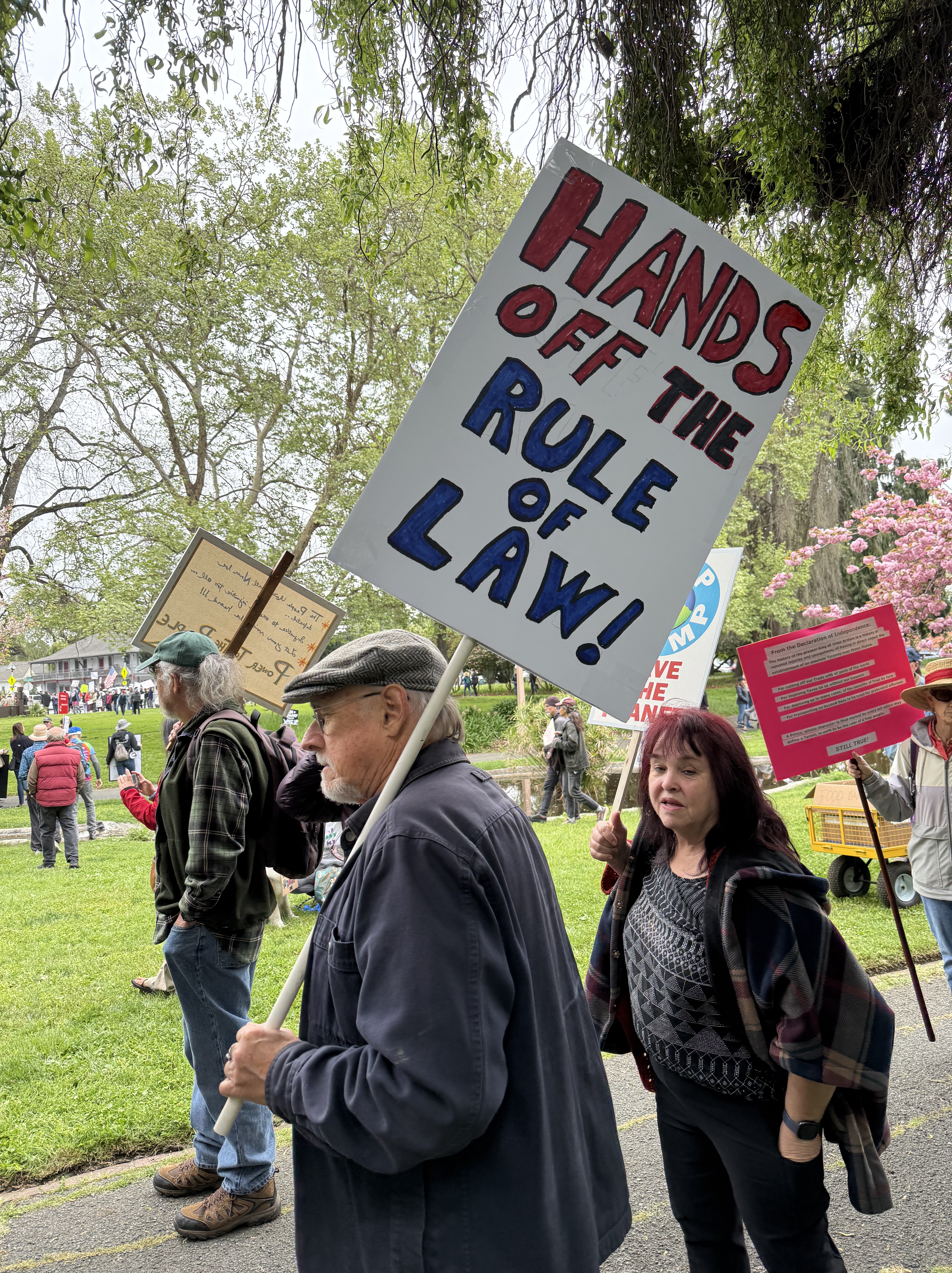
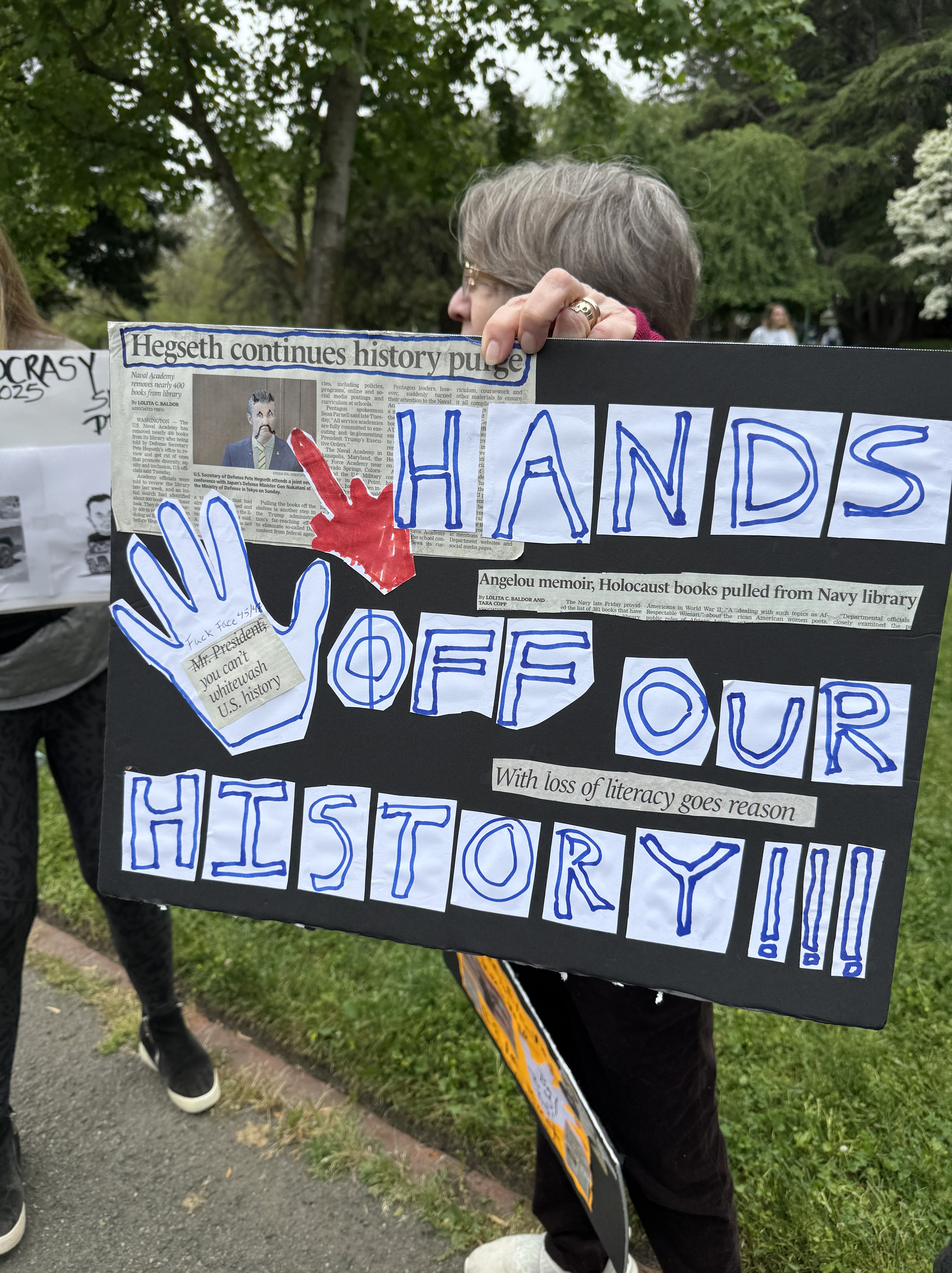
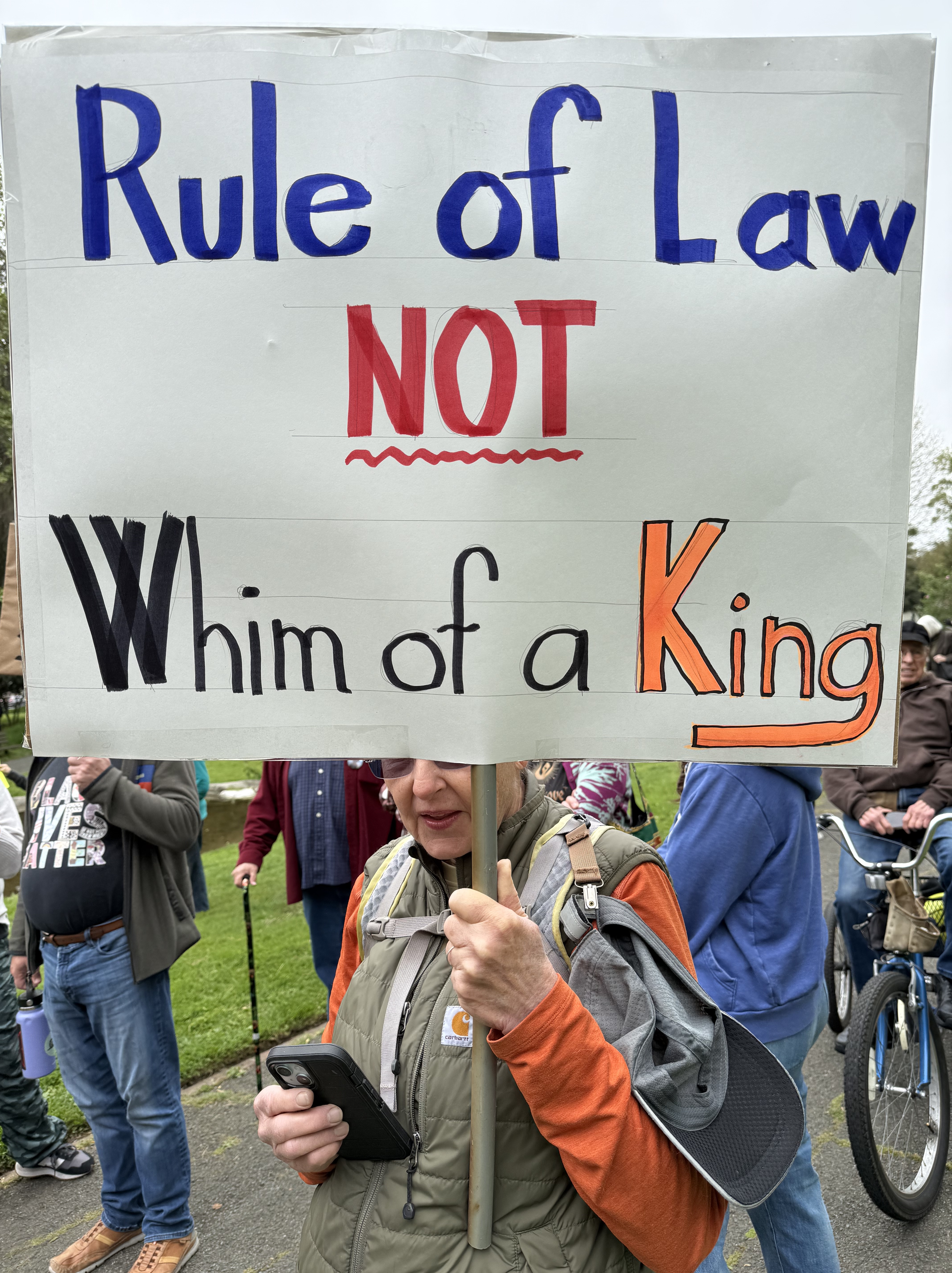
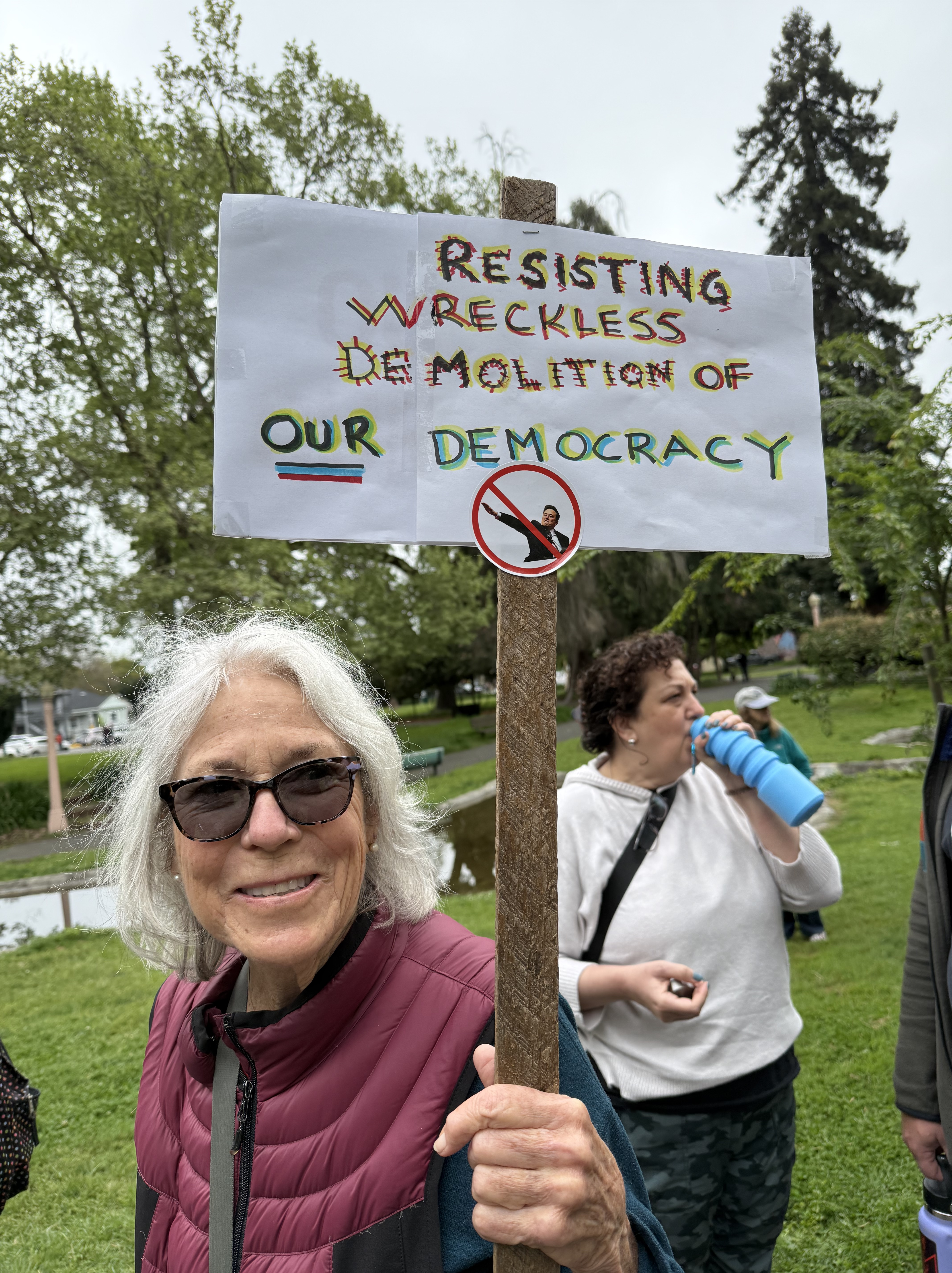
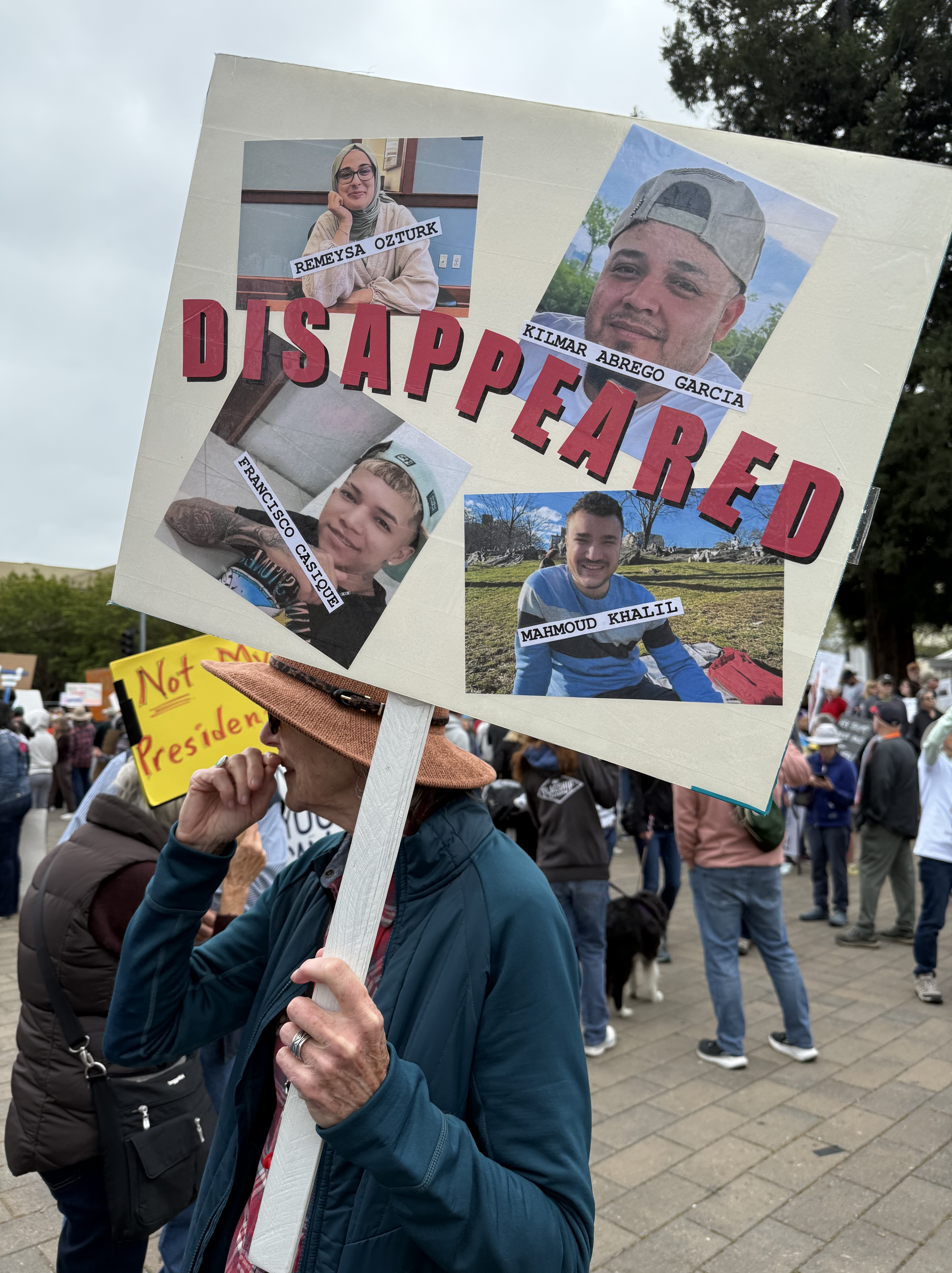
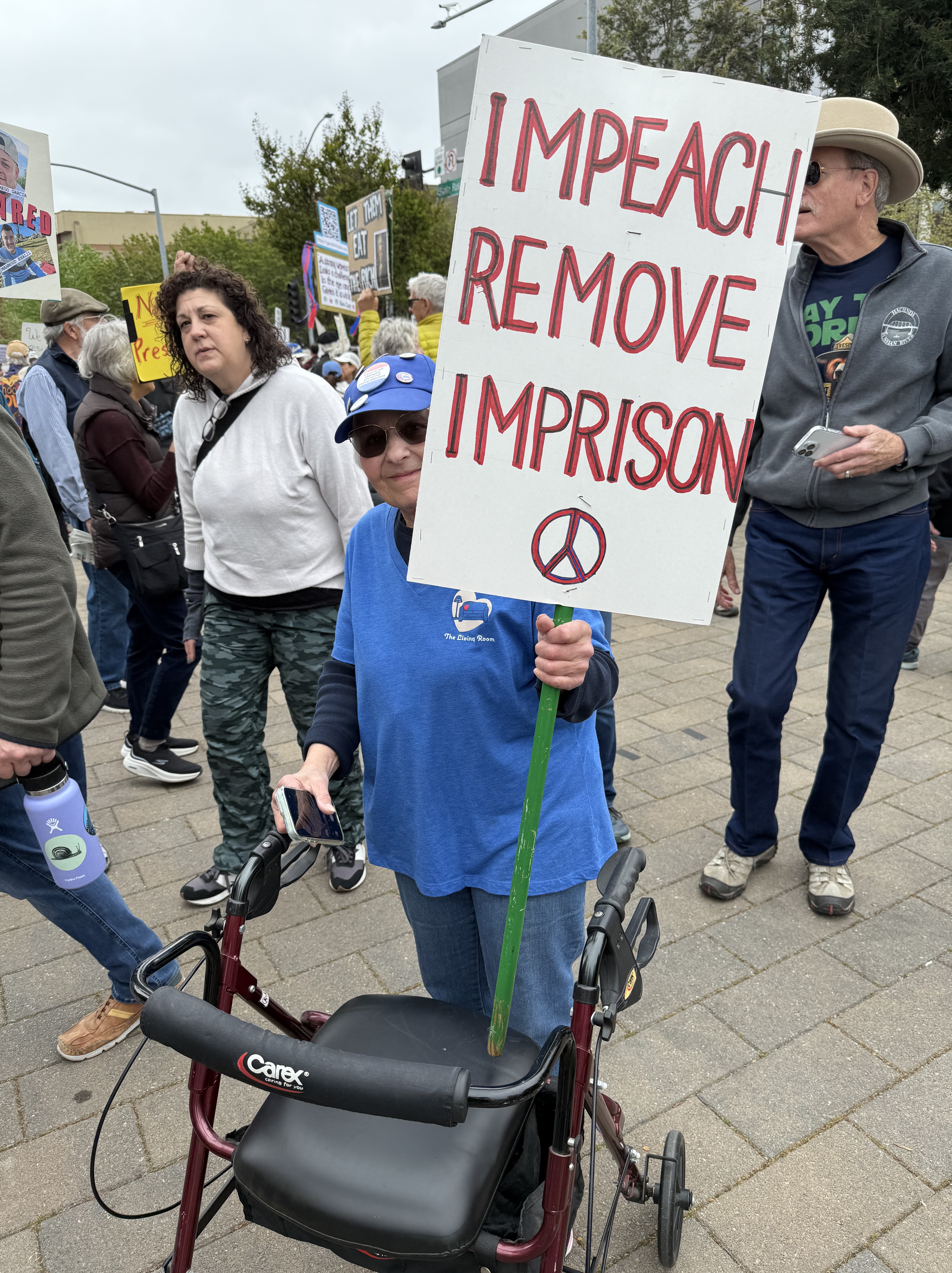
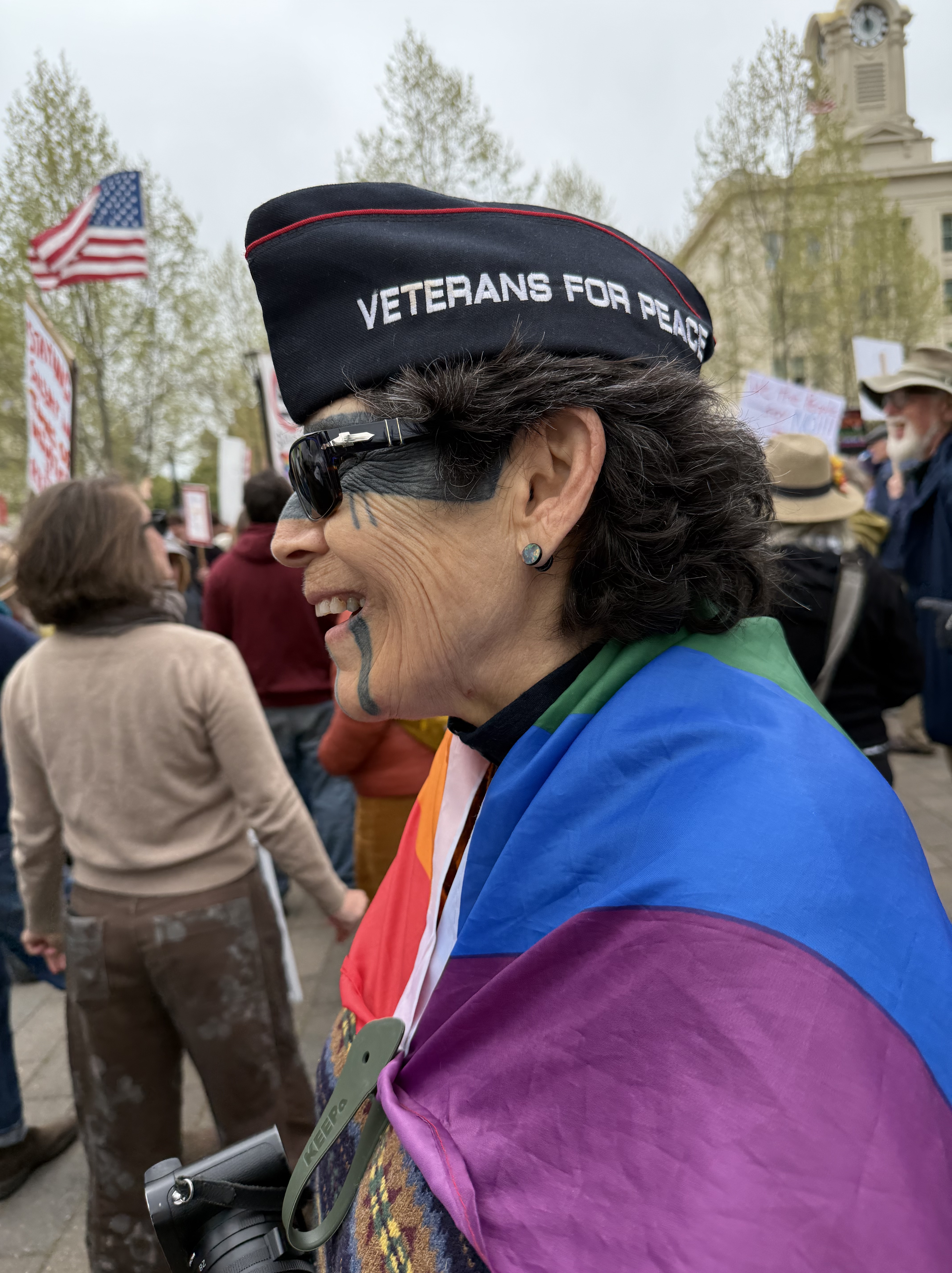
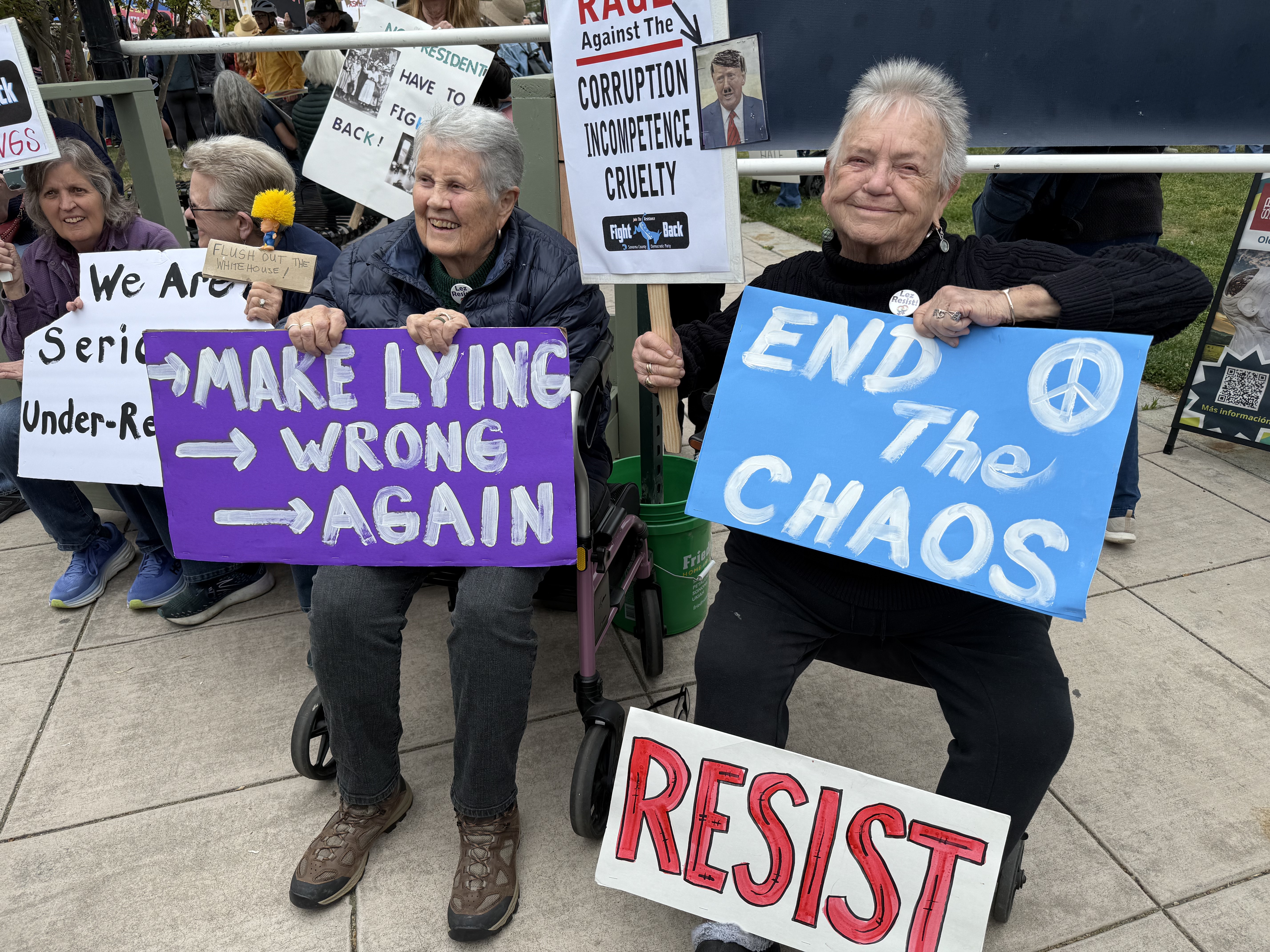
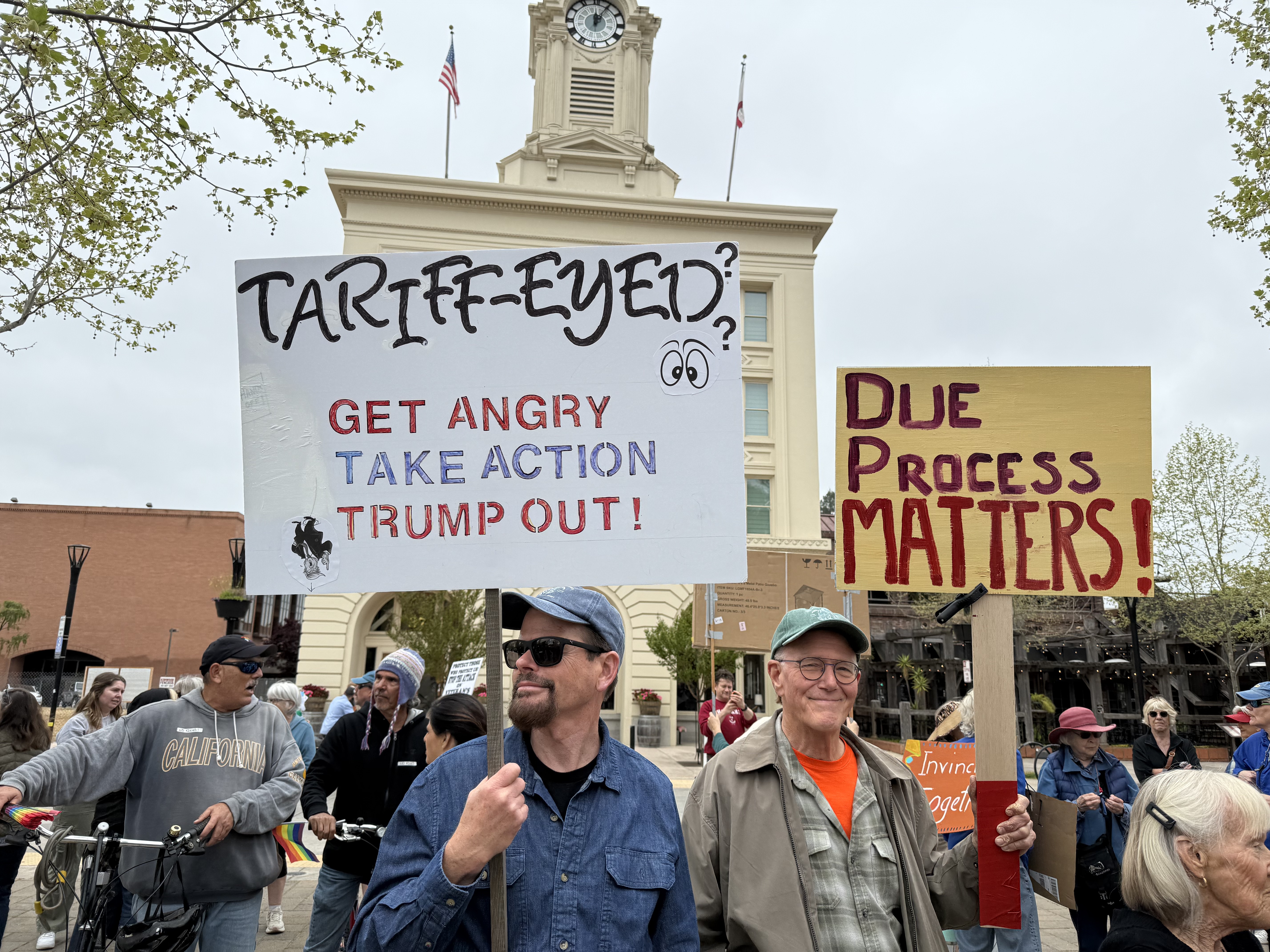
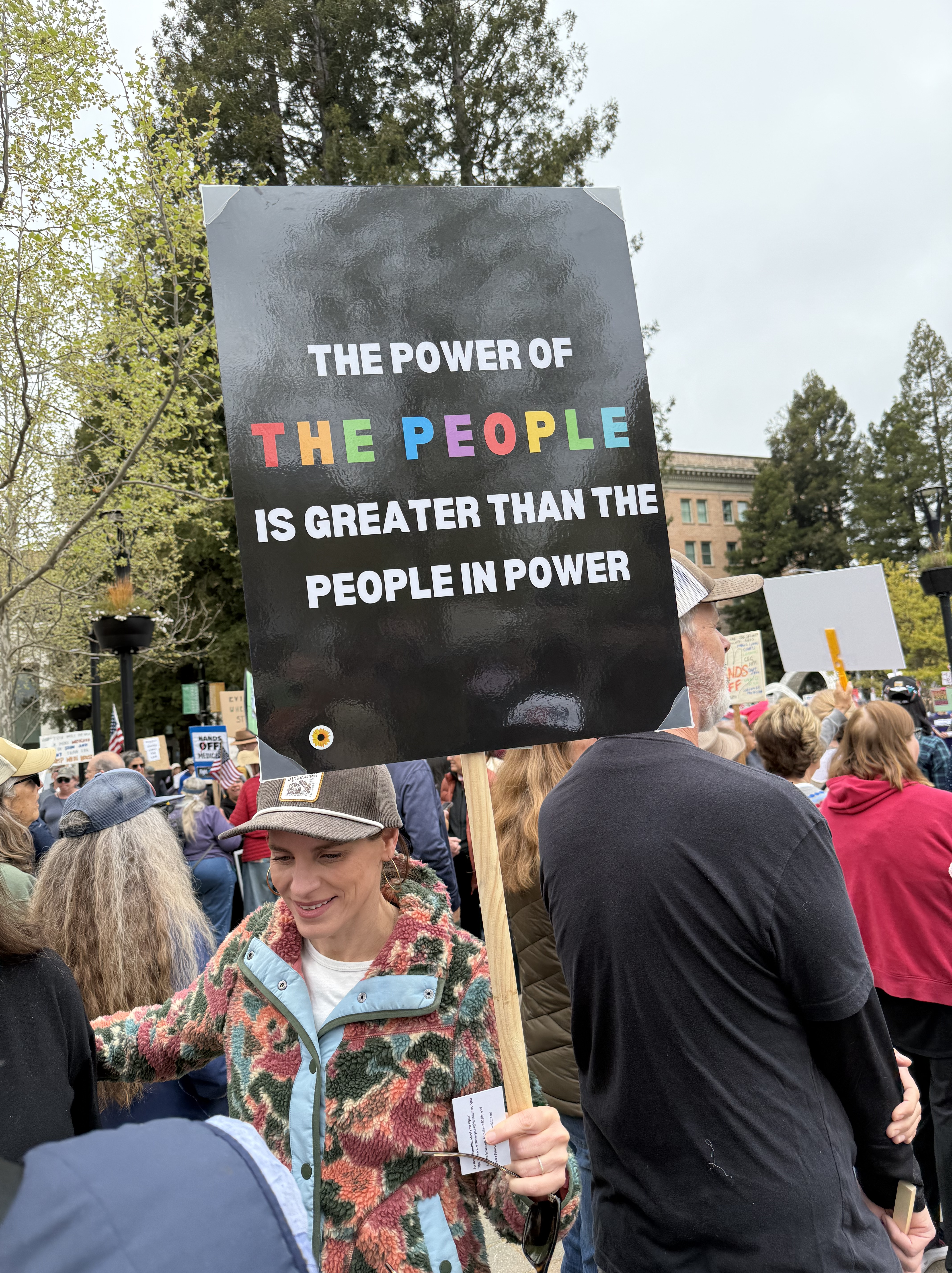
Santa Rosa Women’s March

VOTE! Don’t Let Republicans Take Away Our Rights!

CircumTambulation: A Ritual

My Regular Pagan Holiday Post: Summer Solstice

Circumambulation (from Latin “circum” meaning around and “ambulātus” meaning to walk) is the act of moving around a sacred object or idol. This practice is integral to Hindu and Buddhist devotional rituals (known in Sanskrit as pradakśiṇā) and is also present in Christianity, Judaism, and Islam.

Native bush lupine blooming on the west slope, Deep in the redwood forest

Seeking rituals associated with solstices, I discovered one right here in the Bay Area that has been ongoing since the 1960s at the iconic Mt. Tamalpais in Marin County.

My wife, Holly, introduced me to the circumambulation of Mt. Tam, having learned about it from the poet Gary Snyder, who initiated it. Unfamiliar with the term, I had to look it up. Once I did, I found myself repeating it because it’s such a cool word and fun to say.

A new bridge on the Steep Ravine Trail, Looking south at the golden gate and San Francisco

The Genesis of CircumTambulation

The circumTambulation (as it has been called) was started by Snyder, Philip Whalen, and Allen Ginsberg. They were inspired by ceremonial circumambulations that Snyder, and later Ginsberg, learned about during their travels in Japan, India, and Nepal. These men, part of the Beat movement, had studied Buddhism and aimed to introduce Eastern enlightenment to Western audiences.

In 1965, after a decade of studying Zen Buddhism in Japan, Snyder returned to California. He, along with Whalen and Ginsberg, embarked on a ritualized walking meditation around Mt. Tam. Following the traditional clockwise direction, they selected notable natural features along the way, performing Buddhist and Hindu chants, spells, sutras, and vows at each stop.

The hike spans 15 miles and is typically completed in a day. During summer, the long daylight hours are sufficient to finish the trek, while in winter, flashlights may be needed. I was relieved to learn that there is also a 6.2-mile option where participants can join the long walkers halfway.

Trail signs; View of redwoods, Bolinas and the Pacific Ocean

A Dive into Beat Poetry

Learning about this ritual led me to explore the Beat poets further. San Francisco and the Bay Area was ground zero for the Beats and they congregated here. Snyder lived in a shack on Mt. Tam’s southeast slope during the 1950s, where he was visited by other writers of the time.

This prompted me to read Jack Kerouac’s “The Dharma Bums,” which recounts his famous hike with Snyder over the mountain from Mill Valley to Stinson Beach and back. Kerouac also describes an epic three-day party at Snyder’s shack before Snyder’s departure to Japan in 1956. Although the shack was demolished long ago, the house still stands on the property in the Homestead neighborhood near the Pixie Trail. Commenters on AllTrails mention it’s not well maintained, but I still want to hike there.

Native Douglas iris, cool paintbrush (a kind I’d never seen before)

Reflections on the Beats

As I trace the path of circumTambulation, I think about Snyder, Ginsberg, and the Beats. They were often egotistical and sexist, but also perhaps geniuses. Kerouac was likely schizophrenic, and Neal Cassady a “charismatic sociopath.” Much has been written and filmed about them, but women in their circle received little recognition until recently.

Through Snyder, I discovered the poet Joanne Kyger, who married him in 1960 in Japan and traveled with Snyder, Ginsberg, and his lover Peter Orlovsky to India, meeting the Dalai Lama. Kyger, a serious poet herself, recorded her travels in diaries published in 1981 as “The Japan and India Journals 1960-1964,” providing a rare female perspective on the male-centered Beat movement. Kyger settled in Bolinas and lived there until her death at 82 in 2017.

Despite being part of the same journey through Japan and India, Kyger is often omitted from accounts that only mention Snyder, Ginsberg, and Orlovsky. Her diaries are a testament to her presence and contributions during this significant period.

Climbing the ladder on the Steep Ravine trail

Continuing the Tradition

Snyder envisioned the circumambulation as a joyful, creative endeavor. He encouraged participants to be imaginative, stopping at points his trio had designated or choosing their own. He emphasized the importance of paying attention to the surroundings and oneself: “The main thing is to pay your regards, to play, to engage, to stop and pay attention. It’s just a way of stopping and looking — at yourself too.”

Since the fall of 1974, the circumambulation has taken place on each solstice and equinox (or the closest Sunday), starting and finishing at Muir Woods National Monument. The tradition has been led by dedicated guides, first Matthew Davis, then Laura Pettibone, and currently Gifford Hartman, a San Francisco-based educator and labor historian.

Lots of mosses and lots of steps

Historical and Spiritual Significance

Mount Tamalpais (tamal = west, pais = hill or mountain) is sacred to the native Coast Miwok people, as well as other native groups. Along with other mountains visible from Sonoma County—Sonoma in the Coast Range, Hood and Kanamota (St. Helena) in the Mayacamas Range, and Diablo (tuyshtak in Ohlone)—Mt. Tam retains its spiritual character.

The US military destroyed Mt. Tam’s summit in the 1950s, establishing a base and lookout during the Cold War. Gary Yost’s film “The Invisible Peak (hidden in plain sight)” explores this history https://www.youtube.com/watch?v=y6TA-jbZqQU. I also recommend Will Hearst III’s video about Snyder, “The Practice of the Wild.” https://vimeo.com/418682866

Embracing Tradition

The ending of Gary Snyder’s poem “For the Children” encapsulates the spirit of this tradition:

stay together
learn the flowers
go light

Looking south toward San Francisco, Photographing flowers on the west slope

I try to live by this advice as I hike around our beautiful Bay Area open spaces. I joined a hiking group whose average age is 80. At 74 I’m one of the young ones. One woman at 93 still leads us on seven-mile hikes. We stay together to help each other in case of inevitable disasters (I’ve had a couple of falls this season but didn’t break anything). We learn and delight in the flowers, although with my poor memory I must relearn them every year (I think there’s something very Zen about that). And perhaps our old age inspires us to go light in its many senses. I took these photos on a Mt. Tam hike on the Dipsea, Steep Ravine, Coast View and Matt Davis trails in early May.

I plan to celebrate this summer solstice by joining the circumTambulation on Sunday, June 23. Please join me. For more information, visit: CircumTambulation.

Happy Solstice and Happy Pride!