My Queer Family Holidays: Learning from Hopi Tradition

On Soyal Native Americans marked the shortest day of the year
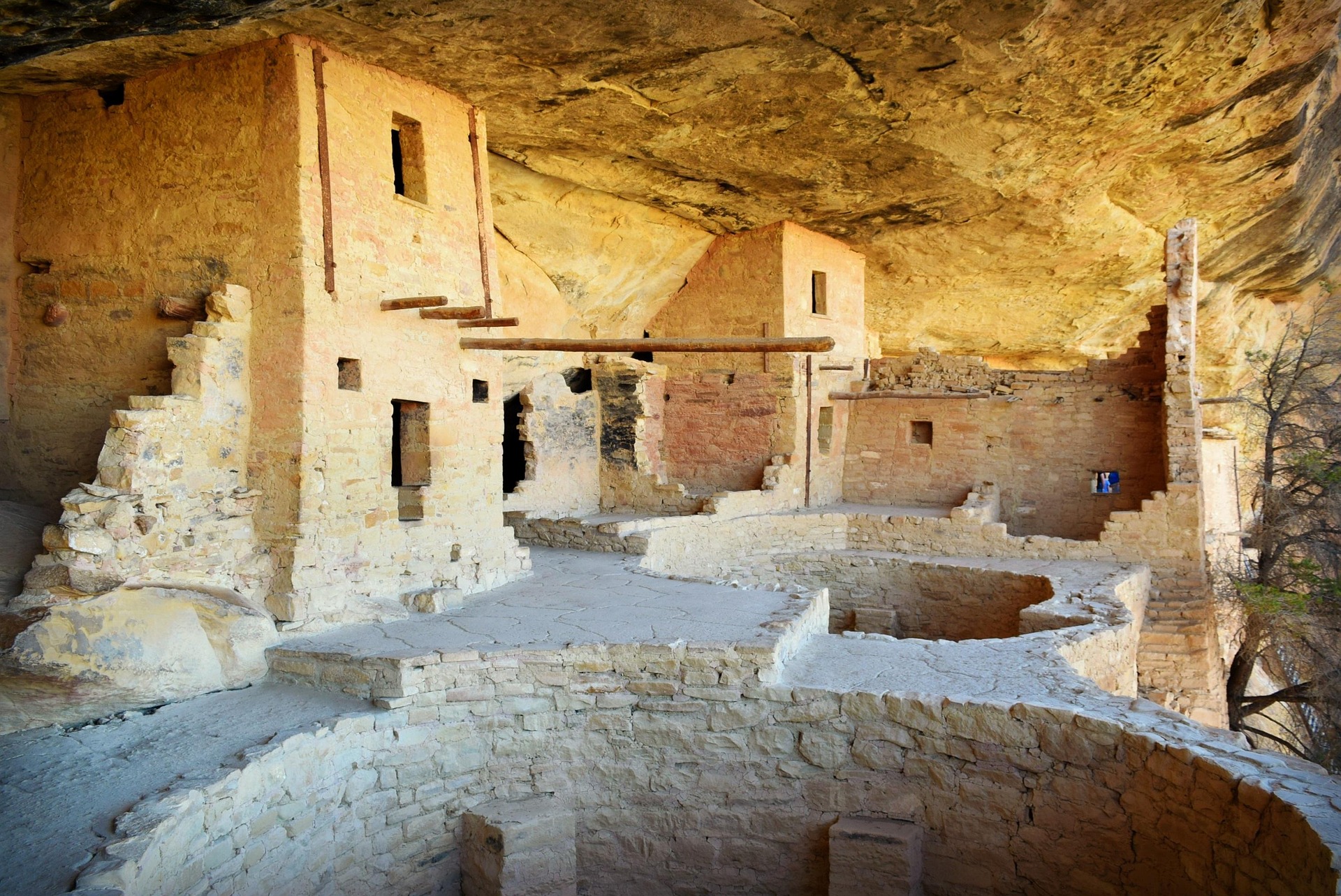
Cliff Palace in Mesa Verde National Park, Colorado. Photo by Judson McCranie. (CC BY-SA 3.0) It is believed that ancestors to the Hopi built and lived in Cliff Palace from about 1200 to 1300 C.E.

My Regular Pagan Holiday Post: Winter Solstice

My queer family chooses to forgo holidays shaped by a christian tradition steeped in homophobia and misogyny—a church that has long covered up sexual abuse against children and parishioners while scapegoating queer people. Recent comments by Pope Francis only underline this contradiction, reaffirming the catholic church’s ban on ordaining gay men and punishing and defrocking priests who question that policy or support what it calls “gay culture.”

So we create our own rituals instead—queer, chosen-family–centered traditions. We look to other cultures for inspiration, especially pagan and pre-christian practices that honor the natural world and community rather than dogma.

We can learn much from Native Americans that might help us through what is shaping up to be a particularly dark period in our history and present. 

Soyal: Winter Solstice and Renewal

On the winter solstice, Hopi and Zuni peoples perform a ceremony with the intention of achieving unity and strengthening community. Soyal is held on the shortest day of the year. It marks the symbolic return of the sun, the turning of the seasonal wheel, and the beginning of a new spiritual cycle. Soyal is a time of purification, prayer, and renewal, when the community prepares itself—spiritually and socially—for the year ahead.

In the days before Soyal, families create pahos, prayer sticks made with feathers and plant fibers, which are used to bless homes, animals, fields, and the wider world. Sacred underground chambers, called kivas, are ritually opened to mark the beginning of the kachina season. The kachinas are understood as spiritual messengers who carry prayers for rain, health, balance, and right living. Songs, dances, offerings, and storytelling strengthen community bonds and pass ethical teachings from elders to children.

Soyal also dramatizes the struggle between darkness and light. Through symbolic dances and ritual objects, such as shields representing the sun and effigies symbolizing destructive forces, the community enacts the tension between chaos and order, drought and rain, winter and warmth. The message is not that darkness must be destroyed, but that it must be faced, respected, and brought back into balance.

The solstice itself becomes a sacred pause: a moment when time feels suspended and people are invited to examine their lives. It is a season for letting go of harmful habits, reconciling conflicts, offering forgiveness, and setting intentions rooted in responsibility rather than personal gain. Gifts are exchanged not as possessions, but as blessings and goodwill.

Creating Our Own Rituals

Soyal reminds us that human life is meant to move in natural cycles, not endless acceleration. Rest is not weakness; it is a form of wisdom. Renewal begins with humility, gratitude, and shared responsibility. Personal healing is inseparable from the health of the community and the land.

The enduring spiritual mission expressed through Soyal is the same across Hopi villages: to promote and achieve the unity of everything in the universe.

While that vast unity may be beyond our vision, we, too, seek to strengthen our community and mark the return of light. At winter solstice, we gather ourselves and our loved ones, shaping rituals that keep us connected to one another and to the slow turning of the year. We invite friends to help us trim our solstice tree, contribute to the local food bank, have neighbors over for hot chocolate, read poetry and stories aloud, bake cannabis edibles, host impromptu living room dance parties, cook savory soups, plant flower bulbs. With neighbors, we make signs and join street protests to raise our voices against fascism. We look for the sacred in everyday life.

Happy solstice to all, however you celebrate!

Matariki: New Zealand’s Solstice Celebration

My Regular Pagan Holiday Post

Summer (and Winter) Solstice will be June 20, 2025

For years, these pagan holiday letters have followed the rhythm of the Northern Hemisphere. So it’s about time we turned our gaze south. What is the summer solstice for us in the north is, of course, the winter solstice down under.

In Aotearoa (the Māori name for New Zealand, often translated as “Land of the Long White Cloud”), the winter solstice is marked by Matariki, a celebration that signals the Māori New Year. In 2022, Matariki was officially recognized as New Zealand’s first indigenous national holiday — a milestone in honoring the traditions of the land’s first people.

Rooted in ancient Māori astronomy and storytelling, Matariki revolves around the reappearance of a small but powerful star cluster in the early morning sky — known in Māori as Matariki, and in Western astronomy as the Pleiades or the Seven Sisters. Its rising marks a time of renewal, remembrance, and reconnection — with ancestors, the earth, and each other.

The date of Matariki shifts slightly each year, determined by both the lunar calendar and careful observation of the stars. Māori astronomers and iwi (tribal) experts consult mātauranga Māori — traditional Māori knowledge systems — to ensure the timing reflects ancestral wisdom. In precolonial times, the clarity and brightness of each star helped forecast the year’s weather, harvest, and overall wellbeing.

Unlike the linear passage of time in the Gregorian calendar, Māori time is circular — woven from moon phases, tides, seasons, and stars. Matariki is not just a new year, but a return point. A moment to pause, reflect on what has been, and plan how to move forward in harmony with the natural world.

At the heart of Matariki is kaitiakitanga — the ethic of guardianship. It’s the understanding that humans are not owners of the earth, but caretakers. We are part of the land, sea, and sky, and we carry the responsibility to protect and sustain them.

When Matariki rises just before dawn, it opens a space for both grief and celebration: to mourn those who’ve passed, give thanks for what we have, and set intentions for the year ahead. It reminds us of the interconnectedness of whānau(family), whakapapa (genealogy), and whenua (land).

The name Matariki is often translated as “the eyes of the chief,” from mata (eyes) and ariki (chief). According to one well-known Māori legend, the stars are the eyes of Tāwhirimātea, the god of winds and weather. In grief over the separation of his parents — Ranginui (Sky Father) and Papatūānuku (Earth Mother) — Tāwhirimātea tore out his own eyes and cast them into the heavens.

In a world that often values speed over stillness, Matariki offers a different rhythm. It’s a celestial breath — a reminder that time moves in cycles. That rest and reflection are just as important as action. That the sky still holds stories if we remember to look up.

The 9 Stars of Matariki

Each star in the Matariki cluster has its own role and significance:

  1. Matariki – Health and wellbeing
  2. Tupuānuku – Food from the earth
  3. Tupuārangi – Food from the sky (birds, fruits)
  4. Waitī – Freshwater and the life within it
  5. Waitā – The ocean and saltwater life
  6. Waipuna-ā-Rangi – Rain and weather patterns
  7. Ururangi – Winds and the atmosphere
  8. Pōhutukawa – Remembrance of those who have passed
  9. Hiwa-i-te-Rangi – Aspirations, goals, and wishes for the future

For Māori, these stars are not just celestial objects — they are guardians. They watch over the land, sea, and sky, and in doing so, remind us of our responsibility to them.

As global conversations about climate change and sustainability grow more urgent, the values of Matariki — care, reverence, reflection, and renewal — feel especially resonant. It’s a time to return to what matters, to honor the past, and to move forward in a way that honors both our roots and our shared future on this earth.

North Bay Rising

In Santa Rosa and across the North Bay, we’re mad as hell—and we’ve taken to the streets. From the Hands Off! protest in April that brought 5,000 people to downtown Santa Rosa, to thousands more mobilizing in surrounding towns, resistance to the rise of fascism in the U.S. is fierce and growing.

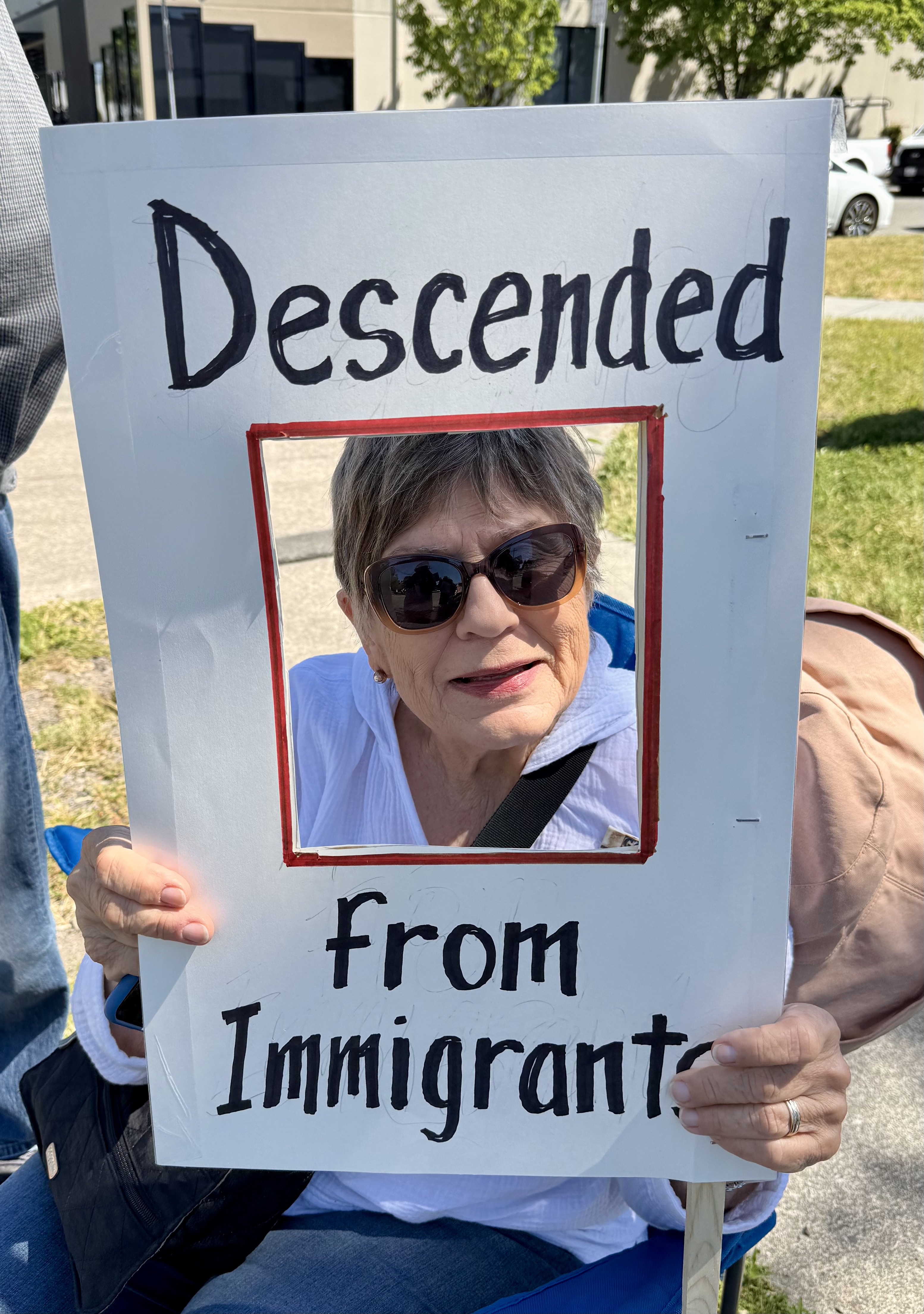
Some of the signs from our protests

Here in Sonoma County, protests are a near-daily occurrence. Demonstrators are targeting a wide range of issues: U.S. complicity in the genocide of Palestinians, Avelo Airline’s role in deportation flights, Elon Musk’s attacks on federal institutions like Social Security and Medicare/Medicaid, the gutting of the Veterans Administration, the criminalization of immigrants, assaults on free speech, and—by us tradeswomen—the dismantling of affirmative action and DEI initiatives.

The Palestinian community and its allies have been gathering every Sunday at the Santa Rosa town square since October 2023.

Weekly actions include:

  • ThursdaysWe the People protest in Petaluma.
  • Fridays: Veteran-focused rallies protesting VA budget cuts.
  • Fridays/SaturdaysPetalumans Saving Democracy actions.
  • SaturdaysTesla Takedown at the Santa Rosa showroom, and a vigil for Palestine in Petaluma.
  • Sundays: Protest at the Santa Rosa Airport against Avelo Airlines, and a Stand with Palestine demonstration in town.
  • TuesdaysResist and Reform in Sebastopol.
  • Ongoing: In Cotati, a weekly Resist Fascism picket line.

In Sonoma Plaza, there’s a weekly vigil to resist Trump. Sebastopol hosts a Gaza solidarity vigil, along with Sitting for Survival, an environmental justice action.

Beyond the regular schedule, spontaneous and planned actions continue:

  • A march to raise awareness of missing and murdered Indigenous women.
  • In Windsor, women-led organizing for immigrant rights.
  • A multi-faith rally at the town square on April 16.
  • Protest musicians and singers are coming together to strengthen the movement with art.

Trump’s goons are jailing citizens, and fear runs deep, especially among the undocumented and documented Latinx population—who make up roughly a third of Santa Rosa. But fear hasn’t silenced them. They continue to show up and speak out.

I’ve joined the North Bay Rapid Response Network, which mobilizes to defend our immigrant neighbors from ICE raids.

Meanwhile, our school systems are in crisis. Sonoma State University is slashing classes and programs in the name of austerity. Students and faculty are fighting back with protests, including a Gaza sit-in that nearly resulted in a breakthrough agreement with the administration.

Between all this, Holly and I made it to the Santa Rosa Rose Parade. The high school bands looked and sounded great—spirited and proud. Then, our Gay Day here on May 31, while clouded by conflict about participation by cops, still celebrated us queers.

And soon, I’ll hit the road heading to Yellowstone with a friend. On June 14, we’ll join protesting park rangers in Jackson, Wyoming as part of the No Kings! national day of action—a protest coordinated by Indivisible and partners taking place in hundreds of cities across the country. 

On the Solstice, June 20 in the Northern Hemisphere, we expect to be in Winnemucca, Nevada, on the way home.

Happy Solstice to all—Winter and Summer!

Photo of the Pleiades: Digitized Sky Survey

Taking Back Traditions

My Regular Pagan Holiday Post

Winter Solstice 2023

Dear Friends,

In 1977 I lived in a collective house with Jewish lesbians. Banning the Xmas tree from the living room was fine with me. I wanted to ban the holiday entirely. It took years to wean myself of all the expectations and burdens that the holiday brings. Finding the perfect gift for everyone, sending cards to dozens (I sent anti-Xmas cards), forced shopping amidst anxious crowds and booming Xmas music in the stores. To avoid the ubiquitous music I stopped shopping after October. It helped to join the Church of Stop Shopping.* 

I was a regular bah humbugger.

I already knew that the solstice holiday had been stolen from pagans by christians. But it took years for me to embrace the decorated tree again. Now I finally have, to the relief of my partner.

The solstice tree is an old pagan tradition–bringing a tree indoors and hanging things on it. Before the advent of electric lights, my Swedish ancestors actually put burning candles on the tree. I wonder how many house fires resulted.  Asking for a fire marshal friend.

Last year my wife Holly and I discovered that it made us happy to start getting into the solstice spirit early by buying our solstice tree when the tree farm opens for business the day after Thanksgiving. We did it again this year. Two years in a row makes it a ritual!

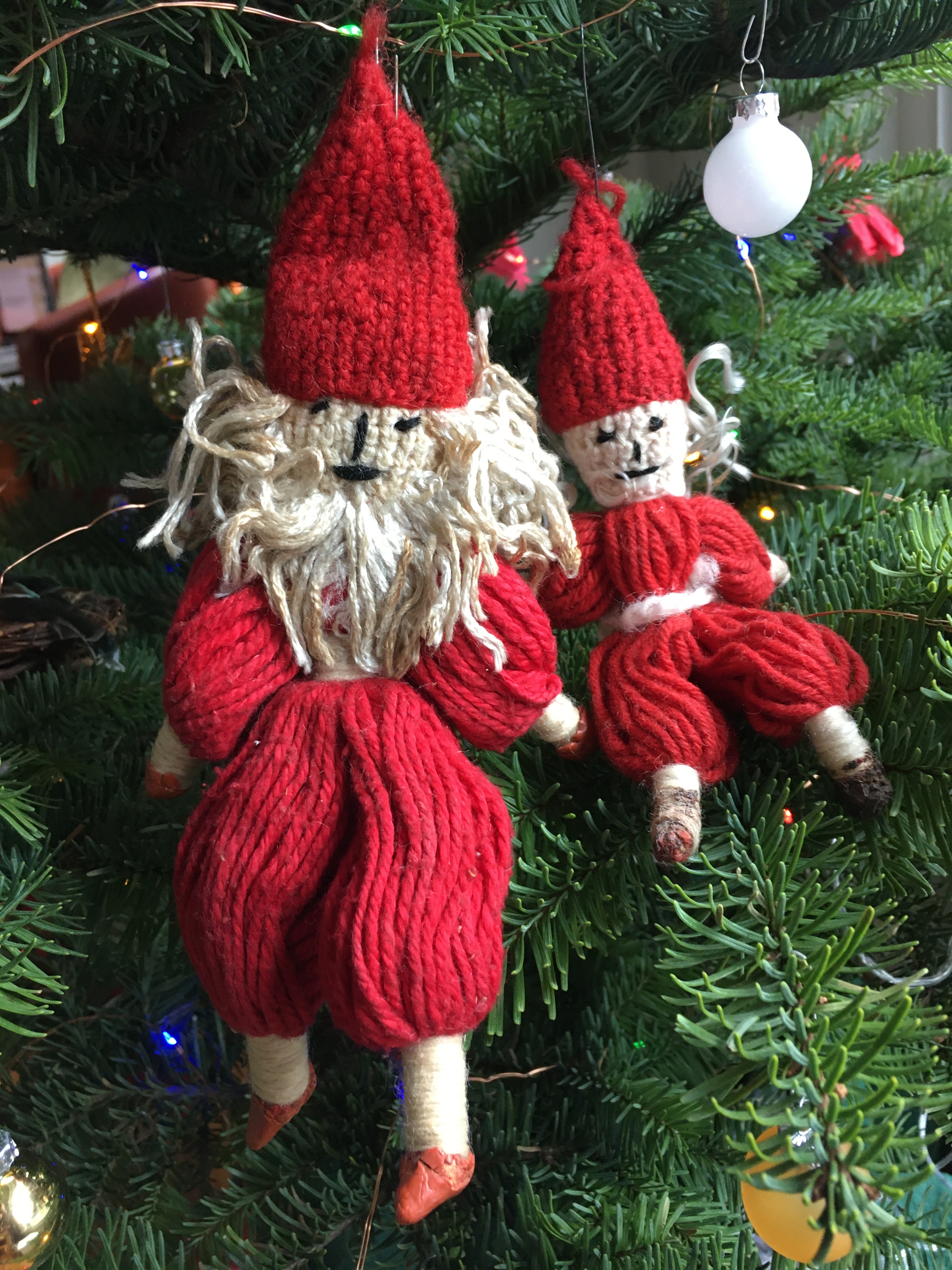
Now our sweet smelling fir tree is decorated to the hilt. As Holly danced around the tree hanging the ornaments and I watched from my recliner, we fondly remembered where we acquired each of them and what they represent. I still have the Santa and elf ornaments knitted by my Swedish grandmother. She decorated her tree with Scandinavian straw reindeer, wooden and homemade candy cane ornaments. 

Here in the MoHo household we are all about reimagining cultural institutions. If we can take back the tree, why can’t we reclaim other christian traditions? 

This year we decided to recycle Advent. 

Neither my childhood Presbyterian church nor Holly‘s evangelical sect practiced Advent. But I have a vague memory of seeing an Advent calendar in the home of a Catholic girlfriend. The idea of getting to open a little door with a gift inside for the whole month of December is enticing for a kid. Kind of like Hanukkah only longer and presumably better. Did the christians steal from the Jews too? Asking for some friends.

The word advent is derived from the Latin word adventus, meaning coming, which is a translation from Greek. We felt we needed another word for our pre-solstice holiday and we tried to come up with one. None of the synonyms work. Arrival, onset, appearance, approach, entrance. Holly likes the word Looming, but that sounds ominous to me. We both like Coming but it’s too confusing. So we decided to stick with advent for now, a perfectly nonreligious word which can be applied to any holiday, really. 

In the christian tradition Advent is a season. The traditional liturgical color for Advent is violet–so very gay! The Unitarian Universalist Association promotes four words for the four Advent Sundays of the month of December. A candle is lit each week to symbolize hope, peace, joy and love. We can get behind that! I do like the Unitarians. They take the prospect of peace seriously and show up at every peace march. 

Our takeover of Advent wasn’t a planned theft. It was rather inadvertent. We each secretly bought a wine advent calendar for the house. When they were both delivered on the same day, we discovered we had each bought the exact same thing!

The wine advent calendar is a cardboard box about 18 by 14 inches and about 7 inches deep, enough for little wine bottles laid on their sides. It has 24 doors, each with a number. You open one door a day and pull out a bottle. We celebrate each evening however we want, by reading a poem or just having a conversation. But there must be a toast. Our favorite: Cheers Queers!

Then, because we observe solstice and not Xmas we had to count back from December 21 instead of December 25. Because of poor math skills, we started on November 24—days early. Whatever. Once you start, you have to keep going. I think that’s what the liturgy says.

The wine comes in adorable small bottles, enough for one glass, so we are glad we got two calendars. Of course, this means we are committed to drinking a glass of wine every night until solstice or until the wine runs out and every door on the calendar is opened. We can do that!

Advent is all about anticipation of the great event—in this case solstice, or the longest night of the year, marking “astronomical winter” in the northern hemisphere, after which the light begins to return. It makes us think of the Carly Simon song, Anticipation. We are Boomers, after all.

Now we are pondering how to use the 48 cute wine bottles. Perhaps next year we shall gift all our friends with MoHo’s Special Herbal Elixir. What is that? We don’t yet know, but Holly has been experimenting with something called fire cider!

Now I’m embracing the solstice holiday and all our reclaimed pagan rituals that go with it. I’m finally enjoying the holiday season that I once eschewed.

Bah humbug no more!

Happy solstice to all and to all a good long night!

Love, Molly (and Holly)

*The Church of Stop Shopping calls consumerism “the biggest and baddest fundamentalist religion in the U.S.” Now, they’ve got some great music! https://revbilly.com/music/

Solstice Stolen by Christians!

It’s been a long time since I celebrated the christian holiday of christmas. And from the looks of me in a whole series of family pictures, I hated the holiday even as a little kid.

Xmas1953
1953

My little brother Don and littler brothers Tim and Terry are always smiling, especially Don who was an adorable child (now old and still adorable). Why was I so glum? I wasn’t a pouty kid in any other pictures. 

Clearly I was never a fan of christmas, but even less so after I left home and developed a critique of capitalism and christianity. I hated the consumer aspect but also the religious stuff. I joined the  Church of Stop Shopping, led by the charismatic Rev. Billy with backup  by the incomparable Stop Shopping Choir protesting at malls on black Friday. I still avoid shopping after September (it gets earlier every year) because I can’t stand the holiday  music played in stores.

Xmas1958
Martin family Xmas card 1958

In college, researching the history of religions, we learned  that christians had stolen their holidays from pagans and those who had gone before. Christmas co-opted pagan solstice celebrations. They even stole the virgin birth thing. Why not recapture our history; there were so many ancient solstice traditions to choose from! 

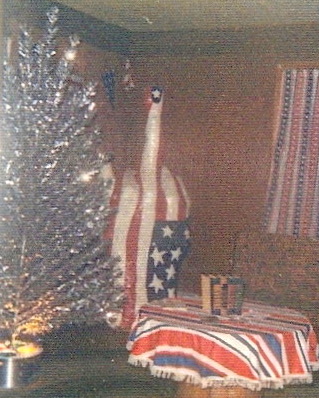
In the early ‘70s, we dissidents at the Rosa Luxemburg Collective chose to celebrate the Roman winter solstice holiday of Saturnalia. It was essentially a great big party. Traditional roles were reversed. Masters served slaves. Men dressed in women’s clothes and women in men’s. All were set  free of their marriage obligations and could have sex with anyone they wanted. The festivities lasted for a couple of weeks at least (no research here; just remembering). Of course, we had already dispensed with gender roles and monogamy so the holiday was really just a continuation of our chosen lifestyle. We cooked sumptuous feasts and ate a lot. We set up an aluminum tree with rotating colored lights in the Vulgar Americana Room. It stayed up all year.

Americana
The Vulgar Americana Room with tree and the papier mache finger, made for an anti-war demonstration

Lately Holly and I have been adding to and making up our own traditions. They change every year because we tend to forget our brilliant ideas from the year before, but for many years now we have been celebrating what we call the Twelve Days of Solstice. The holiday starts on solstice, which this year is December 21, and ends on New Year’s Day.  

We incorporate pagan rituals and customs—greenery and garlands, feasting and lights. Solstice signifies the return of light in the Northern Hemisphere, important to our animistic ancestors who worshipped nature. My Swedish grandmother set in her window a brightly painted wooden candelabra which looked very much like a menorah. Her decorations were figures of reindeer and elves made of straw. She made tree ornaments of fat candy canes wrapped in red and white tissue paper. And I still have the slender santa and elf figures that she hand knit and brought out every year.

GramsSantas
Grandma Wick’s knit creations

This year we added some days to the holiday since the full  moon appeared on Friday the 13th of December, an especially witchy occurrence. How did we celebrate? We planted winter greens and bulbs in the garden. We made apologies to our mother earth for what our species has wrought. We donated to the porta-potty fund for the homeless here. I archived some papers, an ongoing project. From the hot tub I watched the moon rise twice from behind cloud banks. We toasted our good fortune. And then, with Holly’s reminder that winter is for hibernating, we settled down for a long winter’s nap.

Wishing you a good solstice or as the Swedes say god yul.