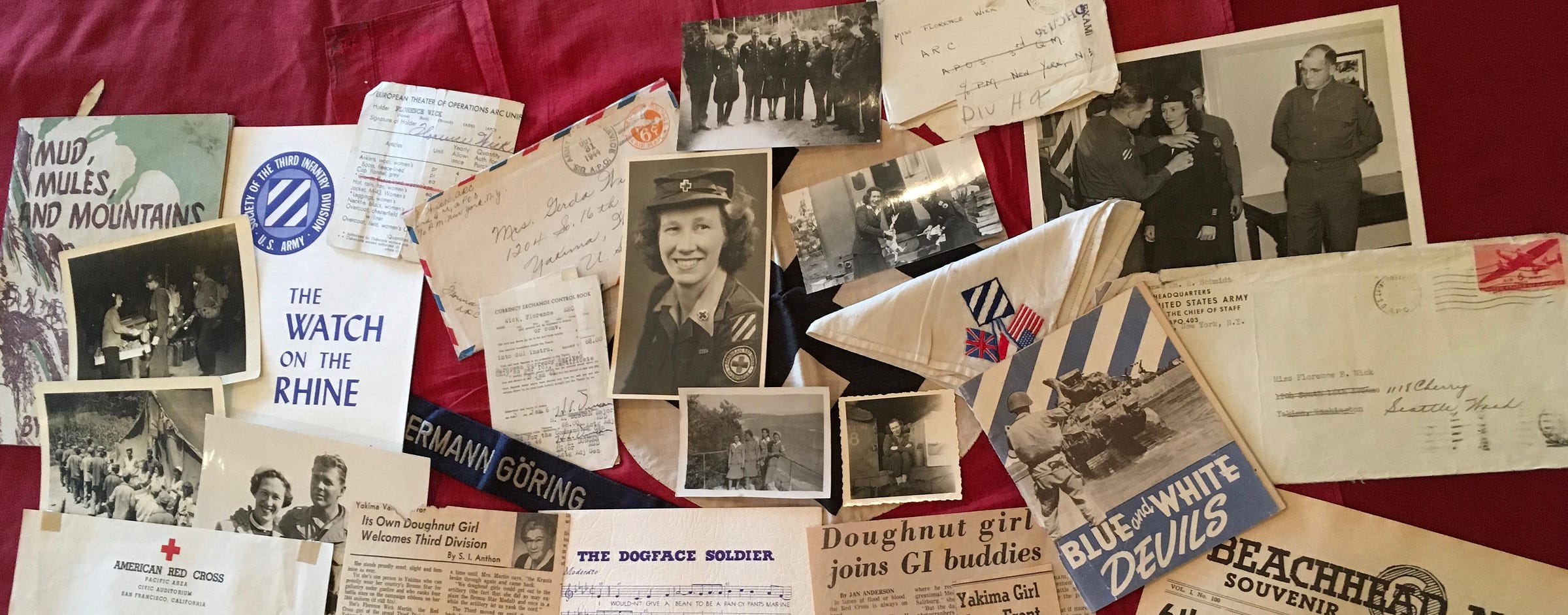
Of Mud, Mules, and Mountains

Chapter 8: My Mother and Audie Murphy

Mignano Italy November, 1943

The town of Mignano sits trapped between steep, craggy peaks, their sheer faces scarred by war. The Nazis are dug in, their defenses embedded in the rock like stubborn roots. The strategy is clear — avoid the town and strike straight at the mountains surrounding it. But the terrain is merciless. Cliffs rise like walls, gorges cut deep into the earth, and even surefooted pack mules often slip, falling to their deaths. When the animals fail, the soldiers must take over, crawling on hands and knees, dragging supplies through mud that swallows boots whole.
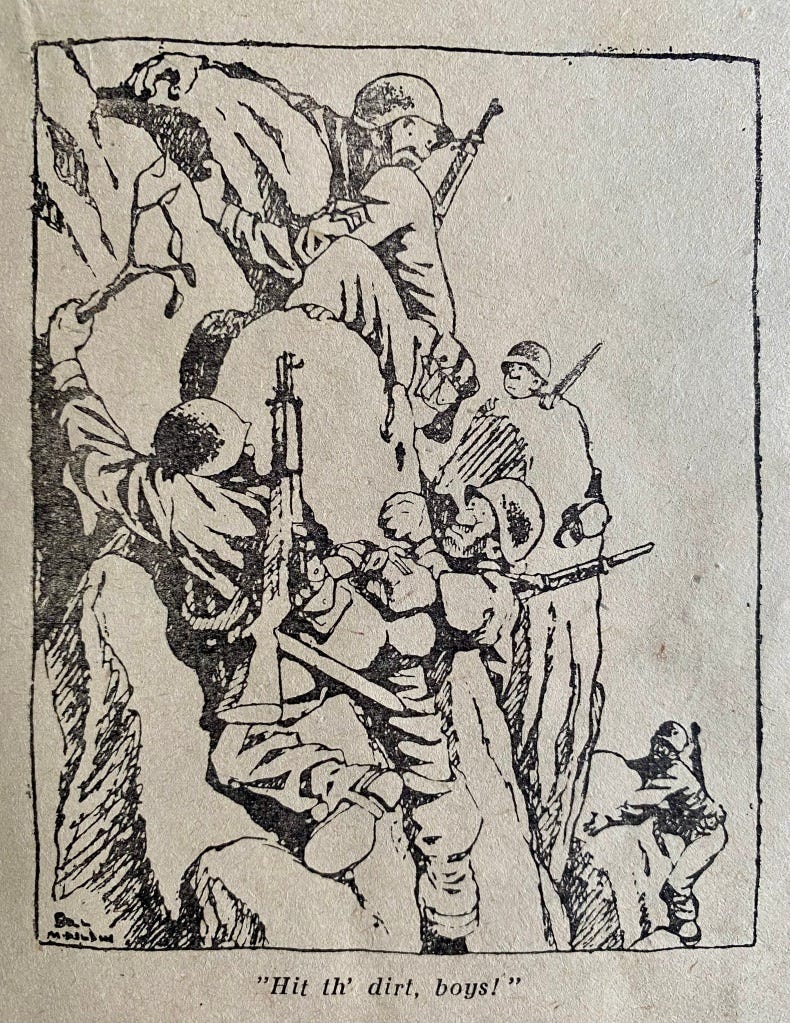
Bill Mauldin (1921–2003) — Pulitzer Prize-winning cartoonist famous for his WWII characters, Willie and Joe, depicted the hardships of American soldiers with grit and humor.

On a reconnaissance mission, Audie Murphy and his squad find themselves stranded on the side of a mountain above Mignano. They walk straight toward a German tank, so expertly camouflaged that they miss it. As the snout of the cannon is lowered at them, they run like hell for a clump of bushes. One soldier breaks his leg in the rush. They drag him into a ditch and lose the tank.

Several assaults on nearby Mount Rotondo are pushed back. Lines are confused by enemy fire. Murphy mistakes a Nazi patrol for allies. When he realizes his mistake, he starts firing. Now the enemy knows where they are. With no choice, they scramble up the rocks, reaching an abandoned quarry where they settle in for the night.

At dawn, they ambush a Nazi patrol. The fight is brutal and quick, but the cost is high. Three German soldiers lay dying.
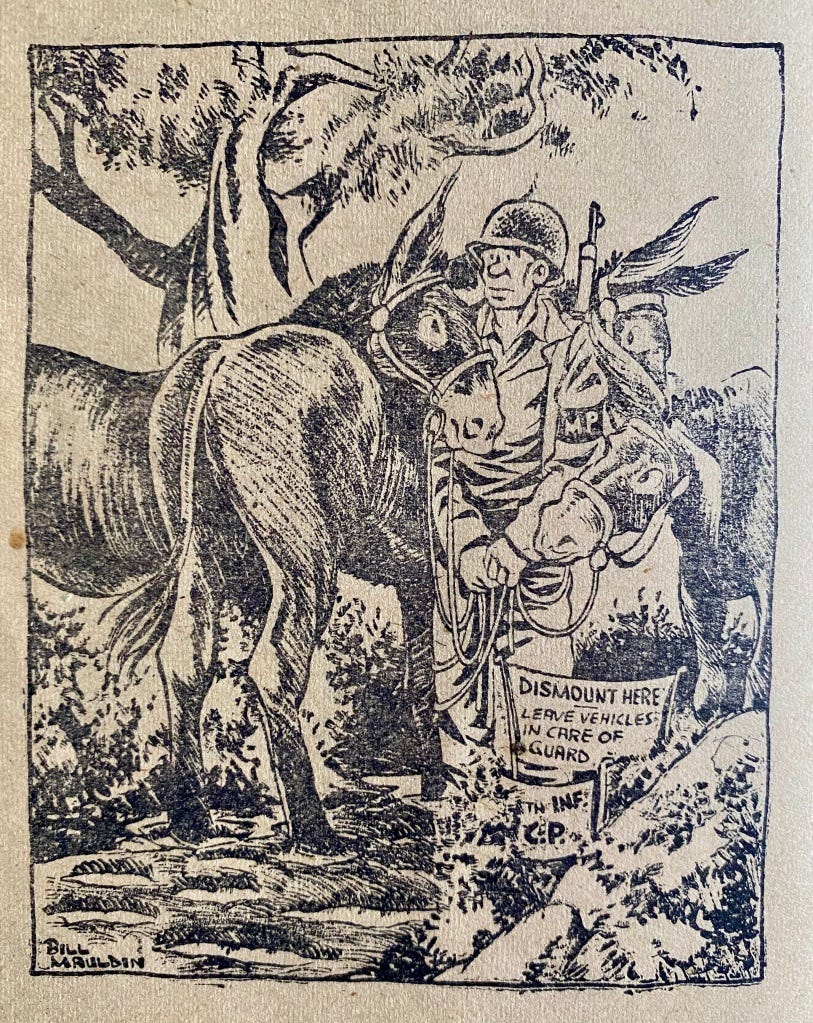
Mauldin drew six cartoons a week during the war. He was only 23 when awarded the Pulizer Prize.

“The wounded must be got under cover. The peculiar ethics of war condone our riddling the bodies with lead. But then they were soldiers. (The machine gun) transformed them into human beings again; and the rules say that we cannot leave them unprotected against a barrage of their own artillery,” Murphy wrote.

Murphy’s squad is forced to stay with them, listening to their labored breaths as a cold mountain rain washes over the quarry.

“When dawn breaks, two of the Germans are dead. Their eyes stare glassily. Their mouths are open and the old man’s swollen tongue protrudes between his teeth,” Murphy wrote.

For three days artillery rains down, death echoing off the cliffs. The men remain trapped.

On the third day, the third German dies. In the light of the moon that night “the faces of the dead seem green and unearthly. That is bad for morale, as it makes a man reflect on what his own life may come to.”
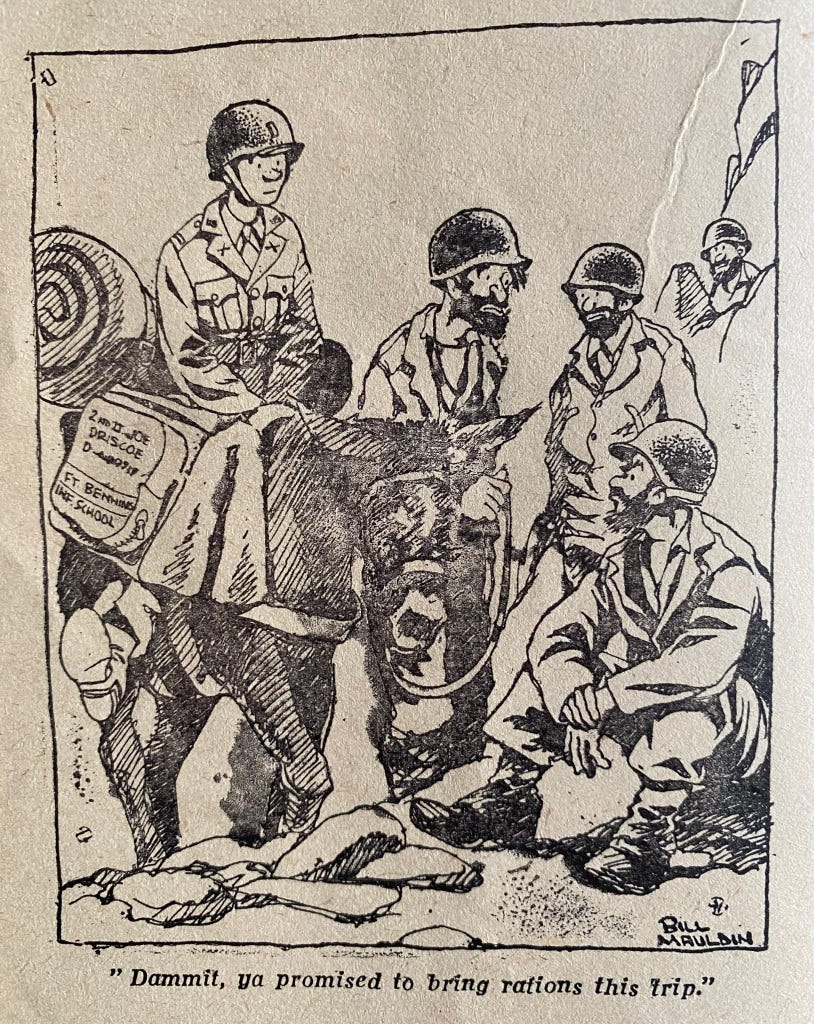
After the war, Mauldin became a political cartoonist, advocating civil liberties. He also appeared in John Huston’s film The Red Badge of Courage (1951) starring with Audie Murphy.

Murphy is near breaking. “My eyeballs burn, my bones ache; and my muscles twitch in exhaustion. Oh, to sleep and never awaken. The war is without beginning, without end. It goes on forever.”

Then, at last, the sound they have been waiting for — American artillery. The shells scream through the air, bursting against the rocks like salvation.

“If there is one thing a dogface loves, it is artillery — his own.”

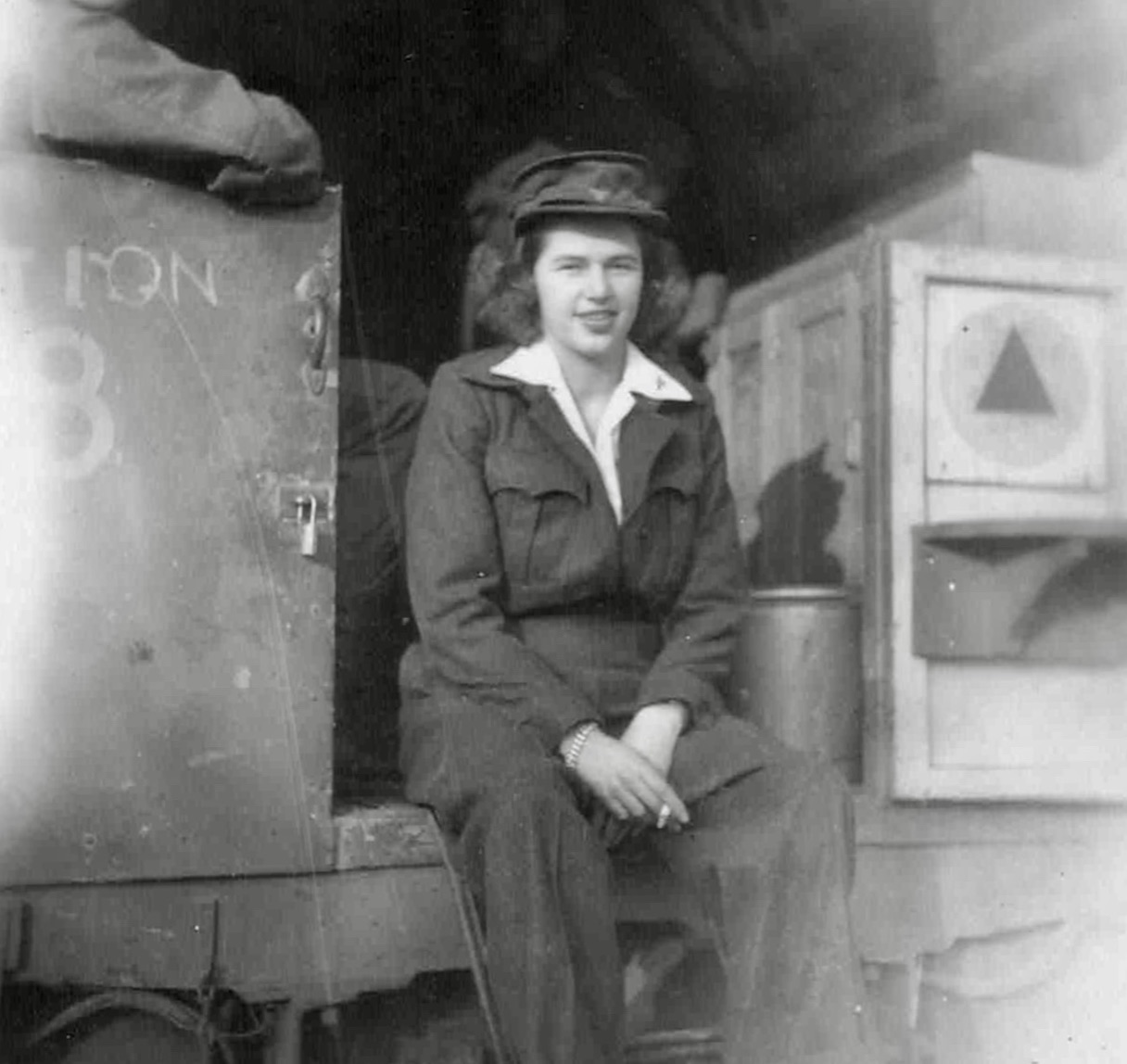
American Red Cross workers, too, must contend with mountains and mud.
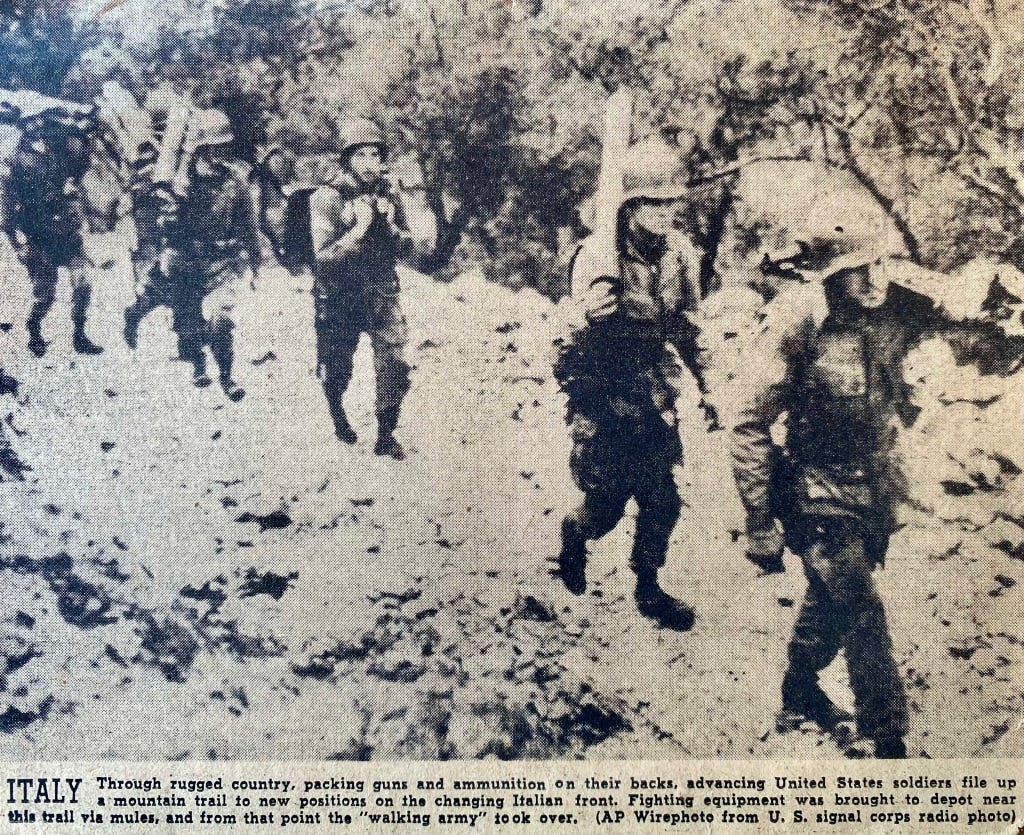
From a Life Magazine story pasted in Flo’s album

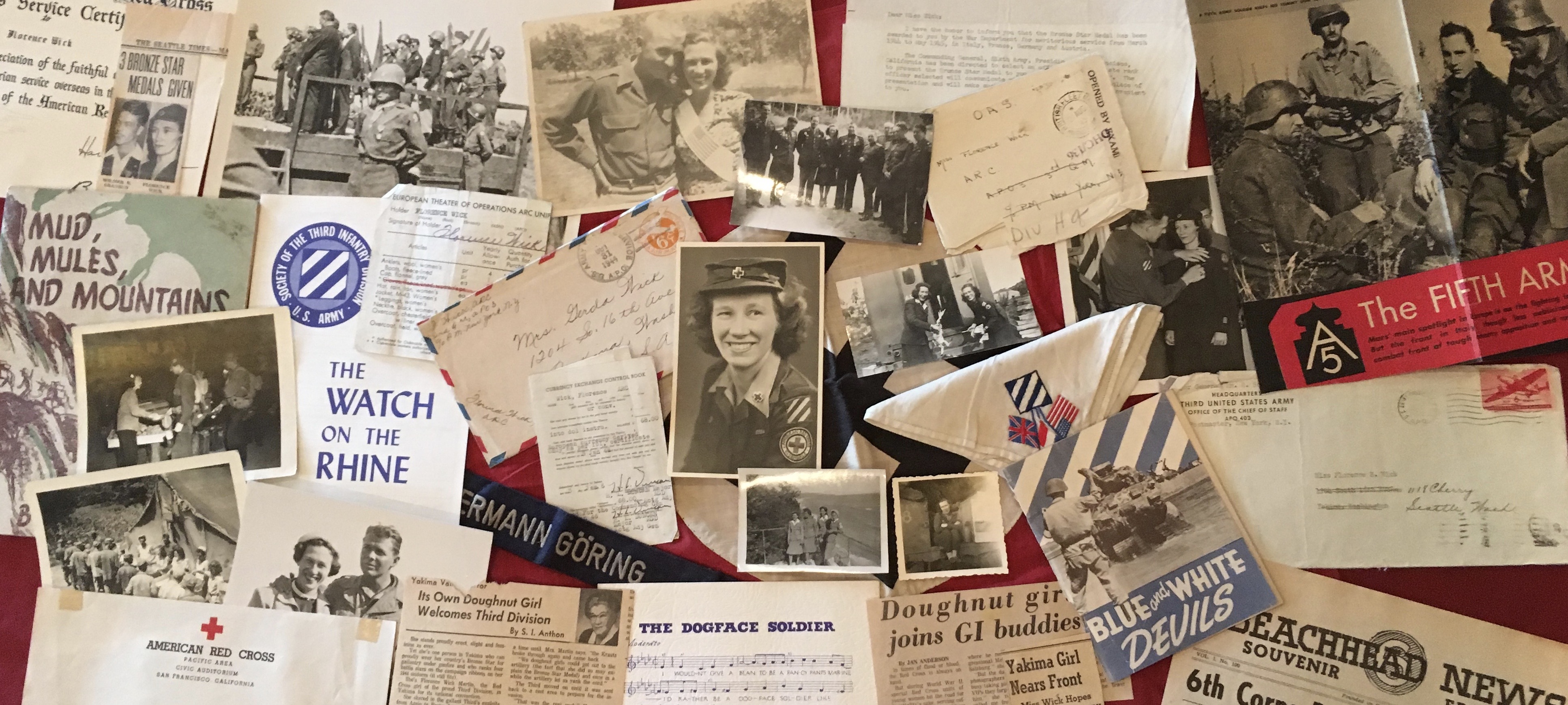
On Christmas Day, 1943, high in the rain-drenched peaks, a soldier huddles in his foxhole, staring at a can of C-rations — his holiday meal. Then, out of the swirling mist, she appears. Isabella Hughes of Baltimore, a Red Cross clubmobile worker, crouches on the lip of his trench, one hand gripping a box of doughnuts, the other holding a steaming pot of coffee. The soldier blinks, then exclaims, “Good Lord, sweetheart! What in hell are you doing here?”

Isabella Hughes was one of the first ARC workers to get to Italy, in 1943. She would later join Flo’s clubmobile crew in Naples.
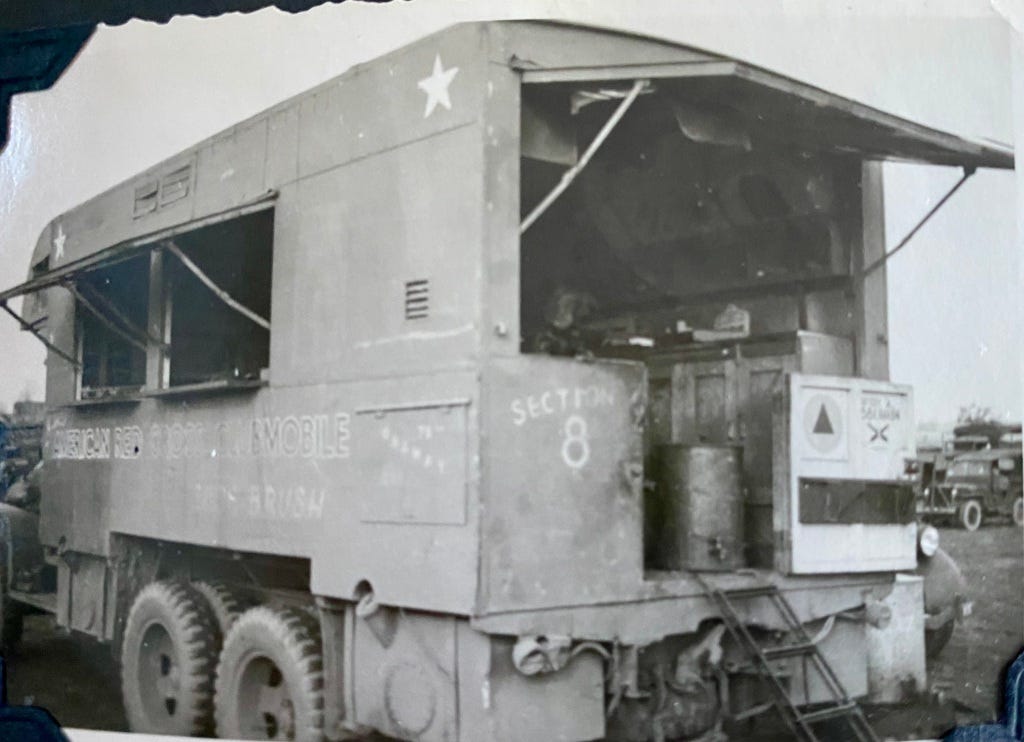
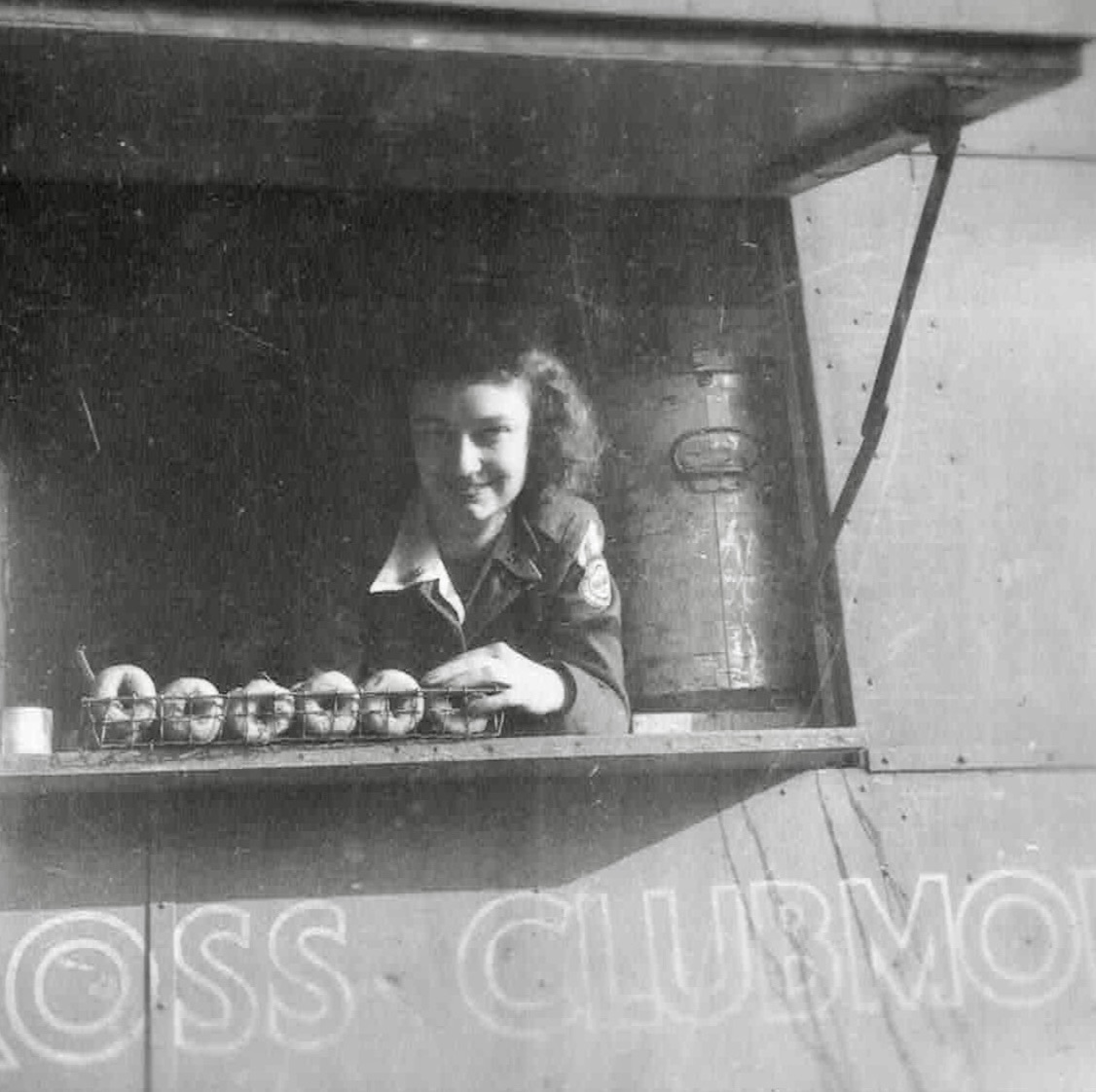
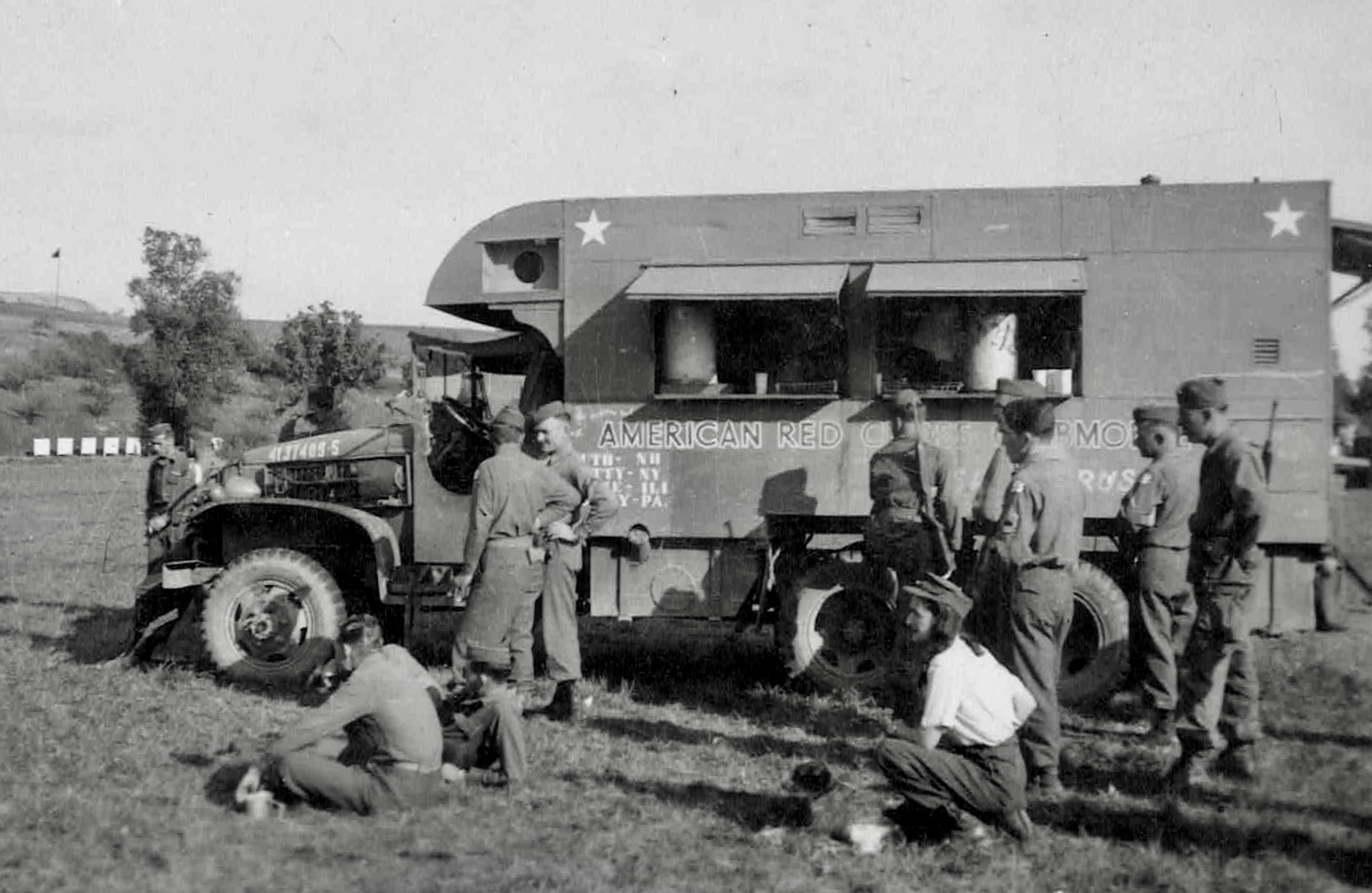
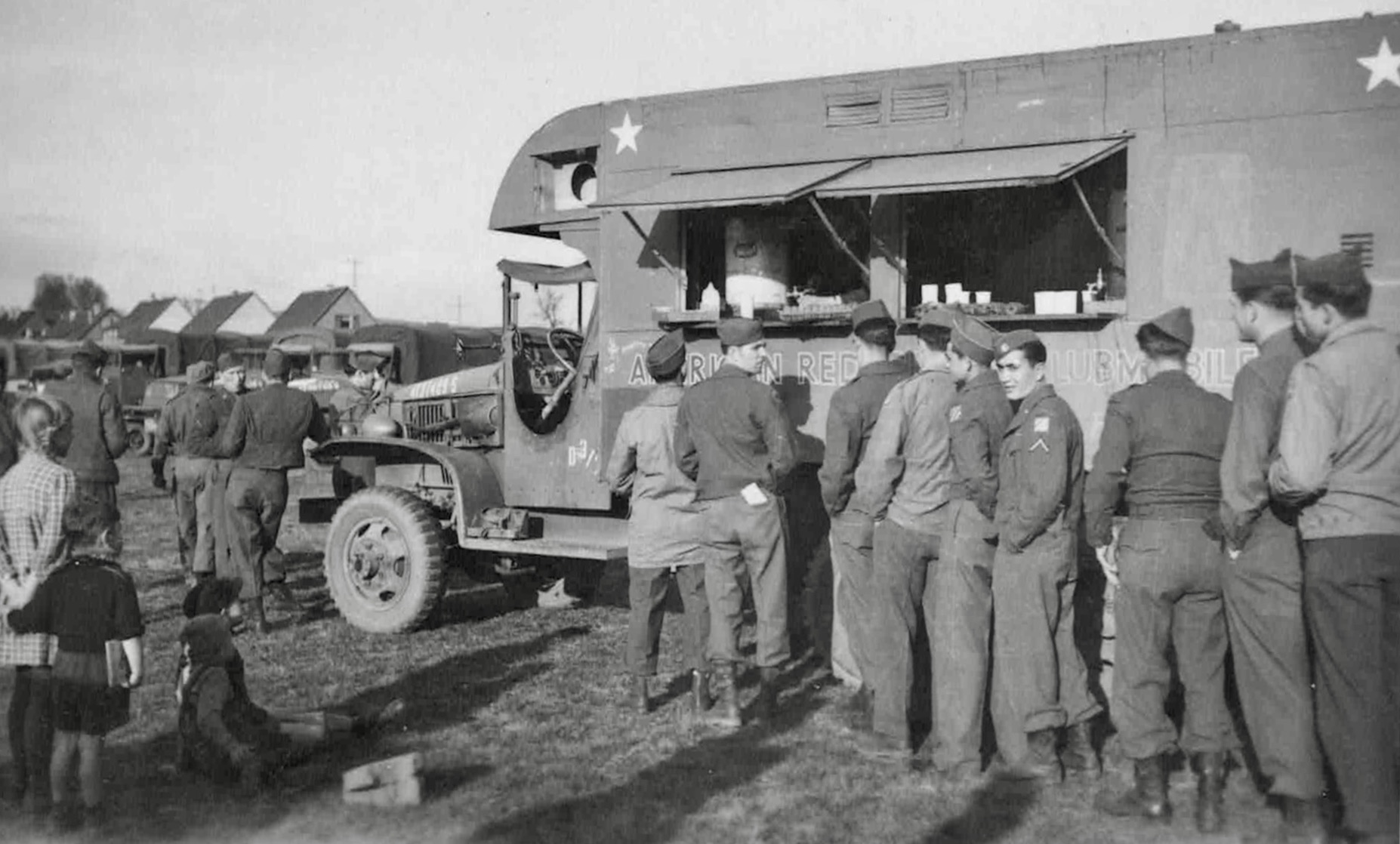
The clubmobile was a two and a half ton Dodge truck fitted with a kitchen and windows. Workers sometimes slept in it or under it.

Italy’s roads, slick with rain and churned to sludge, are brutal even for military transport. The clubmobile — a sturdy machine — proves no match for the mountains. When roads vanish into goat trails, the Red Cross workers adapt. They take the Army’s weapons carriers, pushing higher, until even those fail. Then come the donkeys and mules.

Two clubmobile workers, Margaret Decker of Towaco, New Jersey, and Gladys Currie of Greenwich, Connecticut, volunteer for an impossible task: deliver coffee and doughnuts to a unit stationed atop a remote peak. No road leads there — only a narrow mule track winding up the mountain’s spine. The Army offers them transport, if they’re willing to ride donkeys up the perilous slope. They accept without hesitation.

The climb is slow, the air thin. Their donkeys pick careful steps along the treacherous trail. The doughnuts are packed onto a mule. At last, they reach the summit. The men are waiting — shaved, cleaned — their arrival announced on the camp bulletin board like the coming of long-lost friends. As the ARC workers pour coffee, the soldiers form a circle around them, an island of warmth in the cold mountain war. Mortars shriek in the distance. Shells thunder through the valleys below. But for a moment, they all pause, talk, and remember something beyond the battle.

Their bravery does not go unnoticed. When the U.S. Army Rangers commend Lois N. Berney of Fallon, Nevada — a clubmobile worker once secretary to Harry Hopkins — it is understood that the honor belongs to all of them. From General Mark W. Clark down to the last rifleman, the Army recognizes the Red Cross women not just for their courage, but for bringing something human to the inhuman mountains.

From Audie Murphy’s autobiography, “To Hell and Back,” and from “At His Side–The Story of The American Red Cross Overseas in WWII” by George Korson

Ch. 9: https://mollymartin.blog/2025/02/11/american-red-cross-training/

Clubmobiling in Occupied Germany 1946

Then there were three: Flo, Janet and Mary

My Mother and Audie Murphy Ch. 106

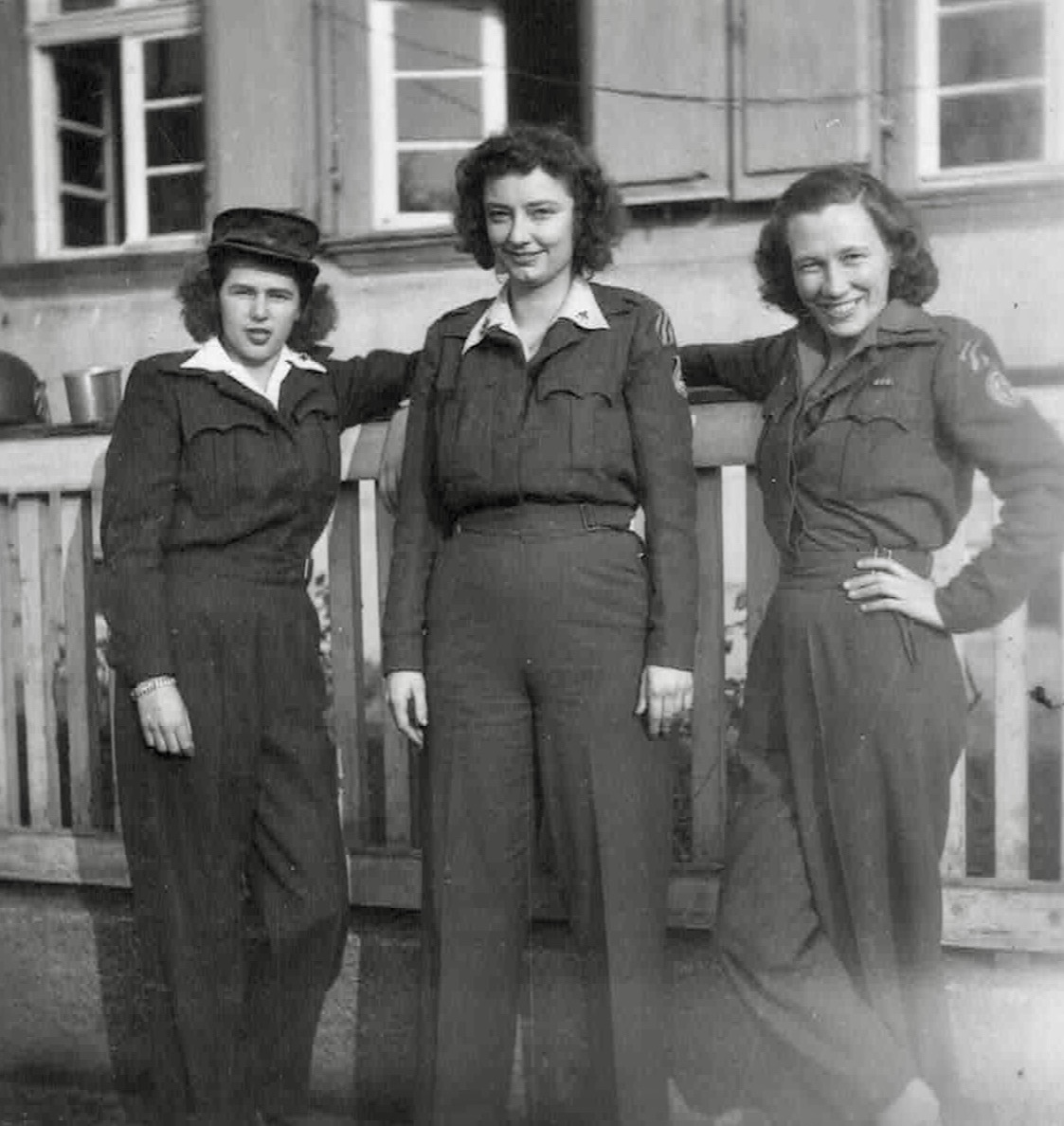
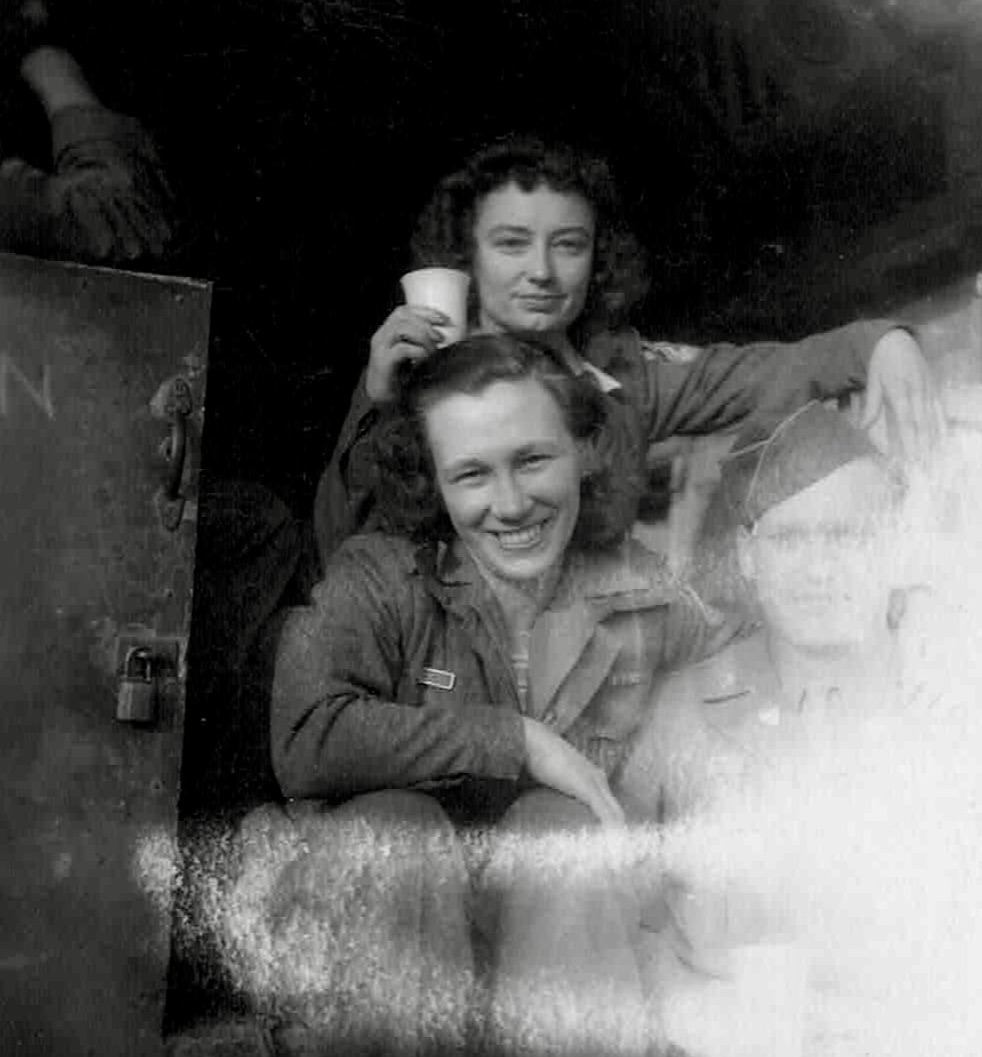
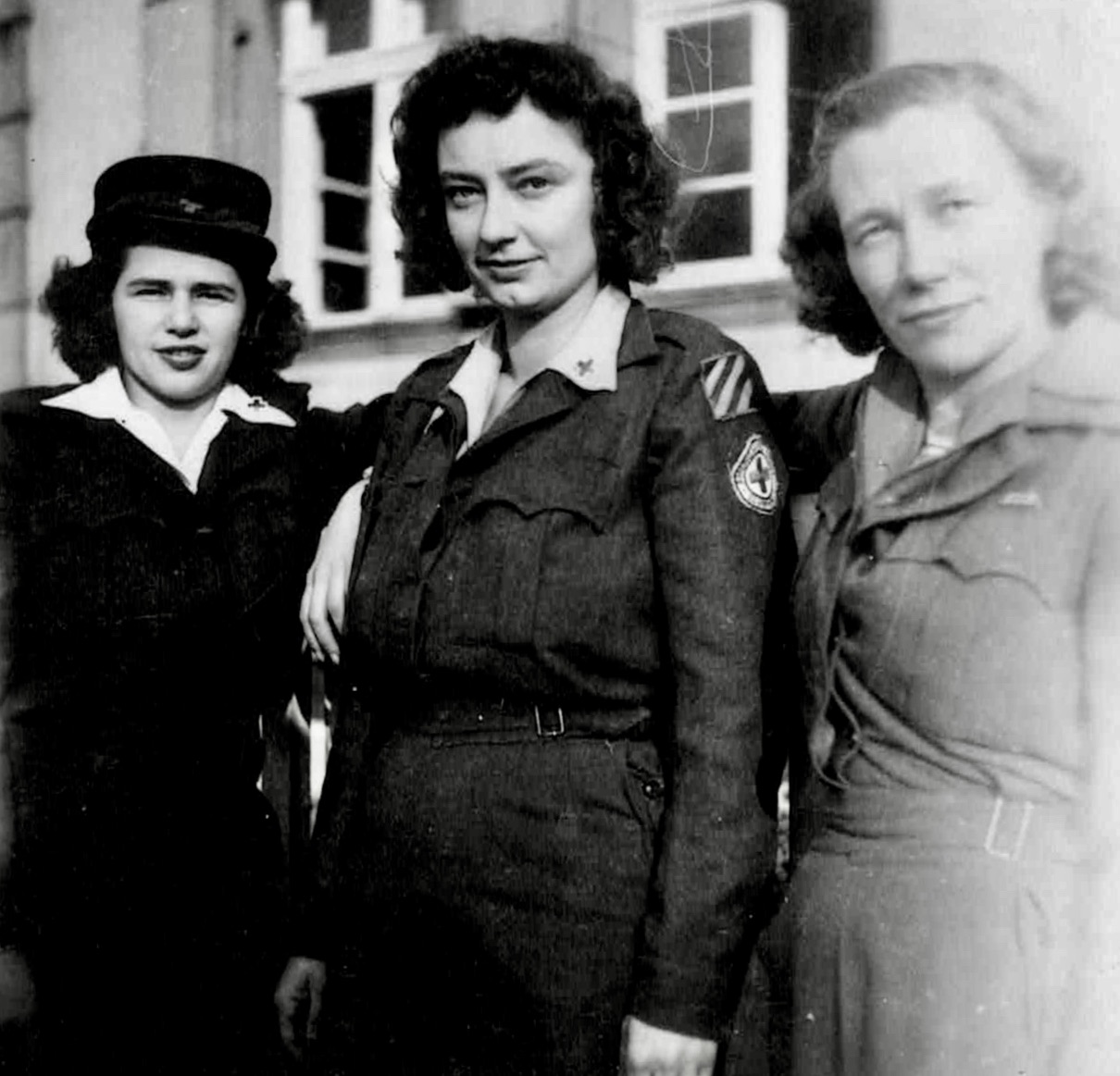
The clubmobile crew of Mary McAuliffe, Janet Potts and Florence Wick in occupied Borgen, Germany. The women are now allowed to wear pants and have been issued handsome uniforms.
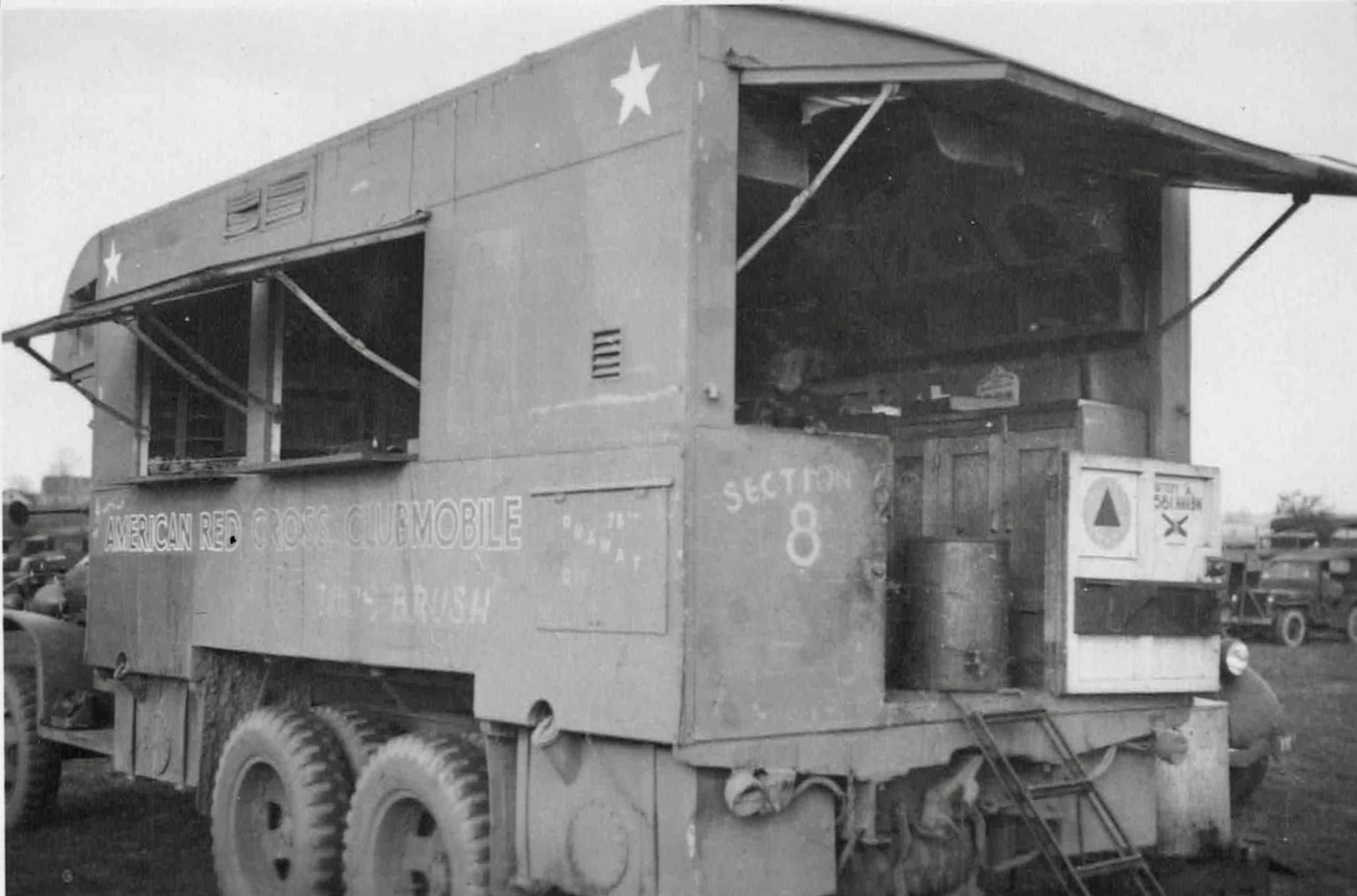
After having to scrounge vehicles to deliver donuts throughout 1944 and 45, the crew finally got its own clubmobile, the SageBrush. It had been attached to the 70th Infantry Division.
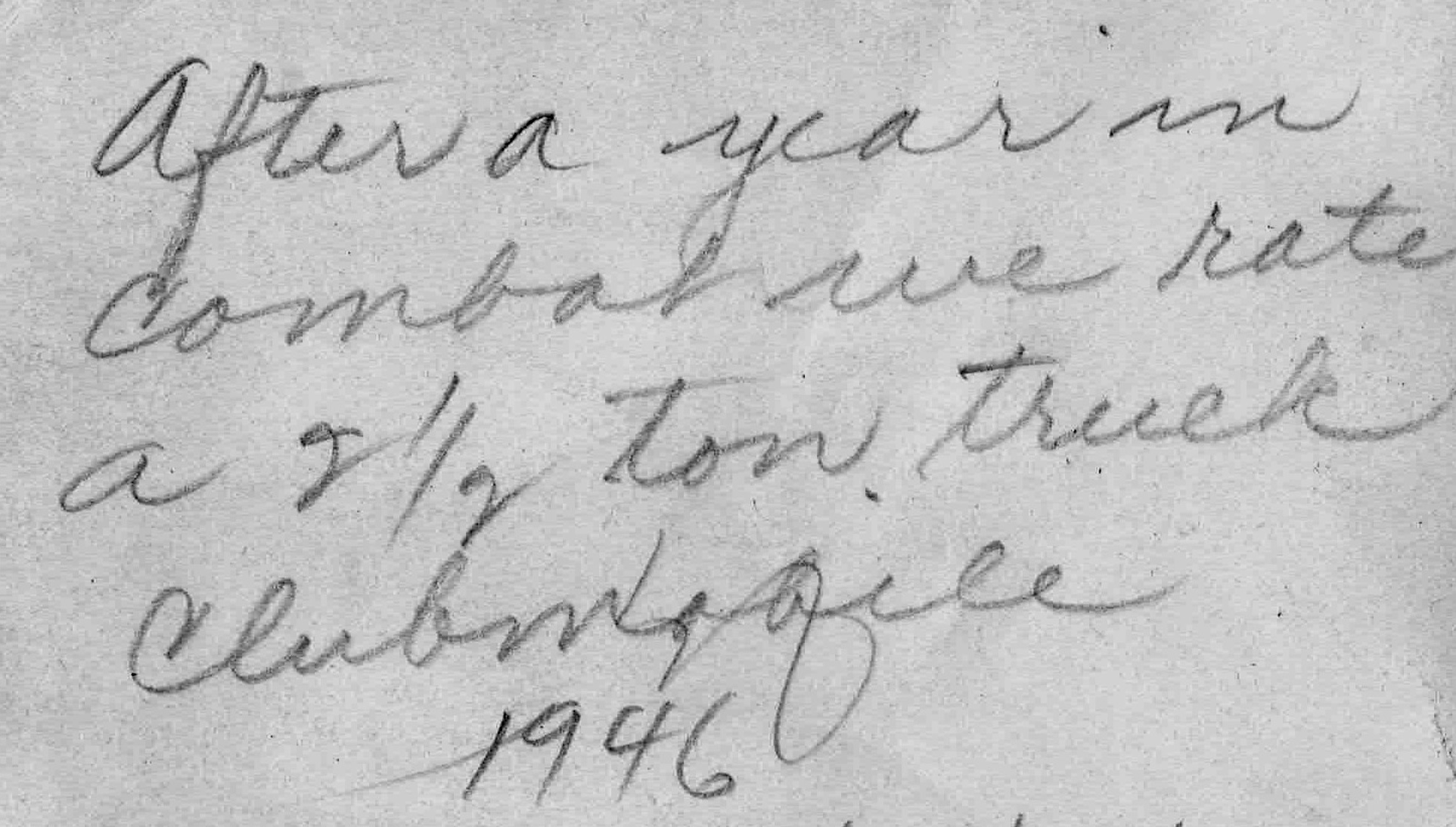
Flo’s note on the back of the picture
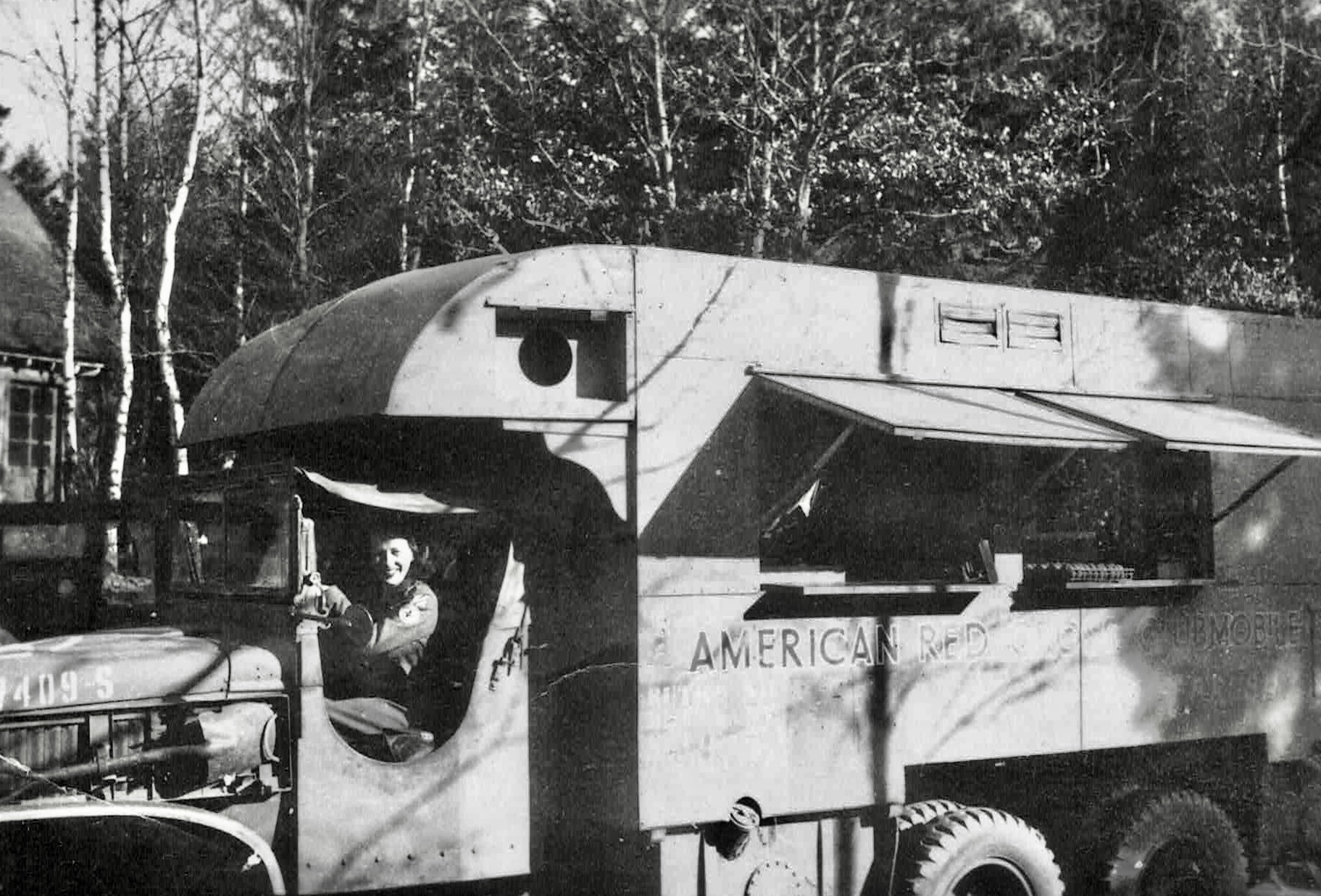
Ready for business in the SageBrush
Janet poses with donuts in the new/used clubmobile
Serving coffee and donuts in what looks like a break in an archery or shooting competition
Working during halftime at an army football game
Flo and Janet
Mary McAuliff joined the crew in late 1945. She had probably served with another crew, but I can’t find more information about her. She doesn’t appear in “The Arc in the Storm,” the one book that lists the clubmobile women, but neither do most of the others who joined the North Africa/Italy campaign.
Mary, Janet, Flo
With “C” Company 3oth Infantry at Borken Germany
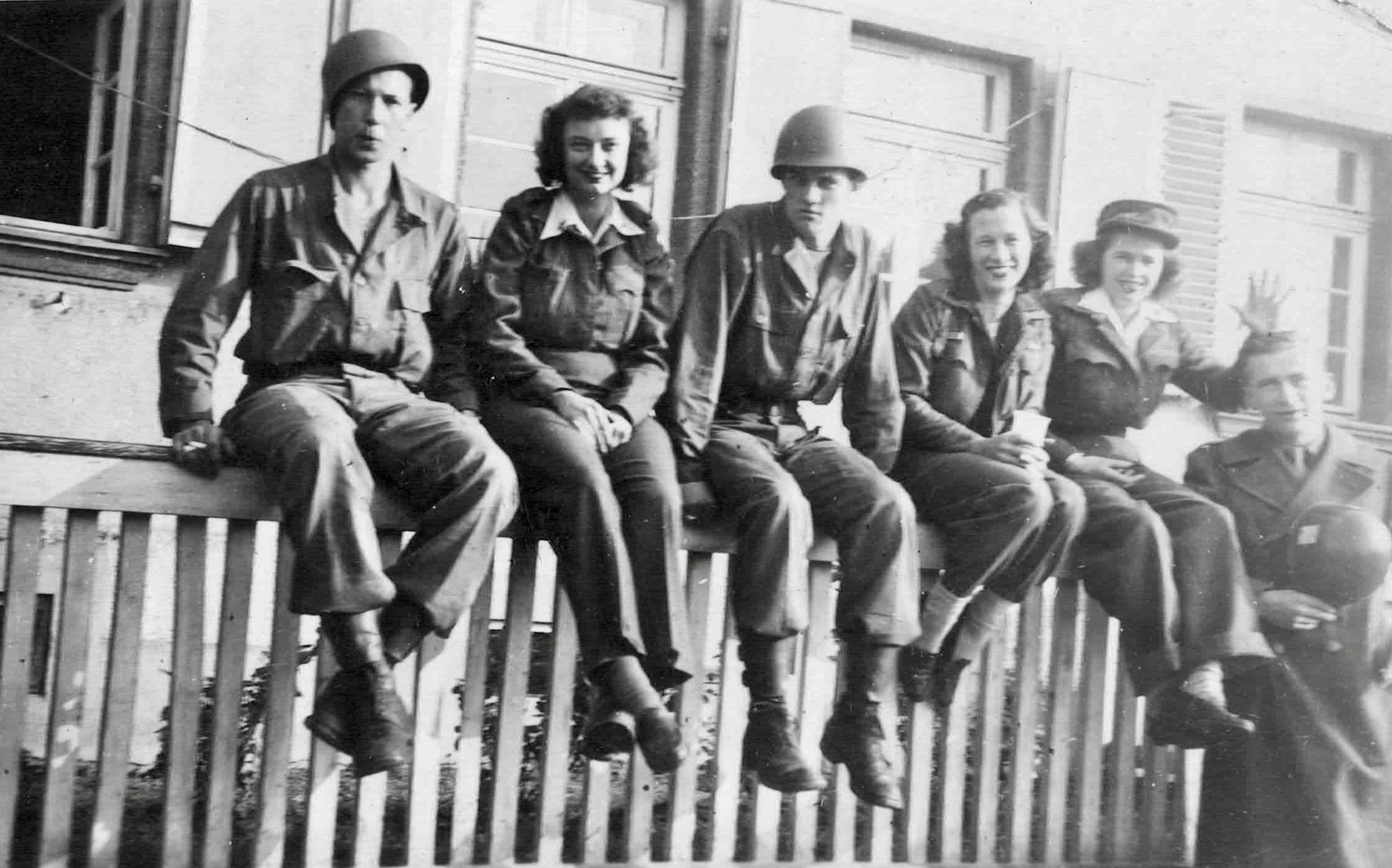
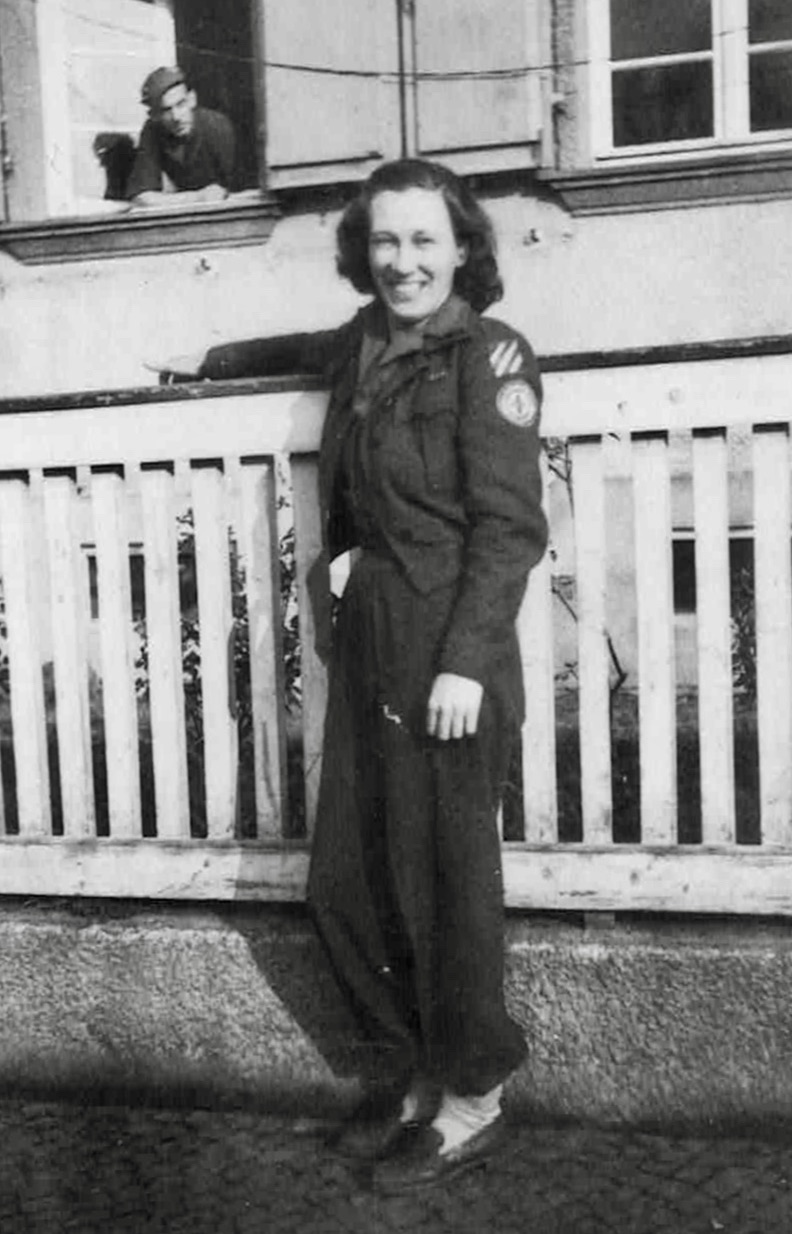
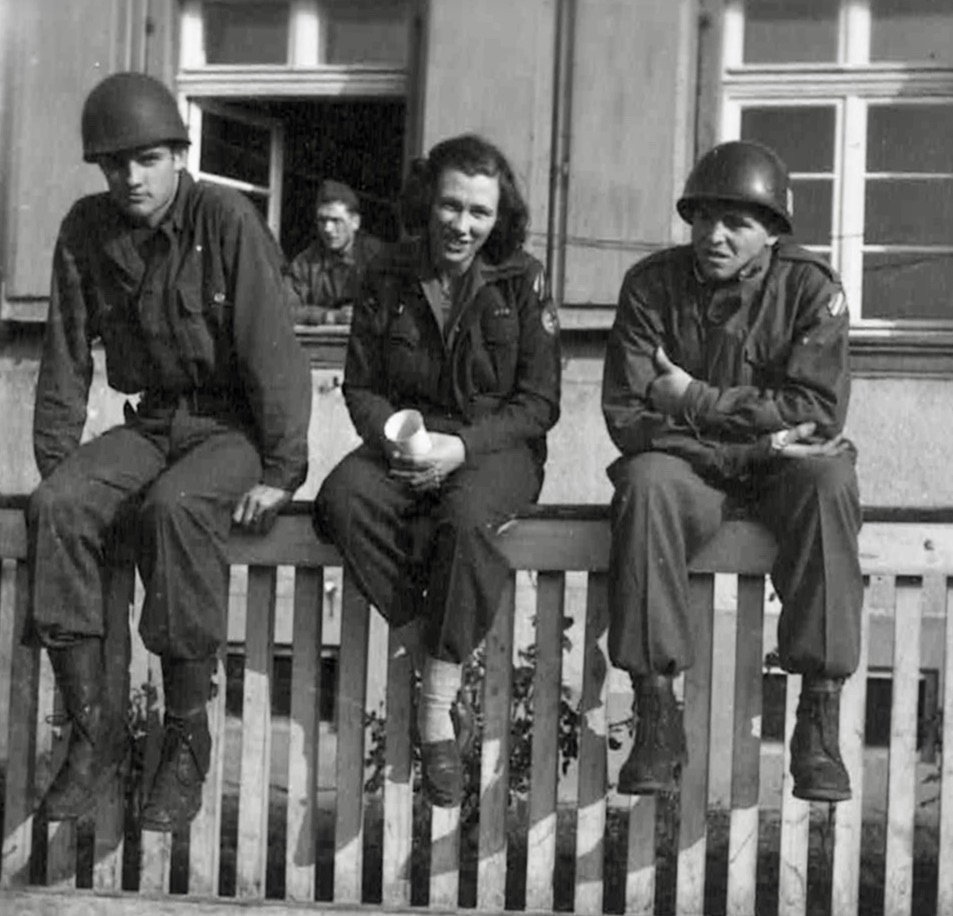
Flo and “her boys”
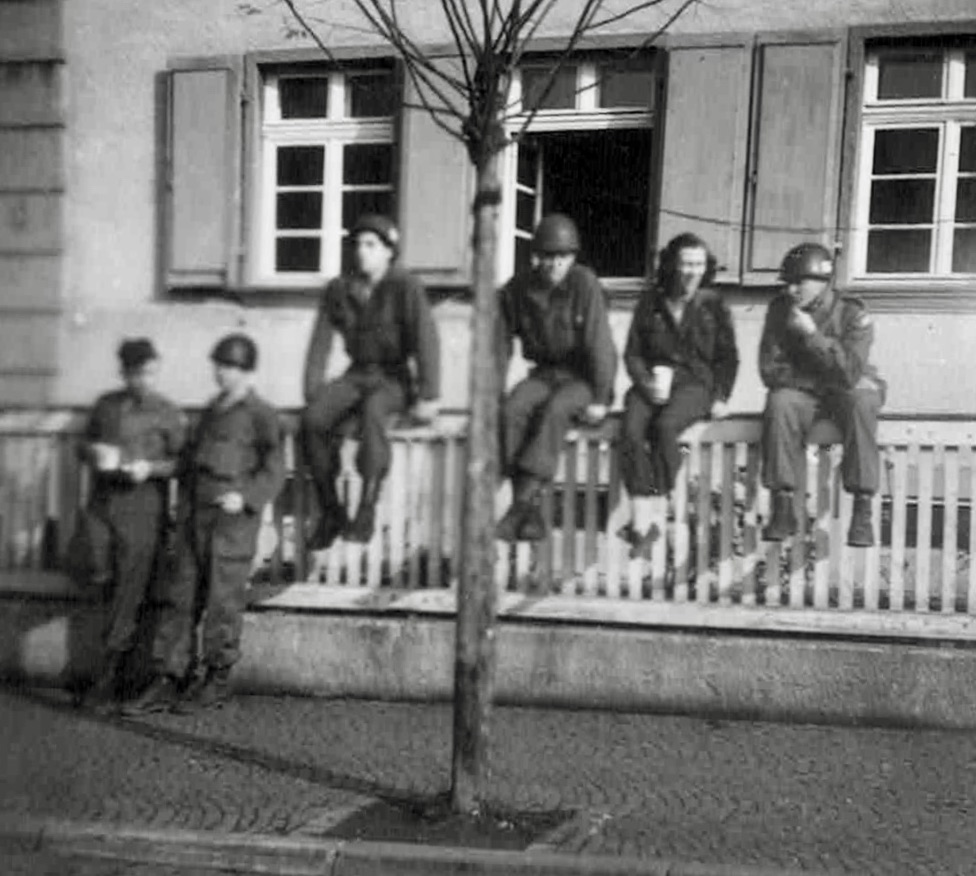
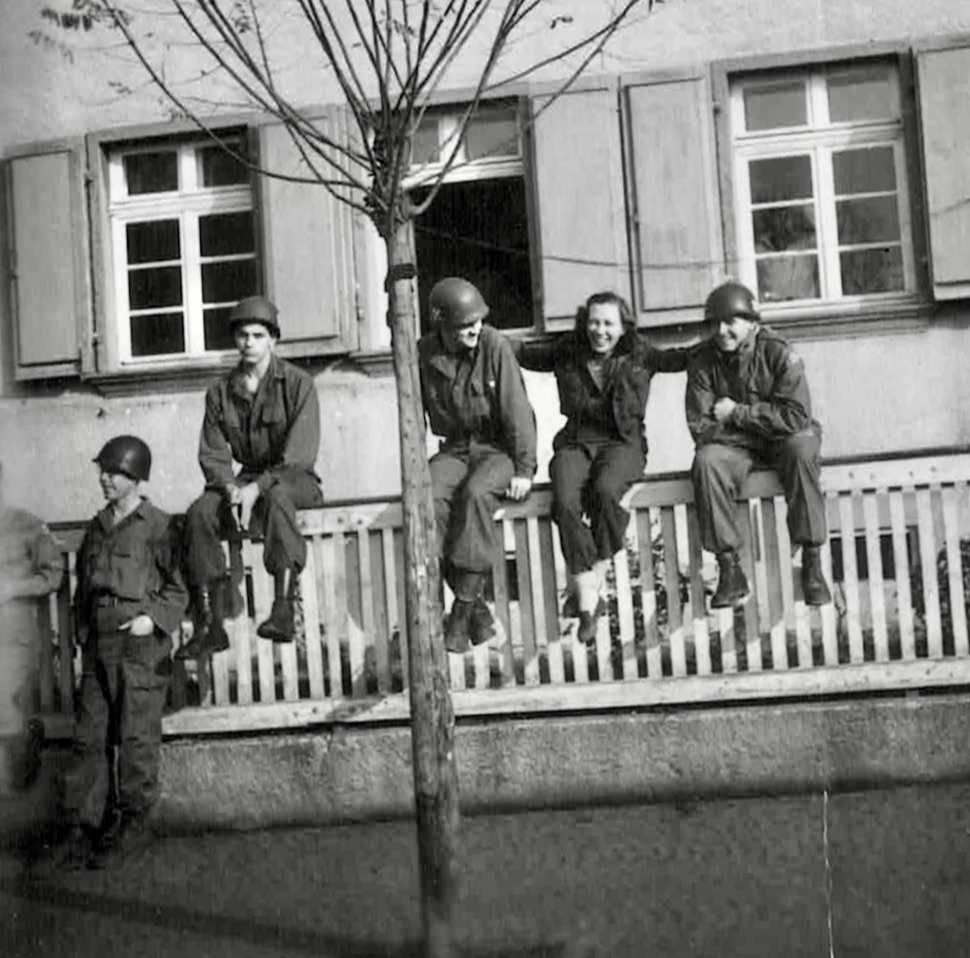
I’ve no idea why the soldiers are wearing helmets in these pictures. The war was long over.

Ch. 107: https://mollymartin.blog/2026/03/27/3rd-signal-co-hosts-a-bbq-supper/
To Berlin for a Football Game

Mary McAuliffe Joins the ARC Crew

My Mother and Audie Murphy Ch. 96

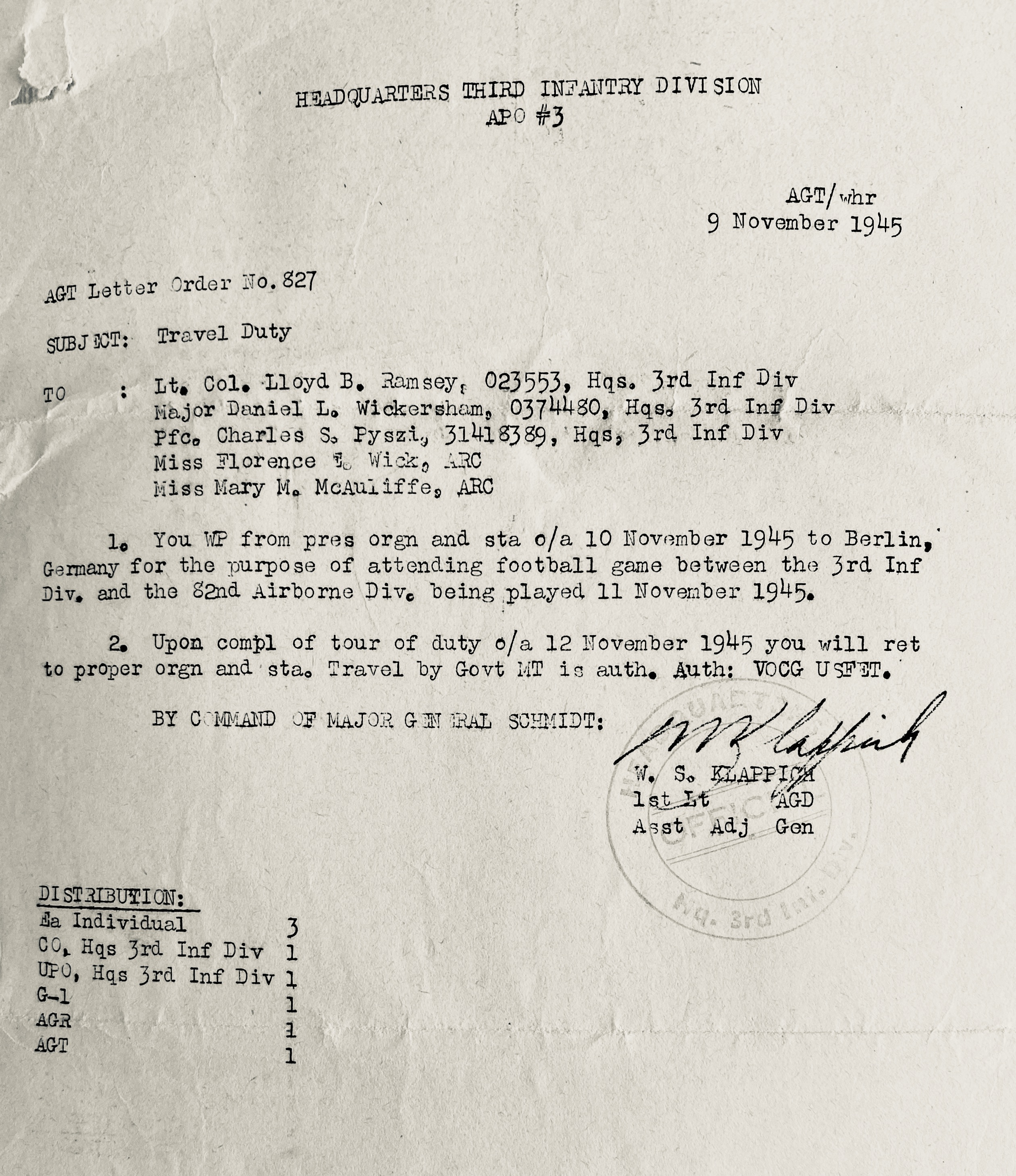
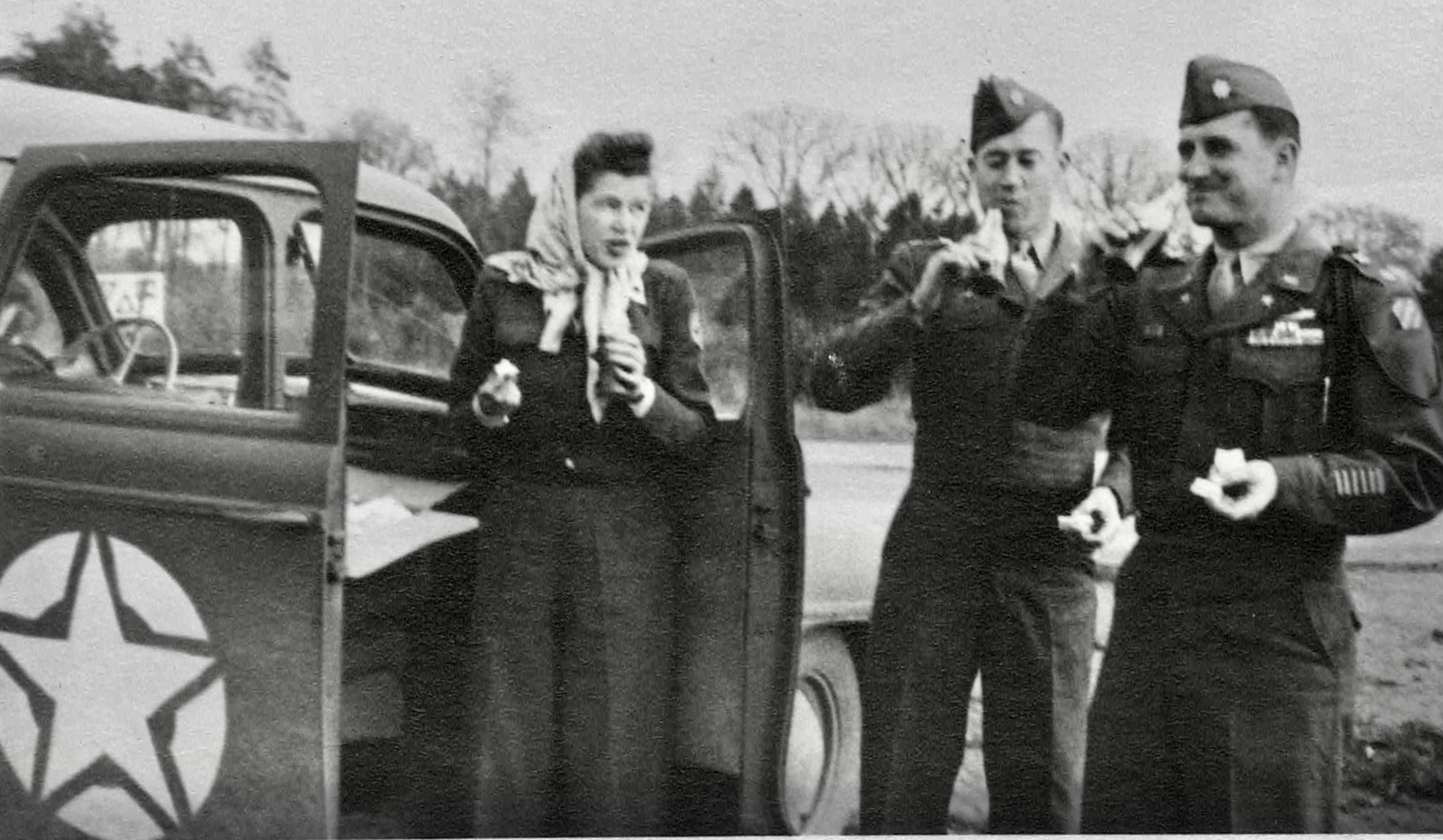
By command of Gen. Schmidt permission to attend a football game in Berlin
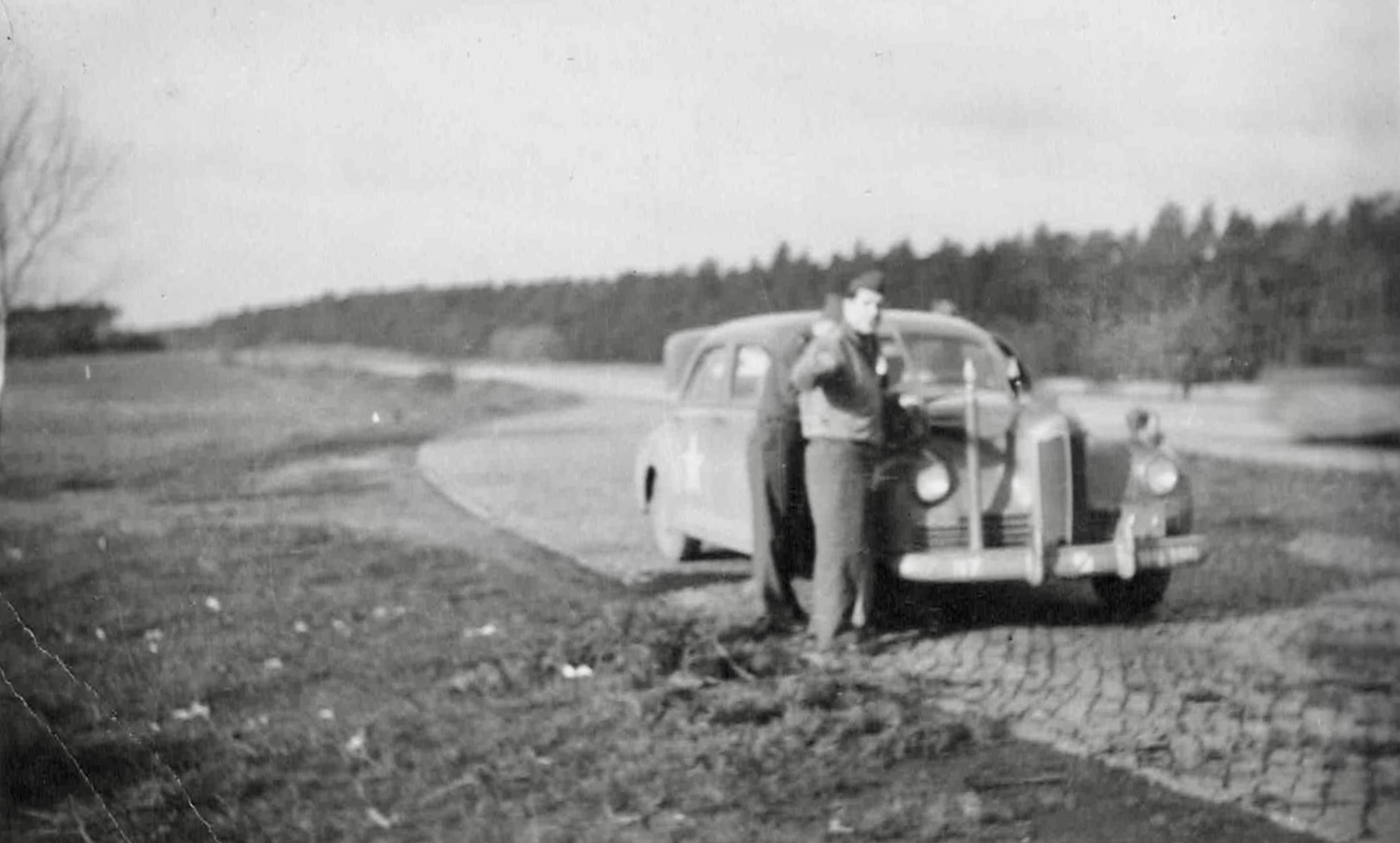
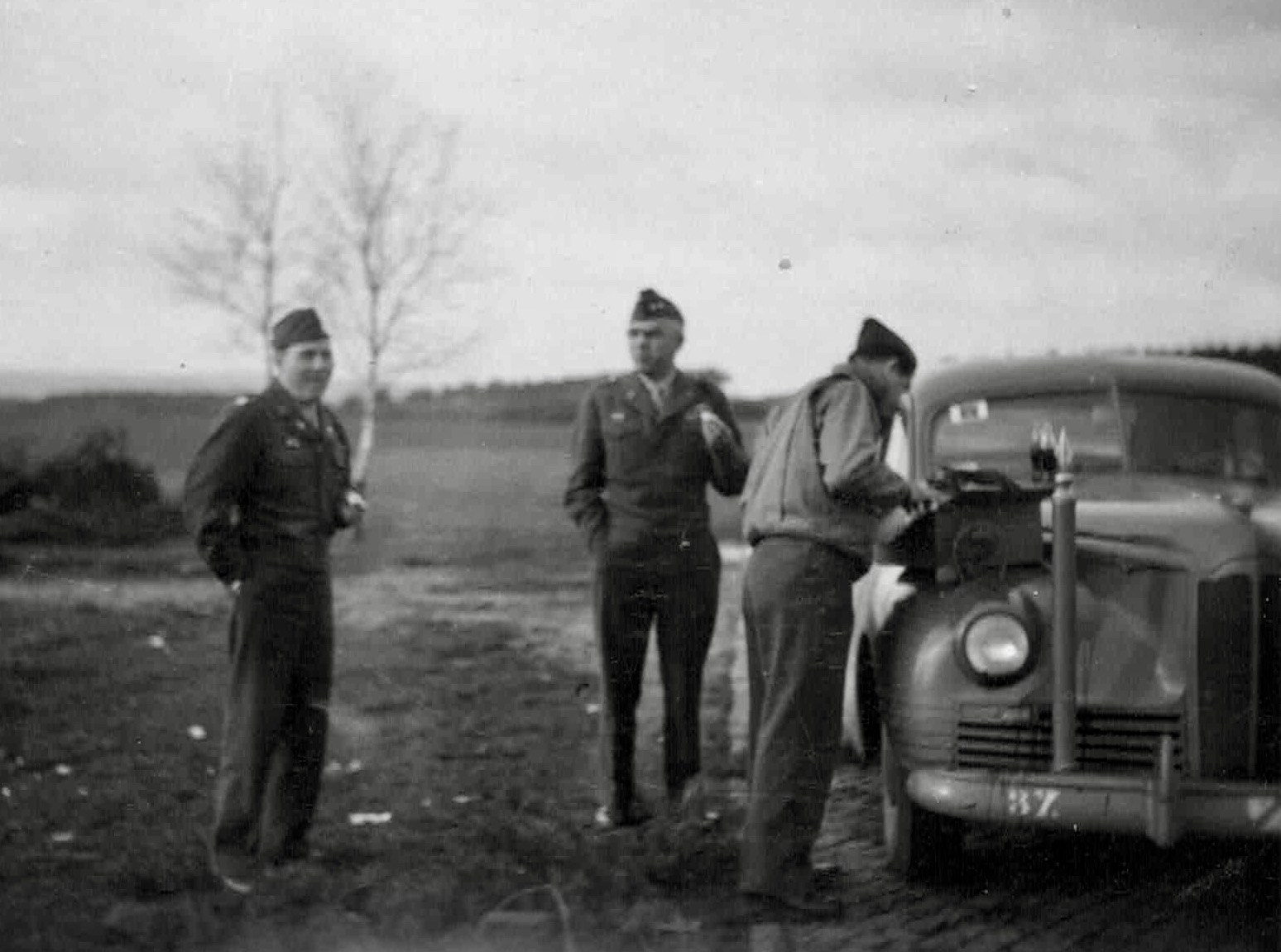
Love the car.
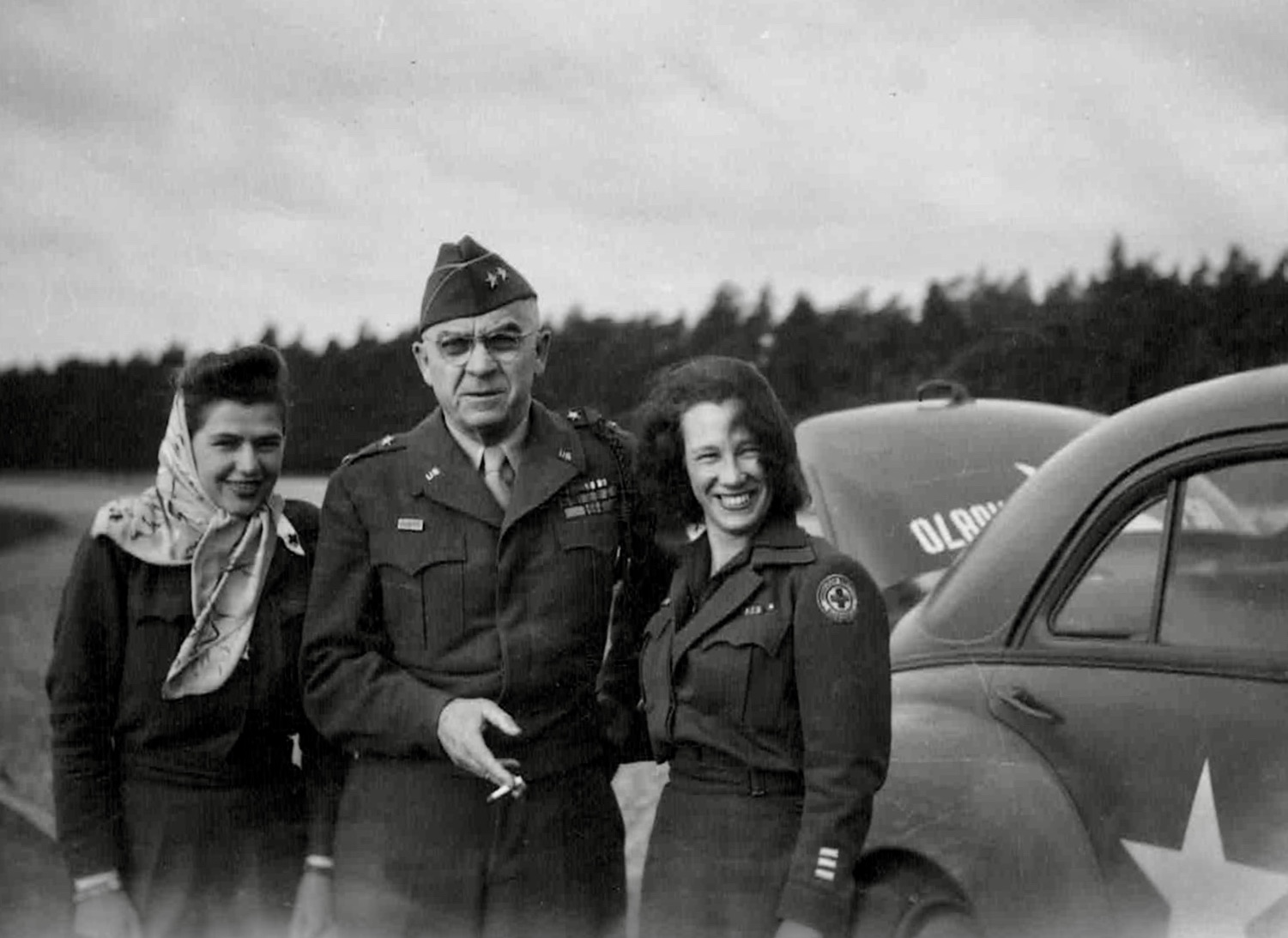
Mary McAuliffe, ARC; Gen. Schmidt; Flo Wick
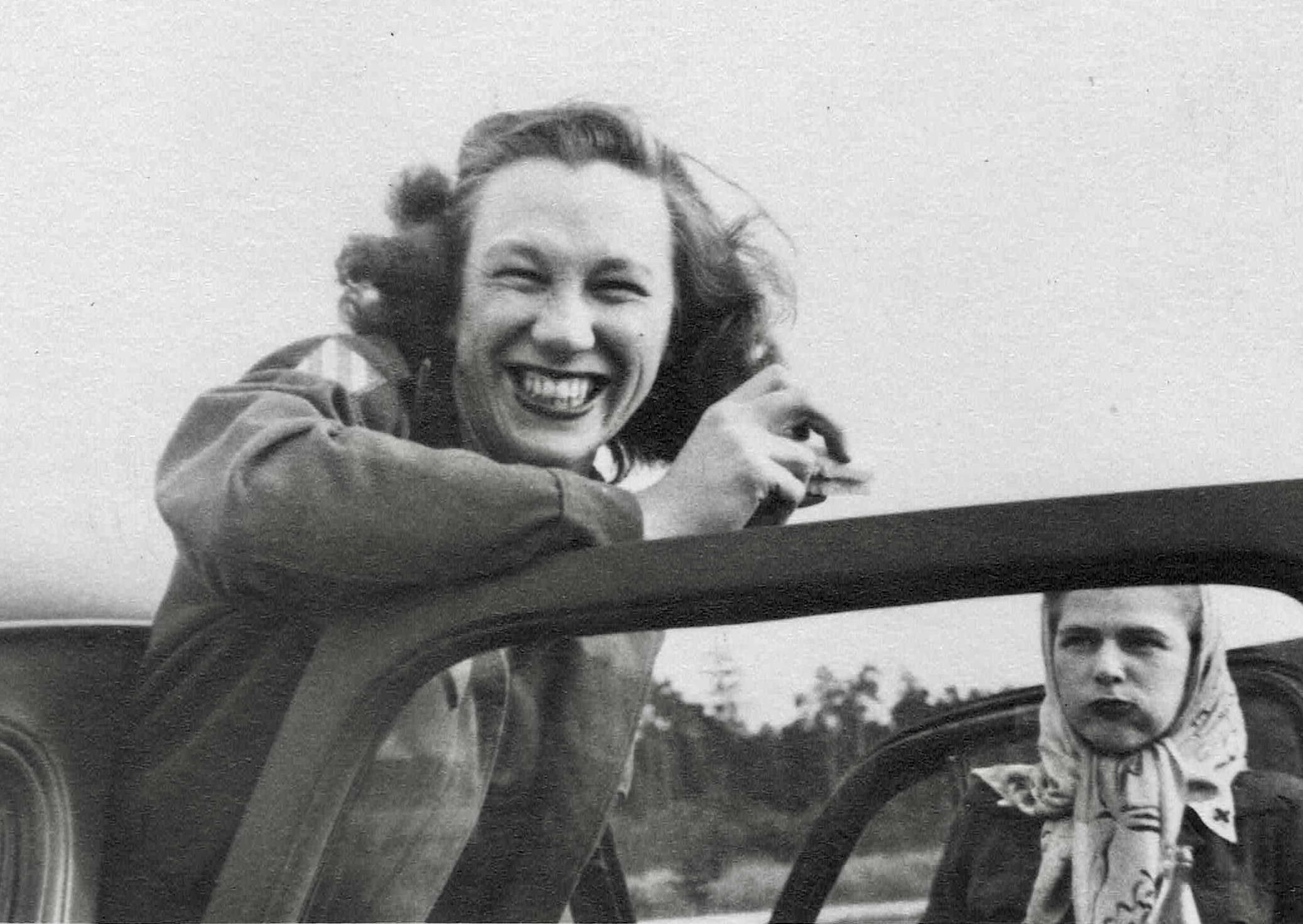
Having a little snack before taking off. Flo and Mary
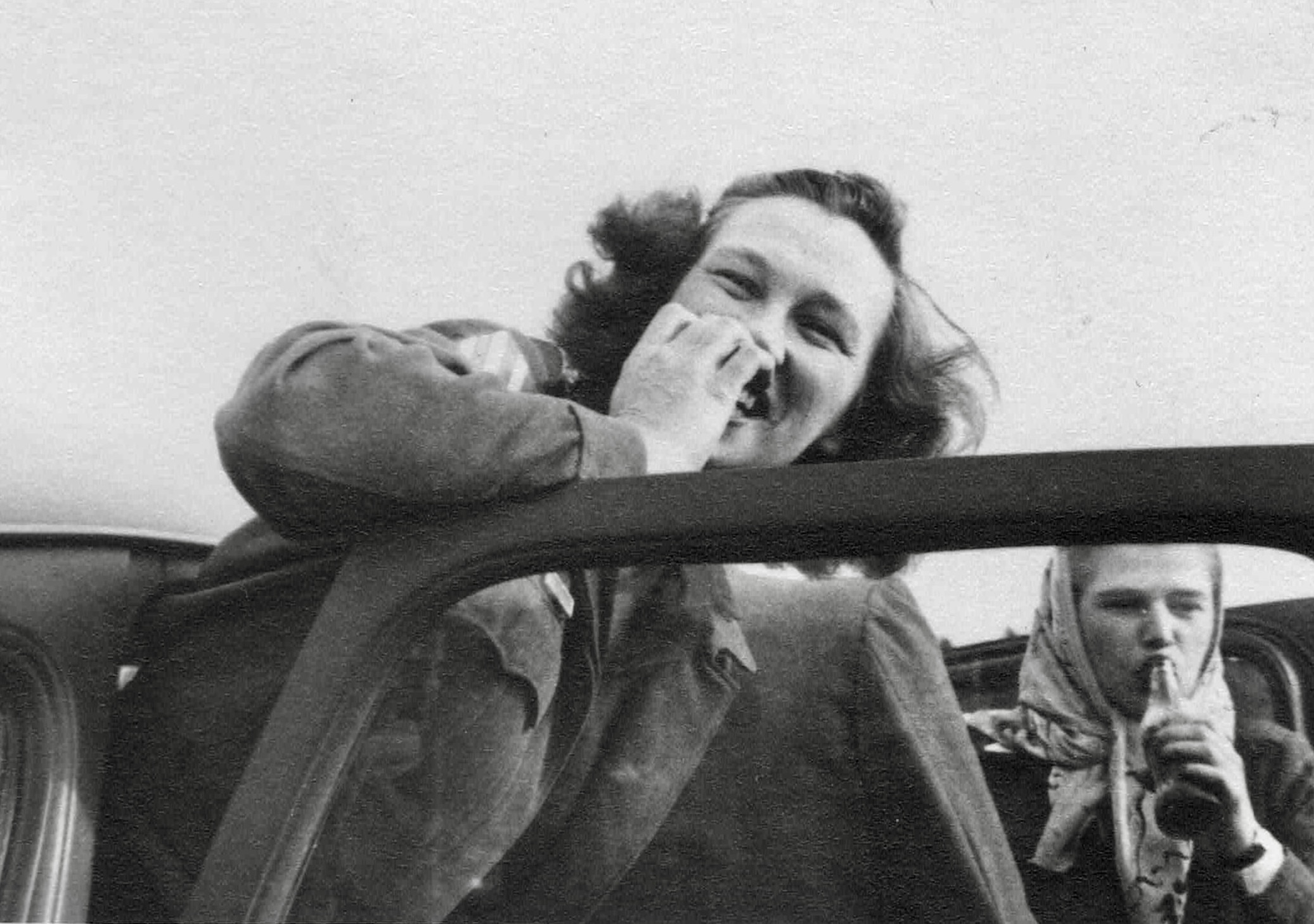
No fair getting photographed while eating!
Mary McAuliffe, Major Wickersham, Lt. Col. Ramsey
Gen. Schmidt saw them off.
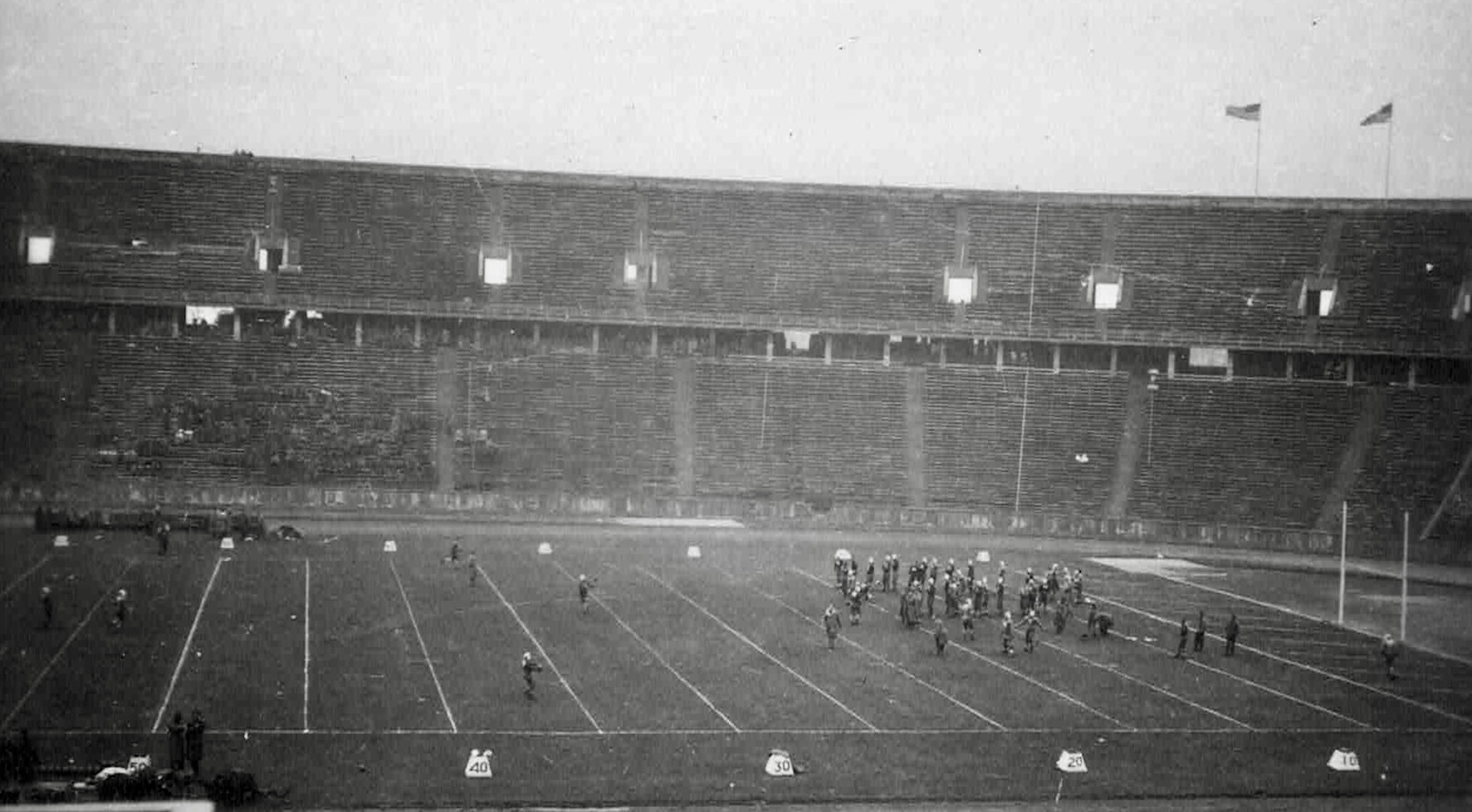
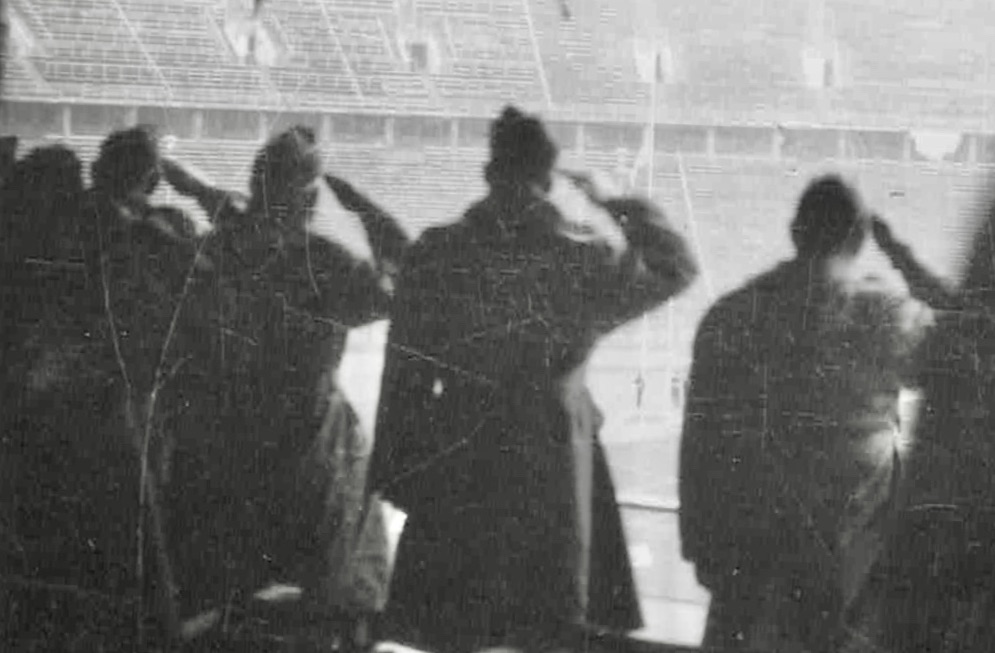
The Third Division played the 82nd Airborne at Hitler’s Olympic stadium Nov. 11, 1945.
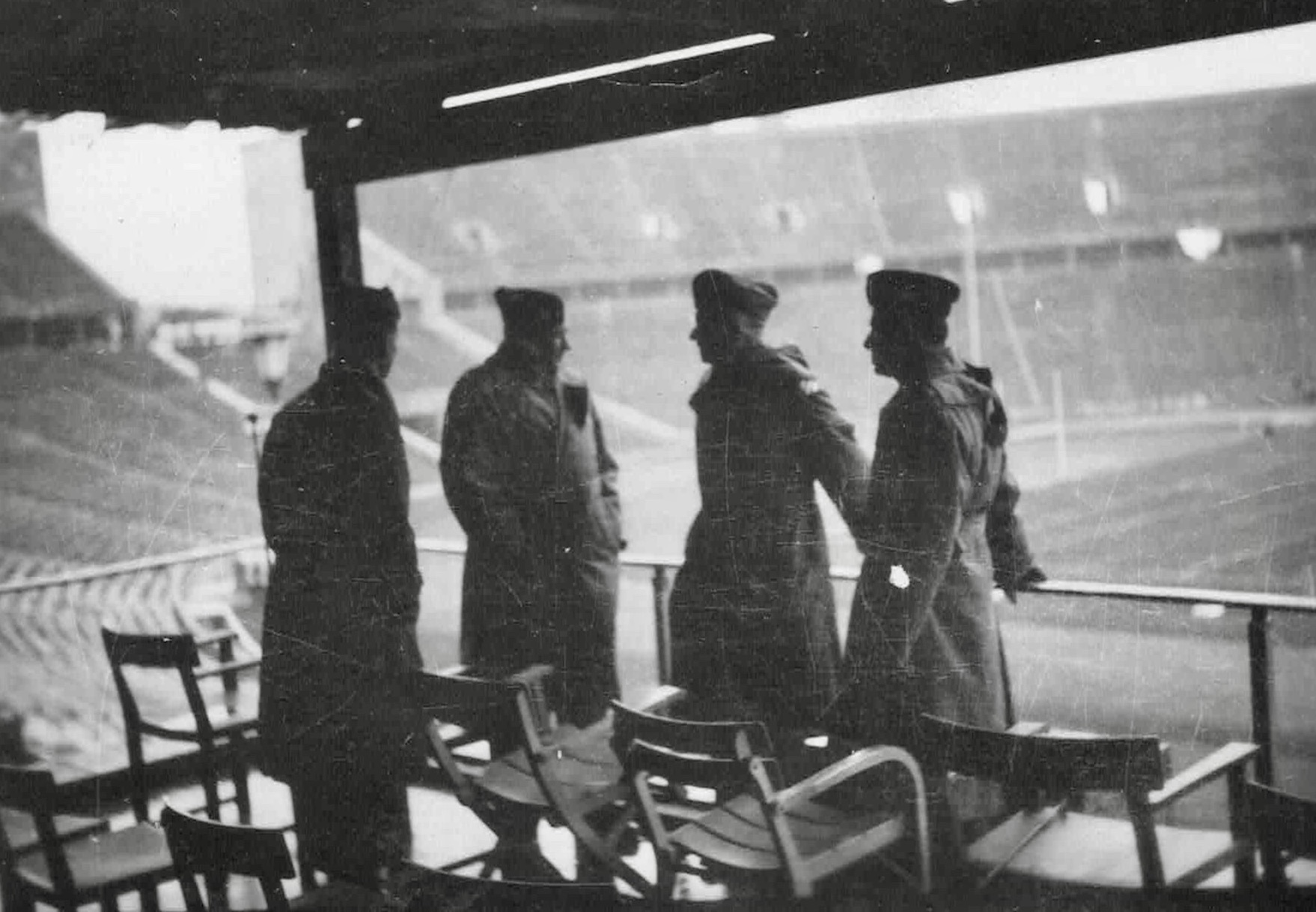
The brass section
Attention! The gigantic stadium, built for the 1936 Olympics, survived the bombings.

Ch. 97: https://mollymartin.blog/2026/02/19/images-of-war-torn-berlin/

Around Witzenhausen, Autumn 1945

My Mother and Audie Murphy Ch. 92

Witzenhausen, Germany, lay within the American occupation zone near the border with the Soviet zone, making it strategically important for intelligence and personnel transfers. In 1945, U.S. forces used the town during Operation Paperclip to evacuate German rocket scientists, including Wernher von Braun, from Bleicherode to prevent their capture by advancing Soviet troops, underscoring Witzenhausen’s role in the emerging Cold War. The town became a U.S. Army garrison, with military bases integrated into local life, a pattern seen across West Germany. This long American presence left lasting marks on language, consumer culture, and infrastructure, making Witzenhausen a microcosm of the broader U.S. occupation experience.

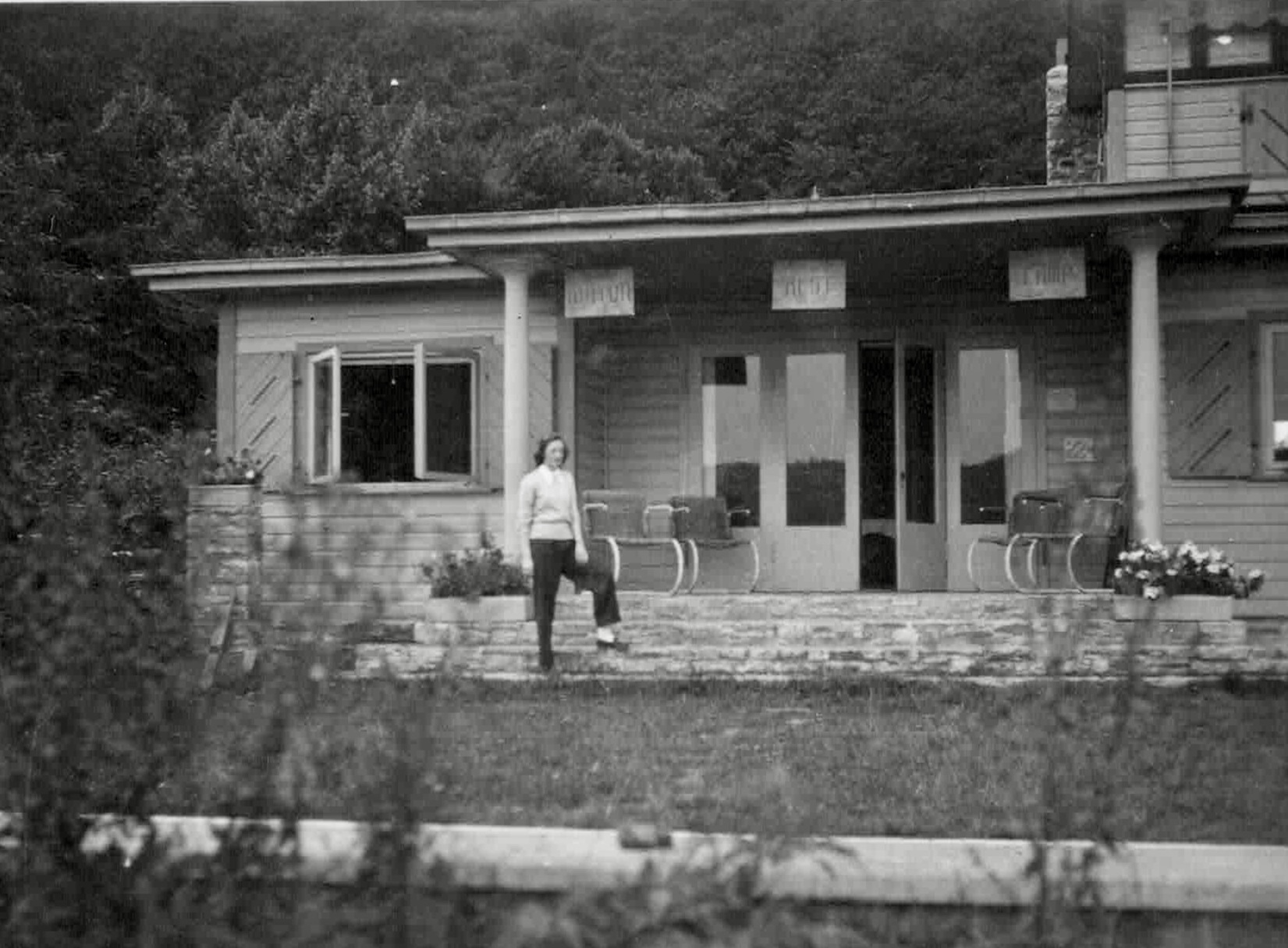
Janet and Flo visited a beach house on Lake Edersee occupied by the 3rd Signal Co.
Janet Potts
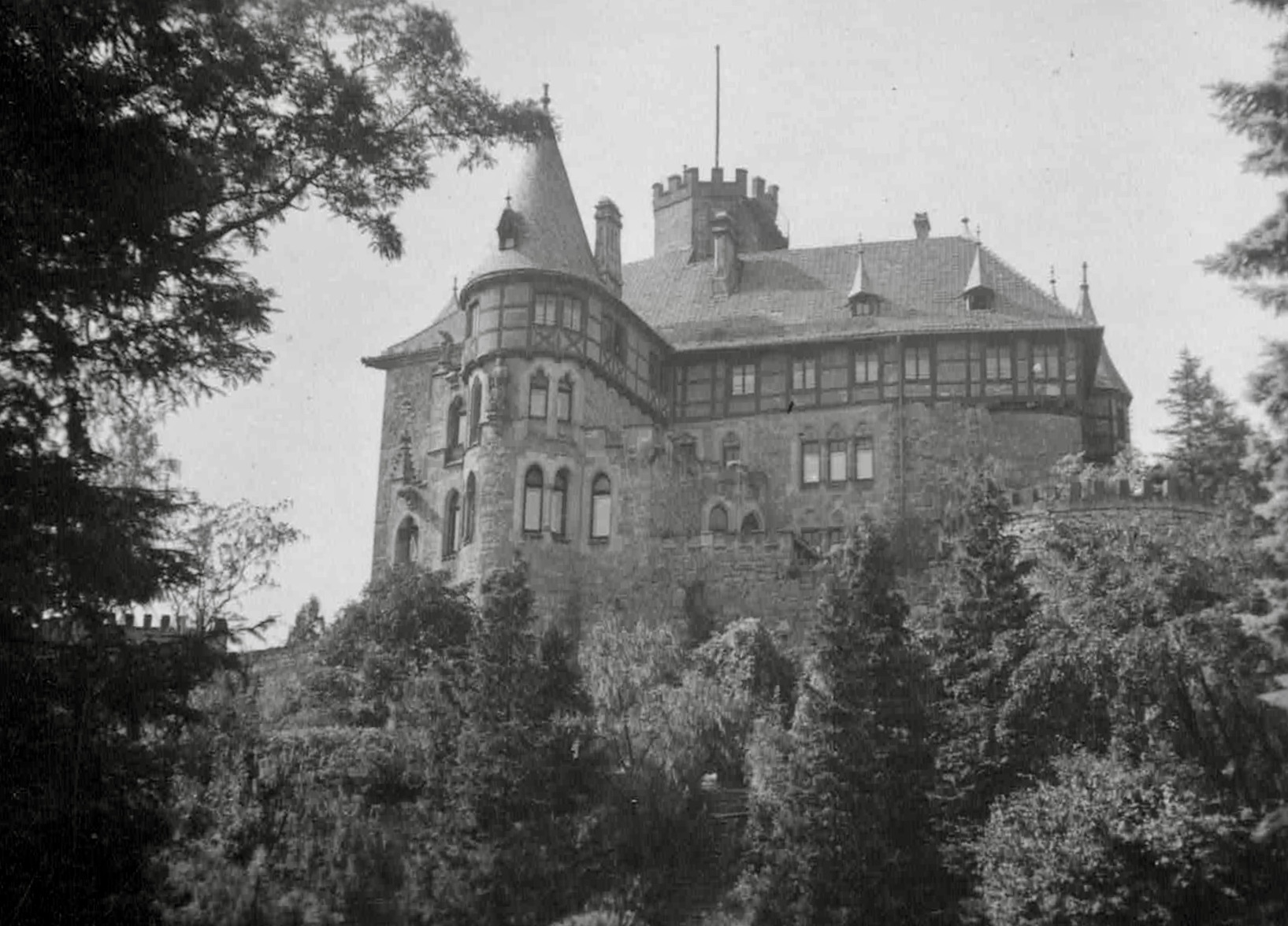
Berlepsch castle
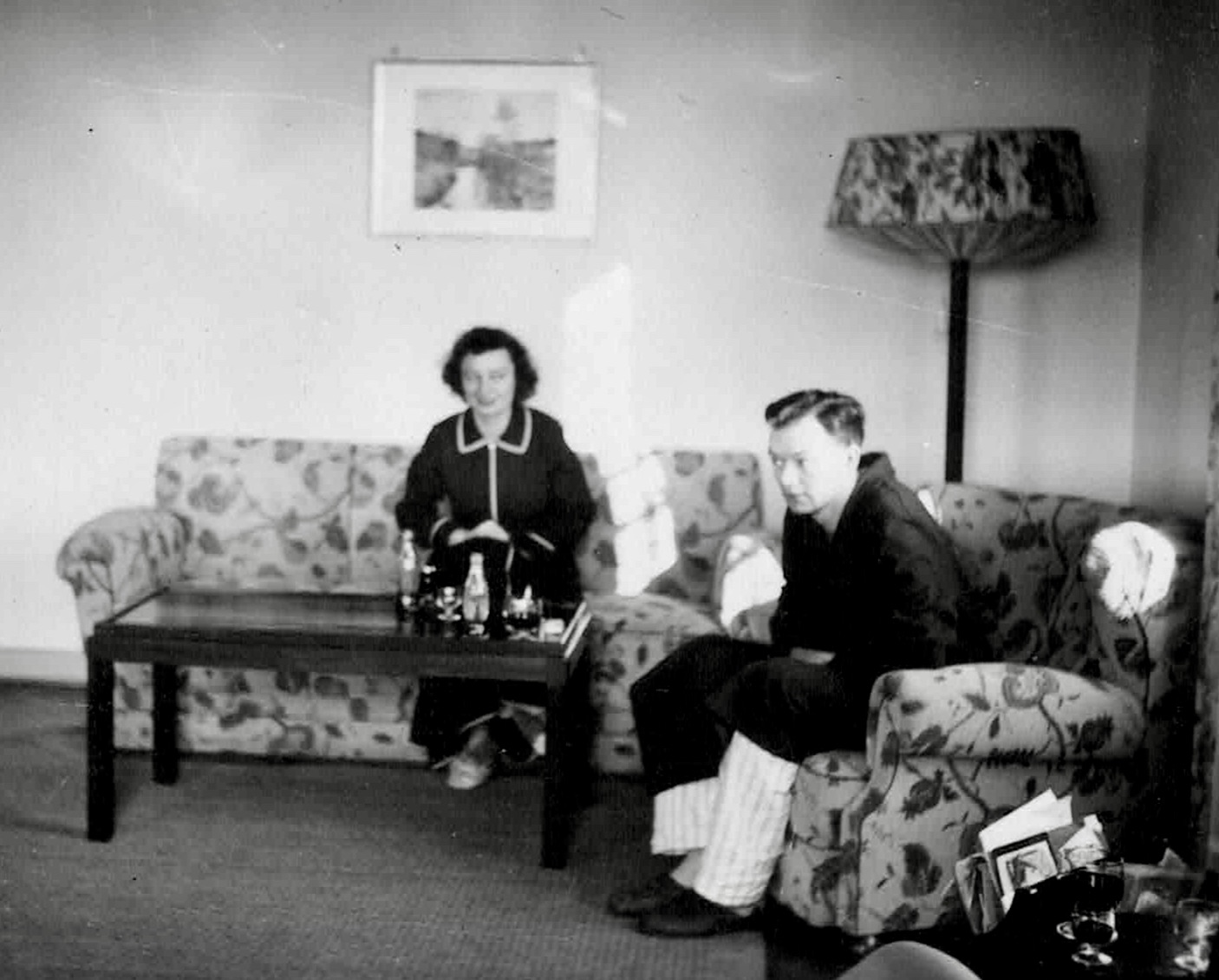
Janet and Jens Jenson in their living quarters at Witzenhausen Thanksgiving, 1945. They weren’t yet married, but apparently the Army and ARC no longer cared.
At Janet and Jens’s home with Lt. Gerry Mehuron 3rd Bn. 3oth Thanksgiving Day. New boyfriend?
With Major Wickersham, a friend from Flo’s hometown, Yakima, WA
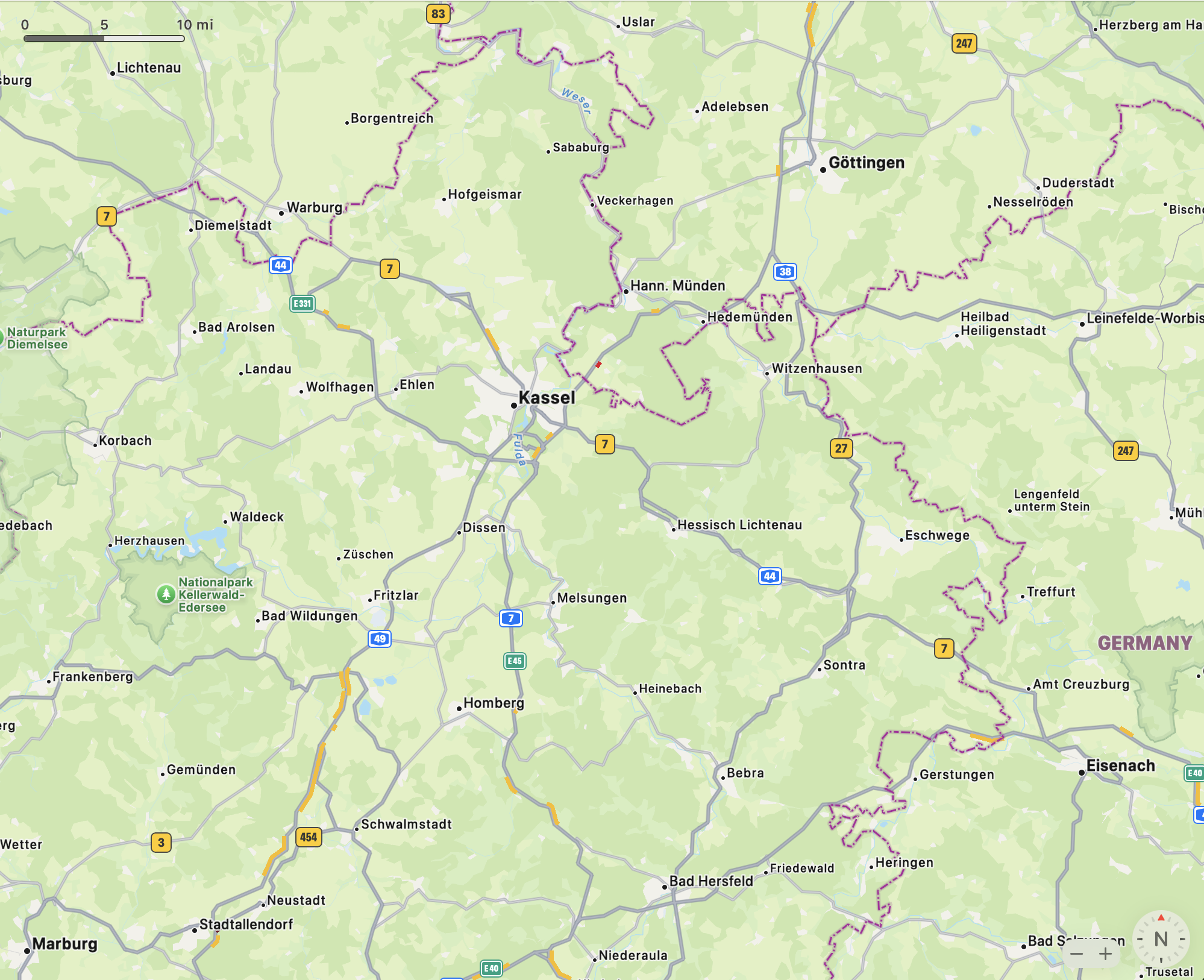
Locating these places on Apple maps helps me. Lake Edersee on the left, Witzerhausen to the right of Kassel, Bad Wildungen where Flo was stationed is to the right of Lake Edersee. All were within the American occupation zone in Hesse.

Ch. 93: https://mollymartin.blog/2026/02/03/the-us-and-ussr-sign-a-peaceful-pact/

Regimental Review Schloss Klessheim

Audie Murphy Honored

My Mother and Audie Murphy Ch. 82

On June 2, 1945, the Third Infantry Division assembled for a division-wide review in Salzburg, their ranks drawn up before their headquarters. Flo was there with her clubmobile crew, Liz Elliott and Janet Potts, watching as Seventh Army commander General Alexander Patch presented decorations and commendations. A Congressional delegation stood in review alongside Secretary of War Robert P. Patterson, among them South Dakota Senator Chan Gurney, the first chairman of the Senate Committee on Armed Forces.

June 2, 1945. This is the last picture of the three Red Cross clubmobilers together–Janet Potts, Flo Wick and Liz Elliott. Fritzie Hoaglund never returned to the crew after having been hospitalized.

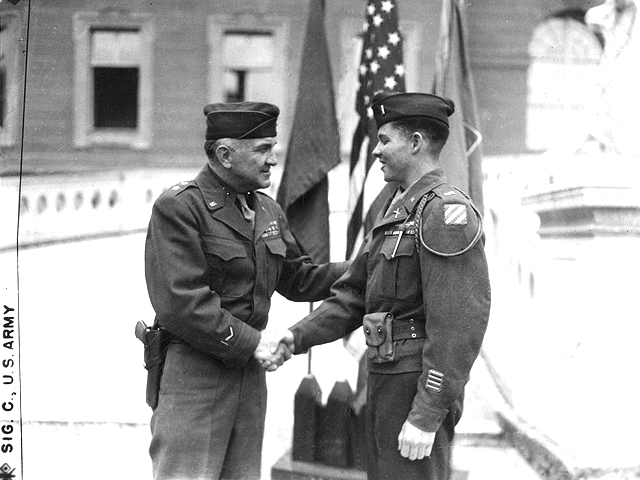
That day, Lieutenant Audie Murphy of B Company, 15th Regiment, received the Medal of Honor and the Legion of Merit in front of his entire division. Five other Third Division soldiers were awarded the Distinguished Service Cross and the Silver Star, their citations read aloud to the troops who had fought across Europe and now stood at attention in peacetime formation.

Gen. O’Daniel shakes the hand of 1st Lt. Audie Murphy of B Company, 15th Regiment, 3rd Division. Murphy received the Medal of Honor and the Legion of Merit on June 2, 1945 in front of his entire division in Salzburg, Austria. Photo: Dogface soldier collection

The ceremony took place at a site heavy with layered history. Built in 1700 as a Baroque summer residence for the Prince-Archbishops of Salzburg, the palace later became a Nazi showpiece where Hitler hosted Axis leaders and stored looted art as the Reich collapsed. Captured by the U.S. Third Infantry Division in May 1945, it was repurposed as headquarters of the American Occupation Authority during the decade-long U.S. presence in Salzburg, before eventually becoming a casino.

Gen. J. W. O’Daniel 3rd Div. Commander; Flo Wick, ARC; Gen Alex Patch 7th Army commander. June 1945. Schloss Klessheim Salzburg
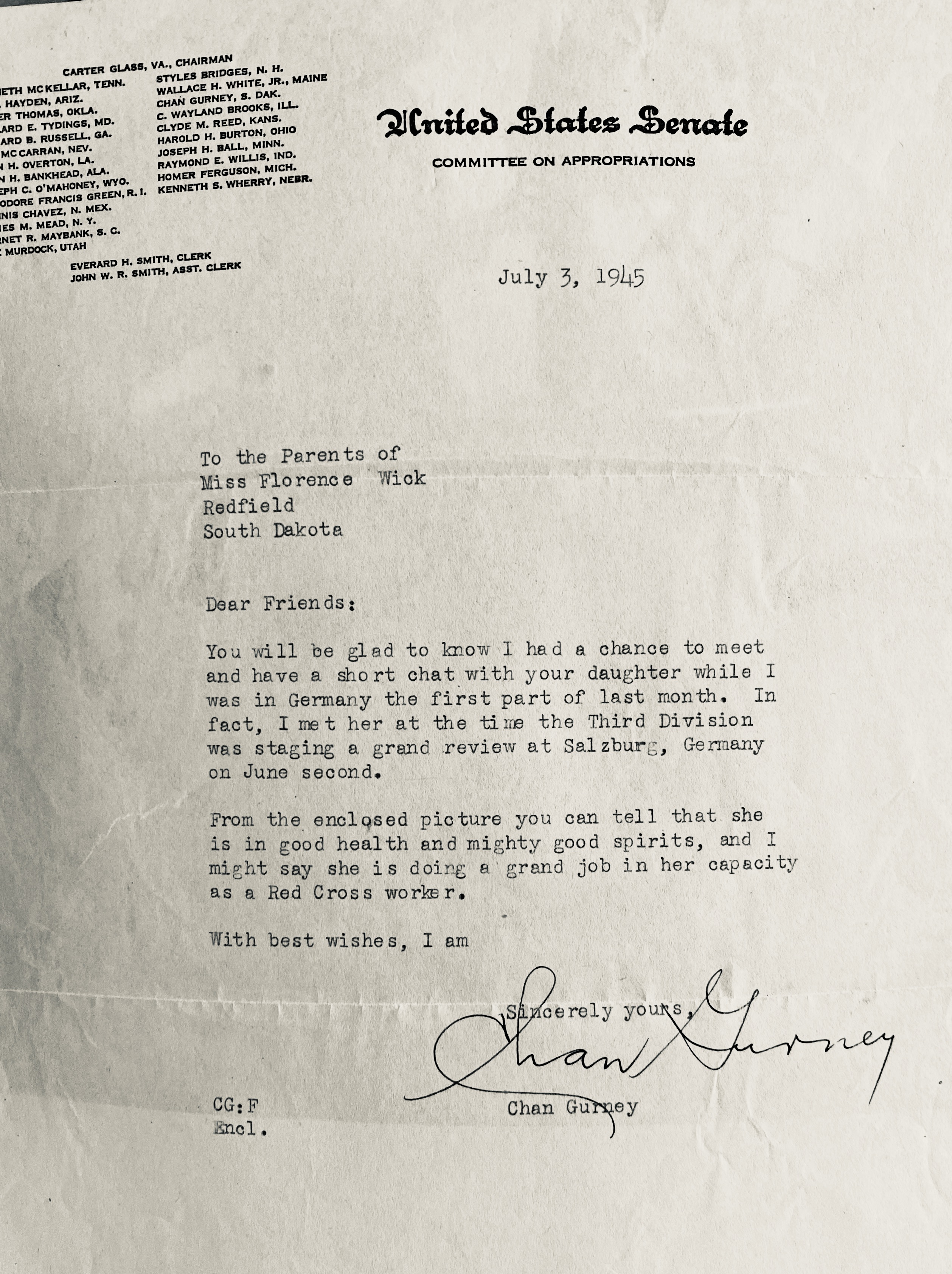
A delegation of the US Congress witnessed the Audie Murphy ceremony. Chan Gurney, South Dakota, the first chairman of the US senate committee on Armed Services, is seen here with Flo.
Letter from Sen. Gurney to Flo’s parents. He thought they were South Dakota constituents. Flo was born in Redfiled, SD, but the family hadn’t lived there since she was a baby. They lived in Yakima, WA. Her father had died in 1938.
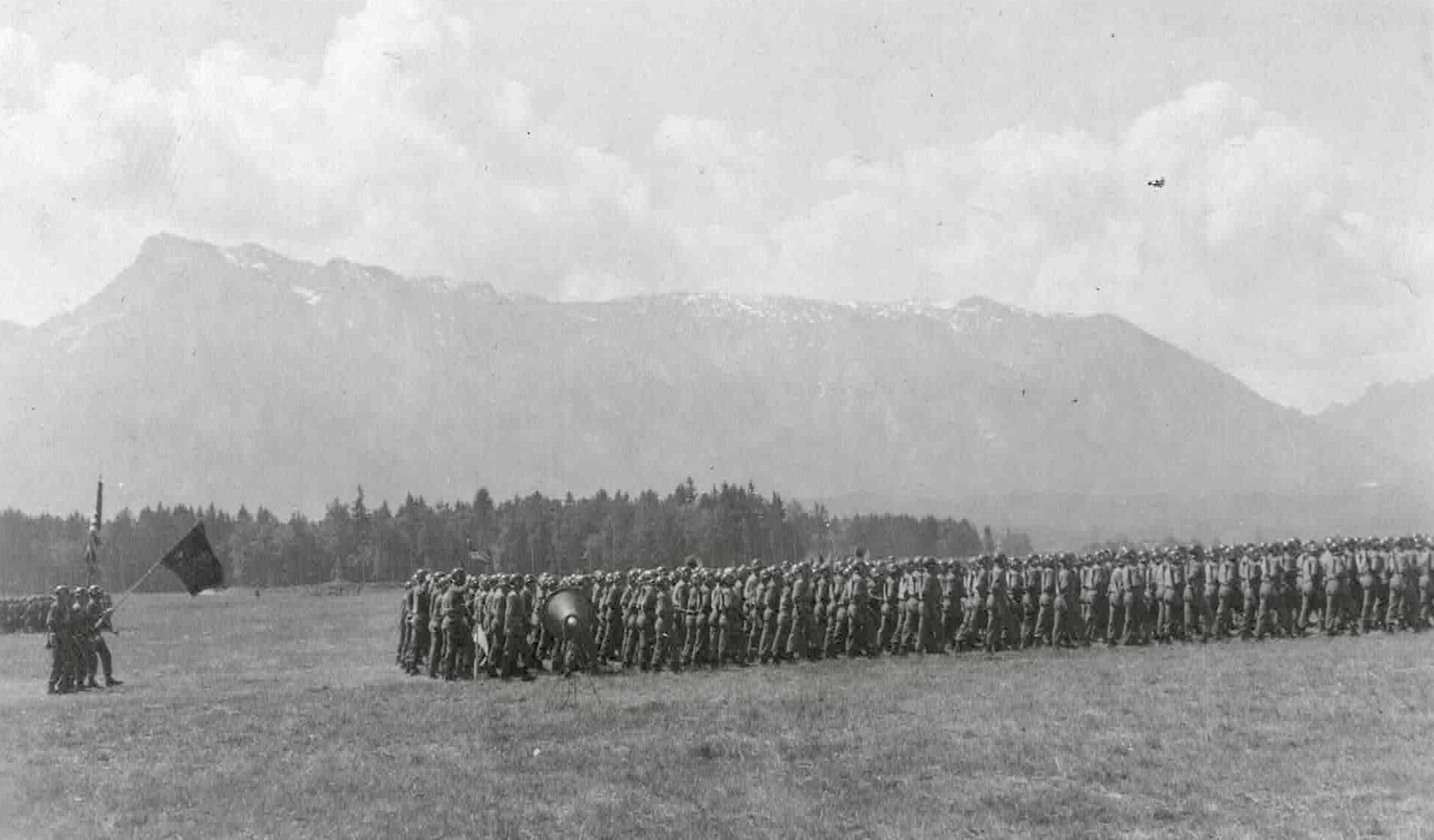
On June 2, 1945 the 3rd Division staged a grand review at Schloss Klessheim.
Soldiers march past the reviewing stand. photos from Flo’s album

Ch. 83: https://mollymartin.blog/2025/12/24/london-leave/

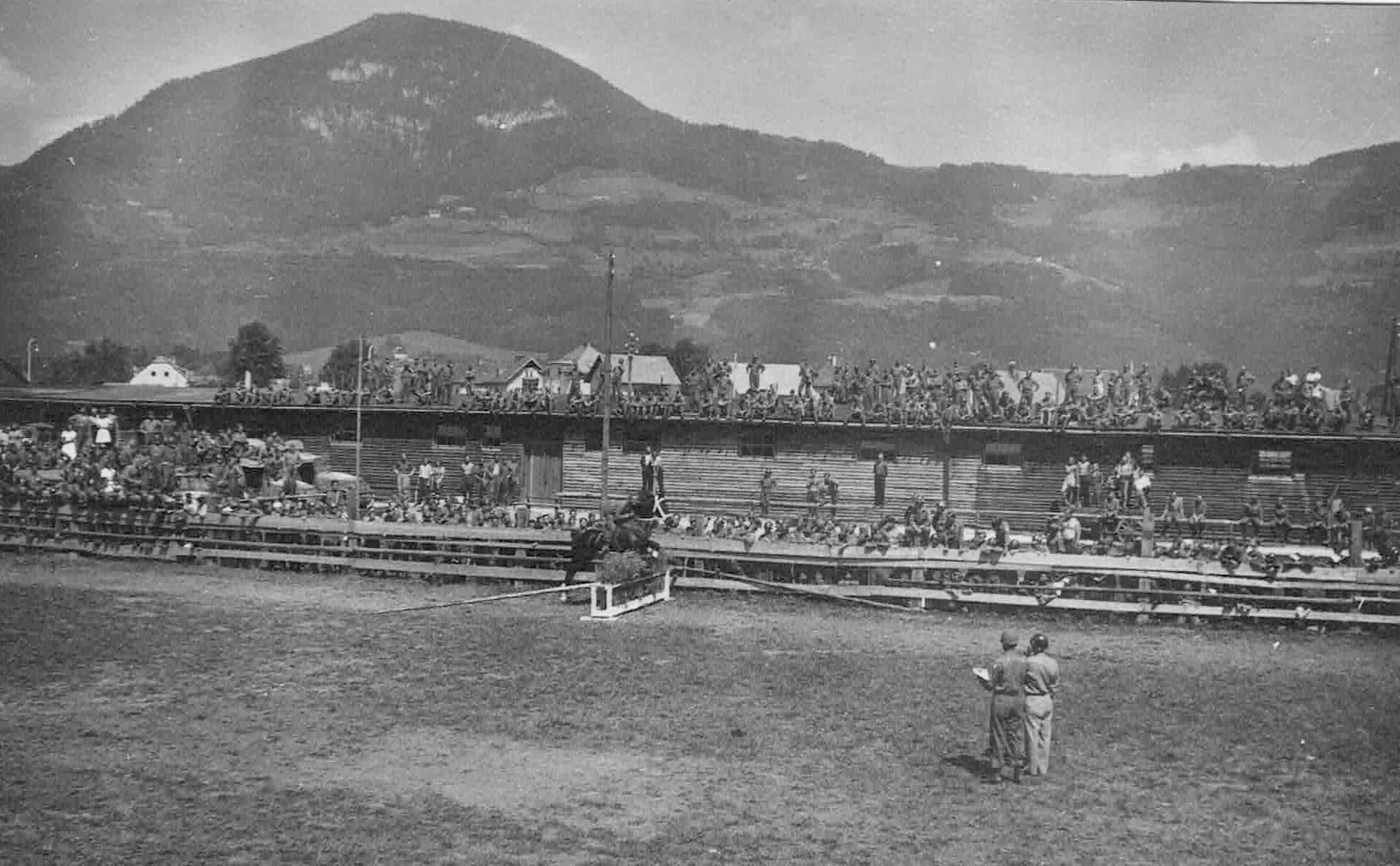
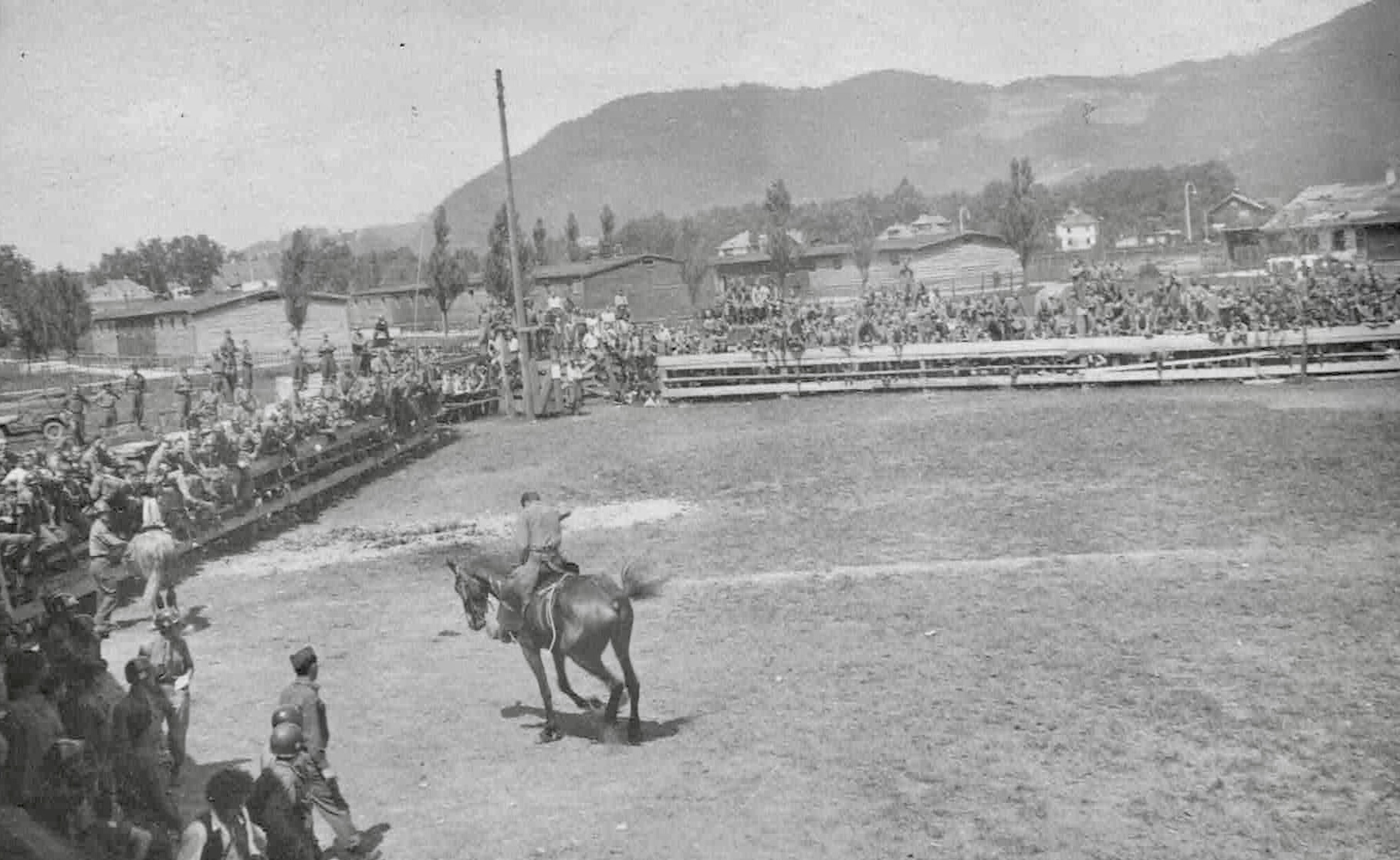
3rd Division Salzburg Rodeo

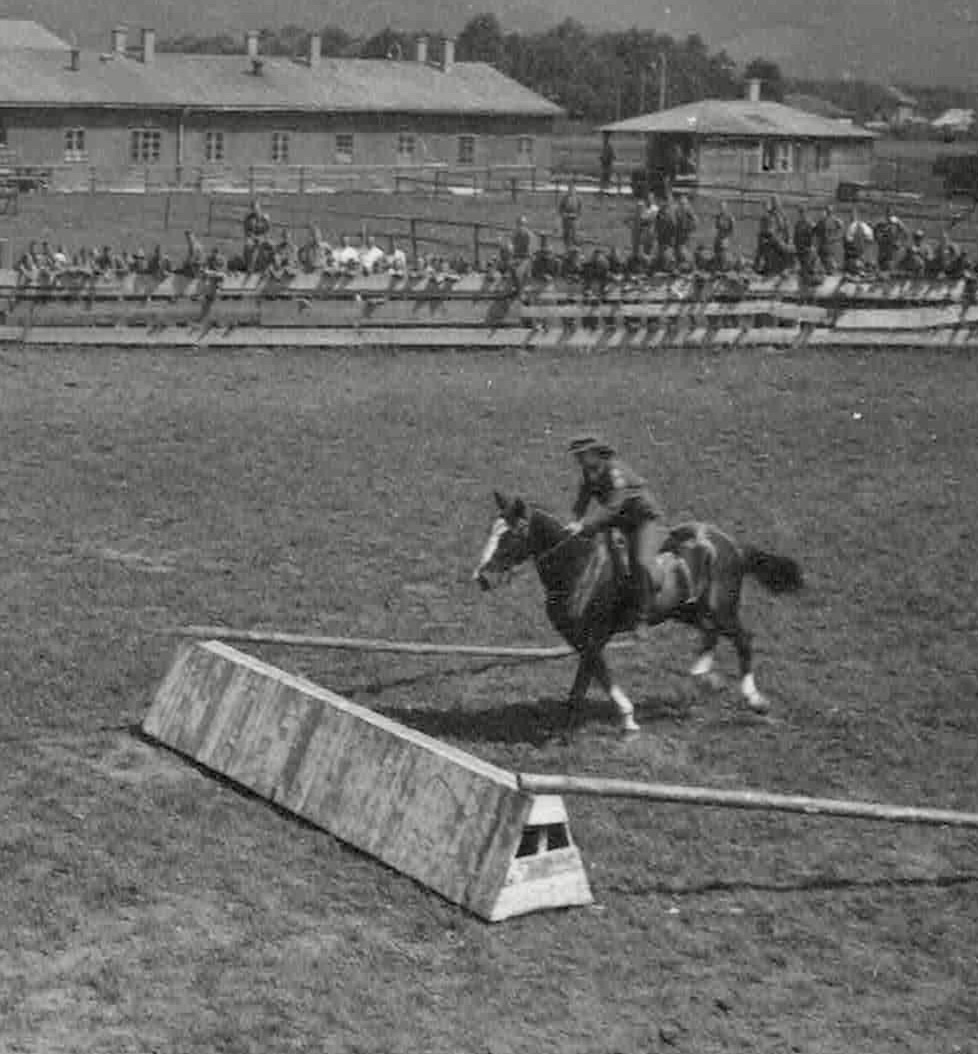
Janet Competes in Equestrian Jumping

My Mother and Audie Murphy Ch. 78

For almost ten weeks—from May 4 to July 13, 1945—the 3rd Division enjoyed a rare stretch of life without combat in and around Salzburg. To help soldiers shift from warfighting to occupation duty, the army quickly organized a full slate of sports and recreation. The Salzburg rodeo that Flo photographed was likely one of those morale-boosting events.

Clubmobiler Janet Potts, already an experienced equestrian with competition miles behind her, took part in the show. Even so, jumping with an unfamiliar horse must have been a challenge. And the horses themselves raise questions: where did they come from? Were they seized from a high-ranking Nazi officer? Whatever their origin, they were striking animals—well trained, elegant, and responsive. One photo even seems to show an American soldier riding a dressage horse, completing the unlikely tableau of a rodeo in postwar Salzburg.

Flo captioned these pictures “Janet Jumps”

Waiting to go into the ring

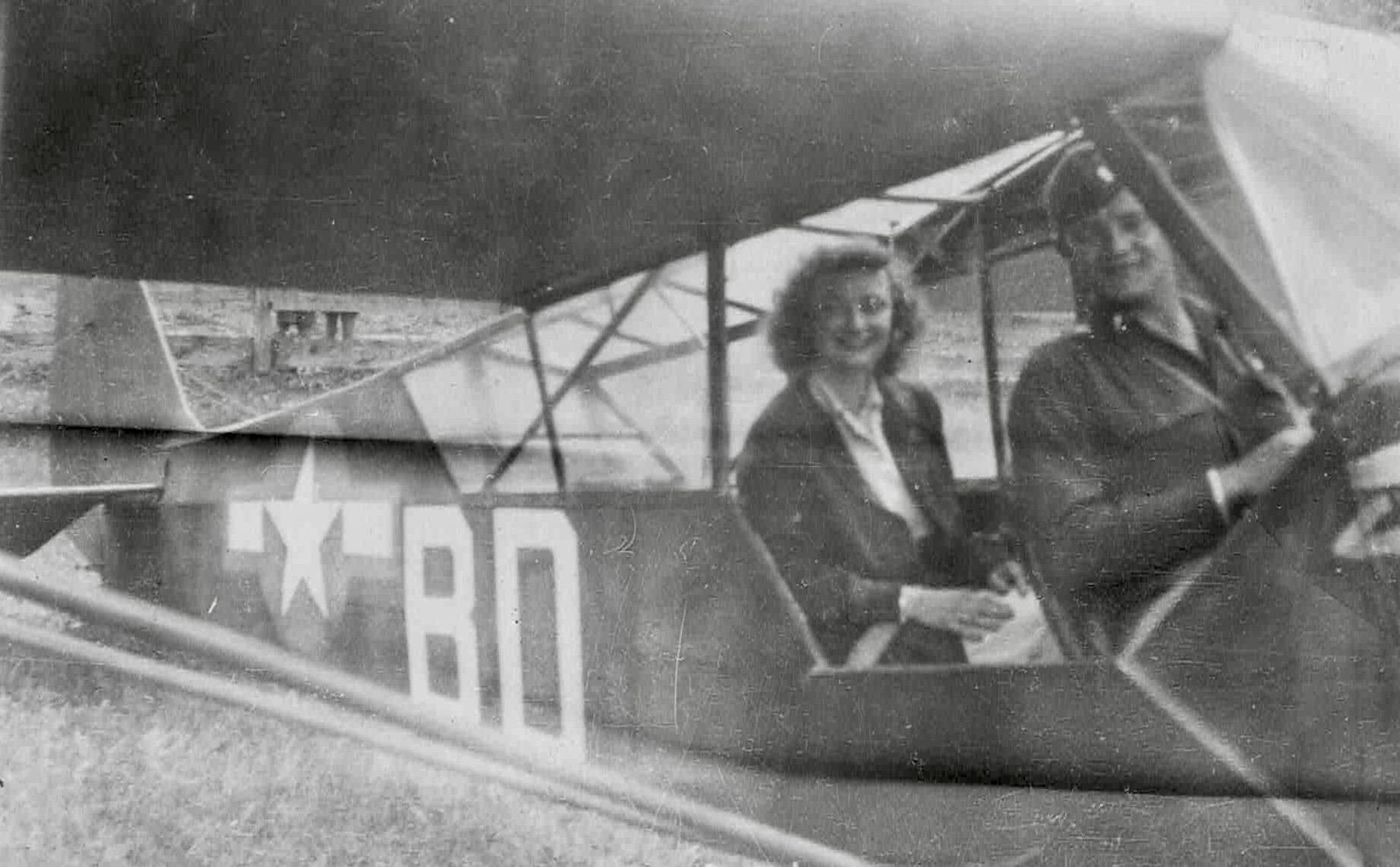
Janet delivering donuts via Cub

Ch. 79: https://mollymartin.blog/2025/12/14/invitations-to-parties/

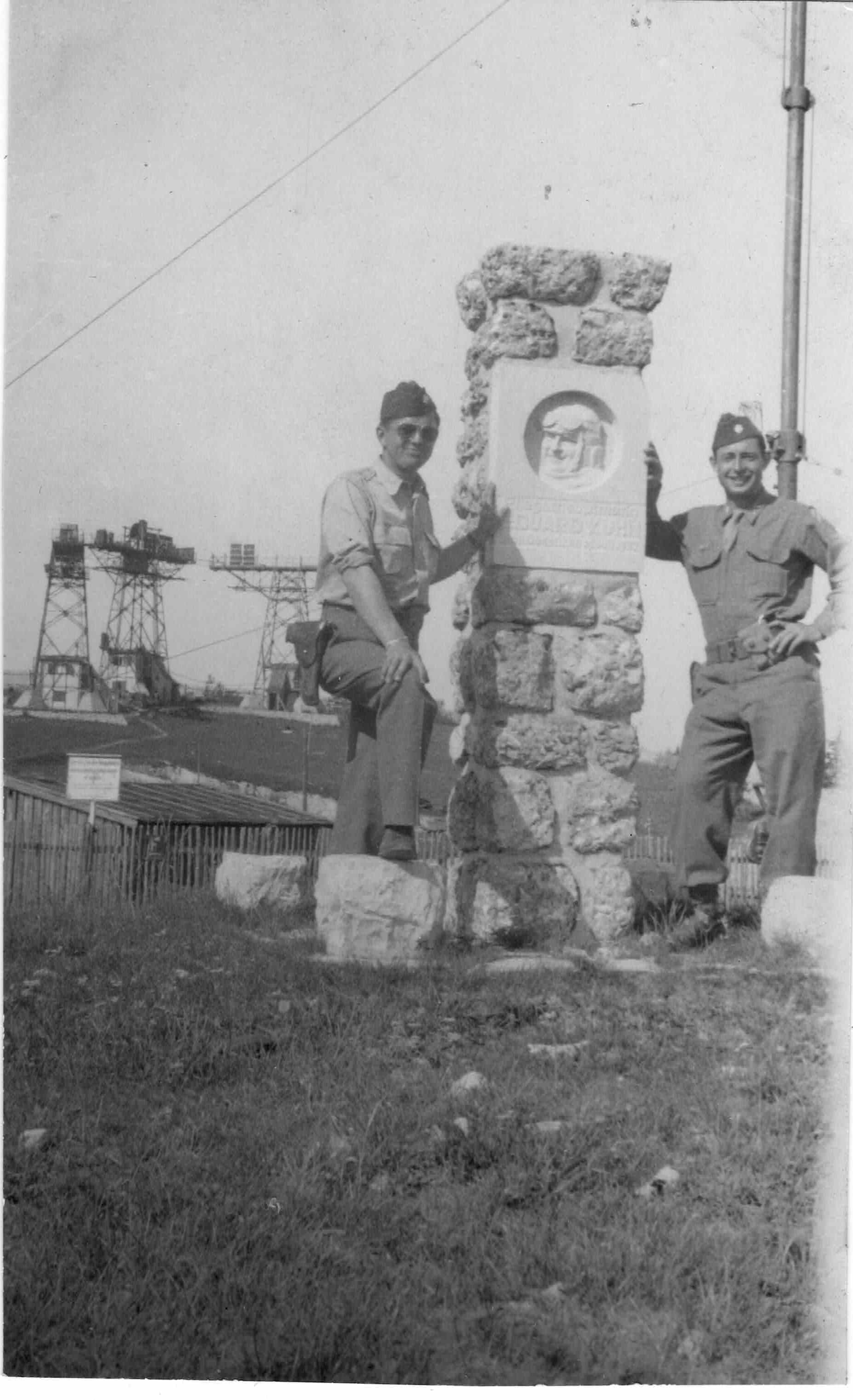
At the Summit of Brenner Pass

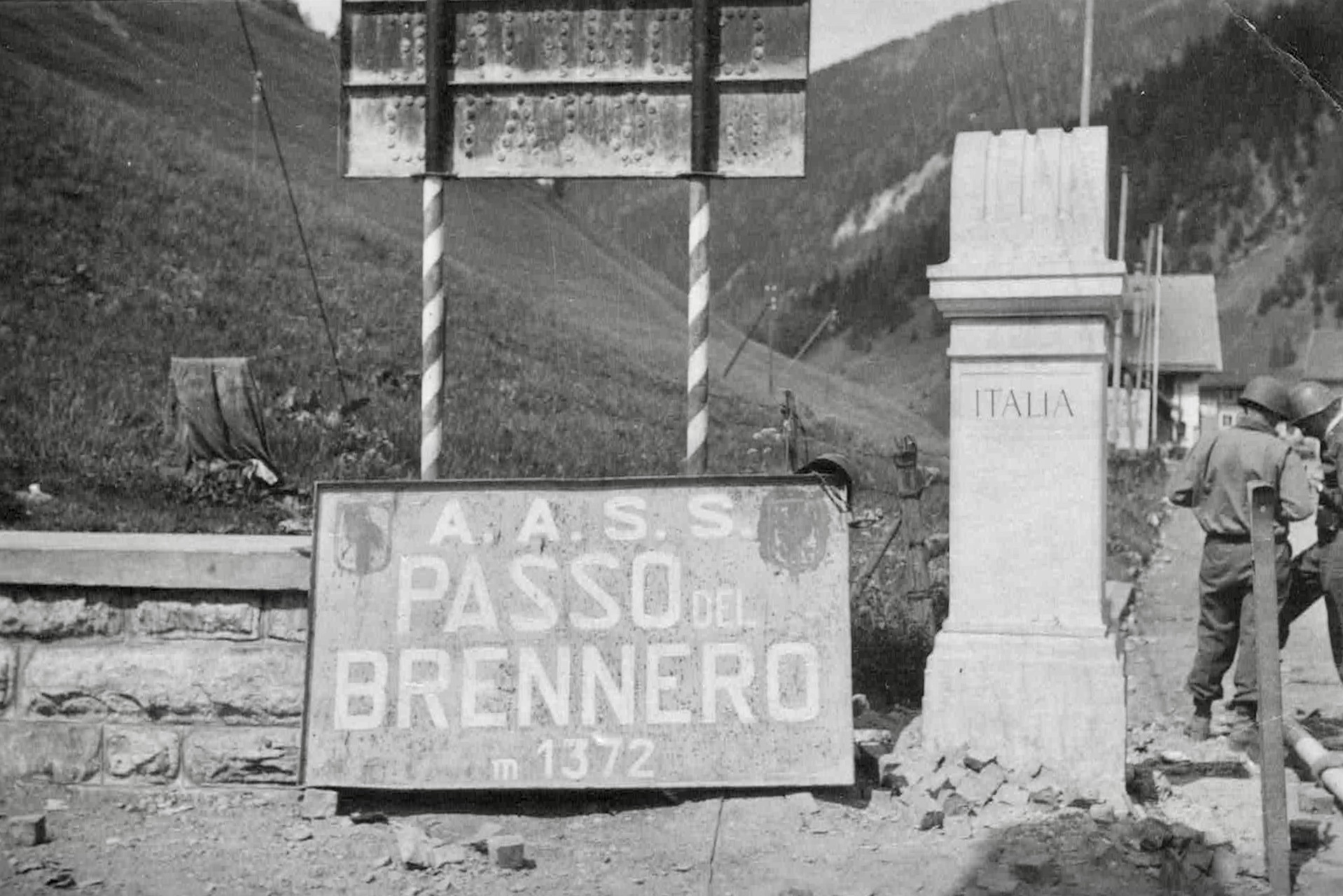
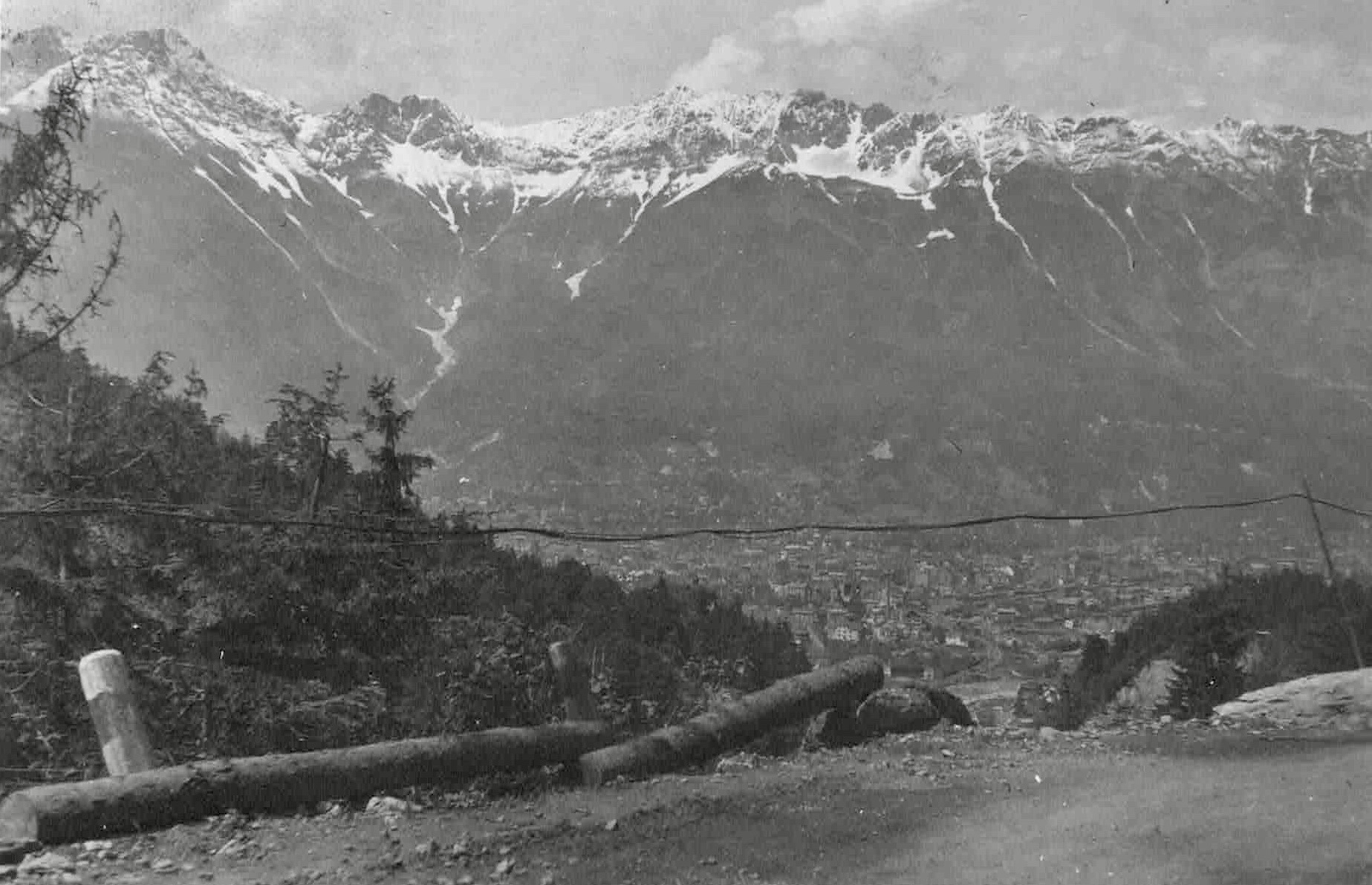
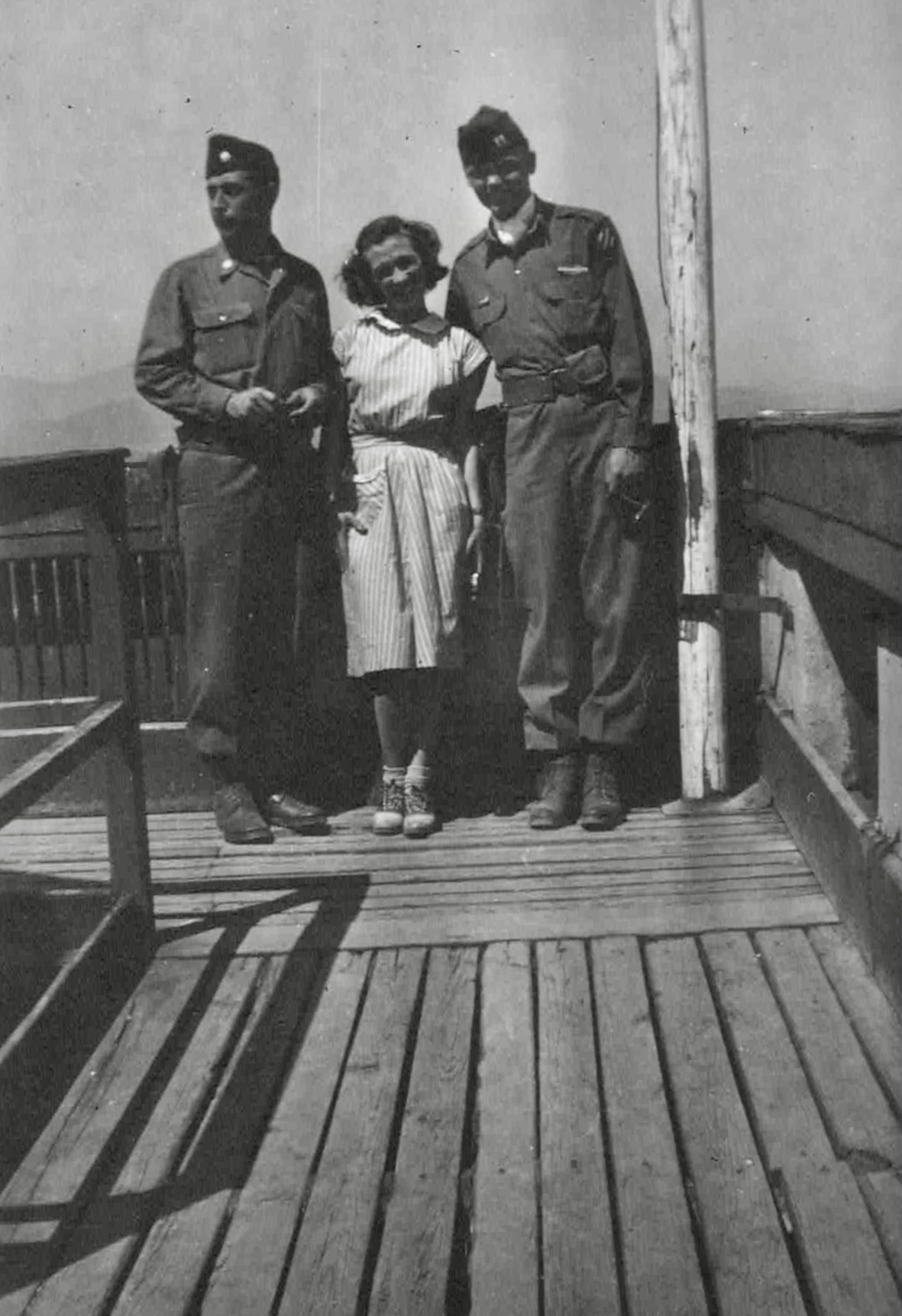
Flo stood at the border and looked across the Alps into Austria

My Mother and Audie Murphy Ch. 77

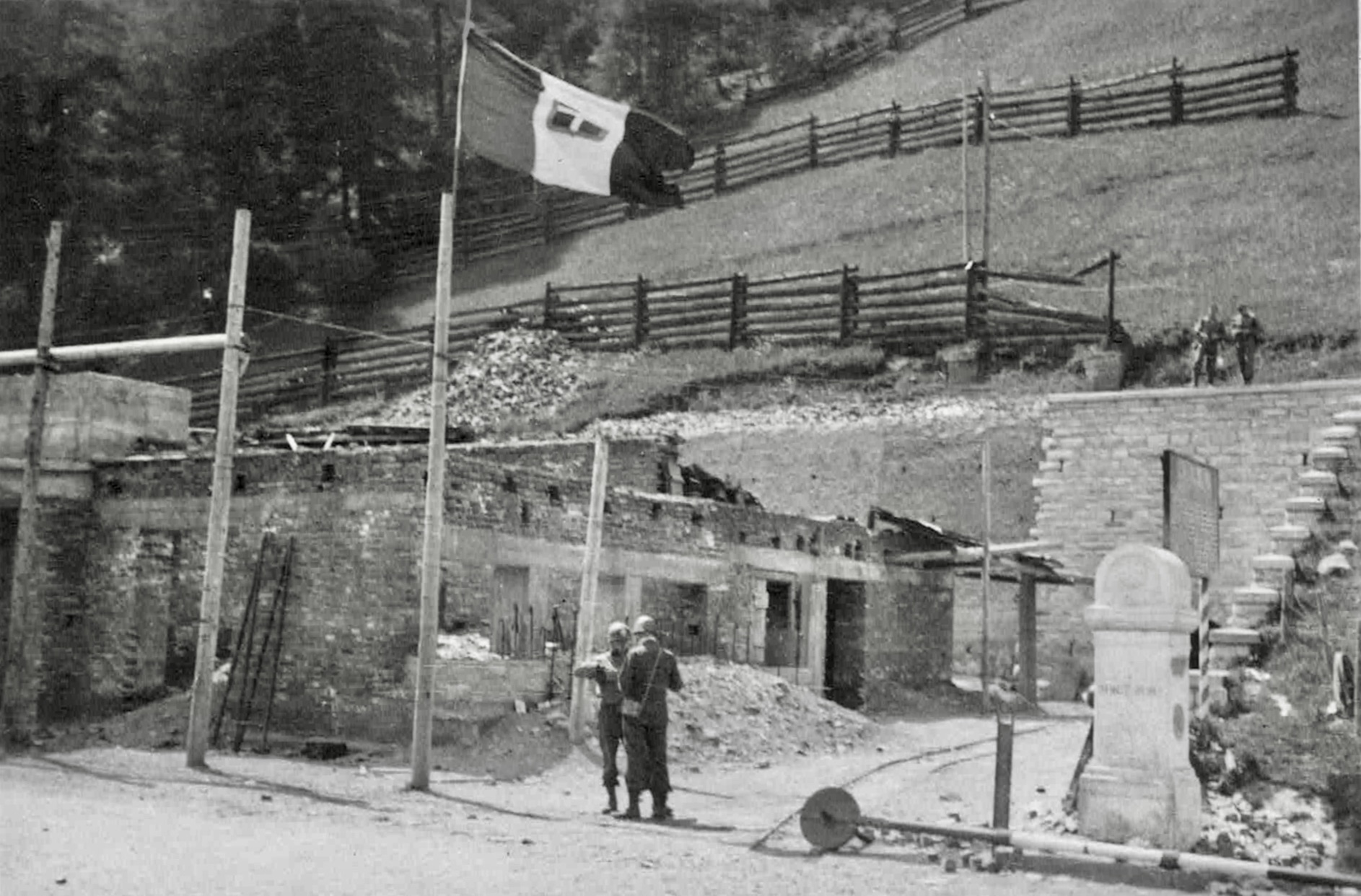
In May, 1945, just after the end of the war, Flo must have been excited to summit the Brenner Pass and see into Austria. Brenner Pass has long been a strategic gateway through the Alps, and its role intensified during World War II. After Germany annexed Austria in March 1938, the pass suddenly lay deep inside Hitler’s expanding Reich. Two years later, on 18 March 1940, Hitler and Mussolini met there to reaffirm their Pact of Steel.

When Italy signed an armistice with the Allies in 1943, Germany moved quickly to seize the pass and push the border with Mussolini’s new puppet regime far to the south. By 1945, American troops occupied the area, and the pass was returned to Italy once the war ended. In the chaotic aftermath, Brenner Pass also became one of the escape routes, part of the “ratlines” used by fleeing Nazi leaders. After the war, the pass once again marked the border between Italy and the newly independent Republic of Austria.

The sign shows the hard road from Salerno to Austria
Seen from the other side
Great views from up there!

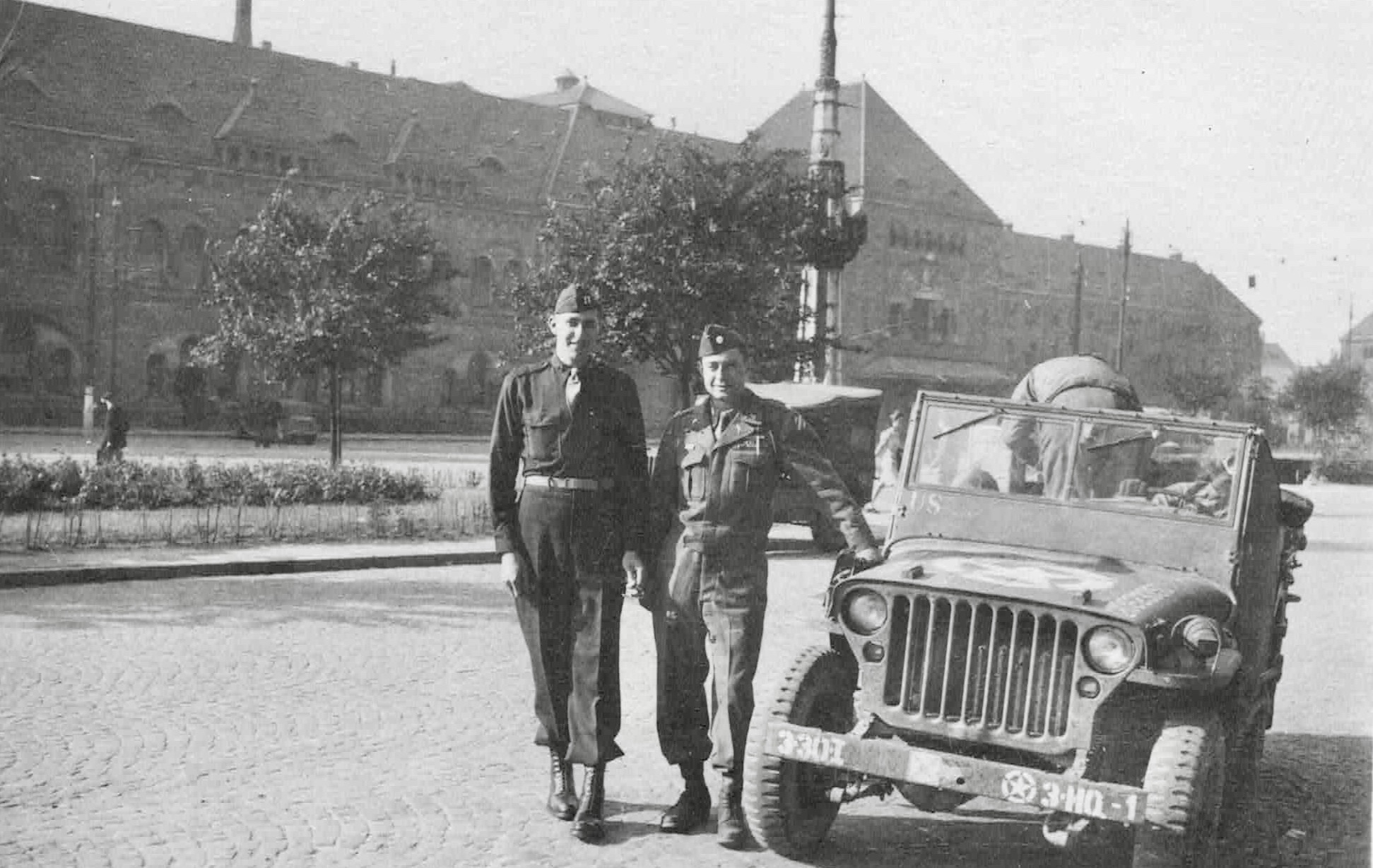
Flo didn’t ID these soldiers

Ch. 78: https://mollymartin.blog/2025/12/12/3rd-division-salzburg-rodeo/

Birthday Party June 25, 1945

Flo Celebrates with Chris Chaney, Janet and Jens

My Mother and Audie Murphy Ch. 76

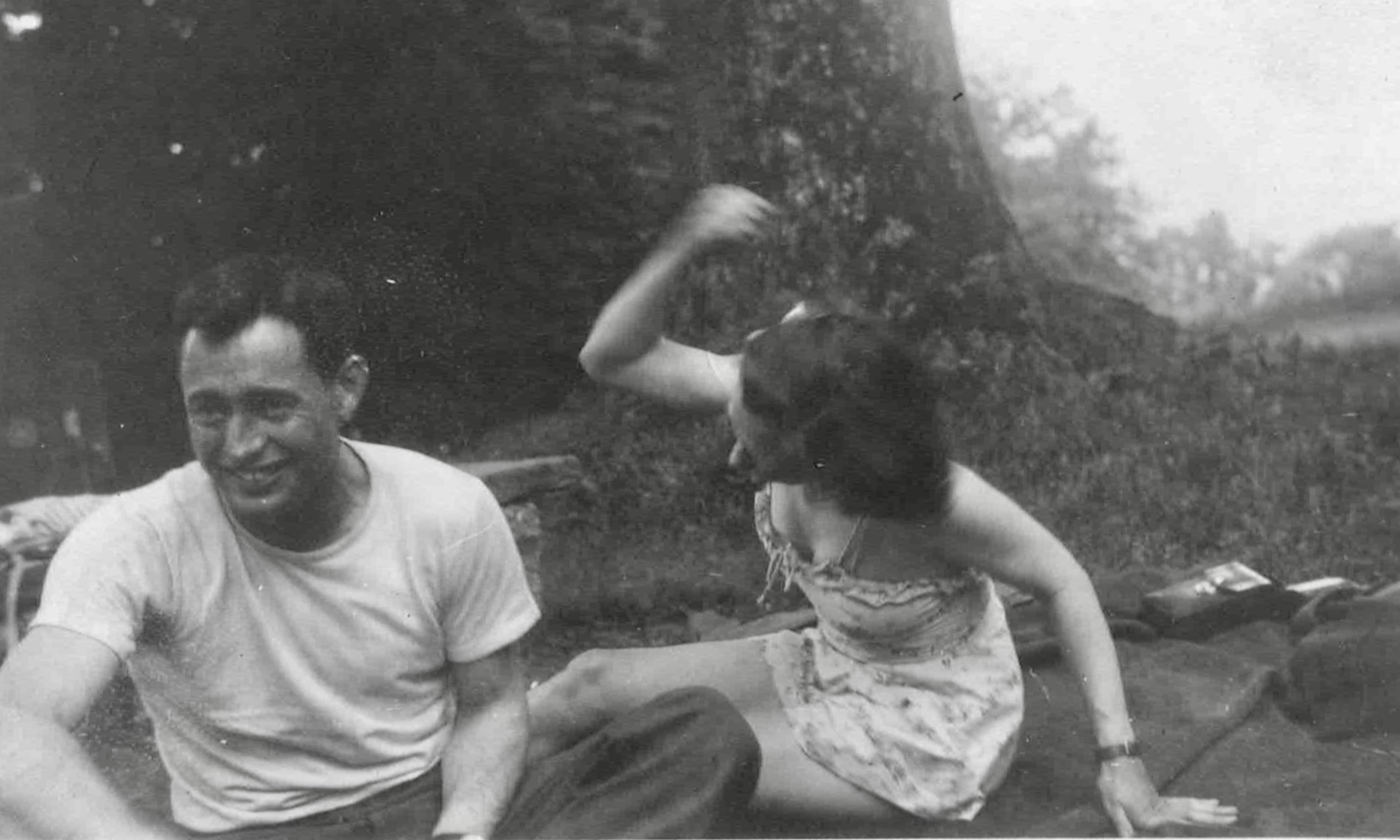
On June 25, 1945, Flo turned thirty-two, and her friends gathered to give her a proper birthday celebration. She spent the day with her clubmobile partner, Janet Potts, along with Janet’s boyfriend, Capt. Lloyd (Jens) Jenson, and Flo’s own boyfriend, Lt. Col. Chris Chaney. All four arrived in uniform as they wandered through the fortress castle that served as headquarters for the 15th Infantry above Salzburg. The women wore their Red Cross-issued dresses; the men their Army greens. They teased one another, snapped photographs in the grand corridors, and convinced Flo to pose in the old stocks for a laugh.

Later, they changed into civilian clothes and headed out for a picnic. Indoors, there was a birthday cake, and they captured more pictures—two couples who looked close, relaxed, and hopeful in the early summer after the war’s end.

These became the last images, and the last mention, of Flo’s relationship with Chris Chaney. The photographs made them seem comfortably paired, and although Janet and Jens eventually married, Flo and Chris did not stay together. She kept no letters from him after the war.

What became of him remained unclear. The two had talked about traveling to Paris and England, plans that never materialized. Most likely, he received an early chance to go home and took it. As a highly decorated officer with a Silver Star, he would have been near the front of the line for repatriation. Flo’s life moved forward, and whatever they had envisioned together faded with the summer.

Flo posing in the ancient stocks
Flo on her 32nd birthday
Janet and Jens at the picnic
What did Chris do to deserve this?
Or this?
Celebrating war’s end
Third Infantry Division buddies
Happy Birthday Flo
There was even a birthday cake

Ch. 77: https://mollymartin.blog/2025/12/12/3rd-division-salzburg-rodeo/

Occupied Salzburg–Summer 1945

Denazification and Cultural Revival

My Mother and Audie Murphy Ch. 75

More than 33,000 people in the province of Salzburg, including almost 13,000 in the provincial capital, had to register as former members of the NSDAP (National Socialist German Workers’ Party) or one of its organizations after the fall of the Nazi regime. Through the process known as denazification, the Austrian state sought to hold these people accountable and punish them, sometimes severely. However, the vast majority of those registered were considered denazified by the end of 1947 and escaped punishment. The US occupation authorities interned high-ranking functionaries of the Nazi system in Camp Marcus W. Orr, commonly known as Lager Glasenbach.

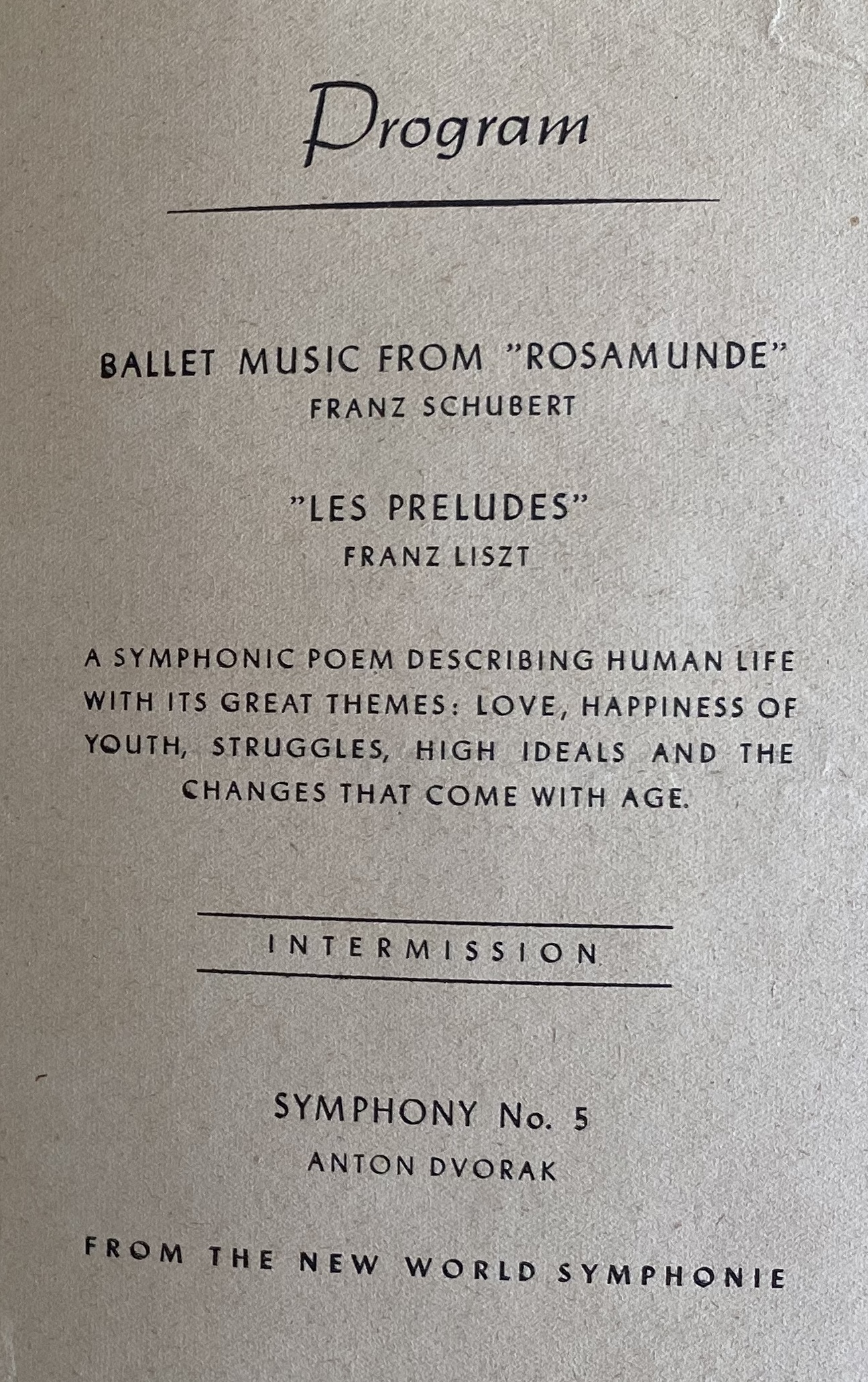
Flo and her cohort got to hear the Salzburg Festival Orchestra in concert

The denazification of Salzburg‘s cultural and art scene was one of the main concerns of US occupation policy. This also included the removal of over 2,000 books with National Socialist content from the holdings of the municipal library in Schloss Mirabell, which was able to resume its post-war service at the beginning of June 1945. Civilians were once again able to watch films in the cinema from July 1945. In the same month, the first public concert after the end of the war took place in the Great Hall of the Mozarteum and in September 1945. A performance was shown for the first time in the Salzburg State Theatre, which had been requisitioned by US forces.

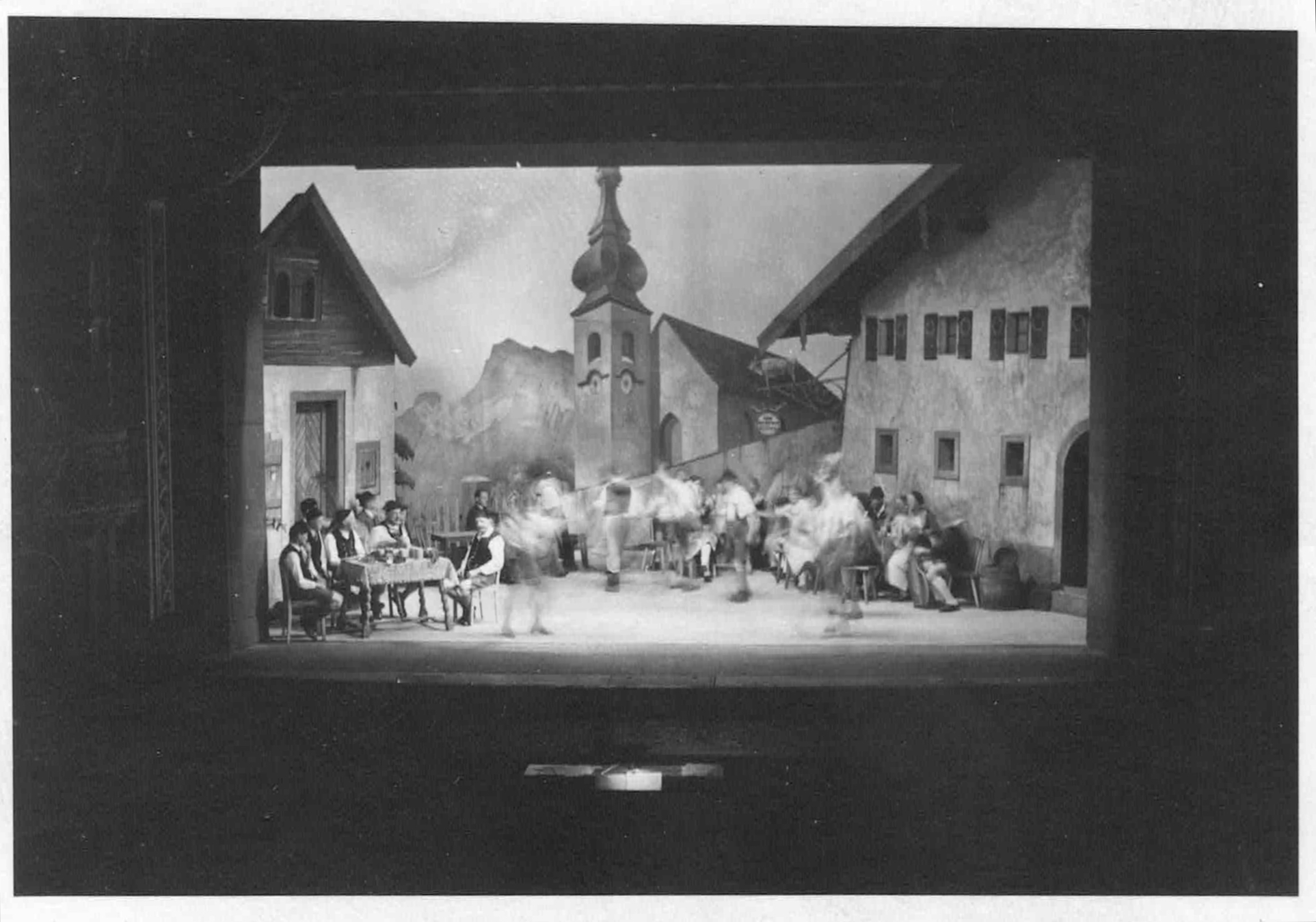
Bavarian dancers at the Salzburg Theater. Photos: Flo Wick
Flo got to know Margot Hielscher, a famous German actress. Here she is performing at the Salzburg Theater.

Margot Hielscher (1919-2017) was a German singer and film actress. She appeared in over fifty films between 1939 and 1994. She was chosen to represent Germany at the Eurovision Song Contest in 1957 and 1958.

Salzburg Festival

The US occupation authorities saw the Salzburg Festival as a central element in the reconstruction of Austrian identity. They lobbied hard to ensure that the Festival could take place again just a few months after the end of the war, although a large number of artists with Nazi backgrounds were not allowed to perform. Works by Austrian authors and composers dominated the program of the Festival, which began on August 12, 1945 with an opening evening featuring pieces by Wolfgang Amadeus Mozart, Johann Strauss, and Franz Lehár. Concerts were performed until September 1, including six ‘Österreichische Abende’ (‘Austrian evenings’) and two concerts of religious music. (From STADT-SALZBURG.AT The City of Salzburg in 1945.)

In and Around Salzburg

Clubmobilers serving the 15th Infantry in the Bavarian Alps
15th Infantry anti-tank company

Ch. 76: https://mollymartin.blog/2025/12/04/birthday-party-june-25-1945/

Trip to Brussels and Cologne

Flo and Janet Get Leave

My Mother and Audie Murphy Ch. 74

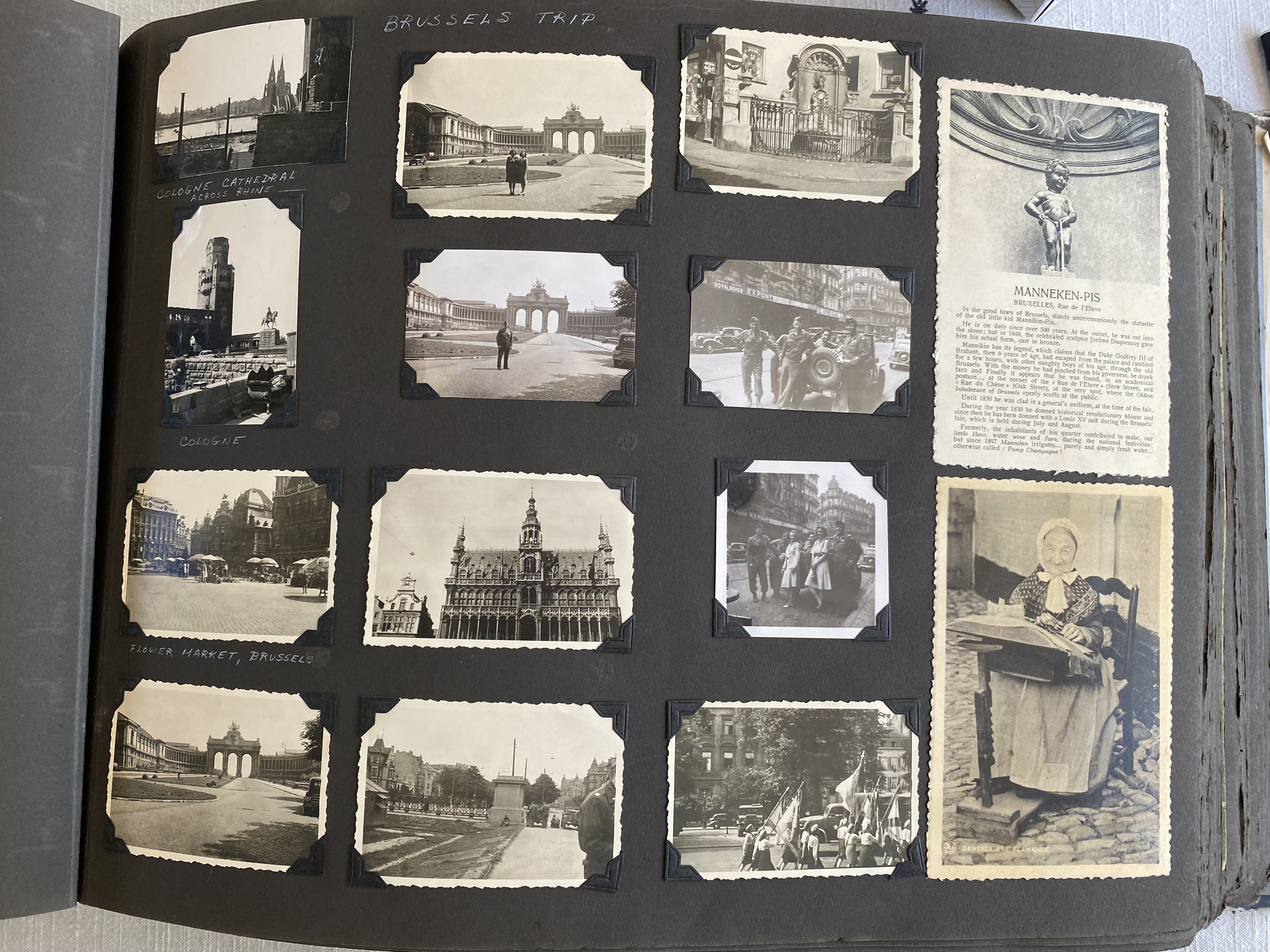
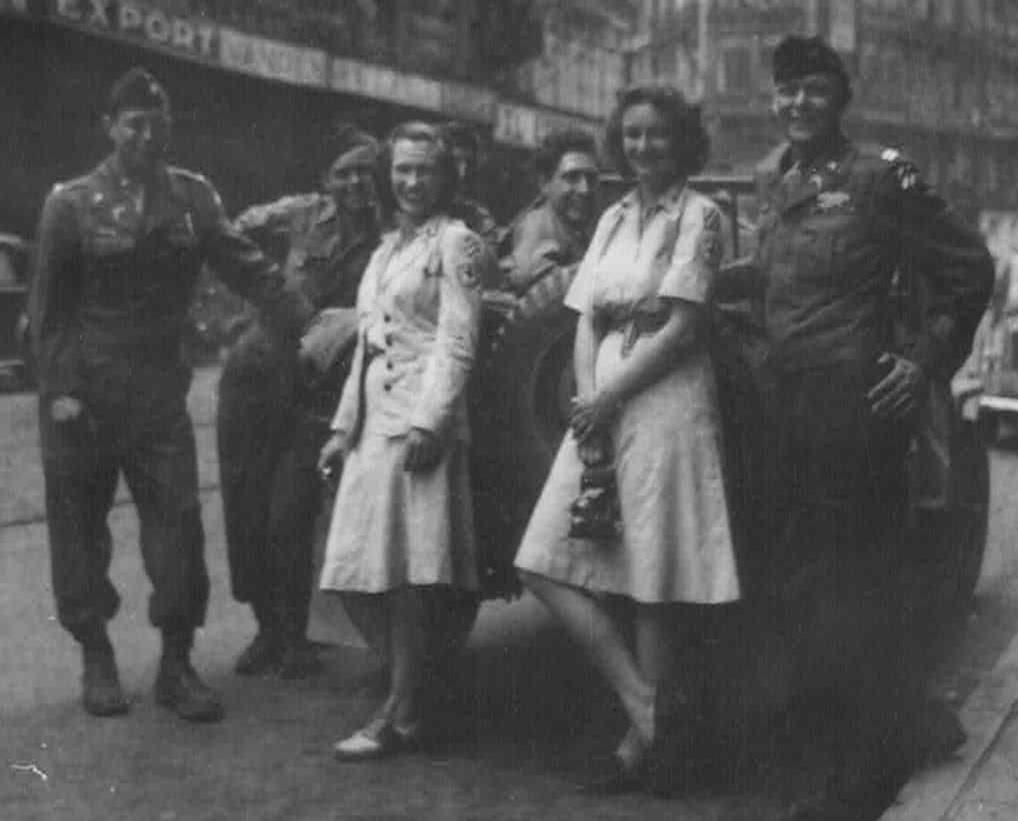
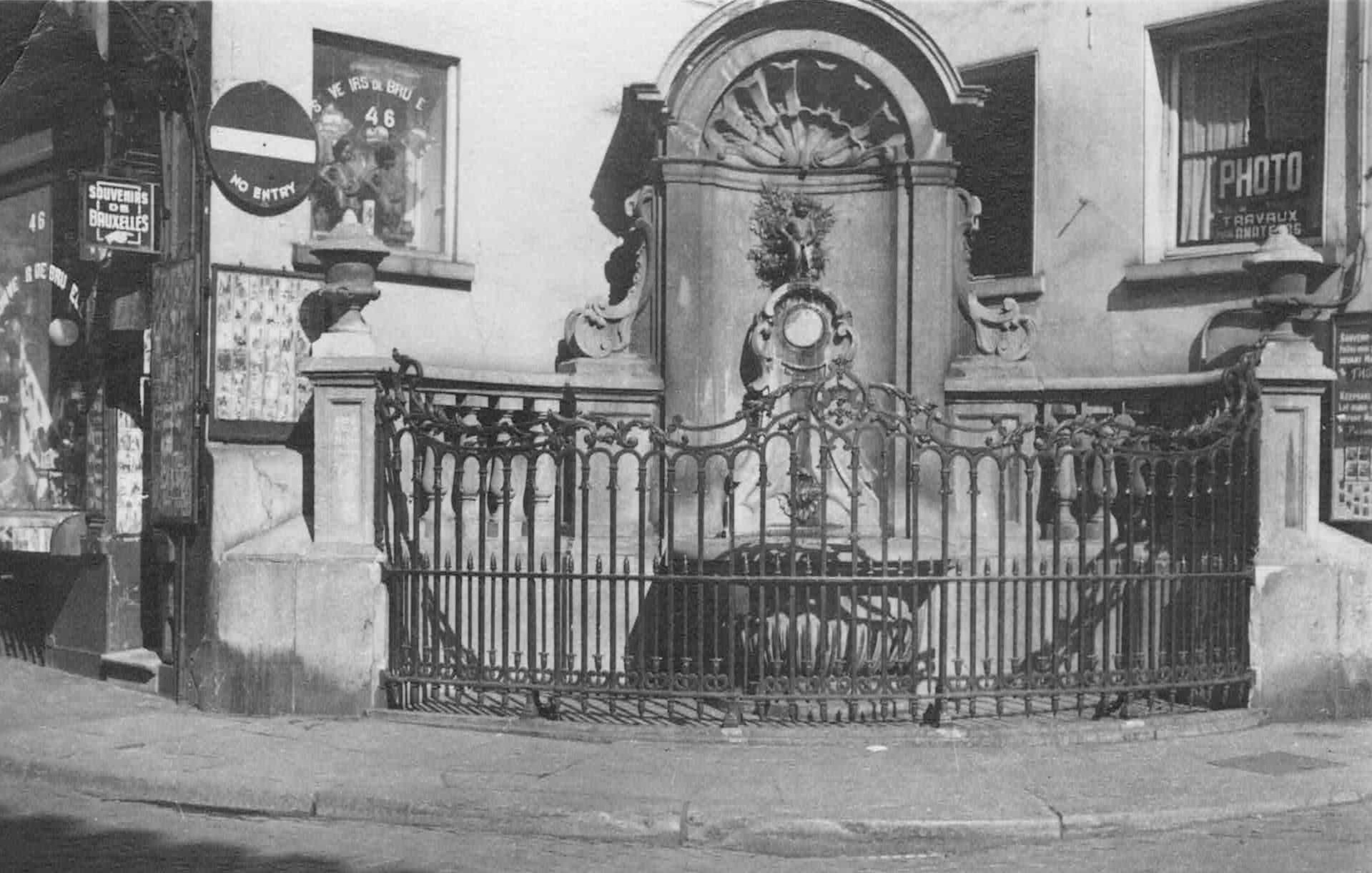
Flo and Janet got leave to travel to Brussels probably in June, 1945. In her inscriptions on this page in her album, Flo doesn’t indicate how they travelled the 450 miles from Salzburg, stopping in Cologne, nor whether they went with the soldiers in these pictures. 

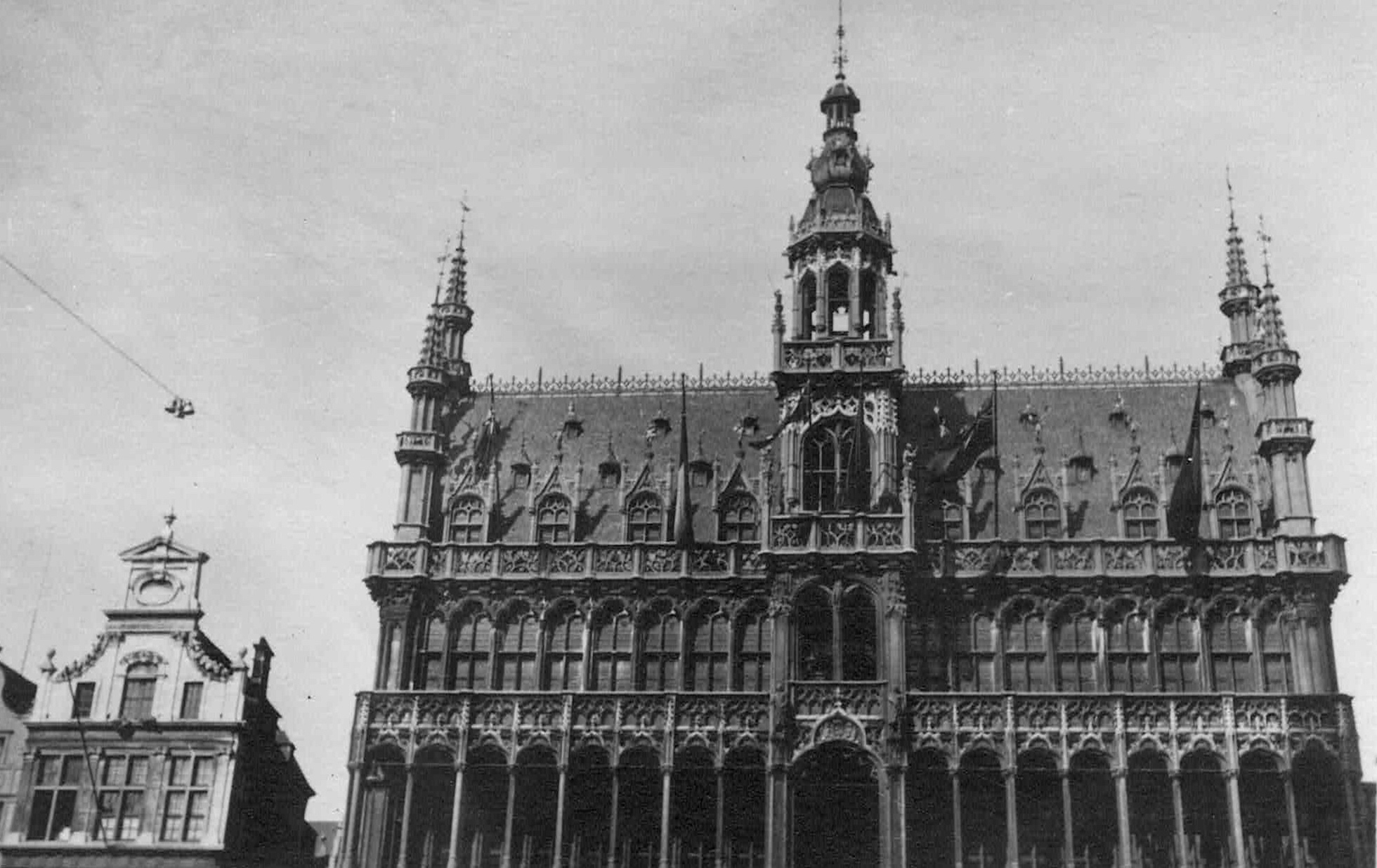
The War in Brussels

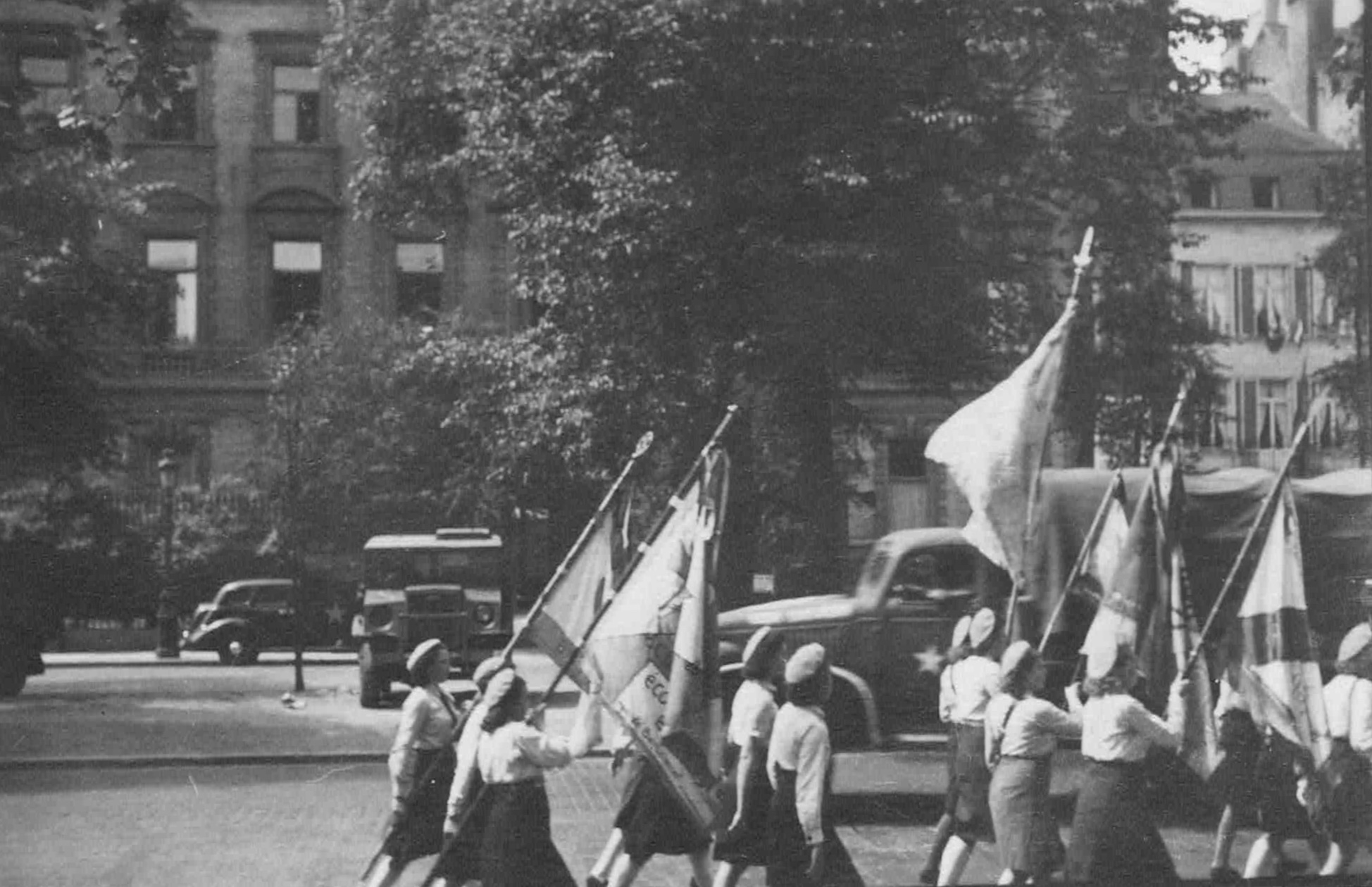
Belgium had been under German occupation since 1940, but Brussels was freed in early September 1944. The city of nearly a million people did not expect liberation to come so quickly, and enormous crowds poured into the streets, slowing the Allied advance as they welcomed their liberators. At the same time, Belgian railway workers and the resistance foiled a German attempt to deport 1,600 political prisoners and Allied POWs to concentration camps on the so-called “ghost train.”

The city escaped the widespread destruction seen elsewhere in Europe; it was not subjected to systematic or heavy bombing. The rest of the country was liberated by February 1945.

Flo and Janet in Brussels with the boys
Flower market in Brussels

Cologne Cathedral Survived

When American troops entered Cologne on March 6, 1945, the Cologne cathedral was one of the few major structures still standing. The Gothic landmark became the backdrop to a famous tank battle as U.S. forces took the western part of the city and the Germans withdrew across the Rhine, holding the eastern bank for another month.

Remarkably, the cathedral survived both the battle and years of Allied bombing. Construction began in 1298, but the cathedral wasn’t finished until 1880. Just sixty years later, Cologne was hit by the first of 262 RAF air raids. Nearly a quarter of the city’s 770,000 residents fled after that initial attack, and the population continued to drain away until only about 20,000 remained by the final raid on March 2, 1945.

The cathedral’s twin spires even served as a navigational point for Allied bombers. Though struck 14 times and heavily damaged, the great structure endured, towering over the ruins of the city.

Cologne cathedral across the Rhine
Cologne. Photos: Flo Wick

Ch. 75: https://mollymartin.blog/2025/12/01/occupied-salzburg-summer-1945/