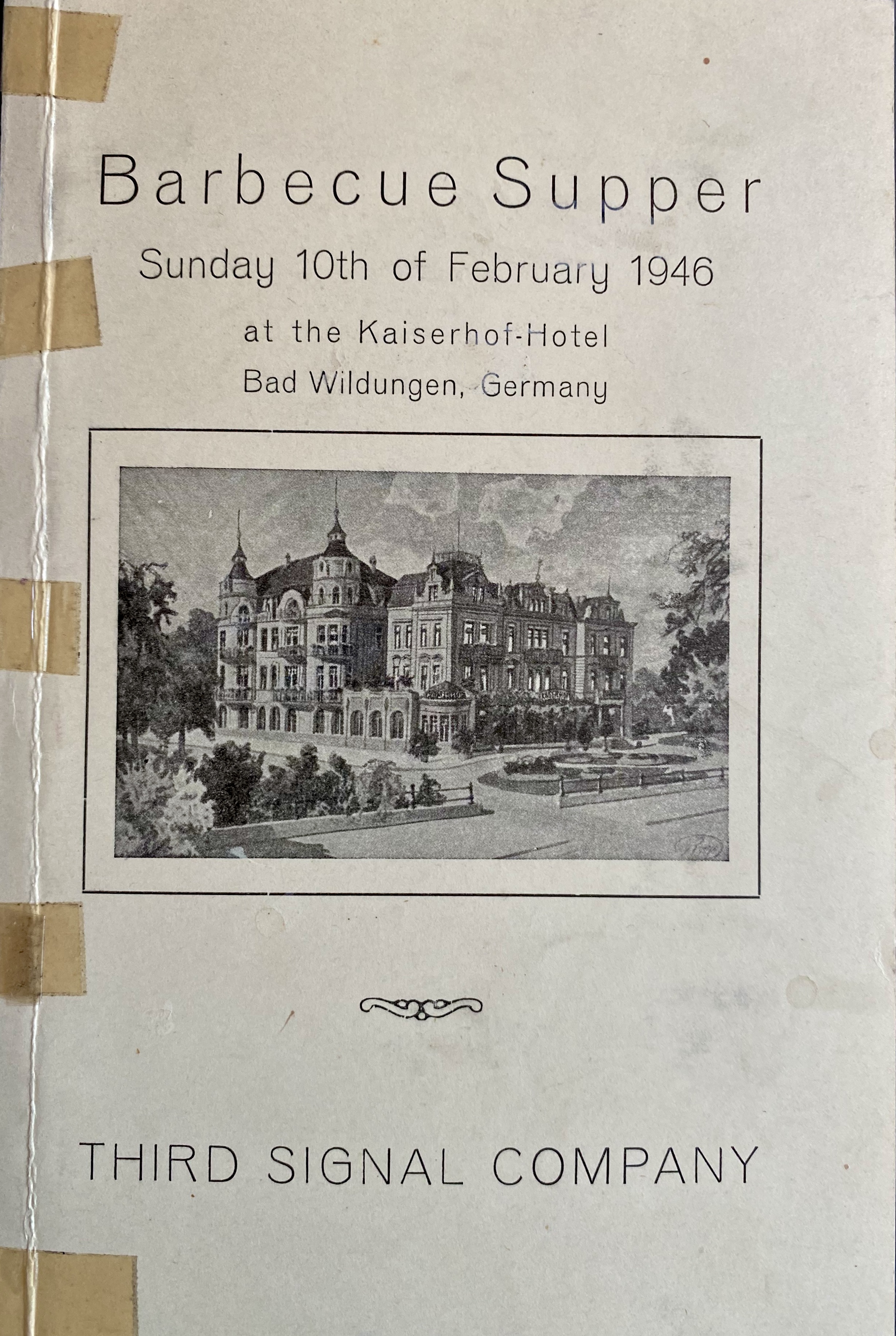
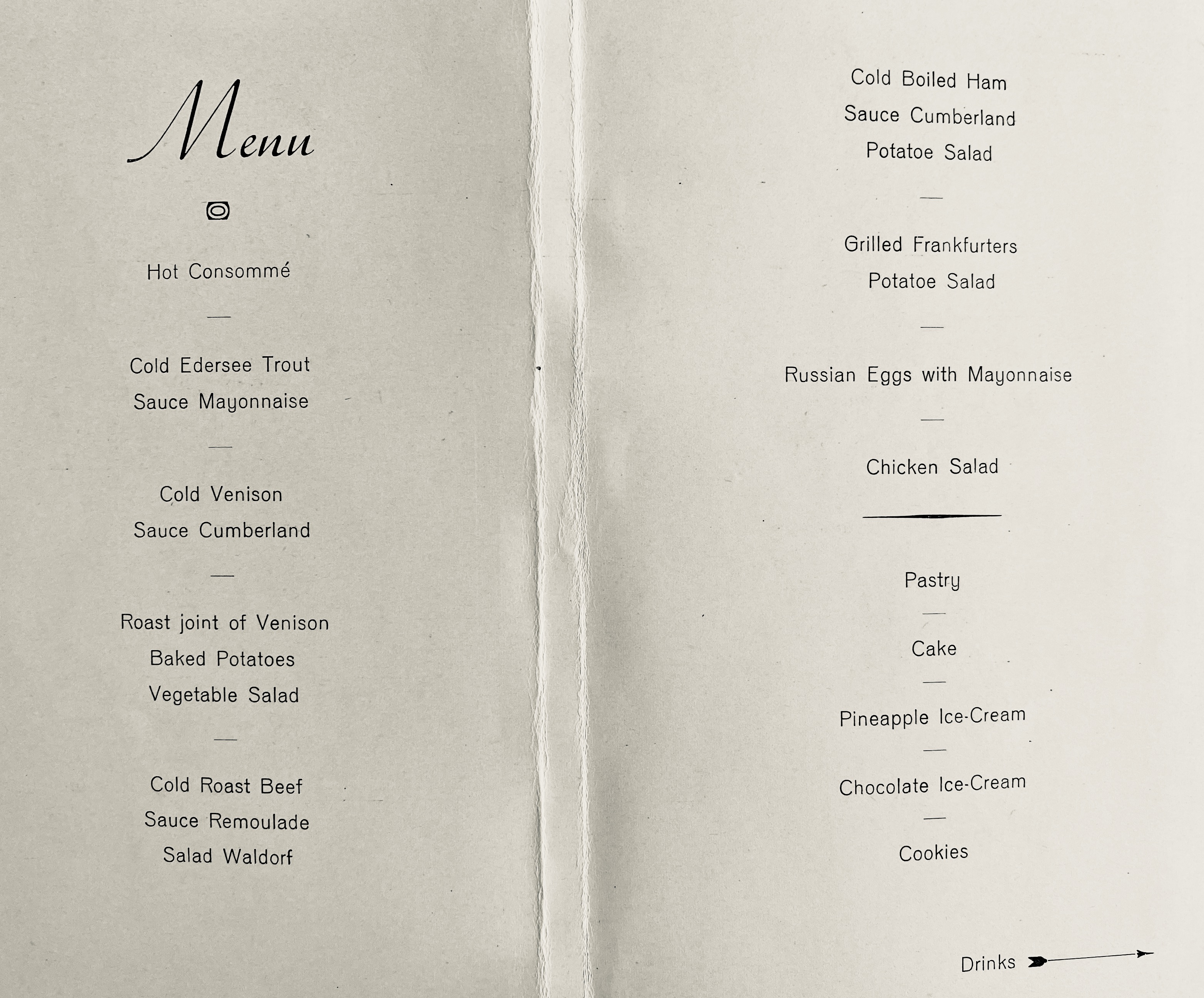
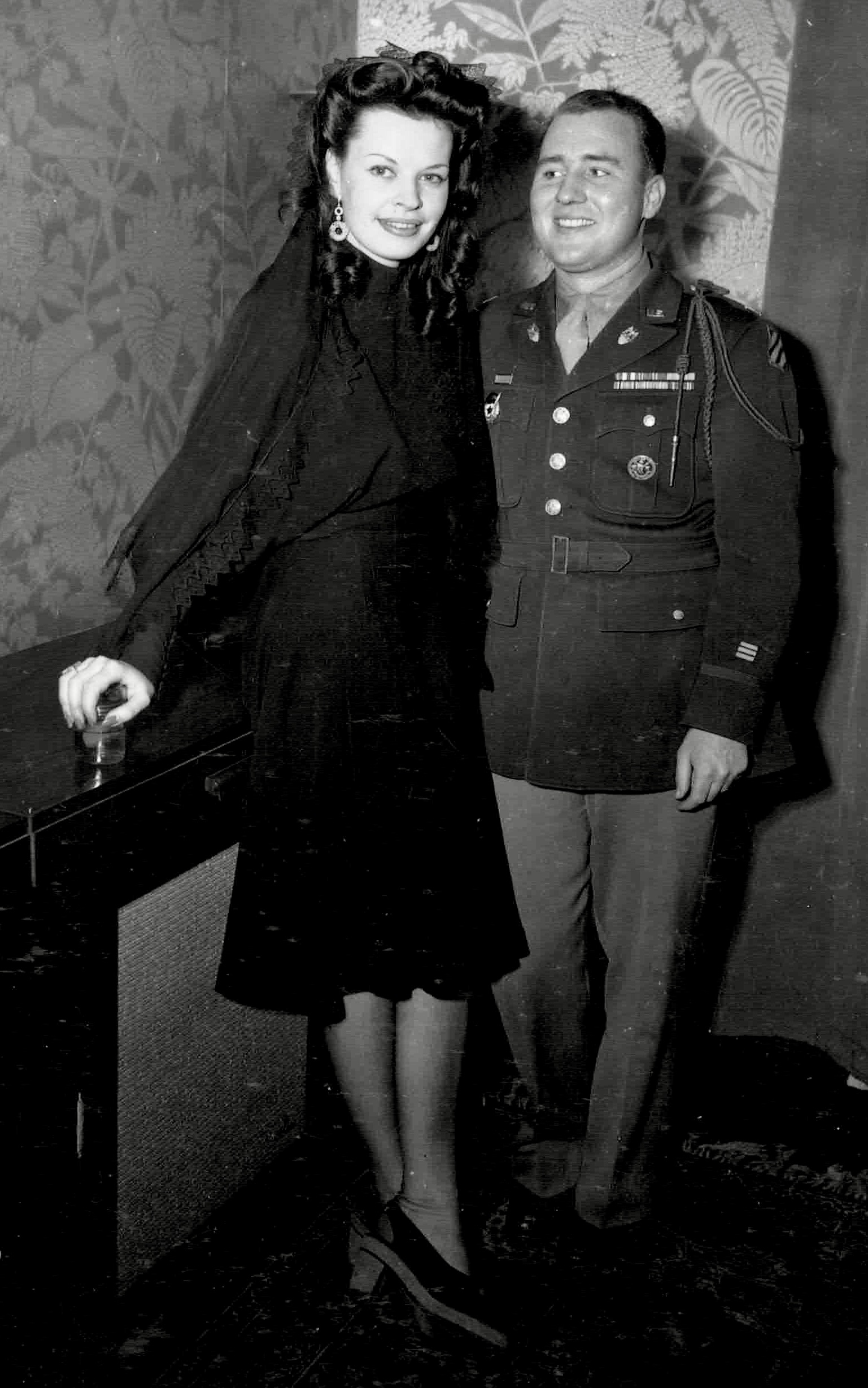
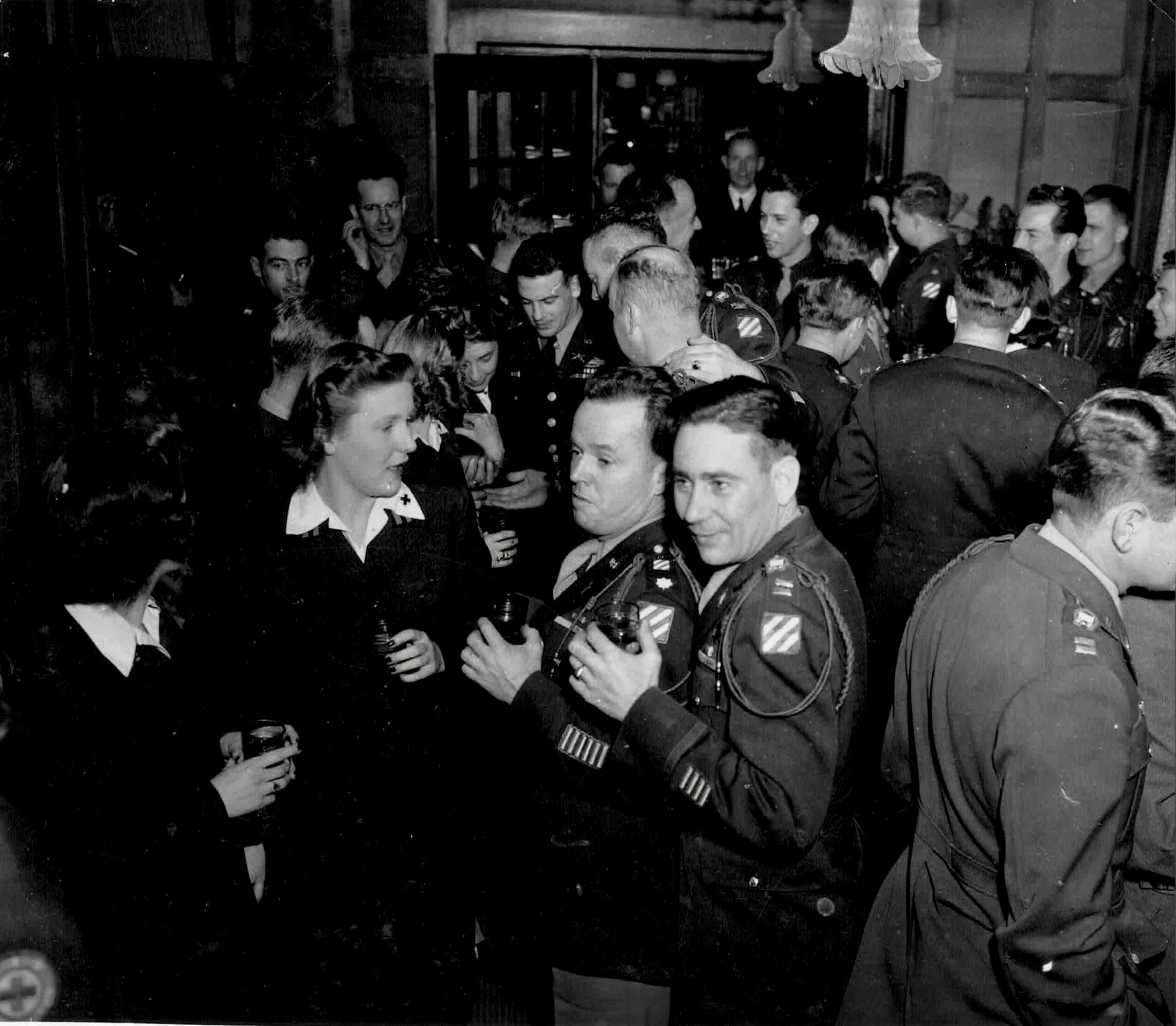
Flo and her comrades got together for an indoor BBQ supper in February probably in an effort to recreate an American picnic. It was sponsored by the Third Signal Company, the photographers attached to the Third Infantry Division who joined the division at Anzio. Their photographs are posted at dogfacesoldier.org.
Cotton Balers. The 7th US Infantry Regiment is one of the five oldest continuously serving regiments in the U.S. Army, initially organized in July 1798. The regiment earned its nickname, “The Cottonbalers”, from its use of cotton bales as defensive works during the 1815 Battle of New Orleans. The regiment deployed early on in 1942’s assault on Morocco. They went on to serve across North Africa into Sicily and Italy, up through France, and then participating in the capture of Berchtesgaden.
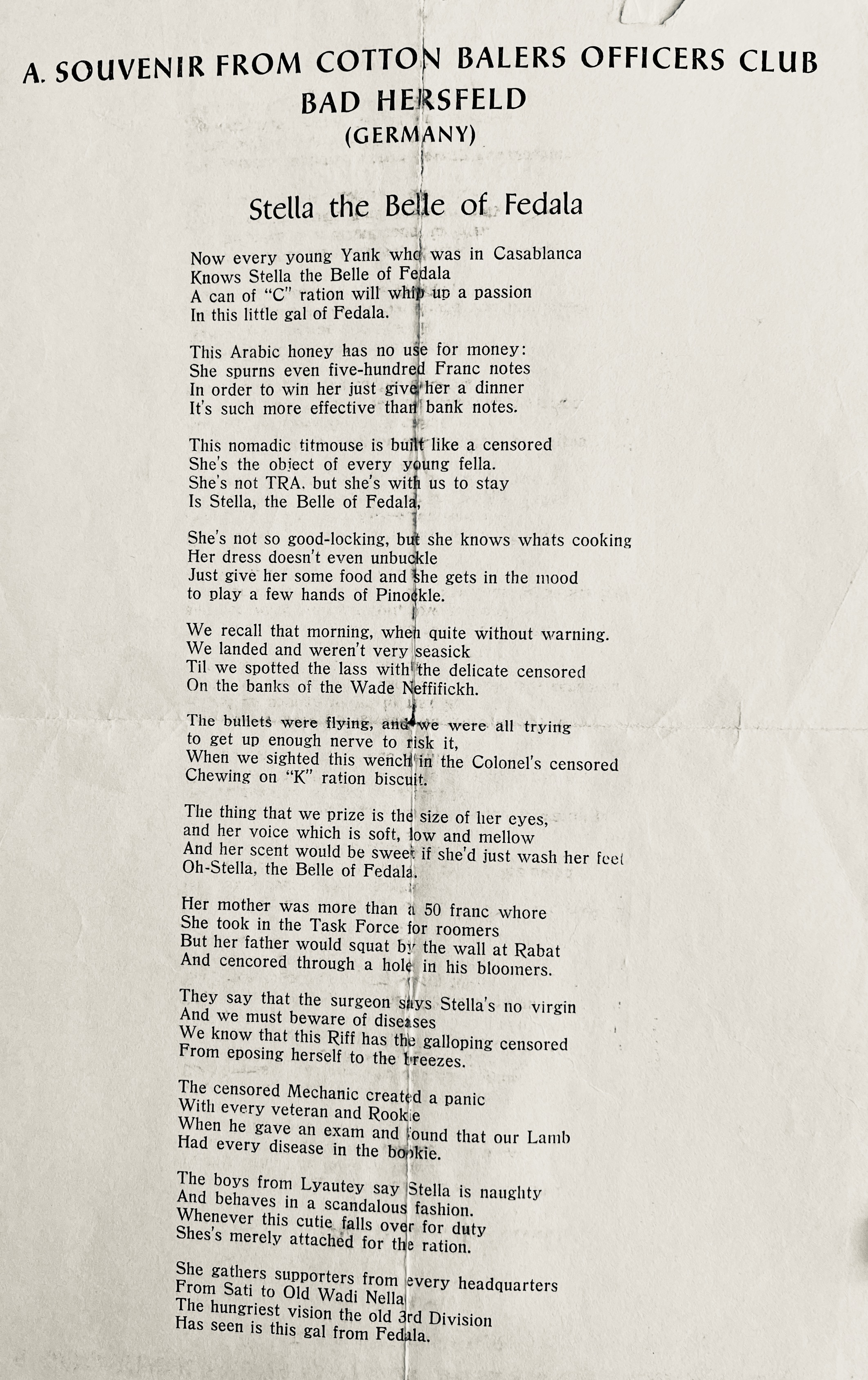
Stella the Belle of Fidella is a song sung by soldiers who joined the war in Casablanca. Stella, it turns out, was just starving.
“This Arabic honey has no use for money: She spurns even five hundred Franc notes In order to win her just give her a dinner It’s much more effective than bank notes”
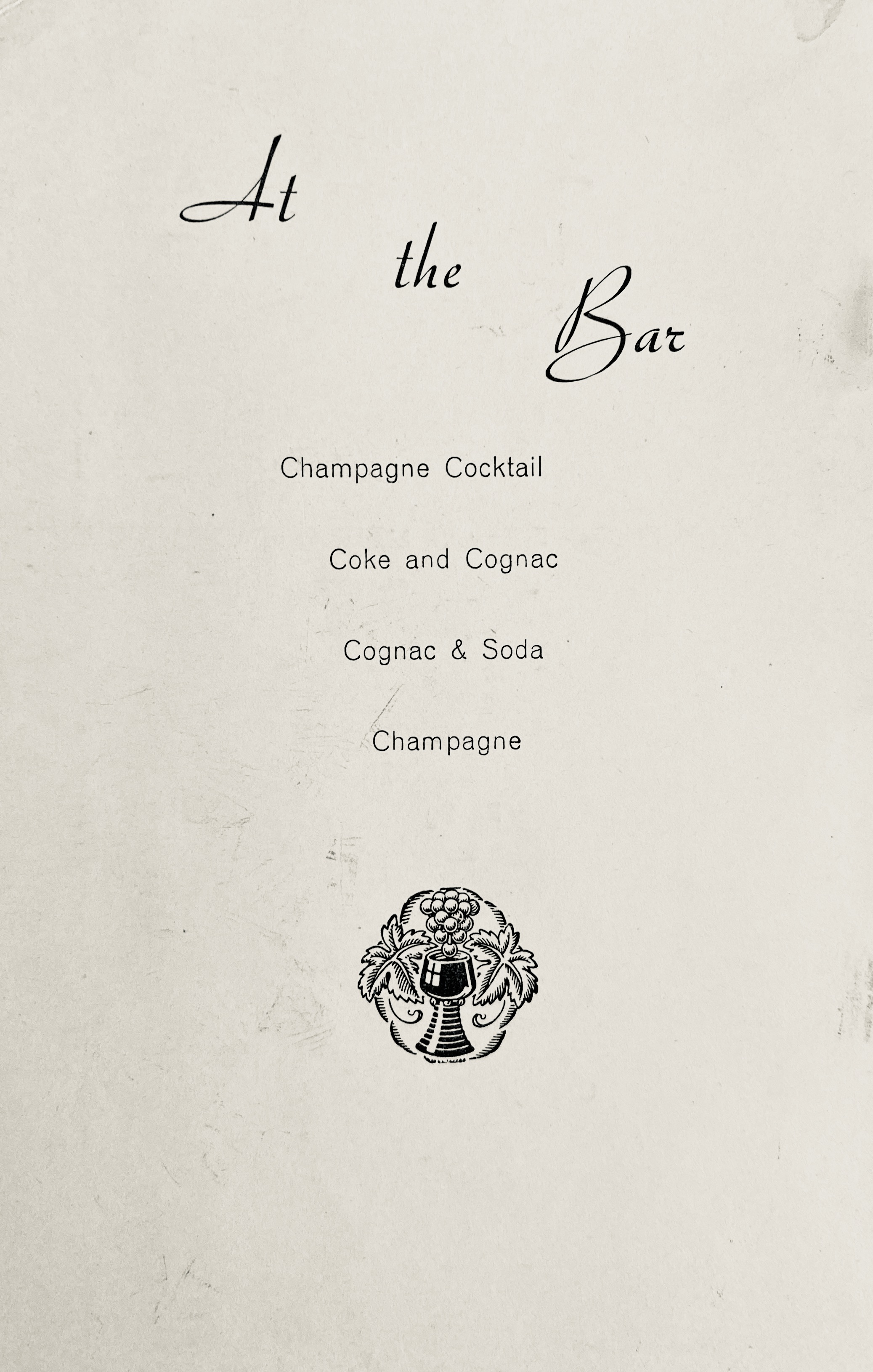
Still no wine
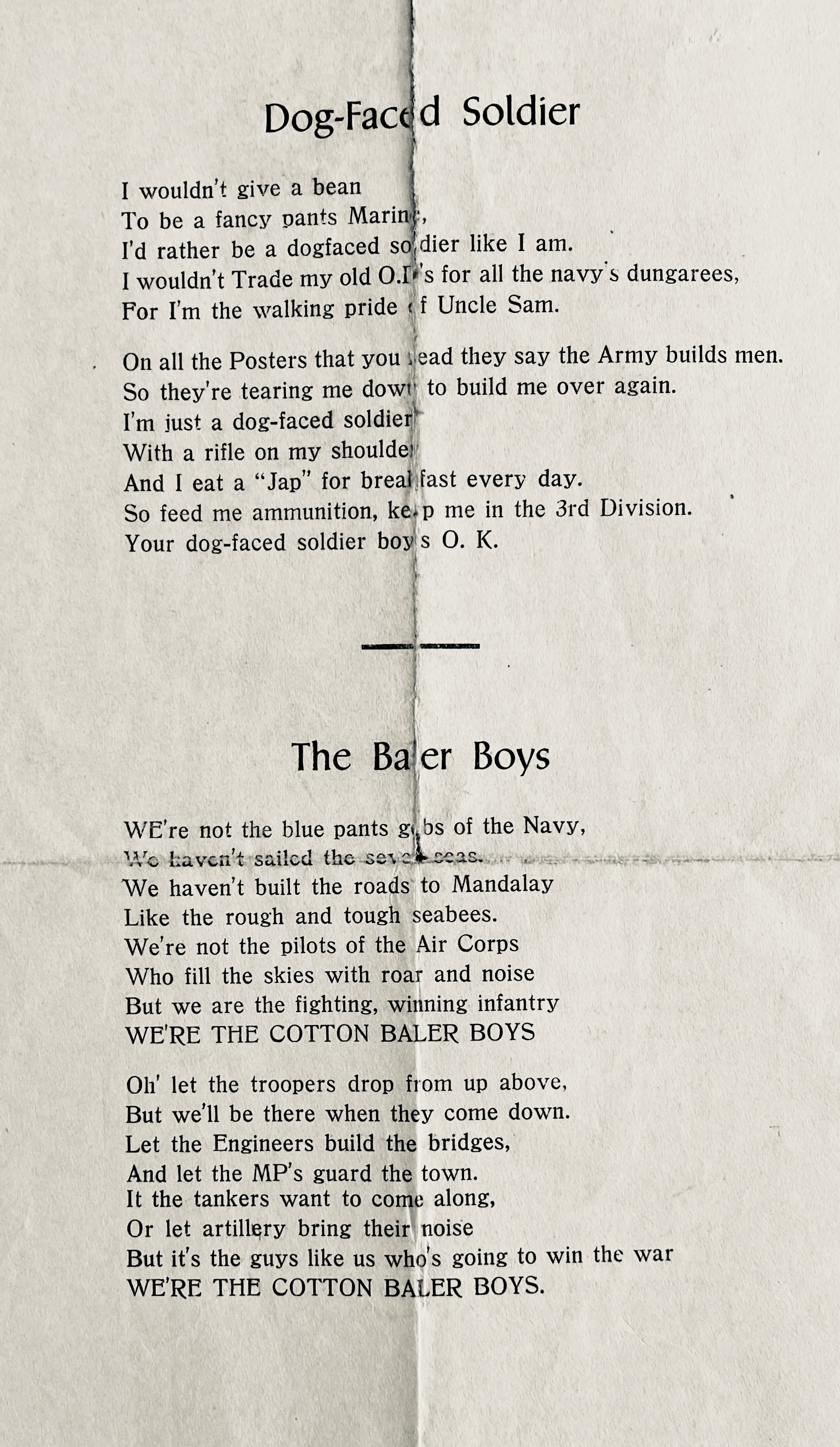
Dog-faced soldier is the official song of the Third Infantry Division. In this version the word “Jap” replaces the word “Kraut.”
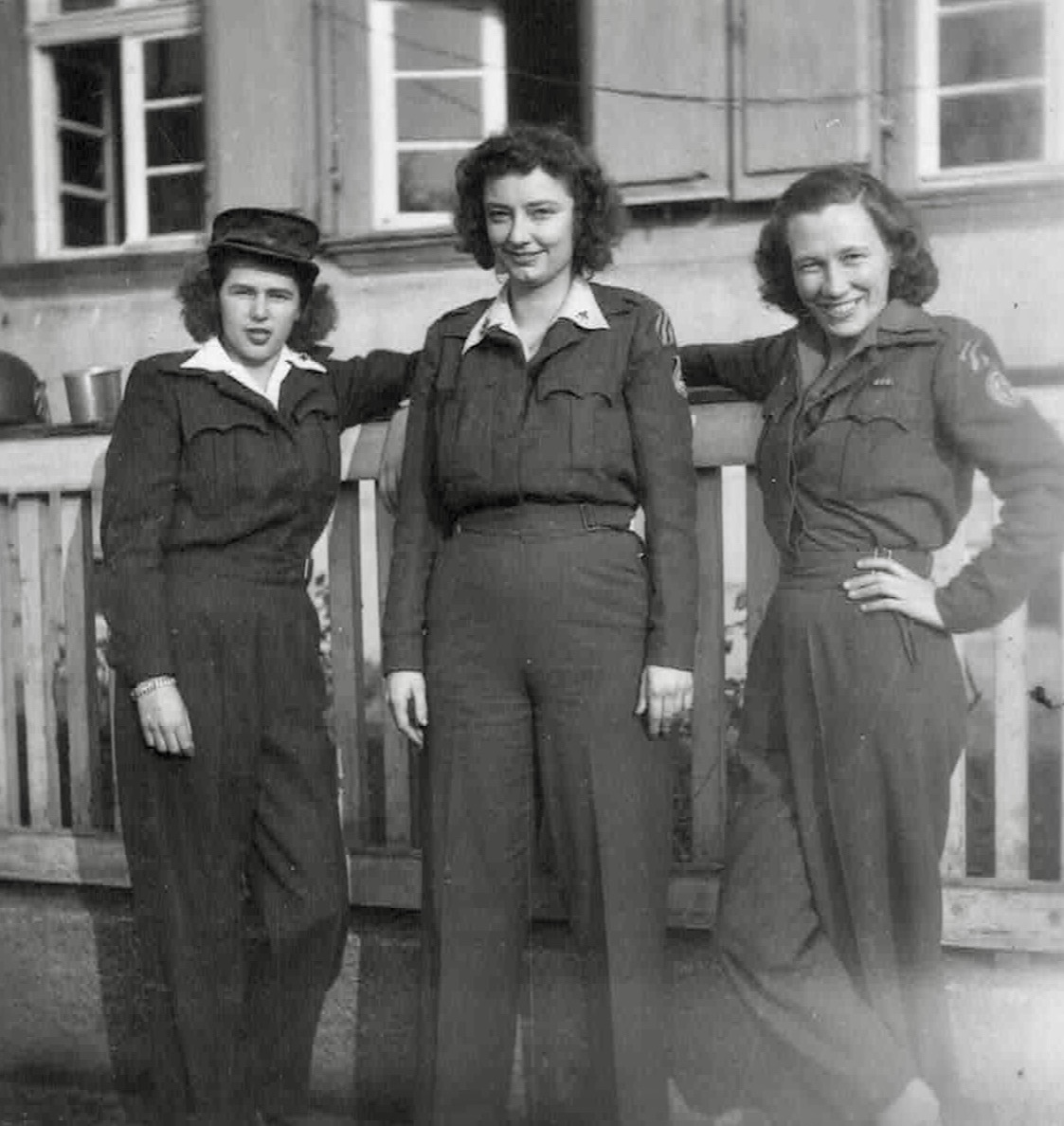
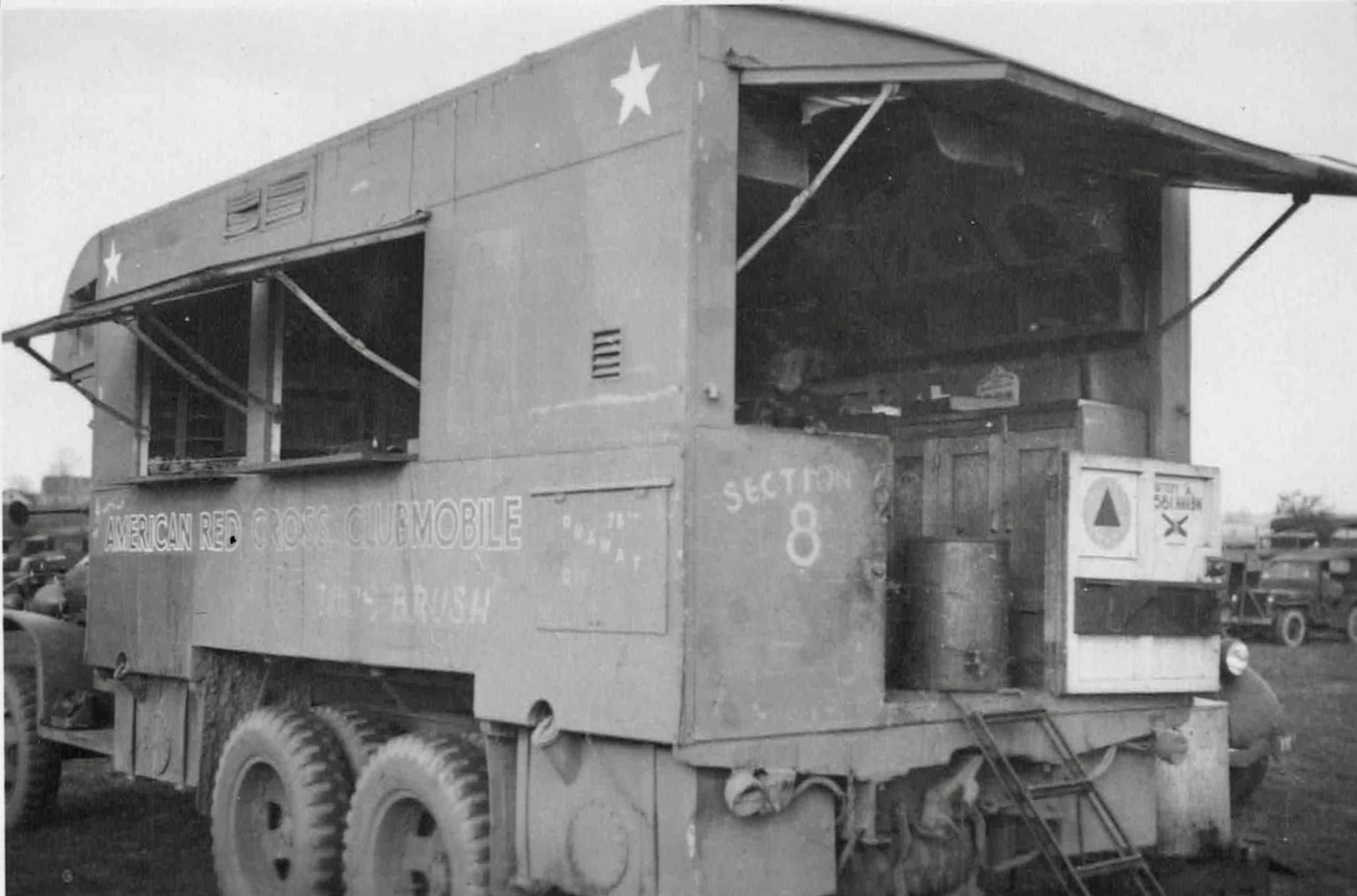
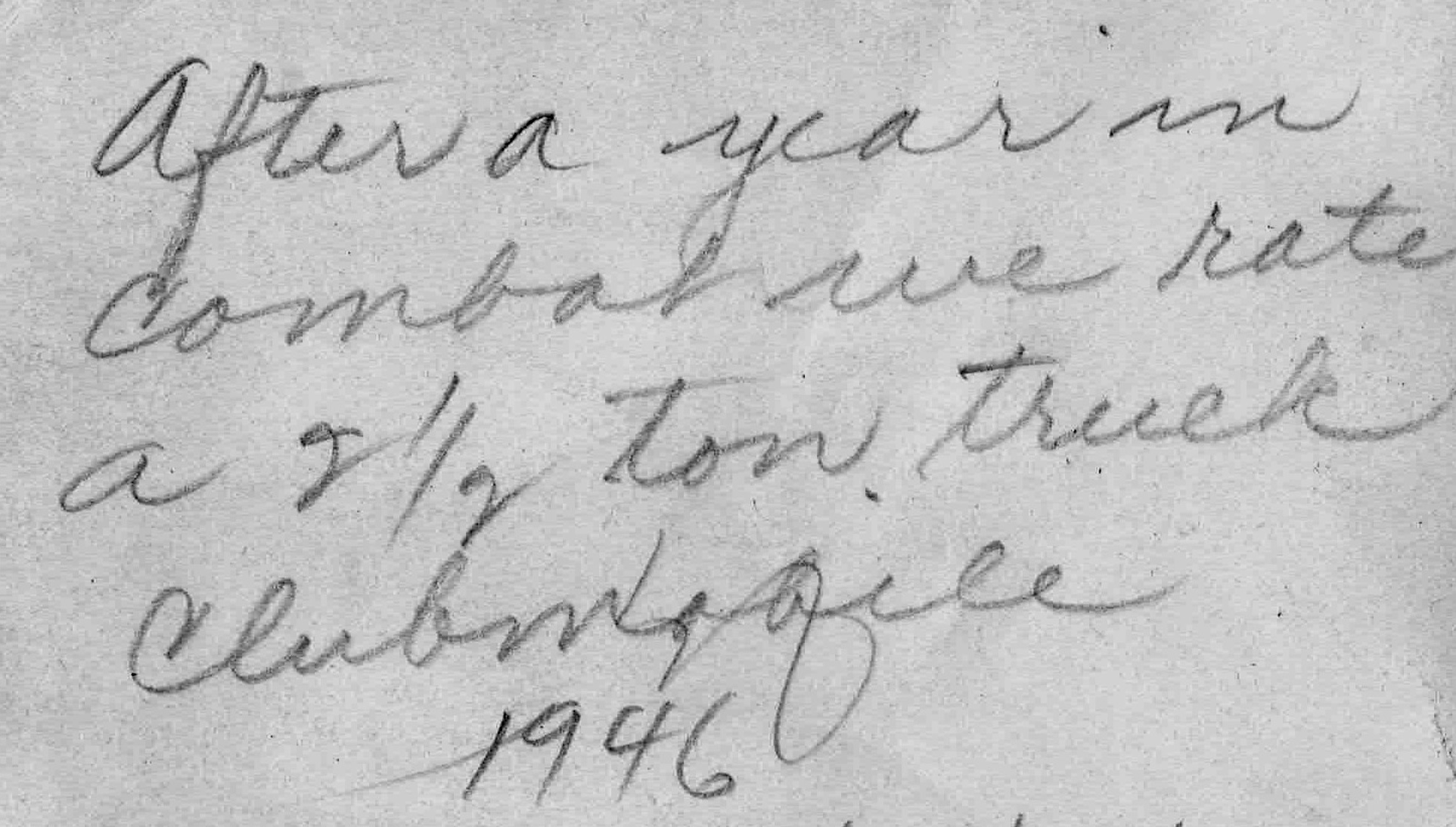
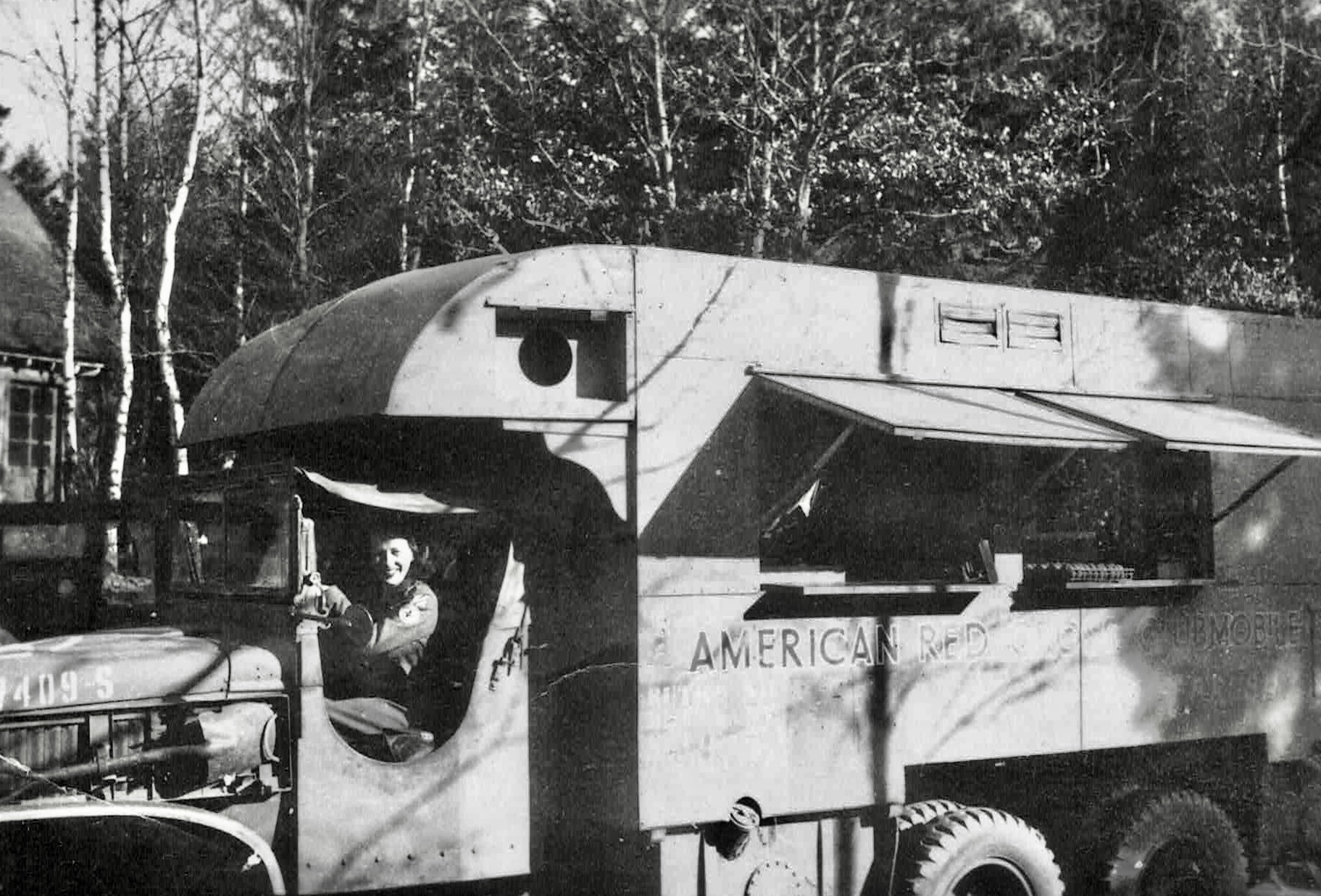
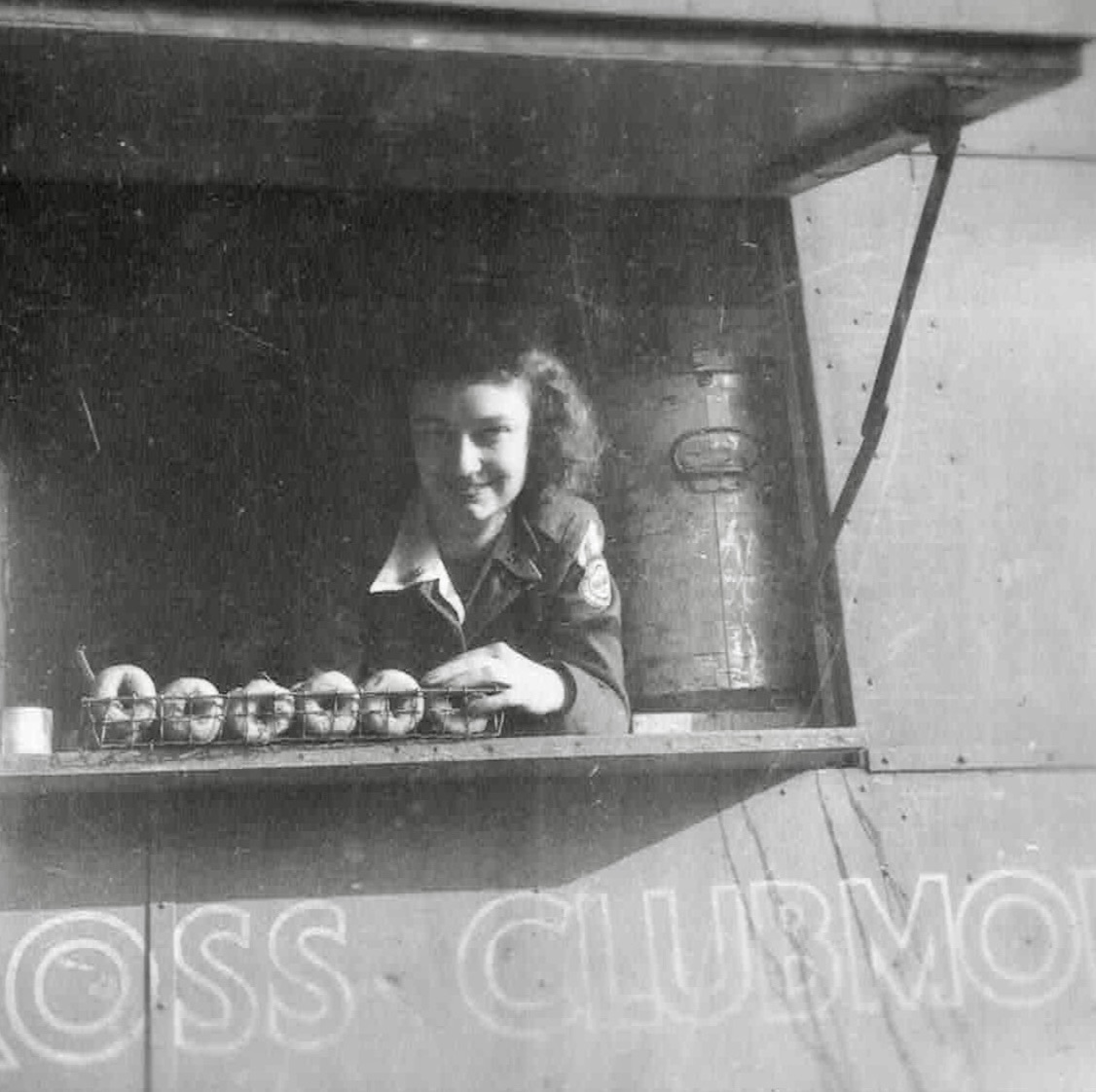
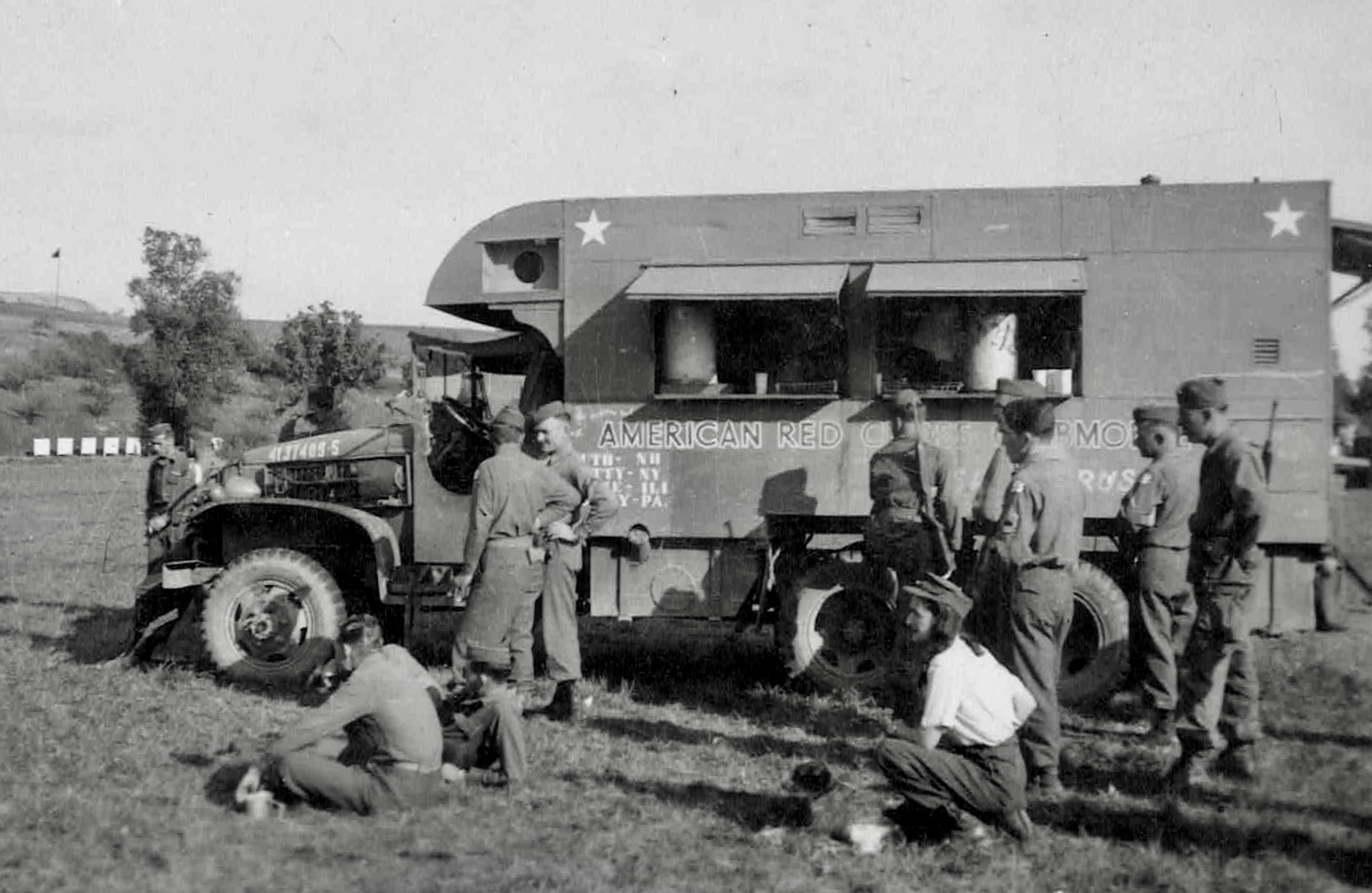
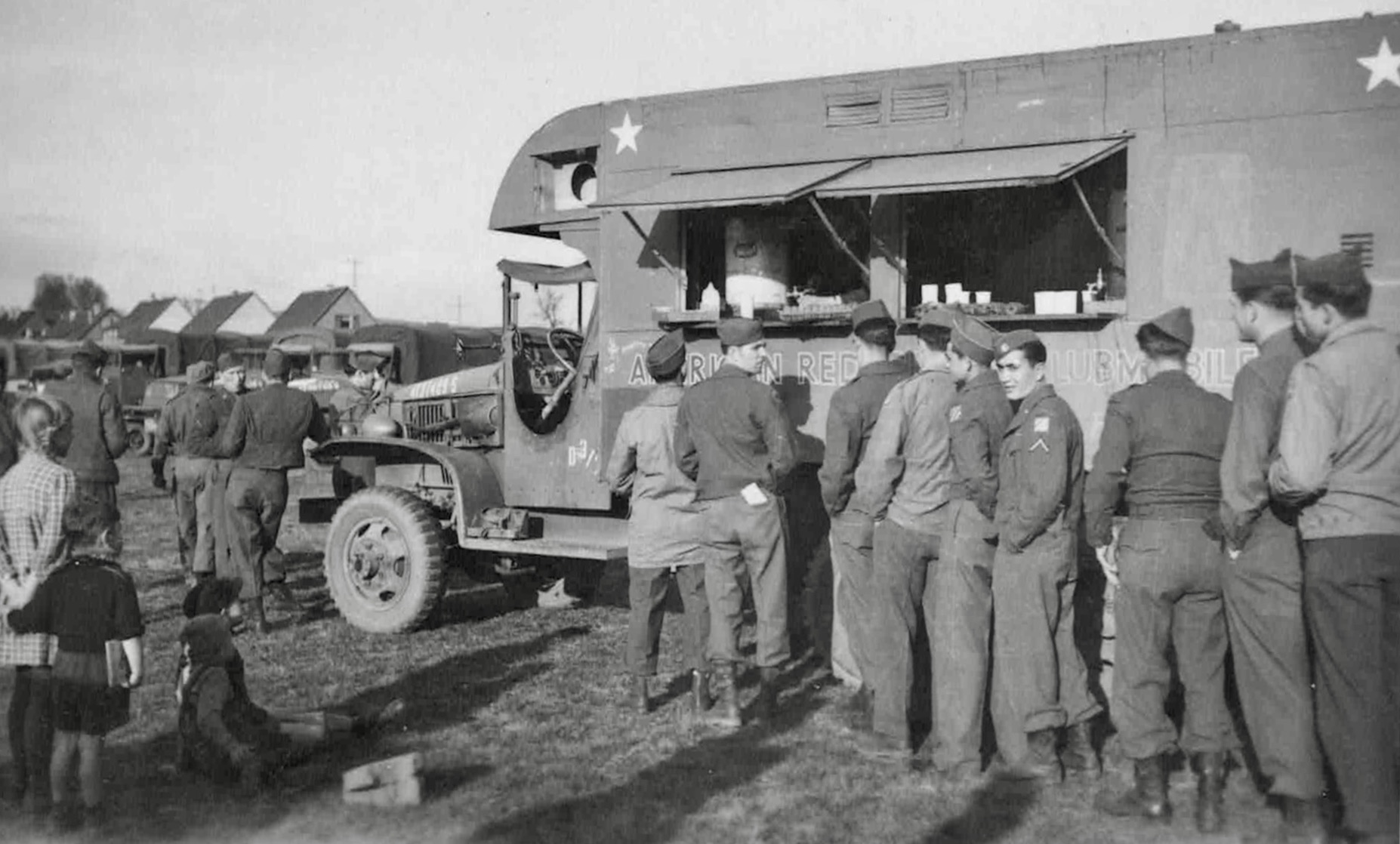
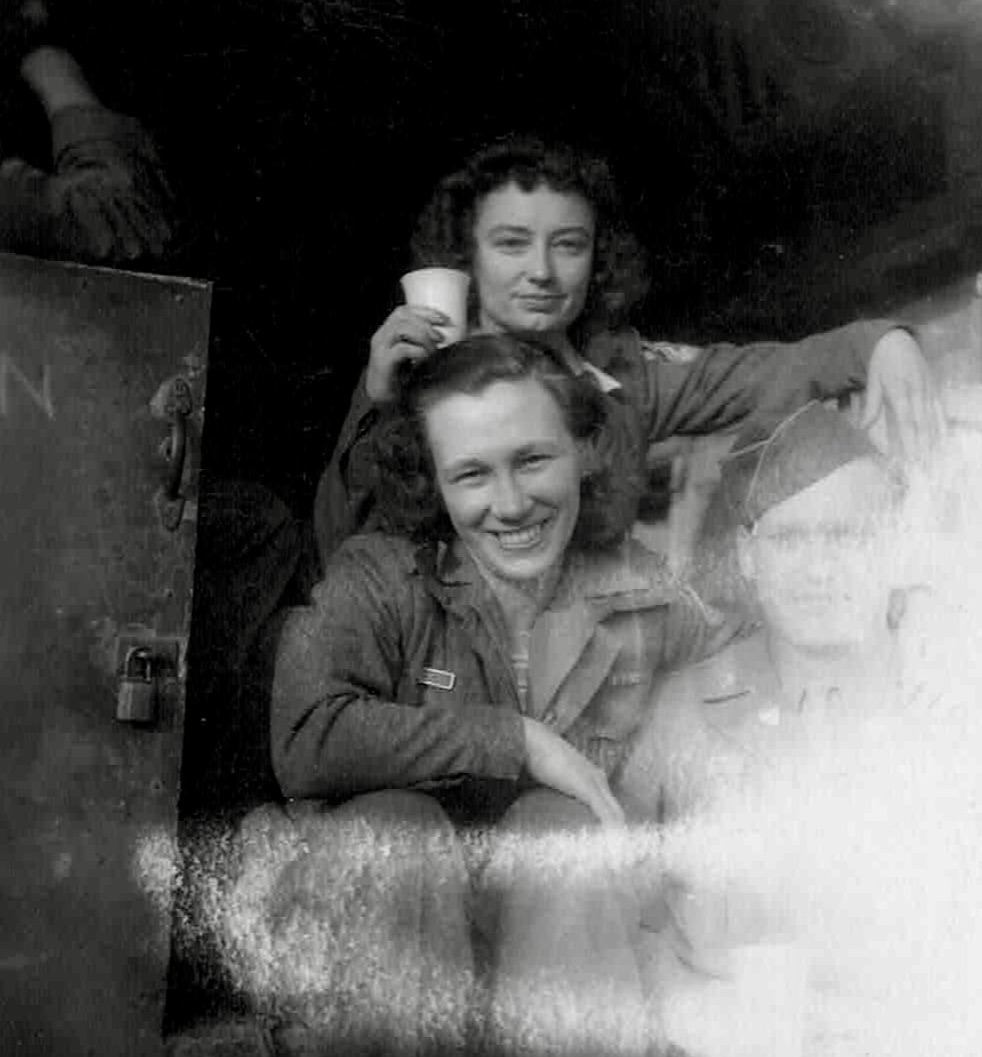
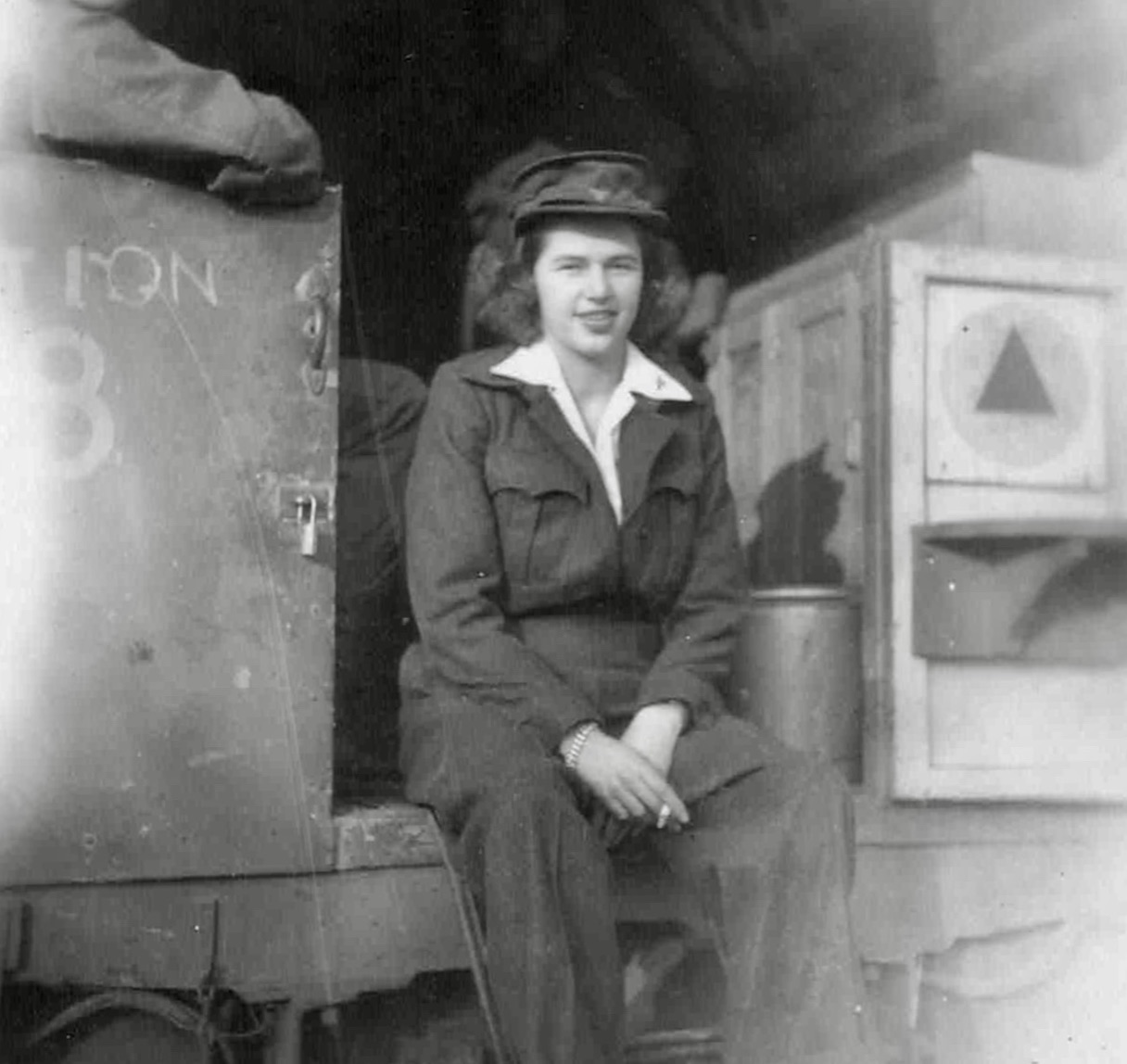
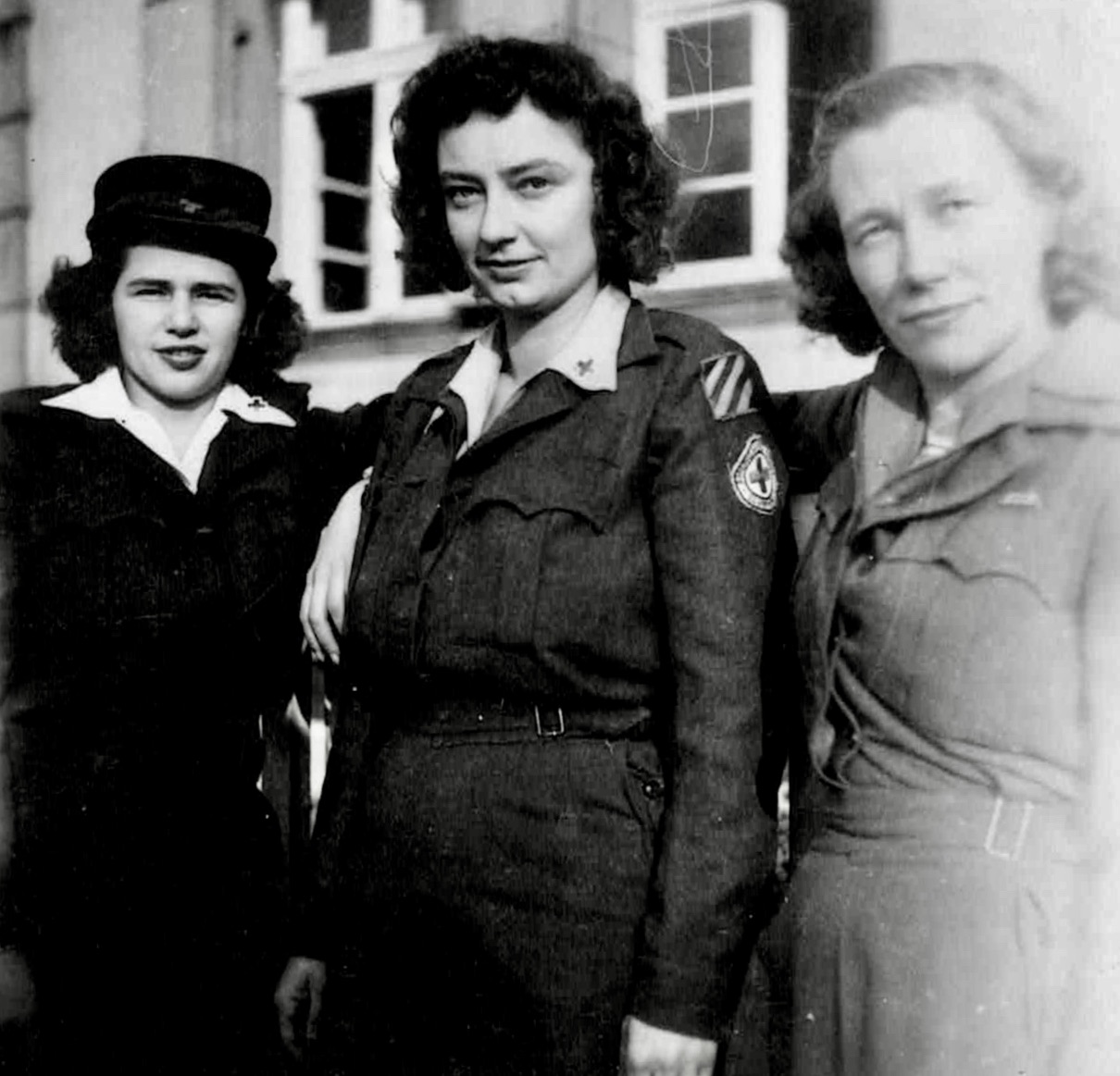
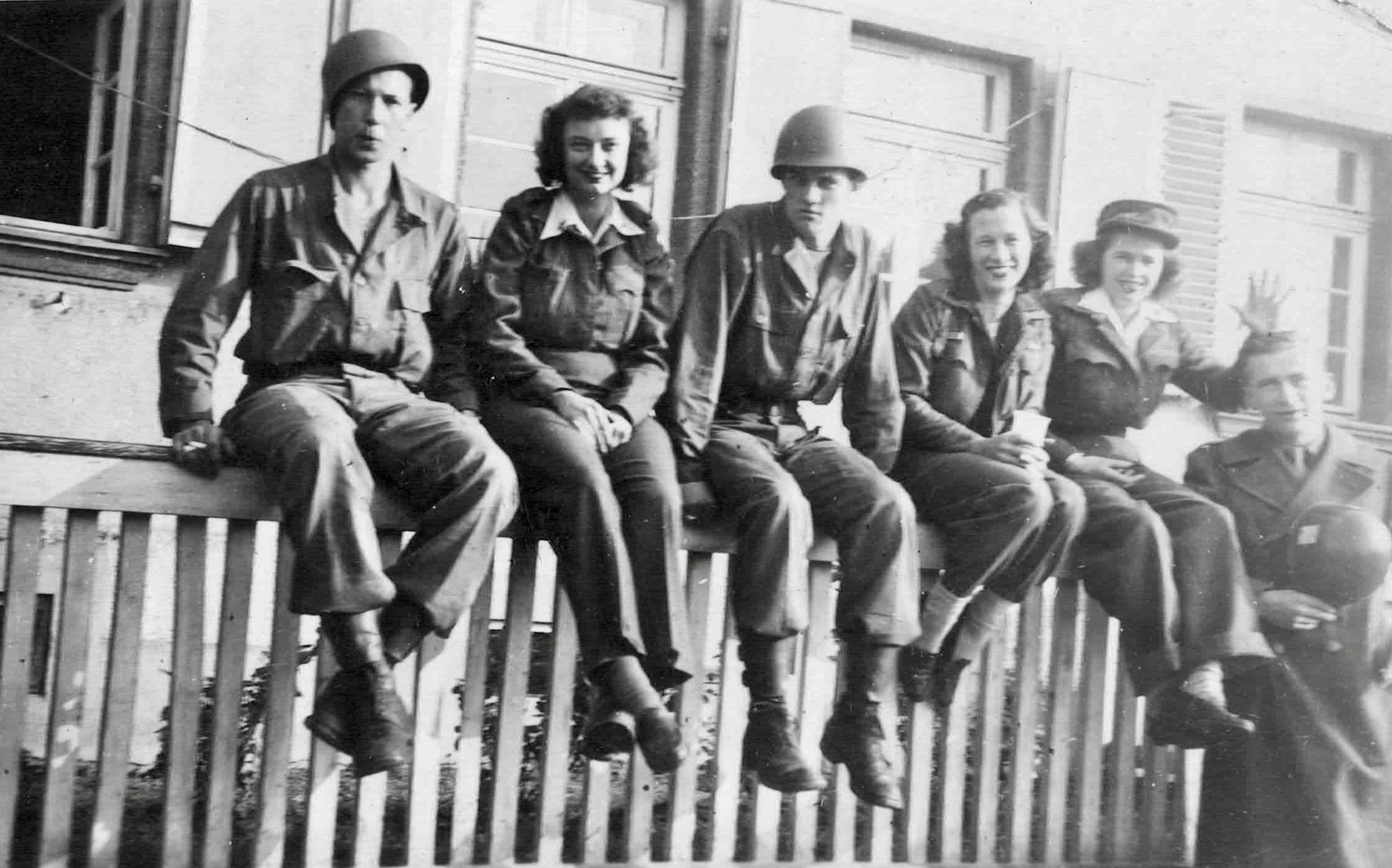
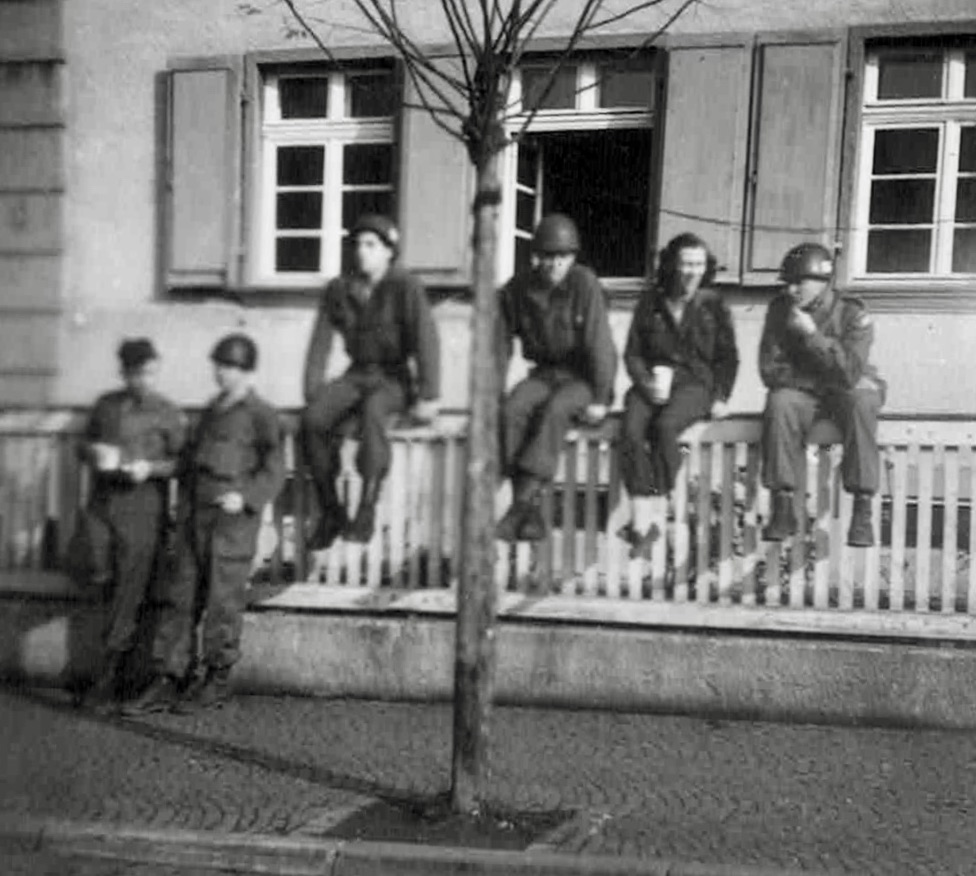
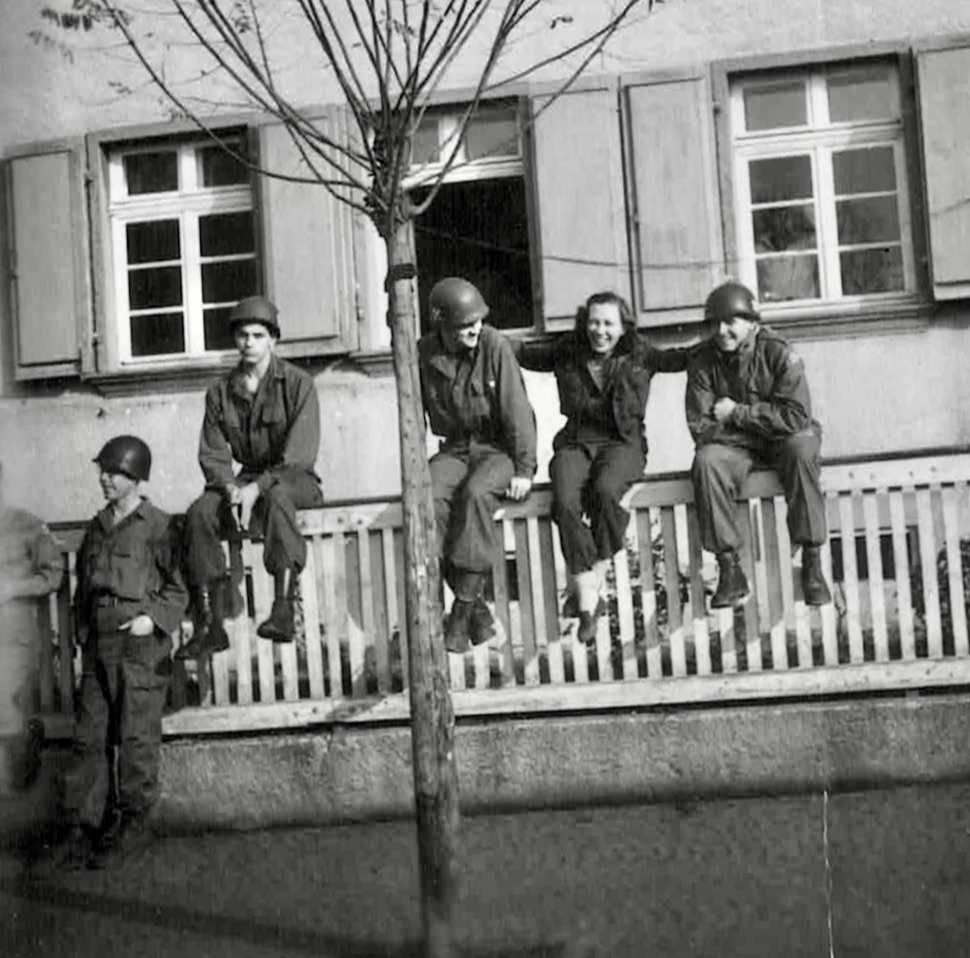
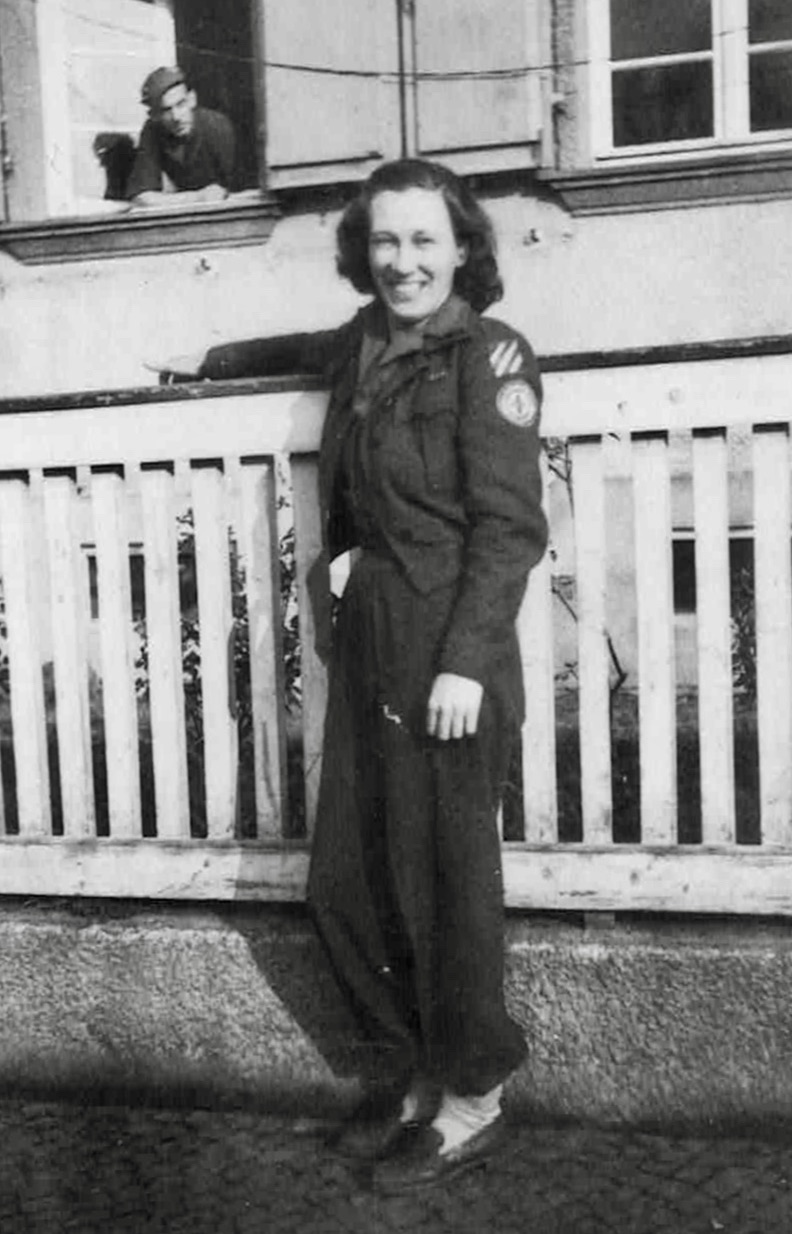
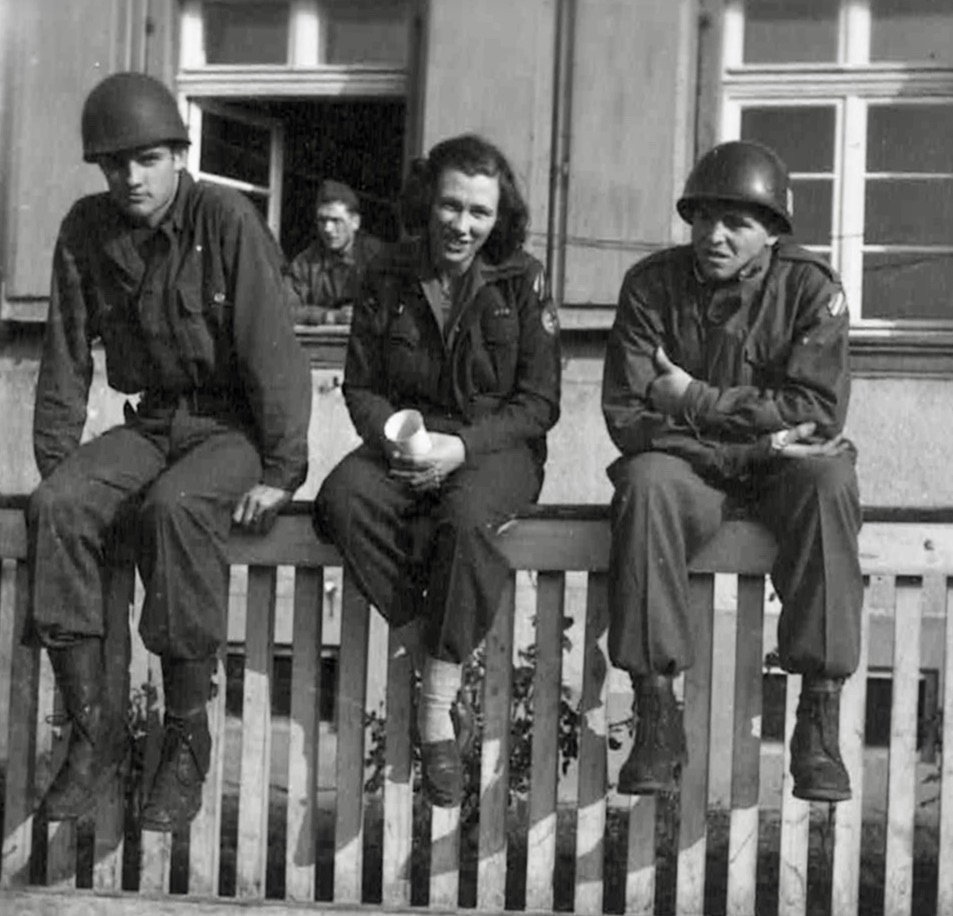
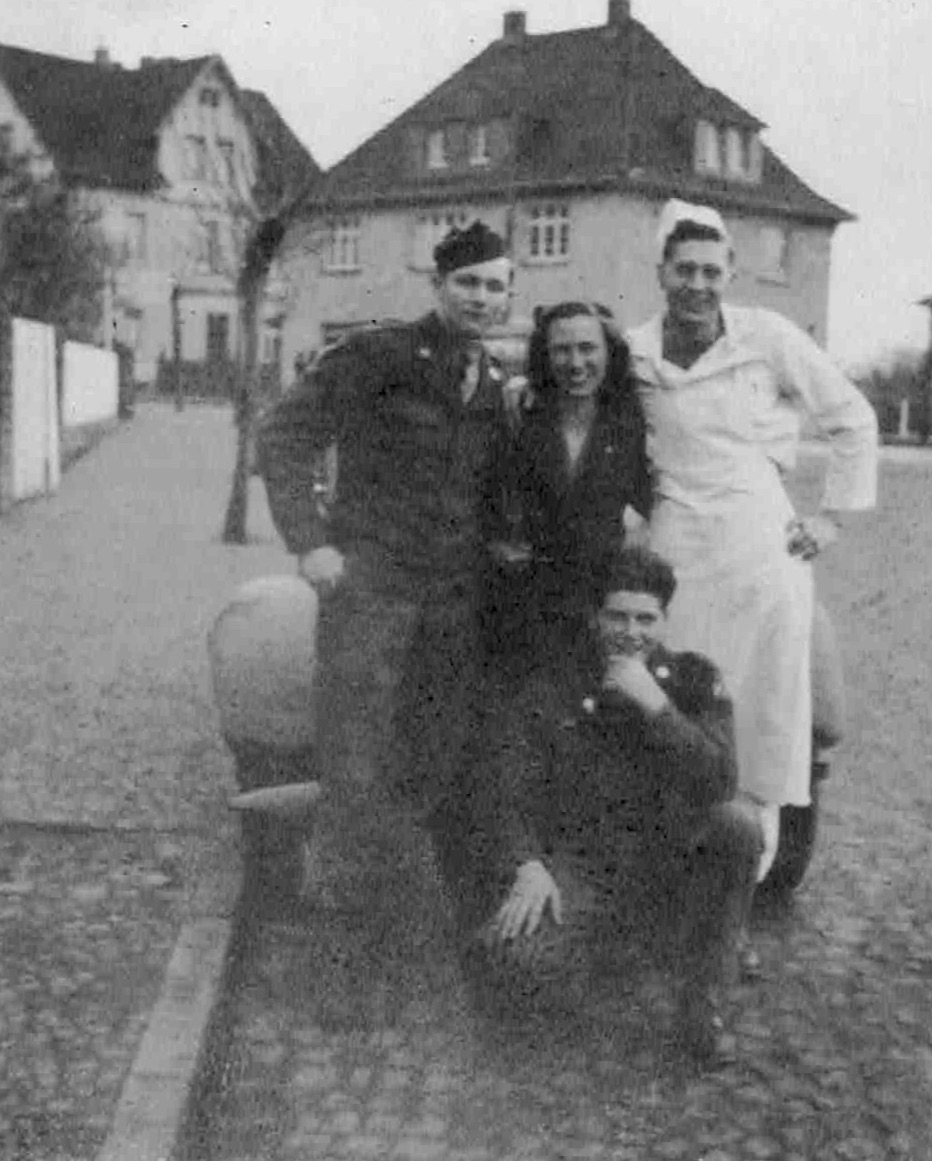
The clubmobile crew of Mary McAuliffe, Janet Potts and Florence Wick in occupied Borgen, Germany. The women are now allowed to wear pants and have been issued handsome uniforms. After having to scrounge vehicles to deliver donuts throughout 1944 and 45, the crew finally got its own clubmobile, the SageBrush. It had been attached to the 70th Infantry Division.Flo’s note on the back of the pictureReady for business in the SageBrushJanet poses with donuts in the new/used clubmobileServing coffee and donuts in what looks like a break in an archery or shooting competitionWorking during halftime at an army football gameFlo and Janet Mary McAuliff joined the crew in late 1945. She had probably served with another crew, but I can’t find more information about her. She doesn’t appear in “The Arc in the Storm,” the one book that lists the clubmobile women, but neither do most of the others who joined the North Africa/Italy campaign.Mary, Janet, FloWith “C” Company 3oth Infantry at Borken GermanyFlo and “her boys”I’ve no idea why the soldiers are wearing helmets in these pictures. The war was long over.
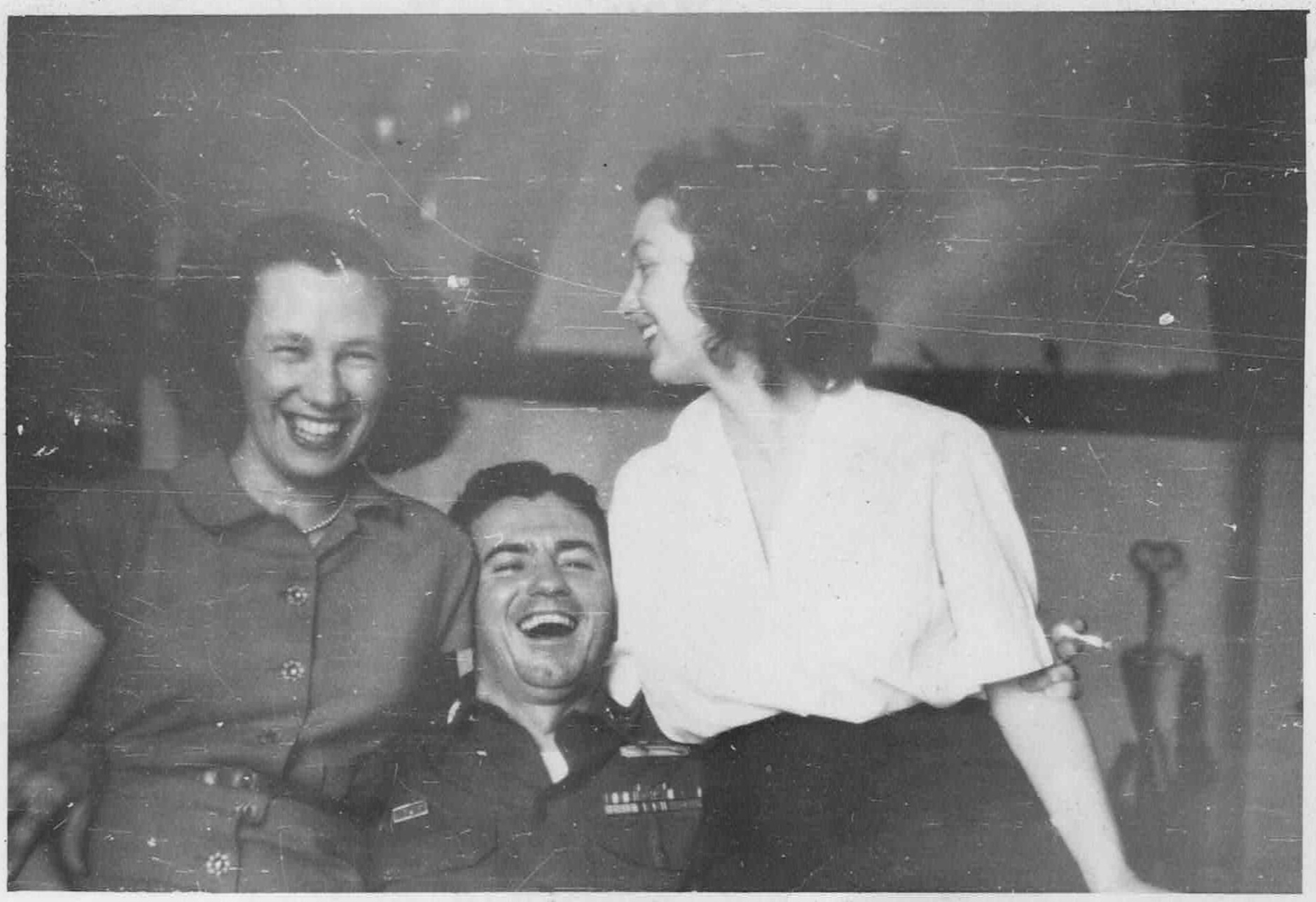
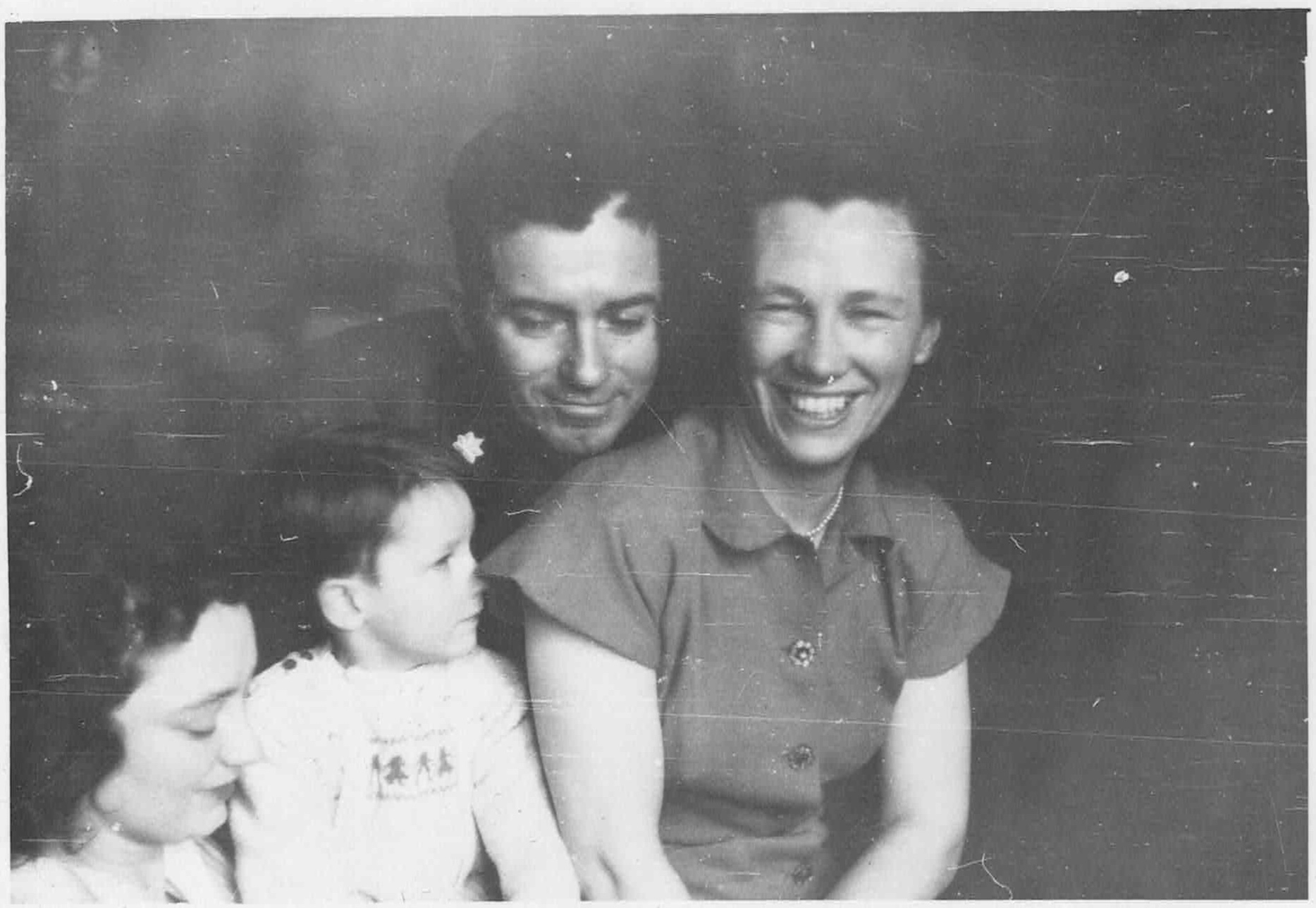
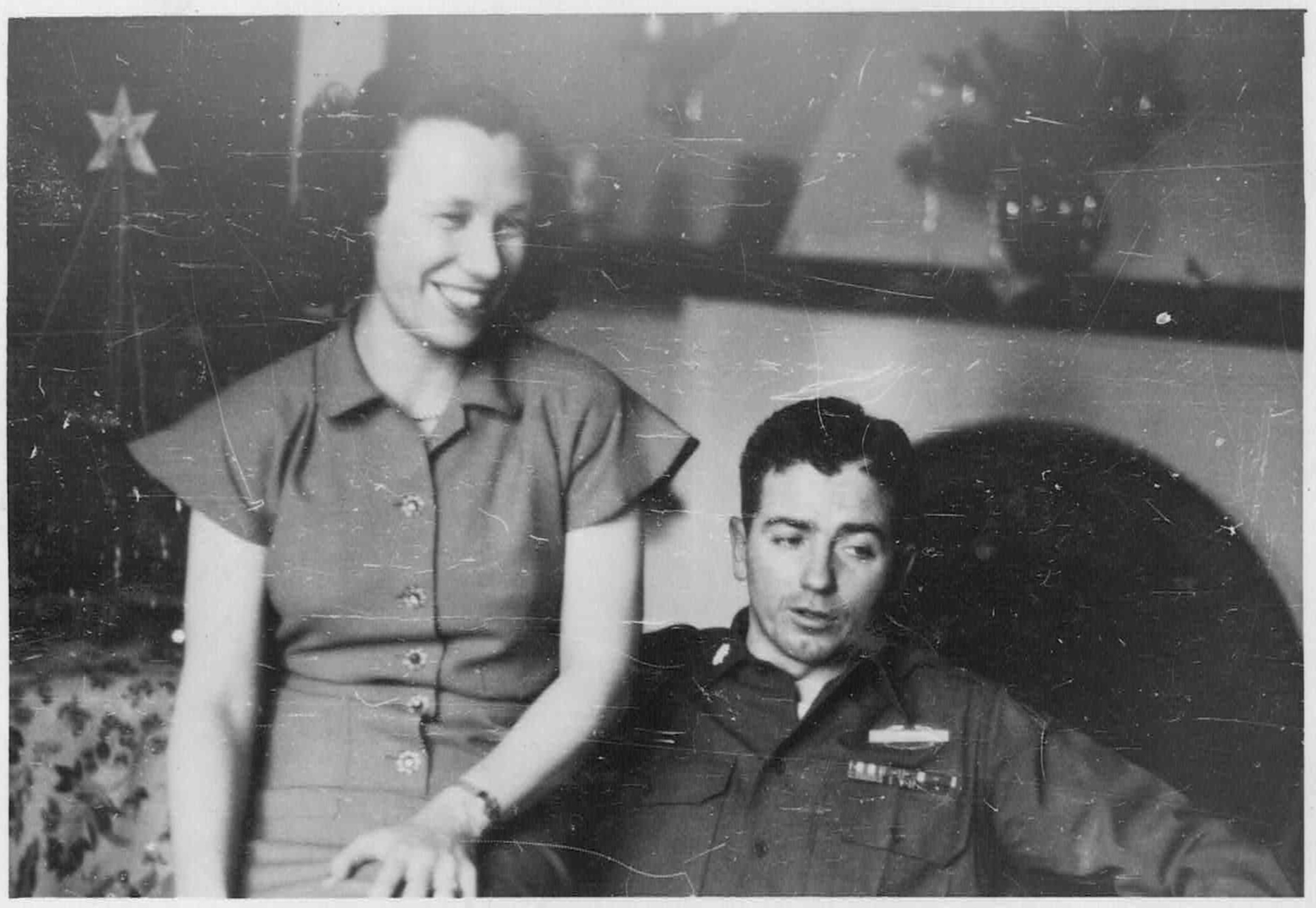
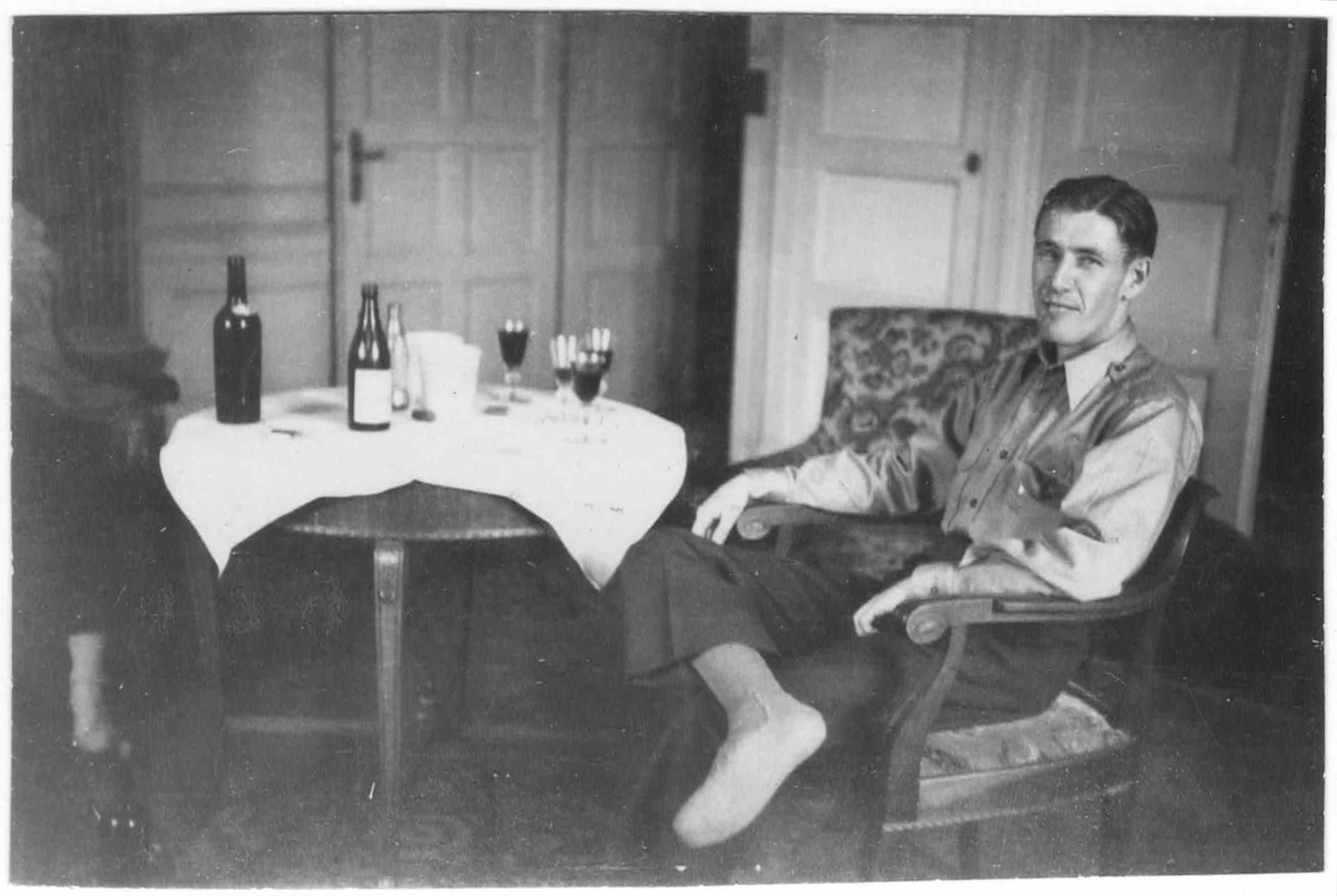
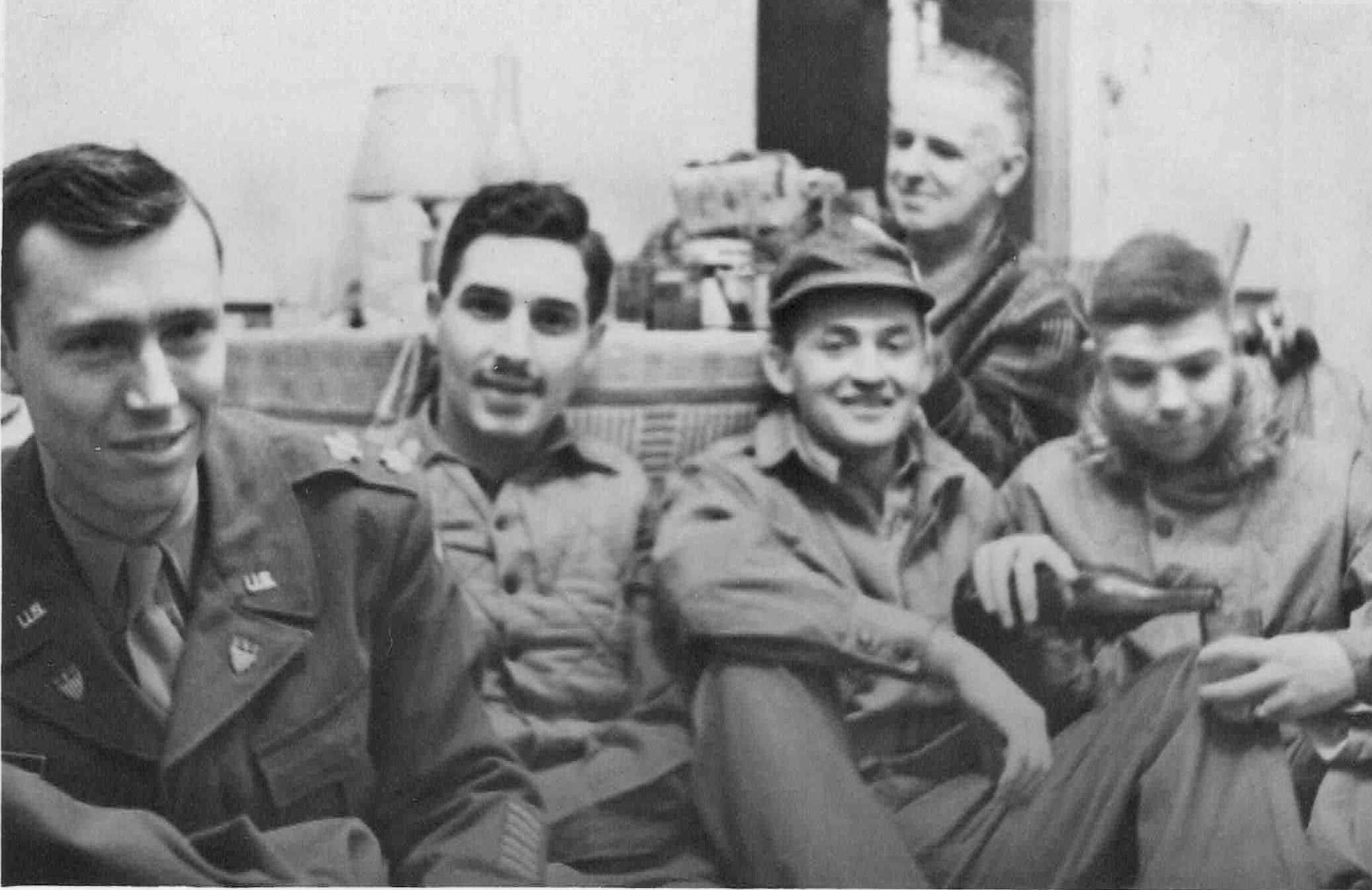
Flo did a good job of identifying the people in pictures on this page in her album relaxing at the 7th Infantry house. I’ve no idea where the child came from.
Maj. Win Whall (Kent WA)Jens and JanetLt. Col (CP) RamseyMaj. Kenneth WallaceWhose child is this?Flo and Maj. WallaceLt. Col. Ralph Flynn, 3rd Div, 7th Inf.
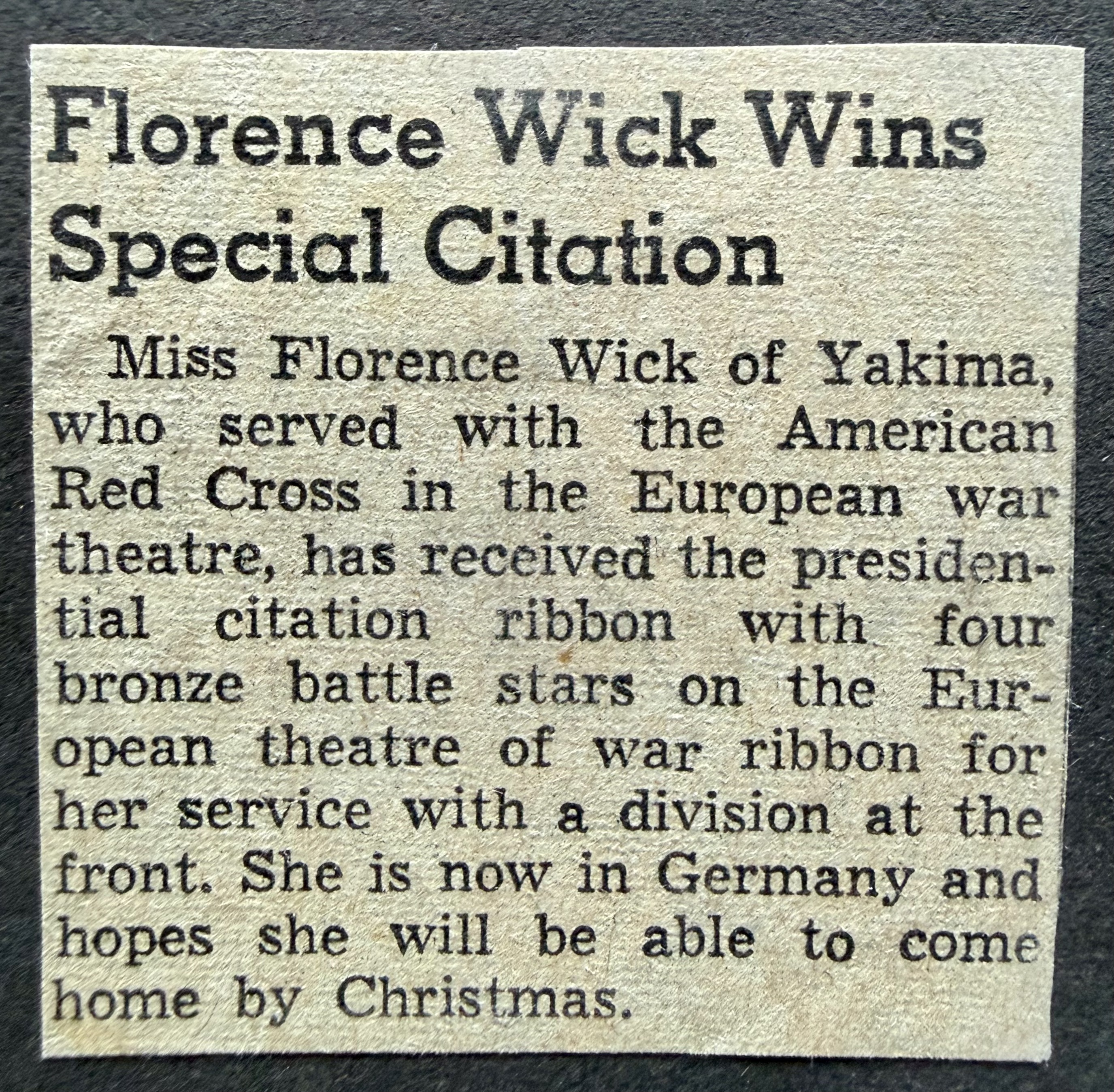
Flo pasted some ephemera on this page which includes a newspaper story about her receipt of an award. Flo was later awarded a bronze star. This is an award called a service star. The story reads: Miss Florence Wick of Yakima, who served with the American Red Cross in the European war theatre, has received the presidential citation ribbon with four bronze battle stars on the European theatre of war ribbon for her service with a division at the front. She is now in Germany and hopes she will be able to come home by Christmas.
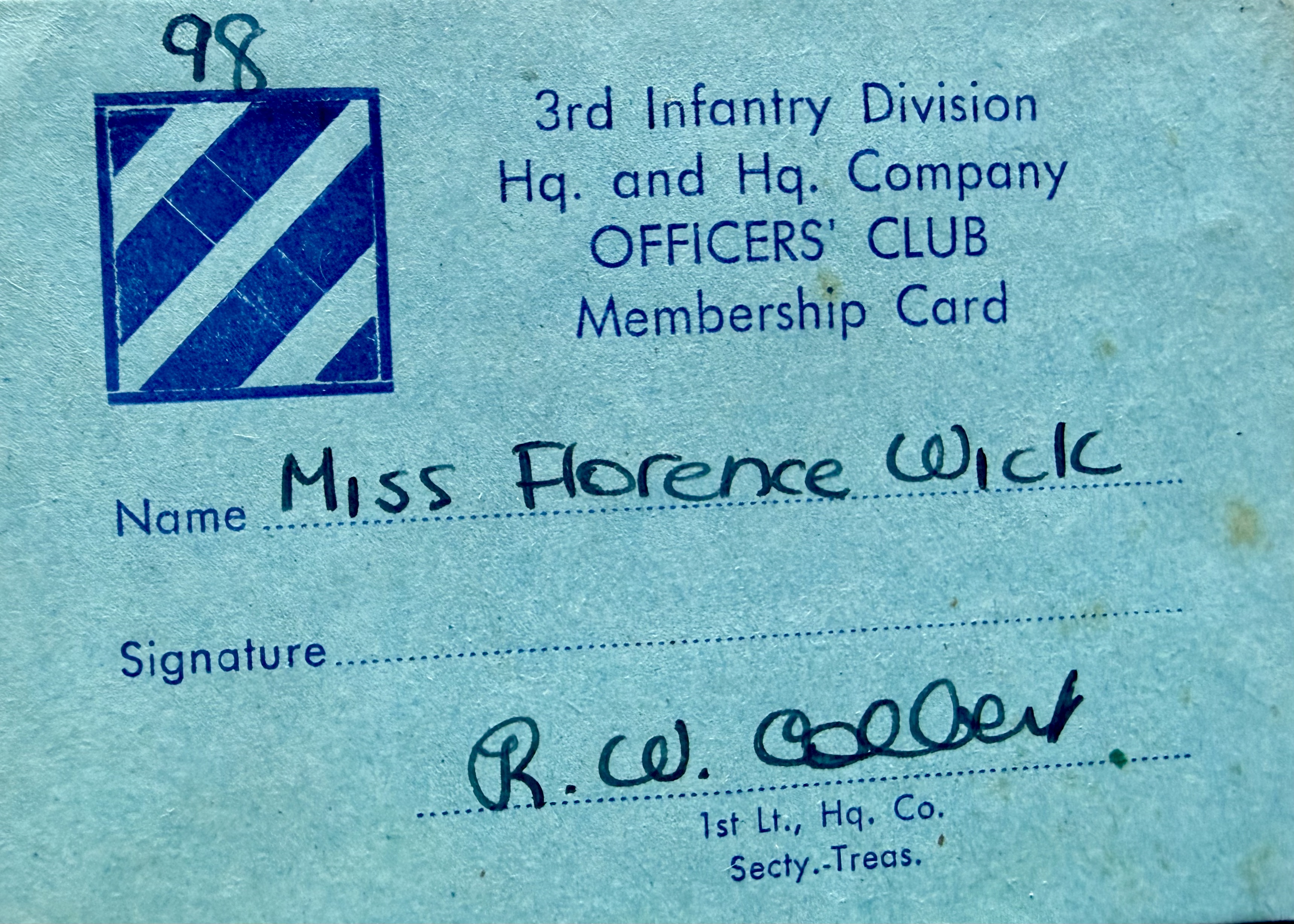
Flo’s 3rd Div. officers club membership card
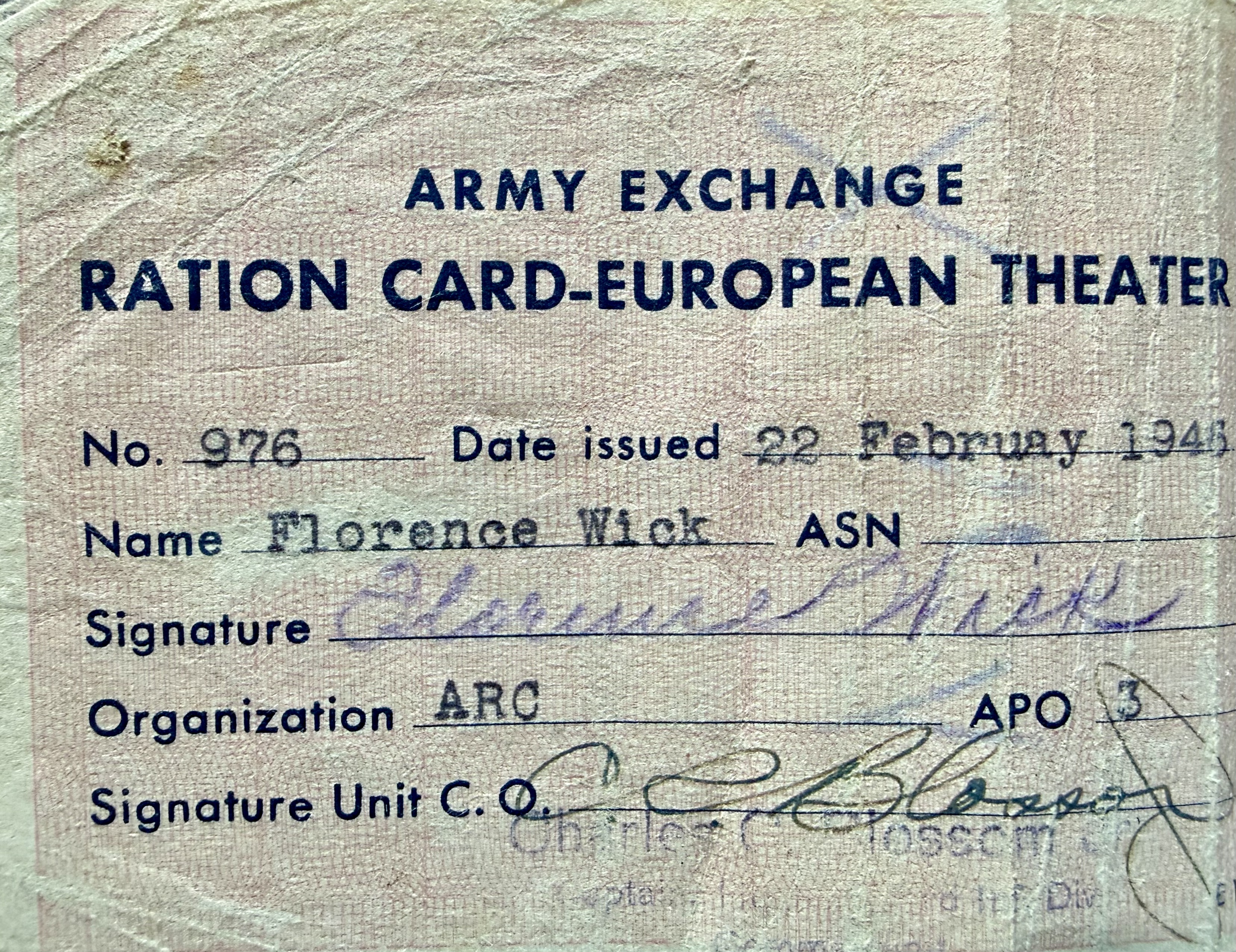
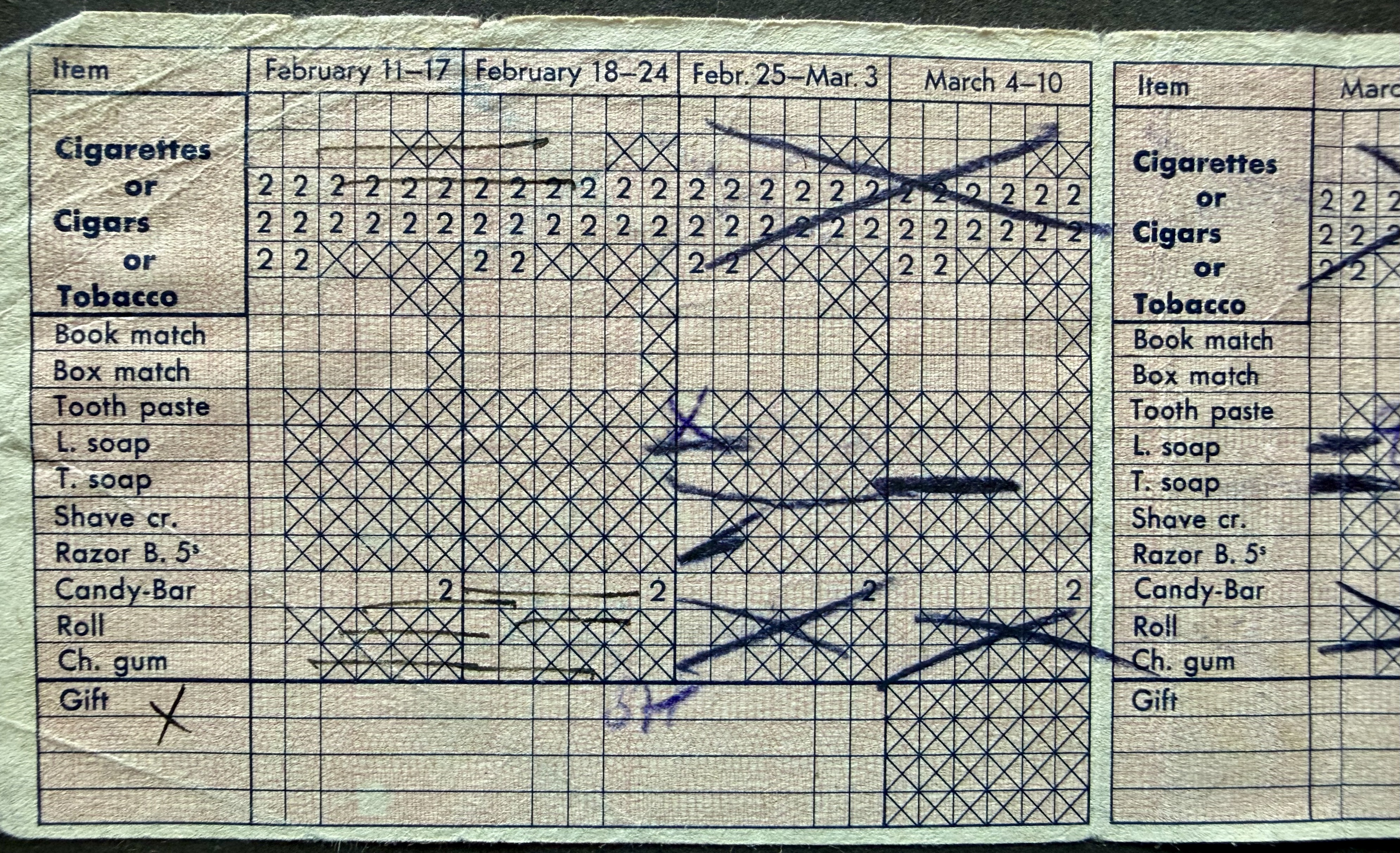
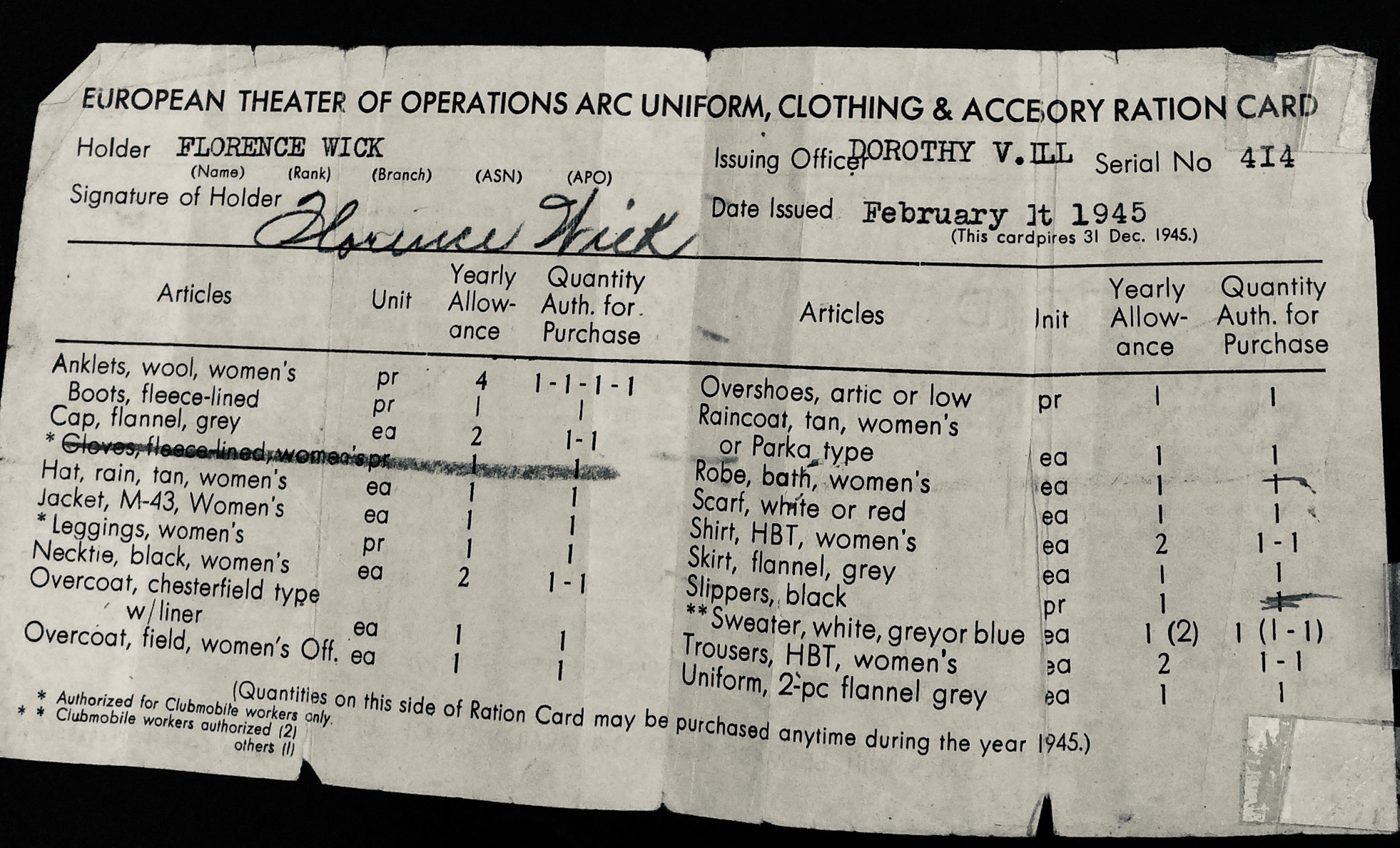
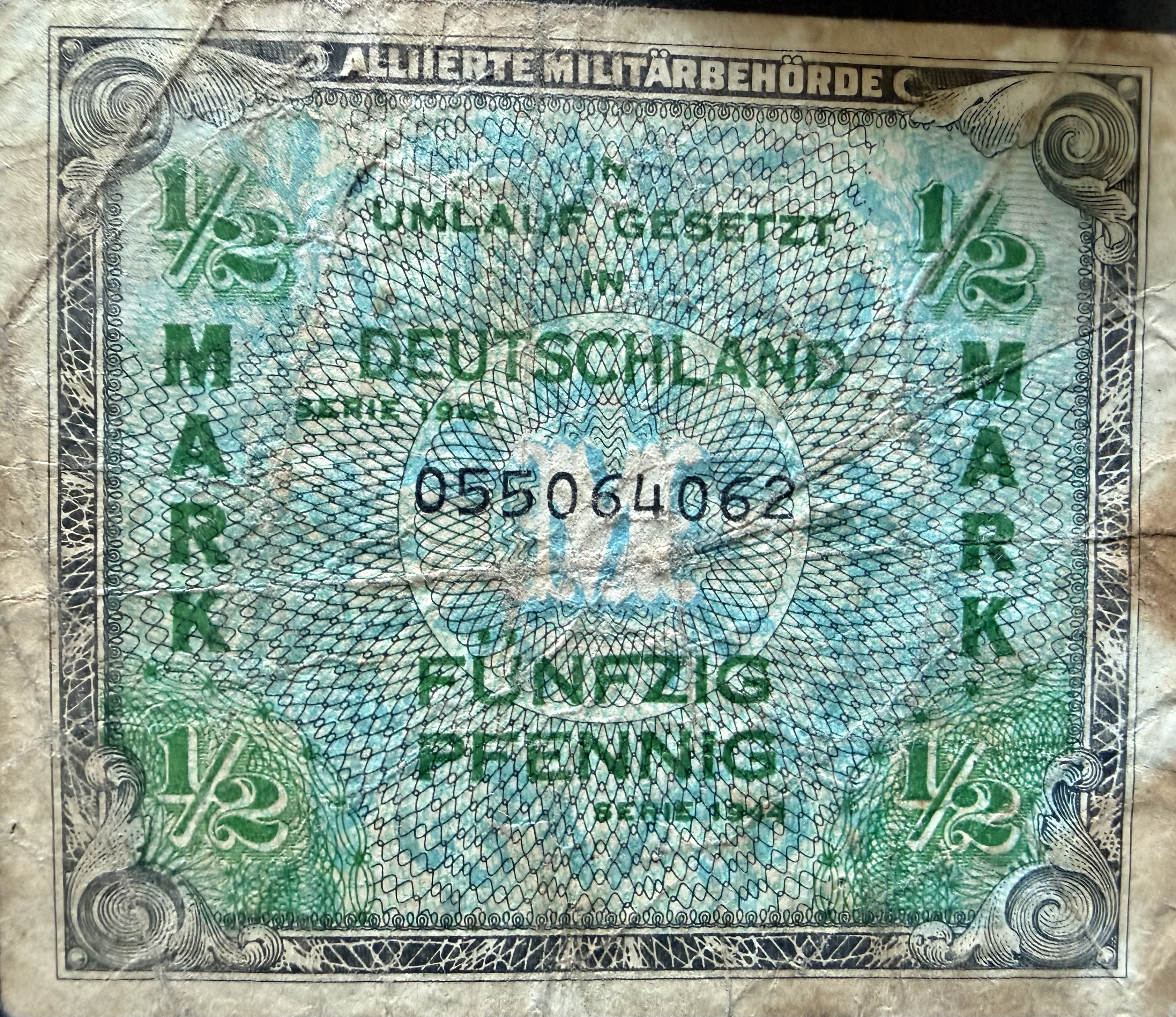
Army exchange ration cardWhat’s the difference between L. soap and T. soap?In February 1945 the clubmobilers were issued new uniformsThis currency was issued by the Allied Military Government during the occupation, replacing the German Reichsmark. It was used for transactions in the occupied zones of Germany and was a part of the effort to stabilize the economy and control inflation after the collapse of the Nazi regime. Fünfzig Pfennig means fifty pfennigs in German. AI says this type of currency is collectible and significant in the context of post-war German history.
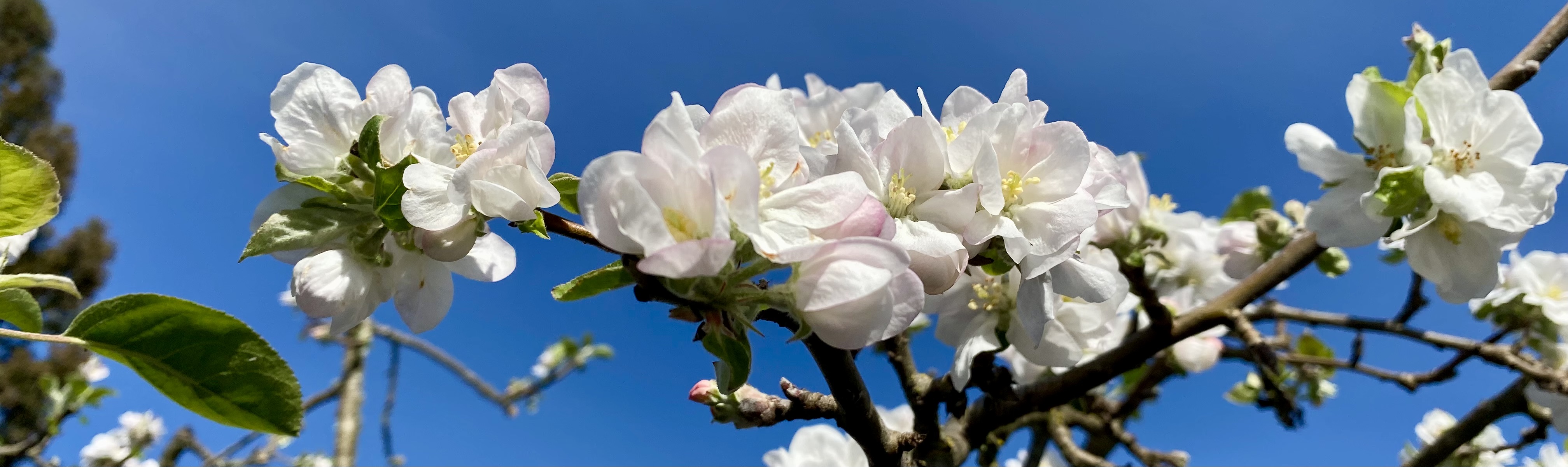
Each spring, near the Vernal Equinox, my family practiced a ritual that felt both ordinary and divine. We piled into the car and drove the back roads, wandering through orchards to admire the blossoming trees. In an agricultural town in the 1950s, perhaps many families did something similar. To us it marked the true arrival of Spring.
Yakima, Washington is on the dry eastern side of the Cascade mountain range, and from certain places in the valley you can glimpse two great peaks rising in white brilliance above the brown, sagebrushy foothills. The Indigenous peoples named the mountain we call Rainier Tahoma, which means “the mother of waters.” The Native name for Mt. Adams is Pahto. Closer in, foothill ridges encircle the valley: Ahtanum Ridge, Rattlesnake Hills, Horse Heaven Hills.
Our annual blossom pilgrimages would take us south to the Lower Valley where the trees bloomed earlier. To reach it from the town of Yakima, you drive through a narrow gap in the Rattlesnake Hills at Union Gap, where a massive basalt landslide is now slowly creeping south at a foot and a half per week. Drive fast and don’t look up.
From there, the road winds along the Yakima River past Wapato, Toppenish, and Buena—locally pronounced Byoo-enna. I didn’t realize until adulthood that the word is Spanish. Originally, the place had been called Konewock, a Native word meaning a lush, green marshy place. But when the railroad needed a station name, it became Buena.
The Yakama Indian Reservation borders the Lower Valley towns and stretches west toward Mount Adams. On the reservation stand the remains of Fort Simcoe, where U.S. soldiers were stationed during the Indian wars of the 1850s—a quiet, uneasy reminder of deeper histories layered beneath the orchards.
Yakima was home to vast orchards of apples and pears, along with stone fruits—peaches, cherries, apricots. In the spring the valley was a quilt of flowering trees, fragrant and luminous. But, in my childhood, change was already underway. Like the orchards here in Sonoma County today, many of Yakima’s were already being razed to make room for postwar housing developments and, later, vineyards.
The new ranch-style house we moved into in 1951 stood on land that had been a cherry orchard. The developers left one tall cherry tree in the front yard of each house on the block. I climbed every one of them. Across the street, an apple orchard remained, and bi-planes flew overhead, trailing clouds of DDT and other pesticides.
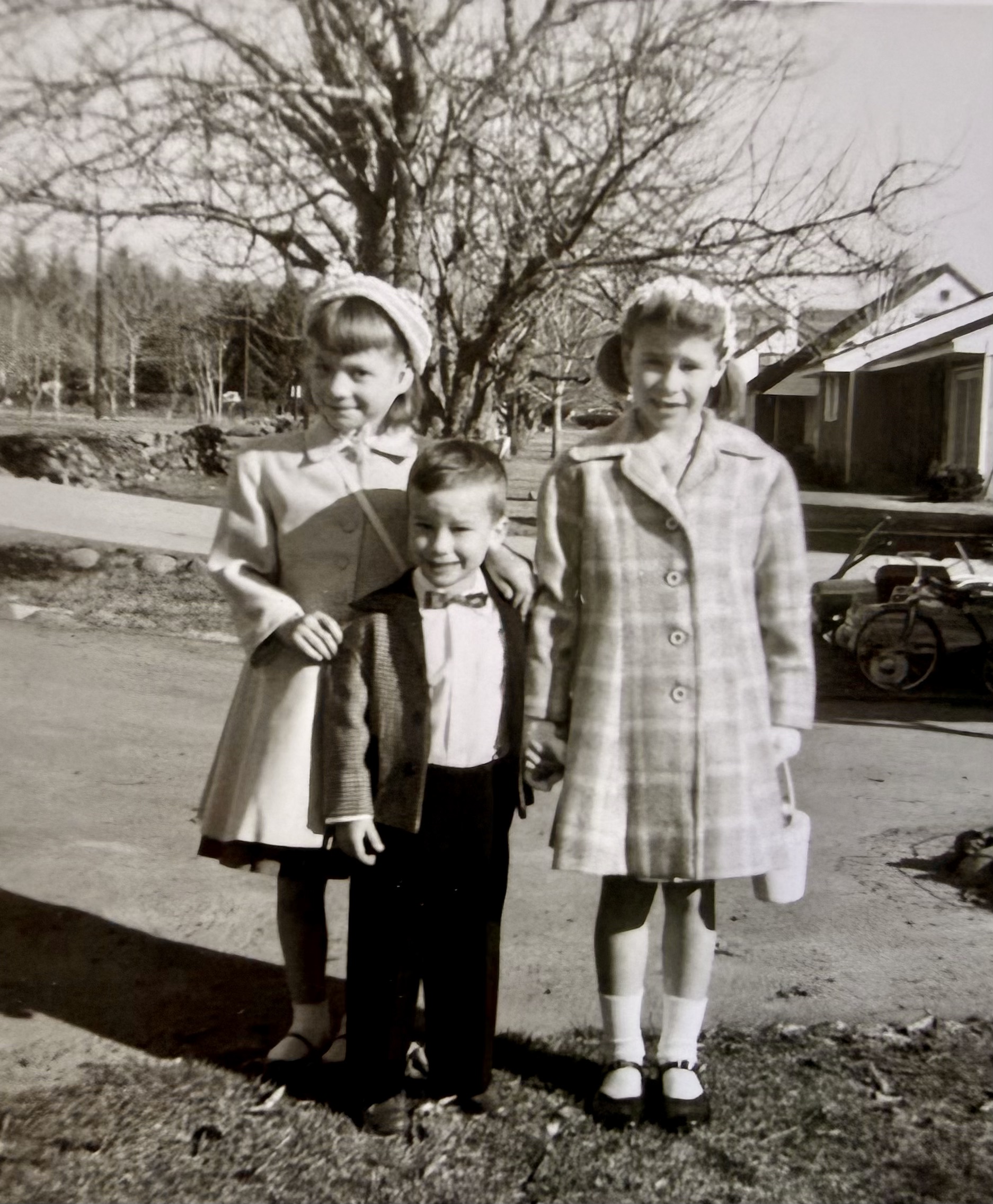
There is the row of cherry trees behind me (R), brother Don and a neighbor. I couldn’t find any blossom pictures and at Easter in 1955 the cherries hadn’t yet bloomed.
When I was a kid, Yakima was a town of about 40,000, with a lively downtown. Women wore hats and gloves to go shopping. Store windows gleamed, sidewalks buzzed, and the town felt cohesive, self-contained. Then, in the 1970s, the first shopping mall arrived, and everything shifted. Downtown slowly hollowed out.
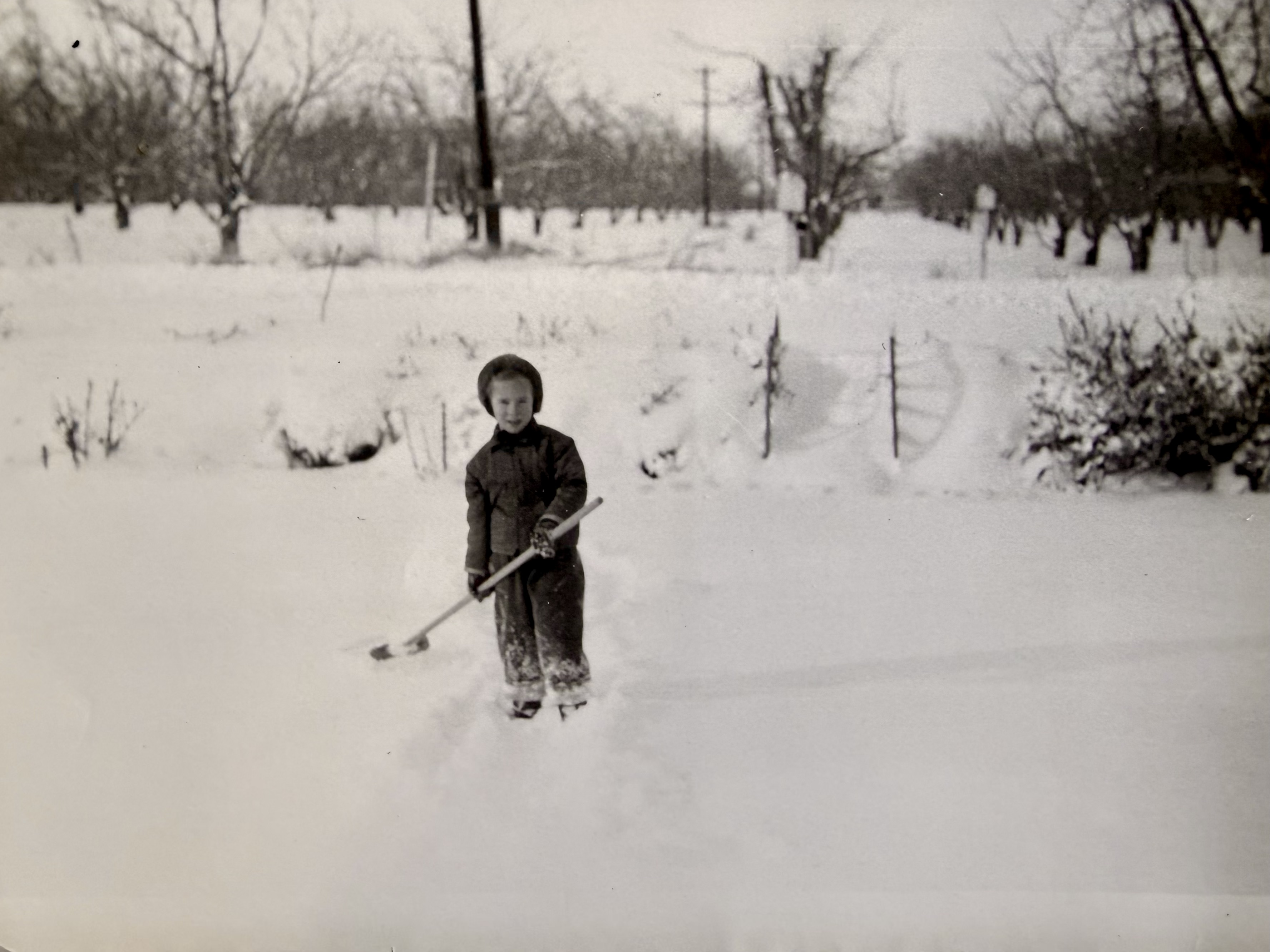
Behind me is the across-the-street apple orchard.
Now the population of Yakima is getting close to 100,000. Farmers still grow hops, and there are still fruit trees—mostly apples—but vineyards have been steadily taking over. There is less blossom-peeping now; grapes, after all, have no blossoms.
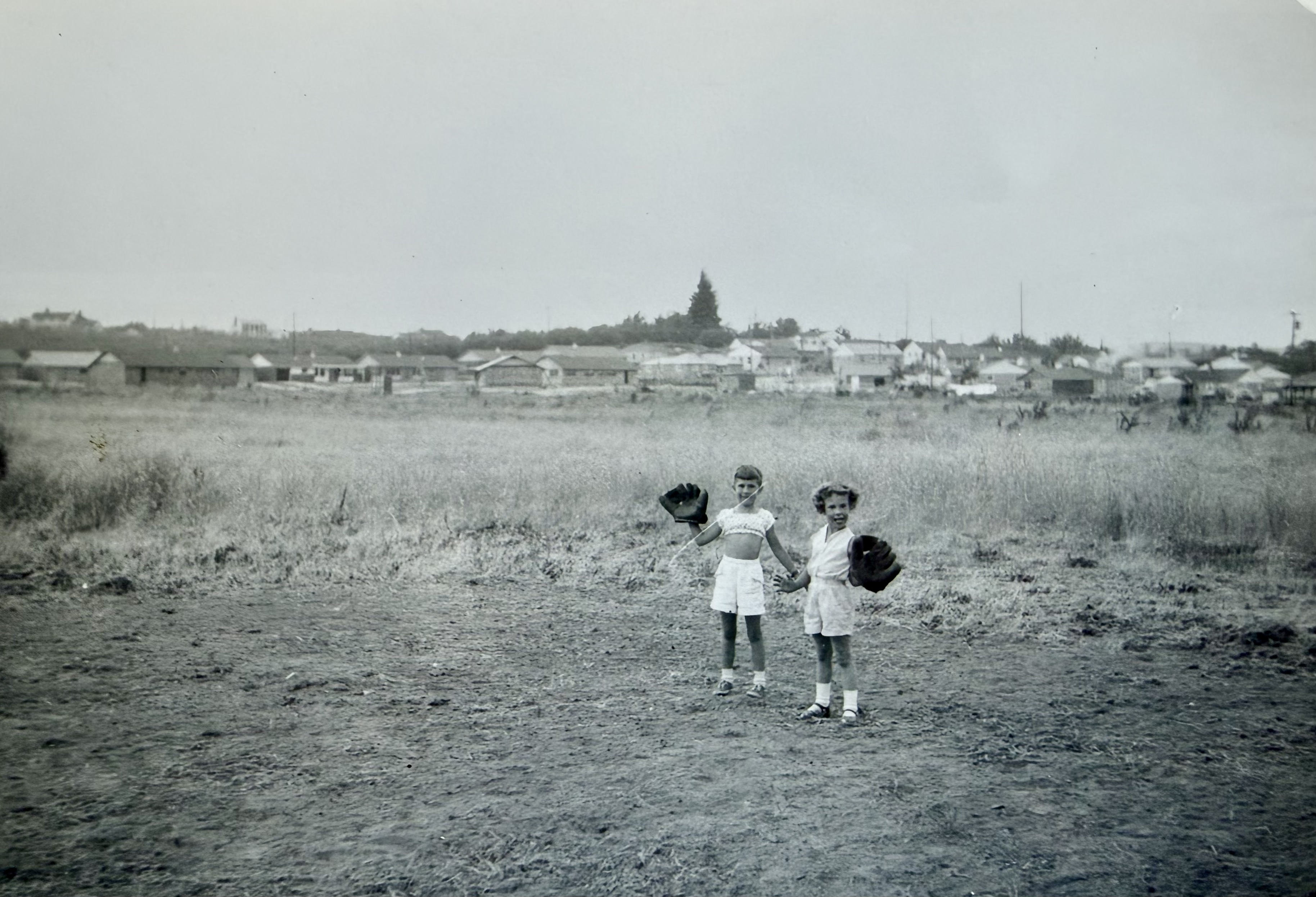
Me (R) and friend. From the back yard we can see development encroaching and a few trees left.
But we still participate in the ritual of spring blossom peeping. Holly and I have planted a little orchard of cherry, plum and peach trees in our back yard. We have a magical orange, and lemon and apple trees hang over our neighbors’ fences. Plus, in our town of Santa Rosa there are magnolias, redbuds, dogwood and ornamental fruit trees, enough to inspire a months’-long Spring ritual right in our neighborhood.
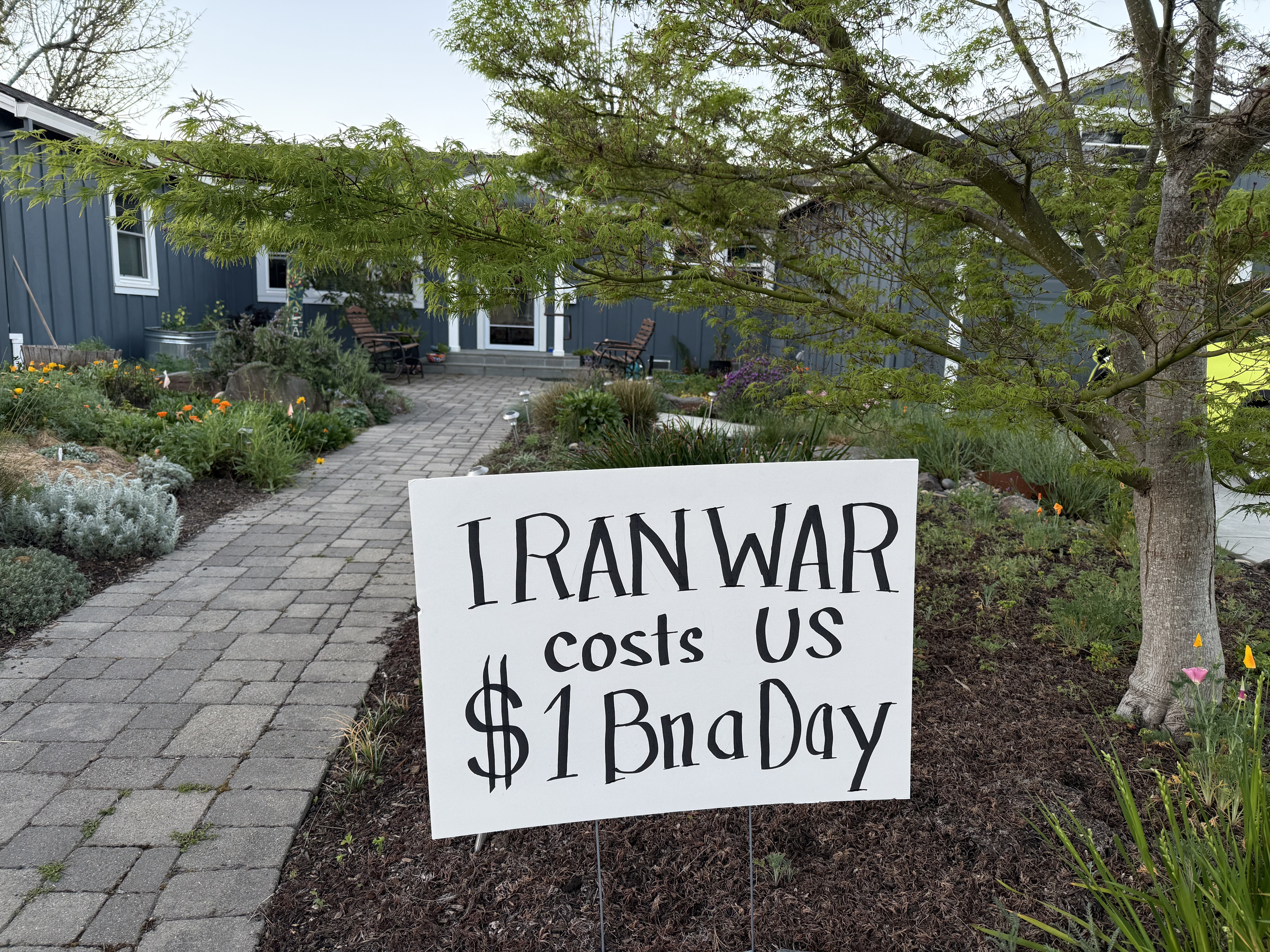
On March 28 we will be marching with our neighbors in the No Kings march and rally here in Santa Rosa, but every little town in Sonoma County will be hosting a No Kings event. We haven’t yet seen a big uptick in ICE arrests here, but the government’s anti-immigrant project is nevertheless creating chaos in the agricultural community. Our sheriff still has not responded to community demands that he not work with ICE and people feel that they are under siege. We are determined to protect and defend our immigrant neighbors.
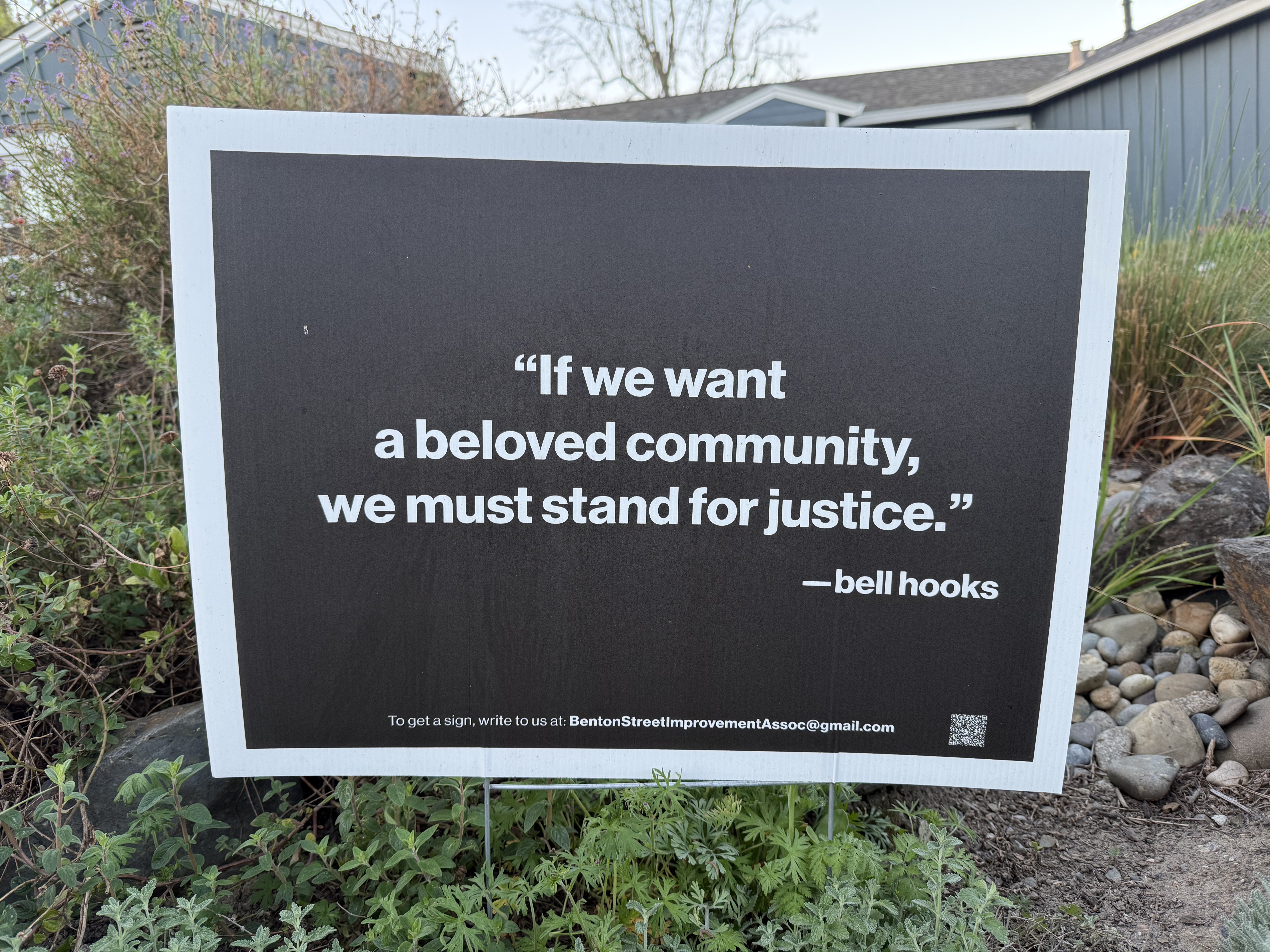
My No Kings sign posted in our front yardFour women in my neighborhood had these signs made, with quotes from luminaries that promote kindness and justice. Now they are posted in front yards all over town.
Happy Spring blossom peeping and protesting to all!
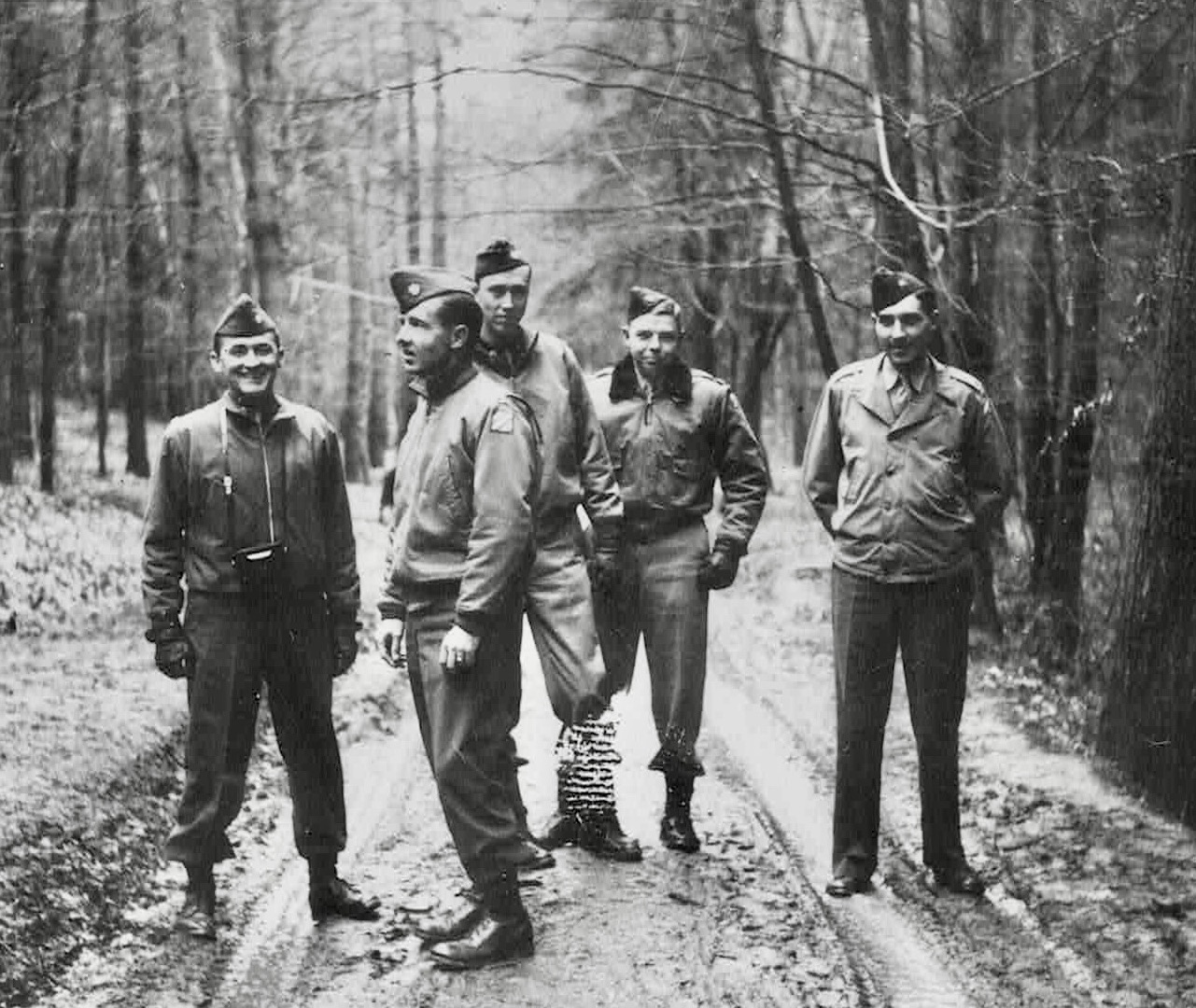
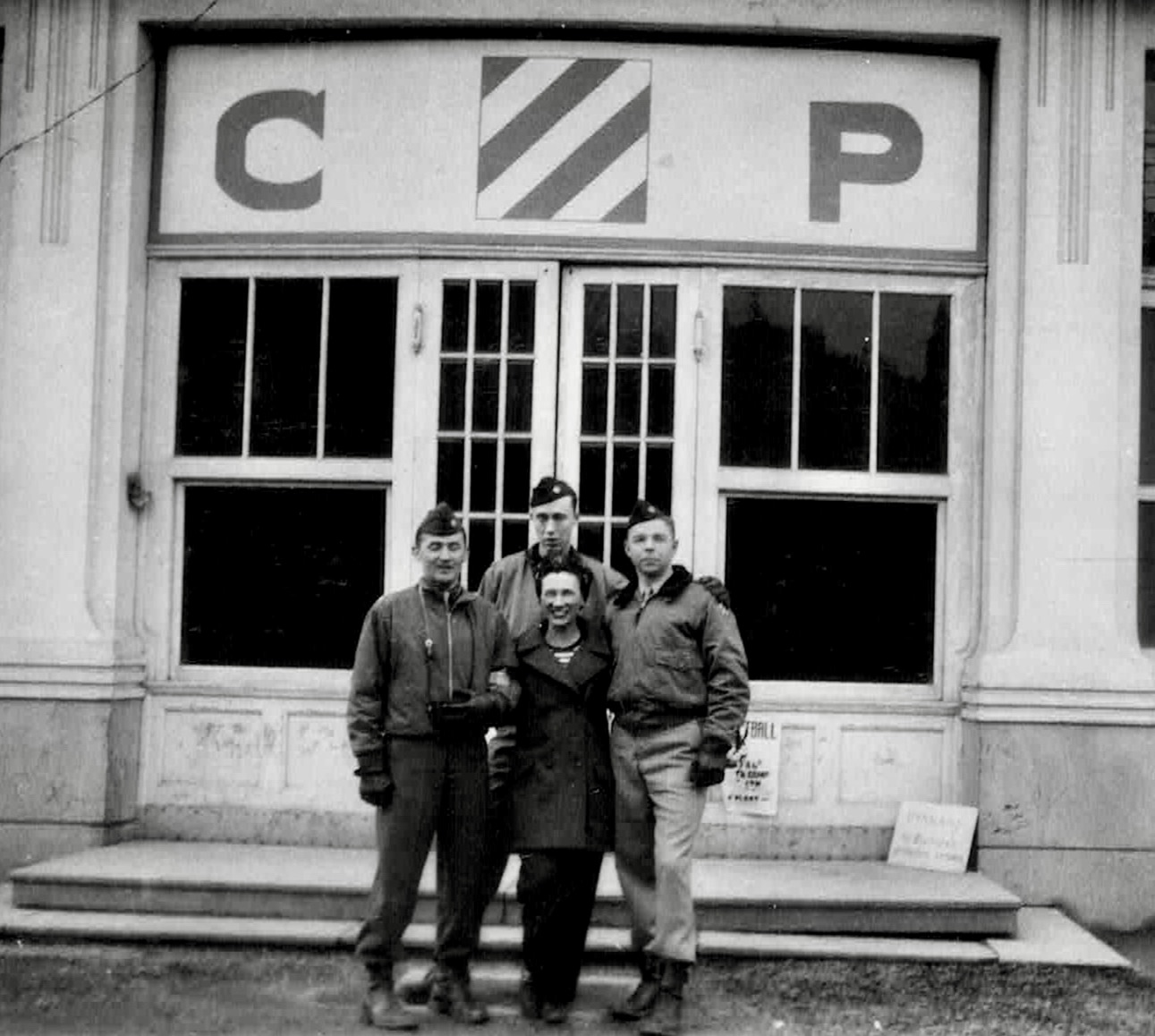
Flo photographed some of her coworkers and visitors at the CP
My Mother and Audie Murphy Ch. 102
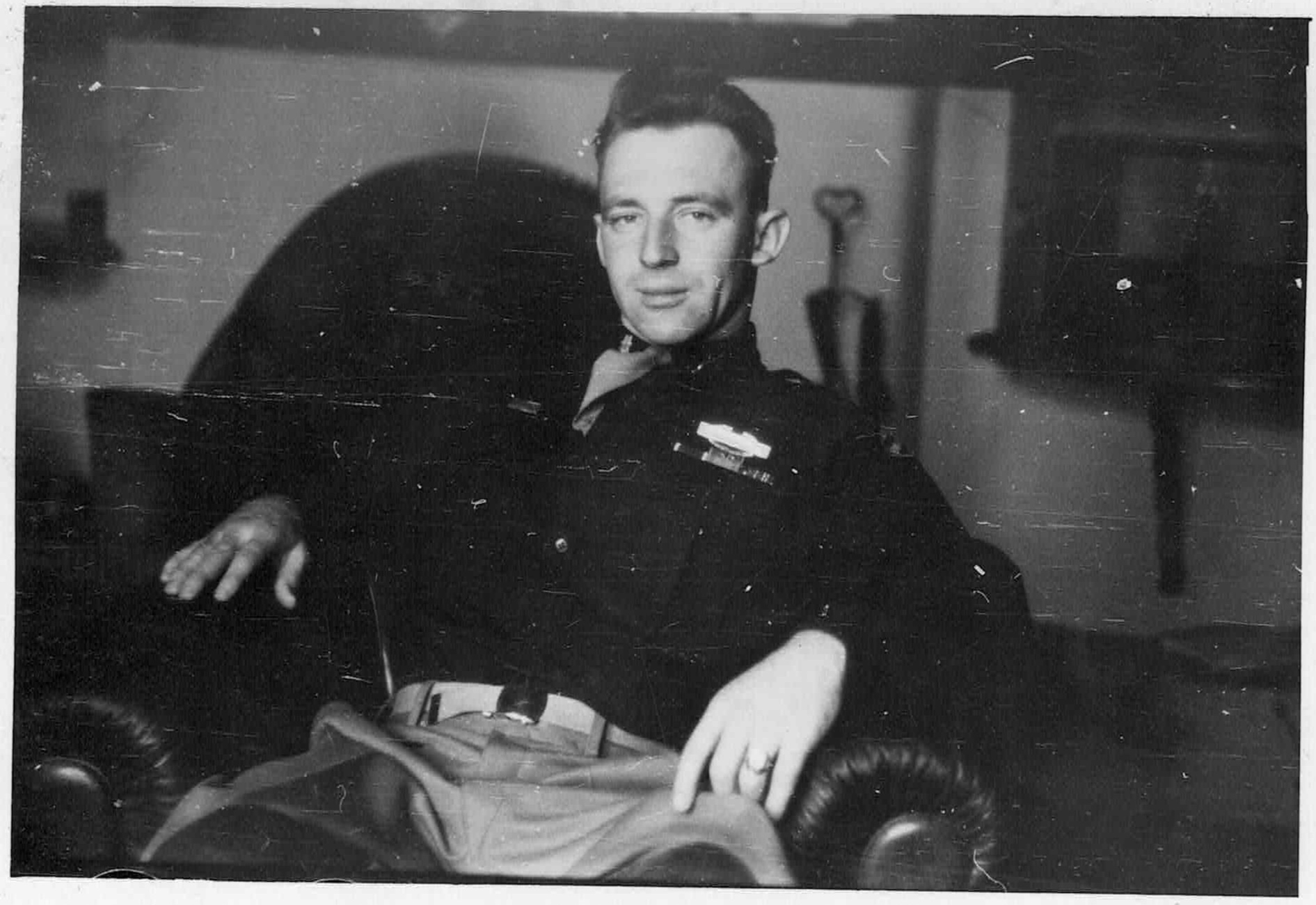
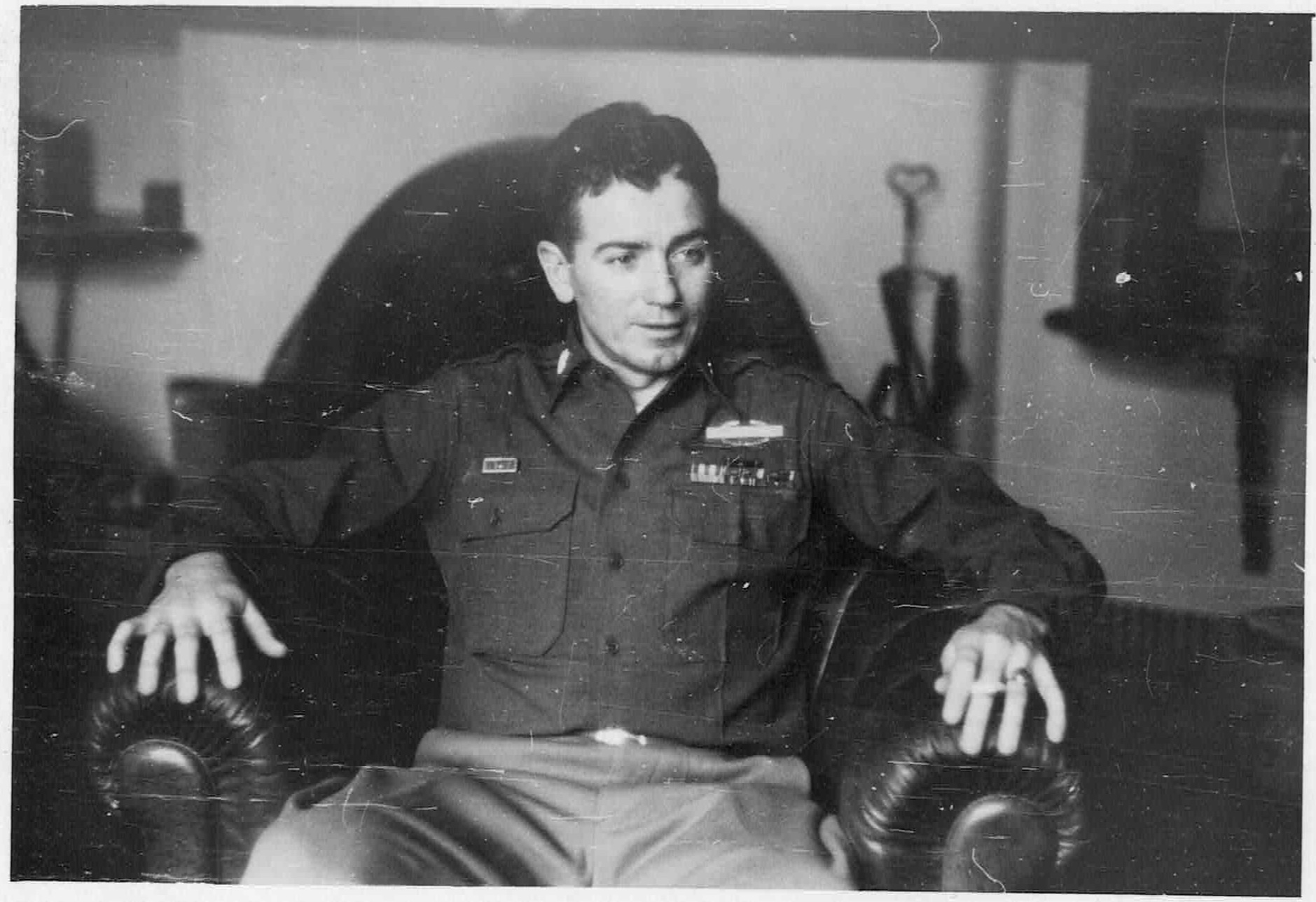
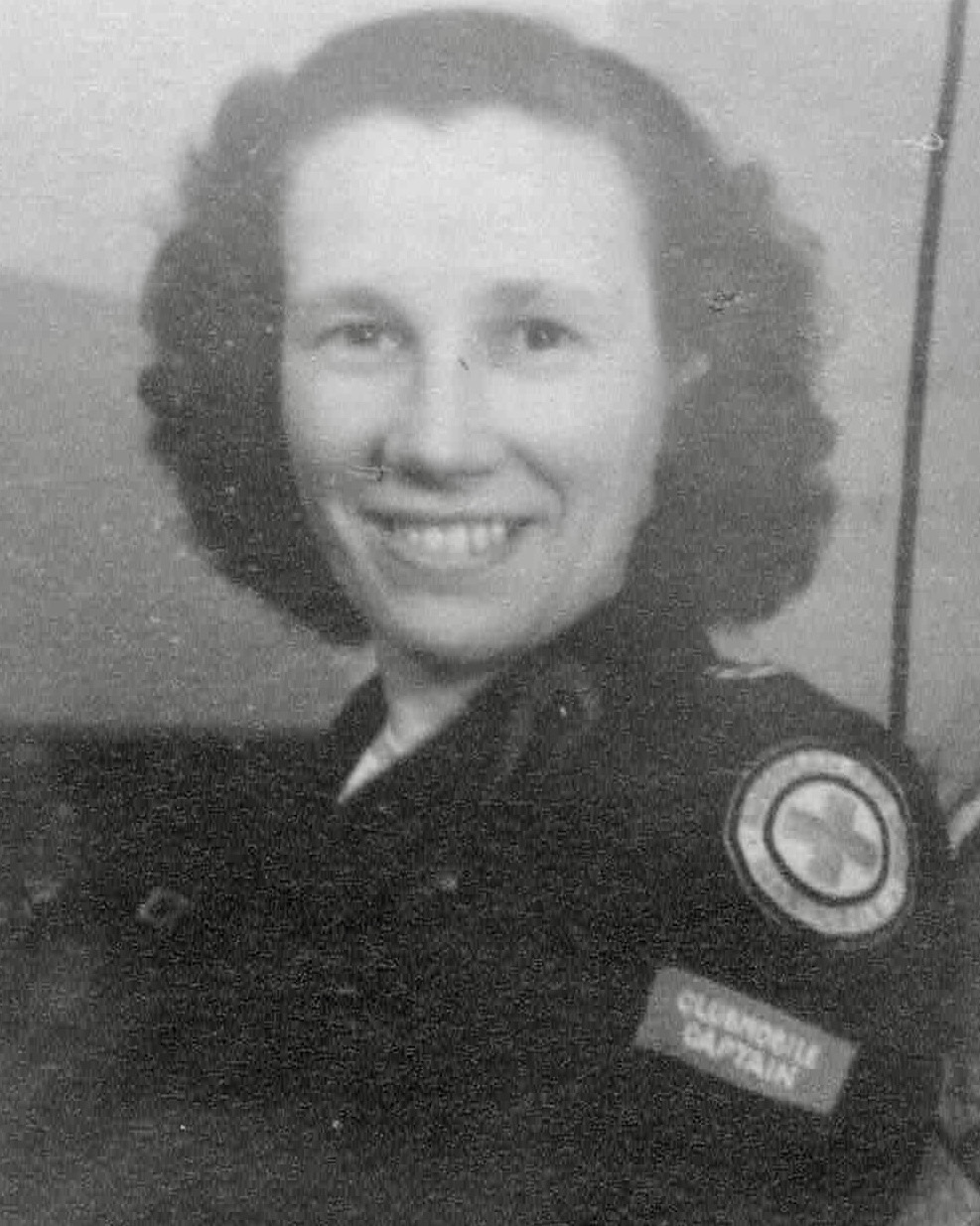
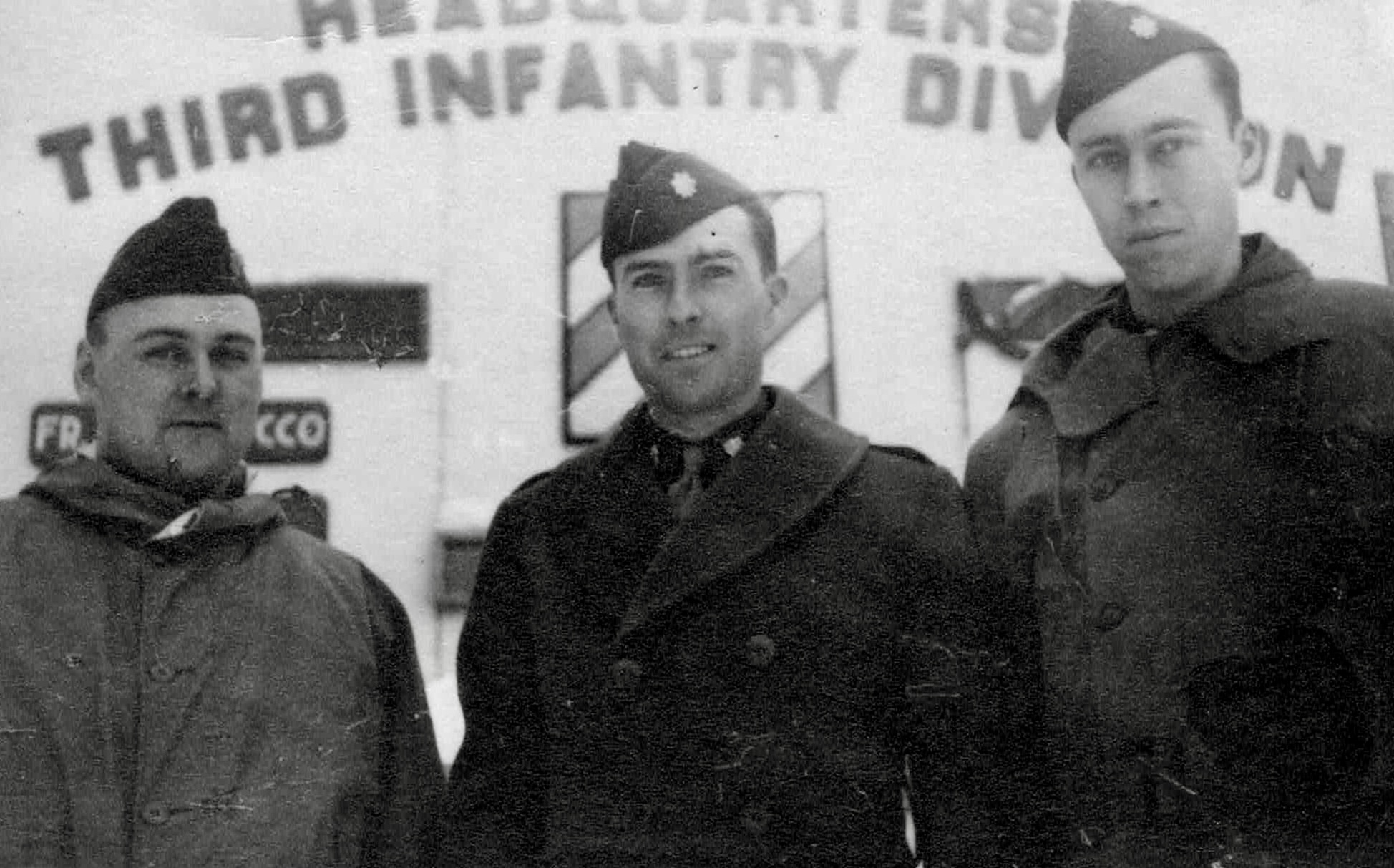
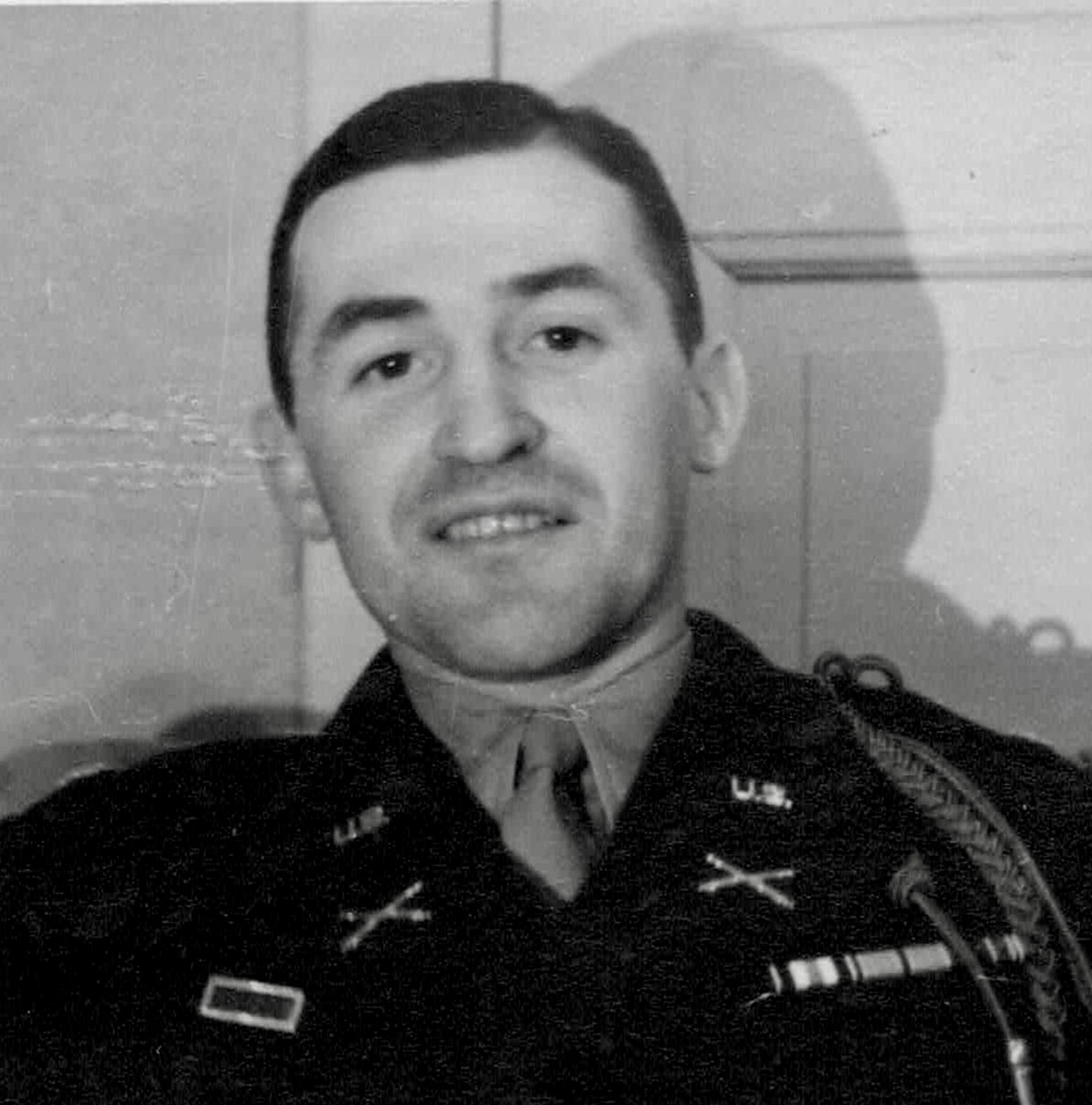
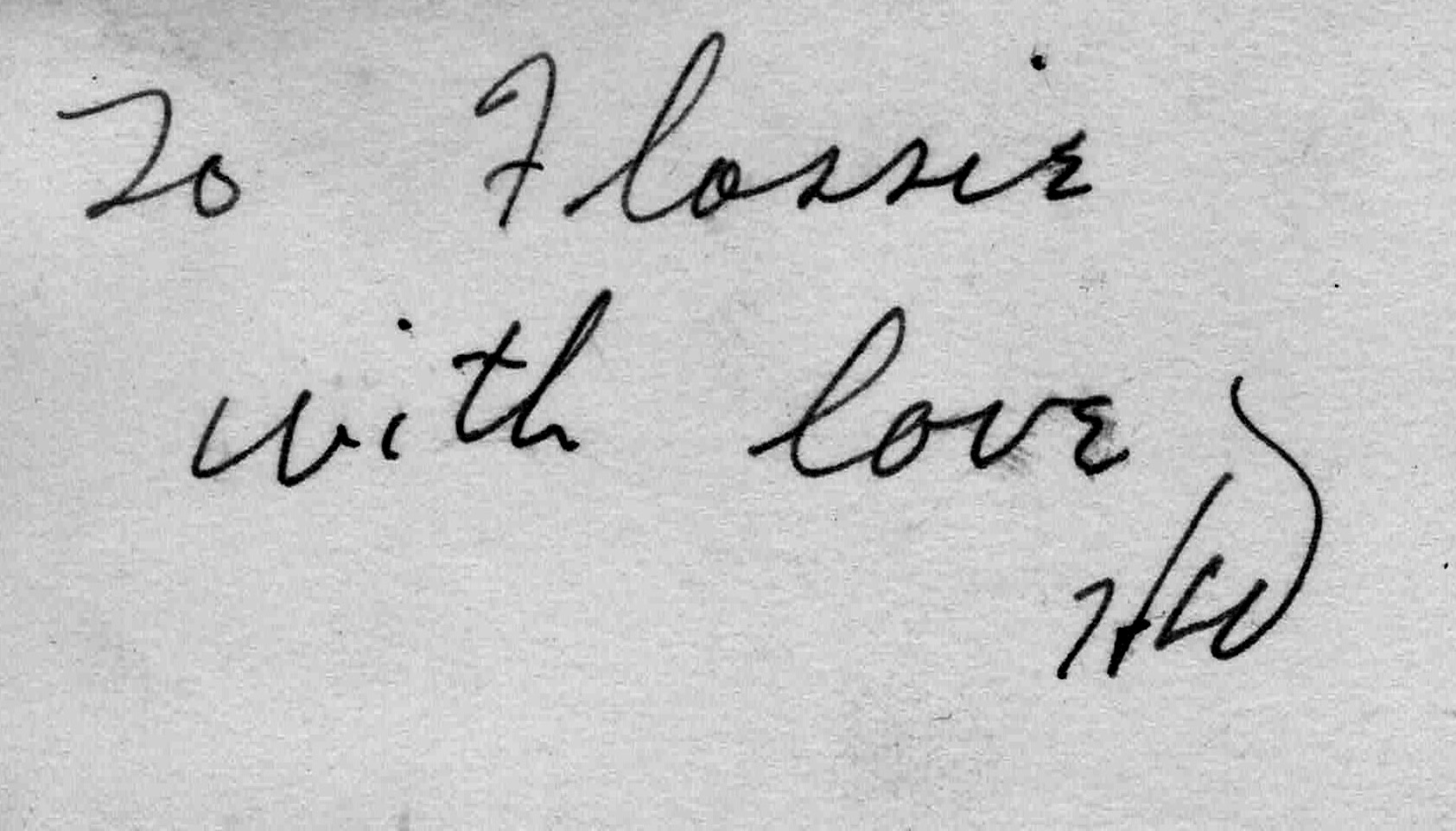
German actress Margot HillscherWith Gen. SchmidtI love this picture of Flo in uniform. There are the Red Cross and Clubmobile Captain patches on her shoulder. She looks happy.Maj. Carey, Col. Drain, Maj. Duncan, Maj. Royce, Maj. SchutThe “Mad Majors” with FloMaj. Perkins, Maj. Dwan, Maj. DuncanThe “Mad Majors” at easeMajor CareyLt. Leland NelsonThird Division CP, Bad Hotel, Bad WildungenMaj. Duncan AGWritten on the back of the picture of Major Duncan. But who is HW?
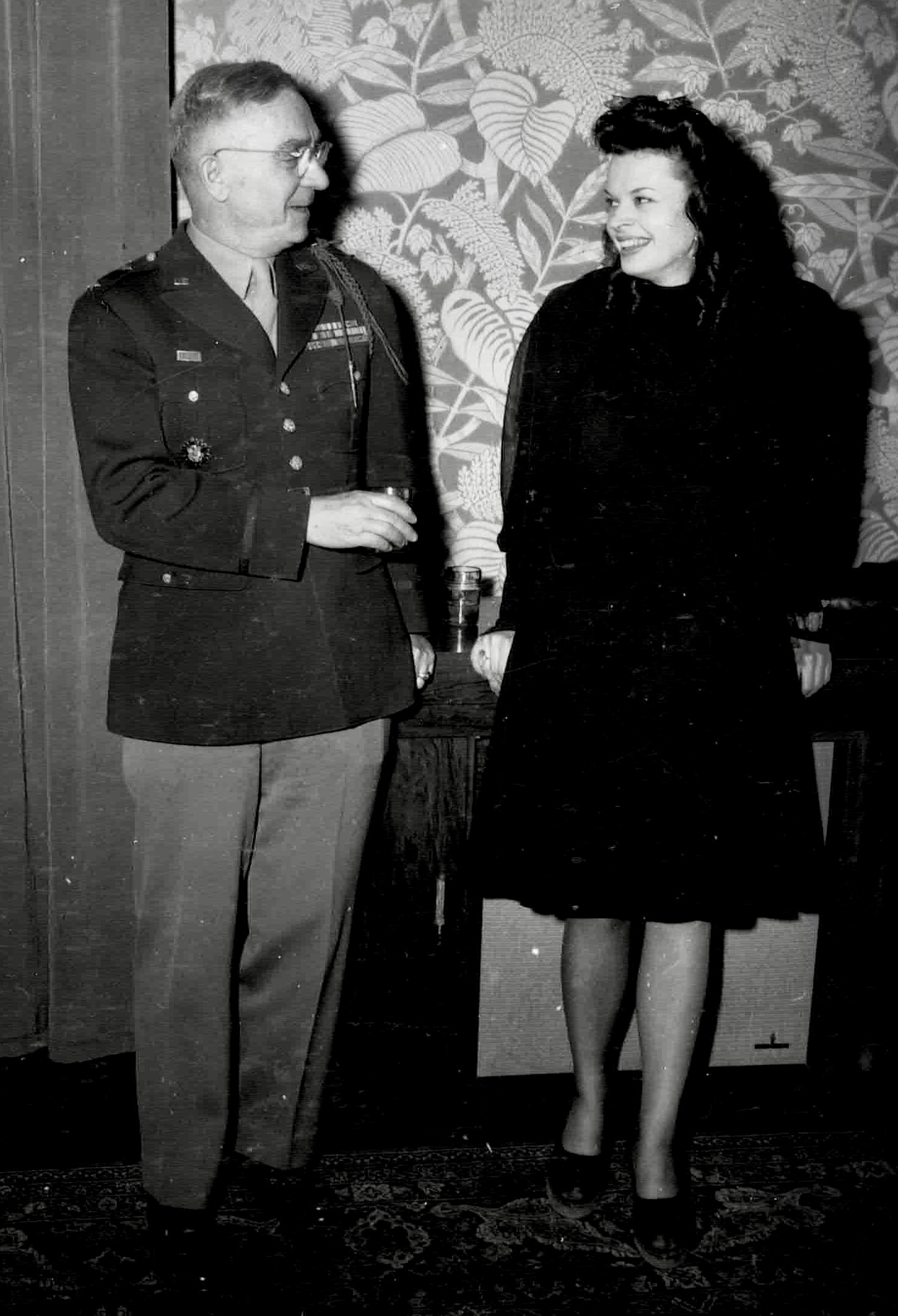
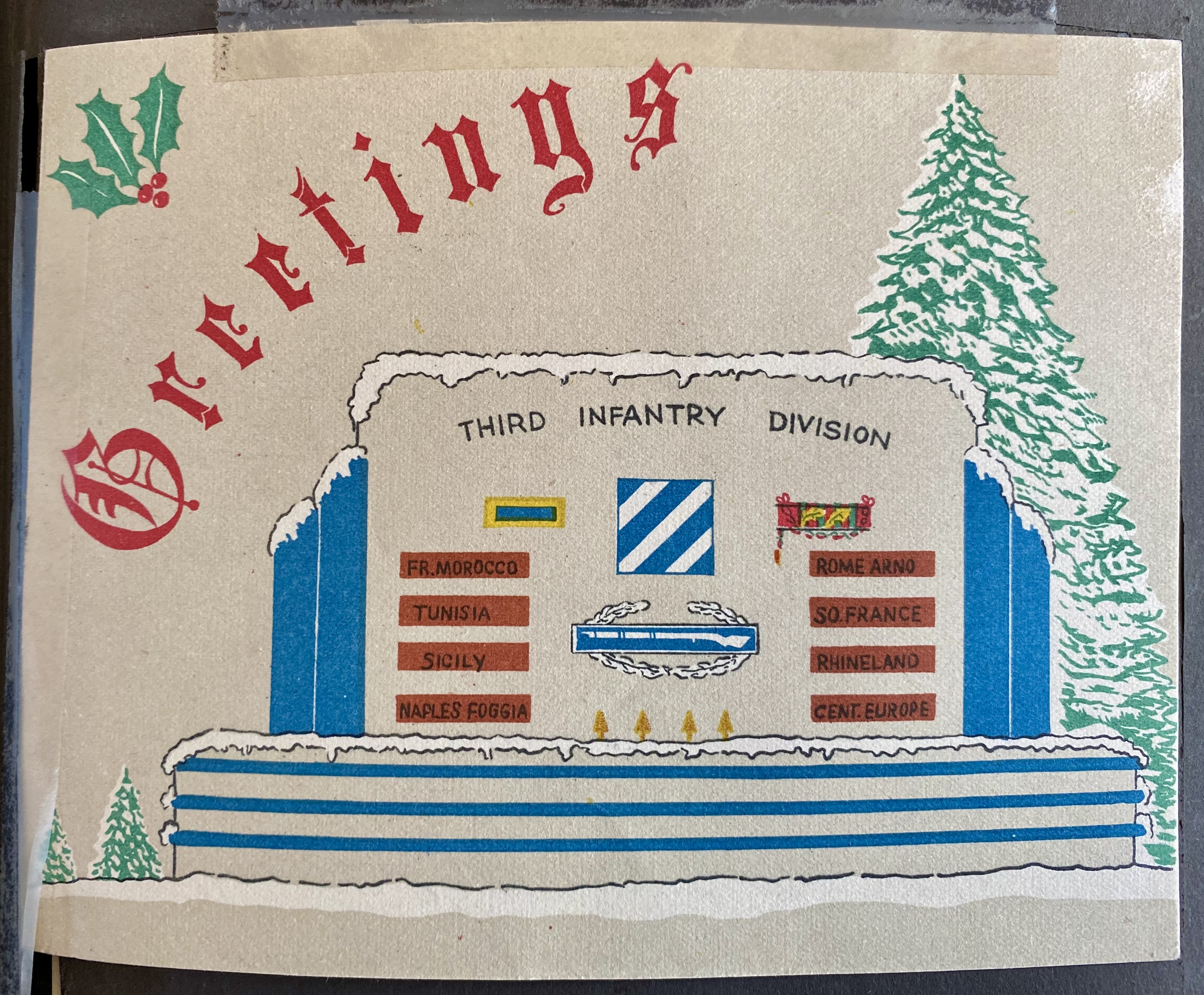
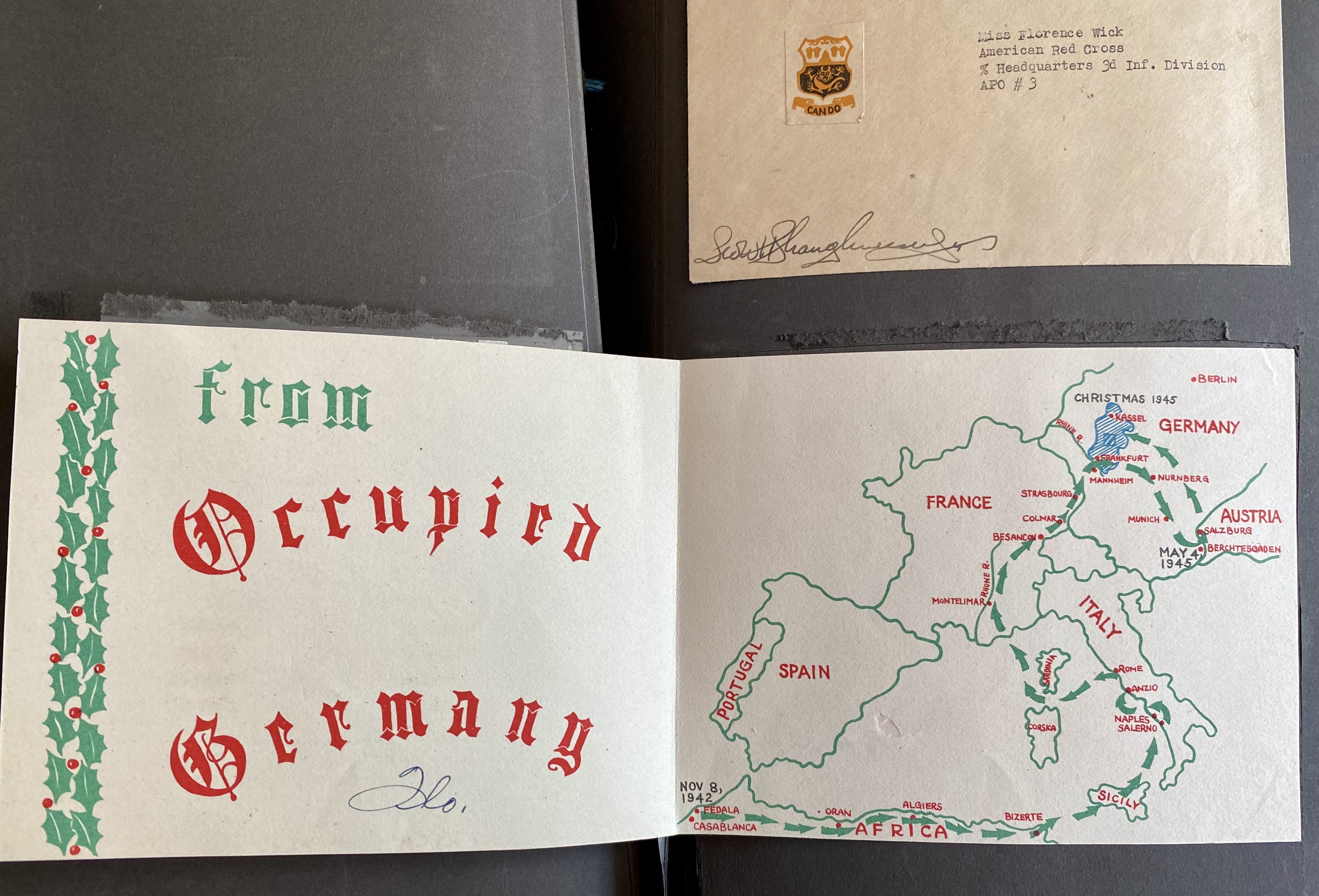
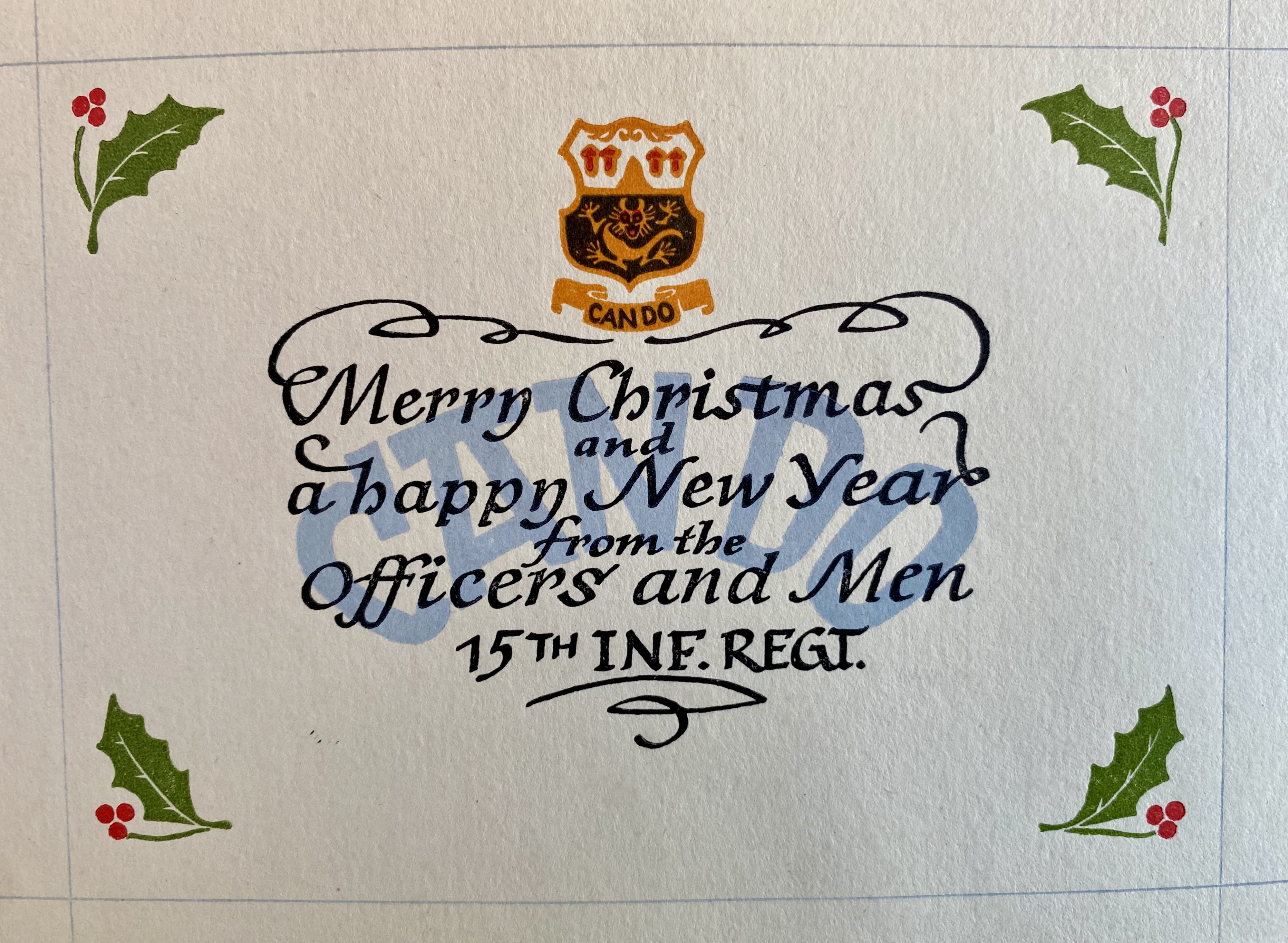
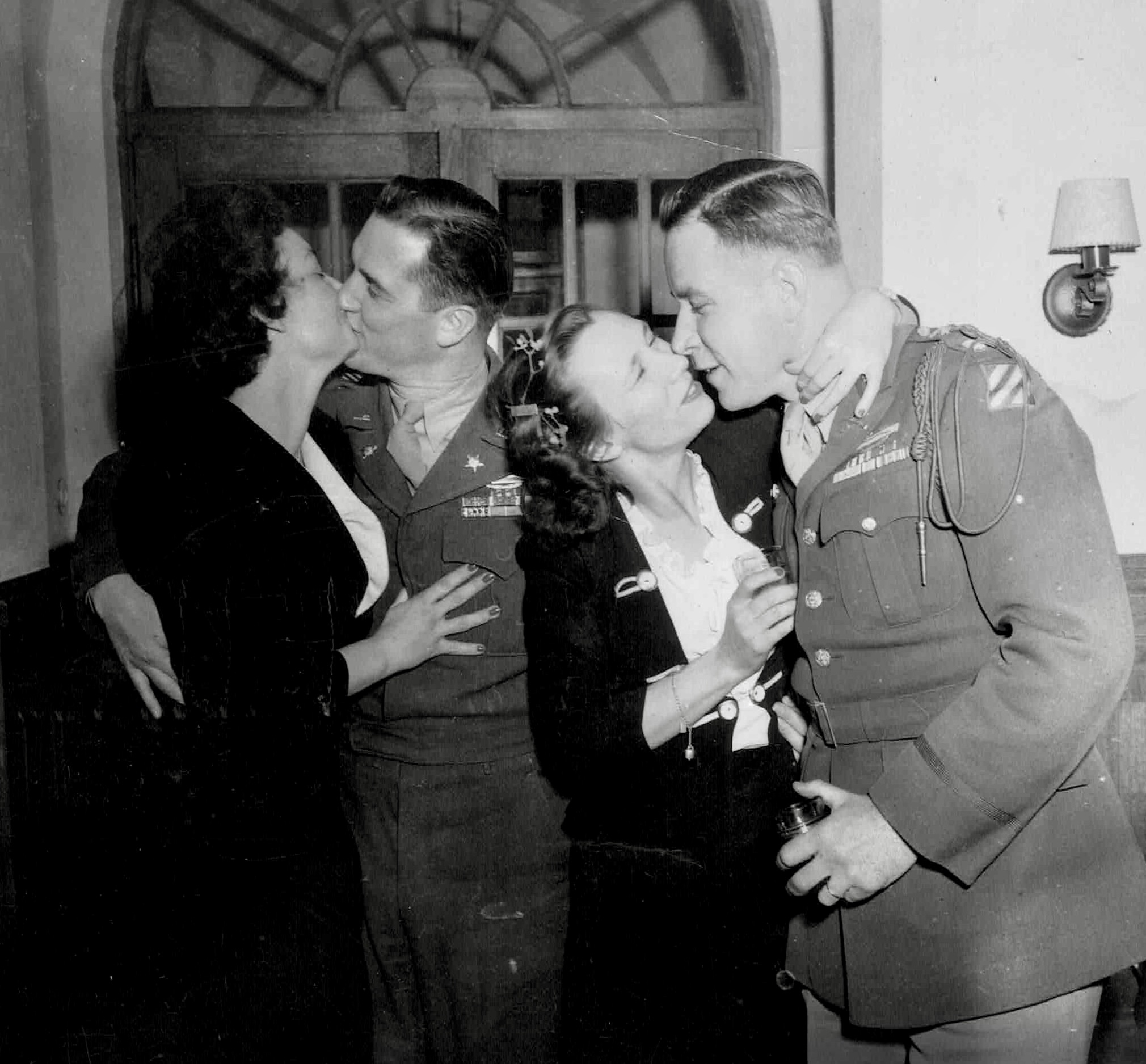
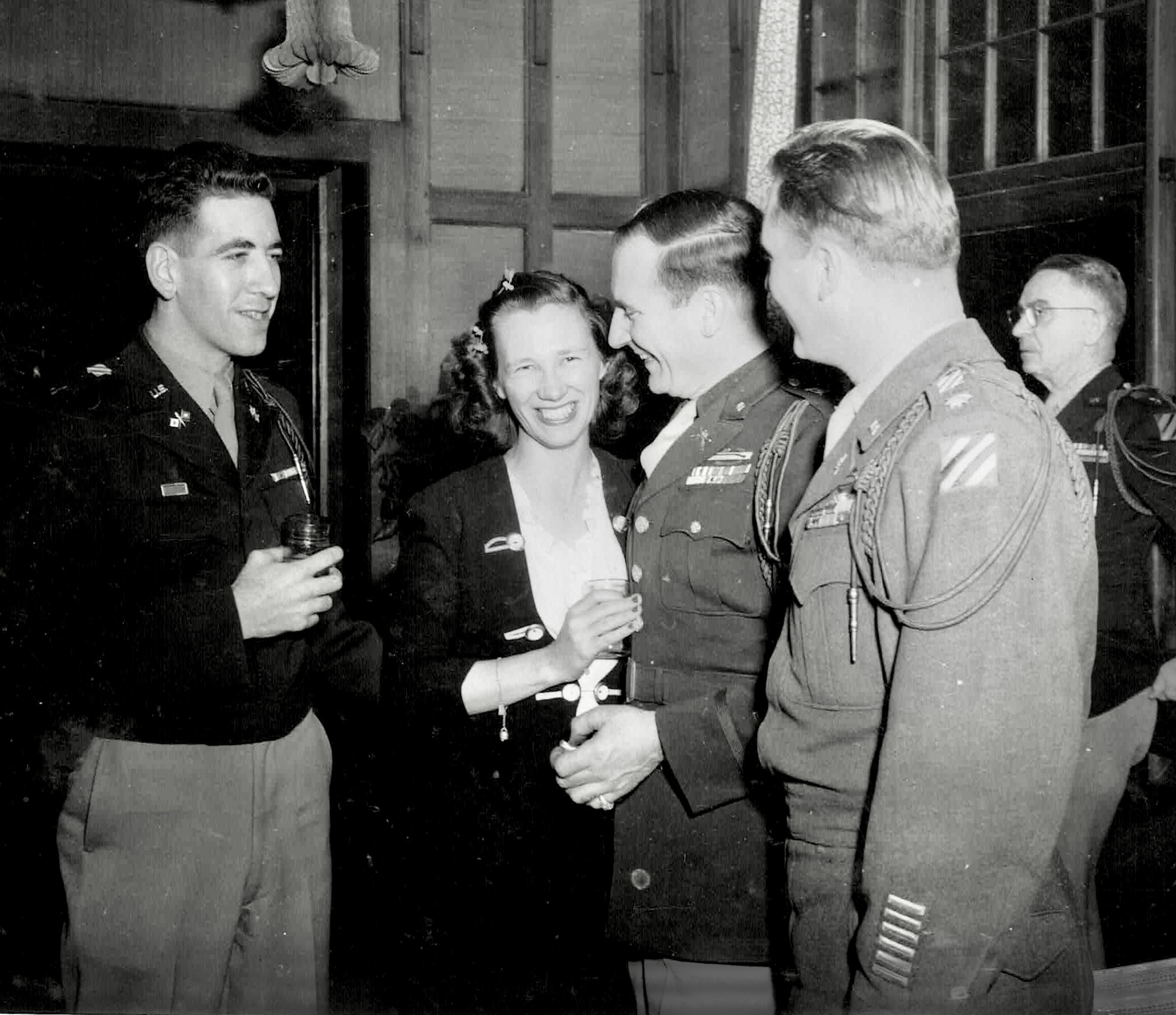
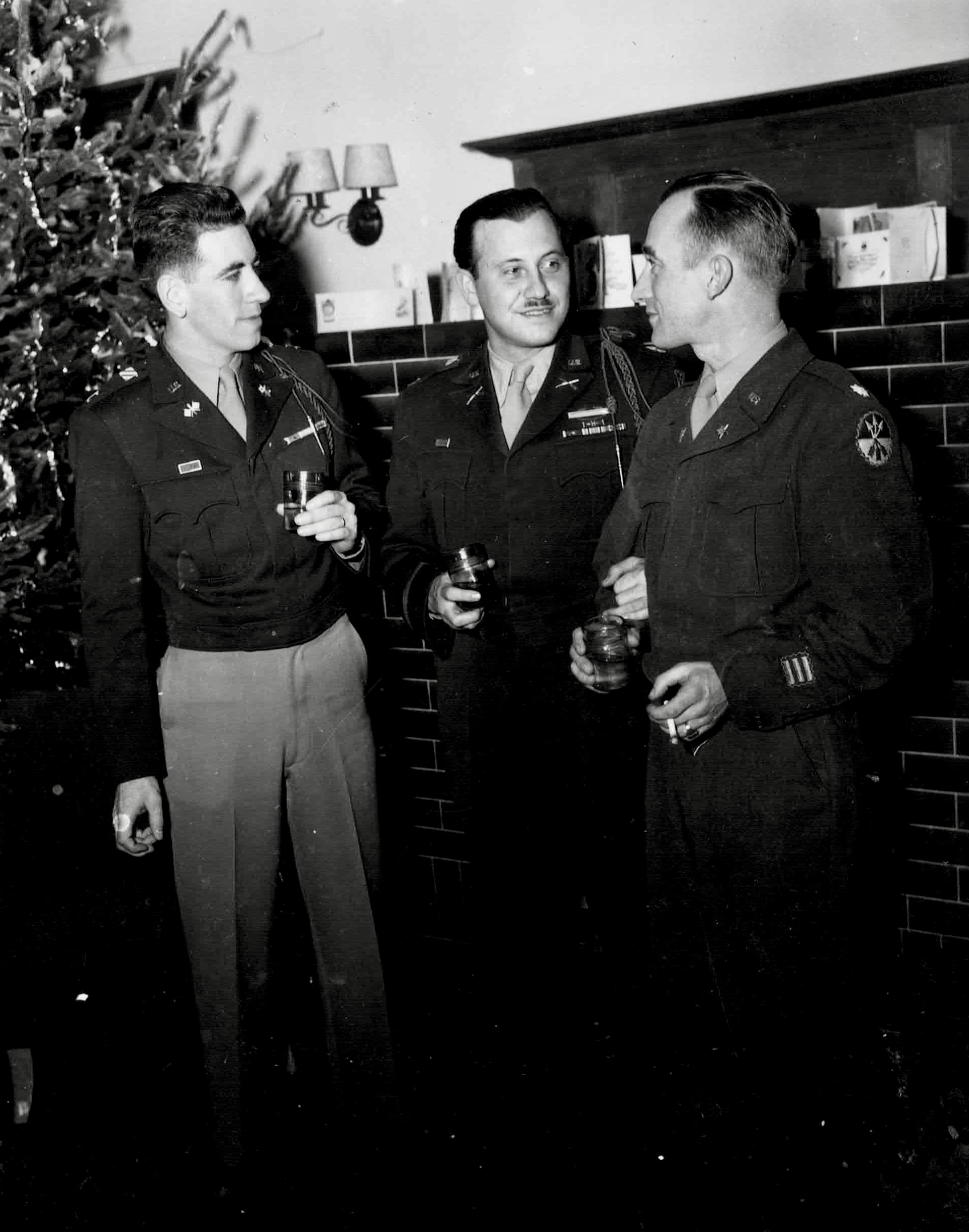
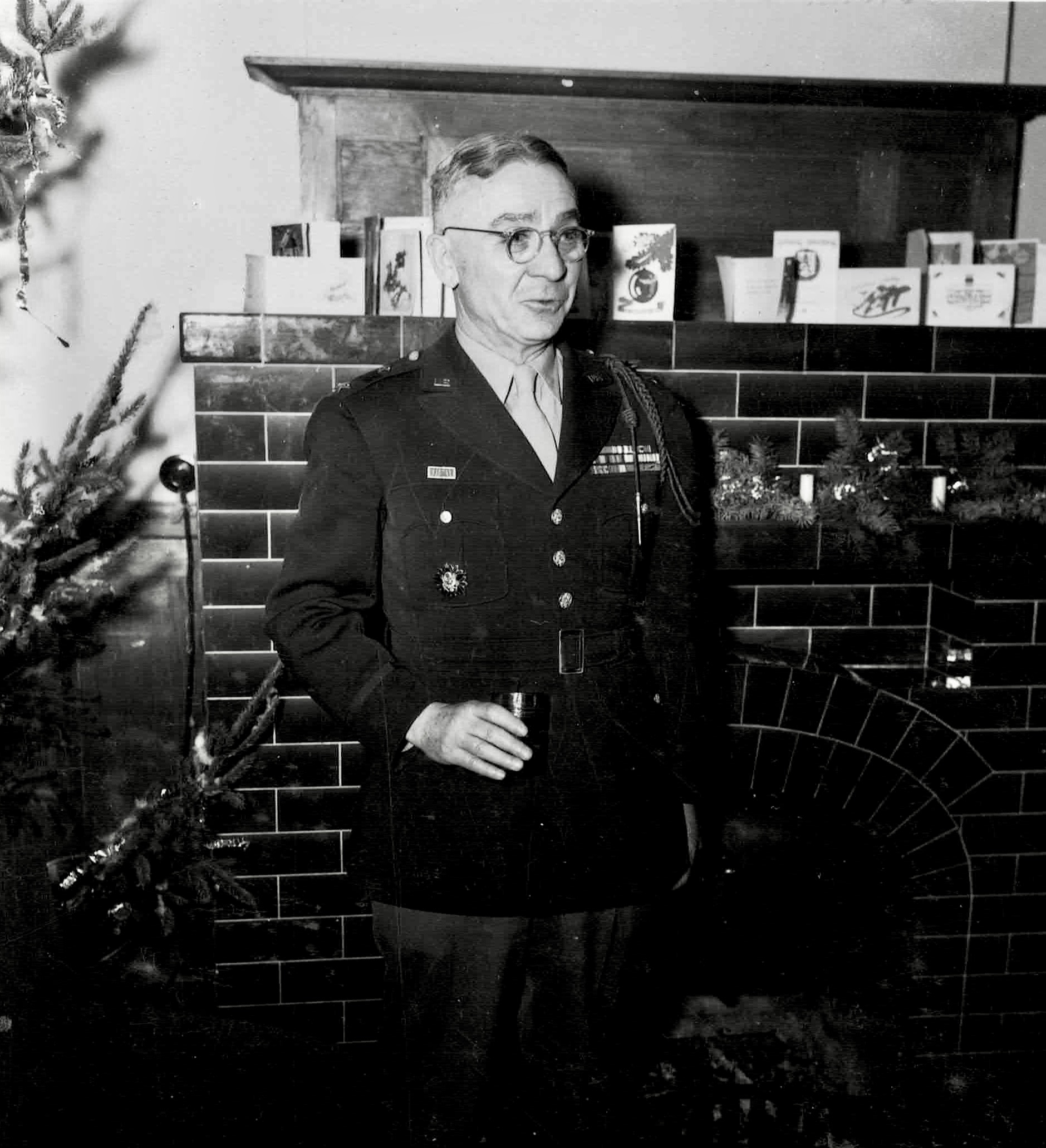
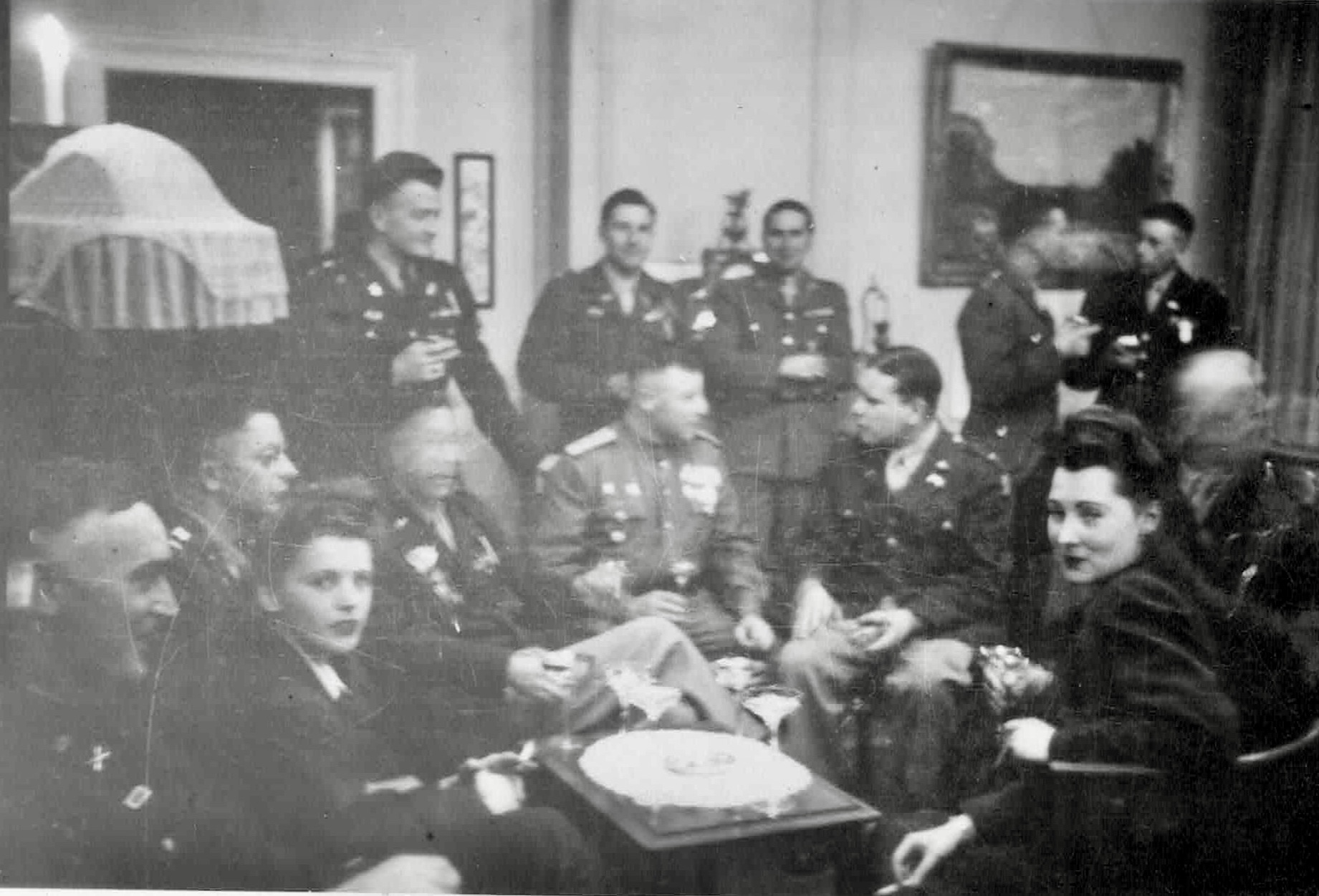
Gen. Schmidt’s New Year’s party celebrates Third Division
My Mother and Audie Murphy Ch. 99
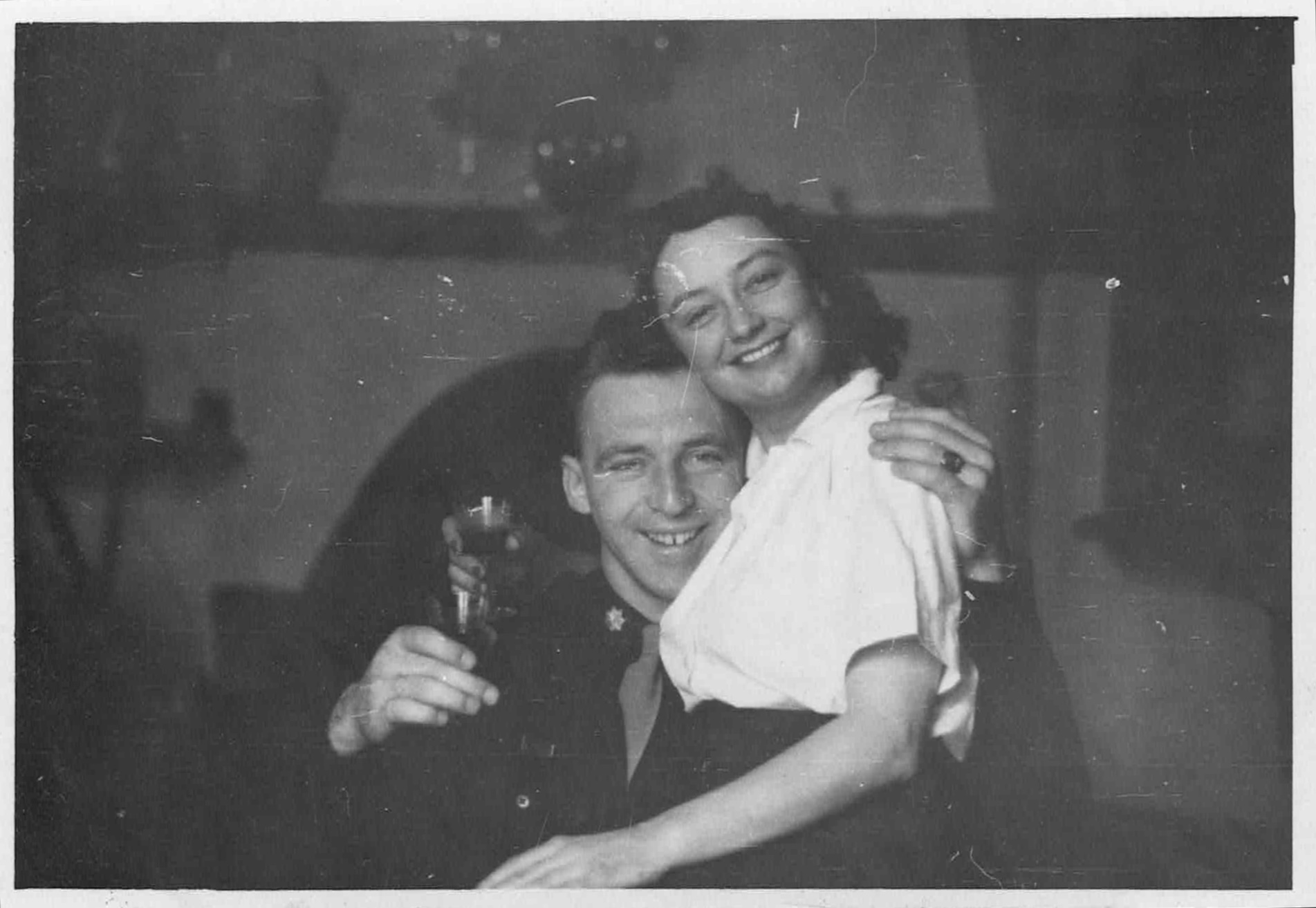
The card shows the route of the 3rd Division from Africa to GermanyThird Infantry Division New Year’s partyFlo captioned this “Blackmail material”Flo didn’t ID these guysGeneral Schmidt hosted the party Christmas ‘C’ company 30th Infantry
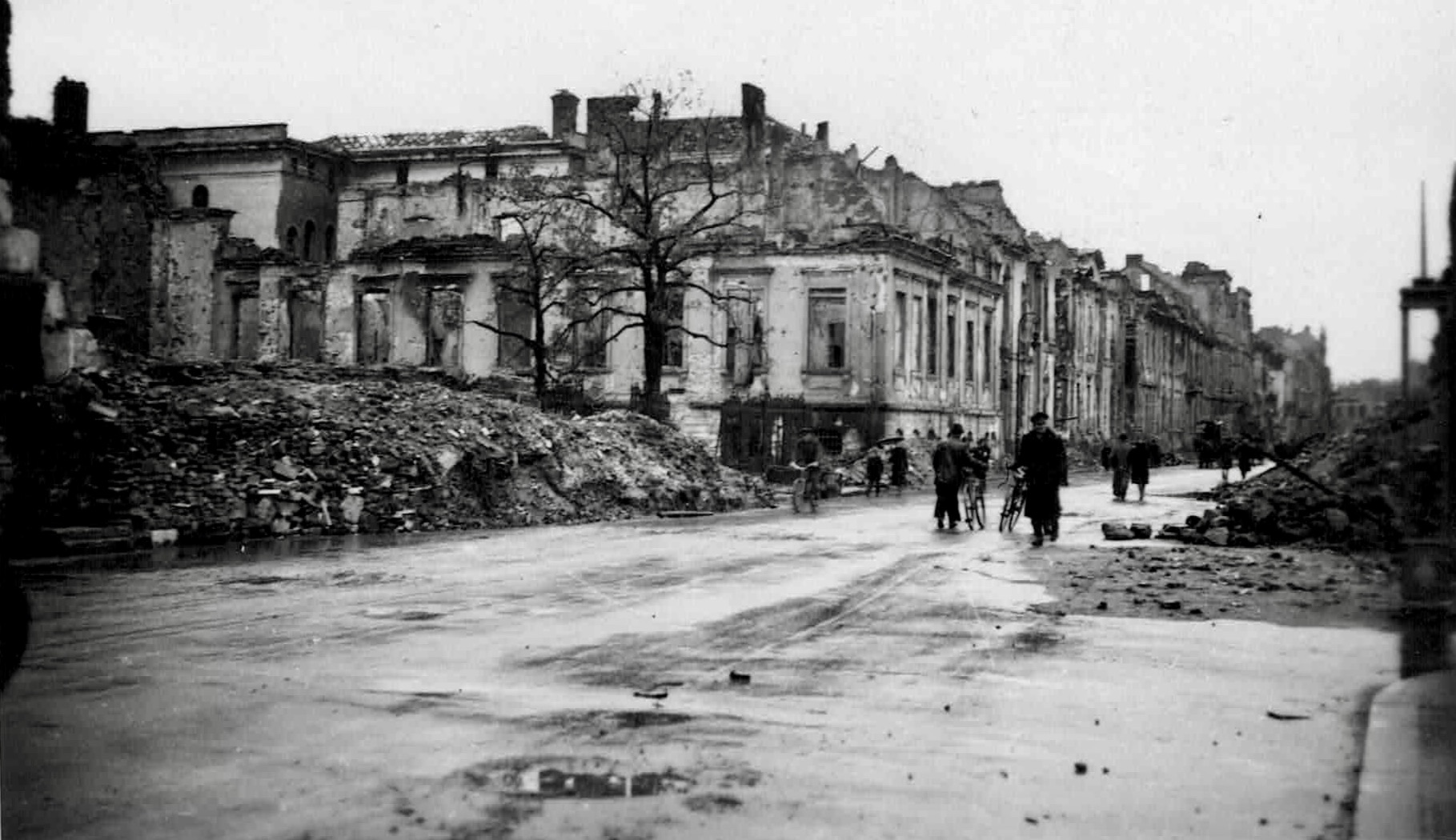
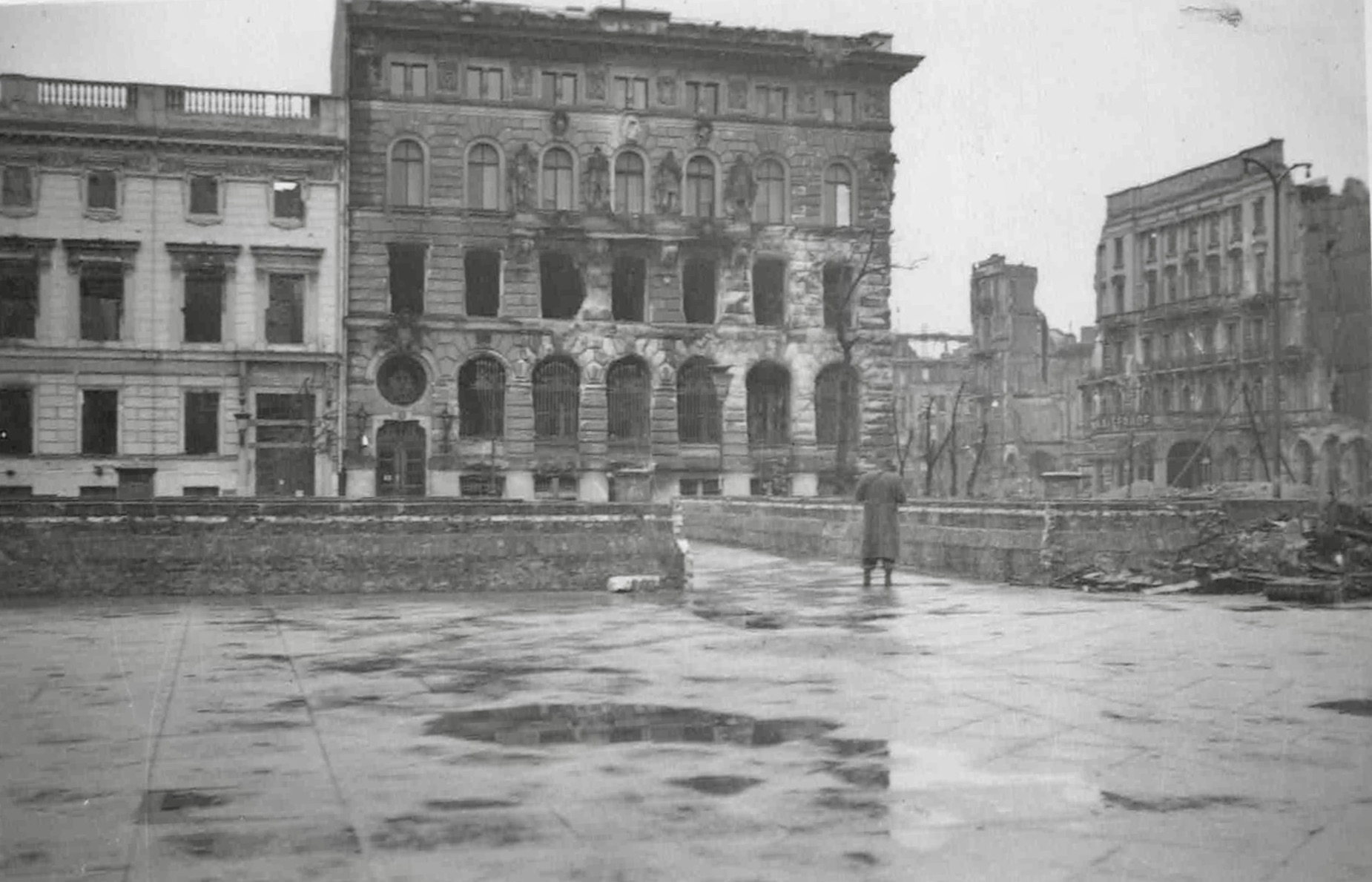
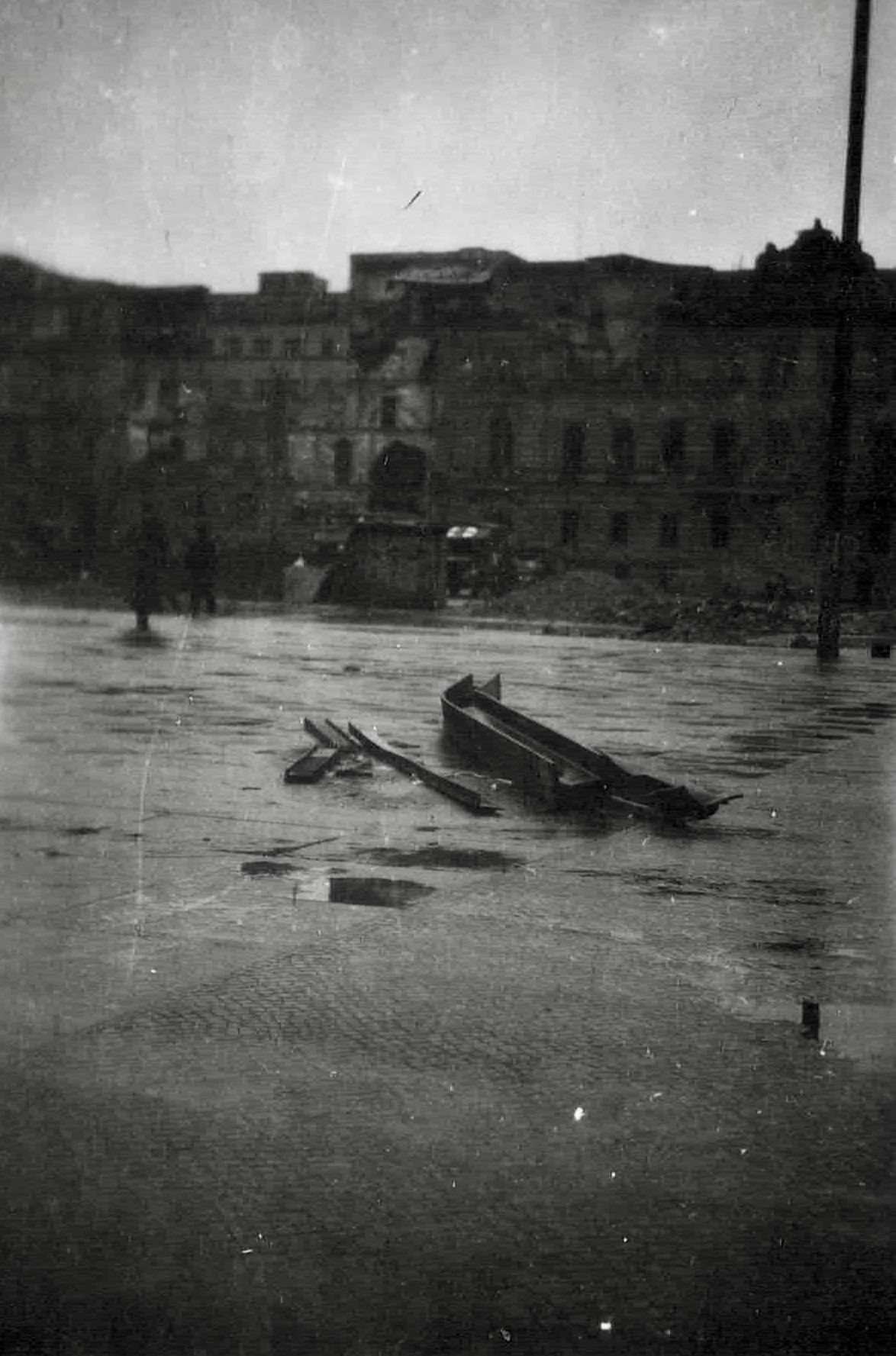
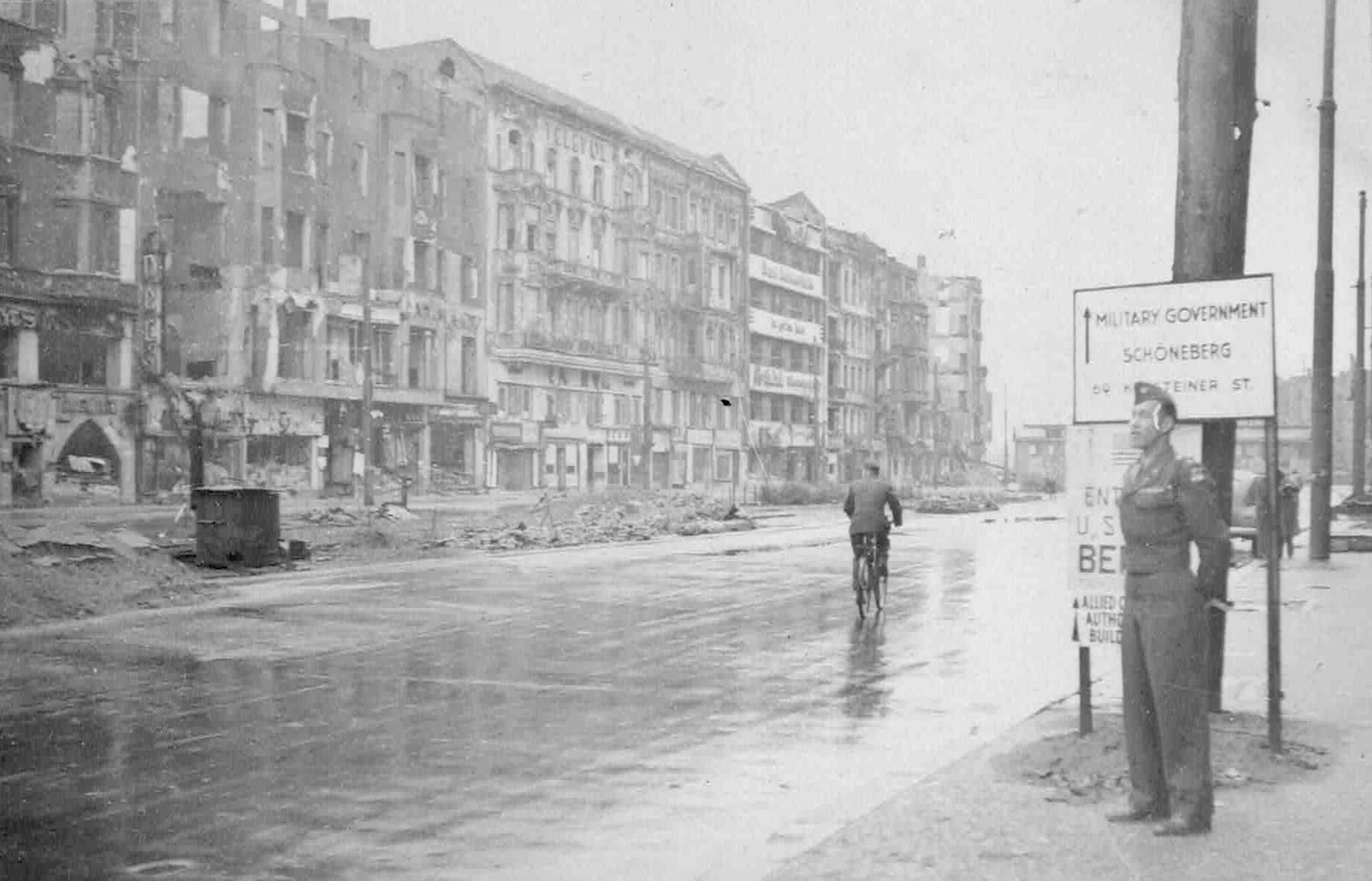
By the end of World War II, Berlin was no longer a city so much as a vast field of ruins. After enduring 363 air raids and a final, catastrophic ground assault, the German capital lay shattered—famously described by its own residents as a heap of rubble. Street by street, block by block, the urban fabric had been torn apart, leaving behind a landscape of collapsed buildings, twisted steel, and drifting ash.
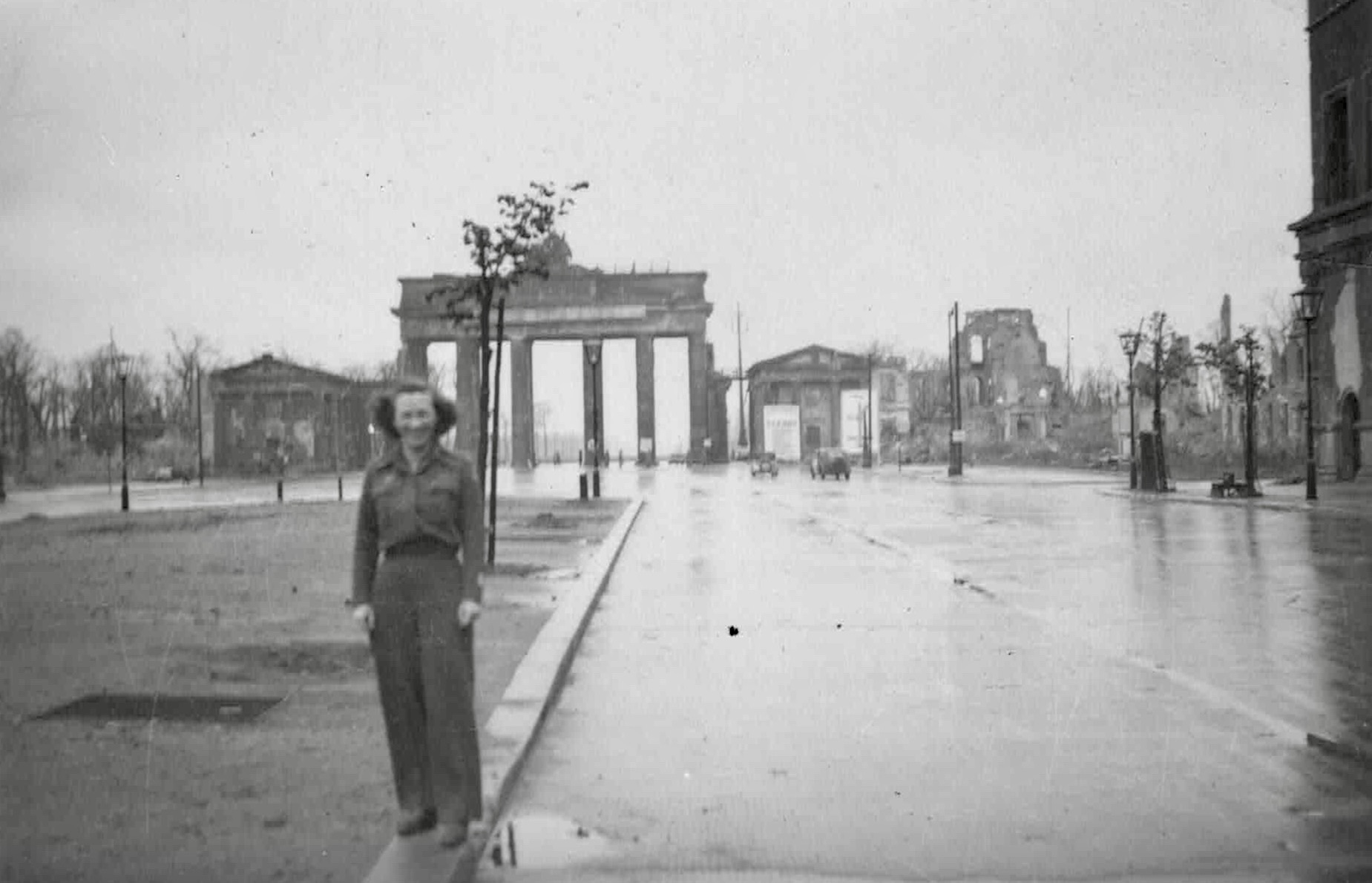
Flo at the Brandenburg Gate, built in 1791. It would soon be incorporated into the Berlin Wall, dividing the city into East and West sectors during the Cold War.
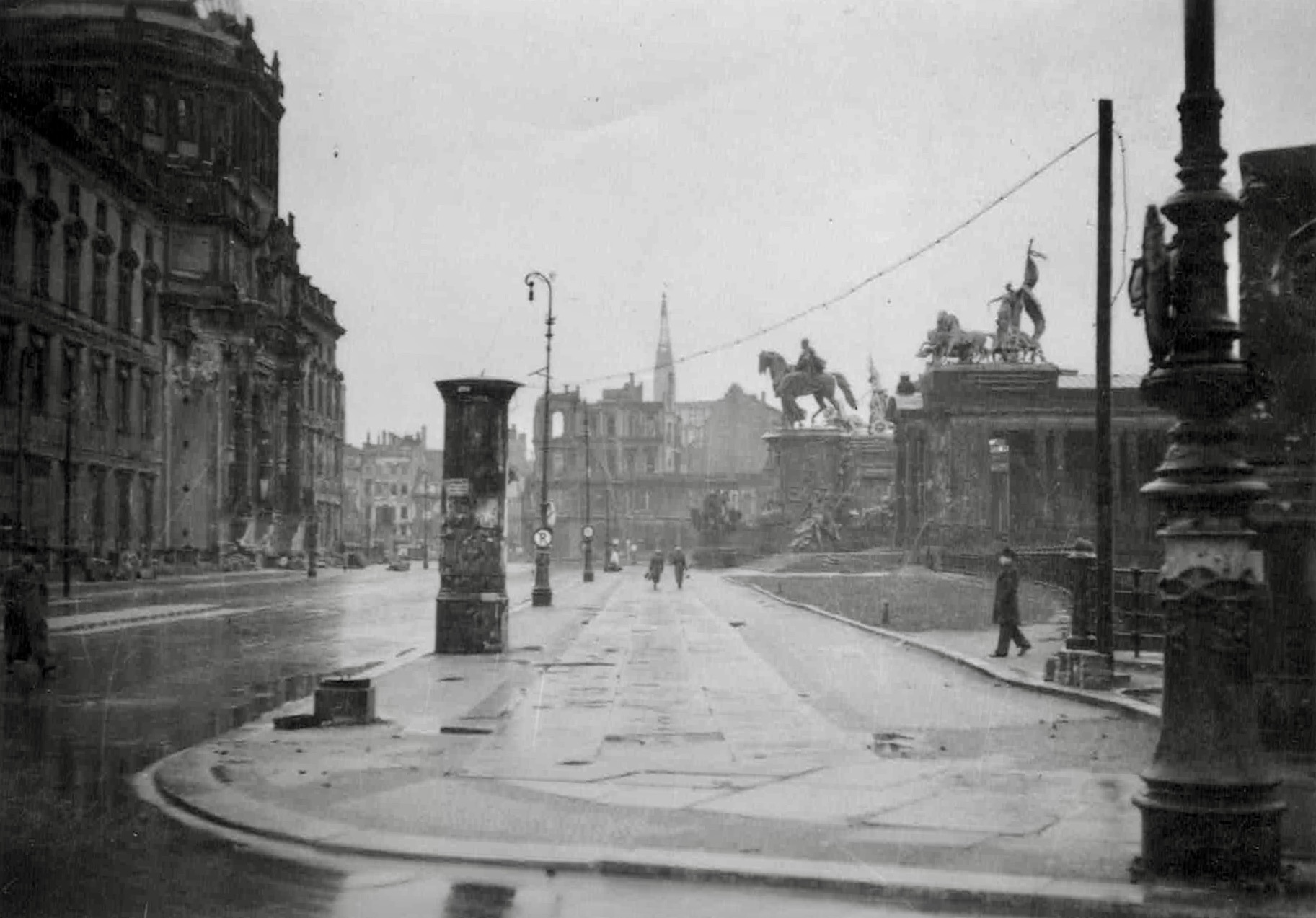
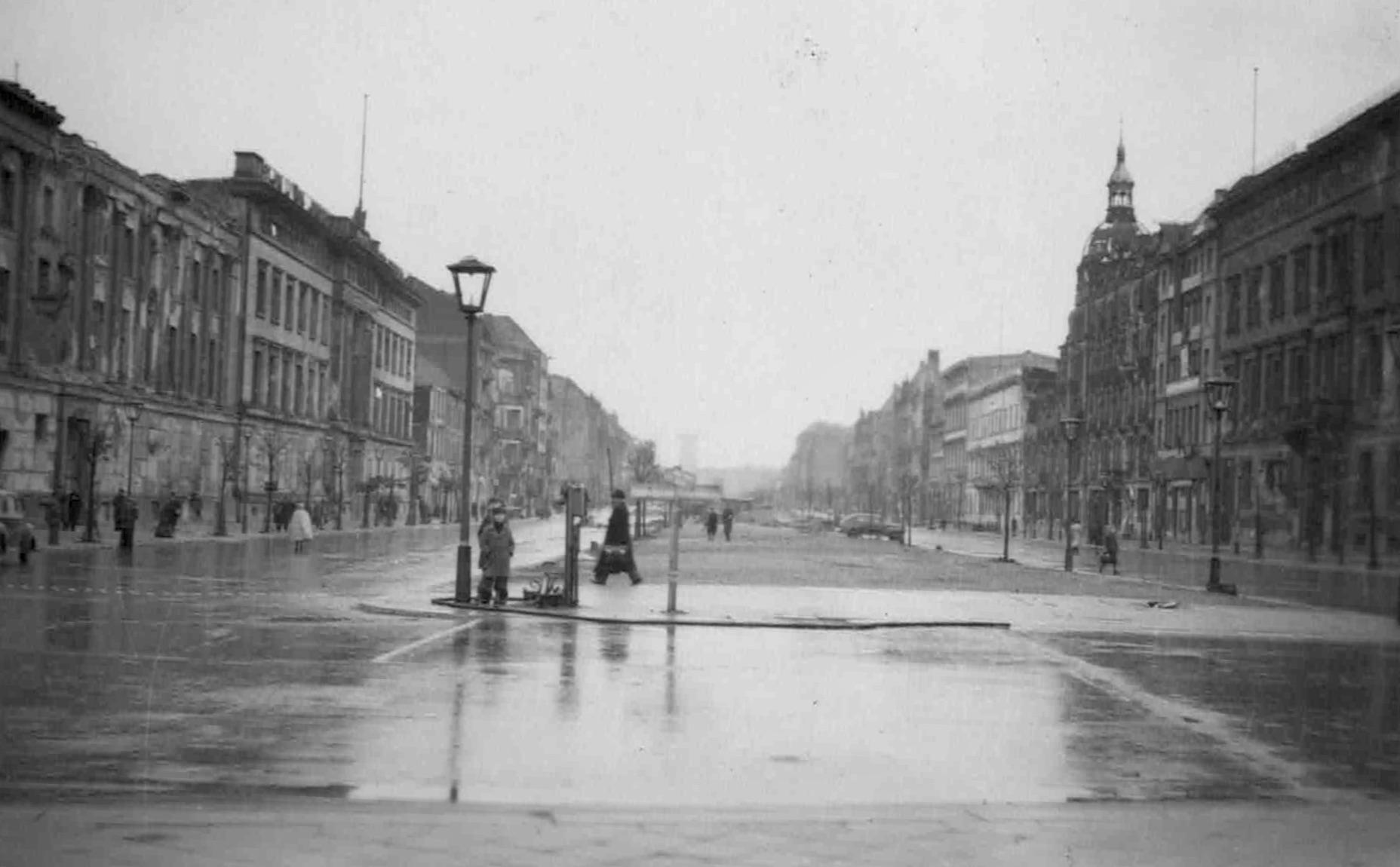
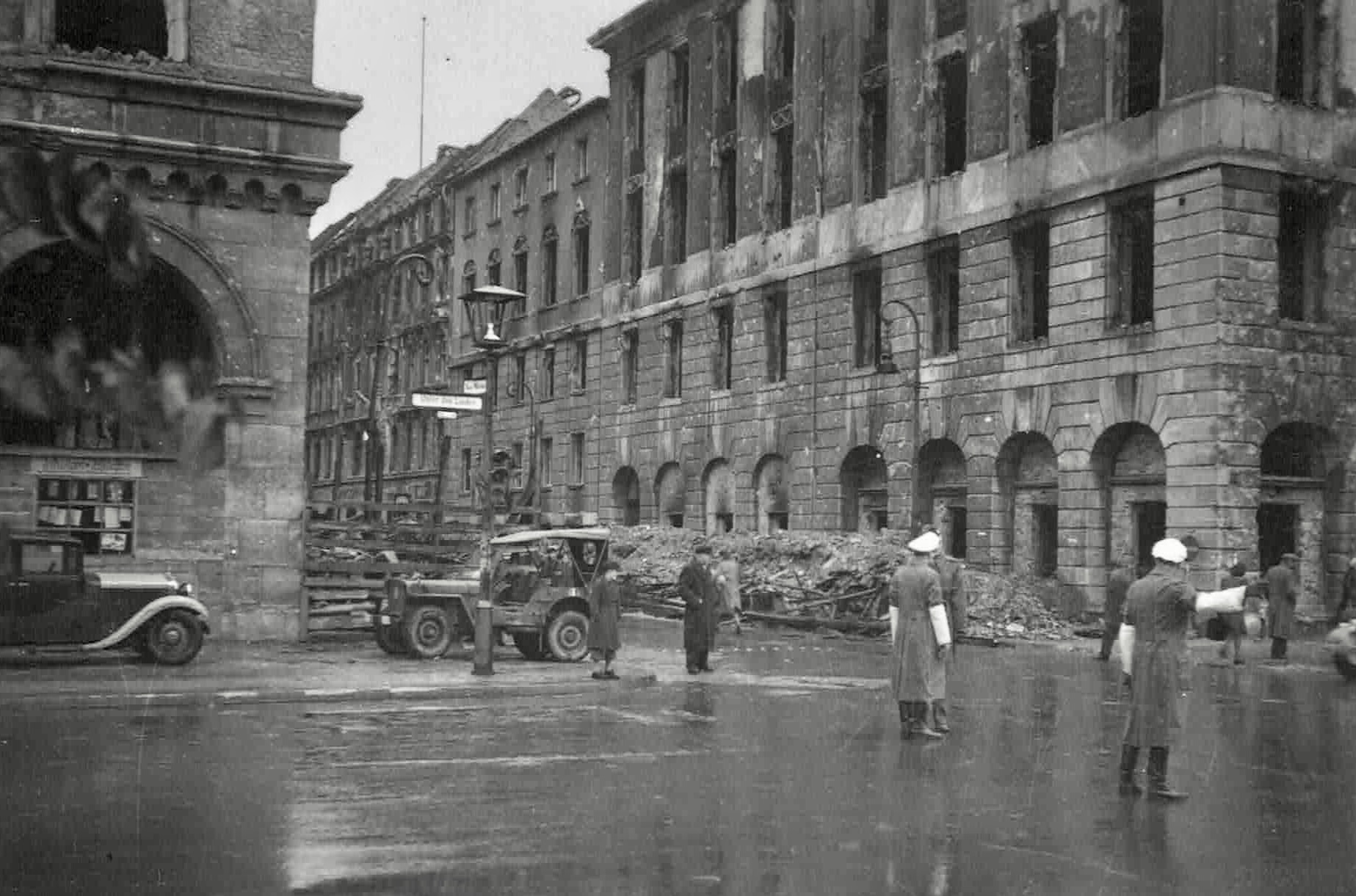
Nearly 80 percent of Berlin’s city center had been destroyed. Across the wider metropolis, some 600,000 apartments were reduced to dust and broken brick. Infrastructure collapsed alongside homes: in the final days of fighting, 128 of the city’s 226 bridges were blown apart, a quarter of the subway system was deliberately flooded, and running water, electricity, and rail transport virtually ceased to function. Iconic landmarks suffered the same fate as ordinary neighborhoods. The Reichstag and Brandenburg Gate were battered by artillery and close-quarters combat, while along the grand boulevard Unter den Linden, only 16 of its 64 buildings remained standing.
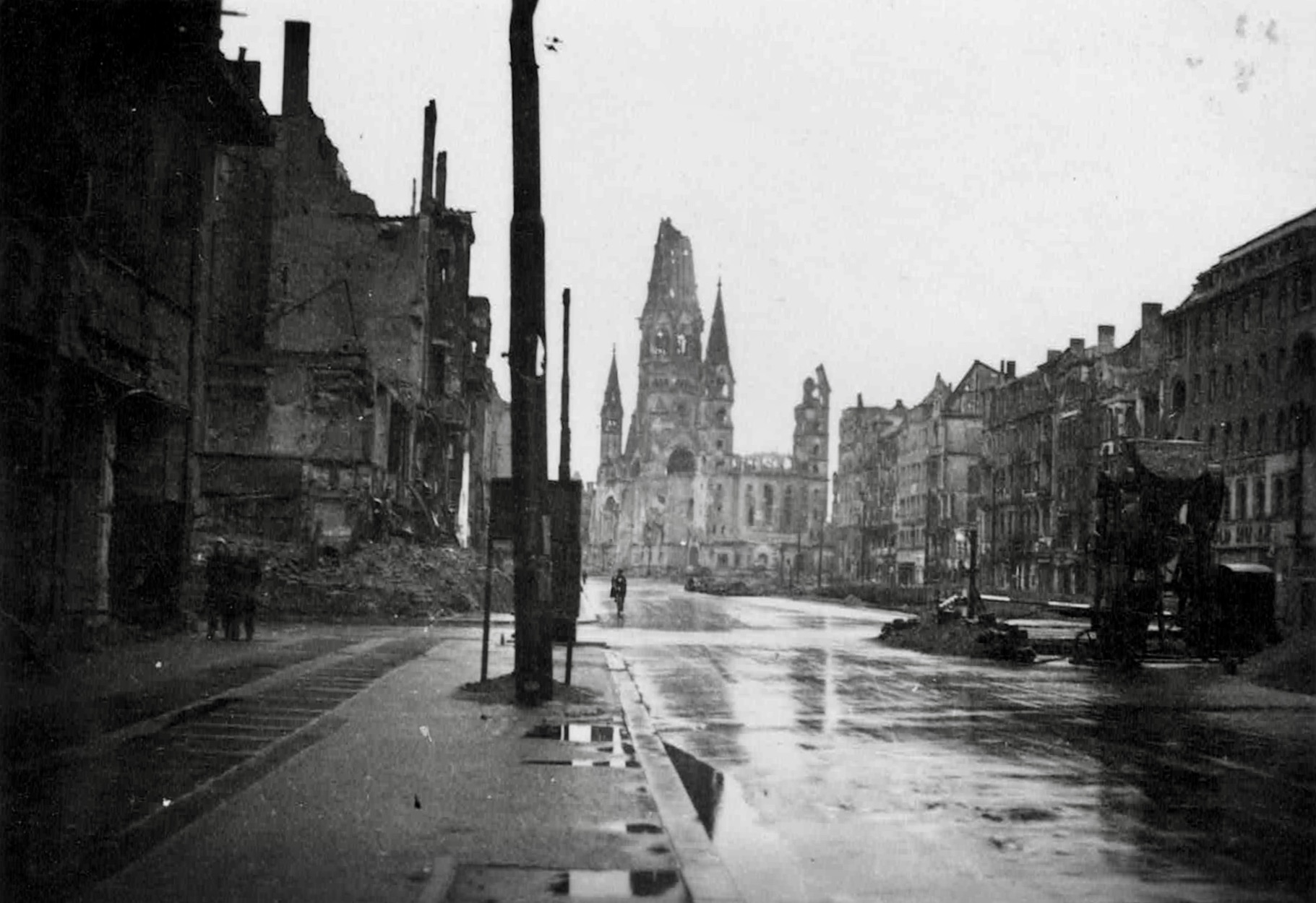
Kaiser Wilhelm Memorial Church and the city center
The human cost was staggering. Civilian deaths from bombing raids alone are estimated at between 20,000 and 50,000. During the final Battle of Berlin, another 125,000 civilians are believed to have died amid the chaos of street fighting, shelling, and firestorms. At least 450,000 people were left homeless, and the city’s population collapsed from 4.3 million in 1939 to just 2.8 million by the war’s end—a mass exodus of refugees, evacuees, and the dead.
All photos from Flo’s album
Unlike many cities that later erased the physical traces of war, Berlin chose to preserve parts of its devastation as visible memory. Bullet holes and shrapnel scars still mark walls in districts like Mitte and Charlottenburg. The shattered spire of the Kaiser Wilhelm Memorial Church stands deliberately unrepaired, a permanent anti-war monument rising from the city center. Elsewhere, mountains of rubble were piled into artificial hills—Teufelsberg and Volkspark Humboldthain—turning the wreckage of war into silent landmarks.
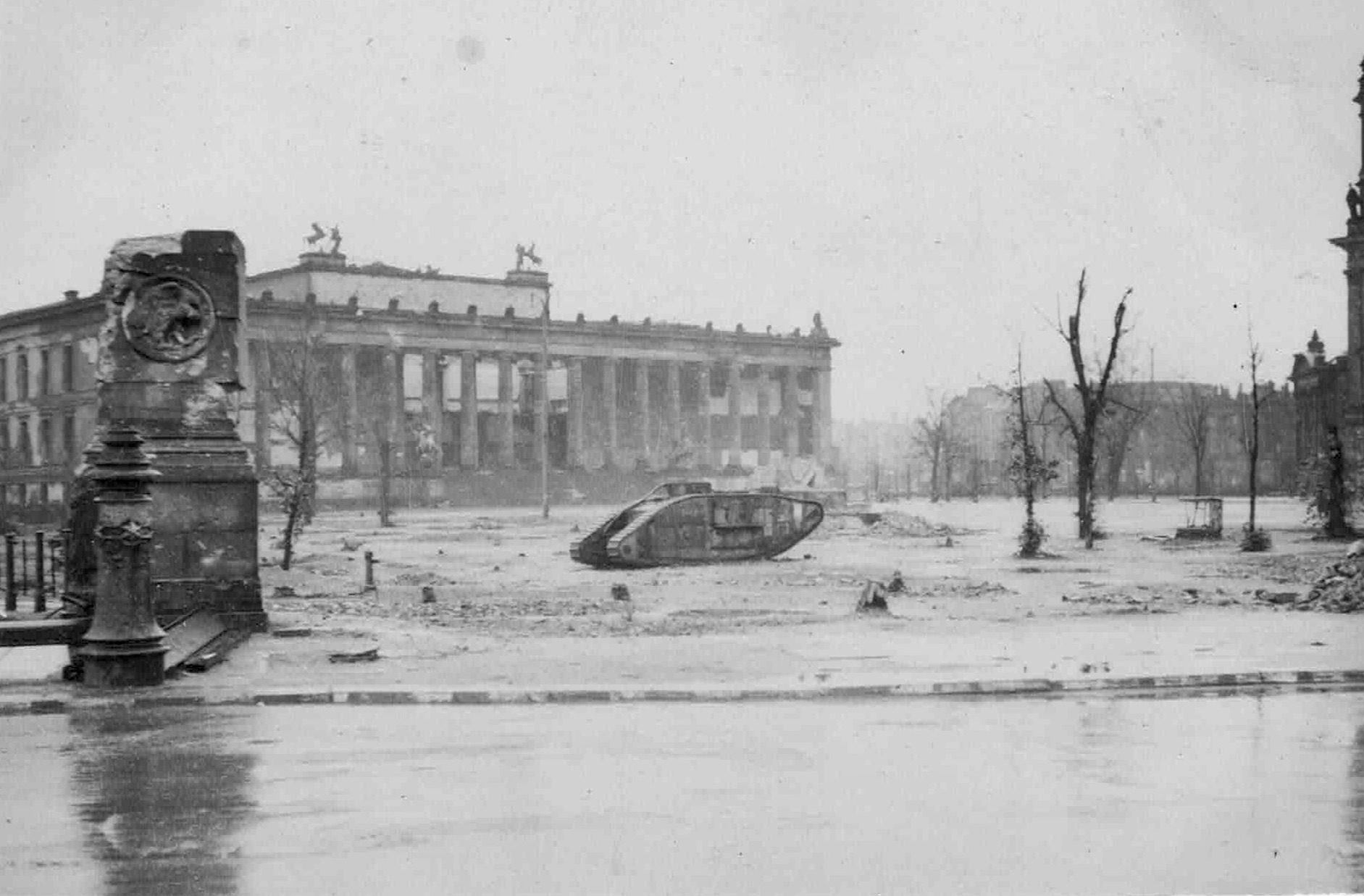
Some monuments survived
These images of destruction are not only records of ruin. They are reminders of the scale of collapse, the human suffering beneath the debris, and the deliberate choice to remember, rather than forget, what war reduced Berlin to in 1945.
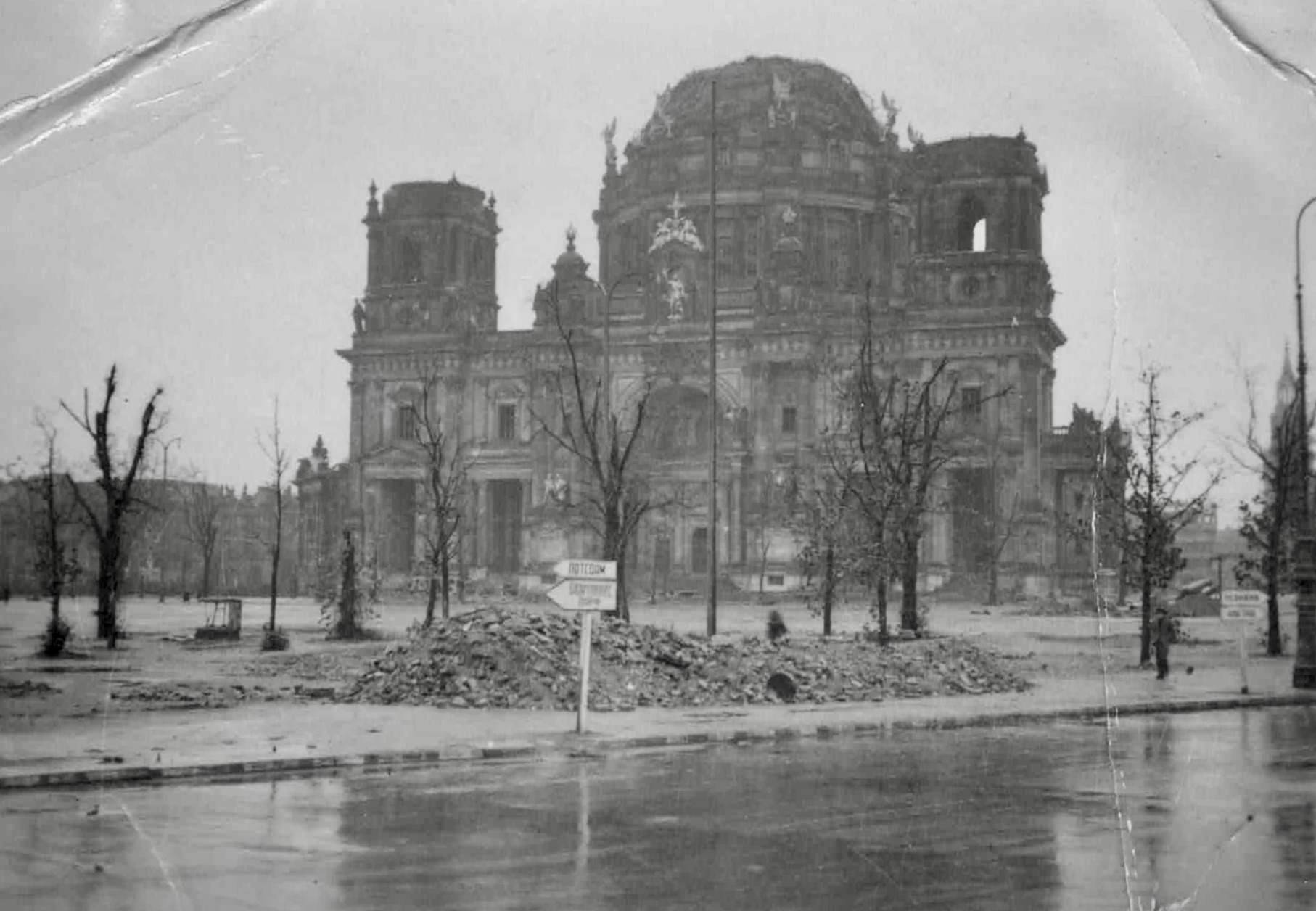
The grand boulevard of Unter den LindenThe Berlin CathedralMajor Dan Wickersham in the US zone
The agreementmarked a territorial change in the occupied zones
My Mother and Audie Murphy Ch. 93
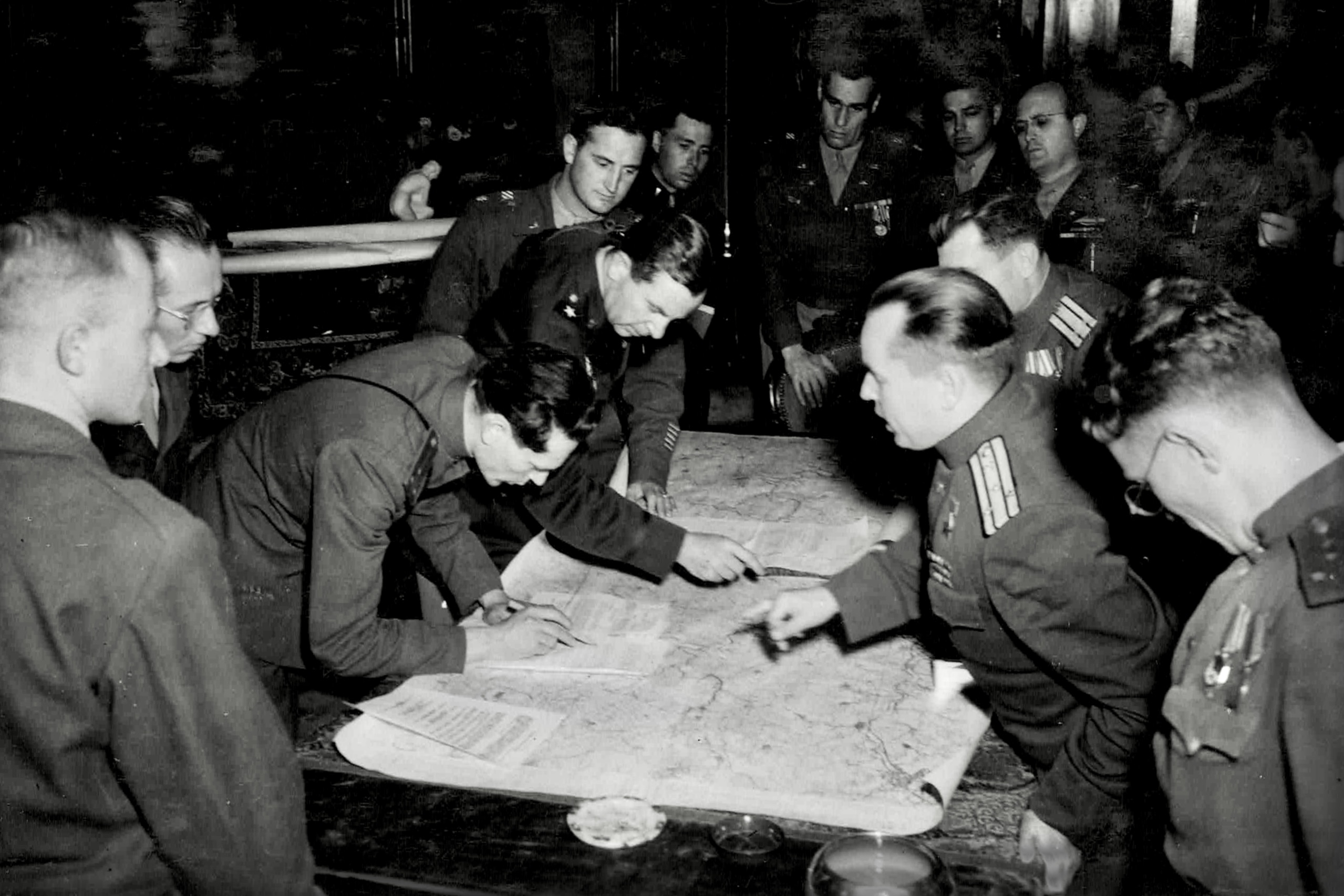
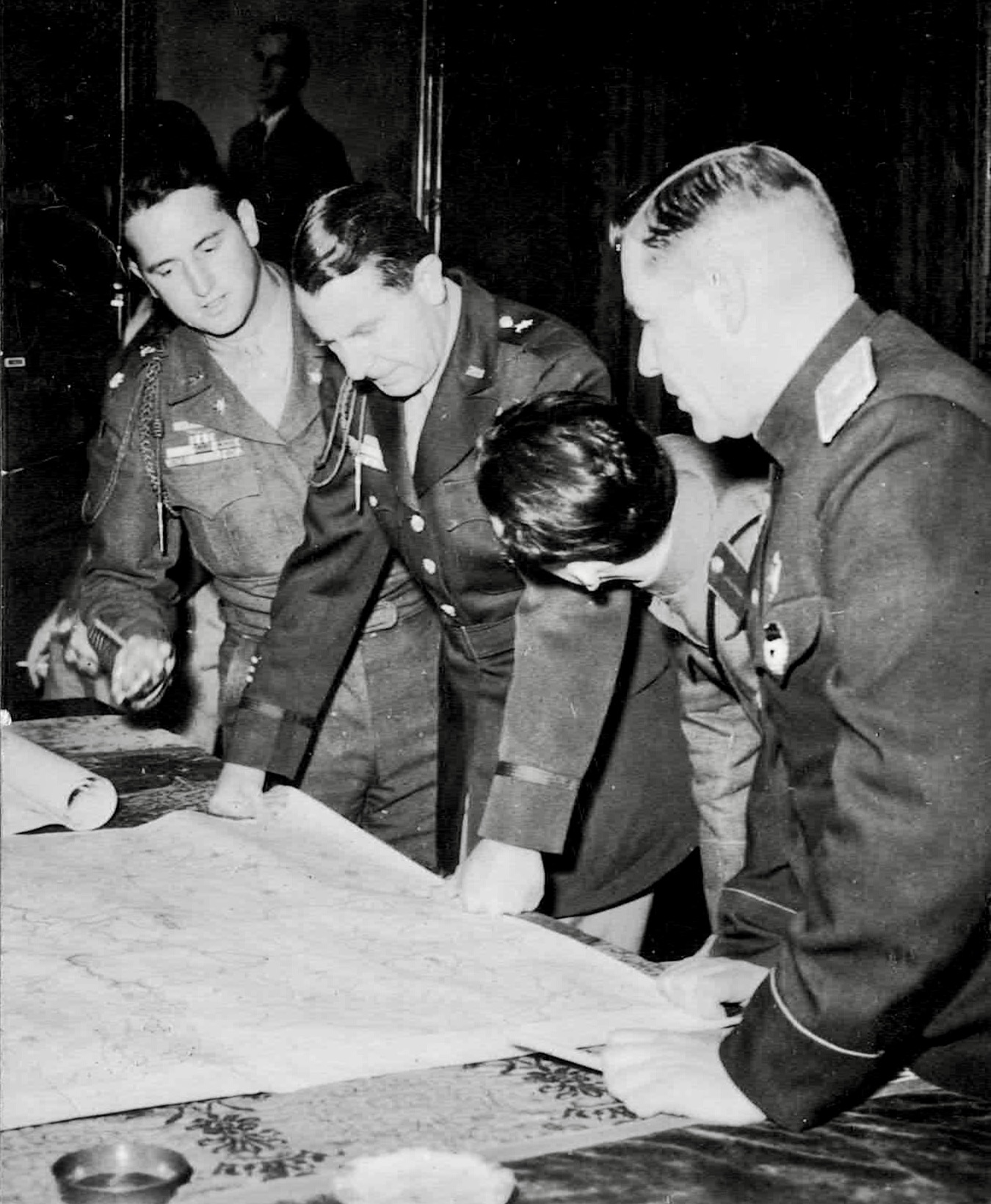
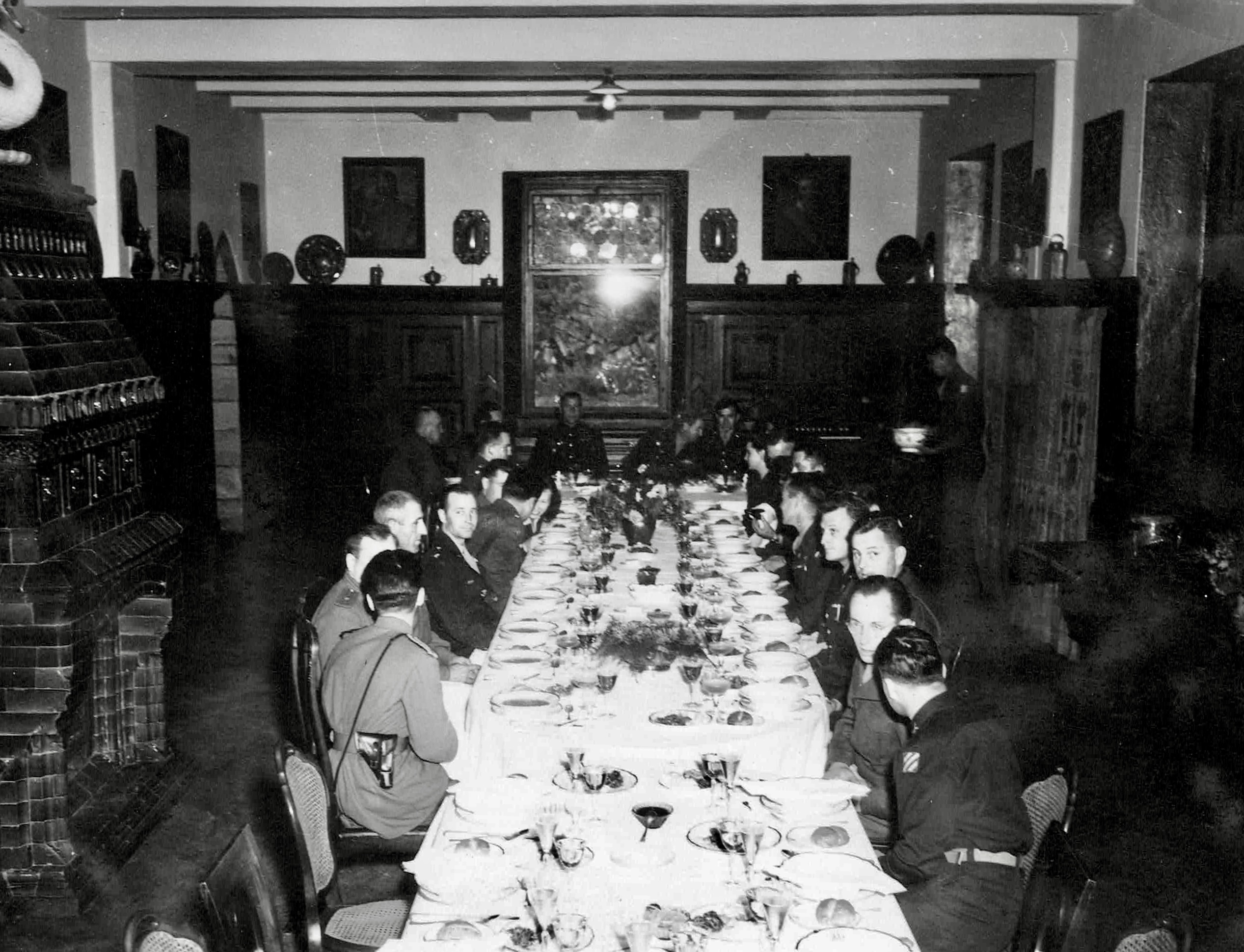
The meeting took place at the Russian and American liaison headquarters in Wanfried.
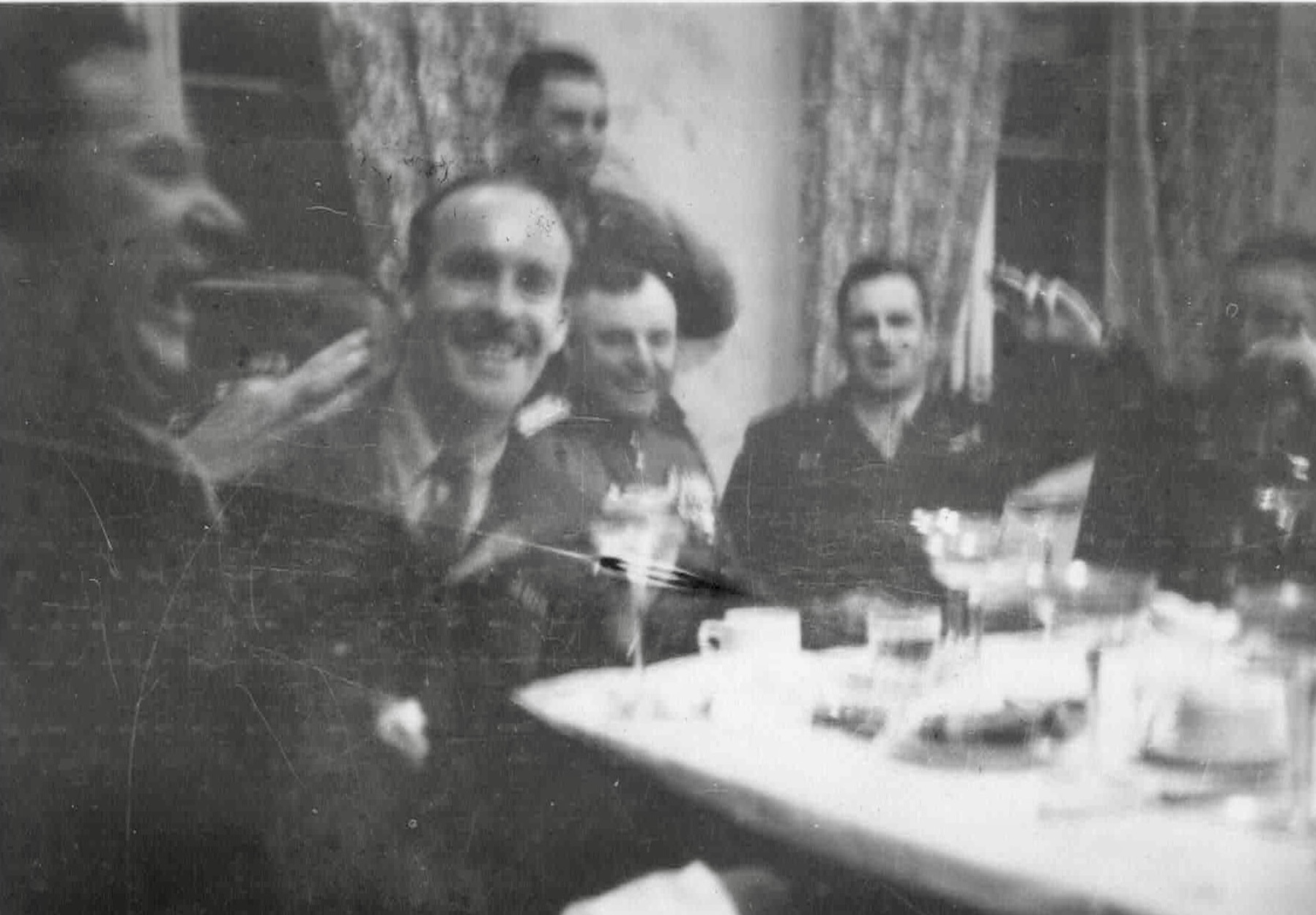
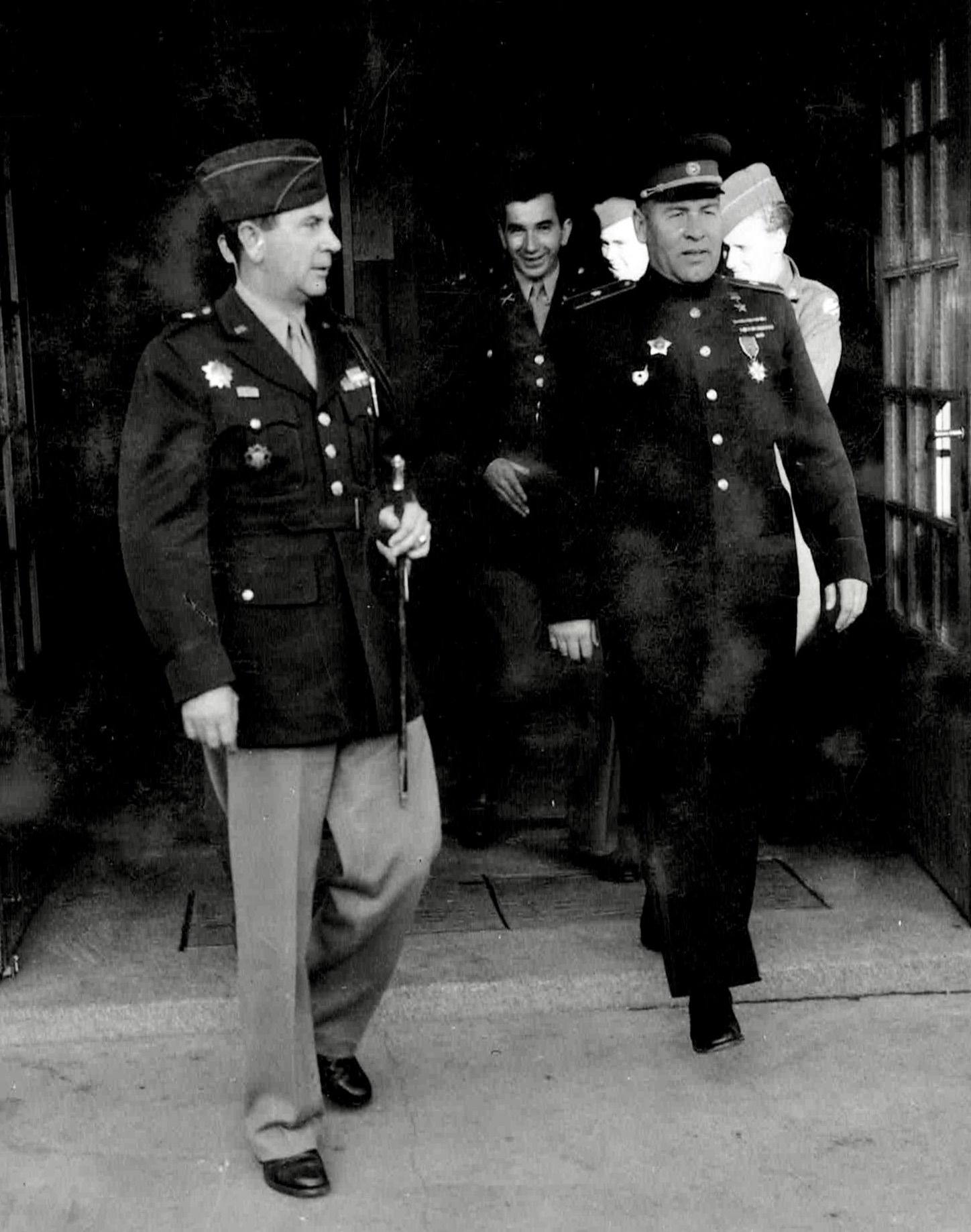
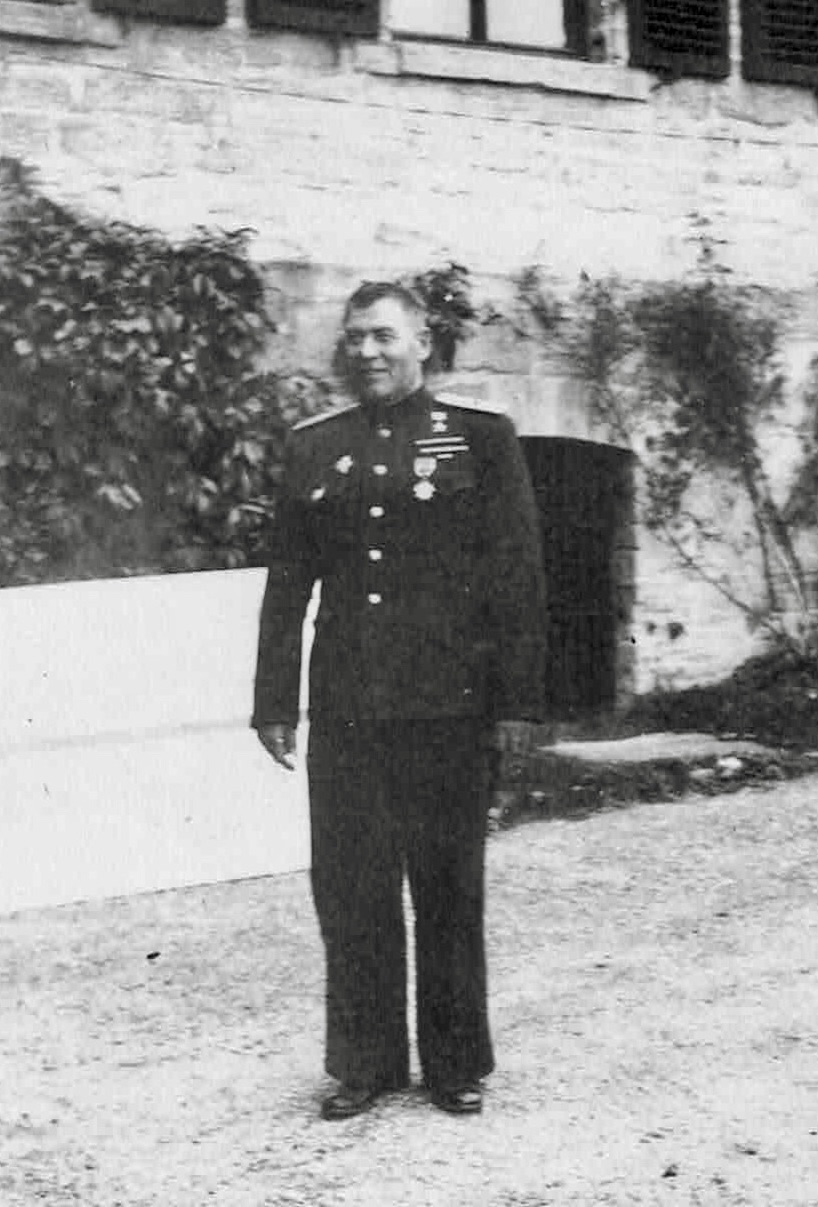
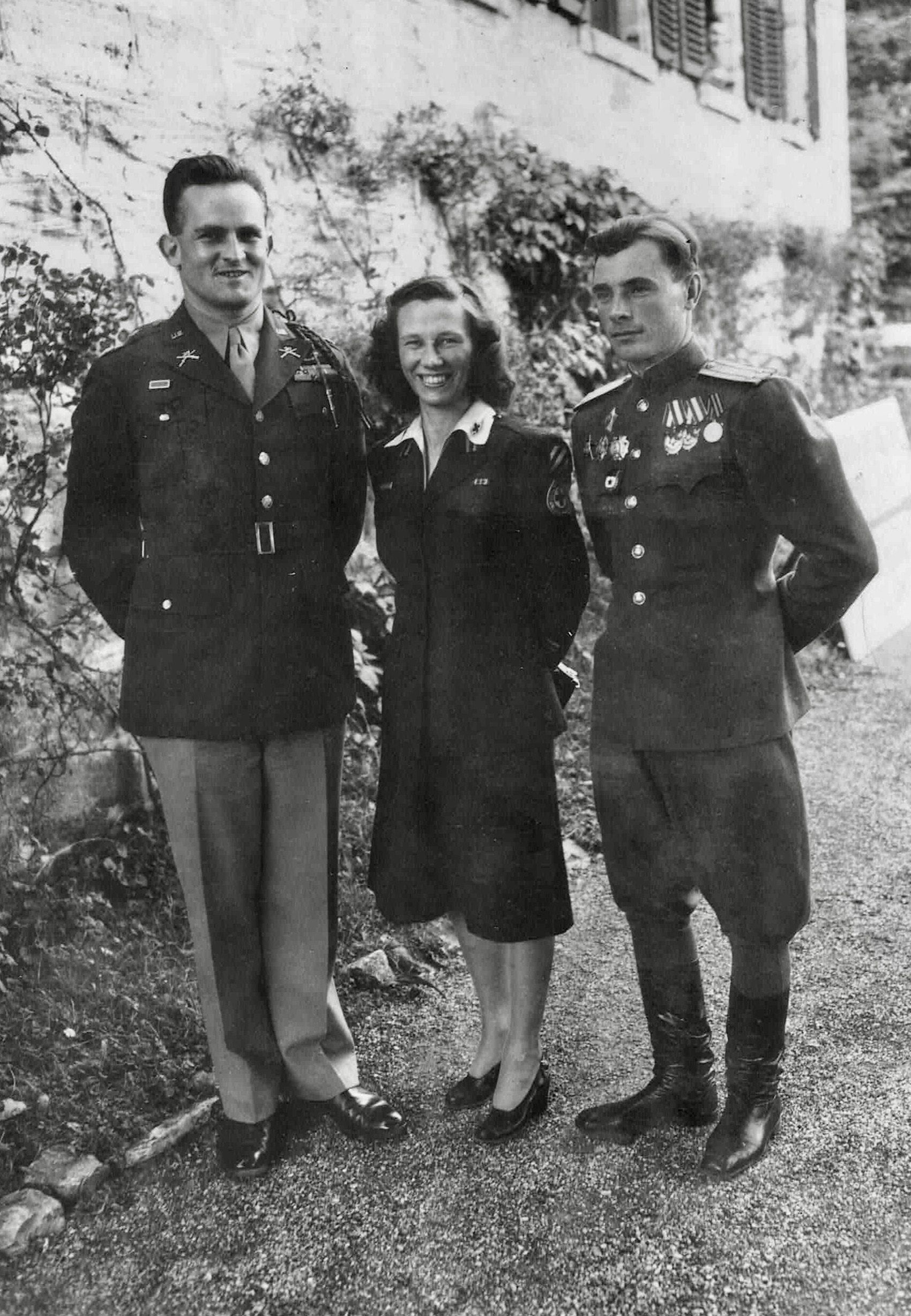
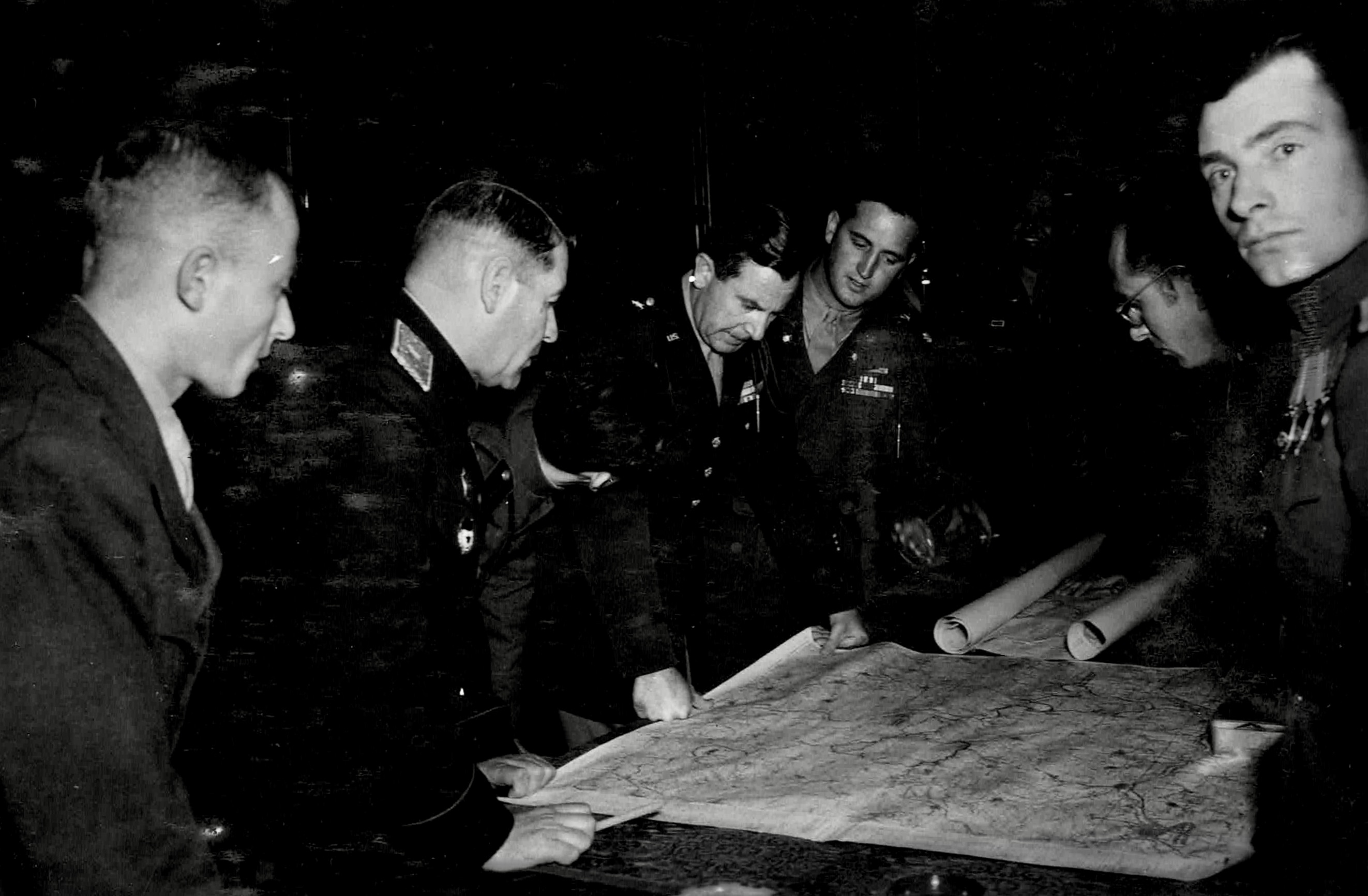
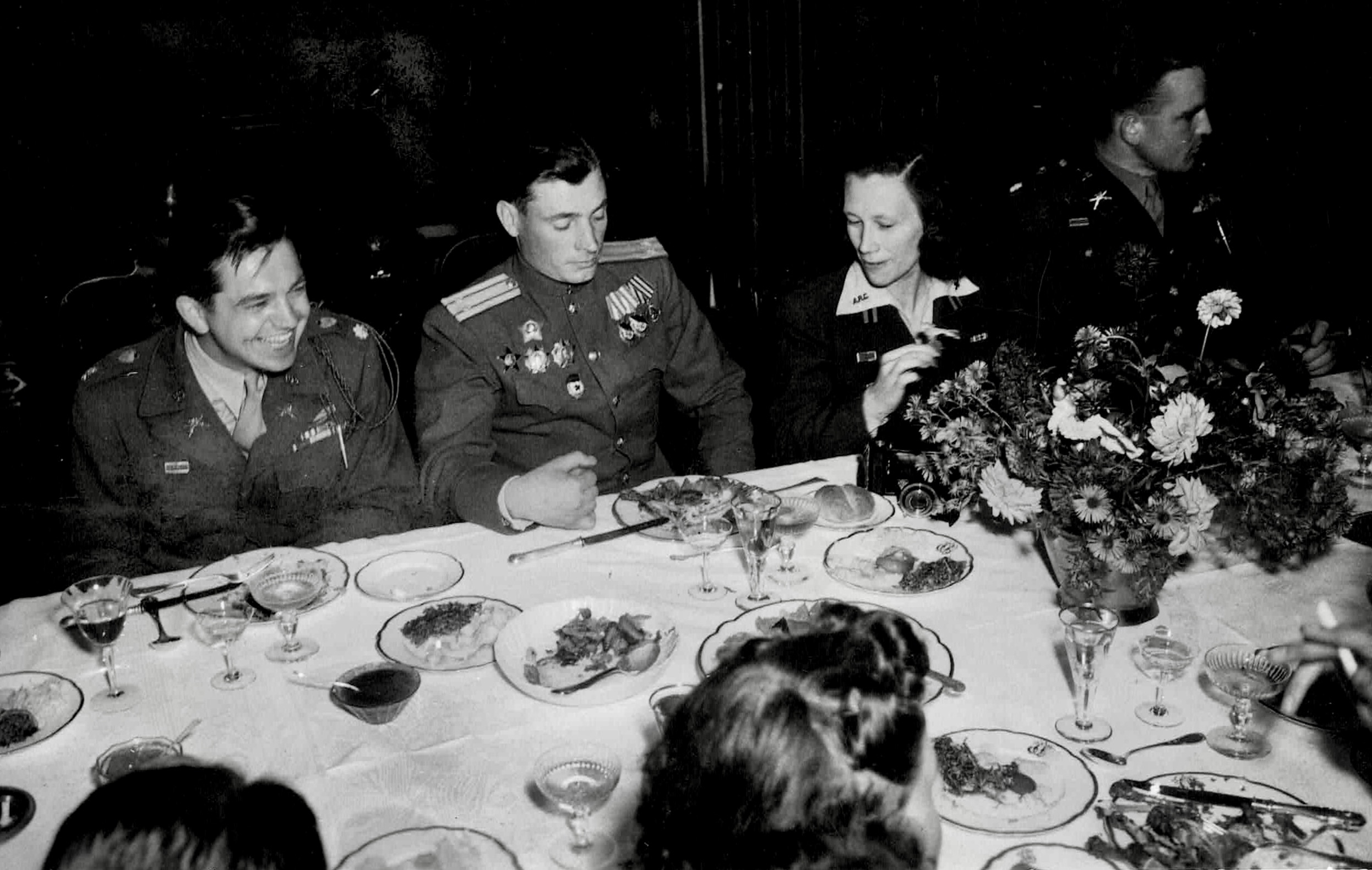
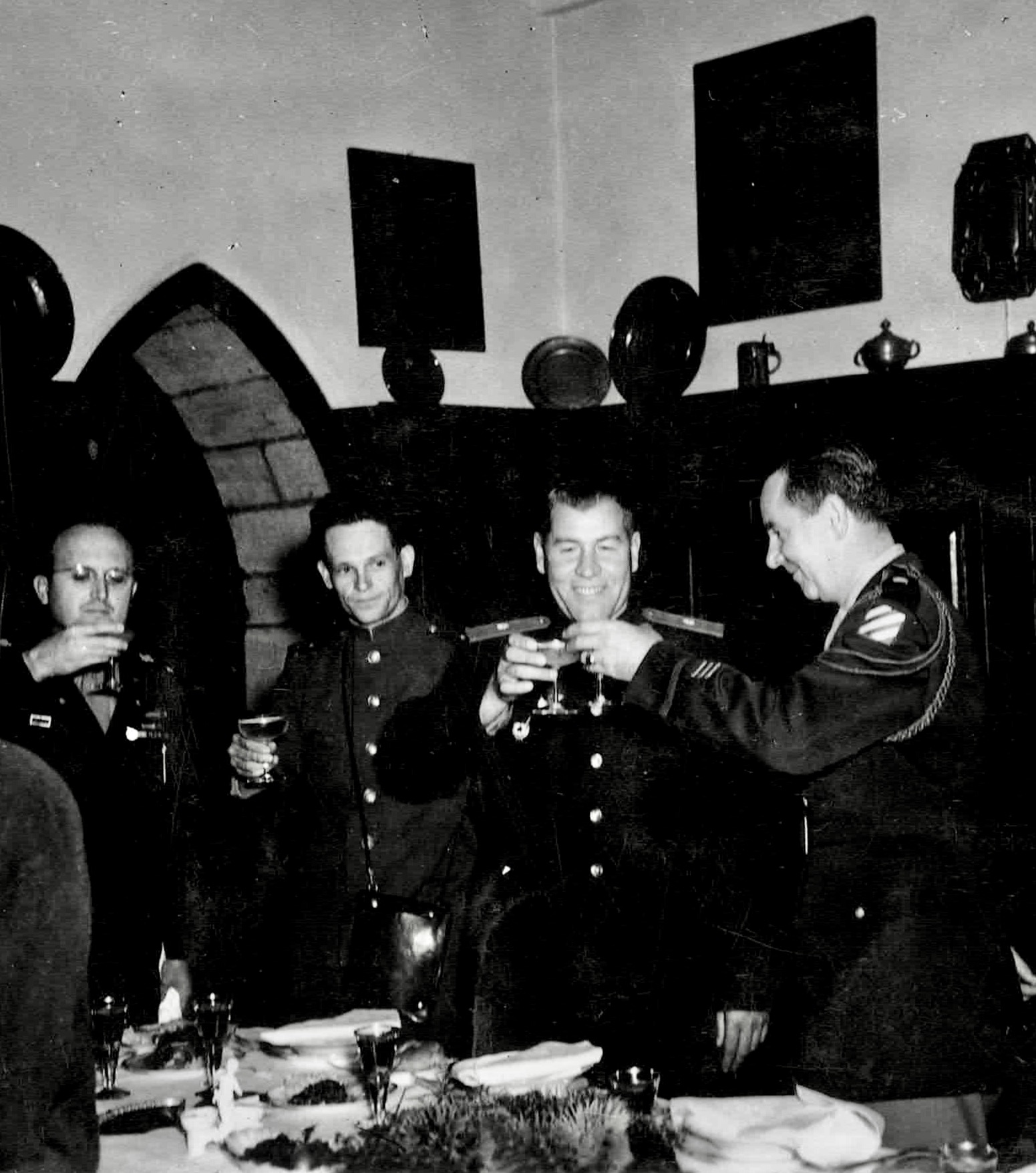
Flo attended the historic Russian–American conference in Wanfried, Germany, where the Wanfried Agreement was signed on September 17, 1945. The agreement was a post–World War II territorial exchange between U.S. and Soviet occupation authorities, finalized in English and Russian, to resolve a logistical problem along the Bebra–Göttingen railway. A roughly 2.7-mile stretch of this crucial rail line briefly crossed into the Soviet zone near Wanfried, disrupting traffic vital to U.S. connections between southern Germany and the American-controlled port of Bremerhaven. To secure uninterrupted U.S. control of the line, two villages in Soviet-occupied Thuringia were exchanged for five villages in American-occupied Hesse. The agreement, informally known as the “Whisky-Vodka Line,” stands out as a rare, peaceful, and highly localized negotiation between the two superpowers in the tense early months of the occupation.
Figuring out the new borders between occupations zonesFlo’s head sticks out on the left. It looks like there was one other female at the table. At least one participant wore a gun to lunch.Flo sitting next to Russian regimental CO. Col. Michael Paschchenko. Flo told me she had a big crush on this handsome guy but neither spoke the other’s language.Agreement signed! Russian general and Gen. Sexton toast.

 tradeswomn musings