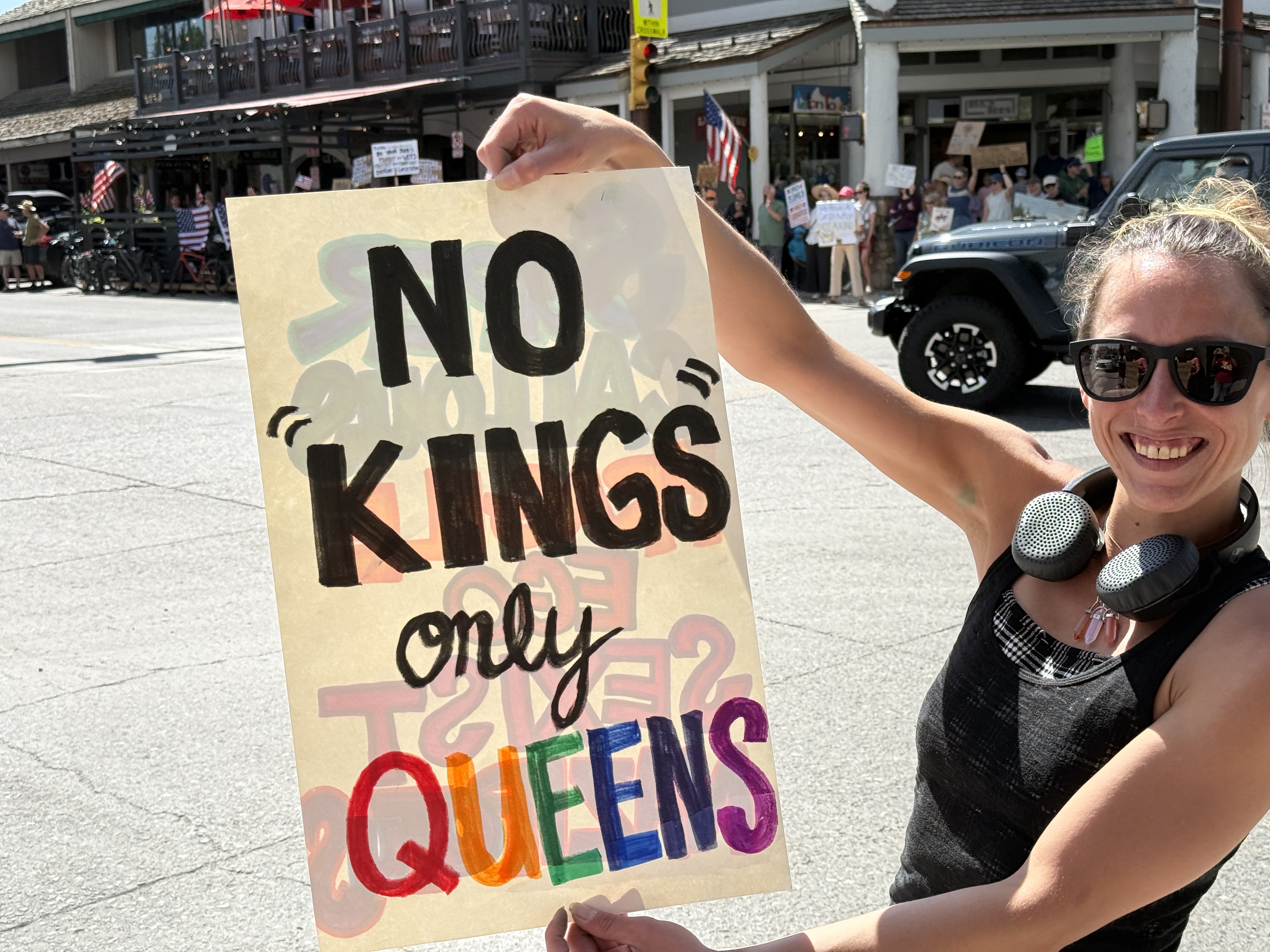
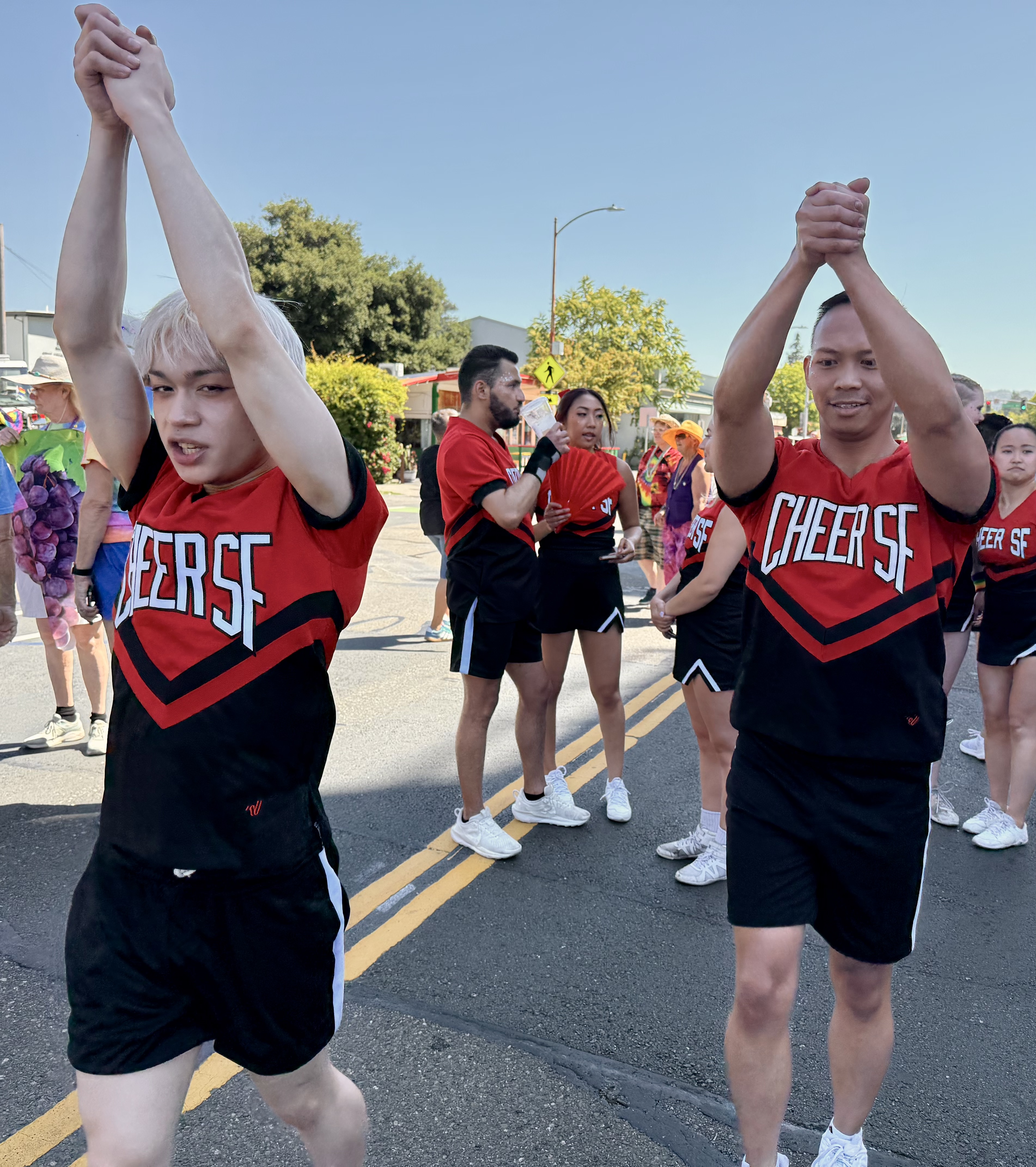
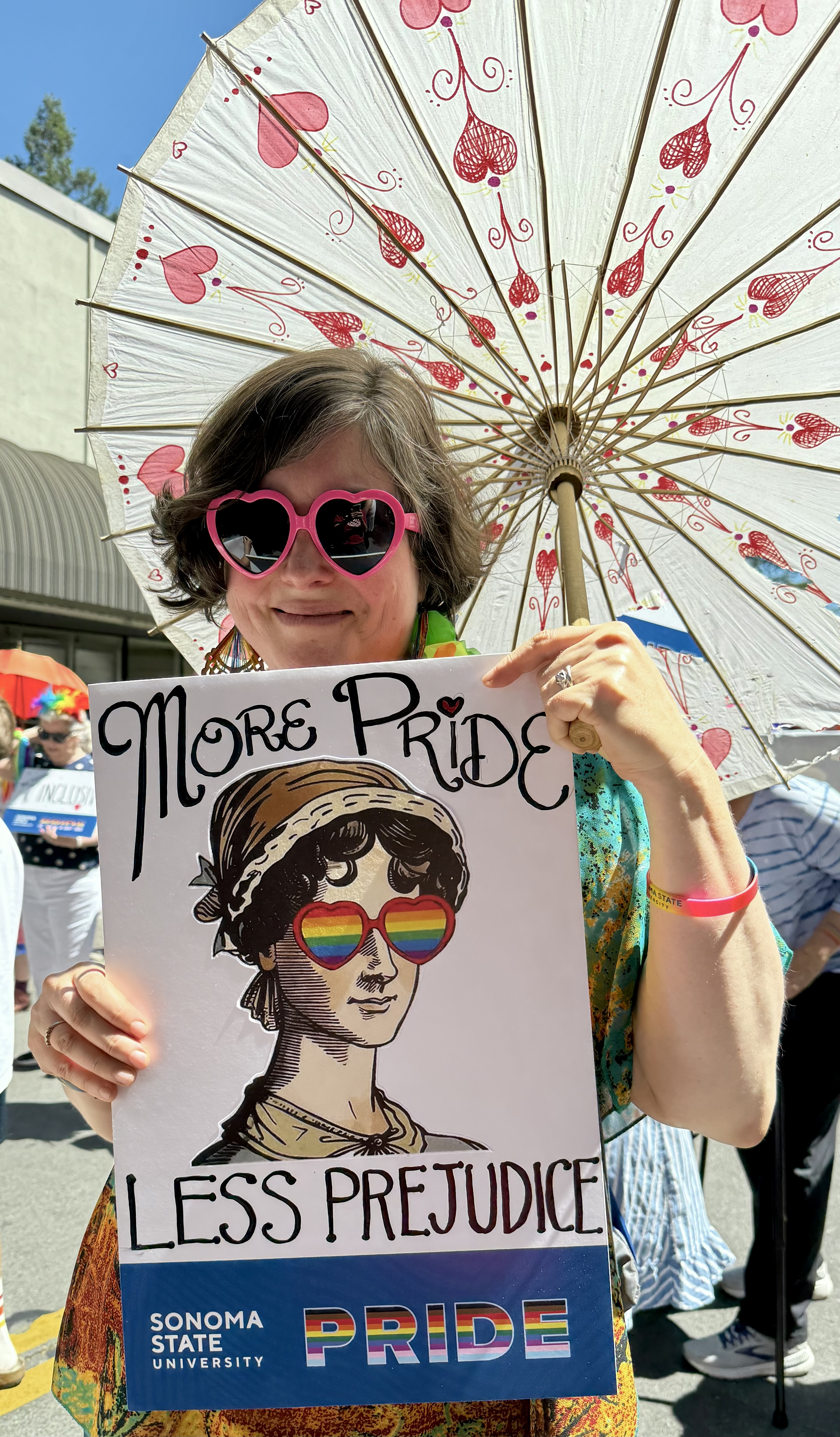
Hundreds of angry Sonoma County citizens line the road to Charles Schulz airport in Santa Rosa CA to protest Avelo Airlines contracting with ICE to conduct deportation flights. The airline is also ripping off customers by cancelling our flights and refusing to refund our money. They stole $518 from us.
Wide Hollow Elementary School in Yakima, Washington, was already an old building when I began attending in the 1950s. At the time, it served students from first through eighth grades. The little kids were on the first floor, the big kids upstairs. I remember the worn wooden steps leading to the second floor, scalloped by generations of student feet.
Our classrooms held old-fashioned desks—wooden with ornate cast-iron legs—each one with a small hole in the top for an ink bottle. We were taught how to fill our fountain pens by dipping the nib into the ink and lifting a lever to draw it in. (This cannot have happened without spills—the poor teachers!)
Valentines day 1956 at Wide Hollow school. That’s me on the far left.
Every room had a long wall of blackboard, with erasers that students cleaned by smacking them together, creating great clouds of chalk dust. The tall windows were opened using a long pole. Above the blackboards, neat rows of Palmer Method cursive letters reminded us of the proper way to form our handwriting.
The school was heated by a coal furnace. A coal chute led to the basement, where the coal man would periodically unload his delivery.
My first grade class at Wide Hollow
Outside, the playground seemed enormous. A towering maple tree stood right outside the building. We had swings, a slide, and a ride called the “ocean wave”—a notoriously dangerous contraption rumored to have killed children in other schools. As far as I know, ours survived it, though I did rip my good dress riding it on the very first day of first grade.
At recess, we played Ring Around the Rosie, Red Rover, jump rope, tetherball, and a game where we bounced a ball against the wall chanting, “Not last night but the night before, 24 robbers came knocking at my door.”
Much has changed. The old building was torn down years ago and replaced. The curriculum has become more inclusive. I still remember being twelve and furious that our new history books made no mention of the Indigenous peoples of the area. Today, Wide Hollow proudly displays a land acknowledgment on its website:
“We would like to acknowledge that we’re coming to you from the traditional lands of the first people of our valley, the 14 Confederated Tribes and Bands of the Yakama Nation, and we honor with gratitude the land itself and the Yakama Tribe.”
Wide Hollow is now a K–5 school. They host a “multicultural celebration,” but I don’t believe the ancient pagan Spring holiday of May Day is among those still observed. Back in our day, we celebrated May Day by weaving ribbons around a maypole (perhaps the tetherball pole?) and making May baskets, often filled like Easter baskets with flowers.
Dancing around the maypole
While May Day celebrations have largely fallen out of fashion in the U.S., they still take place in some towns. In Europe, the tradition persists more strongly. In modern pagan communities, May Day has been revived and reimagined through the Celtic festival of Beltane.
In Sweden, maypole dancing has shifted to the big Summer Solstice festivals, but until the 19th century, May Day was celebrated with mock battles between Summer and Winter. I love this account by Sir James George Frazer in The Golden Bough (1911):
“On May Day two troops of young men on horseback used to meet as if for mortal combat. One of them was led by a representative of Winter clad in furs, who threw snowballs and ice in order to prolong the cold weather. The other troop was commanded by a representative of Summer, covered with fresh leaves and flowers. In the sham fight which followed, the party of Summer came off victorious, and the ceremony ended with a feast.”
Note: the picture of Wide Hollow school at the top is a postcard labeled North Yakima. That means the picture was taken before 1918 when North Yakima was changed to Yakima. So the school was originally built probably in the teens.
May 1 is also International Workers Day
At the Santa Rosa International Workers Day celebration
May 1st is also recognized globally as International Workers’ Day. In 1889, the date was chosen by an international federation of socialist groups and trade unions to commemorate the Haymarket Affair—a violent deadly police riot in Chicago in 1886 targeting workers organizing for the eight-hour workday.
Here in Sonoma County, this year May Day marks the beginning of the Days of Action May 1-5, organized by Community United to Resist Fascism (CURF). The International Workers’ Day march will call for immigrant rights and is co-organized with the May 1st Coalition. The event will begin at 3 p.m. in Santa Rosa at the Sonoma County Sheriff’s Office, proceed to the Board of Supervisors’ office, and then continue to Old Courthouse Square to rally at 5pm. I’ll see you there!
August, 1944. Operation Dragoon—the Allied invasion of Southern France—had been debated for months. Originally, it was supposed to launch alongside the more famous Operation Overlord, the Normandy invasion on June 6, 1944. But the top brass couldn’t agree. Resources were stretched thin, and priorities clashed. Was it wise to open a second front in France? Could they even pull it off?
Part of the Operation Dragoon invasion fleet anchored off Naples. Photo: NARA
Meanwhile, thousands of young men trained on the sunbaked beaches near Naples, waiting for orders that never seemed to come. Tension hung heavy in the air. They practiced amphibious landings again and again, sand grinding into their boots and rifles, minds on the fight ahead—or trying not to think about it at all.
By August, the go-ahead finally came. Operation Dragoon would launch on August 15, with landings near St. Tropez. The plan: storm the beaches, push inland, liberate Marseille, and link up with the northern forces. It would be a massive undertaking, one that might finally break the German grip on Southern France.
In the ports around Naples, everything sprang into motion. Soldiers, tanks, trucks, jeeps, crates of ammunition and rations—all were loaded onto the towering LSTs (Landing Ship, Tank). The docks were a blur of noise and movement. Beneath the logistical precision, though, was something quieter, more personal: goodbye.
Loading the LSTs
The Red Cross women were there, as they always were—on the edges of history, offering comfort, coffee, and smiles to boys about to disappear into war.
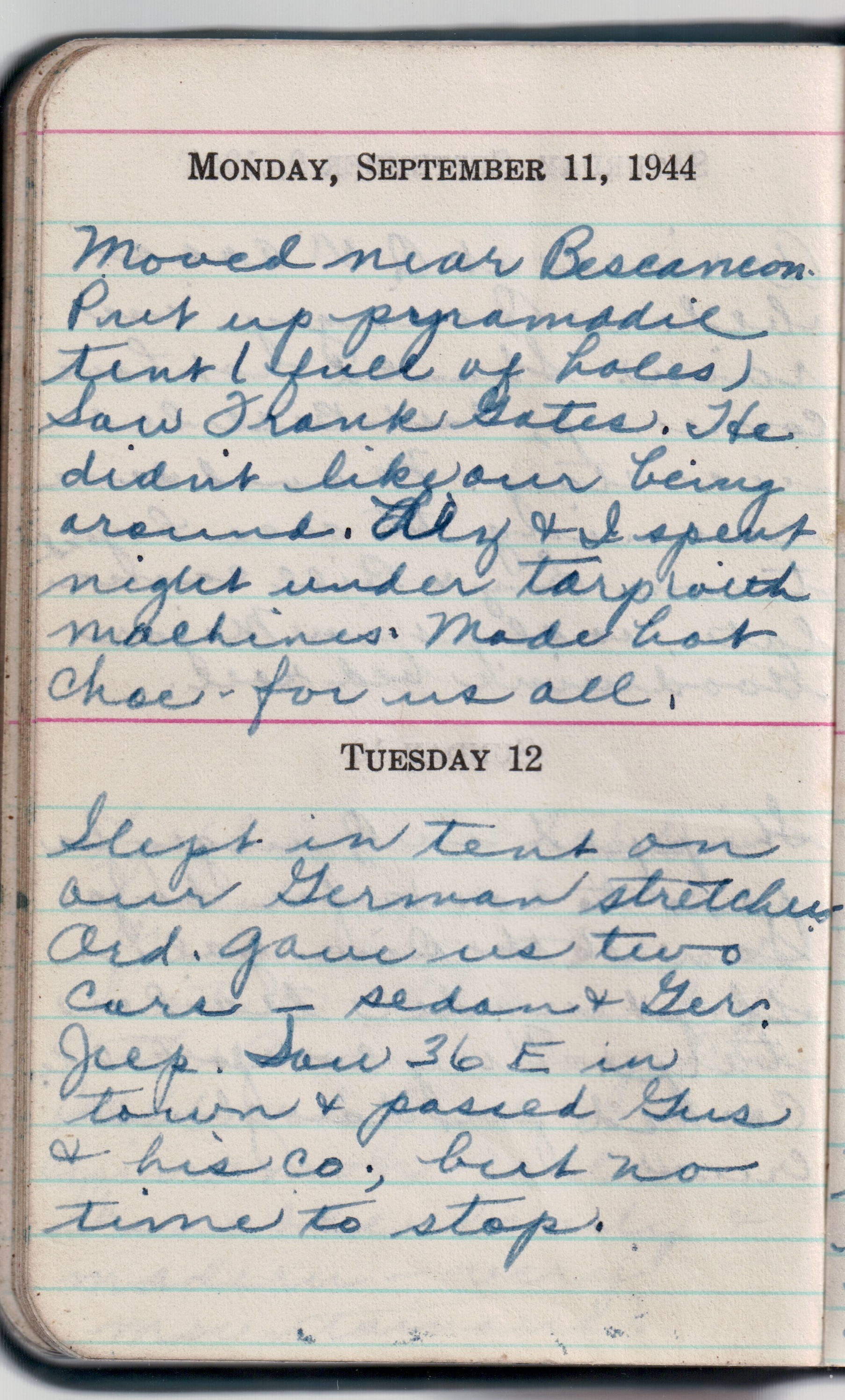
On Monday, August 7, Flo wrote in her diary:
“Served 3rd Div. leaving from Baia. Said goodbye to Stonie, Rick & Miles & part of 36E. Last date with Gene. Went to beach. Hated to say goodbye. Love him in spite of resolve.”
The day before, Flo had written in her diary, “Decided I want to marry Gene.” He was now her fiancé, and they were parting ways, perhaps for the last time.
The next day, August 8, she wrote:
“On beach at Nisida. Mostly Infantry—7th & 30th. Saw Gus, Buzz and all the rest of 1st Bn. Hot & dirty. Worked from 7 a.m. to 7 p.m.”
What a gigantic operation! Photo: NARA
Twelve-hour shifts, in the heat and dust, trying to give each man a sense that someone saw him, that someone cared. How do you say goodbye to that many young men, most of them barely more than boys? How do you smile through it, knowing many might never come back?
When the last ships pulled out, the docks were quiet. The women packed up their things, broke camp, and moved into Naples near headquarters. Flo wrote:
“Much baggage. Helped 45th girls at Pozzuoli. Also 36th Div. leaving there. Very hot, busy and tired. LST ensign gave me dozen eggs. Exhausted after days of saying goodbye to thousands of boys en route for invasion.”
Photo: NARA
Now they waited. The invasion was set for August 15. First, the troops would land. Then they’d have to fight their way inland, clear the Germans, secure the roads. Only then would Flo and the other ARC staff be allowed to follow, to bring comfort once again to the weary, wounded, and grieving.
In the silence of the following days, Flo thought of Gene. And of Stonie, Rick, and Miles. And of the thousands of names she never knew—just faces, voices, laughter fading down the gangplank.
A decade older than the boys, Flo became a mother figure
Summer, 1944.My Mother and Audie Murphy Ch. 21
The soldiers were young—just boys, really—and by the end of that summer of 1944 at the training camp in Pozzuoli, they had become “her” boys. In the relative calm of the camp, Flo had served thousands of troops, gotten to know hundreds, and formed real friendships with many of them.
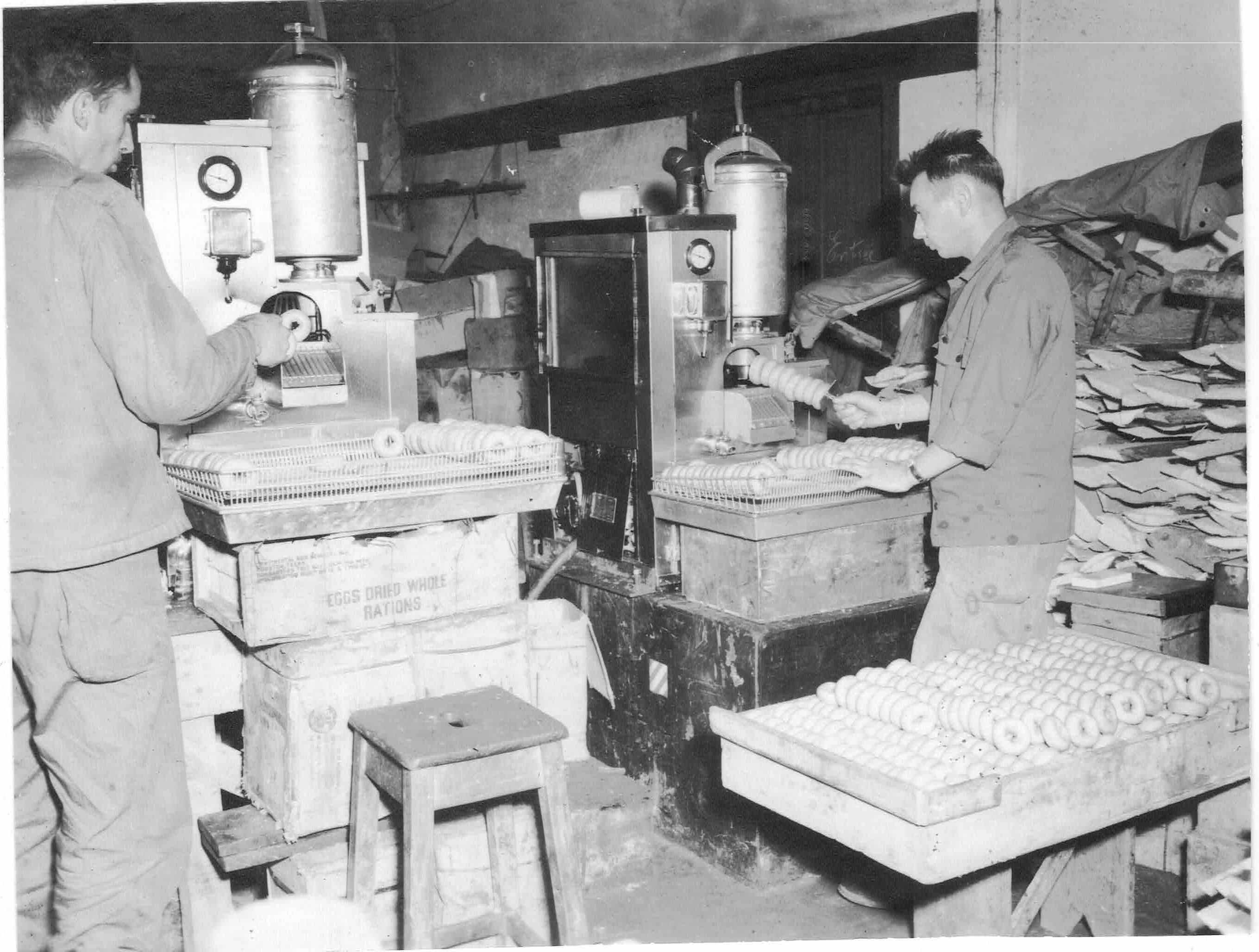
She and her clubmobile crew made regular visits to the army units, offering coffee, donuts, and a brief escape from the war. The women were allowed to join the men in some of their tasks—driving the amphibious DUKW boats, using the mine sweep, traveling to training areas, watching mock battles. Flo kept photos in her album—snapshots of the women posing with soldiers on tanks, jeeps, and trucks—memories of lighter moments amid the looming darkness.
Flo and Dottie posing with 442nd Ack Ack
To the young men, she became a maternal figure. At 30, Flo was a decade or more older than most of the infantrymen who would soon be fighting on the front lines. There was a natural generational divide—she had grown up with opera and classical music; they preferred jazz. She danced the waltz. They wanted to jitterbug.
Dottie learns to use the mine detectorFlo and Dottie at Gaeta mine training
Still, there was deep mutual respect. She told me often how much she cared for them, how proud she was of them—and how worried she became as the next invasion loomed. She feared many of them wouldn’t come back.
Isabella and Liz with musiciansFlo with B Co. 10th Engineers
She always emphasized how respectful the soldiers were. Of course, they were under strict military discipline, and they lived with the constant awareness that any day could be their last. That shaped their behavior, certainly—but so did the bond they shared with her.
They were told to dance with all the boys—but fall for none. Red Cross rules were clear: dating was fine, as long as the man wore officer’s stripes. Enlisted men were off-limits.
By day, the women drove from camp to camp serving donuts. By night, they danced—sometimes until midnight, then back on their feet by 3 a.m. when the troops came off the line. It was often exhausting, but it was the job.
Flo did her duty. She danced with everyone. Her diary mentions a rotating cast of names—Gus, Buzz, Captain Chaney, Pvt. Rotter, Rick, Stonie, Lt. Phillips, and a handful of Yakima boys. She even dined with Gen. O’Daniel. But her heart stayed untouched.
Until Gene.
She met him in June at the Third Division bivouac at Pozzuoli while serving the 36th Engineers. The first hint shows up in her diary on July 13:
“Date with Lt. Gustafson at 36E dinner and swimming at beach. Fun.”
From there, something shifted.
Flo serving the 36th Engineers
July 21:
“Too many parties tomorrow nite; am involved.”
She didn’t say his name, but by then, it was clear. She had a boyfriend.
Flo, once a secretary fluent in shorthand, sometimes switched to code in her diary. On July 23, in those secret curves and loops, she wrote:
“Gene asked me to marry him today.”
The next day:
“Gene down at 9:30. Looked at moon by the lake.”
The war made everything urgent. The ARC discouraged marriage, but love had its own rules. On July 28, she confessed:
“Hate to think of the new invasion. He wants to give me a ring.”
And then,
July 31: “Afraid I like him lots.”
August 6 in shorthand: “Decided I want to marry him.”
Gene Gustafson and Flo. She is wearing the armband used in the southern France invasion.
Flo had no shortage of admirers. She made friends easily, and turned down suitors gently. One woman joked that a soldier, refused by her, turned around and proposed to her friend—who accepted on the spot. It was that kind of war.
On August 7, as Gene prepared to ship out:
“Last date with Gene. Love him in spite of resolve.”
Flo captioned this picture “Gene’s home at Anzio.”
In a letter to her sister Ruth, she tried to make sense of it all:
“He’s big, very blonde, nice-looking, Swedish on both sides, and an engineer, as well as an Oregonian. It’s almost too perfect a set up and I don’t know just how it will materialize, but he wants to get married as soon as the army and Red Cross will let us. You would like this man and Mom especially, would approve. We’ve talked of going through Sweden before we come home but one never knows here.
“War does some peculiar things though, and we have no idea when we will get together again, or, of course, if he will survive this mess. The only thing I can do is borrow your philosophy that if it is to be, it will be!”
ARC women provided support to the men–and each other
My Mother and Audie Murphy Ch. 19
Summer 1944. Surrounded by thousands of men, the women of the American Red Cross (ARC) held their own. They got along well with the soldiers—it was their job to lift spirits, provide comfort, and remind the men of home.
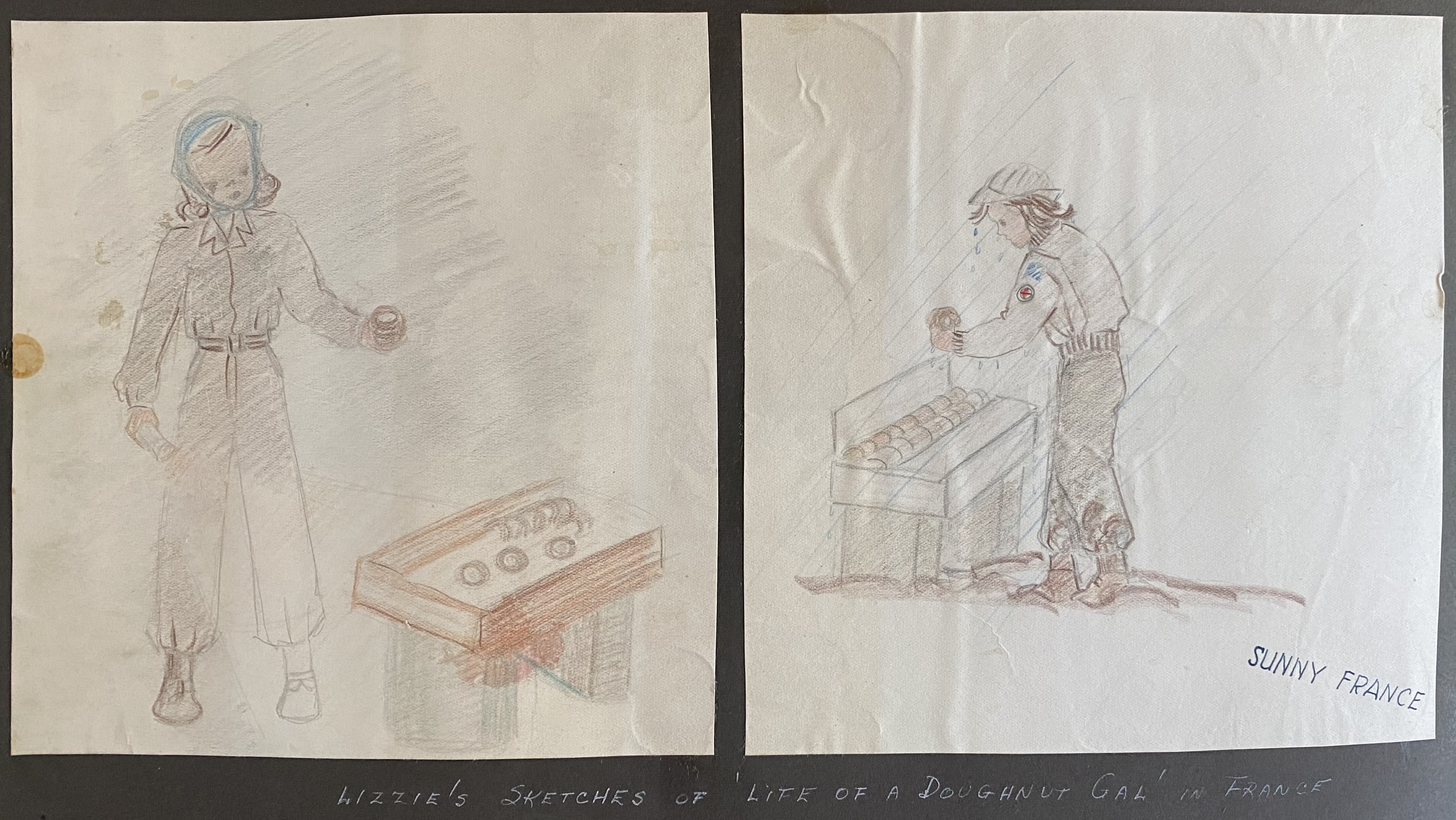
Liz Elliott’s drawings are pasted throughout Flo’s album. The greatest mother was a found statue that lived outside their clubhouse tent.
In this overwhelmingly male environment, having three other women in their squad of Clubmobilers offered not just companionship, but a deep sense of mutual recognition. Over time, they grew as close as sisters while serving alongside the Third Infantry Division.
Washing hair in helmetLiz after wash
Clubmobile women faced the strain and dangers of war with minimal training and little psychological preparation. Yet they were expected—and depended upon—to boost the morale of men fresh from the front. To endure these demands and perform their duties, they relied deeply on one another. Their camaraderie grew not only from shared experiences, but also from their unique position as noncombatants and women in a war zone.
With 3rd Signal Co.Dottie in tent
They shared tents, washed their hair in army helmets, and leaned on each other in moments of grief—mourning the loss of friends and fiancés who died on the front lines. They were a sisterhood in every sense, traveling together during leave and supporting each other through the toughest of times.
The original squad of four included:
Florence “Flo” Wick
Dorothy “Dottie” Shands
Elizabeth “Liz” Elliott
Isabella “Jingles” Hughes
At 30, my mother, Florence Wick “Flo”, was the oldest of the group and served as the squad’s captain.
Elizabeth “Liz” Elliott was the one Clubmobiler who stayed with Flo from their early days in Naples all the way into Germany. Liz was the artist who drew pictures of the ARC women’s experience like the one above. Though she lived in New York City, she was originally born in New Mexico. Dottie and Jingles were later reassigned to different stations across Europe.
Dorothy “Dottie” Shands, born in Greenville, Mississippi, graduated from Baylor University in 1940. Her maternal grandmother had been the first woman legislator in her Mississippi county and a suffragist; her paternal grandfather served as Governor of Mississippi. After the war, Dottie worked as a secretary in Washington, D.C. for Representative Will Whittington. During the conflict, she served two and a half years with the Red Cross, beginning in North Africa and following the Third Division through Sicily, Italy, France, and Germany. She broke her leg in Sicily but remained with her team—a testament to her grit. Like Flo, she came from a small town, and her community followed her wartime service with great pride.
Isabella “Jingles” Hughes, from Baltimore, reached the front in North Africa in July 1943, following the troops into Sicily and then Italy. She was delivering donuts before Flo even set sail for Naples.
Though their lives were often at risk—and some ARC workers were killed during the war—these four survived to return home. The sisterhood they formed was essential to their physical and emotional survival.
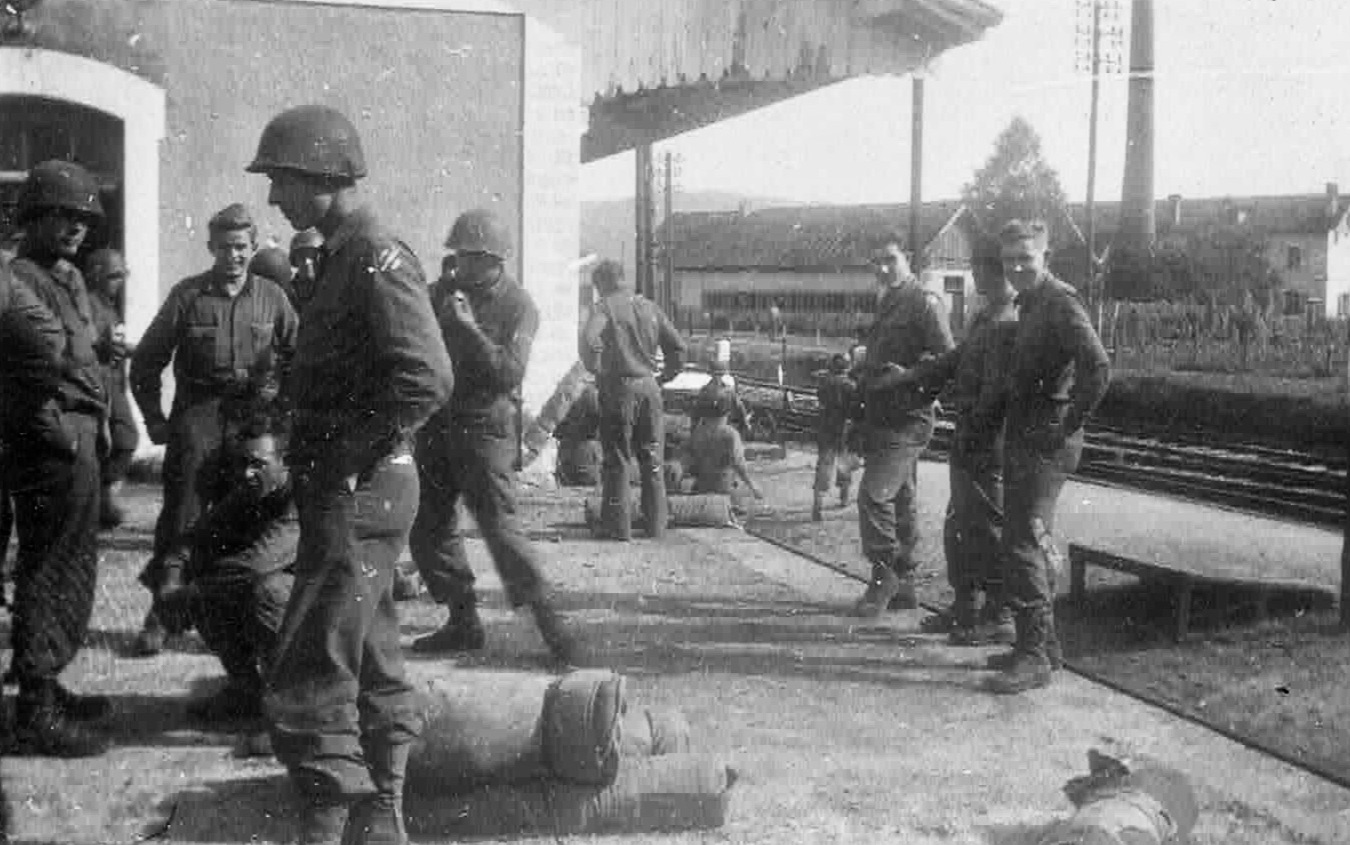
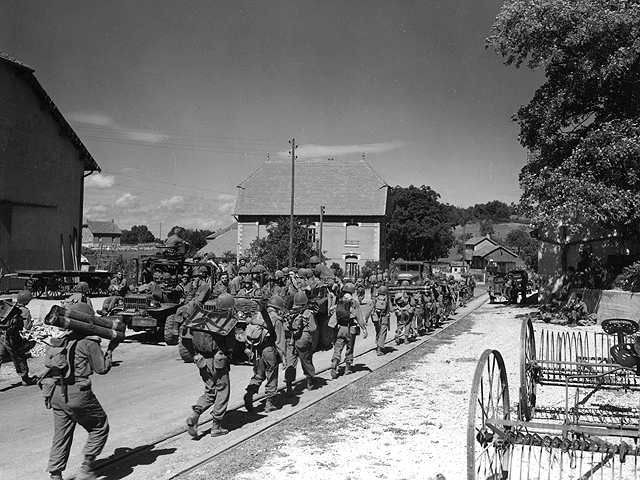
Pozzuoli, Italy—In the sweltering summer of 1944, the 3rd Infantry Division assembled near this small resort town, joining the 36th and 45th Divisions in preparation for a high-stakes amphibious invasion of southern France. These battle-hardened troops, fresh from the grueling Anzio campaign and the march to Rome, were now under the Seventh Army’s command, sharpening their combat readiness for the next major offensive.
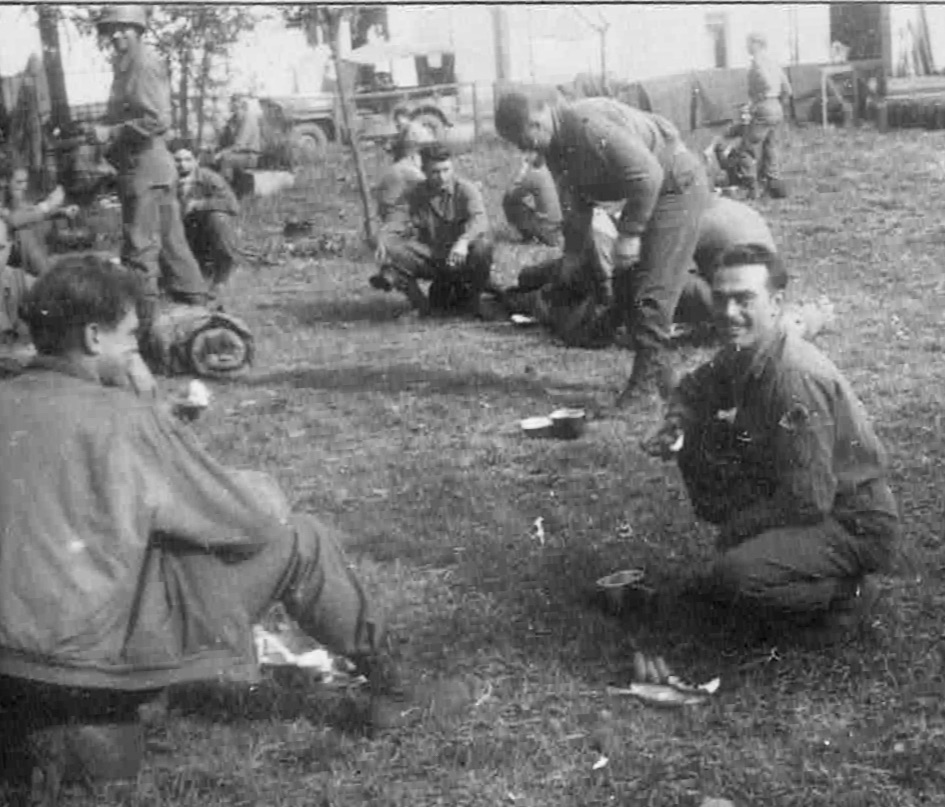
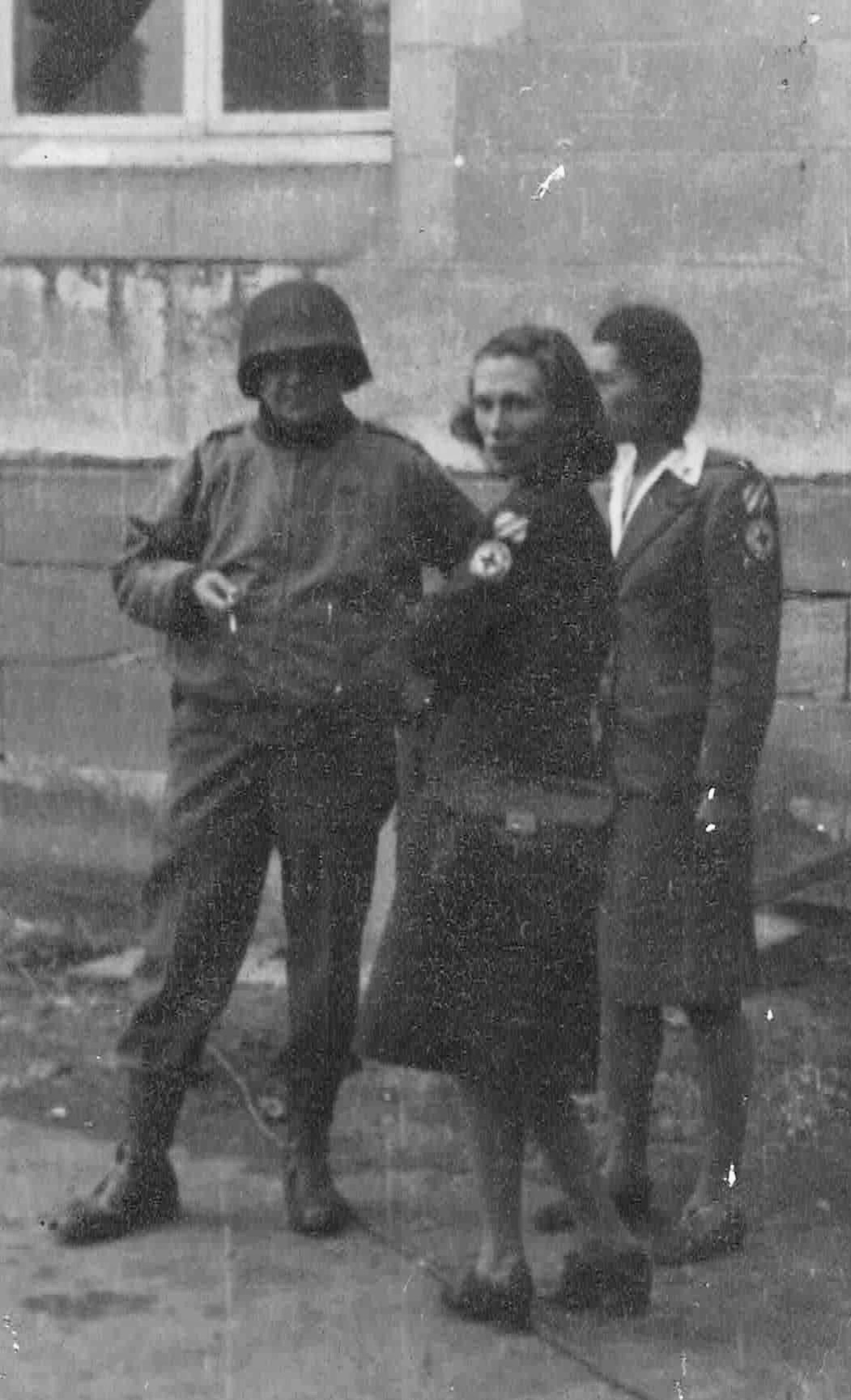
(L-R) Flo, Dottie and Jingles serve the 803rd Ordnance Co.Flo hands out donuts with a smileIsabelle Hughes serves soldiers on the docks returning from a training missionLunch with the “boys”
Among them was an unassuming but vital group—Flo and her clubmobile squad—who arrived in June to serve the men a taste of home: fresh donuts and hot coffee. Stationed in a sprawling tent city, these women had to get creative without a clubmobile truck, the specially outfitted vehicle designed for donut-making on the go. Instead, they improvised, scrounging up transportation and setting up makeshift field canteens in the dusty camps where soldiers could grab a sweet treat before heading back to drills. They were assisted by “donut boys,” soldiers who manned the donut machine in a tent kitchen.
Flo on the leftFlo and the “boys”Isabella, Flo and Dottie serving at bivouacFlo serving at night
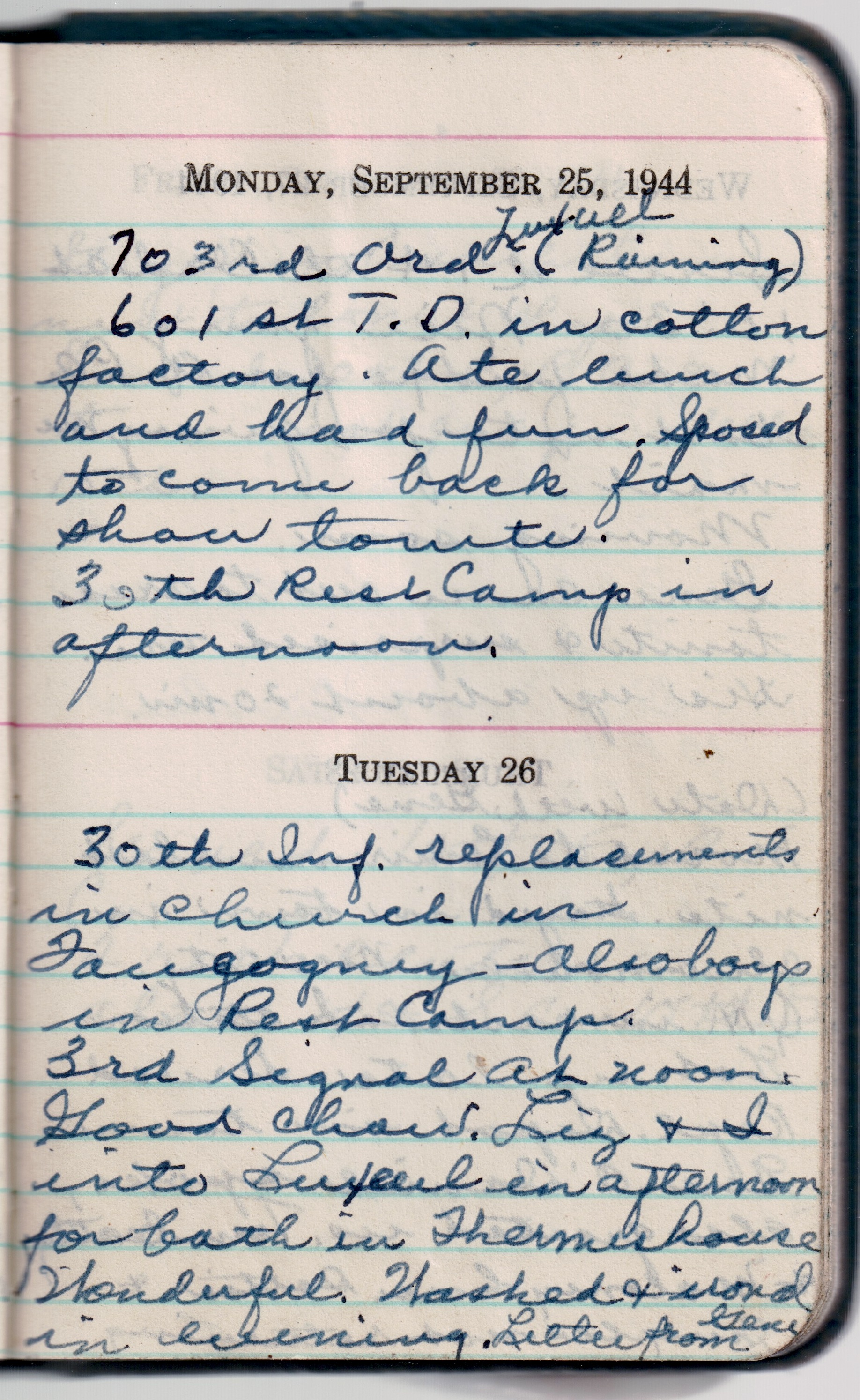
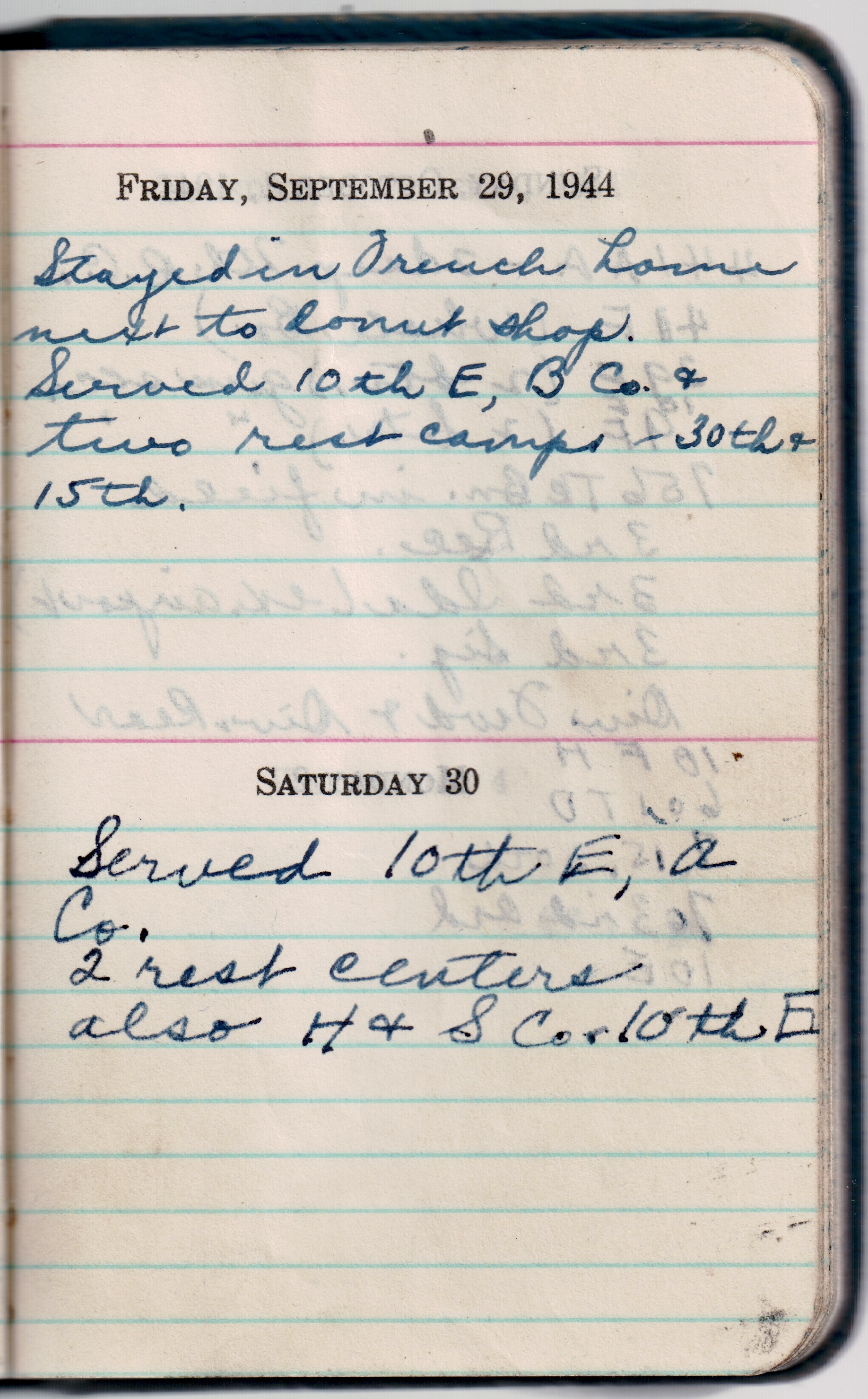
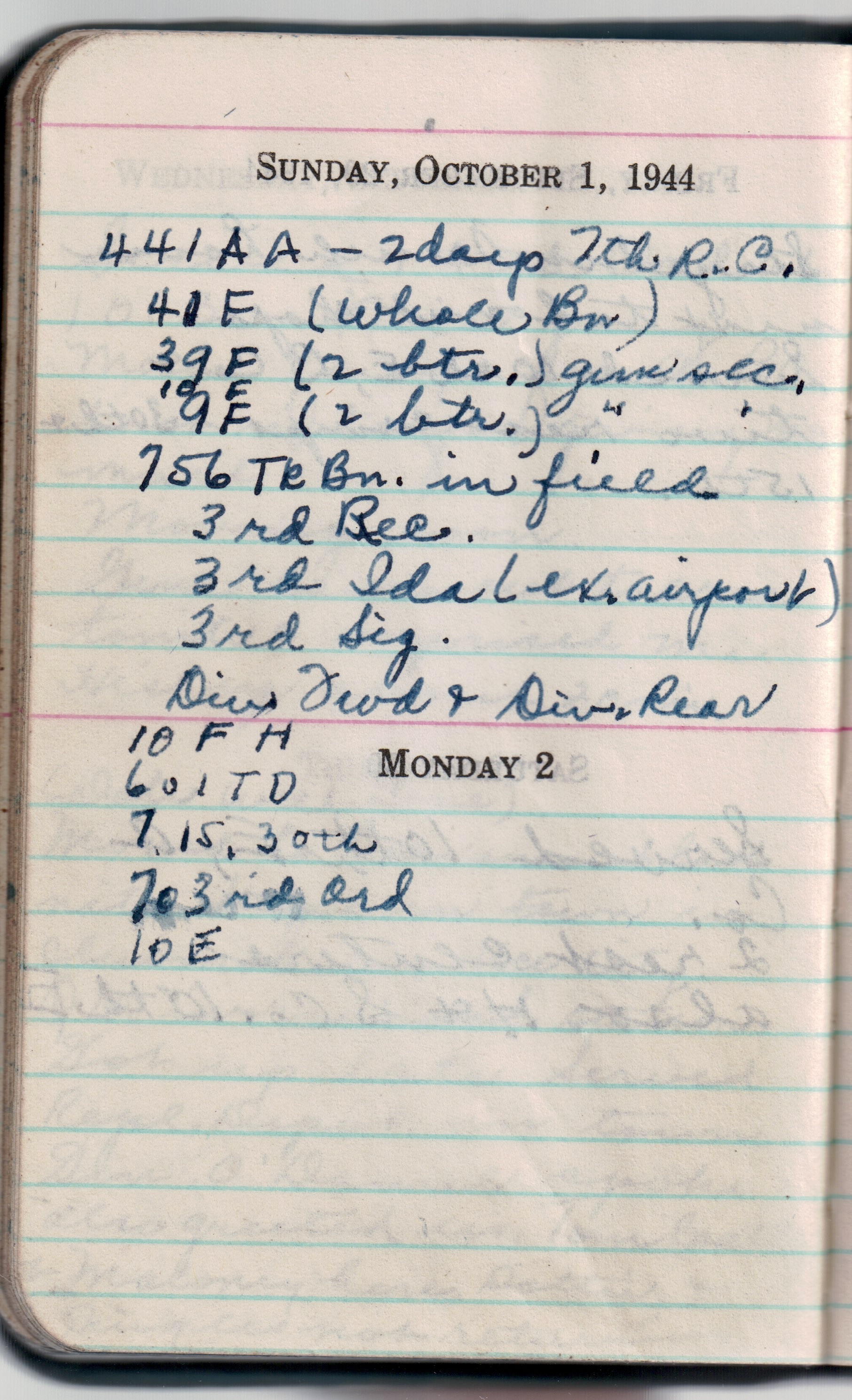
Flo meticulously recorded her daily work in a diary that read like a military log, listing the units she and her team served, often during the darkest hours of the night. Her notes mentioned names that would later be etched in history: the 1st Battalion of the 30th Infantry Regiment, the 441st Co. A+B, the 9th Field Artillery, the 36th Combat Engineers. On one occasion, on July 16, she may have even handed a donut to a young soldier named Audie Murphy—the future war hero and Hollywood star—though she dryly noted the day as “quite dull.” Murphy, in his autobiography, recalled the 1st Bn. 15th completing amphibious training earlier in the year, which likely explains their limited encounters at Pozzuoli.
One entry stood out: service to the 442nd Ack Ack (Anti-Aircraft Battalion), part of the legendary segregated Japanese American 442nd Regimental Combat Team. These soldiers, despite facing discrimination at home, were training for a mission that would cement their reputation as one of the most decorated units in U.S. military history.
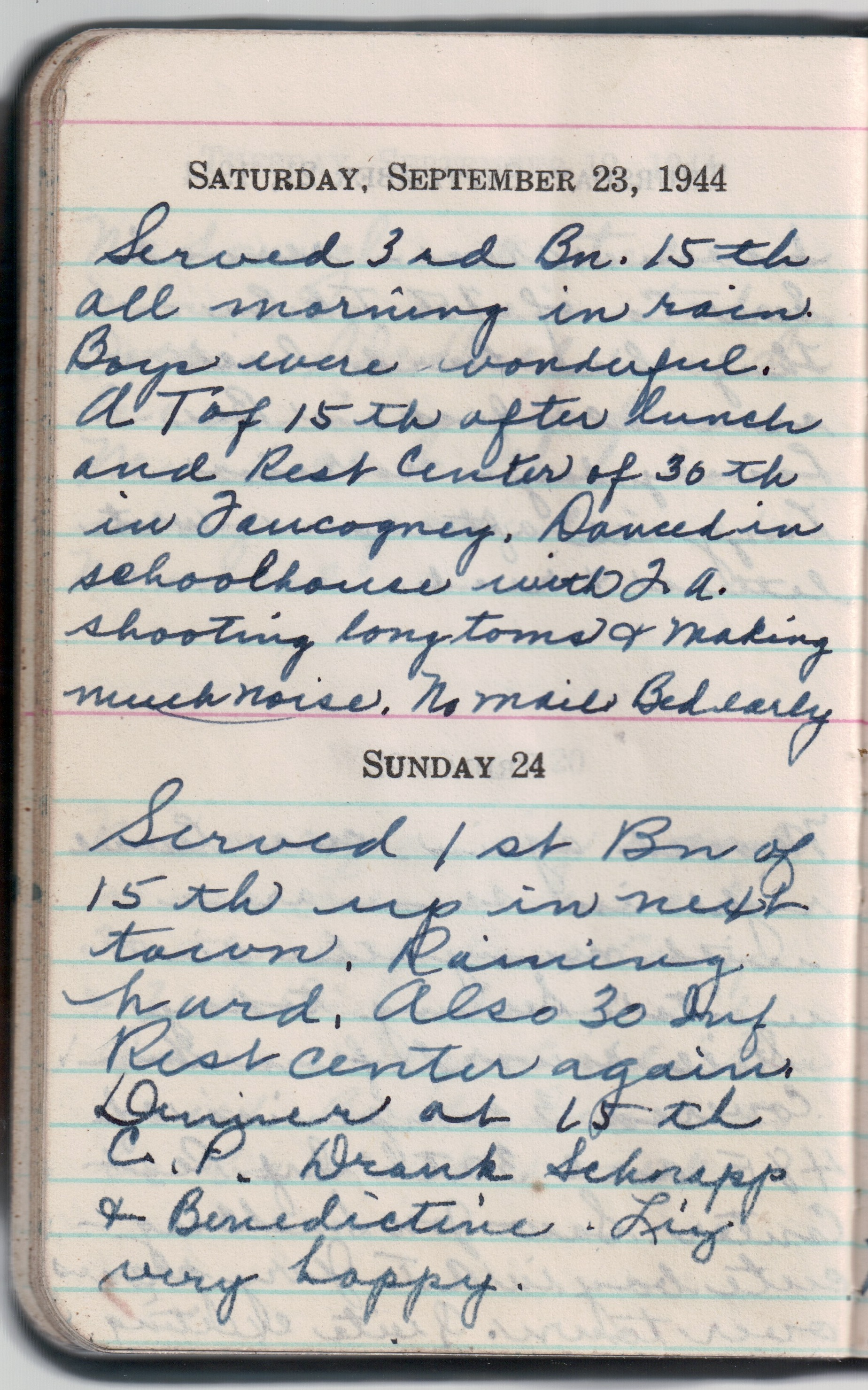
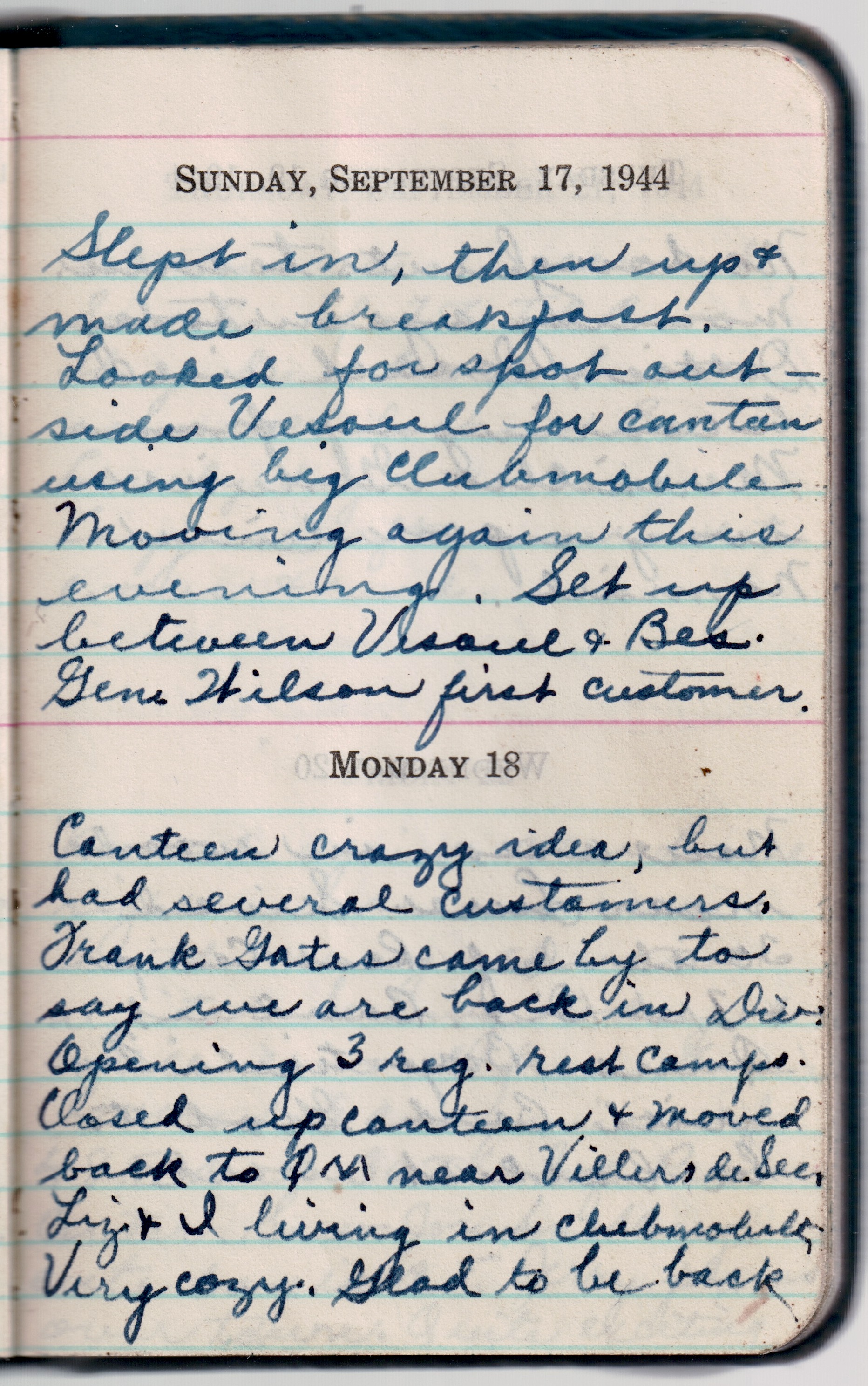
Flo’s diary (pinch out to read)
Photographs from this period, many taken by the 3rd Signal Company, capture Flo and her fellow workers hard at work. These combat photographers, who had joined the division at Anzio, developed and printed their images in a darkroom trailer, documenting the war in vivid, unfiltered detail. Their images offer a rare glimpse into the everyday moments behind the front lines. For more see dogfacesoldier.org, a website dedicated to their photos and the 3rd Division.
June, 1944. Flo saw This is the Army at the Royal Opera House in Rome
My Mother and Audie Murphy Ch. 17
Drag, blackface, racial integration, “too many Jews”—they’re all part of the complicated legacy of Irving Berlin’s wartime musical revue, This Is the Army.
Berlin conceived the show in 1941, even before the U.S. entered WWII. It was a follow-up to a production he had staged during WWI in 1917.
This Is the Army premiered on Broadway in 1942, featuring a cast of 300—enlisted men who could sing and dance. The show then toured the U.S. before traveling to military bases worldwide, running until October 1945.
Berlin originally planned to open the show with a minstrel number, as he had in 1917, but director Ezra Stone pushed back. “Mr. Berlin,” he said, “I know the heritage of the minstrel show. Those days are gone. People don’t do that anymore.” Berlin eventually agreed to cut blackface from the stage production, though the number remained in the 1943 film adaptation.
Members of the This Is the Army unit rehearse “That’s What the Well-Dressed Man in Harlem Will Wear.” (NARA, 111-SC-140528)
Yet Berlin also made a bold move for the era: he insisted on integrating the show. At a time when the U.S. military remained segregated, This Is the Army became the only integrated unit in uniform. He even wrote a song specifically for Black performers.
Not all of Berlin’s decisions were as progressive. During the tour, he stunned cast members by complaining that there were “too many Jews in the show and too many of Ezra Stone’s friends.” The remark shocked those present—was the son of a cantor really saying this? For the soldier-performers, the fear was immediate: any cuts to the cast meant reassignment to the front lines.
The show’s use of drag also drew criticism. Warner Brothers, which produced the film version, worried that the female impersonators would limit its international release. “Female impersonators do not exist in Latin America,” claimed one misinformed studio memo. The studio also feared that images of U.S. soldiers in dresses would become enemy propaganda. In response, the film drastically reduced the female impersonators’ roles.
On June 4, 1944, Allied troops took Rome. Just six days behind them, This Is the Army rolled into the city on trucks. Later that month, the company took up residence at the Royal Opera House, performing twice daily.
The show was a global phenomenon, raising millions for the Army Emergency Relief Fund and leaving a lasting legacy.