Lammas and Kamala

My regular pagan holiday post: Celebrating the Harvest

August 1, a day that marks the halfway point between the summer solstice and the autumn equinox, is celebrated as the first harvest festival in many parts of the northern hemisphere. The Celts called it Lughnasa or Lammas. Besides Lammas, pagans celebrate two later harvest festivals, Mabon at the fall equinox, and Samhain on November 1.

In Sonoma County we can harvest food year-round, so I guess you could say every pagan holiday is a harvest fest here. By the time August rolls around, we’ve already been celebrating for months. The first bite of every ripe fruit calls for celebration.  

Still blooming in our garden: epilobium, native buckwheat, aster. Hydrangea in shade

Growing up in Yakima, Washington, on the eastern side of the Cascade Mountains, I always knew when the fruit was ripe. Cherries were picked on July 4th, and I would gorge until I was sick. Grandma had an old-fashioned peach tree with fuzzy skin that had to be peeled, and those peaches didn’t ripen until late August. Pears came later, and apples weren’t ready until the end of September.

Here in Sonoma County, our Gravenstein apples ripen at the beginning of August! We celebrate the harvest at the Gravenstein Apple Fair. It’s taken me years to adjust to California’s seasons. There’s no real winter here—just fall and then, magically, spring! Winter is the rainy season, and summer is dry. As Pam Peirce says in her book, Golden Gate Gardening, there’s a secret season here. Many seeds can and should be planted in the fall, but I have to remind myself every year.

Last October, I planted sugar snap and snow peas, and by February I was eating them right off the vine. When I’d eaten them all, I planted sweet peas just to enjoy their beauty and fragrance. Beans came next. Our beans didn’t fare so well this year, thanks to moles. They don’t eat veggies, just meat (like worms, that is—think “moles = meat, voles = veggies”), but they tunnel near the roots and leave air gaps that kill the plants. I even saw the soil moving where I had just planted seeds. Needless to say, those beans never stood a chance.

Sunflower, zinnias doing well in the heat

Sometimes, I think gardening is like throwing dice. You never know what the next season will bring, but that’s what makes it interesting. The garden has a mind of its own.

After a couple of disappointing years where our tomato plants succumbed to wilt, this year is shaping up to be a winner. As soon as the first tomatoes are ripe, we celebrate with BLTs. This year, we enjoyed our first BLTs in the first week of July, slicing the Early Girls (my favorite variety).

There’s always something ripe and ready in our garden. We harvested navel oranges from our tree until June, then our neighbor gifted us a bag of Valencias, keeping us swimming in orange juice until mid-July! By August, the purple Santa Rosa plums are history, but the yellow plums from the tree we planted last year are still ripening. 

I’m a gleaner, and throughout the fall harvest season you’ll find me harvesting my own and neighbors’ pomegranates, figs and persimmons. 

Then there are grapes and wine, the primary crop here in adjoining Sonoma and Napa counties. La Paulée, a traditional Burgundian harvest celebration takes place in the Russian River Valley on August 2-3, when winemakers, chefs and enthusiasts of both will gather to celebrate wine and food. A centuries-old celebration once reserved for French vigneron and their harvest crews, La Paulée is a French variation of the Celtic pagan Lammas holiday, marking the end of the grape harvest.

Like all gardeners we have our favorite plants. We love a dry bean called Eye of the Goat, which I got from the West County Community Seed Exchange in Sebastopol. This all-volunteer group has created a seed garden and a community seed library supporting local gardeners with free, locally grown, open-pollinated, pesticide- and GMO-free seeds. Local seed saving means we can cultivate plants that thrive in our region, with each generation adapting more to the local environment. And as the seed industry consolidates, we can preserve heirloom seeds.

The seed exchange sponsors workdays in their garden and classes, but the most fun event is the annual seed swap in early spring at the Sebastopol grange hall.

Another early spring highlight is the annual scion exchange in February, sponsored by the California Rare Fruit Growers. They share free scion wood from all sorts of fruit trees and vines. Local farmers stand by to help you choose the best varieties for your location. I discovered the scion exchange years ago and got hooked on grafting. 

Global warming is rapidly changing our world here in NorCal. This year June and July were hotter than ever, and August and September are predicted to break more records. On July 22 (and 23), 2024, the hottest day on earth in recorded history, it was 99 degrees here. 

Cone flower (echinacea) petals burned, but native yarrow does well

We and our plants struggle with a warming climate. We’ve already had three heat waves this season and the hottest part of the summer is yet to arrive. Leaves are scorched and beans refuse to flower. Not many plants like 100-degree temperatures; even tomatoes protest.

And fire season started early with smoke blowing down from fires north of us. We may experience poor air quality till the rains start in November. The fire app, Watch Duty (download it if you haven’t already) shows scores of fires in California. The biggest is the Park Fire near Chico at 350,000 acres and growing. Oregon is burning. Practically the whole state of Idaho and much of Montana is under a red flag warning.

Climate change also brings new bugs to our northern climes. There’s a new mosquito in town and she takes no prisoners. She joins about a dozen varieties of mosquitos here. In past years they’ve died off with the advent of winter, but this year, due to a warm, rainy winter, they never left. Holly isn’t much affected by mosquitos, but if I’m in the yard, especially at dawn and dusk, they find me. I’ve had to give up hot tubbing because no matter how quickly I throw a robe on, they attack. They bite in my most vulnerable places! When I’m dressed, they go for my chin and ears. They are stealthy! I don’t hear them, and I rarely see them. I’m terribly allergic to their bites, which result in gigantic welts that itch for weeks. I scratch, and then they weep copious amounts of lymph fluid. So, though I hike every day, mosquitoes have kept me more indoors–not a bad thing when the temperature soars.

There is one more development we’re celebrating this harvest season. As we queers, feminists, pagans, progressives and people of color work to overcome the rise of the christian right, our election fears have lessened with the candidacy of Kamala Harris. Memes abound. I like MALA (Make America Laugh Again).

Now we must work to get her and down ballot Democrats elected! Election day this year is Tuesday November 5. That’s 95 days and counting.

We can Do it!

Here’s to a productive election season, and good Lammas to all.

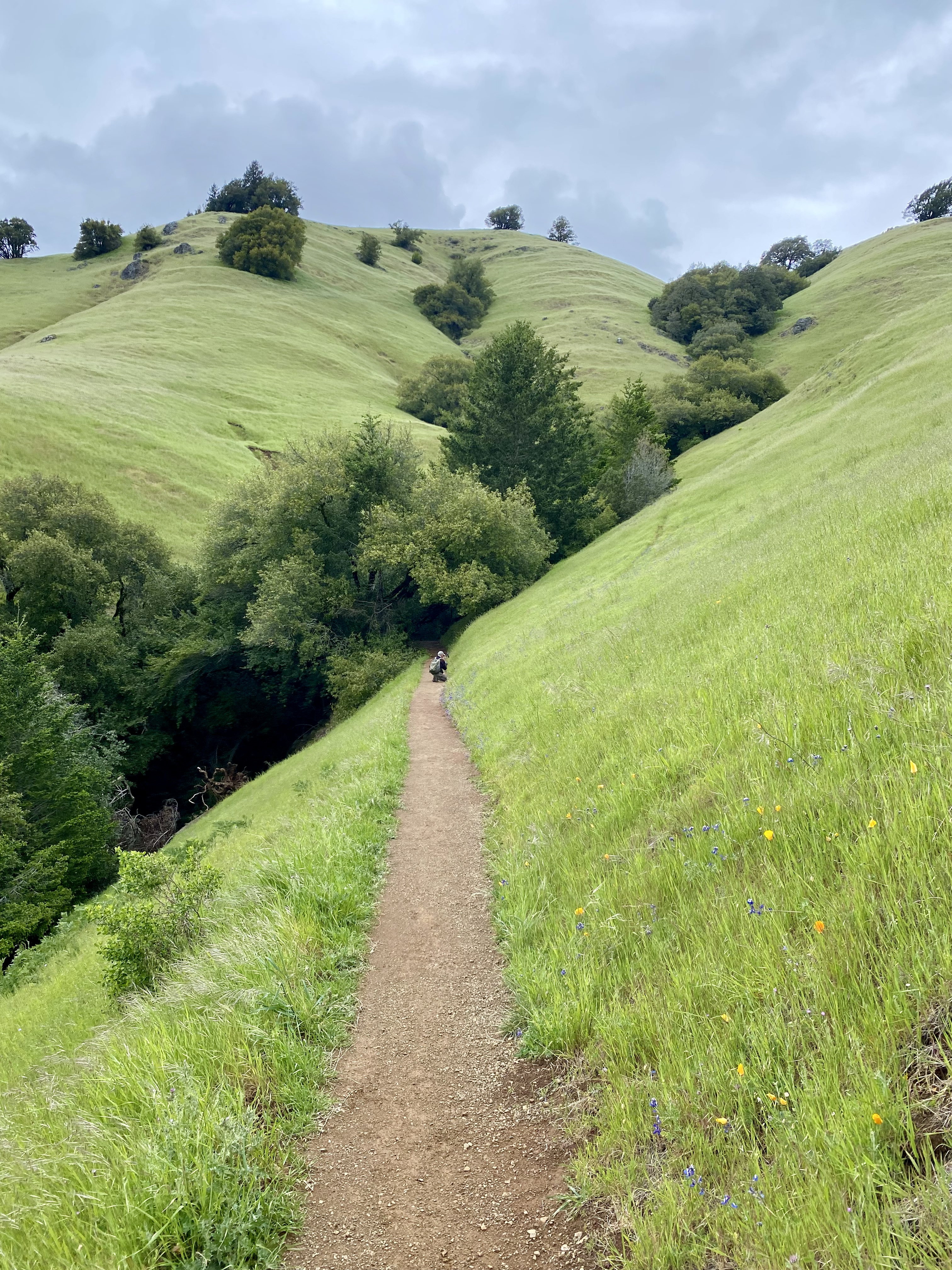
The top photo is the view of sunset on a hot day over the Coast Range that we see from our street. The high point is called Black Mountain.
Looking for Santa Rosa’s Oldest Rose

We once found it in an ally in the JC neighborhood

Santa Rosa, famed for its roses and annual rose parade, is also known as the home of Luther Burbank, the legendary plant wizard. Why did Burbank choose Sonoma County? Simple—because plants here live their best lives. He famously said, “I firmly believe…that this is the chosen spot of all this earth, as far as nature is concerned.”

Before Holly and I tied the knot and set up camp in Santa Rosa, I lived in San Francisco. Every week I’d take the Golden Gate Transit bus to visit Holly. We had this delightful hobby of cycling through various neighborhoods, ogling the stunning gardens and secretly judging people’s landscaping choices.

On one particularly memorable ride—it must have been April or May in 2010—we spotted a man toiling away in his garden. Naturally, we screeched to a halt, intrigued by his green-thumb magic. As we marveled at his work, the man asked us a curious question, “Have you heard about the oldest rose in Santa Rosa?”

With a sense of mystery, he directed us to an alley between Nason and Spencer in the JC neighborhood. Our mission was clear. We pedaled like detectives on a hot lead until we found the rose. It was a gigantic bush, but, believe it or not, I can’t recall its color. This was pre-cell-phone-camera days, so no pics for proof. Did I smell it? I don’t remember, but I must have, considering I make it a habit to stop and smell the roses around town.

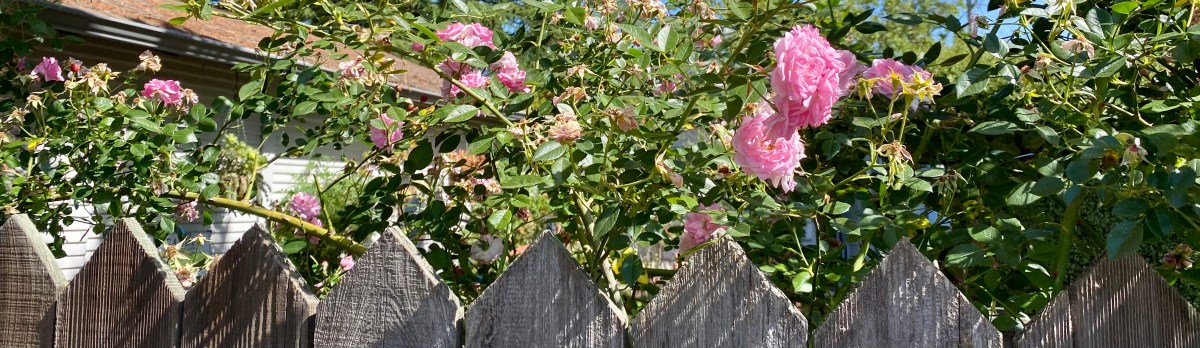
The color? Your guess is as good as mine. I later fantasized it was yellow, like a rose from a century-old house my family moved into back in 1959 in Yakima, Washington. But after diving into rose lore, I’m pretty sure it was pink, which is the go-to hue for ancient roses.

Fast forward to my discovery that roses, despite their ageless beauty, don’t live for a century. The Methuselahs among them might clock in at 35 to 50 years, while the newer hybrids are lucky to hit double digits.

Roses have a traceable origin. They likely sprouted in Central Asia and migrated to northern Europe over centuries. Rose cultivation kicked off in Central Asia around 5000 years ago. Today’s garden-variety roses are the glam descendants of plants from the Oligocene epoch (33 million to 23 million years ago), with fossils found across Europe, Asia, and western North America.

Recently, I went back to search for the oldest rose. I asked a friend who grew up in the JC neighborhood if she had heard of it. She had, but she didn’t remember seeing it—the stuff of urban legend.

The alley between Nason and Spencer stretches from King St. to Mendocino, morphing into Ridgway. I paced up and down that alley more times than I care to admit, but alas, I didn’t find it. Now I know, roses don’t do immortality.

Maybe someone took a cutting and gave it a fresh start. Perhaps the rose’s spirit lives on in the rural cemetery or the JC rose garden, which boasts some elderly blooms.

Rose or no rose, the alley had its charms. I met some interesting folks and stumbled upon quirky artwork on weathered walls. And so, the hunt for the oldest rose may be thorny, but it’s always blooming with stories.

CircumTambulation Complete!

A Summer Solstice Walk Around Mt. Tamalpais

When I learned about the quarterly circumambulation of Mt. Tamalpais, I pledged to complete it for the summer solstice. A sister hiker, Dolores, agreed to join me.

The practice was begun in 1965 by poets Gary Snyder, Allen Ginsberg and Philip Whalen–a ritualized walking meditation around Mt. Tam. Following the traditional clockwise direction, they selected notable natural features along the way, performing Buddhist and Hindu chants, spells, sutras, and vows at each stop.

There are two walks, the longer one is 17 miles, the shorter 6.2 miles. At 89, Dolores was the oldest hiker, and I at 74 was likely the second oldest. We chose the shorter walk.

We met up at Rock Spring with about 40 long hikers, who had started earlier in the morning at Muir Woods. The temperature was a warm 74 degrees. Fog was coming in from the ocean down below us.

The short walkers join the long walkers for three of the nine stations. Our first stop was the serpentine rocks overlooking the ocean and the Golden Gate, where participants joined in ceremonial readings.

Ascending the serpentine hill; Leader Gifford Hartman reads a Gary Snyder poem to the group

In a poem, Gary Snyder advises us to learn the flowers. On this walk we did our best, focusing especially on native plants.

Few plants can grow in serpentine soil because of its high levels of toxic heavy metals, and low levels of water and nutrients. But a few plants have adapted to serpentine. Some grow right out of the rock.

Native buckwheat (Eriogonum luteolum), native cobweb thistle (Cirsium occidentale) and fog

Next we hiked on to Potrero Meadows for lunch and more readings. One hiker composed limericks just for us. Snyder envisioned the circumambulation as a joyful, creative endeavor, encouraging participants to be imaginative. He emphasized the importance of paying attention to the surroundings and oneself: “The main thing is to pay your regards, to play, to engage, to stop and pay attention. It’s just a way of stopping and looking — at yourself too.”

Walkers gathering at Potrero Meadow. In this area is mostly a Douglas fir, live oak and Bay laurel forest

Hiking through the Bay laurel leaves gave off a wonderful pungent menthol-like fragrance.

Watching for ticks in the meadow; native Mariposa lilies (Calochortus) and Ithuriel’s spear (Triteleia laxa) peeking out of the tall grass

Our next station was the serpentine cairn. We circumambulated the cairn, each tossing a stone upon it and chanting Women Life Freedom. Zan, Zendigi, Azadi.  

The chant was led by an Iranian-American woman. The spark for this chant and an uprising of Iranian women was the death of Mahsa Amini, a young Kurdish woman who died after being detained by Iran’s morality police for “improper hijab.”

For me this was the highlight of our trip. I was delighted to be led in this chant, joining Iranian women who have been risking their lives to protest for women’s rights and equality.

Dolores and the cairn (L); a closer look at the green serpentine rock

After that Dolores and I and three others went our own way, leaving the large group behind. We headed along the International trail toward the West Point Inn where I hoped to score a cold drink and maybe a popsicle.

California hedge nettle (Stachys bullata); Tanoak (Notholithocarpus densiflorus)

We saw lots of tan oak, the tree that has been devastated by sudden oak death (SOD). This species seems to be recovering. Soon the younger hikers walked on ahead of us. No problem we said. We have maps! Dolores and I continued together.

Me on the trail to the east slope; native chamise (Adenostoma fasciculatum) in bloom

We entered a plant community of chaparral, characterized by manzanita and scrub oak. Many of the native wildflowers had bloomed, but we found a few late bloomers.

Dolores with wooly sunflower (Eriophyllum lanatum), sticky monkeyflower (mimulus), lupine (Lupinus chamissonis)

Coming around to the east side of Tam we were treated to spectacular views of the Bay Area.

Looking toward Mt. Diablo (L) we could see smoke from north bay fires blowing into the Napa Valley. The city of Oakland on the far right.

More blooming plants greeted us.

Toyon (Heteromeles arbutifolia), mountain coyote mint (Monardella odoratissima)

I couldn’t stop taking pictures of the view.

The skyscapers of San Francisco appear above the fog right of center.

We’d been so looking forward to a rest stop at the West Point Inn but it was closed for a huge renovation. Some bikers and hikers hung around and we were able to refill water bottles from a spigot.

Built in 1904, it was once a stop on the Mill Valley and Mt. Tamalpais Scenic Railway.

From Old Railroad Grade we headed down the Rock Spring Trail to our starting point at Rock Spring, the final leg of our journey.

California aralia, the only member of the ginseng family native to California; Yerba Santa (Eriodictyon)

We were happy not to have to compete with bikes or horses on this trail.

Sign on the Rock Spring trail, Coast silk tassel (Garrya elliptica)

We knew we were close to the end of our circumTambulation when we came to the Mountain amphitheater, the 4,000-seat open air theater opened in 1913. This is the venue for the annual Mountain Play. Structures for this year’s play, Kinky Boots, were being struck. We were beat!

The Mountain Theater seats, taking a break near the end

Back on the road we got a bit lost. Which way to Rock Spring? We flagged down a passing car. Take that trail right there said the occupants. They were two of the young 17-mile circumabulators, already finished with their long walk!

We might have been slower but we made it!

A Sister’s Murder Sparks Action

Black, Lesbian, or Just a Woman?

Tradeswomen Respond to Workplace Violence

Carpenter apprentice Outi Hicks was working on a job in Fresno, California in 2017 when she encountered continuing harassment from another worker there. She didn’t complain and no one stood up for her. Then her harasser attacked her and beat her to death. 

We don’t know whether Outi (pronounced Ootee) was murdered because she was Black, lesbian or just female. But we do know that being all three put her at greater risk. Outi was 32 and a mother of three. 

In response, tradeswomen organized Sisters Against Workplace Violence and worked with the Ironworkers Union (IW) to launch a program called Be That One Guy. The program’s aim is to “turn bystanders into upstanders.” Participants learn how to defuse hostile situations and gain the confidence to be able to react when they see harassment. 

“Outi Hicks’ murder hit me hard,” says Vicki O’ Leary, the international IW general organizer for safety and diversity. “Companies and unions need to change the focus of their harassment policies and need to get tougher with harassers.” 

Often the victim of harassment is moved to a different crew or jobsite in an effort to defuse the situation. But such a response actually punishes the victim and not the aggressor, who remains unaffected and may continue to harass other workers. 

O’Leary says one of the most important parts of the program is when participants take the pledge:

“It only takes one guy to talk to the harasser or to file a complaint with the crew boss. It’s even better when the whole crew stands up together to end harassment, and we are now seeing this happen on job sites around the country,” says O’Leary. She tells of an apprentice who was being harassed by a supervisor. Seeing the harassment, everyone on the crew began to treat the supervisor the same way he was treating the apprentice. His behavior changed in a day.

The IW is rolling out the program through their district councils. They want to share it with other unions and, says O’Leary, they’re hoping general contractors will jump on.

Another anti-violence program started by tradeswomen and our allies also is specifically tailored to the construction industry.

ANEW, the pre-apprenticeship training program in Seattle, created its program, RISE Up, to counter the number of people, and especially women, who leave the construction trades because of a hostile work environment. ANEW director, Karen Dove, developed the program after meetings with contractors who would say “women just need tougher skin.”

The program focuses on empowering workers and employers to prevent and respond to workplace violence. It offers a range of services, including training sessions, risk assessments, and support for workers who have experienced violence.

Training sessions are designed to help workers and employers identify the warning signs of workplace violence and take proactive steps to prevent it. The training covers conflict resolution, de-escalation techniques, and the importance of creating a positive work environment.

The program is concerned with psychological well being and is now working with a union to develop mental health services for Black workers. 

RISE Up also offers risk assessments to construction companies, which help them identify areas of their workplace that may be at higher risk of violence.

Marquia Wooten, director of RISE Up, says the program is designed to change the culture of construction. Wooten worked in the trades for ten years as a laborer and an operating engineer. “When I was an apprentice they yelled and screamed at me,” she says. She notes that men suffer from harassment too. “The suicide rate of construction workers is number two after vets and first responders,” she said. “Substance abuse is high in construction.”

ANEW partners with cities, public entities, unions, schools and employers. “They do want change in the industry,” says Wooten. Less workplace violence is good for the bottom line.

But training workers is not enough. Union staff needs training in how to respond to harassment as well. Liz Skidmore recently retired as business representative/organizer at North Atlantic States Regional Council of Carpenters. They created a training to help union staff members know what to do when a member complains.

“New federal regulations require that every person on the construction job who comes into contact with apprentices go through anti-harassment and discrimination training,” says Skidmore.

“Most of corporate America requires annual training about sexual harassment, but most trainers don’t know the blue collar world,” she says. Trainers can be classist. “To be effective, the trainer has to like these guys.”

While tradeswomen have long been virtually invisible on the front lines of the Feminist and Civil Rights Movements, we still are the ones who daily confront the most aggressive kind of sexism and racism in our traditionally male jobs. For going on five decades now we have been devising strategies to counter isolation and harassment at work and to increase the numbers of women in the union construction trades. Now we are working to educate the construction industry about how to end workplace violence. Women in construction are still isolated and often the only woman on the job. We need our brothers to act as allies. 

As with women in construction, queer and transgender folks must depend on allies to stand up to bullies. We can’t do this by ourselves. The anti-violence programs developed by tradeswomen are programs that we queers can adapt to protect our communities. 

Sometimes you just have to say something.

Postscript 2025: Another sister has been murdered on the job by a coworker. Minneapolis. He killed her with a sledge hammer. Story on 19th: https://19thnews.org/2025/11/amber-czech-welder-murder-tradeswomen-demand-action/

CircumTambulation: A Ritual

My Regular Pagan Holiday Post: Summer Solstice

Circumambulation (from Latin “circum” meaning around and “ambulātus” meaning to walk) is the act of moving around a sacred object or idol. This practice is integral to Hindu and Buddhist devotional rituals (known in Sanskrit as pradakśiṇā) and is also present in Christianity, Judaism, and Islam.

Native bush lupine blooming on the west slope, Deep in the redwood forest

Seeking rituals associated with solstices, I discovered one right here in the Bay Area that has been ongoing since the 1960s at the iconic Mt. Tamalpais in Marin County.

My wife, Holly, introduced me to the circumambulation of Mt. Tam, having learned about it from the poet Gary Snyder, who initiated it. Unfamiliar with the term, I had to look it up. Once I did, I found myself repeating it because it’s such a cool word and fun to say.

A new bridge on the Steep Ravine Trail, Looking south at the golden gate and San Francisco

The Genesis of CircumTambulation

The circumTambulation (as it has been called) was started by Snyder, Philip Whalen, and Allen Ginsberg. They were inspired by ceremonial circumambulations that Snyder, and later Ginsberg, learned about during their travels in Japan, India, and Nepal. These men, part of the Beat movement, had studied Buddhism and aimed to introduce Eastern enlightenment to Western audiences.

In 1965, after a decade of studying Zen Buddhism in Japan, Snyder returned to California. He, along with Whalen and Ginsberg, embarked on a ritualized walking meditation around Mt. Tam. Following the traditional clockwise direction, they selected notable natural features along the way, performing Buddhist and Hindu chants, spells, sutras, and vows at each stop.

The hike spans 15 miles and is typically completed in a day. During summer, the long daylight hours are sufficient to finish the trek, while in winter, flashlights may be needed. I was relieved to learn that there is also a 6.2-mile option where participants can join the long walkers halfway.

Trail signs; View of redwoods, Bolinas and the Pacific Ocean

A Dive into Beat Poetry

Learning about this ritual led me to explore the Beat poets further. San Francisco and the Bay Area was ground zero for the Beats and they congregated here. Snyder lived in a shack on Mt. Tam’s southeast slope during the 1950s, where he was visited by other writers of the time.

This prompted me to read Jack Kerouac’s “The Dharma Bums,” which recounts his famous hike with Snyder over the mountain from Mill Valley to Stinson Beach and back. Kerouac also describes an epic three-day party at Snyder’s shack before Snyder’s departure to Japan in 1956. Although the shack was demolished long ago, the house still stands on the property in the Homestead neighborhood near the Pixie Trail. Commenters on AllTrails mention it’s not well maintained, but I still want to hike there.

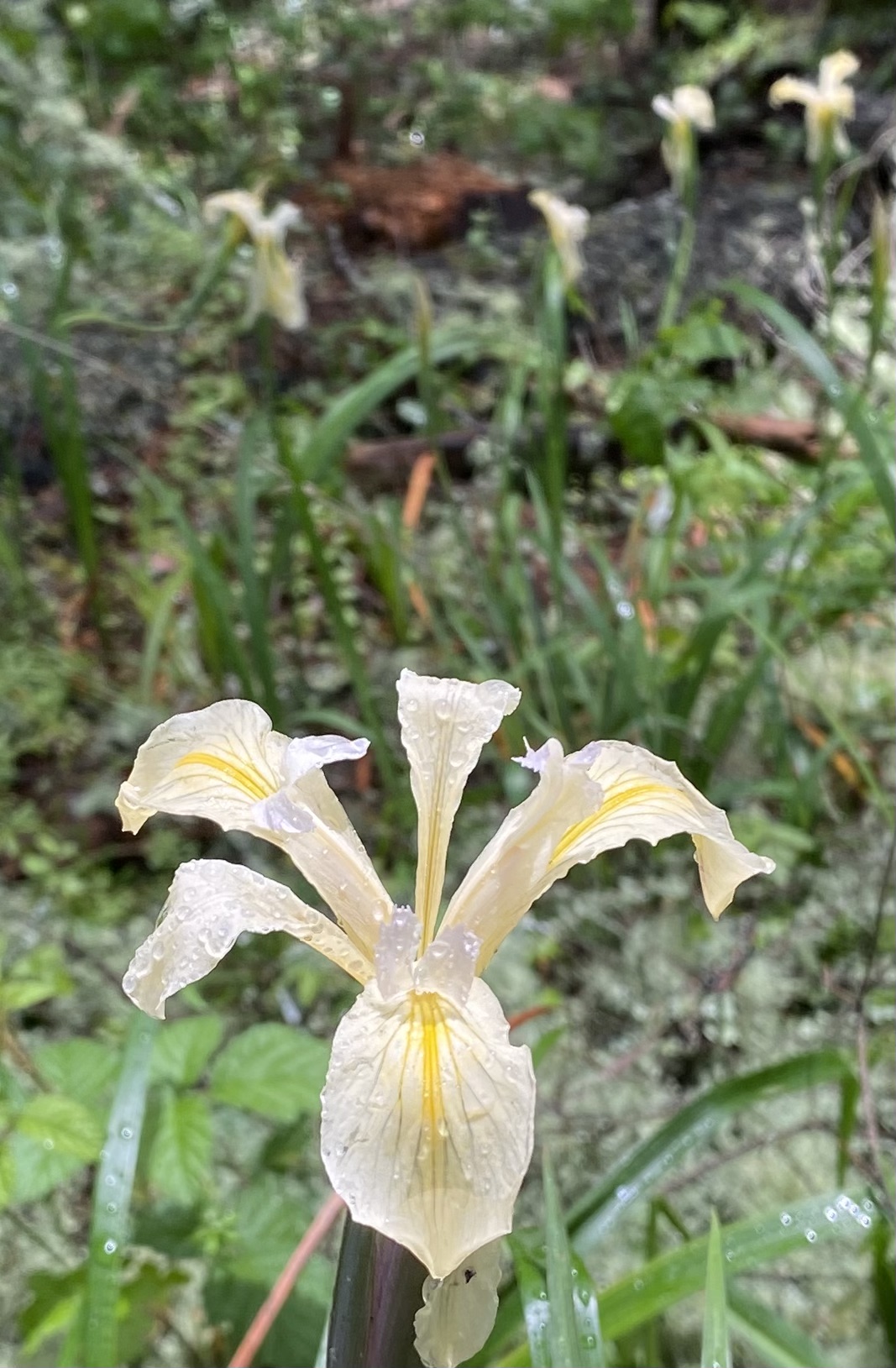
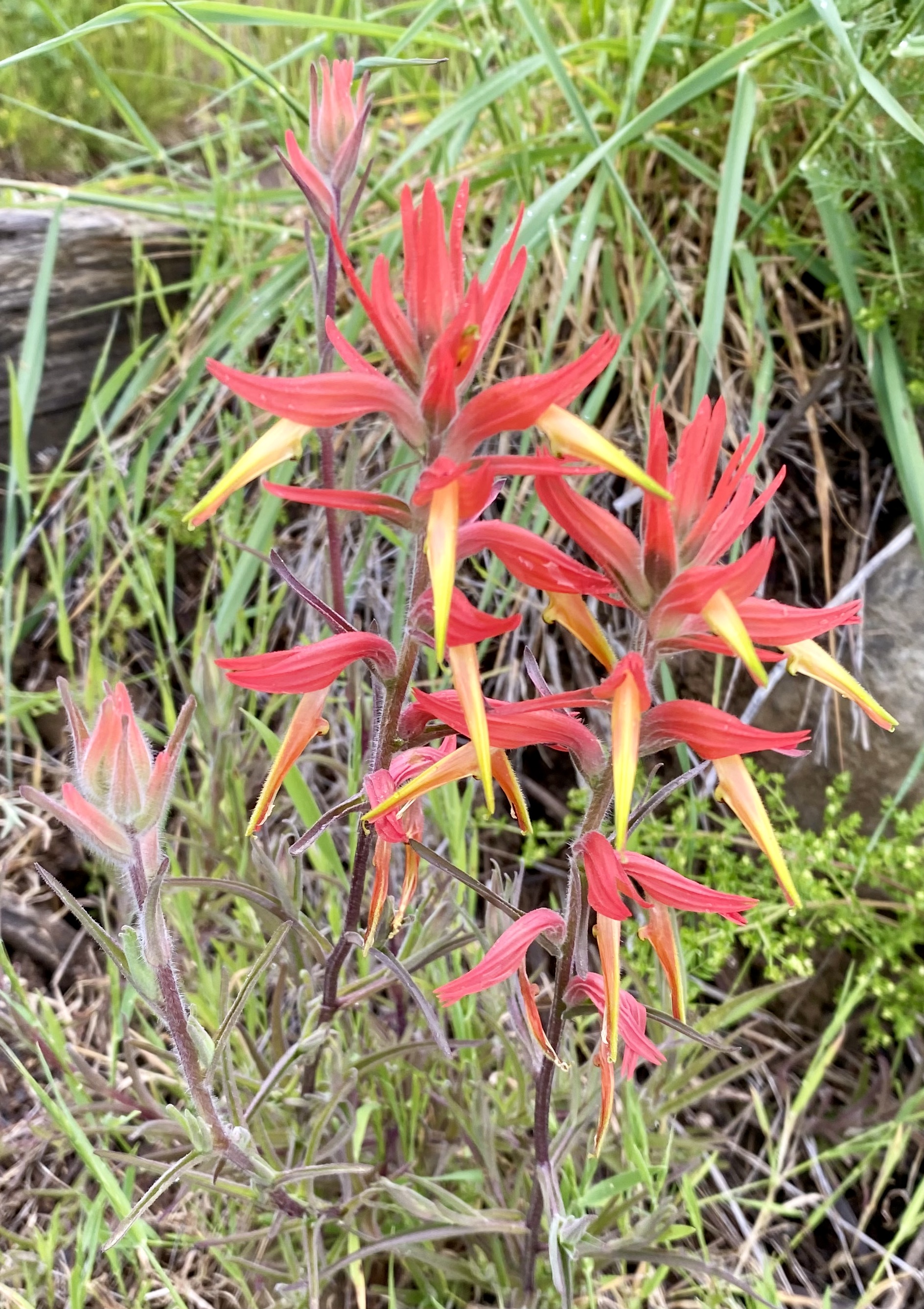
Native Douglas iris, cool paintbrush (a kind I’d never seen before)

Reflections on the Beats

As I trace the path of circumTambulation, I think about Snyder, Ginsberg, and the Beats. They were often egotistical and sexist, but also perhaps geniuses. Kerouac was likely schizophrenic, and Neal Cassady a “charismatic sociopath.” Much has been written and filmed about them, but women in their circle received little recognition until recently.

Through Snyder, I discovered the poet Joanne Kyger, who married him in 1960 in Japan and traveled with Snyder, Ginsberg, and his lover Peter Orlovsky to India, meeting the Dalai Lama. Kyger, a serious poet herself, recorded her travels in diaries published in 1981 as “The Japan and India Journals 1960-1964,” providing a rare female perspective on the male-centered Beat movement. Kyger settled in Bolinas and lived there until her death at 82 in 2017.

Despite being part of the same journey through Japan and India, Kyger is often omitted from accounts that only mention Snyder, Ginsberg, and Orlovsky. Her diaries are a testament to her presence and contributions during this significant period.

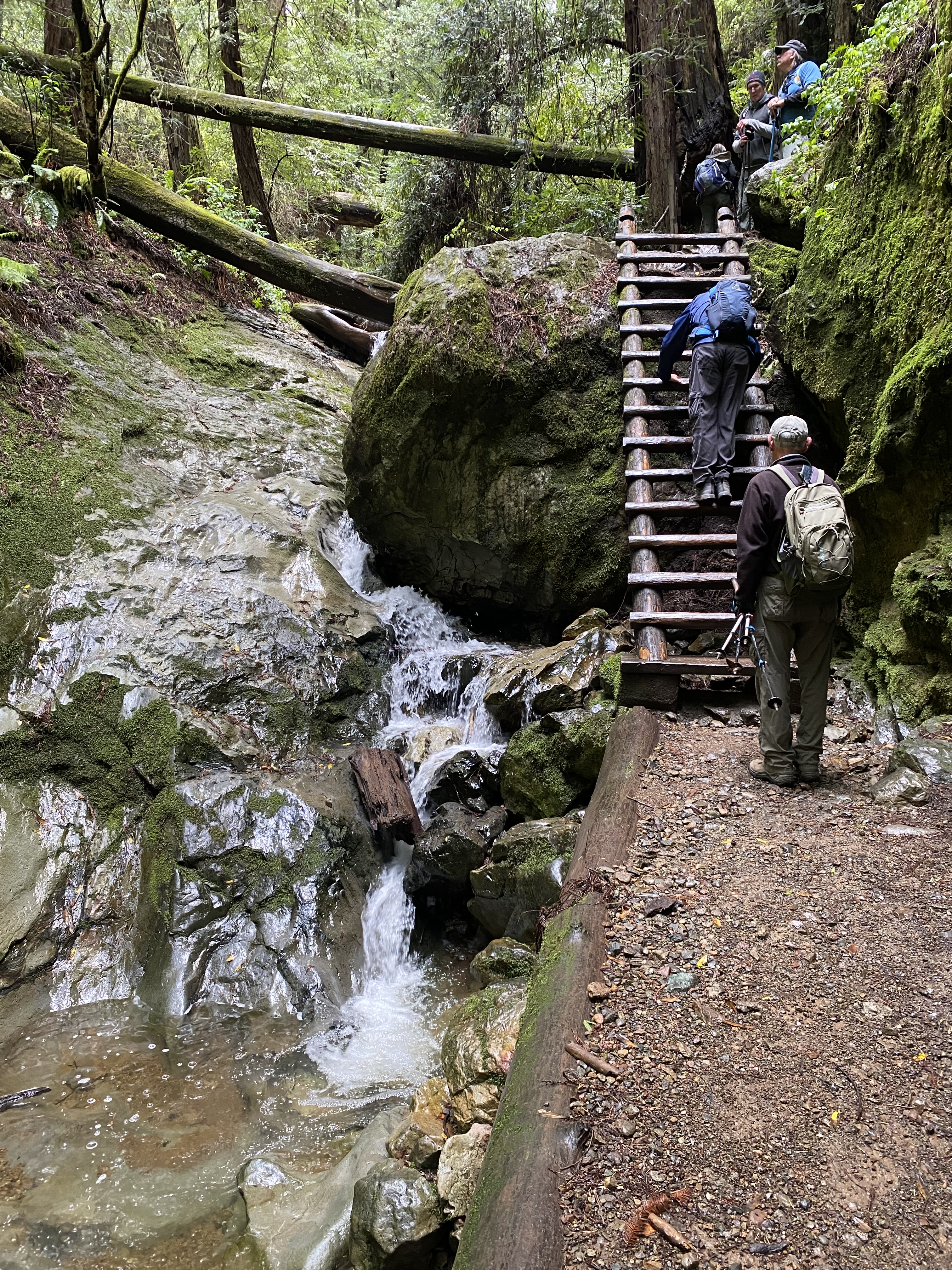
Climbing the ladder on the Steep Ravine trail

Continuing the Tradition

Snyder envisioned the circumambulation as a joyful, creative endeavor. He encouraged participants to be imaginative, stopping at points his trio had designated or choosing their own. He emphasized the importance of paying attention to the surroundings and oneself: “The main thing is to pay your regards, to play, to engage, to stop and pay attention. It’s just a way of stopping and looking — at yourself too.”

Since the fall of 1974, the circumambulation has taken place on each solstice and equinox (or the closest Sunday), starting and finishing at Muir Woods National Monument. The tradition has been led by dedicated guides, first Matthew Davis, then Laura Pettibone, and currently Gifford Hartman, a San Francisco-based educator and labor historian.

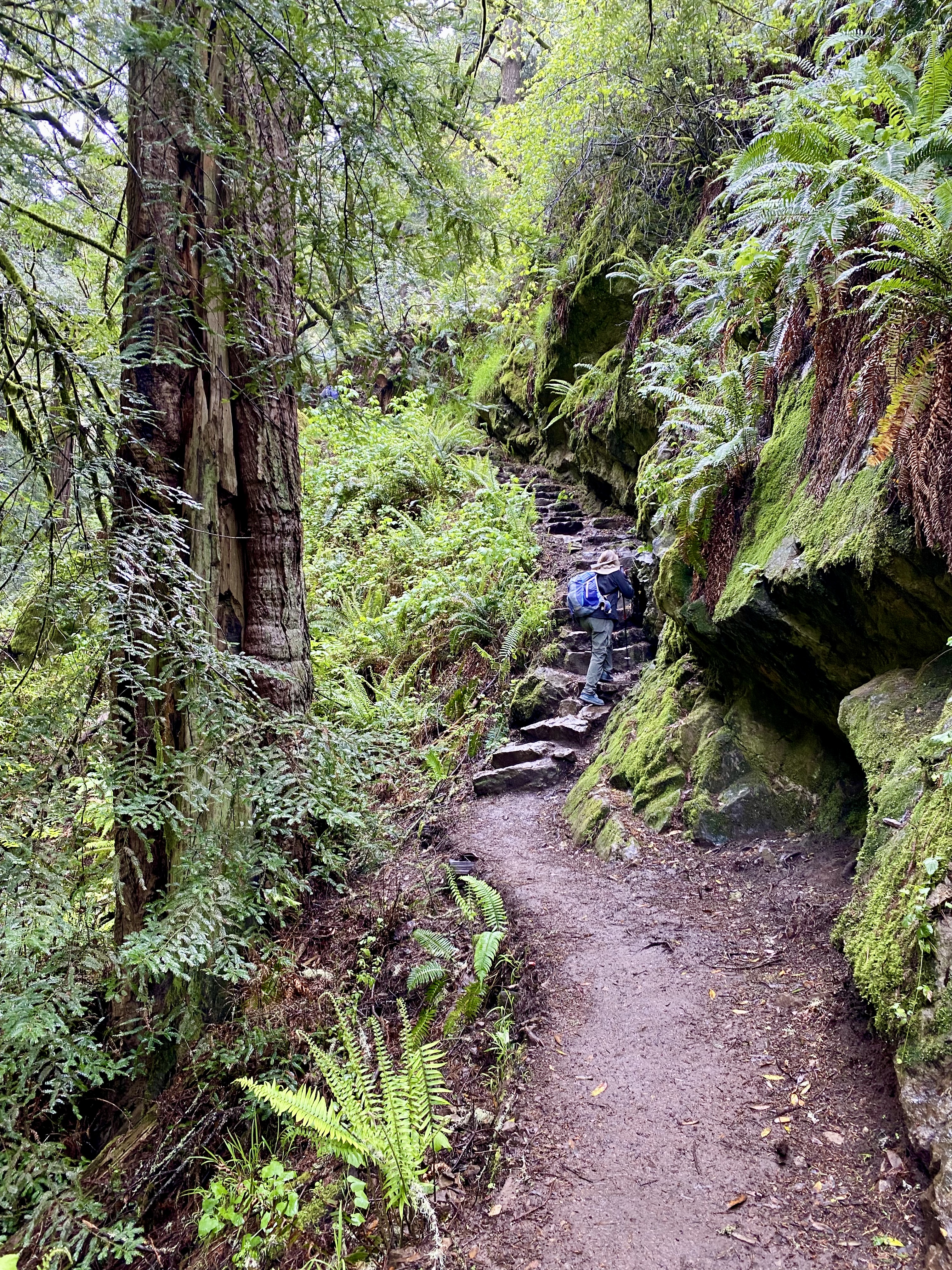
Lots of mosses and lots of steps

Historical and Spiritual Significance

Mount Tamalpais (tamal = west, pais = hill or mountain) is sacred to the native Coast Miwok people, as well as other native groups. Along with other mountains visible from Sonoma County—Sonoma in the Coast Range, Hood and Kanamota (St. Helena) in the Mayacamas Range, and Diablo (tuyshtak in Ohlone)—Mt. Tam retains its spiritual character.

The US military destroyed Mt. Tam’s summit in the 1950s, establishing a base and lookout during the Cold War. Gary Yost’s film “The Invisible Peak (hidden in plain sight)” explores this history https://www.youtube.com/watch?v=y6TA-jbZqQU. I also recommend Will Hearst III’s video about Snyder, “The Practice of the Wild.” https://vimeo.com/418682866

Embracing Tradition

The ending of Gary Snyder’s poem “For the Children” encapsulates the spirit of this tradition:

stay together
learn the flowers
go light

Looking south toward San Francisco, Photographing flowers on the west slope

I try to live by this advice as I hike around our beautiful Bay Area open spaces. I joined a hiking group whose average age is 80. At 74 I’m one of the young ones. One woman at 93 still leads us on seven-mile hikes. We stay together to help each other in case of inevitable disasters (I’ve had a couple of falls this season but didn’t break anything). We learn and delight in the flowers, although with my poor memory I must relearn them every year (I think there’s something very Zen about that). And perhaps our old age inspires us to go light in its many senses. I took these photos on a Mt. Tam hike on the Dipsea, Steep Ravine, Coast View and Matt Davis trails in early May.

I plan to celebrate this summer solstice by joining the circumTambulation on Sunday, June 23. Please join me. For more information, visit: CircumTambulation.

Happy Solstice and Happy Pride!

June 1 Biggest Best Pride Ever!

Reporting from Sonoma County CA

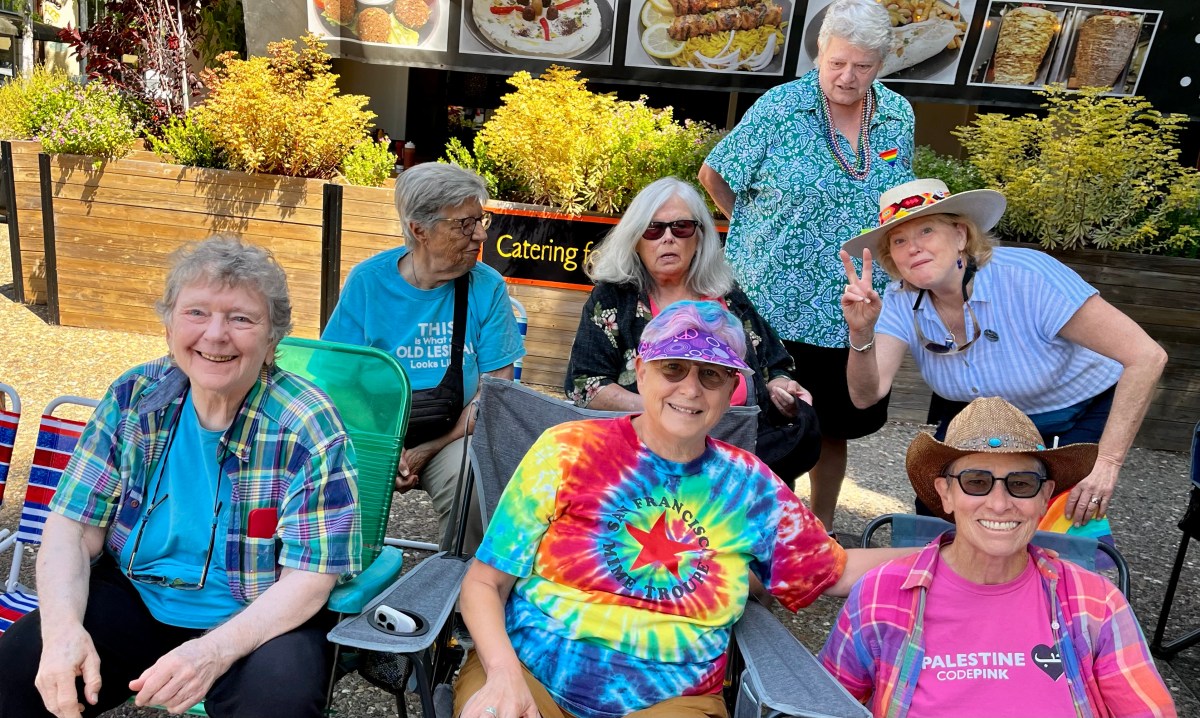
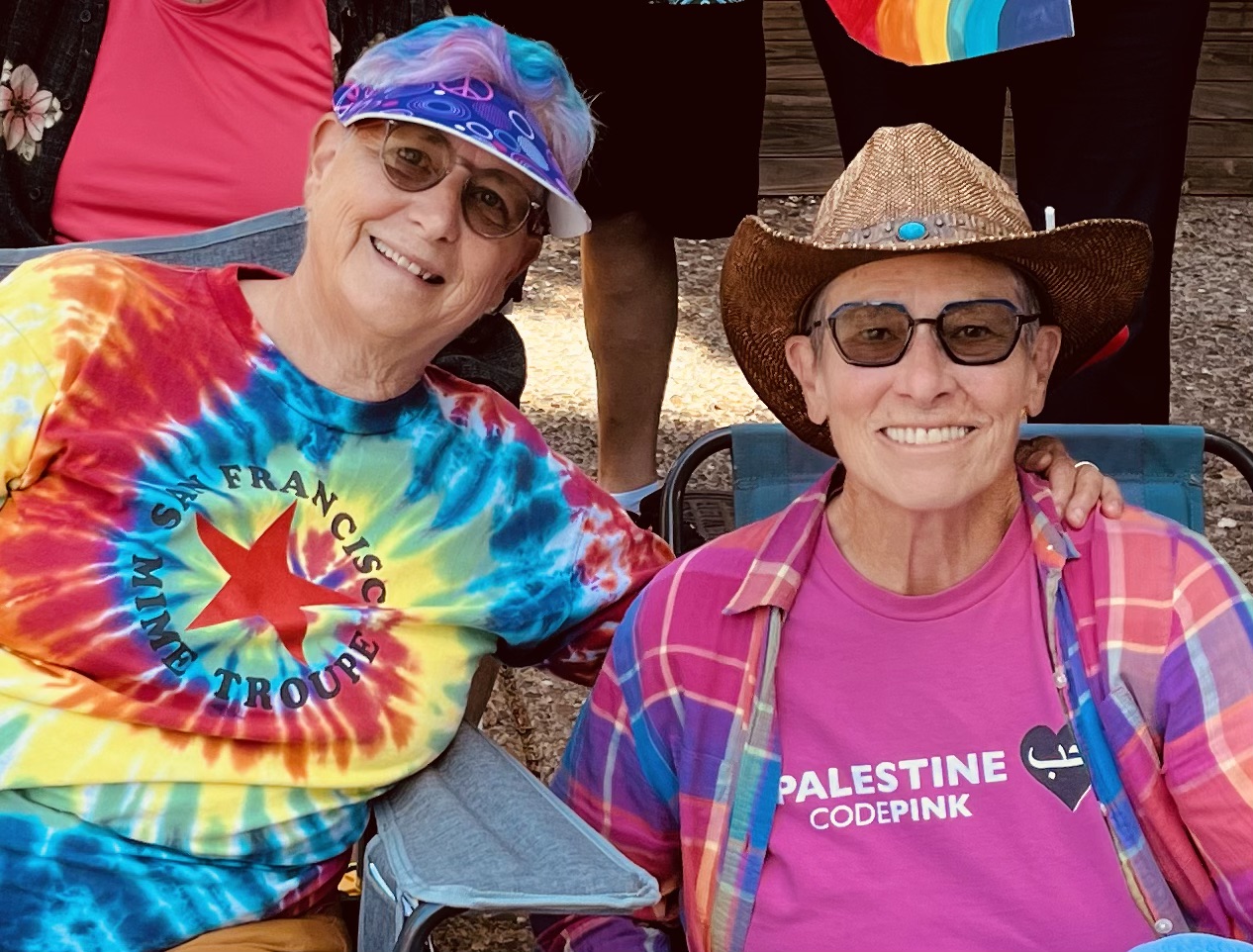
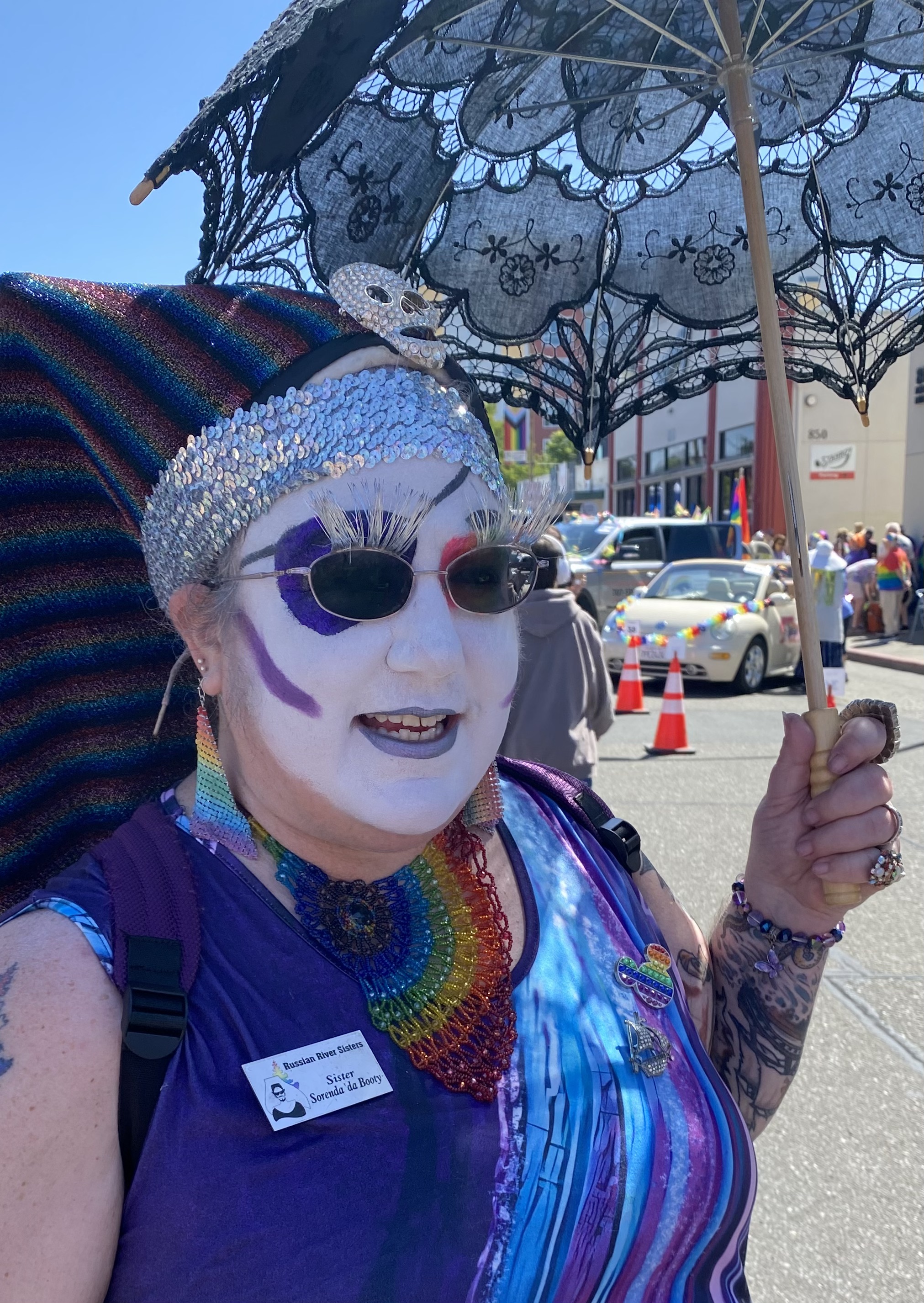
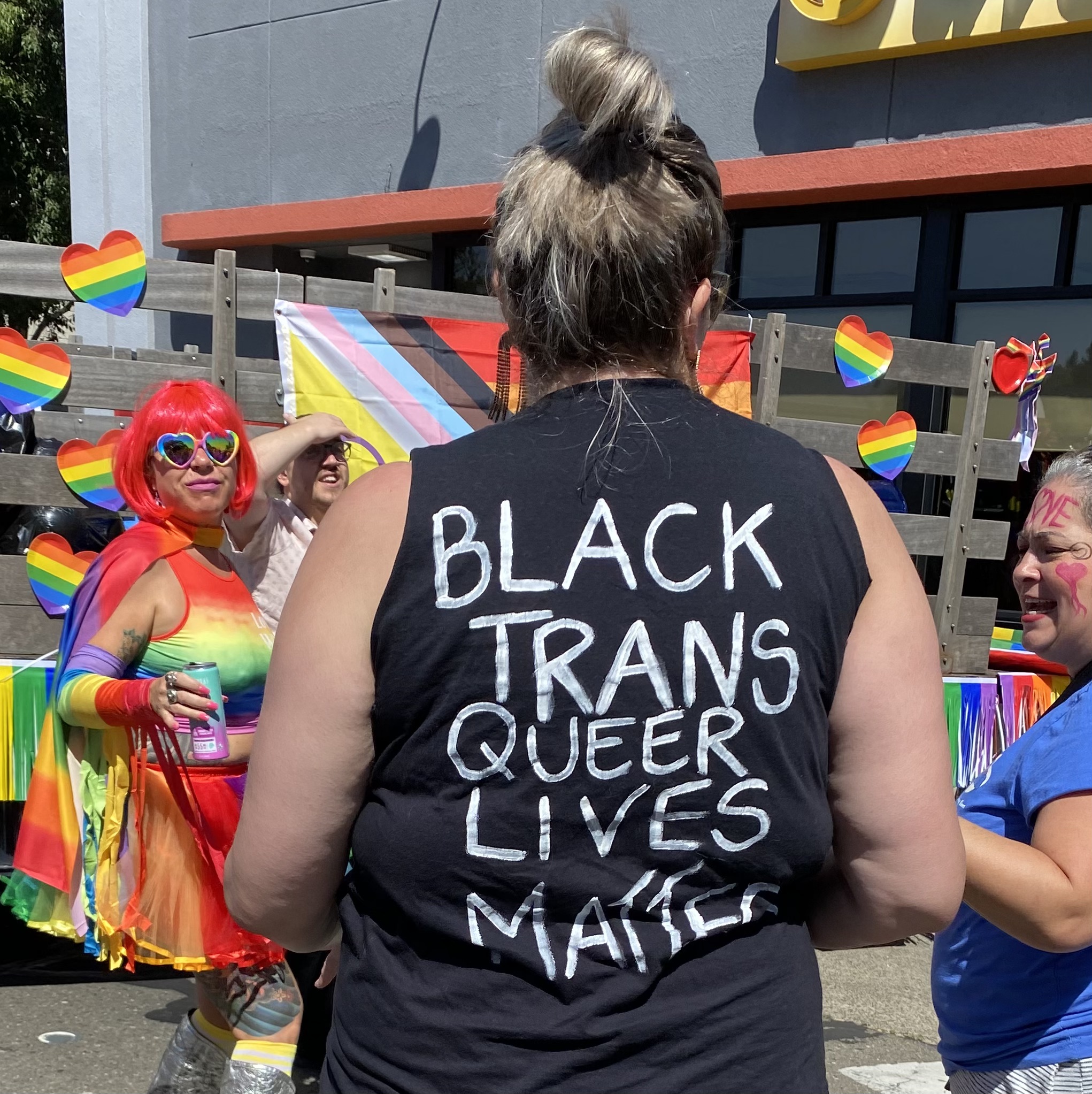
Our celebration took place in Santa Rosa, where we live, a city of 177,000. My honey, Holly (L), and I watched the parade with a group of friends. Afterward we checked out the booths and music at the town square. This year saw more marchers and watchers than ever. And if there were haters (as there have been in past years), I never saw them. The vibe was joyful.

The theme this year was Heroes Sheroes and Queeroes. So there were lots of superhero capes among the marchers. The Sebastopol (a nearby small town) Senior Center volunteers made 60 capes with messages, and they won the Best Overall Float prize.

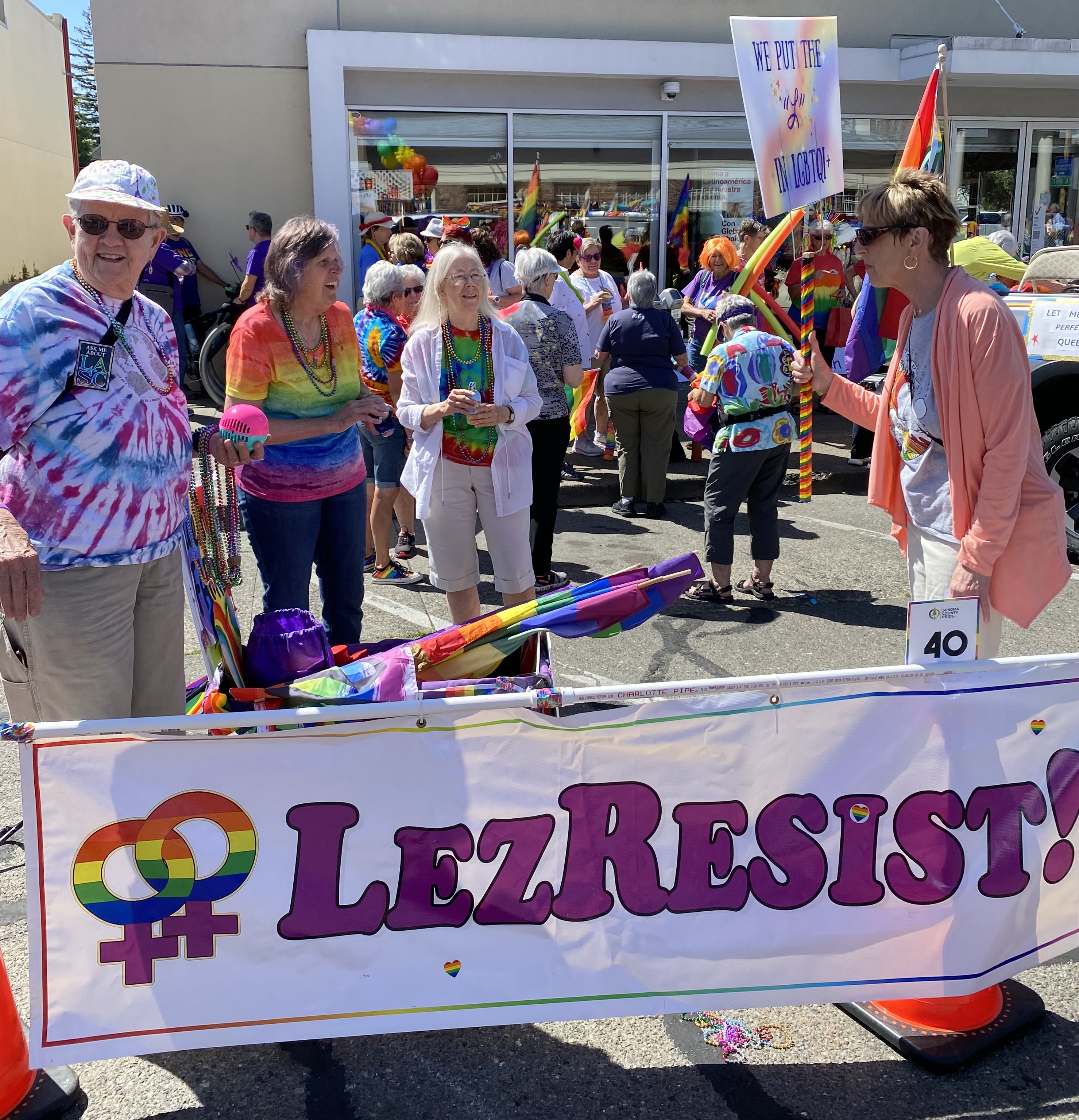
I think maybe there are more old dykes in Sonoma County than anywhere else in the world! We were well represented at Pride. A new organization just started called Senior Lesbians in Community (SLIC). I’m also a member of Old Lesbians Organizing for Change (OLOC) and Lesbian Reunion. The village of Oakmont, a retirement community, has its own lesbo contingent.

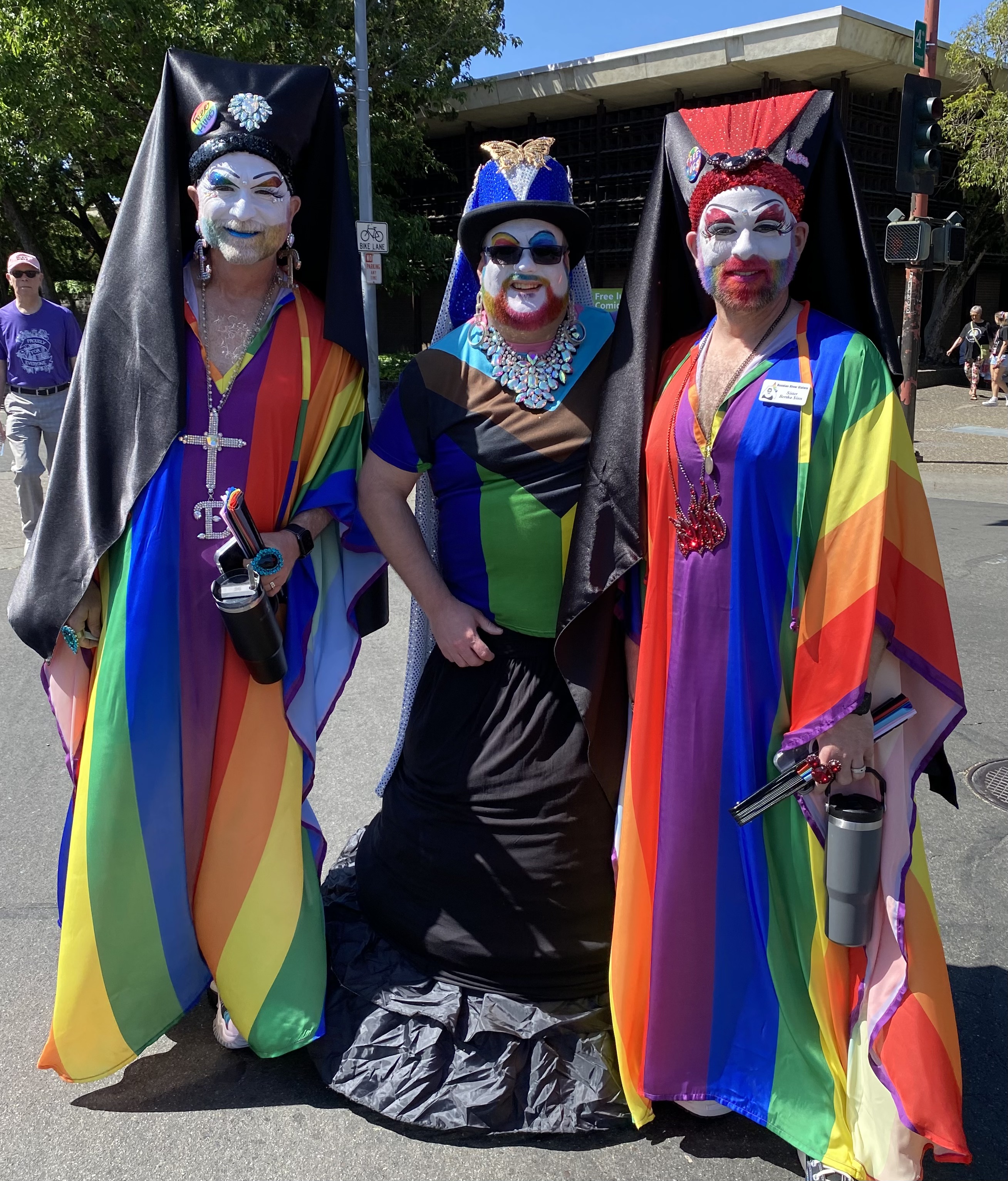
The Sisters of Perpetual Indulgence has a big congregation here in Sonoma County. They fundraise to support the comunity with fabulous parties, bingo games and campaigns. The Sisters were the sponsors of Gay Pride for many years when it was in Guerneville, a resort town on the Russian River.

So many queers, so little time!

The Democratic Party always shows up at Pride. They sponsor postcard writing parties to help get out the vote for Congressional races around the country. In California we are working to turn red districts blue this year.

Celebrating May Day

Demand for the eight-hour day inspires a world-wide holiday

My regular pagan holiday post

No one ever knew who threw the bomb that killed a cop during a peaceful rally. Then the police opened fire, killing seven more of their own and several bystanders. 

But the Powers That Be said someone had to pay. They arrested eight men and charged them with conspiracy. 

The accused, immigrants and anarchists, became convenient scapegoats in a city gripped by fear and suspicion. The mainstream media fanned the flames of anti-immigrant hysteria with sensationalized tales and outright lies.

As the trial unfolded, prejudice tainted the proceedings. The judge’s bias was palpable, and jurors were selected for their predispositions. Despite a glaring lack of evidence, the men were convicted.

Four were hanged. One committed suicide in prison. Others were given long sentences. 

The progressive governor, burdened by the knowledge of their innocence, commuted the sentences of the surviving men. Then he faced the wrath of voters who, swayed by fear and misinformation, ousted him from office in a bitter electoral battle.

It happened in Chicago in 1886, but to me it reads like today’s news. Except for the bomb. Our modern methods of murder are far more sophisticated.

Could history repeat itself in a modern age? 

I worry. The specter of prejudice still haunts our land, immigrants demonized, and dissent silenced. The media—mainstream and social–wields its influence with impunity, shaping public opinion with biased narratives and sensationalism. 

Meanwhile, our judiciary does not even try to conceal its corruption. The militarization of police forces and the epidemic of police violence create more distrust in those pledged to keep us safe. We won’t forget the killing of a 13-year-old boy, Andy Lopez, in Santa Rosa at the hands of a deputy sheriff.

So, yeah. It seems little human evolution has taken place since 1886.

At that 1886 Chicago rally, workers had agitated for the eight-hour work day, a movement then brutally crushed by employers with the help of federal, state and local police forces. With its leaders executed and imprisoned, the Chicago labor movement’s head was cut off. Labor lost that battle, but eventually won the war for the eight-hour day. Their slogan, written in a song of the time, was “Eight hours for work, eight hours for sleep, eight hours for what we will.”

The eight defendants were all thinking and articulate men, but the one I find most interesting is the one man who was not an immigrant, Albert Parsons. Born in Alabama in 1848, he traced his ancestry back to English colonists in 1632. Some ancestors fought in the American revolution.

Parsons moved to Texas and fought for the Confederacy during the Civil War. Then he realized he had fought for the wrong side. He called the war “the slaveholders’ rebellion.” 

He became a Republican, supporting Reconstruction efforts and running for office, making enemies of his former comrades and the KKK. Then he joined the socialist movement, eventually denouncing electoral politics and joining the anarchists and the labor movement. 

His marriage to Lucy Parsons (Gonzales), a Black woman, defied the norms of a society steeped in prejudice, and her activism would become legendary in its own right. As she led the campaign to win a new trial, one Chicago official called her “more dangerous than a thousand rioters.” 

Albert Parsons saw the connections between slavery and capitalism. He said: “My enemies in the southern states consisted of those who oppressed the black slave. My enemies in the north are among those who would perpetuate the slavery of the wage workers.”

What made Albert Parsons switch sides? I think it was working with previously enslaved people after the war and at the start of Reconstruction. He began to see things from their point of view. 

The Haymarket Affair, as the events in Chicago came to be called, inspired May Day, or International Workers Day, as a labor holiday in countries around the world on May 1. It was never a national holiday in the US because of ourgovernment’s resistance to encouraging worldwide working-class unity. But workers in the US celebrate May Day anyway, and it will be marked again this year in cities across the country.

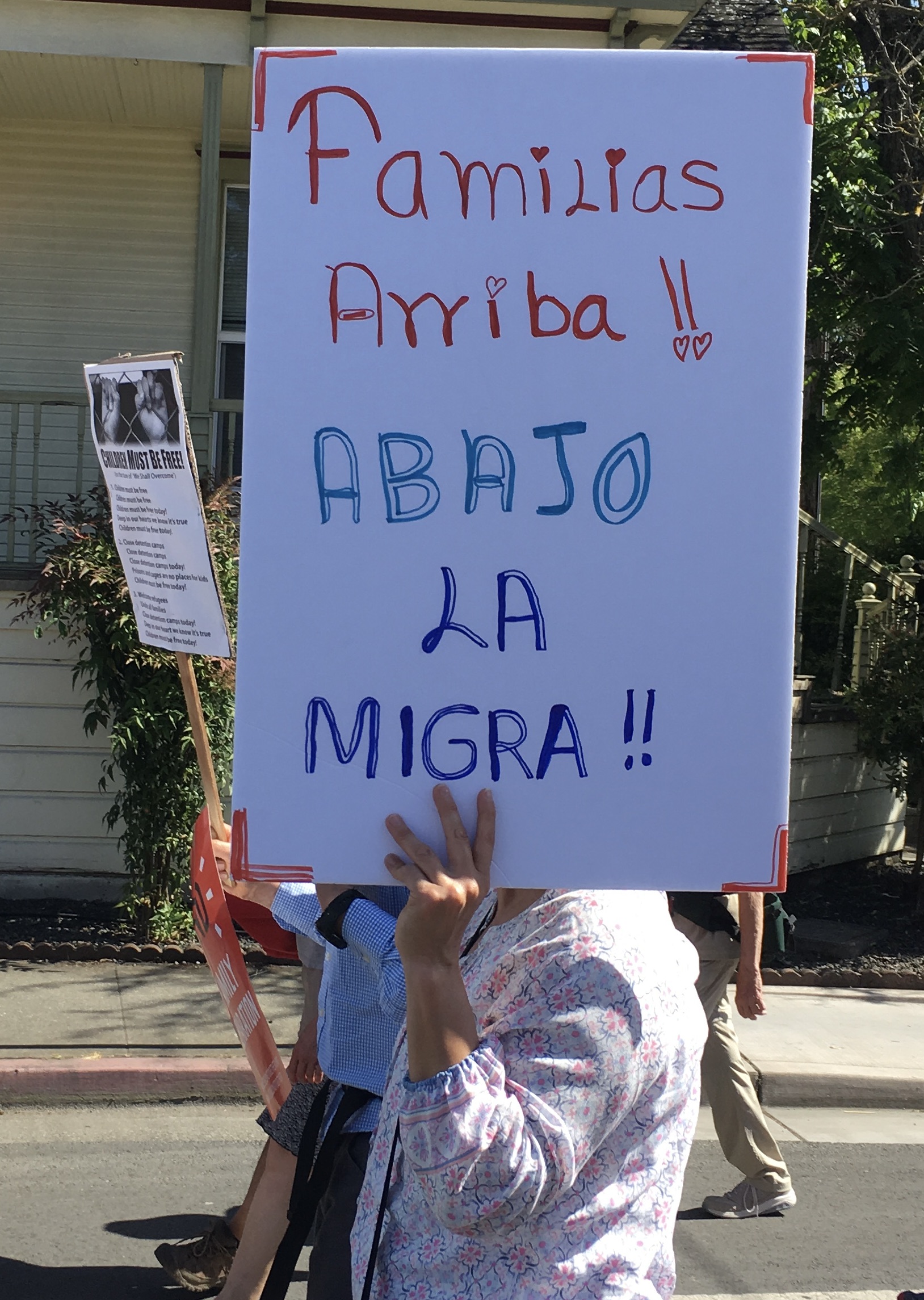
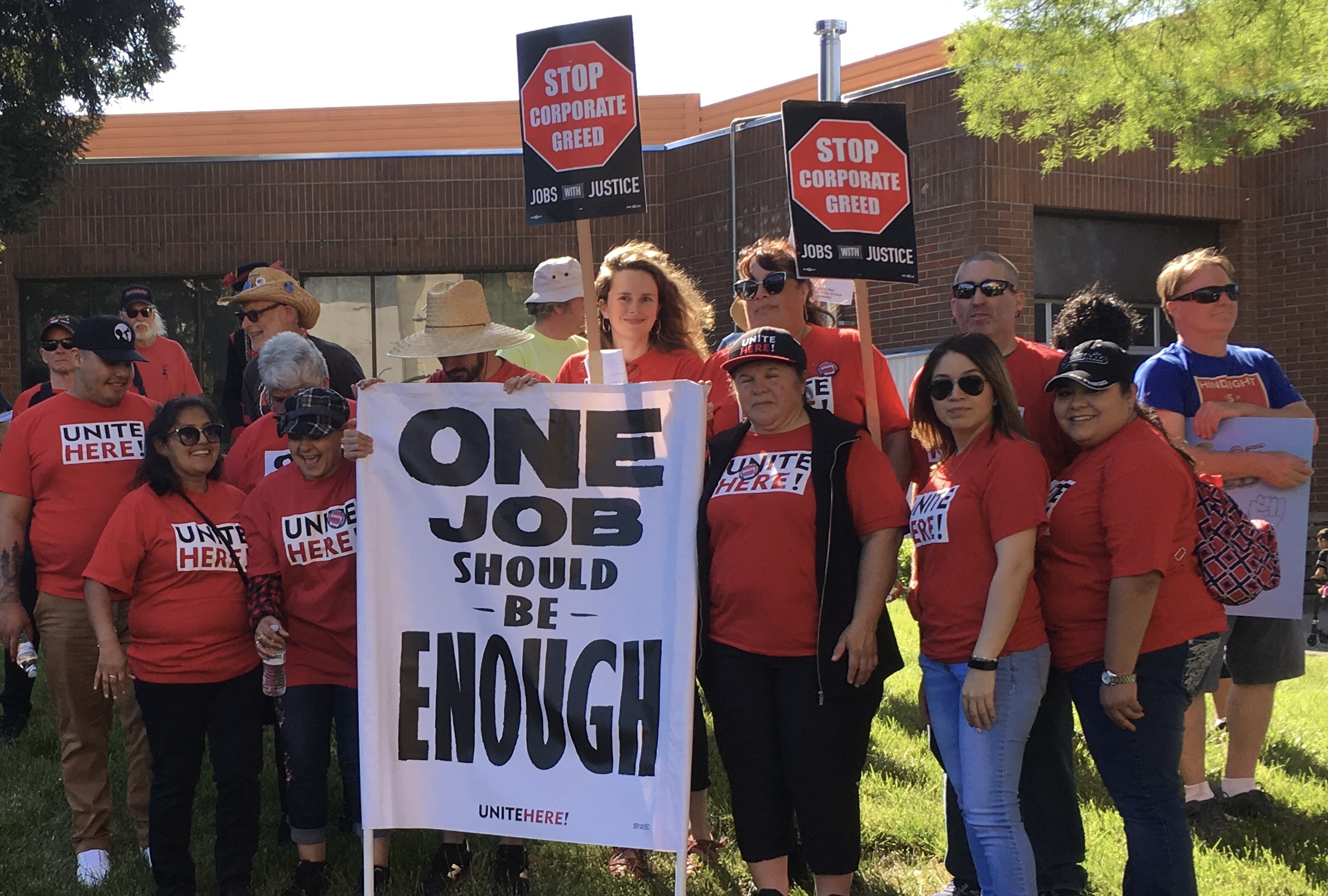
Photos are from the 2019 Santa Rosa May Day march

California Labor Councils are planning actions up and down the state. This year’s May Day actions are about solidarity across sectors as workers push for higher wages, stronger contracts, the right to join a union, and fight back against corporate greed.

Here in Sonoma County on May 1 we will be marching for “Immigrant Rights Are Human Rights” starting at the county sheriff’s office. Marchers will demand that the Sonoma County Board of Supervisors proactively advocate for a Path To Citizenship policy in Congress and also support a county ordinance which would prohibit any collaboration or information sharing between the Sonoma County Sheriff and Immigration Customs Enforcement (ICE).

The Haymarket Affair was a seminal moment in the struggle for workers’ rights. The martyrs of that turbulent era—Albert Parsons, August Spies, George Engel, and Adolph Fischer—must not be forgotten. Their legacy endures, inspiring movements for social justice and workers’ rights around the world. 

The Haymarket martyrs memorial and Lucy Parson’s grave at Forest Hill cemetery in Chicago

A happy Beltane and a revolutionary May Day to all!

Facebook Hacked!

They Don’t Care. They Don’t Have To.

Facebook users around the world are getting hacked and there’s nothing we can do about it.

It happened to me. The thieves gained control of my page and access to my five thousand friends. Then they started trying to scam them by using my name to rip them off.

When I realized I’d been hacked, I immediately started working to get my page back, thinking this must happen to Facebook users all the time. Yes, in fact it does, but it turns out there is nothing we can do to restore our pages. I tried Facebook’s online help center, which gives us hope that we can restore our pages but just runs us around in circles until all hope dies. I couldn’t even get the page taken down. There is no customer support, no number to call. You are on your own. 

Aside from the frustration, I also feel violated, like my house has been broken into and robbed. And I’m worried sick about my friends getting scammed. The thieves want money and they posted a car for sale on the site to get folks to call them. They also use Messenger to contact people. 

When I couldn’t get into my account because it is now owned by someone else, I asked friends to look at it and report back to me. The car ad was posted, taken down and then posted again. A couple of weeks later, after many friends reported the hack (and many called me to ask about the car), the account was deleted, presumably by Facebook. But they never contacted me nor offered any help. Friends did send me numbers to contact Facebook, but none got me anywhere.

After much research, I’ve come to the conclusion that there is nothing to be done. 

It turns out this happens to lots of folks. Some, those who run businesses through Facebook especially, are losing thousands of dollars without any hope of getting the money back. There are companies that charge a lot of money to restore a page, but that can take weeks, even years, if it works at all. 

It makes me think of the snarky Lily Tomlin character Ernestine who represented the phone company in a skit. “We don’t care,” she told customers. “We don’t have to. We’re the phone company.”

I was a Facebook user for many years. A retired electrician, I belong to a worldwide community of women who work in the construction trades. Women in the trades are still isolated and targeted with harassment. Facebook is/was a great way for us to communicate, tell our stories and support each other.  

So now I am Facebook free. I’ll miss my Facebook friends, but I won’t miss Facebook.

More than two billion people use Facebook or one of its other services, Instagram, WhatsApp or Messenger, every day. And despite a rising number of privacy scandals and public backlash, Facebook is still growing, reporting $39 billion net profit in 2023.

There oughta be a law.

Wharlest Jackson Died for Our Rights

The Black Freedom Movement and Tradeswomen History

I want to take us back in time and imagine a world, a culture, in which job categories were firmly divided between MEN and WOMEN. Women were restricted to pink collar jobs that paid too little to raise a family on or even to live without a man’s support. Even doing the same jobs, women were legally paid less than men. Married women were not allowed to work outside the home. Single women who found jobs as teachers or secretaries were fired as soon as they married. Black people were only allowed to work as laborers or house cleaners.

This was the world we fought to change.

Tradeswomen who have jobs today must thank Black workers who began the fight for jobs and justice. 

The Black Freedom Movement has advocated for workplace equity since the end of the Civil War.

The movement gained power during and after WWII. A. Philip Randolph headed the sleeping car porters union, the leading Black trade union in the US. In 1940 he threatened to march on Washington with ten thousand demonstrators if the government did not act to end job discrimination in federal war contracts. FDR capitulated and signed executive order 8802, the first presidential order to benefit Blacks since reconstruction. It outlawed discrimination by companies and unions engaged in war work on government contracts. This executive order marked the start of affirmative action.

The fight to desegregate the workforce continued.

In the early 1960s in the San Francisco Bay Area, protesters organized successful picket campaigns against businesses that refused to hire Blacks, including the Palace hotel, car dealerships and Mel’s Drive-In. Many of the protesters were white students at UC Berkeley.

In August 1963, the march on Washington brought 200,000 people to the capitol to protest racial discrimination and show support for civil rights legislation. The civil rights act of 1964, signed into law by President Johnson, is the legal structure that women and POC have used to put nondiscrimination into practice.

But change did not come quickly or easily.

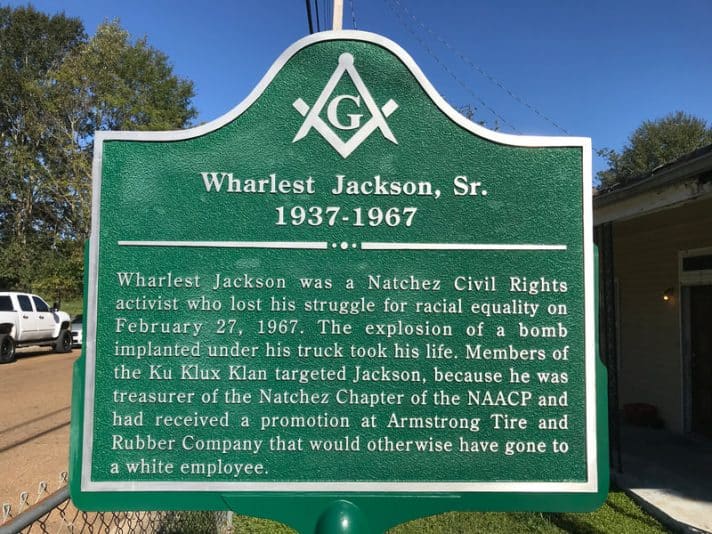
Black workers at a tire plant in Natchez Mississippi were organizing to desegregate jobs. The CIO, Congress of Industrial Organizations, supported them in this fight. In 1967, three years after the civil rights act became law, a Black man, Wharlest Jackson, who had won a promotion to a previously “white” job in the tire plant, was murdered by the KKK. They blew up his truck as he was driving home from work. No one was ever arrested or prosecuted for this crime.

Wharlest Jackson was the father of five. His wife, Exerlina, was among those arrested for peacefully insisting on equal treatment during a boycott of the town of Natchez’s white businesses. She was sent to Parchman penitentiary.

Jackson was just one of many who died for our right to be treated equally at work.

Tradeswomen are part of the feminist, civil rights and union movements. We continue to seek allies because we are few.  

Discrimination has not ended, but, because of decades of organizing, our work lives have improved. We owe much to the Black workers who sought equity in employment for decades before us. 

Photo: the Zinn Education Project