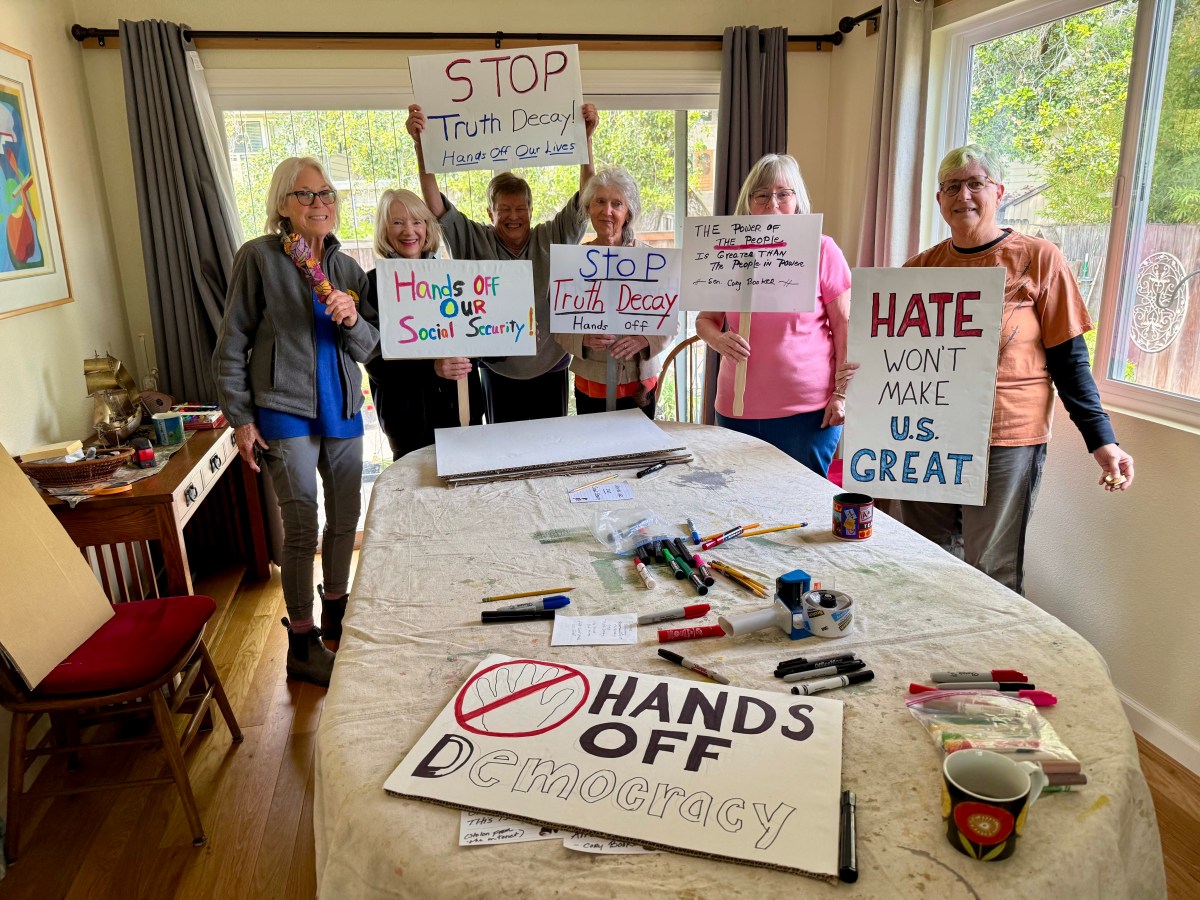
Neighbors Getting Ready for the Big Demonstration Saturday
Category: feminism
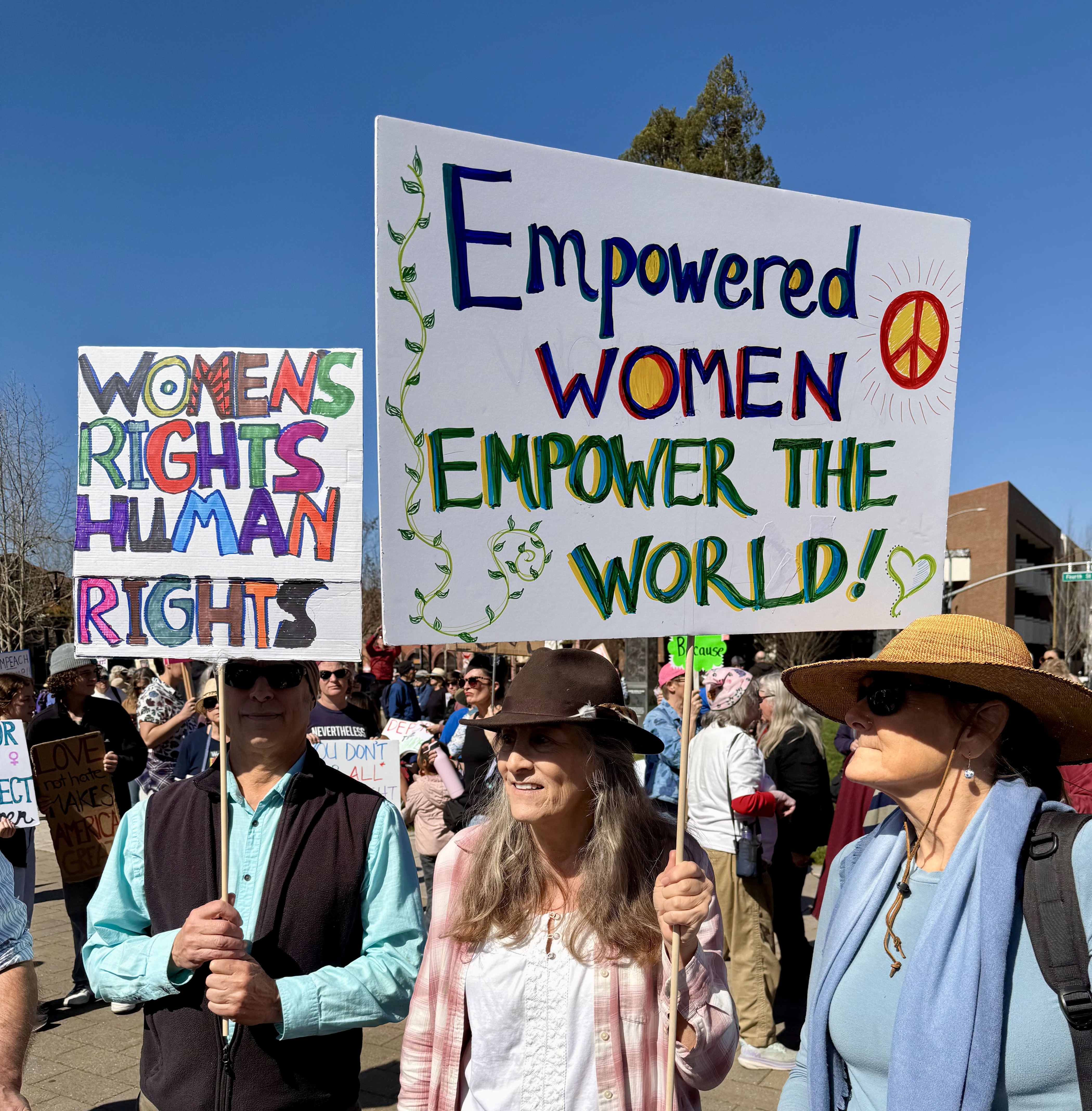
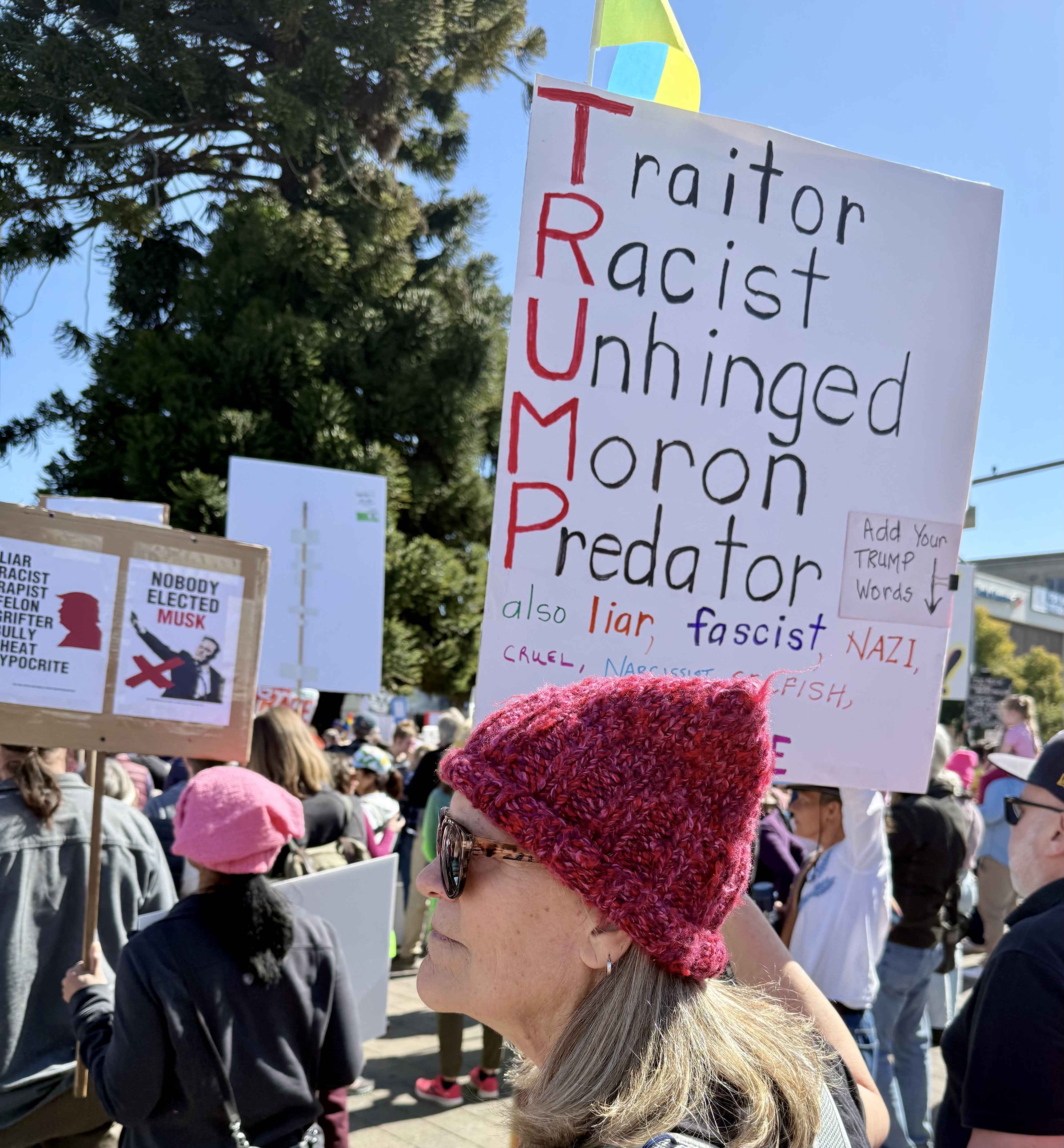
International Women’s Day

March 8, 2025 Santa Rosa CA
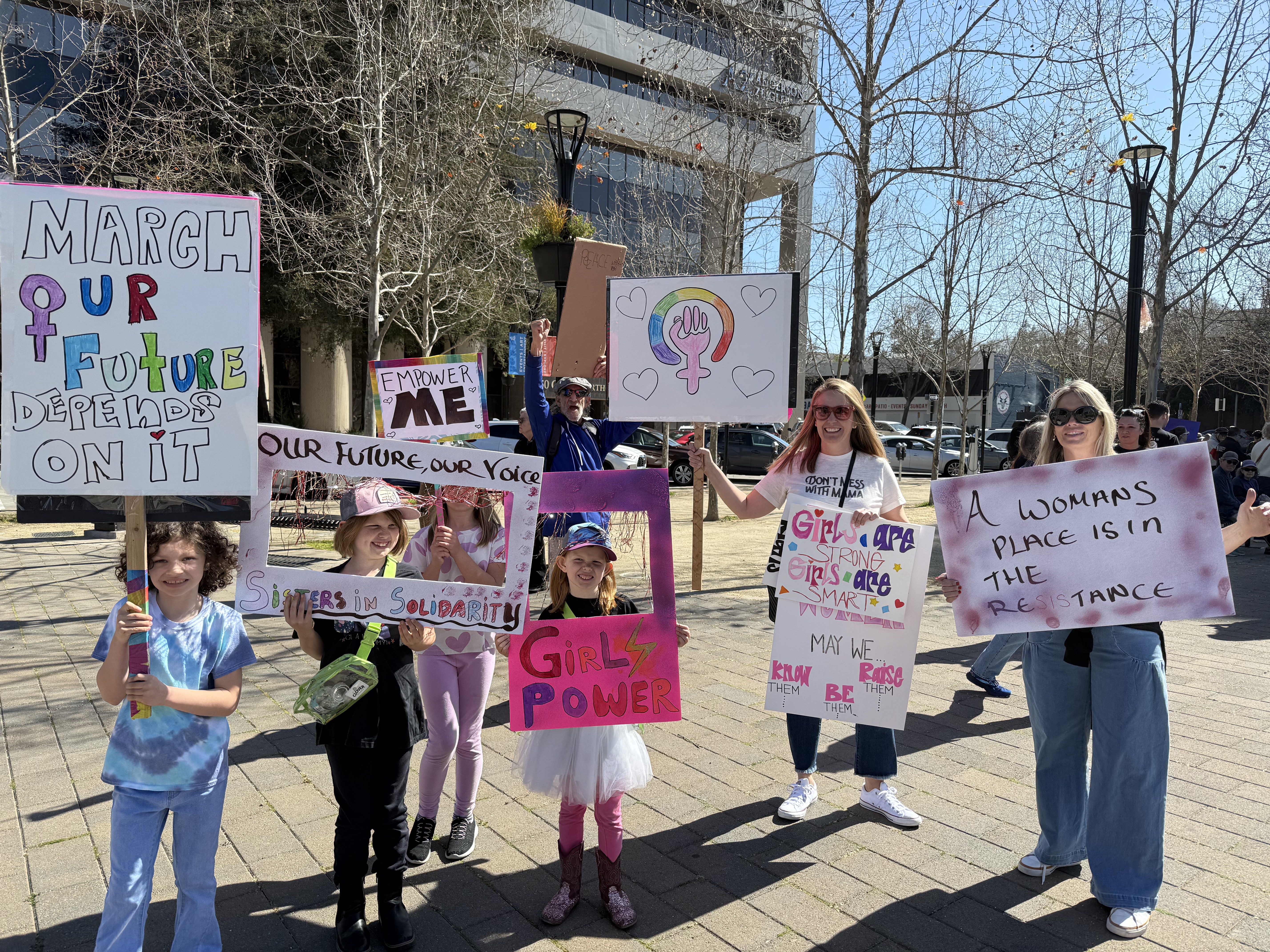


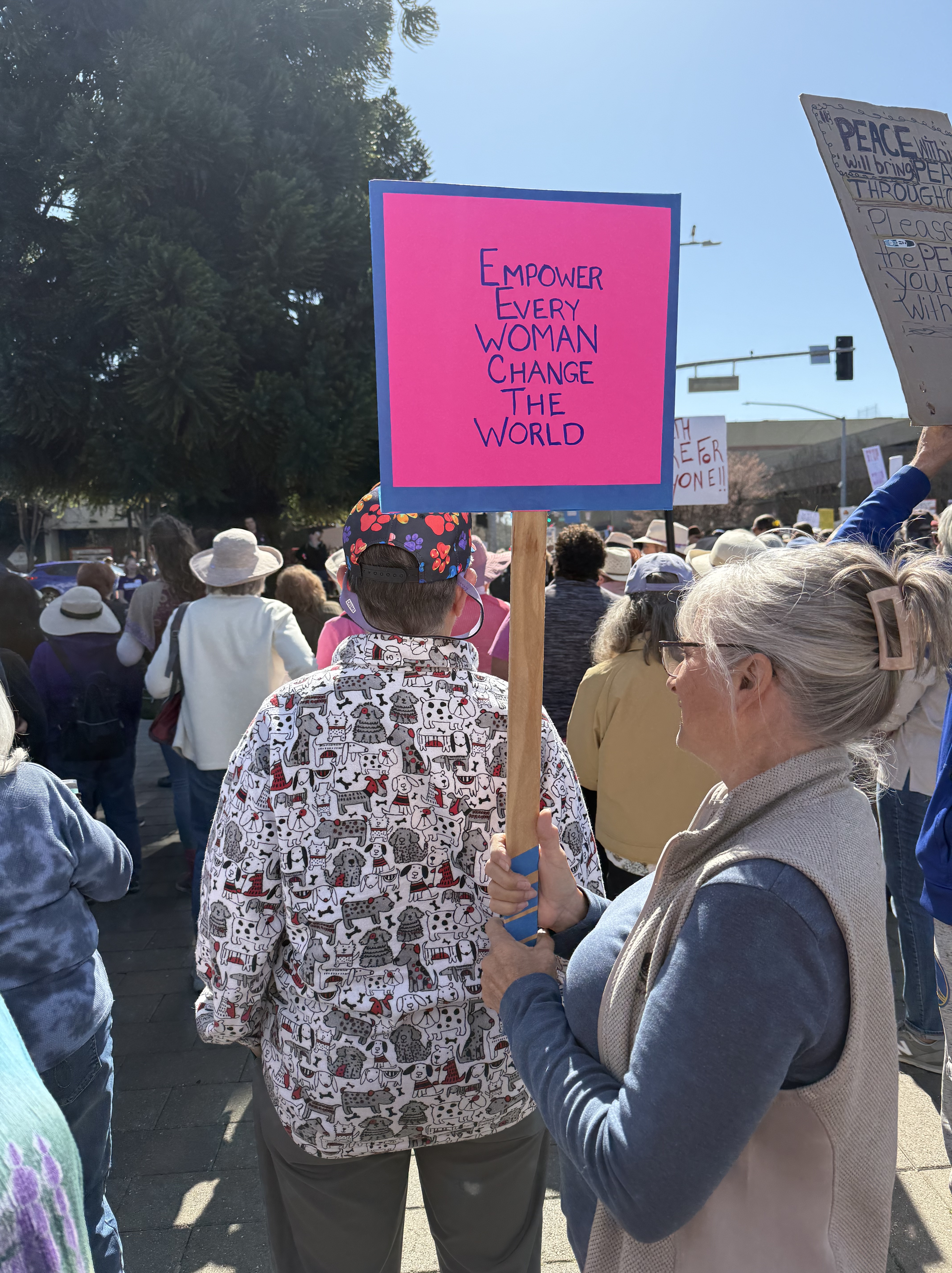


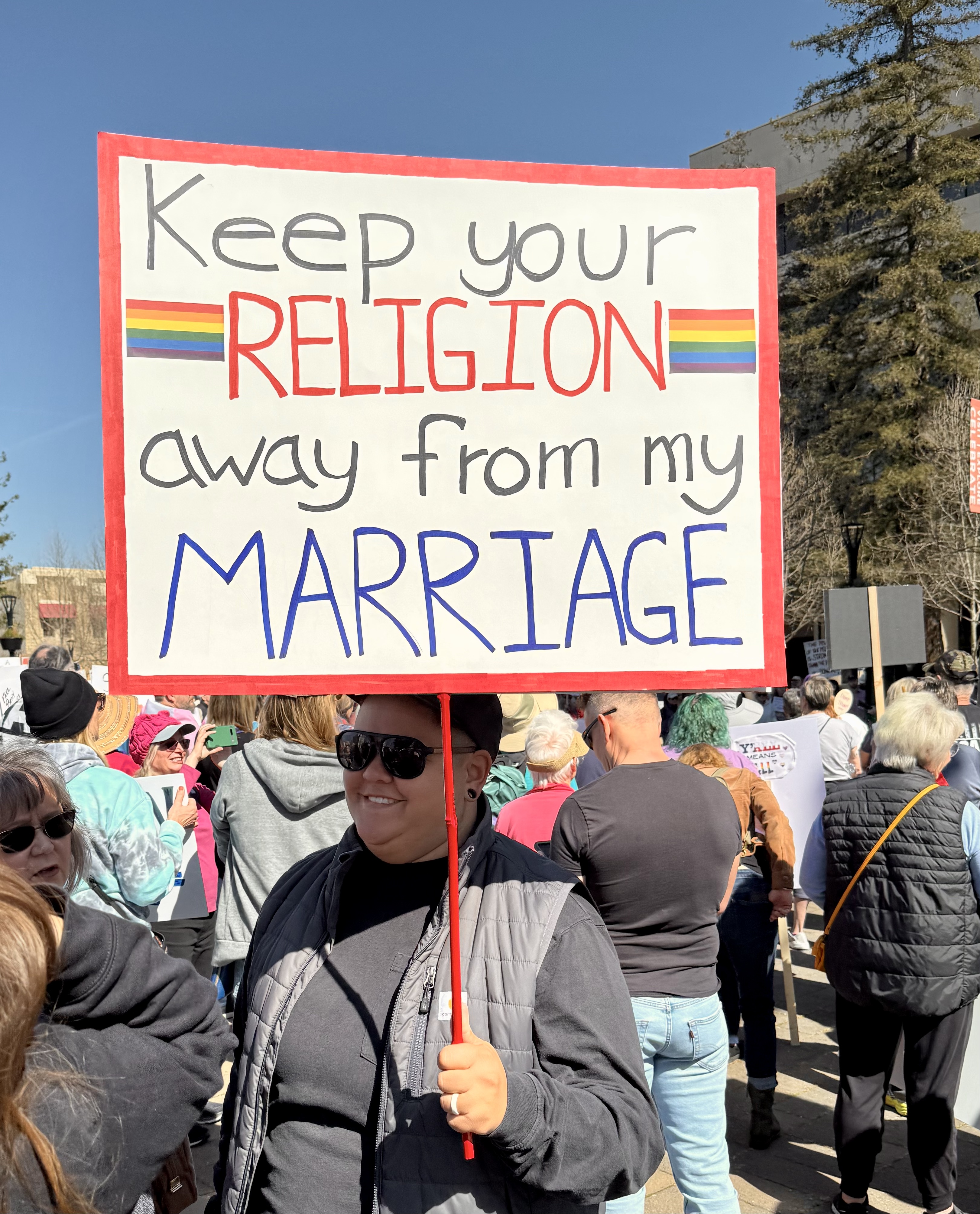
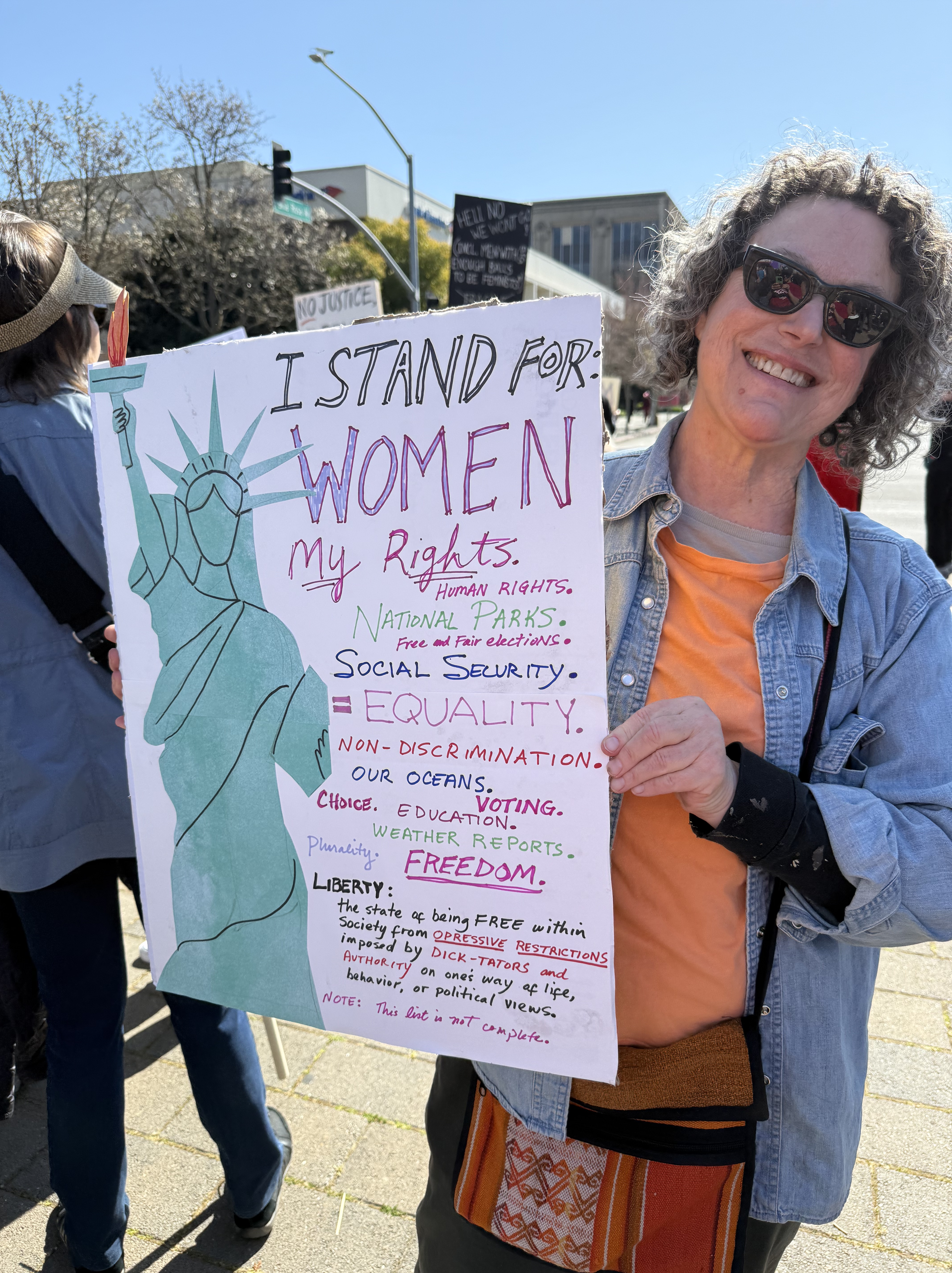


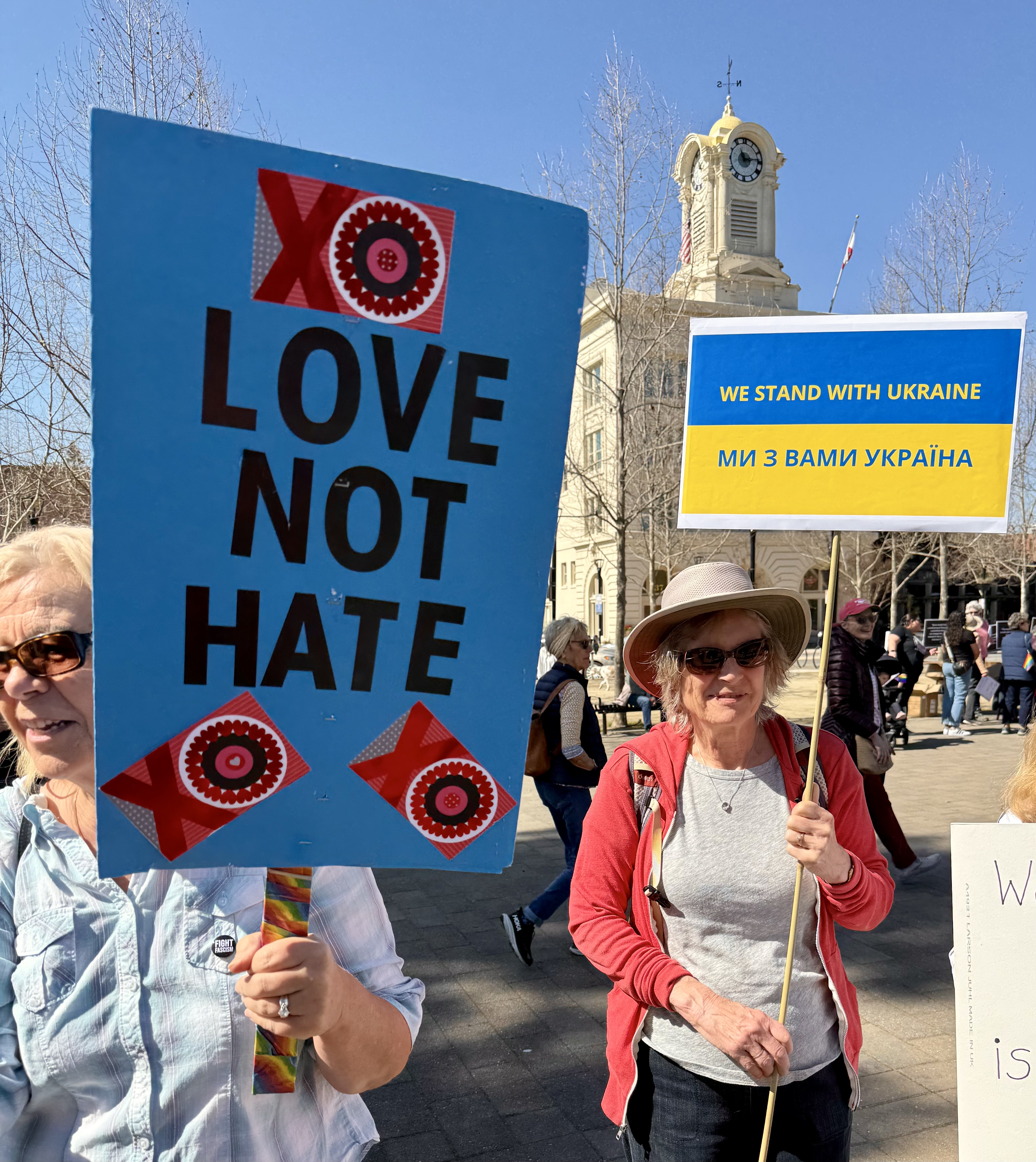
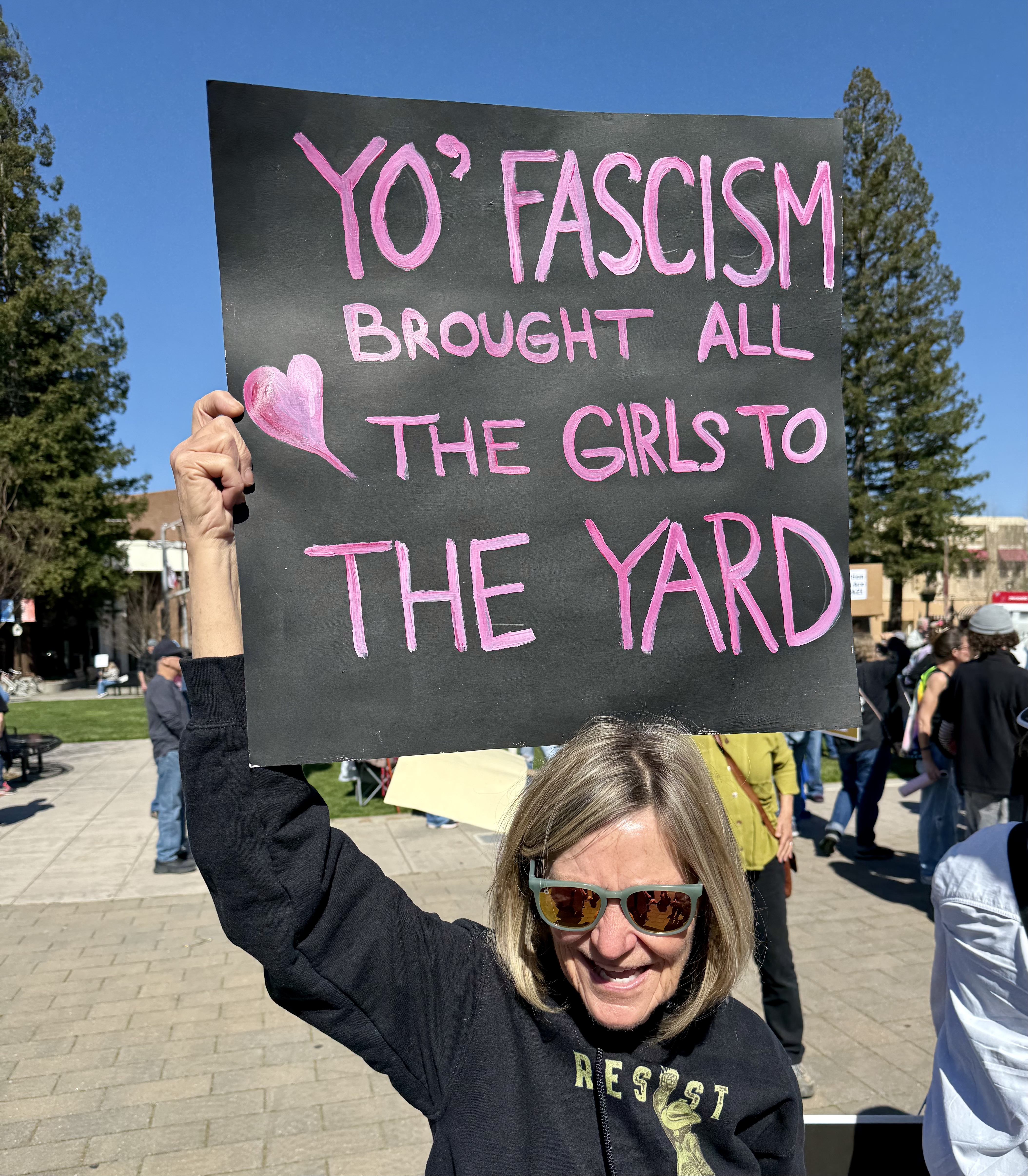
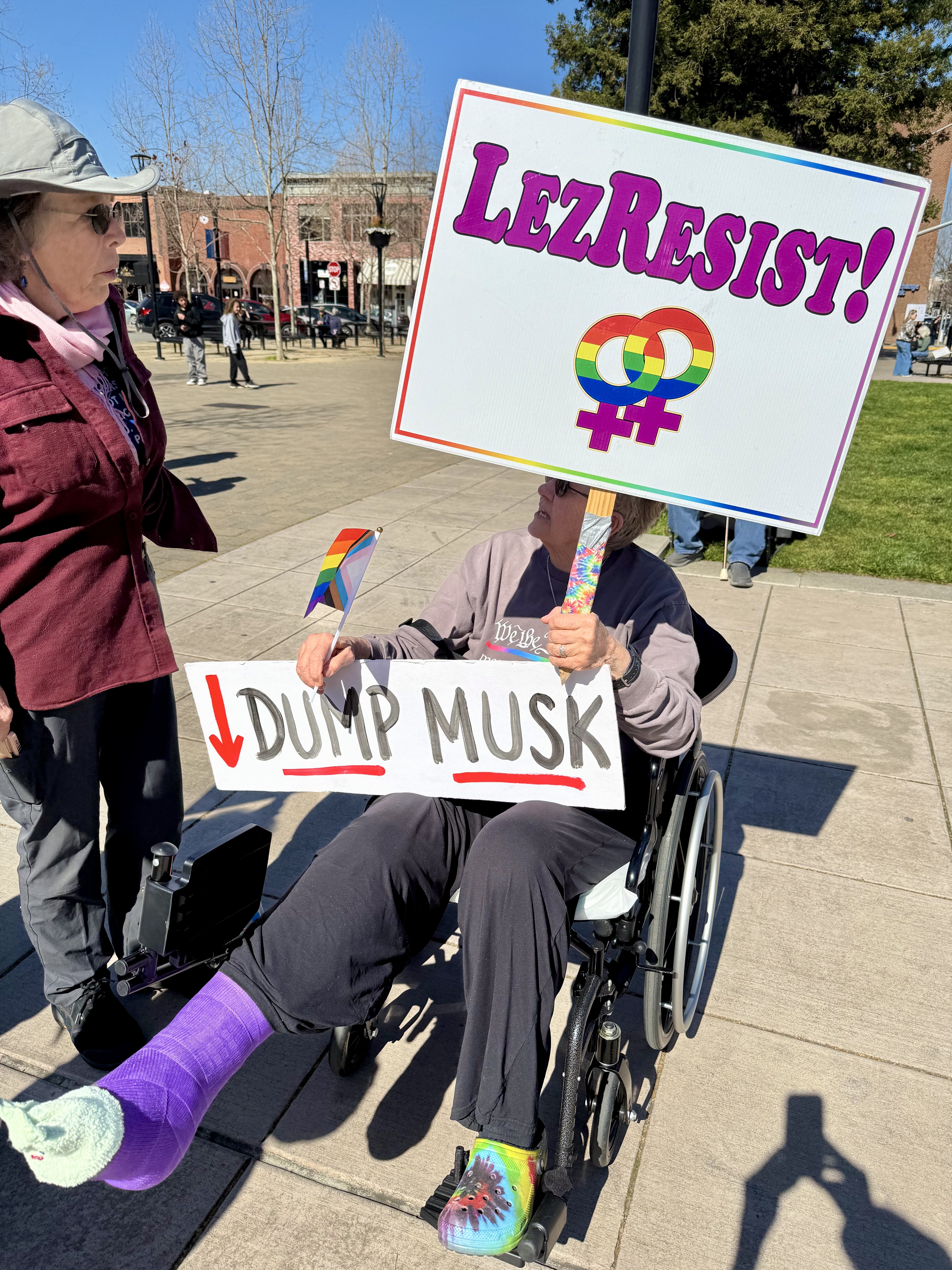

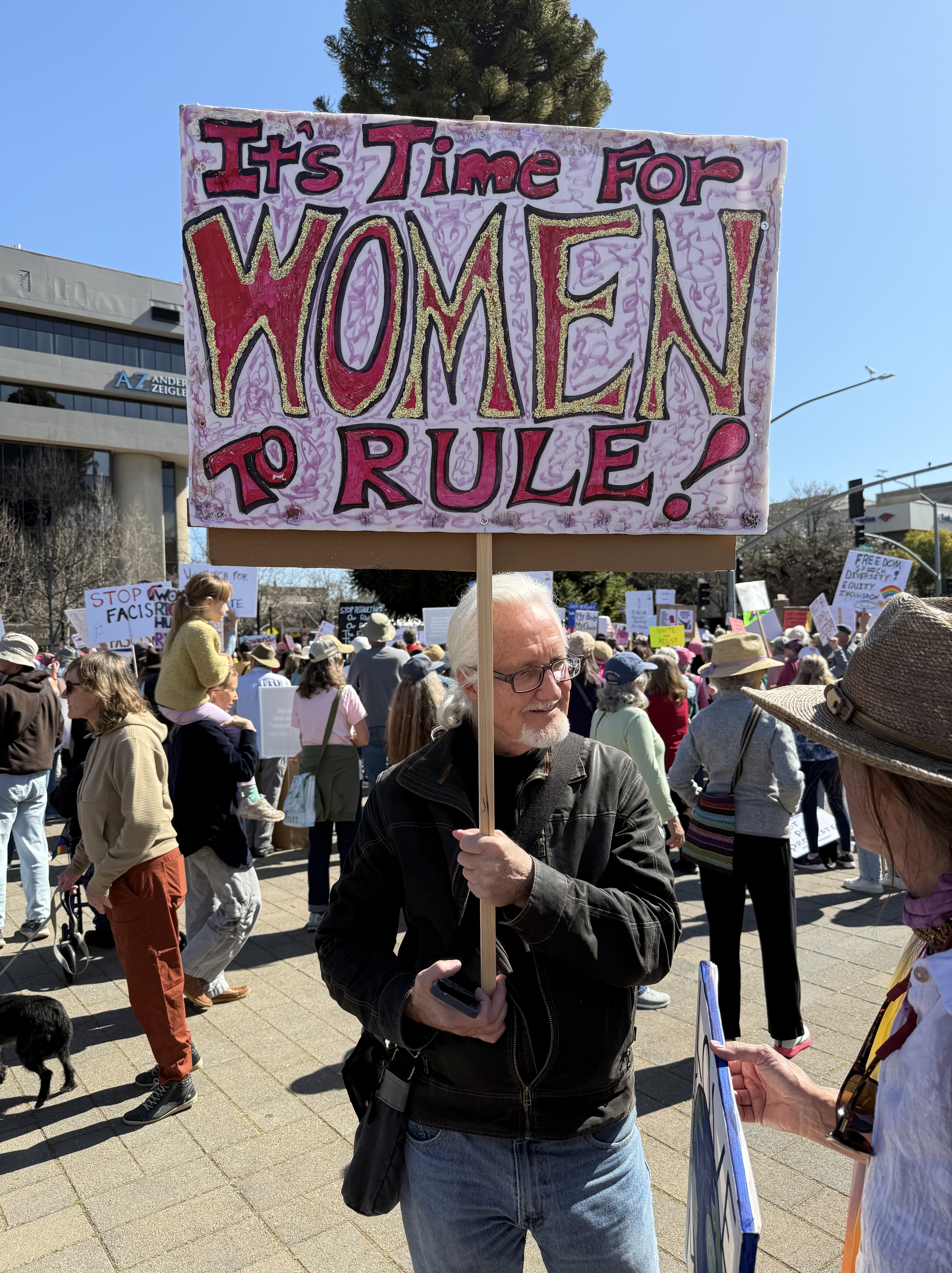
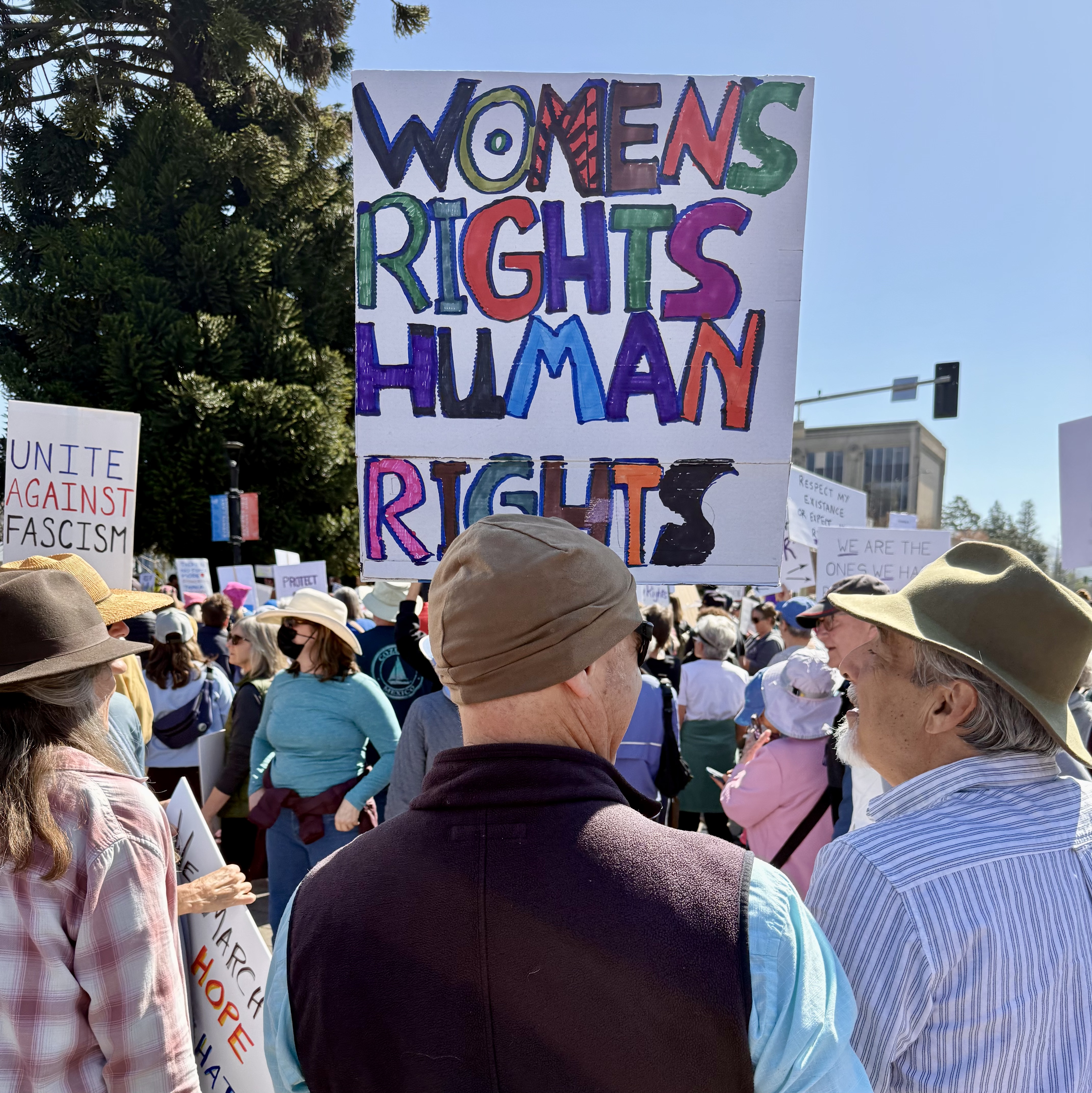


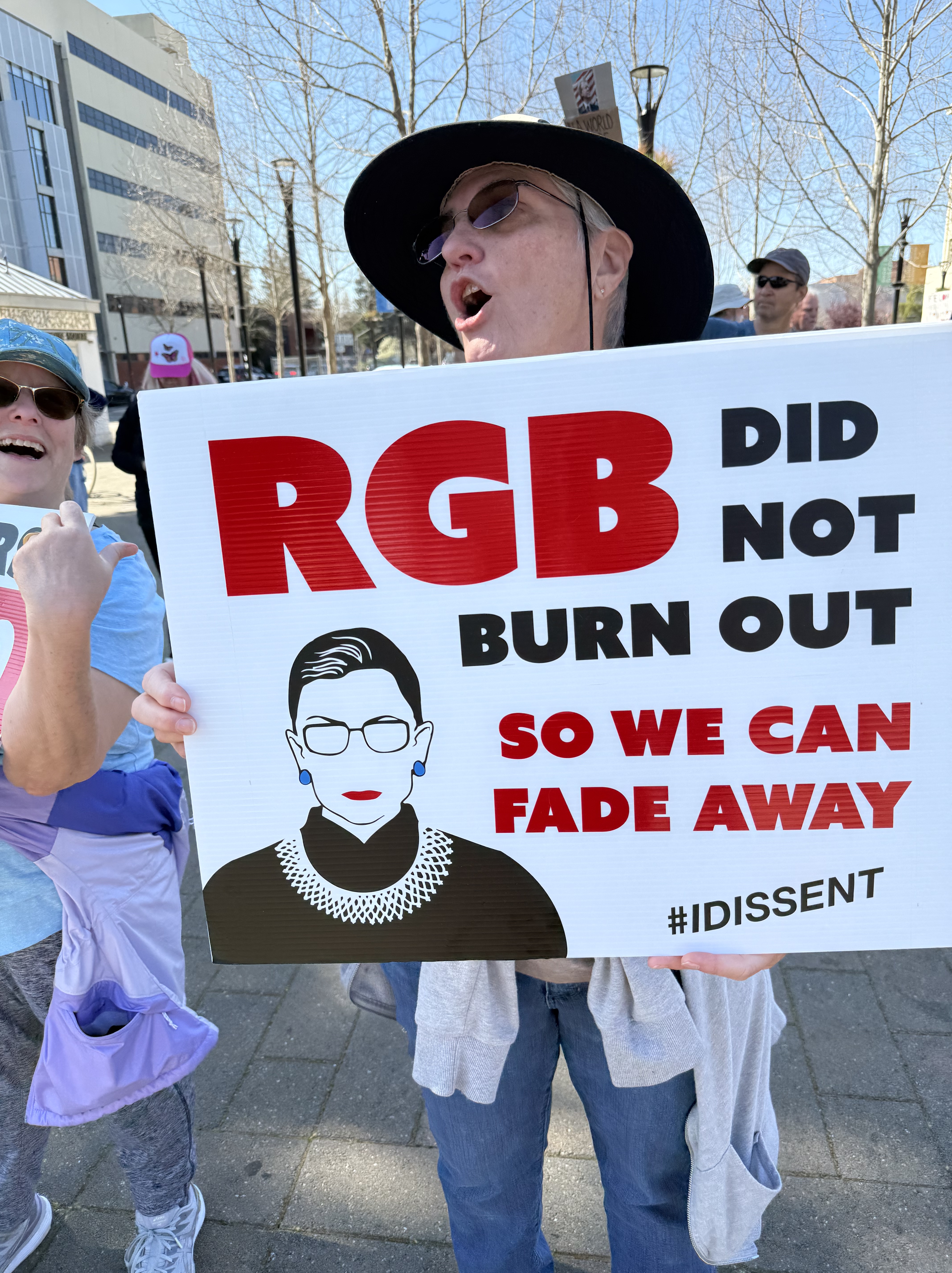


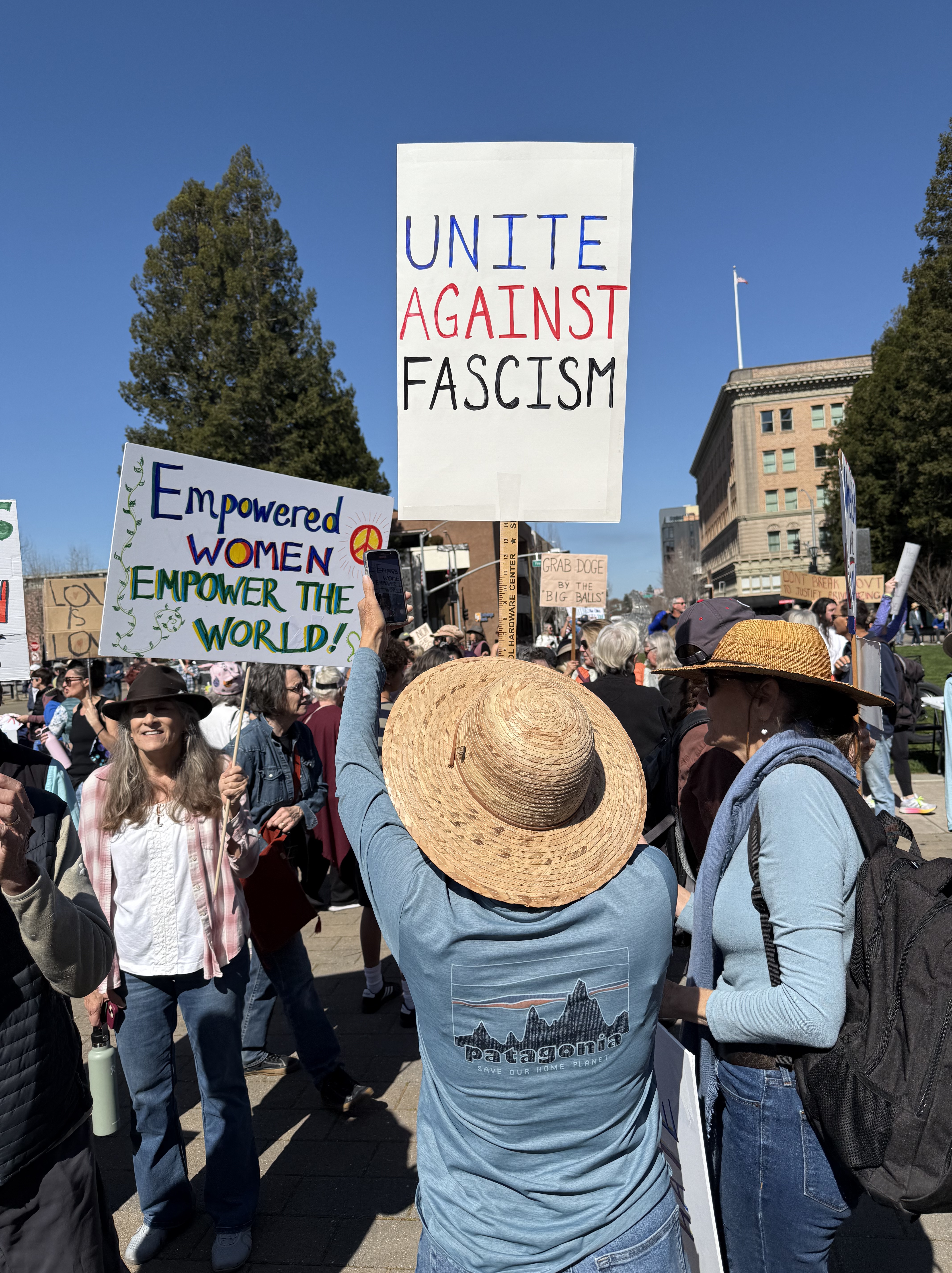

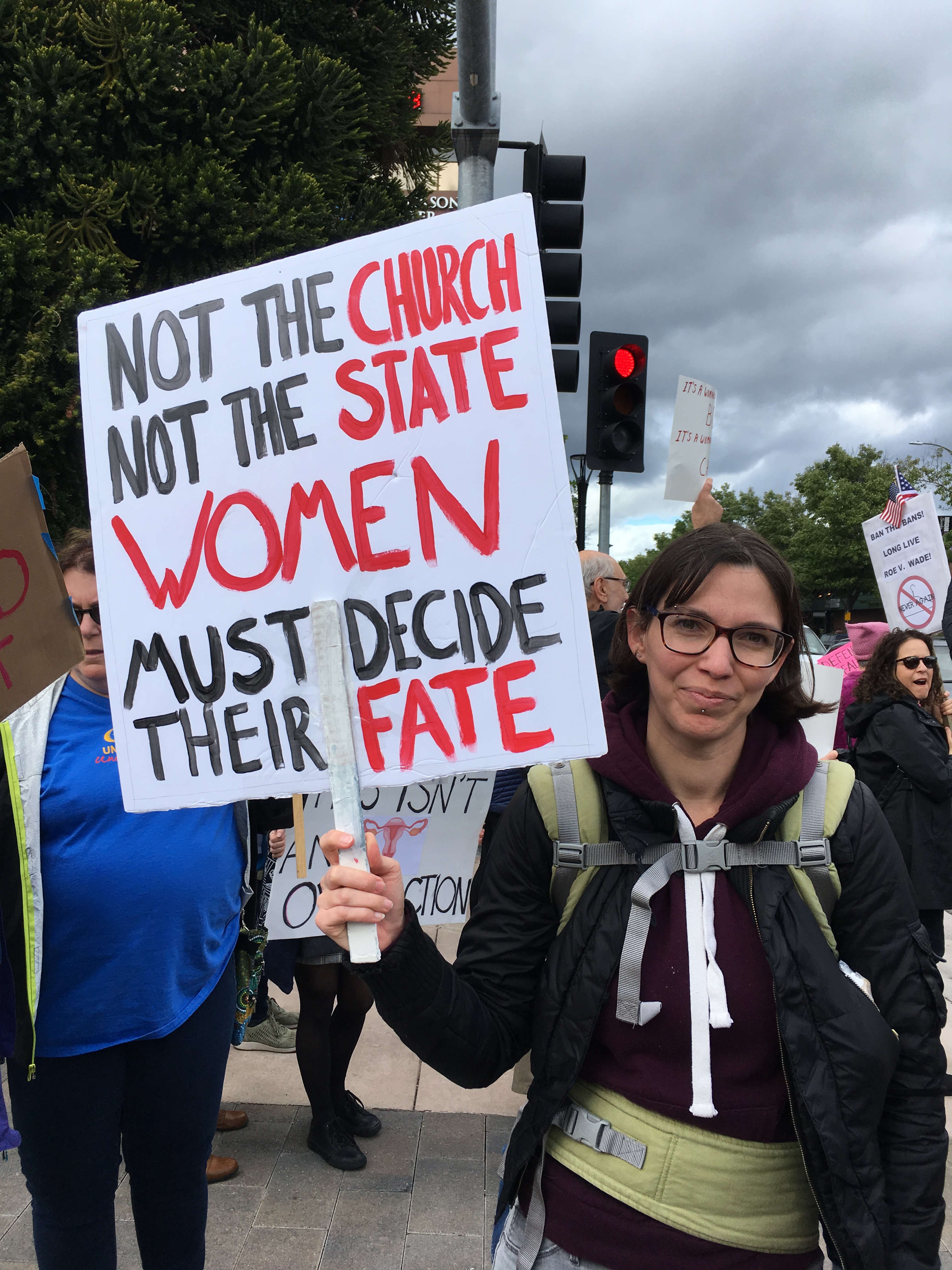
Pro-Choice Rally May 21, 2019

Santa Rosa, CA
I’m inspired looking through old photos


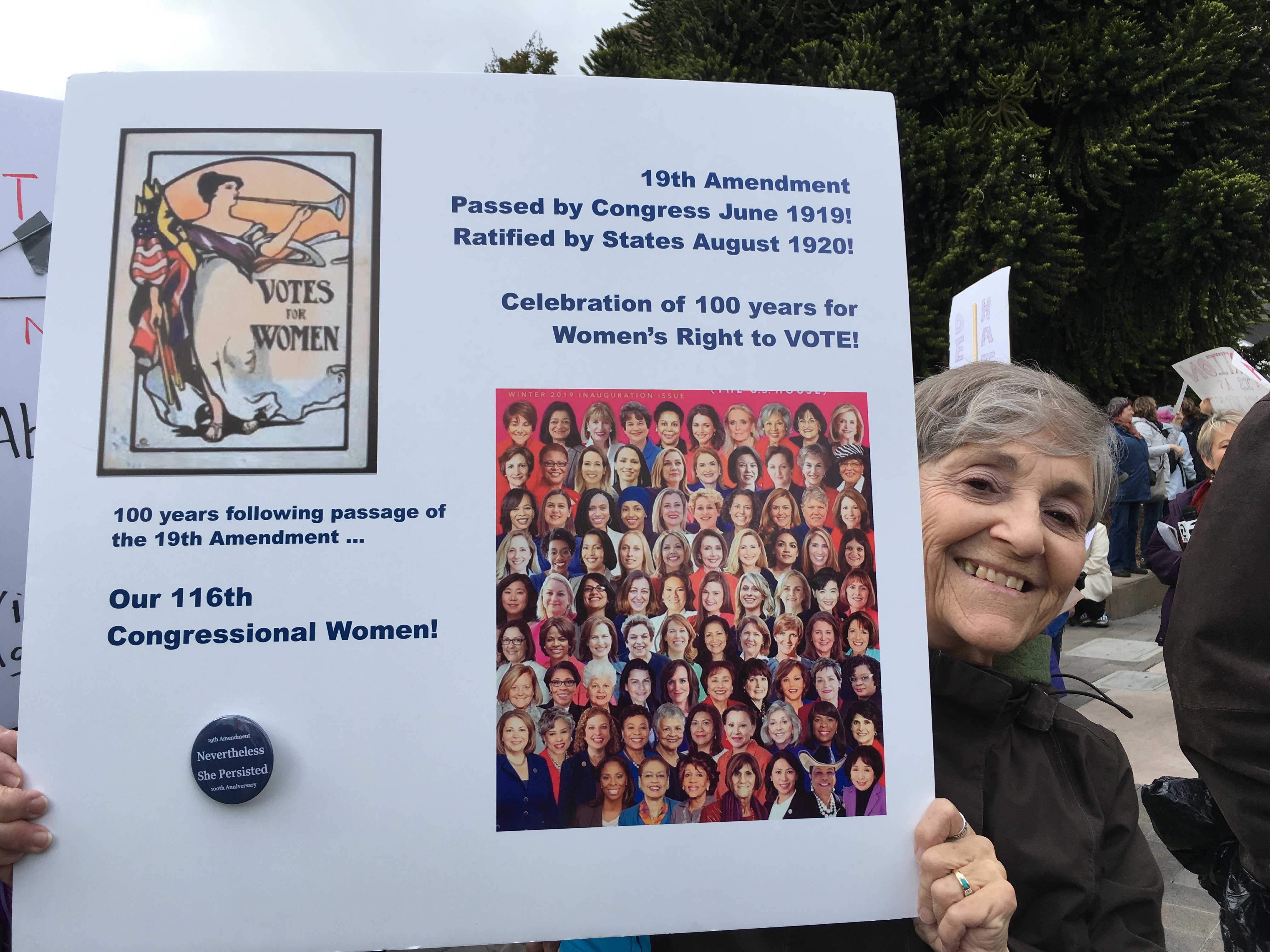



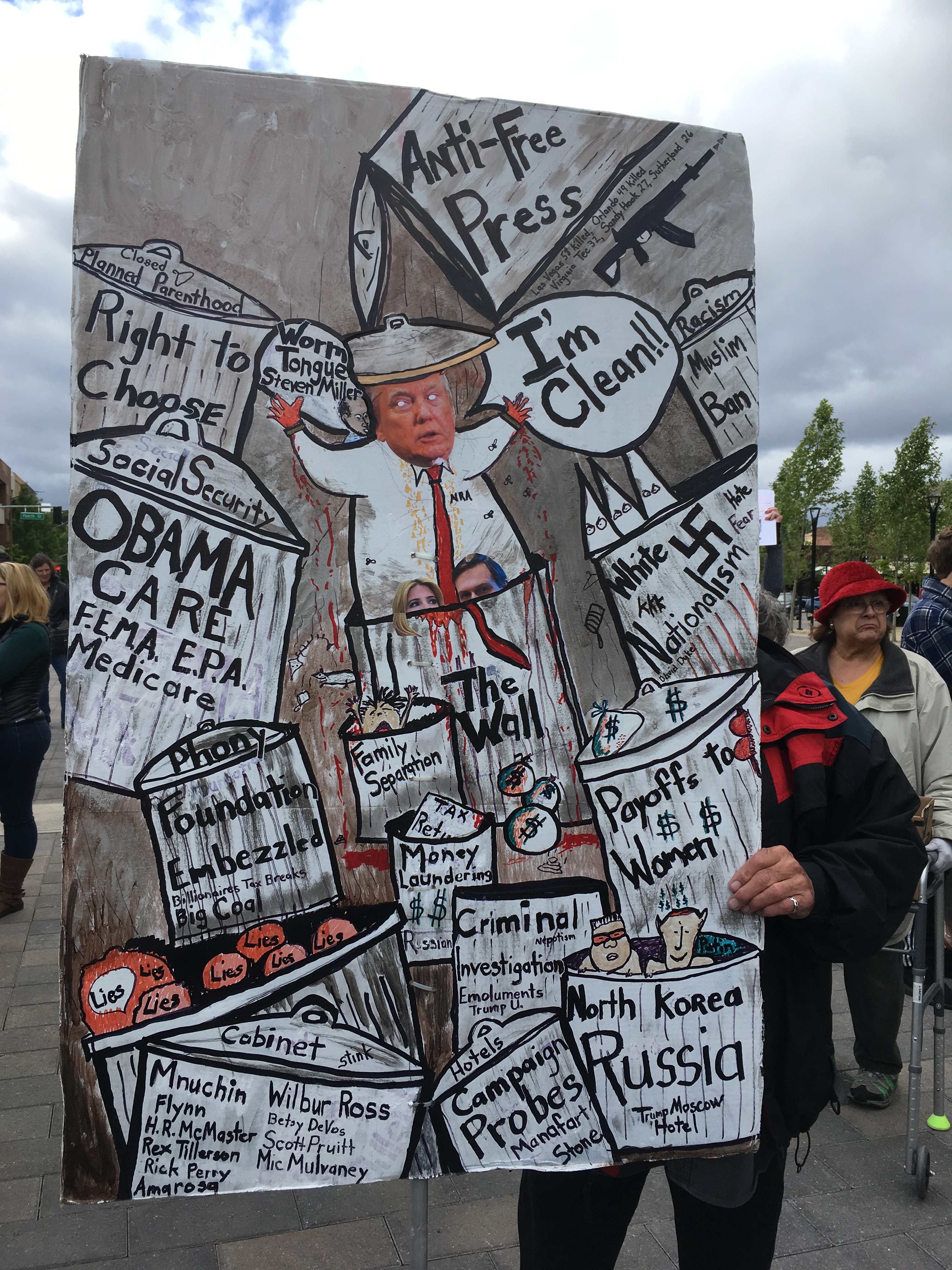

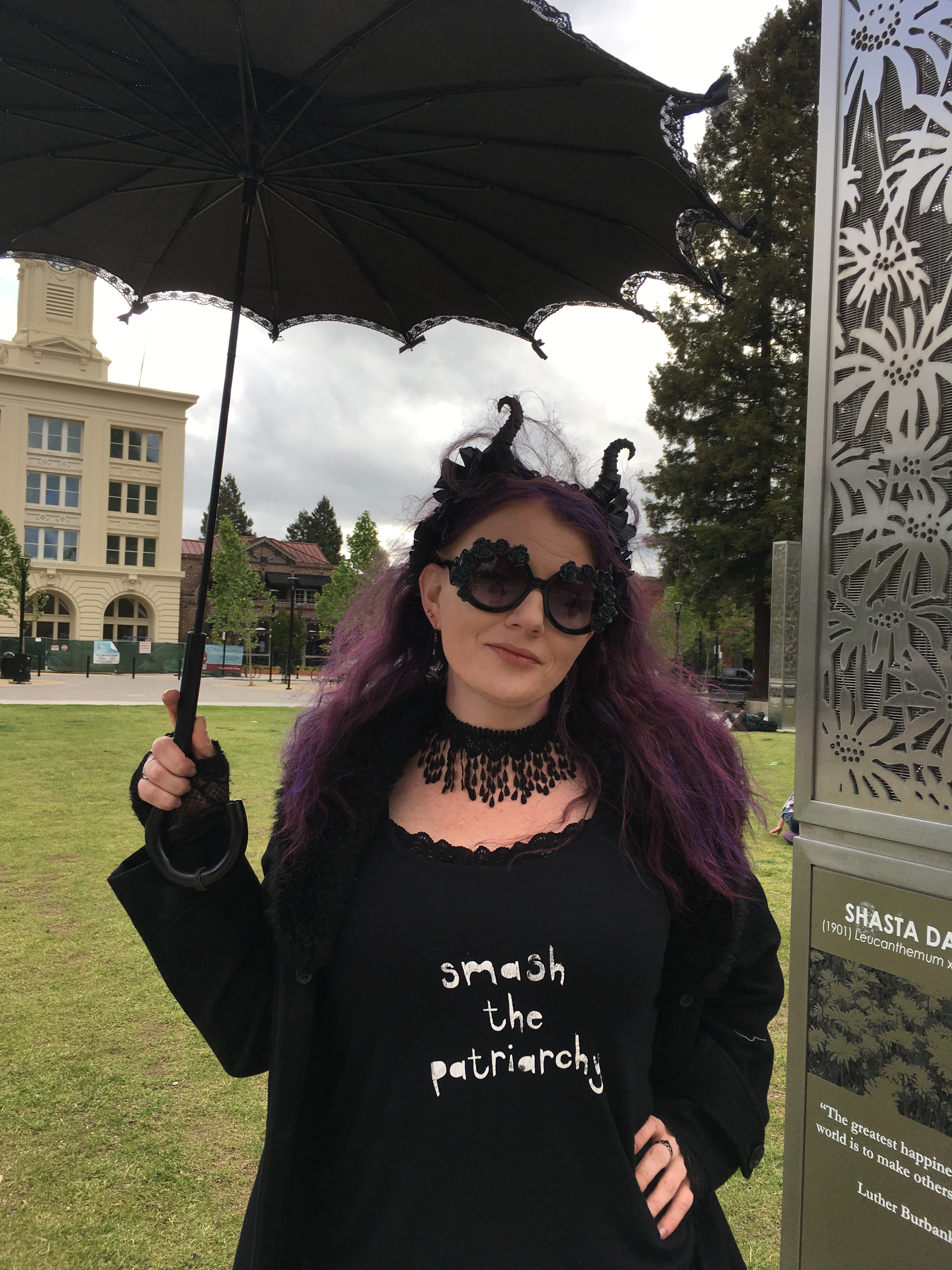
Santa Rosa Women’s March 2019

I was inspired looking at old pictures
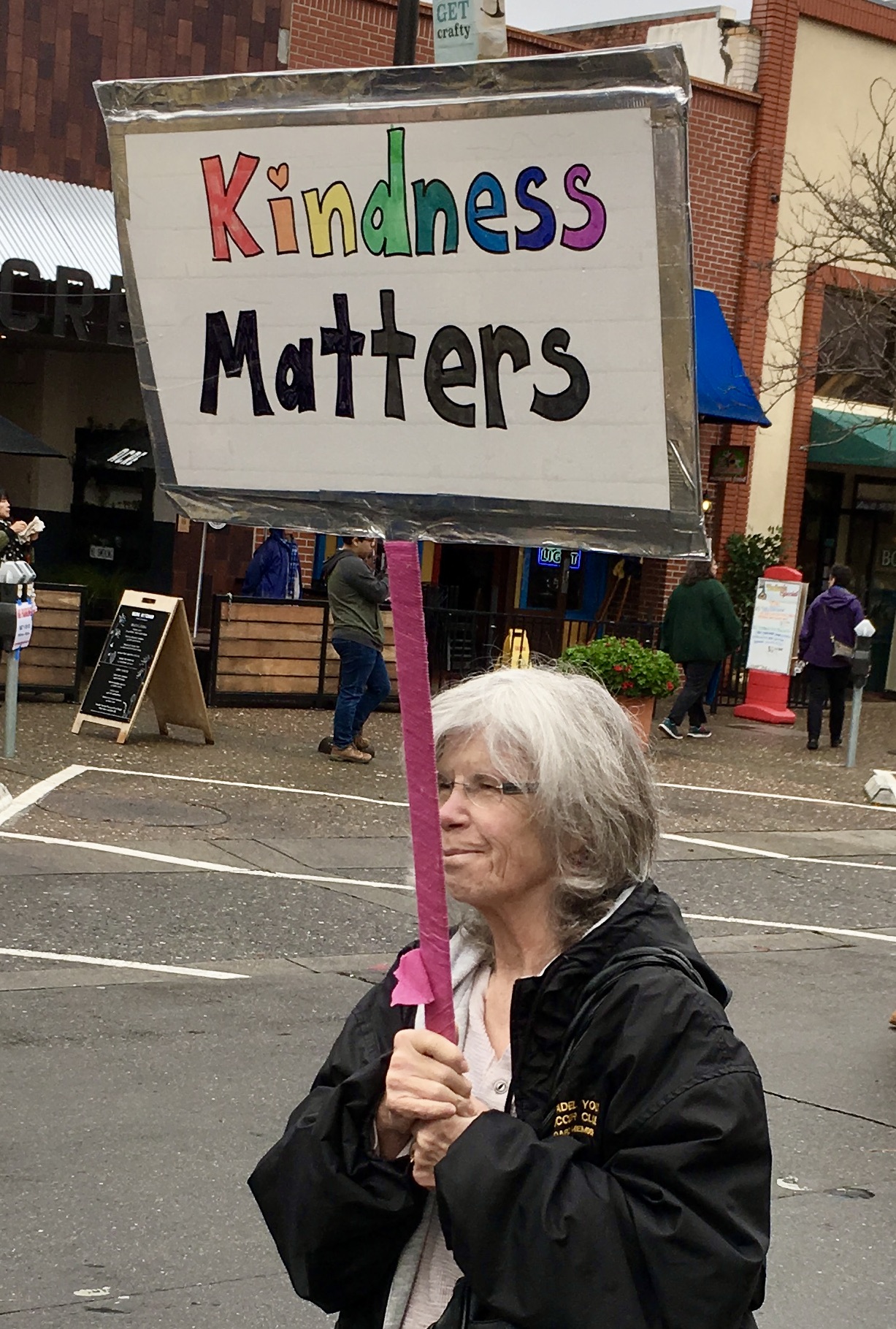
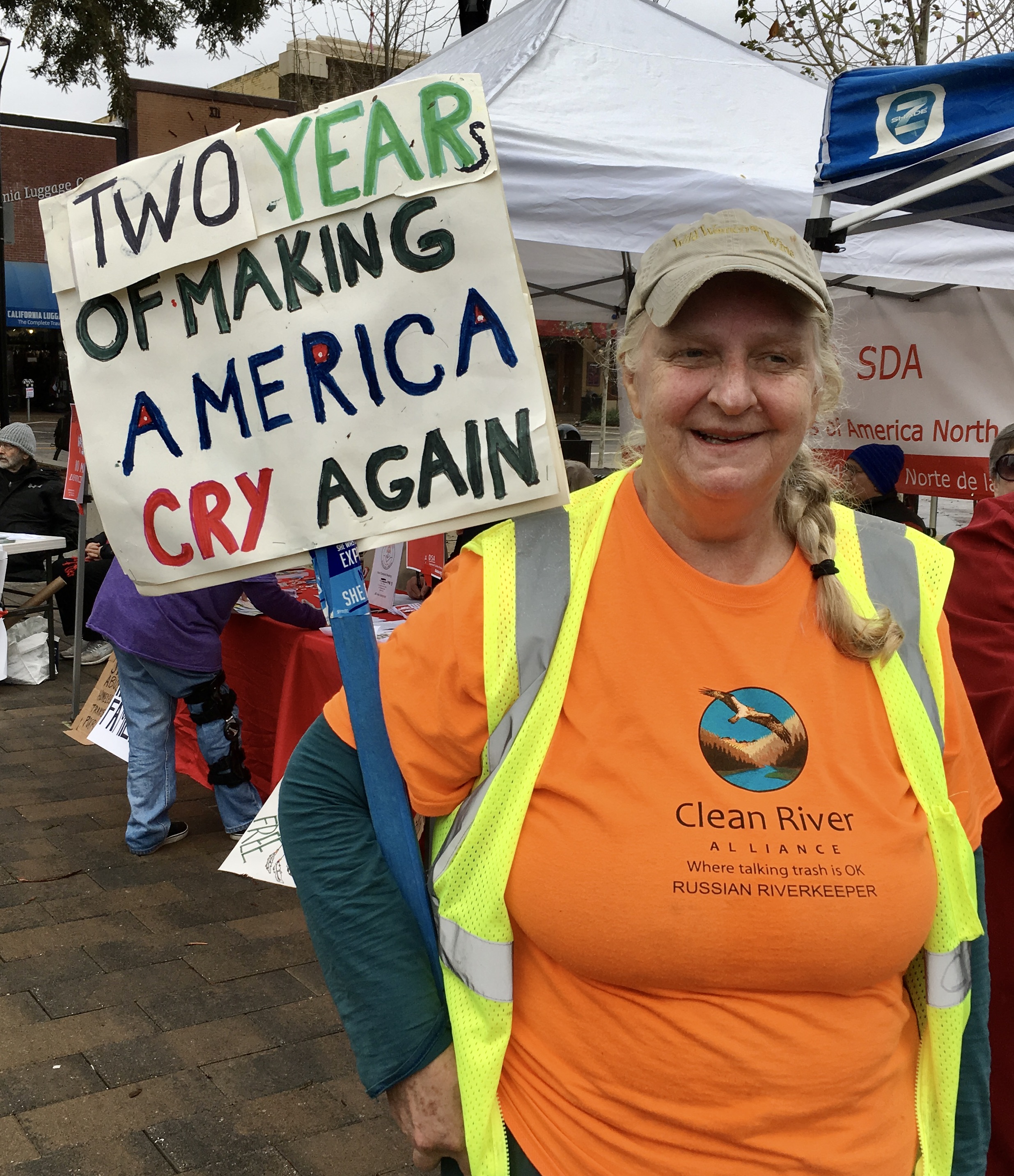
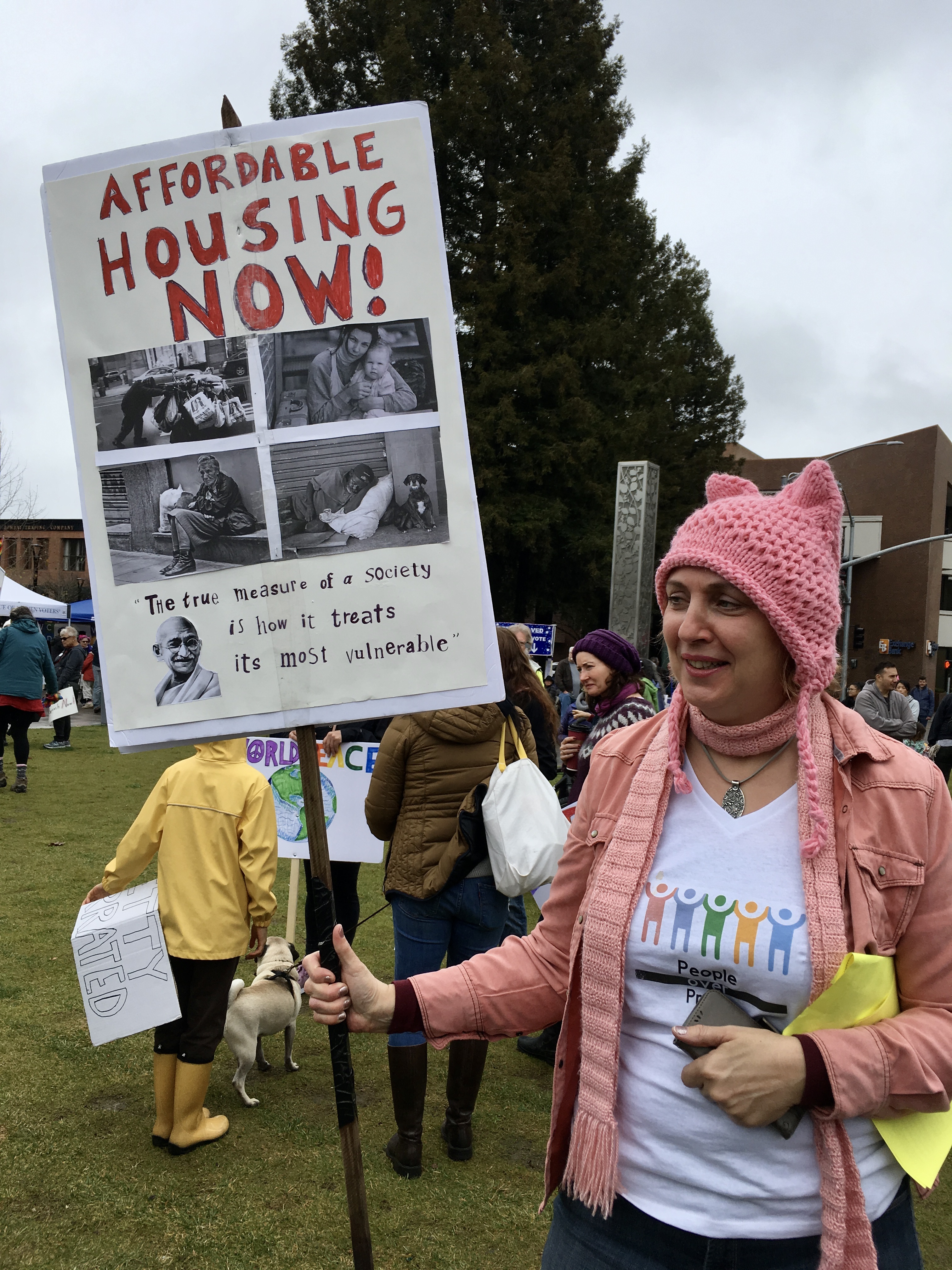


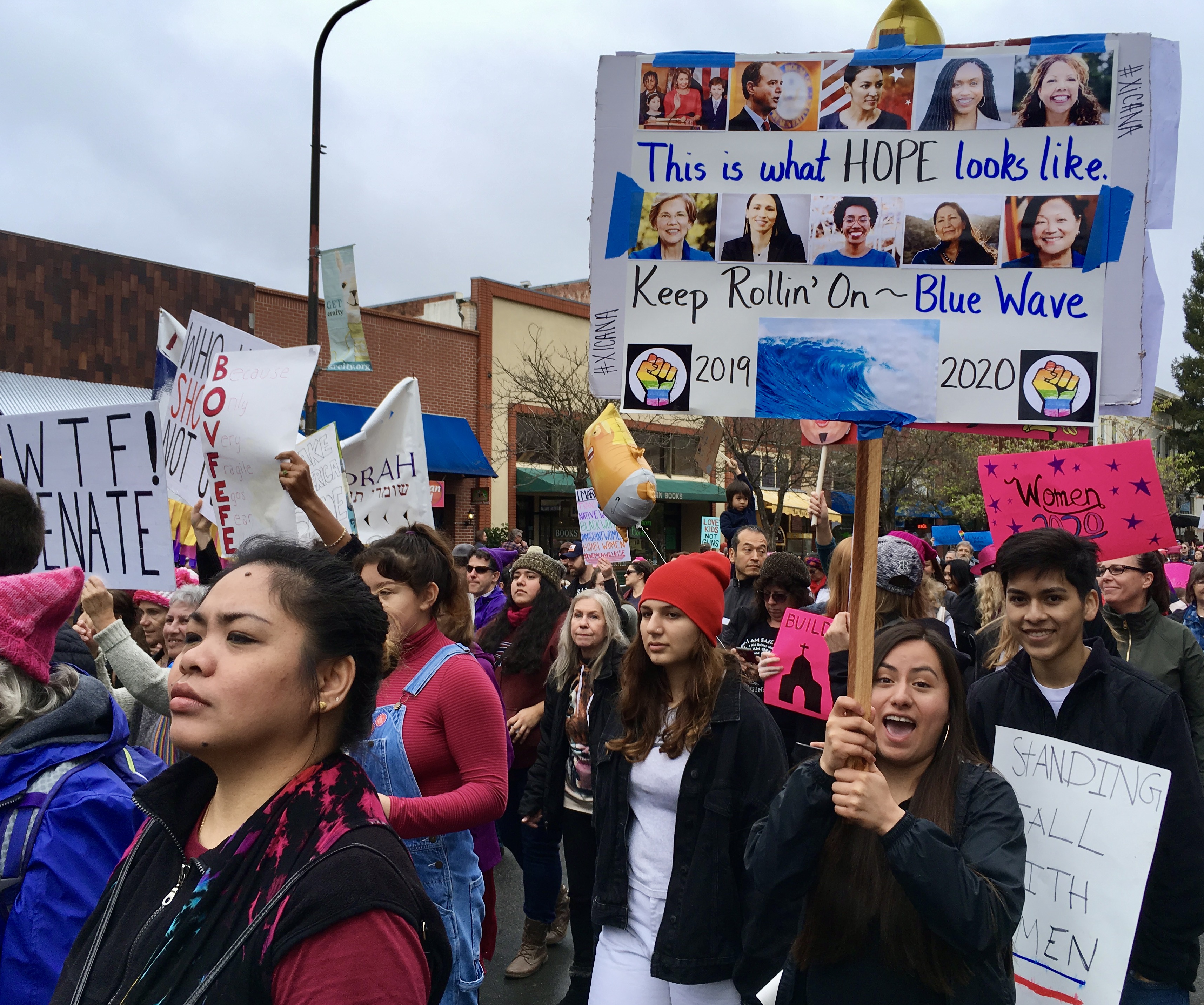
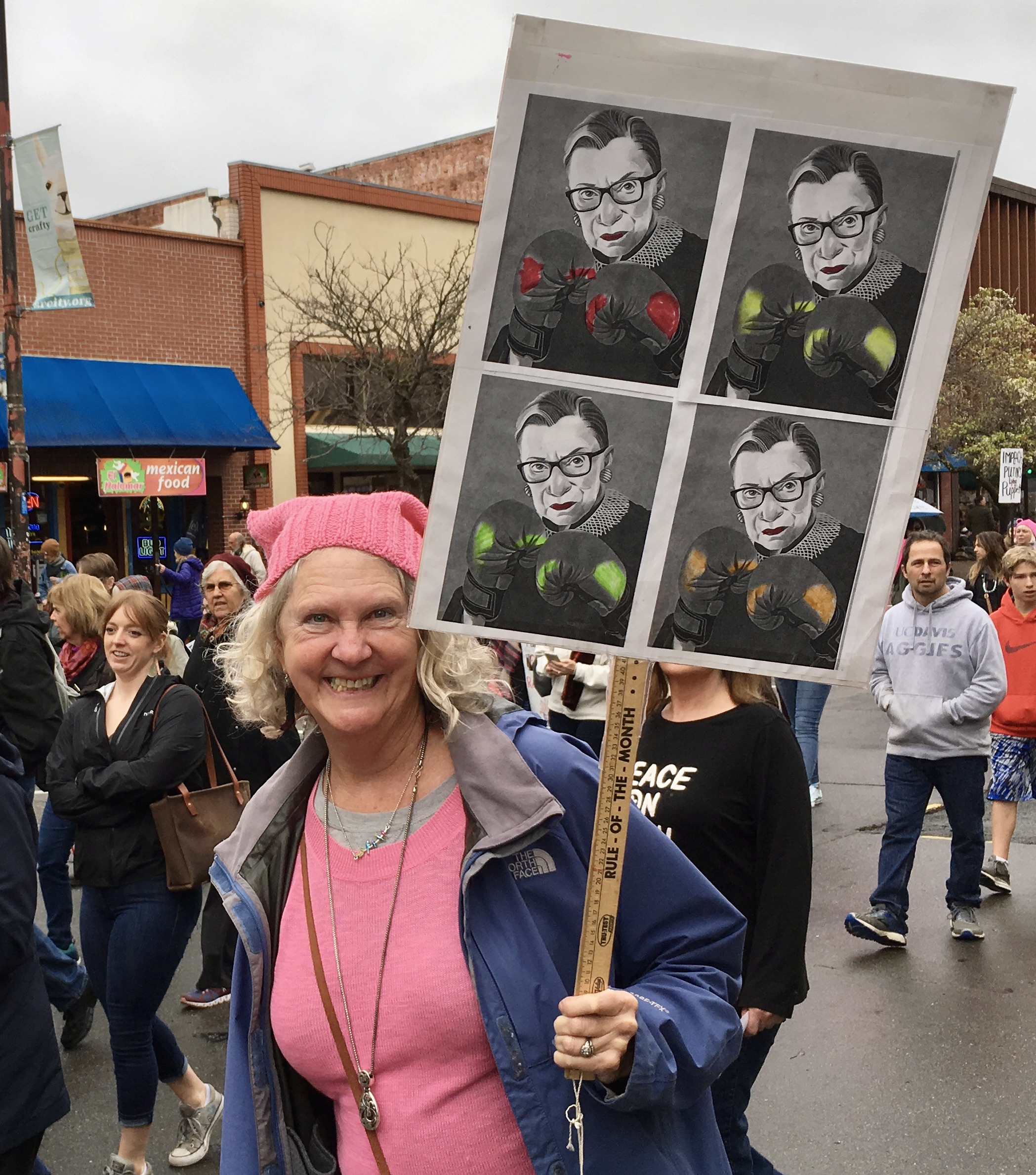


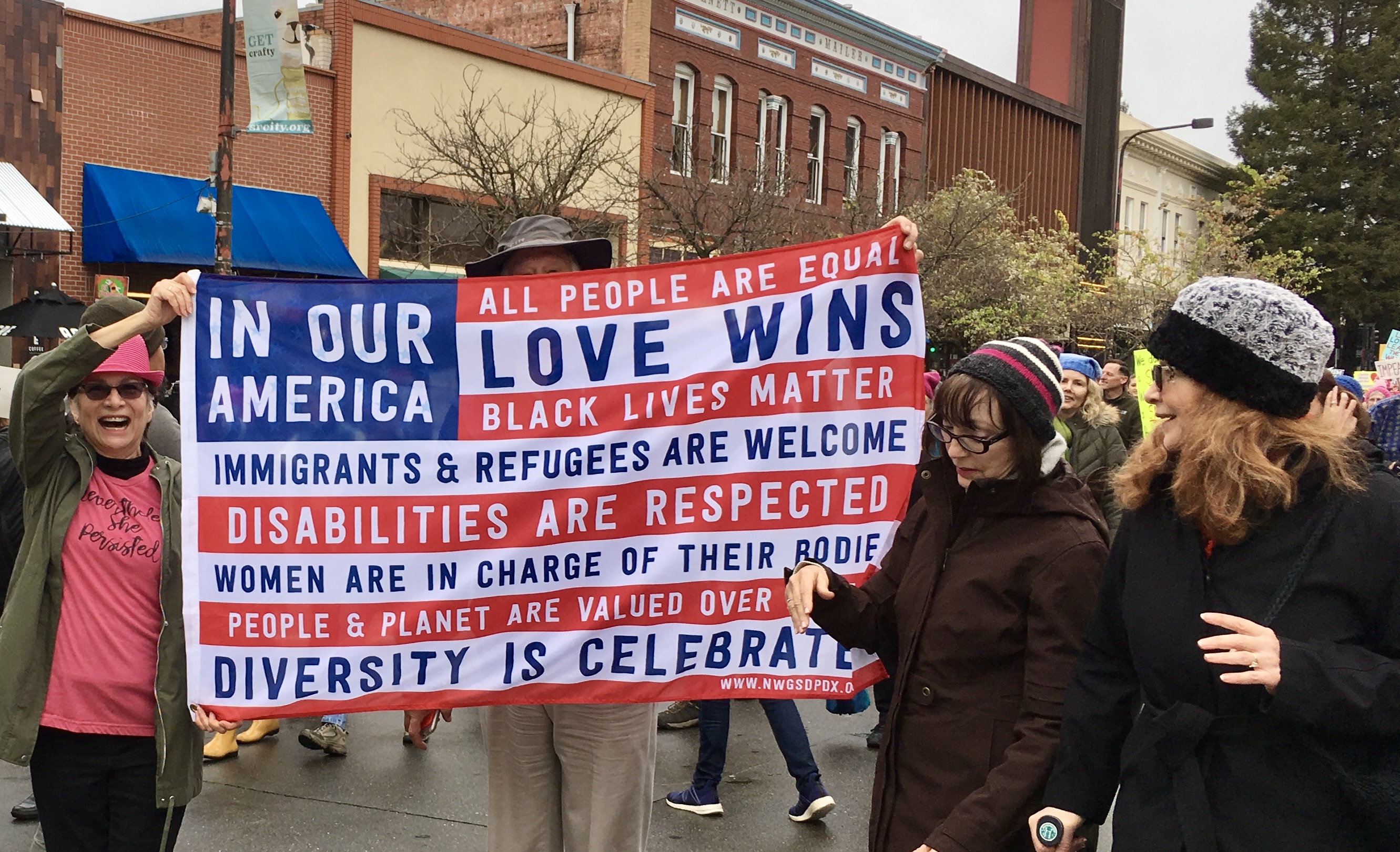
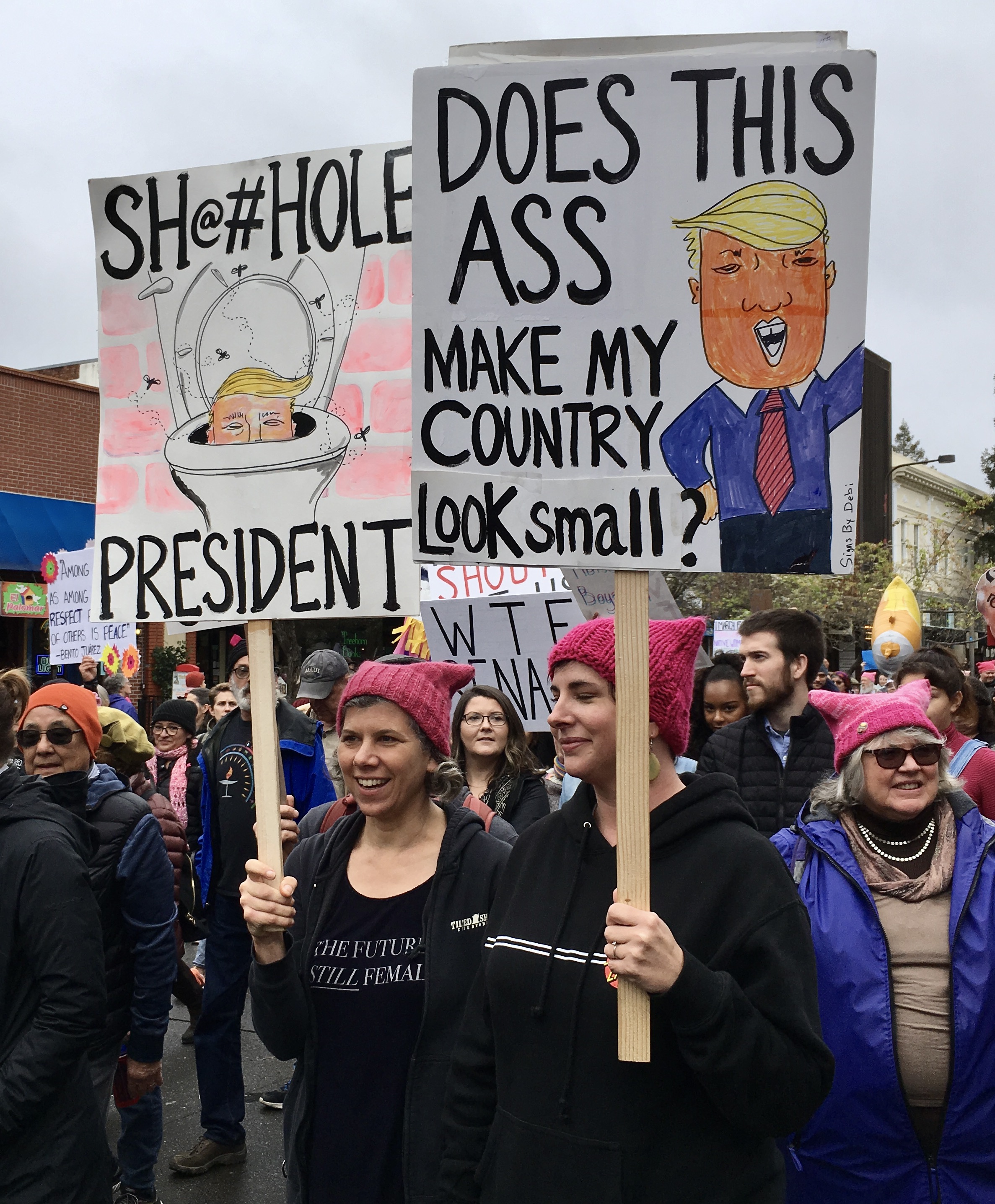


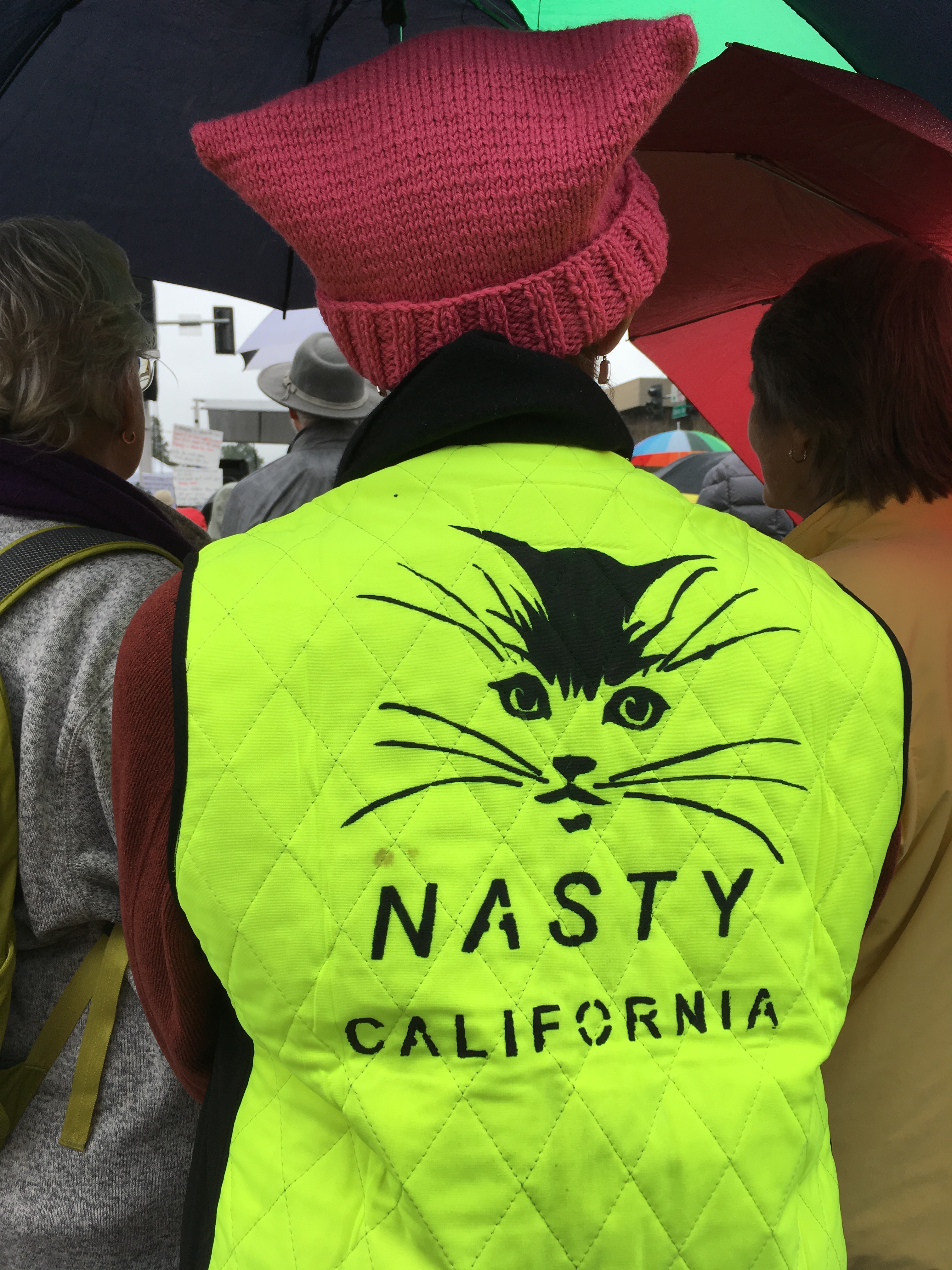
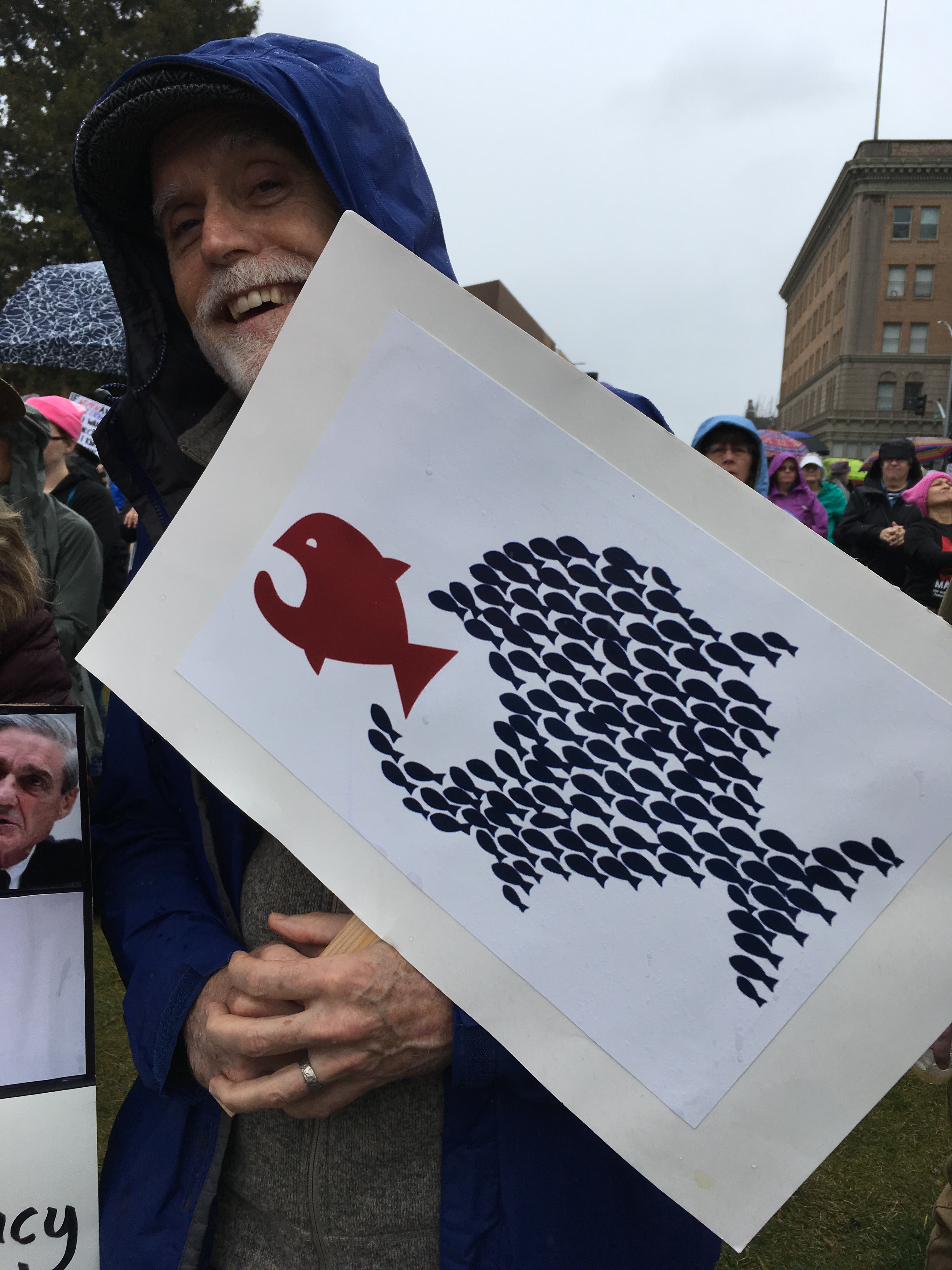
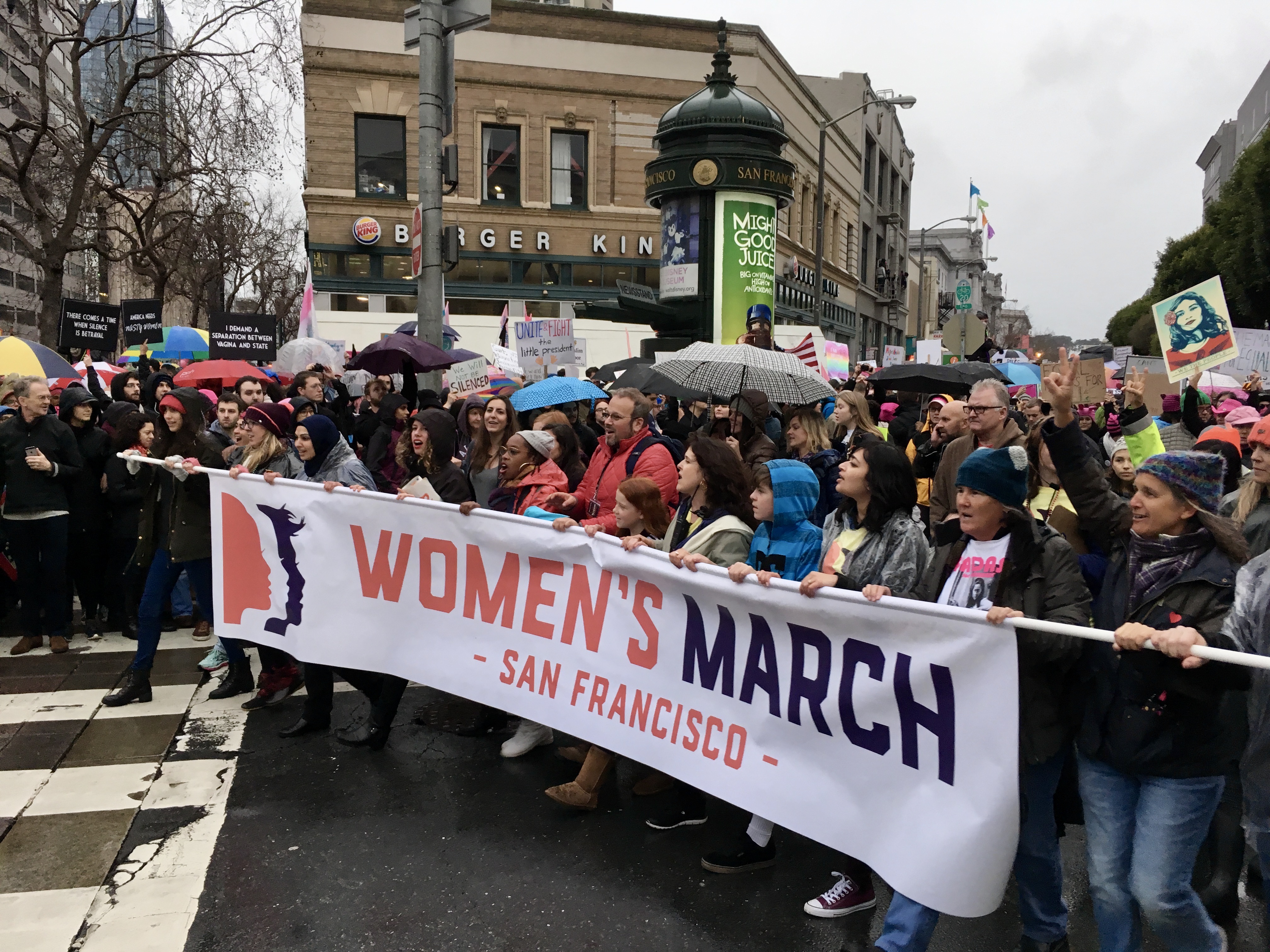
The Women’s March 2017
I was inspired looking through old photos












A Sister’s Murder Sparks Action

Black, Lesbian, or Just a Woman?
Tradeswomen Respond to Workplace Violence
Carpenter apprentice Outi Hicks was working on a job in Fresno, California in 2017 when she encountered continuing harassment from another worker there. She didn’t complain and no one stood up for her. Then her harasser attacked her and beat her to death.
We don’t know whether Outi (pronounced Ootee) was murdered because she was Black, lesbian or just female. But we do know that being all three put her at greater risk. Outi was 32 and a mother of three.
In response, tradeswomen organized Sisters Against Workplace Violence and worked with the Ironworkers Union (IW) to launch a program called Be That One Guy. The program’s aim is to “turn bystanders into upstanders.” Participants learn how to defuse hostile situations and gain the confidence to be able to react when they see harassment.
“Outi Hicks’ murder hit me hard,” says Vicki O’ Leary, the international IW general organizer for safety and diversity. “Companies and unions need to change the focus of their harassment policies and need to get tougher with harassers.”
Often the victim of harassment is moved to a different crew or jobsite in an effort to defuse the situation. But such a response actually punishes the victim and not the aggressor, who remains unaffected and may continue to harass other workers.
O’Leary says one of the most important parts of the program is when participants take the pledge:
“It only takes one guy to talk to the harasser or to file a complaint with the crew boss. It’s even better when the whole crew stands up together to end harassment, and we are now seeing this happen on job sites around the country,” says O’Leary. She tells of an apprentice who was being harassed by a supervisor. Seeing the harassment, everyone on the crew began to treat the supervisor the same way he was treating the apprentice. His behavior changed in a day.
The IW is rolling out the program through their district councils. They want to share it with other unions and, says O’Leary, they’re hoping general contractors will jump on.
Another anti-violence program started by tradeswomen and our allies also is specifically tailored to the construction industry.
ANEW, the pre-apprenticeship training program in Seattle, created its program, RISE Up, to counter the number of people, and especially women, who leave the construction trades because of a hostile work environment. ANEW director, Karen Dove, developed the program after meetings with contractors who would say “women just need tougher skin.”
The program focuses on empowering workers and employers to prevent and respond to workplace violence. It offers a range of services, including training sessions, risk assessments, and support for workers who have experienced violence.
Training sessions are designed to help workers and employers identify the warning signs of workplace violence and take proactive steps to prevent it. The training covers conflict resolution, de-escalation techniques, and the importance of creating a positive work environment.
The program is concerned with psychological well being and is now working with a union to develop mental health services for Black workers.
RISE Up also offers risk assessments to construction companies, which help them identify areas of their workplace that may be at higher risk of violence.
Marquia Wooten, director of RISE Up, says the program is designed to change the culture of construction. Wooten worked in the trades for ten years as a laborer and an operating engineer. “When I was an apprentice they yelled and screamed at me,” she says. She notes that men suffer from harassment too. “The suicide rate of construction workers is number two after vets and first responders,” she said. “Substance abuse is high in construction.”
ANEW partners with cities, public entities, unions, schools and employers. “They do want change in the industry,” says Wooten. Less workplace violence is good for the bottom line.
But training workers is not enough. Union staff needs training in how to respond to harassment as well. Liz Skidmore recently retired as business representative/organizer at North Atlantic States Regional Council of Carpenters. They created a training to help union staff members know what to do when a member complains.
“New federal regulations require that every person on the construction job who comes into contact with apprentices go through anti-harassment and discrimination training,” says Skidmore.
“Most of corporate America requires annual training about sexual harassment, but most trainers don’t know the blue collar world,” she says. Trainers can be classist. “To be effective, the trainer has to like these guys.”
While tradeswomen have long been virtually invisible on the front lines of the Feminist and Civil Rights Movements, we still are the ones who daily confront the most aggressive kind of sexism and racism in our traditionally male jobs. For going on five decades now we have been devising strategies to counter isolation and harassment at work and to increase the numbers of women in the union construction trades. Now we are working to educate the construction industry about how to end workplace violence. Women in construction are still isolated and often the only woman on the job. We need our brothers to act as allies.
As with women in construction, queer and transgender folks must depend on allies to stand up to bullies. We can’t do this by ourselves. The anti-violence programs developed by tradeswomen are programs that we queers can adapt to protect our communities.
Sometimes you just have to say something.
Postscript 2025: Another sister has been murdered on the job by a coworker. Minneapolis. He killed her with a sledge hammer. Story on 19th: https://19thnews.org/2025/11/amber-czech-welder-murder-tradeswomen-demand-action/
Santa Rosa Women’s March
VOTE! Don’t Let Republicans Take Away Our Rights!


OTTERS in Wheelchairs

Wheelchairs were a highlight of my summer travel back home.
If you’ve never been disabled, it can be hard to appreciate disability. This is where construction workers have an advantage in sympathetic understanding. Most of us have been temporarily disabled at one time or other in our lives. We’ve had to butt crawl up the stairs, or learn to use the other hand with one arm in a sling, to navigate on knee scooters and crutches.

I’ve been temporarily disabled many times in my life, but returning from a trip to Maine was the first time I’ve ever gotten to ride in an airport wheelchair. It was awesome!
The wheelchair was a necessity after I sprained my foot getting out of bed. I know. Pretty dumb. I could tell my foot was asleep when I woke up, but I had to pee and thought I could walk on it. Not! I wonder why I’d never learned this lesson until now. Don’t try to walk if your foot is asleep! Wake it up first.
I had traveled to Maine to commune with the OTTERS (Old Tradeswomen Talking Eating and Remembering Shit). We are writing a book about the Tradeswomen Movement. For the last half century we have been agitating to help women enter the construction trades and other nontraditional jobs, and now we are recording our collective history.

It was great to see and hug my old friends from all over the country, many for the first time in years. Working together resulted in measurable progress on our book. We stayed in a beautiful country house. Plus we got our fill of lobbies (the Mainers’ word for lobster)!
Then the trip from Portland, Maine to Santa Rosa, California tested my enthusiasm for airplane travel.
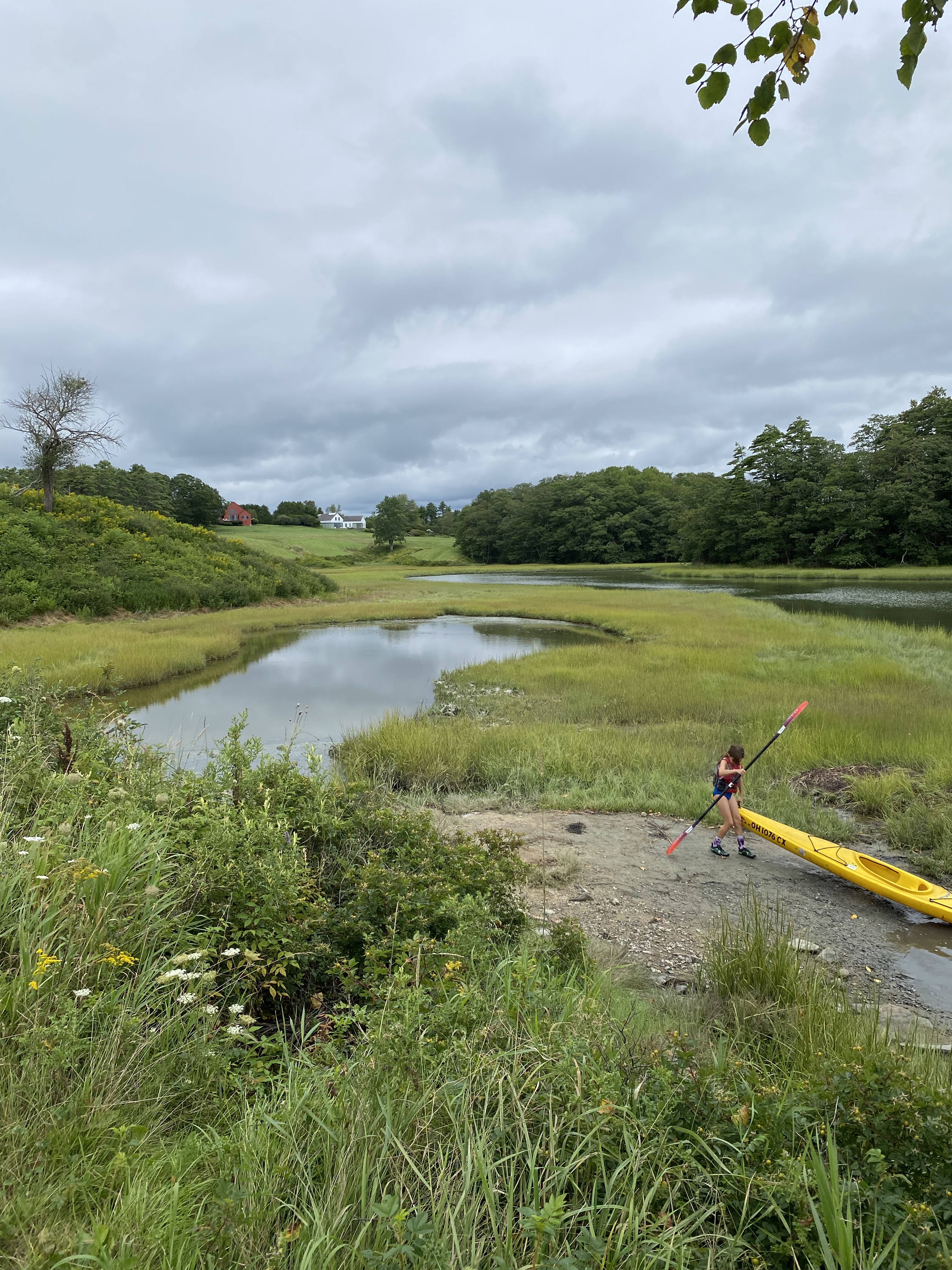
My long day of travel involved three airports. By the time I left Portland, on a warm muggy day, I still could not walk. My friend and Airbnb host, Marty Pottenger, loaned me a walker and, later, a cane. She suggested I call the airline to ask for wheelchair support. She drove me to the airport where I hobbled to the airline counter. She reclaimed the cane and I plopped into a streamlined wheelchair, pushed by a handsome gray-haired man. He said he was retired but worked at the airport two days a week to help make ends meet. I said, “Two days a week! That’s all any of us should have to work. The Wobblies called for a two-hour day but I think a two day week is better.” We talked about jobs we’d worked at as we crawled forward in the security line, and I realized it would have been hell standing in that line without the chair. He left me seated near the gate and went to pick up another disabled traveler.
I was relieved to be in the first group of passengers, those who need special assistance. My foot was healed enough to limp to my airplane seat without a cane.

At the stopover in Charlotte, North Carolina there was one other disabled traveler besides me flying on to San Francisco. The young dreadlocked assistant grabbed both our wheelchairs at once, one in each hand, and pushed us at high speed through the packed airport. Charlotte is a big city of 880,000 people and its airport is huge. We flew through the foot traffic with some close calls, but never hitting any walkers. I felt like Casey Jones drivin’ that train. I wanted to see the airport art but was barely able to take in my surroundings. The distance from one gate to the other was far but we got there in plenty of time to make our flight.
At the San Francisco airport I was greeted by a man holding a wheelchair and a sign with my name on it. What service! This was another long trek that required an elevator. I was deposited right at the taxi stand where I caught a ride to a nearby hotel where my wife was waiting.
I had first planned to take the Santa Rosa airport bus, which runs till midnight from SFO but it would have left me at a bus stop two and a half miles from my house at 2am. I had thought I could walk home from there if necessary. Sometimes Uber and Lyft can be problematic at that time. But Holly came to my rescue. After a good night’s sleep she drove me home from the hotel the next day. Home looked pretty darn good and I’m relieved to be back on solid ground.
Reuniting with my activist buddies was wonderful but I wonder if I’m too old and crabby to fly across the country again. Flying used to feel like a fun adventure. Now it’s just a trial, this time made manageable by wheelchairs and their pushers.
The Cop and the Communist
Dating Negotiations in the 90s
I met her as part of a couple, Anne + Judy. They were both in the first class of women to break into the San Francisco Police Department after several years of pressure from the feminist community to integrate women.
There were two sides to this story. Some feminists thought cops were unredeemable and that women should never be cops. They said women would take on the racist and repressive world view of the police; they would be sullied by the job. I was an electrician and one of those working to get more women into nontraditional jobs. I thought women deserved access to those jobs and I even suspected that women might change the culture in the PD if given the chance.
Kissing lesbians was a thing I did in June–Gay Month
Work life was tough for those first women, and they were on the front lines of the feminist movement to desegregate the workplace. They took the most shit from their male coworkers and bosses, who were almost all white back then in the 1970s. Men of color had been kept out too and the efforts of us activists to enforce affirmative action laws included all minority classes.
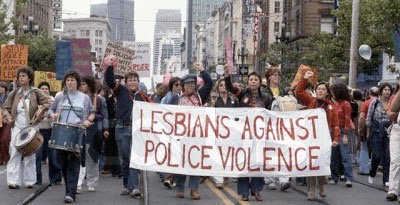
Being in a relationship with another woman navigating the same sexist workplace was probably a main reason Judy and Anne both stayed in the PD and made good careers. My lovers, too, were women in the trades, the only people who really understood what I was going through at work. They provided the support I needed to survive on the construction site.
I knew Judy better than Anne. She was a feminist and out on the job as a lesbian. One time when I ran into her working the gay parade, I threw my arms around her and planted a big kiss on her lips. Yeah, you’re not supposed to do that to cops when they’re working. But kissing lesbians was a thing I always did in June–gay month. I was just so happy to be out in San Francisco, I had to pass around my good cheer.
I got to know Anne better in the early 90s after she and Judy had broken up. We had a mutual friend, a mystery writer, who used us both for expert background. (What kind of electric shock will kill a person? How would a killer behave in this situation?) I think the mystery writer was hoping there would be a spark of attraction when she introduced us. She confided to me that Anne was in a secret ongoing affair with a closeted columnist who wrote for the local paper. The columnist was also in a long-term relationship with a lover who did not know about Anne.
Are you following me here?
Lesbian relationships were tangled in that era as we thrilled to new freedoms and experimented with new models. Anne was the Other Woman and I was admonished not to tell anyone. I had practiced nonmonogamy zealously but eventually came to see that being the other woman, especially if you’re in love, spells heartache. I sympathized mutely. It can’t have been easy for her.
I had never tried to romance a cop
We bonded over the internet. I had a new 512K Mac and I wanted to learn to use email. Anne, who used the internet to research crimes and criminals, set me up on AOL. It was dial up. You had to understand acronyms like POP, HTTP and some other things like hardware and software. They all confused the hell out of me, never a tech wizard. I remember receiving my very first email message from Anne. She didn’t say anything sexy, but it was exciting, world changing!
Was there an attraction? Well, sure. Anne was handsome, with shoulder-length dark hair and a muscular physique. She was handy. She had remodeled the Victorian house she owned in the Dogpatch neighborhood. I was impressed, and horny. But I had never romanced a cop. A veteran of protest marches, anti-war and anti-racism campaigns, I had been on the other side of many police barricades. I did not believe all cops were pigs as many did, but my generation of activists will never forget COINTELPRO, the police killing of Fred Hampton and so many others. Not to mention the attacks by the SFPD on our gay and lesbian bars and gathering places.
I was thinking about how I would undress her when she saw the stack of mail on my desk.
By that time I knew Anne well enough to know that we disagreed politically on just about everything. I figured she was one of those women who find it easier to not rock the boat and who identify with their male coworkers in order to survive on the job. Or maybe she’d been brought up in the 50s during the McCarthy era to hate communists. But, I reasoned, we didn’t have to talk politics. Maybe we could just have sex.
I managed to get Anne over to my house to help with AOL and I made lunch. An opening salvo. I imagined us moving into the bedroom after lunch.
I was thinking about how I would undress her when she saw the stack of mail on my desk. Right on top was a newsletter from the Committees of Correspondence, a democratic socialist group I was a member of.
“Are you a communist?” she asked, looking up.
She seemed surprised, but at that time I thought that most lesbians were leftists at least, if not communists. My friends and I were activists trying to rid the world of imperialism, racism and police violence. It wasn’t that weird.
“Well, yes,” I said. “Communist with a small c.”
“I could never be with a communist,” she sputtered.
“But,” I said, “you wouldn’t have to BE with me. We could just have sex.”
The look of horror on her face conjured the pain of the long-term other-woman relationship that I wasn’t supposed to know about. And probably she really did hate communists. She was a cop first and a lesbian second.
My disappointment didn’t last long. It never would have worked out. I hoped Anne would find the right woman, and I wondered if she would tell that woman about her own secret affair with the columnist. I never found out.
The T-Shirt

Feeling a little sexy? Go fuck yourself
I first encountered Dar on a job site. The contractor had moved me there so he could meet affirmative action requirements for females on the job. This was a popular practice. Rather than just hiring more women, the company would hire one woman and move her around from job to job so monitors would count the same woman repeatedly. The job, a low-income housing project in Chinatown, received federal funding and so had to meet federal affirmative action goals for women and minorities. This was in 1980 when some regulators actually took affirmative action laws seriously and monitored job sites. Those days are long gone.*

In those days women would often ignore each other when we were dispatched to the same job. We tried to be invisible and often, when there was only one of us, we got away with it. But as soon as two women started talking or working together, an undercurrent of anxiety rippled among the men. For a brief period on one job I got to work with a female apprentice.
“What do you two talk about?” asked one of the electricians. “Are you talking about the size of our dicks?”
This hadn’t occurred to me. Women might talk about the harassment we endured on the job or, more likely, how to work together to complete the job at hand. Dicks, drawn in profusion on the walls of the porta potties, did seem to hold a prominent place in the imaginations of some of our coworkers.

Women knew that if we spoke to each other our male coworkers would notice. Straight women didn’t want to be painted with the dyke brush, and most lesbians were still in the closet and didn’t want the brush either. Dar didn’t worry about such implications. She was a big mouthy white woman with buck teeth and a head of bleached blond hair. On the job site you couldn’t miss her. She did not melt into the woodwork. My first day on that job, the Chinatown low-income housing project, she introduced herself as we passed each other on the deck.
“So you’re the affirmative action hire,” she said. “I guess they needed another chick.”
I wasn’t wild about being called a chick, but she had a point. Federal affirmative action regulations were the only reason I was on that job. Our short conversation made me think Dar didn’t like women any more than the men on the job did. She didn’t seem like a feminist sister.

For a couple of days I was pulling Romex through holes punched in metal framing. Then they pulled me off that job and put me on another where the regulations said they needed a woman. Fine with me. It all paid the same—a good wage previously reserved for men only. Dar was likely in the same boat. The plumbing contractors had a reputation for hiring even fewer women than the electrical guys. After they could check off the number of female hours worked, they could lay us off.
A couple of years later after a couple more layoffs, I scored a full-time maintenance job with the San Francisco Water Department. I worked out of a corporation yard in the southeast industrial area of the city, looking after all the motors that ran pumps that supplied water to the city. That’s when I ran into Dar again. She had been hired for a job in the plumbing division. The crews of plumbers worked installing new services all over the city, usually in big holes in the street. Or they might be required to repair a main break. The job was wet and muddy.

I didn’t see much of Dar, as the plumbers were out of the yard working in the street all day. But I heard about her. A story in the grapevine told of Dar punching out a coworker who had harassed her while they worked in a trench. I never heard what was said. That was before the rule was imposed that fighting on the job would get you fired immediately. Dar was not the first plumber to make use of fists to manage a dispute, but she was the last to do so and avoid getting fired.
The day I saw the T-shirt was a maintenance nightmare for the water department. One of the big pump stations that housed 100 HP motors flooded. The motors sat in wells in the concrete floor and so were vulnerable to being overtaken by the quickly rising water. I could see it wouldn’t be long until the motors were under water. The team of plumbers worked fast to staunch the leak.

My only job as electrician was to cut the power to the motors and that was just a matter of disconnecting circuit breakers in a huge panel on a higher level, though if the water rose high enough that panel, too, would be in peril.
That’s when I spotted Dar, down in the pit with a cluster of men. She wore a T-shirt with a message in big print:
Feeling a little sexy?
Go fuck yourself
No one said anything aloud about the message on Dar’s shirt, but it shocked me. I couldn’t imagine wearing it myself, as much as I agreed with the sentiment. I didn’t have the guts to wear that shirt.
I had to give Dar credit. Maybe she wasn’t my kind of feminist, but she was some kind of feminist.

*Affirmative action in the construction industry really only lasted a short time before Reagan killed it. In California the death knell was dealt in 1996 when Ward Connerly put affirmative action on the ballot. In the meantime some of us were able to get a foot in the door and advocate for the hiring of more women. But women still make up only about three percent of the construction workforce. We were the forgotten recipients of affirmative action and we could benefit from a renewed commitment to it now as the Supreme Court threatens to end it entirely.
 tradeswomn musings