Carla Jean Johnson Presente

PreScript: The New York Times published my tribute to Carla in its year-end “The Lives They Loved” section:

http://www.nytimes.com/interactive/projects/storywall/the-lives-they-loved-2016/stories/carla-jean-johnson?smid=fb-share

I was delighted to be asked to eulogize Carla at a memorial for her at the Bayview Opera House on July 23, which would have been her 57th birthday. The Opera House is just now reopening after a restoration which Carla, as head of the Mayor’s Office on Disability, had a big part in. Her office provided vital funding for disability access, and now wheelchair users can enter through the front door. Here’s what I said about Carla.

Photo of Carla by Anna Kuperberg

Carla Johnson was my bestie. I loved her. I introduced her to her wife Anna. Carla and I worked together as building inspectors through the 90s; we worked on each other’s old houses for decades (of course we had permits for everything). Together we negotiated the prejudices we faced as women in the building trades. There were many. Still are.

From the time she made her first cutting board in high school shop class, Carla Johnson wanted to be a carpenter. She quit school at Cal to follow her dream and didn’t finish college till years later. She became a builder, working for small contractors and for a women’s carpentry collective called Seven Sisters Construction.

Carla's CCC card
Carla’s CCC card

In those days, it wasn’t easy for women to get training (still isn’t). Carla learned the carpentry trade by reading. She told me she would just ask at the end of every day, “What are we doing tomorrow?” Then she would go home and open her carpentry books and the first thing the next morning she’d start throwing the terminology around. “So, we’re going to put the joists 16 inches on center, right. We’re going to start with the header joist.” She was assigned to be crew boss because she was the one who consistently showed up on time.

Later, she did maintenance on Victorian buildings for a property management company. She got a lot of love from tenants for keeping the systems going. She was a skilled locksmith. She could rehang a door that had been kicked in before the tenants got home from work. She could jerry rig the boiler so tenants would have hot water till the boiler repairperson could get there. Carla loved old buildings. She loved old houses, old trucks, old things. Things with some history in them.

With my friend Huli at the restored Bayview Opera House

For a time she had her own business, Carla’s Custom Care Construction. No doubt she worked on the homes of some of you in this room. Then she got a civil service job working as a carpenter at the Department of Public Works where she felt privileged to work on City Hall and other historic public buildings.

I didn’t meet Carla till after the saw accident that mangled her left hand and changed her life. It was shocking that such an accident could happen to her. She was the most risk-adverse safety-conscious person I ever met (a trait that sometimes drove her friends crazy).

She told me she couldn’t even remember the date it happened in 1992, which she said is a good thing for people with PTSD. She lost her little finger and she suffered through many long surgeries to repair her ring finger, and a year of rehab. She was disabled. She couldn’t earn a living as a carpenter anymore.

She told me the first thing that her workers comp attorney said to her when she got out of the hospital was, “I want to tell you about this new law that just went into effect.” Her employer had an obligation under Title 1 of the Americans with Disabilities Act to provide her with a reasonable accommodation–to place her in a job where she could still use the skills without the tools. That’s how she came to work at the Department of Building Inspection. Carla was happy when she was assigned to the Castro as a district inspector. She always loved working with “my people.”

One job of a building inspector is to perfect the art of saying no, not always an easy thing to do, especially if you’ve been on the receiving end as a contractor who has to do the job over after you fail inspection. Carla, with her quiet thoughtful demeanor, could say no and make you feel grateful for her advice.

She developed a reputation as a stickler for the building code’s technical details. Competent contractors who played by the rules liked her. Sloppy mechanics with poor workmanship hated her. Stairs are required by code to be the exact same height for a reason. Varying stair heights can cause falls. Carla carried a measuring tape and she used it. Our friend Nina Saltman just now told me about a job she ran that failed Carla’s inspection because it was a quarter inch off. She is not the only one who tells that story.

Carla became an expert on disability access. And she became a skillful advocate for the rights of people with disabilities. At DBI she saved us taxpayers money by resolving disability issues out of court. Then she moved over to the Mayor’s Office on Disability and she eventually was promoted to head that department.

When Carla called me to tell me she had just been diagnosed with stage IV metastasized breast cancer, I said, “I’m coming over now.” I ran the five blocks to find Carla and Anna standing in front of their house conferring.

“I need help,” Carla said when I got there.

“Anything,” I said, grateful there was something I could do to help my sick friend.

“I need you to get up on the roof.” She wanted me to accompany her to check whether the roofers who worked on the house next door damaged her roof. This was so very Carla. She wouldn’t be able to rest until she made sure her roof was sound.

Carla was fascinated by the details of city government. She would entertain herself during nights of insomnia by watching commission meetings on the public TV channel. I will especially miss talking about city government and politics with Carla over a beer at the Wildside or the Lucky Horseshoe. It was a topic that bored our wives and most friends.

Carla was the kind of civil servant all citizens want working for us, who understands she is there to make our lives better. But at heart she was a carpenter, a builder. She built a life that impacted so many of us, she built institutions, she built buildings, she built a marriage, a home, a neighborhood, lasting relationships.

We marvel at her legacy. And now those of us who are left must do the maintenance.

Was Emily Carr a Dyke?

CarrDog
Emily Carr and adored dog

My answer is a resounding yes. I just read Klee Wyck, the Indian stories, and Growing Pains, her posthumously published autobiography, and was sorry I ever picked up my phone to read that fictionalized bio by Susan Vreeland. She invents pieces of the Canadian artist’s life, as if it wasn’t interesting enough. She invents love interests–men of course–and I’ve come to believe that Vreeland is trying to argue that Emily was not a lesbian. Which makes me even more certain she was.

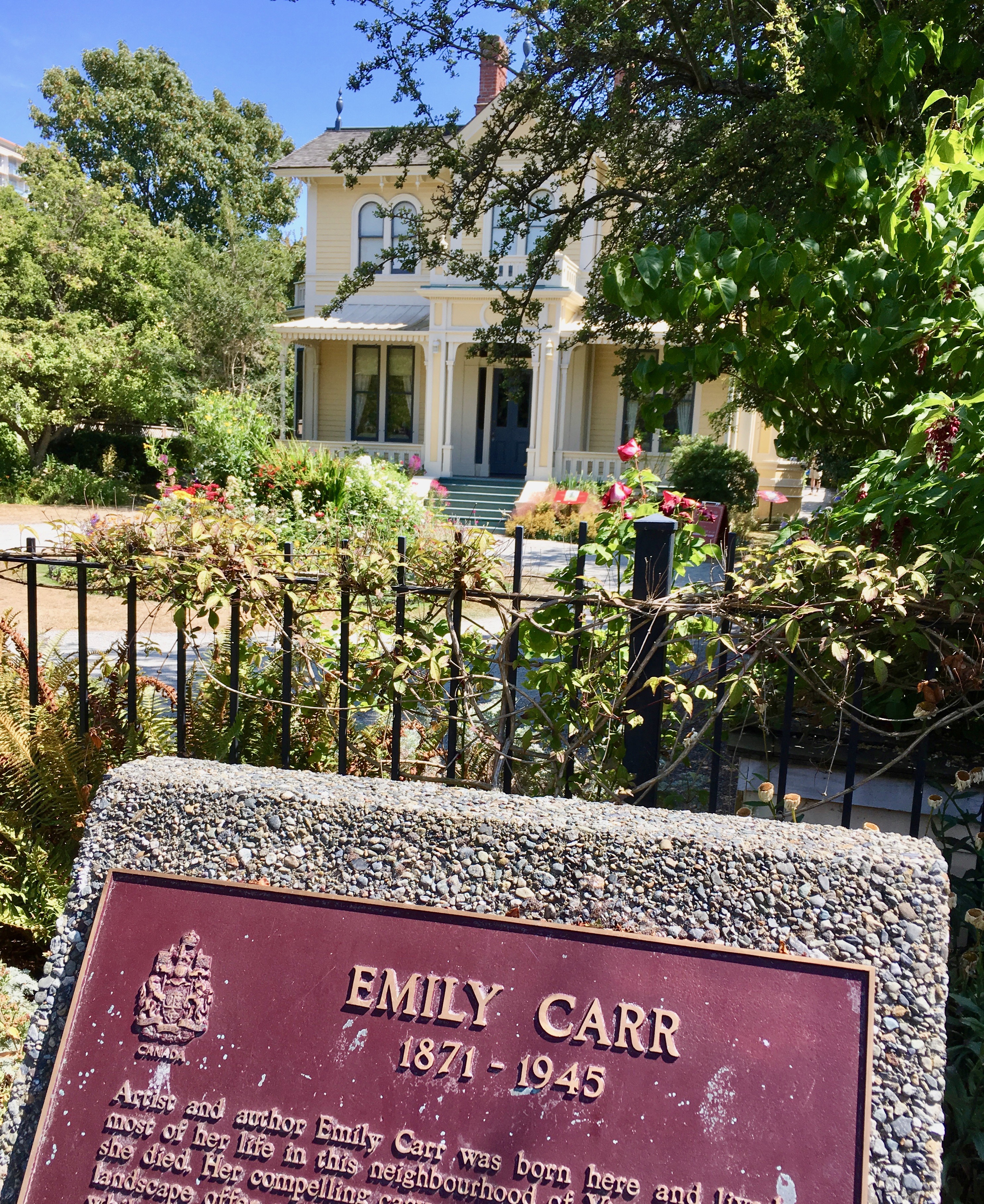
The lovely Victorian house where Carr lived in Victoria has been restored.

Here’s the thing: It’s possible that Emily never had sex with anybody. I think there may have been many Victorian women like her. She recognized that marriage would ruin her life as an artist, and sex outside marriage for women wasn’t possible. If you did it you certainly wouldn’t admit it to anyone, and certainly not write about it. She does mention a love interest in one sentence of the autobiography, but that’s it. She had many very close female friends. Emily did have male suitors, all spurned. At least one didn’t go quietly, but she persisted in rejection. Making art was her first love.

But I don’t think lesbianism is only defined by who one sleeps with. Even if she never had sex with a woman, I still think she was a dyke. Look at the pictures of her! She cut off her hair and wore comfortable clothes. One photo I found shows her in the doorway of her trailer house with a couple of other female friends lounging around outside. I have never learned who they are. Who buys a trailer shack and roams around in the woods? Lesbians!

EmilyCarrTrailer
Emily in her trailer with pets and friends

And the pets! There was a monkey, birds of all descriptions, and always several dogs. Who adopts and communes with animals? Lesbians!

Emily was an iconoclast. She was an Indian lover, perhaps because she felt herself to be an outcast too. Her family and the sister who controlled the family after her parents died were the worst kind of religious nuts. She was proud of thumbing her nose at them whenever she got a chance. The British ruling class of her hometown of Victoria reviled her art until she became famous in the East near the end of her life.

Then there was that 18-month stay in the sanitarium in East Anglia. No diagnosis was ever mentioned, except that she was anemic. In the sanitarium she was not permitted to paint. It was thought that she had overworked herself. She consoled herself by raising songbirds. The reader cannot help but wonder at the real reason for such confinement.

CarrPets
Emily and menagerie

I did enjoy her books and learned that she became a writer when her health failed and she wasn’t able to paint as she had. I’m so glad she wrote these books. I checked them out of the San Francisco public library–first editions from the 1940s, with thick paper and color reproductions of some of her paintings. I loved holding them in my hands and thinking of all the other hands that had held them since before I was born!

Whatever her sexuality, Emily Carr is a lesbian-feminist icon. She was driven to make art at a time when women were discouraged from doing much of anything. There is no need to invent male suitors to make her life interesting. She was a fascinating person all on her own.


Driving Jack

Driving from one place to another is the best time to get the old Commies talking. Today I drove Jack from Fort Point to our regular lunch at the restaurant near Lands End. He started telling me about visual images still in his head from his childhood, memories of living in an all-black town, of walking across the plains in Texas hunting as a kid. I think he said prairie.

“What did you hunt?”

“Rabbits, squirrels, really anything that moved.”

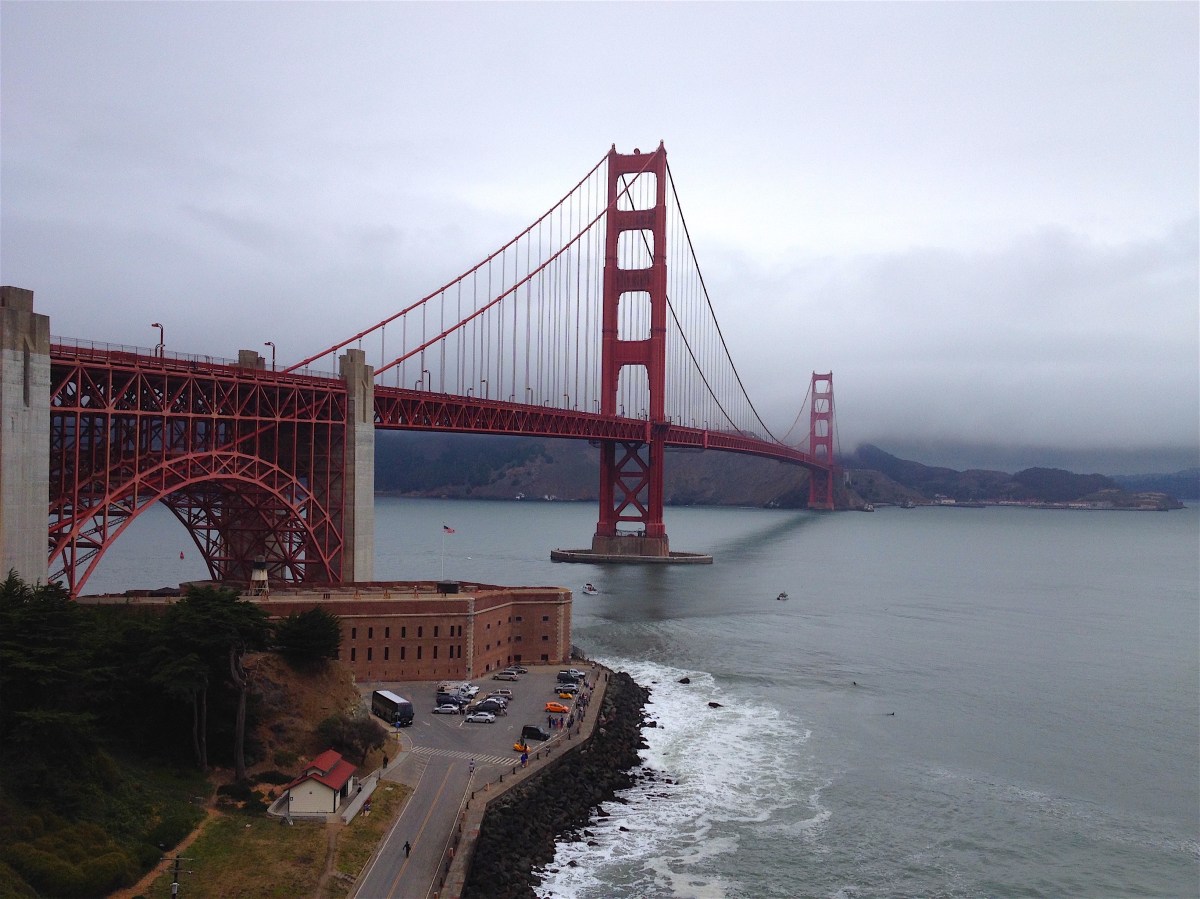
Looking back at the City

“What kind of gun did you have?”

“I started out with a .22, and then later got a shotgun when I was about 14.”

“Did you skin them and eat them?”

“Yes, I ate everything I killed. I loved that shotgun and kept it till just a few years ago. I didn’t want a gun in the house. My grandson was growing up.”IMG_1015.JPG

I told him I have a gun, a .22 handgun, how my mother was horrified when I told her I’d bought it. It was just before John Lennon’s murder. My gun is a Taurus revolver, the exact model that killed John. I put my gun far away in the storage room, partly because I didn’t want any visiting kids to find it, but also because I went through a period of deep depression and was afraid I might kill myself.

Then he said he had owned another gun, a .45. Jack had been in the Army in World War II. An Army friend who took it from the Oakland Army base after the war gave the gun to him. The guy asked him, kept asking him, if he wanted a gun. Now he thinks the FBI planted it on him.WaveCity

“Most of the black Army officers were recruited to the FBI,” he said, and this friend was one. The FBI kept close track of Jack, and maybe they still do, he said. He was in the Communist Party USA till the mid-50s and the FBI would call him up periodically just to check on him.

The Communist Party, and particularly one friend, bugged him to get rid of the .45. The CP frowned on their members having guns. It was dangerous, and especially dangerous for black men. Finally he took the .45 apart, every screw, he said, put all the parts in a paper bag, then walked along the waterfront throwing the parts in the water one by one. No one will ever find that gun, or pin it on him!BridgeFlrs

Later, when a president was about to visit San Francisco (he thinks it was Truman) the FBI came to his house. When they knocked on his door and asked him if he had any guns, he was able to honestly say no.

The FBI would always have someone at CP meetings recording who was there and making lists. But even after Jack stopped going to meetings, they were surveiling him. He thinks an FBI agent even came to a Catholic prayer meeting he was leading a few years ago. “The guy picked up all the religious books and looked at them. He came a couple of times. I knew he was FBI,” Jack said.

“Didn’t it make you paranoid, knowing they were watching you?”

At first he said no, but then he admitted yes. That’s why he got rid of the gun.

Jack said he left the CP in ‘55 or ‘56, when the Krushchev report came out about Stalin. “We thought the Western press was making up all those stories, but there was no need. The truth was awful enough.”chain