Heated Rivalry has got me thinking about the gym among other things
Watching Heated Rivalry, a series about gay hockey players, stirred up memories of my own athletic life. I competed in the Olympics too—the Gay Olympics. Well, we couldn’t call them that after we lost the right to the name in court, so they became the Gay Games. Alliterative. Less grand. Same spirit.
Me and my team of lesbian power lifters, Gay Games 1982
At the Gay Games in different years, I was a powerlifter, a wrestler, and a rower. But more than that, I was part of something new. The Gay Games didn’t just raise the aspirations of queer athletes; they lifted up women’s sports in ways the mainstream world hadn’t yet imagined. Women had never competed in powerlifting at the Olympics before women competed in the Gay Games. When my small crew of gym-going lesbians formed a team to compete in the first Gay Games in 1982, we were pioneers. Women’s powerlifting wouldn’t enter the official Olympics until 2000, at the Sydney Games. We were nearly two decades ahead of the curve. Of course it was us lesbians.
Teammates watch my dead lift 1982 Gay Games
My journey into weightlifting began in San Francisco in the mid-1970s, when I was working construction and needed to get stronger. I don’t remember exactly how the idea came to me—women simply didn’t lift weights back then—but I started going to the gym with my friend Jill for moral support. At first, we trained at the Sports Palace in the Mission, which had been an all-men gym. They didn’t even have a women’s changing room or bathroom. The owner tacked up a sheet of plywood in the corner so we could change behind it.
The squat, Gay Games NYC 1994
The men didn’t exactly welcome us. They didn’t like the sound of women’s voices, or having to share equipment, or having us “work in” on their sets and move their heavy weights. So when Betty Doza opened the Women’s Gym in 1979, in a storefront next to the Swedish American Hall on Market Street, I crossed over immediately.
Bench press Gay Games NYC 1994
The Women’s Gym had shiny new machines upstairs, but the real action was in the basement where the serious lifters gathered. Until then, I had only learned the three Olympic power lifts—bench press, squat, and deadlift—because those were the only lifts women were officially allowed to compete in. But downstairs, women were doing the clean and jerk and the snatch. These were lifts we’d been banned from performing, so we taught each other proper form. Coaching was essential. Done wrong, those lifts could seriously injure you. It felt like sneaking gin in a Prohibition-era speakeasy—dangerous, forbidden, intoxicating.
Dead lift Gay Games NYC 1994. I had changed to a wide stance.
The Women’s Gym became a training ground for women who wanted to be firefighters, cops, and competitive athletes. There are two very different branches of weightlifting: bodybuilding and powerlifting. Bodybuilding is about appearance—sculpted, ripped muscles, thinness, aesthetics. Powerlifting is about strength: how much weight you can move in three lifts. You can be fat and be a powerlifter. That distinction mattered.
I competed in the 148-pound class, usually weighing about 144, and spent my time trying to gain weight. Every pound meant more leverage, more power. While other women obsessed over dieting, I complained that I couldn’t put weight on. They thought I was strange.
My rowing team, the Bay Blades, had some cute men too.
After workouts, we crossed Market Street to Leticia’s, a gay Mexican restaurant, for margaritas and nachos. We were strong, and we knew it. We were powerful. We were a team. There were about ten of us training together for the 1982 Gay Games in San Francisco. I’ve forgotten most of their names now, but I remember the feeling: solidarity, purpose, pride.
The 1982 Gay Games may have been among the first major powerlifting competitions for women anywhere. That year marked the beginning of what would become an international movement. We didn’t really care about medals—we were just thrilled to compete, to exist publicly as strong queer women. But I did come home with gold, besting a woman from the Netherlands.
Twelve years later, in 1994, I competed again as a powerlifter at the Gay Games in New York City. I was lifting more than I had in ’82, but the field had changed completely. The women I competed against were world-class athletes, capable of lifting three times my best numbers. Women’s powerlifting had exploded!
In Amsterdam the Dutch rowers greeted us in navy caps and with champagne. Nancy Stoller (L) and me with some of our hosts. 1998
The Women’s Gym didn’t survive. Men sued, claiming discrimination, and eventually won. But for a few glorious years, it was a sanctuary—a place where women could build strength, community, and defiance. The Gay Games and the Women’s Gym together cracked open a door that could never again be closed.
We weren’t just training our bodies. We were reshaping what women, and especially queer women, were allowed to be.
In the top picture, marching into the stadium are Nancy Stoller (L) and Helen Vozenilek of the Bay Blades rowing team. Amsterdam 1998.
She was a lesbian who played in San Francisco 1952-2020
Found in Jackie’s cluttered house
She was an old-time dyke, although I never heard her use that word, nor the word lesbian to describe herself. She did call herself kiki, meaning neither butch nor femme. She may have called herself a character. I know the rest of us did.
Jackie Jones told me music saved her life. Music was certainly the theme of her life.
I first encountered Jackie at the Alemany Farmers Market in San Francisco where she played music every Saturday. She was a one-woman band playing the saw and a selection of hand-made instruments along with a dancing cat that she manipulated with her foot.
Jackie at the farmers market. Photos by author
She made the cat contraption out of plywood, springs, bike parts and wire. She painted the cat lavender with a sparkly G-string and stars where nipples would be. The cat had articulated limbs so Jackie could make it tap dance while the arms swung around. She recorded her own back up music and played it on a portable tape deck. She only played music from the 1920’s, songs like Bicycle Built for Two, Bye Bye Blues, and The Charleston.
Kids loved the dancing cat and always wanted to touch it so Jackie invented ways to discourage them. She talked about glueing a tack on the top of the cat’s head to pop their balloons. She wasn’t fond of kids, and when the kids moved on and we got close she would change song lyrics to bawdy and gay themes.
She rewrote the words to “Wait till the Sun Shines Nellie.” Her version went “Wait till your son turns nelly, and the neighbors start to talk.” The last line was “Gay is grand!”
Jackie always wore the same clothes—a John Deere trucker’s cap, a blue plaid shirt and jeans. Her front teeth were gone and she had false teeth that fit badly, which she only wore when in public.
Jackie lived in our neighborhood of Bernal Heights, but even though my lover and I invited her to dinner at our house, she never would let us into her house. She was an admitted hoarder.
Jackie owned two houses side by side on Manchester street, bought at a time when Bernal Heights housing was cheap. She lived in one and rented out the other, one of several on that street only 12-and-a-half-feet wide (most lots are 25 feet wide).
From Pensacola to New Orleans
Born in 1926, Jackie grew up in Florida, graduating from high school in 1944.
She said, “I remember in Pensacola listening to music with the Black maid that my mother hired. She would dance around with the broom to Ella Fitzgerald singing “A Tisket a Tasket,” then be back to ‘yes maam’ and sweeping when Mom came back.”
Jackie loved music from an early age and yearned to play it, but her parents scoffed and refused to pay for an instrument or lessons. Undaunted, Jackie saved her 35 cent-a-week allowance until she accumulated enough to buy an accordion from the Navy Exchange store. She spent hours in her room, teaching herself to play.
Jackie in her little house
After WWII, Jackie left home and moved to New Orleans. Living in the French Quarter, she held various day jobs to earn her $20 a month rent. At night, she would beg bands to let her sit in just to get experience.
Jackie’s first paid gig was $3 a night, playing her accordion for eight hours straight with a country band. She learned other instruments–guitar, then drums and vibraphone. By the late 1940s, she was supporting herself as a working musician, entertaining at bars, strip clubs and dances throughout New Orleans.
Her Journey West
In 1952, Jackie drove her 1948 woody station wagon west, coming first to Los Angeles, where she didn’t last long. She said, “Where I came from in New Orleans, people see you on the street and say ‘Hi! How are you.’ In LA, you say Hi, they just about call the cops on you.”
After six weeks in LA she couldn’t take any more of the place so she headed up north to San Francisco. There the people were friendly, they didn’t all look alike, folks were helpful, there were lots of bohemians, and she was able to get a job quickly. She never went back to LA.
Rubbing shoulders with the Beats
Jackie loved San Francisco but had problems finding permanent housing. Landlords did not want to rent to lady musicians, particularly the kind that wore pants and rode a motor scooter.
She bounced from rooming house to residential hotel, from day job (taxi driver, assembly-line worker) to music job (guitar at the Town Pump bar, accordion at the 1954 opening of San Francisco International Airport).
Fosters Cafeteria, downstairs from where she lived at Polk and Sutter, was open 24 hours and the bohemians hung out there. She met Alan Ginsberg and other Beats there. She became friends with ruth weiss (poet, performer, playwright and artist) when ruth worked the bar at the Wildside (a lesbian bar) in North Beach. Ruth traveled with Jack Kerouac and read her poetry around Europe and the US.
Fosters cafeteria 1956. Photo: Open SF History (wnp14.12640; Courtesy of a Private Collector)
In her spare time, Jackie attended City College of SF and SF State College, graduating with a physical science degree in 1962. In 1964, desperate for a steady paycheck, she became a mail sorter at Rincon Annex Post Office and worked there for 10 years.
But Jackie never stopped making music, working with anyone who’d hire her. She played accordion at the city’s Russian festivals and Columbus Day celebrations. She played drums for the Cockettes’ midnight shows and Kimo Cochran’s Polynesian dancing.
She played country guitar at Bay Area military bases with Faye Wayne and her Rhythm Roundup Girls, and Lady of Spain on the accordion at the Fairmont Hotel with a Latin trio. Dressed as a witch, she played Halloween gigs at the Randall Jr. Museum at an annual party for kids. Later in life she was asked to contribute her homemade music to a show at the San Francisco Museum of Modern Art.
Early lesbian culture
Jackie felt she never fit in the lesbian communities of New Orleans or San Francisco. She told me she thought the dykes in New Orleans in the 1950s fell into two groups: the fighters and truck driver type, and the professionals who needed to protect their reputations; they wore dresses and were in the closet. Jackie didn’t fit into either of those categories.
Lesbian bars didn’t hold much appeal. In those days in San Francisco women couldn’t get served if they wore jeans. They’d throw you out, she said. She never went to the lesbian bar the Paper Doll (San Francisco’s first lesbian bar, owned by Charlotte Coleman). “You’d see women wearing skirts, holding hands going in there. They were snotty to me. There was another lesbian bar called Peg’s Place. They had a room in the back and there was a little window in the wall where somebody watched you to make sure you weren’t touching,” she said.
She was a maker
House parties were no better. One Halloween the well-known San Francisco bar owner Ricki Streiker threw a party where all the dykes wore dresses and were not in costume. Jackie came in drag with a mustache. Drag had not yet caught on and she wasn’t invited back.
The only person Jackie had liked at that party was Pat Bond, the out lesbian actor who wrote and performed one-woman plays. She went home one night with Pat. They didn’t have sex; they talked all night instead. “I liked her mind,” said Jackie.
Jackie never had a long-term relationship. She had a lot of “bed friends.” I asked if that was the same as fuck buddies. Yes, she said. She would go on “sex binges” but there weren’t all those diseases out there then, she said.
“I went to the bohemian places where you had artists and a mix of interesting people. I liked the Black Cat best,” she said. “Gene Krupa came in once to the Black Cat, also Carson McCullers. Then the bar became gay when José Sarria (an early San Francisco drag queen) started his shows. I once played a show with José as his drummer. He was a nice guy. The music thing opened doors for me,” she said. “That’s why I like San Francisco.”
José Sarria performing at the Back Cat in 1958 |from José Sarria Papers| Courtesy of GLBT Historical Society
Later Jackie’s trademark instrument was a carpenter’s saw that she rubbed with a violin bow. One time Jackie came over to visit. We had several hand saws hanging in our garage/shop. Jackie pulled each out and tried it. “This one will make a good instrument,” she declared. She offered to teach us how to play the saw and we both tried. But playing the saw is hard!
Aging in place
In 2013 Jackie fell in her house, breaking her ankle and knee. But rather than call 911 and risk the fire department whisking her away to some rehab place that might never let her go back, she called some friends. She knew that if anyone from the city saw her house—the lair of a hoarder—they’d never let her back in. So, instead her friends helped her get over the back fence and into her smaller house, which was then empty of tenants.
The 12-and-a-half-foot-wide house was a studio up a flight of stairs in its original condition but otherwise in pretty good shape. The little house had two big advantages: it was not full of junk. Also, friends were now invited to visit.
When I’d visit Jackie, we would talk about musical instruments and how she made them, keys for different types of music, and what the lyrics to a song really meant. She would tell me about old time musicians she admired.
Jackie followed the careers of the Duncan sisters, Rosetta and Vivian Duncan. Rosetta was a lesbian. The white girls had a vaudeville act called Topsy and Eva that they created in 1923 about a white child and a Black child with Rosetta in blackface. It was a musical comedy derived from the novel Uncle Tom’s Cabin.
“Once I was in a show with Vivian who played Little Eva,” said Jackie. “She played the piano, sang and did comedy.” The show was a takeoff on the movie All About Eve. Charles Pierce played the part of the actress. It was at California Hall (where the infamous 1965 gay New Year’s ball took place). “I love that I can look back on doing these things,” she said.
One of Jackie’s favorite entertainers was Hadda Brooks, who ended up playing for gay audiences as she got older. “That’s My Desire” was her big number. Billed as “Queen of the Boogie,” the vocalist, pianist and composer was big in the 1940s and 50s, then made a comeback in the 90s.
We talked about death. Jackie wondered what will happen to her stuff when she dies. I was finally allowed to go into Jackie’s big house when she asked if I could help her clear it out. Every room was crammed full of junk—old computers, musical instruments, paper, clothes. There were machines that I couldn’t identify.
She had 12 guitars–none complete, some banjos, three accordions, electronics. She had 25 turntables because she was afraid she wouldn’t be able to get the needles. She kept dozens of instruments that she hoped to fix someday, inventing new musical instruments, experimenting with new sounds. She would scour the salvage yard and hardware stores for parts for her inventions and I was sent on trips to her favorite hardware store for particular screws and parts. Jackie didn’t want to get rid of anything because, she said, she might need it for something she was making or inventing. Having to let go of anything was so painful for her that the house never did get cleaned out.
We talked about the old days before gay liberation. Jackie didn’t have a partner, but she was was lucky to have the love and attention of her good friend Pauline, a sister musician who helped and supported her for 30 years.
Pauline wrote: “Jackie has always had a wary streak, not wanting folks to know all her business. I think it goes back to those ugly days in the 1940s and 1950s when she saw that being outed as gay could mean being arrested, having your name in the paper, losing your job, your residence, your family, etc.
“I’d say some of that fear still prevails. We recently had a fill-in caregiver who Jackie later told me asked her all these prying, straight-lady questions about her background: Why did Jackie never marry? Why doesn’t Jackie have her own family to look after her instead of this friend, Pauline? Didn’t Jackie ever want to have kids? Jackie gave the lady some bland answers but she wasn’t going tell her, “I’m gay. I wasn’t interested in husbands, kids and marriage.”
“Hell, Jackie didn’t tell her own family she was gay, they just thought she was weird, eccentric, and bohemian, and that was bad enough. In the 1940s, when her brother-in-law heard that Jackie was living in the French Quarter and working as a musician there, he told his wife to break off contact with Jackie because ‘We don’t associate with those kinds of people.’
“Why isn’t your family looking after you, Jackie? Because they were bigoted, small minded, homophobic assholes. Why don’t you want to tell people you’re gay, Jackie? Because there are still a lot of bigoted, small minded, homophobic assholes out there.
“Jackie has great survival instincts and is still following them. She is very proud of the fact that she never got arrested on a morals charge (or any other charge) back when plenty of her gay and lesbian friends were being pulled out of bars and thrown into paddy wagons.”
Jackie gave me banjo lessons. Photo of Molly by Barb Schultheis
Jackie never had to go to a nursing home. She lived with caretakers in the little house till she died in 2020 at the age of 93. Her friend Pauline was there when she died.
From the invitation to Jackie’s memorial: “Friends and neighbors of Jackie are invited to attend and celebrate Jackie. Per Jackie’s instructions, this is NOT to be a religious event but a party. All musicians are asked to bring their instruments so we can remember Jackie musically. By Jackie’s specific request, NO religious music of any kind is to be played. However, we welcome jazz, standards from the 20s and 30s, Latin, country-western, and any other music that swings.”
Jackie Jones was someone who discovered her passion, music, at an early age, and she never lost her love and enthusiasm for it. Music was the focus of her life: performing it, listening to it, collecting sheet music and instruments, arranging it, practicing it, recording it. Jackie had lovers but never had any girlfriends. That’s because she had found her great, all-consuming love…music.
by Molly Martin, Gail Sansbury, Elaine Elison, and the Bernal History Project
Dow Wilson of Painters Local 4, who was famously assassinated in 1966, standing in front of a picture of the writer and socialist Jack London.
Bernal Heights in San Francisco has always been called Red Hill, perhaps because it’s made of red rock—Franciscan formation chert—that once lay under the ocean.
More likely that moniker has to do with the large number of Reds who lived on the hill over the decades: Communists, Socialists, labor activists, and New Leftists.
Ever since it was colonized by Europeans, Bernal Heights, on San Francisco’s south end, has been a working class neighborhood. Slaughterhouses and tanneries proliferated along the creeks on the south and north sides of the hill before the turn of the 20th century. Breweries like the North Star on Army St. operated until the Volstead Prohibition act put them out of business in 1920.
This photo of Mission Street at Kingston was taken in 1906 during one of many carmens’ strikes of that era.
Bernal Hill never was home to much industry, but its two streetcar barns at the foot of the hill were the site of pitched battles during the carmens’ strike of 1907. In San Francisco’s deadliest strike, 26 people were killed and hundreds injured during the nine months the carmen were out. That year saw strikes in several unions, of women as well as men workers, and a general strike was nearly called. The city seemed on the verge of class war, with Market Street being the dividing line. It’s not hard to guess which side Bernal’s residents were on.
In the 2000s, neighbors came together to form the Bernal History Project and to research the history of our hill. We published a book, San Francisco’s Bernal Heights, and gave slideshow presentations around the city. In 2008 as part of the annual SF Labor Fest we gave a presentation called Reds on the Hill at the local bookstore, then Red Hill Books.
We chose to focus on six Bernal residents who had been active in labor struggles from the 1930s through the 1980s: Eugene Paton, Miriam Dinkin Johnson, Phiz Mezey, Dow Wilson, Bill Sorro and Giuliana “Huli” Milanese. These are the stories of working class people deeply committed to changing the world. They are six of many.
Thanks to the SF Labor Archives and Research Center, a rich source of information about union movements and working class life in the Bay Area, and the families of our subjects, especially Patty Paton Cavagnaro and Petrina Caruso Paton for their family albums.
In the 2000s, I began to deconstruct my Bernal Heights home. In opening up the walls, I started to uncover the house’s history, leading me to an investigation into its owners and architectural evolution from the distant past to its having been bought by my lesbian collective in 1980. The story of 386 Richland Avenue is one of Bernal Heights, San Francisco, and California more broadly, speaking to themes of land ownership and development, the legacies of slavery, and the role each person has in shaping their neighborhood.
386 Richland Avenue 1980.Photo: Molly Martin
An old house holds the ghosts and remnants of all the people who have occupied it over the years. When you live in an old house I believe you must acknowledge all the people who have lived there and the people who built and worked on the house.
When I got to San Francisco in 1976, I decided there was no place I’d rather live. I had never owned a house before and really had no hope of ever owning a building in San Francisco until my living collective of four lesbians agreed to pool our money.
I got curious about the history of our Bernal Heights building as soon as we bought it in 1980. How old was it? Real estate records said it was built in 1900, but that is the default date for all San Francisco buildings built before the earthquake and fire of 1906 destroyed city building department records. So I knew it was probably built before 1900. It was always a weird looking building: three stories with three flats over a garage. Notice the weird roofline and window placement. What architect would design such a building?
I wanted to know who had lived there before me.
The Land Underneath
Ohlone village
The first human residents of this land of gently rolling grassy hills were the Ramaytush Ohlone. Hundreds of shell mounds have been uncovered all around the San Francisco Bay and there is evidence of a great Ohlone settlement at the mouth of Islais Creek, which once flowed just down the hill south of my house where Alemany Blvd and Interstate 280 now flow with traffic. Before progress changed its course and buried it, Islais Creek formed a deep gorge on the south side of my neighborhood of Bernal Heights. The creek was long ago undergrounded and replaced by freeways but the gorge remains.
I was delighted to learn that islay is an Ohlone word naming a native bush called the islais cherry (Prunus ilicifolia) that grew along the creek and still grows in forgotten corners of San Francisco. The shiny leaves look like a cross between holly and oak. And the fruit is edible. They were eaten by the Ohlone along with plentiful bay creatures, shellfish, fish, birds, deer, and other land animals.
Spain had laid claim to San Francisco and what it called Alta California in 1542. Starting in the 1760s the Spanish established missions from San Diego up to Sonoma along the king’s highway or El Camino Real, now Mission Street and Highway 82. The Spanish and the Indians they enslaved built San Francisco’s Mission Dolores in 1776, and so the road from San Jose and the south had come sometime before that. These are well-traveled pathways that extend quite far back in time.
After Mexico won independence from Spain in 1821, it secularized the Catholic missions. In order to receive a Mexican land grant, a man had to be a Catholic. But the land was not handed out to the church as it had been by Spain.
José Cornelio Bernal was granted a league, about 4,400 acres, by the Mexican government in 1839. José was the son of Juan Francisco Bernal who, with his family, arrived in San Francisco with the Spanish Anza expedition in 1776. José and his family were cattle ranchers, some of the original Californios. Over time they lost the land to squatters, lawyers, and bankers. The family first defaulted in 1859 to William Tecumseh Sherman, a banker before he became a Civil War general, who had loaned the Bernal patriarch money. The Bernals finally relinquished their last 25 acres to foreclosure in 1917. It marked the passing of the very last bit of San Francisco real estate from the families of original Mexican land grantees—the Californios.
The area south of the Mission including Bernal Heights was not platted until after the Civil War. At that time the lack of transportation infrastructure made lots hard to sell.
Large sections of southern San Francisco fell into the hands of the real estate developer François Louis Alfred Pioche. Pioche platted and developed much of southern San Francisco. A French financier, Pioche is described as a suave and cultured European who introduced fine French wine to San Francisco’s elite, an influential player who lived openly with his male lover and business partner, L.L. Robinson. No one is sure why he committed suicide in 1872.
Bernal Hill in 1875.Photo: Carleton Watkins, courtesy of California State Library
Carleton Watkins (1829-1916) was one of the most famous outdoor photographers of the American West. He also made many pictures of the growing city of San Francisco, like this one taken in 1875. From around Silver Avenue, looking north to Bernal Heights, the bare grasslands of southwest Bernal are revealed with the Mission District and the town of San Francisco in the distance. The prominent enclosure nearby is the site of St. Mary’s College. It faced Mission Road (now Street), the principal route at the time. College Hill Reservoir is the flat area near the center of the picture. The fenced circle denotes Holly Park, donated to the city in 1862 by the silver mining baron James Graham Fair. On the extreme right is the top of Bernal Heights. My house would be just to the right of this picture near the east edge of Holly Park.
Building 386 Richland
When we bought 386 Richland, the place was a mess. The most recent owner had “remodeled” by covering the walls and even wood window trim with quarter inch sheetrock. I’m an electrician. Trying to solve an electrical problem, I discovered live bare wiring between the sheetrock and tongue and groove finish wall in the kitchen of the lowest unit. This was very disturbing but I didn’t have time to demo the walls. That would have to wait 20 years until I retired.
One day I drilled a hole in a closet wall to pull some low voltage wiring. I used a four-inch hole saw and was surprised that when the saw got through a layer of sheetrock, it hit wood. When I finished I pulled the four-inch-round block of wood out of the saw. It was inch-thick redwood. I turned it over and found newspaper pasted to the inside, a primitive type of insulation. It was a racing form dated 1893. Well, that was a clue.
The San Francisco Call applied directly to redwood for insulation.Photo: Molly Martin
Someone told me the San Francisco Water Department records had been kept in a safe and survived the 1906 fire. All you had to do was ask at the headquarters. The clerk stepped into a big safe and brought out a single piece of paper, a Xeroxed copy of the permit, which said water was provided August 1, 1893. It was signed in a clear hand by the owner, G. Shadburne.
The document contained several other clues. The Spring Valley Water Company (we didn’t yet have a publicly-owned water department) supplied water to what was then a single-family building of 825 square feet. The property owner paid $10 in gold coin. Listed were two wash trays, one wash basin, one bath, one water closet and 30 square yards of irrigation. E. J. Fisk of the water company had charged for two cows and then apparently been convinced to erase them along with some other notes. Were the cows just visiting? Had a family been living at 386 Richland without running water? It would have been possible; there were several active springs on the hill and many early homes had been built without indoor plumbing. But while Shadburne could have bought the property earlier, all evidence points to 1893 as the year a building was first erected here.
George David Shadburne during the Civil War
From the census record I learned that the house’s owner in 1900 was George David Shadburne, a lawyer originally from Texas who had moved to San Francisco in 1868. He did all right for himself in San Francisco, well enough to be published as a person of note in the city’s blue book in 1894-95. He never lived at Richland Avenue, which he developed and rented out to poorer tenants. He lived instead in a tonier neighborhood on “California Hill,” and his business address was 429 Montgomery in downtown San Francisco, a building which he owned.
Shadburne might have been the original slumlord.
Once I had his name, I went to the San Francisco History Center at the San Francisco Public Library main branch where helpful librarians point you to volumes of historical data. Even though building department records were lost in the earthquake and fire of 1906, the history room contains a wealth of other supporting historical documents. I learned about the Sanborn insurance maps (most every city has them) and found that my neighborhood had been surveyed in 1905 and 1915.
A Sanborn Fire Insurance map showing the Holly Park tract in 1905
386 Richland is part of the Holly Park Tract. Development in Holly Park had only just started in 1905. Except for a small addition that was added to the rear of our building in 1961 (there was a building permit), the footprint is the same as today. It was still a single family dwelling then.
Sanborn map in 1915
By 1915 our neighborhood had been fully developed. Along with five neighbors I published a pictorial book about Bernal Heights history: San Francisco’s Bernal Heights. We learned that Bernal saw its greatest surge of development after the earthquake and fire of 1906. Some people moved earthquake shacks here and some built homes. By this time 386 had been turned into two flats, 386 and 386 1/2. Rather than a D, the map says 2F meaning two flats and adds the ½ to the address.
Deconstructing
Barb Schultheis building a shoring wall after we discovered that there were no studs in existing walls.Photo: Molly Martin
It wasn’t until the year 2000, 20 years after my original collective had bought the building, that I had the time and inclination—and also a partner who wanted to get her hands dirty—to begin to open walls and really see the structure. My then-partner Barb Schultheis and I started just a little kitchen remodel in my unit on the third floor. We opened one wall in the kitchen, pulling off many layers of finishes including sheetrock, oil cloth, and newspaper. What we found was worse than anything I’d imagined. Underneath it all was one-inch coarse sawn redwood planks, some as wide as 20 inches, and under the redwood was cross bracing and nothing else: no studs in this part of the third story apartment. And there was another story on top! The redwood was structural. We quickly built a shoring wall.
I’d never seen this building method. My carpenter girlfriend in New England called it a plank house, a more common style of building there in the 1800s.
Our demolition progressed to the front room of our unit. Here we found another construction method, more common in today’s buildings–platform construction. The walls had 2×4 studs 16 inches on center and the finish was lath and plaster.
As we deconstructed the building, we kept wondering why it is so oddly shaped, why construction methods differed from floor to floor and room to room, why floors were different heights in adjacent rooms, why floor and ceiling joists sometimes went north and south, sometimes east and west, why when wall coverings were removed we could see sky through cracks in the exterior walls.
Another clue: the staircase had been open and was closed in to create a third unit.Photo: Molly Martin
Then one day when I was standing across the street looking at the building I had an epiphany. Our home was never a plan in some architect’s mind. The different construction methods told us that these were different buildings, constructed at different times and later nailed together. It was a collection of buildings set on top of one another, cut off, pushed together, raised up, and without benefit of removal of siding, spiked together with a few big nails. Suddenly all the mysteries we’d cataloged made sense.
The old house had been turned so that its side, not the front, faced the street. Houses were often moved at the turn of the century. A builder would build a single-story house and later raise it up to add a second story. There were few systems like electrical and plumbing to disconnect as there are today. I believe this building was moved from another location where its rounded entryway faced the street. I propose that the three buildings were given to Shadburne or sold to him cheap.
Illustration of my “many buildings” theory
In this drawing I removed the double stairs to better see the different parts. I had always thought the oldest building, the yellow part, was the first house on the lot, but the square footage didn’t add up. Then I realized that the original 825 square foot house is the pink building turned so its side faces the street.
Here we can see three different buildings built with different construction methods: the yellow building had planks joined with square nails and no studs, insulated with 1893 newspapers. The pink building had modern platform construction, rolled nails (invented around the turn of the 20th century), and lath and plaster finish. The blue building below had old fashioned balloon framing with 4×4 studs 24 inches on center, also finished with redwood planks, but with rolled nails.
Our remodel progressed to the garage where we demolished a shelving unit made of old doors and metal pipes attached to a wall of sheetrock with no studs. Barb and I were standing at the base of a four-story building. We were right under three stories of kitchens with heavy appliances. We looked up to see the floor above bowing toward us. We rushed to build another shoring wall. That’s how we figured out that the bearing wall under all the kitchens had been removed! My search for building permits had uncovered a 1917 project to raise the building and add a garage. I believe the bearing wall was removed then. The building inspector didn’t notice. The building had been slowly falling down for a hundred years! So, with help from carpenter friends Carla Johnson and Pat Cull, we dug up the garage floor, poured a footing, jacked up the building, and built a new bearing wall.
Retired union carpenter Pat Cull oversaw our project and taught us much about carpentry.Photo: Molly Martin
Another shocking discovery resulted in more unplanned structural work: not one but two bearing walls had been removed to make way for the garage in 1917. Engineer Marg Hall helped us to understand the physics of load bearing (one test: have your girlfriend run up to the floor above and jump up and down) and did calculations required for the permit. I drew plans and waited in line at the Dept. of Building Inspection. This second un-wall we rebuilt as an engineered glue lam wood beam on posts.
Postcard found in the ceiling, maybe from 1903.Photos: Molly Martin
When Barb and I opened the ceiling above unit B, the third story, we found a crib full of about a ton of plaster that had been discarded when the buildings were tacked together (no wonder the ceiling was bowing). We had to remove it by hand, scooping it into buckets to take to the dump. This was the most disgusting job of the whole project. This postcard was in there. I asked Ancestry buffs brother Don Martin and cousin Richard Juhl for help researching this. They found John Hargens at this address in a 1907 city directory. He was an immigrant from Germany, born about 1868. His wife Minnie was also German which might account for the florid cursive. They lived at 386 in 1907 with their five children but moved to Santa Marina (a nearby street) in 1908. Did they move because of construction on 386? How did this postcard get into a pile of plaster left in the attic?
Some of the objects found in the walls, dating back as early as the 1800s, gave us clues to the tenants in different eras. Coffee can metal (bottom right) was used to patch holes in the fir floors.Photos: Molly Martin
Demolition was like an archeological dig and while we didn’t find anything valuable, we uncovered lots of clues about the building of the house. When I finally saw the wiring inside the walls, I couldn’t believe the building hadn’t burned down. In my time as an electrician and inspector I’ve seen the insides of a lot of walls in San Francisco but I’d never seen such hazardous wiring. Much of the building was wired with the equivalent of zip cord.
Thanksgiving 2000 was our last dinner party in my old apartment B. By Christmas I had moved up to Barb’s penthouse apartment and moved all my stuff out to the shed we’d built the year before, clearing room for the remodel. We spent the last days of December pulling apart my kitchen. Our four-story, three unit building required near complete rebuilding, a far more difficult task than simply constructing a new building from the ground up. If only I’d known what we were in for, I’d have sold the building. But there’s probably a real estate disclosure law requiring truth telling, so once we started, we had to forge ahead.
Rebuilding
In those first two years of destruction and construction of the lower two units, Barb and I did all the demolition, carpentry, and electrical work ourselves, with the help of many dear women friends. Scores of women helped us on this years-long project. We couldn’t look at the whole big project or we’d get depressed at the overwhelming amount of work ahead of us and think of suicide. Instead, we focused on each small project and celebrated whenever we finished framing a wall (virtually all the walls had to be reframed) or laying a subfloor in one room.
Carla Johnson jackhammers for new footing
In November of 2002 we celebrated having gotten the house closed up for winter and ready for sheetrock. Barb had taken off a couple of weeks in October and we’d worked our butts off replacing siding, installing new windows, patching, caulking, weatherproofing, and painting the back and west side of the building and rear stairs.
We knew the building was funky—the three-story utility “shed” which enclosed bathrooms had been added on at the turn of the 20th century with no foundation, so it had gradually separated from the main building over four inches near the top. Bad carpenters and handyman homeowners had been plugging the gap for 100 years. But we figured 21st century caulk might buy us a few more years. We decided we would tackle rebuilding the back of the house after this remodeling project was complete.
The rear side of 386 Richland before the storm; all of this work had to be torn down.Photo: Molly Martin
Then in mid-November 2002, the winter’s first storm hit. The four-story wood frame building had always moved in the wind. You’d lie in bed in a storm and feel it shimmy and buck on any floor (I’ve lived on all three and lying in bed in the bottom unit I could tell when the couple in the top unit were having sex), but especially on top. I figured it had survived a century and two big earthquakes probably because of its profound flexibility.
That night of the storm it felt like the building was on the verge of falling down. Of course! We’d removed all the many layers of wall coverings and completely gutted the two floors below. Like scotch tape and gum, the interior finishes had been holding us up. Upstairs in the top unit, lamps were swaying and everything was moving. We could see the glass in our living room windows bow in the wind and worried they might shatter. So we closed the blinds and finally went to bed, though I don’t think either of us got much sleep.
The storm caused plenty of damage in San Francisco and the area. Folks in some places were without power for weeks. I guess we were lucky. The only thing we had was water in places it didn’t belong—lots of water. One corner looked like a waterfall, and of course had been leaking for years. Only now with all the walls open could we see it. For Barb and me, this was the lowest point. It seemed as if the project would never end.
The upshot is we spent the next year tearing off the whole back of the building, including deck and stairs, and rebuilding it. All the new windows and doors we’d hung and trimmed (making casing by planing the salvaged redwood) had to be taken out, projects we’d sweated and cried over for hours and redone time after time as we learned the rudiments of carpentry.
Contractor John Burton reframing the roof.Photo: Molly Martin
To demo and rebuild the back of the building we hired a contractor, my old friend John Burton, who I’d worked with to remodel the People’s Cultural Center on Valencia Street in 1978.
We recycled the redwood stairs, reusing them as stairs when we could and building planter boxes with the rest. Barb and I bolted the foundation, put in hold-downs wherever we could to hold the various parts of the building together. Then we sheared all the open walls in the front of the building with plywood. The new rear walls have been sheared on the outside. Afterward in a windy storm I laid on the bed slightly disappointed that the house hardly moved at all.
My Local 6 electrician sisters and I showing off our tools. We were some of the first women to get into our trade.Photo courtesy of Molly Martin
With help from my women electrician sisters from International Brotherhood of Electrical Workers (IBEW) Local 6 and Local 617 I rewired the building and installed a 200 amp four-meter electric service. The job was signed off by city electrical inspector Sylvia Montiel, who had worked with me when we were electricians wiring high rises back in 1981.
The building’s plumbing–water, drains, waste, gas, and venting had to be replaced. I calculated the size of piping and drew plans. We installed on-demand water heaters in all the units, as well as heating systems. The two chimneys were demo’d and the tons of bricks recycled. We replaced all the windows, keeping only the existing old growth redwood sills.
Our remodel (perhaps it should be called a rebuild) took nearly a decade. The San Francisco Building Department granted us a building final and certificate of occupancy in 2009.
Legacies of 386 Richland
I didn’t learn much more about the house’s original owner, G. Shadburne, until the Internet made researching so much easier. He was a Confederate soldier, a captain who had been wounded, had spied for the Confederacy. During the summer of 1864 Shadburne became one of Wade Hampton’s notorious “Iron Scouts,” who hid along the Blackwater River just two miles from Grant’s lines near City Point, Va. Wearing Yankee uniforms, they skillfully eluded capture while they killed and captured Union pickets and couriers and interfered with wagon trains and telegraph lines. Shadburne also helped lead the Beefsteak Raid, stealing 2,500 head of Union cattle, Union supplies, and capturing 304 Yankee prisoners. Shadburne was captured on March 6, 1865, near Fredericksburg. He was sent to Fort Monroe, Va., then to Wallkill, a Union prison barge at City Point. Charged with being a spy, he faced hanging, but escaped on March 10th and returned to the Iron Scouts.
After the Civil War, like other Confederate slaveholders, he considered relocating to Brazil where slavery was still legal, but that didn’t work out. In 1868 Shadburne and his wife arrived in San Francisco where he opened a law practice. He gained a reputation as a bulldog litigator who never gave up until the last appeal failed and who was not above resorting to physical violence or verbal attacks on his opposing counsel.
The back of an 1858 appraisal of Shadburne’s property lists the names of his 20 slaves and their values.Image: Xavier University of Louisiana
Then I found an appraisal of Shadburne’s property from 1858 in Louisiana in the online archives of Xavier University of Louisiana. It lists the land he owned as well as his 20 slaves. What happened to them? When Shadburne moved to San Francisco slavery was illegal. I could find no evidence that he brought any of them with him. Tracing the lives of enslaved people is made difficult because only their first names and ages are recorded, sometimes with a note saying “cook” or “lame.”
Many of California’s settlers were Southerners and slave owners who sought to make California a slave state. Shadburne, who founded the Southern Society and immersed himself in civic projects, certainly contributed to the culture of San Francisco. He presented himself as a Civil War hero. He lived in San Francisco until his death in 1921.
Various owners followed Shadburne. Some actually lived there. But the property remained a rental, at least in part, in the working class neighborhood of Bernal Heights until my collective of four lesbians bought the building in 1980.
Lenders didn’t know what to do with four unmarried women buying a building together. Women had only just won the right to our own credit. We were tenants in common, not very common then, but now a common way for unrelated people to buy property together.
Lesbians Against Police Violence.Photo: Ruth Mahaney
My collective household was part of a movement. The collective living movement developed from a critique of the nuclear family and patriarchy. We sought to build alternatives. We envisioned a world without war, police violence, discrimination, imperialism, capitalism, and private property. We protested. But we also worked to build new institutions and new ways to live. For nearly 40 years of its 130-year history the building was a center of lesbian and women-centered culture and activism.
386 Richland after the remodel.Photo: Molly Martin
The lesbian collective slowly dissolved, but with numerous refinancings, 386 Richland helped the partners finance more woman-owned houses in San Francisco. I moved out of the building in 2018; today is a new chapter in Bernal history. The neighborhood, colonized by Californios, then working class immigrants from Ireland, Italy, and European countries, Communists and leftists, Mexicans and Latin Americans, and lesbians, is now being taken over by techies. The neighborhood of Bernal Heights has never been static since Europeans invaded.
As citizens and historians we don’t want to forget our own part in history. We all play an important part in shaping the culture of our neighborhood and our city.
Circumambulation (from Latin “circum” meaning around and “ambulātus” meaning to walk) is the act of moving around a sacred object or idol. This practice is integral to Hindu and Buddhist devotional rituals (known in Sanskrit as pradakśiṇā) and is also present in Christianity, Judaism, and Islam.
Native bush lupine blooming on the west slope, Deep in the redwood forest
Seeking rituals associated with solstices, I discovered one right here in the Bay Area that has been ongoing since the 1960s at the iconic Mt. Tamalpais in Marin County.
My wife, Holly, introduced me to the circumambulation of Mt. Tam, having learned about it from the poet Gary Snyder, who initiated it. Unfamiliar with the term, I had to look it up. Once I did, I found myself repeating it because it’s such a cool word and fun to say.
A new bridge on the Steep Ravine Trail, Looking south at the golden gate and San Francisco
The Genesis of CircumTambulation
The circumTambulation (as it has been called) was started by Snyder, Philip Whalen, and Allen Ginsberg. They were inspired by ceremonial circumambulations that Snyder, and later Ginsberg, learned about during their travels in Japan, India, and Nepal. These men, part of the Beat movement, had studied Buddhism and aimed to introduce Eastern enlightenment to Western audiences.
In 1965, after a decade of studying Zen Buddhism in Japan, Snyder returned to California. He, along with Whalen and Ginsberg, embarked on a ritualized walking meditation around Mt. Tam. Following the traditional clockwise direction, they selected notable natural features along the way, performing Buddhist and Hindu chants, spells, sutras, and vows at each stop.
The hike spans 15 miles and is typically completed in a day. During summer, the long daylight hours are sufficient to finish the trek, while in winter, flashlights may be needed. I was relieved to learn that there is also a 6.2-mile option where participants can join the long walkers halfway.
Trail signs; View of redwoods, Bolinas and the Pacific Ocean
A Dive into Beat Poetry
Learning about this ritual led me to explore the Beat poets further. San Francisco and the Bay Area was ground zero for the Beats and they congregated here. Snyder lived in a shack on Mt. Tam’s southeast slope during the 1950s, where he was visited by other writers of the time.
This prompted me to read Jack Kerouac’s “The Dharma Bums,” which recounts his famous hike with Snyder over the mountain from Mill Valley to Stinson Beach and back. Kerouac also describes an epic three-day party at Snyder’s shack before Snyder’s departure to Japan in 1956. Although the shack was demolished long ago, the house still stands on the property in the Homestead neighborhood near the Pixie Trail. Commenters on AllTrails mention it’s not well maintained, but I still want to hike there.
Native Douglas iris, cool paintbrush (a kind I’d never seen before)
Reflections on the Beats
As I trace the path of circumTambulation, I think about Snyder, Ginsberg, and the Beats. They were often egotistical and sexist, but also perhaps geniuses. Kerouac was likely schizophrenic, and Neal Cassady a “charismatic sociopath.” Much has been written and filmed about them, but women in their circle received little recognition until recently.
Through Snyder, I discovered the poet Joanne Kyger, who married him in 1960 in Japan and traveled with Snyder, Ginsberg, and his lover Peter Orlovsky to India, meeting the Dalai Lama. Kyger, a serious poet herself, recorded her travels in diaries published in 1981 as “The Japan and India Journals 1960-1964,” providing a rare female perspective on the male-centered Beat movement. Kyger settled in Bolinas and lived there until her death at 82 in 2017.
Despite being part of the same journey through Japan and India, Kyger is often omitted from accounts that only mention Snyder, Ginsberg, and Orlovsky. Her diaries are a testament to her presence and contributions during this significant period.
Climbing the ladder on the Steep Ravine trail
Continuing the Tradition
Snyder envisioned the circumambulation as a joyful, creative endeavor. He encouraged participants to be imaginative, stopping at points his trio had designated or choosing their own. He emphasized the importance of paying attention to the surroundings and oneself: “The main thing is to pay your regards, to play, to engage, to stop and pay attention. It’s just a way of stopping and looking — at yourself too.”
Since the fall of 1974, the circumambulation has taken place on each solstice and equinox (or the closest Sunday), starting and finishing at Muir Woods National Monument. The tradition has been led by dedicated guides, first Matthew Davis, then Laura Pettibone, and currently Gifford Hartman, a San Francisco-based educator and labor historian.
Lots of mosses and lots of steps
Historical and Spiritual Significance
Mount Tamalpais (tamal = west, pais = hill or mountain) is sacred to the native Coast Miwok people, as well as other native groups. Along with other mountains visible from Sonoma County—Sonoma in the Coast Range, Hood and Kanamota (St. Helena) in the Mayacamas Range, and Diablo (tuyshtak in Ohlone)—Mt. Tam retains its spiritual character.
The US military destroyed Mt. Tam’s summit in the 1950s, establishing a base and lookout during the Cold War. Gary Yost’s film “The Invisible Peak (hidden in plain sight)” explores this history https://www.youtube.com/watch?v=y6TA-jbZqQU. I also recommend Will Hearst III’s video about Snyder, “The Practice of the Wild.” https://vimeo.com/418682866
Embracing Tradition
The ending of Gary Snyder’s poem “For the Children” encapsulates the spirit of this tradition:
stay together learn the flowers go light
Looking south toward San Francisco, Photographing flowers on the west slope
I try to live by this advice as I hike around our beautiful Bay Area open spaces. I joined a hiking group whose average age is 80. At 74 I’m one of the young ones. One woman at 93 still leads us on seven-mile hikes. We stay together to help each other in case of inevitable disasters (I’ve had a couple of falls this season but didn’t break anything). We learn and delight in the flowers, although with my poor memory I must relearn them every year (I think there’s something very Zen about that). And perhaps our old age inspires us to go light in its many senses. I took these photos on a Mt. Tam hike on the Dipsea, Steep Ravine, Coast View and Matt Davis trails in early May.
I plan to celebrate this summer solstice by joining the circumTambulation on Sunday, June 23. Please join me. For more information, visit: CircumTambulation.
The envelope delivered to my small flat in San Francisco’s Mission District, shared with three other women, was fat with a far away return address. I knew what it contained even before opening the envelope—a cry for help—and I also knew there would be nothing I could do about it.
I was already involved in the tradeswomen movement when I relocated to San Francisco from Seattle in 1976. As a publicly identified tradeswoman activist, I would get letters from women all over the country complaining of horrific harassment and discrimination in nontraditional jobs. I felt powerless. We didn’t even have an organization, let alone a program to help. What these women needed was a good lawyer.
During the 1970s, we activists formed organizations all over the country. In 1979 we started a nonprofit, Tradeswomen Inc., to provide support and advocacy for tradeswomen, but we weren’t able to secure funding. With no staff we were run by volunteers—unemployed tradeswomen.
Enter Equal Rights Advocates (ERA), a law firm begun in 1974 by feminist lawyers with a focus on defending women’s employment rights. I remember sitting around on the floor in somebody’s living room in the late ‘70s strategizing about how to open up jobs to women that had traditionally belonged to men. That’s when I met Judy Kurtz, a staff attorney at ERA, and we began to collaborate. Later I served on the ERA board of directors for many years.
Looking at the Big Picture
Ours was an anti-poverty strategy. The feminization of poverty was a popular buzzword (still applicable today). Women, especially female heads of households, were becoming poorer and poorer in relation to men. Well-paid union jobs in the construction trades could lift up our gender if we could open them to women. Apprenticeship programs in the construction trades like electrical, plumbing, carpentry, ironwork, and operating engineer only require a high school diploma or a GED to enter. Then the training is free and the apprentice works and earns a wage while she is in school. There are no college loans to repay. We saw these jobs as a path to financial independence for women.
Brown bag discussion at ERA with me and Director Irma Herrera
ERA had been part of a national class action lawsuit against the US Department of Labor which resulted in the creation of federal goals and timetables for women and minorities in the construction trades. New regulations took effect in 1978. The goal was to have 6.9 percent of the construction workforce be women on federally funded jobs. Having federal law on our side buoyed us while Jimmy Carter was president, but as soon as Ronald Reagan took office in 1981, federal affirmative action laws and guidelines were no longer enforced. We had to be creative. We decided to focus on the state level where there was still some commitment to enforcing affirmative action regulations.
Focus on California
Tradeswomen Inc. was fortunate to work with lawyers who were willing not only to take our individual cases, but also to help us strategize about using class action lawsuits to desegregate the workforce. We wanted to make law, to actually create change.
The building trades in California include about 35 apprenticable trades and each trade has a union with different rules, and each union has many locals throughout the state. Not a single apprenticeship program out of hundreds in the state was even close to meeting goals for women’s participation. What could we do to get them to comply?
By 1980 we had some history with all the players. Our partner, Women in Apprenticeship Program (WAP), was placing women into trades apprenticeships in California, working with the apprenticeship program directors and compliance officers.
The unions were a huge barrier to women but we chose not to take legal action against unions. Our goal was to work with unions, be part of the union movement. Besides, there were so many! So we decided to sue the enforcer.
Suing the State
The State Division of Apprenticeship Standards (DAS) oversees apprenticeship programs and is charged with enforcing affirmative action goals, but they would routinely give a pass to programs that claimed to have made a “good faith effort” to meet the goals. Partnering with Tradeswomen Inc., ERA filed suit against DAS for failure to enforce the goals. The lawsuit resulted in a requirement that the state produce quarterly statistical reports which allowed us to evaluate their progress. We might have had some small impact on the DAS, but we had to take them back to court for contempt five years later. Nothing had really changed.
Then we took on the DAS through the Little Hoover Commission, which investigates state government operations. The public testimony of many tradeswomen got attention, even an article in the New York Times. The investigation ended with DAS getting its funding cut by the Republican administration, which did nothing to help our cause.
Then came a period when DAS made a big turnaround on our issues. It was during the administration of Gray Davis, the Democratic governor elected in 1999. He was only in office for three years when the Republicans mounted a successful recall campaign against him. Davis appointed a friend of tradeswomen to head the DAS, Henry Nunn, a Black man from the painters’ union. Suddenly there was some funding to promote women in trades and we partnered with the state agency to sponsor some great programs, like the dedication of the Rosie the Riveter park in Richmond where we got to commune with the Rosies, and a trades day for Bay Area high school students. We loved working with the DAS staff, a bunch of smart feminists. But when Arnold Schwarzenegger took over as governor, he brought back into state government all the guys from the previous Republican Wilson administration, and Henry Nunn was axed. It did show us that the state could do the right thing with the right leadership. It also reinforced our impression that Democrats are way different from Republicans.
Part of the Civil Rights Movement
From the very beginning we saw ourselves as part of the larger movement for civil rights and we worked in coalition with other civil rights groups to publicize and also to defend affirmative action programs. In 1977 we were active in a coalition that formed around the Bakke case, which upheld affirmative action in college admission policy. We also partnered with ERA and other civil rights organizations to oppose proposition 209, the anti-affirmative action initiative in 1996 (we lost, and a proposition to overturn 209 in 2020 lost). Some of our partners in the West Coast coalition included Bill McNeill of Employment Law Center; Joe Hogan, retired OFCCP; Tse Ming Tam of Chinese for Affirmative Action (CAA) and their founder Henry Der; Eva Paterson of the Lawyers Committee for Civil Rights; and Superlawyer Brad Seligman. These are luminaries in the social justice sphere and we were so lucky to have their support.
Tradeswomen Monitoring Network
We also collaborated on other projects involving coalition partners like trades unions and the Human Rights Commission. We went to lots of meetings of DAS and its community body, the California Apprenticeship Council to make the labor community aware of their responsibilities. Susie Suafai, who had directed WAP, was hired to monitor the Oakland federal building project—one of the few projects to meet federal affirmative action goals.
This willingness of ERA to use staff time to advocate for us as well as litigate was a huge plus. Litigation was important to our movement, creating the original goals and timetables and affirmative action regulations so crucial for women’s entry into these jobs. But we knew well that litigation alone does not make a movement.
As class action lawsuits became harder to win, and courts were filled with Republican-appointed judges, litigation was a less effective strategy for change. Tradeswomen and ERA continued to look for ways to work together. In the early 2000s we applied together for a grant from the Ford Foundation. ERA received the grant, but Tradeswomen saw none of the money, nor did any program result as far as we could tell. We felt used and the relationship foundered. Another casualty of this fight for funding was ERA’s relationship with the Employment Law Center, a partner in the DAS suit and other related discrimination lawsuits. ELC was directed by Joan Graff, another hero in our battle for affirmative action. This is just one example of how the fight for funding pitted organizations with similar goals against each other.
The ‘80s saw the decline of affirmative action. The ‘90s was a period of working to keep in place the laws and regulations we had fought so hard for, even though they weren’t being enforced. President Clinton appointed Shirley Wilshire as head of OFCCP. She came out of National Women’s Law Center, one of our coalition partners.
We put together a national coalition to pressure the OFCCP to enforce the regulations and increase the percentage of women on federal contracts. We had the support of the White House, but Congress was controlled by Republicans. We planned to file an administrative petition asking for higher goals for women and enforcement of federal regulations, but Wilshire and federal officials argued that we should keep our heads down and hope that Congress didn’t notice and remove the enforcement regulations entirely.
Tradeswomen activists learned about the laws that affected us and we continued to pay attention to the law as it changed through the years. The biggest change for us on a day-to-day level was that sexual harassment was made illegal. This happened not through the passage of a single law, but through a series of court cases with a lot of nudging from the feminist movement. The work of Eleanor Holmes Norton was key.
Today we still rely on ERA and feminist lawyers to push the federal government to meet its affirmative action goals on declared“mega projects” (the only goals still in effect in California). We have entered a period of backlash. While trades have opened up to women technically, we still face discrimination and our ways of fighting back have been restricted.
JOURNAL October 24, 1983 Pacific Heights Woman Strangled
I see the headline, then discover to my horror the woman was Sue Lawrence, a fellow electrician. Back home with Sandy gone to class and after a day full of questions from men at work I’m terrified at the prospect of my own victimization. That “nude body face down on the bed” could be mine. What if, as in some Agatha Christie plot, the murderer is going after all the female electricians in the city? Will I be next? In the shower, a most vulnerable state especially with a head full of shampoo and eyes closed, I imagine Ruth pounding on my door to be him. Panic strikes. I manage to wash shaking limbs.
***
I was not the only one terrified by Sue’s murder. Other female electricians in the city had the same thought. There were so few of us since union apprenticeship programs had just recently opened their doors to women after years of pressure and lawsuits. We were in the minority. We were not welcomed. We were scorned. We already felt vulnerable as women in an all-male work environment. Now this murder had us all freaked out.
Sue’s memorial was held at the Episcopal church just off Diamond Heights Blvd. We met Sue’s parents and heard a minister recite a rote speech, but we learned very little more about Sue than we already knew, which was not much.
Afterward we repaired to Yet Wah, a Chinese restaurant on the upper floor of the shopping center across the street. There the women electricians of the International Brotherhood of Electrical Workers (IBEW) Local 6 gathered to celebrate the life of our sister. We were joined by two or three tradeswomen from other crafts.
We had been working on construction sites that day but, as construction workers say to each other outside of work, we cleaned up pretty good. You couldn’t look at us and tell that we were electricians. I wore my only “good” outfit, a sports jacket with sleeves rolled up bought at Community Thrift, the gay secondhand store on Valencia Street. Paired with black jeans and a white shirt I could go anywhere.
My roommate Sandy was a fashion plate and took this opportunity to wear a dress, a fifties number with a pencil skirt. She had a tiny waist and large butt so she had trouble finding work clothes that fit. Manufacturers didn’t make work clothes for women. Away from work Sandy took refuge in skirts. She had always wanted to work in the fashion industry but couldn’t find a job there. She felt she didn’t fit in construction, but the money was a powerful incentive.
Others dressed in black funeral attire.
“Sharp,” said Alice when she bumped into Dale, who was wearing a suit and tie. “Very avant garde.”
Ten of us were seated around a big round table with a lazy susan in the middle for family style serving. As big plates of Gung Pao chicken and mu shu pork revolved, we collectively decompressed.
I had worked out of the Local 6 hall for a couple of years, but I had never encountered any of my sisters on the job. We were isolated and alone when at work. Our active support group of Local 6 women gathered monthly to share stories and to support each other. The sisters’ gatherings helped us feel not so alone. We had been pushing for a women’s caucus in our union local, a caucus with the union’s endorsement.
“So I got a cease and desist letter from the union,” said Sandy, whose thick Boston accent left us westerners chuckling. “They said if we don’t stop meeting they will kick us out. We are not an authorized caucus, and there’s no easy way for us to get authorized.”
“Are they serious?” said Joanne. “Would they really do that?”
The business manager kept a tight rein on the local. We heard those who attempted to challenge his leadership had been blacklisted, but it was hard to imagine the local disenfranchising its handful of female members. We had only just made our way in. At that time there were fewer than ten of us in the union local. We decided to keep meeting. But it was a clear message—the union was not our ally and we should not seek support there.
Sue Lawrence had entered the IBEW apprenticeship when she was only 18. She was about to graduate from the four-year program when she was raped and murdered by the stranger who broke into her parents’ house.
I knew Sue only from the sisters’ meetings. She didn’t talk much. I didn’t even remember having a conversation with her.
“She was weird,” said Dale. “A newspaper reporter called and asked about Sue. I didn’t know what to say. I think she was suffering from manic depression. But, hey, we all know you have to be a little bit crazy to go into the trades as a woman.”
Nods around the table. We all felt a little bit crazy.
“I know she struggled during her apprenticeship,” said Jan. “You know she started right out of high school. That’s rough. Younger women get more harassment. But she made it through and she was just about to turn out as a journeywoman.”
“The last project she worked on was that big housing complex at the ocean where Playland at the Beach used to be,” said Dolores. “She was the only woman working there.”
“I think she was struggling with her sexuality,” said Alice.
Sue was an enigma to all of us. Had any of us been there to support her? Maybe not to the extent we should have been.
Sue lived with her parents in the house she had grown up in on Green Street. I had driven by it just to see where she came from. It was a rich part of town that none of us frequented. Her parents had some money. Maybe Sue hadn’t fit into the box prepared for her. She was an unlikely electrician, but I knew several of them—women whose parents were doctors and who rebelled against parental expectations by going into construction.
Tradeswomen can’t get together without talking about discrimination and harassment we experience on the job. No one else really understands or wants to listen to our complaints.
“Can I be honest,” said Lynn. “Since Sue was murdered I haven’t slept well. I’m scared. Was Sue attacked because she was an electrician? Are we at risk of being attacked?”
We looked at each other. I hadn’t slept well either. We didn’t know anything about Sue’s killer. What was his motive?
Jennifer told us how she had been attacked and raped in her own house the year before. Sue’s death had been hard on her. The only female on her job, she couldn’t shake the thought that her coworkers might be abusers and rapists. She had stayed off the job and was terrified to go back to work where she felt profoundly unsafe. She confessed that she didn’t know how much longer she could stay in the apprenticeship.
“Maybe I have PTSD or something,” she said. “Whenever I think about going back to work I get the cold sweats. I’m starting to think I just can’t go back.”
Pat, who had started in one of the first apprenticeship classes of Local 6 women in 1978, complained about being dyke baited.
“One of the guys called me a bulldagger the other day,” she bellowed. Pat had a mouth on her. Maybe that’s how she survived.
Pat was married to a man and they had two young children. I had seen a picture of her at her graduation from the apprenticeship. She was standing next to her tuxedoed husband and dressed in a fancy gown made of filmy blue material like women might have worn to any other graduation ceremony. Even in that gown Pat looked like the butchest bull dyke we knew. She kept her hair short and had a stocky body. On the job in her work clothes and tool belt Pat radiated authority. How sad to have to put up with dyke baiting when you’re not even a dyke!
“Pat should officially be an honorary dyke,” I said. “She gets dyke baited just like us lesbians, maybe even more.”
And we all agreed. Dale stood and, pretending to wield a magic sword, touched Pat on both shoulders and declared, “Pat, I now dub you an honorary dyke. Your ID card will be mailed to you.”
And it was then that I truly understood that dyke baiting was not as much about lesbians as it was about ensuring that we all meet certain stereotypes of what men think women should look and act like. Dyke baiting on the job affected all of us, gay and straight.
The conversation turned to tradeswomen organizing. We had been making an effort to hire childcare for our meetings and conferences but it was a struggle. We had no budget so we resorted to passing the hat to hire a childcare worker. The dearth of childcare meant that some of our parent members had to bring their kids to meetings or stay home. The only woman at the table with kids, Pat supported a childcare initiative.
“But you’ve got a husband,” said Alice. “Why can’t he stay with the kids.”
“Yeah I’m married, but you’ve got a partner too,” countered Pat. “This is just discrimination against mothers. Do you want us in the group or not?”
Samantha, sitting across the table, sent me a look. We had been flirting for weeks. She was so damn cute, curly dark hair framing a round face, a small woman with a muscled frame. We had been lifting weights together at the Women’s Training Center on Market Street.
It was a period in my life when attractions proliferated and sometimes the attraction could not be ignored. Sam’s look required follow up. She politely excused herself from the table and I waited a moment before heading in the direction of the women’s room.
The bathroom had two stalls. I entered the one nearest the wall. Sam was close behind, gliding in and locking the door. Smiling, I caressed her firm delts. I knew how much she could bench. She was so hot. I gently pressed her back up against the door and lowered my head slightly. The kiss—long and soft—weakened my knees.
Others crowded into the bathroom.
“Hey, can I have some of that too,” called Dale, looking under the door at our four feet.
Busted!
We walked out with sheepish grins to a line of sister construction workers waiting for the stall.
“Get a room,” someone yelled.
They were taunting us but they were all laughing. And then we were laughing too, a practiced survival tactic.
***
JOURNALOctober 27, 1983 Sue’s memorial service and dinner with the women electricians afterward inspires me to see these women as my sisters in struggle. I feel our collective rage and hurt and vulnerability. When I tell them I imagine a plot against women electricians, all admit the same horrible fantasy. Jennifer who survived being raped and strangled in her own house last year is hardest hit but others tell of their terror at staying alone at home.
***
Though I conflate these events in my mind, it wouldn’t be until six years later that we would witness a mass killing of women who deigned to study what had been “men’s work.” On December 6, 1989, Marc Lepine entered a mechanical engineering class at the Ecole Polytechnique in Montreal and separated the women, telling the men to leave the room. He said he was “fighting feminism” and opened fire. He shot at all nine women in the room, killing six. He then moved through corridors, the cafeteria, and another classroom, targeting women. He slaughtered eight more before turning the gun on himself.
In the 80s, when she was still drinking and cocaine was plentiful, Pat and I used to frequent piano bars in San Francisco.
The Mint on Market Street near the Castro was our favorite, a magical showcase where every night was a surprise. The piano player was a bearded mustachioed man who nevertheless enunciated so clearly that I could watch his lips and learn the words as he sang. Pat already knew the words to the songs in the Great American Songbook. She was seven years older than I, a generational difference in her mind. I had come of age in the 60s listening to rock and roll. She had come of age in the 50s listening to what we now think of as the American standards–songs by Cole Porter, George Gershwin, Harold Arlen, Johnny Mercer.
Pat and me in the 80s
Prematurely gray, Pat was always seen as older and was often mistaken for my mother and I her son. More than once we were confronted by department store clerks telling her she could not bring her son into the women’s dressing rooms. At Macy’s Pat yelled through the door, “She’s not my son. She’s my lover.” That worked.
Cocaine allowed us to drink and still stay awake till late when singers from Broadway shows would often join us at the Mint. When a star or a known accomplished singer would come in, those of us around the piano would make way for them. The singer could choose any song (the piano player knew them all) and we would transition from a chorus to an audience.
Frank Banks photo BAR
The piano player stayed in a key fit for tenors, which made it hard for me to sing along. I’m not really a soprano and couldn’t quite reach the higher octave. But Pat, who sang tenor in a mixed gay and lesbian group, the Vocal Minority, was in her element. She has a lovely tenor voice—low for a woman.
The Mint was a center of culture for the San Francisco Gay Men’s Chorus, formed in 1978. There were a lot of them—100 had shown up for the first gathering—and they frequented the Mint often, making our musical experience especially rich.
Cocaine also made me talkative and I enjoyed chatting up guys at the bar. Piano bars still held a vestige of the previous gay generation, men who had had to hide their sexuality to keep jobs and live in the straight world. They seemed less exuberant than their younger brothers, quieter and more formal. They still spoke in gay code. They might refer to
themselves as “friends of Dorothy,” but the words gay and homosexual were never spoken. You might find working class guys–a painter or gardener–sitting at the bar. I loved learning their stories.
One night I struck up a conversation with one of the younger guys, a well-dressed man in his thirties. I began asking him about his life. What drew him here? He said his lover had been a singer with the chorus and that his lover had died the month before. I kept asking. He kept answering. I learned that not only had his lover died but his three best friends had all died recently. I asked for details and he delivered. Maybe he was grateful to have someone to tell this to. I hope so. But for me it was too much to take in. So much tragedy all at once! What does one do with this news? I put my arm around his shoulder and thought to myself that I would be a bit more cautious asking questions in the future. I needed to protect my own heart from this clutch of pain.
The Gay Men’s Chorus. photo Eric Luse
In San Francisco in the 80s and 90s the “wasting disease” framed our culture. One of the singers in Pat’s group, a young man in his twenties, had been diagnosed with AIDS and had died only two weeks later. Castro had become the street of sorrows. Fragile men walked with the aid of canes and were pushed in wheelchairs. The local gay newspaper, the BAR, published the names of the dying weekly. We anxiously scanned the pages for our friends’ names. I learned that our favorite piano player, the guy with facial hair from whom I had learned the words to so many songs, had died. His name was Frank Banks and he hailed from Albuquerque where, as a teenager he had become pianist at the First Baptist Church. He had moved to San Francisco in 1974.
The San Francisco Gay Men’s Chorus has over the years lost more than 300 members to AIDS. In 1993 they took a photo with the seven still living members dressed in white shirts and the others with their backs turned to the camera, representing those lost to AIDS. In the 80s and 90s the chorus became a place for gay men to grieve together the loss of their brothers. Today the chorus still lives and continues to entertain audiences in San Francisco and around the world.
The Mint was one of many gay bars in the city owned by lesbian businesswoman Charlotte Coleman, who opened her first gay bar in San Francisco in 1958. It evolved into a karaoke lounge in the 90s and it’s still there. But I never went back. I knew it just wouldn’t be the same without the piano and Frank Banks, the piano player.
We never returned to the Mint, but Pat has never stopped singing. The Vocal Minority folded after all the men in that chorus died. Since then Pat has sung in several community choruses and a lesbian quartet called Out On A Clef, but never in another mixed gay chorus.
We both feel lucky to have been part of the flowering of gay culture in San Francisco and particularly at the Mint. It was the best and also the worst of times.
That’s real as in real estate. When I first moved to SF from Seattle in 1976, I lived with two other women in an apartment on Chattanooga Street in the Noe Valley neighborhood. My bed was on the floor of a closet and I paid $85 a month rent. Noe Valley then was a working-class enclave with a bustling main street (24th St.), a couple of great dive bars and a brunch place where on Sunday mornings you could see who had spent their Saturday night together. We hooked up at the laundromat across the street. Not surprisingly, things have changed. My cousin Richard, who has lived in the neighborhood for decades, just sent me this email.
The property next door to me (939 Sanchez Street) was owned by a San Francisco native plumber (Harold Christiansen) since the early 1970s. He paid 21K for it in 1971. After retiring, he wanted to move to a more suburban area with his long-time companion (Lisa) so he sold it in 2016 for 1.9 mil. It was a very narrow lot, only 27 feet across and it was very run down. The new owners planned to demolish the old house and build their dream home. They were a young techie couple with a 1 year old. He (Ran) was a brilliant Israeli immigrant who had just sold a start-up to Facebook for 68 mil and she was a pretty Irish-American woman (Sasha) who kept the family organized, grounded, and socialized. Little did they realize what a huge ordeal it was to work with the San Francisco Planning Commission to demolish an existing building and build a new one, especially a really big one, sarcastically called a “McMansion.” It would take over 3 years from start to final approval.
But they persisted. They introduced themselves to all the neighbors and endured the feedback sessions where the neighbors whine and complain about every minute detail of the proposed new building. Many neighbors feared that a very tall building would block their light or that people would peer into their windows. Plus the Planning Commission has endless rules about new construction. They want new buildings to blend into their neighborhoods, nothing too bold or ostentatious. Their new plans were scaled back several times. Still, the new building would be 4 stories, 4700 sq ft, 5 bedrooms and 6 bathrooms, maybe a mini McMansion. And all this on a lot that was only 27 feet wide. A quick google search indicates the average size of a newly built US home is 2,687 sq ft.
But then POW BOOM. Ran had taken an executive position with Lyft, the Uber alternative, and they were transferring him to New York City. So all that work and planning had come to naught and he and Sasha were left with a rundown piece of property with a huge property tax burden. So they decided to sell the property, hoping the approved building plans would lure a new buyer who would want to live in their dream home. But, really now, would a new owner be willing to pay over 2 mil for a small piece of property and then spend an additional fortune to build someone else’s dream home? Not too likely. And on top of that, Ran’s transfer to NYC came just as the pandemic was striking and no one knew what would happen to the real estate market. The house went on the market Apr 2020. No one was interested. They changed real estate companies in Jan 2021, opting for Sothebys.
And then, BINGO, they had an interested buyer a month later. He was Kieran Woods, owner of Woods Family Investments, LLP. Kieran is from Ireland. He is a contractor with 35 permanent employees. He will build Ran and Sasha’s dream house, beginning this coming week, and sell it for a profit. The closing date was 5 Mar 2021. Selling price was 2.75 mil.
And what will be the next selling price? I’ll send you a follow-up email in a couple of years.
BELOW: 1) is the current line-up on Sanchez St. 939 is the small house with the white van in front. My house is the large green one. 2) is the architect/artist’s rendering of the proposed new building at 939.
Who knows why people requested a contracting company named Wonder Woman Electric? Sometimes it was just to see women working as electricians; we were exotic. Sometimes it was because people preferred to hire women to work on their houses. We did exploit the stereotype that women are easier to work with, cleaner and neater (we made a special effort to keep our worksites clean). Sometimes we worked for general contractors who knew our work and hired us as a subcontractor. In that case, the building owner, who might never have hired women, would be shocked to see us on the job. And sometimes the client thought they could pay us less because everyone knows women are worth less than men. Sometimes they thought our labor should be free and they didn’t have to pay us at all.
Wonder Woman Electric found its clients through word of mouth mostly. I joined the collective in 1977 and immediately began to form stereotypes of clients. The working class folks who lived in the Mission and Excelsior neighborhoods of San Francisco, the ones who were scraping up the cash for the remodel or just to feed their kids, always paid their bills on time. You had the feeling that the bill got paid even if dinner was rice and beans for the next month. It was the rich clients who tried to skip out on paying. This amazed me. It didn’t take long to realize that rich people as a class generally had no regard for the value or skills of tradespeople. They believed we were looking for any opportunity to rip them off. Lawyers were some of the worst. One guy ran a business advising rich people how to avoid paying their contractors altogether. How did they get that way? I tried to understand the psychology but finally gave up. Why fight with these people to get paid? Maybe it was best just to avoid them.
But we were listed as a licensed electrical contractor in the San Francisco phone book so we got calls from all over the city. Much of our work was residential and in poorer parts of town, but occasionally a commercial job or a job in a wealthy neighborhood would come our way.
We were delighted when Wonder Woman signed a contract to do the electrical remodel of what would be a new restaurant, the Hayes Street Grill. We knew that the owner of the new restaurant was a locally famous food critic and we looked forward to working for a female business owner. The job included an electrical service upgrade for the building, which meant digging under the sidewalk to run a rigid pipe to the power company’s street box and installing a 200 amp commercial main disconnect.
Our founder, Susanne di Vincenzo, took the lead on the job. She was smart with a degree in physics from Columbia, and she knew how to read the electrical code. She had learned the electrical trade in the slums of New York rerouting electricity for a Puerto Rican squatters’ movement. At that time, if you were female, the above-ground avenue toward learning the electrical trade was closed to you.
The building was a three-story wood-frame Victorian with a steep gabled roof, a residential building that we workers would convert into a restaurant with a commercial kitchen, essentially replacing electrical, plumbing, heating and air movement systems—the guts.
Upgrading the electrical service would be the biggest job, but we would also be pulling new circuits for big kitchen equipment and a new lighting system. Much of our work would involve bending and installing electrical conduit in the unfinished basement, then drilling up through the floor to the kitchen. On jobs like this there are often no plans. The contractor designs the electrical system and then builds it. You get the manufacturer’s technical requirements for each piece of equipment, then calculate the size of the wire and conduit needed.
We started with the service. Jean, Sylvia and I crouched in a three-foot high corner of the dirt crawl space where the service pipe would enter the basement as Susanne gave us a code lesson on figuring the required size of a commercial electrical service. Part of this job would be disconnecting the existing service conductors and temporarily reconnecting the new wires live, a dangerous prospect. But we were glad not to have to do it while standing on a 30-foot ladder, the usual procedure. Electricians are more likely to die from falling off a ladder than from electrocution.
Normally there’s no reason for the electrician to climb on top of the roof and I can’t remember why I had to get up there but at one point I found myself straddling the peak. I was creeping along as carefully as I could, watching the sheet metal workers installing the big air intake and exhaust structures that ran from the kitchen to the roof on the outside of the building. Those guys had safety harnesses but I didn’t. Wonder Woman Electric had no harnesses, nor any safety equipment (I used my own respirator to protect my lungs while working in attics and crawl spaces). Instead, we should have taken job safety more seriously. In the three years I worked with the collective we had two serious fall accidents that could have been prevented if we’d had a safety program.
On the roof I tied a piece of wire around my waist and secured it around the brick chimney thinking it might break my fall. Just then the lineman’s pliers I was carrying slipped out of my tool pouch and bounced with dramatic effect off all the surfaces on the way down to the bottom of the light well forty feet below. It was suddenly easy to imagine losing my grip and tumbling to the ground. But it was a good thing I didn’t fall; that wire could have cut me in half. It was just one of the stupid things I did as an electrician that could have killed me but didn’t.
I think it was here that I began to understand the concept of Machisma, the female version of Machismo. Female construction workers all know that men in the trades think taking risks on the job is somehow connected to their manhood. Risky behavior is what separates the boys from the girls in the minds of the macho guys. The construction companies’ owners probably loved the macho attitude, as they didn’t have to worry about providing personal protective equipment to their workers who thought concern for safety made you a pussy. In some ways the female version was worse—it was self-inflicted. We felt we had to be better than the men in every way, and not be afraid to take risks on the job. The five-woman crew of WWE enforced the macha credo by bucking each other up and sometimes by taunting each other when faced with a frightening task. We also helped each other in risky situations, probably more than the men did. But I was working alone on the roof. My macha attitude melted away as I imagined myself following that hand tool down to the ground. I managed to complete my task and climb down without mishap but I was shaken.
It was our policy to write into our contracts a payment schedule based on work as it was finished. We set the main service and waited for a scheduled payment stipulated in the contract. No money came through. Why, out of all the subcontractors on the job, were we not getting paid? We never met the owner but she had no problem with our work as far as we knew. She did have partners in the enterprise and perhaps they were more than silent partners. Perhaps it was one of them who deigned not to pay us.
Susanne was the “forema’am” charged with dealing with the owners and she had to go through a general contractor. So when the first payment did not materialize after several weeks, Susanne pulled us off the job and cancelled our permit. We had not finished the electrical service, a technical part of the job that requires a contractor’s license and knowledgeable crew. The power company, Pacific Gas and Electric, would not connect the service to their grid unless it had a green tag signifying it had been permitted, inspected and signed off by the City.
Some time later that payment came through, we figured because they learned they had to pay us in order to get the inspection and green tag. In the basement we discovered that the owners had hired an unskilled electrician to finish the interior job, apparently because they thought our bid too costly. He was likely unlicensed and had done the work without a city permit. No inspector would have let this sloppy work pass. It was done in conduit (a requirement for commercial work) but this guy had never learned how to bend pipe. He had run conduit all around the basement using poor workmanship not up to our standards or basic code requirements. We worried that his work would reflect on us, as one permit had been issued to us. We also worried that his poor work could cause a safety hazard in the restaurant. The purpose of the electrical code is to address safety.
How could we register our discontent? We decided to use indelible ink to write on all the conduit “WONDER WOMAN ELECTRIC NOT RESPONSIBLE FOR THIS WORK.” When the owners saw our handiwork they were not happy but they probably figured no one would ever go down into that unfinished basement. We got our final check for the service installation and vowed never to work for these people again.
The restaurant opened in 1979 and today remains a destination for affluent opera goers. No doubt the poor pipe work is still there. I wonder if our remonstrations were ever painted over. And I wonder about the integrity of the interior wiring in the walls. Did that unskilled electrician who didn’t know how to bend pipe know how to do anything else? Did he have a license? Did he pull a permit? Was his work inspected? Did he get paid?
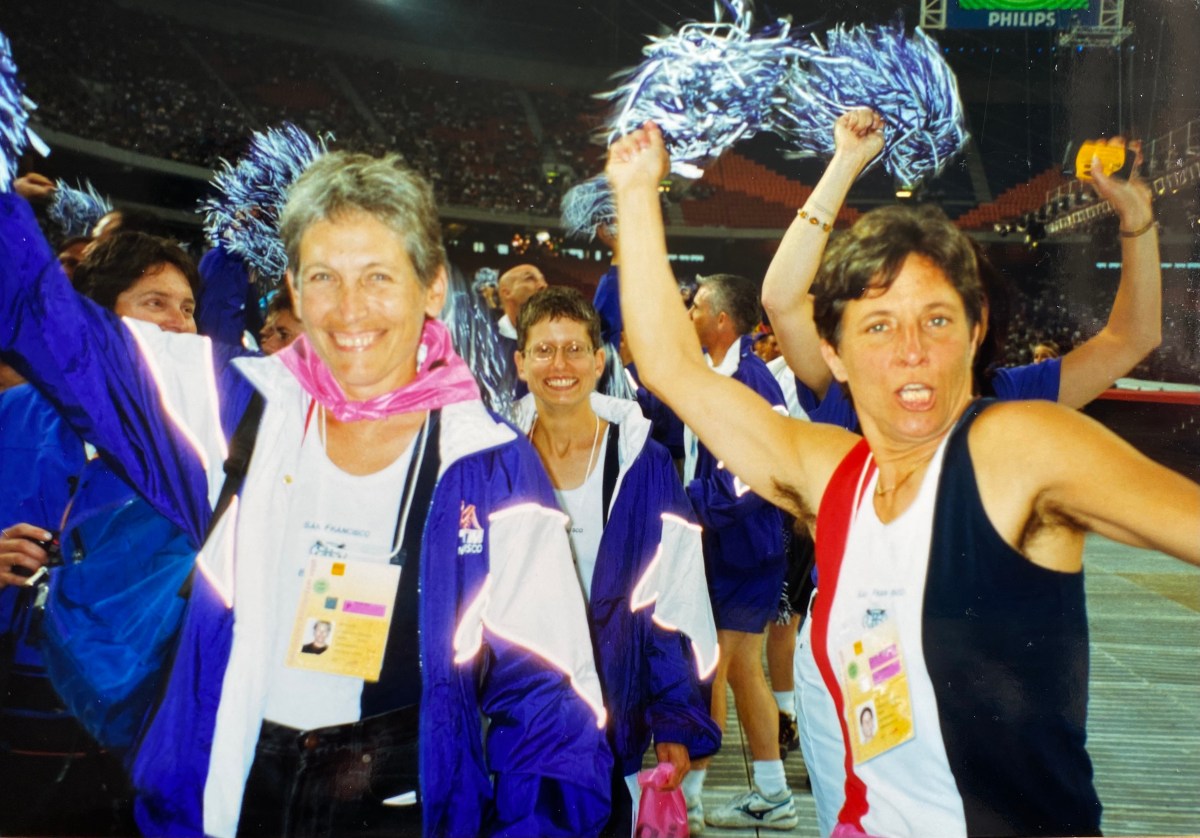
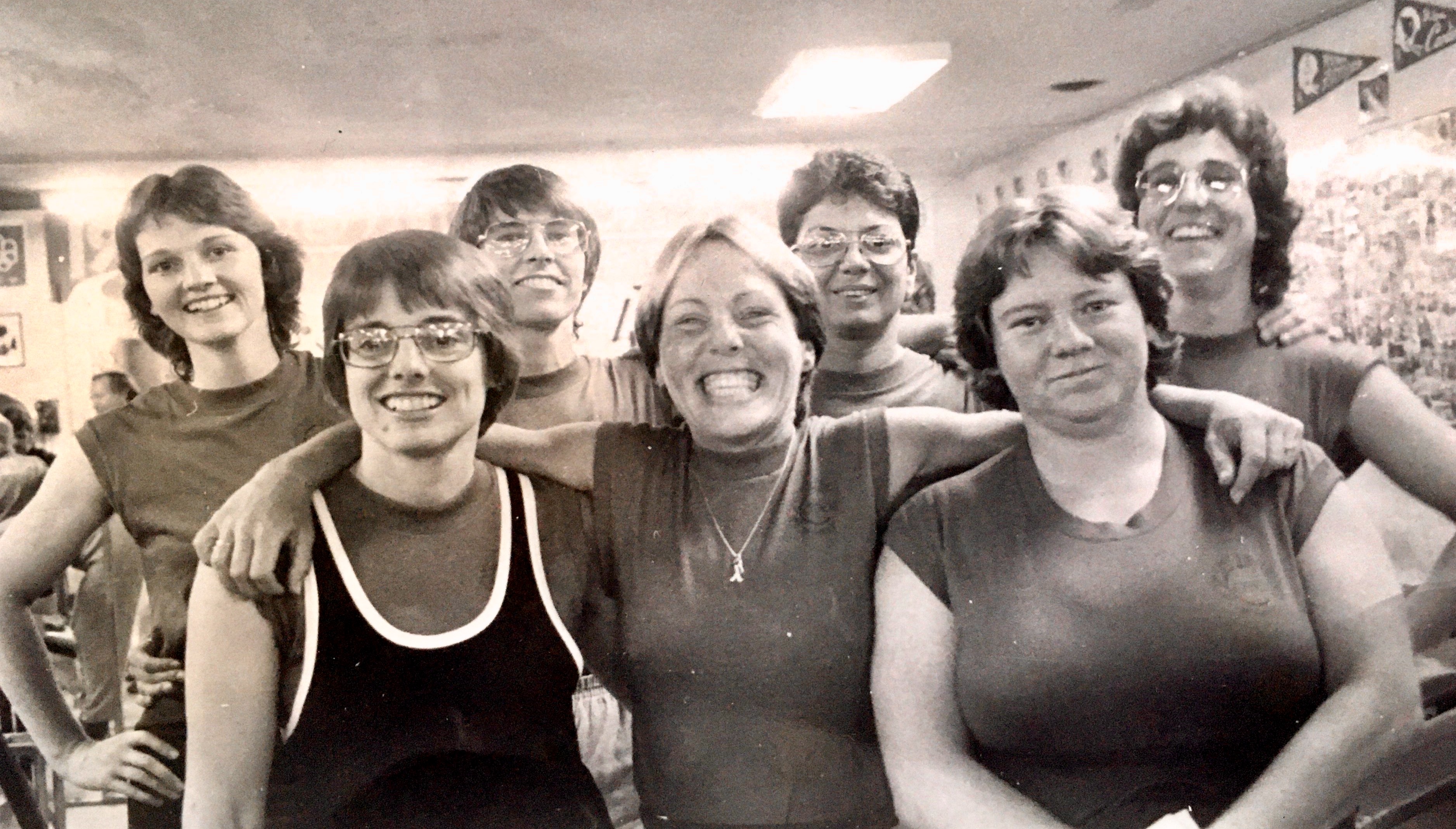
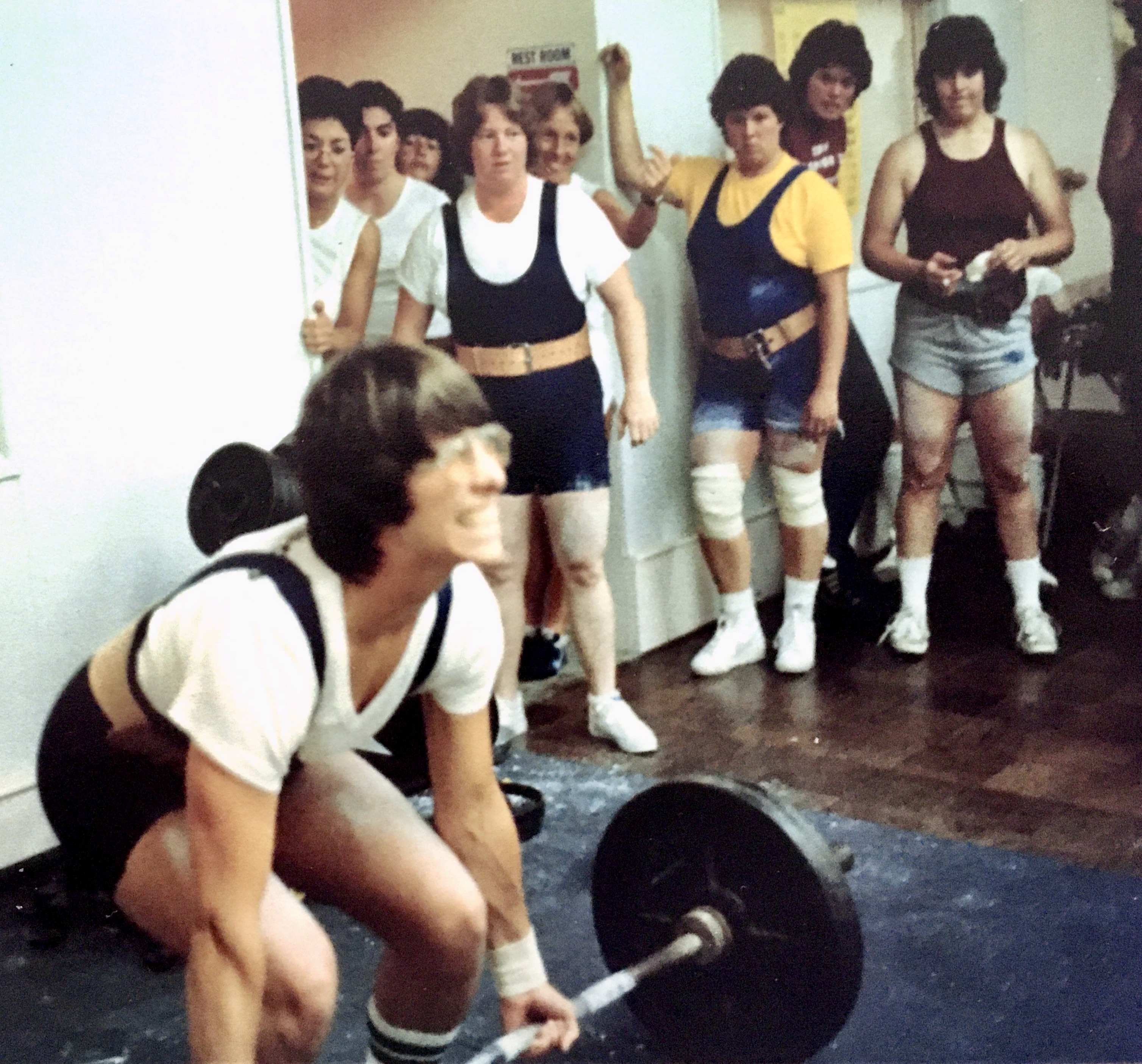
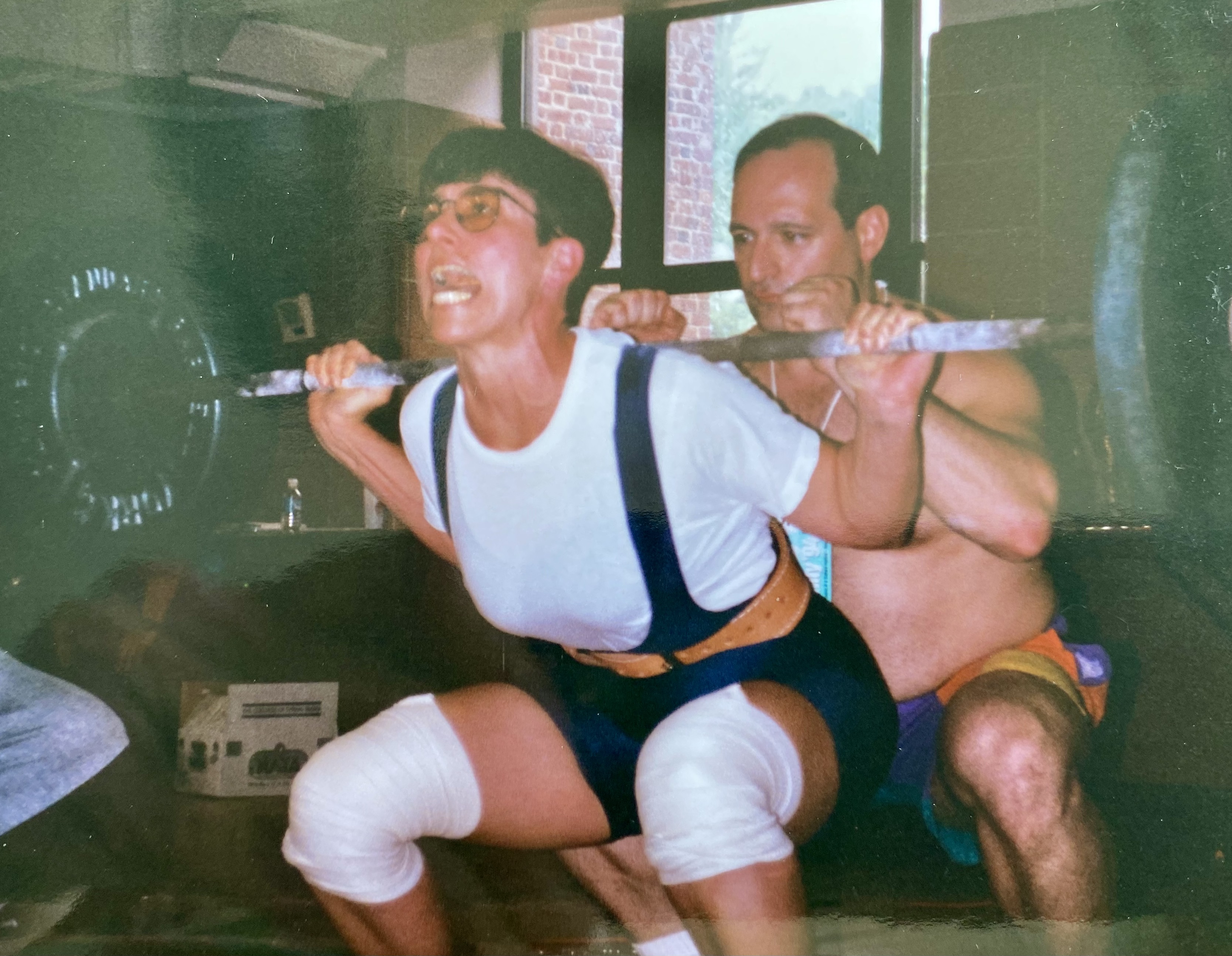
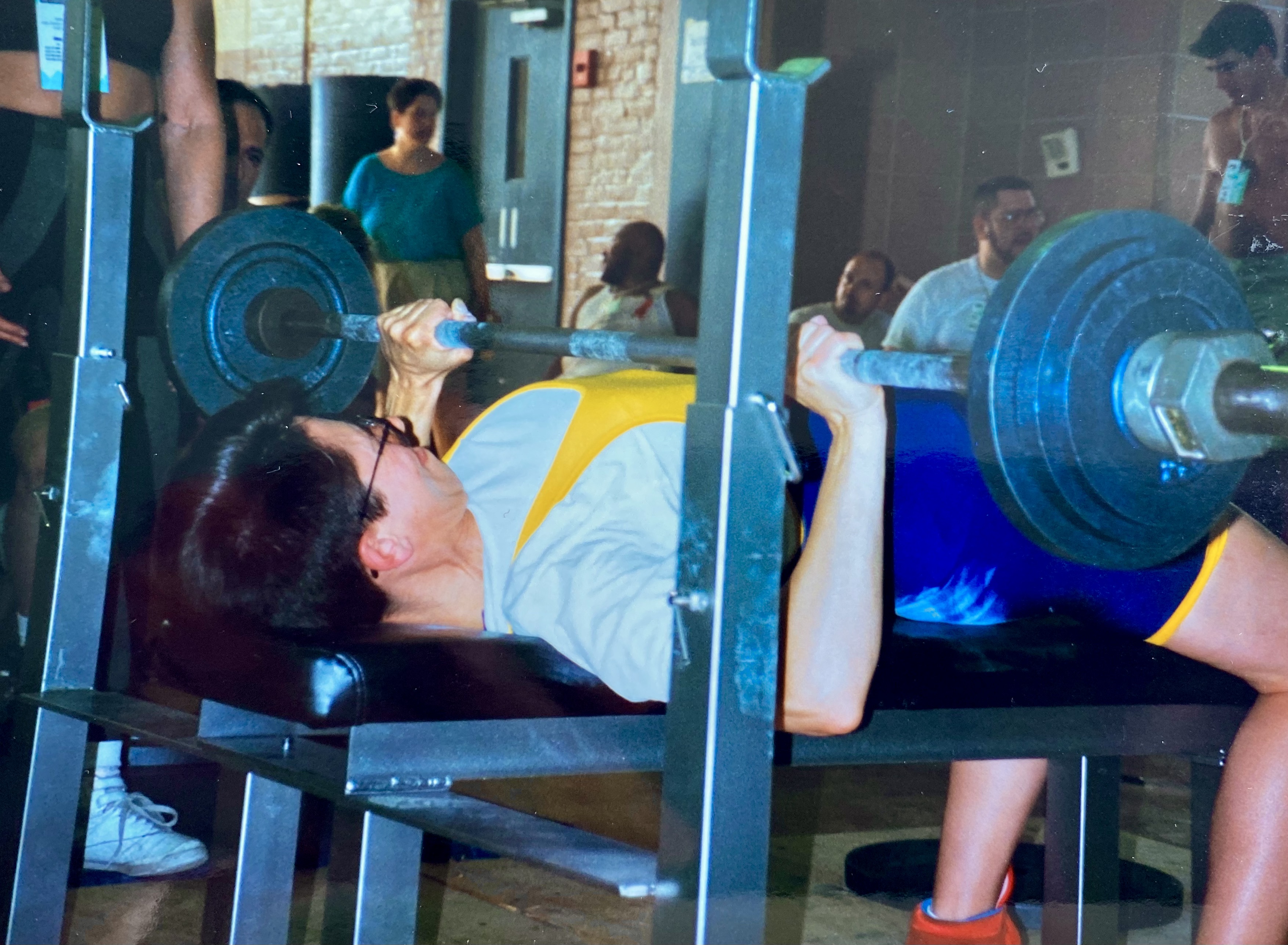
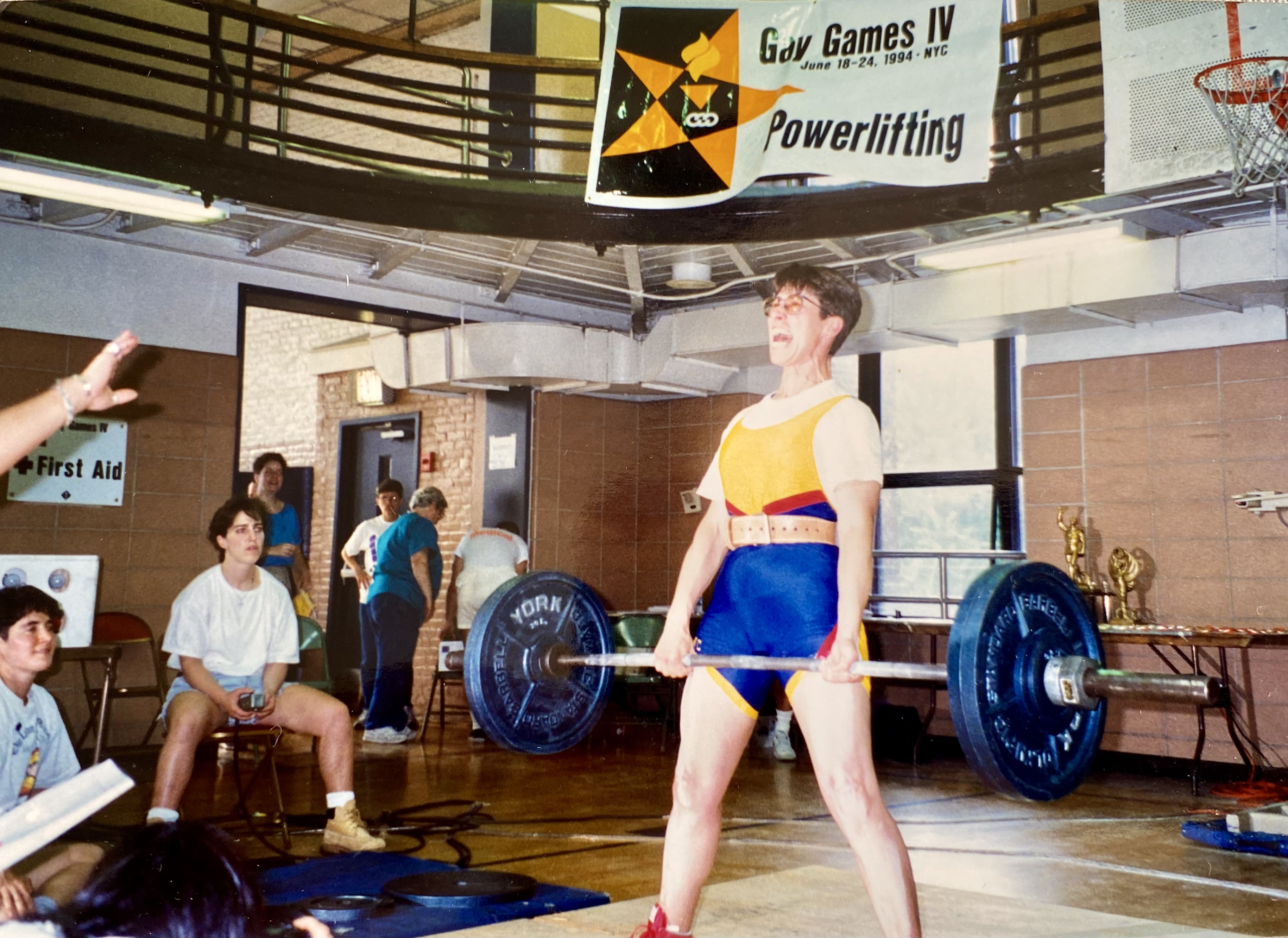
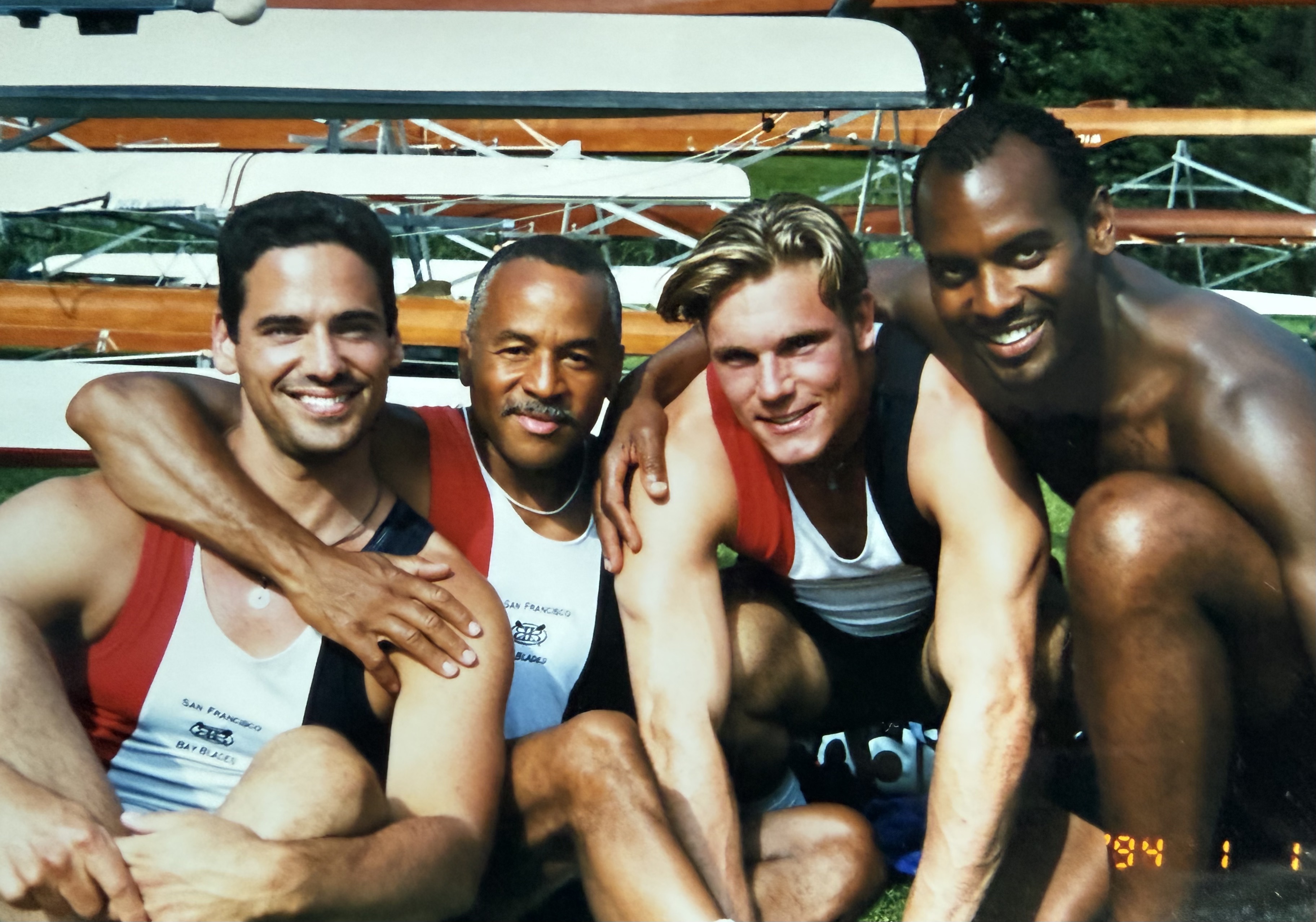
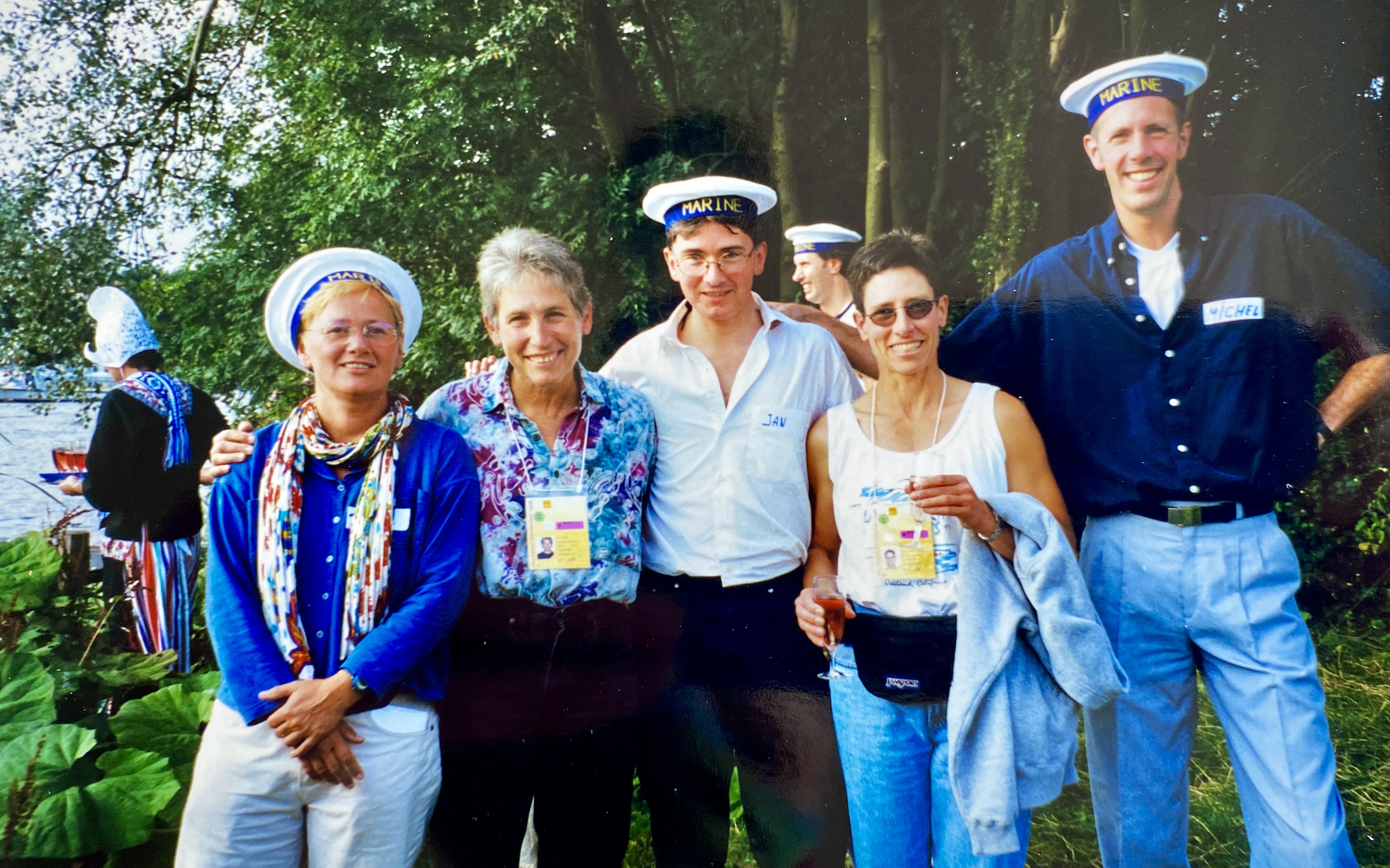


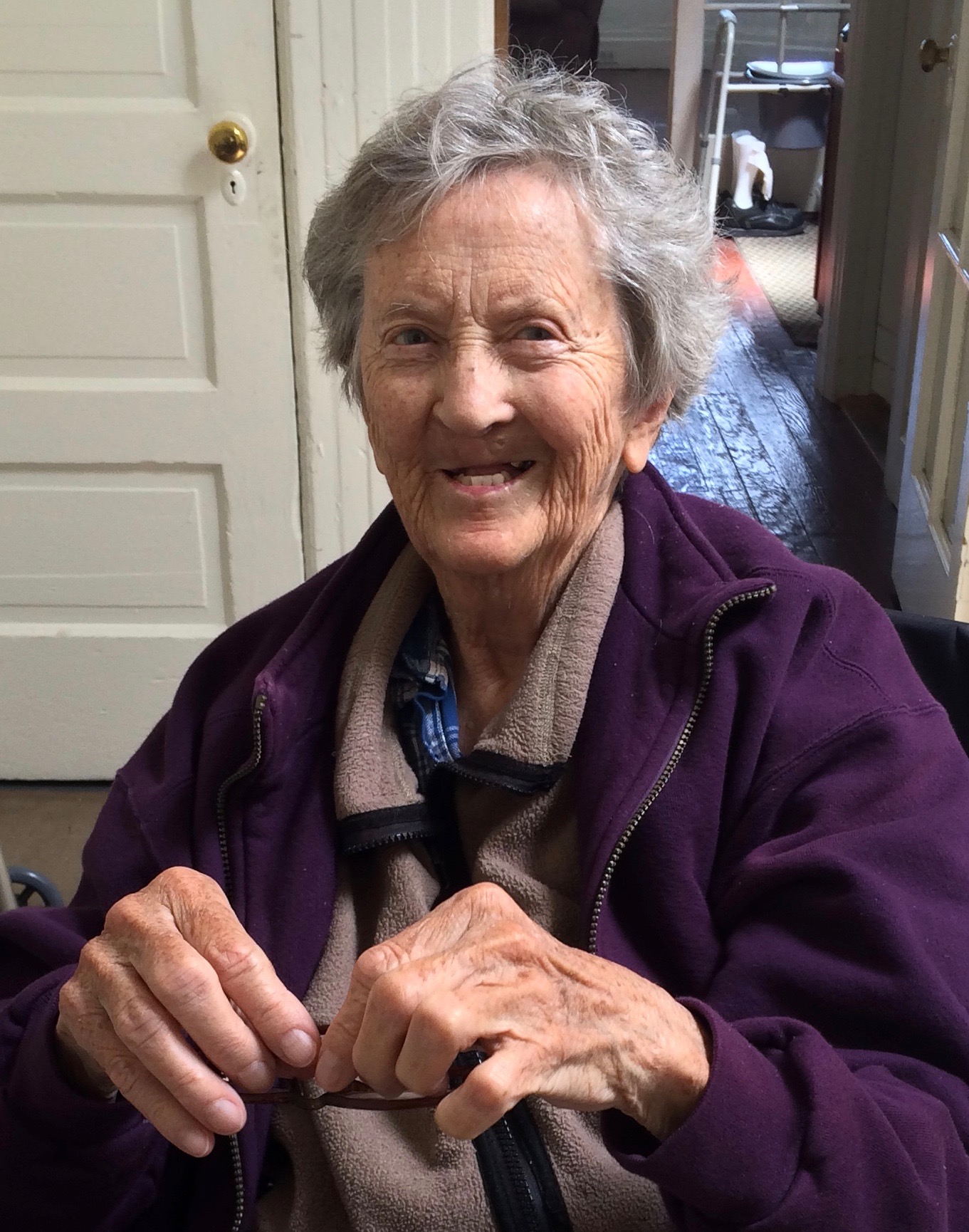
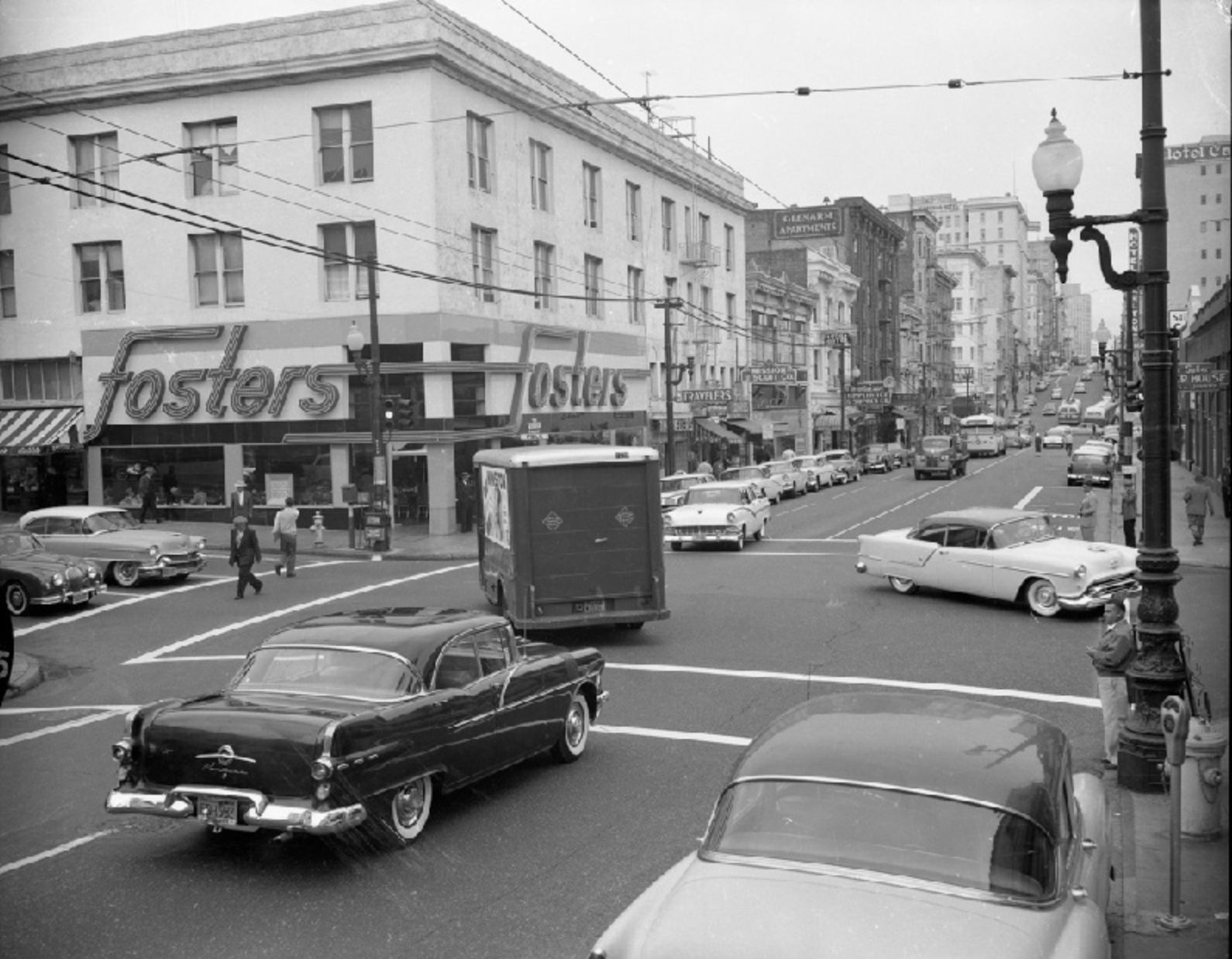


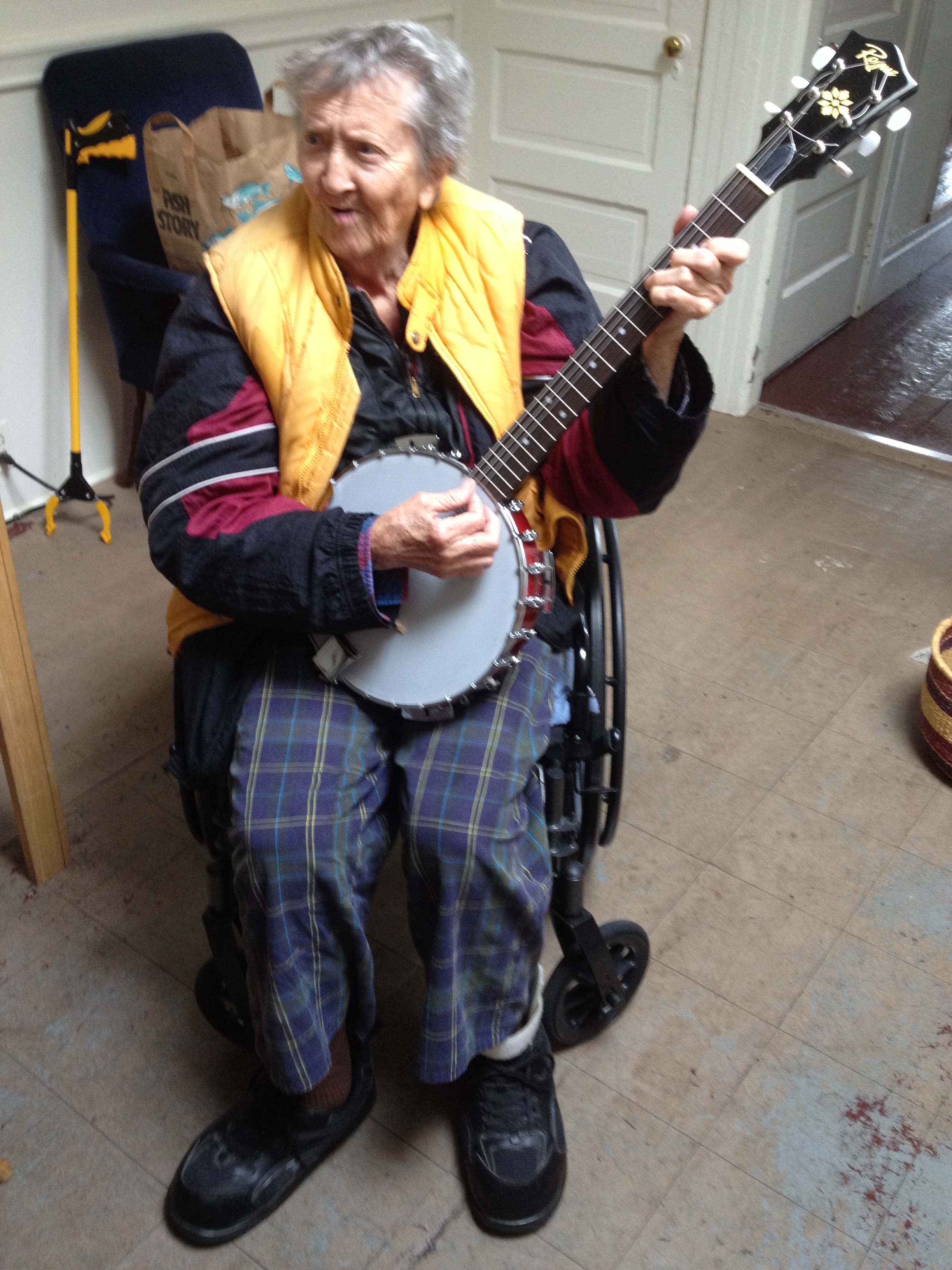

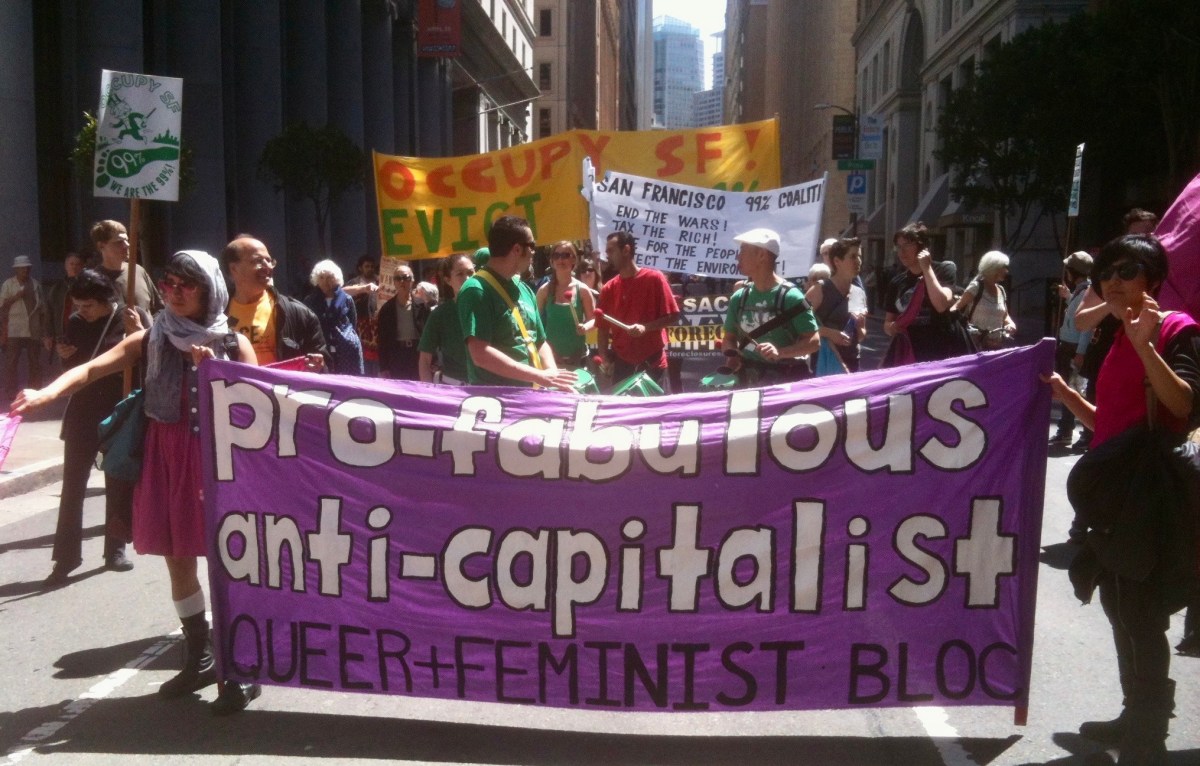


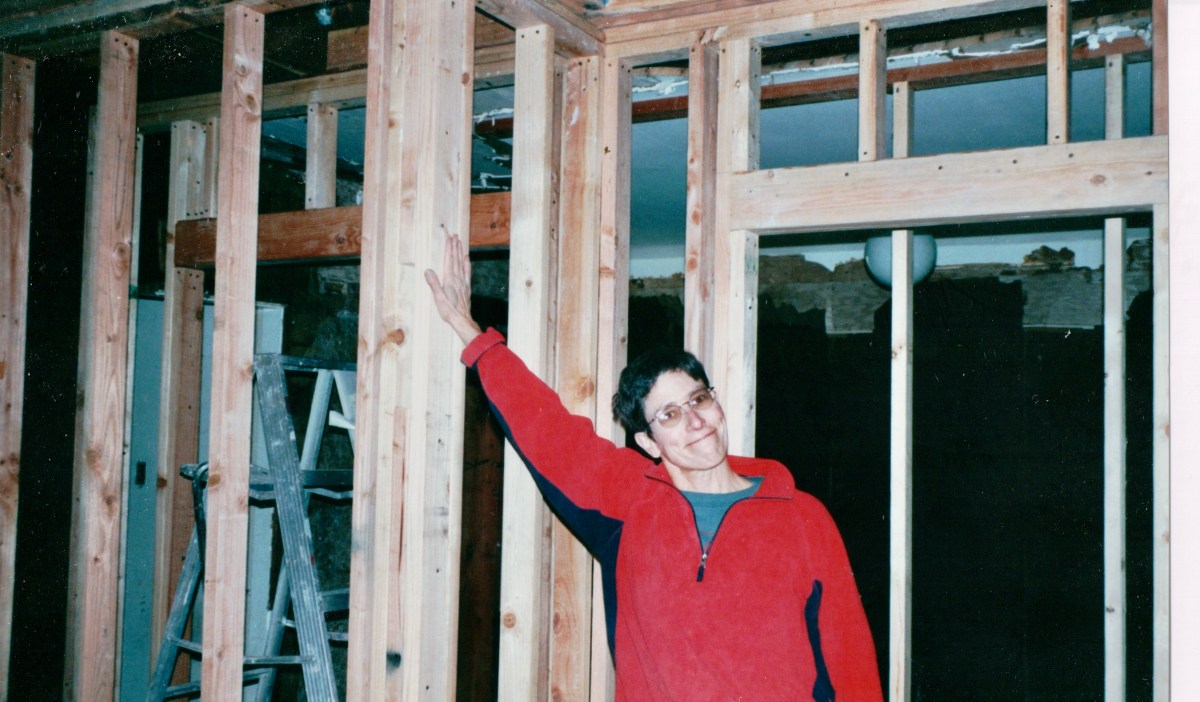


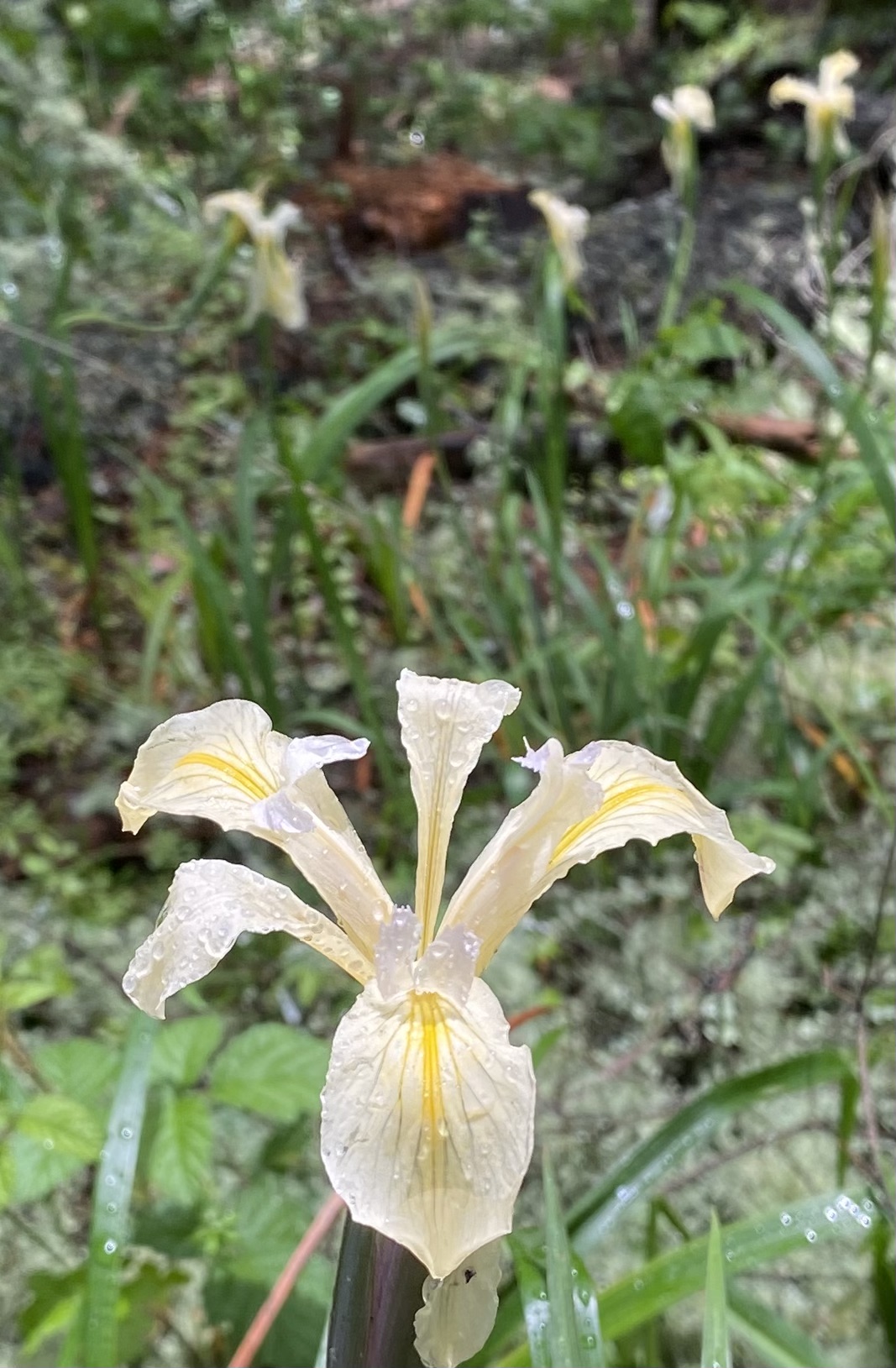

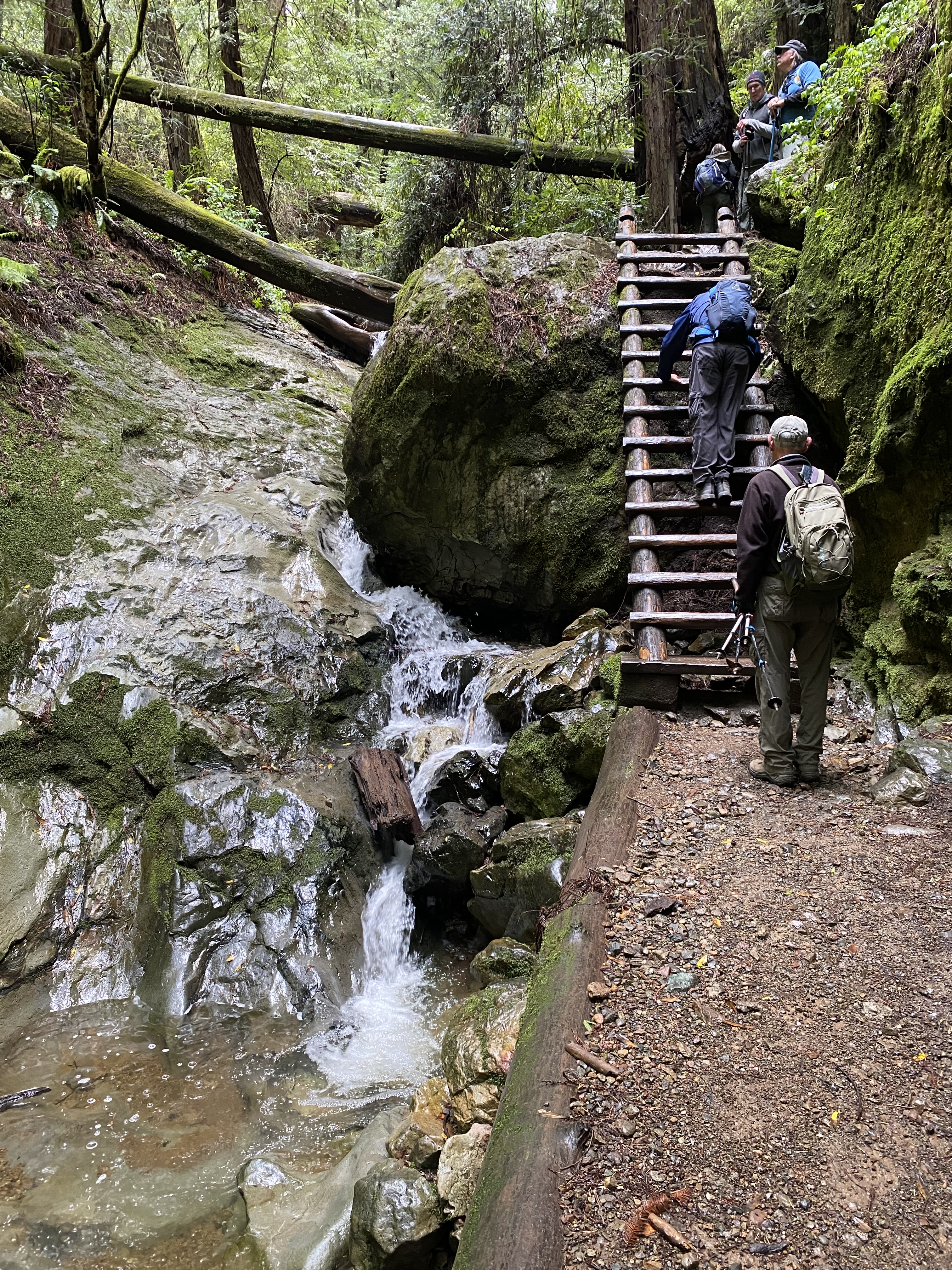

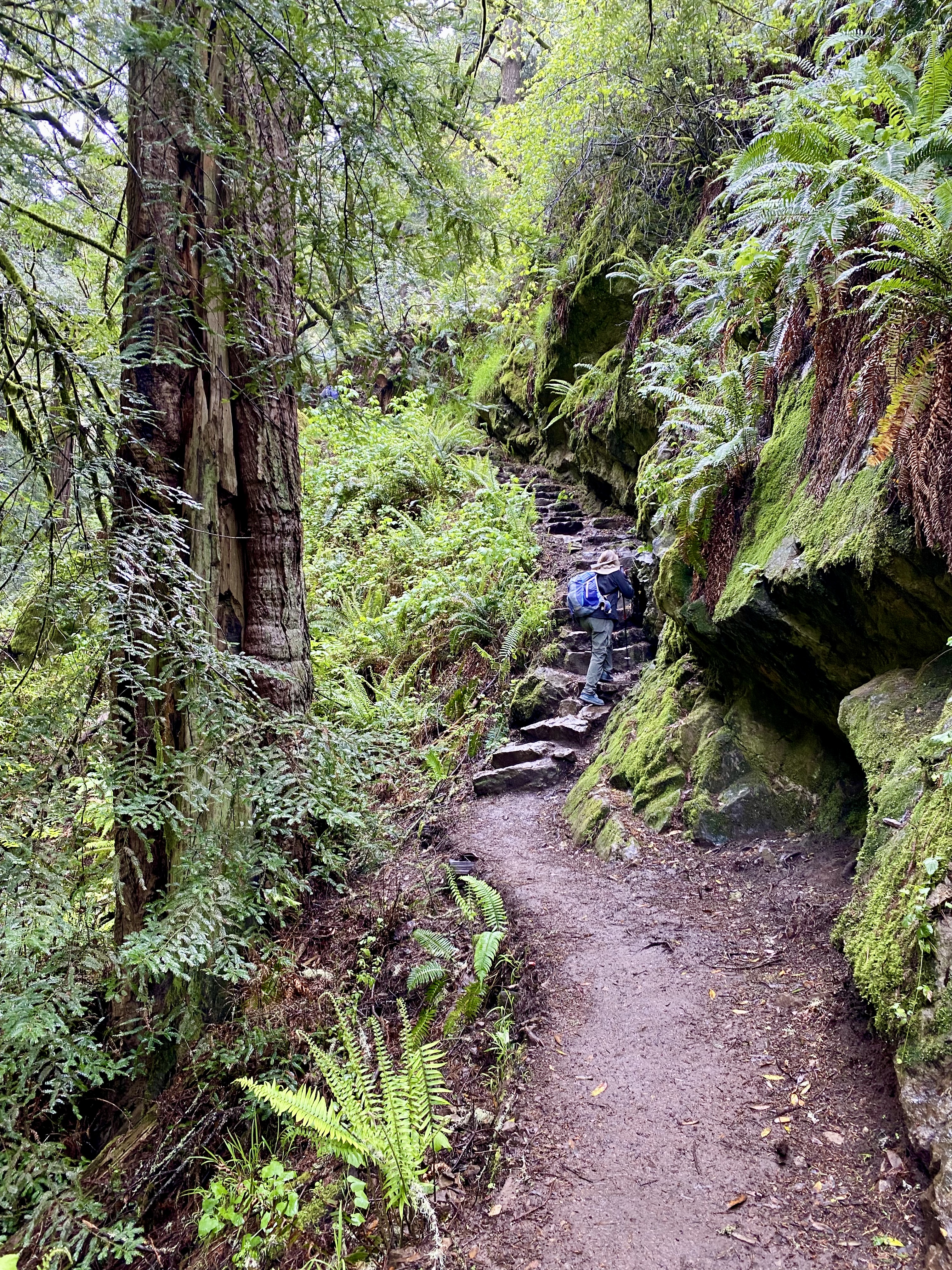

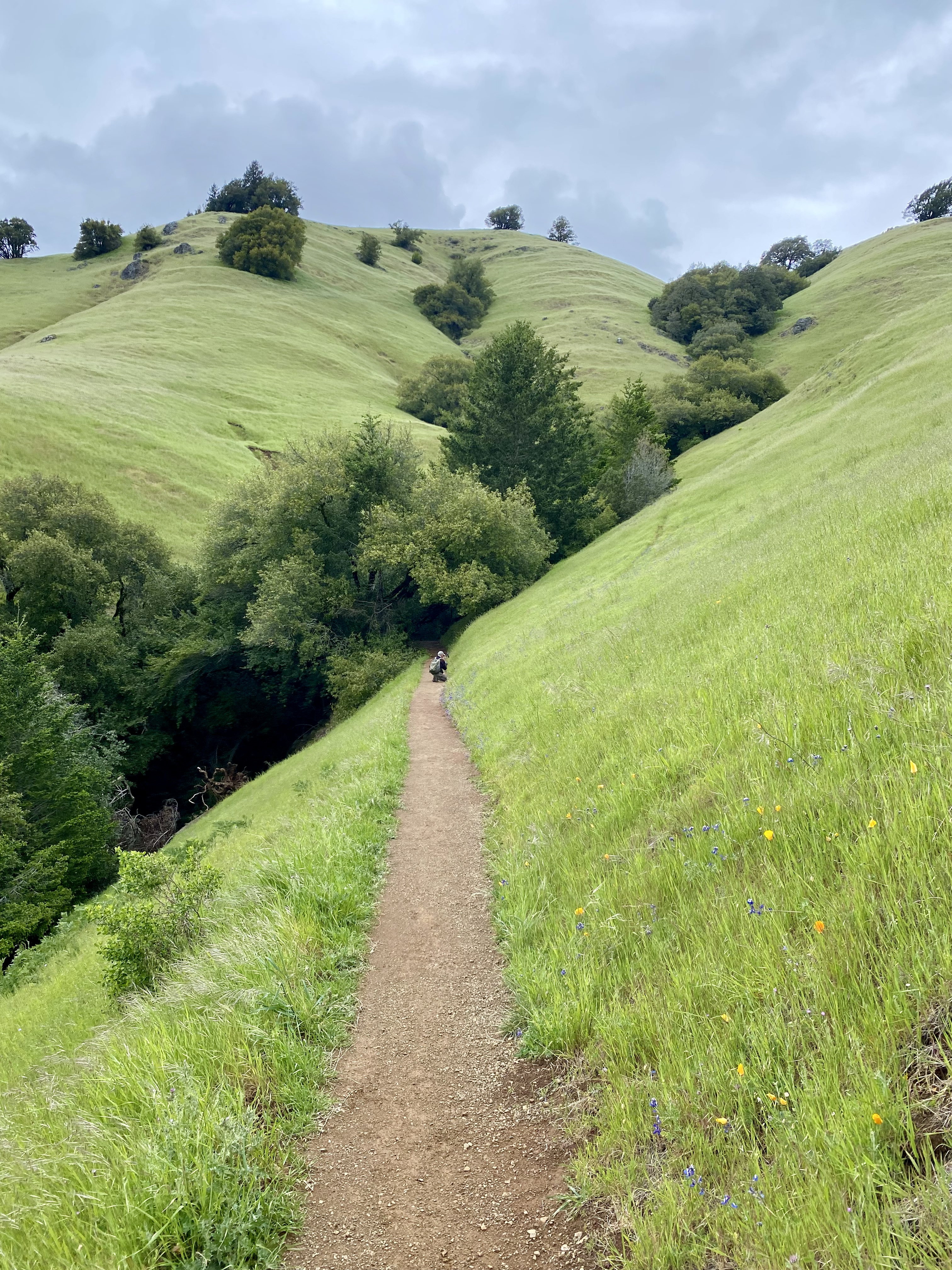
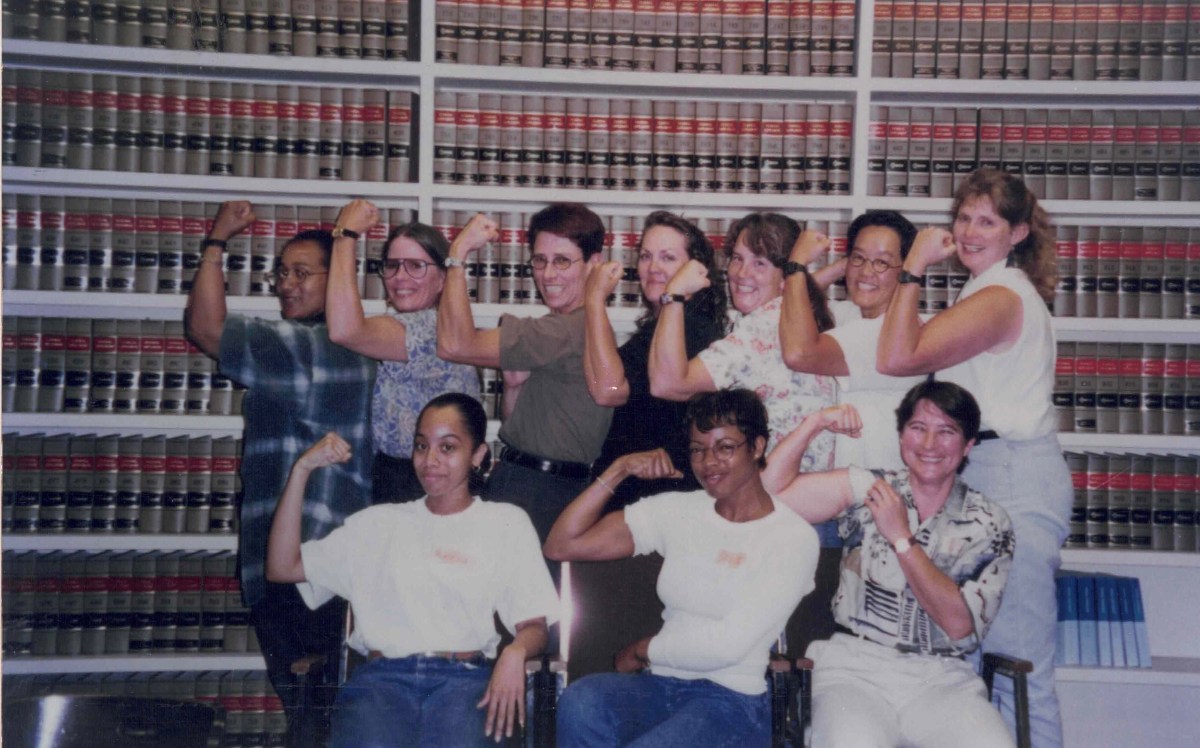
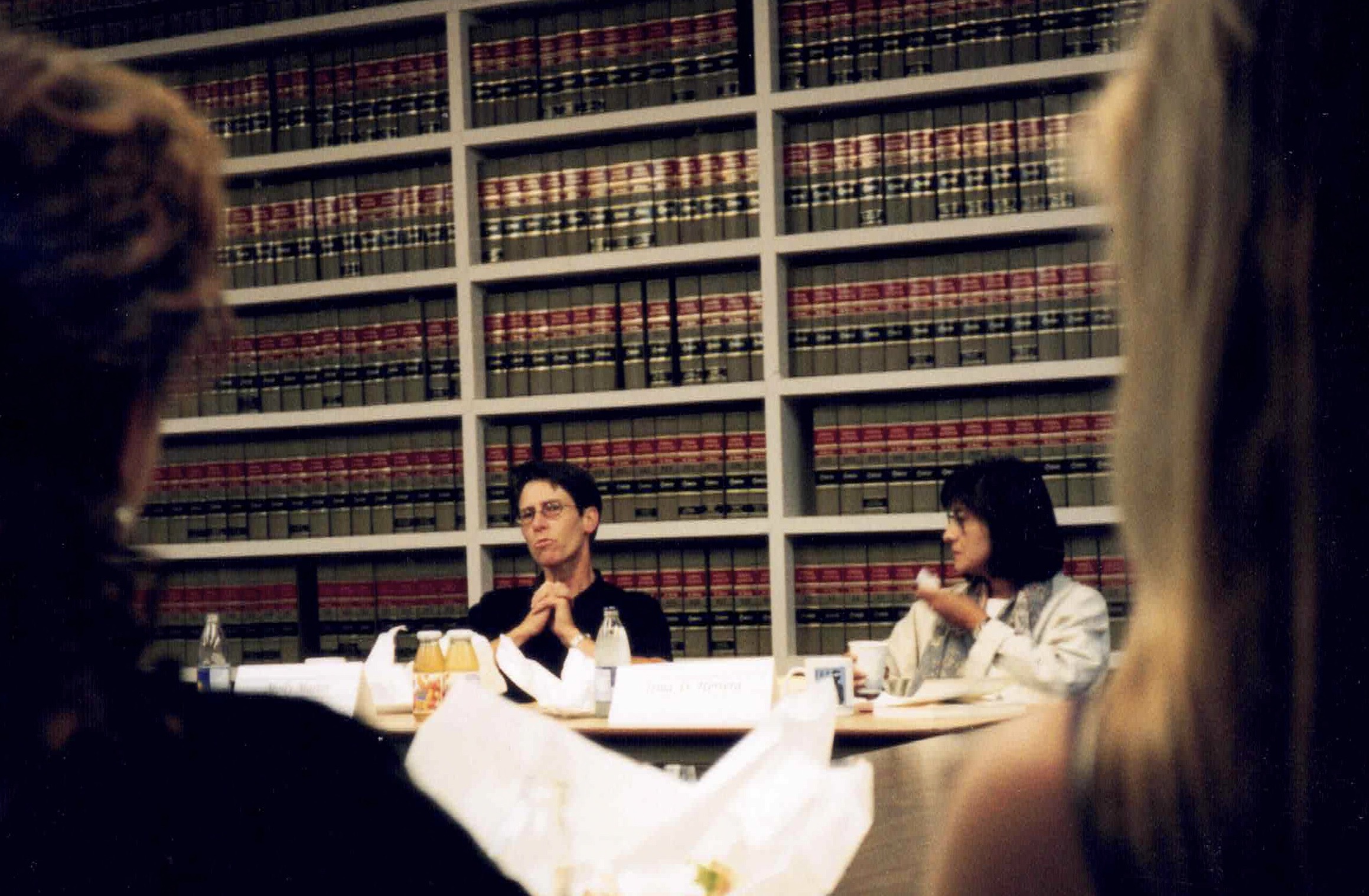




 tradeswomn musings