My Obsession

Why Did I Watch Heated Rivalry Over and Over?
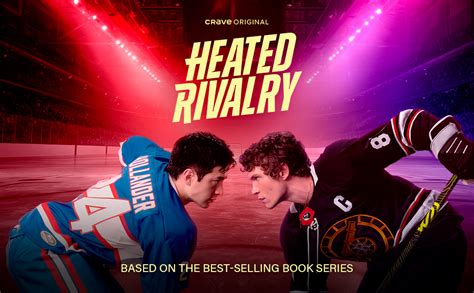
Photo: HBO

I recently read an article explaining why children watch the same movie over and over again. According to the experts, kids learn something new every time. Apparently that’s one reason Moana made a fortune. Parents thought they were buying one movie. Their children thought they were signing up for a lifetime subscription.

Reading that article, I had an uncomfortable thought.

Maybe I was a toddler.

For weeks I watched Heated Rivalry, the gay hockey romance, over and over and over. When I say “over and over,” I don’t mean twice. I mean enough times that HBO probably assumed I was conducting research.

Sometimes I even hid my obsession from my partner. Not because she would object—she can happily disappear into a video game for hours without coming up for air—but because I couldn’t explain it myself. Why was I, a supposedly rational adult, watching two hockey players fall in love for the tenth time?

I’ve loved television before. Bridgerton had its hooks in me for a while. But once was enough. Heated Rivalry was different.

First I watched the entire series several times. Then I watched just the episodes where things got interesting. Then I watched only “the good parts”—the scenes where the Canadian and the Russian stopped glaring at each other and started kissing. I wasn’t interested in hockey (although I couldn’t help learning some things about the sport). It was the romance I came for.

Eventually I wore myself out. One day I realized I was finished. Just like that, I stopped. It was as if my brain announced, “We’ve extracted everything we can from these people. Time to find another obsession.”

So what was that all about?

Part of it was educational.

I’m a writer, so I notice scripts. I admired the dialogue. I studied the pacing. I paid attention to character development. I noticed continuity errors. Wait a second—it’s supposed to be July. Why are those trees just beginning to leaf out?

I also learned things I genuinely didn’t know.

Frotting.

Who knew?

The show taught me something more important than sexual mechanics, though. It showed how carefully people edit themselves when they’re afraid the world won’t accept them. Both men play professional hockey, where toughness is practically a religion. Coming out isn’t just emotionally risky; it could threaten their careers.

Watching them slowly stop pretending was surprisingly moving.

And then came the biggest surprise of all.

Nobody died.

If you’ve watched queer films over the last fifty years, you know that’s not always a safe assumption. For decades Hollywood seemed convinced that gay people could fall in love, but only briefly, and preferably just before someone was murdered or succumbed to a tragic disease. Happiness apparently violated movie rules.

Heated Rivalry broke that tradition. It let two gay men have something almost shocking.

A happy ending.

Still, that doesn’t entirely explain why I watched it enough times to qualify as an unpaid intern.

Fortunately, I wasn’t alone.

TikTok is full of people confessing exactly the same behavior. Thousands of us were asking, “Why can’t I stop watching this?” One woman offered an explanation I hadn’t considered. She loved the absence of sexism. There wasn’t the familiar tug-of-war that often shapes heterosexual romances. These were two equals figuring things out together.

That made sense to me.

Romance has spent years sitting at the kids’ table while westerns, cop shows, war movies, and superhero epics got all the respect. Romance was dismissed as something women liked, as though half the human race isn’t a respectable audience.

Maybe we’ve had that backward.

The audience for Heated Rivalry is mostly women, but there are plenty of men watching, too. Maybe they’re seeing something they don’t get very often: masculine characters who are strong without being emotionally constipated. These men compete, fight, swear, and occasionally bleed, but they also talk about their feelings, admit when they’re afraid, and love each other without apologizing for it.

That’s a version of masculinity worth watching.

Maybe children really do rewatch the same movie because they learn something every time.

Adults probably do, too.

I still don’t really understand my obsession, but it’s a relief to know that it happens to adult humans besides just me. Apparently, repeatedly watching episodes can trigger dopamine release, making it addictive and rewarding. Psychologists tell us we can form parasocial relationships with characters on TV, empathizing with characters and returning for comfort and connection. They say it’s perfectly normal to become attached to fictional characters because of how our brain recognizes human emotion. Living vicariously through characters’ experiences can offer insights into ourselves.

Besides, if I happened to learn what frotting was along the way, that’s just a bonus.
Gay Games Lifted Up Women’s Sports

Heated Rivalry has got me thinking about the gym among other things

Watching Heated Rivalry, a series about gay hockey players, stirred up memories of my own athletic life. I competed in the Olympics too—the Gay Olympics. Well, we couldn’t call them that after we lost the right to the name in court, so they became the Gay Games. Alliterative. Less grand. Same spirit.

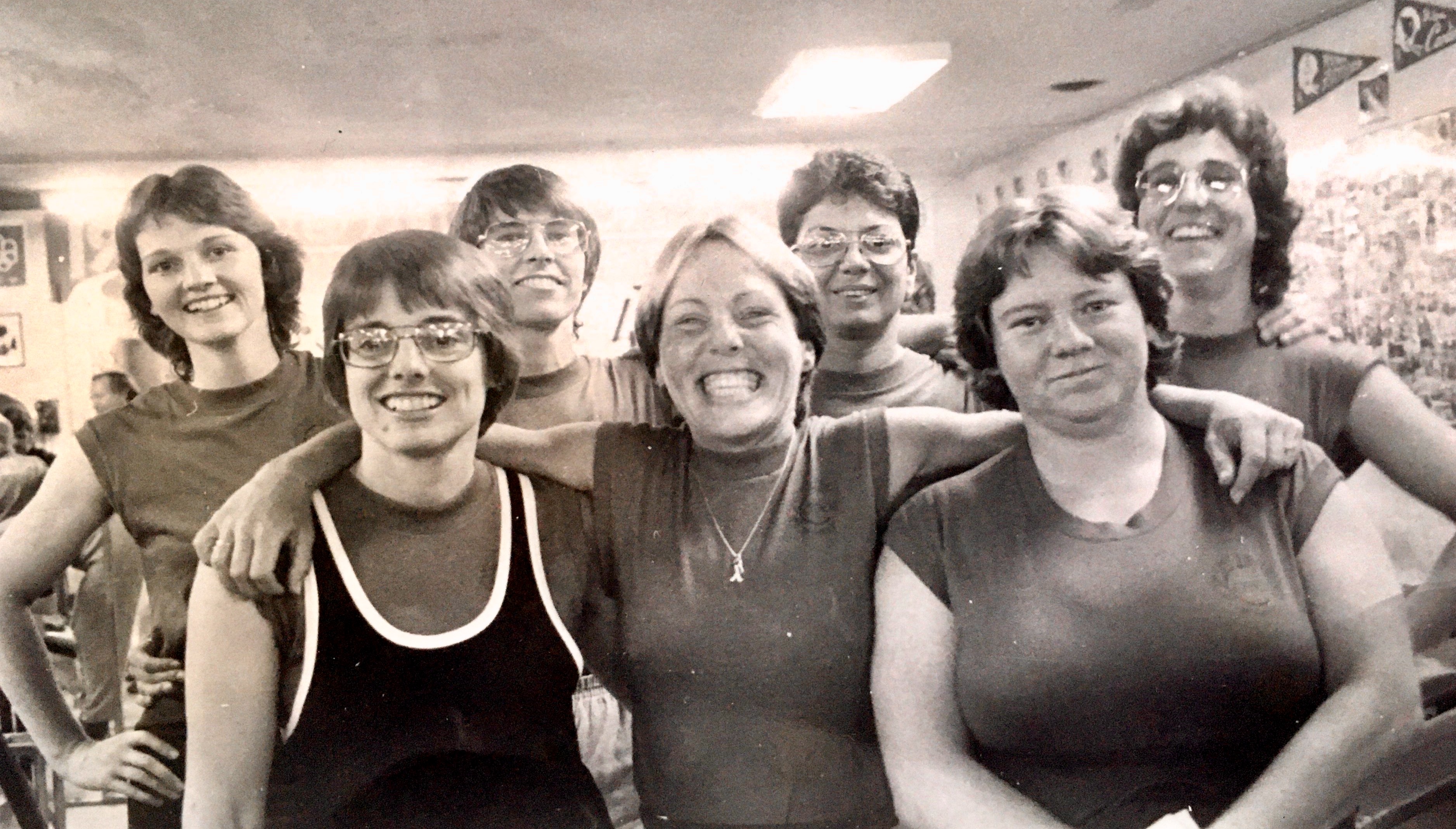
Me and my team of lesbian power lifters, Gay Games 1982

At the Gay Games in different years, I was a powerlifter, a wrestler, and a rower. But more than that, I was part of something new. The Gay Games didn’t just raise the aspirations of queer athletes; they lifted up women’s sports in ways the mainstream world hadn’t yet imagined. Women had never competed in powerlifting at the Olympics before women competed in the Gay Games. When my small crew of gym-going lesbians formed a team to compete in the first Gay Games in 1982, we were pioneers. Women’s powerlifting wouldn’t enter the official Olympics until 2000, at the Sydney Games. We were nearly two decades ahead of the curve. Of course it was us lesbians.

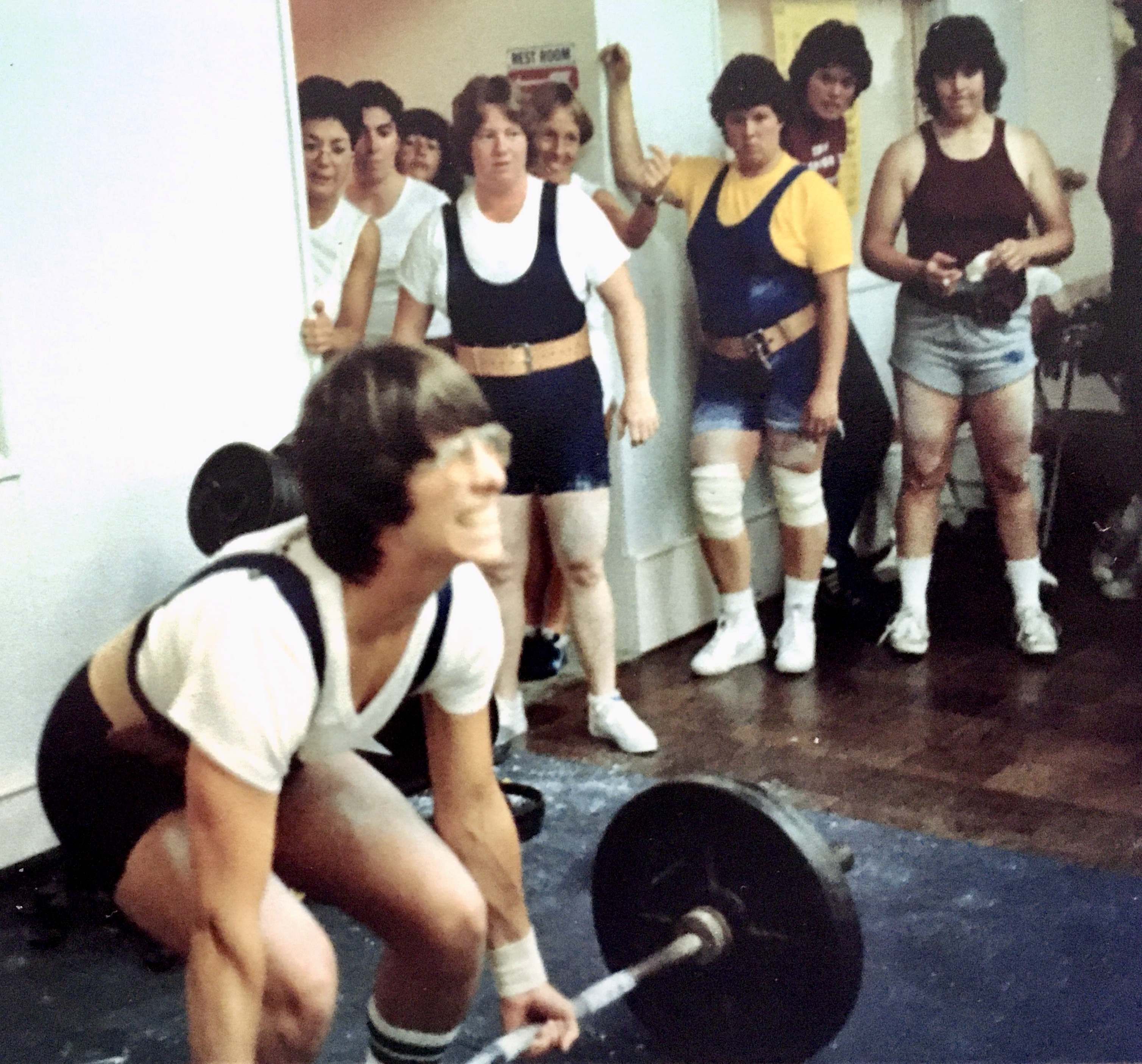
Teammates watch my dead lift 1982 Gay Games

My journey into weightlifting began in San Francisco in the mid-1970s, when I was working construction and needed to get stronger. I don’t remember exactly how the idea came to me—women simply didn’t lift weights back then—but I started going to the gym with my friend Jill for moral support. At first, we trained at the Sports Palace in the Mission, which had been an all-men gym. They didn’t even have a women’s changing room or bathroom. The owner tacked up a sheet of plywood in the corner so we could change behind it.

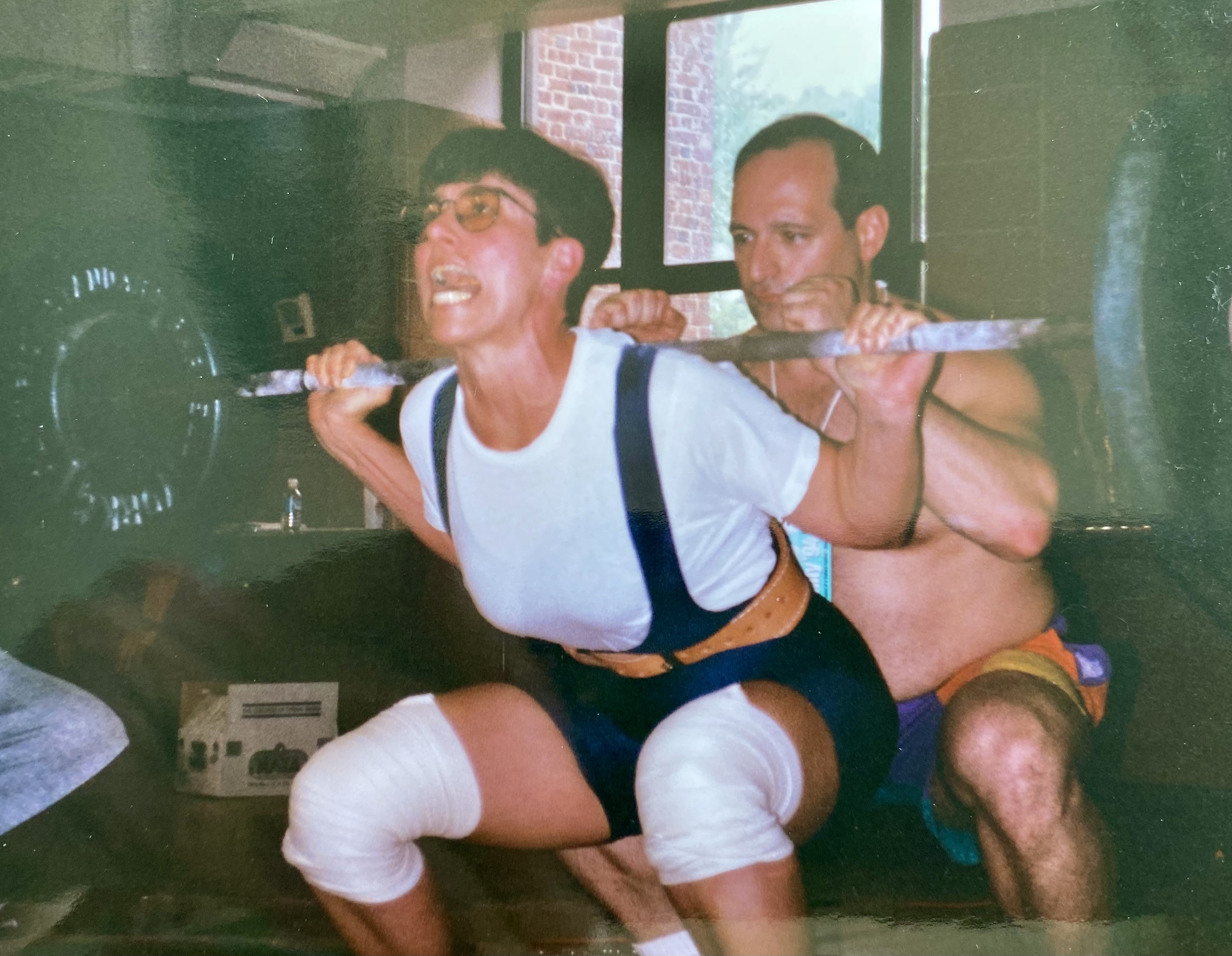
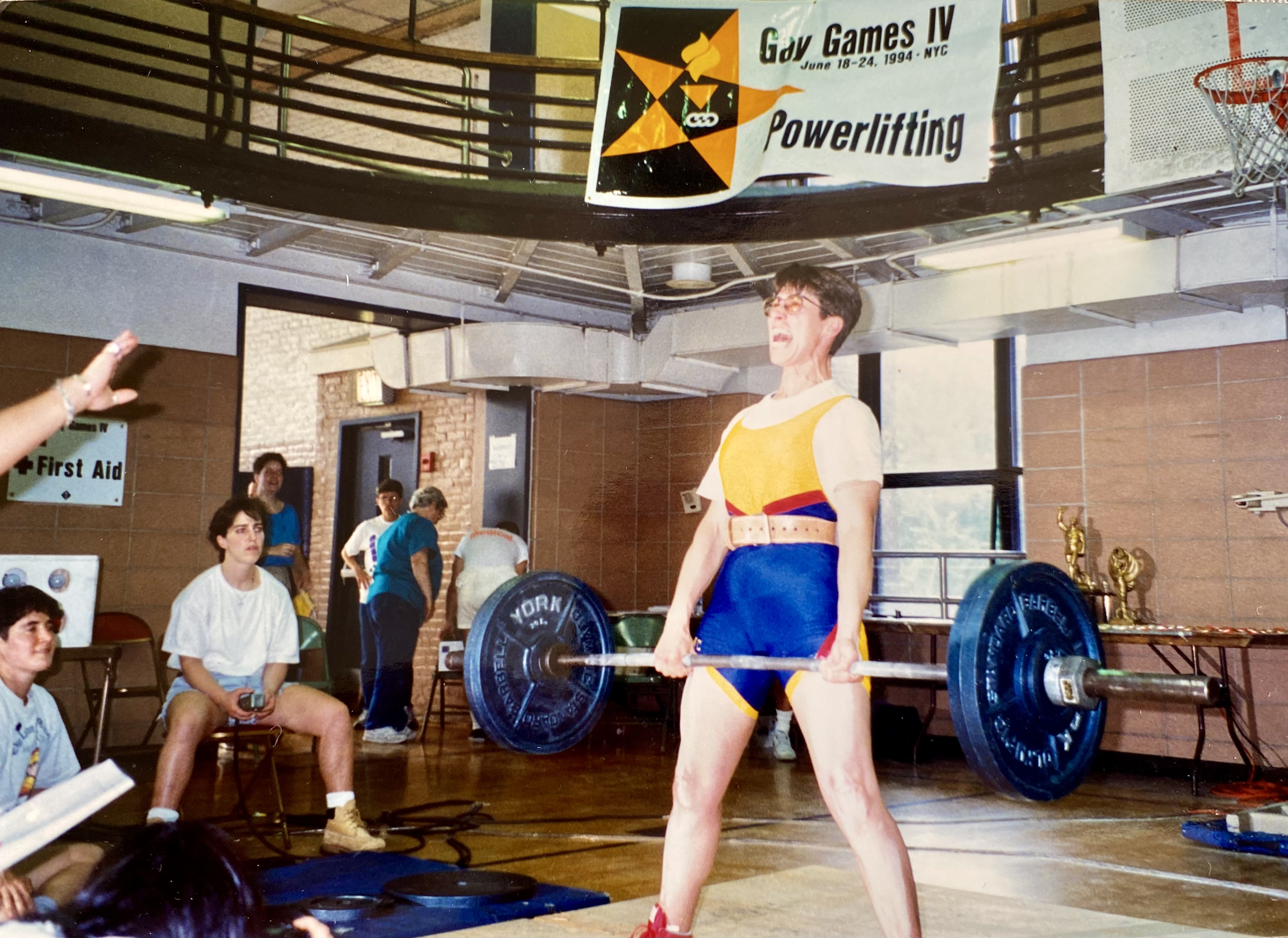
The squat, Gay Games NYC 1994

The men didn’t exactly welcome us. They didn’t like the sound of women’s voices, or having to share equipment, or having us “work in” on their sets and move their heavy weights. So when Betty Doza opened the Women’s Gym in 1979, in a storefront next to the Swedish American Hall on Market Street, I crossed over immediately.

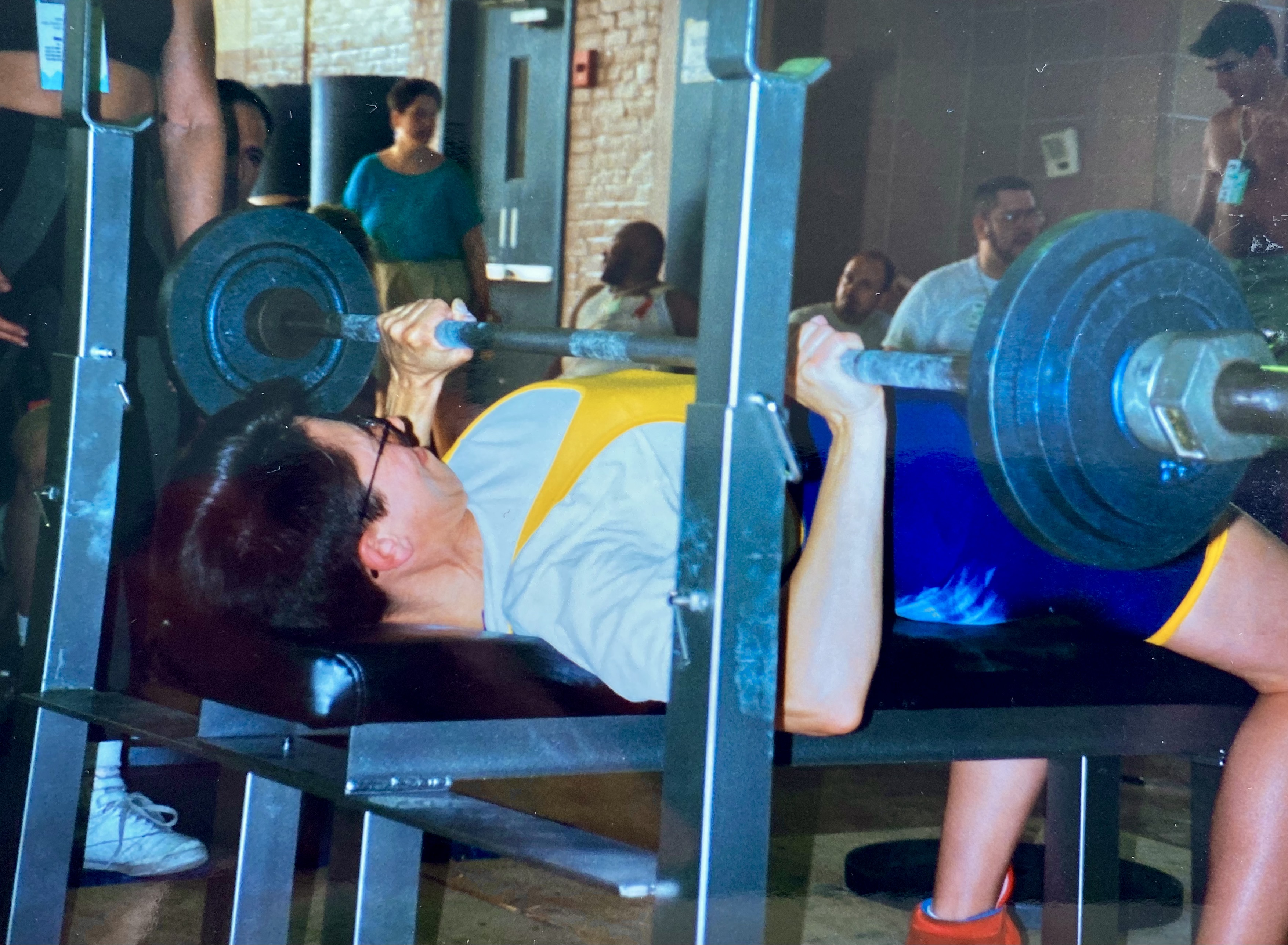
Bench press Gay Games NYC 1994

The Women’s Gym had shiny new machines upstairs, but the real action was in the basement where the serious lifters gathered. Until then, I had only learned the three Olympic power lifts—bench press, squat, and deadlift—because those were the only lifts women were officially allowed to compete in. But downstairs, women were doing the clean and jerk and the snatch. These were lifts we’d been banned from performing, so we taught each other proper form. Coaching was essential. Done wrong, those lifts could seriously injure you. It felt like sneaking gin in a Prohibition-era speakeasy—dangerous, forbidden, intoxicating.

Dead lift Gay Games NYC 1994. I had changed to a wide stance.

The Women’s Gym became a training ground for women who wanted to be firefighters, cops, and competitive athletes. There are two very different branches of weightlifting: bodybuilding and powerlifting. Bodybuilding is about appearance—sculpted, ripped muscles, thinness, aesthetics. Powerlifting is about strength: how much weight you can move in three lifts. You can be fat and be a powerlifter. That distinction mattered.

I competed in the 148-pound class, usually weighing about 144, and spent my time trying to gain weight. Every pound meant more leverage, more power. While other women obsessed over dieting, I complained that I couldn’t put weight on. They thought I was strange.

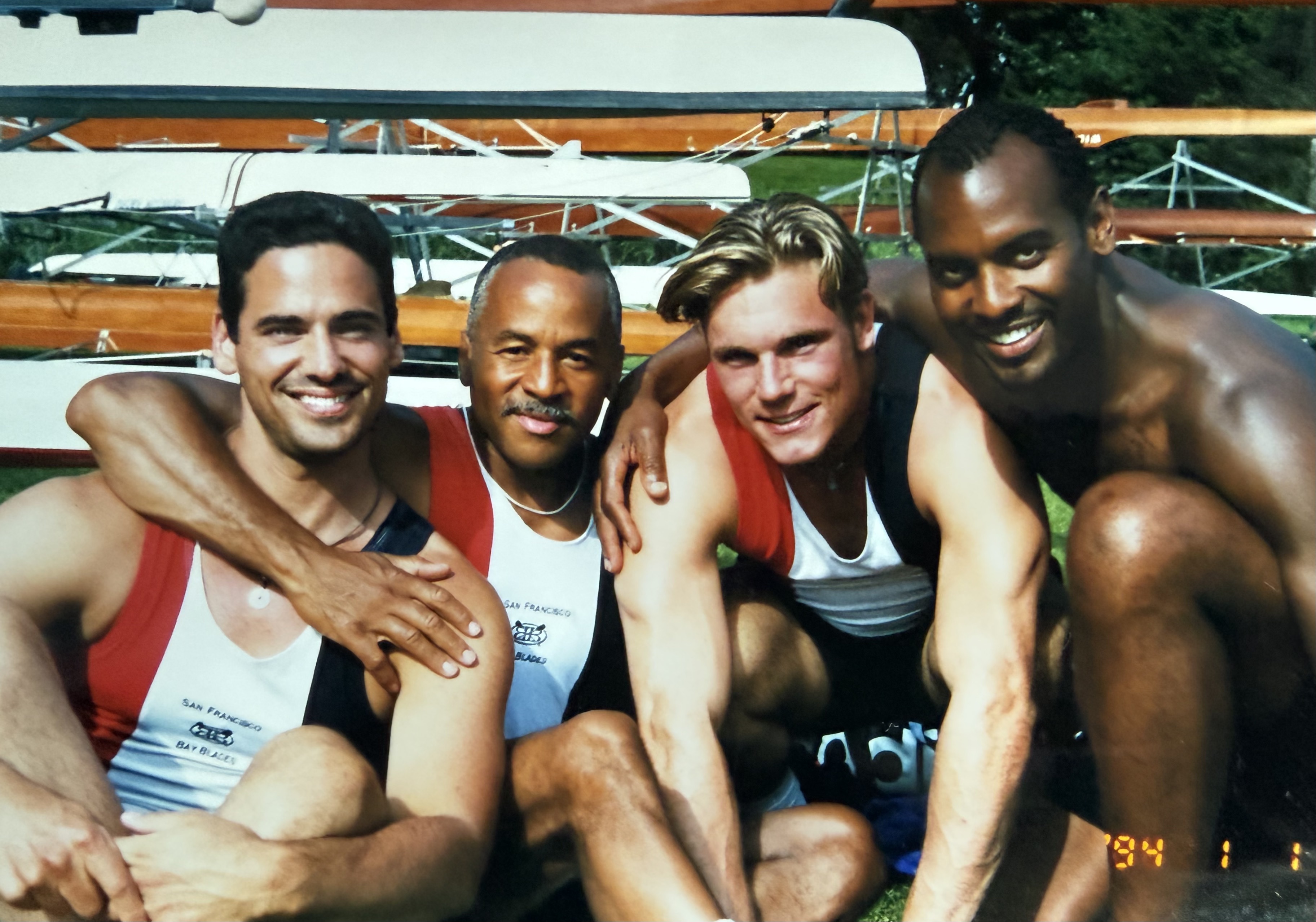
My rowing team, the Bay Blades, had some cute men too.

After workouts, we crossed Market Street to Leticia’s, a gay Mexican restaurant, for margaritas and nachos. We were strong, and we knew it. We were powerful. We were a team. There were about ten of us training together for the 1982 Gay Games in San Francisco. I’ve forgotten most of their names now, but I remember the feeling: solidarity, purpose, pride.

The 1982 Gay Games may have been among the first major powerlifting competitions for women anywhere. That year marked the beginning of what would become an international movement. We didn’t really care about medals—we were just thrilled to compete, to exist publicly as strong queer women. But I did come home with gold, besting a woman from the Netherlands.

Twelve years later, in 1994, I competed again as a powerlifter at the Gay Games in New York City. I was lifting more than I had in ’82, but the field had changed completely. The women I competed against were world-class athletes, capable of lifting three times my best numbers. Women’s powerlifting had exploded!

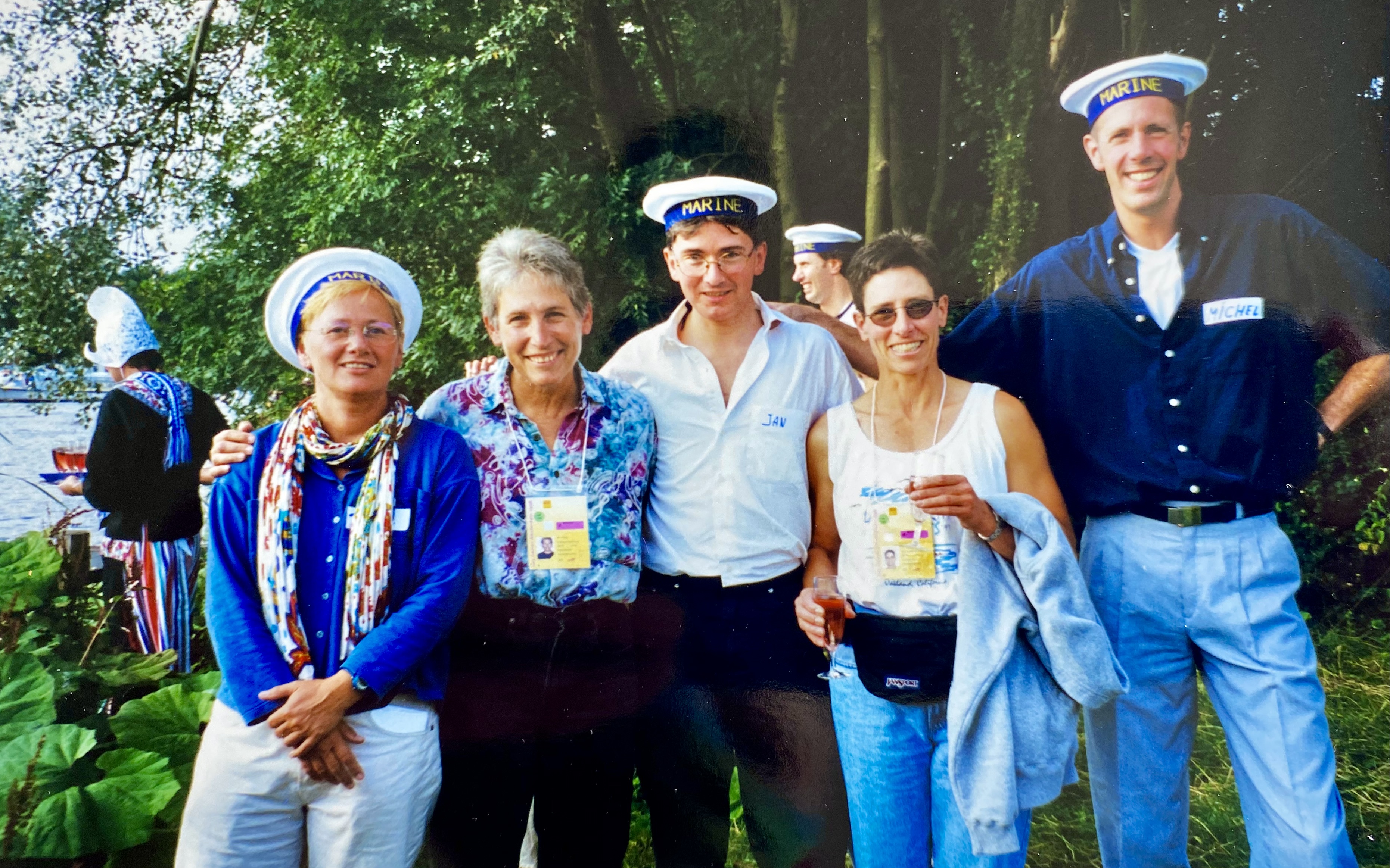
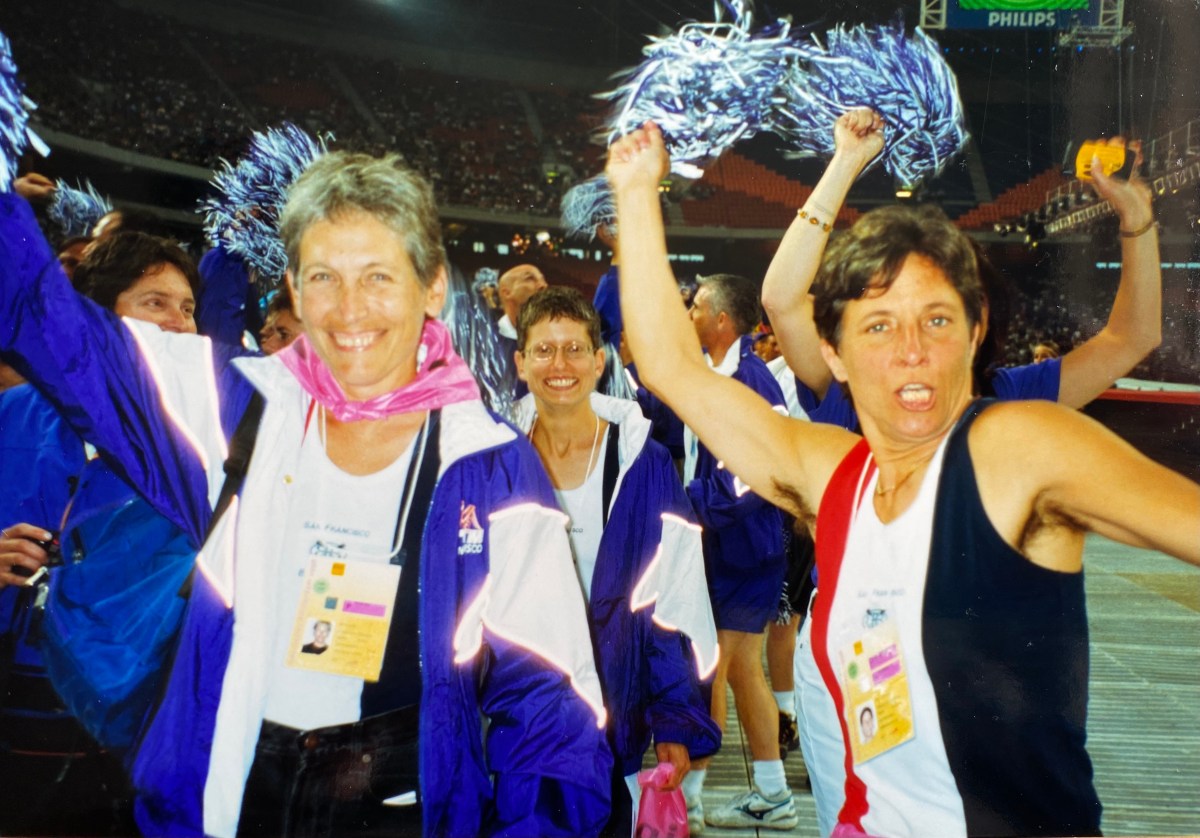
In Amsterdam the Dutch rowers greeted us in navy caps and with champagne. Nancy Stoller (L) and me with some of our hosts. 1998

The Women’s Gym didn’t survive. Men sued, claiming discrimination, and eventually won. But for a few glorious years, it was a sanctuary—a place where women could build strength, community, and defiance. The Gay Games and the Women’s Gym together cracked open a door that could never again be closed.

We weren’t just training our bodies. We were reshaping what women, and especially queer women, were allowed to be.

  • In the top picture, marching into the stadium are Nancy Stoller (L) and Helen Vozenilek of the Bay Blades rowing team. Amsterdam 1998.