
The Military’s Recognition vs. Red Cross Restrictions
My Mother and Audie Murphy Chapter 123
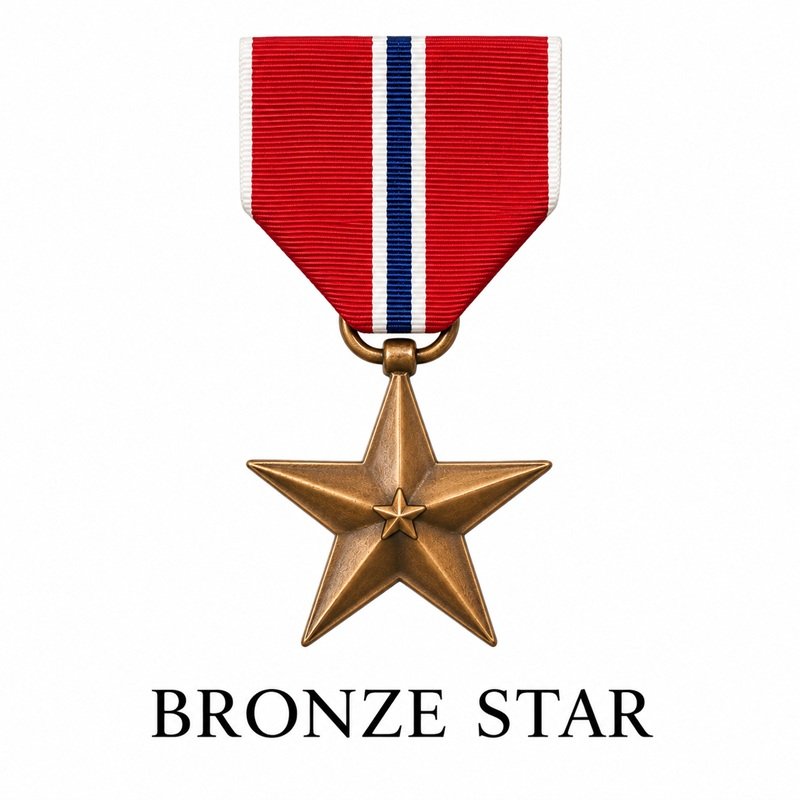
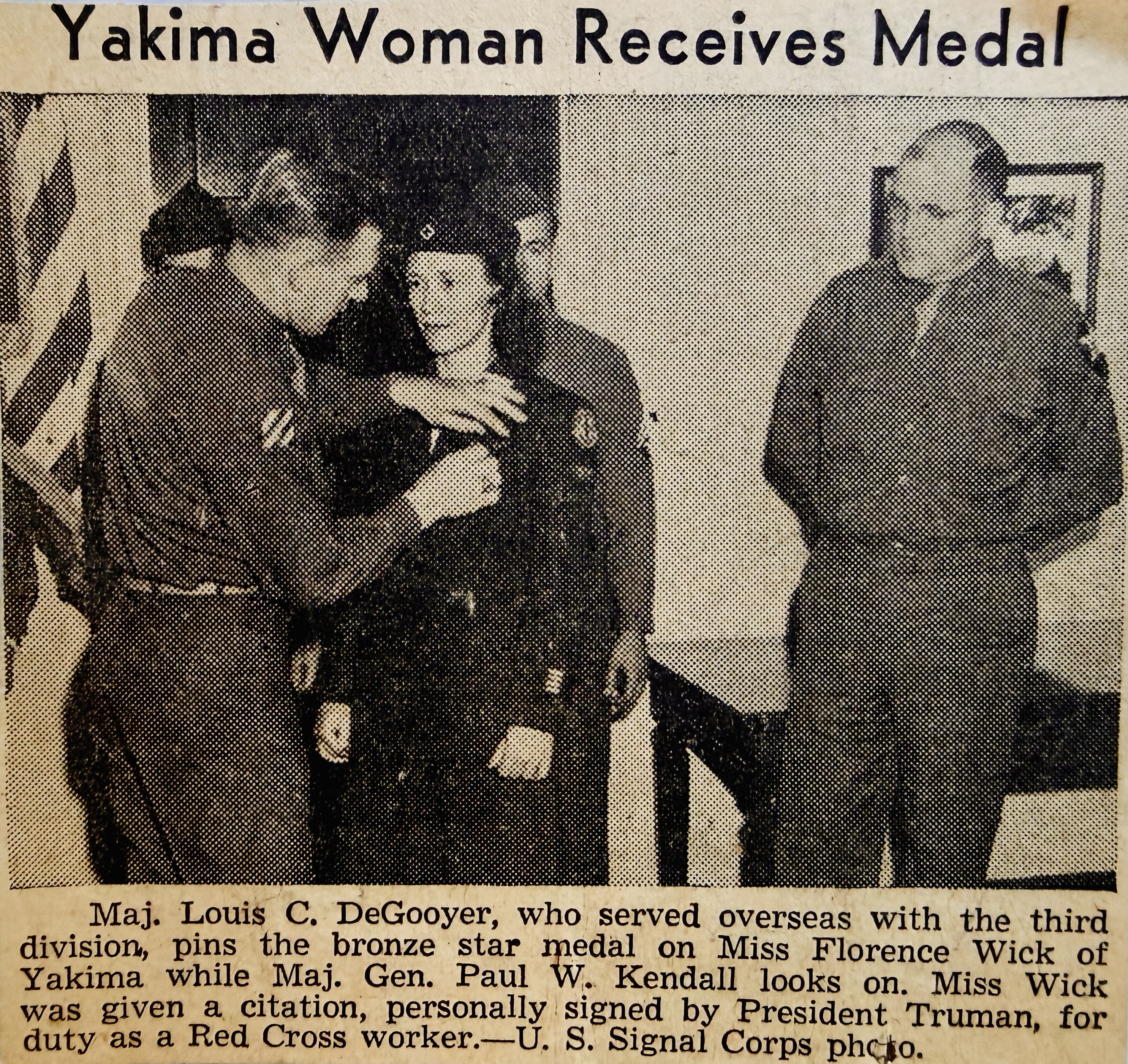
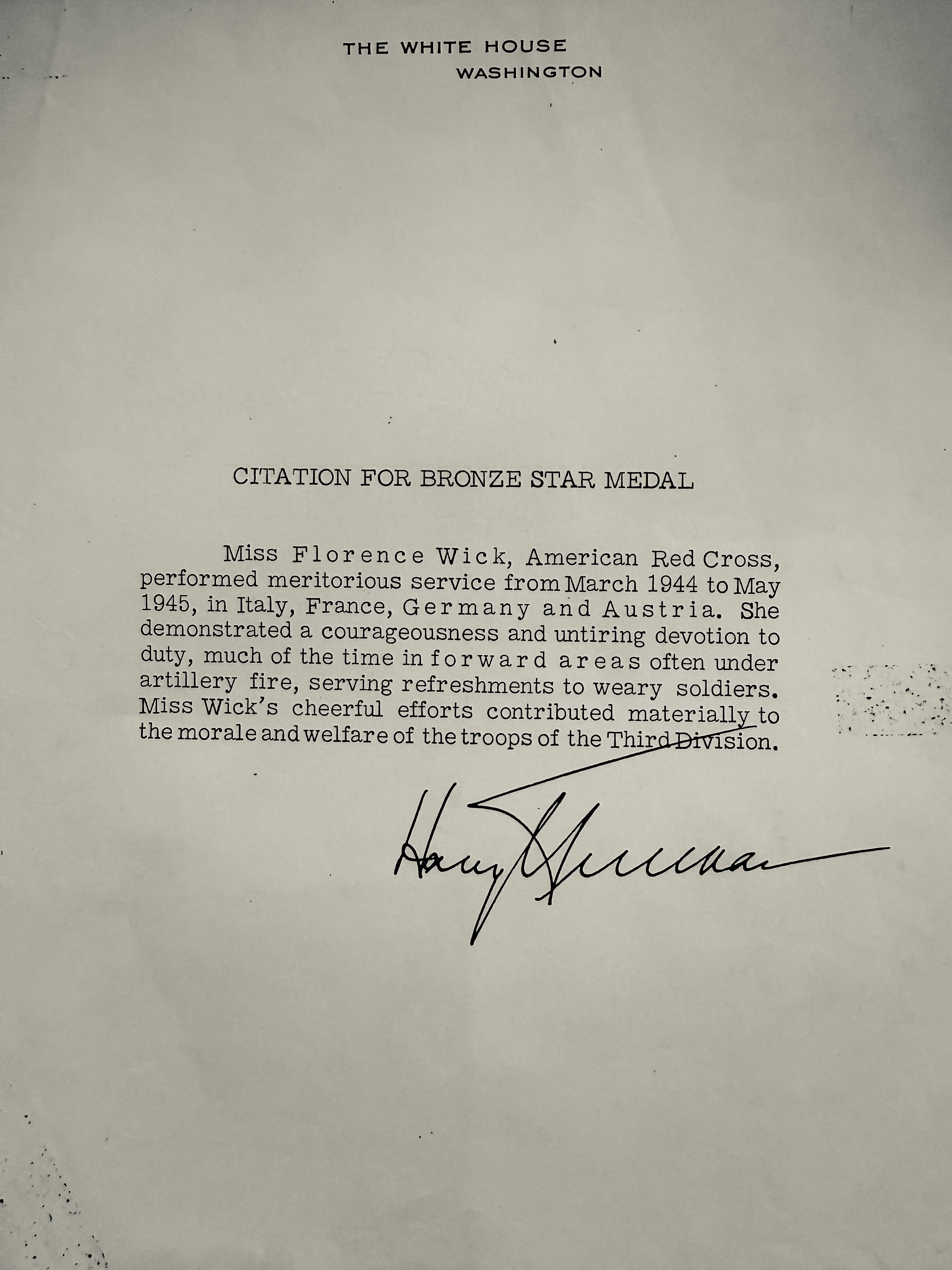
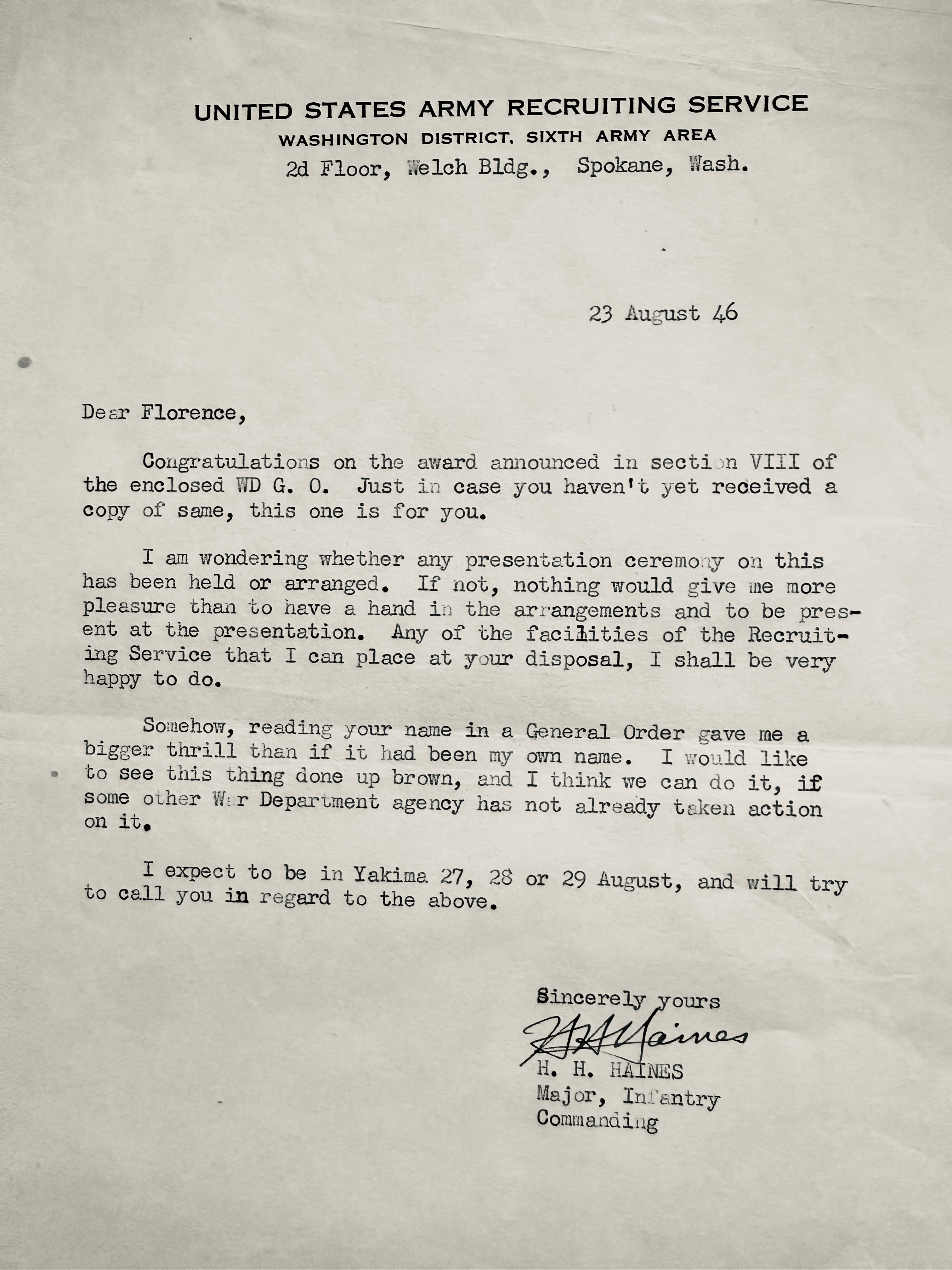
The U.S. Army recognized Florence Wick’s service with multiple military honors, but the American Red Cross (ARC) severely restricted her ability to display them. Flo received the Presidential Citation Ribbon with four bronze battle stars for service in the European Theater, the fourragère (a French military decoration awarded to units that distinguished themselves in combat), and the Bronze Star. Despite these honors, the ARC forbade her from wearing most of them, a policy that reflected institutional tensions over the women’s status and role.
Why the ARC Prohibited Display of Military Awards
The ARC’s restrictions stemmed from a deliberate strategy to maintain the appearance that these women were noncombatants, even though their actual service contradicted this designation. After VE Day, clubmobilers who had served at least 30 days in designated battle zones became eligible for battle stars—the same recognition offered to military personnel. The Army awarded these women five battle stars to wear on their European Theater of Operations ribbons.
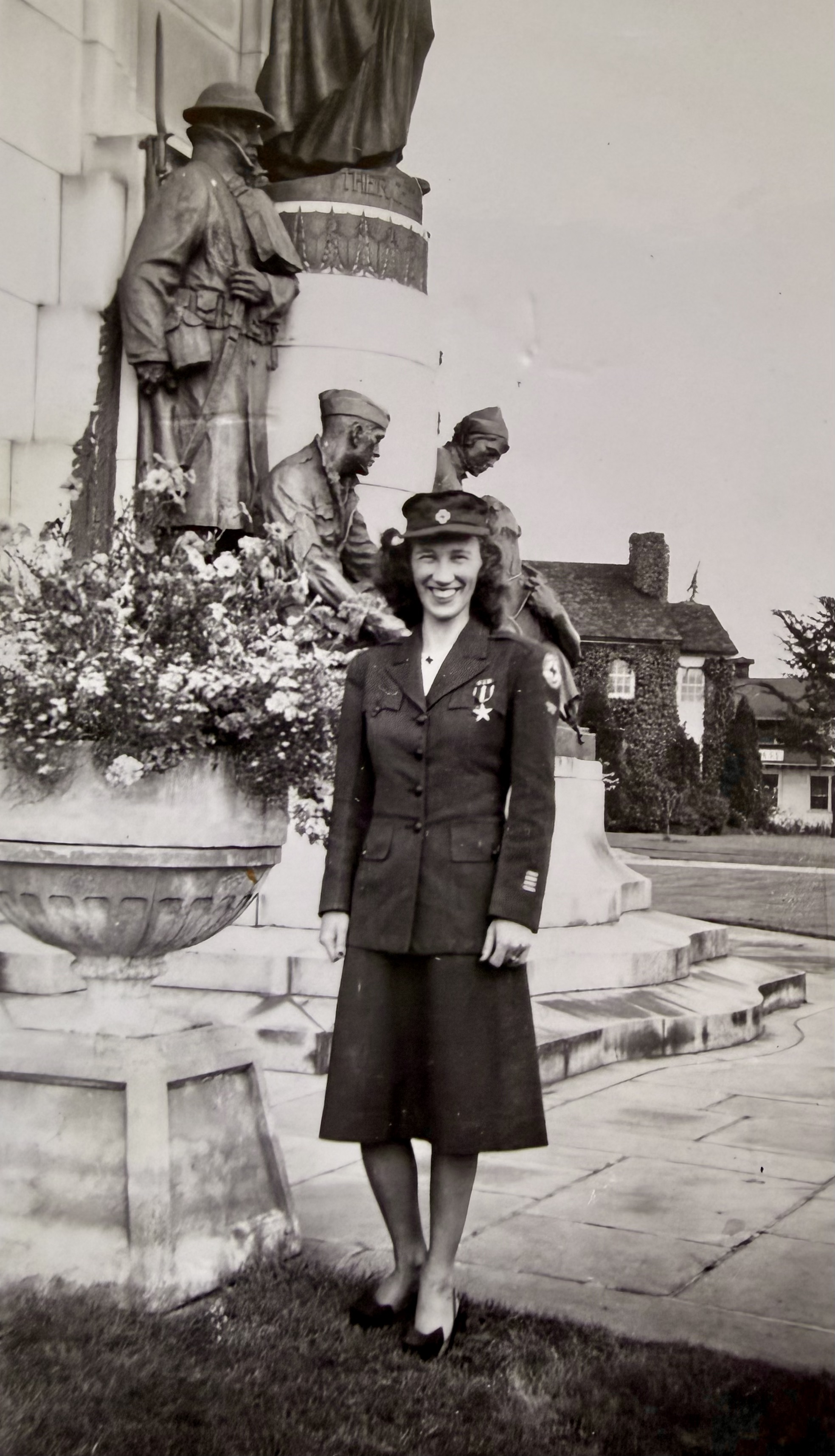
The ARC’s response was to prohibit the women from wearing Army-issued battle stars and instead issued meaningless silver stars as a substitute. This move served two purposes: it denied the women public recognition of their actual combat-zone service, and it reinforced the Red Cross’s institutional need to classify these women as civilians rather than military personnel. Allowing the women to wear military decorations might have jeopardized the very arrangement that permitted them to work so close to the fighting front.
Evidence of Military Support
Not all Army officials agreed with the ARC’s restrictions. Colonel L.C. McGarr, who served as Assistant Division Commander, wrote to Flo expressing his support. In his correspondence, he stated: “I hope you get that bronze star—it was my last official act as Asst Div C.G. You gals deserve it first of all in my books.” This correspondence suggests that Army leadership recognized and valued the contributions of the clubmobilers, even as the Red Cross worked to minimize their visibility and official status.
The Casualty Record: Evidence of Actual Combat Risk
The casualty statistics reveal how close these women truly came to combat. The American Red Cross lost 280 personnel across World Wars I and II out of 51,600 serving—a rate of 5 deaths per 1,000 serving. This compares to approximately 3 deaths per 1,000 for the entire U.S. armed forces.
During World War II specifically, the ARC lost 86 personnel, and 52 of them (60%) were women. These women experienced higher casualty rates than male ARC workers because they spent significantly more time close to and on the fighting front. This casualty record provided irrefutable evidence that clubmobilers like Flo were exposed to genuine combat danger—contradicting the ARC’s classification of them as noncombatants.
Broader Implications for Female Veterans
Flo’s experience reflected a larger institutional failure to recognize women’s wartime service. Post-war initiatives like the GI Bill were overwhelmingly directed toward male veterans, despite women technically being eligible. Female veterans were rarely informed of their eligibility for education and training benefits during discharge, while male veterans received systematic outreach. Noncombatants like the clubmobilers received no GI Bill benefits at all, further marginalizing their contributions and limiting their post-war opportunities.
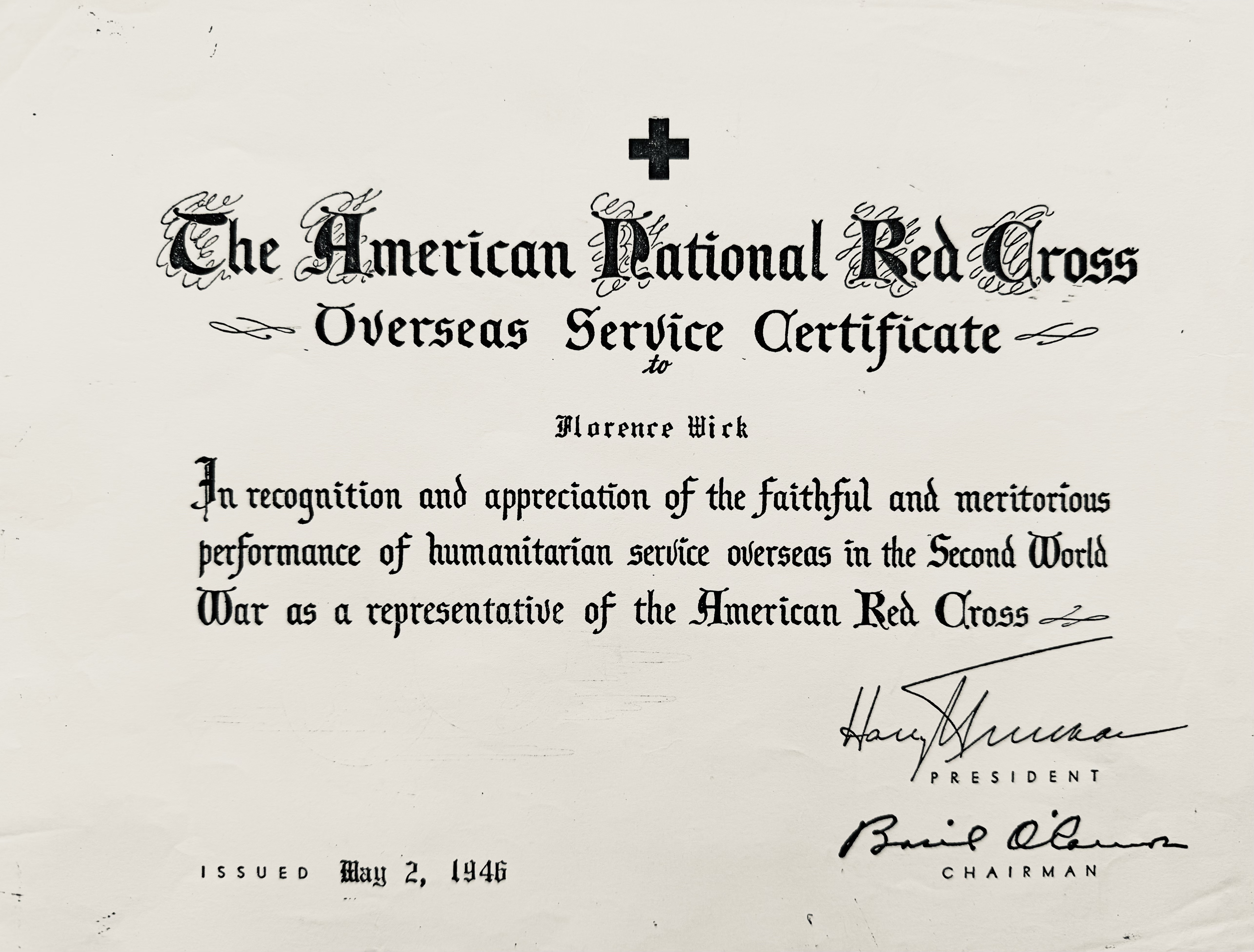
The ARC’s suppression of military awards was not simply bureaucratic oversight—it was a deliberate institutional choice that denied these women recognition for service that exceeded the danger levels of many official military personnel.
Thanks to: “After all, who takes care of the Red Cross’s morale?”: The Experiences of American Red Cross Clubmobile Women during World War II, A Thesis by Paige N. Gulley
“Girls” in Name Only: A Study of American Red Cross Volunteers on the Frontlines of World War II, A thesis by Julia A. Ramsey

 tradeswomn musings
Molly— I don’t think I knew all this; I mean, I knew she got a Bronze Star, but the ARC’s refusal to recognize the risks women took and the denial of benefits. Of course, I’m not surprised by the sexism. I wonder how much she knew about being stiffed compared to men. It seems uncharacteristic for her to not speak out more about it. I remember her being proud but modest about receiving awards for herself. But she worked hard to make sure us kids got recognized for our achievements. Maybe I was too young to witness it. Our dad, who never faced combat, got GI Bill assistance. I learned much later that government benefits for WW2 veterans of colour was terribly inequitable and led to redlining in neighborhoods across the country.
don.orr.martin@gmail.com 611 – 1288 Marinaside Crescent, Vancouver, BC Canada V6Z2W5 On the unceded territories of the Musqueam, Squamish, and Tsleil-Waututh Nations 360-353-2138
LikeLiked by 1 person
Yes, she knew about the denial of benefits. She was one of few clubmobilers who got the bronze star, probably because the third division guys she was deployed with agitated for her medal.They understood how close she was to the front lines and the danger she was in. I think if she’d gotten the GI Bill benefits she would have gone to college. That had been her dream before the Depression when she had to go to work to support her family.
LikeLike
Interesting story, Molly. Pisses me off.
LikeLike
me too!
LikeLike