Heated Rivalry has got me thinking about the gym among other things
Watching Heated Rivalry, a series about gay hockey players, stirred up memories of my own athletic life. I competed in the Olympics too—the Gay Olympics. Well, we couldn’t call them that after we lost the right to the name in court, so they became the Gay Games. Alliterative. Less grand. Same spirit.
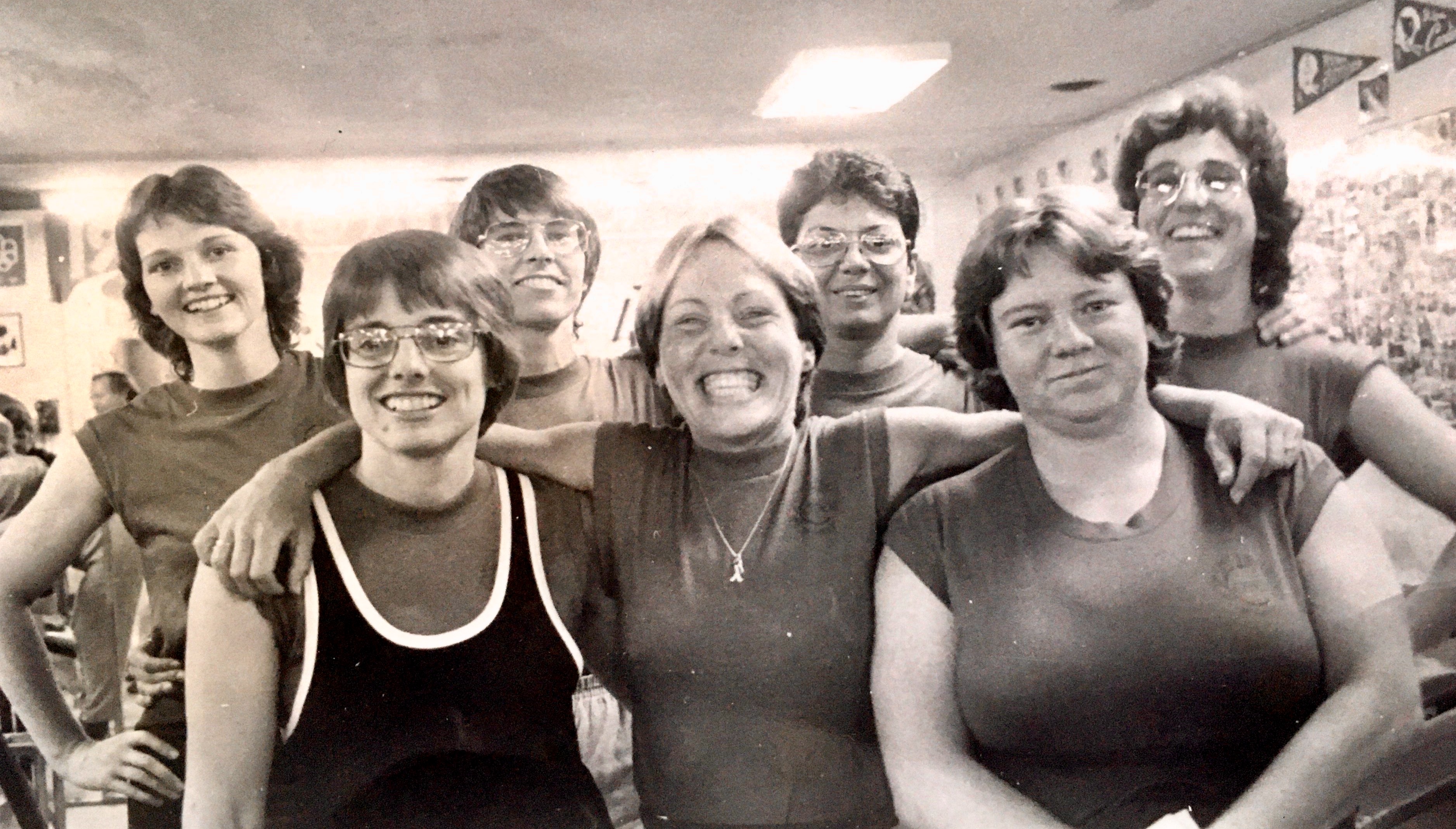
Me and my team of lesbian power lifters, Gay Games 1982
At the Gay Games in different years, I was a powerlifter, a wrestler, and a rower. But more than that, I was part of something new. The Gay Games didn’t just raise the aspirations of queer athletes; they lifted up women’s sports in ways the mainstream world hadn’t yet imagined. Women had never competed in powerlifting at the Olympics before women competed in the Gay Games. When my small crew of gym-going lesbians formed a team to compete in the first Gay Games in 1982, we were pioneers. Women’s powerlifting wouldn’t enter the official Olympics until 2000, at the Sydney Games. We were nearly two decades ahead of the curve. Of course it was us lesbians.
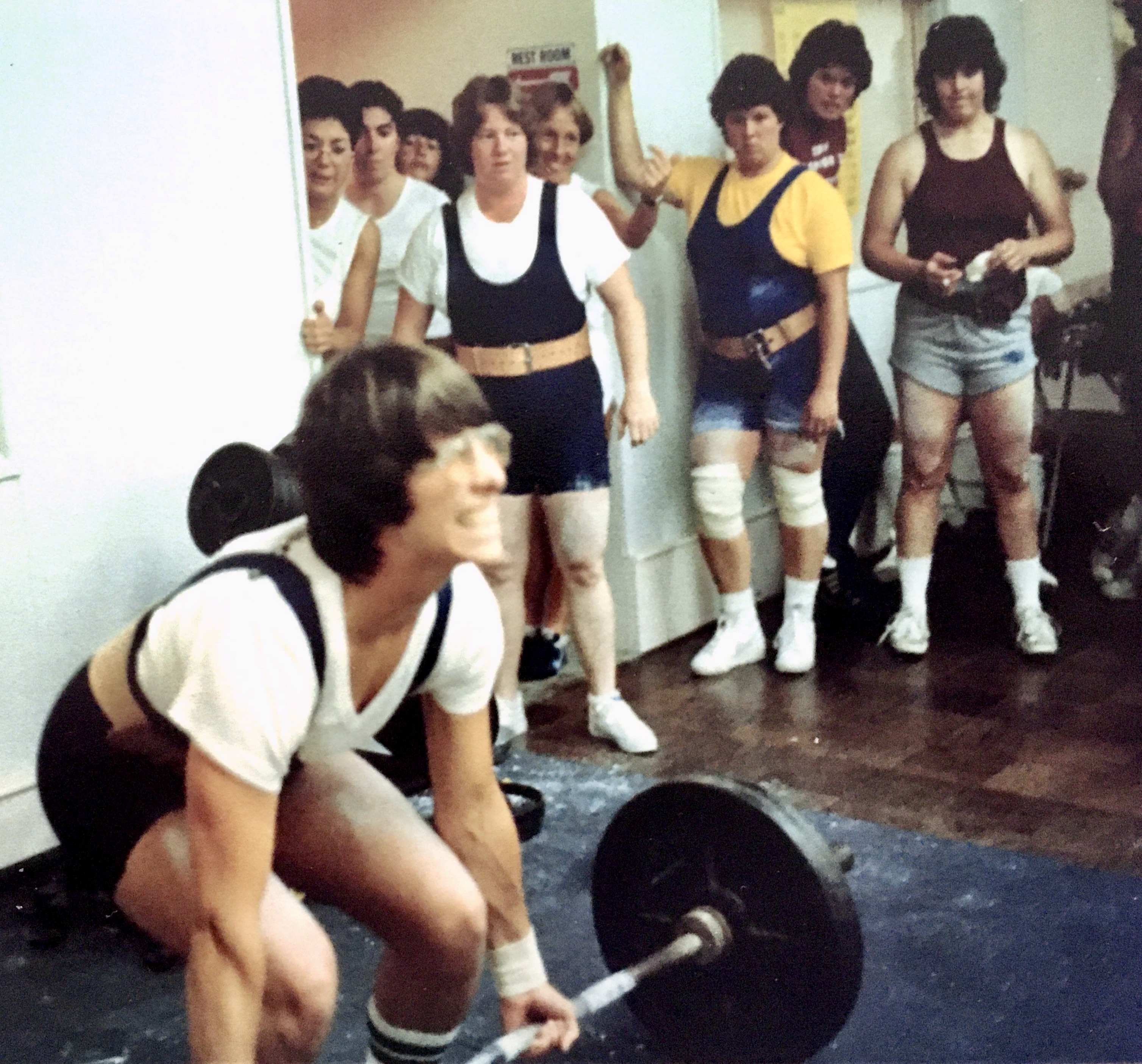
Teammates watch my dead lift 1982 Gay Games
My journey into weightlifting began in San Francisco in the mid-1970s, when I was working construction and needed to get stronger. I don’t remember exactly how the idea came to me—women simply didn’t lift weights back then—but I started going to the gym with my friend Jill for moral support. At first, we trained at the Sports Palace in the Mission, which had been an all-men gym. They didn’t even have a women’s changing room or bathroom. The owner tacked up a sheet of plywood in the corner so we could change behind it.
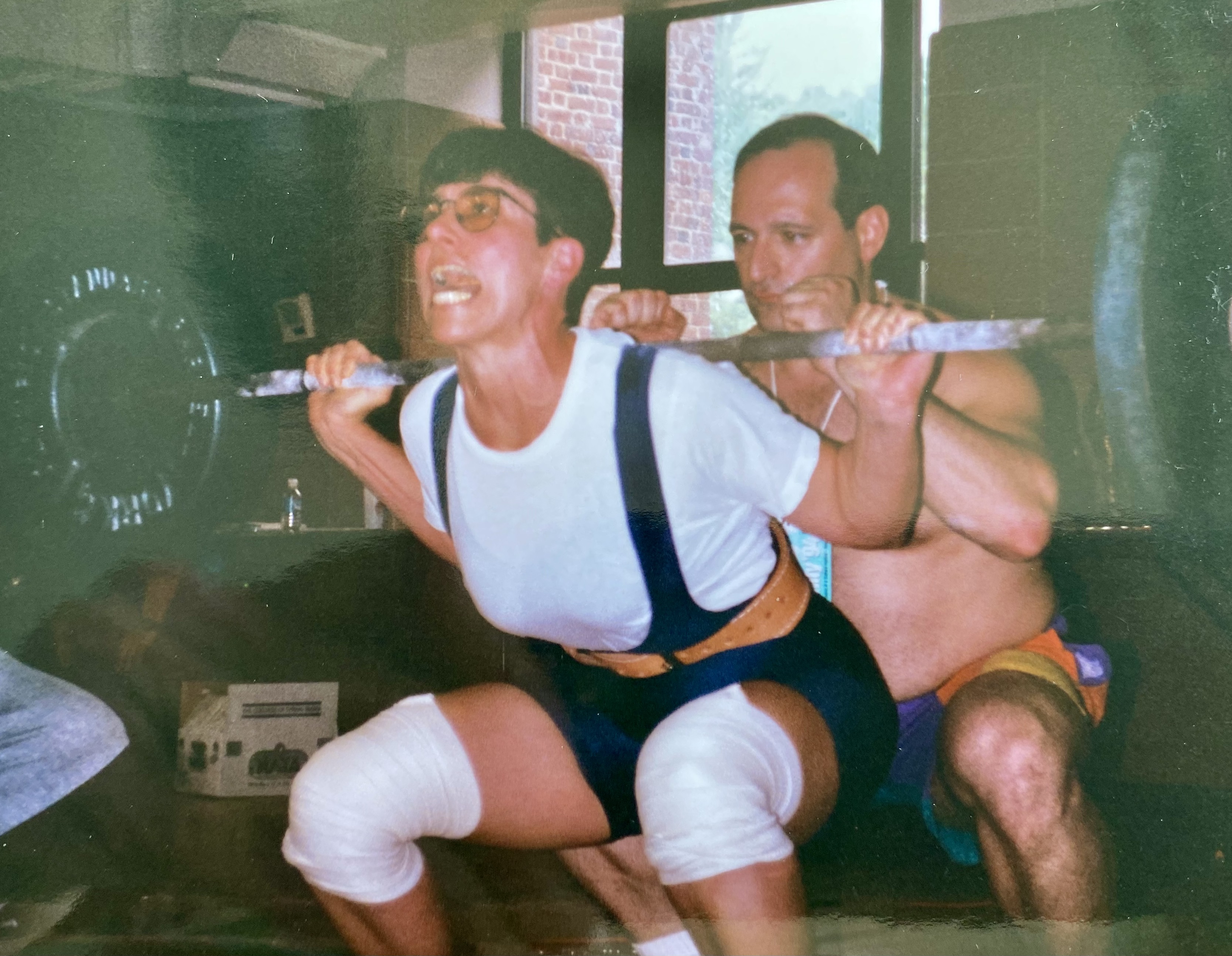
The squat, Gay Games NYC 1994
The men didn’t exactly welcome us. They didn’t like the sound of women’s voices, or having to share equipment, or having us “work in” on their sets and move their heavy weights. So when Betty Doza opened the Women’s Gym in 1979, in a storefront next to the Swedish American Hall on Market Street, I crossed over immediately.
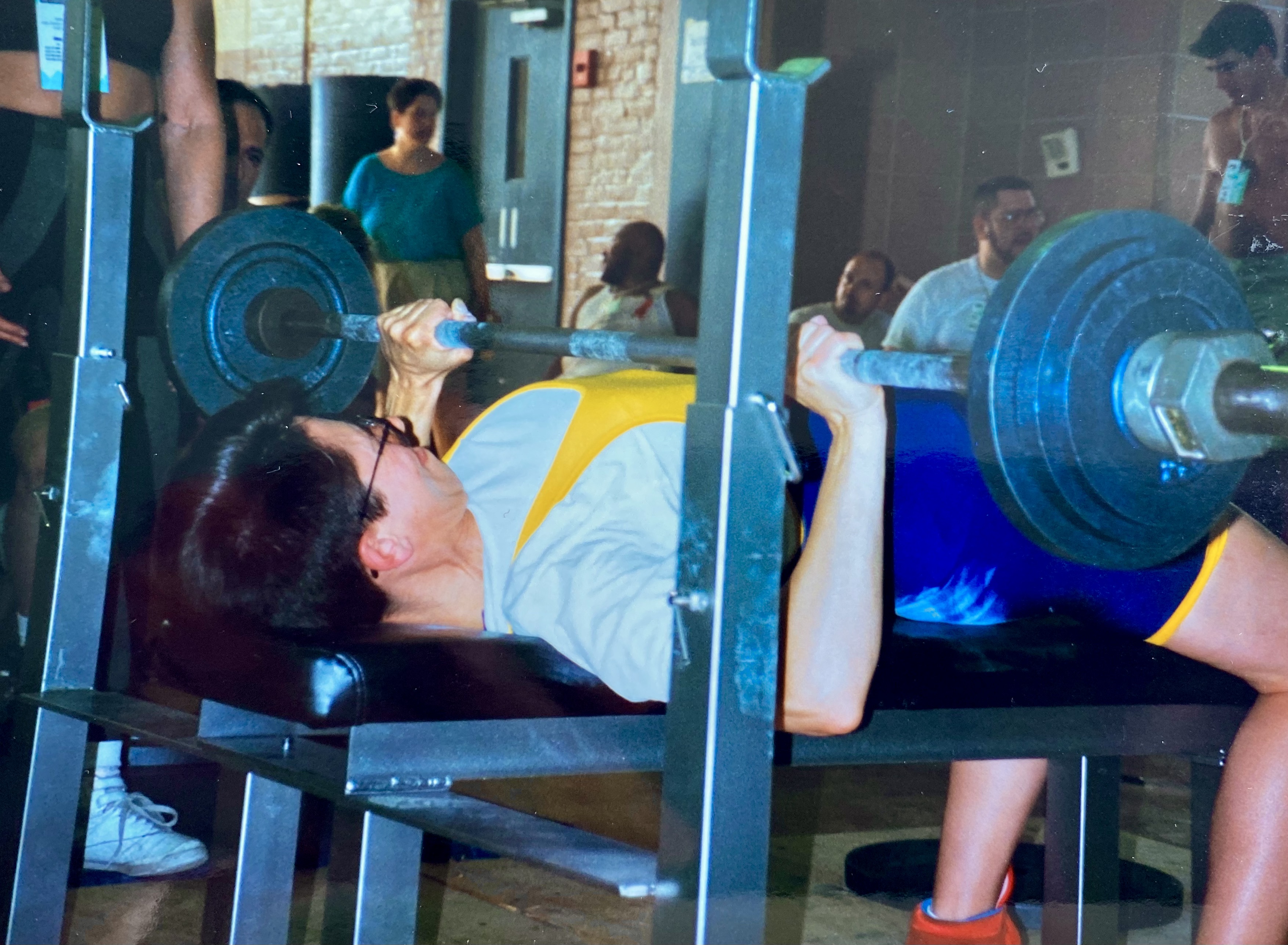
Bench press Gay Games NYC 1994
The Women’s Gym had shiny new machines upstairs, but the real action was in the basement where the serious lifters gathered. Until then, I had only learned the three Olympic power lifts—bench press, squat, and deadlift—because those were the only lifts women were officially allowed to compete in. But downstairs, women were doing the clean and jerk and the snatch. These were lifts we’d been banned from performing, so we taught each other proper form. Coaching was essential. Done wrong, those lifts could seriously injure you. It felt like sneaking gin in a Prohibition-era speakeasy—dangerous, forbidden, intoxicating.
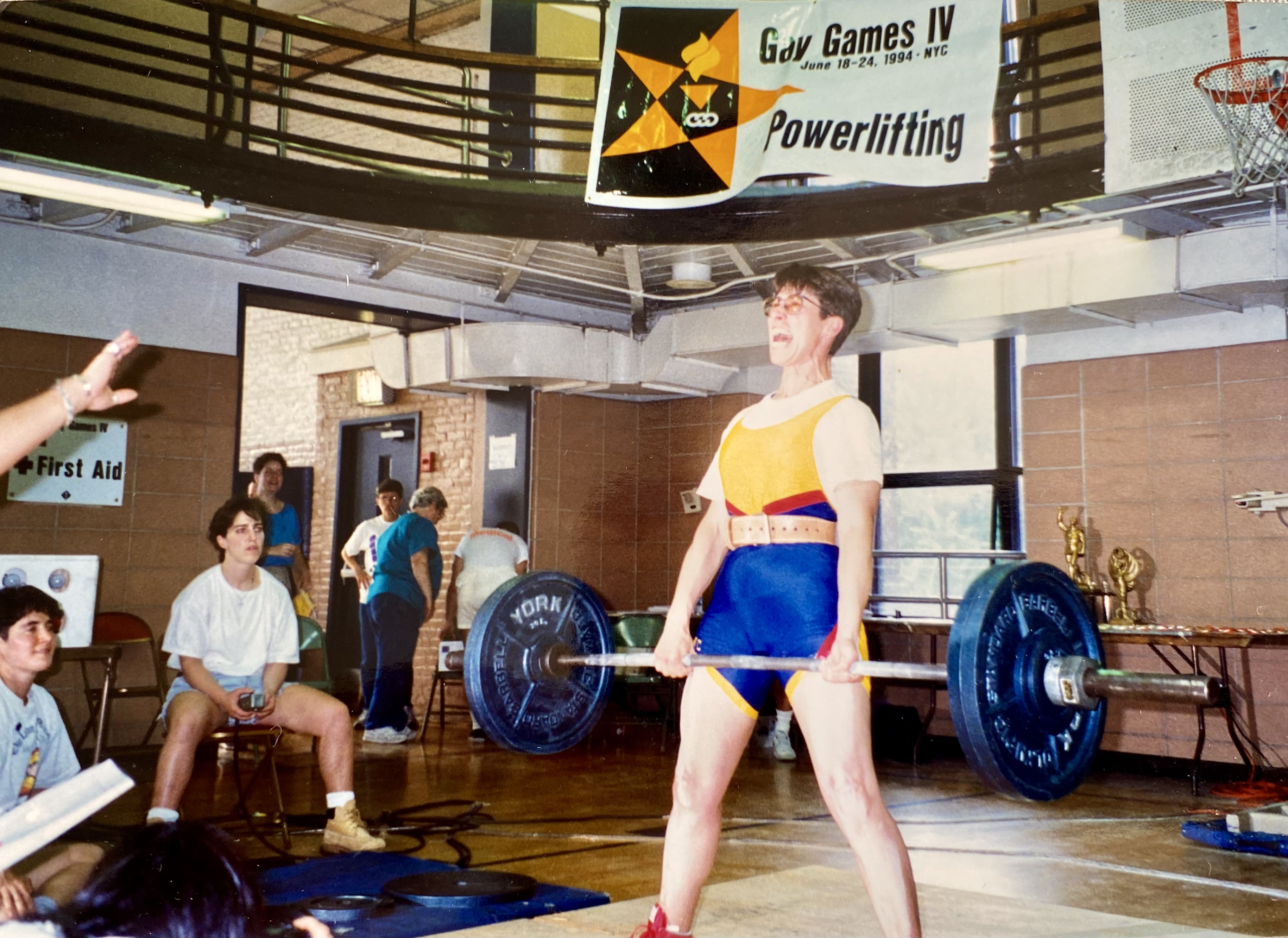
Dead lift Gay Games NYC 1994. I had changed to a wide stance.
The Women’s Gym became a training ground for women who wanted to be firefighters, cops, and competitive athletes. There are two very different branches of weightlifting: bodybuilding and powerlifting. Bodybuilding is about appearance—sculpted, ripped muscles, thinness, aesthetics. Powerlifting is about strength: how much weight you can move in three lifts. You can be fat and be a powerlifter. That distinction mattered.
I competed in the 148-pound class, usually weighing about 144, and spent my time trying to gain weight. Every pound meant more leverage, more power. While other women obsessed over dieting, I complained that I couldn’t put weight on. They thought I was strange.
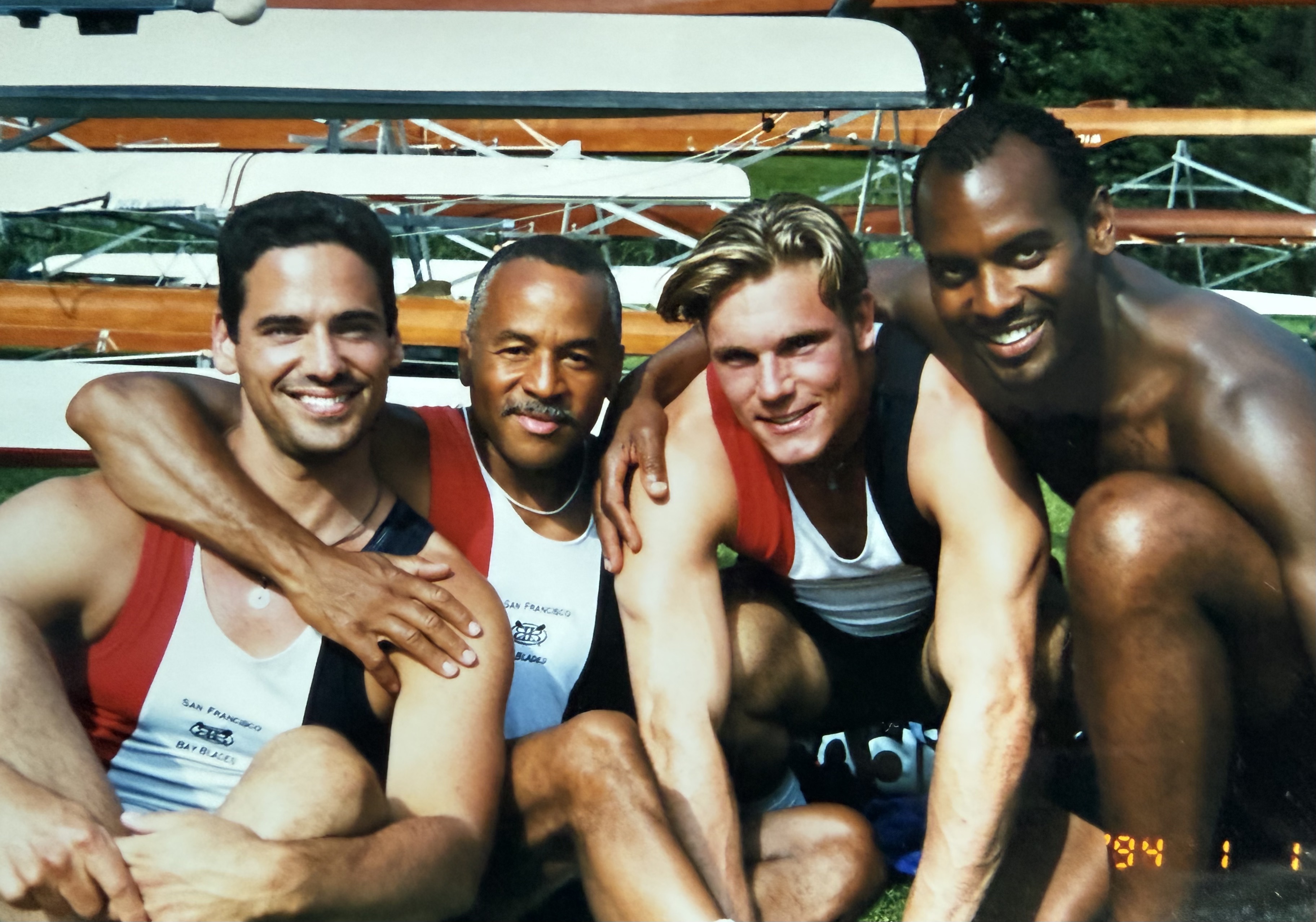
My rowing team, the Bay Blades, had some cute men too.
After workouts, we crossed Market Street to Leticia’s, a gay Mexican restaurant, for margaritas and nachos. We were strong, and we knew it. We were powerful. We were a team. There were about ten of us training together for the 1982 Gay Games in San Francisco. I’ve forgotten most of their names now, but I remember the feeling: solidarity, purpose, pride.
The 1982 Gay Games may have been among the first major powerlifting competitions for women anywhere. That year marked the beginning of what would become an international movement. We didn’t really care about medals—we were just thrilled to compete, to exist publicly as strong queer women. But I did come home with gold, besting a woman from the Netherlands.
Twelve years later, in 1994, I competed again as a powerlifter at the Gay Games in New York City. I was lifting more than I had in ’82, but the field had changed completely. The women I competed against were world-class athletes, capable of lifting three times my best numbers. Women’s powerlifting had exploded!
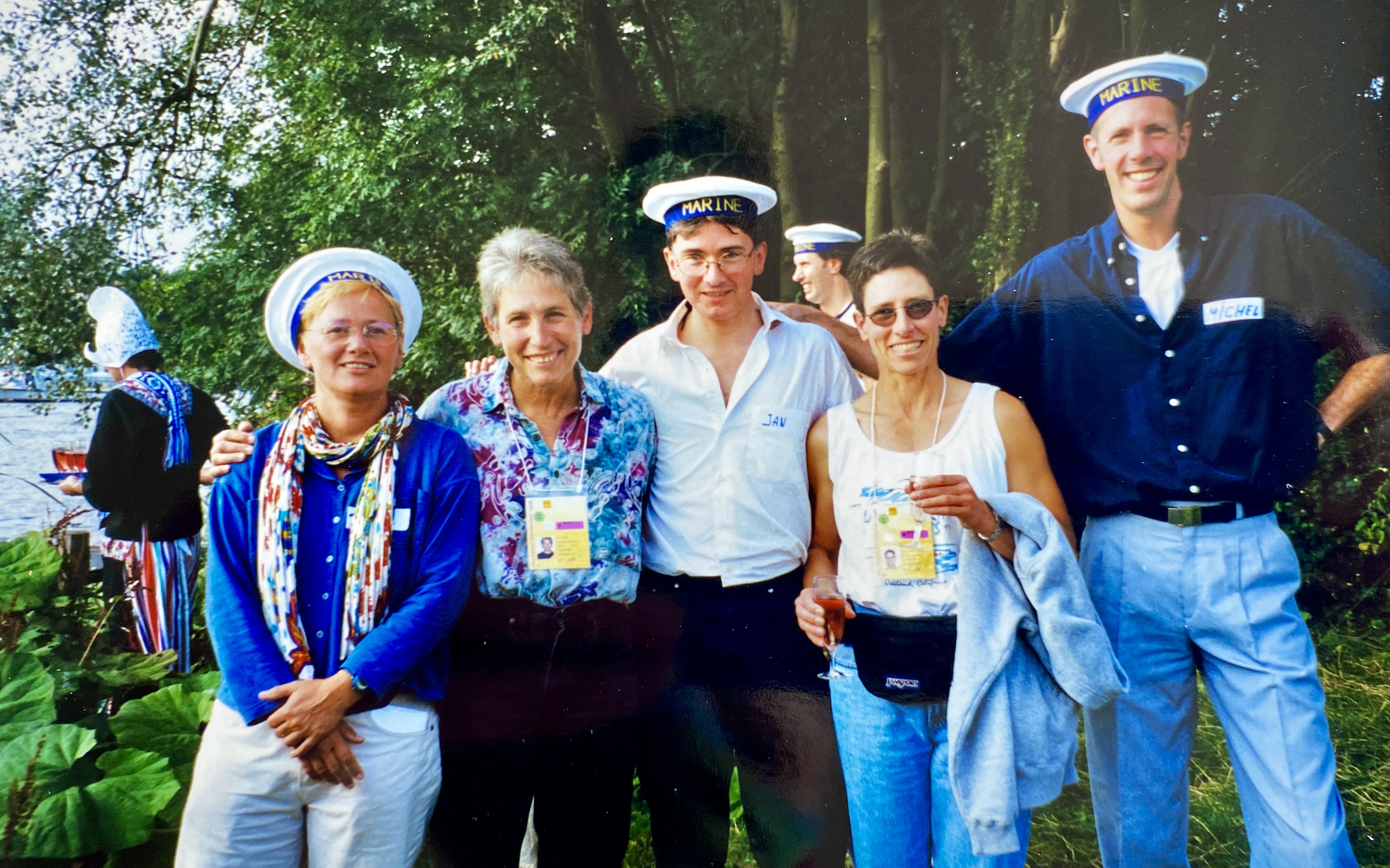
In Amsterdam the Dutch rowers greeted us in navy caps and with champagne. Nancy Stoller (L) and me with some of our hosts. 1998
The Women’s Gym didn’t survive. Men sued, claiming discrimination, and eventually won. But for a few glorious years, it was a sanctuary—a place where women could build strength, community, and defiance. The Gay Games and the Women’s Gym together cracked open a door that could never again be closed.
We weren’t just training our bodies. We were reshaping what women, and especially queer women, were allowed to be.
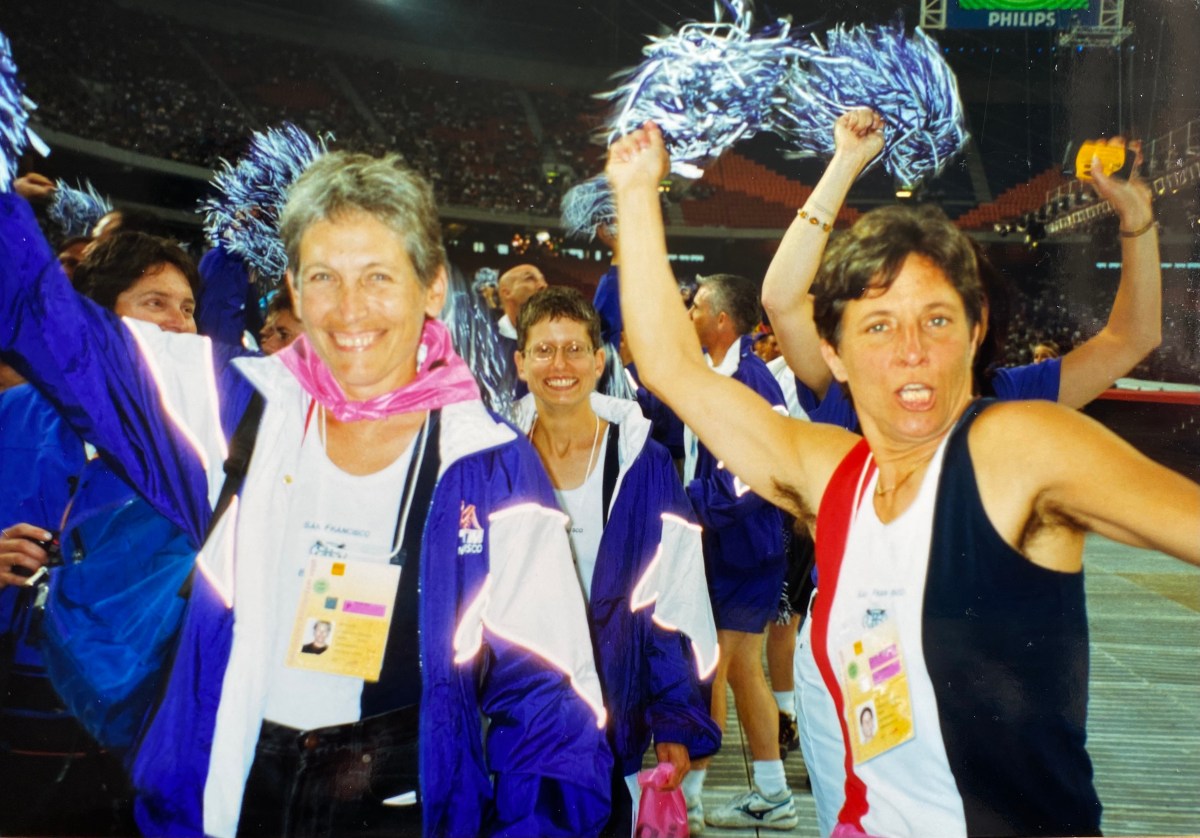
In the top picture, marching into the stadium are Nancy Stoller (L) and Helen Vozenilek of the Bay Blades rowing team. Amsterdam 1998.
On Soyal Native Americans marked the shortest day of the year
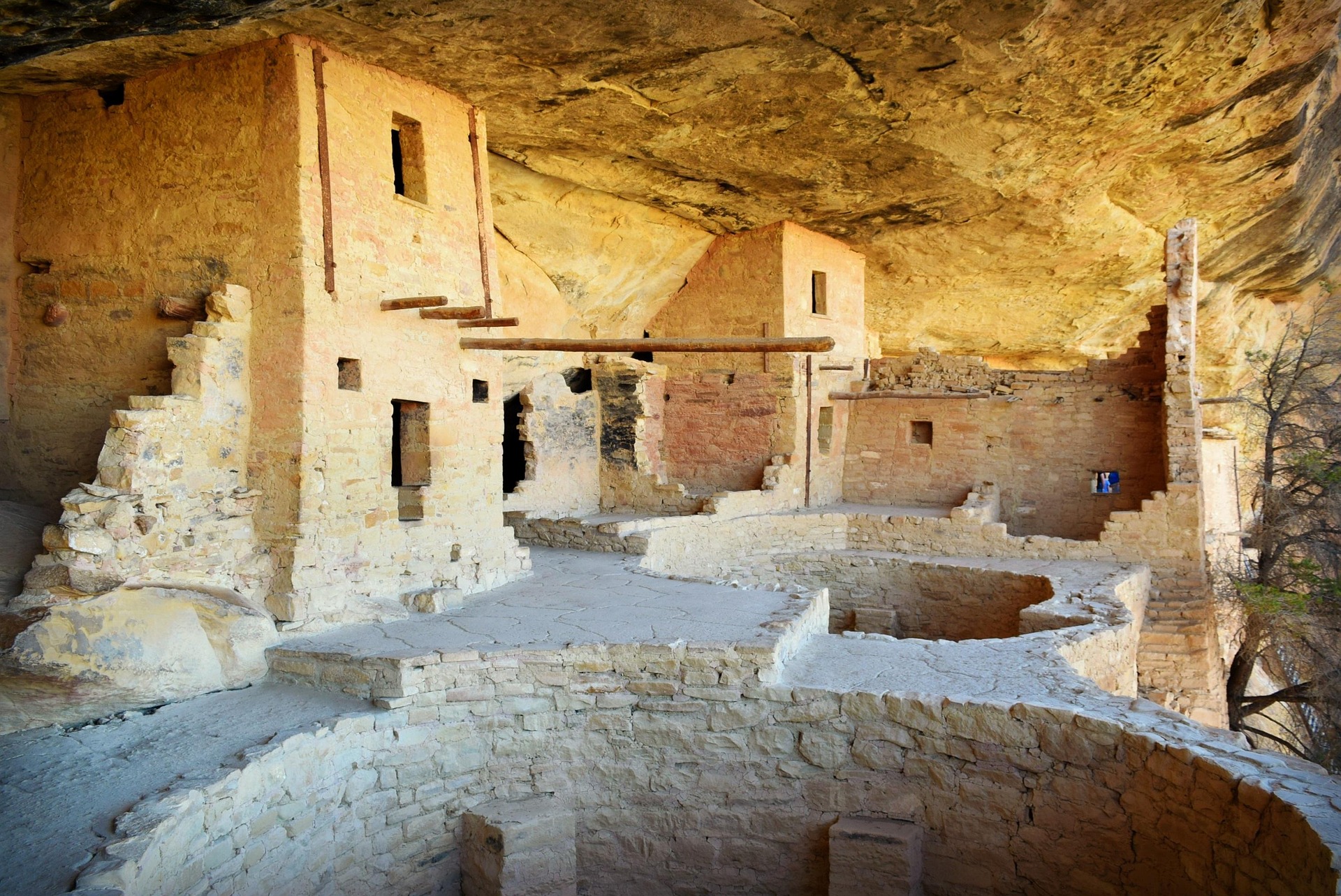
Cliff Palace in Mesa Verde National Park, Colorado. Photo by Judson McCranie. (CC BY-SA 3.0) It is believed that ancestors to the Hopi built and lived in Cliff Palace from about 1200 to 1300 C.E.
My Regular Pagan Holiday Post: Winter Solstice
My queer family chooses to forgo holidays shaped by a christian tradition steeped in homophobia and misogyny—a church that has long covered up sexual abuse against children and parishioners while scapegoating queer people. Recent comments by Pope Francis only underline this contradiction, reaffirming the catholic church’s ban on ordaining gay men and punishing and defrocking priests who question that policy or support what it calls “gay culture.”
So we create our own rituals instead—queer, chosen-family–centered traditions. We look to other cultures for inspiration, especially pagan and pre-christian practices that honor the natural world and community rather than dogma.
We can learn much from Native Americans that might help us through what is shaping up to be a particularly dark period in our history and present.
Soyal: Winter Solstice and Renewal
On the winter solstice, Hopi and Zuni peoples perform a ceremony with the intention of achieving unity and strengthening community. Soyal is held on the shortest day of the year. It marks the symbolic return of the sun, the turning of the seasonal wheel, and the beginning of a new spiritual cycle. Soyal is a time of purification, prayer, and renewal, when the community prepares itself—spiritually and socially—for the year ahead.
In the days before Soyal, families create pahos, prayer sticks made with feathers and plant fibers, which are used to bless homes, animals, fields, and the wider world. Sacred underground chambers, called kivas, are ritually opened to mark the beginning of the kachina season. The kachinas are understood as spiritual messengers who carry prayers for rain, health, balance, and right living. Songs, dances, offerings, and storytelling strengthen community bonds and pass ethical teachings from elders to children.
Soyal also dramatizes the struggle between darkness and light. Through symbolic dances and ritual objects, such as shields representing the sun and effigies symbolizing destructive forces, the community enacts the tension between chaos and order, drought and rain, winter and warmth. The message is not that darkness must be destroyed, but that it must be faced, respected, and brought back into balance.
The solstice itself becomes a sacred pause: a moment when time feels suspended and people are invited to examine their lives. It is a season for letting go of harmful habits, reconciling conflicts, offering forgiveness, and setting intentions rooted in responsibility rather than personal gain. Gifts are exchanged not as possessions, but as blessings and goodwill.
Creating Our Own Rituals
Soyal reminds us that human life is meant to move in natural cycles, not endless acceleration. Rest is not weakness; it is a form of wisdom. Renewal begins with humility, gratitude, and shared responsibility. Personal healing is inseparable from the health of the community and the land.
The enduring spiritual mission expressed through Soyal is the same across Hopi villages: to promote and achieve the unity of everything in the universe.
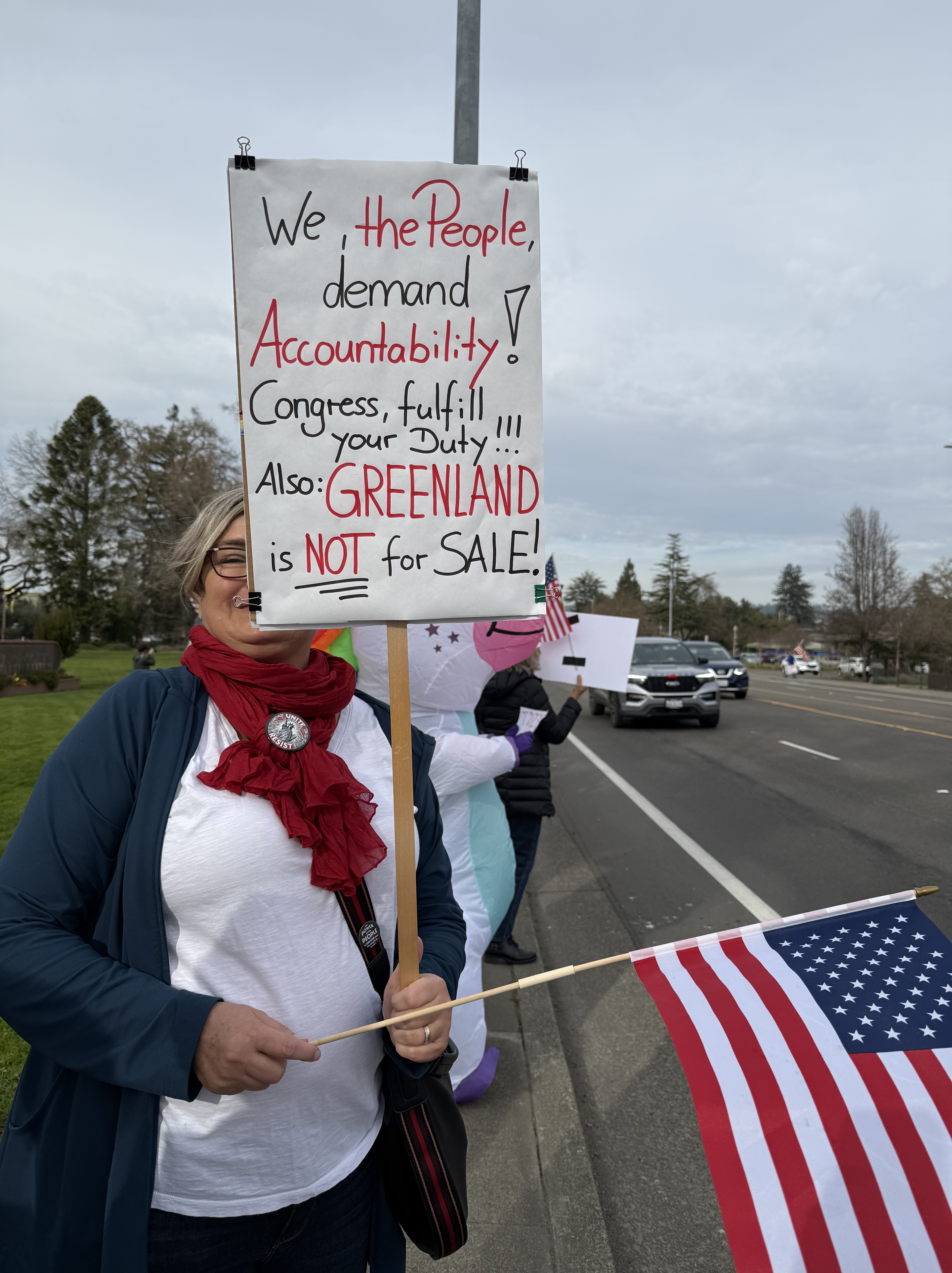
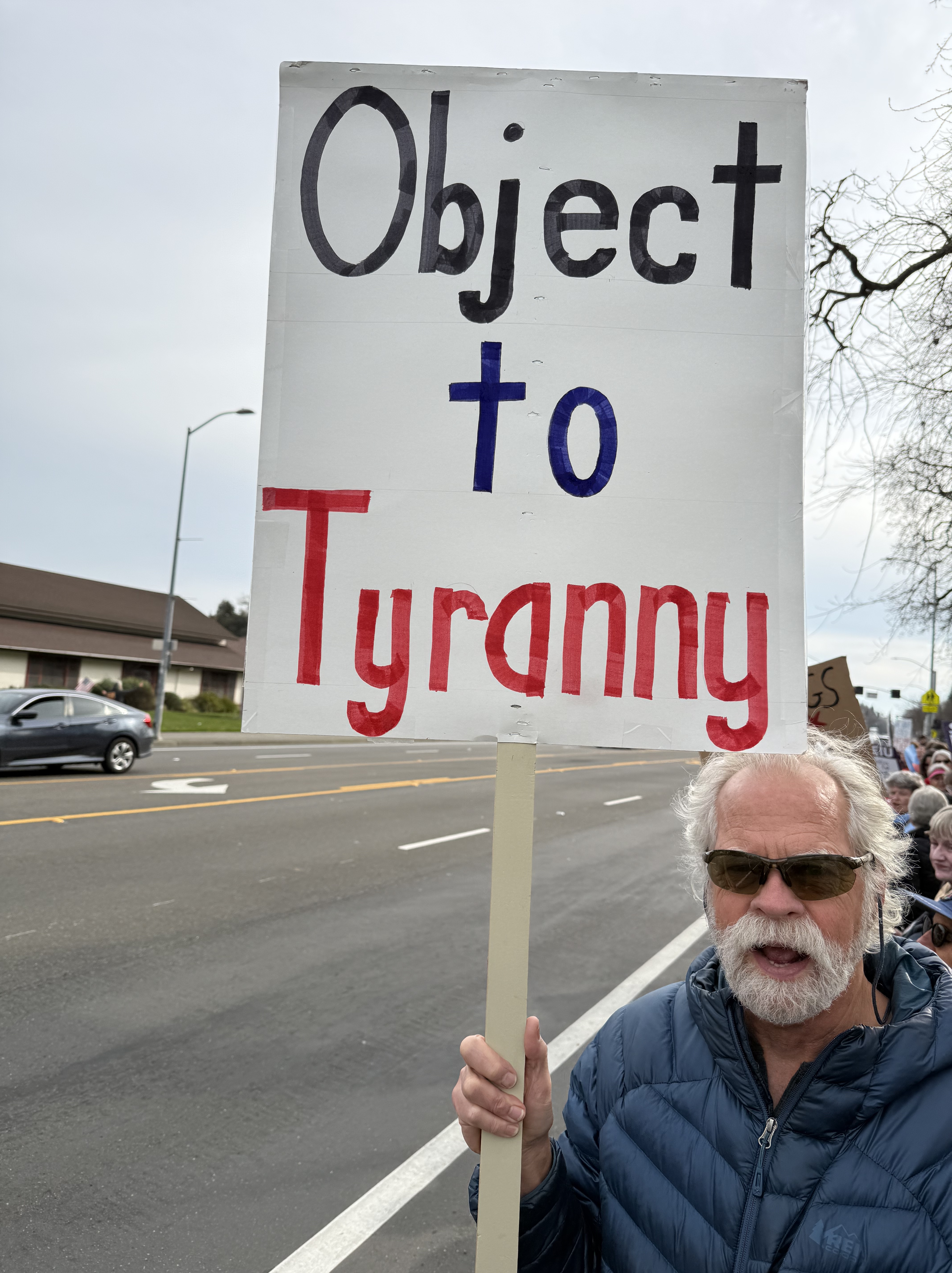
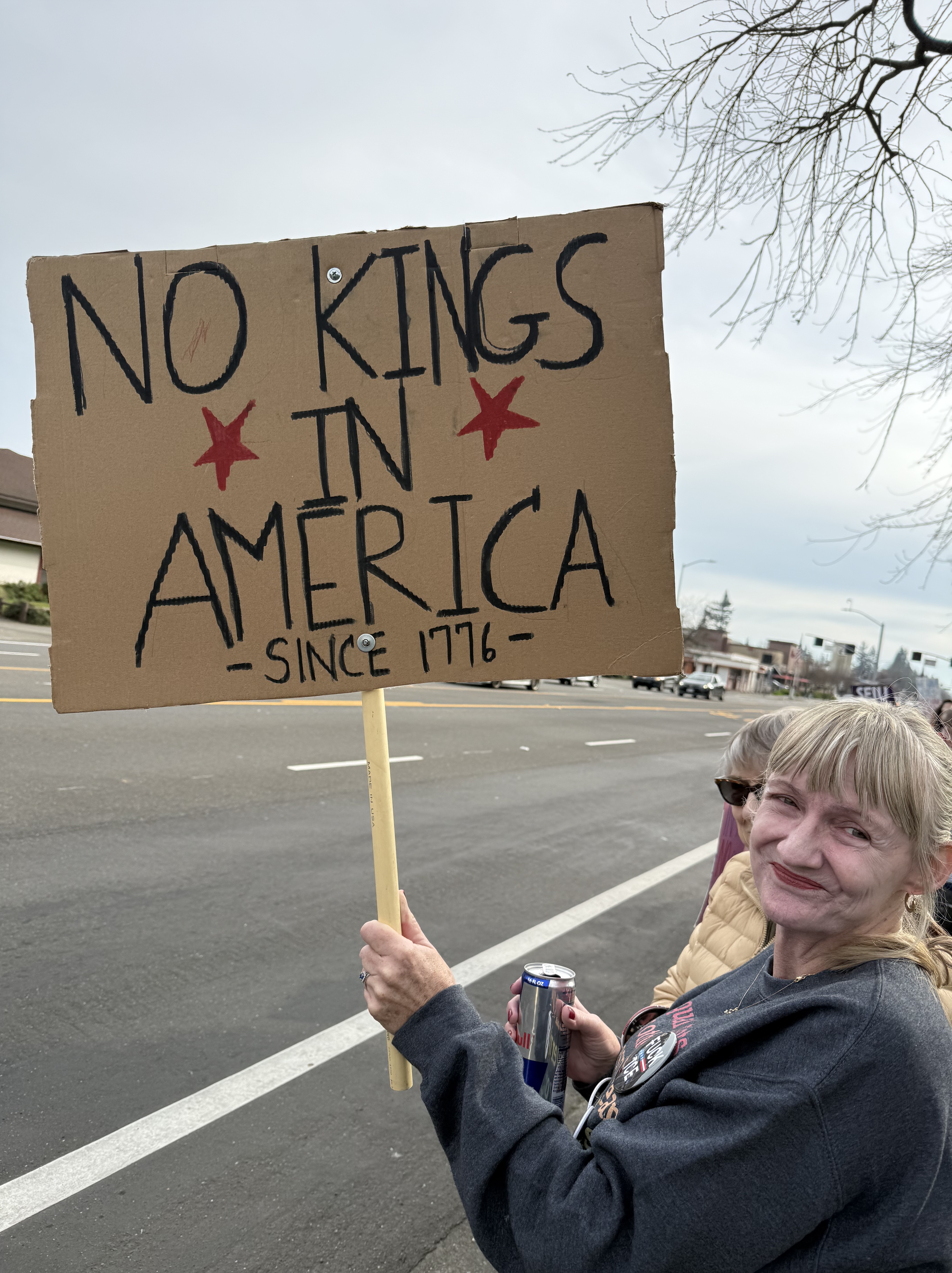
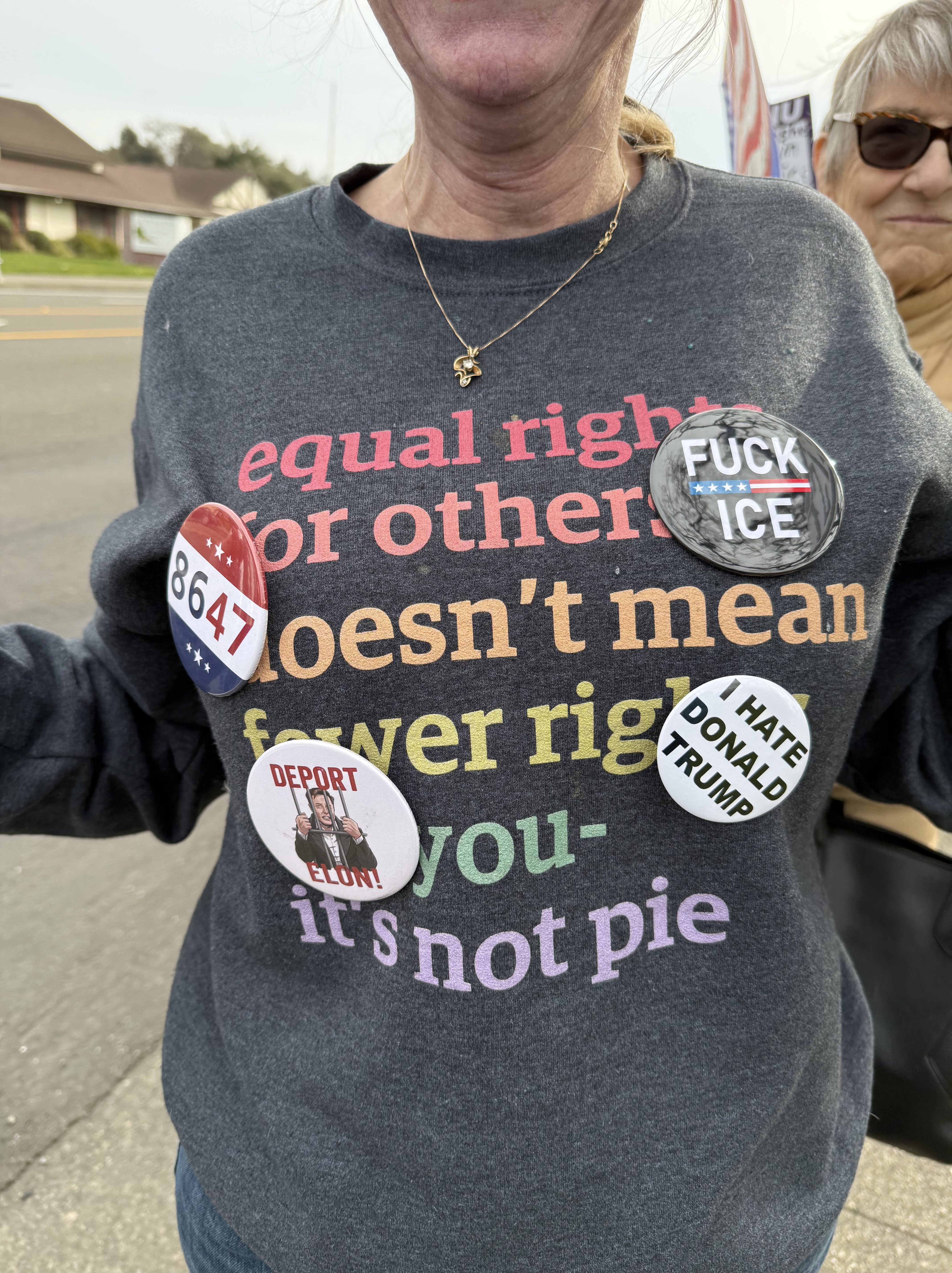
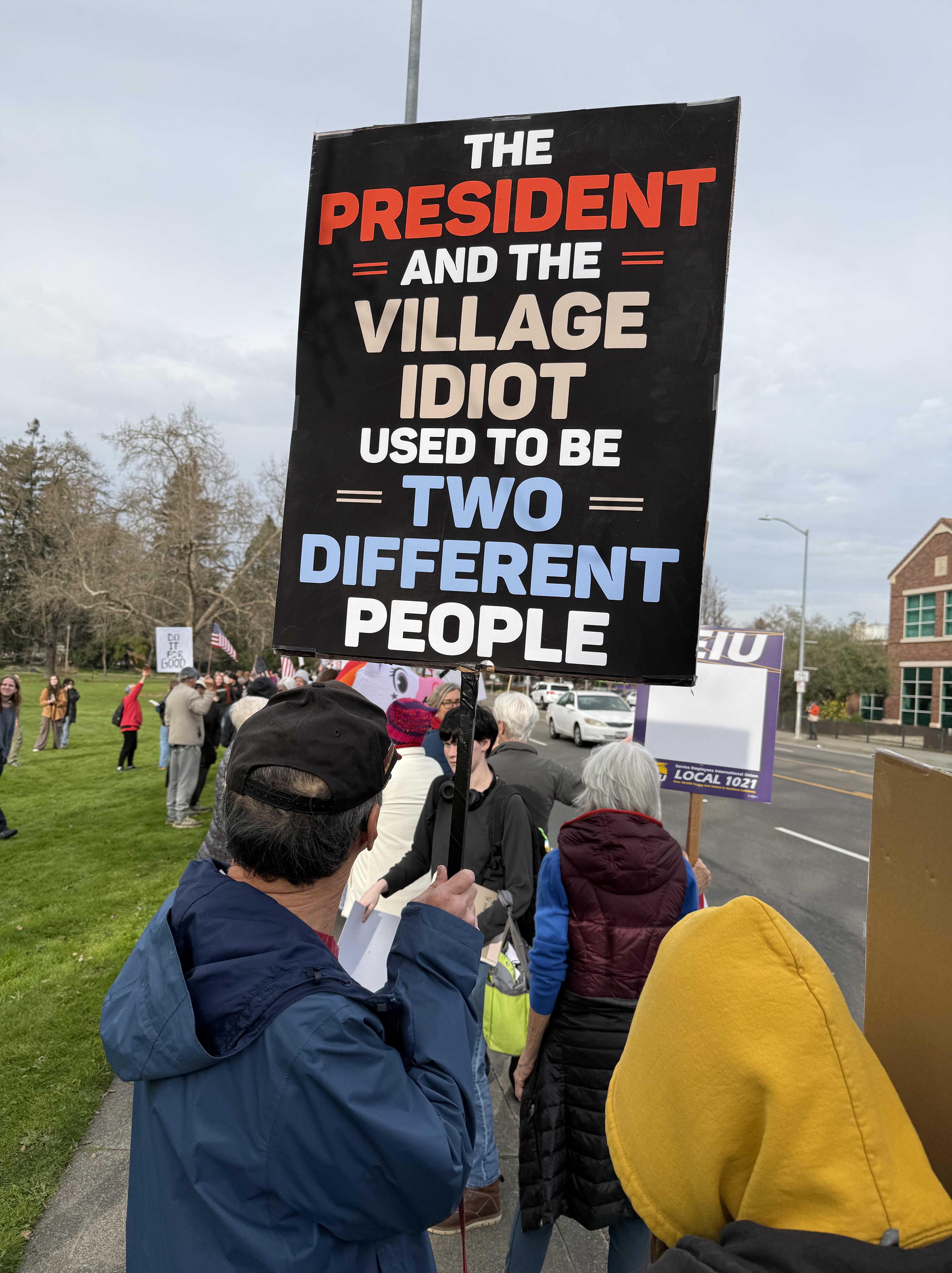
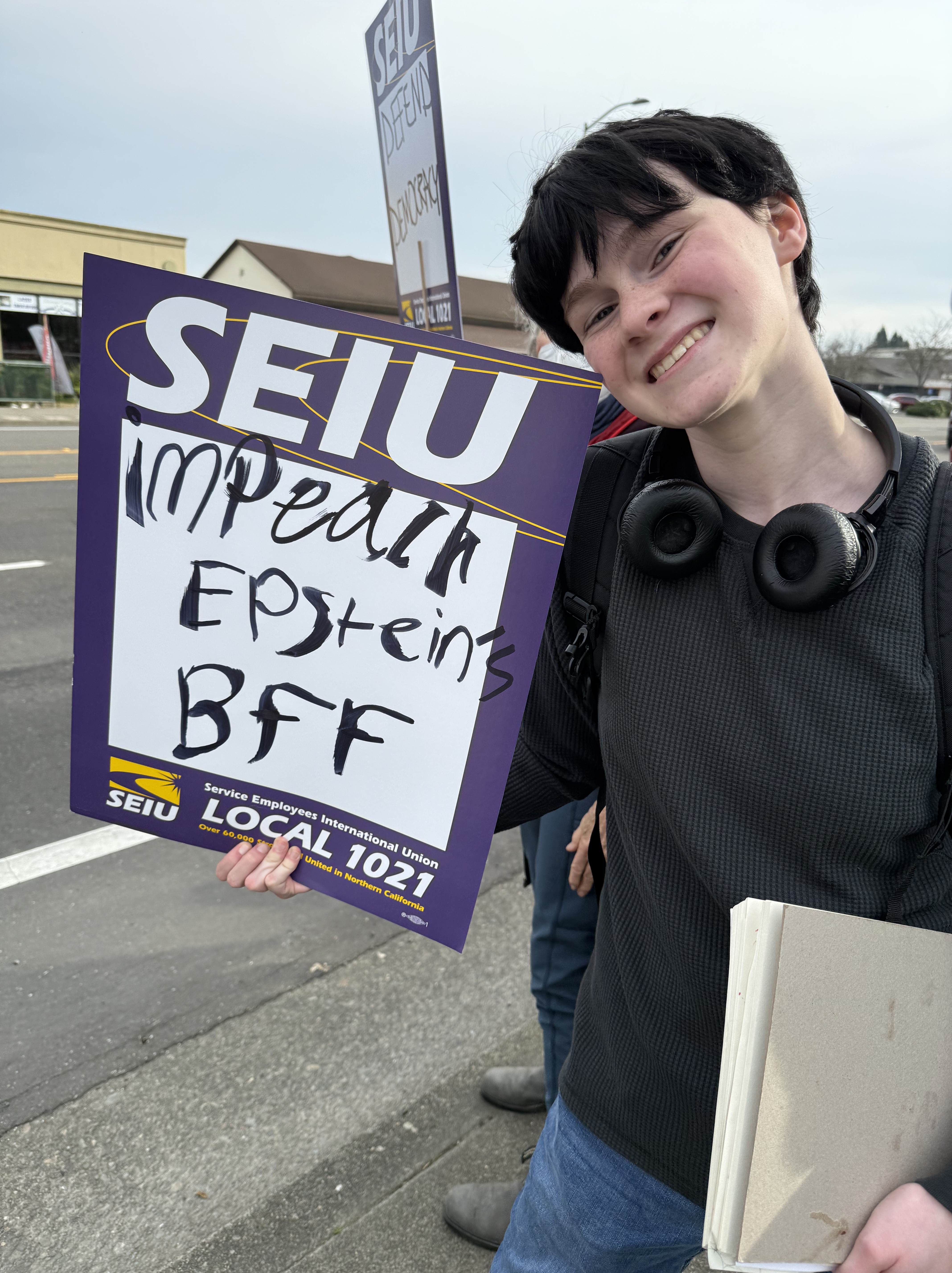
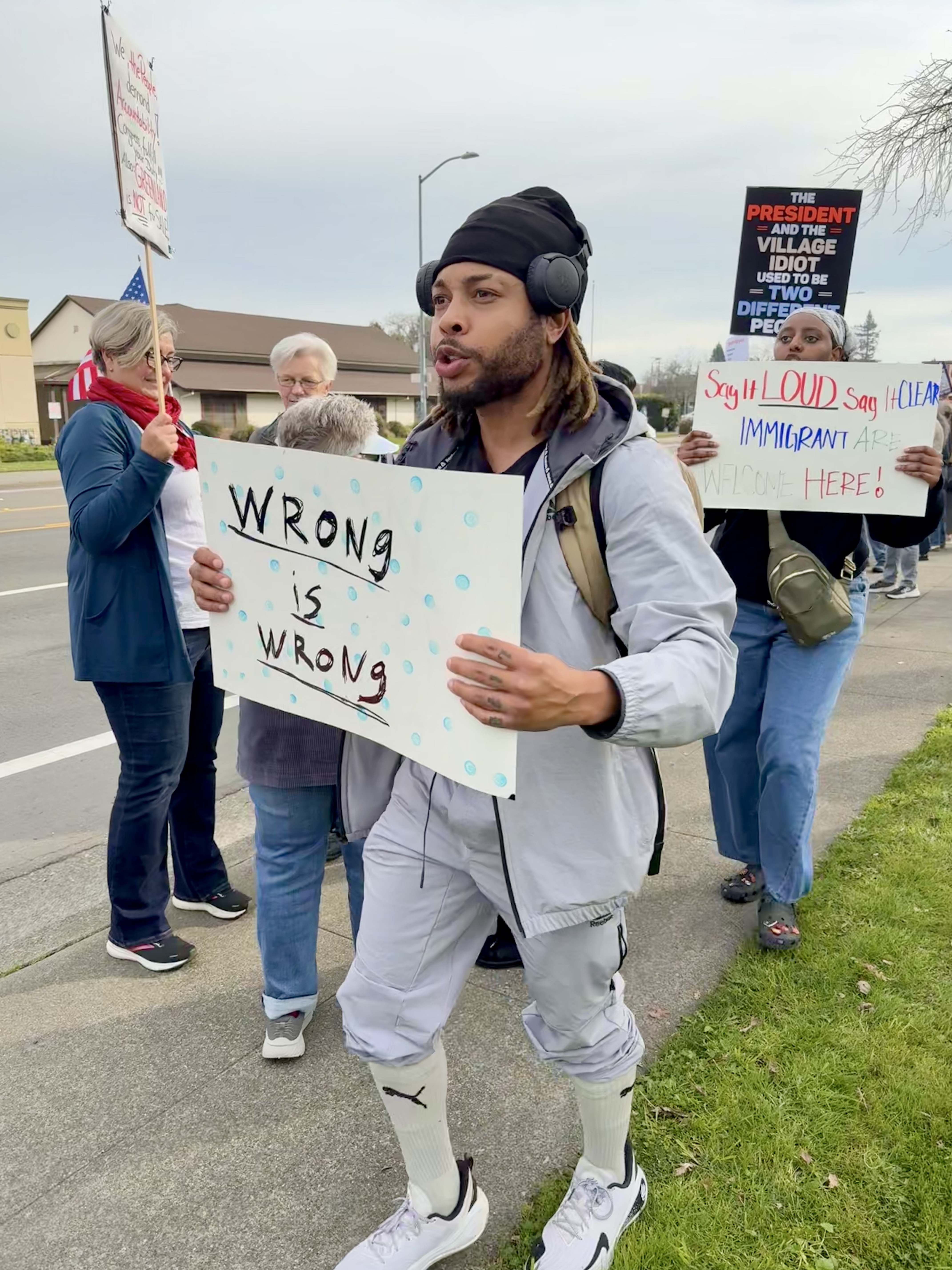
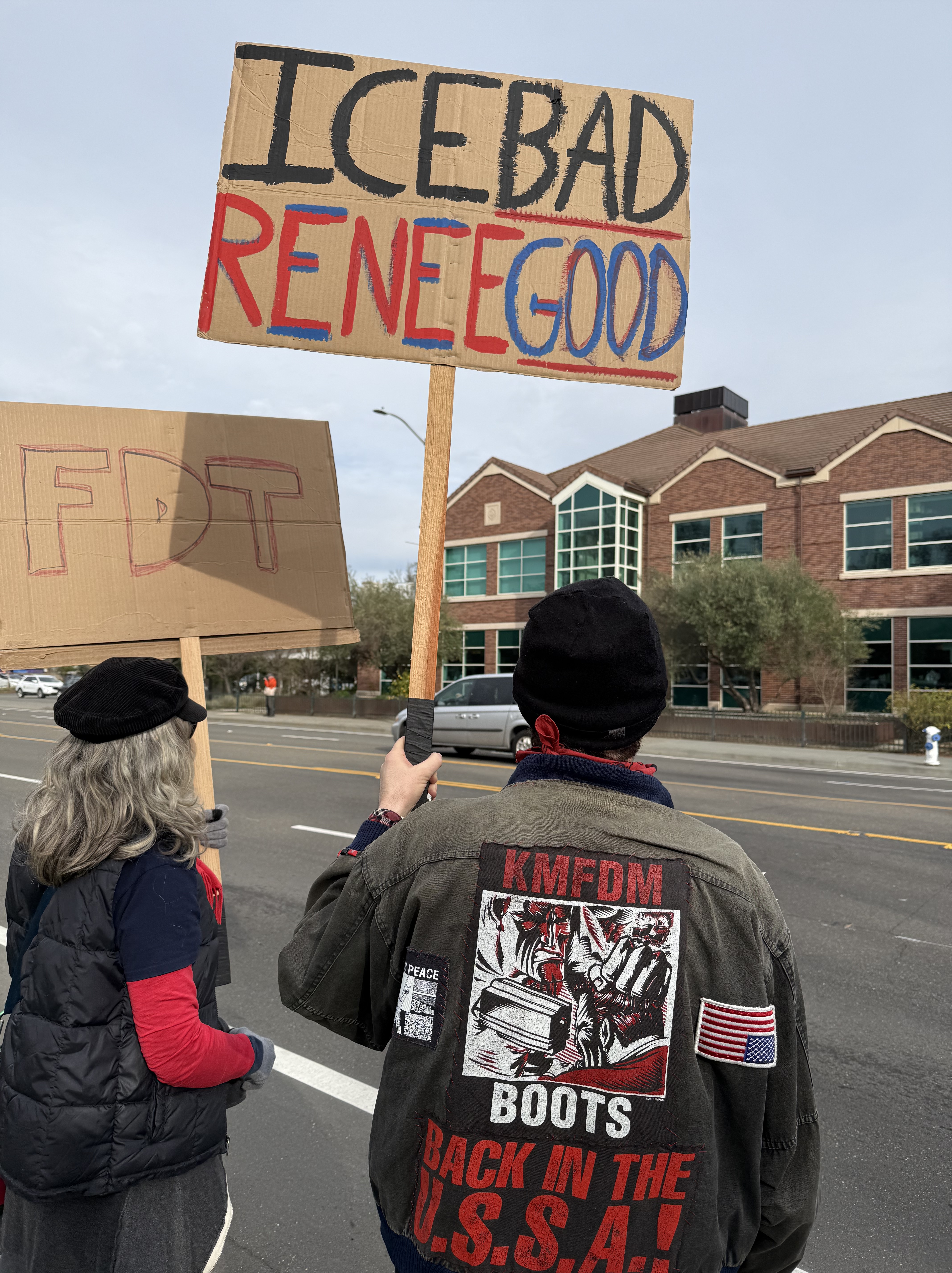
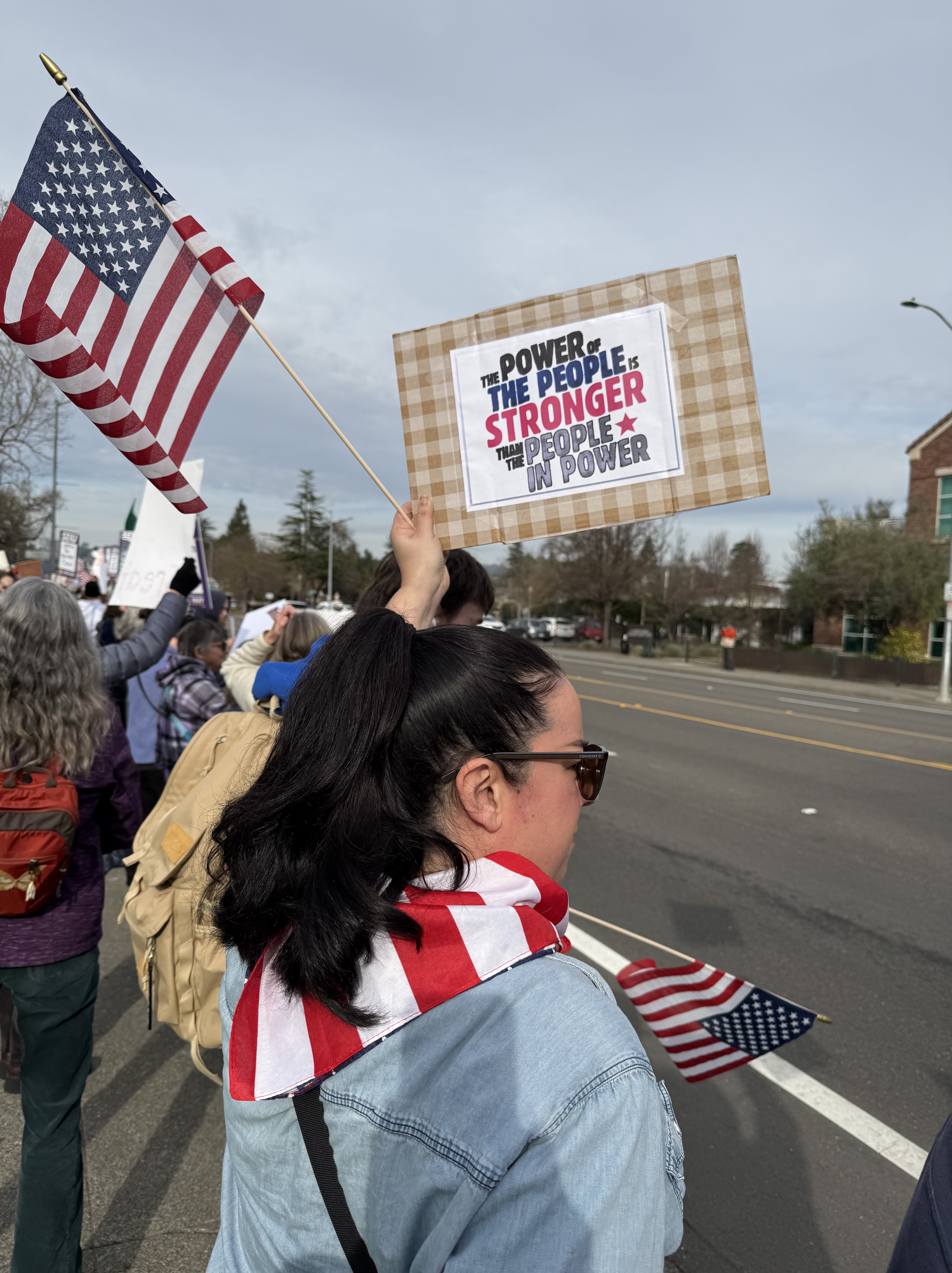
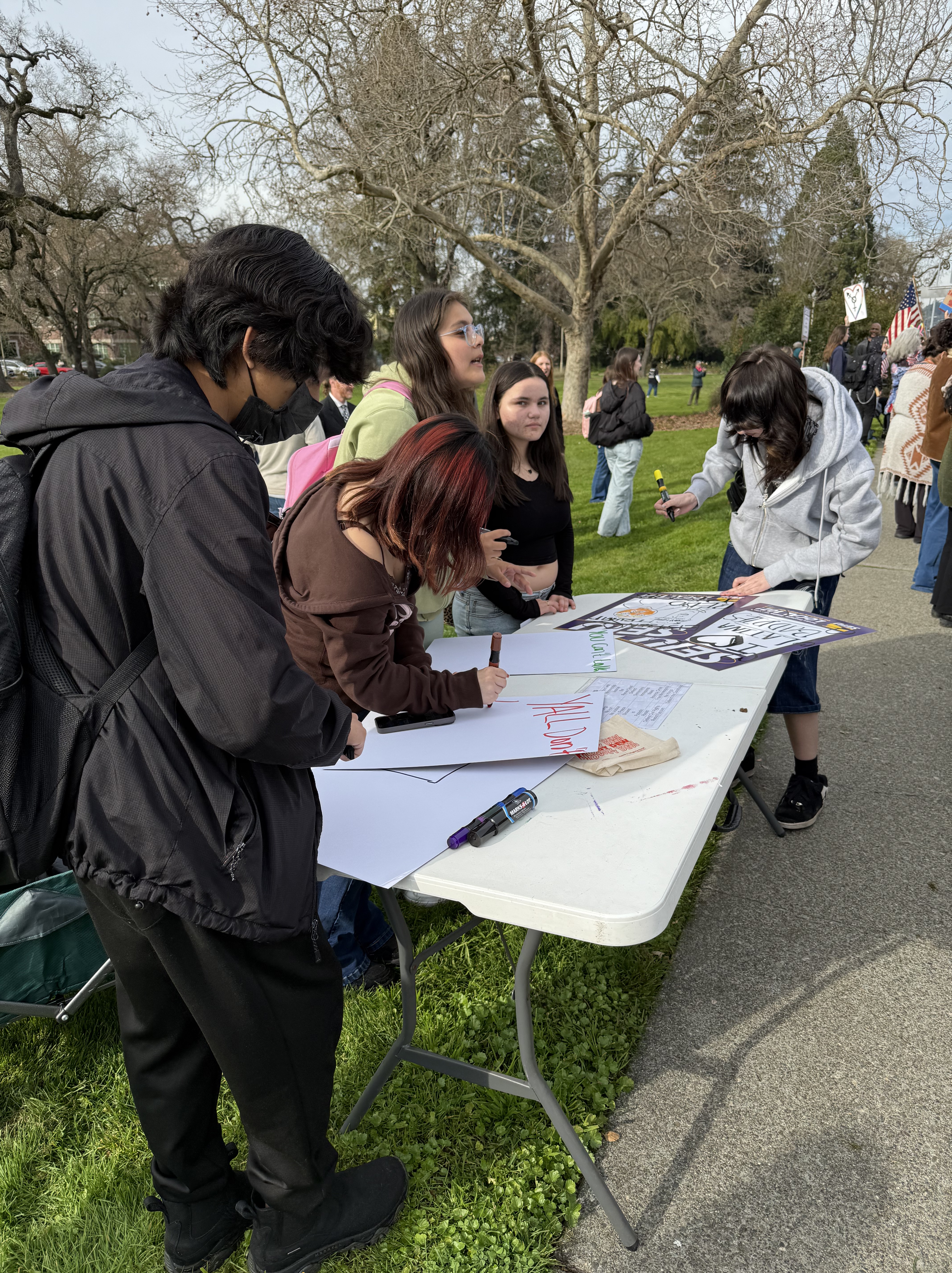
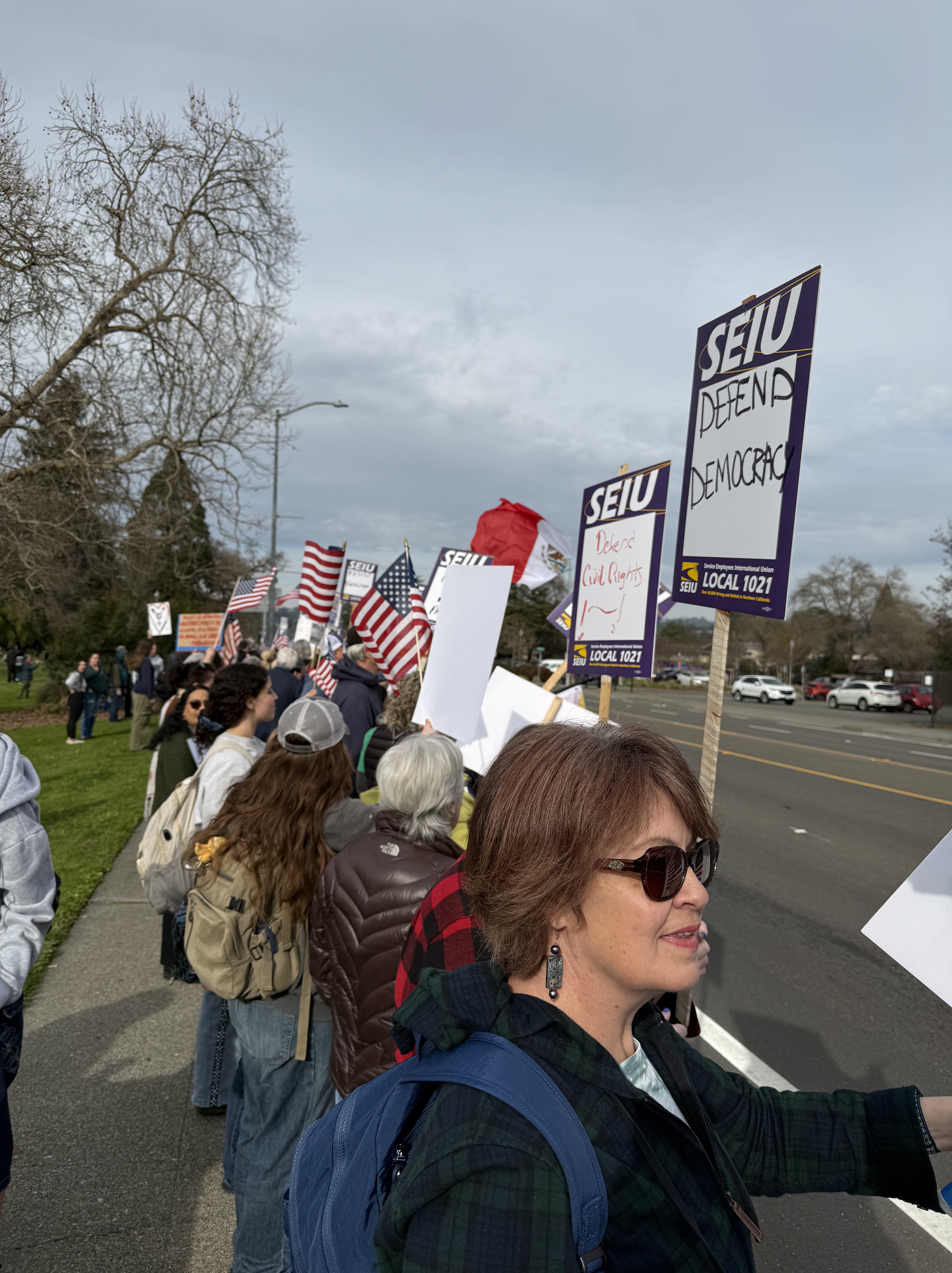
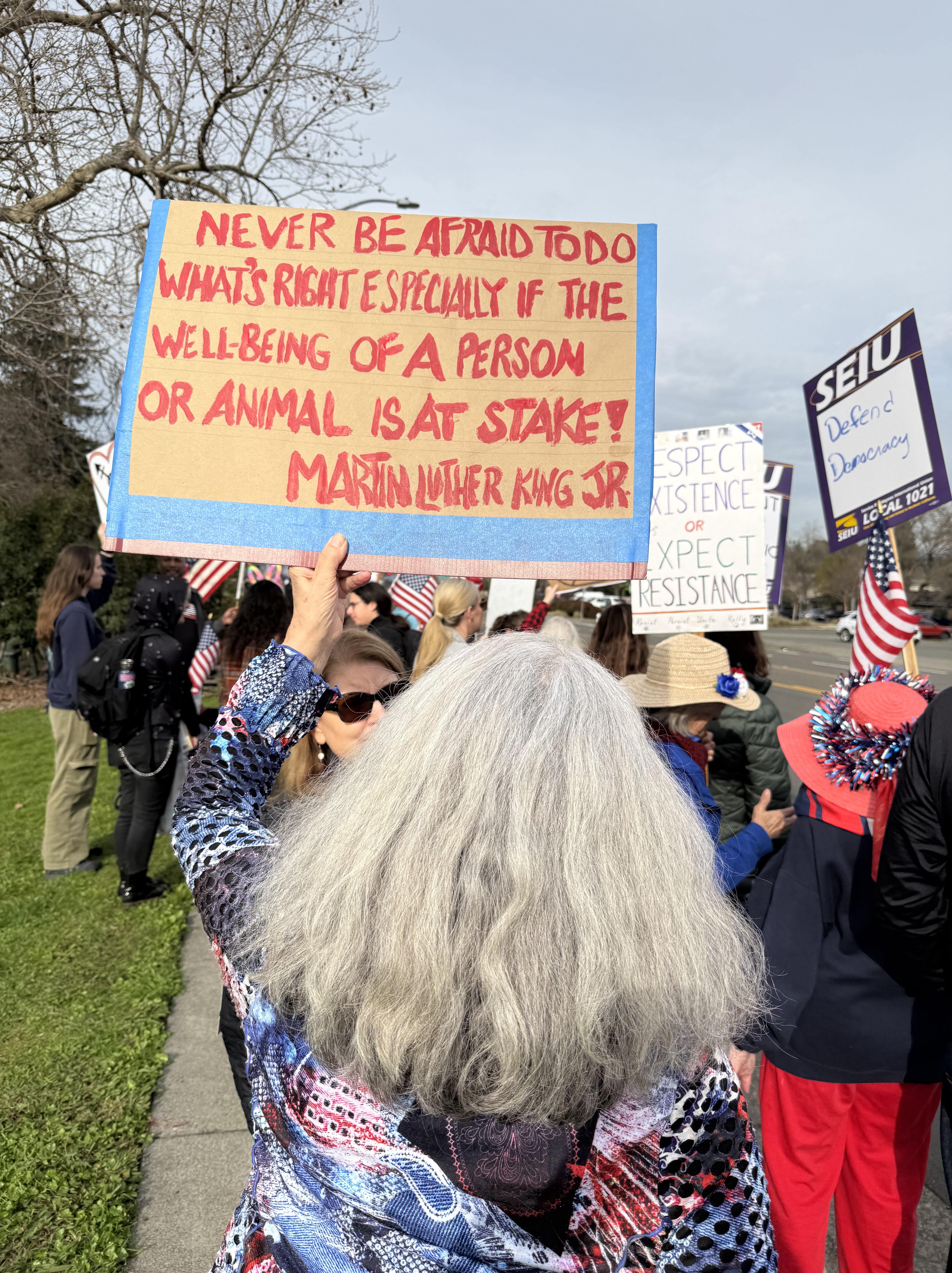
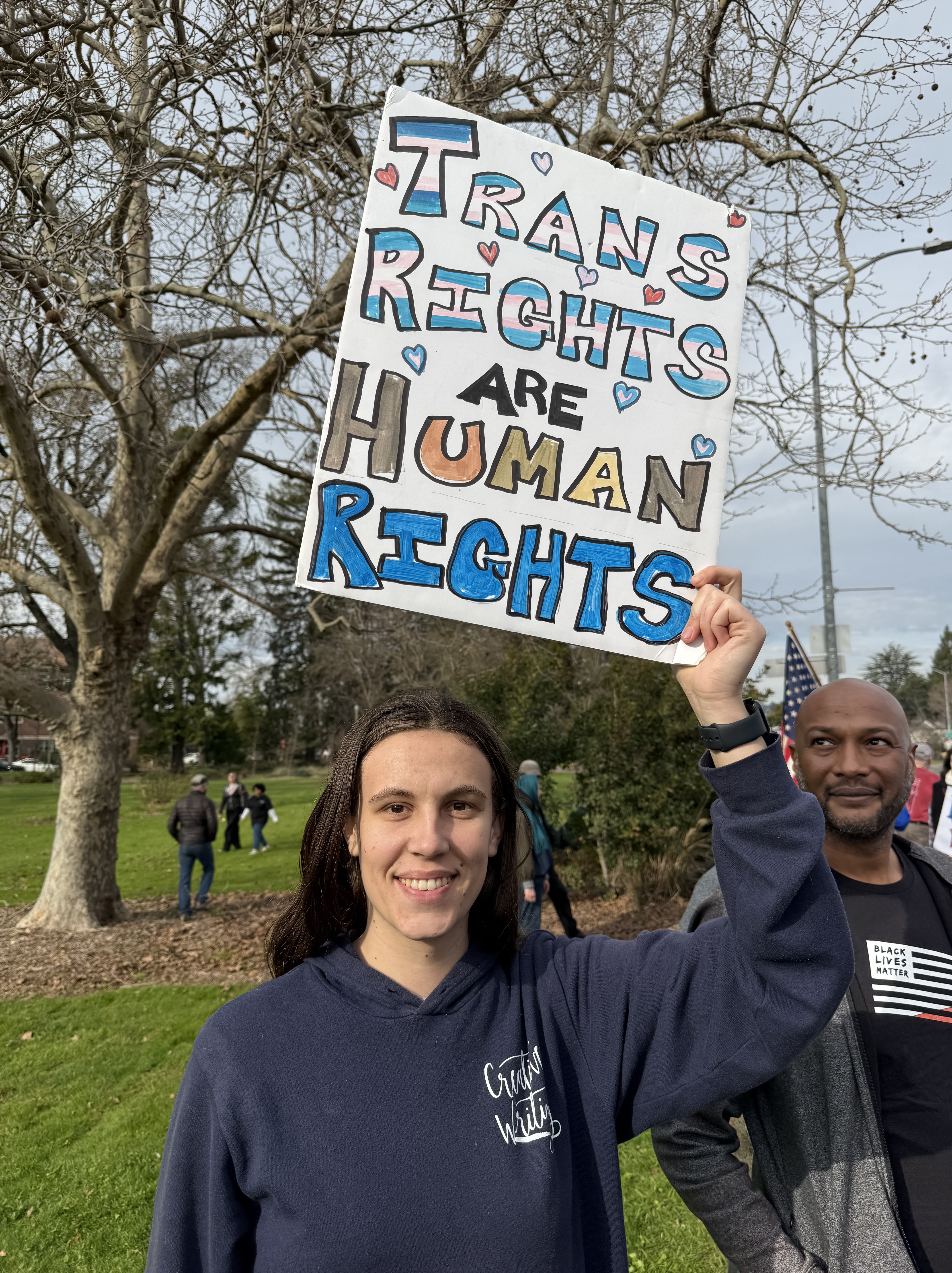
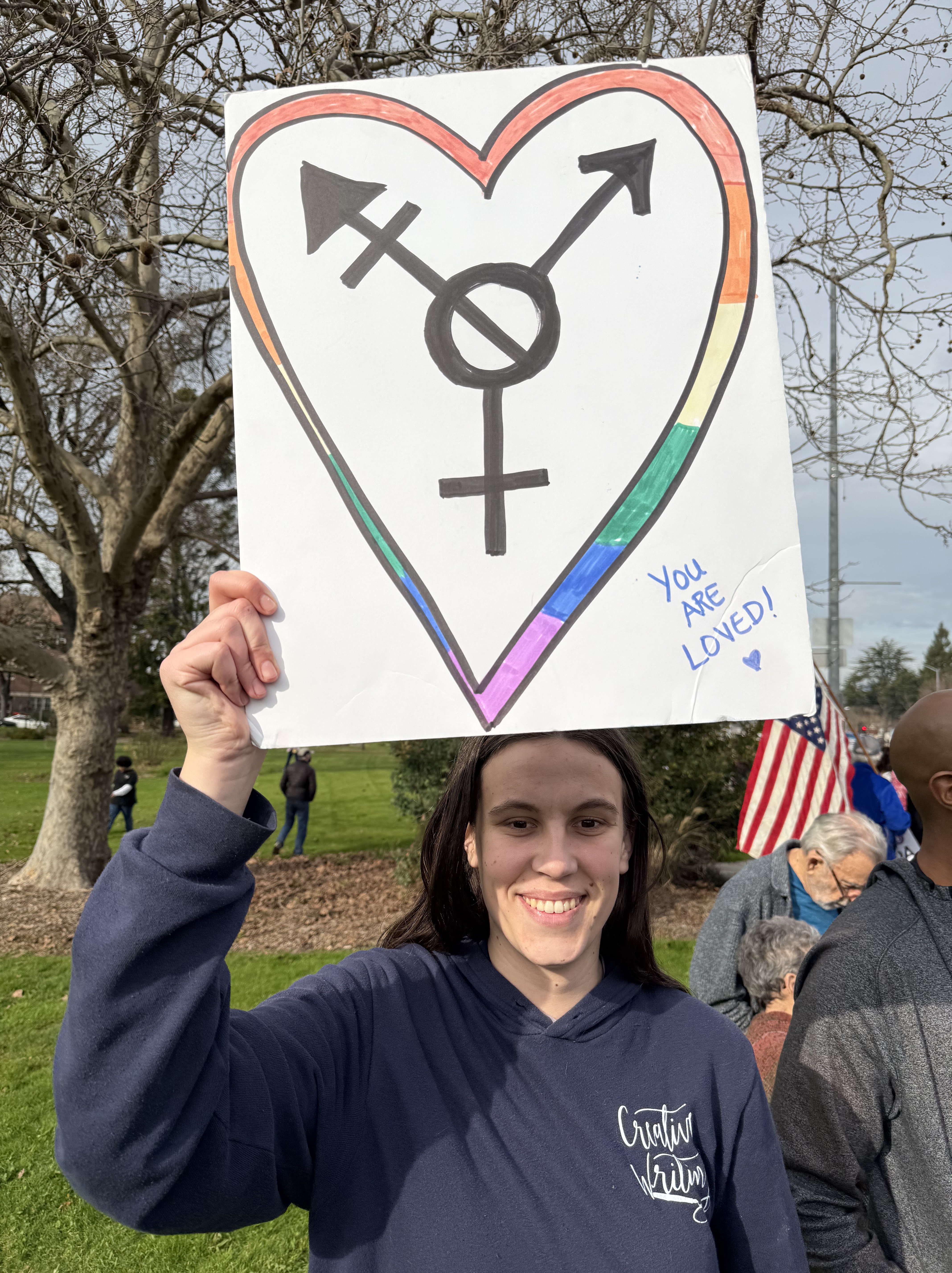
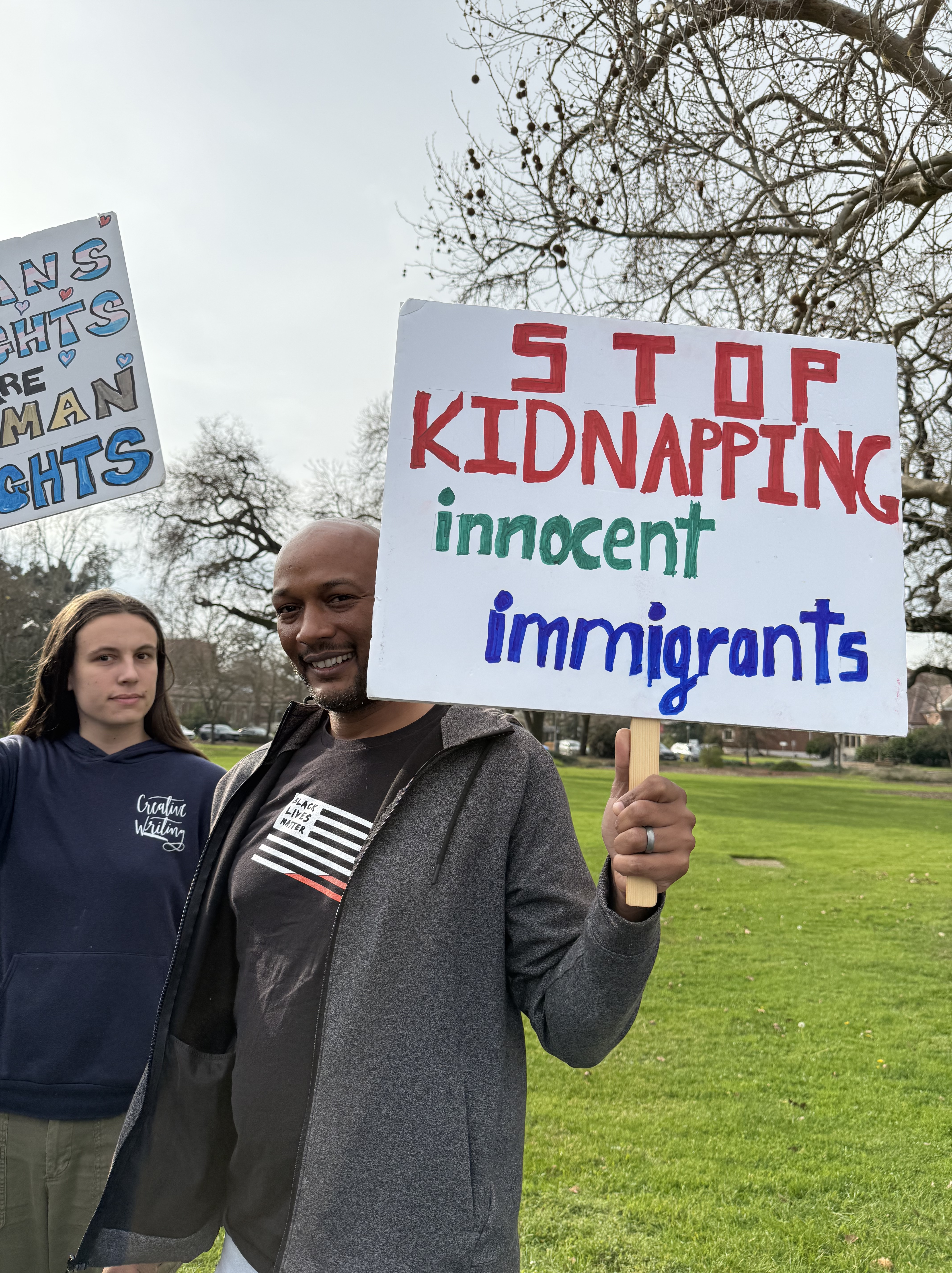
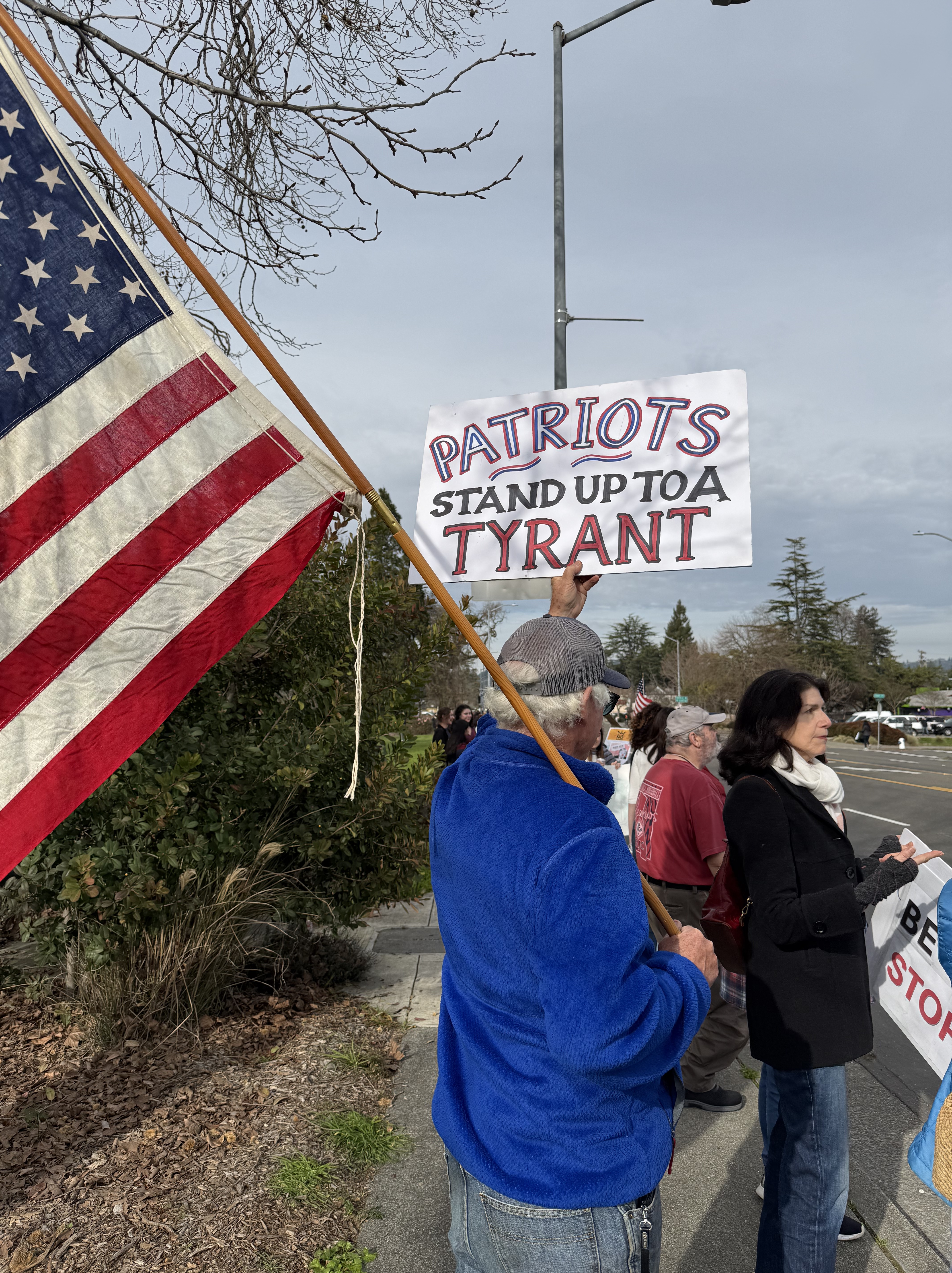
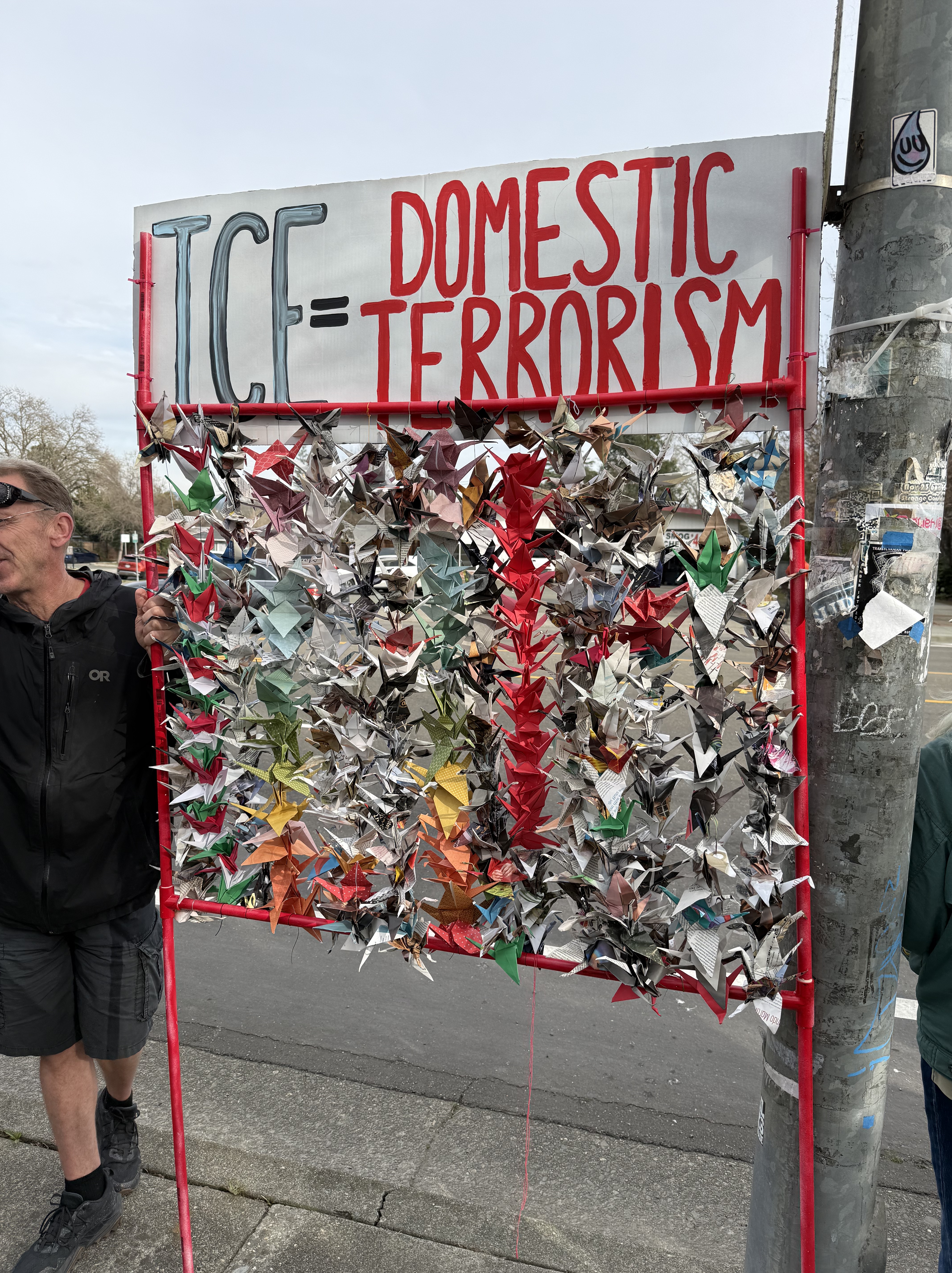
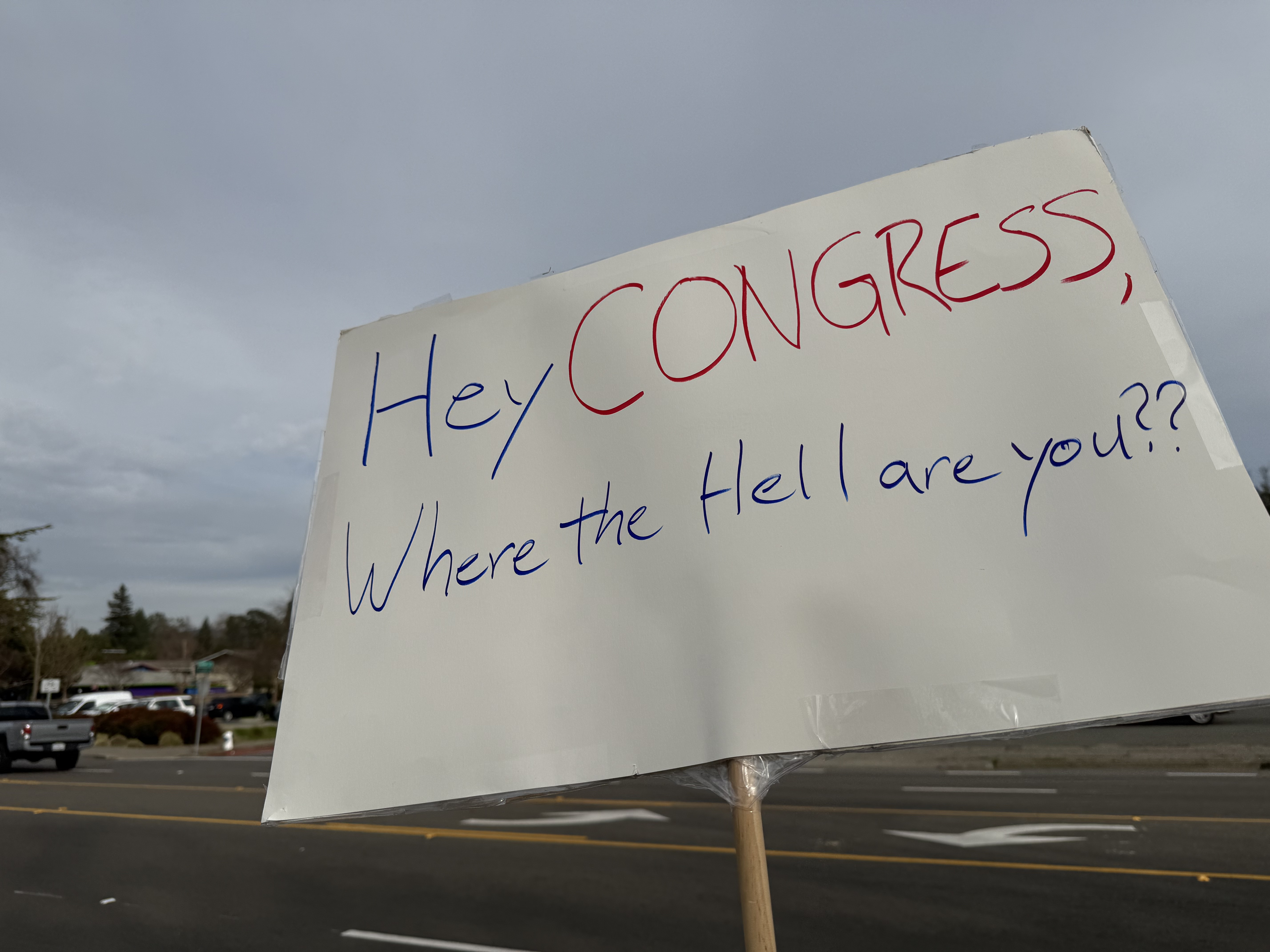
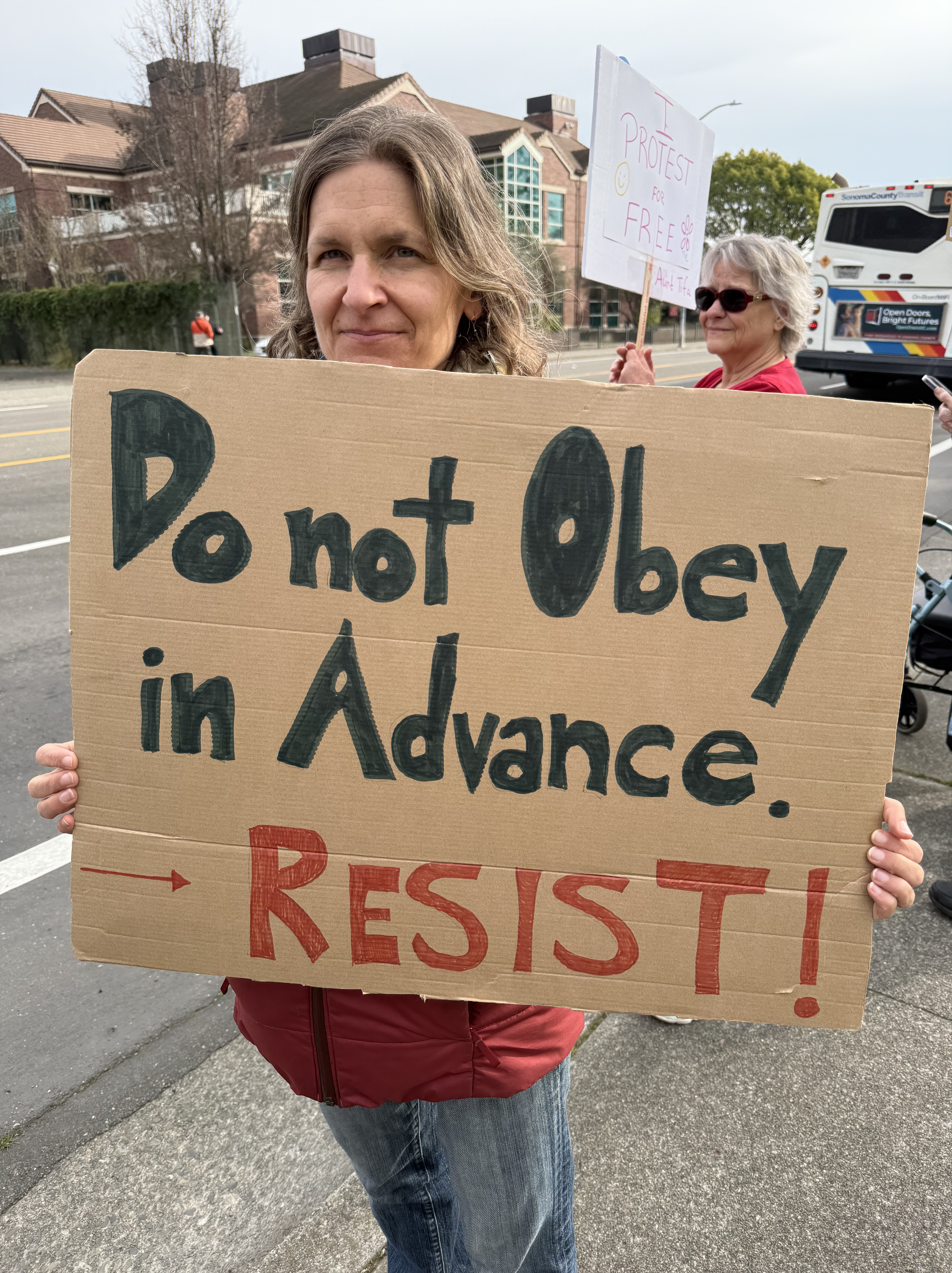
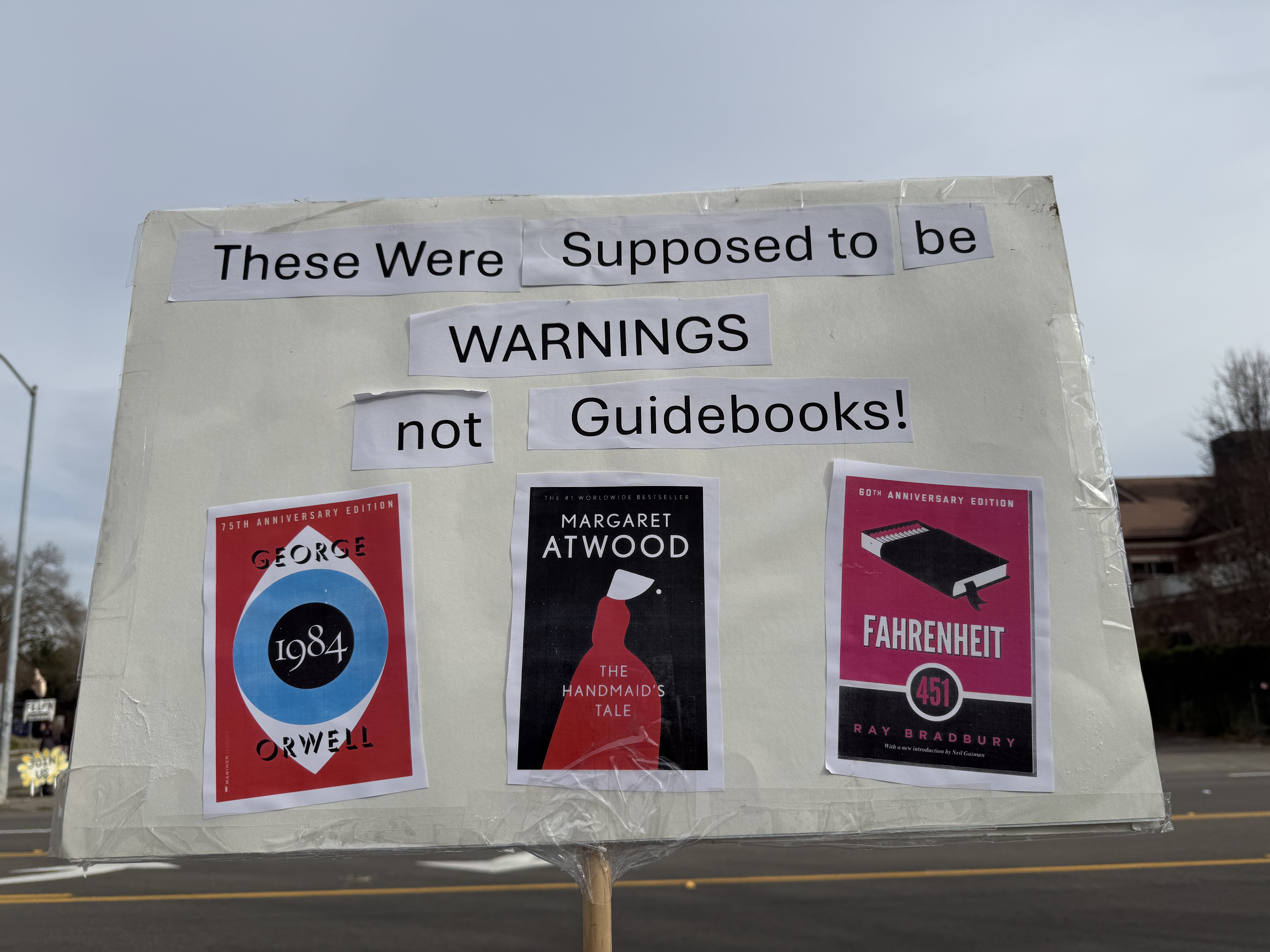
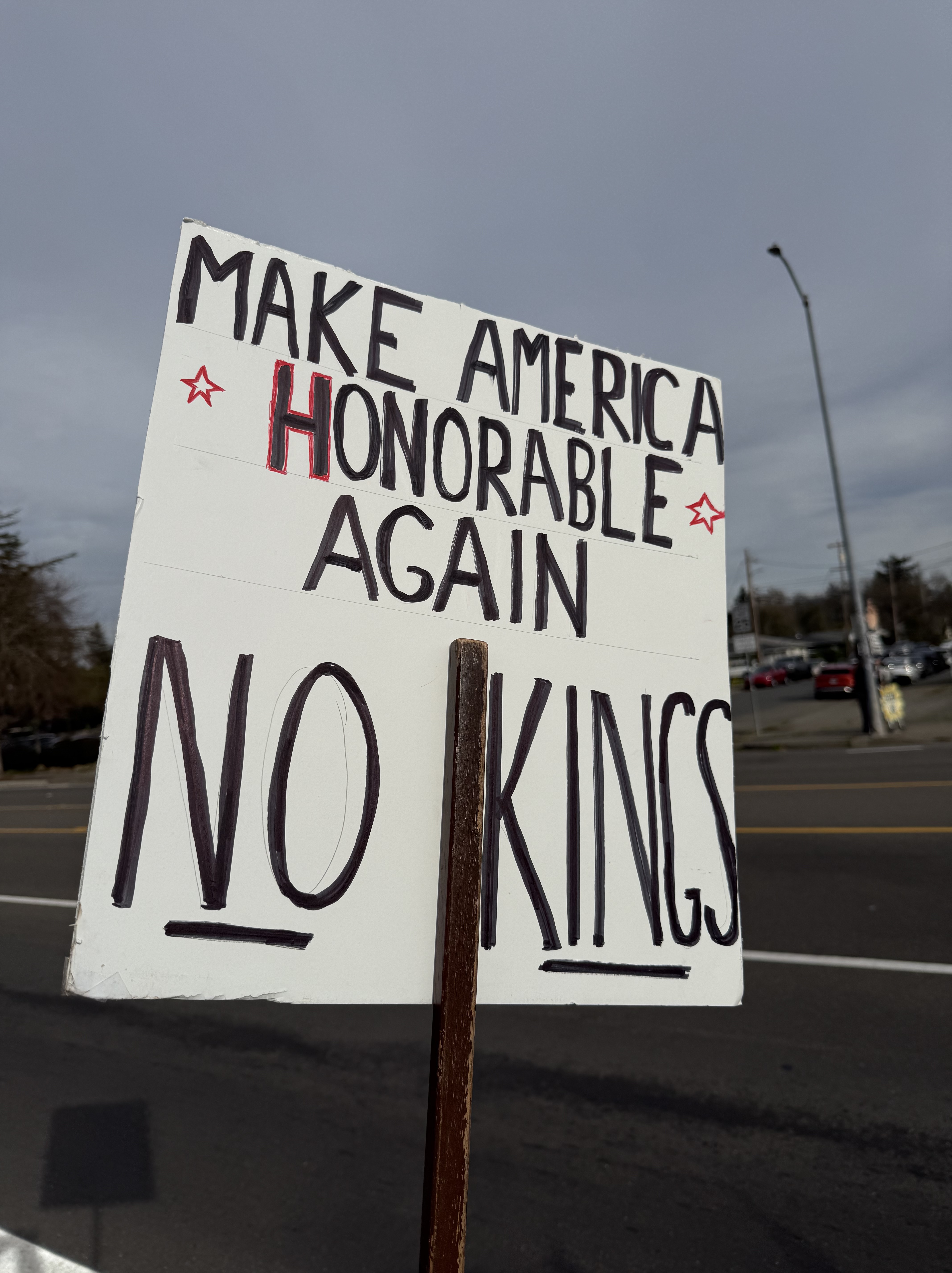
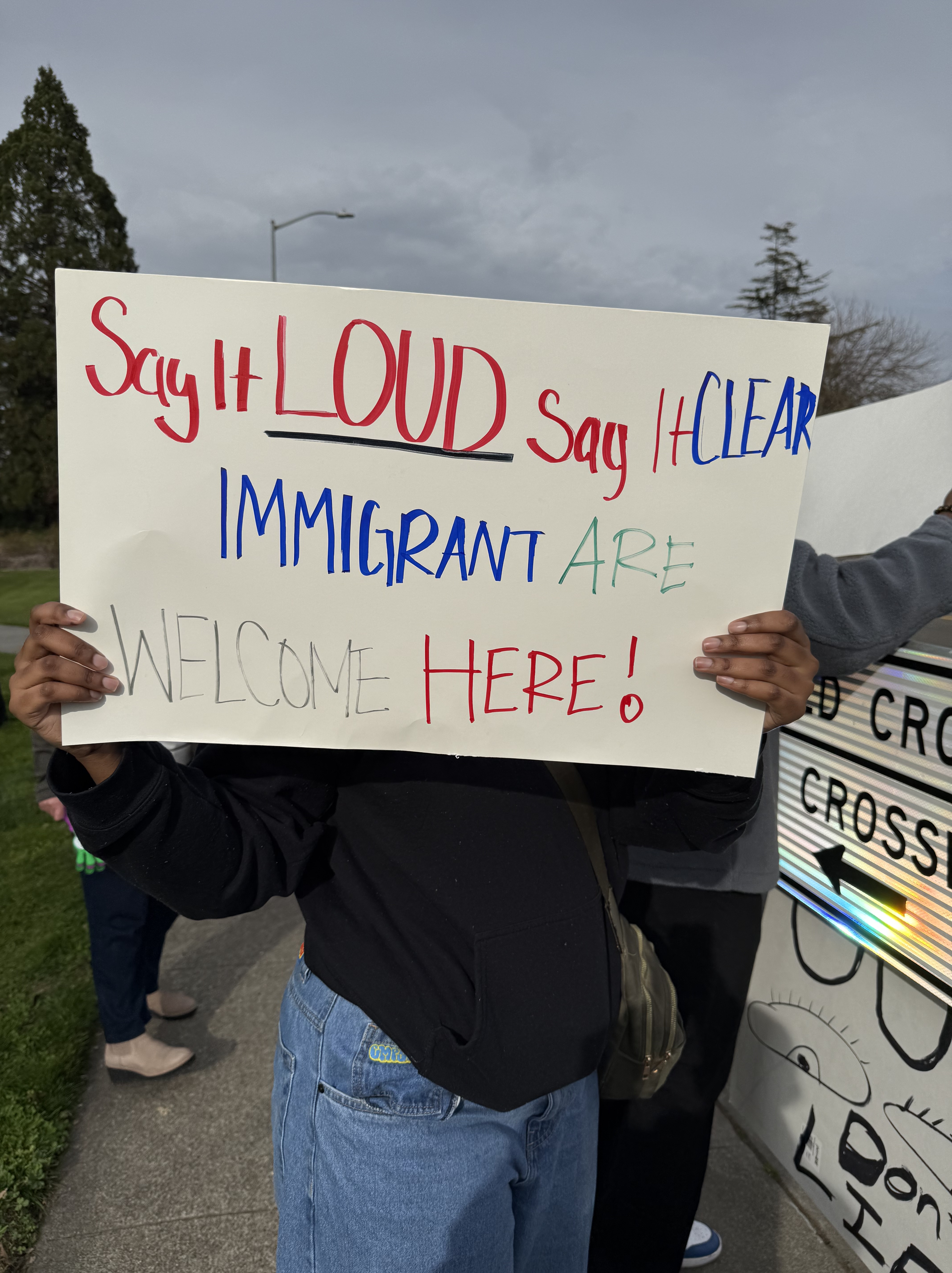
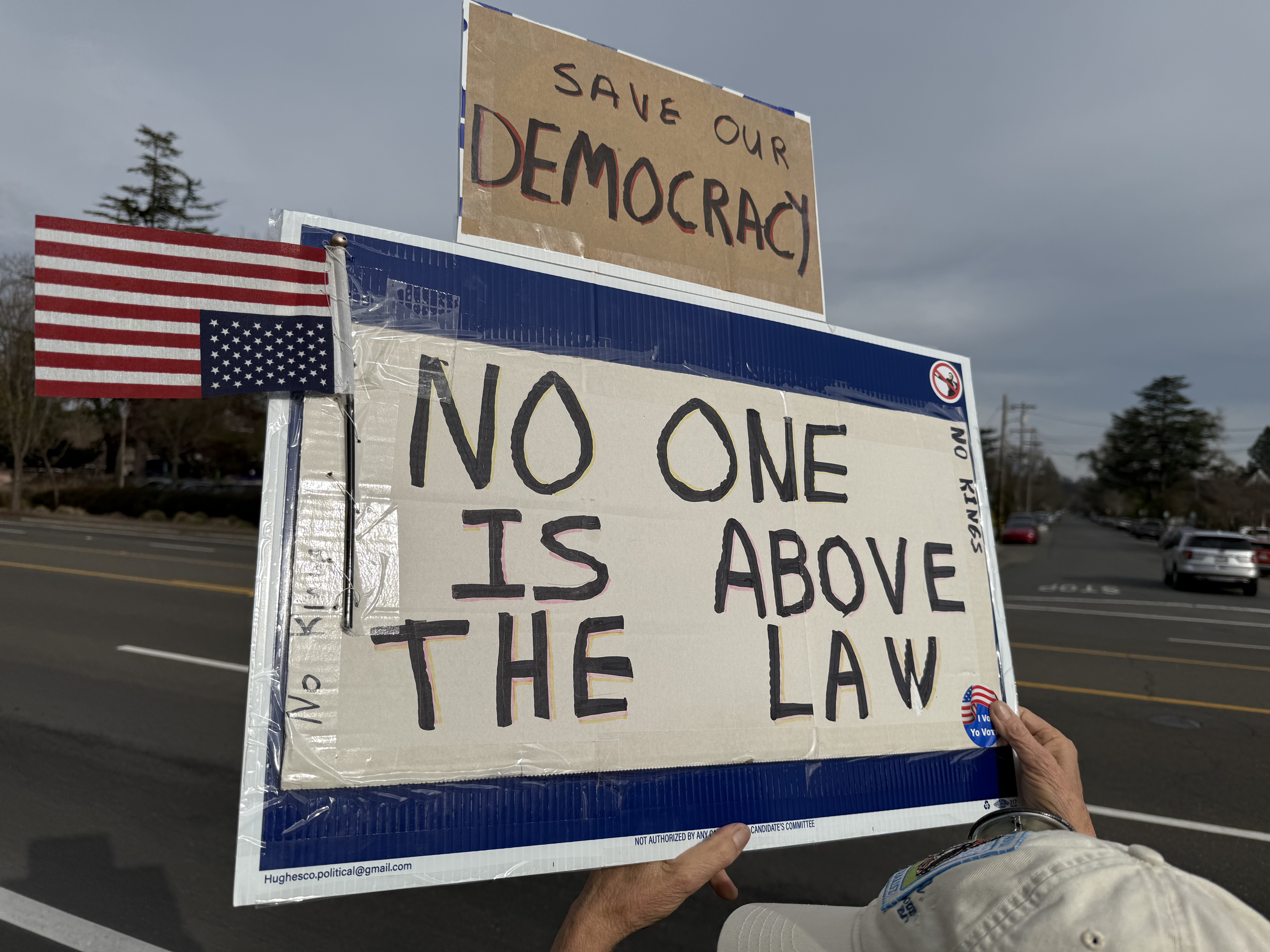
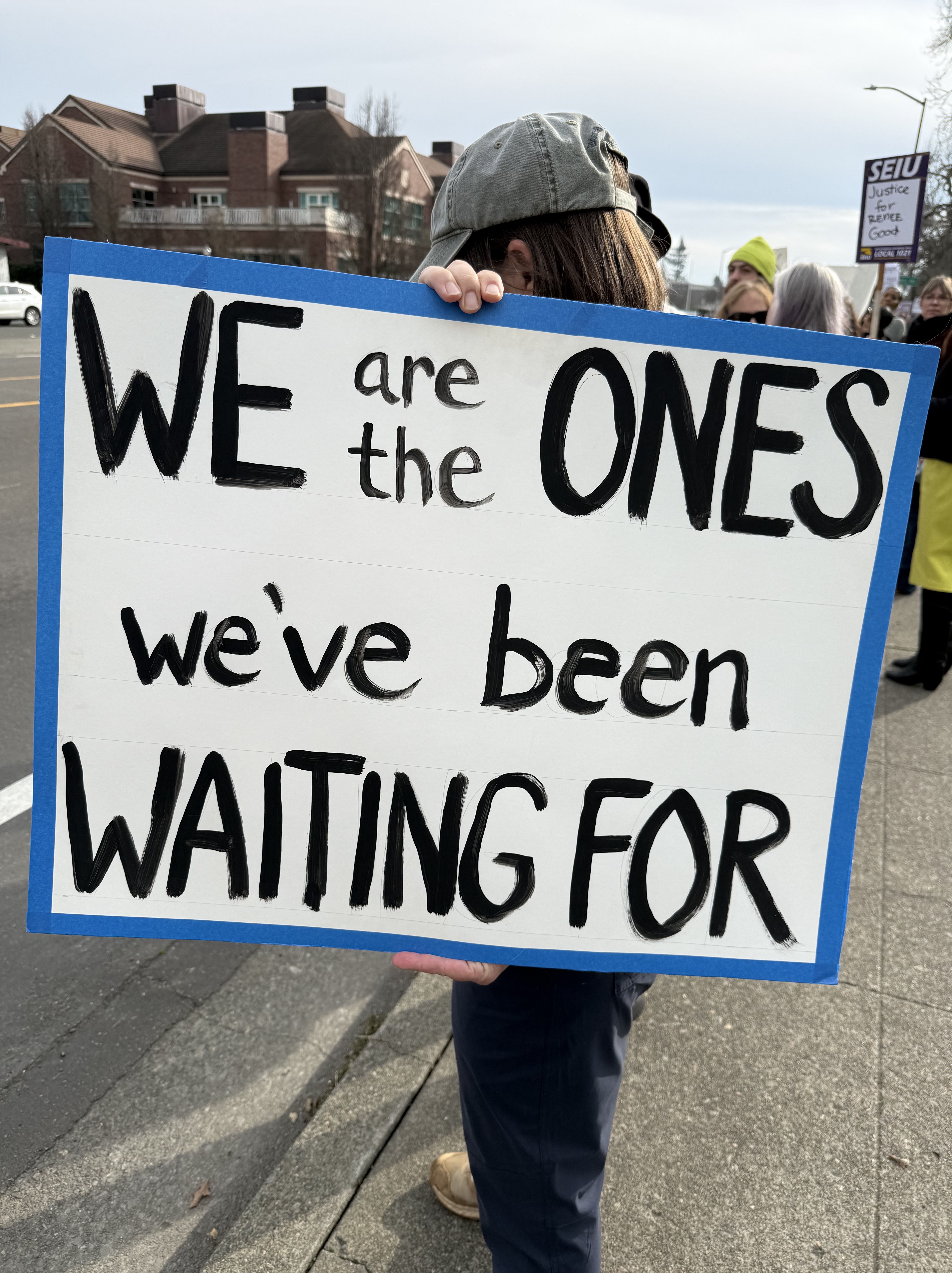
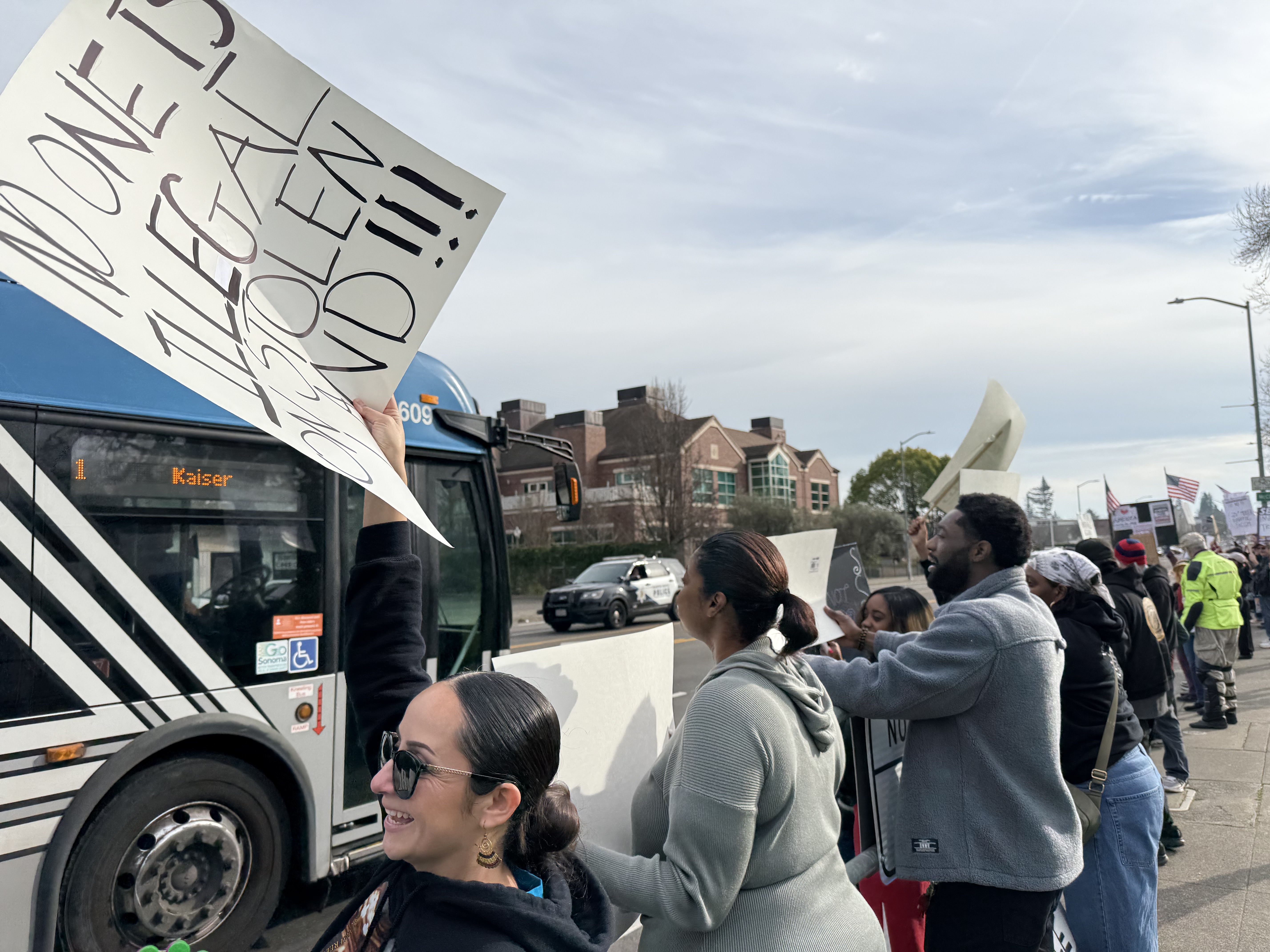
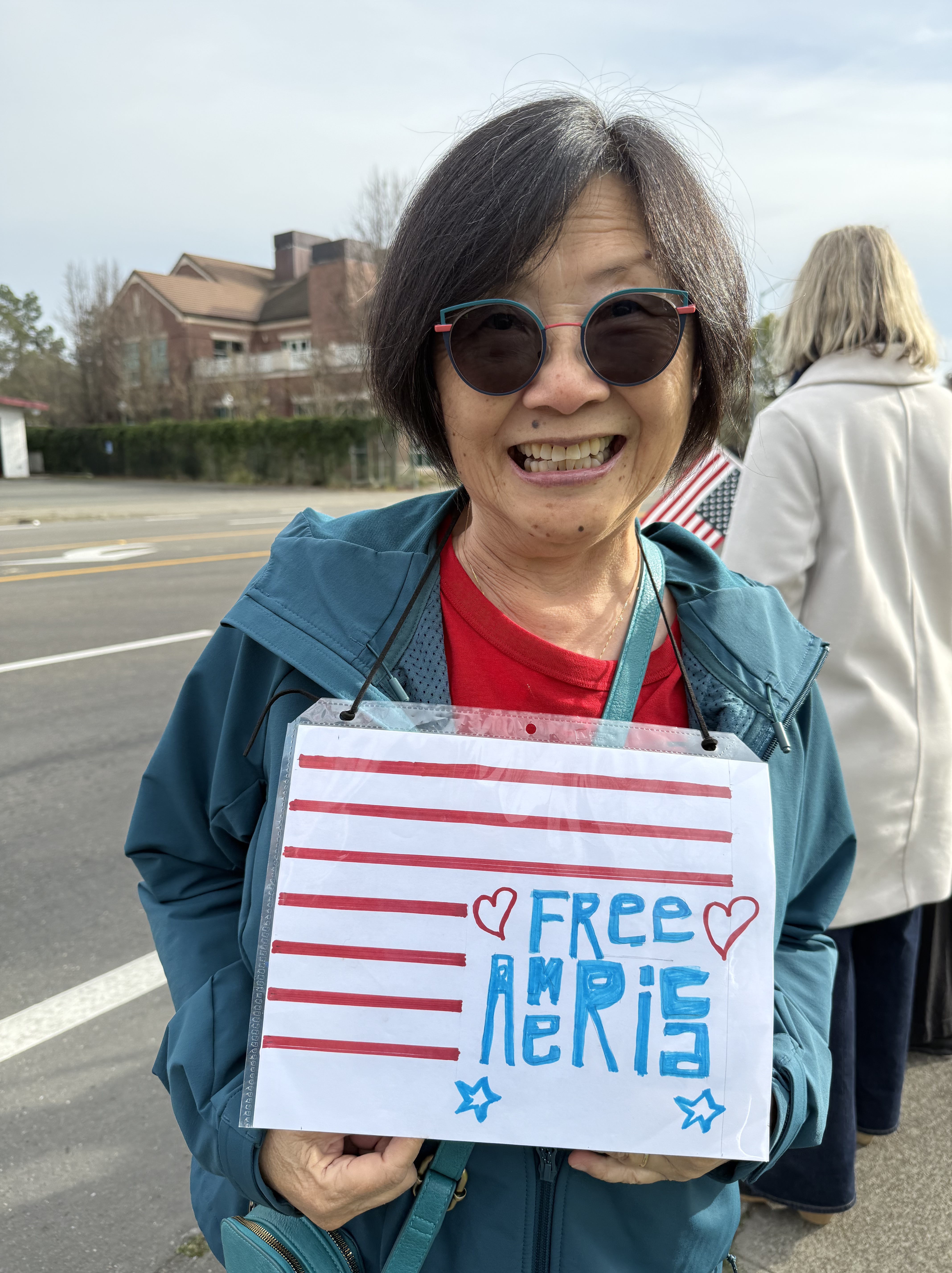
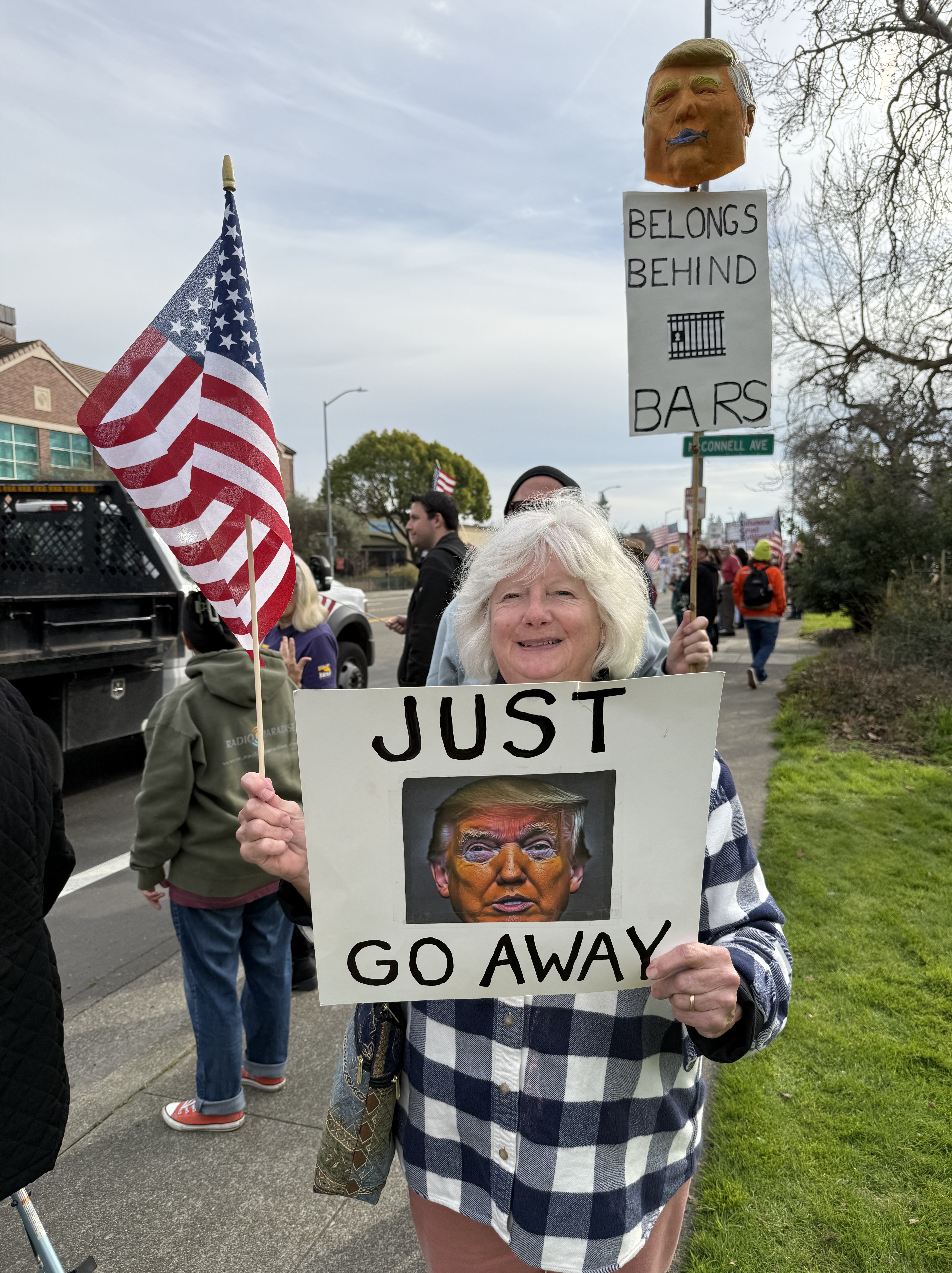
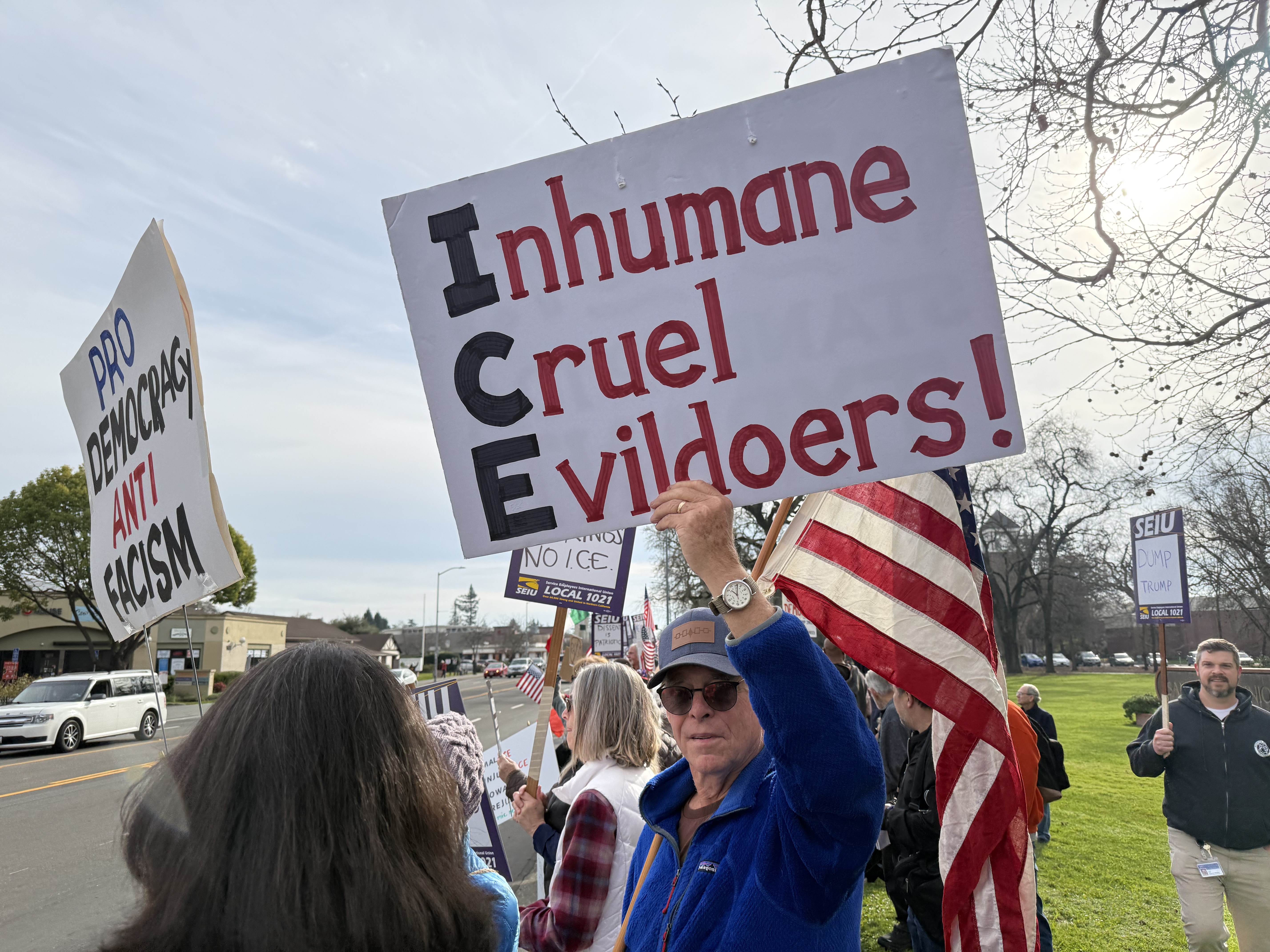
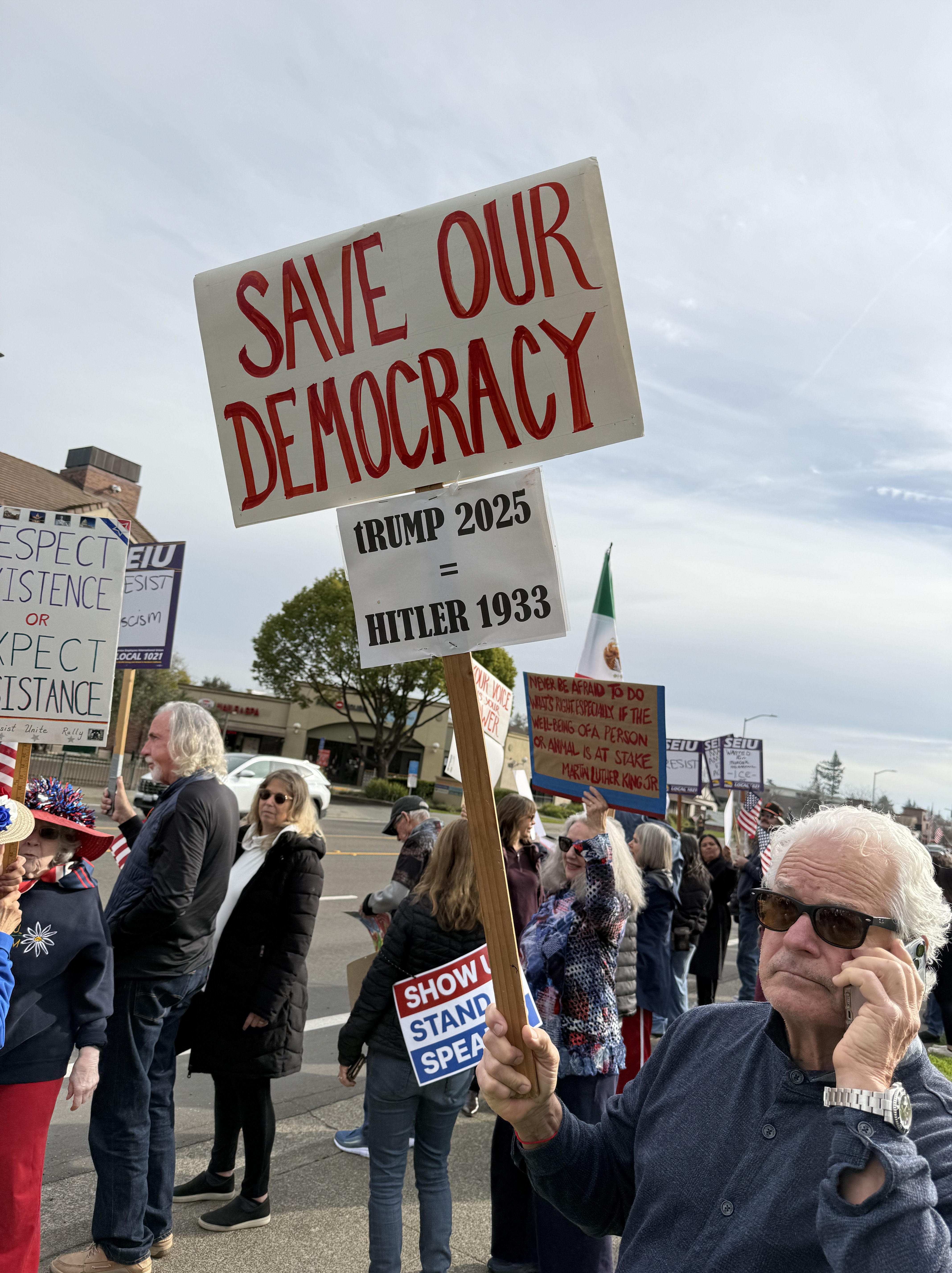
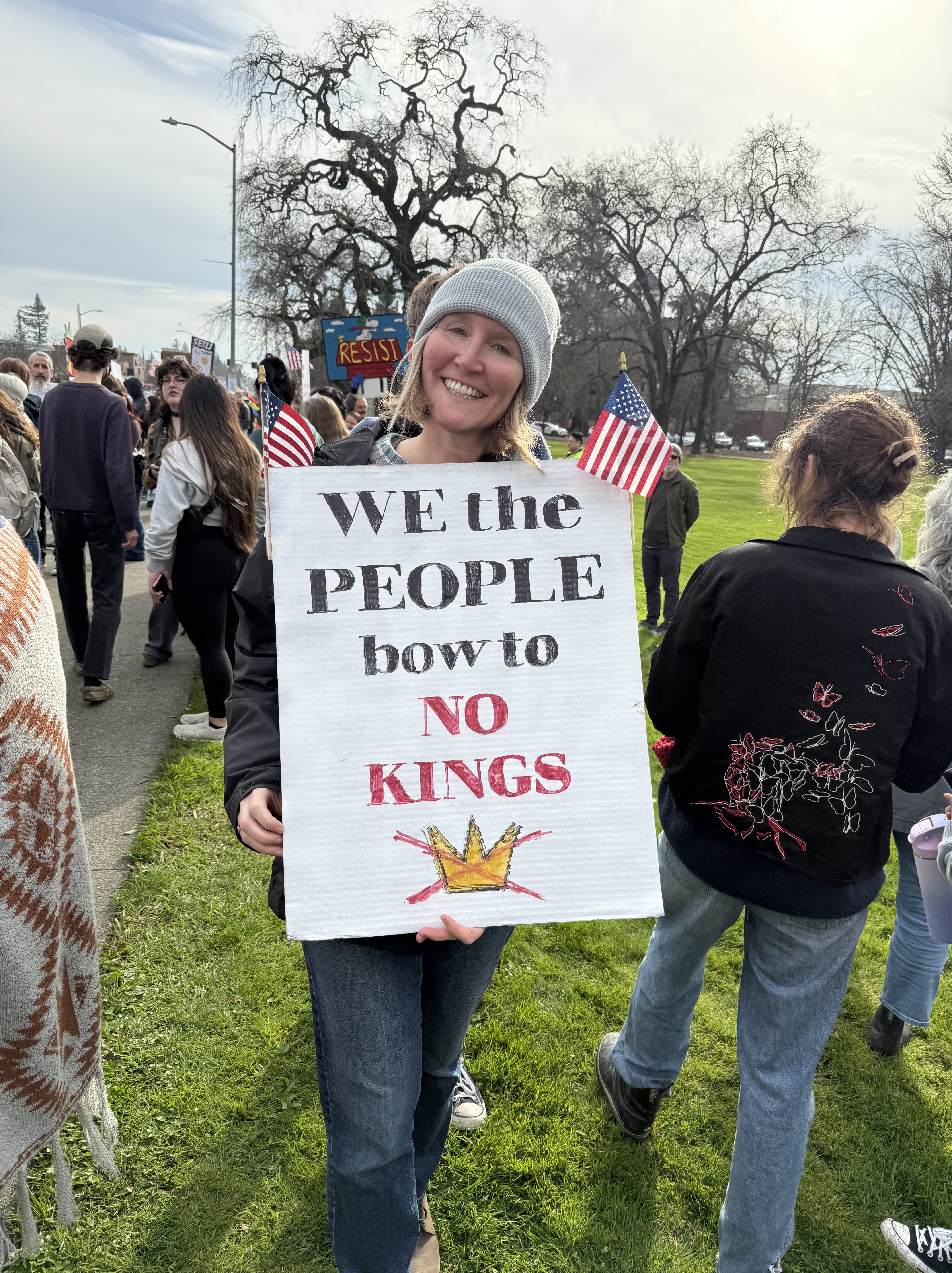
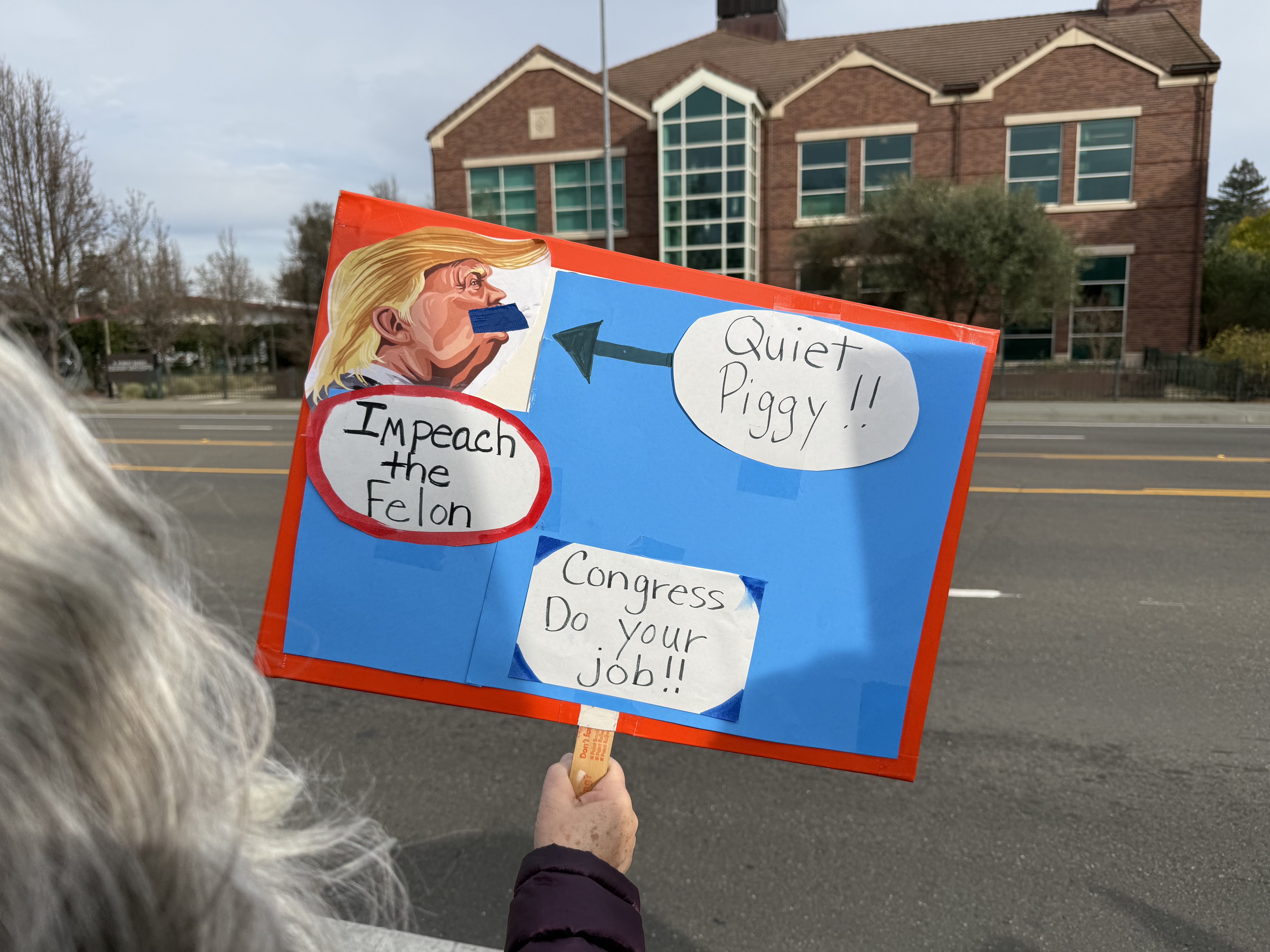
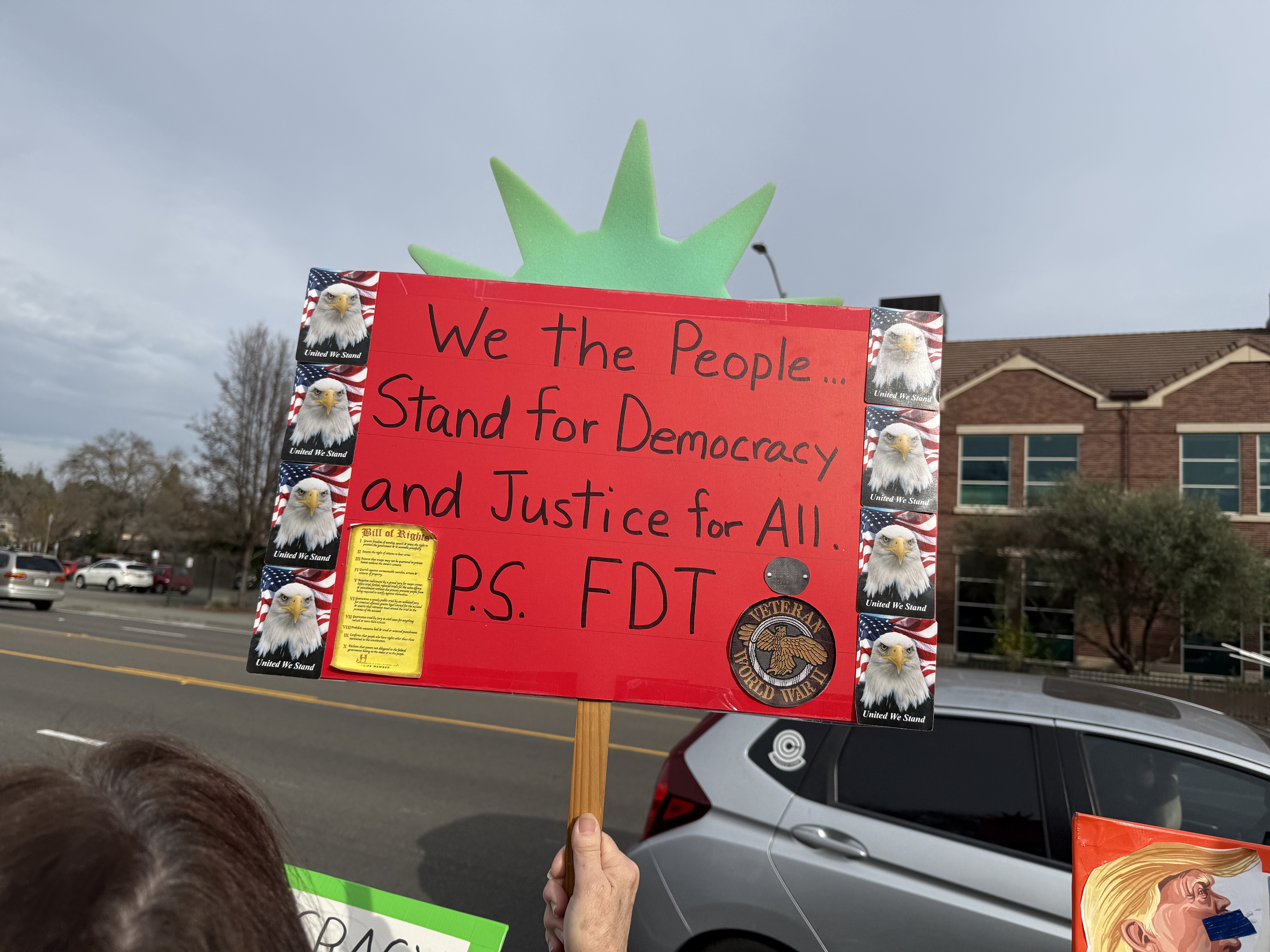
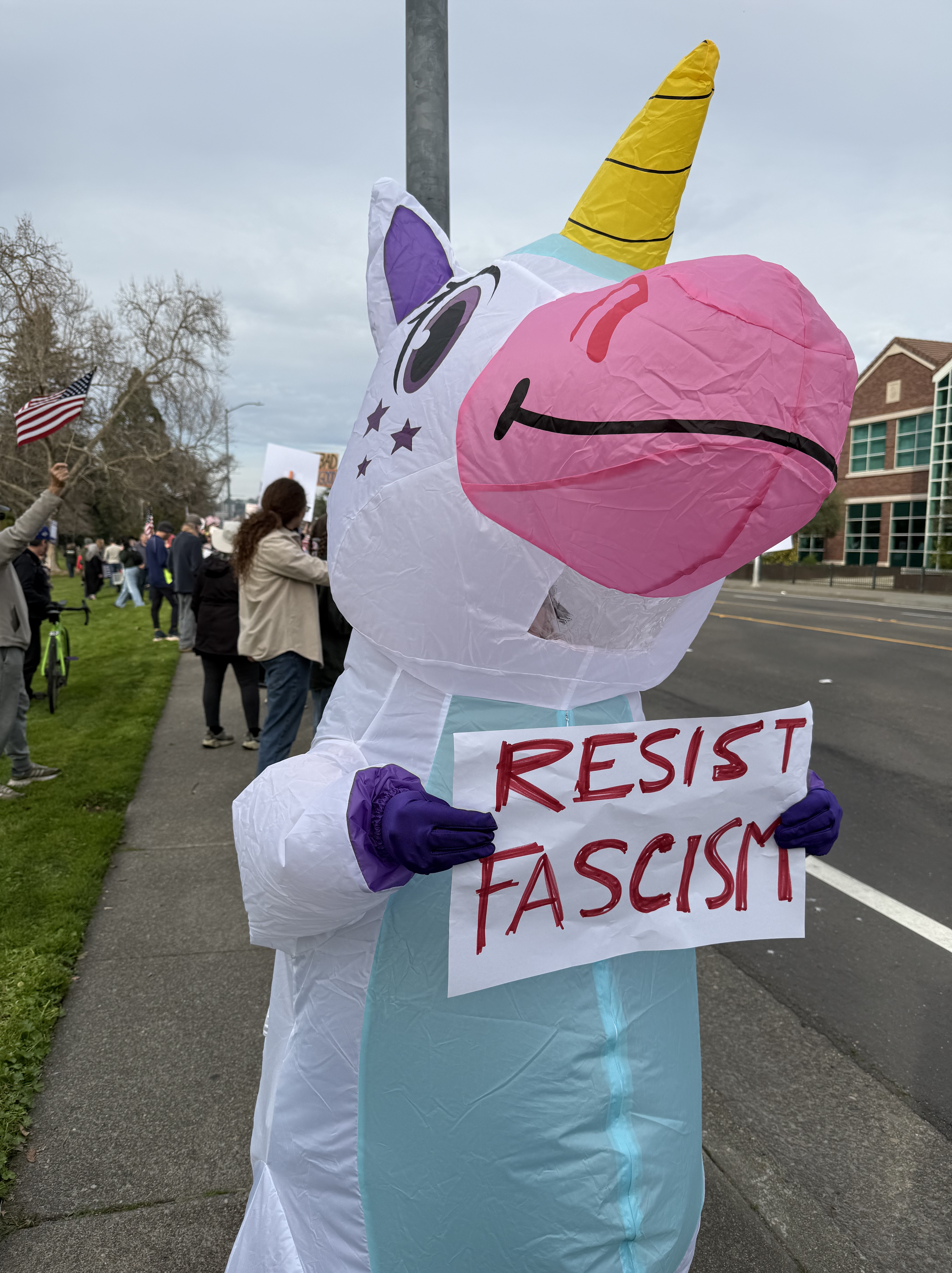
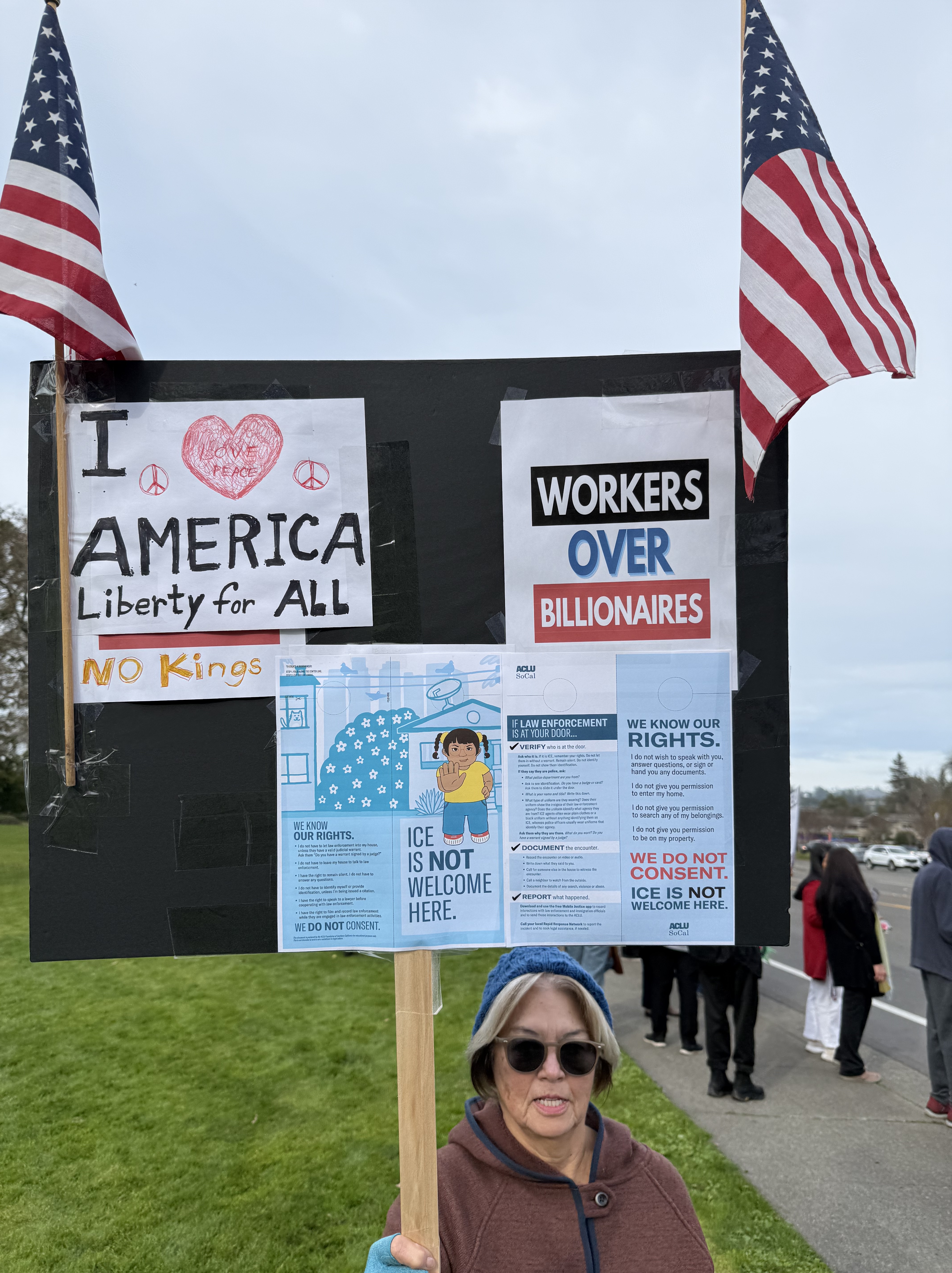
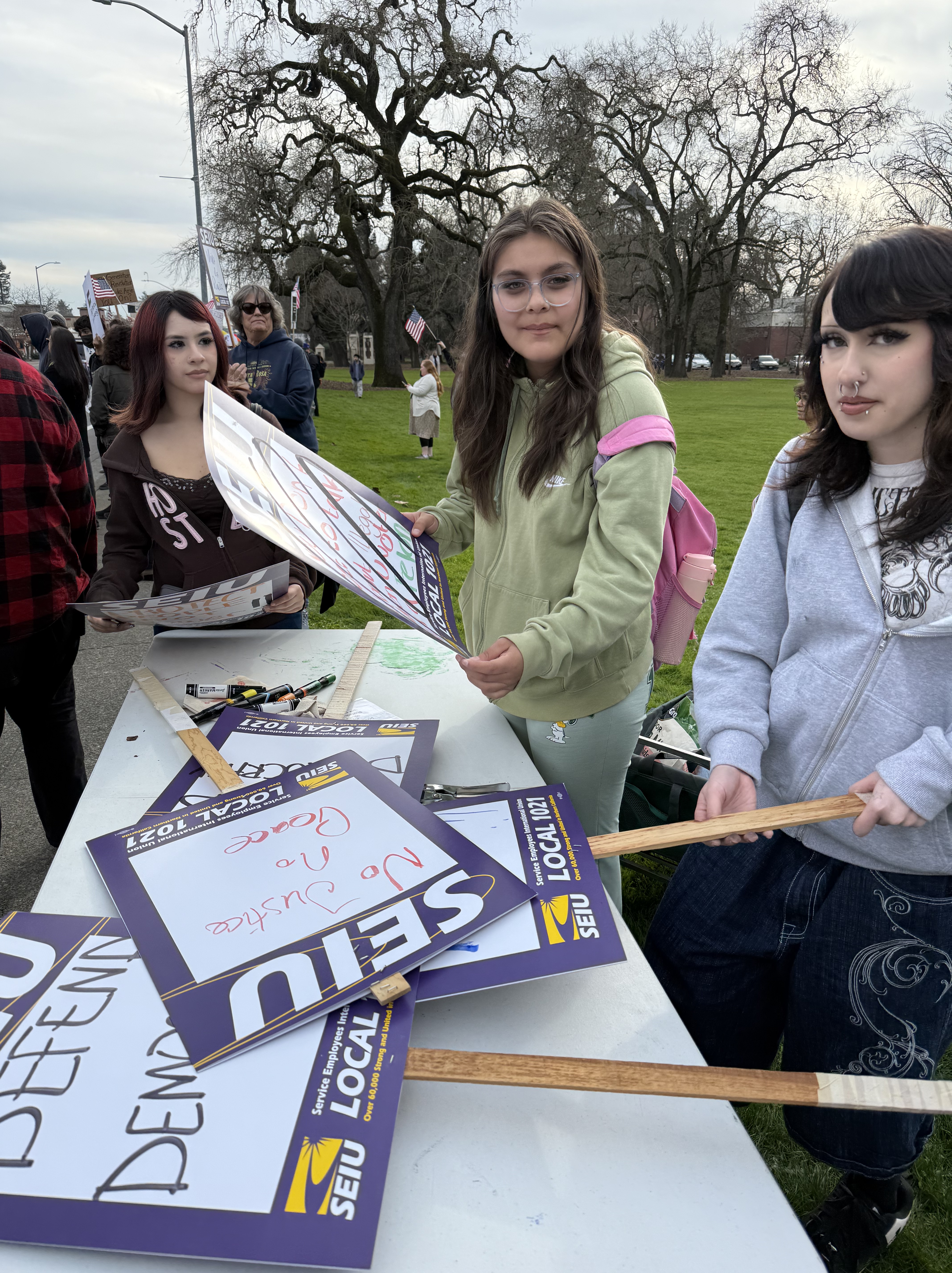
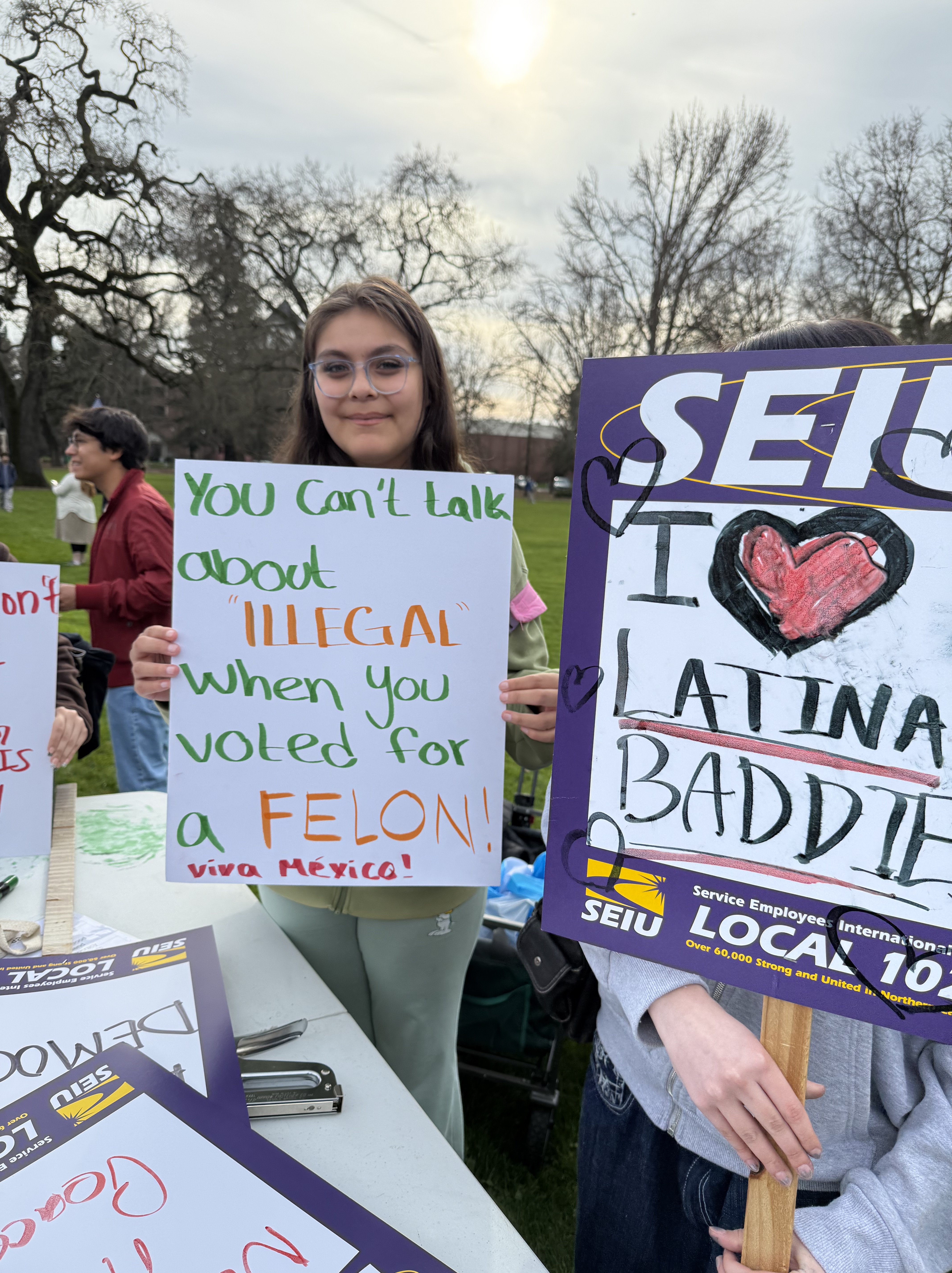
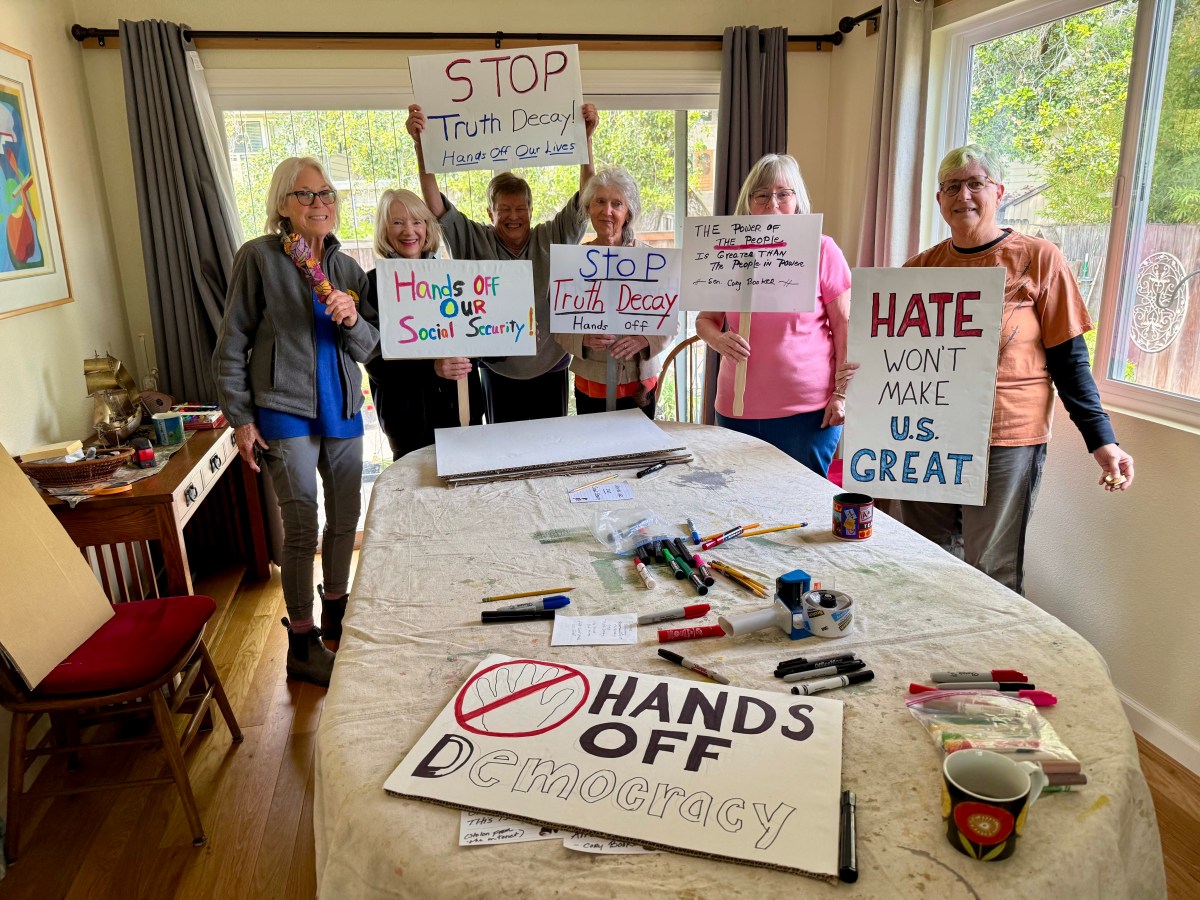
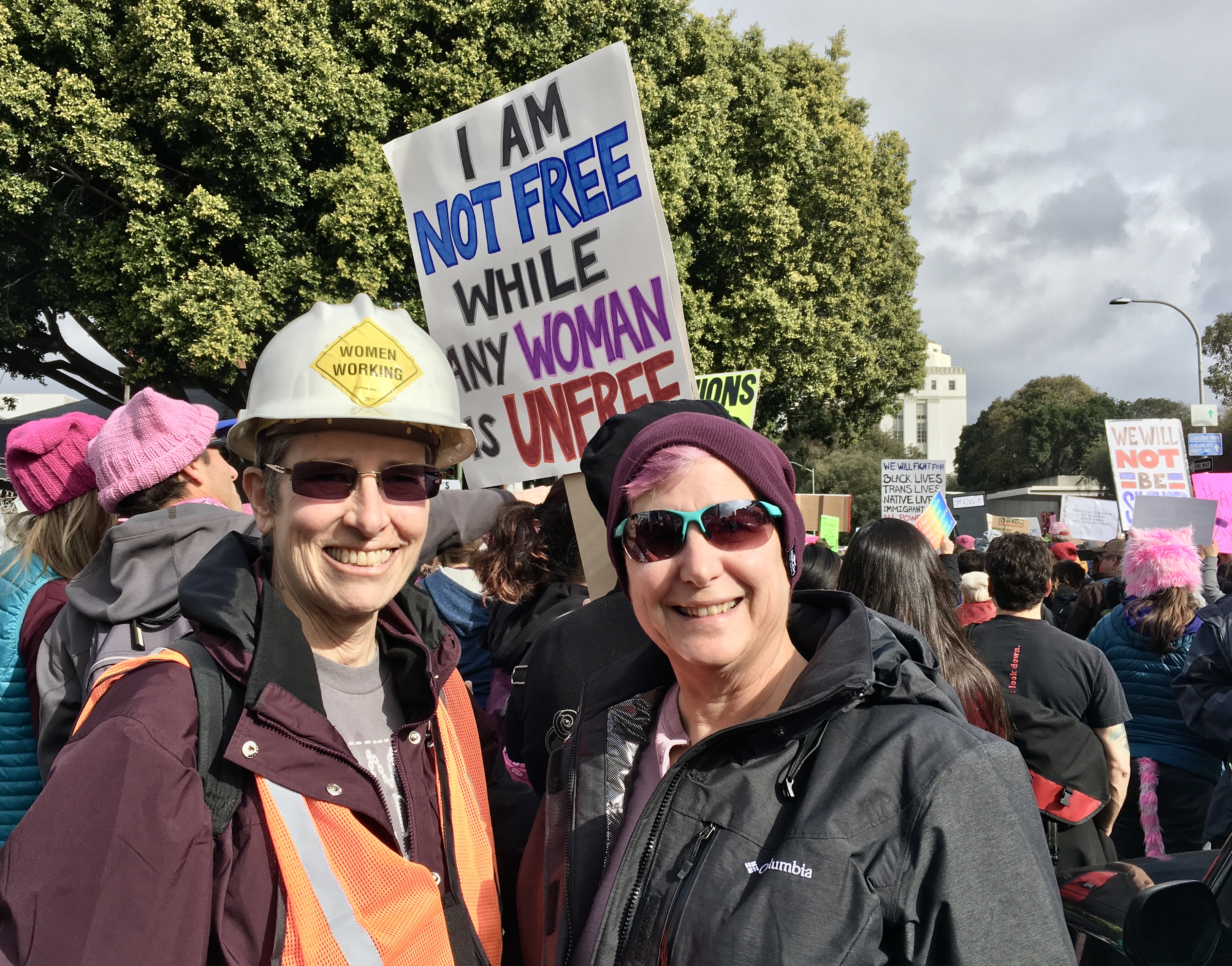
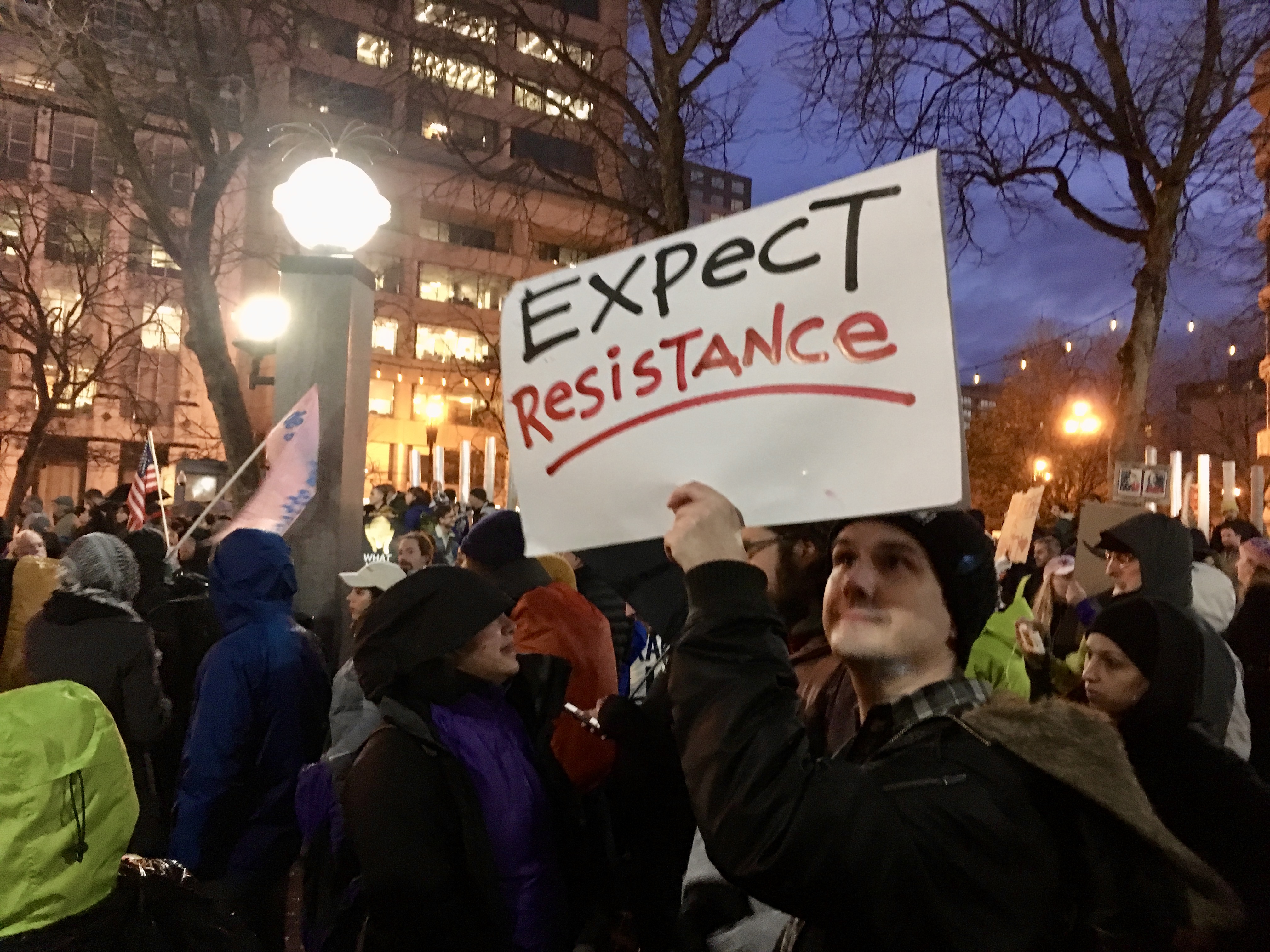
While that vast unity may be beyond our vision, we, too, seek to strengthen our community and mark the return of light. At winter solstice, we gather ourselves and our loved ones, shaping rituals that keep us connected to one another and to the slow turning of the year. We invite friends to help us trim our solstice tree, contribute to the local food bank, have neighbors over for hot chocolate, read poetry and stories aloud, bake cannabis edibles, host impromptu living room dance parties, cook savory soups, plant flower bulbs. With neighbors, we make signs and join street protests to raise our voices against fascism. We look for the sacred in everyday life.
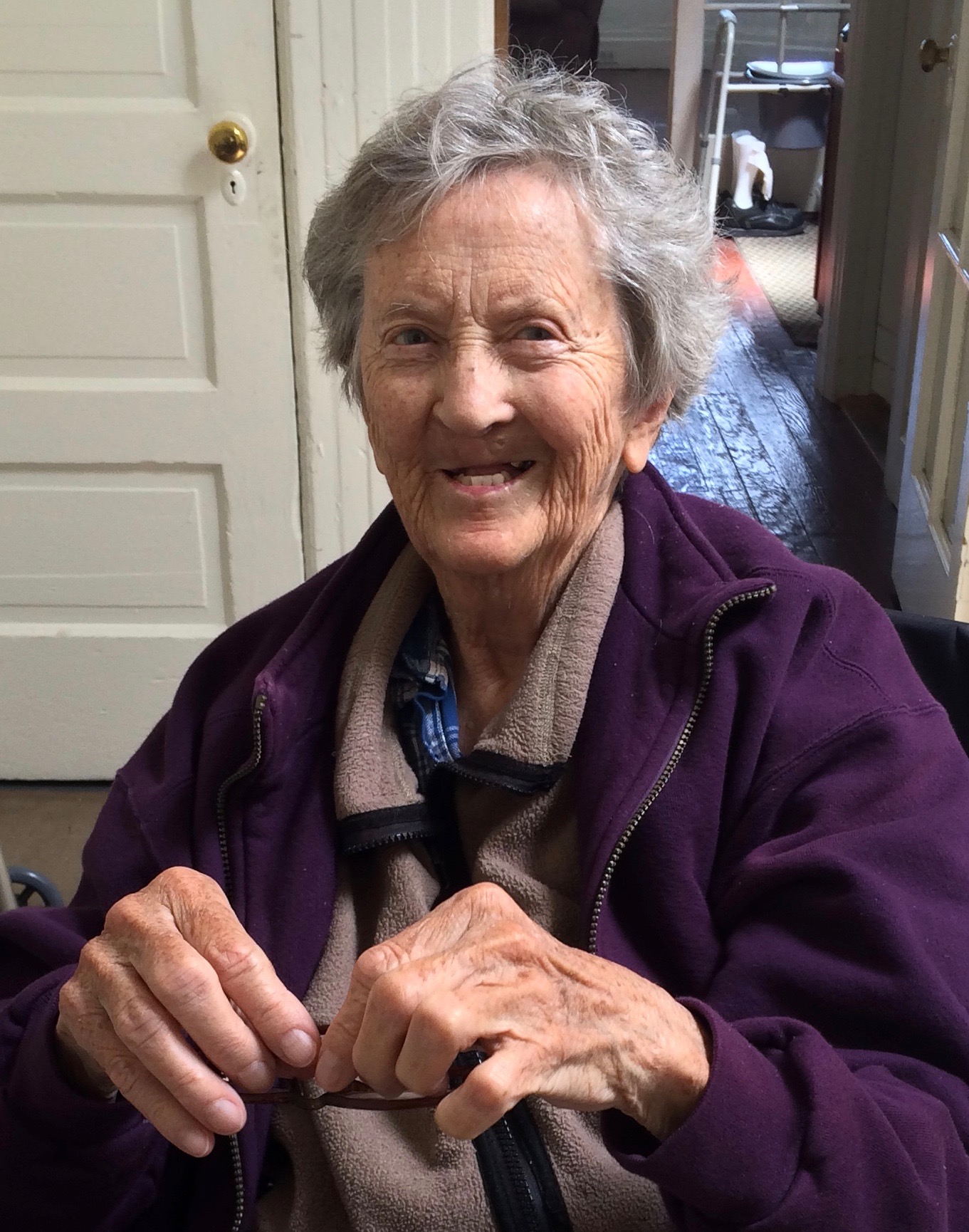
She was a lesbian who played in San Francisco 1952-2020
Found in Jackie’s cluttered house
She was an old-time dyke, although I never heard her use that word, nor the word lesbian to describe herself. She did call herself kiki, meaning neither butch nor femme. She may have called herself a character. I know the rest of us did.
Jackie Jones told me music saved her life. Music was certainly the theme of her life.
I first encountered Jackie at the Alemany Farmers Market in San Francisco where she played music every Saturday. She was a one-woman band playing the saw and a selection of hand-made instruments along with a dancing cat that she manipulated with her foot.
Jackie at the farmers market. Photos by author
She made the cat contraption out of plywood, springs, bike parts and wire. She painted the cat lavender with a sparkly G-string and stars where nipples would be. The cat had articulated limbs so Jackie could make it tap dance while the arms swung around. She recorded her own back up music and played it on a portable tape deck. She only played music from the 1920’s, songs like Bicycle Built for Two, Bye Bye Blues, and The Charleston.
Kids loved the dancing cat and always wanted to touch it so Jackie invented ways to discourage them. She talked about glueing a tack on the top of the cat’s head to pop their balloons. She wasn’t fond of kids, and when the kids moved on and we got close she would change song lyrics to bawdy and gay themes.
She rewrote the words to “Wait till the Sun Shines Nellie.” Her version went “Wait till your son turns nelly, and the neighbors start to talk.” The last line was “Gay is grand!”
Jackie always wore the same clothes—a John Deere trucker’s cap, a blue plaid shirt and jeans. Her front teeth were gone and she had false teeth that fit badly, which she only wore when in public.
Jackie lived in our neighborhood of Bernal Heights, but even though my lover and I invited her to dinner at our house, she never would let us into her house. She was an admitted hoarder.
Jackie owned two houses side by side on Manchester street, bought at a time when Bernal Heights housing was cheap. She lived in one and rented out the other, one of several on that street only 12-and-a-half-feet wide (most lots are 25 feet wide).
From Pensacola to New Orleans
Born in 1926, Jackie grew up in Florida, graduating from high school in 1944.
She said, “I remember in Pensacola listening to music with the Black maid that my mother hired. She would dance around with the broom to Ella Fitzgerald singing “A Tisket a Tasket,” then be back to ‘yes maam’ and sweeping when Mom came back.”
Jackie loved music from an early age and yearned to play it, but her parents scoffed and refused to pay for an instrument or lessons. Undaunted, Jackie saved her 35 cent-a-week allowance until she accumulated enough to buy an accordion from the Navy Exchange store. She spent hours in her room, teaching herself to play.
Jackie in her little house
After WWII, Jackie left home and moved to New Orleans. Living in the French Quarter, she held various day jobs to earn her $20 a month rent. At night, she would beg bands to let her sit in just to get experience.
Jackie’s first paid gig was $3 a night, playing her accordion for eight hours straight with a country band. She learned other instruments–guitar, then drums and vibraphone. By the late 1940s, she was supporting herself as a working musician, entertaining at bars, strip clubs and dances throughout New Orleans.
Her Journey West
In 1952, Jackie drove her 1948 woody station wagon west, coming first to Los Angeles, where she didn’t last long. She said, “Where I came from in New Orleans, people see you on the street and say ‘Hi! How are you.’ In LA, you say Hi, they just about call the cops on you.”
After six weeks in LA she couldn’t take any more of the place so she headed up north to San Francisco. There the people were friendly, they didn’t all look alike, folks were helpful, there were lots of bohemians, and she was able to get a job quickly. She never went back to LA.
Rubbing shoulders with the Beats
Jackie loved San Francisco but had problems finding permanent housing. Landlords did not want to rent to lady musicians, particularly the kind that wore pants and rode a motor scooter.
She bounced from rooming house to residential hotel, from day job (taxi driver, assembly-line worker) to music job (guitar at the Town Pump bar, accordion at the 1954 opening of San Francisco International Airport).
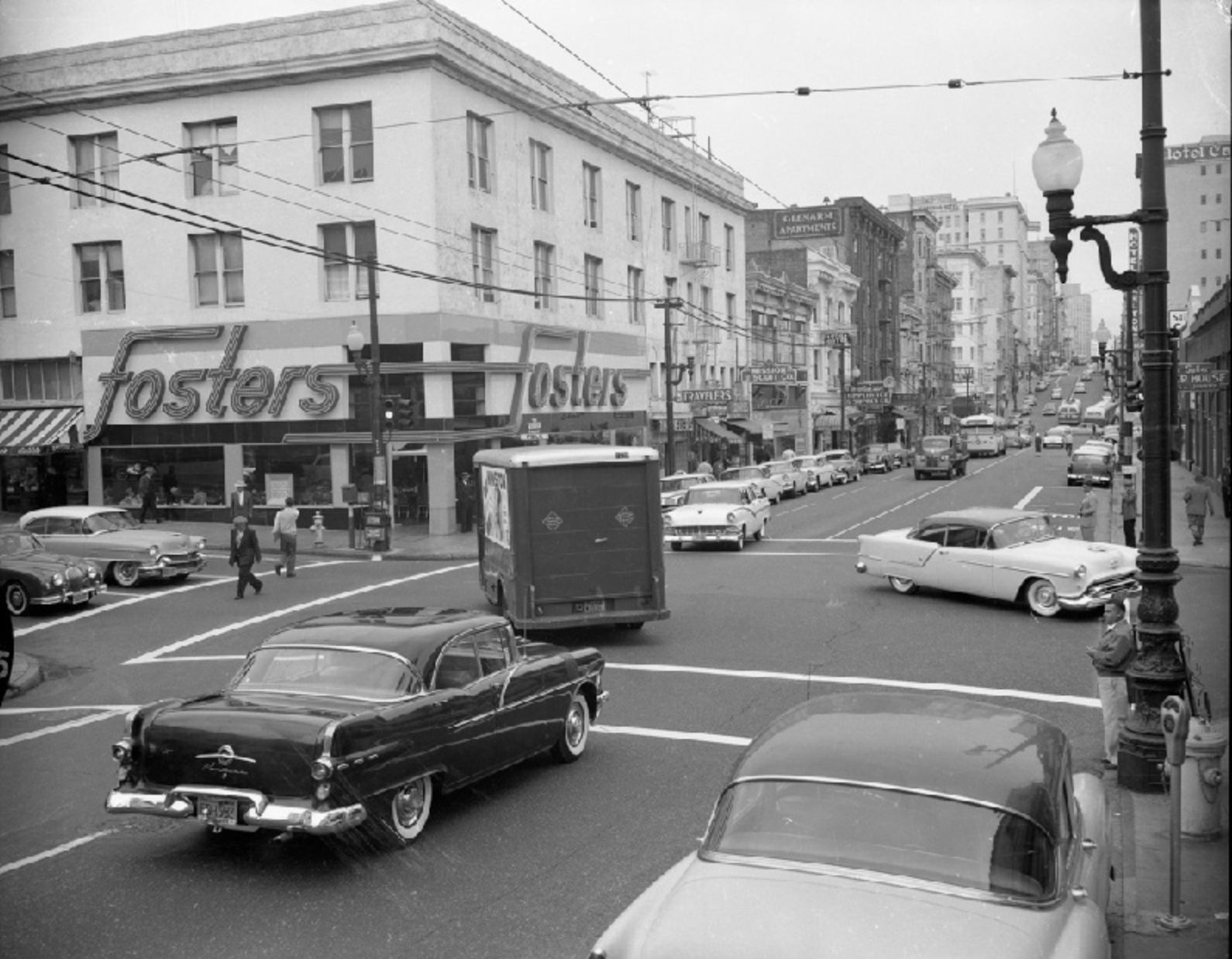
Fosters Cafeteria, downstairs from where she lived at Polk and Sutter, was open 24 hours and the bohemians hung out there. She met Alan Ginsberg and other Beats there. She became friends with ruth weiss (poet, performer, playwright and artist) when ruth worked the bar at the Wildside (a lesbian bar) in North Beach. Ruth traveled with Jack Kerouac and read her poetry around Europe and the US.
Fosters cafeteria 1956. Photo: Open SF History (wnp14.12640; Courtesy of a Private Collector)
In her spare time, Jackie attended City College of SF and SF State College, graduating with a physical science degree in 1962. In 1964, desperate for a steady paycheck, she became a mail sorter at Rincon Annex Post Office and worked there for 10 years.
But Jackie never stopped making music, working with anyone who’d hire her. She played accordion at the city’s Russian festivals and Columbus Day celebrations. She played drums for the Cockettes’ midnight shows and Kimo Cochran’s Polynesian dancing.
She played country guitar at Bay Area military bases with Faye Wayne and her Rhythm Roundup Girls, and Lady of Spain on the accordion at the Fairmont Hotel with a Latin trio. Dressed as a witch, she played Halloween gigs at the Randall Jr. Museum at an annual party for kids. Later in life she was asked to contribute her homemade music to a show at the San Francisco Museum of Modern Art.
Early lesbian culture
Jackie felt she never fit in the lesbian communities of New Orleans or San Francisco. She told me she thought the dykes in New Orleans in the 1950s fell into two groups: the fighters and truck driver type, and the professionals who needed to protect their reputations; they wore dresses and were in the closet. Jackie didn’t fit into either of those categories.
Lesbian bars didn’t hold much appeal. In those days in San Francisco women couldn’t get served if they wore jeans. They’d throw you out, she said. She never went to the lesbian bar the Paper Doll (San Francisco’s first lesbian bar, owned by Charlotte Coleman). “You’d see women wearing skirts, holding hands going in there. They were snotty to me. There was another lesbian bar called Peg’s Place. They had a room in the back and there was a little window in the wall where somebody watched you to make sure you weren’t touching,” she said.
She was a maker
House parties were no better. One Halloween the well-known San Francisco bar owner Ricki Streiker threw a party where all the dykes wore dresses and were not in costume. Jackie came in drag with a mustache. Drag had not yet caught on and she wasn’t invited back.
The only person Jackie had liked at that party was Pat Bond, the out lesbian actor who wrote and performed one-woman plays. She went home one night with Pat. They didn’t have sex; they talked all night instead. “I liked her mind,” said Jackie.
Jackie never had a long-term relationship. She had a lot of “bed friends.” I asked if that was the same as fuck buddies. Yes, she said. She would go on “sex binges” but there weren’t all those diseases out there then, she said.
“I went to the bohemian places where you had artists and a mix of interesting people. I liked the Black Cat best,” she said. “Gene Krupa came in once to the Black Cat, also Carson McCullers. Then the bar became gay when José Sarria (an early San Francisco drag queen) started his shows. I once played a show with José as his drummer. He was a nice guy. The music thing opened doors for me,” she said. “That’s why I like San Francisco.”
José Sarria performing at the Back Cat in 1958 |from José Sarria Papers| Courtesy of GLBT Historical Society
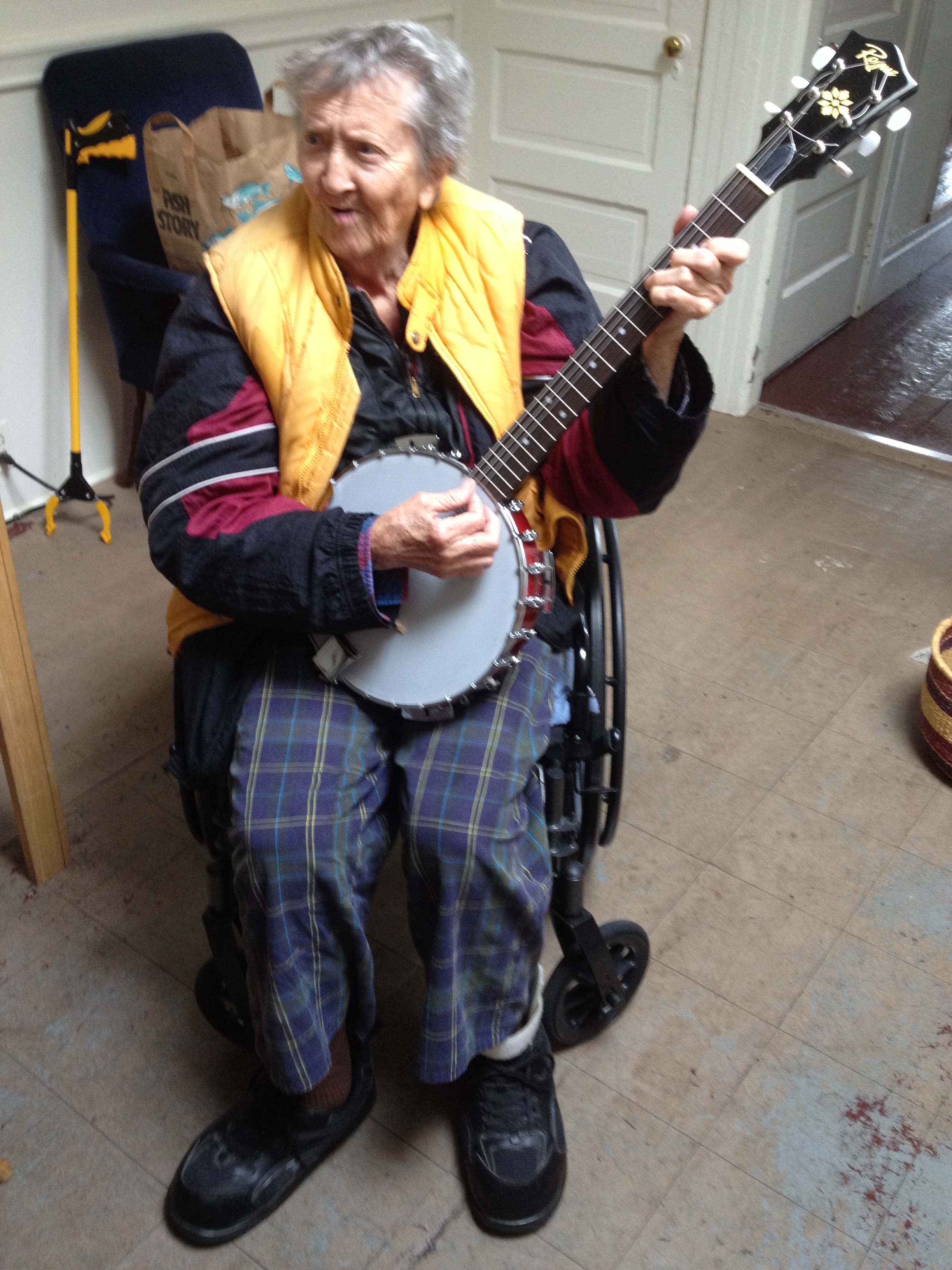
Later Jackie’s trademark instrument was a carpenter’s saw that she rubbed with a violin bow. One time Jackie came over to visit. We had several hand saws hanging in our garage/shop. Jackie pulled each out and tried it. “This one will make a good instrument,” she declared. She offered to teach us how to play the saw and we both tried. But playing the saw is hard!
Aging in place
In 2013 Jackie fell in her house, breaking her ankle and knee. But rather than call 911 and risk the fire department whisking her away to some rehab place that might never let her go back, she called some friends. She knew that if anyone from the city saw her house—the lair of a hoarder—they’d never let her back in. So, instead her friends helped her get over the back fence and into her smaller house, which was then empty of tenants.
The 12-and-a-half-foot-wide house was a studio up a flight of stairs in its original condition but otherwise in pretty good shape. The little house had two big advantages: it was not full of junk. Also, friends were now invited to visit.
When I’d visit Jackie, we would talk about musical instruments and how she made them, keys for different types of music, and what the lyrics to a song really meant. She would tell me about old time musicians she admired.
Jackie followed the careers of the Duncan sisters, Rosetta and Vivian Duncan. Rosetta was a lesbian. The white girls had a vaudeville act called Topsy and Eva that they created in 1923 about a white child and a Black child with Rosetta in blackface. It was a musical comedy derived from the novel Uncle Tom’s Cabin.
“Once I was in a show with Vivian who played Little Eva,” said Jackie. “She played the piano, sang and did comedy.” The show was a takeoff on the movie All About Eve. Charles Pierce played the part of the actress. It was at California Hall (where the infamous 1965 gay New Year’s ball took place). “I love that I can look back on doing these things,” she said.
One of Jackie’s favorite entertainers was Hadda Brooks, who ended up playing for gay audiences as she got older. “That’s My Desire” was her big number. Billed as “Queen of the Boogie,” the vocalist, pianist and composer was big in the 1940s and 50s, then made a comeback in the 90s.
We talked about death. Jackie wondered what will happen to her stuff when she dies. I was finally allowed to go into Jackie’s big house when she asked if I could help her clear it out. Every room was crammed full of junk—old computers, musical instruments, paper, clothes. There were machines that I couldn’t identify.
She had 12 guitars–none complete, some banjos, three accordions, electronics. She had 25 turntables because she was afraid she wouldn’t be able to get the needles. She kept dozens of instruments that she hoped to fix someday, inventing new musical instruments, experimenting with new sounds. She would scour the salvage yard and hardware stores for parts for her inventions and I was sent on trips to her favorite hardware store for particular screws and parts. Jackie didn’t want to get rid of anything because, she said, she might need it for something she was making or inventing. Having to let go of anything was so painful for her that the house never did get cleaned out.
We talked about the old days before gay liberation. Jackie didn’t have a partner, but she was was lucky to have the love and attention of her good friend Pauline, a sister musician who helped and supported her for 30 years.
Pauline wrote: “Jackie has always had a wary streak, not wanting folks to know all her business. I think it goes back to those ugly days in the 1940s and 1950s when she saw that being outed as gay could mean being arrested, having your name in the paper, losing your job, your residence, your family, etc.
“I’d say some of that fear still prevails. We recently had a fill-in caregiver who Jackie later told me asked her all these prying, straight-lady questions about her background: Why did Jackie never marry? Why doesn’t Jackie have her own family to look after her instead of this friend, Pauline? Didn’t Jackie ever want to have kids? Jackie gave the lady some bland answers but she wasn’t going tell her, “I’m gay. I wasn’t interested in husbands, kids and marriage.”
“Hell, Jackie didn’t tell her own family she was gay, they just thought she was weird, eccentric, and bohemian, and that was bad enough. In the 1940s, when her brother-in-law heard that Jackie was living in the French Quarter and working as a musician there, he told his wife to break off contact with Jackie because ‘We don’t associate with those kinds of people.’
“Why isn’t your family looking after you, Jackie? Because they were bigoted, small minded, homophobic assholes. Why don’t you want to tell people you’re gay, Jackie? Because there are still a lot of bigoted, small minded, homophobic assholes out there.
“Jackie has great survival instincts and is still following them. She is very proud of the fact that she never got arrested on a morals charge (or any other charge) back when plenty of her gay and lesbian friends were being pulled out of bars and thrown into paddy wagons.”
Jackie gave me banjo lessons. Photo of Molly by Barb Schultheis
Jackie never had to go to a nursing home. She lived with caretakers in the little house till she died in 2020 at the age of 93. Her friend Pauline was there when she died.
From the invitation to Jackie’s memorial: “Friends and neighbors of Jackie are invited to attend and celebrate Jackie. Per Jackie’s instructions, this is NOT to be a religious event but a party. All musicians are asked to bring their instruments so we can remember Jackie musically. By Jackie’s specific request, NO religious music of any kind is to be played. However, we welcome jazz, standards from the 20s and 30s, Latin, country-western, and any other music that swings.”
Jackie Jones was someone who discovered her passion, music, at an early age, and she never lost her love and enthusiasm for it. Music was the focus of her life: performing it, listening to it, collecting sheet music and instruments, arranging it, practicing it, recording it. Jackie had lovers but never had any girlfriends. That’s because she had found her great, all-consuming love…music.
August 1 marks the traditional Celtic holiday of Lammas, the first harvest festival on the pagan Wheel of the Year. According to the National Day Calendar, August 1 is also National Girlfriends Day. Judging by the ads, it might seem like a holiday invented to sell wine glasses and diet aids, but I plan to celebrate it anyway.
What does “girlfriend” mean in lesbianland?
In lesbianland, the word girlfriend carries a lot of weight, and a lot of meanings. It can refer to a platonic friend, a lover, or something in between. Back in the day, it usually meant lover. There simply weren’t enough words to describe us dykes or the nuanced ways we related to each other. For a while, we adopted partner, but that often got confused with business partner.
Girlfriends for 40 years, my friends Char and Eileen finally got to be wives.
Very few of us used the word wife, and I never liked it.
As a budding feminist, I wanted no part of marriage. Wives, in my mind, were helpmeets, baby factories, second-class citizens. Property. In some states, it was still legal to kill your wife for adultery. Spousal rape wasn’t outlawed. Until 1974, women in the U.S. couldn’t even get credit in our own names. Before that, we had to depend on husbands.
The feminist movement changed all that. But I still never wanted to be a wife.
Girlfriend. Partner. Wife. Spouse.
Some lesbian couples still use the term girlfriend. They let their friends know they don’t like the term wife and don’t use it to refer to each other. Others in my Boomer generation have come up with alternatives. One couple calls each other spouse and spice.
But I’ve become a wife convert.
I’ve been married twice. Maybe three times.
My ex, Barb, and I went to Vermont after it became the first state to legalize same-sex civil unions in 2000. But in 2004, San Francisco Mayor Gavin Newsom opened the doors to same-sex marriage. Thousands of couples–ourselves included–flocked to City Hall. Even though it wasn’t yet legal at the state or federal level, it felt revolutionary. Queer couples, dressed in their finest, stood in line all day in the rain, in the sun, waiting for a marriage license. Bouquets, cakes and good wishes arrived from around the country. The whole city felt like a wedding party. As City workers, Barb and I even got trained to be wedding officials ourselves. A lovely gender-free ceremony was provided.
Barb and I first got married at a park in Vermont. With witnesses Jen and Michelle
Barb, then the San Francisco fire marshal, arranged for the SFFD chief, Joanne Hayes-White, to officiate our wedding in City Hall. In every room, in every hallway, people were saying vows. It was beautiful chaos.
As we walked through the metal detectors and the guard called me “sir,” I turned to Barb and said, “Well, I guess I get to be the husband.”
That was not fair. With her crew cut, she got misgendered as often as I did. Neither of us really wanted to be a wife. But in this country, being legally married means access to health insurance, tax benefits, hospital visits, and death benefits. There were–and still are–good reasons to marry.
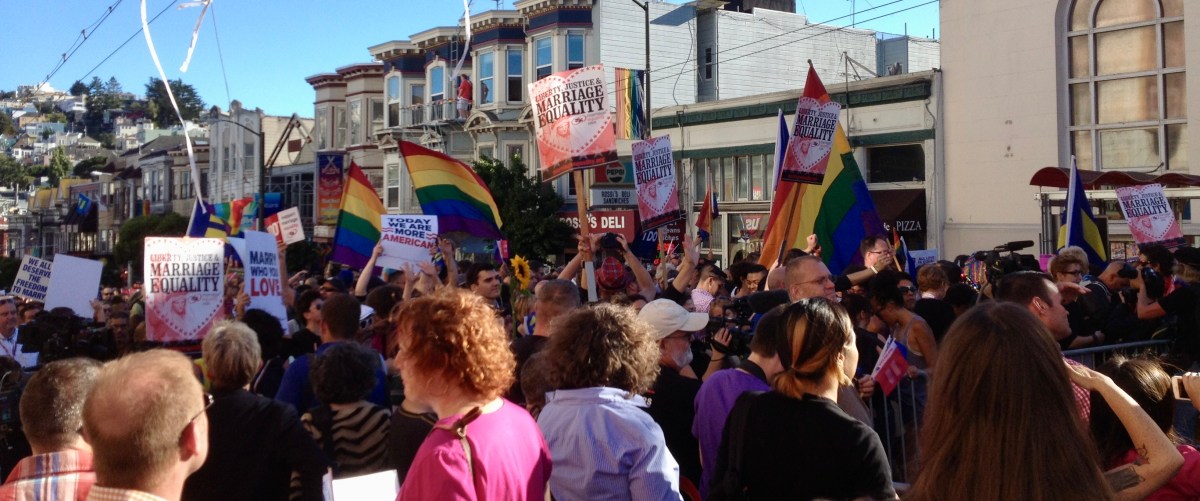
The road to legal gay marriage was long and convoluted, culminating with the 2015 landmark civil rights case Obergefell v. Hodges. But in 2013, United States v. Windsor overturned key parts of the Defense of Marriage Act (DOMA), reinstating same-sex marriage in California. (Thank you, Edie Windsor!) By then, Barb and I had broken up. But because of legal limbo, we hadn’t been able to divorce. When the Supreme Court’s decision came down, we all ran to the Castro to celebrate. People held signs that said “Freedom to Marry.” For us, it was also the freedom to divorce.
And then came Holly
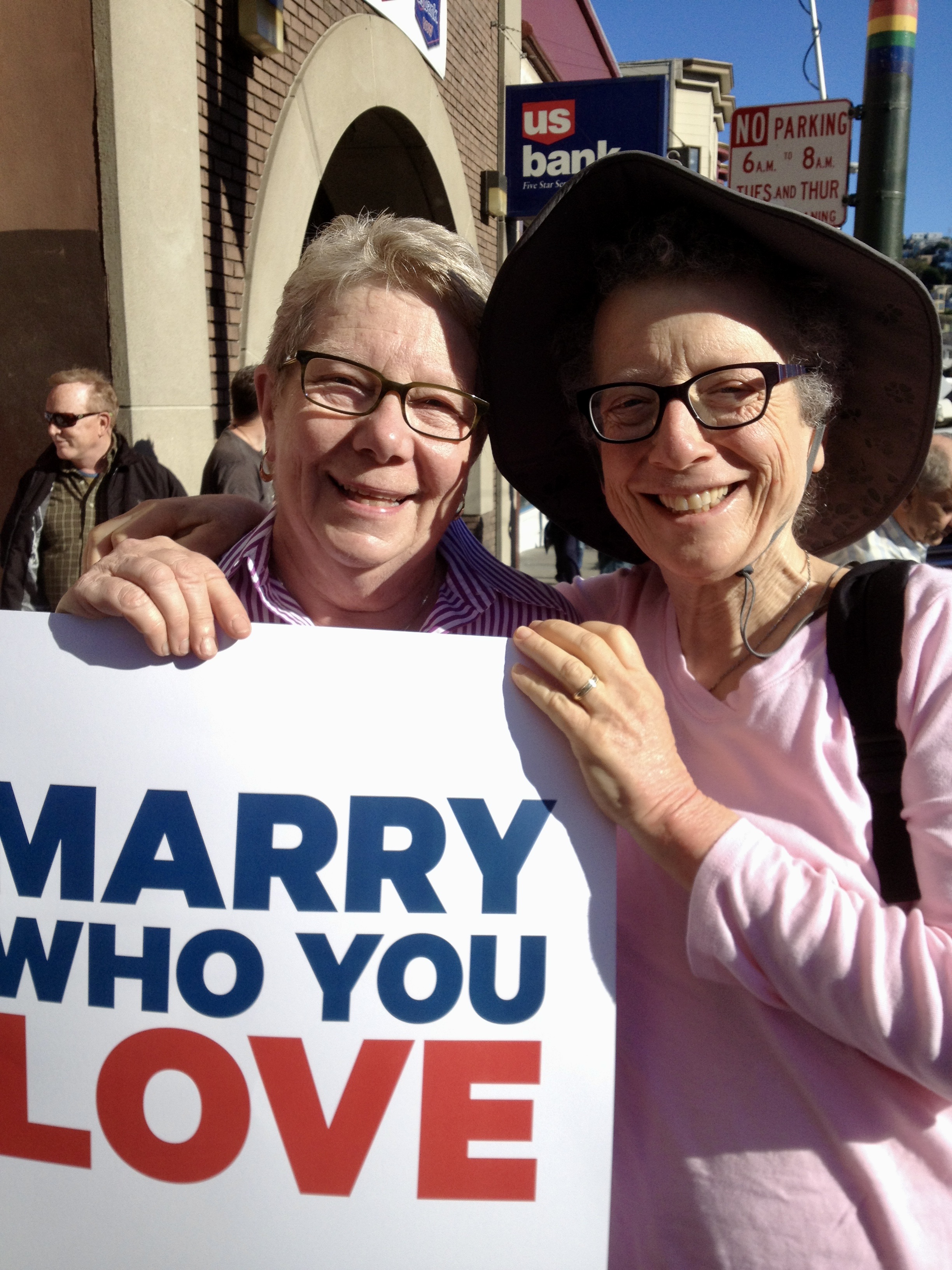
Holly and I celebrating on Marriage Equality Day at Harvey’s (named after Harvey Milk)
Holly and I were married on April 19, 2014, at Muir Beach–the site of our first date. The wedding was officiated by our gay cousin Richard, dressed in the robes of his Episcopal priest friend who had been defrocked for gayness. Witnesses were my brother Don and his husband John.
I love introducing Holly as my wife. It’s a simple, meaningful word. A word I once rejected. And, frankly, it helps when talking to straight people, and still sometimes provides a bit of shock value. Everyone knows what wife means.
Brother Don, Richard, Holly, me and John jump for joy at our Muir Beach wedding
Oh, and for the record, we introduced our exes to each other. They got married too.
How to describe our relationships with each other? We call ourselves Exes and Besties. But you could call us a gaggle of girlfriends.
Beards and Bushes and Leg Hair Inspired by a photo of Cathy Cade.
It was 1967, and I was a freshman at Washington State University, living in the dorms—tiny rooms where two people shared a space roughly the size of a generous closet. Once you pulled the beds out from the wall, you had about six inches of precious real estate between them. Cozy!
The bathrooms were shared among all the women on the floor. There was a communal bathtub where I’d perch, shaving my legs with a double-edged razor and a bar of soap. I hated it. I hated the shaving, I hated the blood, the injuries, the boxes of band aids needed for cuts. I’m pretty sure I clogged the drain more than once.
This was before the feminist movement really revved up, but some baby rebel deep inside me was already stretching her hairy legs. I decided to stop shaving. In fact, I committed to it scientifically—I posted a chart on the door of my dorm room and recorded the weekly growth of my leg hair.
What did my floormates think? I imagine they thought I was completely out of my mind. No one said much of anything, which either means they were too stunned to speak or too polite to comment on the inch-long leg hair I proudly tracked like it was a science fair project. Either way, I felt free. No more razors. No more blood. No more pretending to be a hairless woodland creature.
Later, in a collective house with three other dykes, we turned body hair into a competitive sport. Who had the hairiest legs and the most luxuriant bush? Our favorite outfit was just a vest. That’s it. No pants. No shirt. Just full-frontal follicular glory. Sadly, despite my natural abundance, I was not the hairiest. Mahaney’s glorious blond leg hair made her look like she was wearing angora leggings.
Years later, in another act of feminist rebellion, I ditched the bra. My breasts are ample and gravity is real, but so is back pain. Bras hurt my shoulders, and every one I tried felt like medieval armor built by men who’d never met an actual woman. At first, going braless felt like I was walking around topless at a PTA meeting. But eventually, I got used to the freedom—and the bouncing and the sweaty undertits.
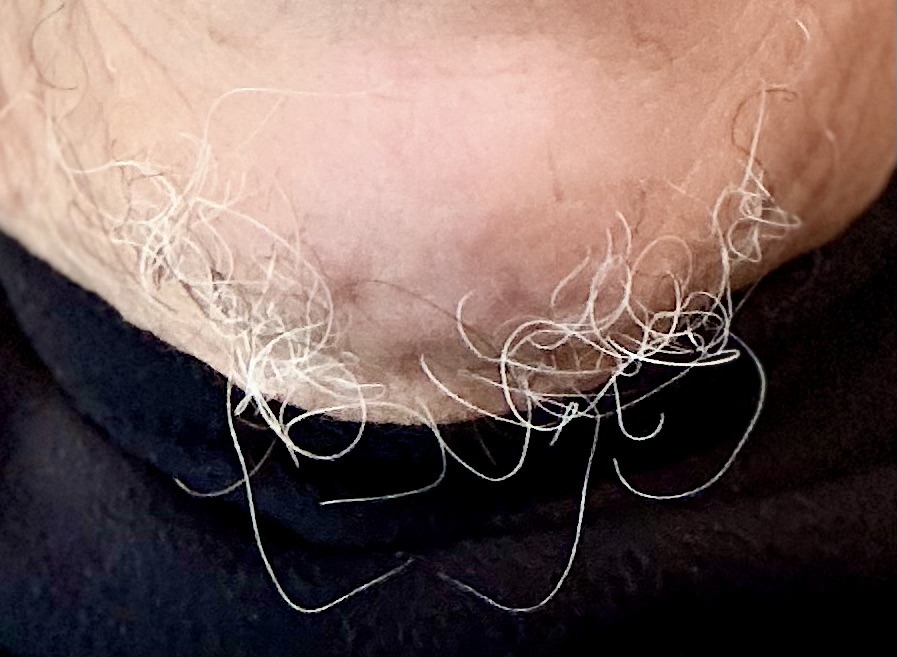
Then recently, inspired by a New York Times obituary photo of the celebrated bearded dyke photographer Cathy Cade, I decided: it’s beard time. I’d never grown one before, though I’d thought about it. My chin hair was never cute, but now that it’s gone gray, it’s looking rather distinguished. Professor Dumbledore meets anarchist grandma.
I asked my wife what she thought. Her response—paraphrased for the sake of civility—was essentially: “If you grow a beard, I will disown you, move to another state, and possibly enter witness protection.” She was not a fan.
But of course, that only made me want it more.
Now it’s grown in, and it’s introduced me to a whole new world. It came in at odd angles, curly, wiry, determined to defy gravity. One side’s a little fuller than the other, probably because I got electrolysis in the ’90s when I still cared what strangers thought. Regrets? Maybe. I could have had a resplendent full beard by now.
Still, I love playing with it. I twirl it, stroke it, and now completely understand why men do that—it’s like a built-in fidget toy. Plus, it moves in the wind. My chin hair dances! Who knew?
So far I’ve gotten no positive reactions to my beard. I thought men might appreciate it, so I asked two old man friends for their opinions. One said, “Cut it off.” The other said, “Trim it.” Translation: “We hate it.”
The best, most diplomatic, reaction I’ve gotten was, “It’s not something I would choose.” Ouch. One woman told me, “I pluck mine.” Been there. Plucking is a full-time job, and I’m on permanent vacation.
Then at an Old Lesbians retreat I met another bearded woman. A sister! She has been rocking facial hair for years. I asked what bosses and parents thought. She said her family had taken it in stride. Her mother didn’t mind the beard, but she insisted my friend wear a bra when she visited back home. Her boss at a medical facility had been a gay leather man who’d protected her from the higher ups.
There’s this fantastic TikTok group started by a Black woman for menopausal and post-menopausal women—listing all the things we no longer give a damn about: bras, makeup, body hair, expectations, decorum, patriarchy. I’m joining. I might even get the vest out again.
Gay Man Will Rollins Running Against Anti-Gay Incumbent
Californians will be sidelined again in the upcoming presidential election. With nearly 40 million residents, the state won’t play a decisive role in choosing the next president until the electoral college system is changed. Instead, the focus remains on swing states, leaving many Californians feeling left out, and me outraged again.
But we are not twiddling our collective thumbs. We’re shifting our attention to key down ballot races. A strong coalition, Mobilize—comprising Indivisible, California Grassroots Alliance, and others—is targeting six red districts in an effort to flip the House blue.
One candidate I’m particularly excited about is Will Rollins, who is openly gay and has a great shot at winning. When the districts were reorganized, he gained the queer-friendly city of Palm Springs in California’s 41st District. Rollins, a former federal prosecutor, is running again after nearly defeating Republican Ken Calvert, an incumbent with a long anti-LGBTQ voting record, in the last election. Polls show Rollins with a six point lead. https://willrollinsforcongress.com
I can’t vote for Will. I’m in a safe blue Congressional district. But, like hundreds of other Californians, I’m writing postcards to voters, getting out the vote, posting yard signs, and wearing my Kamala swag. Let’s paint Congress blue!
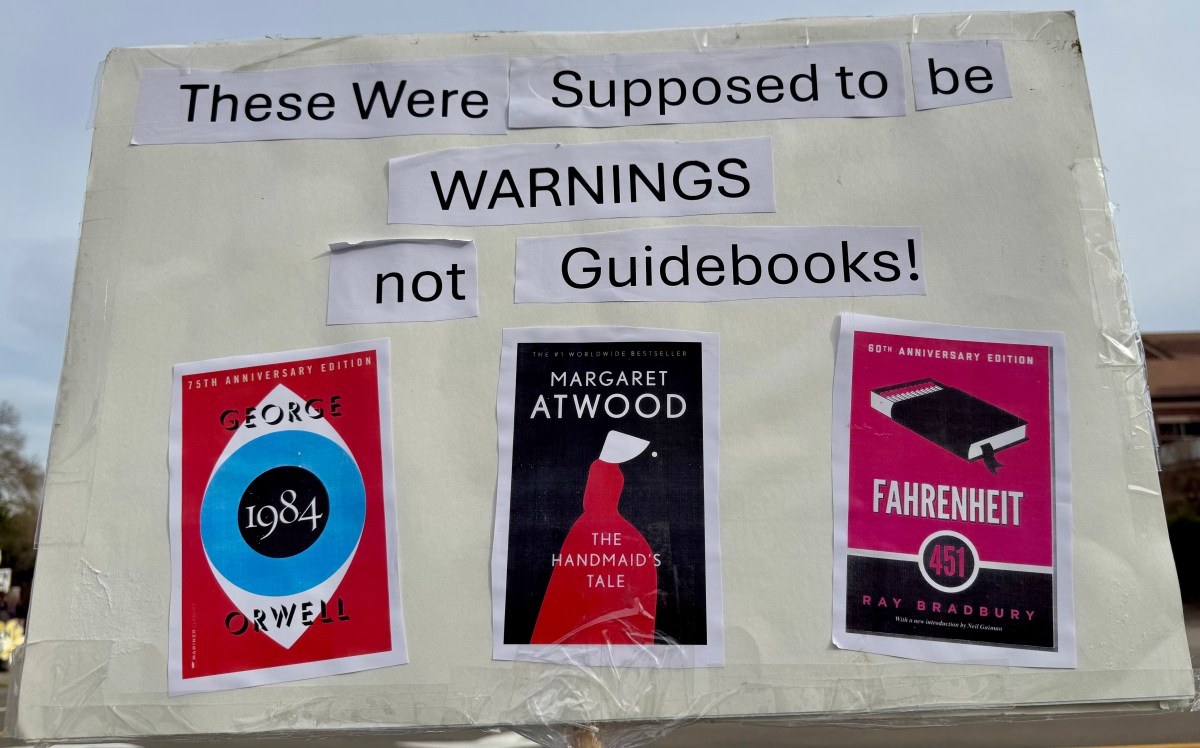

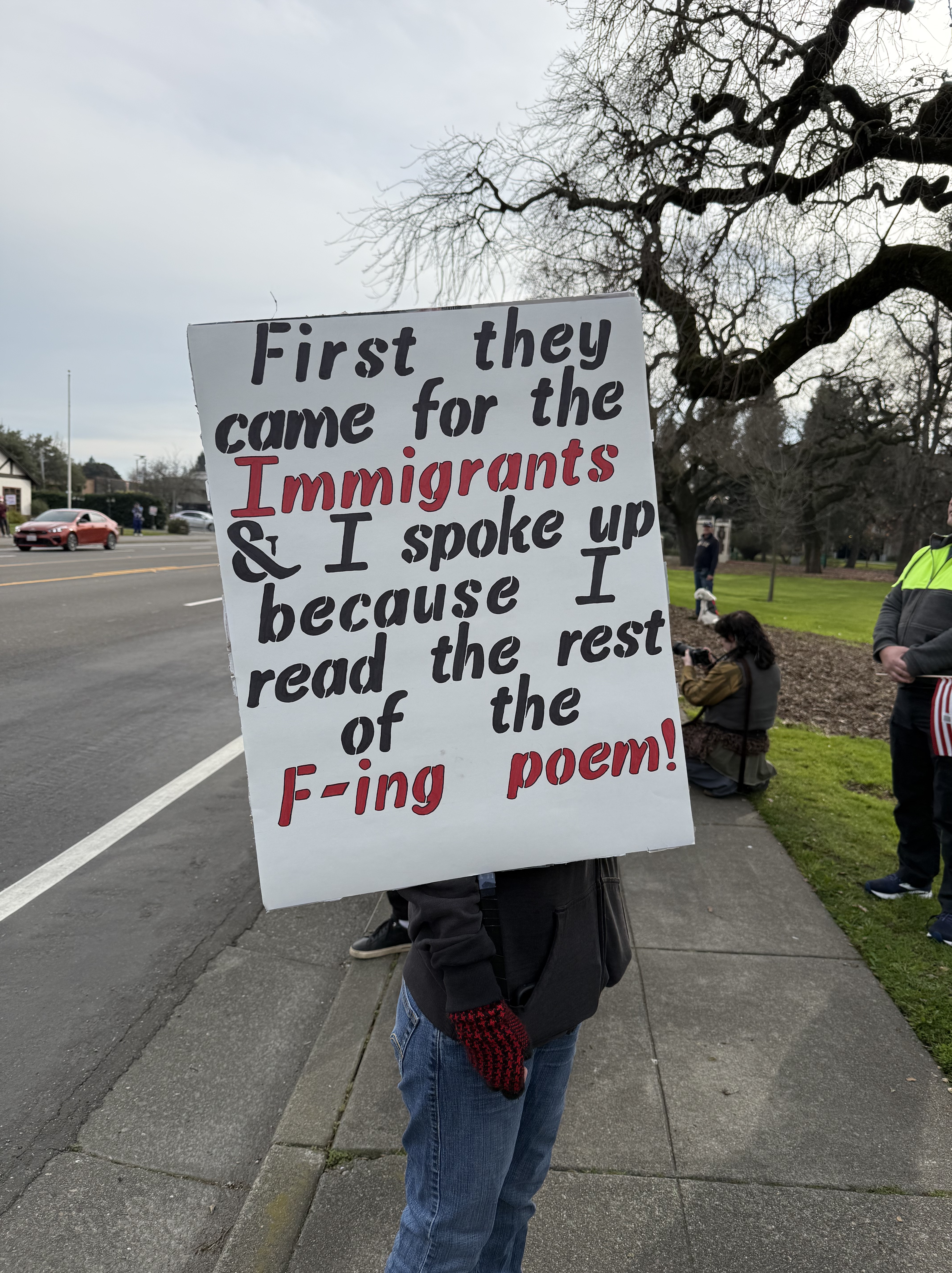
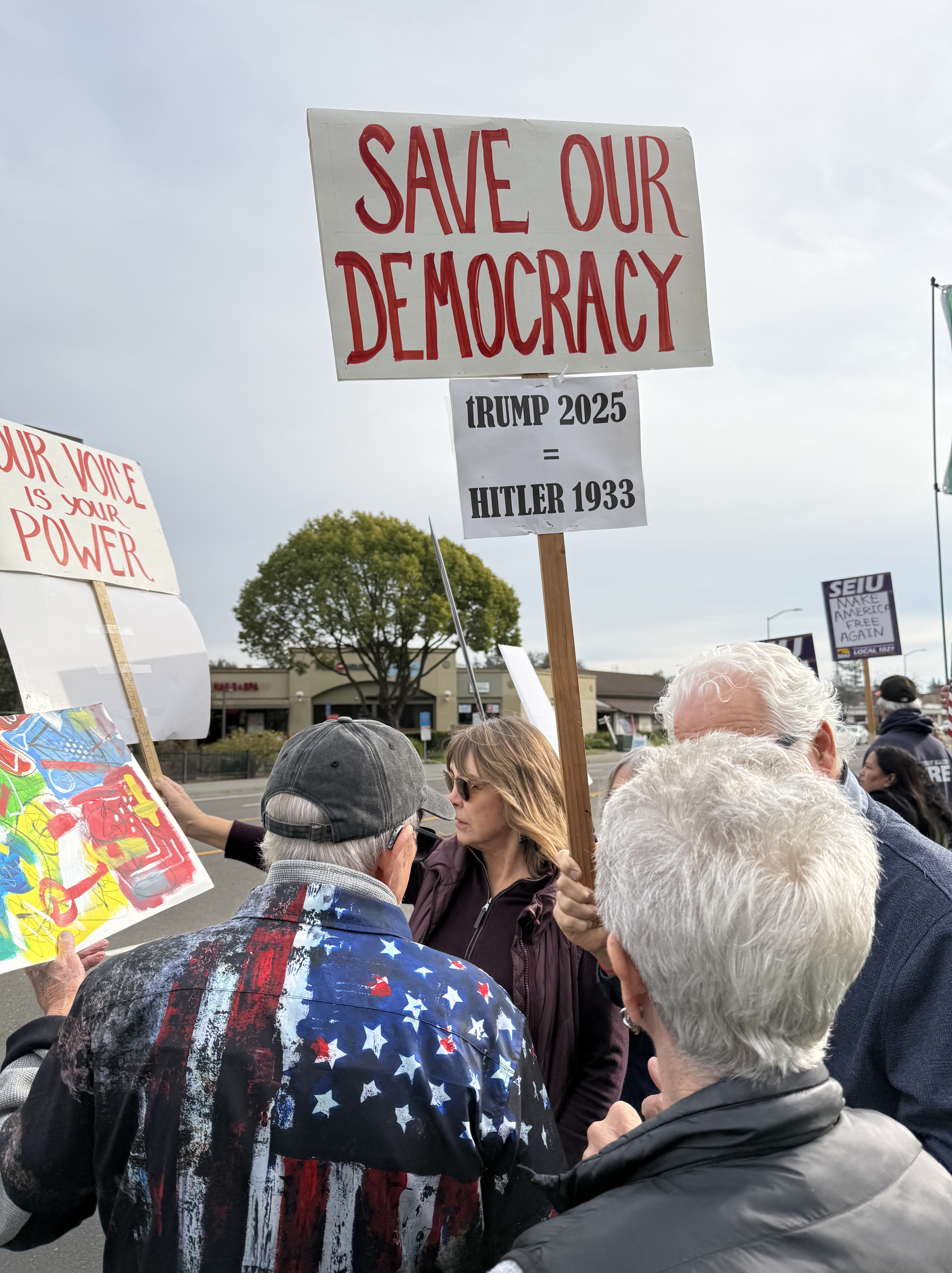
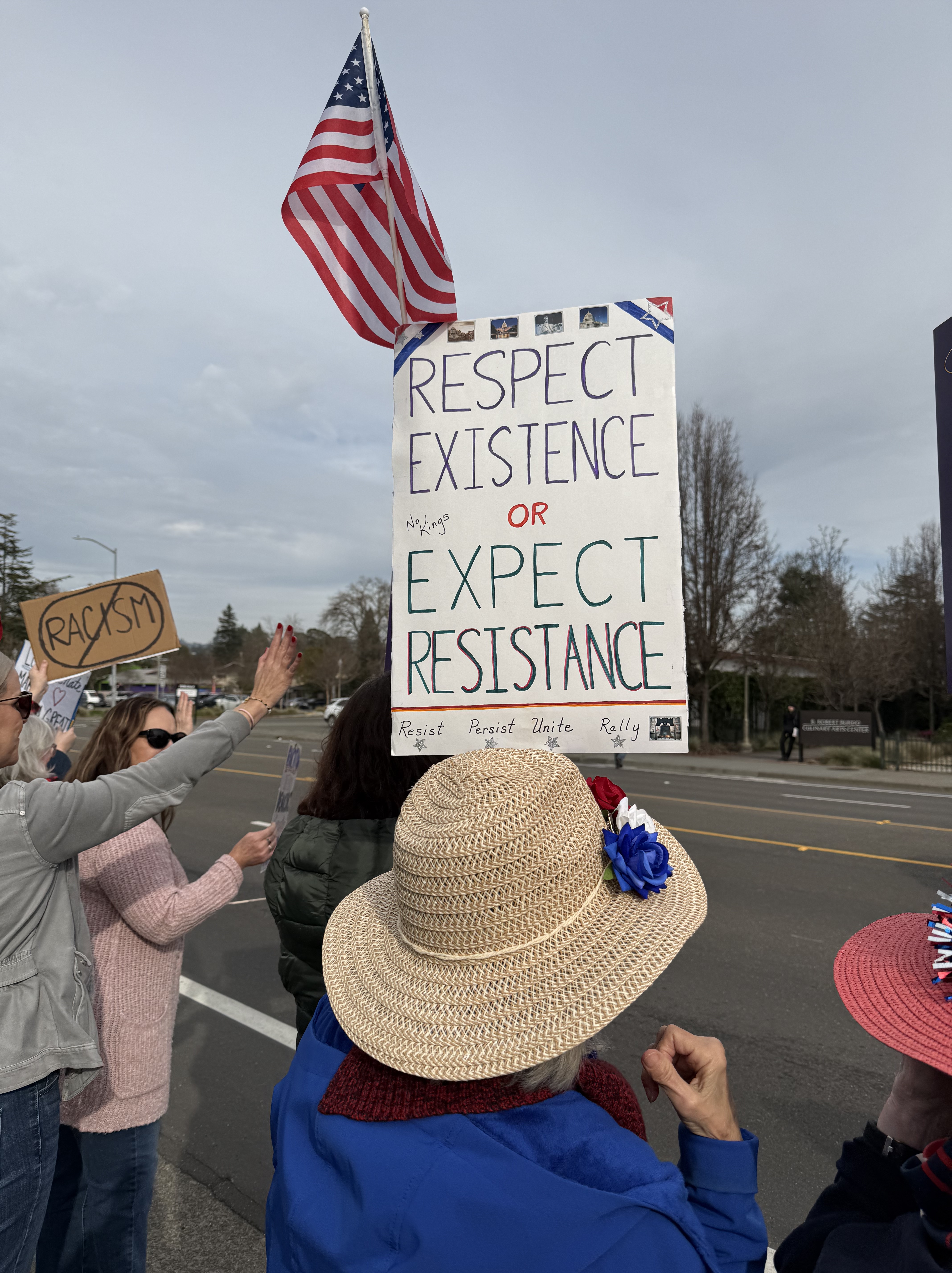






















 tradeswomn musings