
Republishing another on-the-job story from Tradeswomen Magazine, our national and international means of communication in the 80s and 90s.

Republishing another on-the-job story from Tradeswomen Magazine, our national and international means of communication in the 80s and 90s.
More on-the-job memories from 1980. This is a true story with names changed to make it fiction. Published in Tradeswomen Magazine, our means of communication in the 1980s and 90s.


This story was published in Tradeswomen Magazine in 1995, but it’s set in the early 80s when encountering homeless people was not yet a daily phenomenon. Young folks won’t remember but there was a time in San Francisco and in other cities when we didn’t have to step over people sleeping in doorways and on sidewalks. It was before Reagan, as governor of California, closed down mental health facilities and sent their residents into the streets. Before buying a house in the city became out of the reach of most working people. Before the commutes of construction workers averaged two hours from far-flung communities on the outskirts. Before we got used to it.
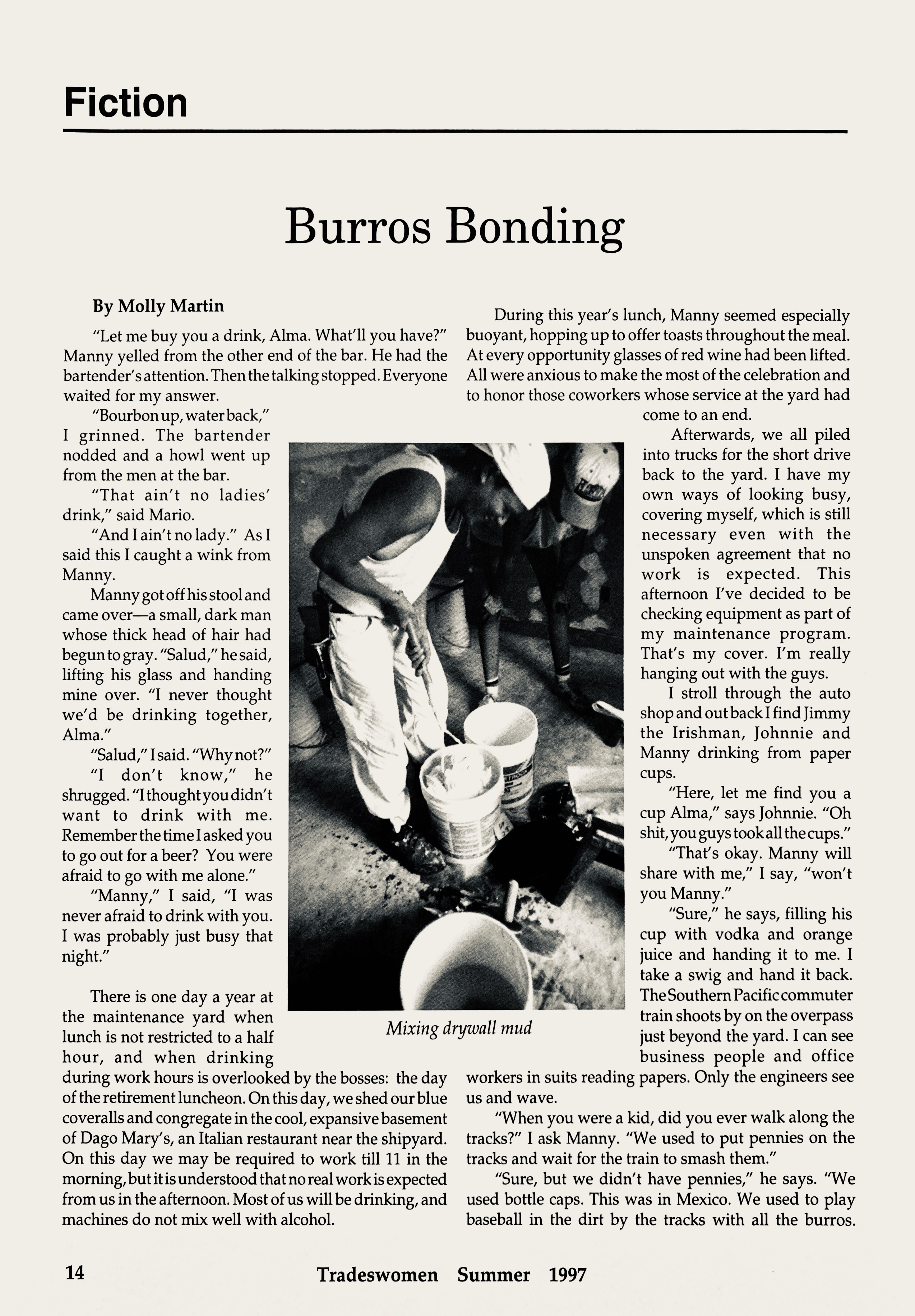
Here’s another story from Tradeswomen Magazine, published in 1997. Like all my fictional stories, it’s autobiographical. I was working as a maintenance electrician out of the San Francisco Water Department corporation yard. The photos are of women building a house in Florida.

Archiving during the pandemic shutdown–it’s a pastime of lots of us old folks. I admit to feeling nostalgic as I box up historic files and read through past Tradeswomen Magazines. The quarterly magazine was published for nearly two decades, the 80s and 90s, and it tells the story of our movement for equity in nontraditional jobs. Of all my writings published in the magazine, the short fiction still resonates best. Here’s a story from the Spring, 1987 issue.


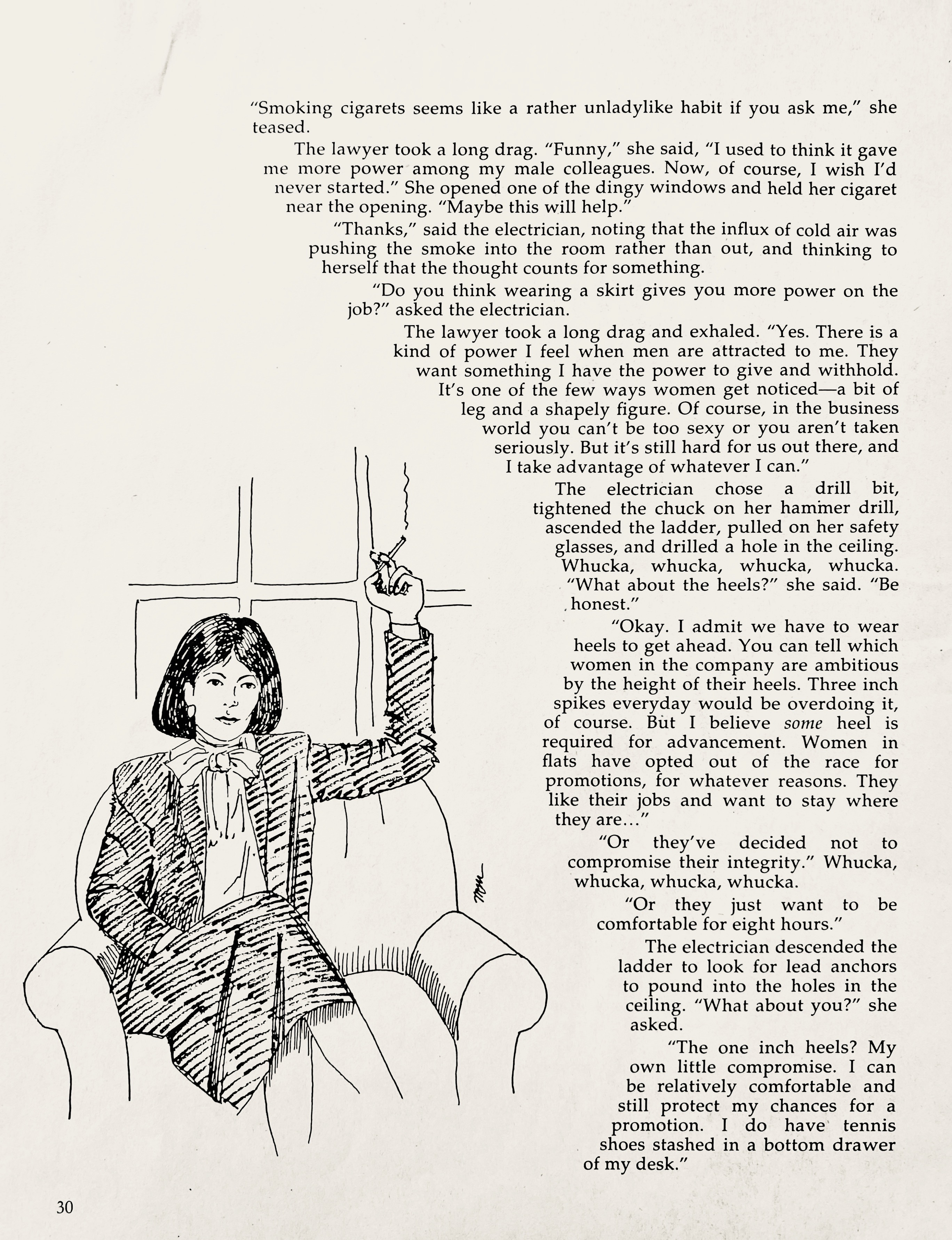
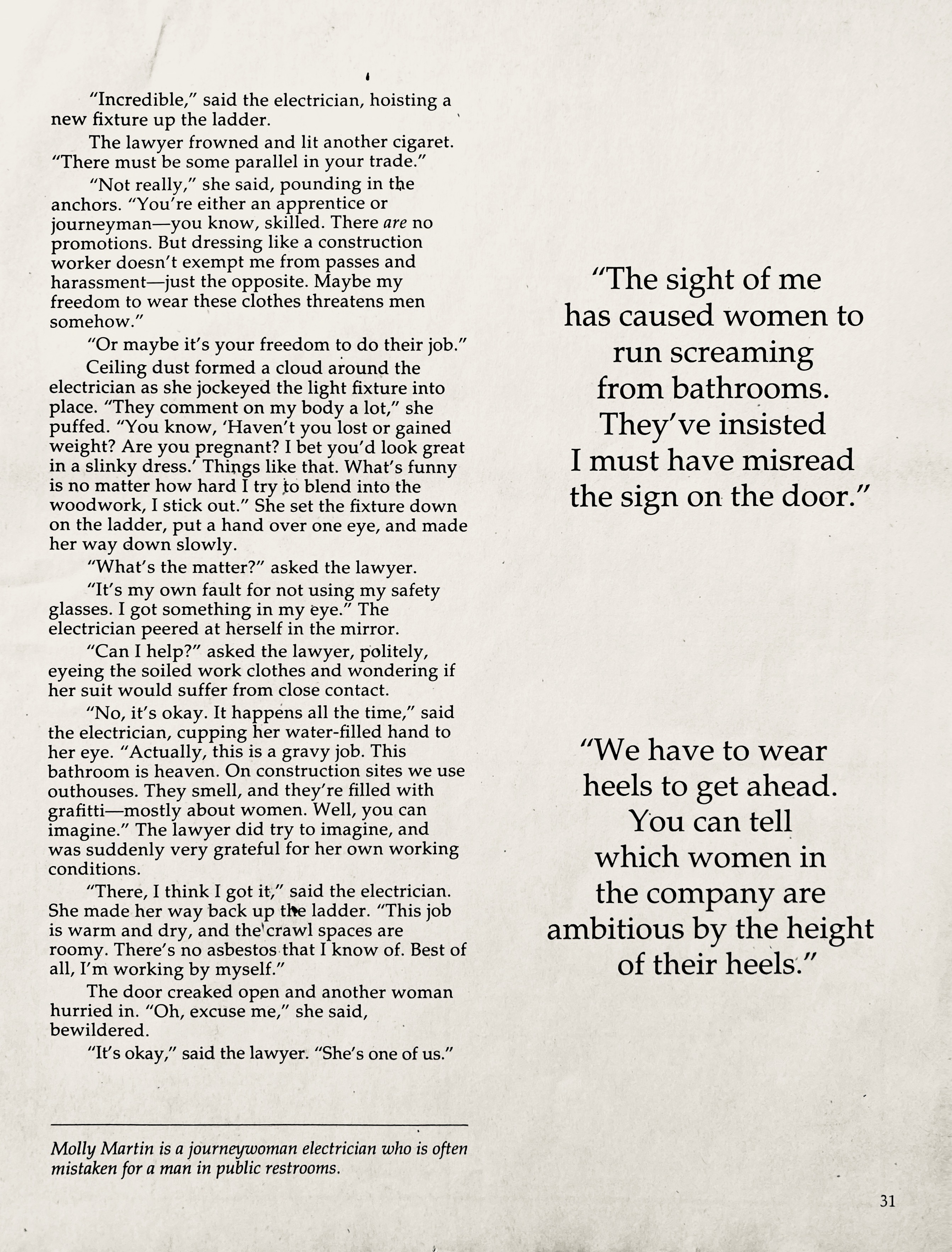
I’ve been going through my collection of Tradeswomen magazines (published by volunteer tradeswomen 1981-1999) and thinking about how much of what we wrote still has relevance today. We started writing and talking about sexual harassment before the term was even in the mainstream lexicon and before we had any legal backing. We were truly foremothers in this fight, and our persistence has paid off in improved industry standards and better working conditions for women in the construction trades. Here’s a story we published in 1983.


Every woman has a retribution fantasy, what she would do to her harasser or rapist. She probably won’t tell you what it is but she has one, maybe many.
My group of tradeswomen activists not only imagined retribution, we planned and executed it. Perhaps corrective justice is a better choice of words.
We were an organized group of women who were trying our damndest to break barriers to nontraditional blue collar work. Men wanted to keep those high-paid jobs for themselves. So when one of us finally landed a job, we were subject to harassment with the aim of getting us to quit. At that time in the late seventies sexual harassment was not yet illegal and the term was not yet in popular use. We tradeswomen used the term gender harassment.
We were working at integrating the construction trades, bus driving, firefighting, policing, printing, dock work—all the jobs women had been kept out of. One job classification we focused on was ferryboat deckhand. Women had won a discrimination lawsuit, a judge had signed a consent decree, and a handful of women had broken into the trade. As with construction, you had to jump both the barriers of bosses and the union.
One of our biggest challenges was isolation on the job. Once you got hired, you were usually the only female there. We tried to combat isolation by recruiting more women and by organizing support groups wherever we were.
Annie McCombs was our gal on the ferries, having made it through the union process. A militant lesbian feminist with a take no prisoners attitude, Annie was committed to increasing the number of women on the waterfront, to truly integrating the trade. After five years as a ferryboat deckhand she had gained a reputation as someone who did not tolerate abuse.
Fear of violence was based on reality. A common myth among fishers and sailors was that a woman on your boat was bad luck. We had met a woman who had been thrown off a boat into the water by coworkers who intended to kill her for supposedly bringing bad luck.
Annie worked occasionally with another young woman, Patricia. She was American Indian, a lesbian and only 18 with little work experience. One day Patricia approached Annie and told her about a guy on the job who harassed her mercilessly. The harassment had turned violent when they worked together on the night shift. He had locked them in to a bathroom they were assigned to clean and shoved her up against the wall. Only the night watchman knocking on the door saved her from being raped. He assaulted her again the next night but she fought back and was able to break free.
Annie helped Patricia meet with her boss and the union rep, going through all the required motions. They got nowhere. The next step would be litigation, but we activists did not recommend women file individual lawsuits. That got you blacklisted and unemployed.
We resorted to direct action. Annie called a meeting and 30 women showed up. She told us about the situation and we began to strategize. How could we get this guy to back off and stop harassing our sister? We had heard about a group of women stripping a rapist naked and tying him to a pole in the middle of town. That was a great fantasy, but none of us was willing to take the chance of being arrested for assault. Whatever we did would have to be hands off. We also wanted our action to be collective, something we could all participate in. We needed to make sure this guy knew that what he was doing was wrong and that it had to stop. It would be great if the woman he had targeted could confront him directly, if we could help her feel safe enough to do that.
Jan, a tradeswoman sister, spoke up. We needed to confront this guy on our own terms in a place of our choosing, not at work. She suggested that one of us should get him on a date. This seemed crazy to me. I was never any good at picking up men, but other women in the group assured me it wasn’t that hard. Hadn’t we been trained all our lives to do this? Jan volunteered to be the bait and we worked out an elaborate plan for her to pick him up.
We would lure him to a secluded location in Golden Gate Park, surround him and let his victim confront him. I, for one, did not see how this was possible. How would we get him to the park?
Jan planned to invite him to a party at the deYoung Museum and make some excuse to get him to the nearby rose garden. The rose garden is surrounded by tall hedges, perfect for hiding behind. And it’s relatively dark. Our action would take place at dusk.
Word of the action got around and our planning meetings expanded to 50. Everybody wanted to be involved with this action. What militant feminist wouldn’t?
We considered the possibility that the harasser might have a gun. Annie knew that some deckhands carried handguns in their seabags. Many of us practiced karate and self-defense and we engaged martial arts experts to take command in case our perp responded violently. A woman was assigned to each limb and his head in case he reached for a gun or bolted. But unless he attacked, we were not to touch him.
Women volunteered for specific tasks: lookouts, runners, watchers from park benches. We would not leave Jan alone with the man and risk his assaulting another woman.
In the meantime, Annie had drawn up a map of the park with our location and planned out the timing. We were to hide in the bushes near the trail and pop out as he and Jan came by.
I was dubious. Could we really pull this off? There were so many variables. What if he didn’t go with Jan? What if he saw us in the bushes? What if the timing were hours off?
Fifty women had assembled some blocks away at a staging area in the Haight Ashbury when a carload of country women from Mendocino showed up. They had heard about the action through the lesbian grapevine. Now numbering more than 50, we all made our way to the rose garden.
We hid behind hedges and trees, waiting silently for maybe 20 minutes. Everybody knew the plan. I couldn’t believe it when I saw Jan and the guy walking down the trail. Jan really did it! Our butch dyke sister had transformed into a fetching het woman. She wore a pink sweater wrapped casually around her shoulders.
Just as they crossed in front of us the spotter blew a whistle, the designated woman stepped out into the trail, and then all the women materialized and circled the guy. Jan melted into the crowd.
My only job was to stand in place with a mean look on my face. I can tell you this is not so easy when one feels exhilaration.
Our chosen spokeswoman stepped forward menacingly. She addressed the harasser. “Don’t talk, just nod if you understand.”
A woman was assigned to remind him to nod. He did not need to be reminded.
“We know you have been harassing women on your job. We know where you live. We know the car you drive. If you continue to harass women we will come and get you,” she said.
I could see his knees shaking. It looked to me like he had peed his pants.
Patricia stepped forward but she was not able to speak. Her partner spoke for her, naming the harassment.
Finally the crowd of angry women parted and let the man out. He was ordered to return to his car and not to look back.
Our action had succeeded. We were jubilant. A cheer went up from the 50 women. Then we quickly decamped to an agreed-upon location for a post-mortem and to celebrate.
As for the harasser, he was not seen around the waterfront for several months. Later, when he took a part-time job with the company, he made sure to keep his head down when passing Annie or Patricia. Soon after that he disappeared altogether.
In 1972, a junior in high school, she had already taken all the drafting classes her Los Angeles school offered. She’d been working with her father building a car so she took her father’s advice and enrolled in the welding class. The teacher said if she could fire up a torch she could stay in the class. It was a test no one else had to take. She was the only girl.

She took the class and got hooked on welding. The first year she excelled so much she was teaching the other students how to weld. By her senior year she was shirking all her other classes, spending days in the machine shop building projects. That year she won a national award from the Lincoln Arc Welding Foundation for TIG welding brass but she didn’t graduate high school. Joan Weir was a welding phenom.
That summer she got her first job. It was piecework building motorcycle accessories. She said, “They needed someone who could TIG (tungsten inert gas) weld. That was new technology back then. It’s an electric spark that comes out of a piece of tungsten, where you can weld ferrous and non-ferrous materials and it’s like a fine art because it’s a smaller weld you’re making.”
Again she was the only female on the job. “I was welding in a metal building where it was well over 90 degrees. I remember lifting my welding hood to find that my sleeve was on fire. I looked down the line and all the guys were just watching. They weren’t helping me. They just wanted to see me take my shirt off. Of course I had a T-shirt on underneath so it was so ridiculous.”
I first met Joan Weir in the late 1970s. With our mutual friend, Cheryl Parker, we bonded as some of the few early tradeswomen in the San Francisco Bay Area. Cheryl and I got into the electrical trade and Cheryl had attained the rank of Chief Building Inspector in the city of Richmond, California when she died of ovarian cancer in 1992. In 1976 Joan and Cheryl had traveled with a convoy of tradeswomen and their supporters to Los Angeles to petition the state government for affirmative action goals and timetables for women in construction apprenticeship.

“It was a great moment because we were standing up and talking about what we were experiencing and each one of us had a different story. We got the state of California to enact goals and timetables.”
I think of Joan as a Renaissance woman. She has been a general contractor, a carpenter, a plumber, a glass blower and many other things. But Joan is primarily a welder. She lost her career and nearly her life after being set up to blow up.
In 1980 Joan was working for US Steel in Pittsburg, California as a maintenance welder. To get the job she took a welding test.
“My test was so perfect that they could not refuse to hire me so their recourse was to put me in the ugliest location, which was the cold reduction department,” she said.
“It was located in a building a mile long. We had four mills that ran consecutively. The steel was brought in in large rolls and was run through each mill to make it thinner. Each roll was a ton maybe two tons at the very end. It was called cold reduction because heat was not being applied. Rollers compressed each sheet as it went through. Water and oil were the lubricants. Next-door was an acid dip where they would roll the big sheets of steel through acid to clean them. As a maintenance welder I led a team of two millwrights and two steamfitters. And jointly we would move on a weekly rotating basis from working days, swing, and graveyard shifts.
We kept the mill running 24/7. These machines were put under a lot of pressure and they would break. The millwrights were in charge of keeping the mill running and the pipefitters would fix any of the piping, which was typically hydraulic whether it was water or air. My job as the welder was to weld any metal part that broke and I also built anything that they would need to install.
It was up to the welder to determine the time length of the repair and if it exceeded three or four hours then they would shut down the mill and all the workers on the mill would be sent home. So it was imperative to not have that happen because the union required that if the worker had already worked four hours then they would get full pay even if sent home. That would cost big bucks. I must admit I always enjoyed saying ‘Nope send your guys home. It’s gonna take at least five or six hours to repair.’
The environment at the plant was extremely unsafe. Cranes carried the large steel rolls over people’s heads. Workers died on a regular basis from the hooks breaking or the roll getting loose. Large forklifts with large extended poles on them carried the rolls along where workers were walking. And because of the extreme noise you could be walking, turn, and not realize that a forklift was right there on top of you. People were hurt on a number of occasions while I worked there.
At US Steel in 1980 it felt like we were working back in the 30s and 40s. Workers were constantly being harassed in many different ways and if you were to go up against management you were likely to end up hurt or killed. That was known. That was just a given.
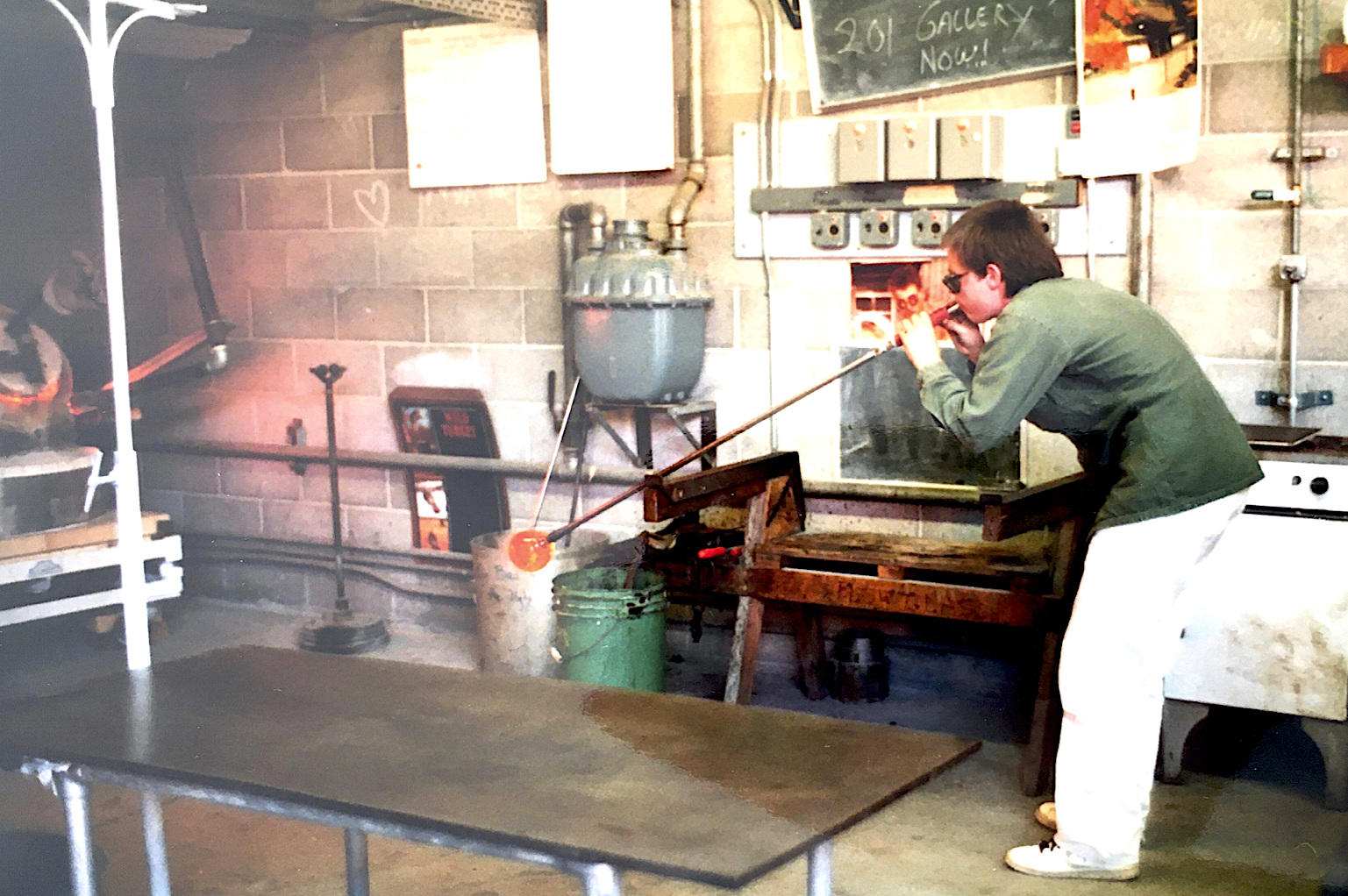
The United Steelworkers union covered everybody so if you had a problem with a co-worker the union couldn’t side with one worker or another so it didn’t feel like you had representation–especially as a woman.
I was the only woman welder in the plant, the whole steel industry in Pittsburg. I led a team–two very supportive pipefitters and then two millwrights who were not supportive. This one individual who was a short guy, white, Mormon, had a real issue taking orders from a woman. But I was the team leader and I got paid more.
The atmosphere in the cold reduction department was tense, unsafe and the work was really demanding. Also the air quality was really bad because we were stuck inside a building that had lots of water and oil mixed into the air we were breathing. We would get inside a mill, literally placing ourselves inside this big machinery, going down into the bowels of it. I never felt very safe going there because I knew this guy didn’t like me. I never expected him to do me physical harm but I worried that he might cause an accident.
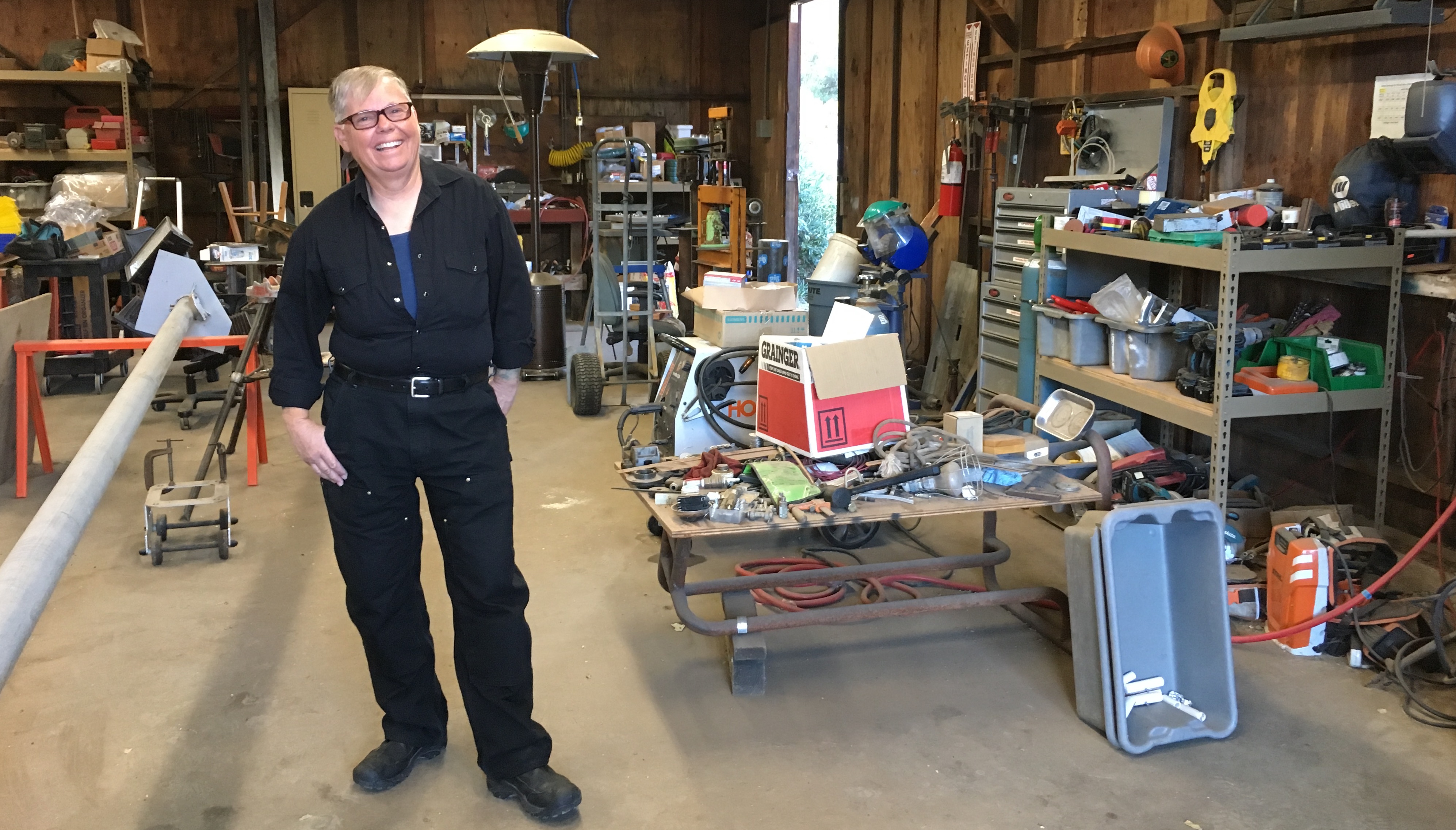
A firefighter was required to stand by while I was working, as my clothing would catch fire on a regular basis because of the oil that was constantly coating us. We got used to welding this way. You’d turn, stop welding, ask the fire guy to shoot you with water, he’d douse your clothes and you’d go back to welding again.
One night I was working graveyard so it was a small crew throughout the building. I was welding something up in my weld shop and had to go get some material and I came back to find this guy using my welding hood and welding on my bench. I shouted to him because of the loud machinery and he stopped, he put up the hood, and he back-fisted me. He hit me across my face so hard that I landed against my welding tanks and my hardhat split open.
Two of the other guys on my team came to see what happened. I was injured so the supervisor was called. He sent me home and he let my attacker stay on shift. I was told to come back the following morning for a meeting with the shop steward and the guy who physically attacked me. The shop steward just said that this was something we had to get over.
At that point I contacted an attorney and they told me to take whatever sick time I had and to get off site because it was not safe for me to be there. So I took my week’s leave and then I started calling in and saying that the environment was not safe for me to work in.

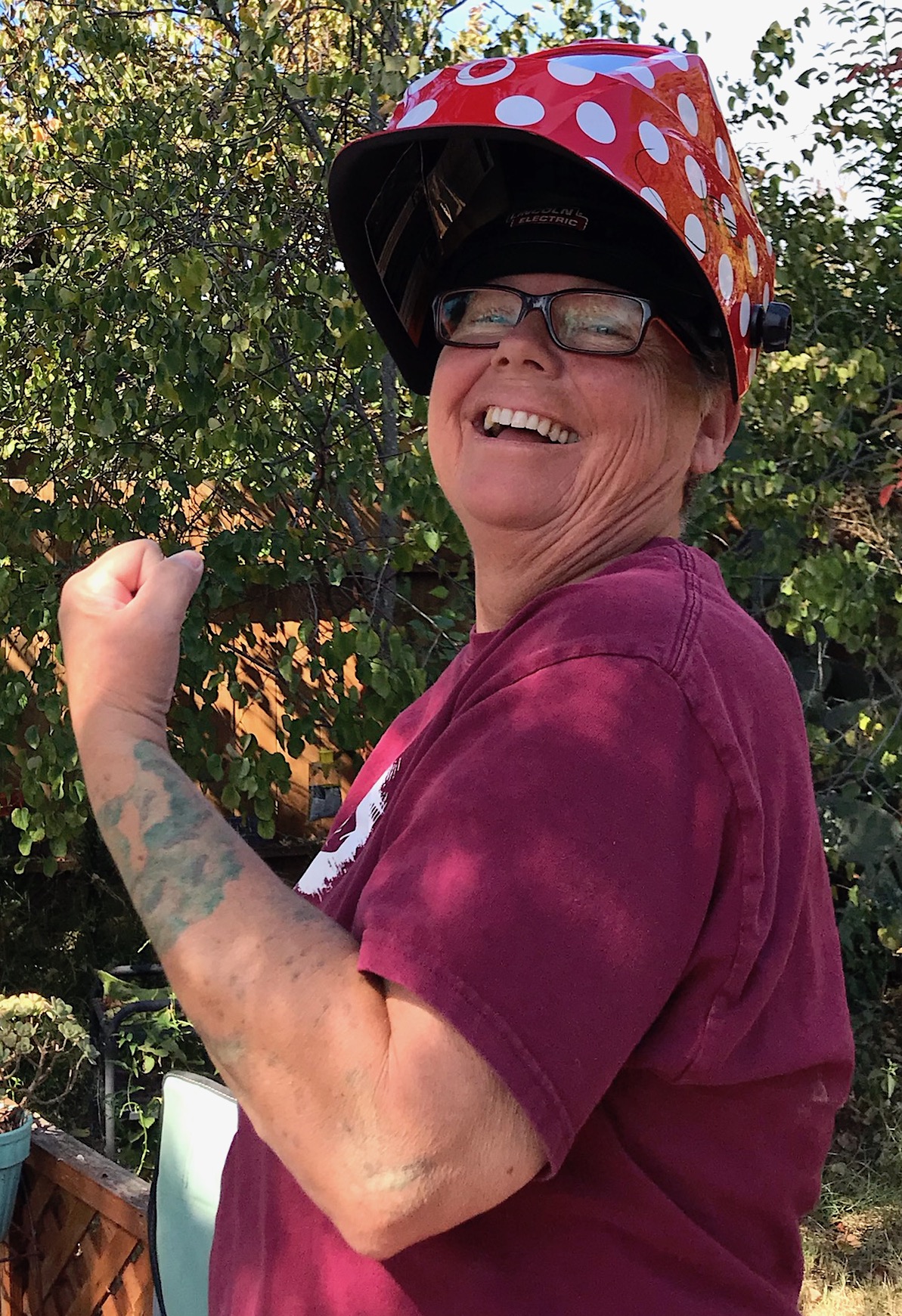
When I showed up for work again it was swing shift on Easter Sunday. There was an emergency. A pipe had bent and needed to be repaired. I had a new pipefitter working with me so we didn’t know each other. First I asked him if he had put the safety blocks in the line because this was a high-pressure hydraulic two-inch line. Then we climbed down the sheet steel that was in the way, down into this pit and I’m up to my knees in oil and hydraulic fluid. The pipe is above the hydraulic fluid. I’ve got my firefighter up above the pit and the pipefitter is down in the pit with me and we get ready to weld it up. I light my big oxy-acetylene rosebud torch to heat the pipe and all of a sudden somebody turns on the line, pressurizes it and there’s an explosion.
My head is literally right over the pipe when it explodes. I don’t realize I’m burnt all over my head with second and third degree burns. I scramble back up the torn up steel next to me to get to my acetylene set up to turn off those valves because I’m afraid of backfire in the lines. I see the pipefitter is burnt so I grab him to get him over to the safety shower and the safety shower doesn’t work. I see a water fountain and I get him to the water fountain and I get his hands into the water and he says ‘you’ve got to get yourself water’ and at that point I start to recognize how burnt I am.
We’re brought into the lunchroom. After 45 minutes or an hour, they finally get us to the hospital, which is unable to provide critical care. So they bring me back to the cold reduction plant. At that point my eyes are shut, I can’t see. My face doesn’t have skin on it.
Nobody responded or cared how badly I was hurt. The head of the department was there and he said that I should go home. They told me only to show up for a safety hearing the following morning. Then the guard, an African American man, looked at me and said ‘I will take you home.’ He risked his job going off shift leaving early to drive me home. When I got home my partner took me to Alta Bates hospital burn unit where they kept me for a week.

My lawyer and I went to a hearing with the EEOC. My face was still recovering from the burns but the hearing was simply about being hit by a co-worker on the job. It wasn’t about the explosion accident.
EEOC would have found in my favor but the EEOC officer asked me if I was going to take it to federal court and sue US Steel and not knowing any better I said yes. I didn’t understand that it would take five years to even get to court and I was going up against a major corporation. It would cost me and I was unemployed. So they found against me because they said if they’d found for me I couldn’t take it to court. So I lost my suit. And that ended my career in welding.
OSHA never found out about the accident. About a year later I was volunteering for Tradeswomen Inc. with Madeline Mixer at her Women’s Bureau office in the San Francisco federal building. Madeline took me down the hall to talk to the head of OSHA who was upset with me that I never contacted them. I didn’t know that I was responsible to contact them. So nothing ever happened to US Steel.
I never learned who turned the pressure back on. We all understood that US Steel was known for killing or maiming workers who complained. And that’s the way the industry ran back in those days.”
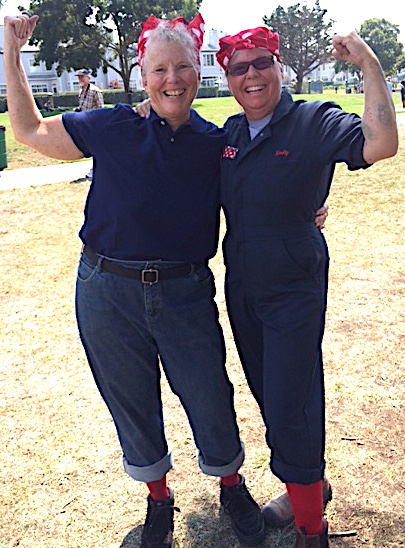
For many years after the accident, Joan looked like a reverse raccoon, her face red where the skin had burned off and white around her eyes, which had been protected by plastic safety glasses (they melted). Today, 39 years later, you can’t see the burns unless she points them out. Joan still loves welding and she uses her many skills at her current job working at a vineyard in Sonoma County. In her spare time she teaches beekeeping and building trades to women and girls. She lives in Santa Rosa with her wife Teresa Romaine, a retired painting contractor.
Interviewed by Molly Martin
Photographs by Vicky Hamlin
Tradeswomen organizers like to focus on our success stories. We want to show that women can do it and we want to encourage young women to get into the trades. But we often wonder to each other whether we send women into the hostile environment of construction with too little information about what it’s really like out there. We know that until women reach a critical mass in the industry we still face widespread harassment and discrimination on the job. One of the ways we’ve experienced discrimination is lack of training. Women have been complaining for decades about reaching the end of their apprenticeships and still not having the requisite skills to “turn out” as journeymen in their trades.
This is the story of one woman who tried every way she knew how to make it in construction and never received the on-the-job training she needed to become a top-notch journey level electrician. Carol Toliver completed the apprenticeship in IBEW Local 595 and worked as a journeyman for years, but she never felt she acquired the skills she needed to become the skilled craftswoman she aspired to be.
Carol grew up in a small town on the Hudson River in Westchester County, NY. She says she got an excellent education there and went on to college at Fisk University, a historically black college in Nashville, TN. At Fisk she participated in a student exchange program in 1978 that took her to Mills College in Oakland for a year. She met her future husband on her way to a rare book exhibit. She loved Oakland weather so much that she returned there for good after completing her last semester at Fisk.
She started working at banks and offices but two different companies she worked for moved out of town and so she ended up in a displaced workers program. That’s how she found out about the electrical apprenticeship. As part of the pre-apprenticeship program, students signed up for an apprenticeship. She chose electrical, took the entrance exam, and forgot all about it.
Carol was working as a teacher’s aide and planning to go into education when her husband suffered a career-ending injury at his work as a butcher. He fell on a slippery floor while carrying a pallet of chickens from the freezer.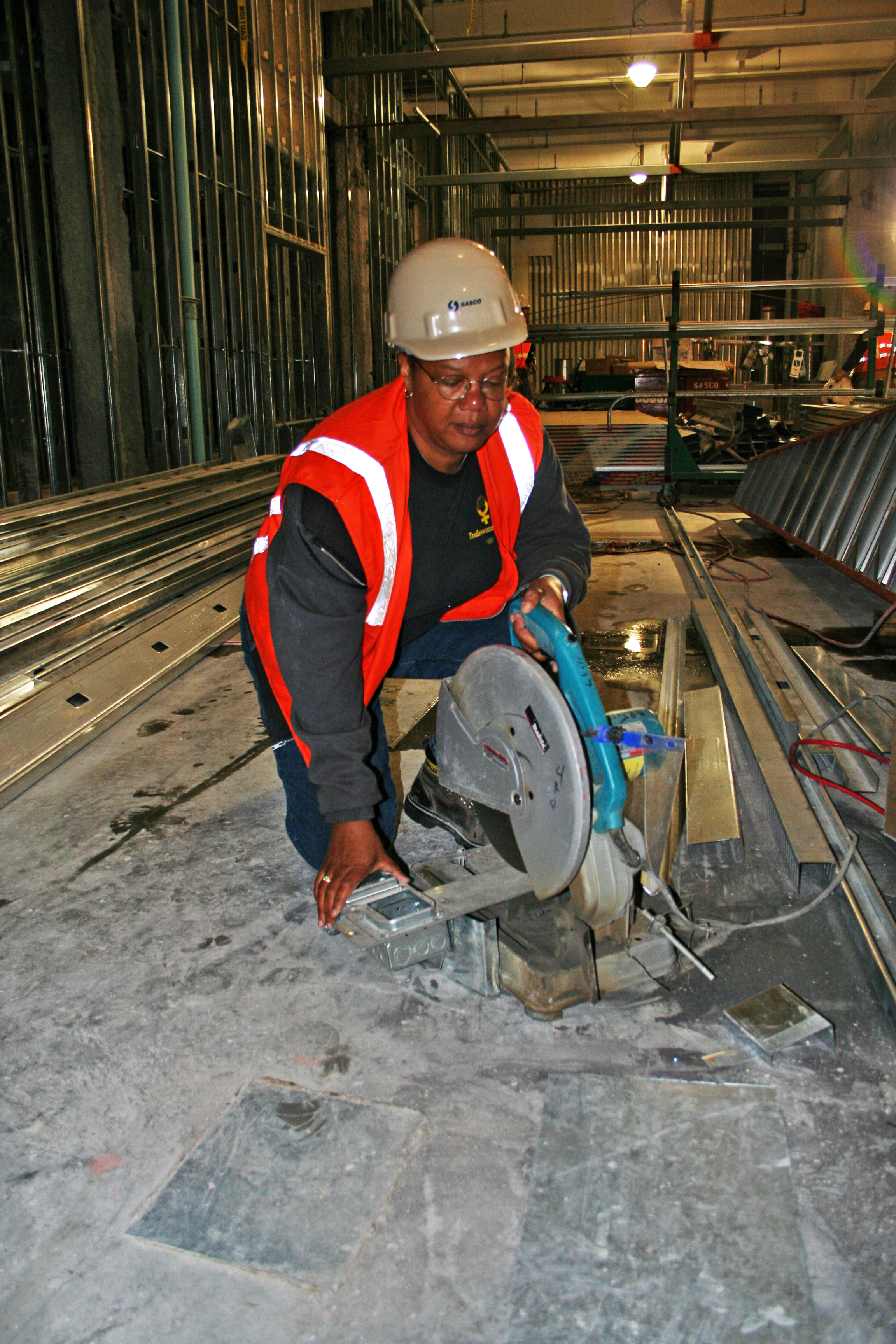
Within days of his accident she learned she had passed the test necessary to get a teaching credential and also had been admitted into the electrical apprenticeship. She realized she had to become the family’s main breadwinner to support her disabled husband and two children. So she put her plans of going to school on the back burner and opted to accept the apprenticeship, with on-the-job-training and immediate income.
Carol was excited to be an electrician. Her apprenticeship class started on-the-job training even before school classes began. It was 1997.
When she got on the job she was surprised to find an atmosphere of chaos. It seemed like everyone was yelling all the time. She came from a teaching environment where, she says, there is a lot of support and repetition to help you on your journey. In construction, she quickly learned, it was “jump in and make it happen.”
She was alone. “A lot of electricians have family members in the trade. I knew no one. It was a whole different world.I was a young Black woman, venturing into an environment that was predominately white men who, it seemed, all had some kind of connections,” she said.
The electrical apprenticeship is five years and consists of 8000 hours of classroom training and on-the-job training. There were two other women in Carol’s class of 25. “One dropped out and the other wouldn’t associate with me. I never knew why,” she said.
On the job Carol was often relegated to getting materials the first two years of her apprenticeship. She quickly recognized she wasn’t getting the same training as the men in her class. That’s when she started looking for help.
“I talked to everyone I thought could help–coworkers, apprenticeship directors, union officers,” she said. During her training she met with three different apprenticeship coordinators, trying to get help with her education. They each made her feel like it was her fault.
“My first program coordinator sat down in front of me with his pen and paper, crossed his legs and said, ‘Well young lady what seems to be YOUR problem?’ And I pulled out my piece of paper and pen and said, ‘this is my problem. I’m not getting the skills I need. I want to be a good journeyman. That’s my whole point of being here.’
“He said, ‘Well I don’t see what the problem is. You just have to apply yourself.’
“So I thought, ok I just have to try harder and I continued to ask people for help. I learned in the construction industry there’s a certain mindset that I didn’t have. Everybody just kept making the assumption that I wasn’t present and committed. I was. Maybe I needed a little more hands-on attention. But I think that was fair because most of the guys had worked on mechanical stuff. I had none of that experience as a female.
“When I talked to my second program coordinator I was very emotional. I was so distraught. I wanted to be a success. I wasn’t getting the training. I didn’t know who else to reach out to. Maybe he didn’t know what to do with me or how to handle it. After I expressed my concerns he just said, ‘You’re in the apprenticeship, you’re on a job aren’t you?’ He literally threw me out of his office. I was just devastated. I just said to myself I’m gonna keep trying.
“Then a new program coordinator appeared to be much more progressive. When I spoke to him his response was not as vocal but was essentially the same. He came on the job and talked to the foreman who put me with another journeyman. All we were doing was lifting heavy boards. So then I just realized that the help I thought was there for me was not there.”
Carol said her whole career was one of fear and frustration—fear of being laid off and not being able to support her family, and frustration that she was not learning the trade.
By the third year of the apprenticeship she had reached the “point of no return.” Her husband advised her to quit. “I was too stubborn and had put in too much time to consider that,” she said.
One journeyman she worked with, Marta Schultz, told her about Tradeswomen Inc., a non-profit dedicated to bringing women into the building trades. Marta, besides being an electrician, is a composer, playwright and singer. She wrote “595 The Musical” and skits about women in construction. Her theater group, the Sparkettes, performed at tradeswomen conferences.
“Marta is an experienced union hand and a feminist committed to supporting women in the electrical trade. She made sure that I learned under her watch, unlike many of my union brothers and foremen,” said Carol.
Life on the job didn’t get any easier after Marta, Carol and four other female electricians sued a contractor for discrimination and won.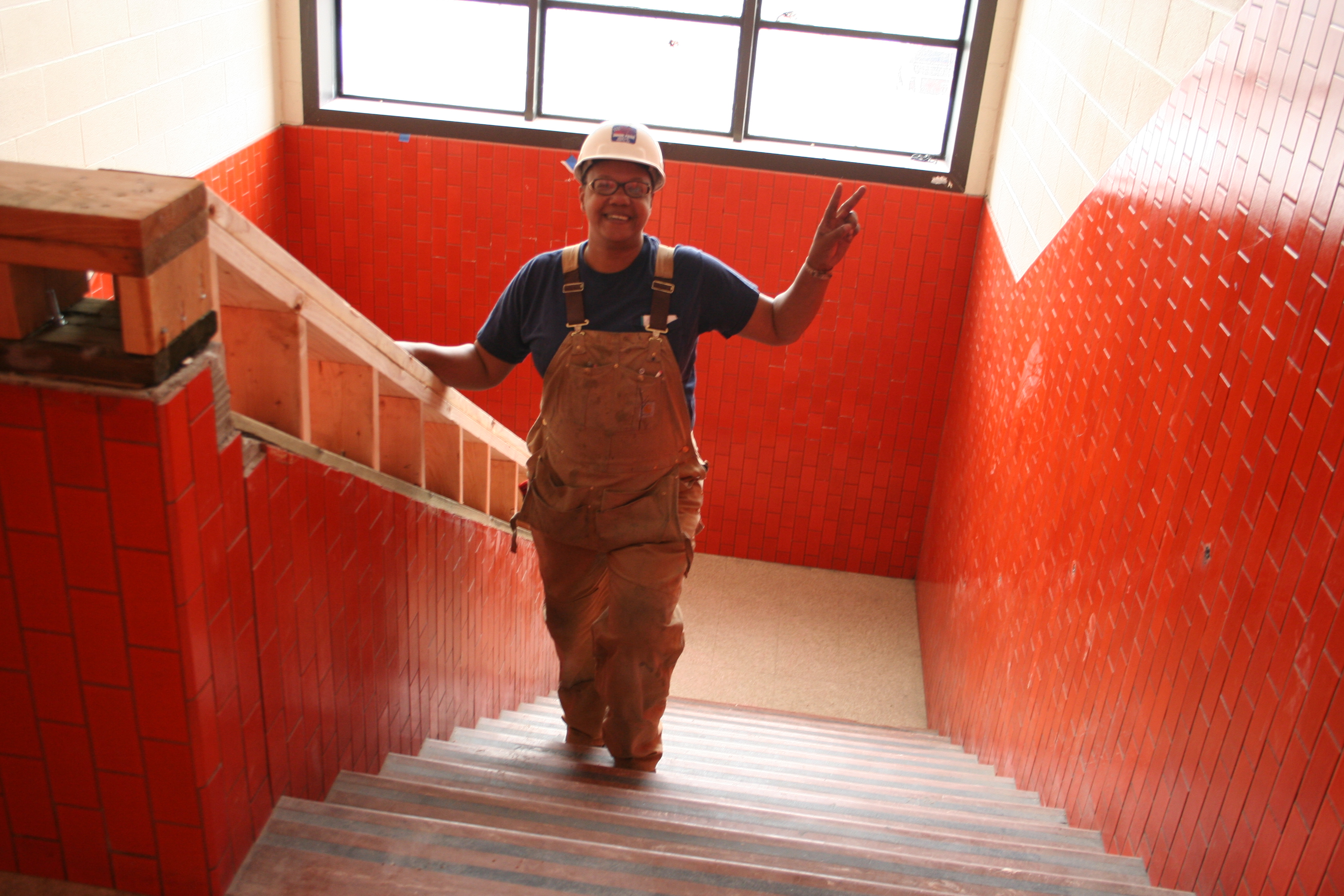
Carol says the women of Tradeswomen helped her keep her sanity though tough times. She served on the Tradeswomen Inc. board of directors for many years, a place where her positive outlook and organizing skills were welcome.
During that time her kids were leaving home and her marriage foundered, not least because of changed roles and old expectations. “I did a lot of crying, a lot of self-medicating,” she said.
But she decided she had to stick it out, with the ongoing expectation that things would get better. They never did. When Carol turned out of the apprenticeship in 2002 she still did not think of herself as a capable journeyman. “My skills never got a chance to launch,” she said.
Fear of being laid off held her back. “The first couple of times when I told my foreman that I wanted to do different things (related to my craft) that week or the next week, I would find myself laid off. I was terrified of being laid off and missing a paycheck. We had all this debt. I didn’t see anyone willing to help me and I got to the point where I stopped asking.
“Some of the contractors would give me a basic task I could handle which I appreciated, but I wasn’t moving forward in my experience. Instead of saying ‘Let her try it,’ they would eventually lay me off. Even when I was on a job where I became good at something, I would be put on another job and it was back to square one. Then they would send me on to the next contractor who would try to keep me on by giving me menial or not electrical-related tasks.”
After 17 years of working as an electrician, Carol made the decision to quit the trade and move on with her life. I saw her soon after and she was smiling. She finally felt free from the burden of fear and frustration. For a time she worked at computer repair and later she returned to a job in banking. She recently moved into a new senior housing complex in the East Bay.

Asked what she would tell women who find they are being denied training, Carol retained her natural optimism. “I would tell them to not be afraid to ask for help and keep asking until you get it. You can do it, you just have to stand your ground and not let them get away with not training you. Work hard, and remember your reason for being there. Look for allies on the job. There are some good brothers out there and women too. Seek them out early and often in your career. Be determined to succeed and you will.”
PostScript: Financial insecurity, inadequate on-the-job training and hostile work environment are major reasons given for dropping out of apprenticeship. Nonunion programs have a higher cancellation rate than union programs. Women and minorities tend to have higher apprenticeship drop out rates than white men, but all are close to 50 percent. However, apprenticeship completion rates compare favorably with college completion rates of 22 percent. *
*Apprenticeship Completion and Cancellation in the Building Trades, The Aspen Institute, 2013
They nearly died in the 2017 Tubbs fire that destroyed their home

As Pam Bates and Judy Helfand celebrate their 40thyear together they marvel that they are still alive to do so. They nearly perished in the fire that destroyed their Sonoma County home in 2017 and killed 44 people.

“We were in bed hard asleep when a neighbor called to tell us fire was coming over the ridge. Then the electricity went off. Where we live that means you have no lights andno water,” said Pam. They barely had time to dress and throw a few things in the car. Judy grabbed photo albums. They gathered up the two dogs and the one cat they could find, let the goats and horses out of the barn, leaving the chickens locked in to protect them from predators.

Pam remembered, “It was really windy that night. As I was on my way down to the barn I looked up and saw undulating red-hot embers floating over my head. That was really scary. I could see an orange glow coming over the hill moving very fast.”
They drove out through flames; smoke so thick they couldn’t see the road in front of them. “I’ll never get over that experience,” said Pam. “We got through it but I’ll never get over it.”

The fires burned for a week and when Judy and Pam were finally able to sneak back to their 20-acre property they found their house, barn and outbuildings had burned to the ground. The horses and goats were singed but still alive. They had lost only one cat, their parrot and the chickens. “And everything else,” added Pam.
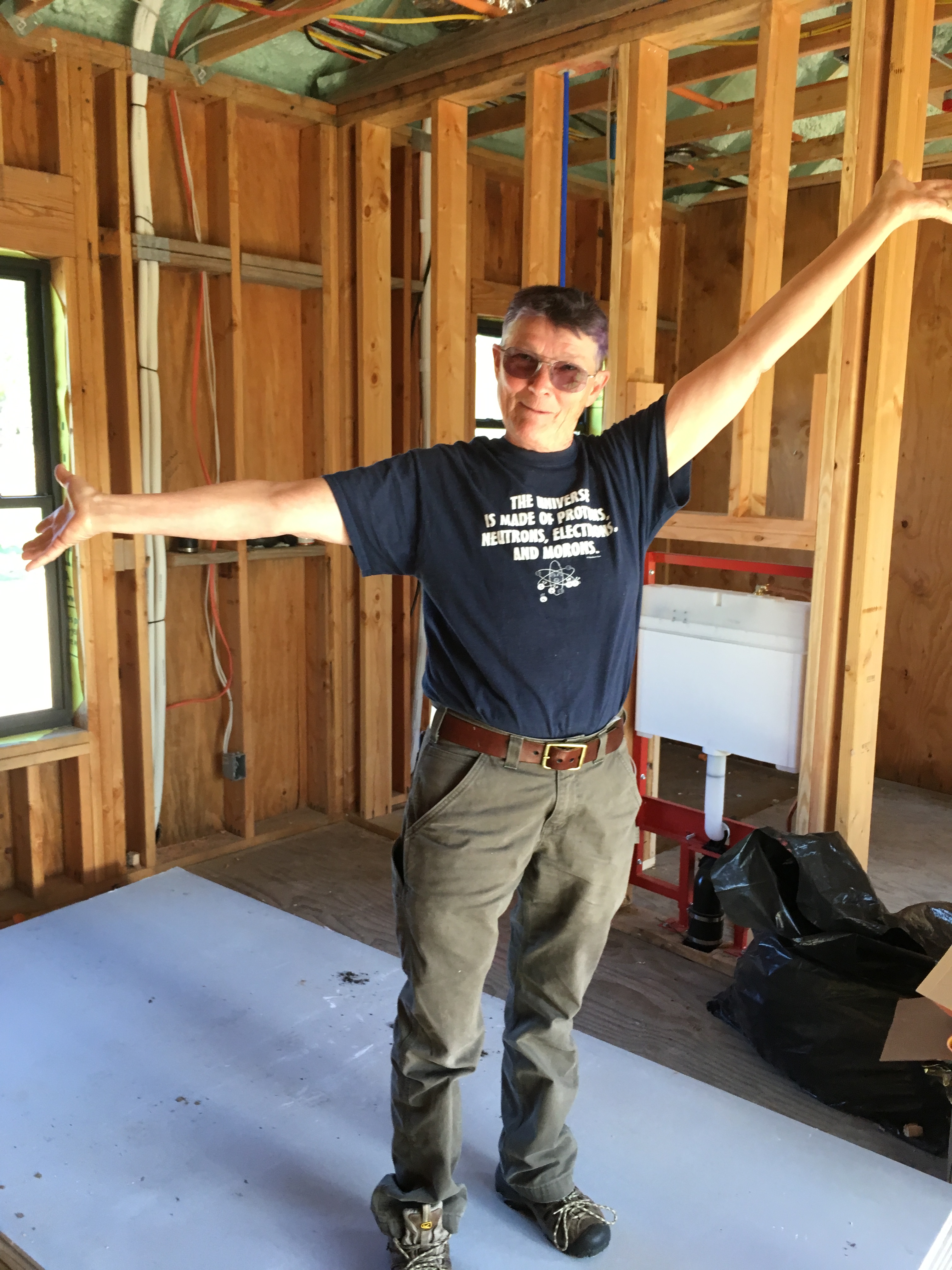
A year and a half later the couple has nearly finished rebuilding the farm they’ve called home for four decades. They bought a used motor home, parked it on the land and got to work, employing a contractor to build two yurts and a chicken house first, then the house and a garage/shop. Judy has planted a flourishing garden. The 25 new chickens are laying; many of the trees are recovering. Pam estimates construction will be finished by November. “And we’re still speaking to each other,” added Pam.

They met at a Women Against Rape meeting. “Judy was married to a man and seven months pregnant. I saw her across the room and thought she was beautiful,” remembered Pam.
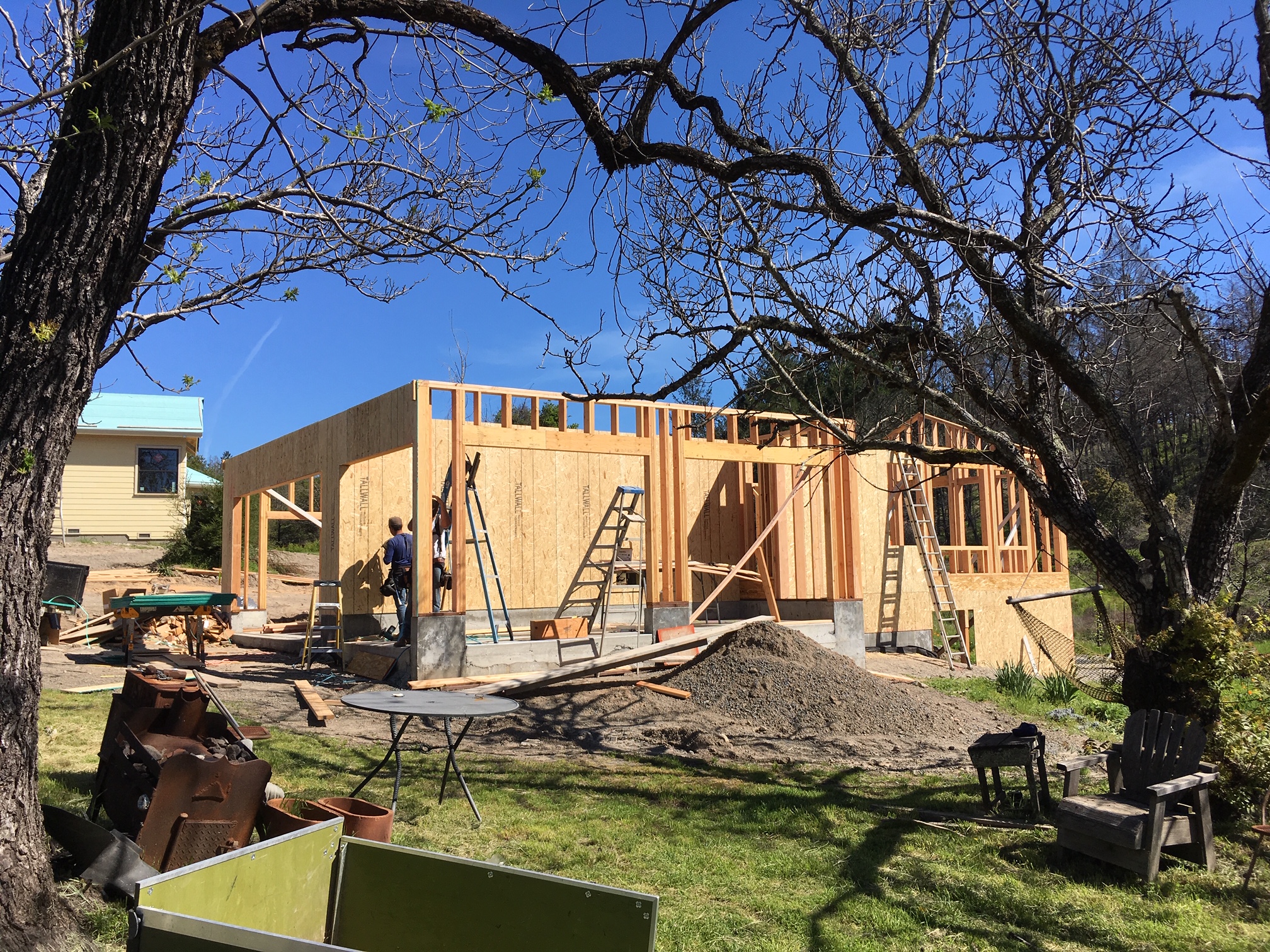
Pam is a phenomenon in the tradeswomen community. She retired at 60 after 30 years as a union pipe fitter, one of few women to hang in through harassment and sexism till retirement from the trade. Judy is active with Racial Justice Allies of Sonoma County. She retired after teaching at Santa Rosa Junior College for many years. They have two kids, and grandkids who visit often.
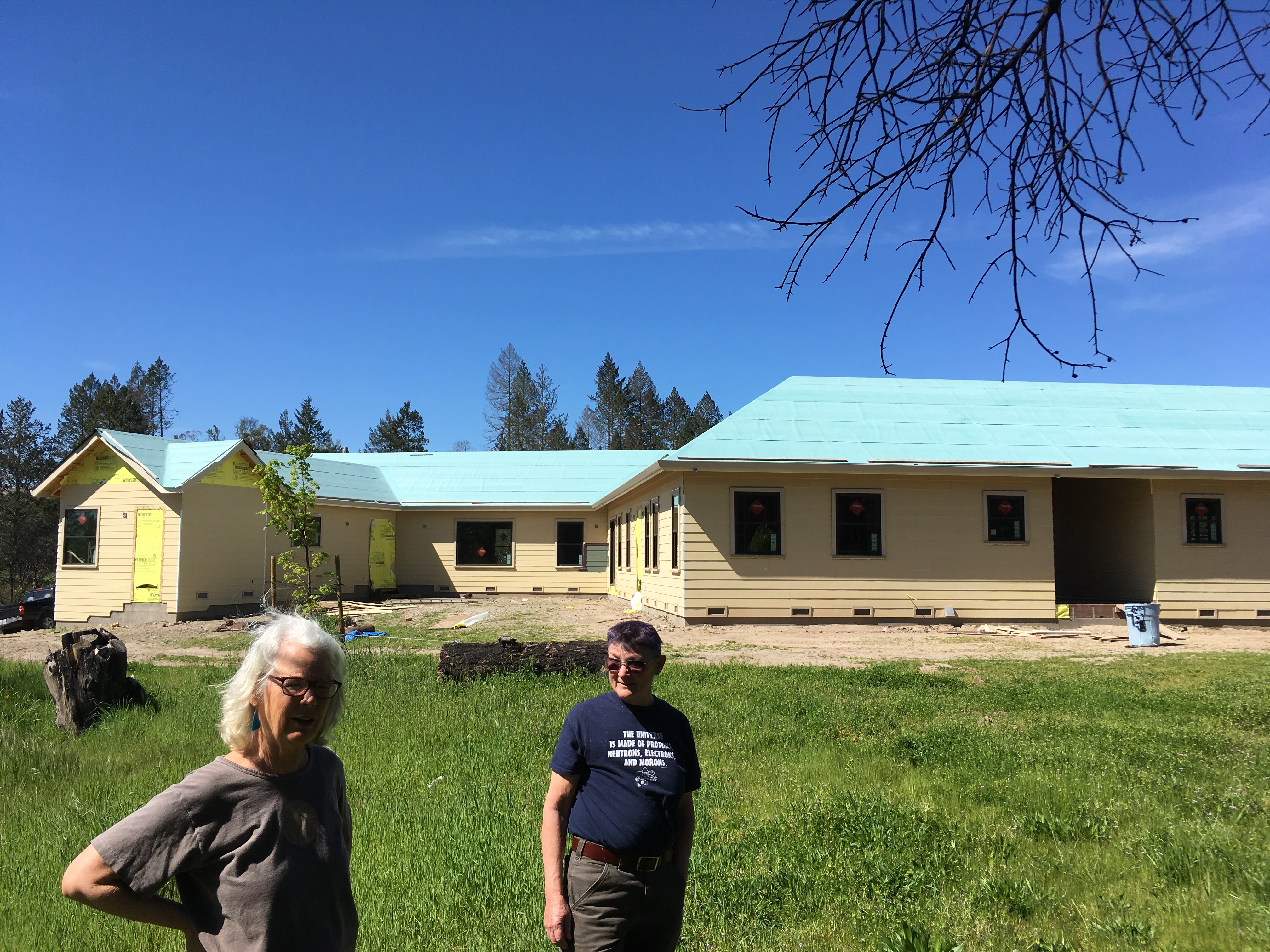
Now green hills and blooming flowers mask the immense pain and suffering the fires inflicted on Northern California. For this old lesbian couple they symbolize renewal and a new chapter in life.



 tradeswomn musings