Two New Women Join the Clubmobile Crew: Janet Potts and Fritzie Hoglund

My Mother and Audie Murphy Ch. 40

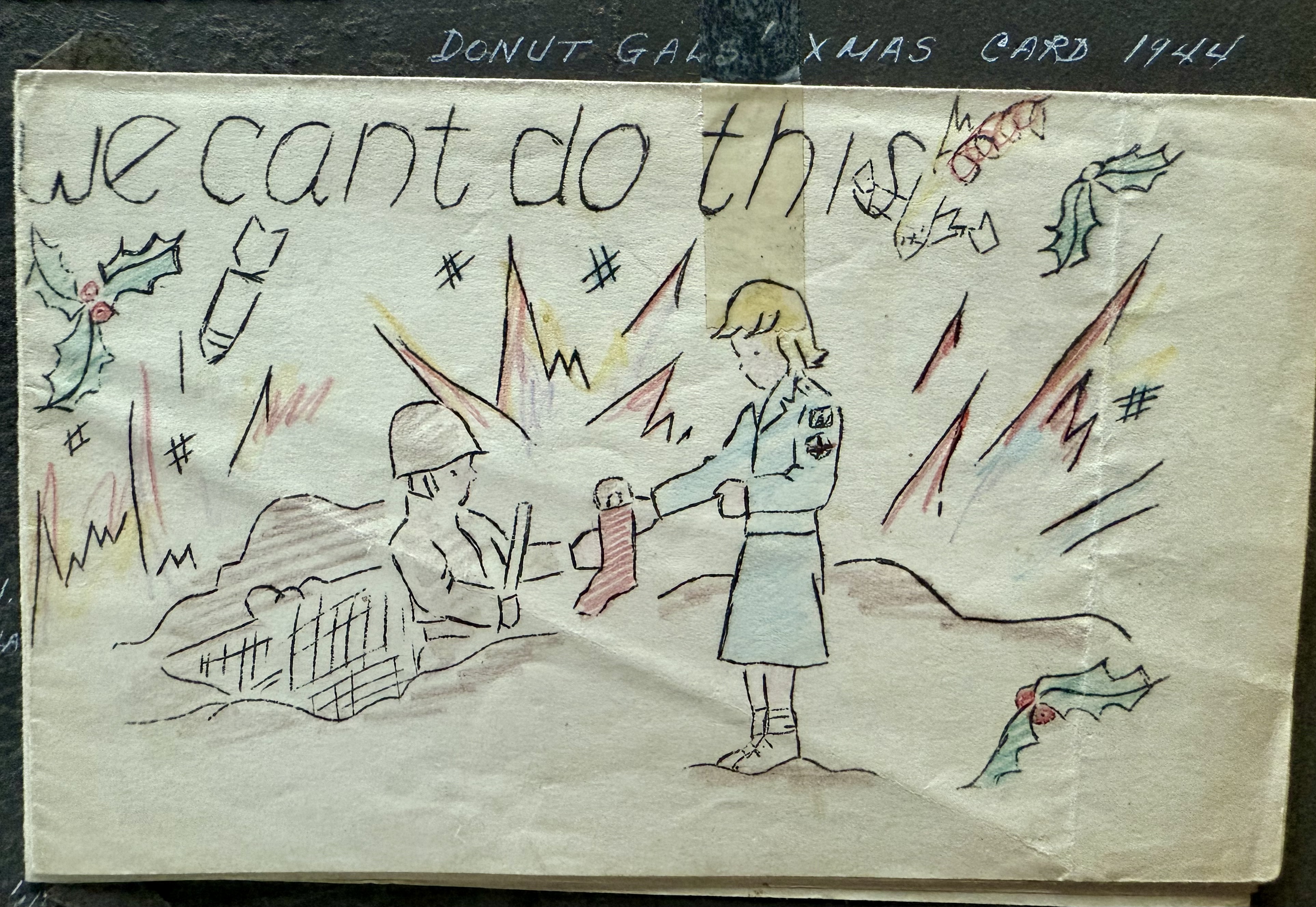
October, 1944. The four-woman crew gets to work, Flo sees Gene before his company goes in the lines, clubmobilers get up near the front lines and they move to a new camp.

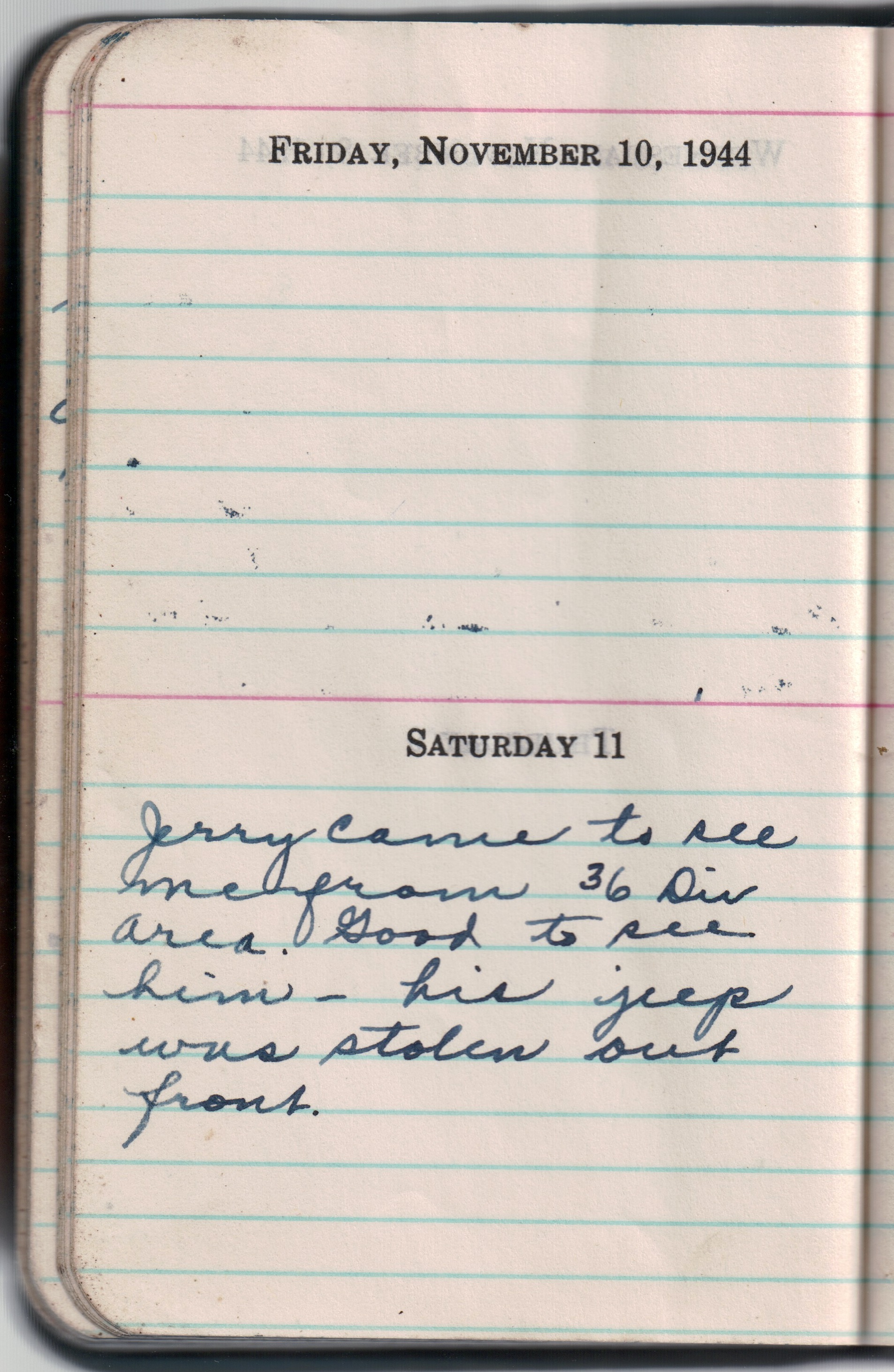
Flo’s diary (pinch out to read)

A note here about the challenge of research: In 1973, a fire at the National Personnel Records Center (NPRC) destroyed 16-18 million official military personnel files. Among them were the archived records of the Clubmobile program, making modern-day research into these women’s service difficult.

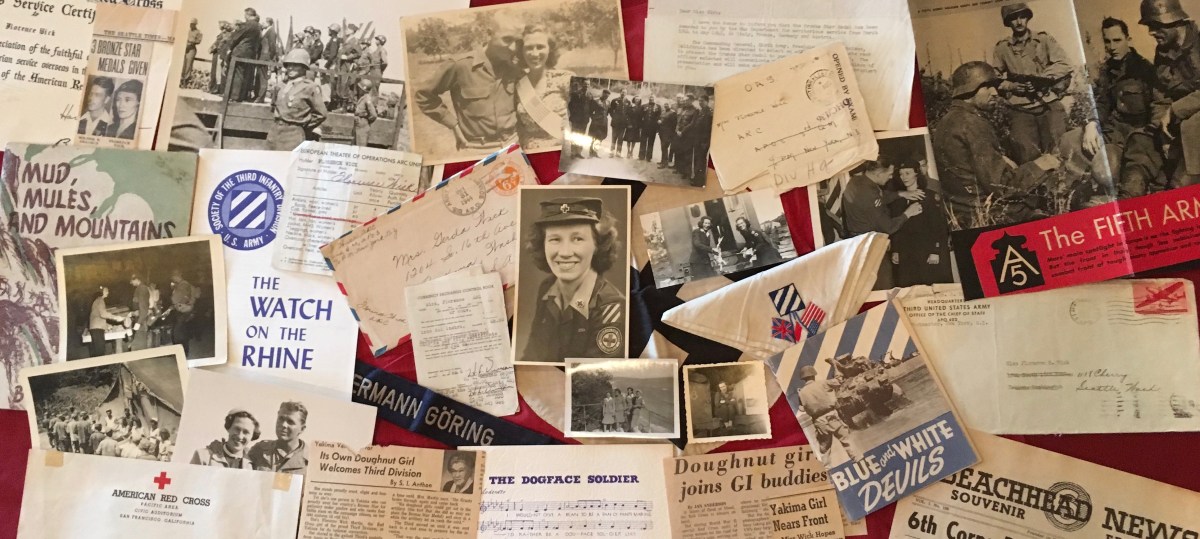
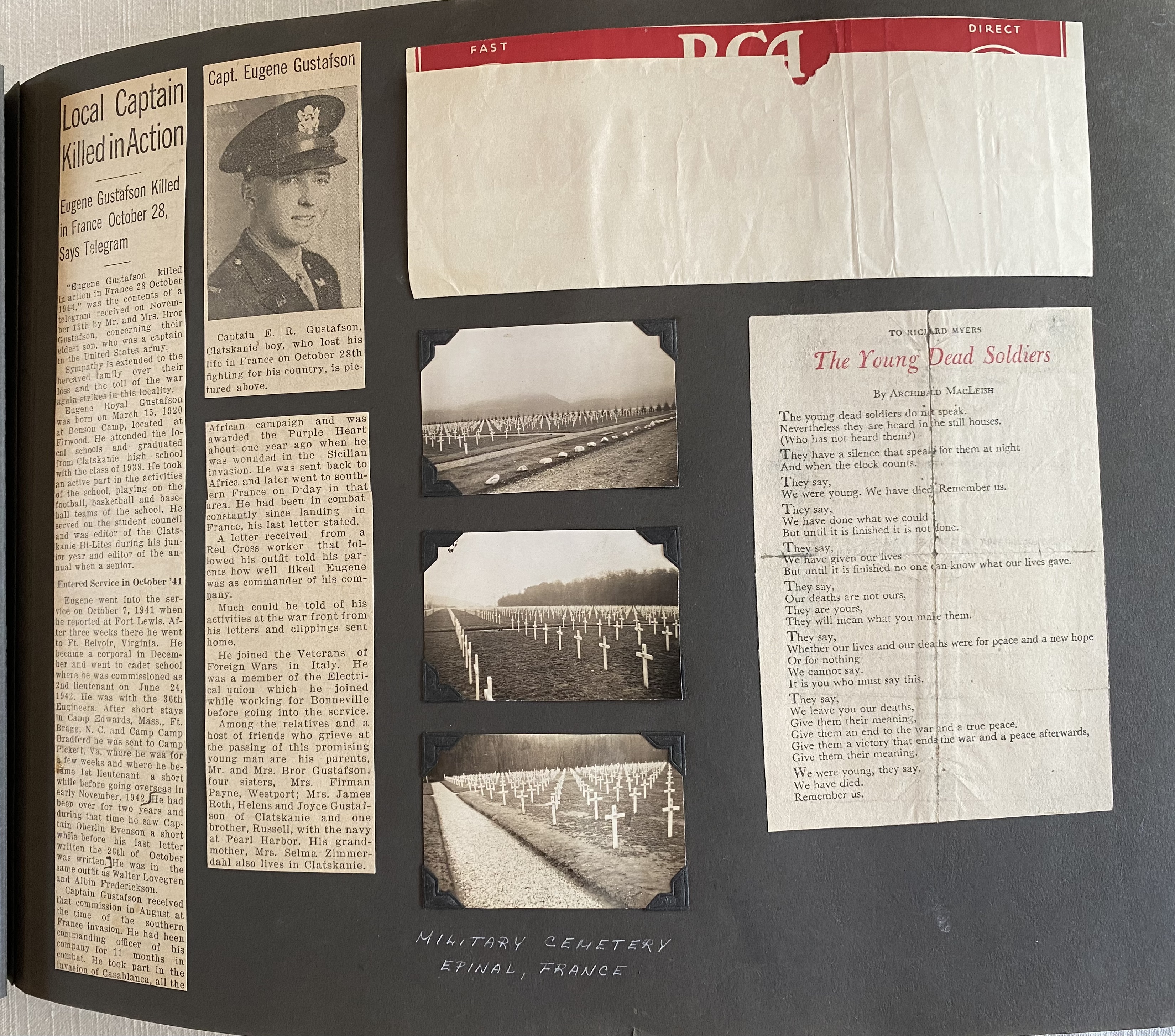
From Flo’s album

One helpful resource is The Clubmobile—The ARC in the Storm: A Personal History of and by the Clubmobilers in the European Theater of War During WWIIcompiled by Marjorie Lee Morgan. The book includes interviews, diary entries, and photographs. But it focuses solely on the European Theater and omits those who served in the North African and Italian Theaters—even though many of those women, like my mother, also served in France, Germany, and Austria. And these women were the first to enter France and Europe. The book even includes a list of clubmobilers, but no names from the North African/Italian Theater appear, except Forence Wick on the inactive list.

With help from my brother Don, I was able to find some information on Janet Potts and even contacted her daughter. But so far, we’ve found nothing definitive about Fritzie Hoglund (or possibly Hoagland). A newspaper clipping pasted into Flo’s album says Fritzie was from Berkeley, California.

Janet Jenson (née Potts)


Born in New Rochelle, New York, Janet graduated from the Brearley School, attended Barnard and Columbia, and joined the Red Cross in 1944. An accomplished equestrian, she rode in a Third Division “rodeo” at the end of the war.

Janet was one of eight sisters—three of whom served in the Red Cross during the war. Janet was the only one who went to Europe, while the two others served in the South Pacific.

She married Lloyd Jenson in 1946 and had two daughters. Her daughter Susan Jenson told me that Janet often spoke of Flo and that her mother also made a wartime album, which she plans to go through. 

Janet’s daughter wrote, “I personally think there’s far too much focus on donuts in the way the clubmobilers’ work is remembered. These women were brave and generous souls who took on a difficult and emotionally demanding role, offering comfort to exhausted and traumatized troops. As my mother often said, the French sometimes mistook them for camp followers—a euphemism for prostitutes. They had no idea what these women were really doing. But for many soldiers, these were the last warm smiles they ever saw.

“Janet always had kind things to say about Flo. I can imagine the two of them together in a jeep, laughing. It was an adventure—but also full of heartbreak.”

Janet died in 2011, in Denver at age 96.

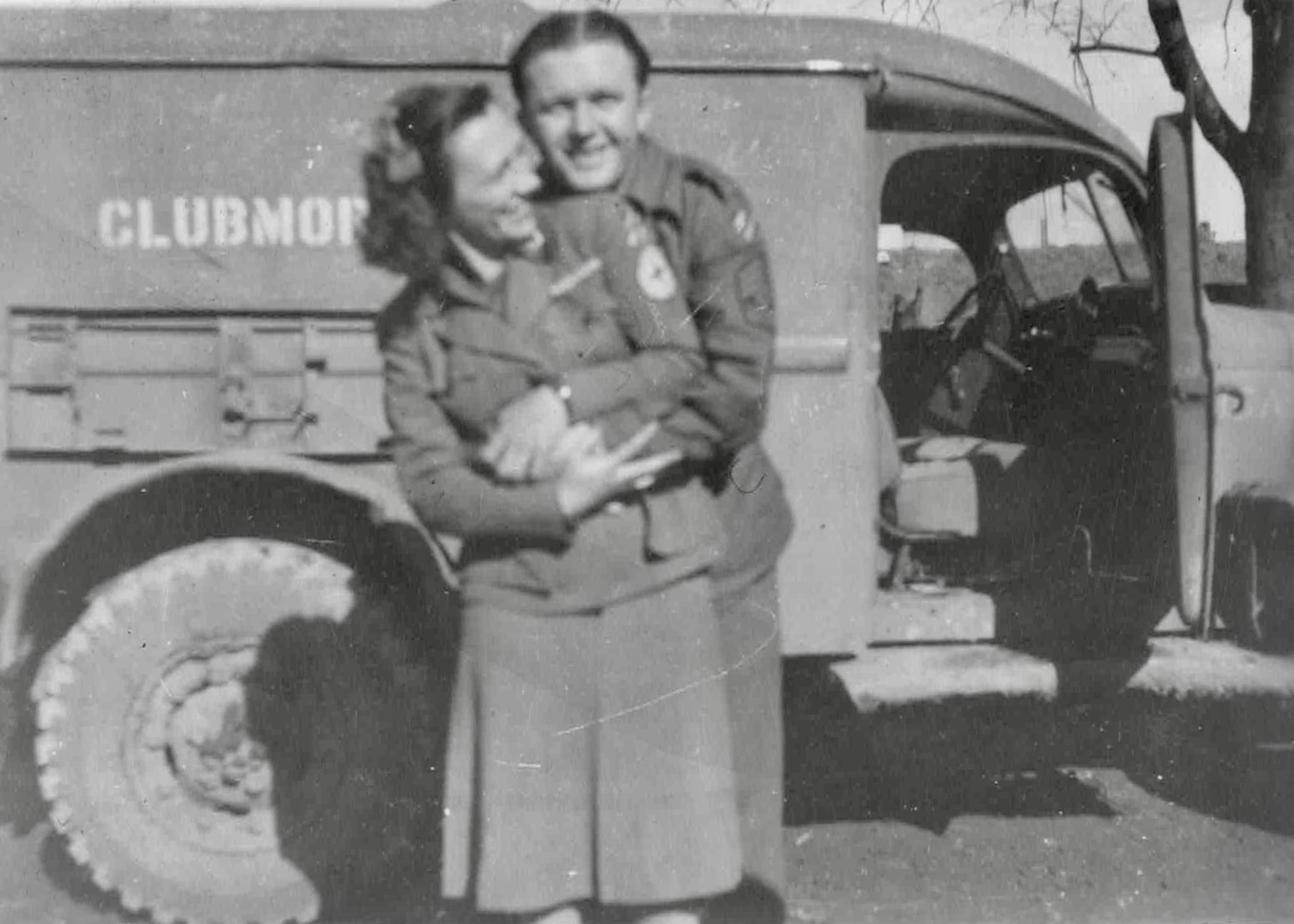
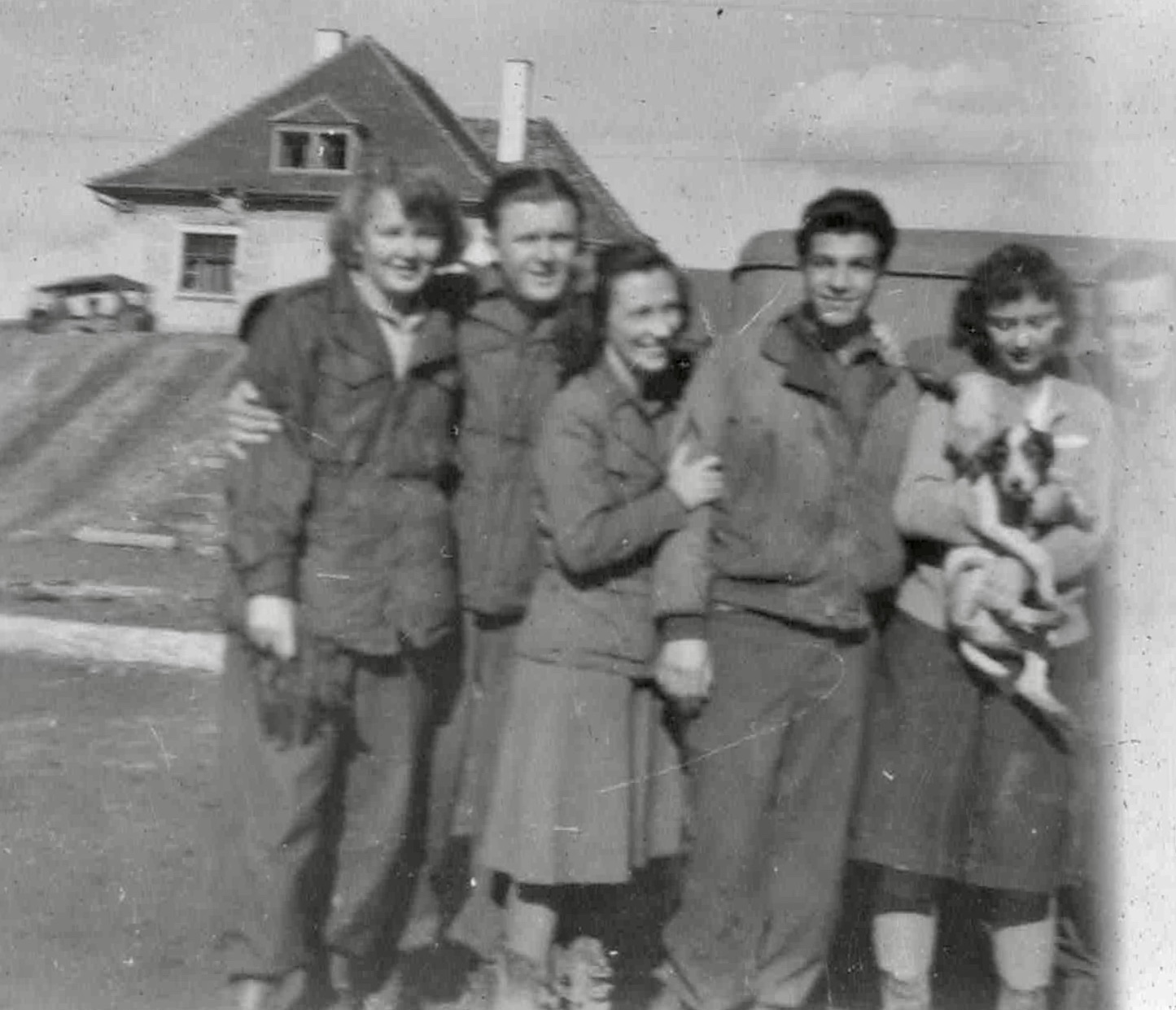
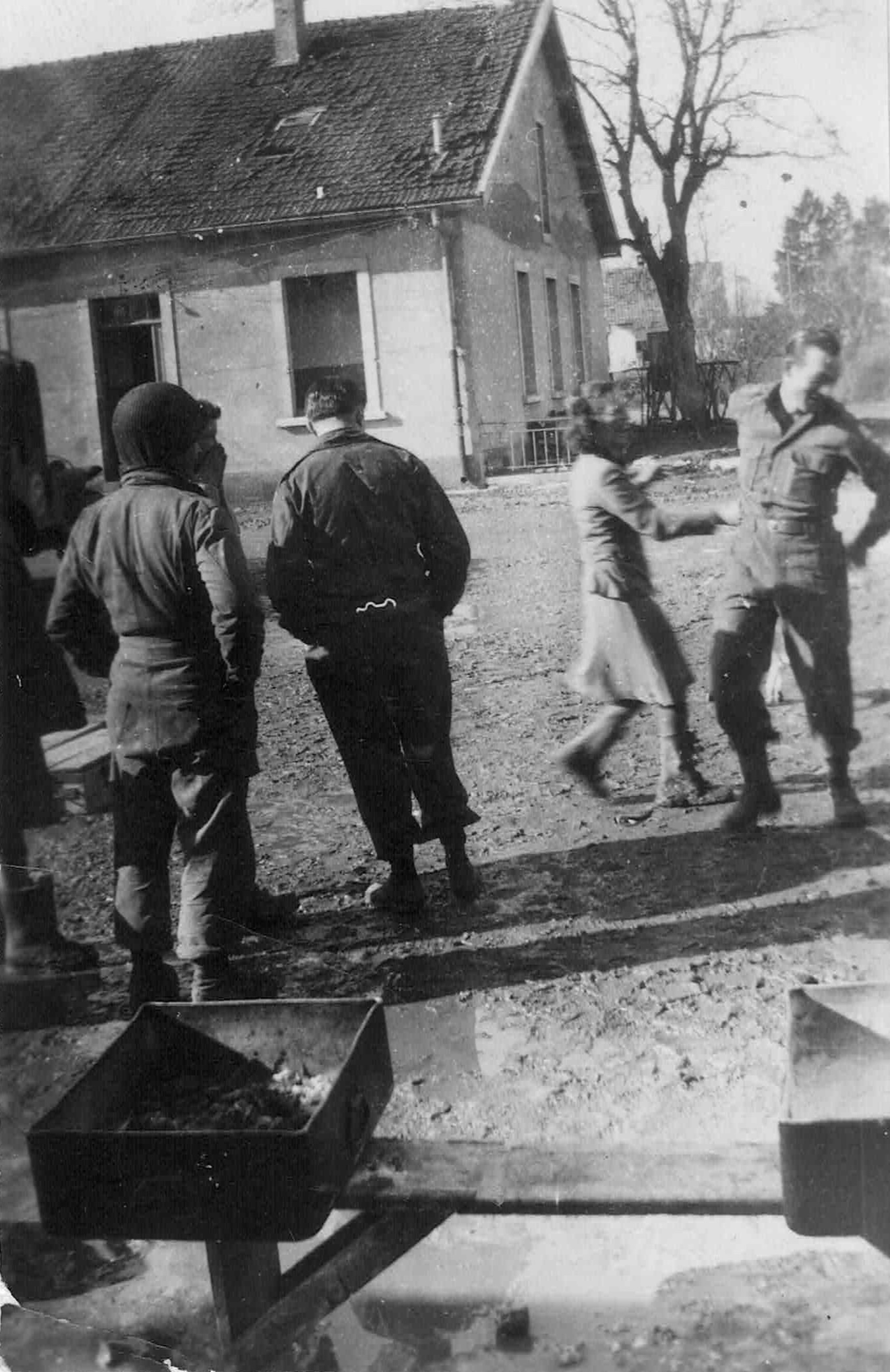
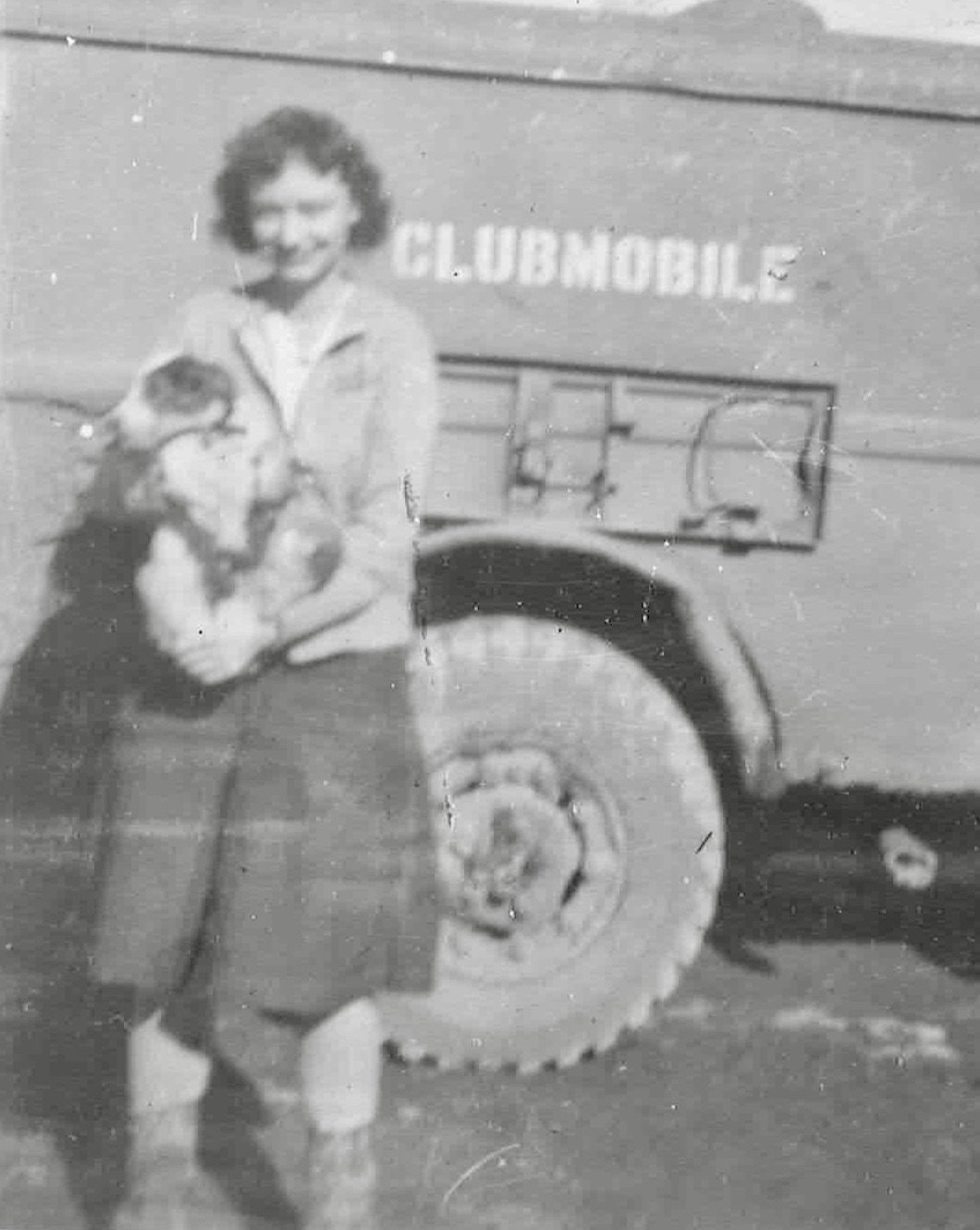
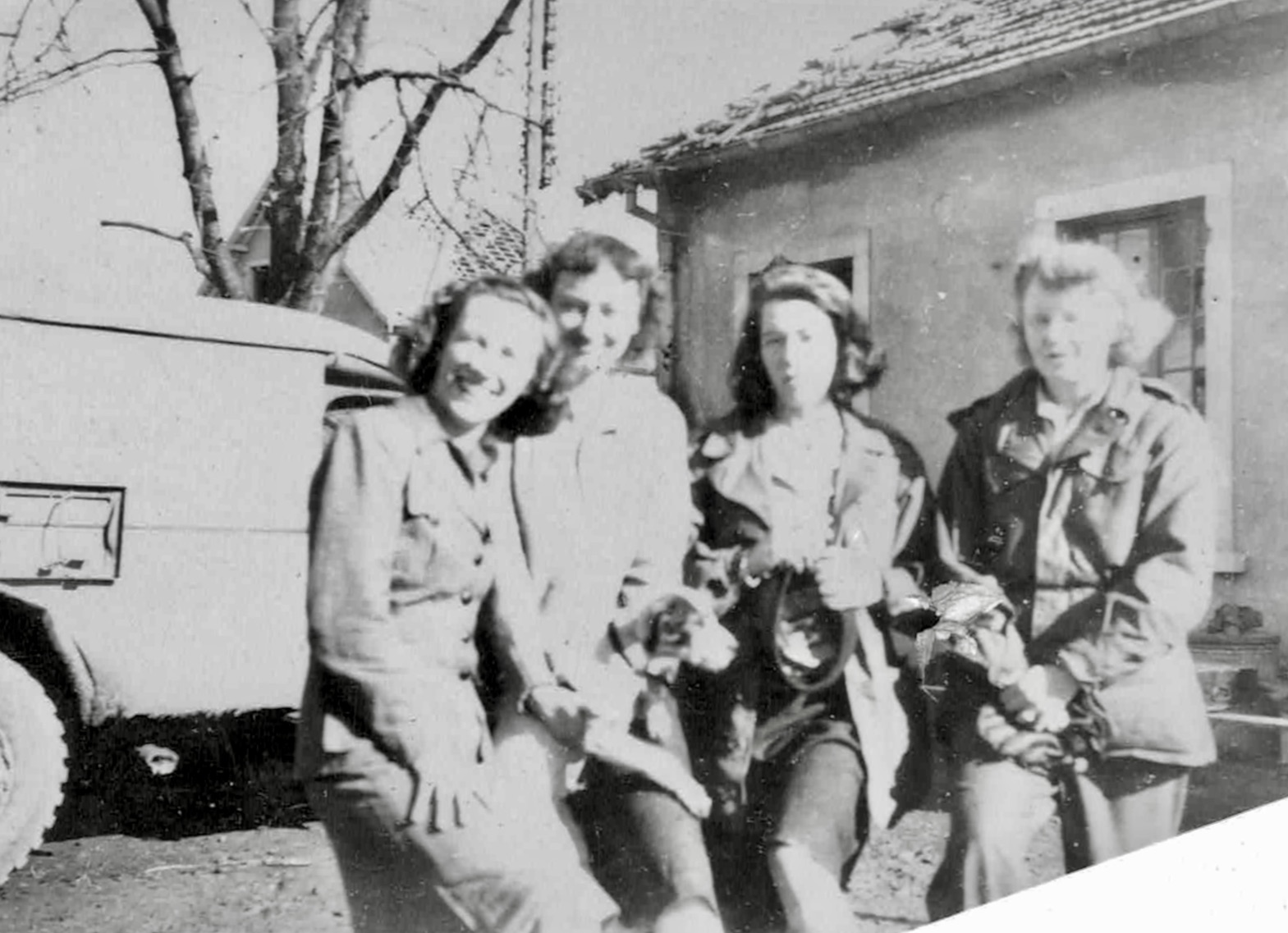
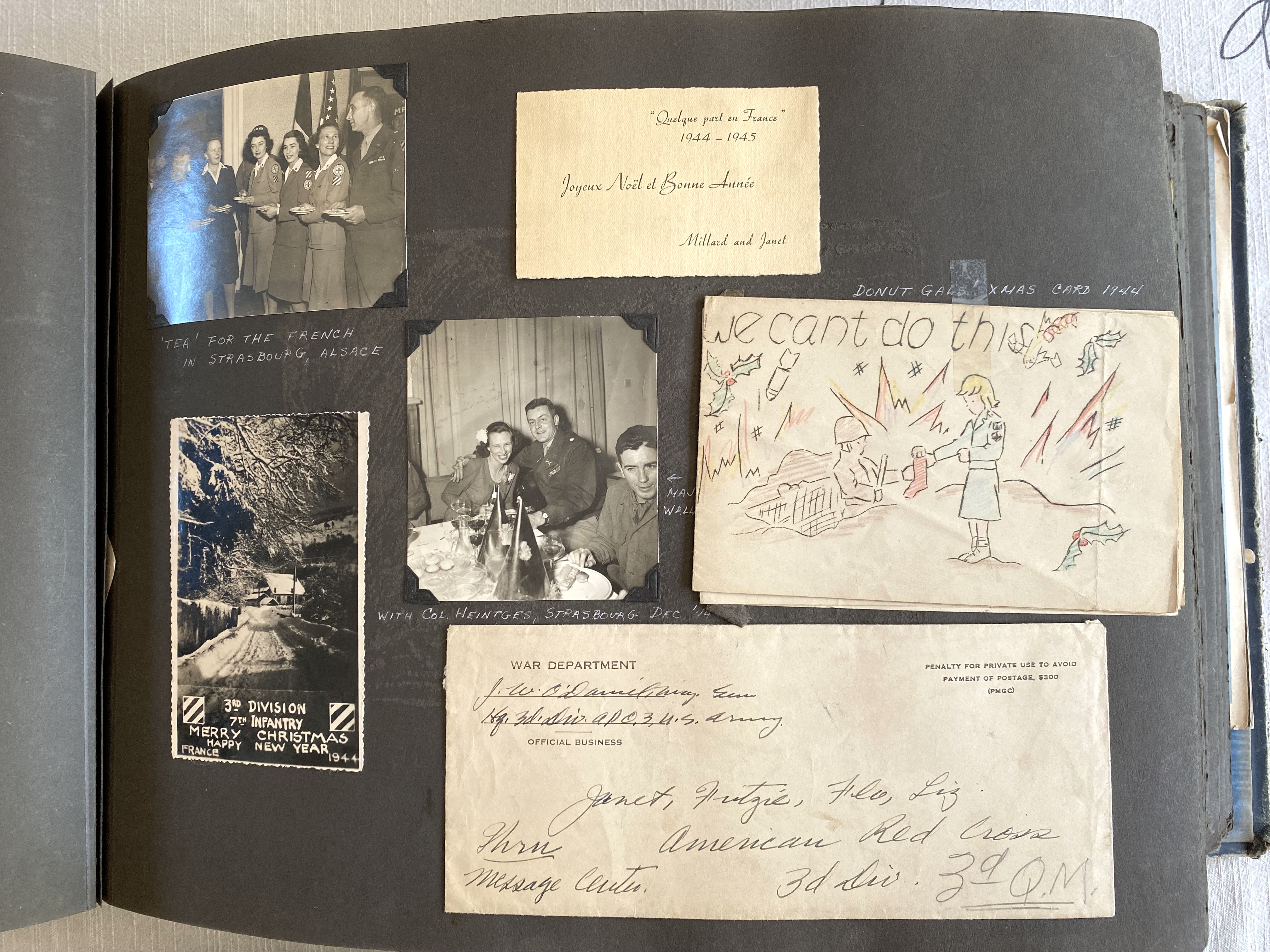
Liz, Flo, Fritzie and Janet (in clubmobile)

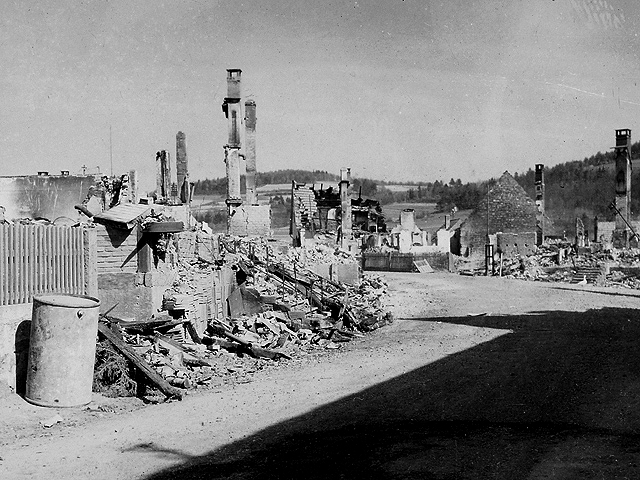
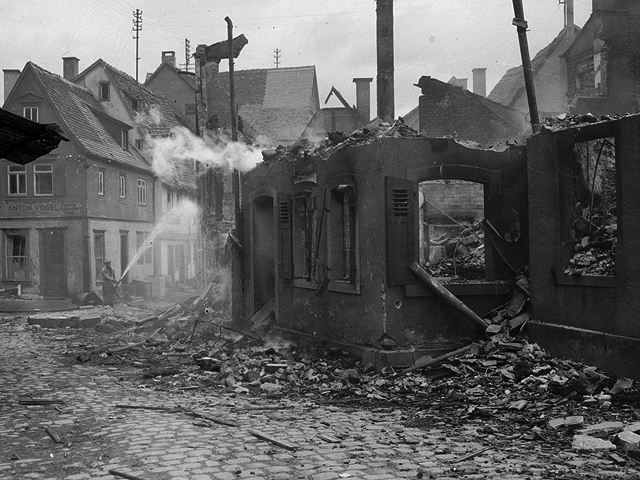
The new four-woman crew slept in the clubmobile. Flo wrote in her diary, “It was fun, but very crowded.” Later, they were issued a tent and new cots.

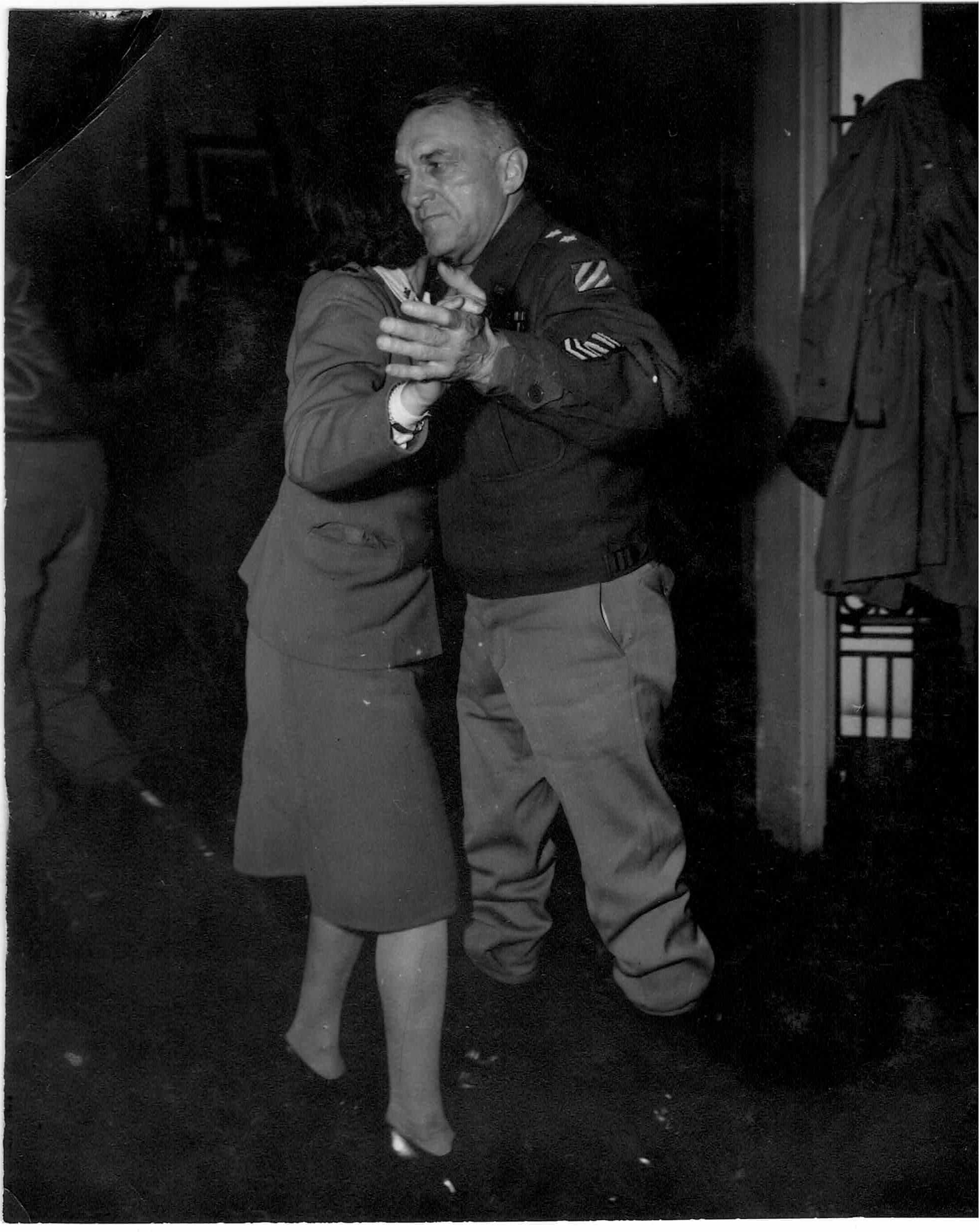
At one point, Flo’s fiance Gene came down from Docelles and surprised her. “Went out to a movie with him,” she wrote. She saw him again on October 19. Then on October 20: “Last night with Gene—co. going in lines. Sat in front of fireplace at Docelles.” The next day in a free afternoon, she drove back to Docelles maybe with the hope of seeing him one last time. She wrote: “Gene gone. Spent night at ‘home.’”

The following morning, Flo and the crew spent hours loading and moving supplies—the clubmobile was relocating to an area near Épinal.

Ch. 41: https://mollymartin.blog/2025/07/20/the-clubmobile-crew-goes-to-paris/

Flo and Gene Permitted to Marry

Murphy gets hit, Flo takes a break

My Mother and Audie Murphy Ch. 39

October 1944. Flo’s diary is blank from October 2 to October 7, 1944. There’s no way to know what happened during that time, but there are clues. My cousin told me that at some point during the war Flo went to Paris for an abortion. I wrote about it here:  https://mollymartin.blog/2022/04/16/solving-a-wwii-era-mystery/. The city had been liberated in late August and it would have been possible for Flo to travel there and back in five days. Flo stayed in touch with her sister, Eve, who was serving as an Army nurse in a Paris hospital. Eve told me that Flo had also suffered a miscarriage while hauling heavy equipment. Flo never wrote about any of it in her diary, and she never spoke of it later. But whatever happened during that week, it was serious enough to stop her from writing altogether.

Flo’s diary (pinch out to read)

By October 8, Flo and Liz were back in action, serving hundreds of donuts to American troops every day. They had moved from Remiremont to nearby Saint-Nabord, a grim, war-torn area where they now lived in their clubmobile. One day they drove to Luxeuil for photos. Another day they served the replacement depot while a military band played. And then they bounced across a pontoon bridge into Saint-Amé, until their battered old sedan gave out. The clutch snapped halfway over the bridge and couldn’t be repaired. 

During this time, they served the 15th Infantry—Audie Murphy’s unit—a couple of times. The men were quiet, polite, exhausted. After some hard battles, the 15th was finally getting a little rest. But Murphy was not among them. He had been wounded in the fight for Cleurie Quarry. At the aid station, he learned that nearly his whole platoon had been wiped out the night before. Because of the rain and mud, the wounded men could not be evacuated for three days. At the hospital Murphy learned gangrene had resulted. He would be out of commission until January.

In breaks from battle, the army handed out medals. The Third Division took home more than any other. This would be Murphy’s third purple heart.

Flo was able to see her fiancé Gene occasionally, as his unit, the 36th combat engineers, was stationed nearby. They met for church, a dance and meals at his camp. They planned to marry by Christmas and he had ordered rings for them.

Form letter asking for permission to marry

On October 1, Flo sent a formal request to William Stevenson at Red Cross headquarters for permission to marry Gene. The form letter says,

“If permission is granted, it will be predicated on the sole understanding that it will in no way interfere with my responsibilities to Red Cross and that I will carry on my obligation to the organization. I shall gladly carry out my duties wherever the organization may ask me to serve and I will not request transfers within the theater or elsewhere because of my desire to be with or near Capt. Gustafson.” 

In her accompanying letter, Flo had again managed to put her writing skill into practice. Whatever she wrote convinced the ARC. She received permission to marry in a warm letter from Eleanor “Elly” Parker, Director of Staff Welfare, dated October 23.

She wrote, “Thanks very much for your nice letter and I feel much more comfy issuing your marriage approval after having your explanation of exactly what is happening….You sound well surrounded by friends and family in France and I am glad you enjoy being there….I imagine that you are terribly busy and very hard at work under pretty trying cricumstances….

Permission granted and our shoes are boring (sorry)

Apparently Flo also had asked about getting some shoes after her nice shoes were stolen in Italy. But Elly Parker wrote that all they have at the PX are “regular black Red Cross shoes.” Not exactly what Flo, a lifelong shoe queen, had in mind.

On October 12, German planes flew overhead. Everyone looked up at the roar, held their breath as the anti-aircraft fire opened up—and missed. 

Ch. 40: https://mollymartin.blog/2025/07/17/two-new-women-join-the-clubmobile-crew-janet-potts-and-fritzie-hoglund/

Prelude to Another Grim Winter

Which of us will be alive when the new leaves return

My Mother and Audie Murphy Ch. 35

Late September, 1944. Murphy has been wounded in a mortar attack. From his autobiography To Hell and Back:

After a few days in the hospital, Murphy gets a new pair of shoes and returns to the lines. It is late September, and drizzly rains sweep over the hilly, wooded country they are moving through. Keeping warm at night has already become a problem.

Foot soldiers marching through a French town. Photo: Dogface soldiers collection

The leaves have begun to turn. Gold and red flare sharply against the dark evergreens, and the camouflage crews start mixing new paint to match the changing colors of the forest. It is the prelude to another long, grim winter.

The men plod up the wet roads doggedly, each one wondering, however vaguely, who among them will still be alive when new leaves return to the trees. The Germans fall back stubbornly but steadily. Yet each day their resistance stiffens, their retreats shorten. As the enemy forces withdraw toward the fortified positions of the Vosges Mountains, they lash back with fierce counterattacks. Murphy’s regiment is on the threshold of some of its hardest fighting of the war.

One morning, as a chilled, misty dawn spreads across the landscape, the men wait for the signal to assault a hill known only by a number. Artillery pounds the ridge in a steady barrage. They lie on their backs, shivering in the growing gray light.

Tank destroyers of the 601st TD Battalion move through Lons-le-Saunier in pursuit of the retreating enemy. Photo: Dogface soldiers collection.

Near Murphy, a sergeant checks a .50-caliber machine gun set in a deep, round emplacement ringed with sandbags. The weapon, stationary for now, will cover the advance, and if needed, the retreat. Satisfied with the gun’s readiness, the sergeant leans back on his elbows. Drops of water cling to his mop of wavy black hair. He is an extraordinarily handsome man, with fine features and broad shoulders—exactly the sort a Hollywood producer might cast as a soldier. Among the troops, a man like that is instantly labeled a lady-killer.

A cannon booms from the rear. The men hear its projectile flutter through the air with an odd, hesitant wobble, as if reluctant to plow into the cold earth. To experienced ears, that sound signals a defective shell—one that might explode anywhere. Murphy shouts for his men to get down and hits the dirt just before the crash comes.

The blast feels as though it lands directly on top of them. When silence follows, he mentally checks each part of his body for the burning sting of a wound. Finding none, he rises to his feet. The new men shakily pat their clothing, searching for blood. He knows the feeling well—only the uninitiated are shocked that a shell could land so close without killing everyone in its path.

Photo: Dogface Soldiers collection

Murphy glances toward the machine-gun pit. The sergeant still reclines where he was, but another soldier is twisting a tourniquet around his leg. The sergeant’s left foot has been sheared off neatly above the shoe top. His face shows no panic, no pain. He lights a cigarette with steady hands and draws calmly on it.

Then his eyes close, his face tightens, and the pain finally hits.

Ch.36: https://mollymartin.blog/2025/06/29/slinging-donuts-in-french-towns/

Flo and Liz a Crew of Two

Where are they now? A recap

My Mother and Audie Murphy Ch. 34

After living in tents for the summer of 1944 at a training camp for the Third Infantry Division in Italy, the American Red Cross clubmobile workers made it to France. They scrambled to catch up with the fast moving war and their boys in the front lines. 

Flo (my mother, Florence Wick) and her coworker Liz Elliott traveled north from southern France trying to get to a place where they could go back to work serving donuts and coffee to the troops.

Flo captioned this “Lizzie’s sketches of ‘Life of a Donut Gal in France’

They had been a crew of four, but Isabella Hughes and Dottie Shands stayed in Marseille. They expect to join Flo and Liz, but for the time being Flo and Liz are a crew of two living mostly in the clubmobile. Frequent rain has turned roads and fields to muddy sludge.

Liz and Flo and the clubmobile they lived in

They were originally assigned to the Third Division, but after a major evicted them, they moved in with the 6th Corps artillery unit near Vesoul for a time. Then they were allowed back in to the division as three regimental rest camps were opened. 

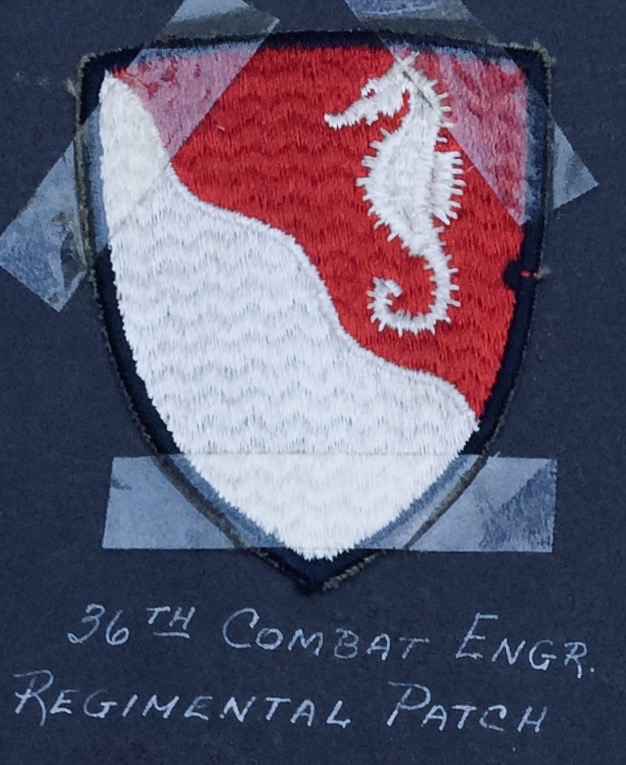
Flo has met up with her fiancé Gene several times and she corresponds with him through the APO mail, although she complains often in her diary of “no mail.” He is with the 36th Engineers, the crew that rebuilds bombed out bridges and roads. But they are also forced into combat when foot soldiers are needed.

September 19-24 Flo’s diary (pinch out to read)

“Good to be back at work,” wrote Flo in her diary, after the Red Cross women had been allowed back into the Third Division.

“Gene way up on lines. No mail.”

“Served 30th Inf. Rest camp & 3rd Div band. Boys tired. Fun with band.”

Flo working in the field

On Sept. 21 she wrote, “ Served co. of 756 tank Bn. They had hard luck—several lost in Bn.”

Sept. 22: “Served in same area with many other div. Still no word from Gene. Jerry planes over town. Quite exciting.”

Sept. 24: “Served 1st Bn of 15th up in next town. Raining hard…dinner at 15th C.P.”

This is Audie Murphy’s unit and must be where they met. He remembered Flo served him donuts somewhere in France.

Ch. 35: https://mollymartin.blog/2025/06/24/prelude-to-another-grim-winter/

Return to Ch. 1: https://mollymartin.blog/2024/11/04/my-mother-and-audie-murphy/

Catching Up to the 3rd Division

Flo and Liz Get Too Close to the Front Lines

My Mother and Audie Murphy Ch. 32

The war was moving north fast, and the Red Cross personnel had to move fast to catch up. Isabella and Dottie had stayed in Marseilles, so Flo and Liz were on their own. They snagged a car, driving from Aix-en-Provence to Grenoble, and on to the QM area near Quingey, just south of the town of Besançon. Flo wrote, “Should not have come up, but Bill let us stay.” 

I think she is saying they are too close to the front lines. Bill is probably Bill Shay, whose photo is pasted in the album titled Bill Shay ARC, maybe their boss. In letters and interviews, the clubmobilers complained that their ARC bosses were of little help. The women were generally tasked with figuring things out on their own.

Bill Shay ARC

Flo also noted, “Moved same evening to area beyond town. Liz and Bill came late, so slept in Major Goodwin’s bedroll.”

That might be the theme of Liz’s drawing.

Liz’s drawings of clubmobile life are pasted throughout Flo’s album

The next day, Sept. 10, Flo wrote, “Shopped in Quingey for pans to cook for boys. Saw 36th Div. gals. Slept under trailer tarp. Very comfortable. Cooked for donut crew.”

On Monday, Sept. 11 she wrote: “Moved near Besancon. Put up pyramidal tent (full of holes). Saw Frank Gates.”

(Gates is the ARC man who took them to Rome on the amphib jeep June 5. That seems to long ago!)

“(Gates) didn’t like our being around. Liz and I spent night under tarp with (donut making) machines. Made hot choc. For us all.

Sept. 12, Flo wrote, “Slept in tent on our German stretchers. Ord. gave us two cars—sedan & Ger. Jeep. Saw 36th E in town…” She doesn’t mention that she saw her fiance, Gene, who was with the 36th Engineers.

Sept. 13. Raining. “Spent wet night. Had fried chicken. Very good. Liz is KP & Flo is mess sgt.”

Sept. 14. “Frank Gates says Maj. Basilla wants us to get out, so we moved up to 6th Corps artillery unit.”

It seems like this means that Major Basilla was kicking them out of the Third Division. Some of the commanding officers were opposed to having the clubmobilers near the army. Gen. Mark Clark had been their advocate and protector in the beginning, but he was no longer there.

She wrote: “Spent night in French summer home. Wonderful beds. Both of us blue & orphans.”

Friday, Sept. 15 Flo wrote, “Left for Vesoul w/6th Corps artillery. Moved into small inn in Villers de Sac with Liz. Wonderful beds & kitchen to cook meals in. Fun. Drove down to QM in Ger. Jeep.

Sept. 16. “Cooking for 6th Corps donut gang. Madame Susan good to us. Fried 3 chickens & cut ‘em up myself. 11 for dinner. Danced in inn to phono. Raining hard.”

Liz and Flo plucking French chickens

Flo was very proud of herself for cutting up chicken and cooking meals. She had never been a cook. At home, she had worked at a job and her mother had done all the cooking. From the notes in her diary, it seems like she was getting in to her domestic side.

Ch. 33: https://mollymartin.blog/?p=4213

The Hairy Truth

Beards and Bushes and Leg Hair
Inspired by a photo of Cathy Cade.

It was 1967, and I was a freshman at Washington State University, living in the dorms—tiny rooms where two people shared a space roughly the size of a generous closet. Once you pulled the beds out from the wall, you had about six inches of precious real estate between them. Cozy!

The bathrooms were shared among all the women on the floor. There was a communal bathtub where I’d perch, shaving my legs with a double-edged razor and a bar of soap. I hated it. I hated the shaving, I hated the blood, the injuries, the boxes of band aids needed for cuts. I’m pretty sure I clogged the drain more than once.

This was before the feminist movement really revved up, but some baby rebel deep inside me was already stretching her hairy legs. I decided to stop shaving. In fact, I committed to it scientifically—I posted a chart on the door of my dorm room and recorded the weekly growth of my leg hair. 

What did my floormates think? I imagine they thought I was completely out of my mind. No one said much of anything, which either means they were too stunned to speak or too polite to comment on the inch-long leg hair I proudly tracked like it was a science fair project. Either way, I felt free. No more razors. No more blood. No more pretending to be a hairless woodland creature.

Later, in a collective house with three other dykes, we turned body hair into a competitive sport. Who had the hairiest legs and the most luxuriant bush? Our favorite outfit was just a vest. That’s it. No pants. No shirt. Just full-frontal follicular glory. Sadly, despite my natural abundance, I was not the hairiest. Mahaney’s glorious blond leg hair made her look like she was wearing angora leggings. 

Years later, in another act of feminist rebellion, I ditched the bra. My breasts are ample and gravity is real, but so is back pain. Bras hurt my shoulders, and every one I tried felt like medieval armor built by men who’d never met an actual woman. At first, going braless felt like I was walking around topless at a PTA meeting. But eventually, I got used to the freedom—and the bouncing and the sweaty undertits.

Cathy Cade archives via The Bancroft Library, University of California, Berkeley. (CC BY-NC 4.0)

Then recently, inspired by a New York Times obituary photo of the celebrated bearded dyke photographer Cathy Cade, I decided: it’s beard time. I’d never grown one before, though I’d thought about it. My chin hair was never cute, but now that it’s gone gray, it’s looking rather distinguished. Professor Dumbledore meets anarchist grandma.

I asked my wife what she thought. Her response—paraphrased for the sake of civility—was essentially: “If you grow a beard, I will disown you, move to another state, and possibly enter witness protection.” She was not a fan.

But of course, that only made me want it more.

Now it’s grown in, and it’s introduced me to a whole new world. It came in at odd angles, curly, wiry, determined to defy gravity. One side’s a little fuller than the other, probably because I got electrolysis in the ’90s when I still cared what strangers thought. Regrets? Maybe. I could have had a resplendent full beard by now.

Still, I love playing with it. I twirl it, stroke it, and now completely understand why men do that—it’s like a built-in fidget toy. Plus, it moves in the wind. My chin hair dances! Who knew?

So far I’ve gotten no positive reactions to my beard. I thought men might appreciate it, so I asked two old man friends for their opinions. One said, “Cut it off.” The other said, “Trim it.” Translation: “We hate it.”

The best, most diplomatic, reaction I’ve gotten was, “It’s not something I would choose.” Ouch. One woman told me, “I pluck mine.” Been there. Plucking is a full-time job, and I’m on permanent vacation.

Then at an Old Lesbians retreat I met another bearded woman. A sister! She has been rocking facial hair for years. I asked what bosses and parents thought. She said her family had taken it in stride. Her mother didn’t mind the beard, but she insisted my friend wear a bra when she visited back home. Her boss at a medical facility had been a gay leather man who’d protected her from the higher ups. 

There’s this fantastic TikTok group started by a Black woman for menopausal and post-menopausal women—listing all the things we no longer give a damn about: bras, makeup, body hair, expectations, decorum, patriarchy. I’m joining. I might even get the vest out again.

Matariki: New Zealand’s Solstice Celebration

My Regular Pagan Holiday Post

Summer (and Winter) Solstice will be June 20, 2025

For years, these pagan holiday letters have followed the rhythm of the Northern Hemisphere. So it’s about time we turned our gaze south. What is the summer solstice for us in the north is, of course, the winter solstice down under.

In Aotearoa (the Māori name for New Zealand, often translated as “Land of the Long White Cloud”), the winter solstice is marked by Matariki, a celebration that signals the Māori New Year. In 2022, Matariki was officially recognized as New Zealand’s first indigenous national holiday — a milestone in honoring the traditions of the land’s first people.

Rooted in ancient Māori astronomy and storytelling, Matariki revolves around the reappearance of a small but powerful star cluster in the early morning sky — known in Māori as Matariki, and in Western astronomy as the Pleiades or the Seven Sisters. Its rising marks a time of renewal, remembrance, and reconnection — with ancestors, the earth, and each other.

The date of Matariki shifts slightly each year, determined by both the lunar calendar and careful observation of the stars. Māori astronomers and iwi (tribal) experts consult mātauranga Māori — traditional Māori knowledge systems — to ensure the timing reflects ancestral wisdom. In precolonial times, the clarity and brightness of each star helped forecast the year’s weather, harvest, and overall wellbeing.

Unlike the linear passage of time in the Gregorian calendar, Māori time is circular — woven from moon phases, tides, seasons, and stars. Matariki is not just a new year, but a return point. A moment to pause, reflect on what has been, and plan how to move forward in harmony with the natural world.

At the heart of Matariki is kaitiakitanga — the ethic of guardianship. It’s the understanding that humans are not owners of the earth, but caretakers. We are part of the land, sea, and sky, and we carry the responsibility to protect and sustain them.

When Matariki rises just before dawn, it opens a space for both grief and celebration: to mourn those who’ve passed, give thanks for what we have, and set intentions for the year ahead. It reminds us of the interconnectedness of whānau(family), whakapapa (genealogy), and whenua (land).

The name Matariki is often translated as “the eyes of the chief,” from mata (eyes) and ariki (chief). According to one well-known Māori legend, the stars are the eyes of Tāwhirimātea, the god of winds and weather. In grief over the separation of his parents — Ranginui (Sky Father) and Papatūānuku (Earth Mother) — Tāwhirimātea tore out his own eyes and cast them into the heavens.

In a world that often values speed over stillness, Matariki offers a different rhythm. It’s a celestial breath — a reminder that time moves in cycles. That rest and reflection are just as important as action. That the sky still holds stories if we remember to look up.

The 9 Stars of Matariki

Each star in the Matariki cluster has its own role and significance:

  1. Matariki – Health and wellbeing
  2. Tupuānuku – Food from the earth
  3. Tupuārangi – Food from the sky (birds, fruits)
  4. Waitī – Freshwater and the life within it
  5. Waitā – The ocean and saltwater life
  6. Waipuna-ā-Rangi – Rain and weather patterns
  7. Ururangi – Winds and the atmosphere
  8. Pōhutukawa – Remembrance of those who have passed
  9. Hiwa-i-te-Rangi – Aspirations, goals, and wishes for the future

For Māori, these stars are not just celestial objects — they are guardians. They watch over the land, sea, and sky, and in doing so, remind us of our responsibility to them.

As global conversations about climate change and sustainability grow more urgent, the values of Matariki — care, reverence, reflection, and renewal — feel especially resonant. It’s a time to return to what matters, to honor the past, and to move forward in a way that honors both our roots and our shared future on this earth.

North Bay Rising

In Santa Rosa and across the North Bay, we’re mad as hell—and we’ve taken to the streets. From the Hands Off! protest in April that brought 5,000 people to downtown Santa Rosa, to thousands more mobilizing in surrounding towns, resistance to the rise of fascism in the U.S. is fierce and growing.

Some of the signs from our protests

Here in Sonoma County, protests are a near-daily occurrence. Demonstrators are targeting a wide range of issues: U.S. complicity in the genocide of Palestinians, Avelo Airline’s role in deportation flights, Elon Musk’s attacks on federal institutions like Social Security and Medicare/Medicaid, the gutting of the Veterans Administration, the criminalization of immigrants, assaults on free speech, and—by us tradeswomen—the dismantling of affirmative action and DEI initiatives.

The Palestinian community and its allies have been gathering every Sunday at the Santa Rosa town square since October 2023.

Weekly actions include:

  • ThursdaysWe the People protest in Petaluma.
  • Fridays: Veteran-focused rallies protesting VA budget cuts.
  • Fridays/SaturdaysPetalumans Saving Democracy actions.
  • SaturdaysTesla Takedown at the Santa Rosa showroom, and a vigil for Palestine in Petaluma.
  • Sundays: Protest at the Santa Rosa Airport against Avelo Airlines, and a Stand with Palestine demonstration in town.
  • TuesdaysResist and Reform in Sebastopol.
  • Ongoing: In Cotati, a weekly Resist Fascism picket line.

In Sonoma Plaza, there’s a weekly vigil to resist Trump. Sebastopol hosts a Gaza solidarity vigil, along with Sitting for Survival, an environmental justice action.

Beyond the regular schedule, spontaneous and planned actions continue:

  • A march to raise awareness of missing and murdered Indigenous women.
  • In Windsor, women-led organizing for immigrant rights.
  • A multi-faith rally at the town square on April 16.
  • Protest musicians and singers are coming together to strengthen the movement with art.

Trump’s goons are jailing citizens, and fear runs deep, especially among the undocumented and documented Latinx population—who make up roughly a third of Santa Rosa. But fear hasn’t silenced them. They continue to show up and speak out.

I’ve joined the North Bay Rapid Response Network, which mobilizes to defend our immigrant neighbors from ICE raids.

Meanwhile, our school systems are in crisis. Sonoma State University is slashing classes and programs in the name of austerity. Students and faculty are fighting back with protests, including a Gaza sit-in that nearly resulted in a breakthrough agreement with the administration.

Between all this, Holly and I made it to the Santa Rosa Rose Parade. The high school bands looked and sounded great—spirited and proud. Then, our Gay Day here on May 31, while clouded by conflict about participation by cops, still celebrated us queers.

And soon, I’ll hit the road heading to Yellowstone with a friend. On June 14, we’ll join protesting park rangers in Jackson, Wyoming as part of the No Kings! national day of action—a protest coordinated by Indivisible and partners taking place in hundreds of cities across the country. 

On the Solstice, June 20 in the Northern Hemisphere, we expect to be in Winnemucca, Nevada, on the way home.

Happy Solstice to all—Winter and Summer!

Photo of the Pleiades: Digitized Sky Survey

Mortar Attack!

We crash into Besançon and fight until morning

My Mother and Audie Murphy Ch. 30

September 5, 1944. From Murphy’s autobiography To Hell and Back:

In a short while they are back in the thick of battle. The forward units knife through German lines, leaving pockets of resistance for the mopping-up crews. The noise of combat rises from every direction.

The swift advance has drained their energy and their supplies. Hungry and exhausted, they collapse along a roadside to wait for orders. Artillery thunders over their heads. They lie on their backs, listening to the shells crash forward into the hills.

Murphy and his crew seize an opportunity when a German supply truck rattles into view. They ambush it and find it loaded with bread and cognac. For a brief, stolen moment they eat, drink, and sing, the battle seeming almost far away.

The town of Besancon from its citadel. You can see the bombed bridges. Photo: Dogface soldiers.org

That night they crash into Besançon and fight until morning. Within a few days the city is secured, and once again the pursuit of the retreating Germans begins.

Murphy’s platoon brings up the rear when a roadblock stops the company. Mortar shells begin peppering the earth. Murphy pauses to speak to a small group of soldiers, several of them nervously pale replacements, waiting for the fire to ease.

Nearly killed by a mortar shell

A mortar shell drops in almost without sound. It is practically under Murphy’s boots before he registers its arrival. He has just enough time to think, This is it, before the blast knocks him unconscious.

When he comes to, he is sitting beside a crater with the shattered remains of a carbine in his hands. His head throbs, his eyes burn, and he cannot hear. The acrid, greasy taste of burned powder coats his tongue.

FFI fighters. Photo: NARA

He runs his hands down his legs, methodically checking. Both limbs are there. But the heel of his right shoe is gone, and his fingers come away sticky with blood.

A voice filters dimly into his fogged brain: “Are you all right, Sergeant?” He wipes the tears from his stinging eyes and looks around. The sergeant who spoke and the young recruit beside him are dead. Three others are wounded. All had been farther from the shell than he was.

When a mortar detonates on contact with the ground, its fragments shoot upward and outward in a cone. Murphy had been standing close to the base of that cone and caught only the lightest edge of the fragmentation. Had he been three feet farther away, he knows he would not be alive.

During World War II, concussions resulting from mortar attacks were a significant source of traumatic brain injury (TBI). Soldiers experienced symptoms like headaches, dizziness, poor concentration, and memory problems following exposure to blasts, even without visible head injuries. The term “shell shock” was originally used in WWI to describe these symptoms, but was later replaced with terms like “post-concussion neurosis” in WWII. Head injuries from mortars contributed to a significant percentage of medically treated wounds during the war. 

Murphy spends a few days in the hospital, not because of his brain injury, but because his foot was wounded. Then he’s back in the lines.

Ch.31: https://mollymartin.blog/2025/06/04/evidence-of-nazi-war-crimes/

Operation Dragoon: The Landing

Audie Murphy recalled landing on French soil

My Mother and Audie Murphy Ch. 24

August 15, 1944. From Murphy’s autobiography To Hell and Back:

Audie Murphy later described the landing in southern France in his autobiography To Hell and Back. He recalled that, technically, the operation was considered perfect. The assault had been calculated to the smallest detail, every movement coordinated so that the effort unfolded with the smooth precision of a machine.

Compared to earlier invasions, resistance here was light. Weeks before, Allied forces had already broken out of Normandy and were cutting through northern France like a flood bursting through a levee. On the eastern front, the Russians were hammering the German armies. Overhead, American bombers were grinding German cities to rubble. Murphy likened Germany’s situation to that of a man hiding in a stolen house, frantically running between front and back doors as justice pounded from both sides—only to realize too late that another force was now rising up through the cellar. His regiment, Murphy observed, was that third force.

Landing craft on D-Day August 15. More than 90,000 amphibious and 9,000 airborne troops participated in the initial two-day southern France landings. Photo: NARA

Yet the men in the landing craft knew nothing of this sweeping strategic picture. They saw only the edge of the boat, the immediate shoreline, and the moment that lay before them. Their first objective was a narrow, harmless-looking strip of sand called “Yellow Beach.” It was early morning in mid-August; a thin mist hovered above the flat fields beyond the shore, and beyond that, quiet green hills rose inland.

Photo: Dogface soldiers collection

The bay between St. Tropez and Cavalaire was crowded with the familiar pattern of an amphibious assault. Battleships had already given the coastline a thorough pounding and now drifted silently in the background. Rocket craft followed, launching volleys that hissed through the air like schools of strange metallic fish, exploding mines and shredding barbed wire while rattling the nerves of the Germans waiting on shore.

Photo: Dogface soldiers collection

Under this barrage, scores of landing boats churned forward. Murphy stood in one of them, gripped again by that old, stomach-knotting fear that always came before action. Around him, his men crouched like miserable, soaked cats. Some were seasick; others sat glassy-eyed, lost in the kind of inward withdrawal that came just before battle.

And then, in the midst of dread, Murphy felt the absurdity of the moment. Here they were—small, cold, wet men—thrust into a riddle vast as the sky. He laughed, as he often did when confronted with the enormity of life and death.

Photo: Dogface soldiers collection

As the boats drew nearer, Murphy tried to rally his men by urging them to sing. They weren’t interested. But singing had long been a way soldiers kept fear in check, anger in rhythm, and marching in step. The Third Division even had its own song—Dogface Soldier—written in 1942 by two of its own, Sgt. Bert Gold and Lt. Ken Hart, both from Long Beach, New York. The division commander, Lucian Truscott, liked it so much he made it official. Third Division soldiers sang it, marched to it, and danced to it.

Years later, in 1955, when Murphy played himself in the film To Hell and Back, the song made its public debut. It became one of the most well-known songs of the war, celebrating not heroes of legend, but the ordinary infantryman—the “dogface” soldier who carried the rifle, slogged the mud, and shouldered the daily weight of the war.

The lyrics—simple, proud, and rough-edged—captured exactly who they were:

I Wouldn’t Give A Bean
To Be A Fancy Pants Marine
I’d Rather Be A
Dog Face Soldier Like I Am

I Wouldn’t Trade My Old OD’s
For All The Navy’s Dungarees
For I’m The Walking Pride
Of Uncle Sam

On Army Posters That I Read
It Says “Be All That You Can”
So They’re Tearing Me Down
To Build Me Over Again

I’m just a Dogface Soldier, 
With a rifle on my shoulder, 
And I eat a Kraut for breakfast every day. 

So Feed Me Ammunition
Keep Me In the Third Division
Your DogFace Soldier’s A-Okay

Ch. 25: https://mollymartin.blog/2025/05/07/ready-to-leave-poor-italy/

On Leave: Sorrento and Capri

My Mother and Audie Murphy Ch. 23

After Goodbyes, Four Days of Bliss

August 1944 was a month of waiting. The men Flo and her friends had waved off were now at sea, sailing toward the battlefields of Southern France. Their D-Day, scheduled for August 15, loomed heavy in the minds of the Red Cross women left behind. It might be weeks, they were warned, before the coast was clear enough for them to follow. On August 8, the women moved from the camp at Pozzuoli to a residence next to headquarters in Naples.

After days of stifling heat and restless worry in Naples, the women were granted leave. Flo, Dottie, and Isabella fled to Sorrento, trading the grit and noise of the city for something closer to paradise. Flo captured it all in a letter home:

A page from Flo’s album. Which one of these guys is the cute French officer? She didn’t save the letters that were in the envelopes. What did he write? Pinch out to look more closely.

“We have been resting for several days and spent four wonderful days at Sorrento in a lovely old hotel, which is now an officers rest camp. It was peaceful and lovely down there after the hot, noisy, dirty city and seemed like a different world. We were in bathing suits and shorts most of the time, swimming and sailing. They not only have white sails on the boats, but red, Blue and terra-cotta. It is a picturesque site – the sailboats skimming along on that blue, blue water with veri-colored sails. 

In her diary Flo wrote about her flirtation with a cute French officer in Sorrento. She called him a “very romantic boy.”

“Italy has its good points and they are nearly all scenery. We took the one-day boat excursion trip to Capri and it is as romantic and lovely as all the songs and posters say. It is out of this world and is surrounded by the clearest, bluest water I’ve seen. The island itself is quaint– abounding in all kinds of flowers, trees, lovely shrines and cathedrals, which date back to the 15th century. 

“To make my few vacation days even more unusual and romantic, I met a cute French officer, who made a big hit with all – male and female – staying at the hotel. He spoke a very few words of English and I no French, but we got along beautifully and I took a great deal of kidding about it. Even in his broken English, he was quite a smoothie, and so sincere about it all. They are such sentimentalists, but confidentially I prefer them to the English.” 

Flo wrote about their trip to Sorrento and Capri in her diary

They sailed to Capri, where the sea was so blue it looked unreal, and the hillsides spilled over with flowers and ancient shrines. Flo met a young French officer, charming even in broken English, and spent a day with him swimming, sailing, and dancing under the southern sun.

In her diary, she noted the date — August 15 — and scribbled the words: “Hope 3rd Div. okey.” She took a drive along the Amalfi coast, marveling at the villages clinging to cliffs above the sea. For a moment, the war felt far away, almost unreal.

But when the four days ended, reality closed back around them. Returning to Naples, Flo and the others slipped once more into the long, anxious business of waiting — and worrying about the boys they had left behind. She wrote in her diary, “May be here for another two weeks. Invasion going well, but worry about boys and especially Gene. Hope he escapes.”

Ch. 24: https://mollymartin.blog/2025/05/02/operation-dragoon-the-landing/