Indictment means possible life term for man accused of killing co-worker in Wright County workshop
One major labor organization noted that “violence like this rarely comes out of nowhere. It often follows a buildup that women in the trades know by heart.”
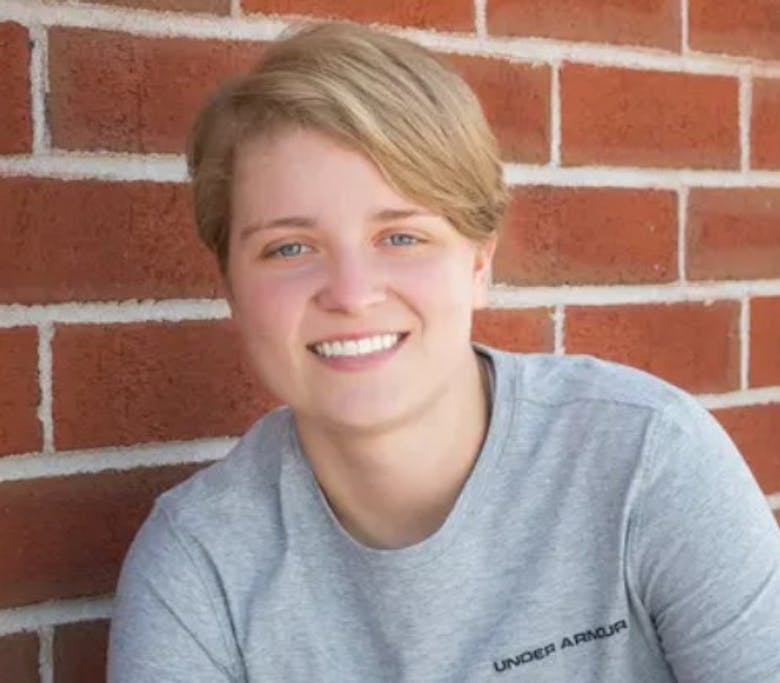
The man accused of killing a co-worker last month with a hammer in a Wright County workshop now faces a charge of first-degree murder and a potential life prison sentence in a slaying that drew outcry by advocacy groups for women in the trades.
A grand jury heard the case last week against David Bruce DeLong, 40, of Watkins, Minn., and indicted him on a charge of first-degree premeditated murder in connection with the attack in Cokato that killed 20-year-old Amber Mary Czech of Hutchinson, Minn.
The bludgeoning occurred on Nov. 11 at Advanced Process Technologies, which makes equipment used in food processing.
County Attorney Brian Lutes said the first-degree count carries a mandatory sentence of life in prison without parole. DeLong also faces a second-degree murder charge.
DeLong remains jailed in lieu of $2 million bail ahead of a court appearance Monday. The Minnesota Star Tribune has reached out to his attorney for a response to the allegations.
An online fundraising campaign started to cover funeral expenses noted that “Amber was a hardworking welder who took great pride in her craft and dreamed of building a bright future through her work. Her witty personality, positive attitude, and beautiful smile touched everyone who knew her.”
Numerous labor organizations decried the workplace killing of Czech, including the International Association of Sheet Metal, Air, Rail and Transportation Workers (SMART), with 230,000 members in North America.
“While not a SMART member … this tragedy is reverberating across the trades community and far beyond,” read a statement from the organization. “So many tradeswomen and gender-diverse workers are carrying the weight of this news.”
SMART went on to point out that “violence like this rarely comes out of nowhere. It often follows a buildup that women in the trades know by heart: harassment shrugged off, bullying tolerated, intimidation minimized, warning signs dismissed, fear of backlash, comments ignored, jokes explained away, the stares of resentment, and behaviors everyone chooses not to see until they can no longer look away.”
The Laborers’ International Union of North America (LIUNA), which counts 500,000 workers across many industries among its ranks, said in a statement, “When a young tradeswoman’s future is so violently crushed, we must look to the criminal justice system to do its job — but as brothers and sisters in the construction trades we must also do much, much more. … We must not only condemn the violence that took Czech’s life but also the attitudes and behavior that normalize an atmosphere of fear for too many construction craftswomen.”
Around 6 a.m., a caller to 911 said Czech was bleeding heavily from a blow to the head, and there was a bloody sledgehammer on the floor nearby. Emergency medical responders arrived and declared her dead at the scene.
A sheriff’s deputy identified DeLong as the suspected attacker. DeLong said to a man at the business “something to the effect of, ‘I hit her with your hammer. She is by your toolbox. She is gone,’” the complaint read.
Sheriff’s deputies reviewed surveillance video inside the business and saw DeLong walk from his workstation to Czech’s, grab a sledgehammer and swing it. The victim was out of view of the camera.
DeLong’s swings indicated that he targeted her once while she was standing and four more times after she fell to the floor.
After his arrest, DeLong confessed to killing Czech. He said he didn’t like her and had been “planning to kill [her] for some time,” the complaint continued.
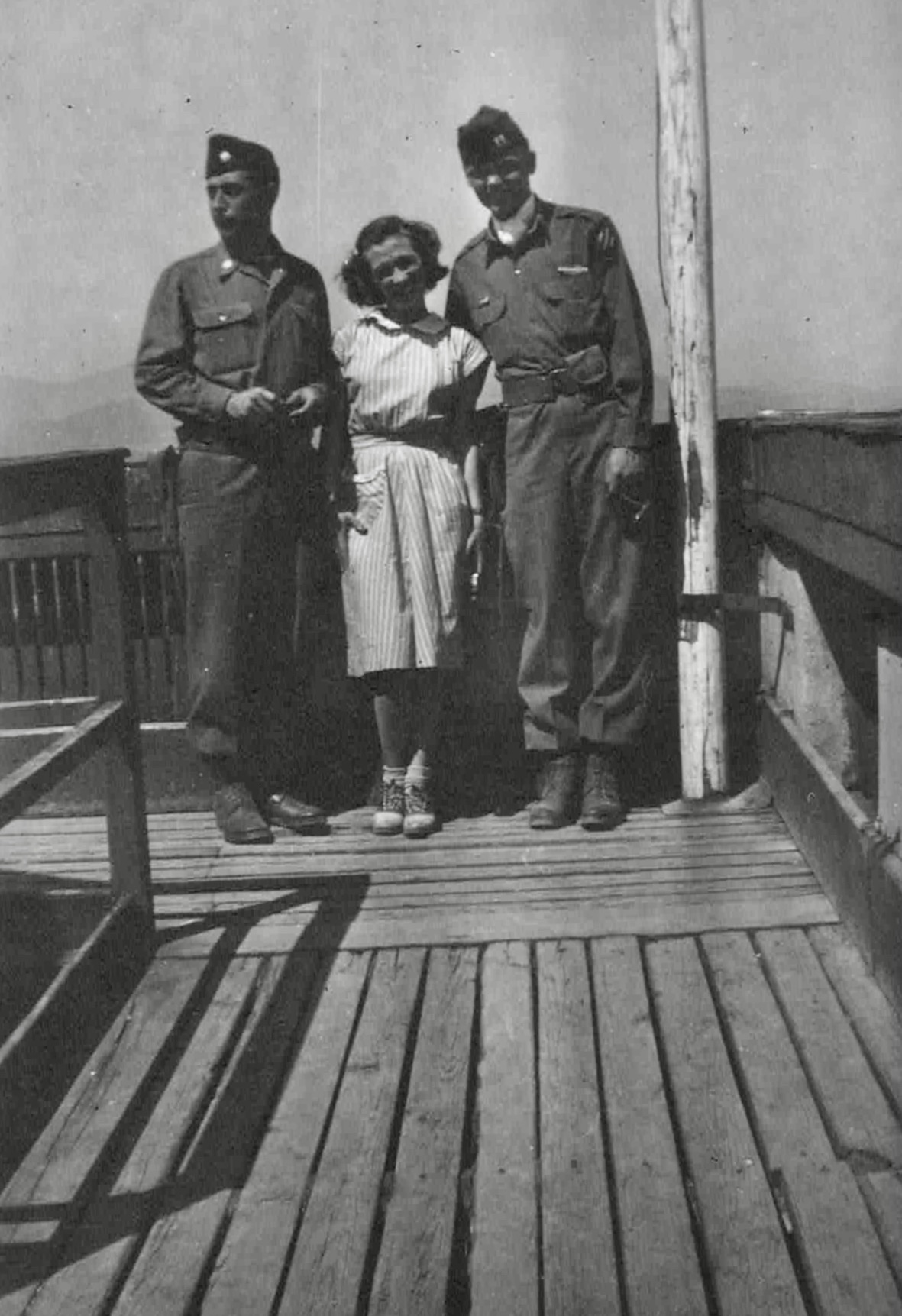
On June 25, 1945, Flo turned thirty-two, and her friends gathered to give her a proper birthday celebration. She spent the day with her clubmobile partner, Janet Potts, along with Janet’s boyfriend, Capt. Lloyd (Jens) Jenson, and Flo’s own boyfriend, Lt. Col. Chris Chaney. All four arrived in uniform as they wandered through the fortress castle that served as headquarters for the 15th Infantry above Salzburg. The women wore their Red Cross-issued dresses; the men their Army greens. They teased one another, snapped photographs in the grand corridors, and convinced Flo to pose in the old stocks for a laugh.
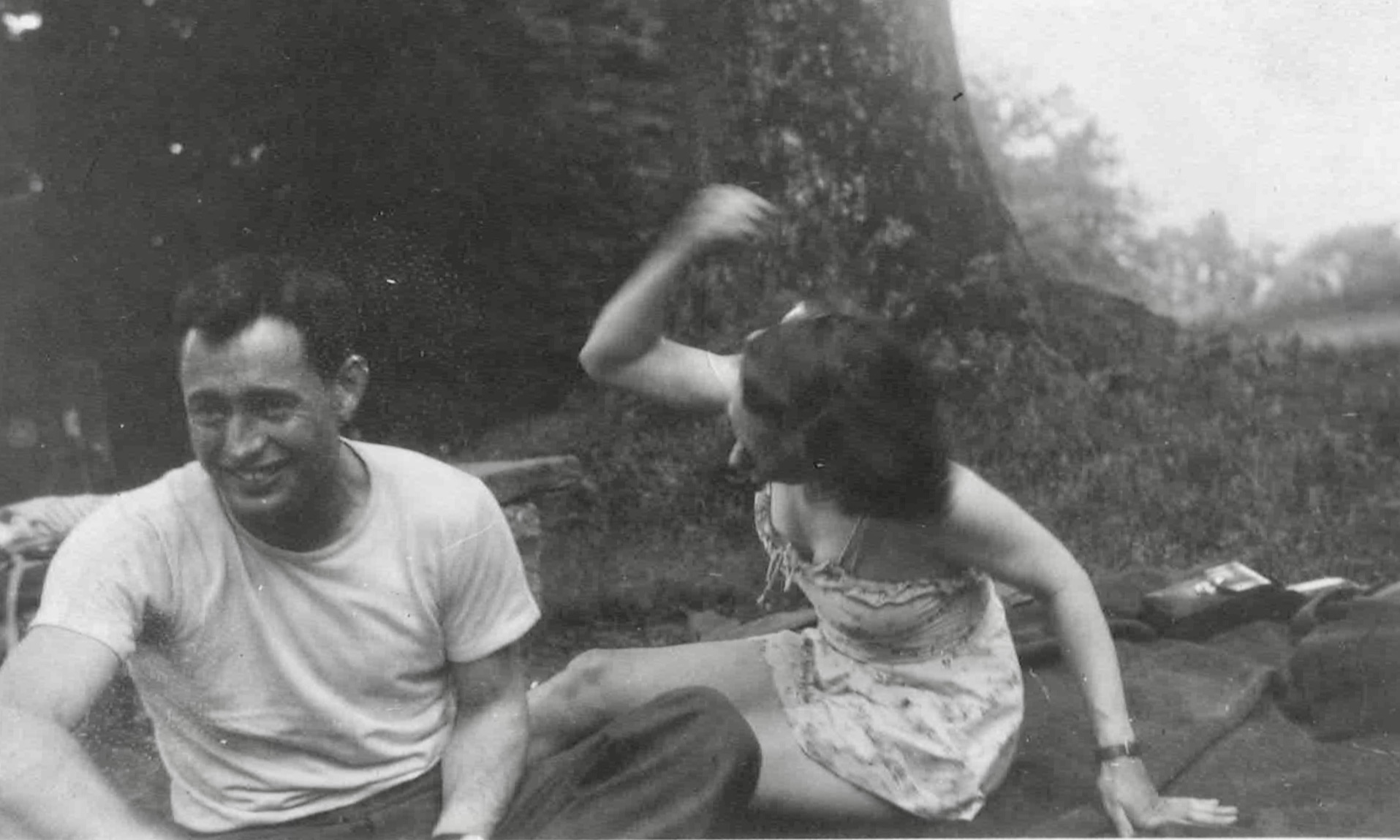
Later, they changed into civilian clothes and headed out for a picnic. Indoors, there was a birthday cake, and they captured more pictures—two couples who looked close, relaxed, and hopeful in the early summer after the war’s end.
These became the last images, and the last mention, of Flo’s relationship with Chris Chaney. The photographs made them seem comfortably paired, and although Janet and Jens eventually married, Flo and Chris did not stay together. She kept no letters from him after the war.
What became of him remained unclear. The two had talked about traveling to Paris and England, plans that never materialized. Most likely, he received an early chance to go home and took it. As a highly decorated officer with a Silver Star, he would have been near the front of the line for repatriation. Flo’s life moved forward, and whatever they had envisioned together faded with the summer.
Flo, Chris and JensJanet and JensRailroad tracks leading down from the fortressFlo posing in the ancient stocksFlo on her 32nd birthdayJanet and Jens at the picnicWhat did Chris do to deserve this?Or this?Celebrating war’s endThird Infantry Division buddiesHappy Birthday FloThere was even a birthday cake
More than 33,000 people in the province of Salzburg, including almost 13,000 in the provincial capital, had to register as former members of the NSDAP (National Socialist German Workers’ Party) or one of its organizations after the fall of the Nazi regime. Through the process known as denazification, the Austrian state sought to hold these people accountable and punish them, sometimes severely. However, the vast majority of those registered were considered denazified by the end of 1947 and escaped punishment. The US occupation authorities interned high-ranking functionaries of the Nazi system in Camp Marcus W. Orr, commonly known as Lager Glasenbach.
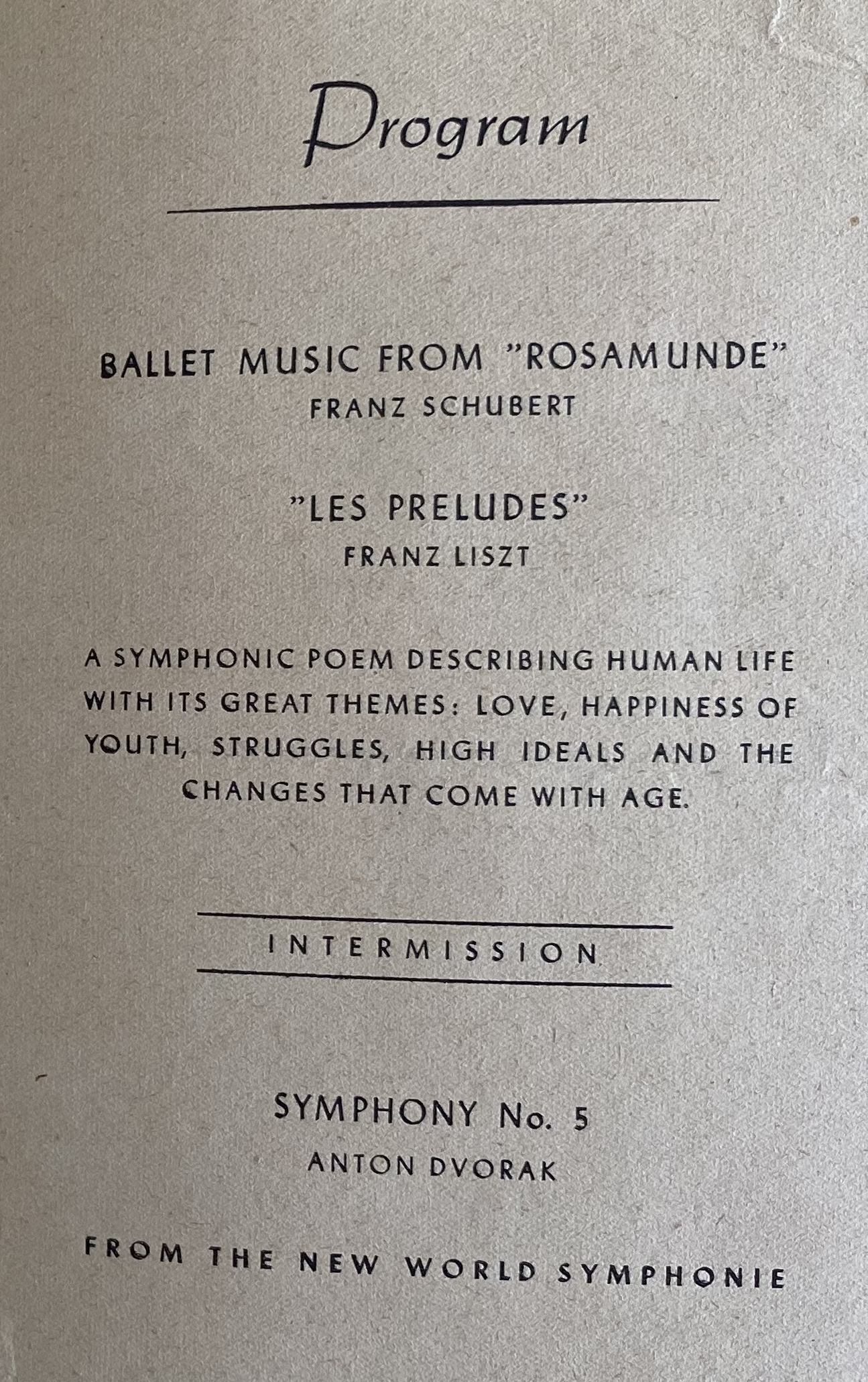
Flo and her cohort got to hear the Salzburg Festival Orchestra in concert
The denazification of Salzburg‘s cultural and art scene was one of the main concerns of US occupation policy. This also included the removal of over 2,000 books with National Socialist content from the holdings of the municipal library in Schloss Mirabell, which was able to resume its post-war service at the beginning of June 1945. Civilians were once again able to watch films in the cinema from July 1945. In the same month, the first public concert after the end of the war took place in the Great Hall of the Mozarteum and in September 1945. A performance was shown for the first time in the Salzburg State Theatre, which had been requisitioned by US forces.
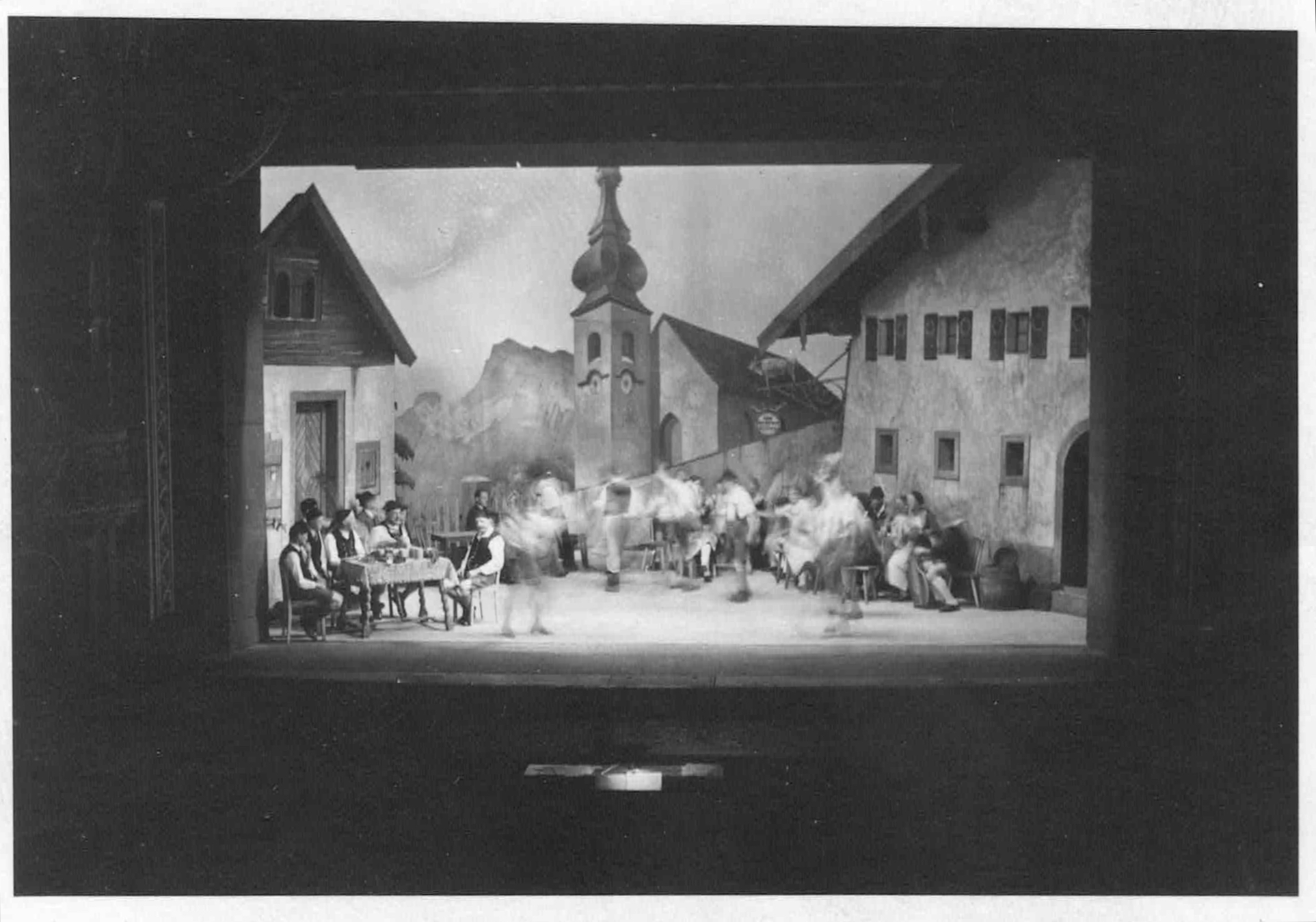
Bavarian dancers at the Salzburg Theater. Photos: Flo WickFlo got to know Margot Hielscher, a famous German actress. Here she is performing at the Salzburg Theater.
Margot Hielscher (1919-2017) was a German singer and film actress. She appeared in over fifty films between 1939 and 1994. She was chosen to represent Germany at the Eurovision Song Contest in 1957 and 1958.
Salzburg Festival
The US occupation authorities saw the Salzburg Festival as a central element in the reconstruction of Austrian identity. They lobbied hard to ensure that the Festival could take place again just a few months after the end of the war, although a large number of artists with Nazi backgrounds were not allowed to perform. Works by Austrian authors and composers dominated the program of the Festival, which began on August 12, 1945 with an opening evening featuring pieces by Wolfgang Amadeus Mozart, Johann Strauss, and Franz Lehár. Concerts were performed until September 1, including six ‘Österreichische Abende’ (‘Austrian evenings’) and two concerts of religious music. (From STADT-SALZBURG.AT The City of Salzburg in 1945.)
In and Around Salzburg
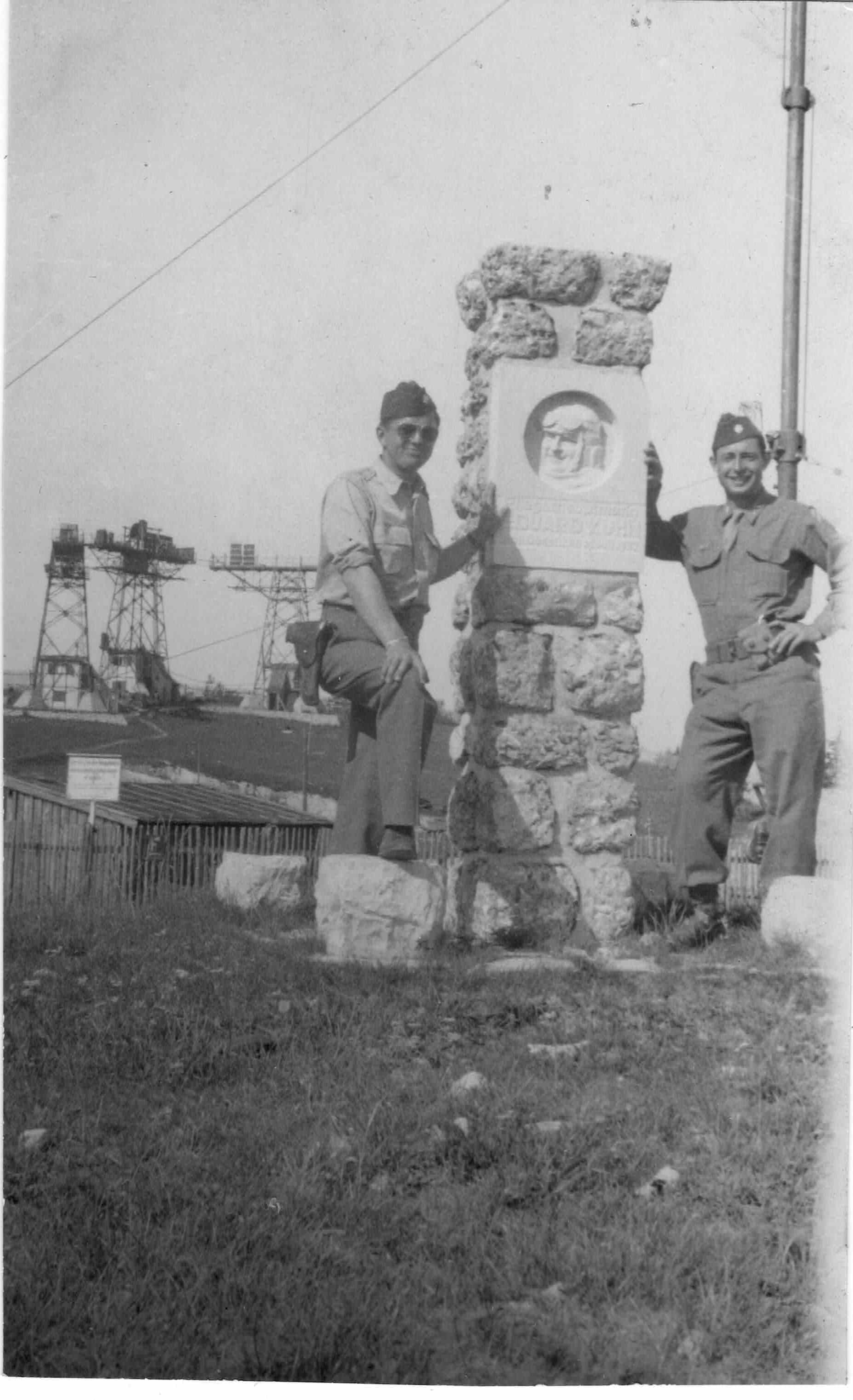
Clubmobilers serving the 15th Infantry in the Bavarian Alps15th Infantry anti-tank companyMajor Noser and Lt. Col Chaney at kraut radar station above Salzburg, Lt. Col. Chaney
There is still debate over which Allied unit can claim credit for capturing Berchtesgaden in May 1945. The most reliable historical accounts indicate that the 3rd Infantry Division, specifically the 7th Infantry Regiment, commanded by Maj. Gen. John “Iron Mike” O’Daniel, reached the town on May 4, 1945, and accepted its surrender without resistance. They were the first American combat troops to enter the town itself.
However, popular history has sometimes credited the 101st Airborne Division’s Easy Company—made famous by Stephen Ambrose’s Band of Brothers—with the “liberation” of Berchtesgaden. Easy Company did arrive on May 5, the day after the 3rd Division. Their presence, and the power of their postwar memoirs, contributed to the widely repeated but inaccurate claim that they captured the town.
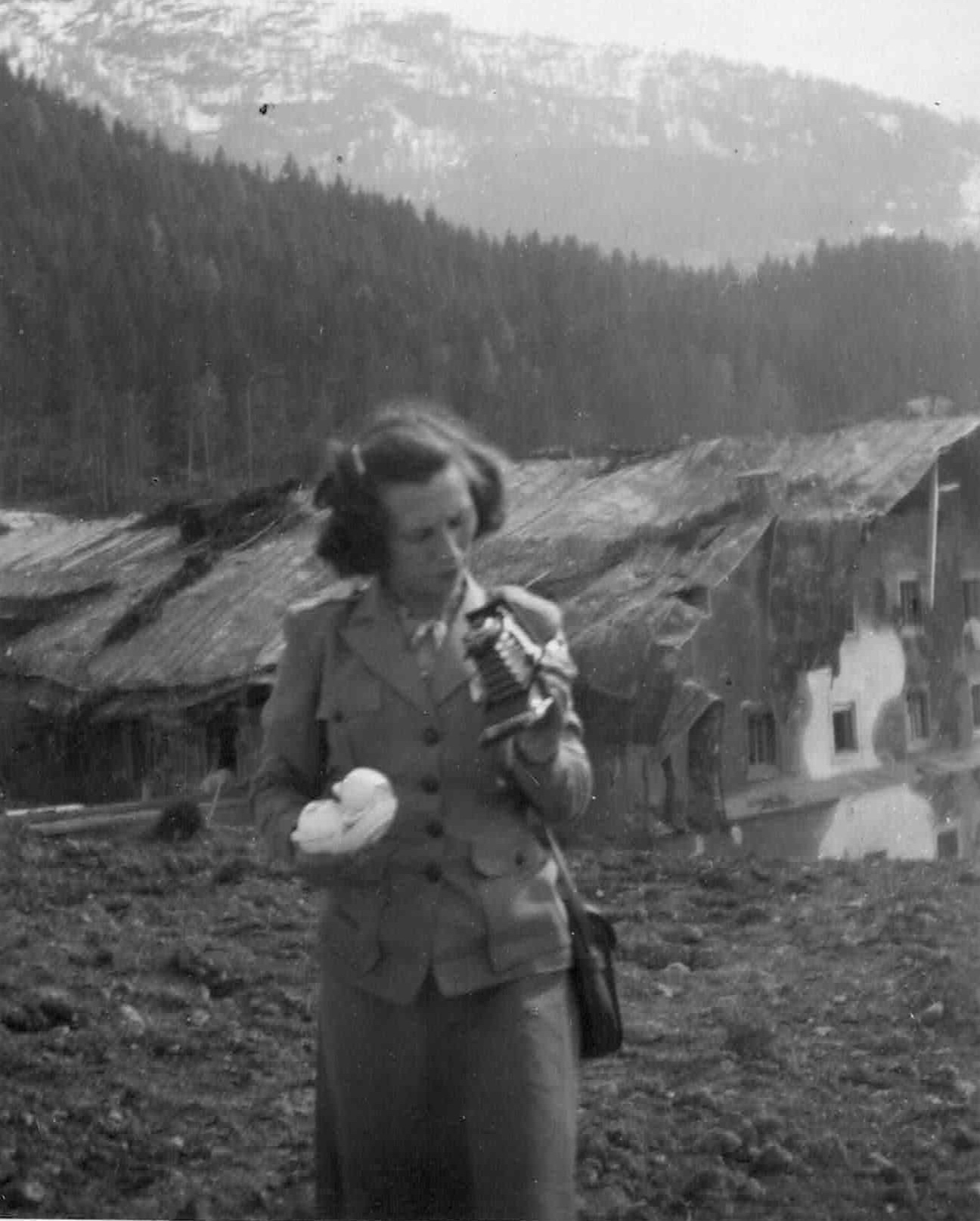
At Berchtesgaden Flo adjusts her camera. Platterhof hotel in background
Complicating matters further, elements of the French 2nd Armored Division, advancing from the south, also reached the Obersalzberg at nearly the same time. French armored troops were already present at the SS guardhouse near the entrance to the Obersalzberg complex when the Americans arrived on May 4. So while the 3rd Infantry Division is generally recognized as having taken Berchtesgaden, the French made the first approach to the mountain enclave.
What is clear is that Flo arrived very shortly after the area had fallen to Allied forces, when the military presence was still active and the ruins still fresh.
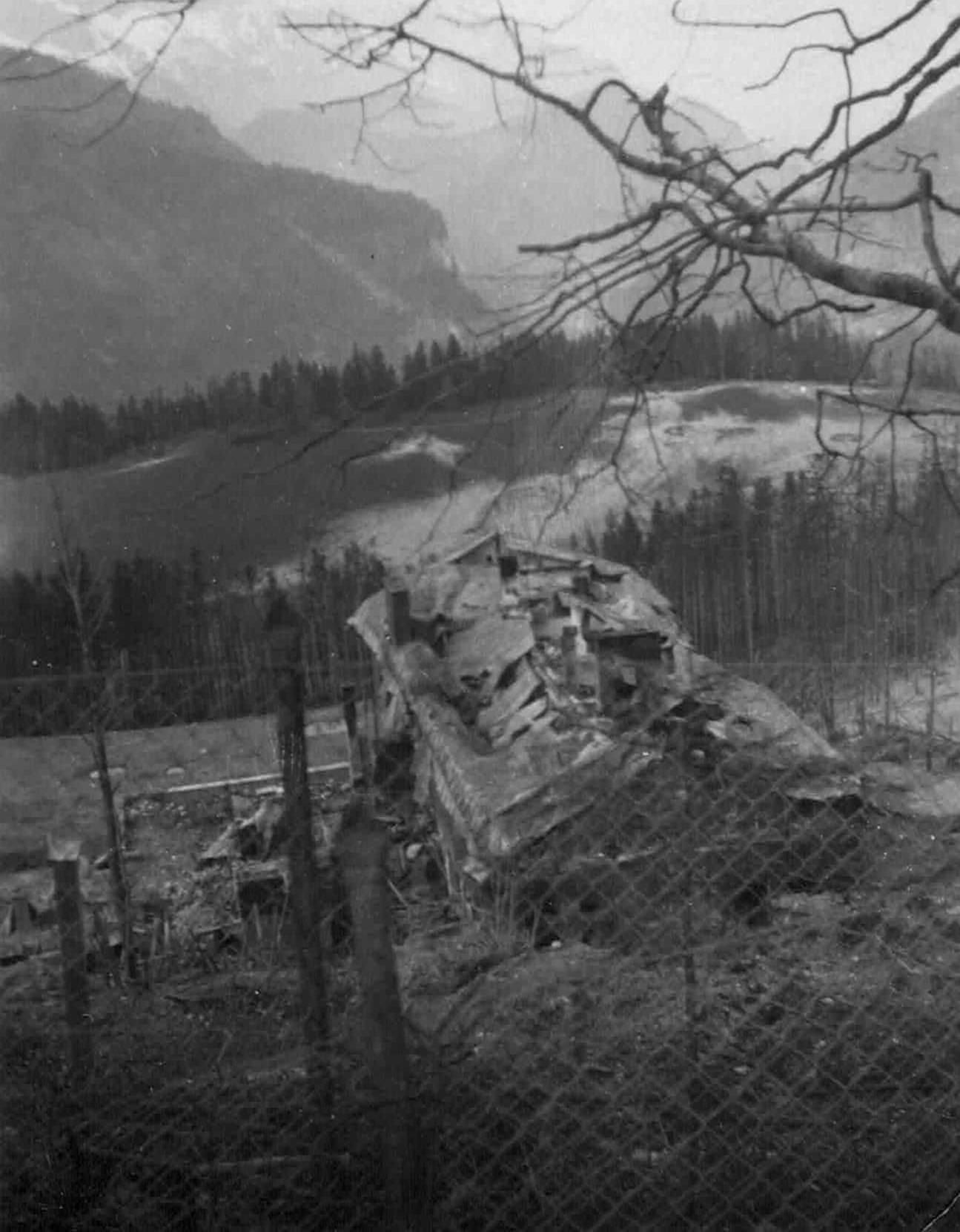
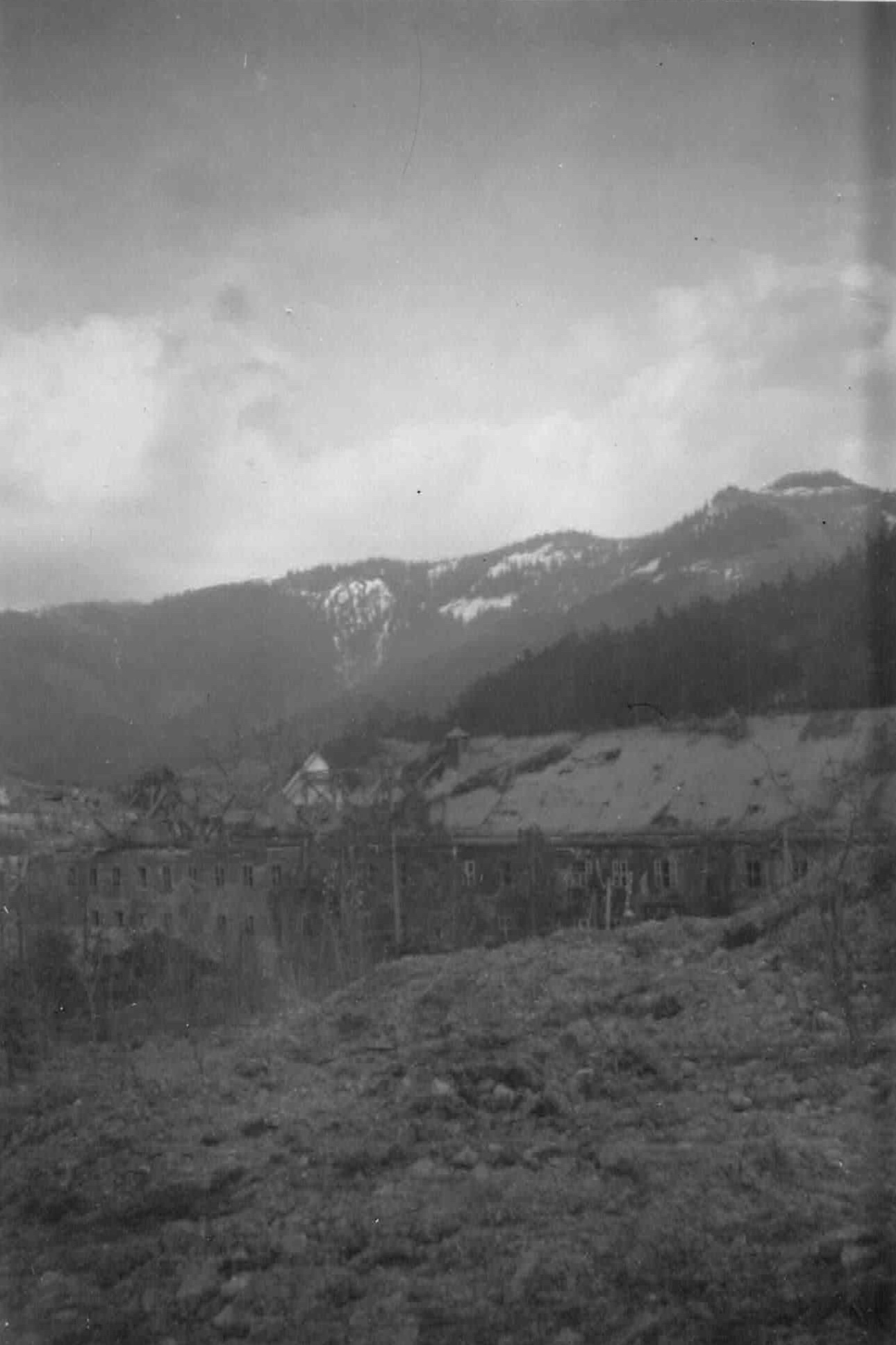
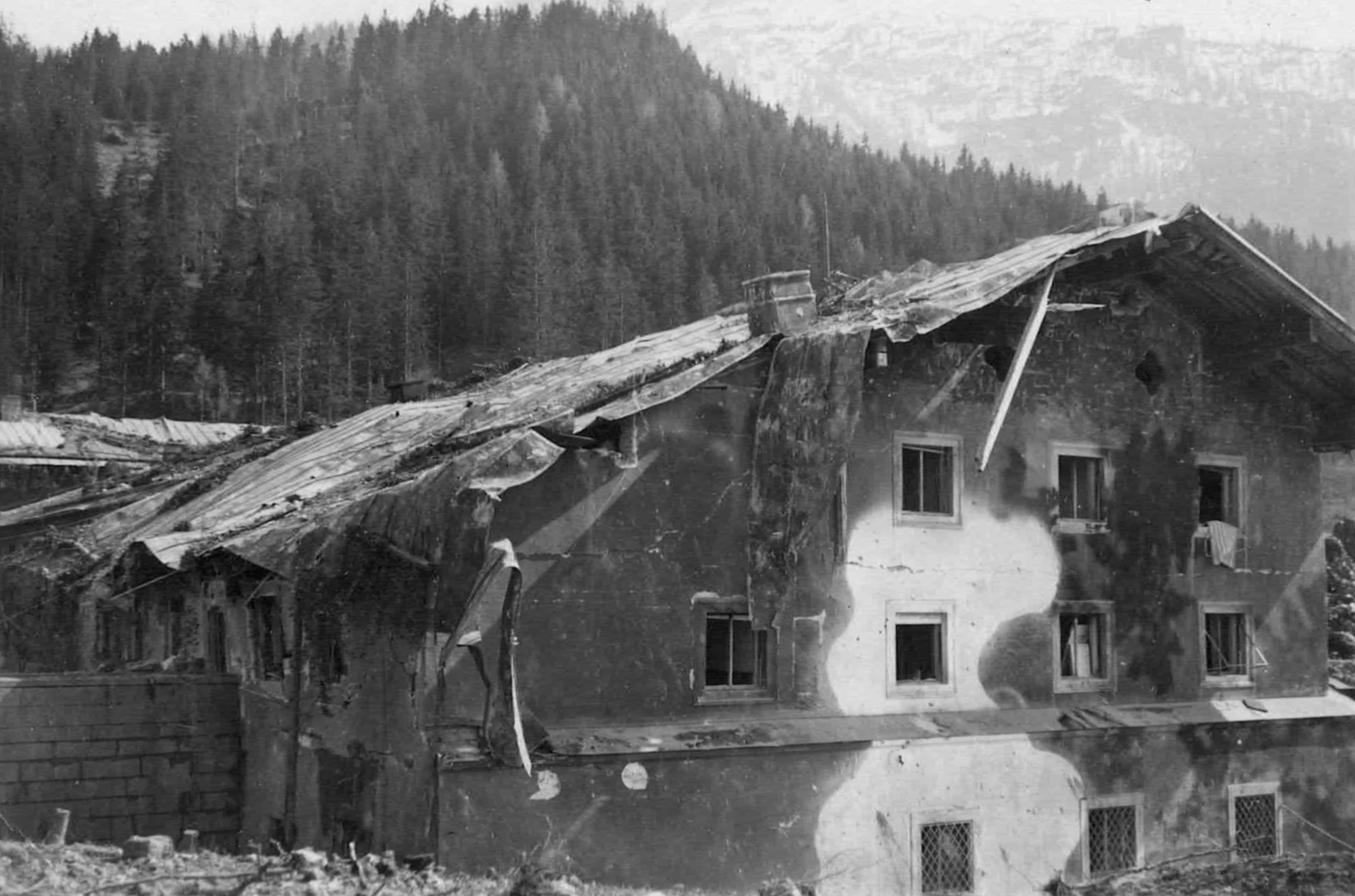
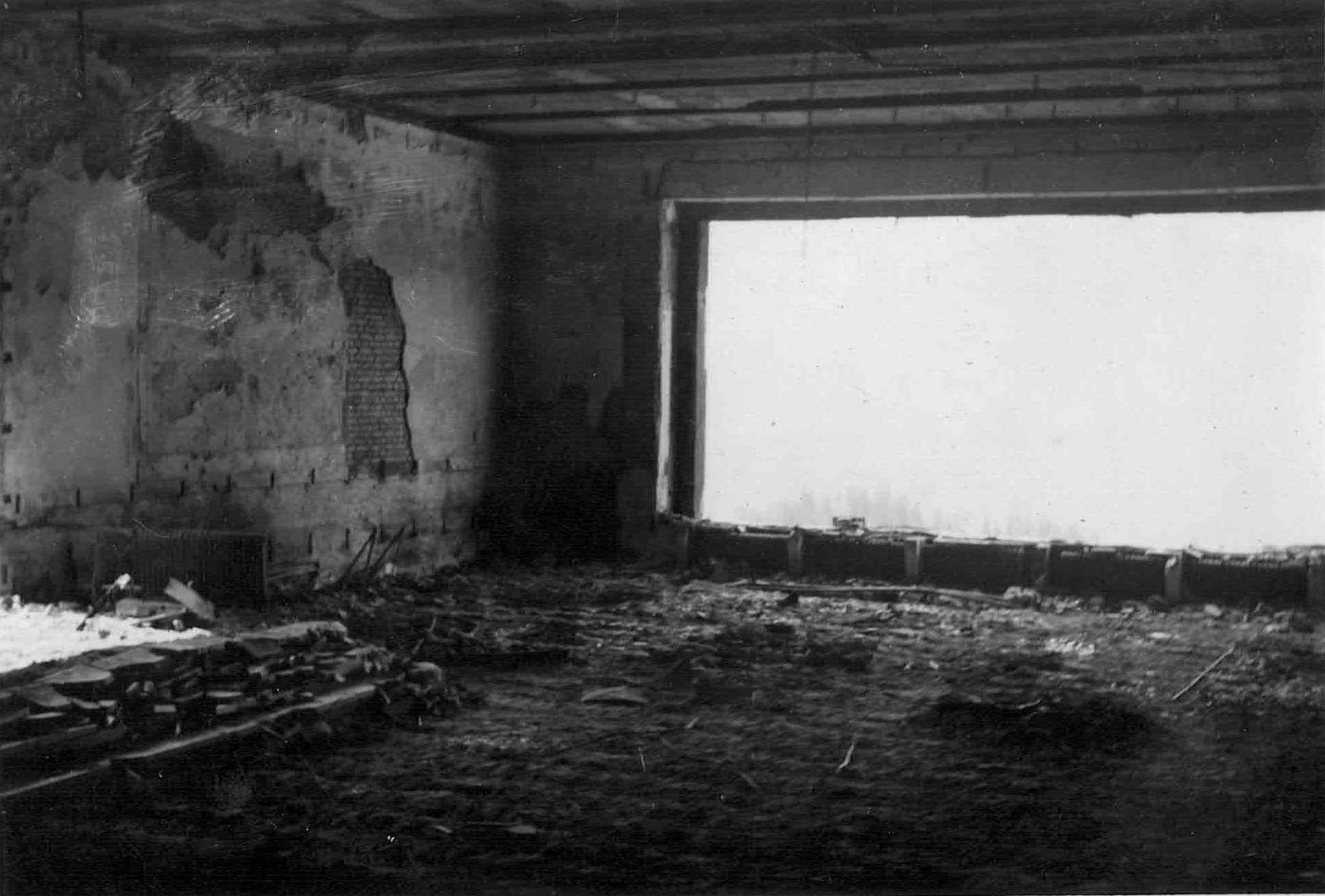
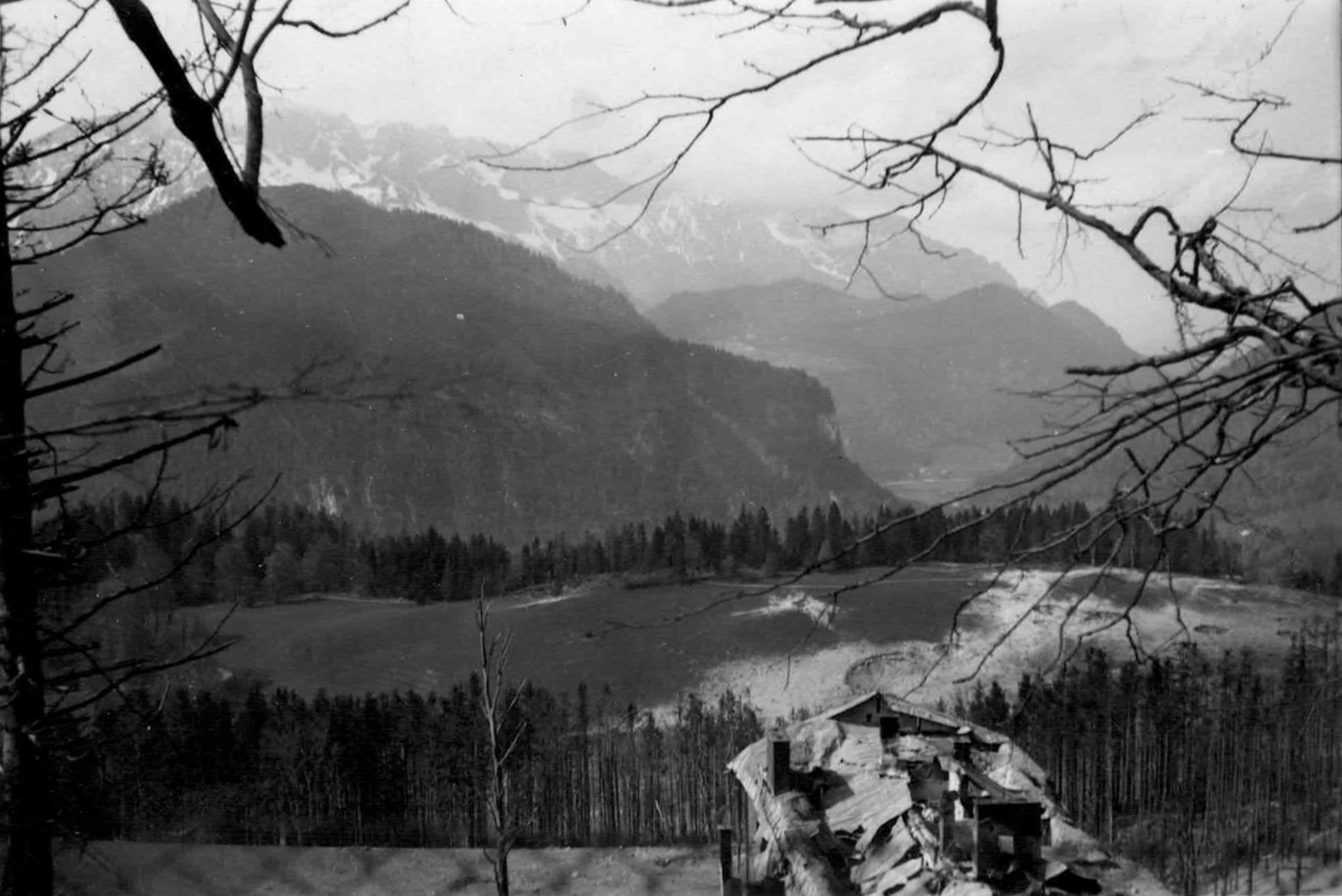
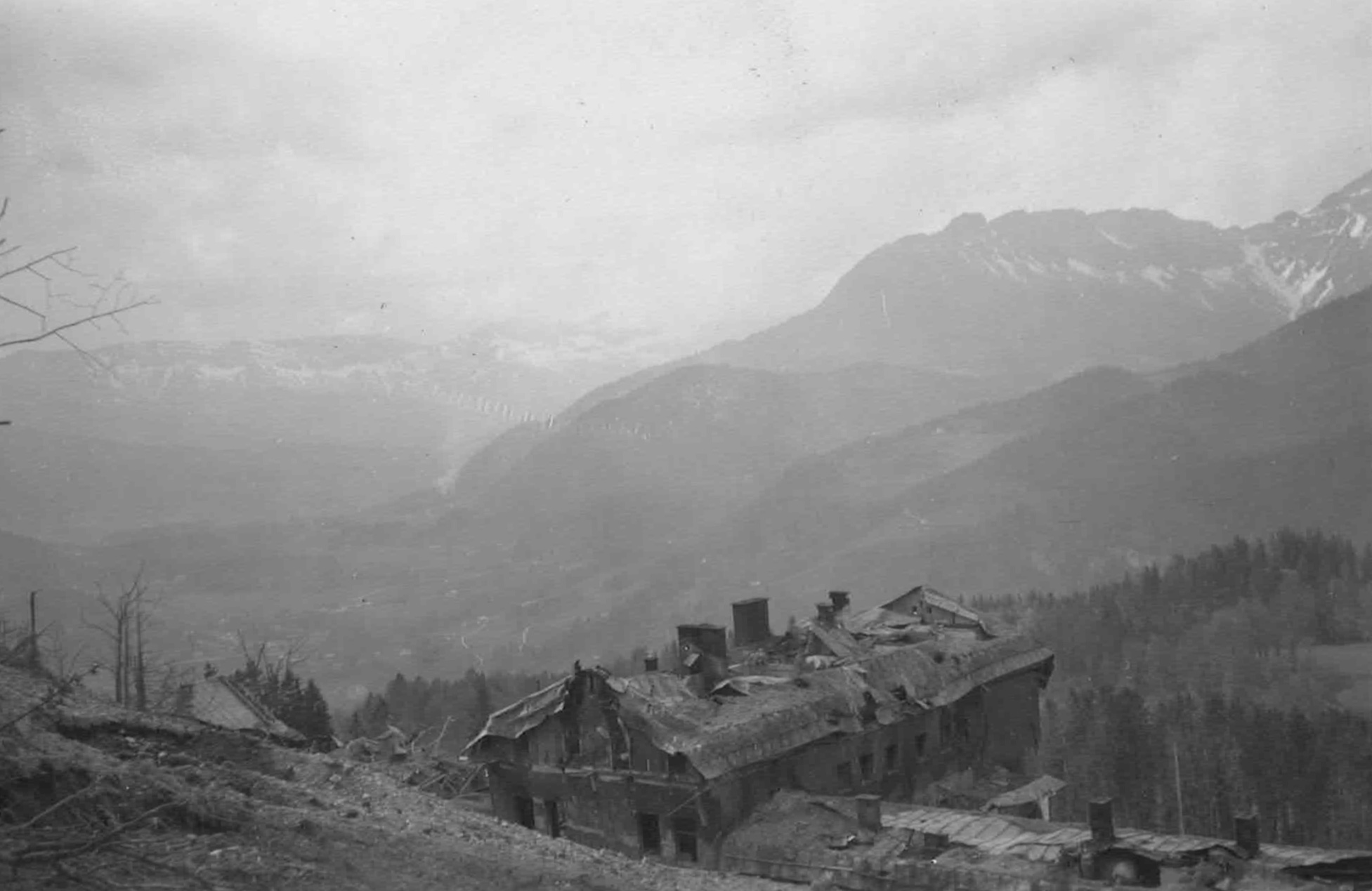
Views from Hitler’s mountaintop retreat. All photos by Flo Wick.
Berchtesgaden and the Obersalzberg Complex
Berchtesgaden, in the Bavarian Alps, served as Hitler’s alpine headquarters and a central site of Nazi state power. The Obersalzberg complex above the town contained residences, administrative buildings, and security installations used by Adolf Hitler and other high-ranking Nazi leaders, including Martin Bormann and Hermann Göring.
Key components included:
• The Berghof: Hitler’s primary residence, significantly damaged in a massive Allied bombing raid on April 25, 1945. • The Eagle’s Nest (Kehlsteinhaus): A mountaintop chalet and diplomatic reception site, built for Hitler’s 50th birthday. • SS Barracks and Guard Posts: Securing the restricted zone around the leadership compound. • Underground Bunker System: An extensive network of tunnels, shelters, offices, and storage areas designed to protect leadership during air raids and potential last-stand scenarios.
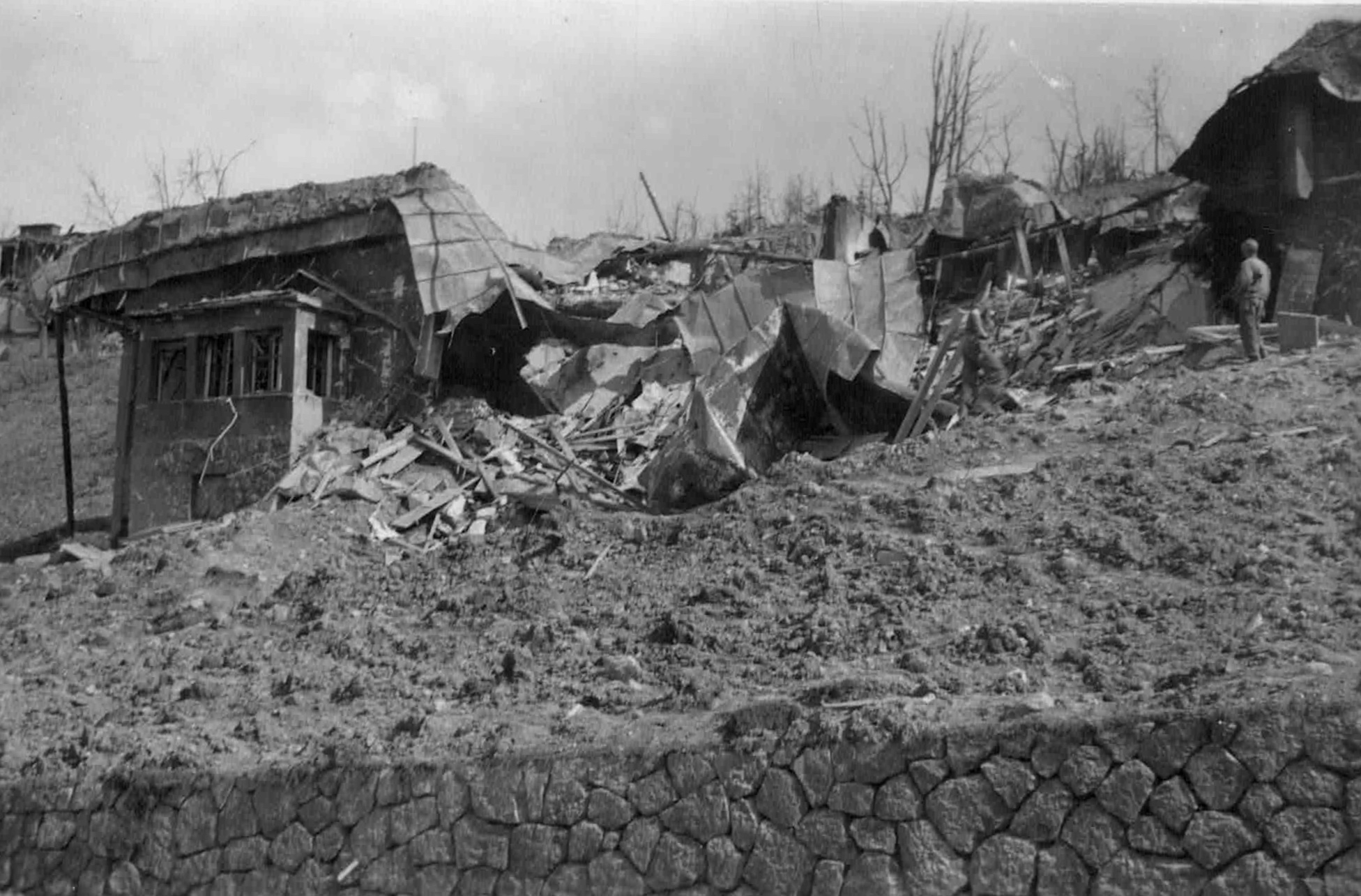
The Berghof was heavily bombedDestroyed barracks The main entrance road, Bormann’s house on the hill. It was thought he had escaped, but DNA from remains discovered in Berlin in 1972 point to May 2 as the day of his death.The Platterhof hotel was bombed and then burned by retreating NazisInside the Berghof was the “great room” with the “grand picture window” with a view of the Untersberg Mountains.Another view of the bombed BerghofThe barracks housed hundreds of SS guardsWhat a view!
We think this is where Flo found or was given Hermann Göring’s armband and a Nazi flag that she saved in her album.
Current status: Much of the Obersalzberg complex was demolished after the war. Today, the site is home to the Dokumentationszentrum Obersalzberg, a research and educational museum focused on the history of Nazism and the regime’s use of the mountain retreat. The Eagle’s Nest still stands and is now a tourist site with panoramic views and a restaurant. The surviving bunker tunnels are accessible through the documentation center.
Pictures of Officers at the 3rd Battalion Headquarters
My Mother and Audie Murphy Ch. 69
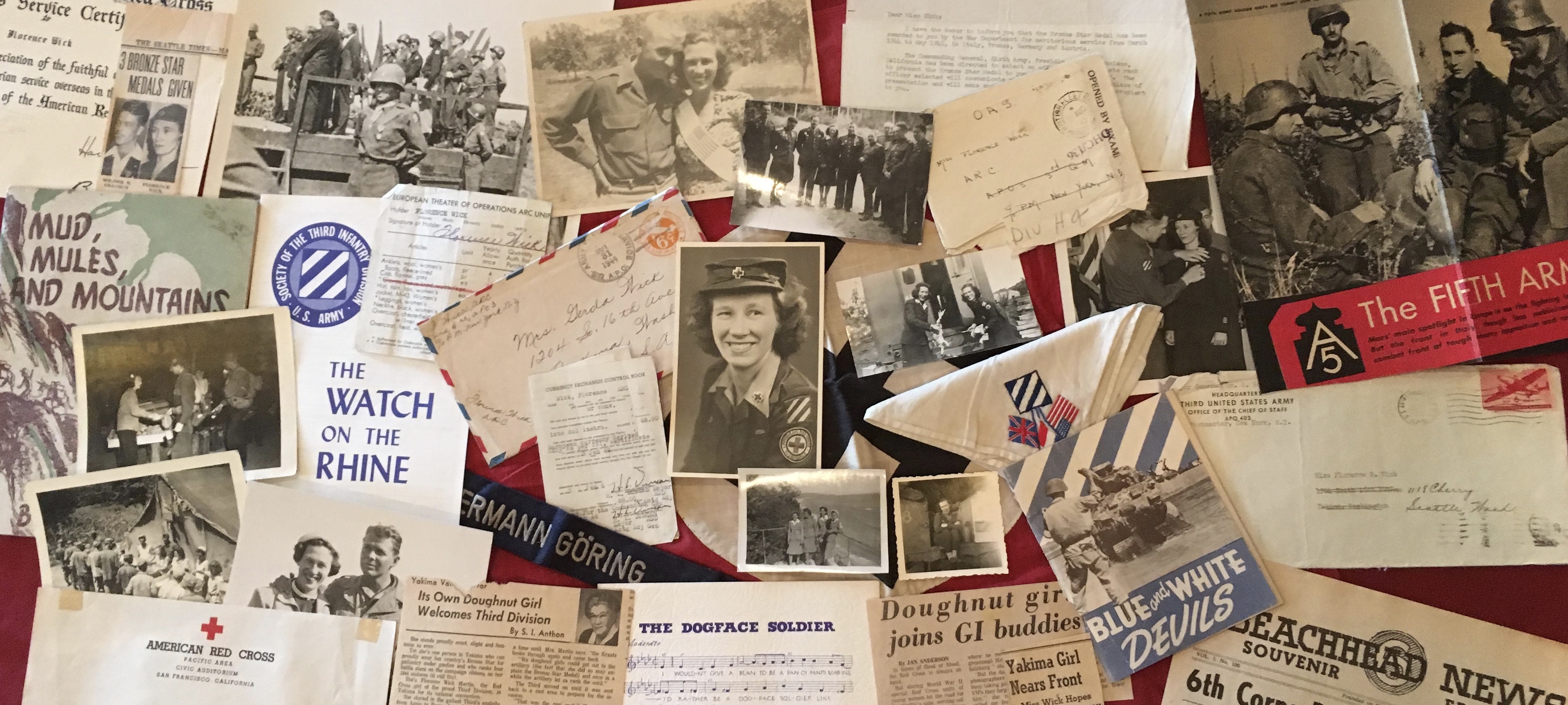
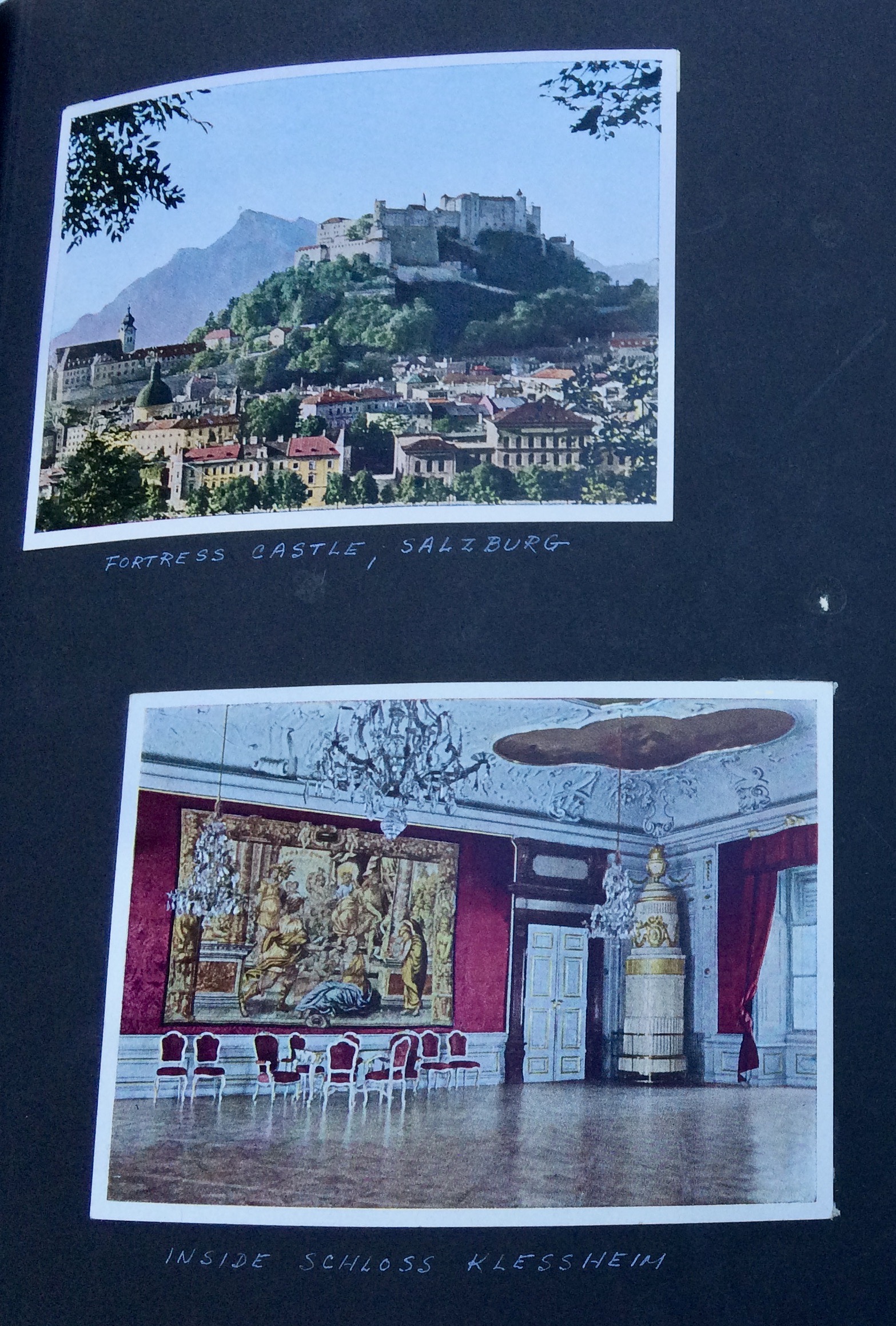
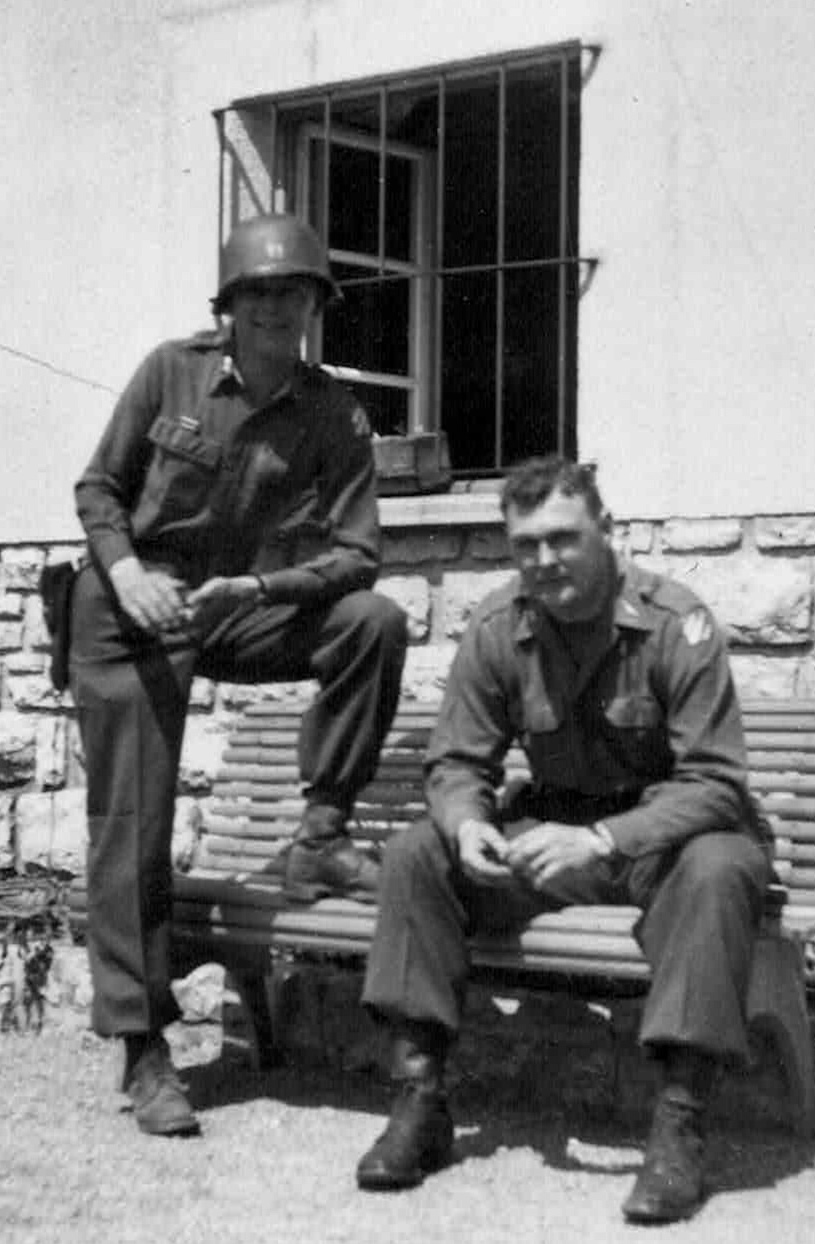
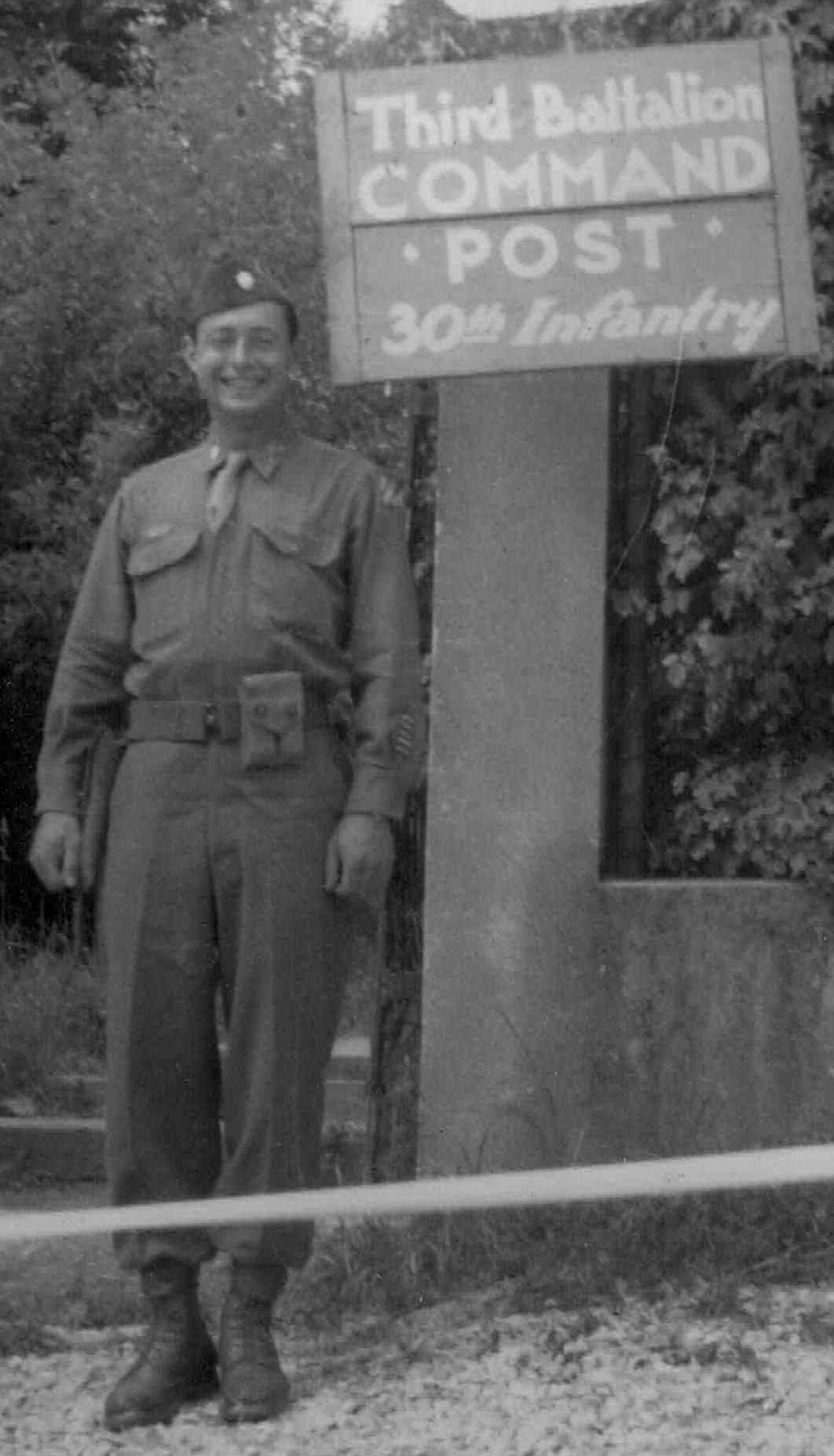
Photos from Flo’s album. Schloss Klessheim served as 3rd Division HQ in Salzburg. Salzburg was occupied for ten years by American forces. It was the central HQ of the American Occupation Authority.Lt. Col. Chaney (Flo’s boyfriend)Capt. Jenson, Maj. PerkinsMajor PridgenC.O. 3rd Bn3rd Bn staff Salzburg
Also on this page of the album is a damaged picture of Flo and Capt. McFalls who became a friend and corresponded with Flo after the war.
She was a lesbian who played in San Francisco 1952-2020
Found in Jackie’s cluttered house
She was an old-time dyke, although I never heard her use that word, nor the word lesbian to describe herself. She did call herself kiki, meaning neither butch nor femme. She may have called herself a character. I know the rest of us did.
Jackie Jones told me music saved her life. Music was certainly the theme of her life.
I first encountered Jackie at the Alemany Farmers Market in San Francisco where she played music every Saturday. She was a one-woman band playing the saw and a selection of hand-made instruments along with a dancing cat that she manipulated with her foot.
Jackie at the farmers market. Photos by author
She made the cat contraption out of plywood, springs, bike parts and wire. She painted the cat lavender with a sparkly G-string and stars where nipples would be. The cat had articulated limbs so Jackie could make it tap dance while the arms swung around. She recorded her own back up music and played it on a portable tape deck. She only played music from the 1920’s, songs like Bicycle Built for Two, Bye Bye Blues, and The Charleston.
Kids loved the dancing cat and always wanted to touch it so Jackie invented ways to discourage them. She talked about glueing a tack on the top of the cat’s head to pop their balloons. She wasn’t fond of kids, and when the kids moved on and we got close she would change song lyrics to bawdy and gay themes.
She rewrote the words to “Wait till the Sun Shines Nellie.” Her version went “Wait till your son turns nelly, and the neighbors start to talk.” The last line was “Gay is grand!”
Jackie always wore the same clothes—a John Deere trucker’s cap, a blue plaid shirt and jeans. Her front teeth were gone and she had false teeth that fit badly, which she only wore when in public.
Jackie lived in our neighborhood of Bernal Heights, but even though my lover and I invited her to dinner at our house, she never would let us into her house. She was an admitted hoarder.
Jackie owned two houses side by side on Manchester street, bought at a time when Bernal Heights housing was cheap. She lived in one and rented out the other, one of several on that street only 12-and-a-half-feet wide (most lots are 25 feet wide).
From Pensacola to New Orleans
Born in 1926, Jackie grew up in Florida, graduating from high school in 1944.
She said, “I remember in Pensacola listening to music with the Black maid that my mother hired. She would dance around with the broom to Ella Fitzgerald singing “A Tisket a Tasket,” then be back to ‘yes maam’ and sweeping when Mom came back.”
Jackie loved music from an early age and yearned to play it, but her parents scoffed and refused to pay for an instrument or lessons. Undaunted, Jackie saved her 35 cent-a-week allowance until she accumulated enough to buy an accordion from the Navy Exchange store. She spent hours in her room, teaching herself to play.
Jackie in her little house
After WWII, Jackie left home and moved to New Orleans. Living in the French Quarter, she held various day jobs to earn her $20 a month rent. At night, she would beg bands to let her sit in just to get experience.
Jackie’s first paid gig was $3 a night, playing her accordion for eight hours straight with a country band. She learned other instruments–guitar, then drums and vibraphone. By the late 1940s, she was supporting herself as a working musician, entertaining at bars, strip clubs and dances throughout New Orleans.
Her Journey West
In 1952, Jackie drove her 1948 woody station wagon west, coming first to Los Angeles, where she didn’t last long. She said, “Where I came from in New Orleans, people see you on the street and say ‘Hi! How are you.’ In LA, you say Hi, they just about call the cops on you.”
After six weeks in LA she couldn’t take any more of the place so she headed up north to San Francisco. There the people were friendly, they didn’t all look alike, folks were helpful, there were lots of bohemians, and she was able to get a job quickly. She never went back to LA.
Rubbing shoulders with the Beats
Jackie loved San Francisco but had problems finding permanent housing. Landlords did not want to rent to lady musicians, particularly the kind that wore pants and rode a motor scooter.
She bounced from rooming house to residential hotel, from day job (taxi driver, assembly-line worker) to music job (guitar at the Town Pump bar, accordion at the 1954 opening of San Francisco International Airport).
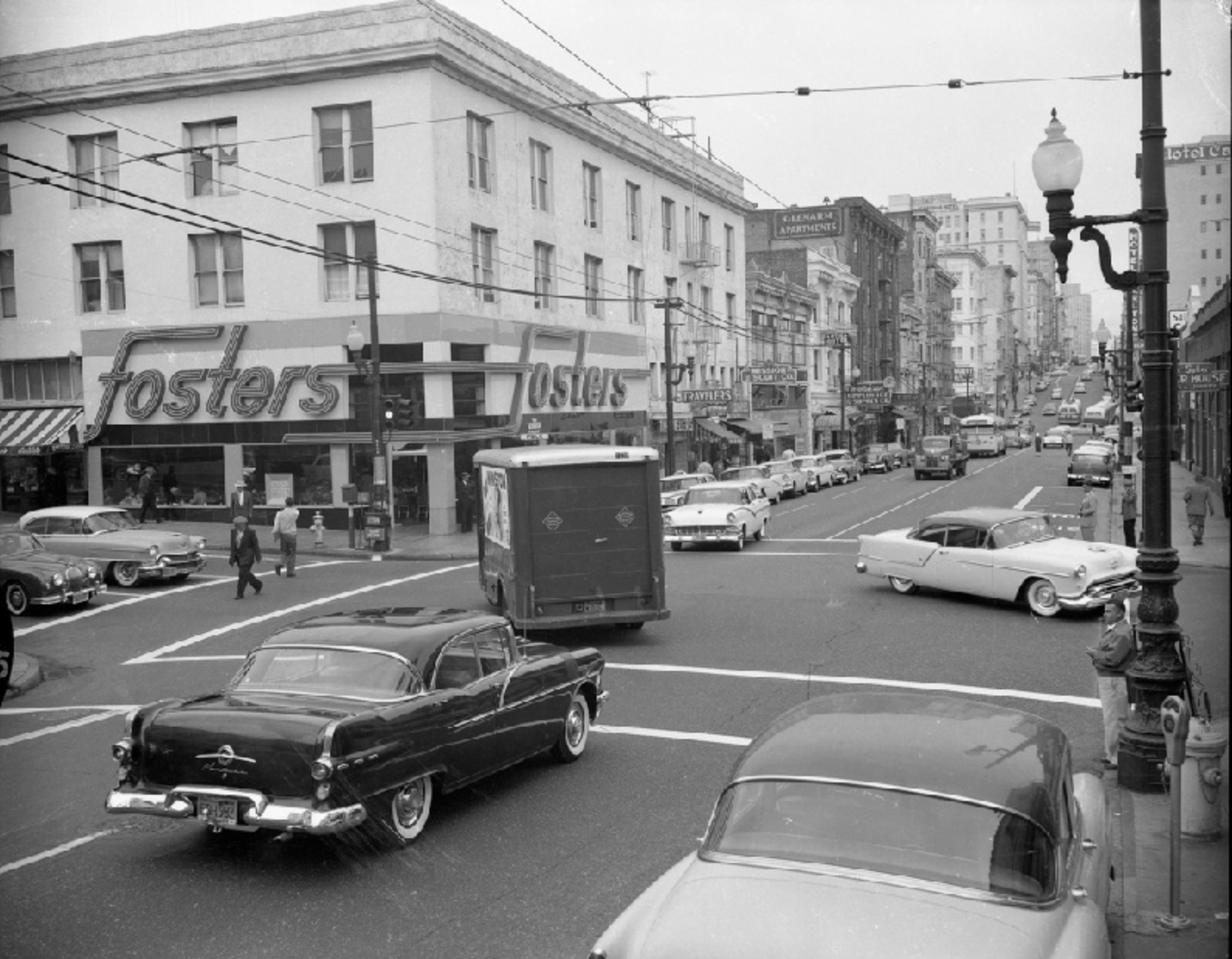
Fosters Cafeteria, downstairs from where she lived at Polk and Sutter, was open 24 hours and the bohemians hung out there. She met Alan Ginsberg and other Beats there. She became friends with ruth weiss (poet, performer, playwright and artist) when ruth worked the bar at the Wildside (a lesbian bar) in North Beach. Ruth traveled with Jack Kerouac and read her poetry around Europe and the US.
Fosters cafeteria 1956. Photo: Open SF History (wnp14.12640; Courtesy of a Private Collector)
In her spare time, Jackie attended City College of SF and SF State College, graduating with a physical science degree in 1962. In 1964, desperate for a steady paycheck, she became a mail sorter at Rincon Annex Post Office and worked there for 10 years.
But Jackie never stopped making music, working with anyone who’d hire her. She played accordion at the city’s Russian festivals and Columbus Day celebrations. She played drums for the Cockettes’ midnight shows and Kimo Cochran’s Polynesian dancing.
She played country guitar at Bay Area military bases with Faye Wayne and her Rhythm Roundup Girls, and Lady of Spain on the accordion at the Fairmont Hotel with a Latin trio. Dressed as a witch, she played Halloween gigs at the Randall Jr. Museum at an annual party for kids. Later in life she was asked to contribute her homemade music to a show at the San Francisco Museum of Modern Art.
Early lesbian culture
Jackie felt she never fit in the lesbian communities of New Orleans or San Francisco. She told me she thought the dykes in New Orleans in the 1950s fell into two groups: the fighters and truck driver type, and the professionals who needed to protect their reputations; they wore dresses and were in the closet. Jackie didn’t fit into either of those categories.
Lesbian bars didn’t hold much appeal. In those days in San Francisco women couldn’t get served if they wore jeans. They’d throw you out, she said. She never went to the lesbian bar the Paper Doll (San Francisco’s first lesbian bar, owned by Charlotte Coleman). “You’d see women wearing skirts, holding hands going in there. They were snotty to me. There was another lesbian bar called Peg’s Place. They had a room in the back and there was a little window in the wall where somebody watched you to make sure you weren’t touching,” she said.
She was a maker
House parties were no better. One Halloween the well-known San Francisco bar owner Ricki Streiker threw a party where all the dykes wore dresses and were not in costume. Jackie came in drag with a mustache. Drag had not yet caught on and she wasn’t invited back.
The only person Jackie had liked at that party was Pat Bond, the out lesbian actor who wrote and performed one-woman plays. She went home one night with Pat. They didn’t have sex; they talked all night instead. “I liked her mind,” said Jackie.
Jackie never had a long-term relationship. She had a lot of “bed friends.” I asked if that was the same as fuck buddies. Yes, she said. She would go on “sex binges” but there weren’t all those diseases out there then, she said.
“I went to the bohemian places where you had artists and a mix of interesting people. I liked the Black Cat best,” she said. “Gene Krupa came in once to the Black Cat, also Carson McCullers. Then the bar became gay when José Sarria (an early San Francisco drag queen) started his shows. I once played a show with José as his drummer. He was a nice guy. The music thing opened doors for me,” she said. “That’s why I like San Francisco.”
José Sarria performing at the Back Cat in 1958 |from José Sarria Papers| Courtesy of GLBT Historical Society
Later Jackie’s trademark instrument was a carpenter’s saw that she rubbed with a violin bow. One time Jackie came over to visit. We had several hand saws hanging in our garage/shop. Jackie pulled each out and tried it. “This one will make a good instrument,” she declared. She offered to teach us how to play the saw and we both tried. But playing the saw is hard!
Aging in place
In 2013 Jackie fell in her house, breaking her ankle and knee. But rather than call 911 and risk the fire department whisking her away to some rehab place that might never let her go back, she called some friends. She knew that if anyone from the city saw her house—the lair of a hoarder—they’d never let her back in. So, instead her friends helped her get over the back fence and into her smaller house, which was then empty of tenants.
The 12-and-a-half-foot-wide house was a studio up a flight of stairs in its original condition but otherwise in pretty good shape. The little house had two big advantages: it was not full of junk. Also, friends were now invited to visit.
When I’d visit Jackie, we would talk about musical instruments and how she made them, keys for different types of music, and what the lyrics to a song really meant. She would tell me about old time musicians she admired.
Jackie followed the careers of the Duncan sisters, Rosetta and Vivian Duncan. Rosetta was a lesbian. The white girls had a vaudeville act called Topsy and Eva that they created in 1923 about a white child and a Black child with Rosetta in blackface. It was a musical comedy derived from the novel Uncle Tom’s Cabin.
“Once I was in a show with Vivian who played Little Eva,” said Jackie. “She played the piano, sang and did comedy.” The show was a takeoff on the movie All About Eve. Charles Pierce played the part of the actress. It was at California Hall (where the infamous 1965 gay New Year’s ball took place). “I love that I can look back on doing these things,” she said.
One of Jackie’s favorite entertainers was Hadda Brooks, who ended up playing for gay audiences as she got older. “That’s My Desire” was her big number. Billed as “Queen of the Boogie,” the vocalist, pianist and composer was big in the 1940s and 50s, then made a comeback in the 90s.
We talked about death. Jackie wondered what will happen to her stuff when she dies. I was finally allowed to go into Jackie’s big house when she asked if I could help her clear it out. Every room was crammed full of junk—old computers, musical instruments, paper, clothes. There were machines that I couldn’t identify.
She had 12 guitars–none complete, some banjos, three accordions, electronics. She had 25 turntables because she was afraid she wouldn’t be able to get the needles. She kept dozens of instruments that she hoped to fix someday, inventing new musical instruments, experimenting with new sounds. She would scour the salvage yard and hardware stores for parts for her inventions and I was sent on trips to her favorite hardware store for particular screws and parts. Jackie didn’t want to get rid of anything because, she said, she might need it for something she was making or inventing. Having to let go of anything was so painful for her that the house never did get cleaned out.
We talked about the old days before gay liberation. Jackie didn’t have a partner, but she was was lucky to have the love and attention of her good friend Pauline, a sister musician who helped and supported her for 30 years.
Pauline wrote: “Jackie has always had a wary streak, not wanting folks to know all her business. I think it goes back to those ugly days in the 1940s and 1950s when she saw that being outed as gay could mean being arrested, having your name in the paper, losing your job, your residence, your family, etc.
“I’d say some of that fear still prevails. We recently had a fill-in caregiver who Jackie later told me asked her all these prying, straight-lady questions about her background: Why did Jackie never marry? Why doesn’t Jackie have her own family to look after her instead of this friend, Pauline? Didn’t Jackie ever want to have kids? Jackie gave the lady some bland answers but she wasn’t going tell her, “I’m gay. I wasn’t interested in husbands, kids and marriage.”
“Hell, Jackie didn’t tell her own family she was gay, they just thought she was weird, eccentric, and bohemian, and that was bad enough. In the 1940s, when her brother-in-law heard that Jackie was living in the French Quarter and working as a musician there, he told his wife to break off contact with Jackie because ‘We don’t associate with those kinds of people.’
“Why isn’t your family looking after you, Jackie? Because they were bigoted, small minded, homophobic assholes. Why don’t you want to tell people you’re gay, Jackie? Because there are still a lot of bigoted, small minded, homophobic assholes out there.
“Jackie has great survival instincts and is still following them. She is very proud of the fact that she never got arrested on a morals charge (or any other charge) back when plenty of her gay and lesbian friends were being pulled out of bars and thrown into paddy wagons.”
Jackie gave me banjo lessons. Photo of Molly by Barb Schultheis
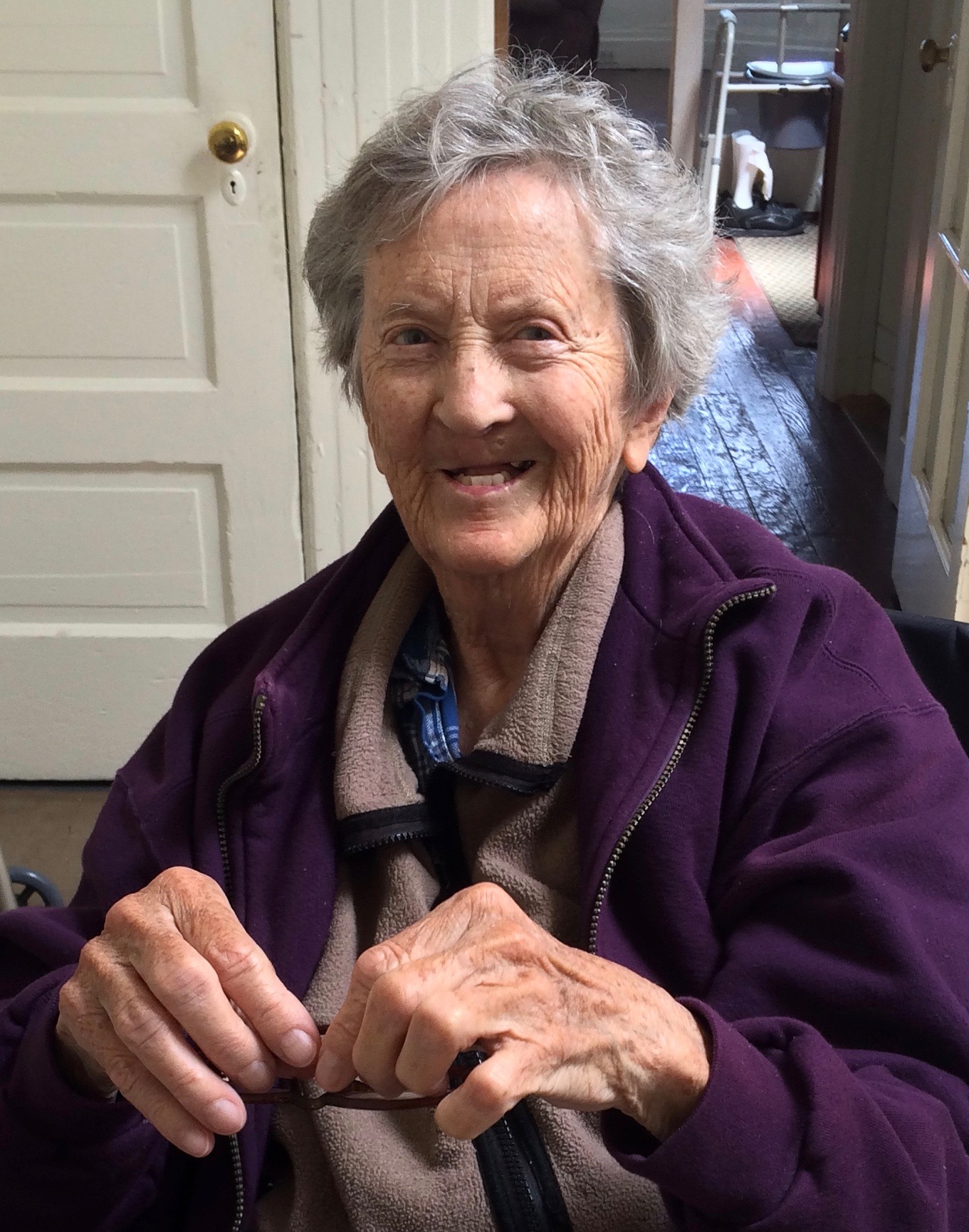
Jackie never had to go to a nursing home. She lived with caretakers in the little house till she died in 2020 at the age of 93. Her friend Pauline was there when she died.
From the invitation to Jackie’s memorial: “Friends and neighbors of Jackie are invited to attend and celebrate Jackie. Per Jackie’s instructions, this is NOT to be a religious event but a party. All musicians are asked to bring their instruments so we can remember Jackie musically. By Jackie’s specific request, NO religious music of any kind is to be played. However, we welcome jazz, standards from the 20s and 30s, Latin, country-western, and any other music that swings.”
Jackie Jones was someone who discovered her passion, music, at an early age, and she never lost her love and enthusiasm for it. Music was the focus of her life: performing it, listening to it, collecting sheet music and instruments, arranging it, practicing it, recording it. Jackie had lovers but never had any girlfriends. That’s because she had found her great, all-consuming love…music.
Clubmobilers are some of the first to see the camp
My Mother and Audie Murphy Ch. 68
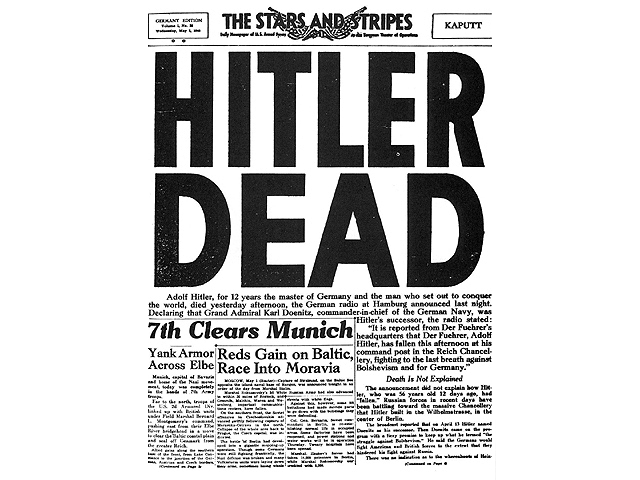
The Dachau concentration camp near Munich was liberated by the US Army on April 29, 1945. There is no page in Flo’s album dedicated to Dachau, but the Red Cross women were there. Flo didn’t talk about the Holocaust, possibly because she thought no one would believe her.
In the 1970s she organized a writers group at the Yakima Senior Center where she worked. The group published a chapbook, Leaves of Sage, in which two of her stories appear. Then she was finally able to write about her experience. Here is her story.
Holocaust 1945
By Florence Martin
The long struggle to free the world of Hitler and his horrors was coming to an end; it was 1945 and Munich had fallen. The US Army’s famous Third Infantry Division, which had pursued the Nazis relentlessly through North Africa, Sicily, Italy and southern France into central Germany itself, had figured prominently in the capture of Munich and the liberation of the infamous concentration camp at Dachau. Armed with captured Zeiss-Ikon cameras, the four Red Cross Clubmobile gals, attached to the Third Division since Anzio in Italy, were eager to shoot scenes of the city which had been a Nazi stronghold and of the concentration camp prisoners, some of whom could still walk away from this 20th century torture chamber.
Photo: Dogface Soldiers Collection
We had not reckoned with the results of the swiftness of the Allied attack which had prevented the Nazi jailers from destroying the evidence of their hideous and unspeakable atrocities to Semitic citizens of Germany whose only crime was being a despised JEW. Left behind were literally stacks of human bodies–piled up like so much cord wood–only skin covering their skeletons. A year on the battlefields of Italy, France and Germany had toughened us to these sights of violence and death, and we almost calmly focused cameras on the neatly stacked corpses. I had snapped several views and was focusing on the bottom “layer” when I caught the movement of a human hand through the camera’s viewfinder. Thinking that my imagination was playing tricks on me, I moved closer to the subject, only to confirm that some of the skeletons did indeed still contain life and that several arms and legs were still moving. Sickened and horrified, my sudden scream brought the others running toward me.
Although there was still some movement, it was, of course, too late to resuscitate or rescue anyone. With revulsion we left the whole hellish scene. Later as I retched in a nearby ditch, I wondered how many potential Mendelsohns and Einsteins were there among those wretched skeletons, and if, perhaps, the great Goethe might be turning in his grave about this modern and depraved Mephistopheles, Adolf Hitler, and what he had done to Goethe’s Germany.
Hitler died April 30, 1945. Photo: Dogface Soldier
Postscript: this is a true experience; The pictures that were taken that day were somehow conveniently lost in development in a German photoshop–only these shots among several rolls of film were missing, and it was not until television elaborated the Holocaust more than 30 years later that my personal experience could be proved.
Indigenous women in Ironworkers Local 725, Canada. Photo: Lightframe
Tradeswomen Reject Union’s Capitulation
Tradeswomn Inc. is a nonprofit I helped found in 1979. Still going strong, the organization helps women find jobs in the union construction trades. Here’s the text of a speech I gave October 30, 2025 at Tradeswomen’s annual fundraising event.
Sisters, we’ve come a long way.
When we first started Tradeswomen Inc., we had one goal: to improve the lives of women — especially women heading households —by opening doors to good, high-paying union jobs.
It took us decades to be accepted by our unions. Decades of proving ourselves on the job, standing our ground, demanding a seat at the table.
And now — by and large — we’re there. We are leaders. Business agents. Organizers. Stewards. We have changed the face of the labor movement.
But sisters, we are living in a dangerous time.
Our own federal government is attacking the labor movement. And we cannot look away.
We all know that Donald Trump is gunning for unions. Project 2025 is his blueprint — a plan to dismantle workers’ rights and roll back decades of progress.
Let me tell you some of what’s in that plan.
It would roll back affirmative action, regulations we worked so hard to secure, Allow states to ban unions in the private sector, Make it easier for corporations to fire workers who organize, And even let employers toss out unions that already have contracts in place.
It would eliminate overtime protections, Ignore the minimum wage, End merit-based hiring in government so Trump can pack the system with loyalists, And — unbelievably — it would weaken child labor protections.
Sisters and brothers, this is not reform. It’s revenge on working people.
And yet, too many union members still vote against their own interests. Why? Because propaganda works. Because we are being lied to — by the media, by politicians, by billionaires who want to divide us.
That means our unions must do more than just bargain wages. We must educate. Engage. Empower. Because the fight ahead isn’t just about contracts It’s about truth.
We women have proven ourselves to be strong union members — and strong union leaders.
We’ve built solidarity. We’ve organized. We’ve made our unions more inclusive and more reflective of the real working class.
And now it’s time for our unions to stand with us.
Many of our building trades unions have stood up to Trump, and to anyone who would divide working people.
But one union — the Carpenters — has turned its back on us.
The Carpenters leadership has disbanded Sisters in the Brotherhood, the women’s caucus that so many of us fought to build.
They have withdrawn support from the Tradeswomen Build Nations Conference, the largest gathering of union tradeswomen in the world. They’ve withdrawn support for women’s, Black, Latino, and LGBTQ caucuses claiming they’re “complying” with Trump’s executive orders.
That’s not compliance. That’s capitulation.
But the rank and file aren’t standing for it.
Across the country, Carpenters locals are rising up, passing resolutions to restore Sisters in the Brotherhood and to support Tradeswomen Build Nations.
Because they know: You don’t build solidarity by silencing your own. And our movement — this movement — is built on inclusion, not fear.
While the Carpenters’ leadership retreats, others are stepping up.
The Painters sent their largest-ever delegation — nearly 400women —to Tradeswomen Build Nations this year.
The Sheet Metal Workers are fighting the deportation of apprentice Kilmar Abrego Garcia. The Electricians union is launching new caucuses, organizing immigrant defense committees, and they are saying loud and clear:
Every worker means every worker.
Over a century ago, the IWW — the Wobblies — said it best:
“An injury to one is an injury to all.”
That’s the spirit of the labor movement we believe in —and the one we will keep alive.
Our unions are some of the only institutions left with real power to stand up to the fascist agenda of Trump and his allies.
We have to use that power — boldly, collectively, fearlessly.
Because this fight is about more than paychecks. It’s about democracy. It’s about equality. It’s about whether working people — all working people — will have a voice in this country.
Sisters and brothers, we’ve built this movement with our hands, our sweat, and our solidarity.
Now — it’s time to defend it. Together. Solidarity forever!
My Regular Pagan Holiday Post: Samhain, November 1
When does winter begin?
Is it October, when we pick the last tomatoes to let them ripen indoors? November 1, Samhain, when daylight thins and the world folds in on itself? December 1, when the record-keepers say it does? Or December 21, when the Earth leans furthest from the sun?
There are many ways to mark the turning.
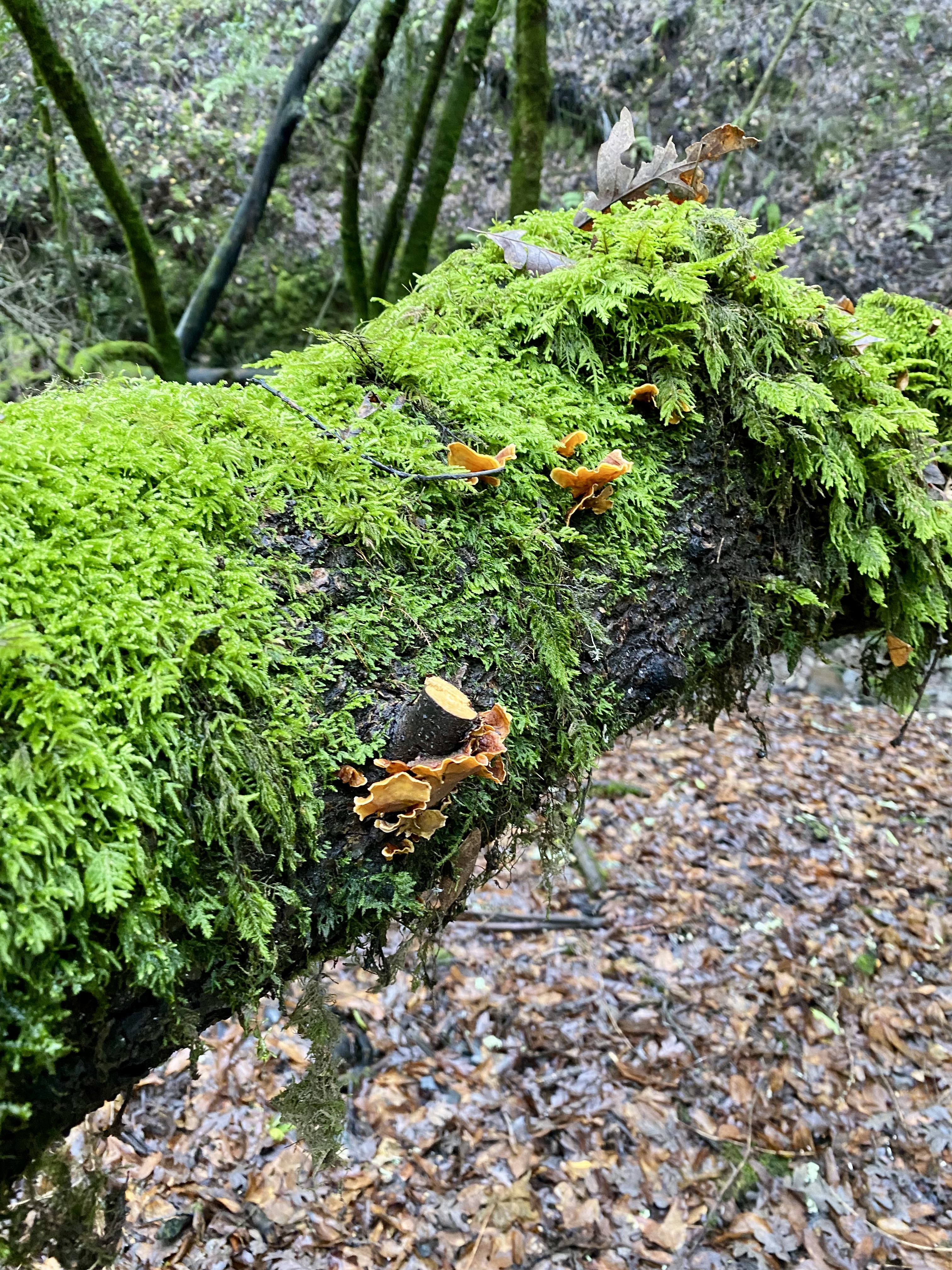
In Northern California winter starts when the moss wakes up and fungus emerges
The Astronomers’ Winter
Astronomical winter begins with the solstice, that celestial pause when the sun halts its slow descent and begins its long climb back toward spring.
It happens around December 21, though never on exactly the same day— Earth wobbles a little in its orbit, as if uncertain.
The oak’s witchy branches show themselves
The Meteorologists’ Winter
The meteorologists keep tidier books. For them, winter starts on December 1 and ends with February— three even months of cold data, meant for graphs and records.
The forest breathes a sigh of relief as rainy season begins
The Ecologists’ Winter
Ecologists, meanwhile, listen to the ground. They call this time hibernal—the season of rest.
Their calendar has six seasons, each following the pulse of life itself:
Prevernal – the first stirring, buds swelling, birds returning Vernal – full spring, leafing and nesting Estival – the height of summer Serotinal – late summer’s slow ripening Autumnal – the fall of leaves and the long migration Hibernal – the stillness of sleep
The Gardener’s Winter
Gardeners go by the Persephone Period. It starts when there are less than ten hours of daylight in a day, causing plant growth to slow down or stop. Employed to plan crops, insuring plants have time to get a head start before winter harvesting or overwintering.
Mushrooms fruit after the first rains. (My first this season. Satan’s bolete I think)
Other Ways of Knowing
Elsewhere, the world names winter differently.
In the Hindu and Bengali calendars, there is Hemanta, the cooling air, and Shishira, the deep chill that follows.
The Noongar people of Western Australia read their six seasons in wind, rain, and blooming trees— a rhythm that moves with the land, not the clock.
The Cree of the far north know six seasons as well: the breaking and freezing of ice, the coming and going of warmth.
And pagans, watchers of the sun’s dance, divide the year into eight— by solstices, equinoxes, and the cross quarter days between.
Rain revives forest streams
The Truest Beginning
So when does winter begin? Perhaps it starts in a feeling— the first evening you reach for a blanket and feel the world grow still.
Winter begins when the Earth draws inward— and so do we.