Celebrating Girlfriends

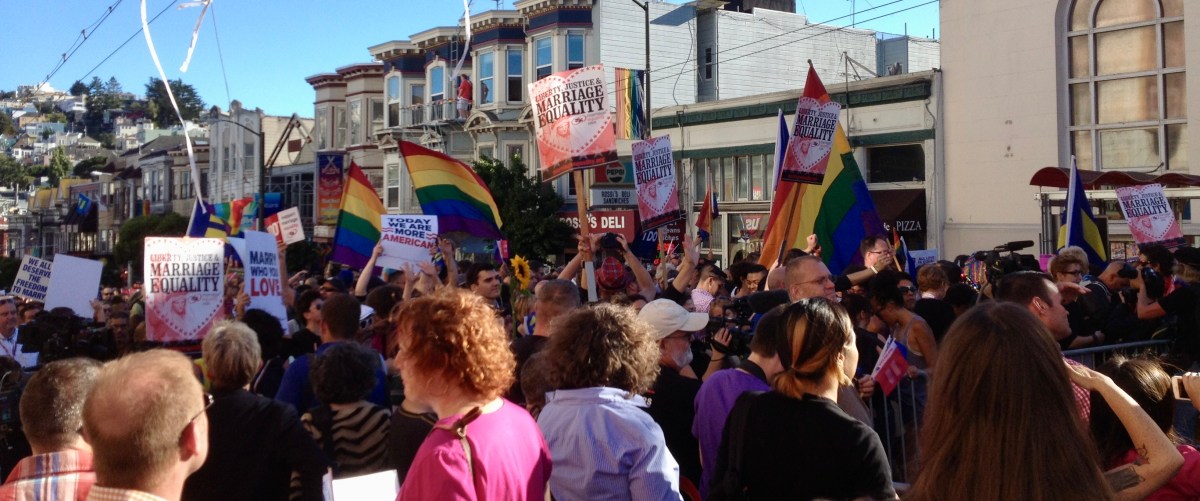
Marriage Equality Day in the Castro June 26, 2013

My Regular Pagan Holiday Post

National Girlfriends Day — August 1

August 1 marks the traditional Celtic holiday of Lammas, the first harvest festival on the pagan Wheel of the Year. According to the National Day Calendar, August 1 is also National Girlfriends Day. Judging by the ads, it might seem like a holiday invented to sell wine glasses and diet aids, but I plan to celebrate it anyway.

What does “girlfriend” mean in lesbianland?

In lesbianland, the word girlfriend carries a lot of weight, and a lot of meanings. It can refer to a platonic friend, a lover, or something in between. Back in the day, it usually meant lover. There simply weren’t enough words to describe us dykes or the nuanced ways we related to each other. For a while, we adopted partner, but that often got confused with business partner

Girlfriends for 40 years, my friends Char and Eileen finally got to be wives.

Very few of us used the word wife, and I never liked it.

As a budding feminist, I wanted no part of marriage. Wives, in my mind, were helpmeets, baby factories, second-class citizens. Property. In some states, it was still legal to kill your wife for adultery. Spousal rape wasn’t outlawed. Until 1974, women in the U.S. couldn’t even get credit in our own names. Before that, we had to depend on husbands. 

The feminist movement changed all that. But I still never wanted to be a wife.

Girlfriend. Partner. Wife. Spouse.

Some lesbian couples still use the term girlfriend. They let their friends know they don’t like the term wife and don’t use it to refer to each other. Others in my Boomer generation have come up with alternatives. One couple calls each other spouse and spice.

But I’ve become a wife convert.

I’ve been married twice. Maybe three times.

My ex, Barb, and I went to Vermont after it became the first state to legalize same-sex civil unions in 2000. But in 2004, San Francisco Mayor Gavin Newsom opened the doors to same-sex marriage. Thousands of couples–ourselves included–flocked to City Hall. Even though it wasn’t yet legal at the state or federal level, it felt revolutionary. Queer couples, dressed in their finest, stood in line all day in the rain, in the sun, waiting for a marriage license. Bouquets, cakes and good wishes arrived from around the country. The whole city felt like a wedding party. As City workers, Barb and I even got trained to be wedding officials ourselves. A lovely gender-free ceremony was provided.
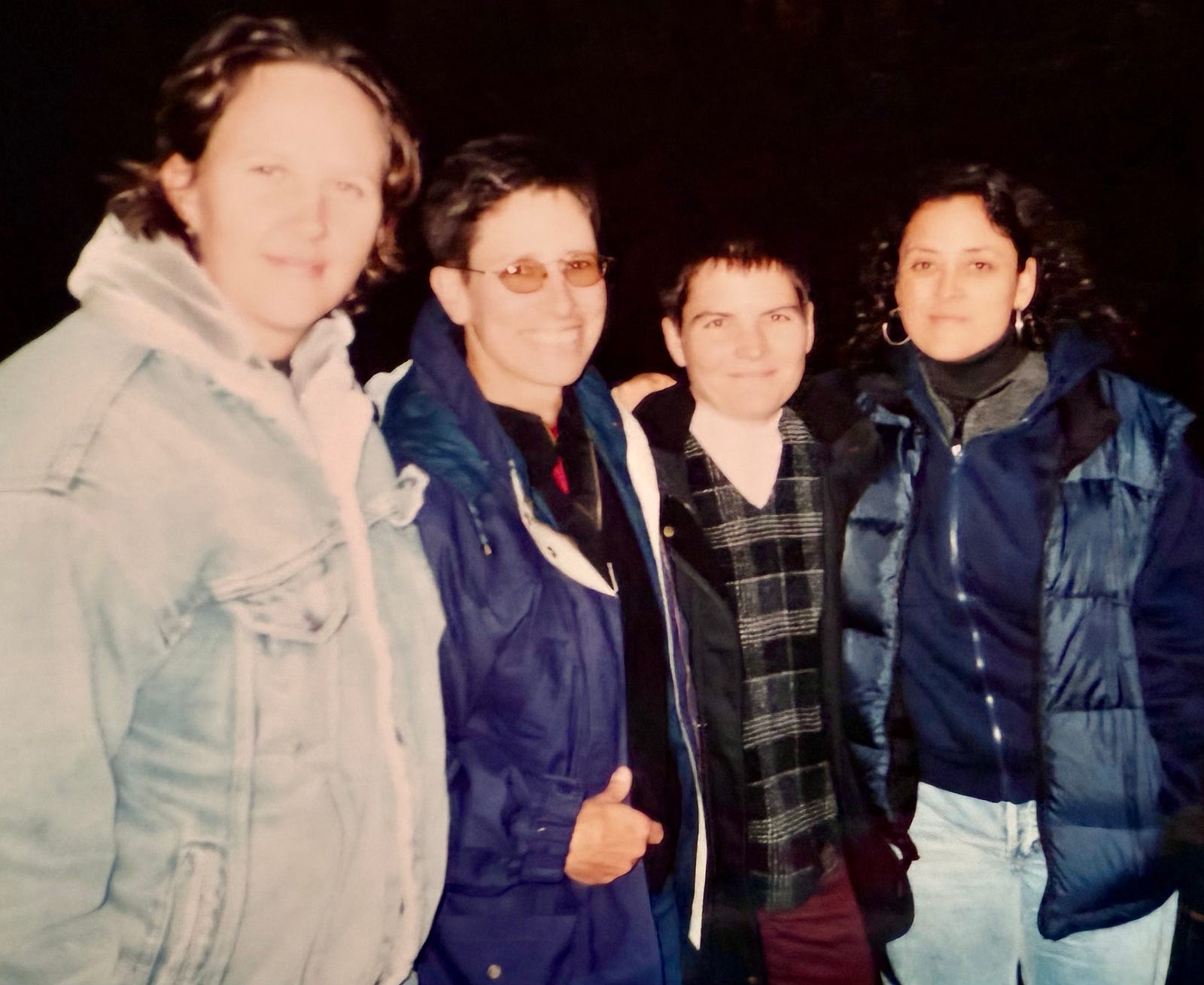
Barb and I first got married at a park in Vermont. With witnesses Jen and Michelle

Barb, then the San Francisco fire marshal, arranged for the SFFD chief, Joanne Hayes-White, to officiate our wedding in City Hall. In every room, in every hallway, people were saying vows. It was beautiful chaos. 

As we walked through the metal detectors and the guard called me “sir,” I turned to Barb and said, “Well, I guess I get to be the husband.”

That was not fair. With her crew cut, she got misgendered as often as I did. Neither of us really wanted to be a wife. But in this country, being legally married means access to health insurance, tax benefits, hospital visits, and death benefits. There were–and still are–good reasons to marry. 

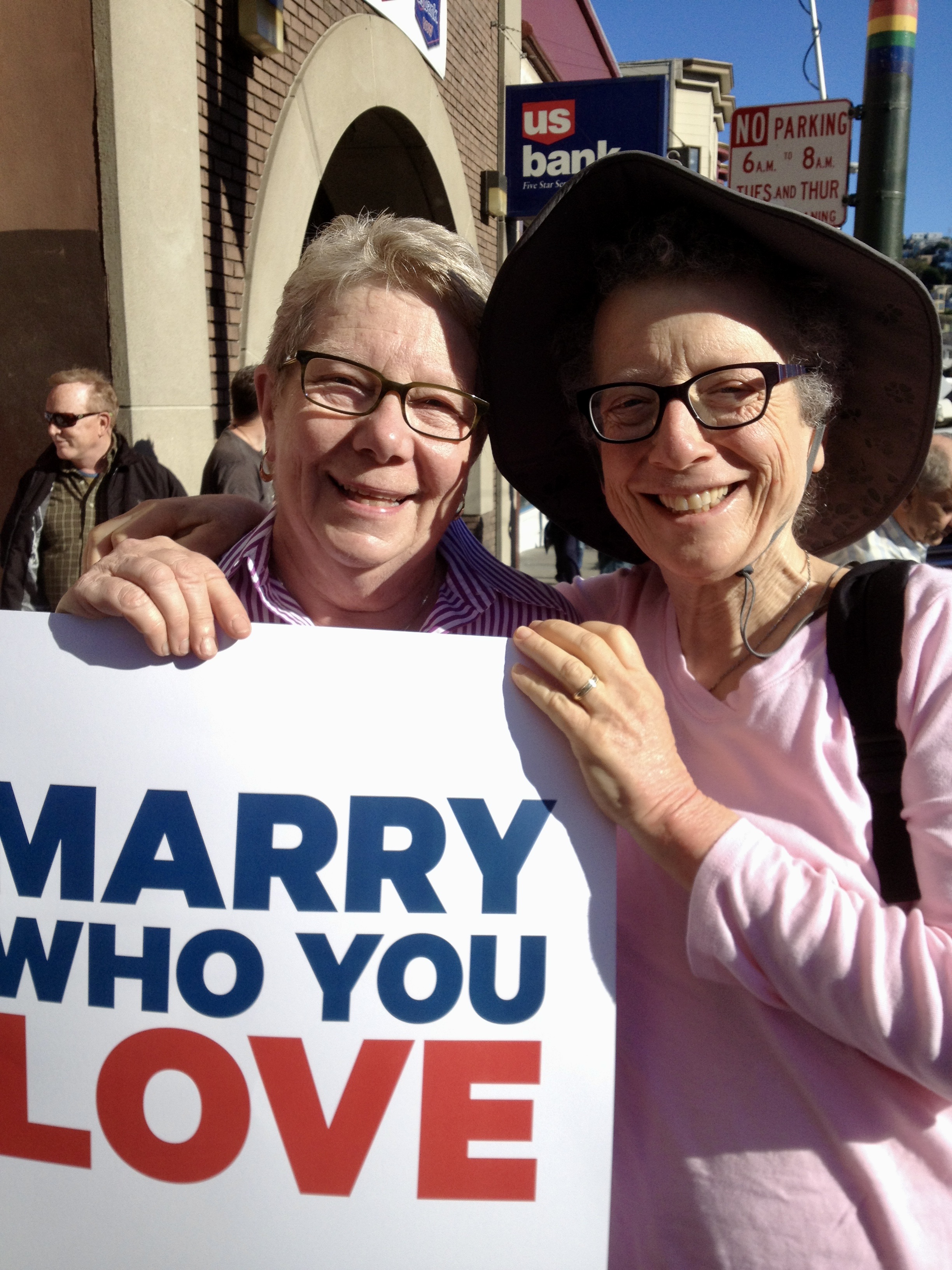
The road to legal gay marriage was long and convoluted, culminating with the 2015 landmark civil rights case Obergefell v. Hodges. But in 2013, United States v. Windsor overturned key parts of the Defense of Marriage Act (DOMA), reinstating same-sex marriage in California. (Thank you, Edie Windsor!) By then, Barb and I had broken up. But because of legal limbo, we hadn’t been able to divorce. When the Supreme Court’s decision came down, we all ran to the Castro to celebrate. People held signs that said “Freedom to Marry.” For us, it was also the freedom to divorce.

And then came Holly
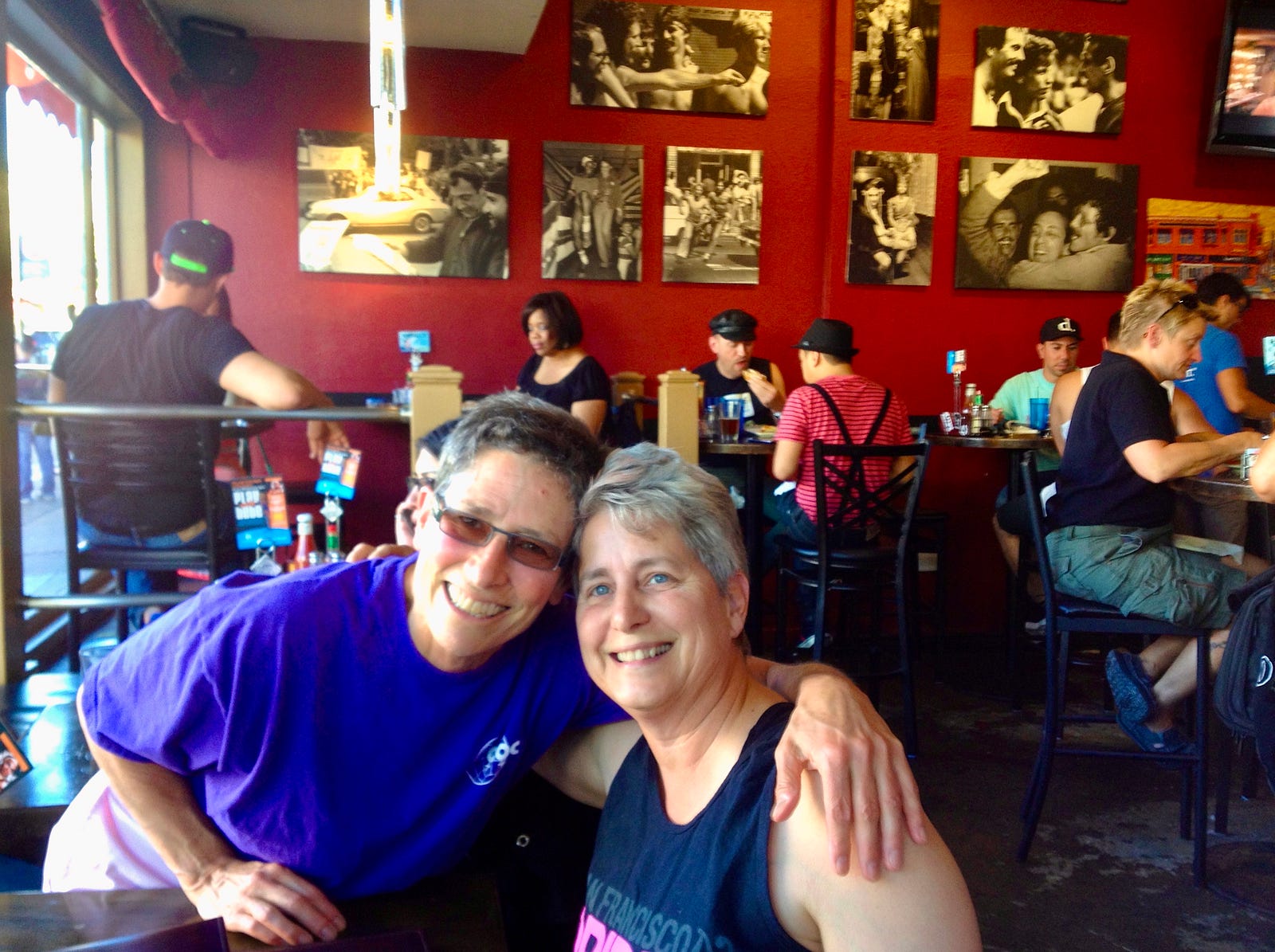
Holly and I celebrating on Marriage Equality Day at Harvey’s (named after Harvey Milk)

Holly and I were married on April 19, 2014, at Muir Beach–the site of our first date. The wedding was officiated by our gay cousin Richard, dressed in the robes of his Episcopal priest friend who had been defrocked for gayness. Witnesses were my brother Don and his husband John.

I love introducing Holly as my wife. It’s a simple, meaningful word. A word I once rejected. And, frankly, it helps when talking to straight people, and still sometimes provides a bit of shock value. Everyone knows what wife means.

Brother Don, Richard, Holly, me and John jump for joy at our Muir Beach wedding

Oh, and for the record, we introduced our exes to each other. They got married too.

How to describe our relationships with each other? We call ourselves Exes and Besties. But you could call us a gaggle of girlfriends.

Happy National Girlfriends Day to all!
Black Women to the Rescue

The 6888th Battalion cleaned up the mail mess

My Mother and Audie Murphy Ch. 43

In October 1944, after her fiancé Gene was killed, Flo had trouble reaching her mother. The wartime mail system was broken.

This wasn’t just a personal problem—it was widespread. Soldiers on the battlefield were not receiving letters and packages from home. Mail, the lifeline of morale, was piling up undelivered. The men risking their lives for democracy weren’t hearing from their families, and the silence was taking a serious toll.

Flo had noticed the problem early. In letters and diary entries beginning in May 1944, shortly after arriving in Italy, she often mentioned that no mail had come. She didn’t complain—Flo wasn’t a complainer—but she noted it again and again. Others were more vocal. Across the war front, soldiers and Red Cross workers alike were frustrated and bitter. What began as a logistical issue had grown into a morale crisis.

The Army didn’t officially acknowledge the scale of the problem until 1945—by then, millions of letters and packages were sitting in European warehouses, unopened and unsorted.

Then came the 6888th.

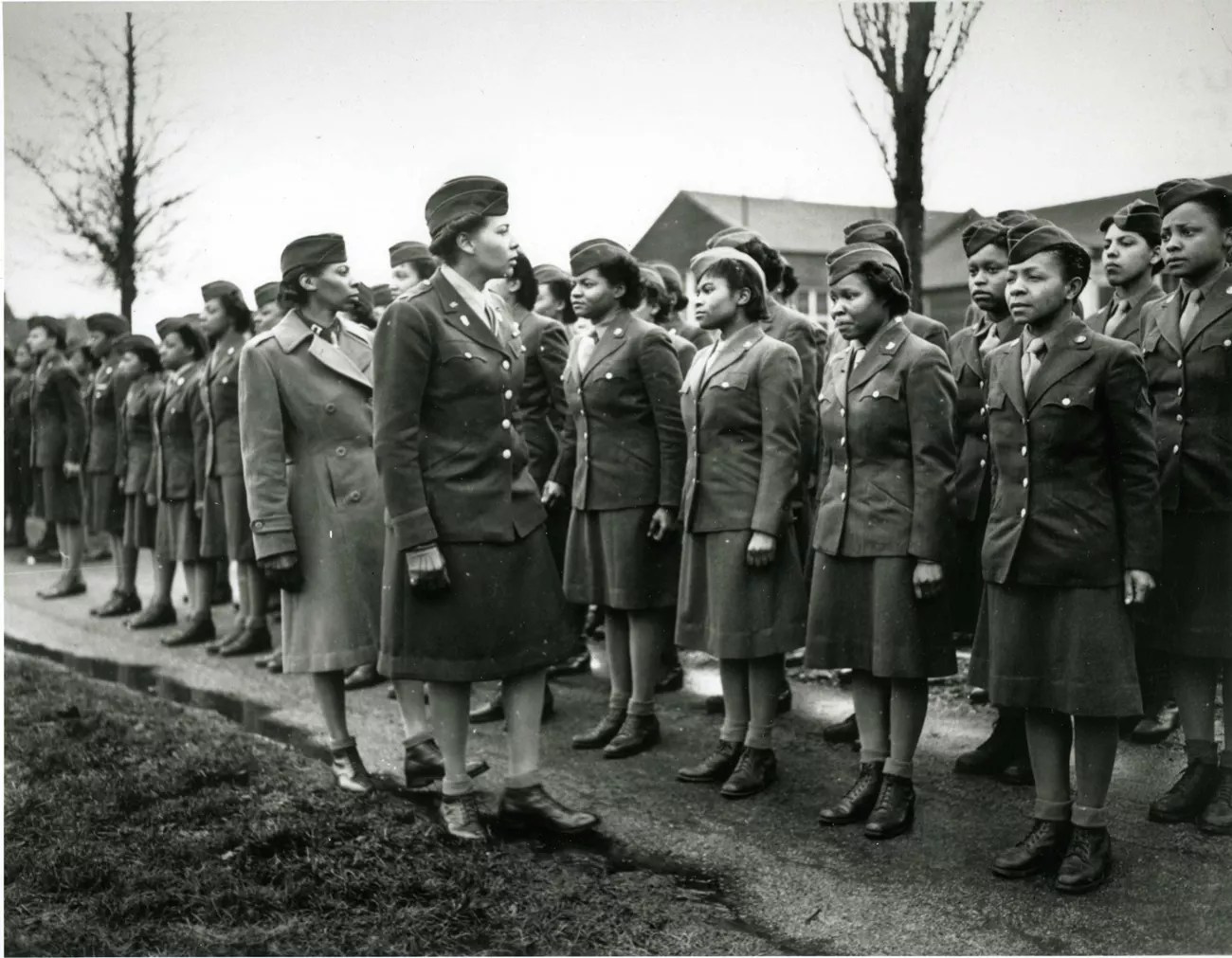
Major Charity E. Adams and Captain Mary Kearney inspect members of the 6888th Central Postal Directory Battalion in England on February 15, 1945. Photo: National Archives

The 6888th Central Postal Directory Battalion—known as the “Six Triple Eight”—was a groundbreaking, all-Black, multi-ethnic unit of the Women’s Army Corps (WAC), led by Major Charity Adams. It was the only Black WAC unit to serve overseas during the war.

Their mission: clear the massive backlog of undelivered mail under grueling conditions and extreme time pressure. They worked in unheated warehouses, with rats nesting among the mailbags, and under constant scrutiny from a military establishment rife with racism and sexism. But they got the job done—sorting and forwarding millions of pieces of mail in record time.

Their work restored something vital: connection. And morale.

The 6888th wouldn’t have existed without the efforts of civil rights leaders. In 1944, Mary McLeod Bethune lobbied First Lady Eleanor Roosevelt to support the deployment of Black women in meaningful overseas roles. Black newspapers across the country demanded that these women be given real responsibility and not sidelined. Eventually, the Army relented.

The women of the 6888th made their mark. Many would later say they were treated with more dignity by Europeans than they had ever experienced in the United States.

If you haven’t seen the Netflix movie The Six Triple Eight, it’s well worth your time.


Back in October 1944, the broken mail system meant heartbreak and silence for Flo. How long did it take for her disconsolate letter to reach her mother? Gerda telegrammed back on November 14—more than two weeks after Gene had died.

Gerda’s radiogram was sent November 14, likely just after she received Flo’s letter.

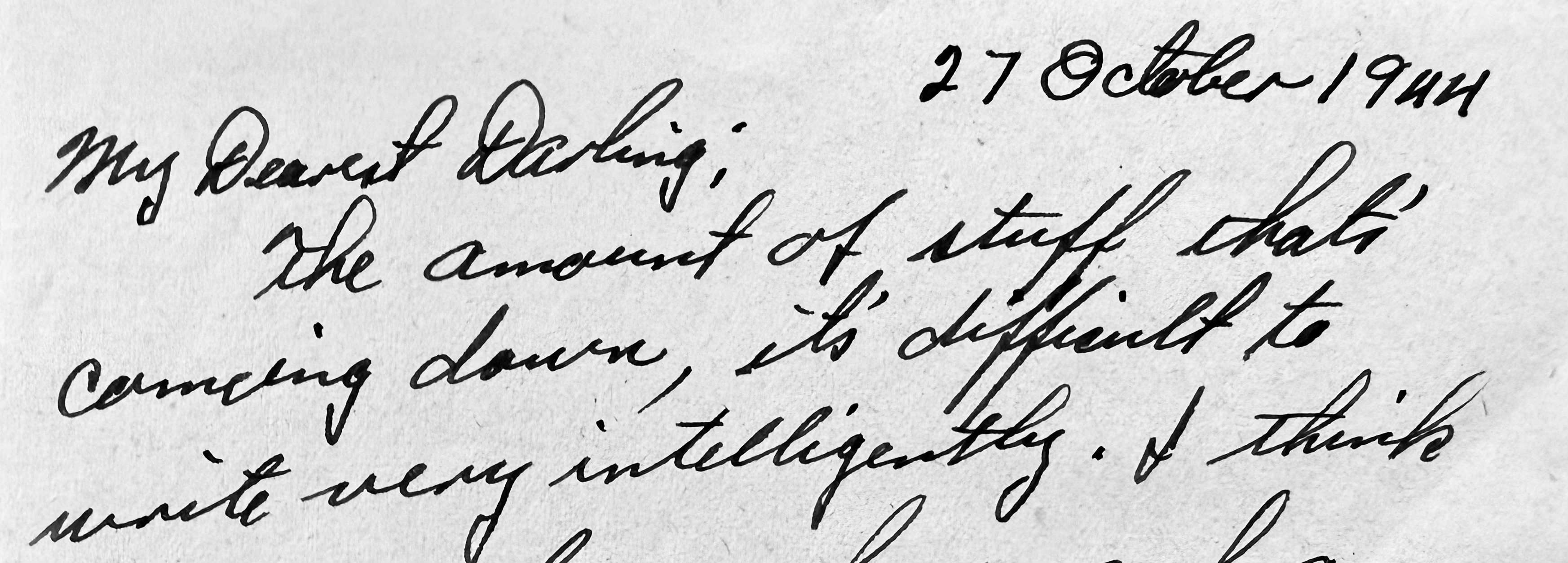
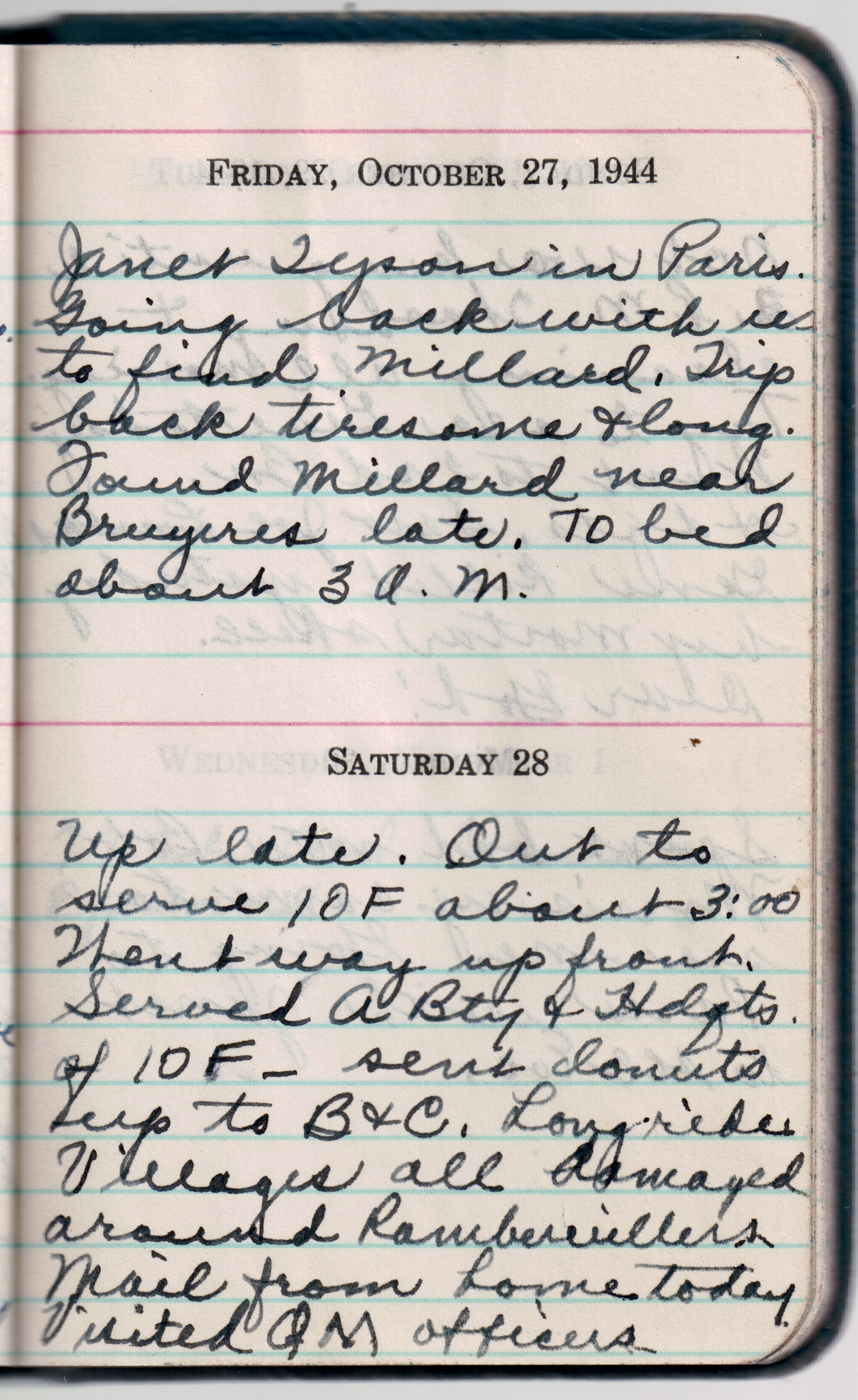
When did Flo receive Gene’s final letters? She saved the ones he wrote on October 24 and 27, but it seems likely she didn’t get them until after he was gone. He died on October 28, killed by a mortar shell. That same day, Flo wrote in her diary, “Mail from home today.” She didn’t mention anything from Gene.

In his last letters, Gene wrote about his army buddies. He worried about his little sister wanting to marry. He dreamed of peace, and of a life with Flo in the Northwest:

“Back there where the country is rugged and beautiful. Where you can breathe fresh, free air; and fish and hunt to your heart’s content. You know honey, a place where we don’t have to sleep in the mud and cold, and where the shrapnel doesn’t buzz around your ears playing the Purple Heart Blues.”

Even in the chaos of war, he tried to stay lighthearted:

“I’m writing on my knees with a candle supplying the light. I hope you are able to read it. My spelling isn’t improving very much; but with the aid of a dictionary I may improve or at least make my writing legible.”

He hoped Flo had managed a trip to Paris, and that she’d seen her sister and brother-in-law stationed there. He looked forward to getting married:

“Honey I haven’t heard from home on the ring situation yet, but I expect to before long. When I do, I shall let you know right away. I’m hoping we can make it so by xmas, if not before.”

But his letters also reflected the danger he was in:

“It’s very difficult to write a letter on one’s knees, as you probably already know. Ducking shrapnel and trying to write just don’t mix. I do manage to wash and brush my teeth most every day.”

“It’s too ‘hot’ for you to be here. I’ve got some real stories to tell you when I see you next—if I’m not too exhausted. You don’t know how close you’ve been to—I hadn’t better tell you.”

Gene’s voice comes through with vivid clarity, even across 80 years and a broken mail system. 

Gene’s letter was posted the day he was killed

That words eventually reached soldiers in the field and their families back home is thanks, in part, to the quiet heroism of the 6888th—who made sure love letters, grief, and hope could still find their way through a war.

Ch. 44: https://mollymartin.blog/2025/08/02/born-in-oregon-buried-in-france/

He Was So Fine

Flo’s fiancé Gene is killed in action

My Mother and Audie Murphy Ch. 42

I’m finding it so very difficult to tell this story. Thinking about war all the time takes a toll on the psyche.

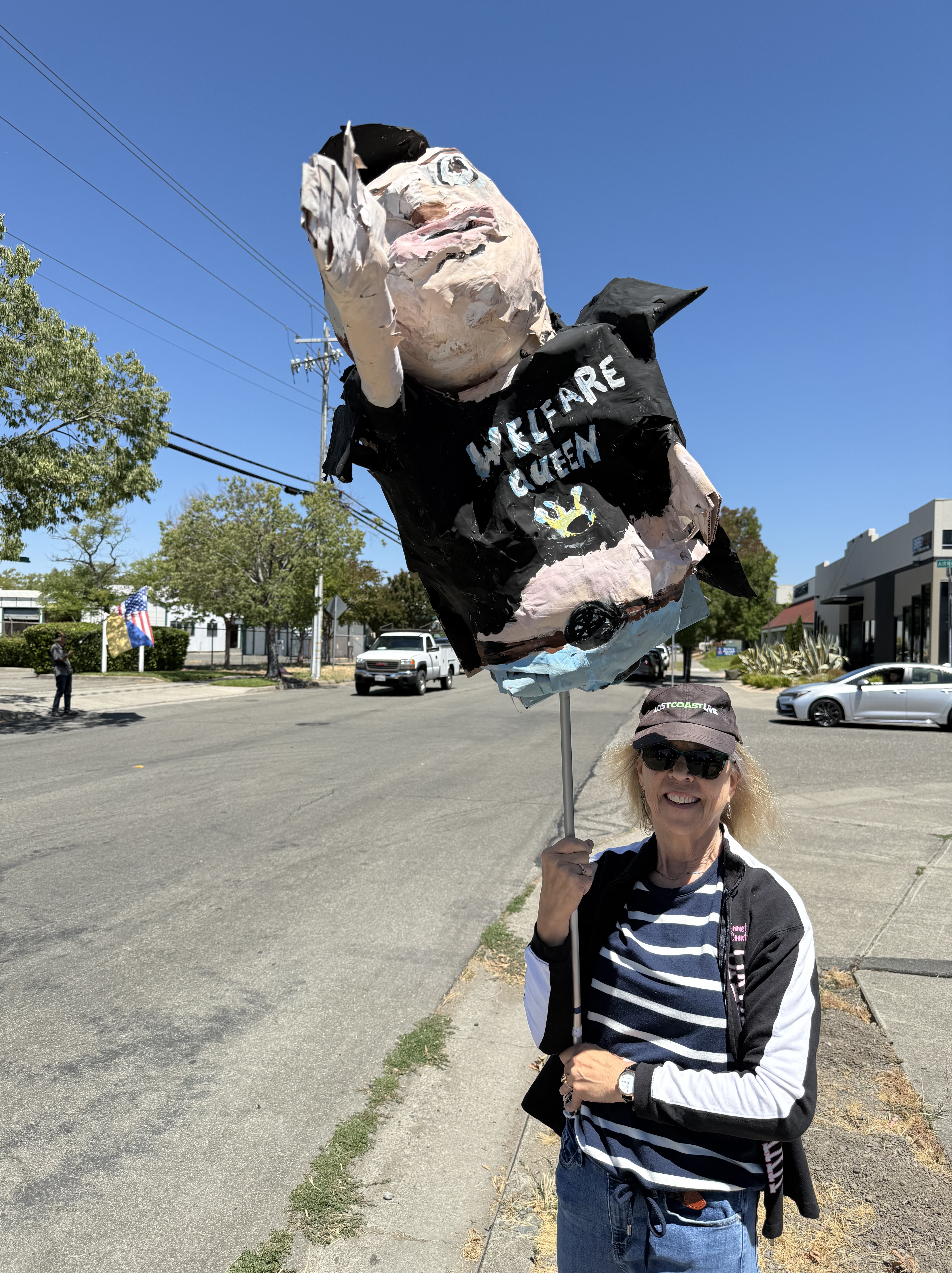
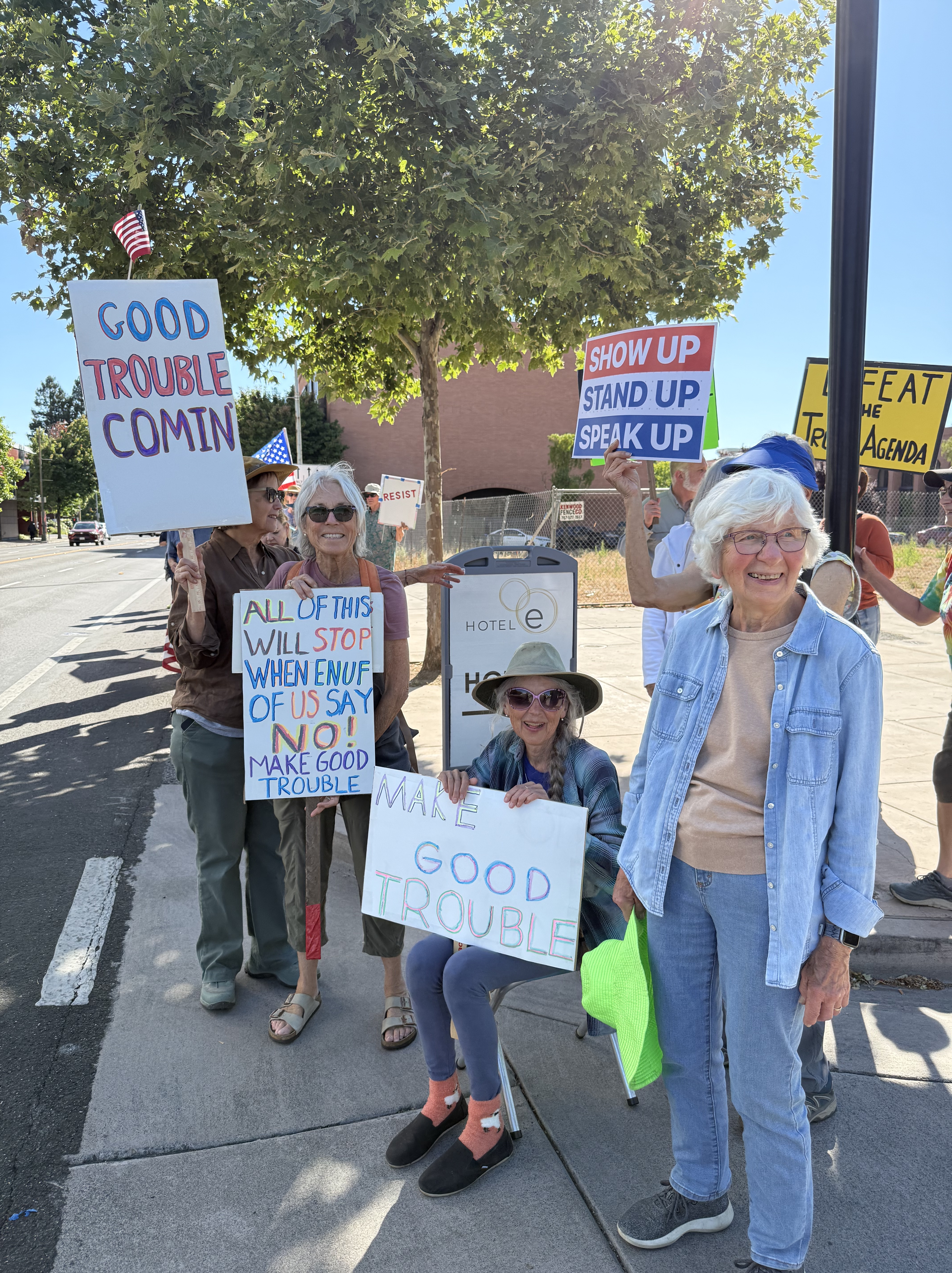
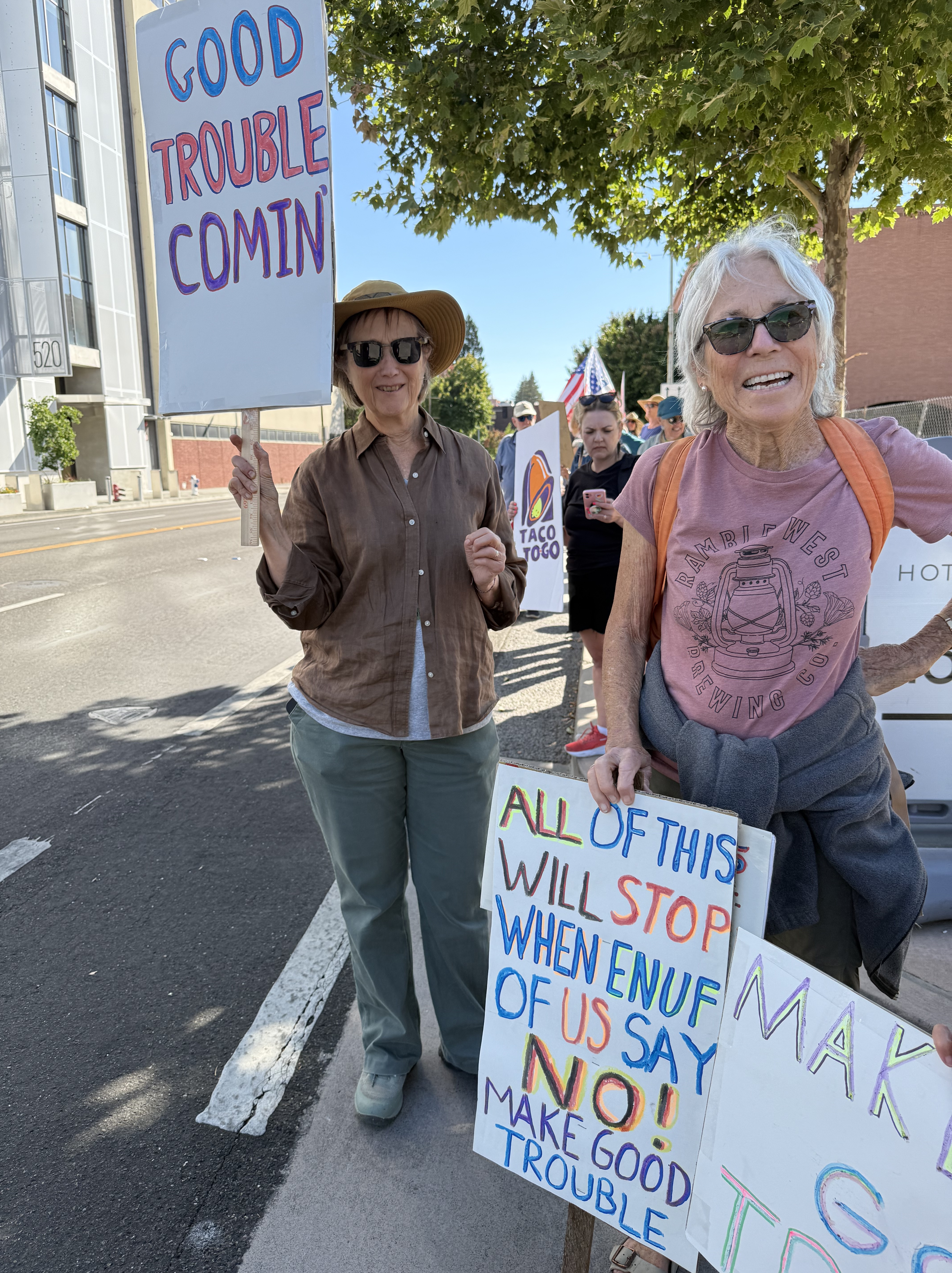
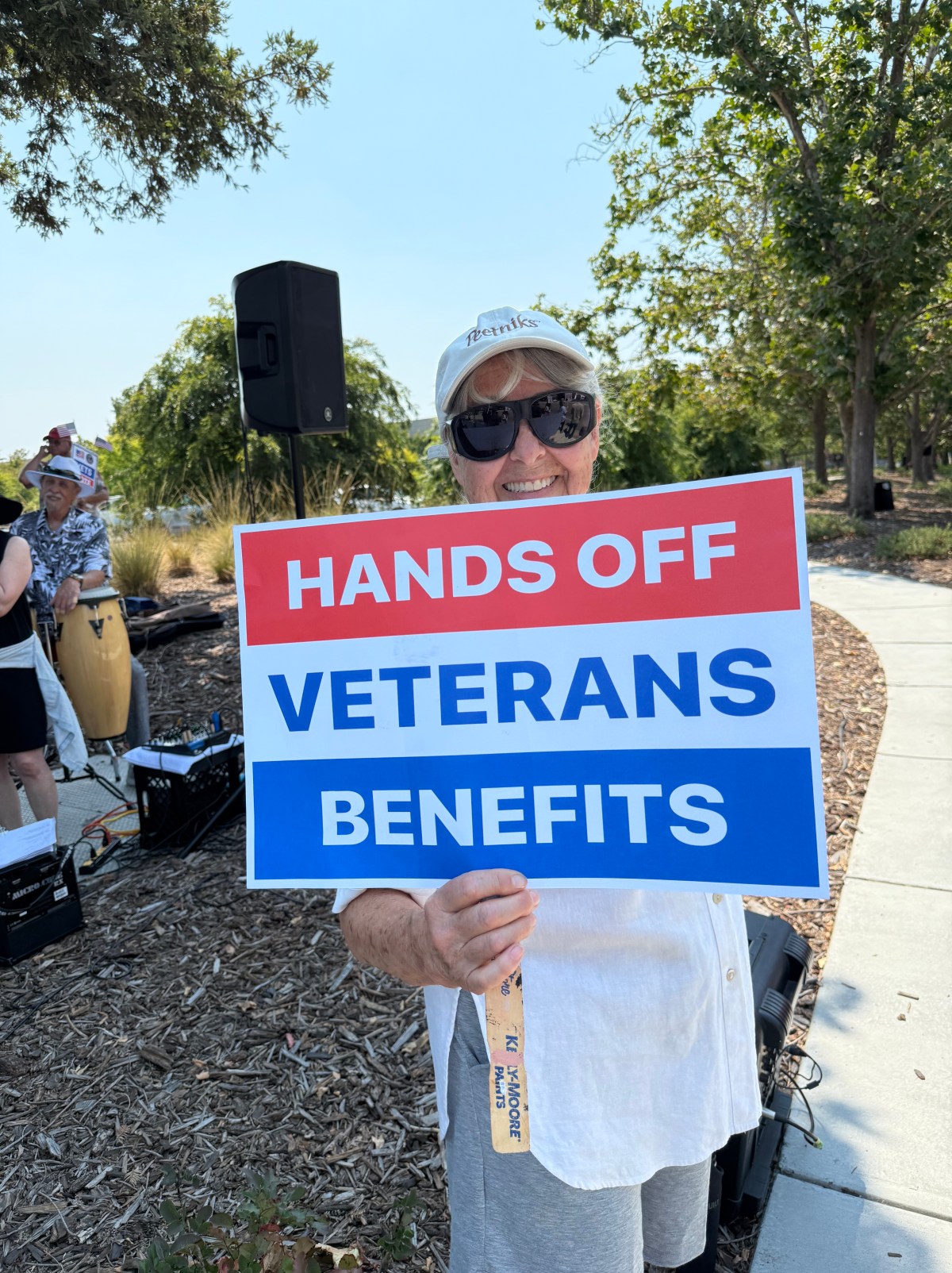
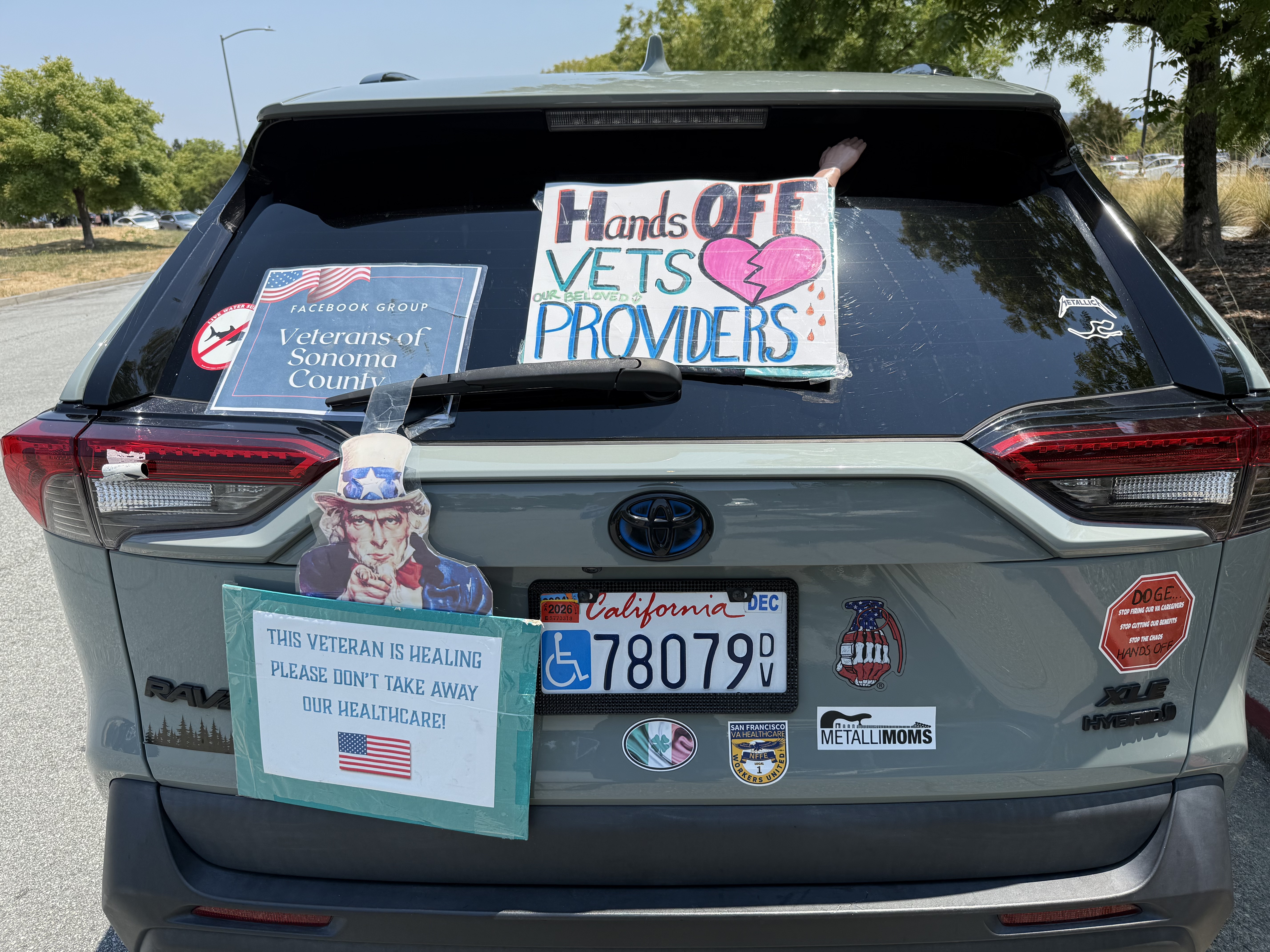
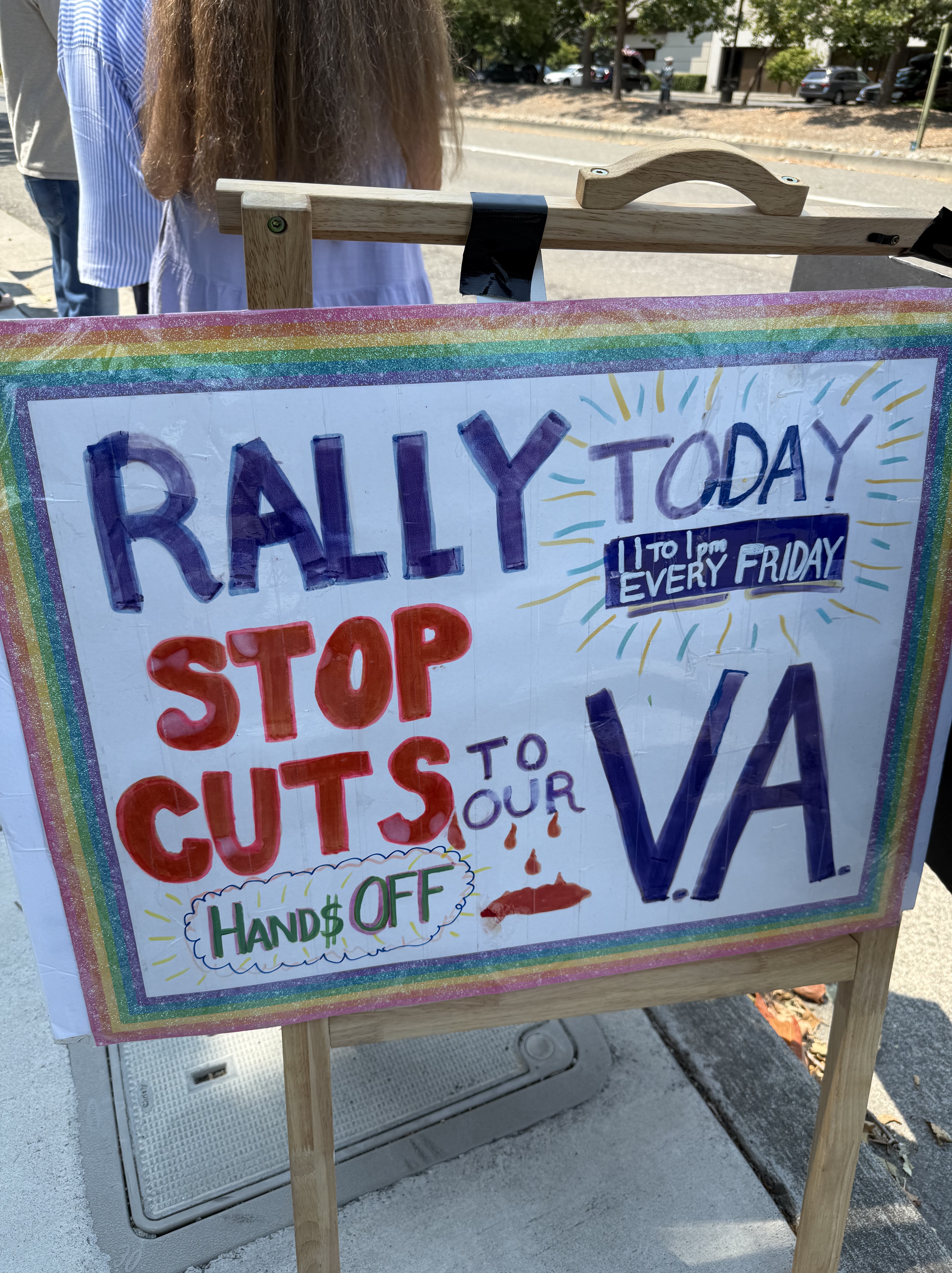
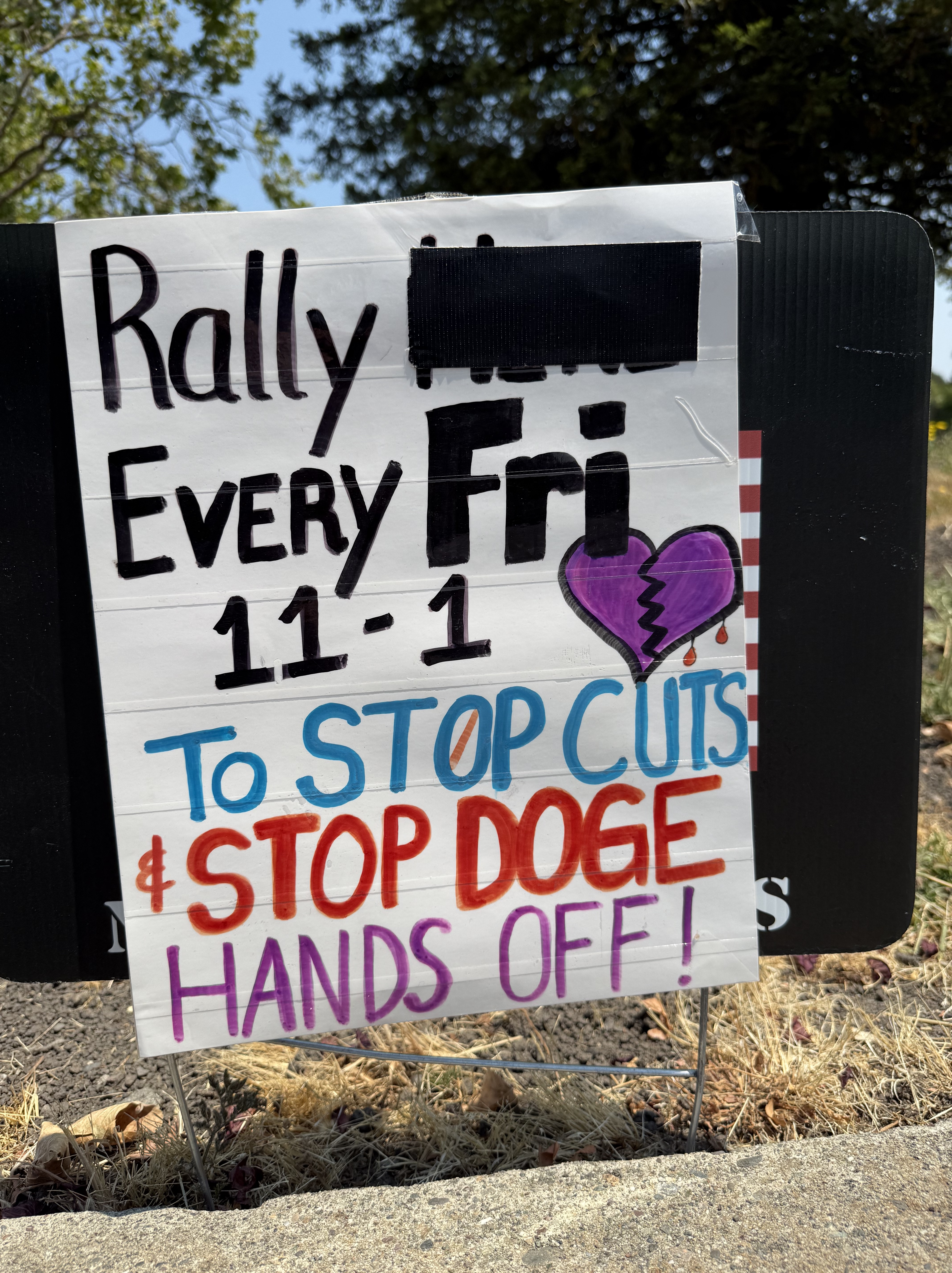
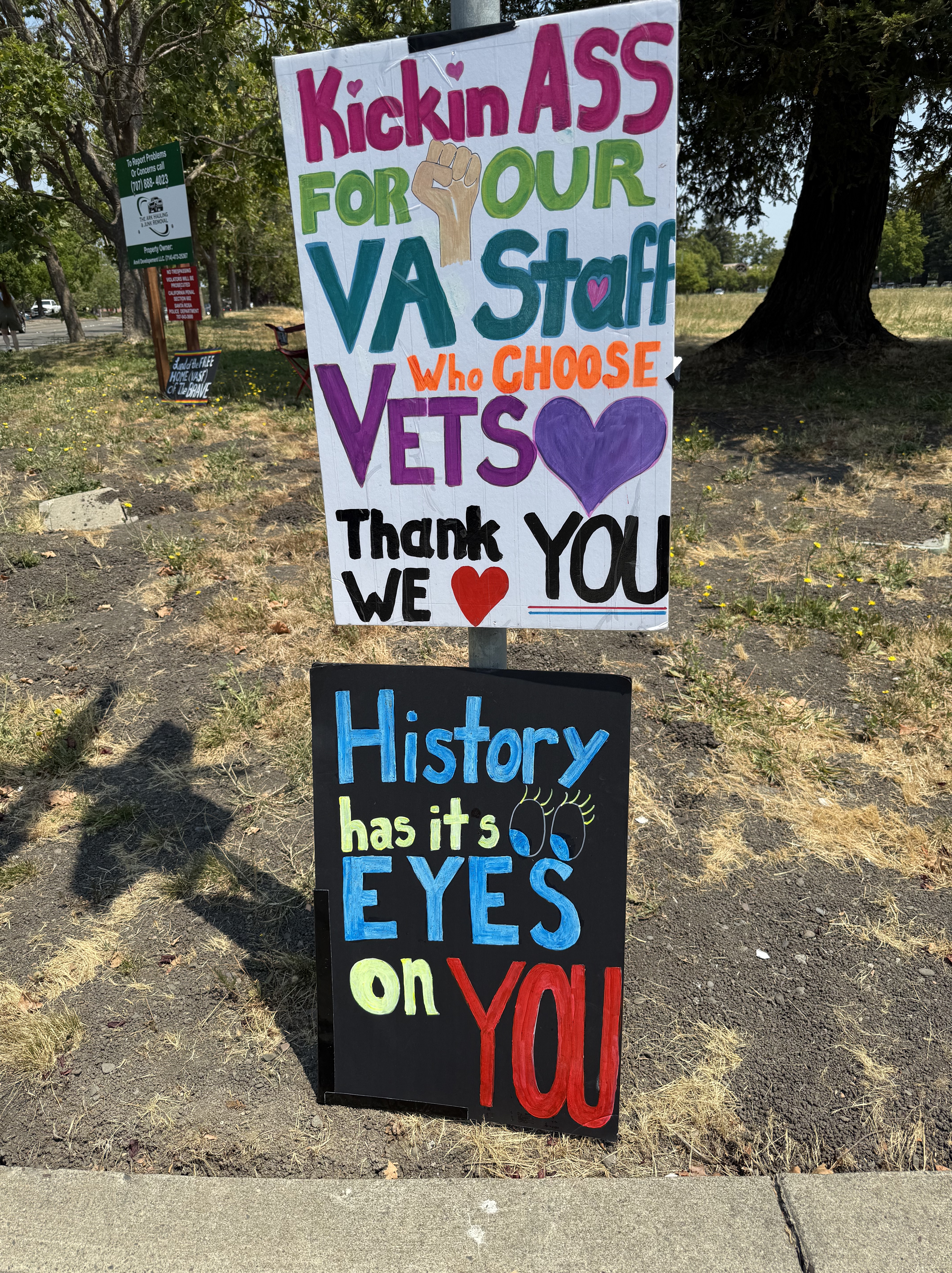
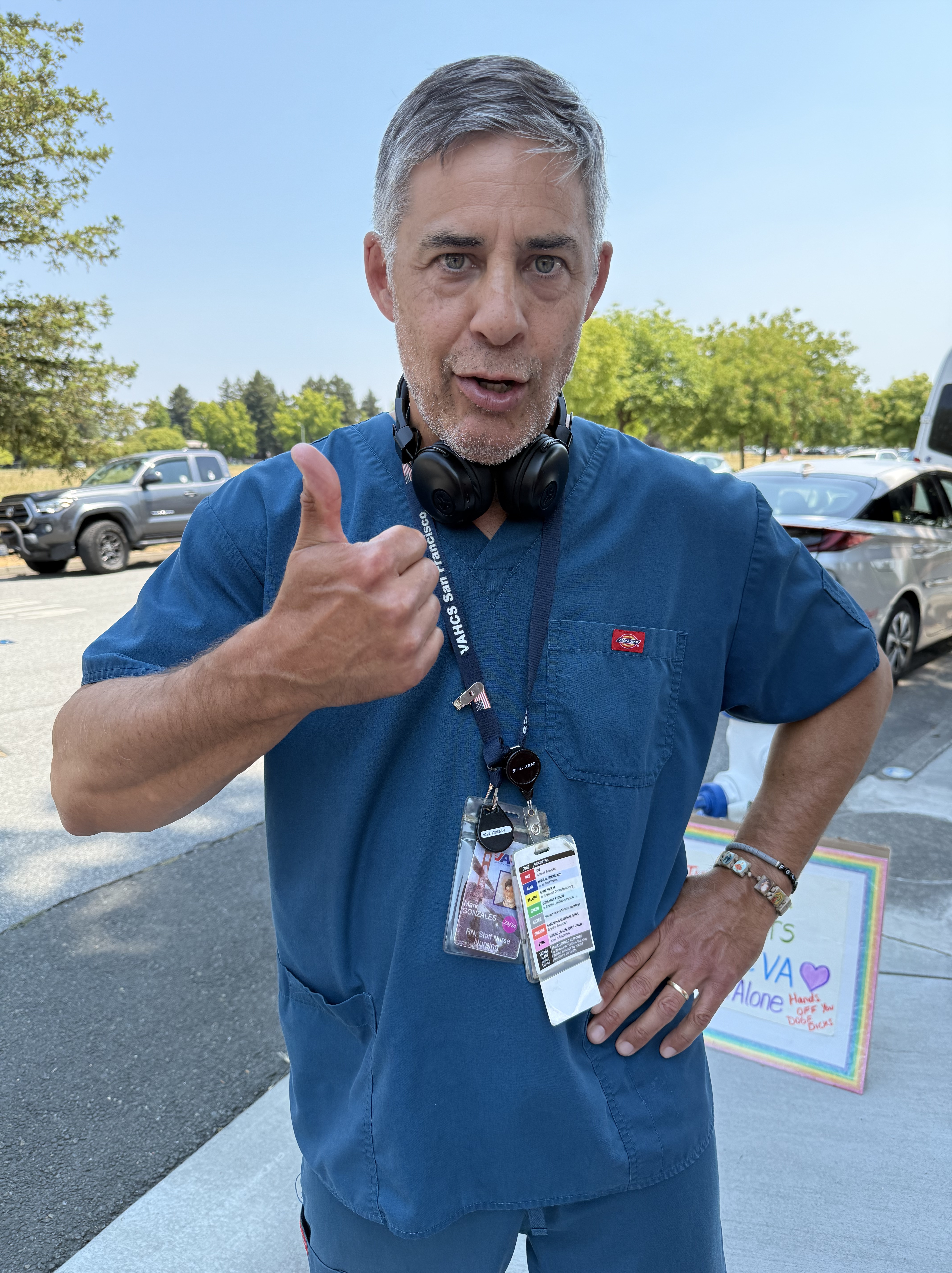
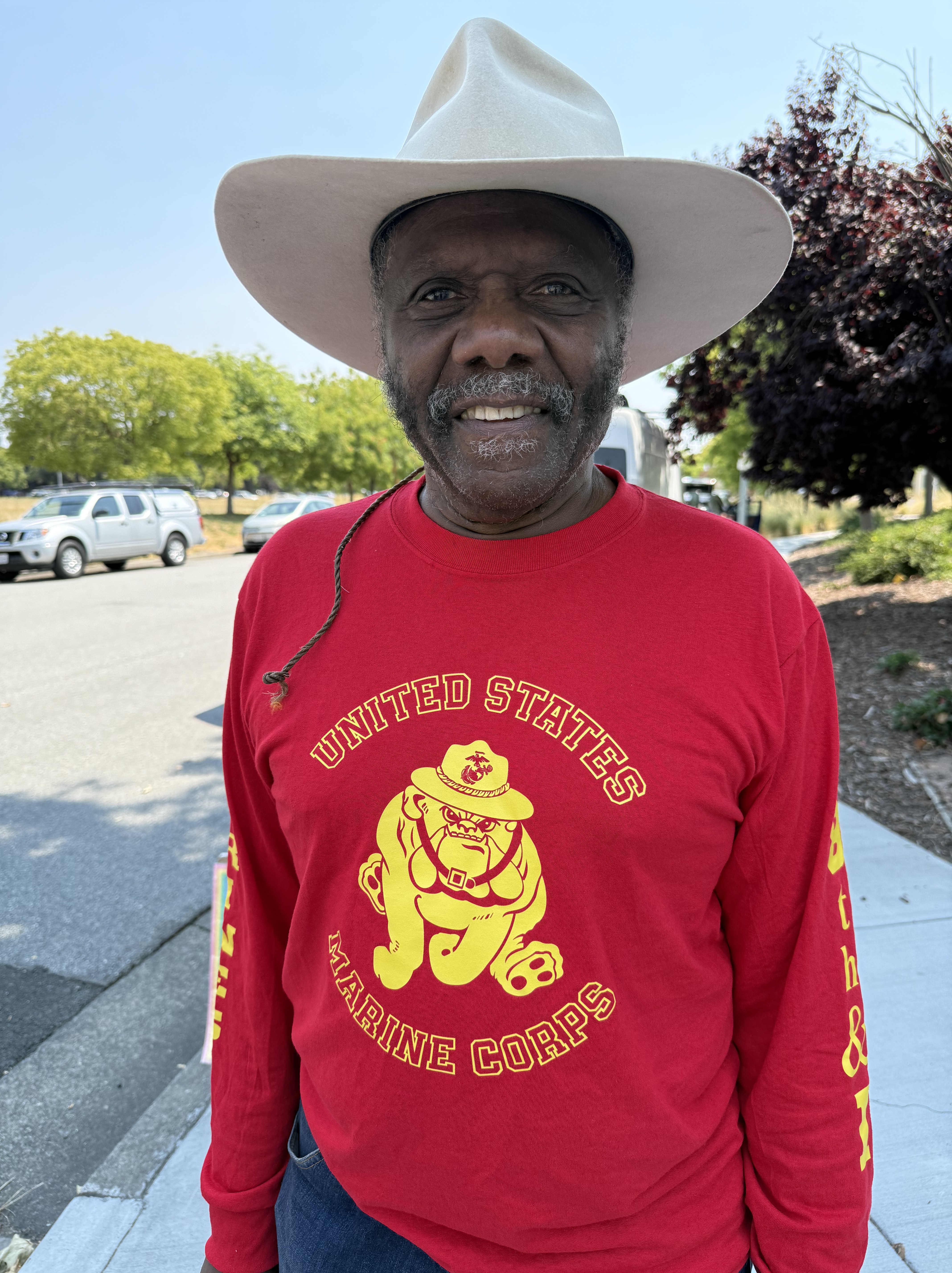
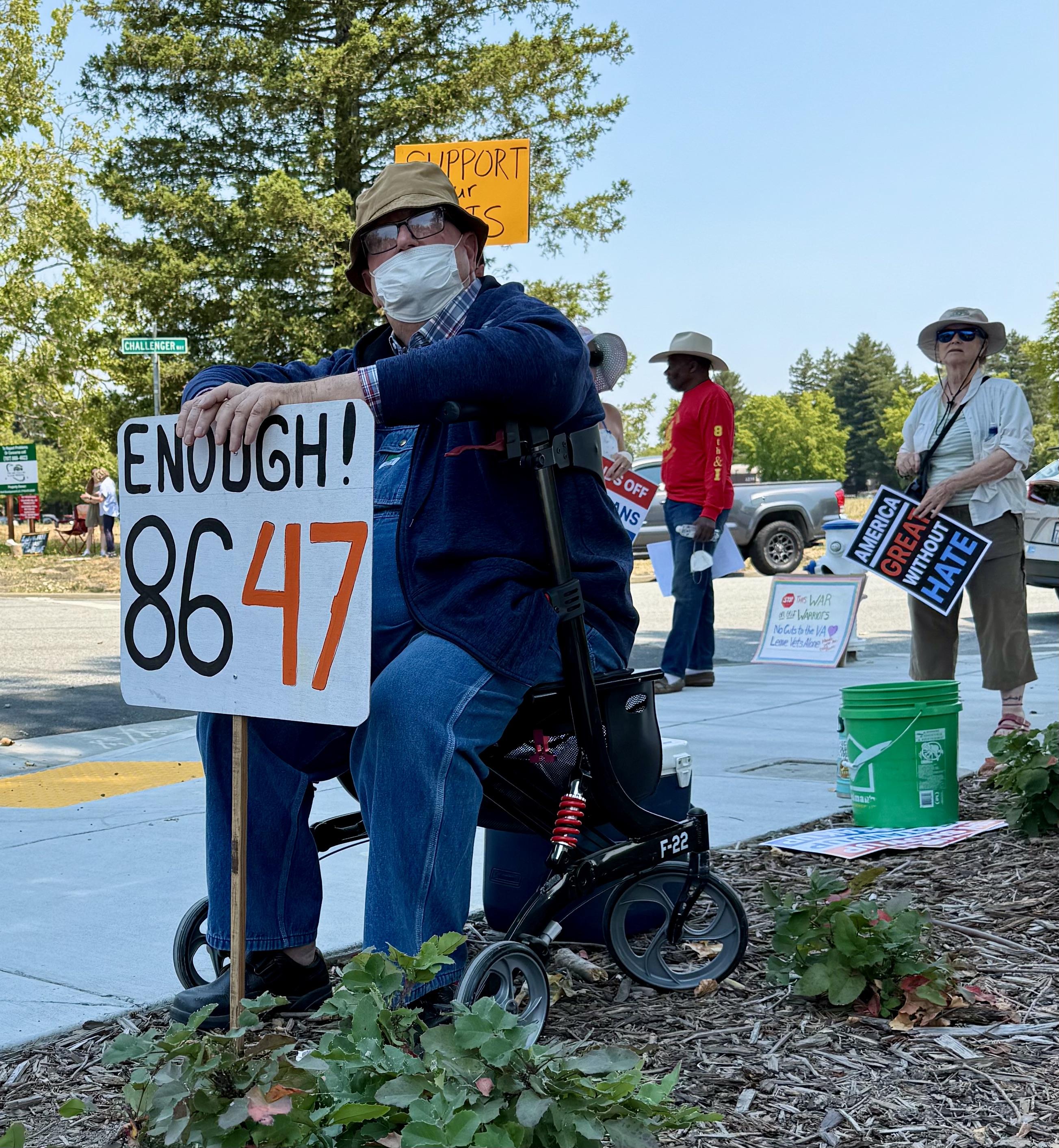
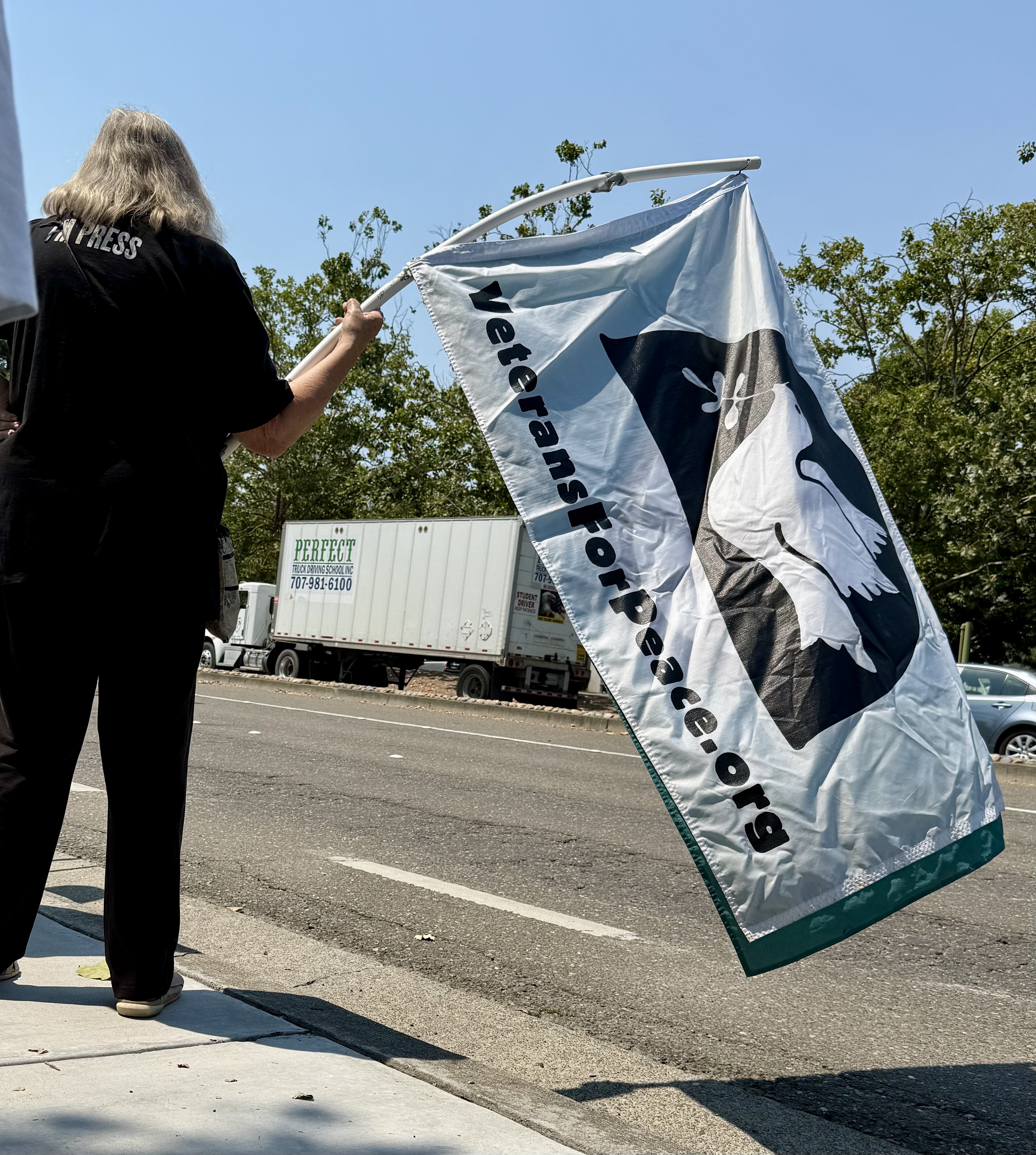
This morning, before sitting down to write, I went to a protest at the local veterans clinic. We were there to demand an end to cuts to the Veterans Administration. Many of the protesters—like the woman who organized it—are vets themselves. There’s always music at these gatherings: sometimes a live band called Good Trouble, sometimes just a boombox. I usually love to dance, to sing along. But lately, the old anti-war songs catch in my throat.

I’m gonna lay down my sword and shield,
Down by the riverside.
I ain’t gonna study war no more.

War! What is it good for? Absolutely nothing.

John Lennon singing Give Peace a Chance.

They all make me cry now, and when you’re crying, it’s hard to sing. We’ve been singing these songs for so damn long. All my adult life, since I was a college student protesting the Vietnam War in the 1960s. Flo protested with me. She was a patriot, but her time in Europe changed her. The war turned her against war.

Flo’s Diary Tells the Story

Flo and her crew had just returned from a brief trip to Paris before getting back to work, serving donuts in remote villages. Still hoping to see her fiancé Gene, Flo went to the Third Battalion headquarters. There, a major gave her the news: Gene had been killed by a mortar shell.

“Dear God!” she wrote in her diary.

Those were among the last words she wrote in it. Except for a few brief notes, the rest of her wartime diary is blank. From here on, I have only the letters she saved, and newspaper clippings pasted into her album, to help me tell the rest of her story.

My grandmother, Gerda, saved the letter Flo wrote to her.

Sun. nite Oct. 29

Dearest Mom–

I need you so! I just learned that Gene was killed yesterday at the front–in fact, I was at his battalion headquarters, a short distance back, this afternoon and the major broke the news to me. I can’t believe it; I just saw him a few days ago–before we left for Paris–and everything seemed wonderful. He was hit by a mortar shell and died very quickly. Oh, Mom, I loved him so much–he was so wonderful to me–and so attractive and fine. He was his mother’s favorite and the family “mainstay”–it will break her heart–and mine too. Right now I want to come home and see you–that would help. I had so much faith that this time, things would work out and I am so sure he was the “right” person. I’ve prayed for him and his safety, but war is such an evil thing, prayers don’t help much, I’m afraid.
I’m trying very hard to believe in all the things you taught me, but it certainly is hard. Perhaps now I realize, a little, how you felt when Daddy died, though it isn’t quite the same. Gene had sent home for rings for me and wanted so much to get married and have children–like all these men over here who are fighting and dying every day.

I wish there were a church to go to around here–it would help me, I think. Funny how that is what you need when these things happen. Everything is blank and black ahead right now and the shock has been terrific. Of course it will wear off and I will accept it, but it is very, very hard. I didn’t realize how much he meant until I heard the tragic news, but I am glad we had so many good times and that I made him happy for a few months. You would have loved him, Mom; he was so big and handsome and good to everyone. His boys are heartbroken–the whole battalion was shocked. I have so many friends among the 36th engineers and they are wonderful to me. It doesn’t bring Gene back, tho, and I can’t feel much of anything.

I may go up and see Eve again for a few days; it will help to see her–she was so nice to us girls when we were there.

Am glad you finally got my letters, Mom; it was worrying me that you didn’t hear, but mail service has been perfectly terrible. I hope they all catch up with you soon. Can’t write anymore right now. I’ll try to be brave. Pray for me, Mom. 

Love, Florence

Mon. A.M. Forgot to tell you in the excitement that I ran into Janet Tyson in Paris! She drove back with us and we took her to her husband’s camp–his division is right with ours. She dropped by this morning and talked me into going back to Paris for a few days to be with her and Eve. I don’t know what is best, but I’m on my way there and may feel better.

I read the second chapter of Timothy and thought of Gene where it says “I have fought the good fight”–he certainly did! I am trying to draw on those “inner resources” but it is so hard and I shall miss him so much. Write me. 

All my love, Florence

Susan Jenson remembered her mother Janet saying, “Flo, like the rest of them, suffered loss. So sad to finally find Gene—only to lose him.”

Ch. 43: https://mollymartin.blog/2025/07/27/black-women-save-the-us-army/

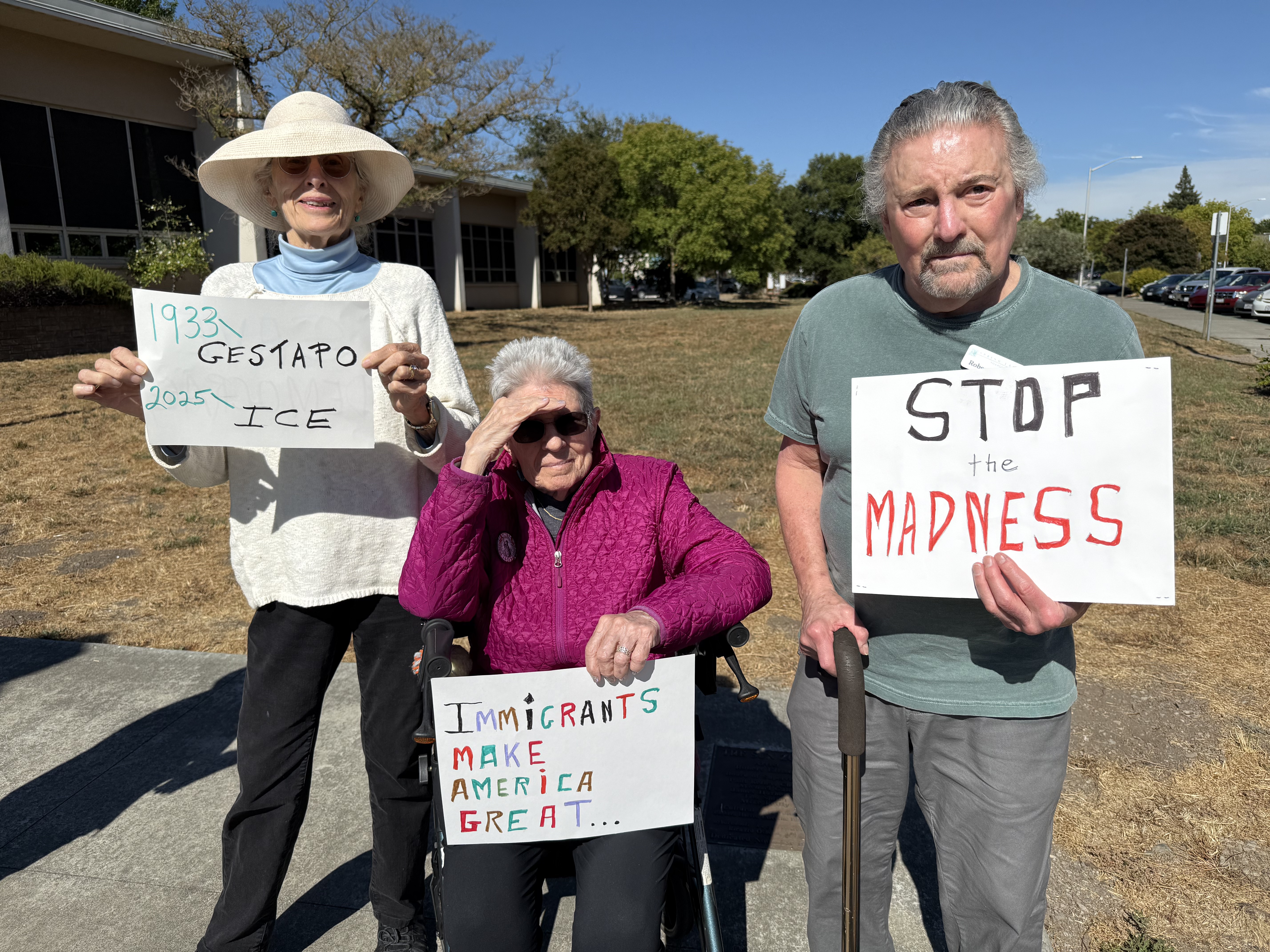
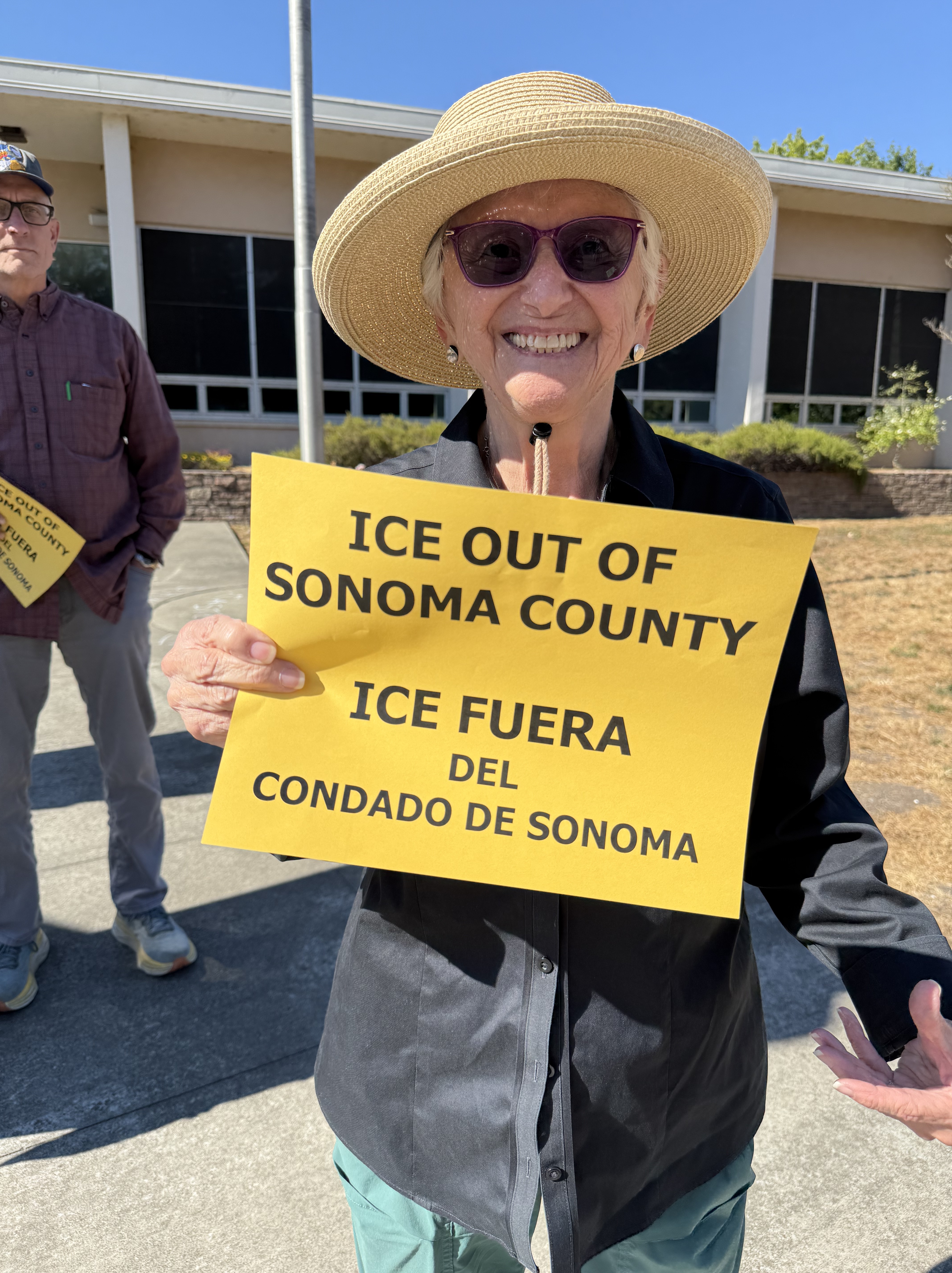
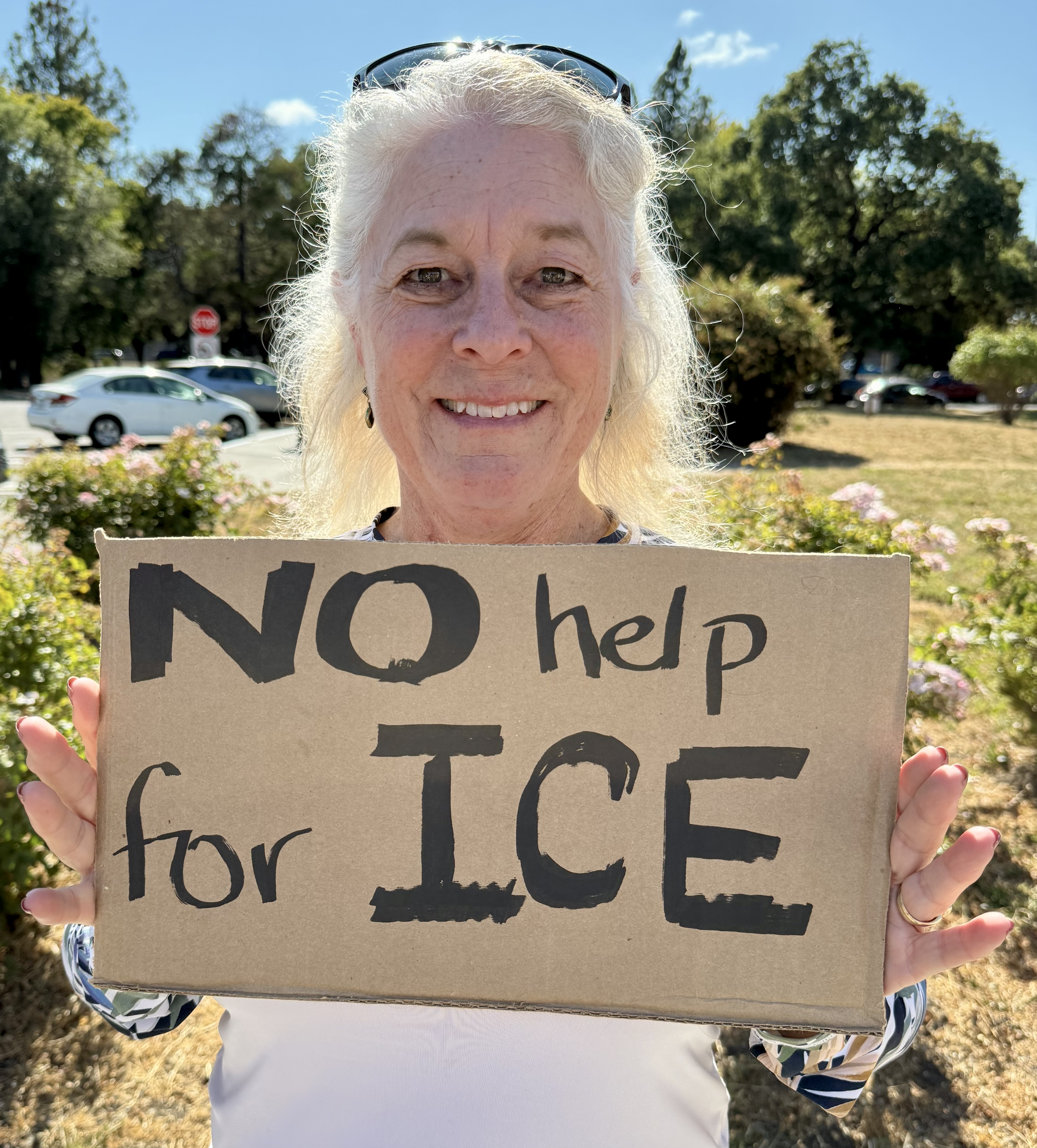
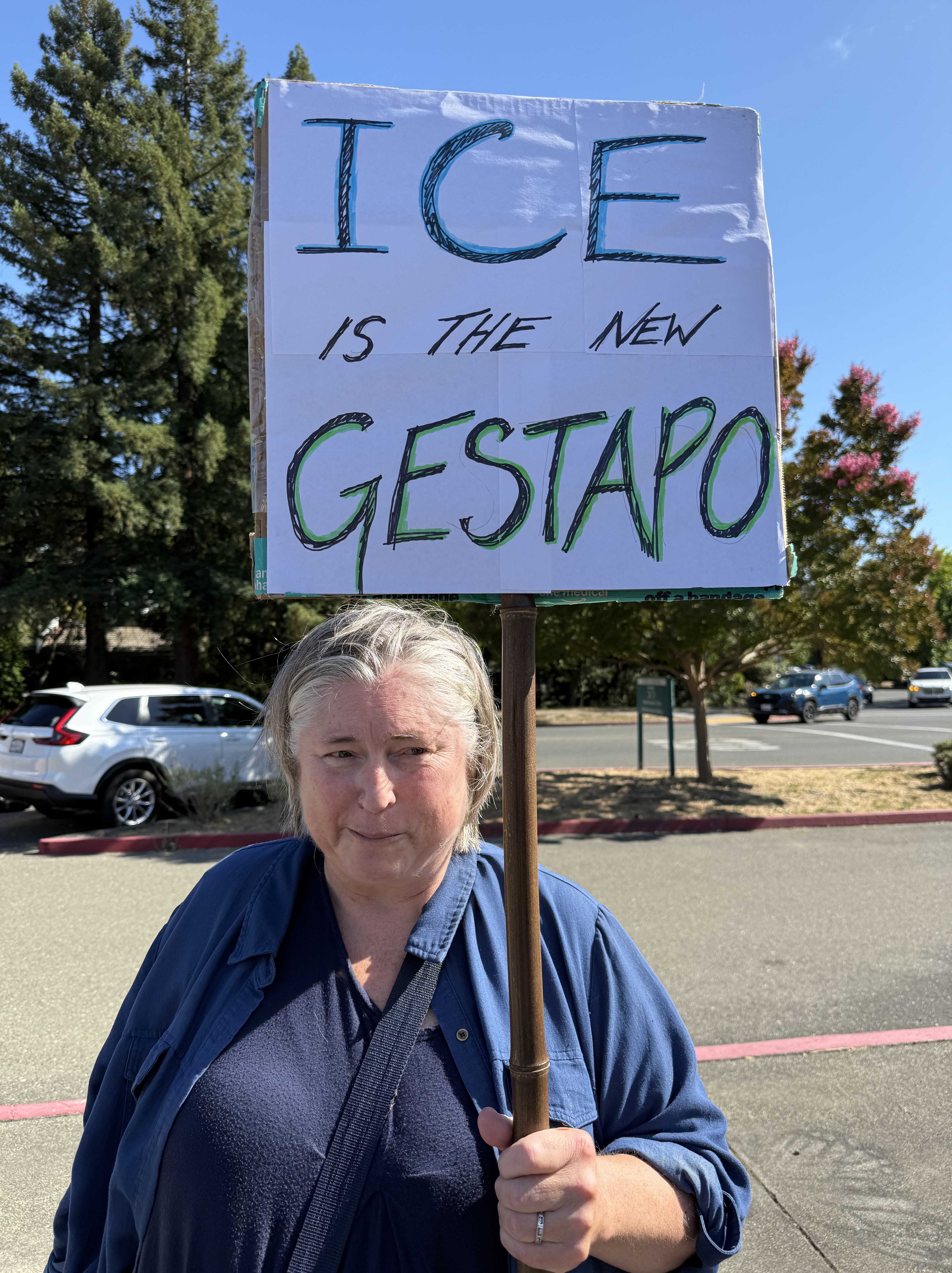
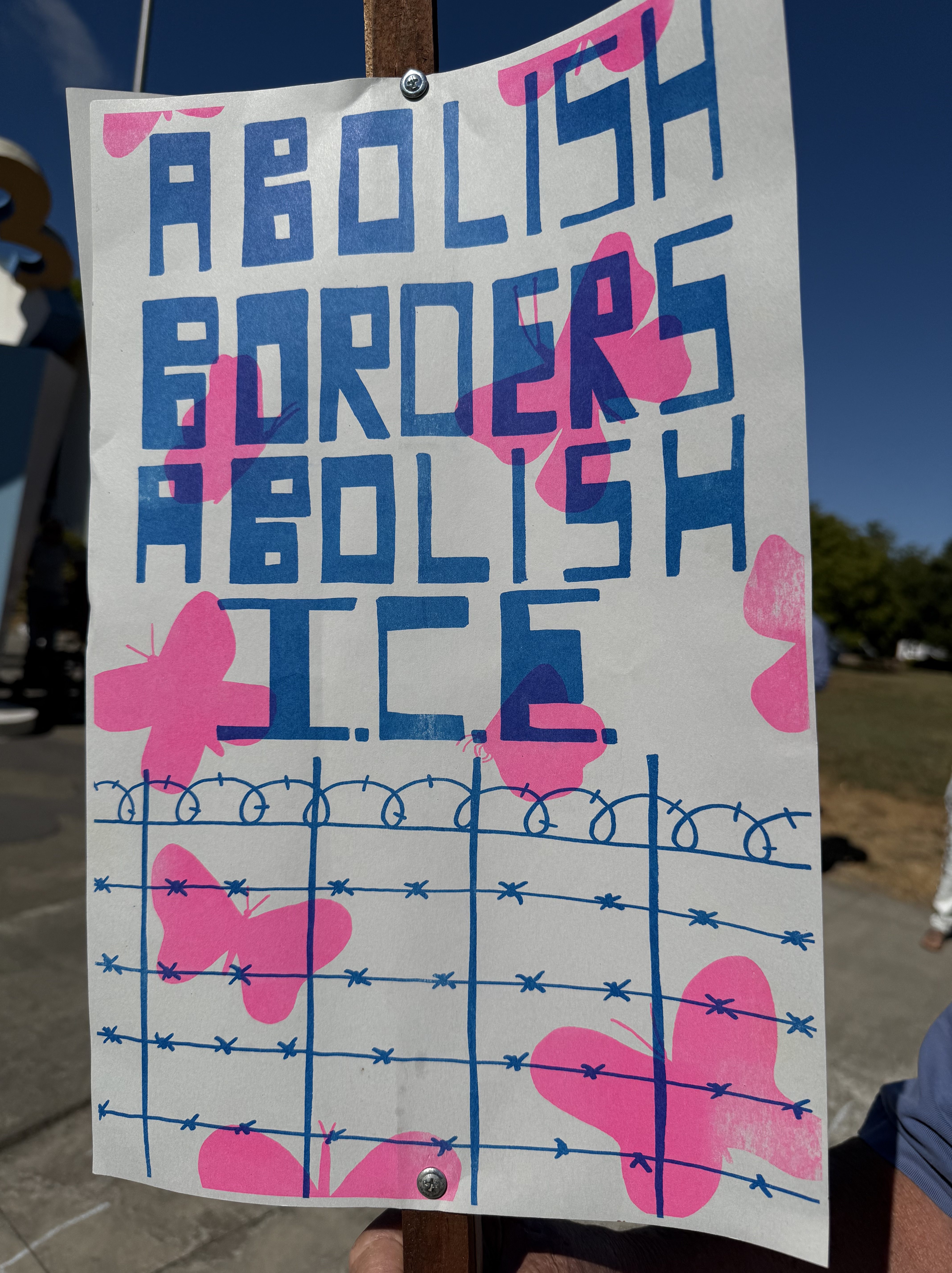
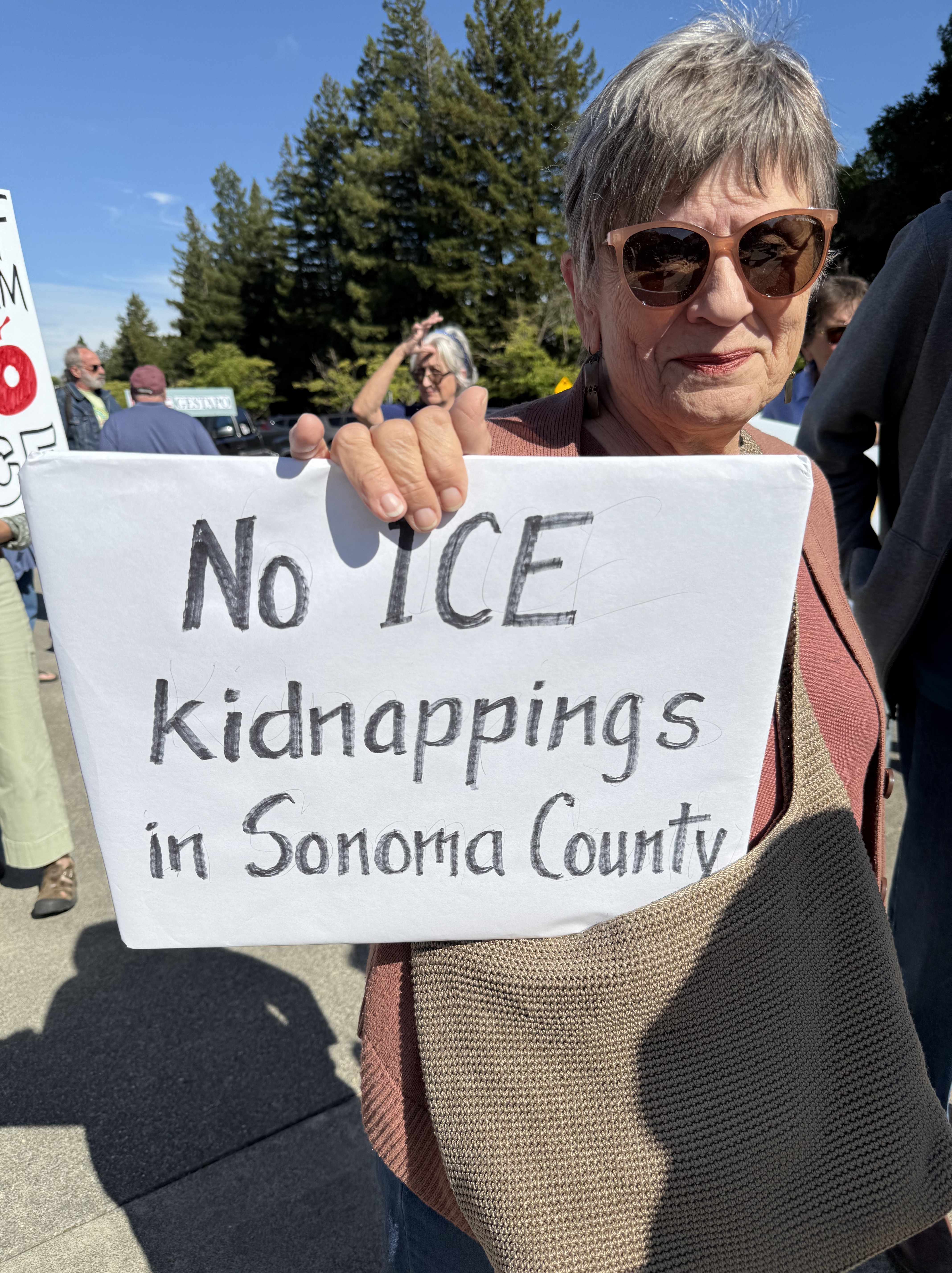
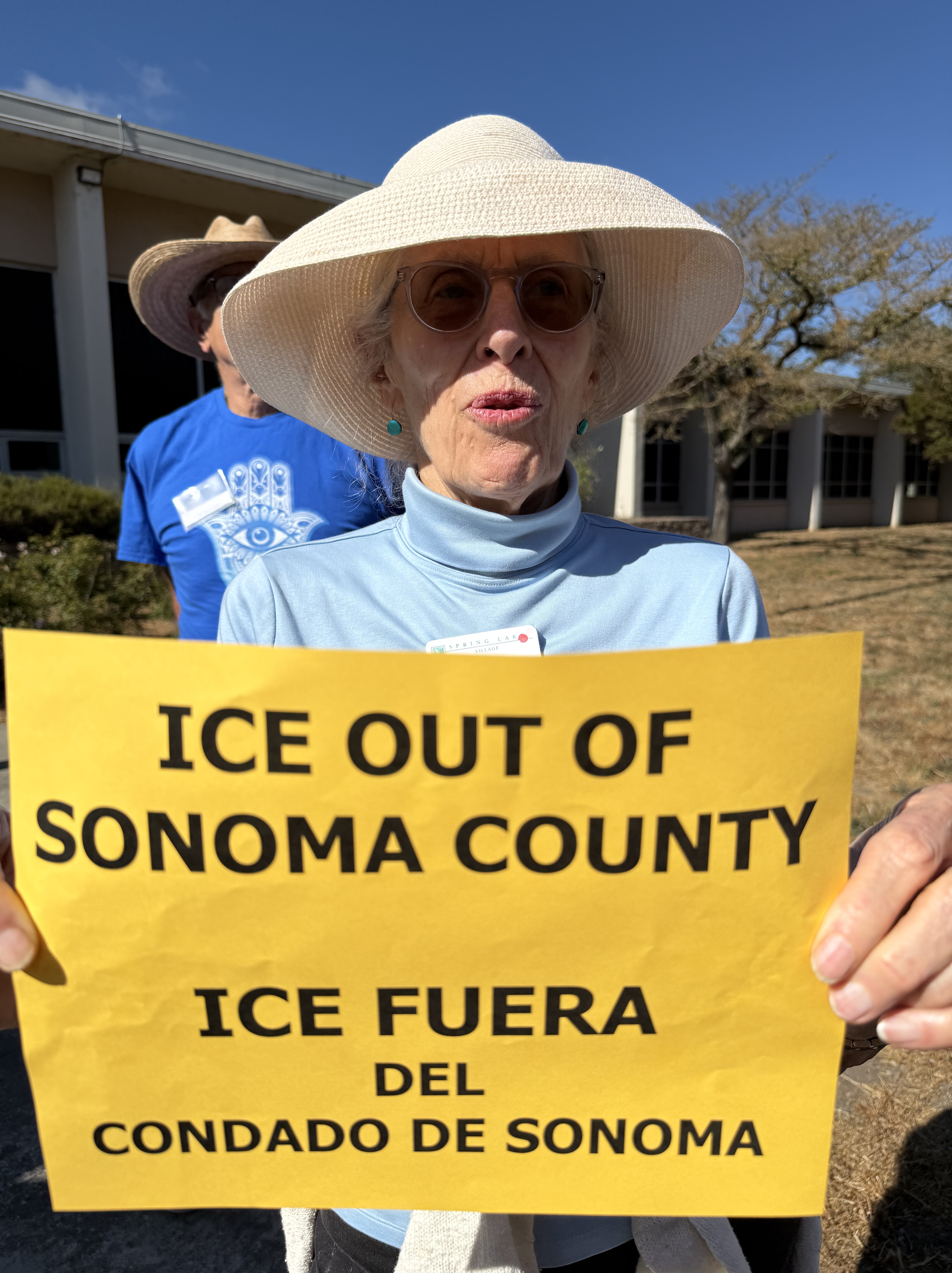
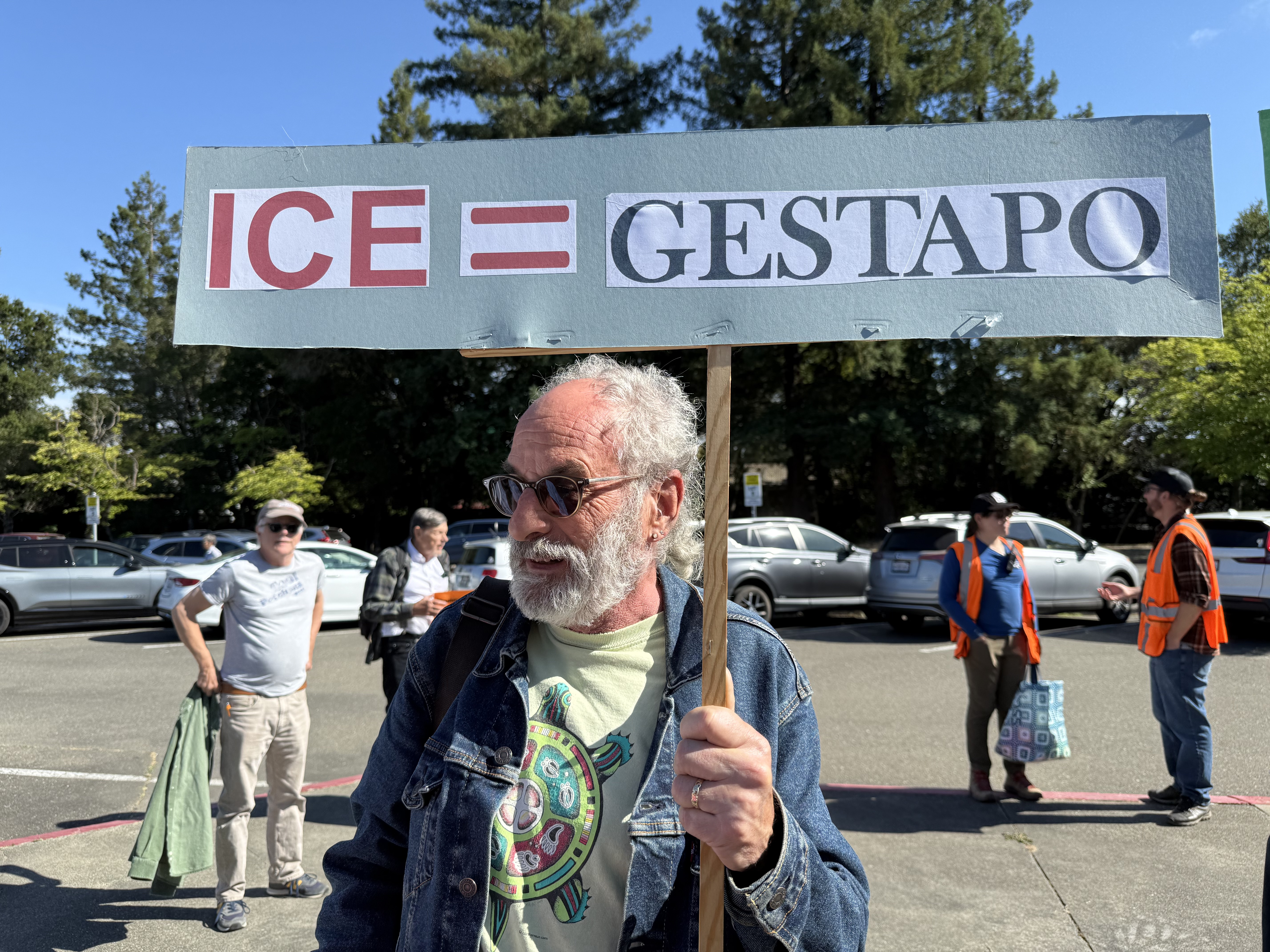
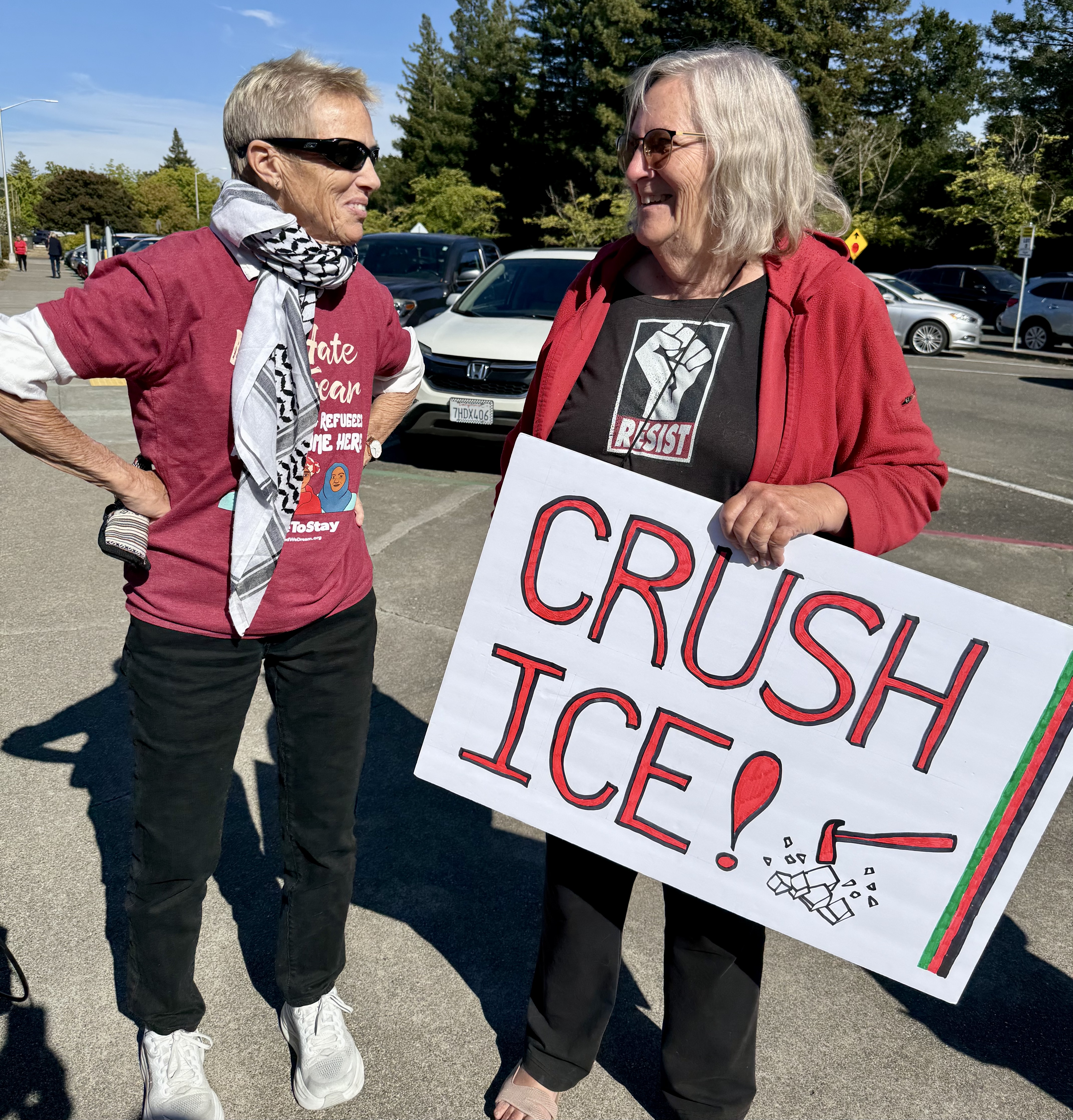
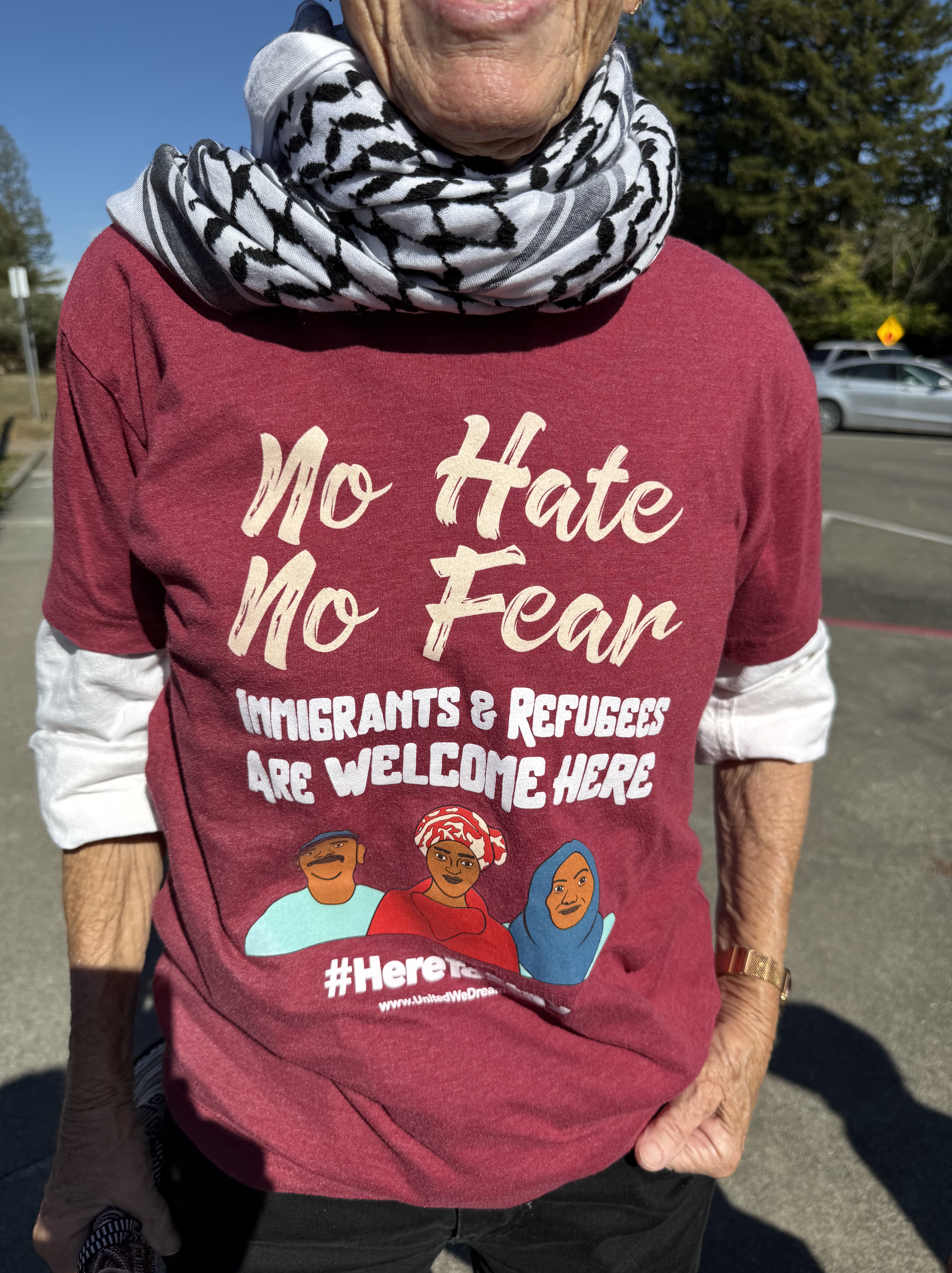
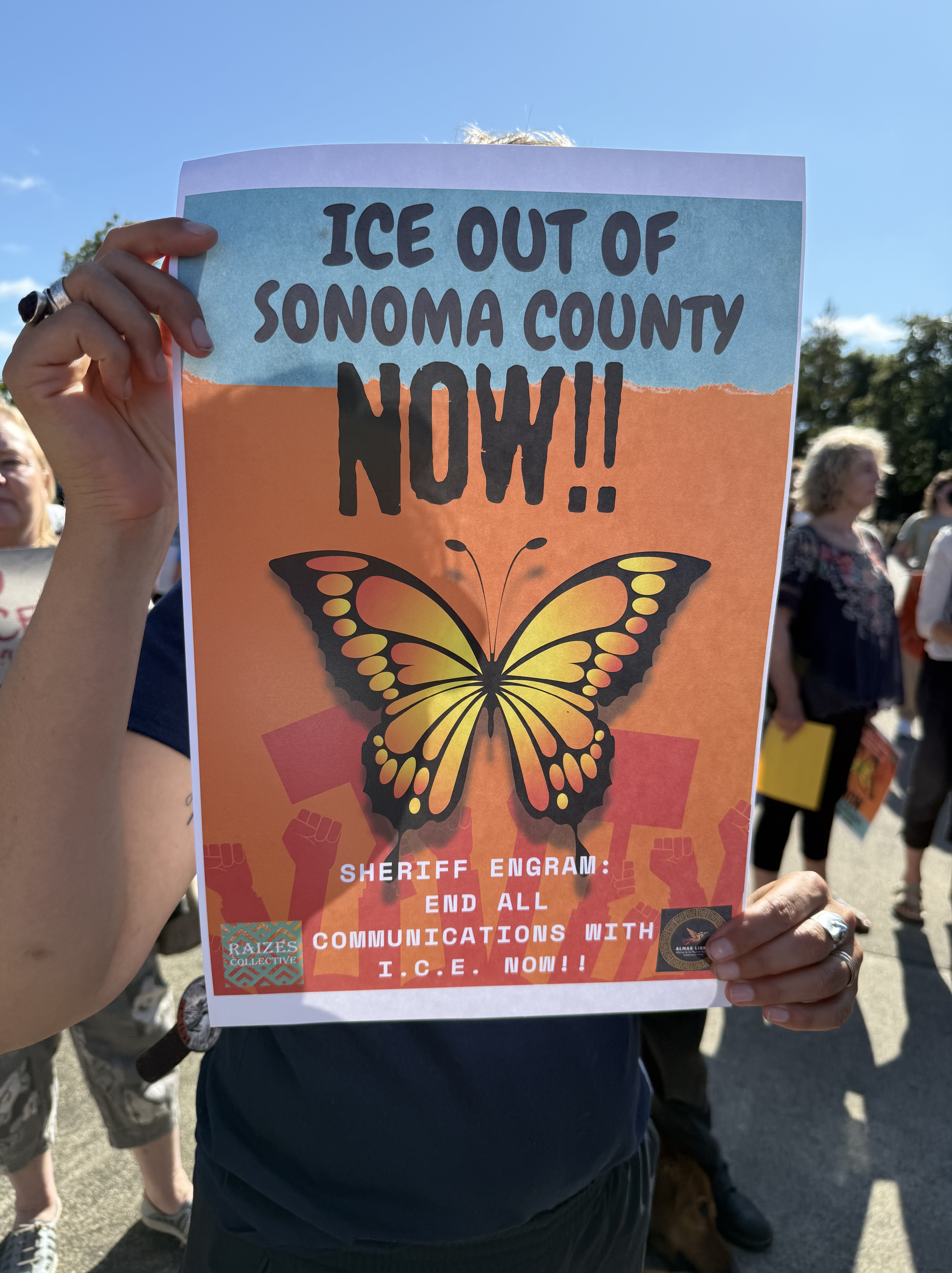
No ICE in Sonoma County

Hundreds Protest Sheriff’s Cooperation

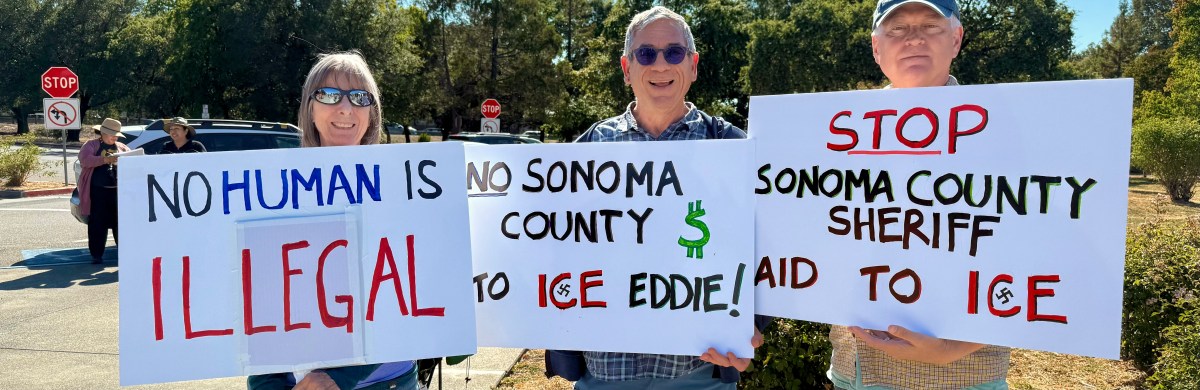
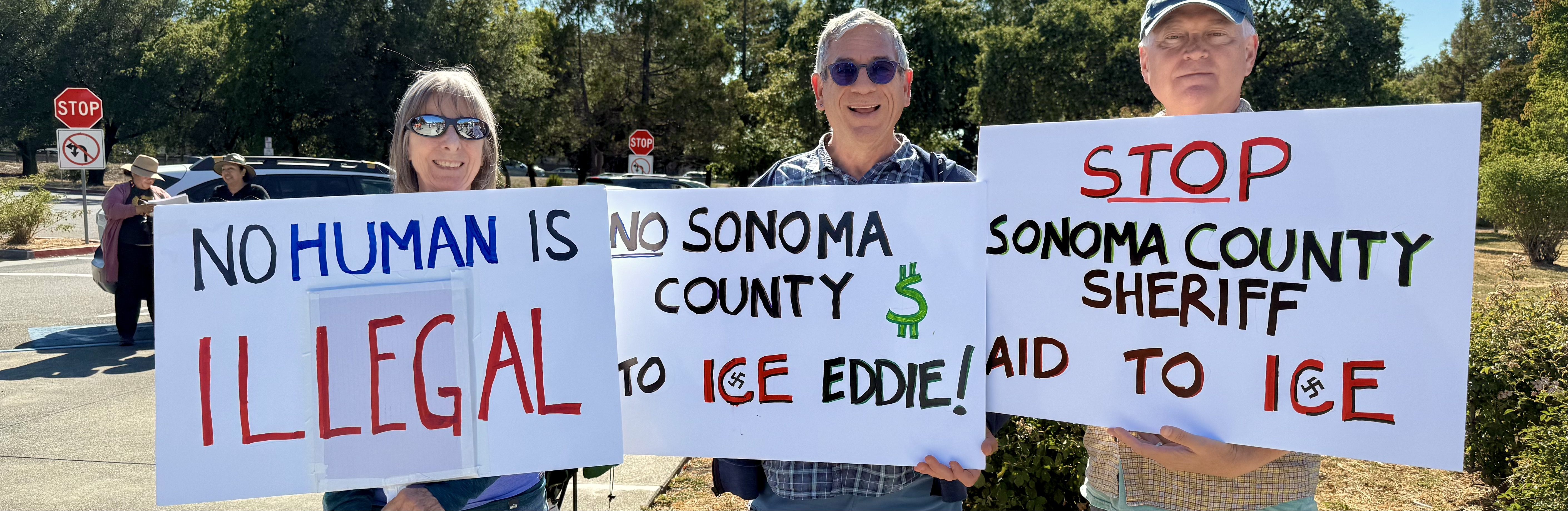
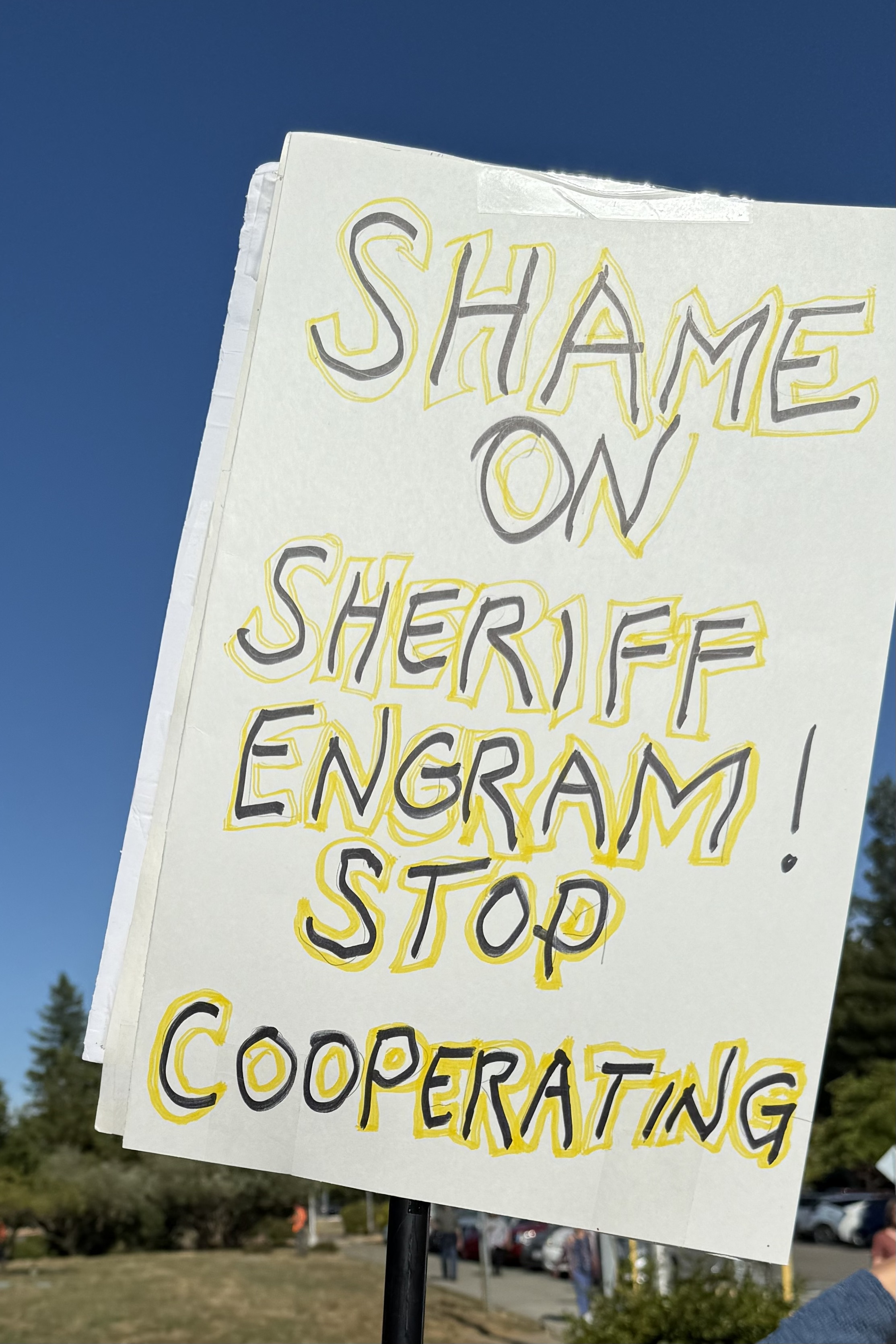
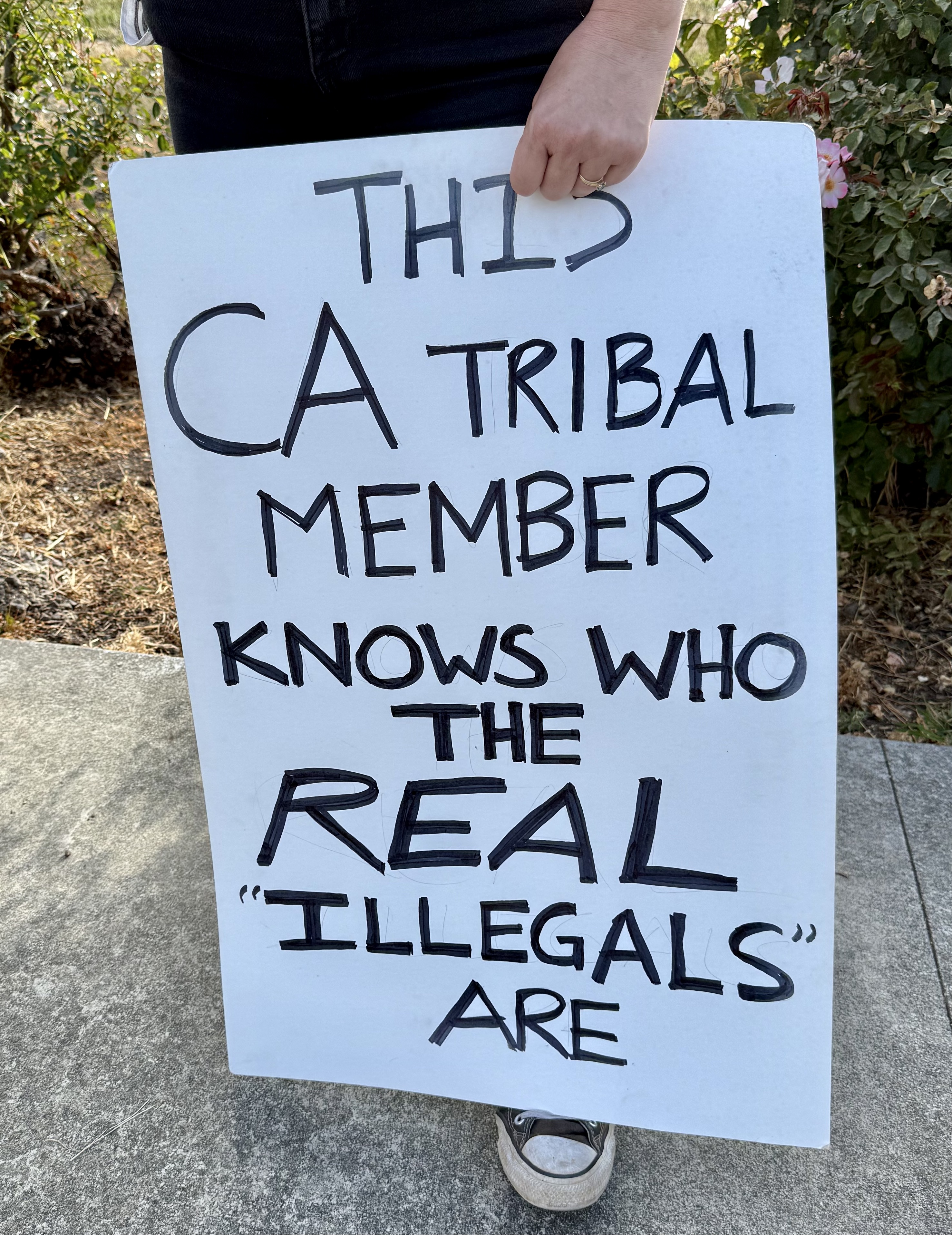
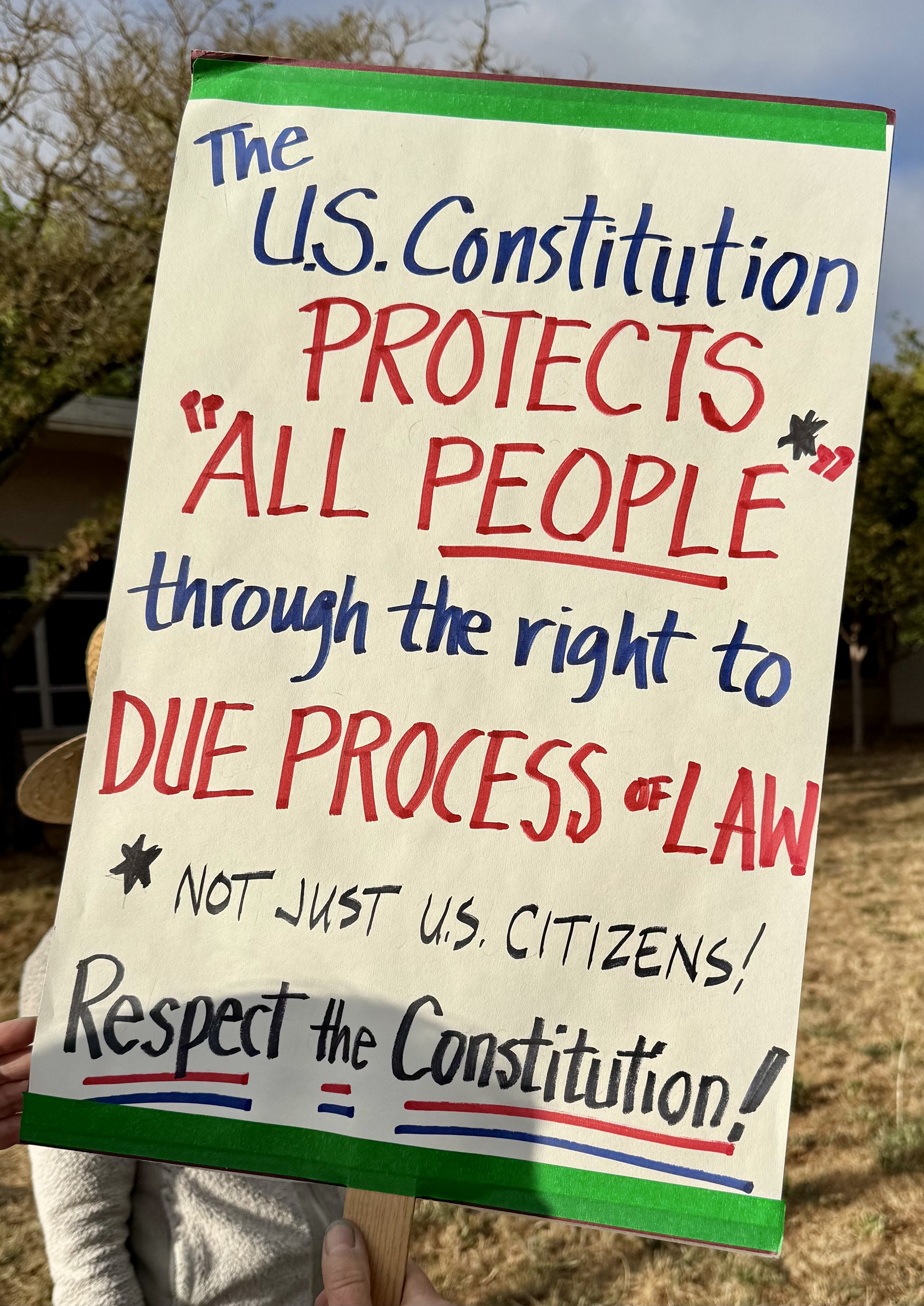
California has a law that requires sheriffs to explain themselves to us citizens. The California TRUTH Act (transparent review of unjust transfers and holds act) mandates a forum to give us details of the sheriff’s relationship with ICE.

Under state law no sheriff is required to cooperate with ICE. Yet Sonoma County sheriff Eddie Engram continues to provide information about individuals in his custody to ICE.

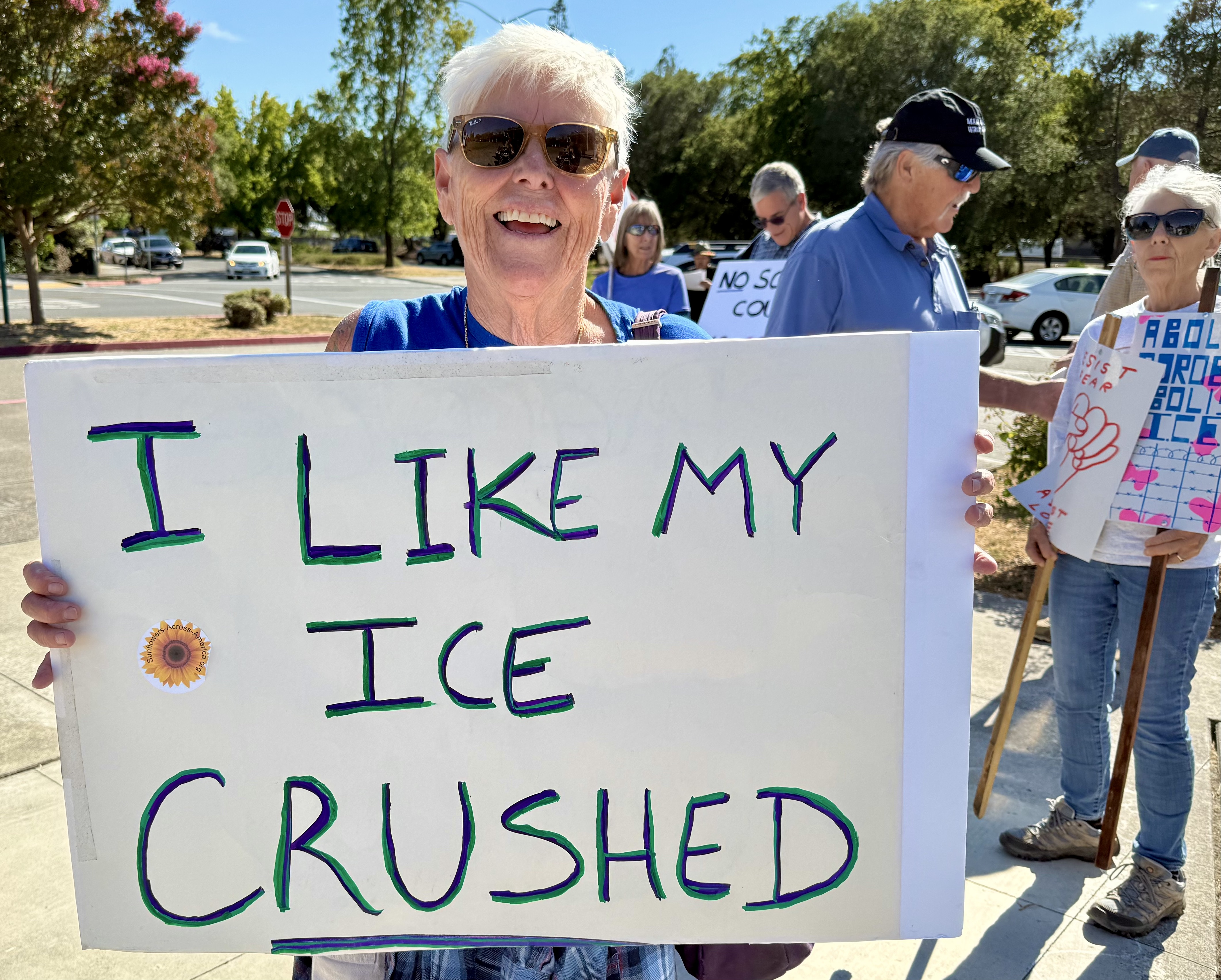
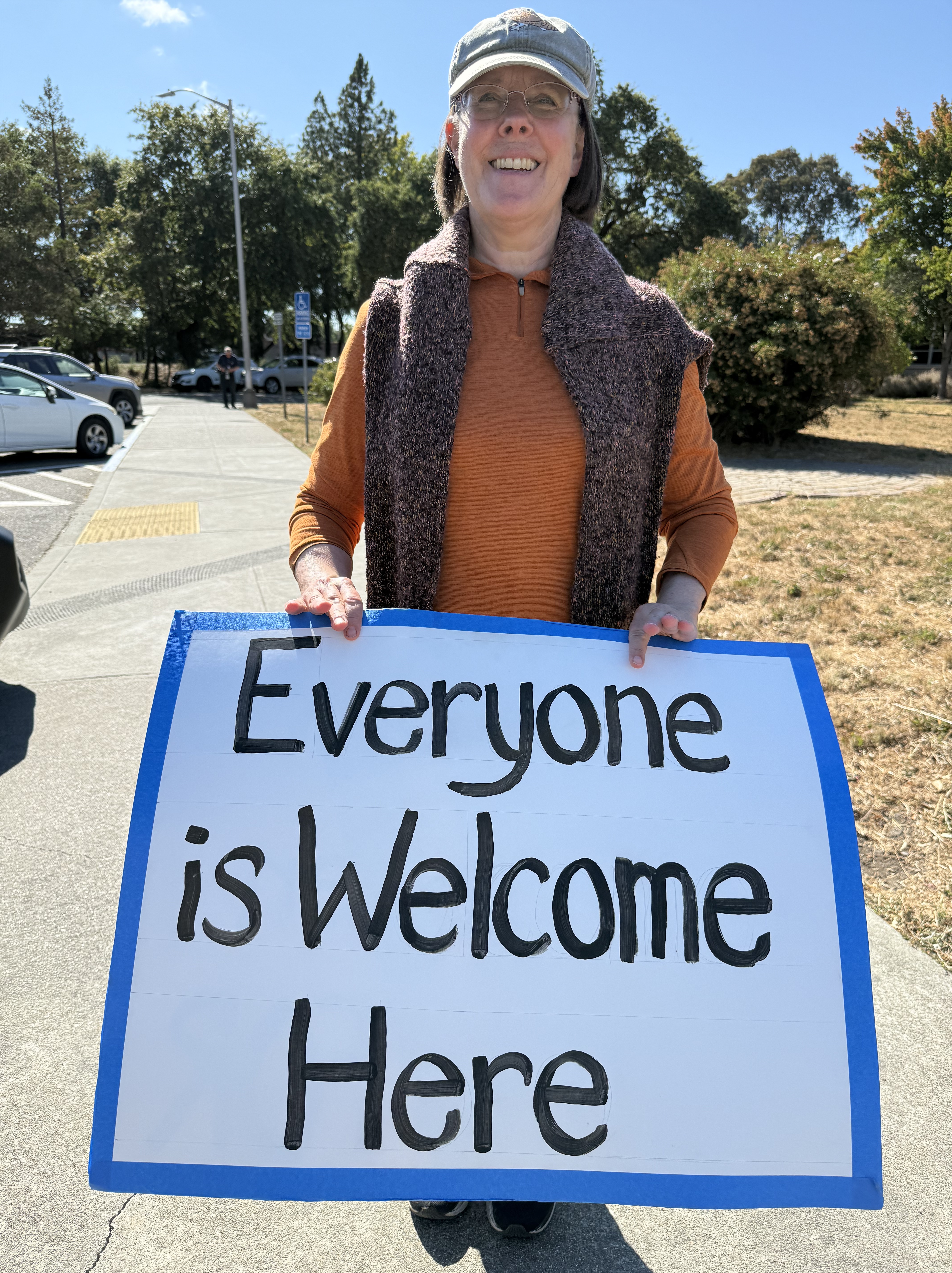
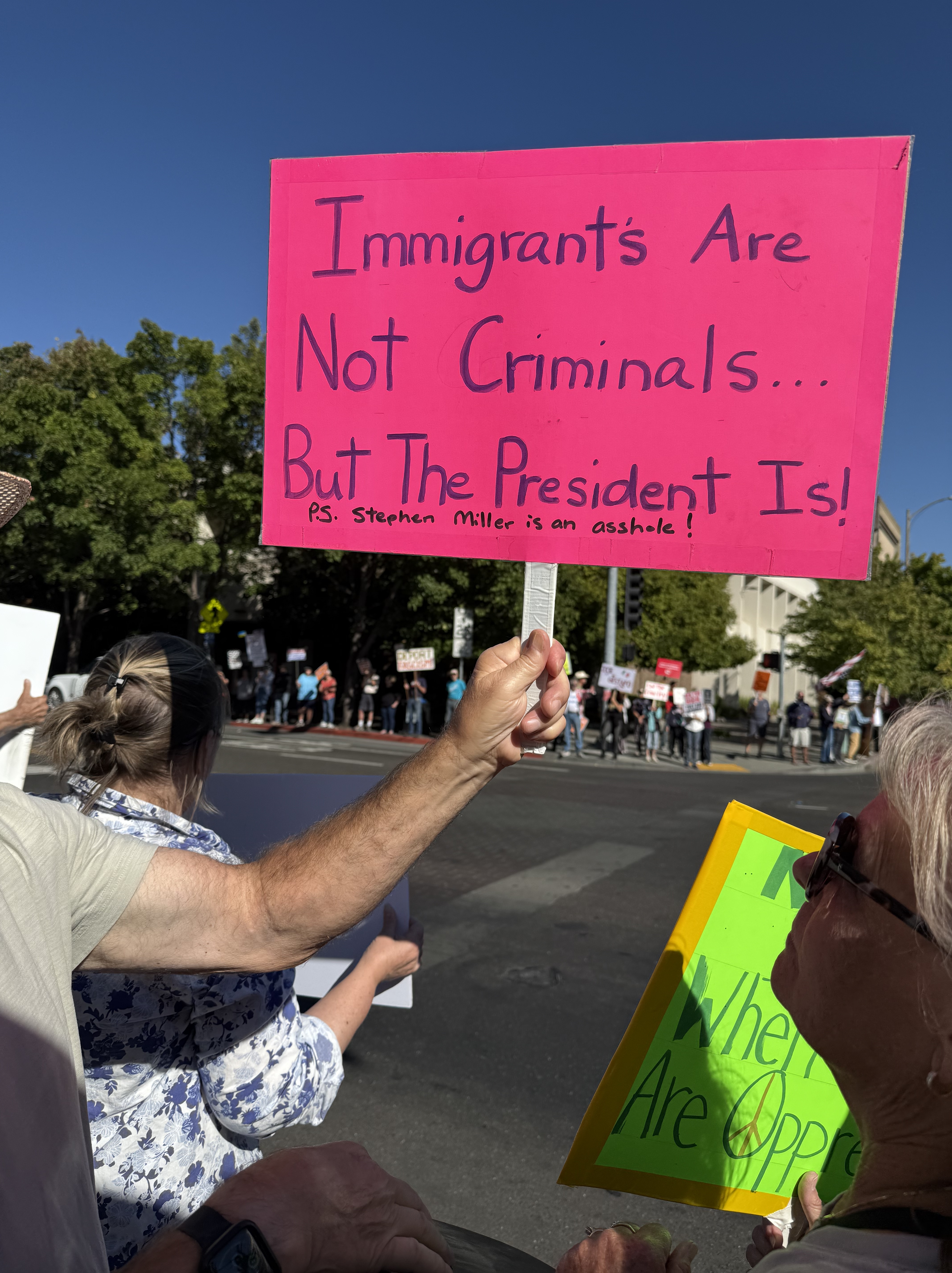
July 22, at our forum, hundreds of citizens showed up to protest that.

The sharing of inmate information with federal immigration officials can change lives instantly. Families split apart, community trust erodes, and neighborhoods feel less safe. About 29,000 undocumented immigrants live in Sonoma County and many families have mixed immigration status. We strive to protect our neighbors from ICE imprisonment and torture.

The Clubmobile Crew Goes to Paris

We ponder the purpose of the trip

My Mother and Audie Murphy Ch. 41

Paris—cultural capital of the world—was a dream destination, even in wartime. Everyone in Flo’s Red Cross crew wanted to see it. They’d heard about the food, the fashion, the grandeur. Who wouldn’t want a taste of it, especially after months of mud, cold, and war?

Liz Elliott’s drawing

In October 1944, Flo and her crew made the trip. It’s unclear why they chose to go just then—or why they stayed only two days—but they made the harrowing drive from the Vosges. Though the route avoided the front lines, it was still far from safe.

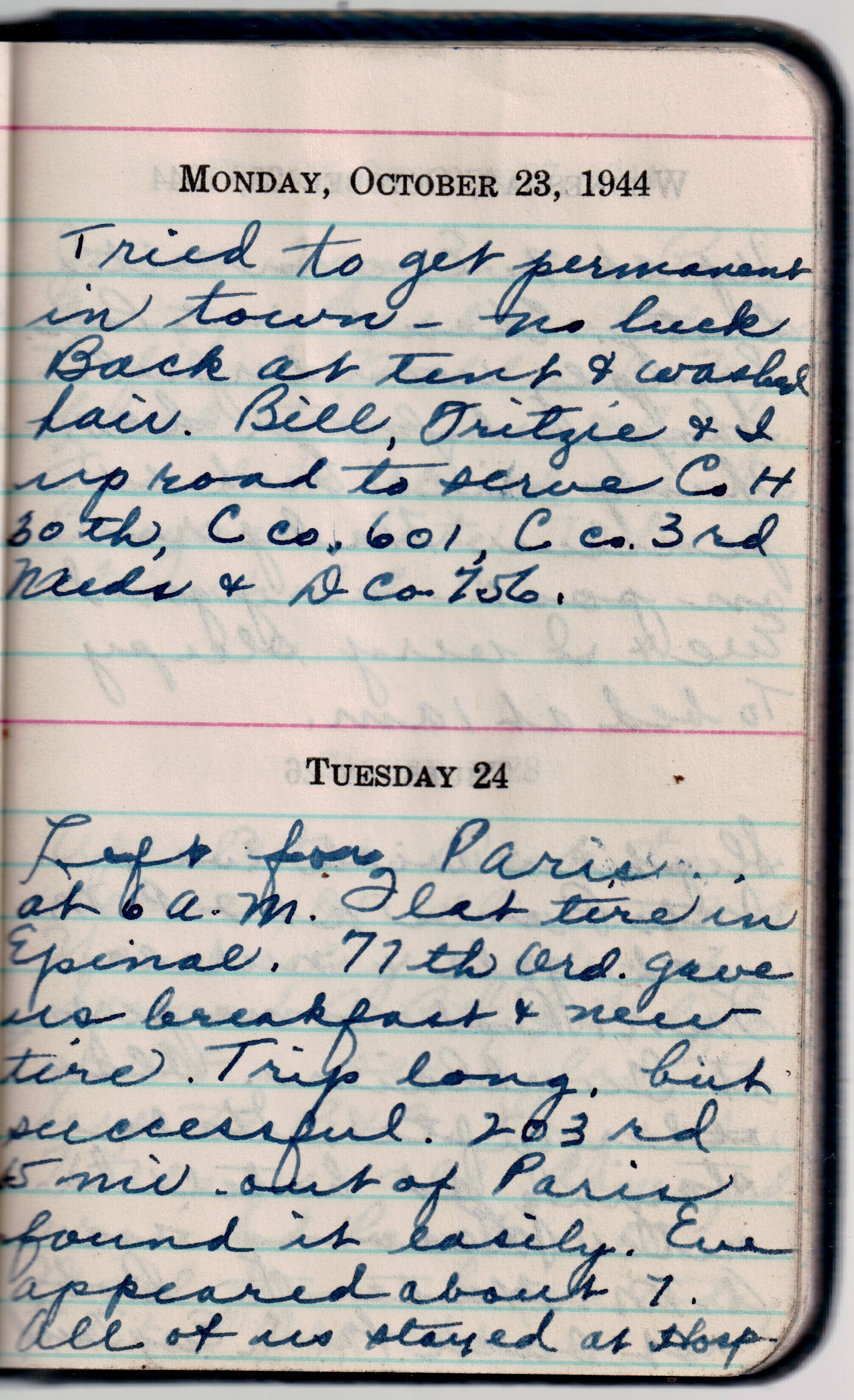
According to Flo’s diary, they left at 6 a.m. and got a flat tire in Épinal. Luckily, the 77th Ordnance gave them a new tire—and breakfast. “Trip long, but successful,” she wrote. Successful how? I can’t help but wonder if this was the trip my cousin later referred to—when Flo supposedly went to Paris for an abortion.

The group’s main stop was the 203rd Army Hospital, about 15 miles outside the city, where Flo’s sister Eve was working as a nurse. Flo noted that they found the hospital easily and spent the night there. Eve, on night duty, didn’t appear until around 7 p.m.

Flo’s diary

The next day, they went into Paris. “Simply wonderful,” Flo wrote. “Shopped for 2 hours. Things nice but expensive.” She also had a perm done “on post—very good.” But I wonder—was that all she had done that day?

After my mother died, I asked her sister Eve about the abortion story. Eve said she didn’t know anything about it. But she recalled that Flo once told her she’d miscarried while lifting heavy equipment. The original story came from their other sister, Ruth—who, according to her daughter, had been sworn to secrecy. It’s possible Flo never told Eve, perhaps fearing she couldn’t keep the secret.

Still, from the diary it seems Flo and Eve spent most of that day together, which makes it hard to imagine that Flo had a medical procedure without Eve noticing. That night, she wrote, “Eve and I very sleepy. To bed at 1 a.m.”

The following afternoon, Flo returned to the city with “gals and nurses.” They shopped again, bought gifts, and enjoyed themselves. “Leaving in am. Hate to,” she wrote.

She also noted, “Bob not back from England.” That was Eve’s husband, also in the military.

Flo did return to Paris later, so perhaps the abortion took place on a different trip. Maybe this one really was just for sightseeing, shopping, and a little time with her sister. Or maybe it was something more—something she chose never to write down.


Ch. 42: https://mollymartin.blog/2025/07/24/he-was-so-fine/

To go back to Ch. 1: https://mollymartin.blog/2024/11/04/my-mother-and-audie-murphy/

Making Good Trouble Protest

Santa Rosa CA July 17, 2025

Two New Women Join the Clubmobile Crew: Janet Potts and Fritzie Hoglund

My Mother and Audie Murphy Ch. 40

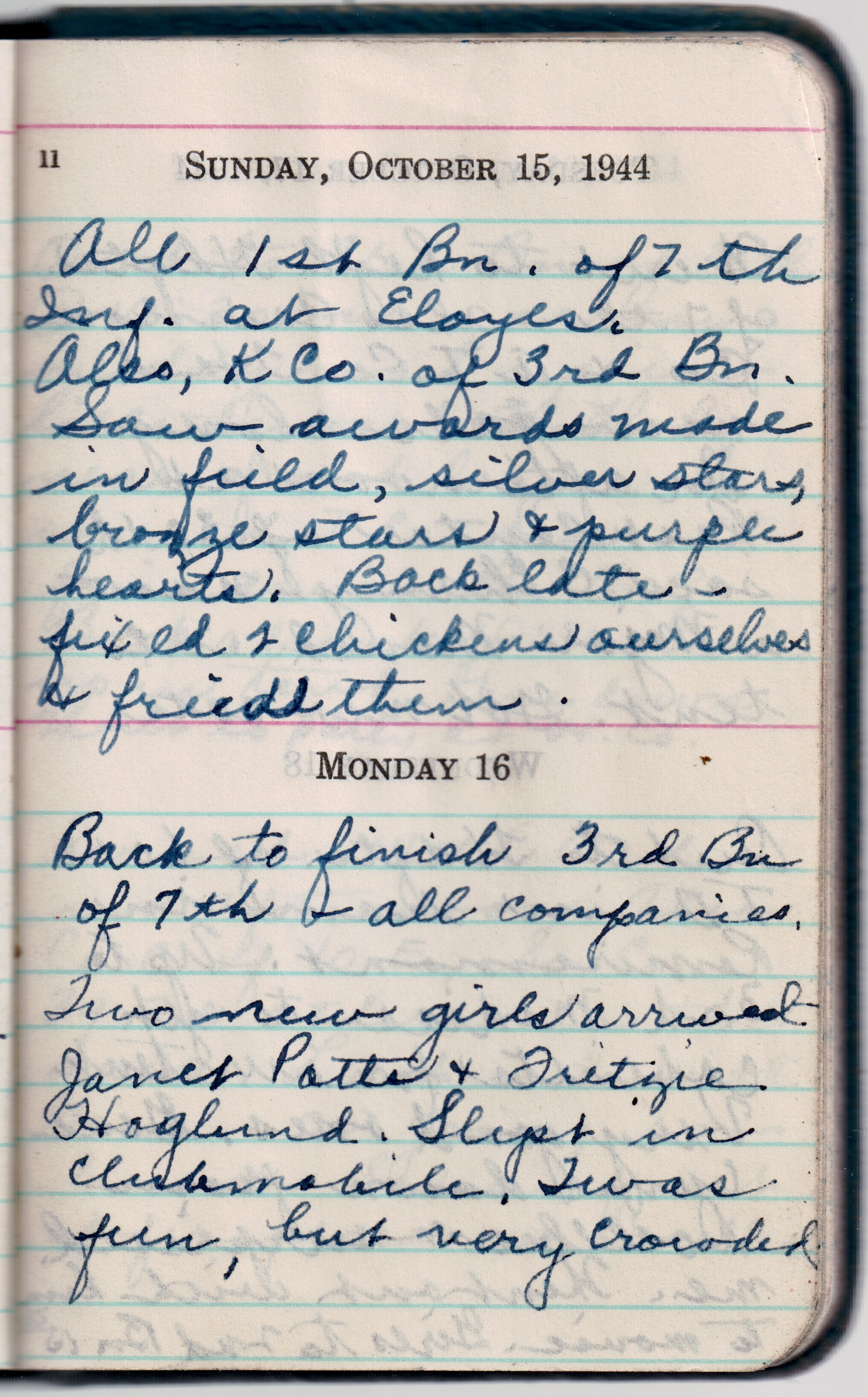
October, 1944. The four-woman crew gets to work, Flo sees Gene before his company goes in the lines, clubmobilers get up near the front lines and they move to a new camp.

Flo’s diary (pinch out to read)

A note here about the challenge of research: In 1973, a fire at the National Personnel Records Center (NPRC) destroyed 16-18 million official military personnel files. Among them were the archived records of the Clubmobile program, making modern-day research into these women’s service difficult.

From Flo’s album

One helpful resource is The Clubmobile—The ARC in the Storm: A Personal History of and by the Clubmobilers in the European Theater of War During WWIIcompiled by Marjorie Lee Morgan. The book includes interviews, diary entries, and photographs. But it focuses solely on the European Theater and omits those who served in the North African and Italian Theaters—even though many of those women, like my mother, also served in France, Germany, and Austria. And these women were the first to enter France and Europe. The book even includes a list of clubmobilers, but no names from the North African/Italian Theater appear, except Forence Wick on the inactive list.

With help from my brother Don, I was able to find some information on Janet Potts and even contacted her daughter. But so far, we’ve found nothing definitive about Fritzie Hoglund (or possibly Hoagland). A newspaper clipping pasted into Flo’s album says Fritzie was from Berkeley, California.

Janet Jenson (née Potts)


Born in New Rochelle, New York, Janet graduated from the Brearley School, attended Barnard and Columbia, and joined the Red Cross in 1944. An accomplished equestrian, she rode in a Third Division “rodeo” at the end of the war.

Janet was one of eight sisters—three of whom served in the Red Cross during the war. Janet was the only one who went to Europe, while the two others served in the South Pacific.

She married Lloyd Jenson in 1946 and had two daughters. Her daughter Susan Jenson told me that Janet often spoke of Flo and that her mother also made a wartime album, which she plans to go through. 

Janet’s daughter wrote, “I personally think there’s far too much focus on donuts in the way the clubmobilers’ work is remembered. These women were brave and generous souls who took on a difficult and emotionally demanding role, offering comfort to exhausted and traumatized troops. As my mother often said, the French sometimes mistook them for camp followers—a euphemism for prostitutes. They had no idea what these women were really doing. But for many soldiers, these were the last warm smiles they ever saw.

“Janet always had kind things to say about Flo. I can imagine the two of them together in a jeep, laughing. It was an adventure—but also full of heartbreak.”

Janet died in 2011, in Denver at age 96.

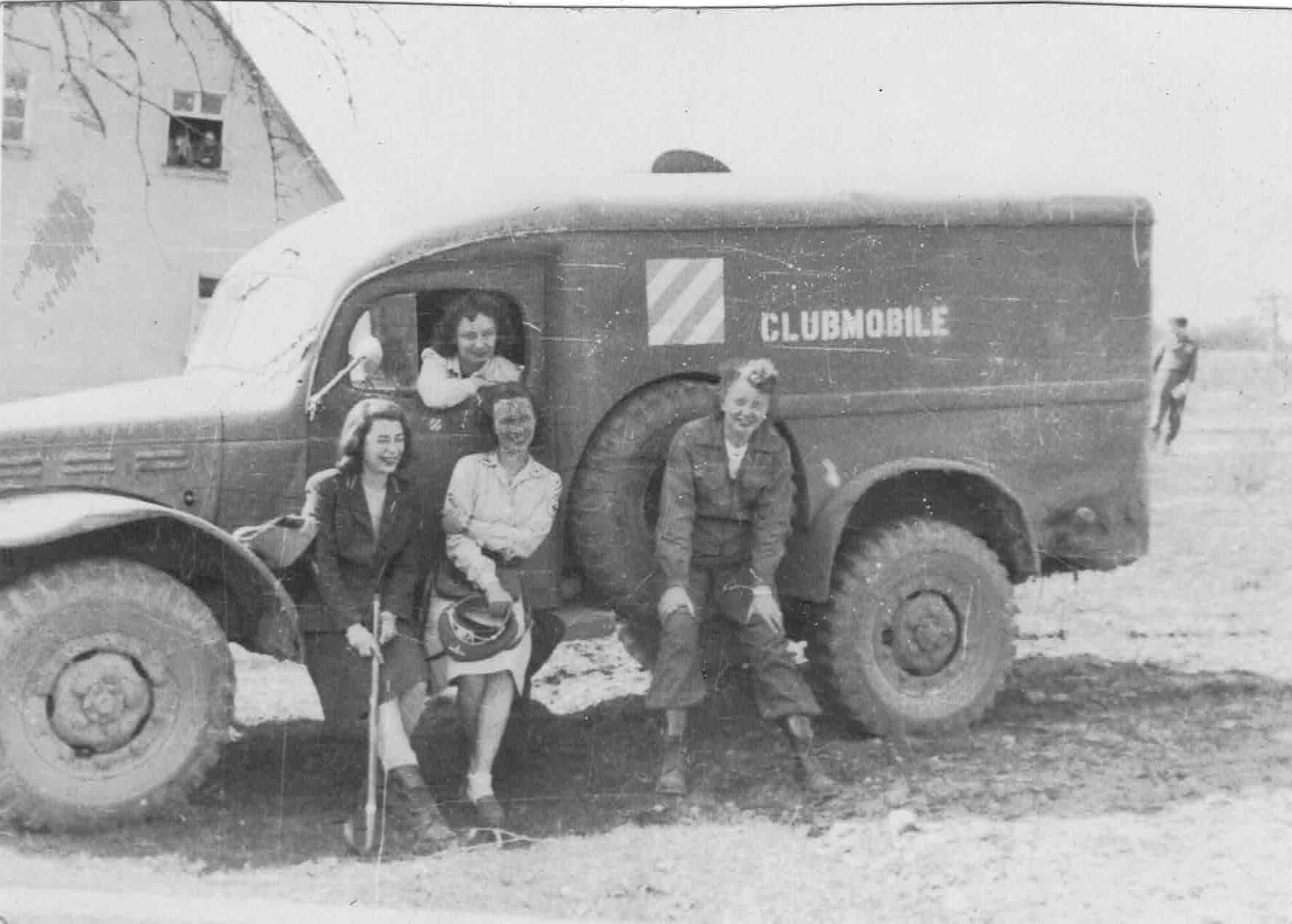
Liz, Flo, Fritzie and Janet (in clubmobile)

The new four-woman crew slept in the clubmobile. Flo wrote in her diary, “It was fun, but very crowded.” Later, they were issued a tent and new cots.

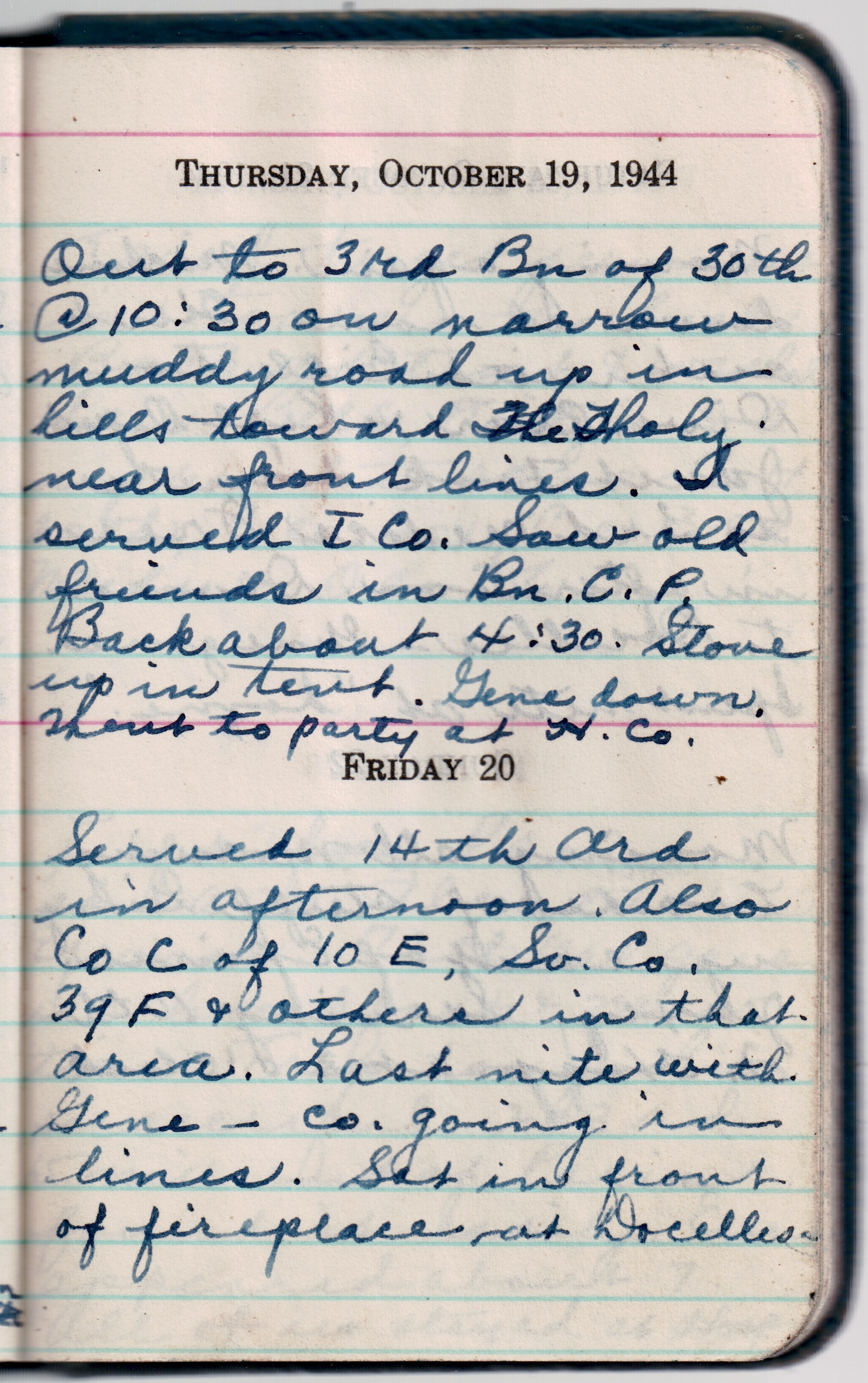
At one point, Flo’s fiance Gene came down from Docelles and surprised her. “Went out to a movie with him,” she wrote. She saw him again on October 19. Then on October 20: “Last night with Gene—co. going in lines. Sat in front of fireplace at Docelles.” The next day in a free afternoon, she drove back to Docelles maybe with the hope of seeing him one last time. She wrote: “Gene gone. Spent night at ‘home.’”

The following morning, Flo and the crew spent hours loading and moving supplies—the clubmobile was relocating to an area near Épinal.

Ch. 41: https://mollymartin.blog/2025/07/20/the-clubmobile-crew-goes-to-paris/

Flo and Gene Permitted to Marry

Murphy gets hit, Flo takes a break

My Mother and Audie Murphy Ch. 39

October 1944. Flo’s diary is blank from October 2 to October 7, 1944. There’s no way to know what happened during that time, but there are clues. My cousin told me that at some point during the war Flo went to Paris for an abortion. I wrote about it here:  https://mollymartin.blog/2022/04/16/solving-a-wwii-era-mystery/. The city had been liberated in late August and it would have been possible for Flo to travel there and back in five days. Flo stayed in touch with her sister, Eve, who was serving as an Army nurse in a Paris hospital. Eve told me that Flo had also suffered a miscarriage while hauling heavy equipment. Flo never wrote about any of it in her diary, and she never spoke of it later. But whatever happened during that week, it was serious enough to stop her from writing altogether.

Flo’s diary (pinch out to read)

By October 8, Flo and Liz were back in action, serving hundreds of donuts to American troops every day. They had moved from Remiremont to nearby Saint-Nabord, a grim, war-torn area where they now lived in their clubmobile. One day they drove to Luxeuil for photos. Another day they served the replacement depot while a military band played. And then they bounced across a pontoon bridge into Saint-Amé, until their battered old sedan gave out. The clutch snapped halfway over the bridge and couldn’t be repaired. 

During this time, they served the 15th Infantry—Audie Murphy’s unit—a couple of times. The men were quiet, polite, exhausted. After some hard battles, the 15th was finally getting a little rest. But Murphy was not among them. He had been wounded in the fight for Cleurie Quarry. At the aid station, he learned that nearly his whole platoon had been wiped out the night before. Because of the rain and mud, the wounded men could not be evacuated for three days. At the hospital Murphy learned gangrene had resulted. He would be out of commission until January.

In breaks from battle, the army handed out medals. The Third Division took home more than any other. This would be Murphy’s third purple heart.

Flo was able to see her fiancé Gene occasionally, as his unit, the 36th combat engineers, was stationed nearby. They met for church, a dance and meals at his camp. They planned to marry by Christmas and he had ordered rings for them.

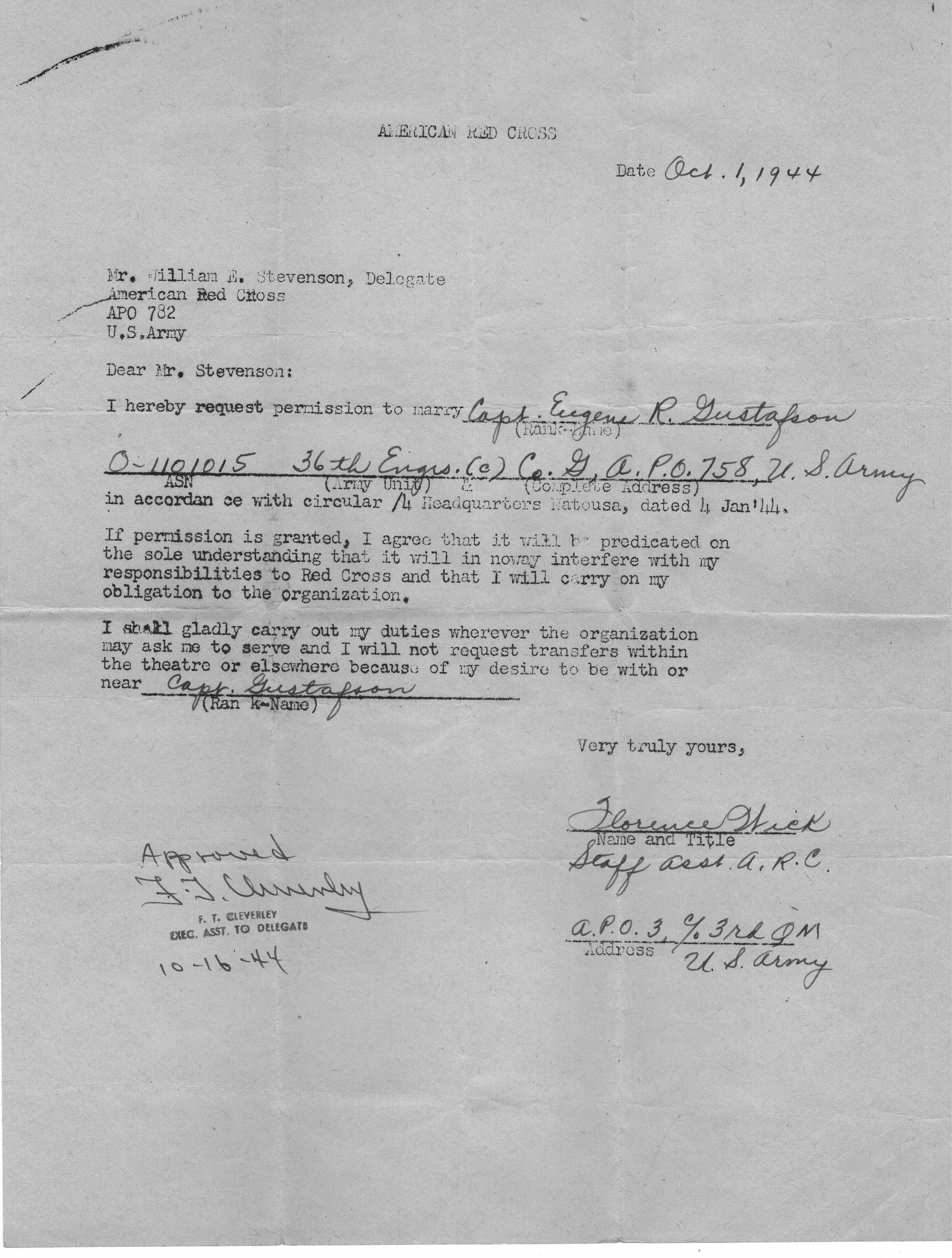
Form letter asking for permission to marry

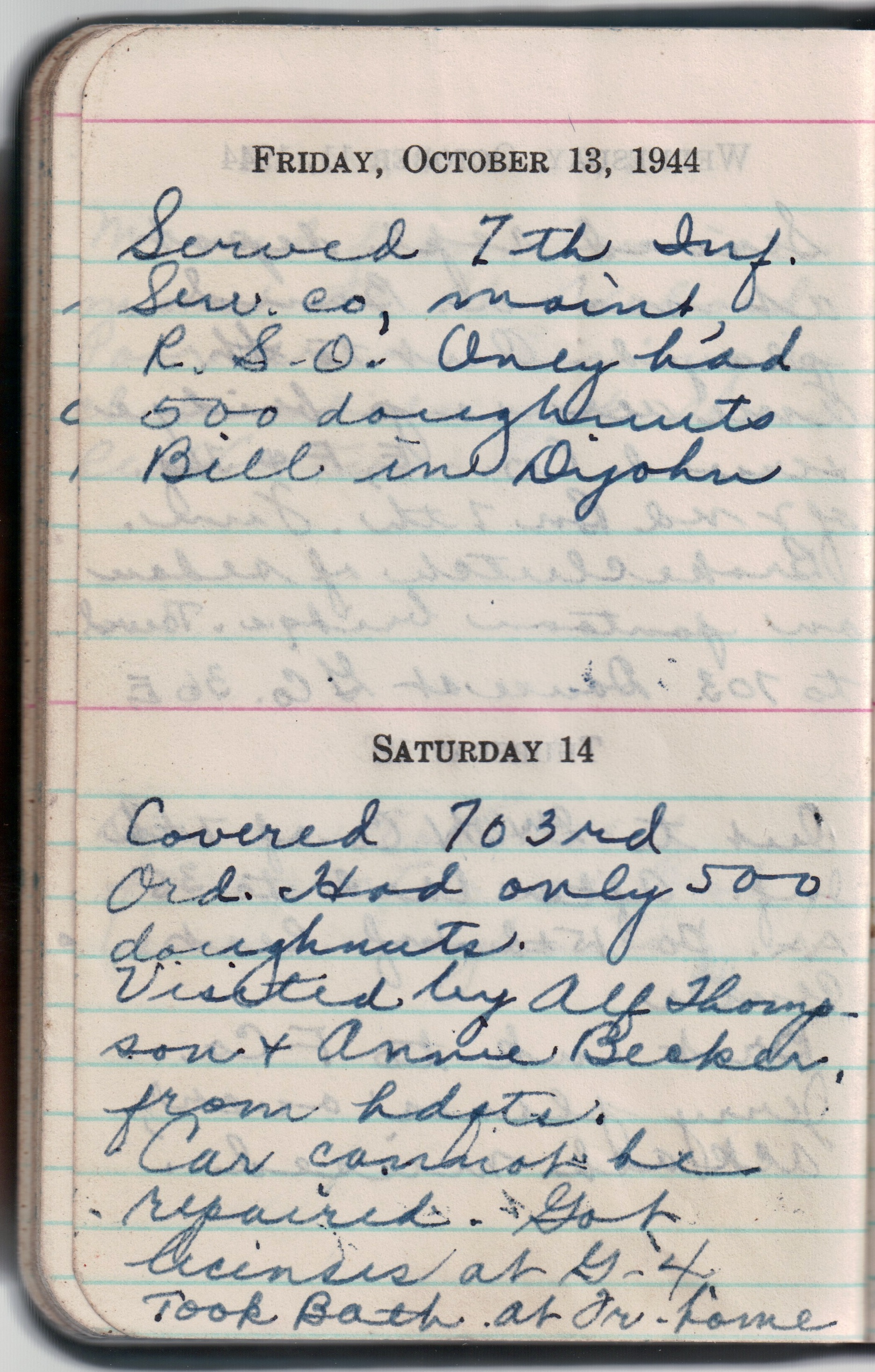
On October 1, Flo sent a formal request to William Stevenson at Red Cross headquarters for permission to marry Gene. The form letter says,

“If permission is granted, it will be predicated on the sole understanding that it will in no way interfere with my responsibilities to Red Cross and that I will carry on my obligation to the organization. I shall gladly carry out my duties wherever the organization may ask me to serve and I will not request transfers within the theater or elsewhere because of my desire to be with or near Capt. Gustafson.” 

In her accompanying letter, Flo had again managed to put her writing skill into practice. Whatever she wrote convinced the ARC. She received permission to marry in a warm letter from Eleanor “Elly” Parker, Director of Staff Welfare, dated October 23.

She wrote, “Thanks very much for your nice letter and I feel much more comfy issuing your marriage approval after having your explanation of exactly what is happening….You sound well surrounded by friends and family in France and I am glad you enjoy being there….I imagine that you are terribly busy and very hard at work under pretty trying cricumstances….

Permission granted and our shoes are boring (sorry)

Apparently Flo also had asked about getting some shoes after her nice shoes were stolen in Italy. But Elly Parker wrote that all they have at the PX are “regular black Red Cross shoes.” Not exactly what Flo, a lifelong shoe queen, had in mind.

On October 12, German planes flew overhead. Everyone looked up at the roar, held their breath as the anti-aircraft fire opened up—and missed. 

Ch. 40: https://mollymartin.blog/2025/07/17/two-new-women-join-the-clubmobile-crew-janet-potts-and-fritzie-hoglund/

Protesting at the Veterans Administration in Support of Workers

Friday July 11, 2025 Santa Rosa CA