Radical Lesbian Foremothers

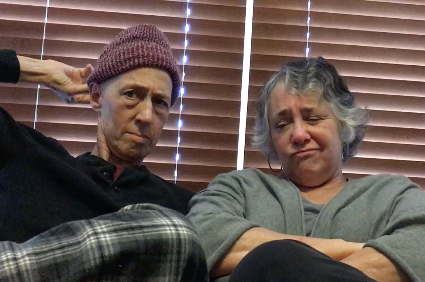
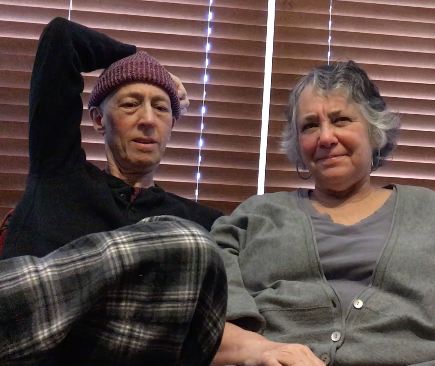
Longtime friends Angela Romagnoli and Lynn Stern were two of the foremothers of the Radical Lesbian movement. I sat down with them last November to record their story. Angie had been diagnosed with cancer and had undergone radiation and chemotherapy treatments. She died July 5, 2017. Angie leaves her wife of 39 years, Megan Adams, and their son Reese Adams-Romagnoli.

All three of us—Angie, Lynn and I—were born in the year 1949 and we all started college in 1967. We were all the oldest sibling in our families. We were all involved in radical politics in college and came out as lesbians. I was at Washington State University in Pullman, WA. They met at the University of Michigan at Ann Arbor. Their stories resonate with me even though U of M is far from the wheat fields of eastern Washington State. We were making the same revolution.

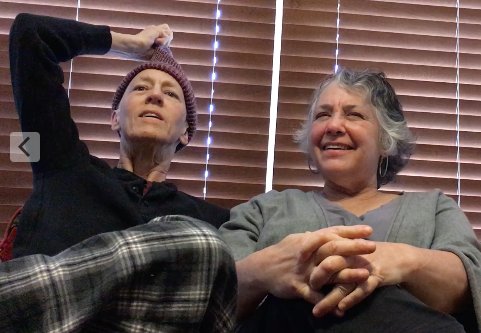
Angela and Lynn first met when Angie encountered Lynn sitting on her bed weeping with homesickness in their college dormitory. It was the fall of 1967 and both were 17. Lynn was very close to her family in Chicago, and especially her mother. It was the first time she had lived away from home. They were roommates the next year in another dorm and they became lovers in 1970. They broke up in in 1978, but their friendship has lasted ever since.

Both of these women—all three of us—came from liberal families and the historical moment radicalized us.

The oldest of six siblings, Angie grew up in a union household. Her family moved to Dearborn, Michigan, just outside Detroit, when she was in high school. Dearborn was a white town, but they had lived in a mixed-race town before that. They watched as the city of Detroit fell apart, as jobs left the area and red lining took its toll on black citizens. Angie went to a progressive high school where she developed a class analysis.

Lynn was the oldest of three siblings. Her family were liberals and secular Jews.

In 1967 the U.S. government was escalating the war in Vietnam. The student anti-war movement gained steam. Lynn and Angie went to a bunch of meetings, looking around campus for a group to join.

“We saw who was just talking and who was doing. We didn’t want to hear guys just jacking off,” said Angie. “We picked SDS (Students for a Democratic Society) because they were doing sit-ins and actions, talking to classes.”

They went to marches, broke windows. “I was a baseball player and had a great arm,” said Angie. One time Angie’s mother picked up Lynn’s jacket and the pockets were full of rocks. “You would put your lead pipe in the pocket of your pea coat.”

They wore combat boots, overalls. “We could strut our stuff. No bras,” remembered Angie. “You needed boots in Ann Arbor.”

One night they broke into the ROTC building on campus, trashed it and didn’t get caught. But the SDS had been infiltrated by cops and many demonstrators did get arrested, including their friend Nais (a mutual friend who now lives in San Francisco), also a student there.

“One time a phalanx of police scattered our march, arresting people. I was pulling the cops off people’s backs, but they didn’t arrest me,” remembered Angie.

By 1970, the women in SDS were pissed off, questioning the leadership and meeting dynamics. Feminists like Gayle Rubin came to SDS to talk and the women listened.

Although their recollections of how it happened differ, best friends Lynn and Angie became lovers in 1970. “We were happy. It was great,” effused Lynn.

“We were fed up with SDS,” said Angie. “That summer they said read Mao’s Combat Liberalism. That Cultural Revolution shit was offensive to me. I’m from the working class. I said the revolution is not coming around the corner. I wasn’t under an illusion.”

“We were still living in an SDS house in the summer of 1970, but we knew about the Radical Lesbians in New York and Berkeley,” said Lynn. Two of the New York women visited them and suggested they start their own radical lesbian collective.

We were isolated. We called up the two other lesbians we knew in town and we put an ad in the Michigan Daily. We got a meeting room on campus. Altogether ten people showed up. Gayle Rubin held up a book at the end of the meeting and said everyone should read this. It was The Story of O. (they both laugh) “We didn’t get it, didn’t even question her.”

So they had an organization, Ann Arbor Radicalesbians. “We hopped right from SDS to radical lesbians with no feminist group in between. Two hundred different women came to those meetings. “Judy Dlugacz (who later founded Olivia Records and Olivia Travel), was one of the first. ‘I’m writing a paper on lesbians,’ she said. Then she came back with a little curly-headed girlfriend,” laughed Angie.

“We organized the first lesbian softball team in the women’s league,” said Angie. “Martial arts was an extension of feminism.”

“We made a publication called the Purple Star. I wrote an article called The Personal is Political,” said Angie. “That was before the butch-femme diatribe. Our roommate confronted me and Lynn and said you are nothing but a butch-femme couple. I got mad and wrote an article. Lesbians and especially separatists were talking out of two sides of their mouths. On the one hand they overvalued everything that was butch. On the other hand we don’t want have anything to do with butch-femme heterosexual norms.”

Lynn said, “I cried when they called me a femme. I didn’t want to be in a straight relationship. It also made me feel less powerful. (to Angie) You got to be more powerful. I couldn’t play sports. I always knew I was cute and smart but wasn’t very outspoken. I felt I wasn’t successful.”

Angie defines butch as someone who had a high male identification as a child. “I don’t think anyone has all of one ID. Butch is a complex psychological construct. I definitely felt that applied to me. I was a super tomboy. There are a few in every elementary school. I got in trouble about what clothes to wear. Mom gave me Betsy Wetsy doll. I gave it to my sister. My friend who was catholic said she had a dream the virgin came to me and we will get turned into boys. I thought great!”

Lynn teased, “I remember the skirt she wore when we were working as waitresses in the union.”

Angie: “I had to wear a skirt to work so I just wore the same one every day.”

Angie: “We (Radicalesbians) went to other places like Bowling Green and gave talks to 500 people.”

Lynn: “You really have power, influence. We just talked about feeling like ourselves. We told them about how it came about.”

Asked about coming out as a lesbian, Lynn said, “It took a lot to come out to my parents. I couldn’t figure out how to tell my family. We were estranged. My mom said we were laughing at her.”

Angie: “I was really uncomfortable. I came out to them about 1973. We were totally dedicated to coming out here, there and everywhere.” Angie’s mom was always supportive. She never wanted to be left out of anything. Her mom was only 21 when she was born. “She liked to talk to everyone.”

Angie and Lynn lived together for nearly a decade, in various collective houses, always poor. One time four people slept in one room. “We weren’t monogamous. We had a lot of experimentation. I never really did respect nonmonogamy. It wasn’t for me. Group sex and…so stupid,” said Angie.

Then, in 1978 they broke up. It was traumatic.

Angie: “I was really lost.”

Lynn: “I thought it would be like my parents. They stuck by each other. To learn that it wasn’t forever, not what we thought.”

Angie: “We were so young, so inexperienced. We became merged. I felt like you resisted my having more separate things, separating more.”

Lynn stayed in Ann Arbor. Angie got together with Megan, her partner of 39 years. She moved to San Francisco in 1979, becoming a therapist and founding the first therapy group for survivors of sexual assault.

They never stopped being friends.

Women Carpenters in 1903

My friend and sister writer, Pam Peirce, is doing deep research for a book about her Indiana family and came across an article in the 1903 Indianapolis News titled “What Hoosier Women are Doing.” It’s a list of occupations with numbers of women for each: “There are thirty-four women dentists in Indiana.” My guess is that it was compiled from the 1900 census. Pam passed it along to me, noting that in that year “Seven women carpenters belong to the building trades of Indiana.”

Unfortunately, the clipping is out of focus, but it is still readable. I can see that “Four women in Indiana are cabinet makers, and eight work in saw and planing mills. Indiana has two women blacksmiths and ten women machinists. Nine women work in the coal mines of Indiana. Two women are marble and stone cutters.” I wonder if any of these female crafts workers were allowed to join unions.

“Seven women carpenters belong to the building trades of IndianaFour women in Indiana are cabinet makers, and eight work in saw and planing mills. Indiana has two women blacksmiths and ten women machinists. Nine women work in the coal mines of Indiana. Two women are marble and stone cutters.”

We know that women have worked in the trades since before this country was founded. Still, I’m surprised that Hoosier women had such a good representation in the trades in 1903. In contrast, there were about 6,000 washerwomen and 2,000 stenographers.

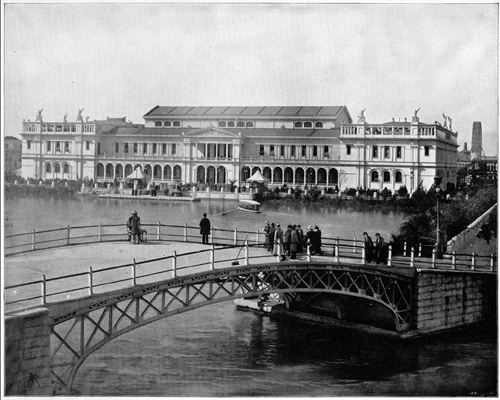
Pam also turned me on to a book, The Fair Women: The Story of the Women’s Building at the World’s Columbian Exposition, Chicago 1893. The World’s Columbian Exposition included amazing exhibits of the results of women’s activities–in the arts, industry, science, politics and philanthropy. Most of these were housed in the Woman’s Building, which was designed, decorated and administered entirely by women.

womensbldgcover
Handbill for the Women’s Building

In the book there is quite a bit of information about two women who were hired to do sculptures for the outside of the women’s building. One was Enid Yandell, who designed the caryatids, 24 identical female figures that held up the roof garden. It is said that the male workers with whom she shared a studio accepted her “without question.” One of the women managing the project said “Perhaps owing to the fact that almost all the workers were foreigners, and abroad it is not so unusual for women to do industrial work.”

At a party, Enid later had a wonderfully funny discussion about the propriety of women working with the widow of President Grant, who was prejudiced against Enid as soon as she heard that she was a “stonecutter.” Apparently the widow was still angry that her husband had spent too much time with a 15-year-old sculptor (Vinnie Ream Hoxie) who was doing a sculpture of Lincoln. Enid went on to have a career as a sculptor and in 1898 became the first woman to join the National Sculpture Society.

womansbuilding172
The Women’s Building

More sculptural work on the Women’s Building was awarded to 19-year-old Alice Ridout, who lived in San Francisco where she worked in the studio of Rupert Schmid. It took the fair managers months to convince her to come to Chicago to do her work on the sculptures they required, but she did it.

Susie Suafai: Still Advocating

“Why didn’t the women’s movement ever embrace our struggle to bring women into nontraditional jobs? I never understood that and I still don’t.”

Susie Suafai, a longtime tradeswomen advocate, posed this question to me at the Women Build Nations conference in Chicago last spring. I can’t always catch up with Susie in the San Francisco Bay Area so I was happy to find her sitting alone at the conference where 1500 tradeswomen and allies convened in Chicago April 29-May 1, 2016. I sat down with her and learned things about her that I had never known in all our 35 years of working together.

conftable
Susie (R) working registration at the Women Build California Conference

Susie is a large woman, now with graying hair, and still formidable. She punctuates sentences with a chuckle. I guess she’s mellowed as she’s aged, but I remember her as powerful, brusque, businesslike, intimidating and a bit cynical. It seemed to me that arranging a meeting with Susie was like consulting the Oracle. She was the goddess of employment development. Susie was, and is, the one who understood the big picture, employment trends on a regional scale. Early on she learned the workings of the apprenticeship system, and understood them better than the men who ran it. I remember a workshop that Susie led in the mid-70s. She laid out the complicated apprenticeship system for us tradeswomen activists, taught us who were the men in power and how to approach them with our demands. Susie was passing on what she had learned to a generation of feminist activists.

Susie Suafai came to California via American Samoa and Hawai’i. She was studying   history at San Francisco State University and fell into a job at Advocates for Women when she was asked to help prepare women for apprenticeship testing in 1974. Advocates, in San Francisco, had won one of two demonstration grants from the US Department of Labor to see if women could be recruited to construction work. The other was in Denver, Colorado. These were the first two federally funded experiments to recruit women to do this work. Susie went on to help place hundreds of women into union construction apprenticeships in the Bay Area and she later became the director of Women in Apprenticeship Program, which had spun off from Advocates for Women in 1976. She also spent about five years in Los Angeles working at the Century Freeway Project recruiting women into the trades. Electrician and filmmaker Vivian Price made a film about that project, called Hammering It Out. Susie was planning to be a history teacher but she ended up being an employment advocate, and there are many tradeswomen who credit her with creating their careers.

We are about the same age. I’m in my mid-60s and I am retired as an electrician and an electrical inspector but Susie continues working at her trade of employment advocacy. She’s now working part-time for Tradeswomen Inc. to invent new ways to bring women into the construction trades.

25thanny
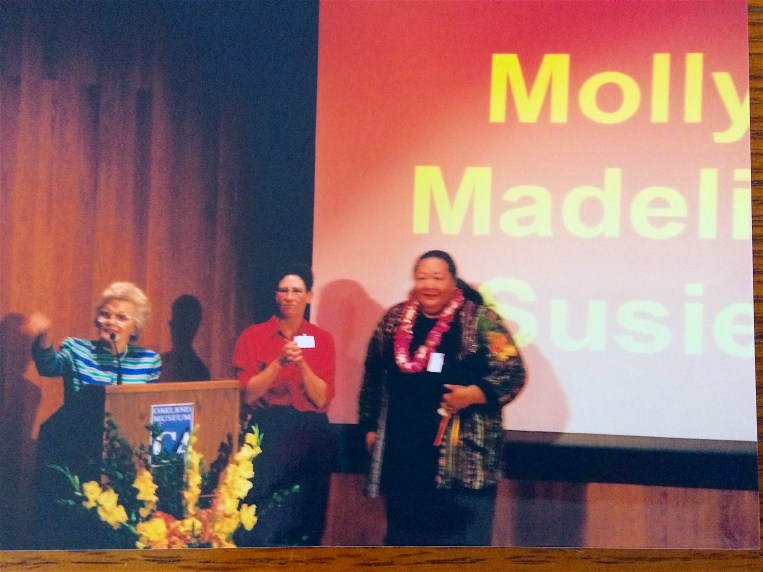
Madeline Mixer, Susie and I being honored at Tradeswomen Inc.’s 25th anniversary gala in 2004

Now, about Susie’s question, which is also my question: why didn’t the women’s movement embrace the tradeswomen’s movement? First, when people criticize the women’s movement for leaving out tradeswomen, I always object. I say we were the women’s movement and we are the women’s movement. I never felt separate from the women’s movement. I always felt like I was in the middle of it, like I was part of it.

Like Susie, as a young feminist I thought that employment was the bottom line for women. If you couldn’t get a decent paying job you could not be independent. A young woman in my history workshop at the conference voiced the issue. “If you have a good job, you don’t have to depend on a man. Once you have a trade, you can be financially independent.” It’s the same thing we said to each other in 1970.

My mother had very few choices and worked as an underpaid secretary all her life. My generation had some better choices but not many. Most often cited were teacher, nurse or secretary. In the 1970s I found other feminists who agreed with me about the importance of work. We founded organizations and allied with lawyers and advocates willing to help us fight for laws and regulations to end employment discrimination.

Though I participated in the other struggles of the feminist movement for abortion rights, for childcare, for equality in marriage, for an end to rape and discrimination, I still felt the jobs issue was primary. And for women who did not have access to a college education, trades jobs and jobs in the construction industry made a whole lot of sense. Ours was an anti-poverty movement. We talked a lot about what we called the feminization of poverty. Statistics showed that female single heads of households were getting poorer. We thought introducing women to trades jobs could reduce that trend.

Our issue was not at the top of the feminist movement’s list and I think there were many factors that contributed to invisibility. Partly it’s about class. The leaders of the feminist movement, mostly college-educated women, could not imagine themselves doing construction work and they probably did not have family members who were construction workers. Few of us knew how much money union construction workers made. For many Americans the idea of working construction was considered a step down. But workers with union contracts make more money than nonunion workers. And, in general, “men’s jobs” pay far more money than “women’s jobs.” Susie figures she would have made a lot more money in construction than she did in the nonprofit world.

It wasn’t like tradeswomen didn’t try to fit into feminist coalitions. I made many attempts to collaborate with other women’s organizations like NOW and like the San Francisco Commission on the Status of Women (COSW) of which I was a member in the 1990s. They didn’t brush me off, but they already had other projects. COSW was focused on domestic violence, a cause championed by local lesbian activists Del Martin and Phyllis Lyon, and they had created a successful network of organizations. It made sense to not spread ourselves too thin. But at least I was able to expand COSW’s attention to the issue of on-the-job sexual harassment, a universal concern of tradeswomen.

Tradeswomen collaborated with feminist lawyers—in the Bay Area Equal Rights Advocates and Employment Law Center—to secure rights to equal employment. In these efforts we had great success during the 1970s. We joined in coalition with racial minorites to fight the dismantling of affirmative action laws and regulations. In this, too, we were mostly successful. But having laws and regulations on the books is useless when they are not enforced, a strategy employed by Reagan/Bush. At that point the returns on our activism diminished, as did our support.

Funders didn’t take us seriously. I remember traveling to New York in the early 90s and meeting with the Ms. Foundation seeking funding for our efforts. The young woman I met with seemed anxious to find a way to not fund us and to get me out of her office. She categorized our organizations as “associations” and so not fundable. But I felt her rejection had more to do with other factors.

The barriers to women in the construction industry were seen as too great to spend resources on for too little gain. In fundraising meetings with the Women’s Foundation in San Francisco Tradeswomen Inc. was told that projects they had funded to support getting women into the trades had failed in the past and they had decided too few women were impacted by these projects. Many just did not think it was possible for women to do these jobs and to be happy doing them. But maybe that’s because most of the organizers couldn’t see themselves being happy doing them. They (and we) had internalized sexism and self hate. But organizers were also practical. They (and we) strategized to find ways to impact the greatest number of women.

A big part of our campaign to get women into the construction trades rested on the ability to get the word out to women about the money that could be made in these jobs. We needed the help of feminist and labor media to spread the word. Until the turn of the 21st century labor unions in the trades wanted nothing to do with us. We were accused of taking men’s jobs. But I think feminist publications could have made more of an effort to tell our story. Whenever an article did appear in a publication with a big subscription base (as in Ebony), hundreds of inquiries came in. High wages were a big draw. But traditional women’s magazines were only interested in matters of style, such as makeovers for women with “hard hat hair.”

Our fortunes changed after President Jimmy Carter left office. While some nontraditional jobs like bus driver began including women, we soon realized our efforts at integrating the construction trades were failing after Reagan took office in 1981 and began dismantling affirmative action programs.

Susie corrected me: “It’s true we lost footing during the second half of Reagan’s administration but we also made some headway in the first four years of his administration. At the end of the day, Title VII (of the 1964 Civil Rights Act) was and is the law of the land and we were willing to and are still willing to challenge under Title VII.” It’s this optimism that keeps Susie going, and the conviction that we can still improve the lives of women by helping them make careers in the trades.

In retrospect, whether or not we were dissed by the women’s movement seems a moot point. The women’s movement was an amorphous collection of activists with little money and few institutions. The partner with real money and power that could have helped our movement succeed is the federal government. The institutions we built in the 1970s never recovered from Reagan’s slashing of affirmative action and job training programs. I believe our efforts to bring a critical mass of women (at least ten percent) into construction trades would have succeeded if the Carter Administration’s programs that we fought so hard for had been left in place. As it is, the percentage of workers in the construction trades who are female has stayed at around two percent, roughly the same as it was in 1981 when Reagan took office.

What I Know About Stereotyping

They saw women as whiny, useless, money-grubbing weaklings

The culture of the construction site was manmade. No women had been involved in its creation and so we had to negotiate the best we could. I said to myself I had a father and three brothers, I should be able to fit in. I’d been a tomboy as a kid and thought I knew how to hang with males of the species. Every new job, each with a new group of guys, held new challenges.SFconst2

I quickly learned that my coworkers thought women were incapable of doing the physically challenging work of construction. They brought to work a stereotype of women as whiny, useless, money-grubbing weaklings who needed a man to give them worth in the world. (Most of these guys were divorced and still angry at ex-wives). They repeated to me an old saying: If this work was easy, women and children could do it. Something told me that when they repeated it to each other, the word they used was not women.

“Cunt,” whispered the ironworker tying rebar next to me as I tied pipe to it. Then he quickly moved on. After I got over the shock, here’s what I thought: “Ironworkers are a bunch of cowardly sexist dickheads.”

My objective: overturn the stereotype

My coworkers told me women weren’t good partners on the job because we couldn’t be trusted to hold up our end of a 300 pound piece of floor duct. We were all afraid of heights, we didn’t know how to swing a hammer and hit anything. We were just there to get a man. Our presence on the job would cost the contractor money since it took us twice as long to complete a task. When criticized we would cry, so they had to be careful what they said to us. (Too bad that didn’t translate to not insulting us.) Their worth was predicated on our worthlessness, our lack of merit. You are only as tall as the person you are stepping on.SFconst

I went to work each day with the objective of overturning the old stereotype. I was usually the only female on the job, and very conscious that I would embody a new improved stereotype. I worked hard, but was careful not to work so hard that I’d be accused of breaking down conditions and brown-nosing the employer. I tried to work just as fast as they did, but not faster. I picked up my end of the floor duct and used lifting skills to save my back, while thinking to myself that nobody should have to lift 300 pounds of anything. I was not afraid of heights, but if I had been, I never would have admitted it. I never cried, even when I felt like it.

A worker was welcomed into the construction culture in a backhanded manner. You didn’t know whether you were being dissed or included. Race and ethnicity as well as gender were called out with jokes and put-downs. How one responded was noted. You were supposed to go along to get along.

I tried to come out as a lesbian when I could

The men could be empathetic while at the same time expressing homophobia, sexism and racism. I tried to come out as a lesbian whenever the opportunity arose because I was convinced this honesty made the job easier for me. On one job I worked with a traveler* from Arizona. We were assigned to tape connectors and boxes in the trailer while we waited for the deck to be readied for the electrical crew, so we had time to chat. He told me his wife worked as a nurse in a hospital in Oakland and the place was overrun with faggots. She was disgusted. Here was my opportunity! I admitted to being a dyke and probably noted that fags were a lot more fun to work with than his sorry ass. At that he did an about-face. He needed to make a confession too. He acknowledged that he was an alcoholic, that he was in recovery and that he was letting me in on the secret. That made us even, and we were friends from then on.hospital

Ethnic slurs were thrown at people with what seemed like a try at love. Wetback, Chink, Dago were used inclusively, like welcome to our club, this is your identity. If I didn’t object in the beginning, my nickname would be Girl. I objected, but not to every slight. You had to pick your battles. I let them know I wasn’t keen on sexist or racist remarks. No one ever said the N word in racially-mixed company, maybe because they didn’t want to risk getting the shit beat out of them. The exception was travelers who came from sister union locals in the South, but they only used the word when conversing with whites. Talking about football, one remarked, “I never understood why anyone would want to watch a bunch of n*****s running around a field.” The Northern white guys on the crew were silent after that. Maybe they were seriously considering that football was no longer a white game. Or maybe they were silent on my account and would have agreed with the cracker if I hadn’t been there. I hope it was because they were so appalled they were speechless.

The Southern travelers were a different breed—bigots who bragged about killing cops and evading taxes. All white. The story was told about one guy that he kept a length of 000 wire under the seat of his truck and had once used it on a cop’s head. One day he drug up** and asked for his check. He was on the run, they said. White trash and dangerous.

That’s the way it was, and few of us minorities were exempt. On one job I had a Jewish foreman. I knew he was Jewish when others on the job started making gas chamber and oven jokes. Jewish men—at least out Jewish men—were rare on the construction site, although I knew many Jewish women who worked in construction. This guy had been a carpenter and later got into the electrician apprenticeship. He was a skilled mechanic and a competent foreman with an upbeat attitude. He let the jokes slide off.

The Jew would force the Nazi to acknowledge us

The job was an interior remodel of the Hyatt Regency hotel in San Francisco’s Embarcadero Center. Cozy and insulated, we worked on an upper floor of the high-rise, piping in the ceiling, running up and down ladders. The construction crew would assemble in the basement in the mornings and ride the service elevator up to our floor together. The hotel pastry chef, a stern Austrian, came to work at the same time and rode the elevator with us. He never spoke to us, we figured, because he thought himself better than a bunch of construction workers. An unflattering stereotype of Austrians immediately took root in my mind. Austrians equal Nazis. Our crew began to refer to him as Herr Pastry. My foreman always spoke to him. Good morning or how are you this morning. The pastry chef may have nodded but he never spoke or smiled. It became a game. The Jew would force the Nazi to acknowledge us lower class plebes (the irony was that we union workers probably made way more money than he did).

Our IBEW contract gave us a half-hour lunch break 12 to 12:30 and one ten-minute coffee break, which we took at 10 am. I usually brought a bagel with cream cheese for break. I’d be starving by 10 even after eating a huge breakfast at 7. On jobs where the ten minutes was taken literally, I found I barely had time to down the bagel, which required some chewing, and to wash it down with my thermos of tea. This job was a bit looser. Coffee break might last 15 minutes.

“It’s too short,” I whined to no one in particular while standing on a ladder with my head in the ceiling. The piece of EMT*** I’d just cut didn’t fit and I’d have to start over. “What a thing to tell a man!” came back to me from the Irish carpenter foreman whose head was the only one I could see up there. That made me smile. Irish guys—full of blarney.

“Break time,” someone yelled, and I looked down to see coffee being served in a fancy silver service with a huge plate of pastries beside it. The gift had come from the pastry chef, and for the rest of that job we had complimentary coffee and pastries at 10 am, thanks to the persistent civility of our foreman. My stereotype of Austrians crumbled. I’m still waiting for help with my prejudice against ironworkers and white Southern men.

*Travelers follow the work around the country when work at home is slow.

**To drag up is to quit the job.

***Electrical Metallic Tubing, a kind of pipe used in the electrical industry.

Addendum 2020

The Black Lives Matter movement has brought national attention back to racism. Of course, the battle for equal rights has been going on for decades, for centuries.
 
Previous to affirmative action laws, the construction trades had been the providence of white males. People of color and women busted into the construction workplace in the 1970s after years of demanding access to well-paid union jobs. We walked onto the job site and into the union halls together and we stood up for each other, all of us fish out of water in the white male culture of construction.
 
We built a movement to gain access to this industry, going up against both employers and unions. We focused on union construction because these are good jobs that pay good money. No education beyond a high school diploma is required. Apprentices go to school free while working and apprentice pay increases automatically. A union contract is a great leveler. We don’t depend on a boss to decide our pay rate. The Black woman painting the steel girders on the Golden Gate Bridge gets paid the same as the white man.
 
Just as with school integration, people of color and women have encountered  discrimination, harassment and racist and sexist stereotyping in construction. But the fact that affirmative action regulations required contractors to hire us and union apprenticeship programs to include us made all the difference—testament to the power of the federal government having your back.
 
Stories in this essay refer to the time just as we were getting in—the early 80s. It was a time when stereotypes were continually being broken down and re-examined. All of us had to adapt to the colossal culture clash.
 
Has the culture of construction changed in the past 40 years? For both people of color and women, just our presence on the job has impacted the culture.
For women, the fact that sexual harassment is now against the law was a significant change for the better. Women of color still experience a double challenge as both racial and sexual minorities.
 
The demographic has changed in 40 years. Hispanic men now constitute more than a third of the union construction workforce in California. Women are still only a small percentage of union construction workers, about three percent. Asians are even less numerous at less than two percent. Black men have made some gains, although there is still a ways to go to reach equity. But we are there now, and we have made some headway in the union and apprenticeship structure. 
 
Reagan killed federal affirmative action programs after he took office in 1981, but for the short time regulations were actually enforced, that brought more of us into the construction trades. We owe our jobs and careers in the trades to affirmative action. We still encounter discrimination, harassment and isolation, but if the laws and regulations had been enforced for even a few more years, the trades would be much more diverse.
 
California state and local affirmative action programs died after 1996 when the anti-affirmative action Proposition 209 passed. That law has made it difficult to demand equitable representation of Black, Asian and women workers. 
 
From this struggle we have learned that the arc of the moral universe is long. I don’t have faith that the arc bends toward justice but here are some indications that it might. Recently the ironworkers union international showed its support for female ironworkers by introducing a pregnancy leave policy, now being copied by other unions; the newly elected vice president of my San Francisco International Brotherhood of Electrical Workers union Local 6, is Ron Lewis, a Black man and a feminist; and I just learned that two workers were thrown off a job by the union for making racist remarks against Black coworkers. That would never have happened in my day.

Sexist Language is a Bitch

As a young reader I took umbrage at authors who insisted on referring to mankind and men when discussing all humans including women. It didn’t help when librarians and teachers patiently explained to me that the words mankind and men were meant to include women. I didn’t believe it and I just stopped reading those writers. But I was still angry at the dominant paradigm. You couldn’t escape it.

When I found feminism, I found sisters who agreed with me. Women were being left out of history and the present by the use of sexist language. Several feminists developed genderless languages and pronoun replacements, which unfortunately never caught on. Today transgender activists seem to agree on replacing “she” and “he” with “they,” but I find it cumbersome and difficult to adopt.

Gender specific job titles have always rankled women who work in or aspire to work in male dominated jobs. If a job title ends in man like lineman, mailman, policeman, craftsman, draughtsman, we get the point that women do not belong and are not welcome in these jobs. Girls and young women understand that they should seek careers elsewhere.

Sisters in the Brotherhood

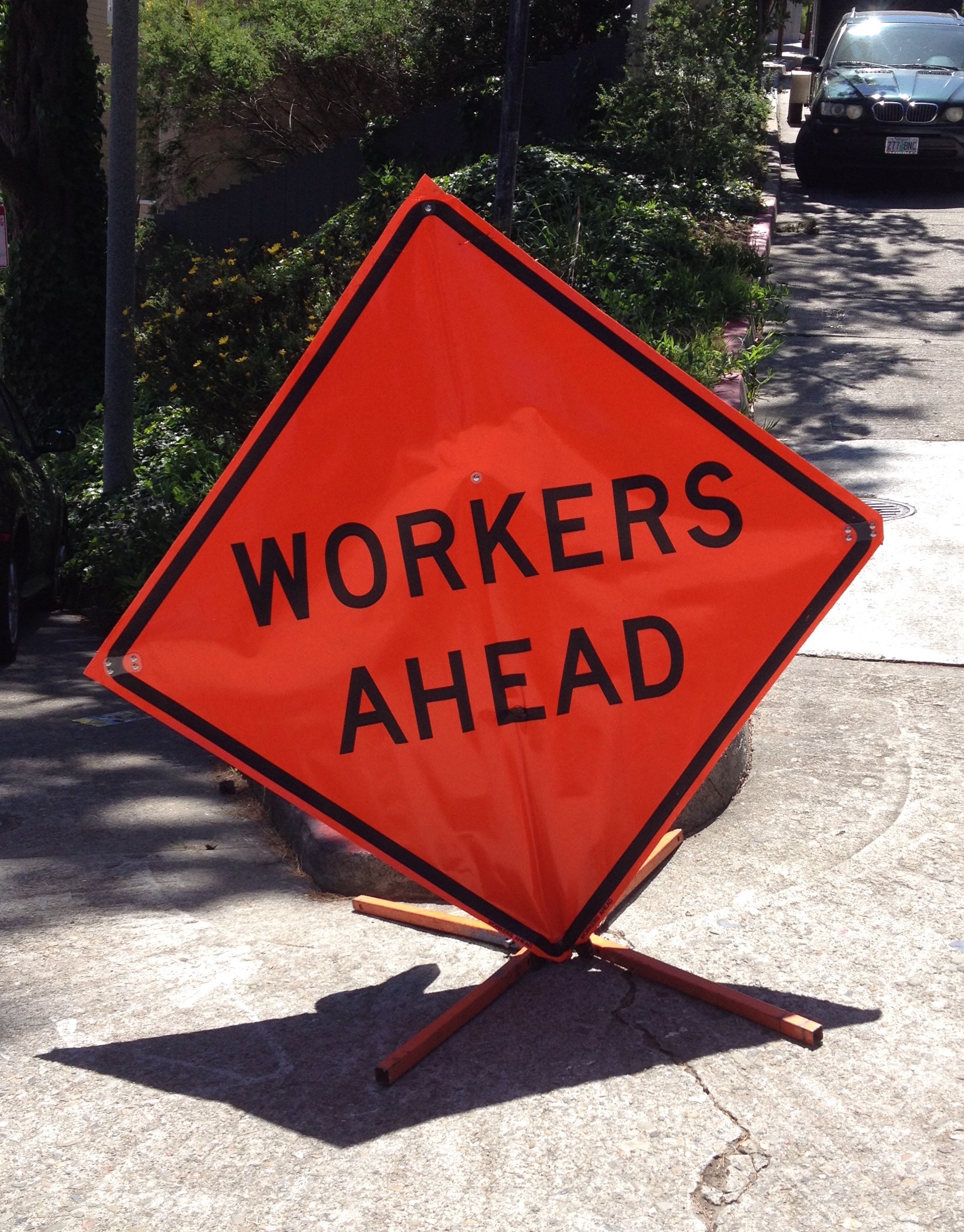
workersAhead
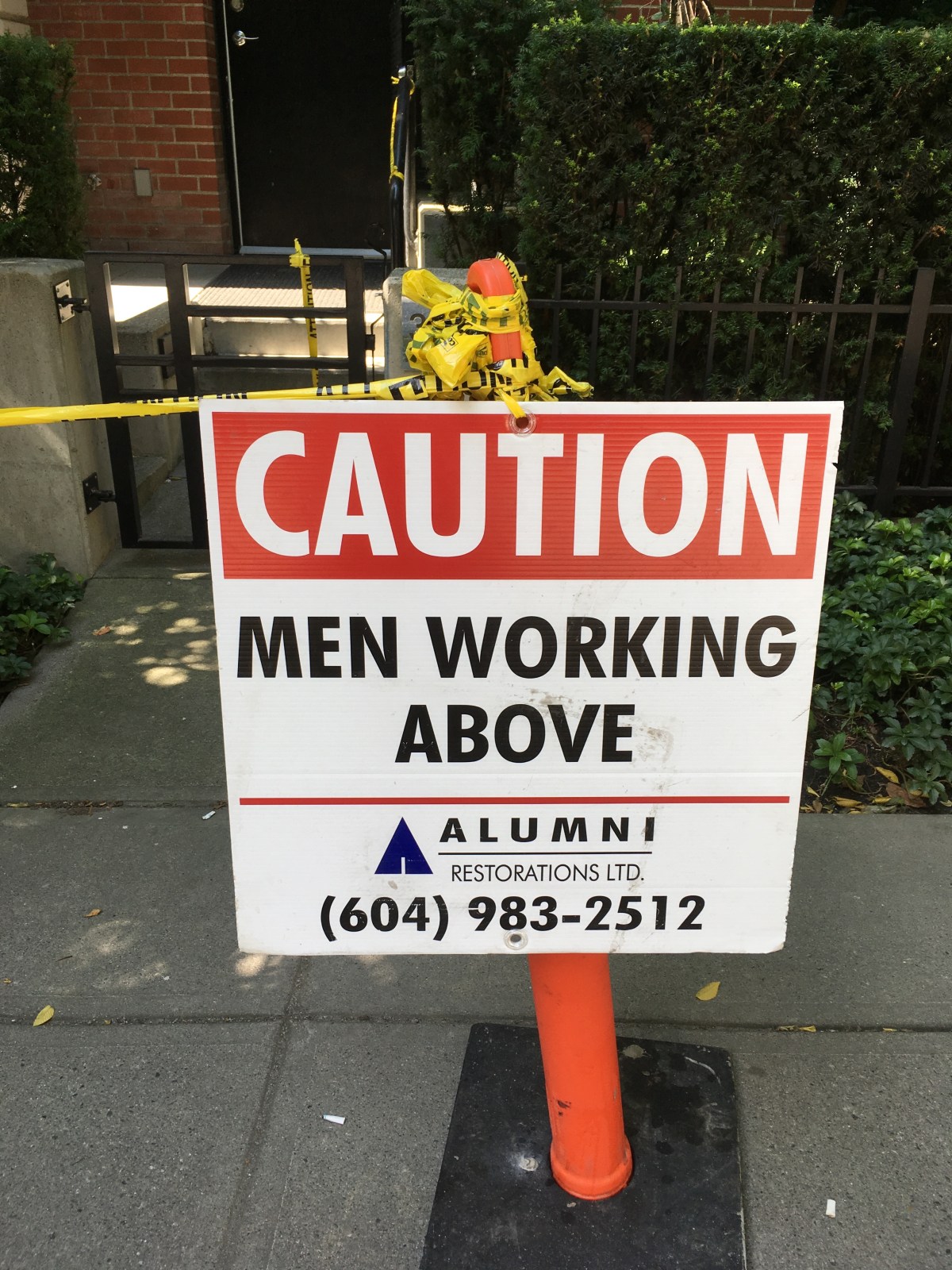
So much more inclusive than MEN WORKING

I was just lucky that electrician, my own trade, is already gender neutral. Visiting Mexico, I was delighted to learn that electrician in Spanish is electricista. We haven’t had to fight battles about carpenter, plumber, ironworker or sheet metal worker. Unfortunately, however, all these unions are brotherhoods by title and all except the painters, bricklayers and the longshore workers have refused to consider changing to a neutral term. Instead of International Brotherhood of Electrical Workers, how about International Union of Electrical Workers? Over the years sister electricians have floated the idea of getting the International to change its title to a more inclusive one, but the men in power refuse to entertain the idea. My one defiant act was to write my dues checks to the “International Sisterhood of Electrical Workers.” No one ever said anything and the checks were always cashed. I guess the bank doesn’t care what term we use.

The one union to do battle with its membership about the brotherhood issue was the Teamsters, 30 percent of whose 1.4 million members are women. A proposal to change brotherhood to a more inclusive term was put forward by the progressive president Ron Carey at an international meeting in 1996. Members were consulted about the idea and debated the issue for months in union publications, but Carey’s rival, James P. Hoffa opposed the change. He famously said, “It’s gender neutral. The definition of brotherhood is that it’s neutral.” Supporters of inclusion lost the vote, Hoffa took over as president, and the Teamsters remain a brotherhood.

Taking an Ax to Fireman

Feminists have spent many years trying to retrain reporters and speakers to use the term firefighter instead of fireman. Mostly we have been successful, but it takes letters to writers in all genres to make a change. The New Yorker magazine is one recalcitrant actor. I think those New Yorkers must look at their own backward fire department and think, “Why should I use a gender neutral term? There are no women.” And this is almost true. But their response should be embarrassment at their city’s failure to integrate its fire department.

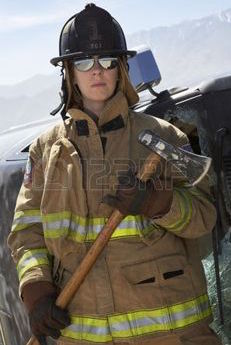
3540934-portrait-of-female-firefighter-holding-axe
Firefighting gear renders gender unrecognizable

I’ve written many letters to my daily newspaper, the San Francisco Chronicle, about this issue over the years. One of the most grievous examples was a column by Rob Morse, a writer with liberal politics whom I read regularly while he was published. After a big fire destroyed one of the buildings at the old Ghirardelli chocolate factory, Morse thanked the brave “firemen” who extinguished the blaze. Ironically, the photo of one of the working firefighters that appeared on the front page of the Chronicle was a picture of a female. You just couldn’t tell the gender because of all the protective gear she wore. My outraged letter to the editor was published but only with poor edits which made me look stupid. Still, it brought the issue to the editors’ attention. The Chronicle eventually changed its style to firefighter.

One example of the prevalence of this misuse of the word in the culture is in the comics. I’m a regular reader of the comic Luann, whose central character is a teenage girl (kudos!). I was heartened when the artist, Greg Evans, introduced a female character who becomes a firefighter and eventually dates Luann’s older brother. In the comic she also must contend with an abusive boyfriend, an issue that doesn’t often make it into the comics. Still, the artist continued to use the term fireman even when referring to that character. In my letter I praised the artist for creating this female character and tried to explain how using a gender-neutral descriptor would make her an even better role model for girls who read the comic. Presumably mine was not the only complaint. The comic eventually changed the term.

The firefighter argument is closest to my heart. Feminist activists in San Francisco battled for 16 years with the SFFD before women were allowed to work as firefighters. Then for 12 years I was partnered with a female firefighter who eventually became the SF fire marshal. I don’t always fault women in the gunsights for not fighting this battle. Working in a male-dominated culture you have to pick your battles and descriptive terms may not be the most important issue. That’s why it is imperative that feminist activists outside these workplaces pile on to push for change. When I worked in the SF Department of Building Inspection I had a cordial relationship with the fire inspectors I worked with (that’s where I met my now ex-partner). I didn’t hesitate to correct their language. When they didn’t change, I would greet them in the elevator, “How are the firewomen today?” That got their attention.

During my stint as the “fire marshal’s wife,” I saw these guys at parties and social events. Just like in the building trades, they had no second thoughts about insulting me or women in general, right to my face. When you first hear “Women can’t do the job, women shouldn’t be in the fire department,” etc., you are shocked, but the fortunate thing about continually being subjected to insults (as with sexual harassment) is that it gives you practice in responding. I was never great at quick retorts, but I got better with lots of practice.

My ex-partner said: “Every time I read the word fireman, it’s like a punch in the stomach.  It reminds me of when my brother (four years older, bigger, and stronger) would punch me, then hold me at arm’s length by putting his palm on my forehead and I’d be swinging away at him, never able to land a punch back.”

Fishing for Fishers

Lately I’ve been addressing writers about the term fisherman. Fisher is such an obvious and easy choice and I can’t understand why speakers and writers are so resistant to change. It’s not just men. Women are just as argumentative. Except there’s not a very good argument. “We’ve always done it that way,” the typical response, just doesn’t cut it.

FisherTina
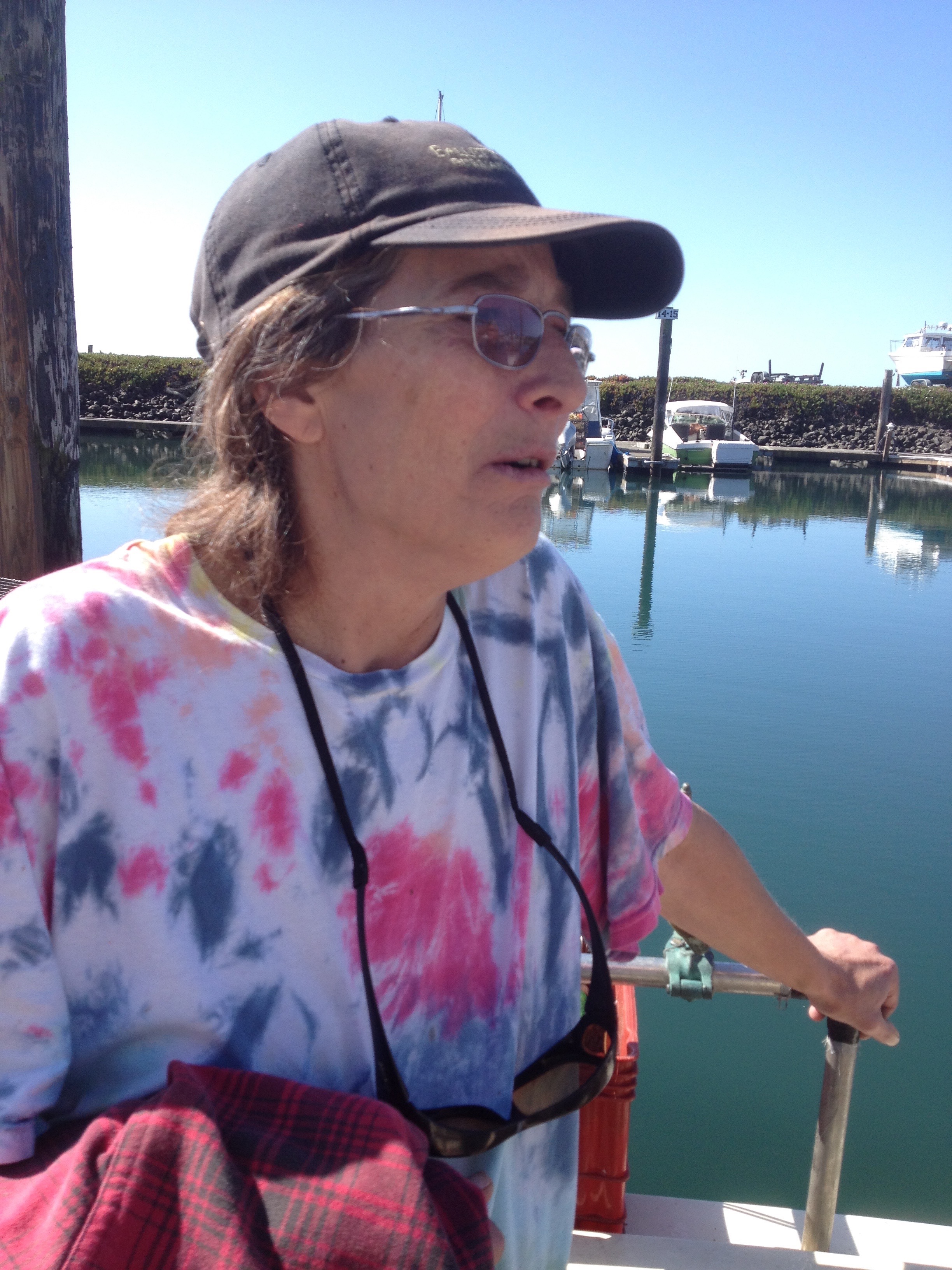
My fisher friend Tina Moreda on her boat at Bodega Bay Harbor

The last few times I’ve written to the Chronicle’s writers about the term fisherman (I love that the writer’s email address is listed at the end of the article), one didn’t reply, one wrote back to say simply “thank you,” and one wrote that she had thought of fisherman as a gender-neutral term.

Perhaps the reason this choice of words is ignored is that the fishing industry has been floundering and dying now for decades. Few choose to be fishers anymore, but I personally know women who integrated this industry in the 1970s and women who continue to make a living fishing. It’s still an important industry on the California coast, so the Chronicle runs fishing stories often. In recent stories, writers have used both the terms fisher and fisherman. I think my letters must have made an impact. They seem to be breaking their readers in slowly.

One wonders what they would think if all reporters were referred to as “newsmen.” Oh, wait. They were. And not that long ago.

News flash: From a story in The Guardian about the discovery of four new elements in the periodic table: “This article was amended on 4 January 2016. The reference to the new elements being “manmade” was changed to “synthetic” to follow Guardian style guidance on the use of gender-neutral terms.”

Postscript: This essay must be updated. Some unions have changed names but most are still brotherhoods. The laborers union changed to Laborers International Union of North America (LiUNA) in 2012. The Ironworkers do not use brotherhood in their name.

Wedding: A Story About Family and Queer Fashion

“Jesus Christ, it’s 1979. Why do they need to get married? They’ve been living together for five years. No one in the family disapproves. Why do people feel compelled to have the state sanction their relationships?” Don let me rave. Neither of us could answer these rhetorical questions. He couldn’t have been any less enthusiastic about our brother Tim’s wedding than I was. We knew that neither of us would ever have a family wedding with all the attendant fussing, well-wishing, presents and cultural sanction, not that either of us would want one.

“You don’t suppose there’s any way we can get out of going,” he said in a resigned tone.

I considered this. Our attendance seemed like a small price to pay to avoid the disapprobation that surely would result from our absence. “We can stay in the background. At least we’re not being asked to be bridesmaids.”

I could hear my brother sigh on the other end of the phone. “To be a bridesmaid,” he said, “has always been a great fantasy of mine.”

“I see what you mean. If I could be best man, I could rent a tuxedo. Fuck! What will I wear?” Don was silent, and I knew he wasn’t worrying about what I’d be wearing.

“Don, if you’re thinking about wearing a dress, just forget it right now. This is not the big city or some trendy college community. This is cowboy country. You’ll get the shit kicked out of you.”

When we said goodbye, I wasn’t entirely sure I’d convinced him, and I wondered how my outrageous brother managed to stay alive without me as his constant bodyguard. He insistently challenged assumptions about dress and gender, which was a dangerous thing at a time when the moral majority felt its grasp on the reins of cultural definitions slipping.

The truth was, just by being my natural self, people—both children and adults—were always confronting me about the nature of my gender. They would yell out of windows or from cars as I walked by, “Are you a boy or a girl?” Or I would be mistaken for a gay man. “Faggot!” they would yell, and speed off before I could correct them: “You idiot! I’m a dyke!”

I had learned that knowledge of gender is extremely important to people. They need this information before they know anything else about you. And once they get you pegged, to be surprised makes them inexplicably angry. All their assumptions are suddenly being challenged. It’s like you’ve called into question some intensely personal assumptions about who they are in the world.

I figured the problem wasn’t me, but how people expected women to look and act. To be feminine required performing unnatural acts—shaving one’s body hair, wearing sticky make-up and carefully coiffed hair, being quiet, wearing odd clothes and uncomfortable shoes, walking with short picky strides. I had practiced these ritual gestures at one time, but the feminist movement had released me. I was free and I was never going back now.

images-3
An example of what women were expected to wear in the 1970s. Hot pants were required for many waitress jobs.

Unfortunately, my freedom from convention left me completely unprepared to dress for Tim’s wedding. I had no dress-up clothes. As a matter of principle I’d stopped wearing dresses in 1970. Since then the contents of my closet had been recycled from thrift stores. As a working electrician in those days of butch dykedom, I could just wash my flannel shirts and jeans and wear them to the bar. No one I knew ever got dressed up, and if they attended weddings, they never told me. So what does a nonconforming, revolutionary lesbian wear to a heterosexual wedding?

At the airport I searched the Nordic crowd of Seattleites for Don’s dark head. I never knew what to expect. He’d been a hippie with a thick ponytail and full beard last time I’d seen him, but personas changed from year to year. He was not at the gate and I wandered until I heard my name called from a waiting area.

Then I saw him, relaxing back into one of the lounge chairs like a queen, newly clean-shaven and wearing giant turquoise butterfly earrings, a flowing scarf wrapped around his shoulder-length hair, tied in back. “I thought it was time to relinquish my male privilege,” he smiled.

In the short 150 miles or so between Don’s home at the foot of the Olympic Peninsula to Yakima, the land cracks and dries up like the edges of those Janis Joplin posters you rehang in each new collective house. Snoqualmie Pass takes you from a rich, dripping, evergreen rain forest over the snow-capped Cascades, past ski resorts and the shorn heads of clear-cut hills in to the Kittitas Valley, flat pasture dotted with Black Angus cattle.

Up over the Manashtash Ridge, a new freeway replaced the winding two-lane road along the Yakima River. Beyond irrigation, only sagebrush–ubiquitous in the valley–flourishes. From the west side of the ridge you can see the town of Ellensburg surrounded by the patchwork of pastures, ground crops and brown earth, and above that the sharp white peaks of the Wenatchee Range. As you continue east, your nose dries up and your hair electrifies, the sky turns intense blue and if there are clouds they look like puffs of bleached cotton. Then, just before the Yakima Valley appears below, if you look to the south, you see the round, white tip of Mt. Adams peering over those dusty brown hills, incongruous.

On that March day the chill air cracked and the sagebrush cast bright shadows on patches of snow as Don drove the Subaru down into the valley past big cattle ranches and their animals with thick winter coats, then smaller farms, past apple and pear orchards just starting to bud.

Our mother, Flo, rushed out to meet us as we pulled into the gravel driveway. She was dressed in her usual polyester pantsuit in bright colors. We hugged her thin frame in turn. Then, as she stood back to look at him, she brushed my brother’s hair away from his face. “Don, I wish you would do something with your hair.” (He had diplomatically removed the scarf.)

Don frowned. “Oh, Mom.”

I thought Don’s hair was beautiful—thick and dark and curly. I’d always wished I had inherited that head of hair from our mother. I might be wearing mine in the same long style. Instead, I wore my straight brown hair short, lately in the shag style Jane Fonda popularized in the movie Klute.

“Ok, you guys, come on in,” she said, “I want you to see the new solar addition Tim put on the house.”

Flo was never much of a housekeeper, but she was a genius at making this century-old farmhouse feel like home. We had bought the run-down five-acre place when I was ten, and remodeled it ourselves. Flo had filled it with antiques she’d collected from junk stores before they were called antiques and priced to match. She always had to show us her new finds.

We visited for a while, then went out to say hello to our younger brothers Tim and Terry, whose four-wheel drive pickups were parked further up the driveway. My parents’ place, which sat down in a hollow, had several outbuildings, all painted Swedish red with white trim like the house. The big old barn had been converted to a garage. Next to it was the chicken house surrounded by its chicken-wire pen. On the other side of the garage was the three-stall horse barn on which I’d painted a stylized picture of a horse years ago. Between them was what we called the doghouse, a rectangular structure that was once a container crate. Someone had given it to my father years ago, and he set it on a slab and cut a door in it saying he’d have a place to go when he was in trouble with Flo. Over the years we’d fixed it up into a nice little apartment with electricity and running water and windows. All of us had used it at one time or another to get away from the house. I’d stayed there on summers home from college. For the past several years Tim and Diana had lived there together.

Tim answered the door, a tall, solid figure with a sparse beard and lanky brown hair. “Hey, how the fuck are you?” he said. We passed hugs around. “I’ve got some great pot this year. We’re just drying out a little.” He pointed to the toaster oven. “Smoke a joint?”

Don smiled. This was what he’d been waiting for. Yakima’s hot dry summers are perfect for growing pot. Tim and Terry grew fine pot when it didn’t get harvested prematurely in the middle of the night by one of their delinquent friends. One year they threw seeds around the farm indiscriminately and plants came up everywhere. One or two flourished in the middle of the gravel driveway.

We threw ourselves on the old foldout sofa. Terry passed out beers.

“So, what’s the plan,” I said to Diana. What family events are we signed up for?”

My girlfriends are giving me a shower tomorrow,” she said. “The wedding’s on Saturday. It will be fun, you guys. We’ll have dinner at the grange hall afterward, and Tim’s friend Duane plays in a band. We can all dance. Tim’s been taking dancing lessons.” Diana was a dancer and a ballet teacher. I don’t believe Tim had ever danced in his life or wanted to.

“What are you wearing,” I asked.

Diana waltzed over to the closet and pulled out a plain white dress that was made interesting by the triangular pieces of green hanging like stalactites from the hem. It reminded me of a costume I’d seen in a performance of Peter Pan. “I made it myself,” she beamed.

“It’s beautiful,” Don and I exclaimed in unison. We looked at Tim.

“Bought a suit,” he shrugged.

“It’s very handsome,” said Diana, replacing the dress in the closet and pulling out a blue suit. “We had trouble getting it to fit in the shoulders. He’s so wide.”

Tim sucked at the joint and then smiled sheepishly.

“Now don’t worry,” Diana said, “You’re going to look great.”

“I have to go shopping,” I said.

The next day my mother and I set out to find me a wedding outfit. Together we slogged through the department stores of my hometown, reliving painful memories of past shopping trips. I had never liked girls’ clothes, and could only be induced to wear a style my mother called “tailored.” Absolutely no frills or puckers. She’d understood. She’d never liked frilly clothes either. But she was five three and slender. I was five eight, and until my twenties, decidedly plump. More often than not, when I found the rare piece of clothing that suited me, it didn’t come in my size. This had always mystified me. I knew there were plenty of other big-boned gals like me, but the people who designed clothes hadn’t discovered us yet.

images-1
Remember the polyester big-collared shirts and beltless pants?

Sears was filled with nothing but polyester. Pants with no pockets and elastic waistbands. Over the years I’d developed a clothing checklist. I preferred natural fibers, and I wouldn’t wear pants if they had no back pockets. “Don’t be silly,” my mother said.

I was indignant. “I intend to wear these pants more than one time,” I reasoned. “Where will I put my wallet?”

At Montgomery Wards I insisted on starting in the men’s department. I liked the color of a greenish suit on the display and convinced the clerk to let me try it on in the men’s dressing room even though I knew what would happen. Those seventies-style men’s pants were not made for my body. In the size that fit comfortably on my thighs, the waist was inches too big. These were not the kind of pants you could cinch up with a wide belt. They were the kind with the self-belt made of the fabric to fit a man’s waist exactly. When I emerged from the dressing room my mother was not impressed. “Oh, Molly,” was all she said. I knew she was right. I felt like a used car salesman.

We arrived at the Bon Marche irritated and frustrated. The Bon Marche is the Macy’s of Yakima, WA—clothes to aspire to. My attention span for shopping had always been short. And we had never shopped at the Bon when I was a kid. It was out of our price range.

I began to sift through racks of Misses slacks while Flo checked to see whether all the suits had skirts. Suddenly there it was. A rack of pants with back pockets. I was so happy it took me a minute to discover that the pockets were only half-pockets, not really big enough for a wallet. Why they do that I’ll never understand. “Fuck, do they think putting regular-sized pockets in would cause us to grow penises?” I asked my mother.

“Why must you use that word,” she scowled. “Try them on.”

The pants did fit me better than the men’s. I actually liked how they looked, even though I was still pissed about the pockets. “I hate giving money to a clothing industry that refuses to meet my needs,” I said. But I was ready to compromise. I knew I’d never find anything better.

My mother returned with a navy polyester jacket, size 12. Women’s jackets are always too tight in the shoulders or too loose around my waist, but this one wasn’t bad. Before I could complain, she said, “I’ll buy you the jacket.”

Later she asked what shoes I’d be wearing. “Don’t worry,” I said, “I brought my Frye boots.”

Flo insisted I come to the shower, even though the boys didn’t have to. It was just as inane as I’d imagined. Diana was obliged to ooh and aah politely over every gift, no matter how useless. My mother had anticipated that I’d come to this heterosexual event empty-handed and resentful, so she’d bought a present from me. I was as surprised as Diana to discover I’d given her a set of wine glasses with their own rack. Flo never said a word about it.

The day of the wedding I was still searching for an appropriate shirt to wear with my new outfit. My father’s closet had always served me well in the past. We’re about the same size and he has short arms for a man. Whenever I’d visit, he’d send me away with several of his old shirts, which I’d wear with tails out over jeans until they began to fray right at the spots where my ample breasts stuck out the farthest. I found a tasteful light blue number with a faint check. I was looking for a tie when Don breezed into the bedroom. He was wearing bright pink pants and a purple jacket, a pink polo shirt and platform shoes. He sashayed over to the dresser, pulled back his flowing hair and began putting dangly earrings in his pierced ears.

Flo was right on his heels, and she closed the door behind her. “Don,” she wheedled, “I don’t ask you for many things, but I’m asking you not to wear those earrings.”

“Flo, stop making such a big deal out of it,” he said in that artificially low voice he uses when he’s annoyed. “I’m wearing the earrings.”

My mother looked like she might cry. I wished I could make her feel better but I was sworn to defend my brother. “I don’t understand why you must make things so hard for me,” she said. She threw up her hands and walked out.

Before the end of the evening when I felt compelled to admonish my drunken father to stop copping feels off the female guests, he had said to me that he thought I looked “sharp” in his shirt and tie.

Later, when we were dancing, I felt the only wardrobe mistake I’d made was not to wear a bra. I hadn’t thought pointy breasts would really go with my outfit, so I wore an undershirt and let the breasts seek their natural level, about halfway to my waist. But jumping around with no support was painful. Don and I were especially popular on the dance floor, in direct proportion to the amount of alcohol consumed by the wedding guests. I never lacked a partner. All the women loved me.

images-6

Women are Building Our Universe

cheering
A thousand cheering tradeswomen make a lot of noise

Sisterhood is Powerful. That was my take-home from the 14th Women Building conference. When more than a thousand tradeswomen, supporters, advocates and union brothers convened in Los Angeles May Day weekend, it was by far the largest gathering of female construction workers in the history of our movement. Union tradeswomen of all crafts came together from all over the country and the world to share experiences, strategize, laugh and cry together.

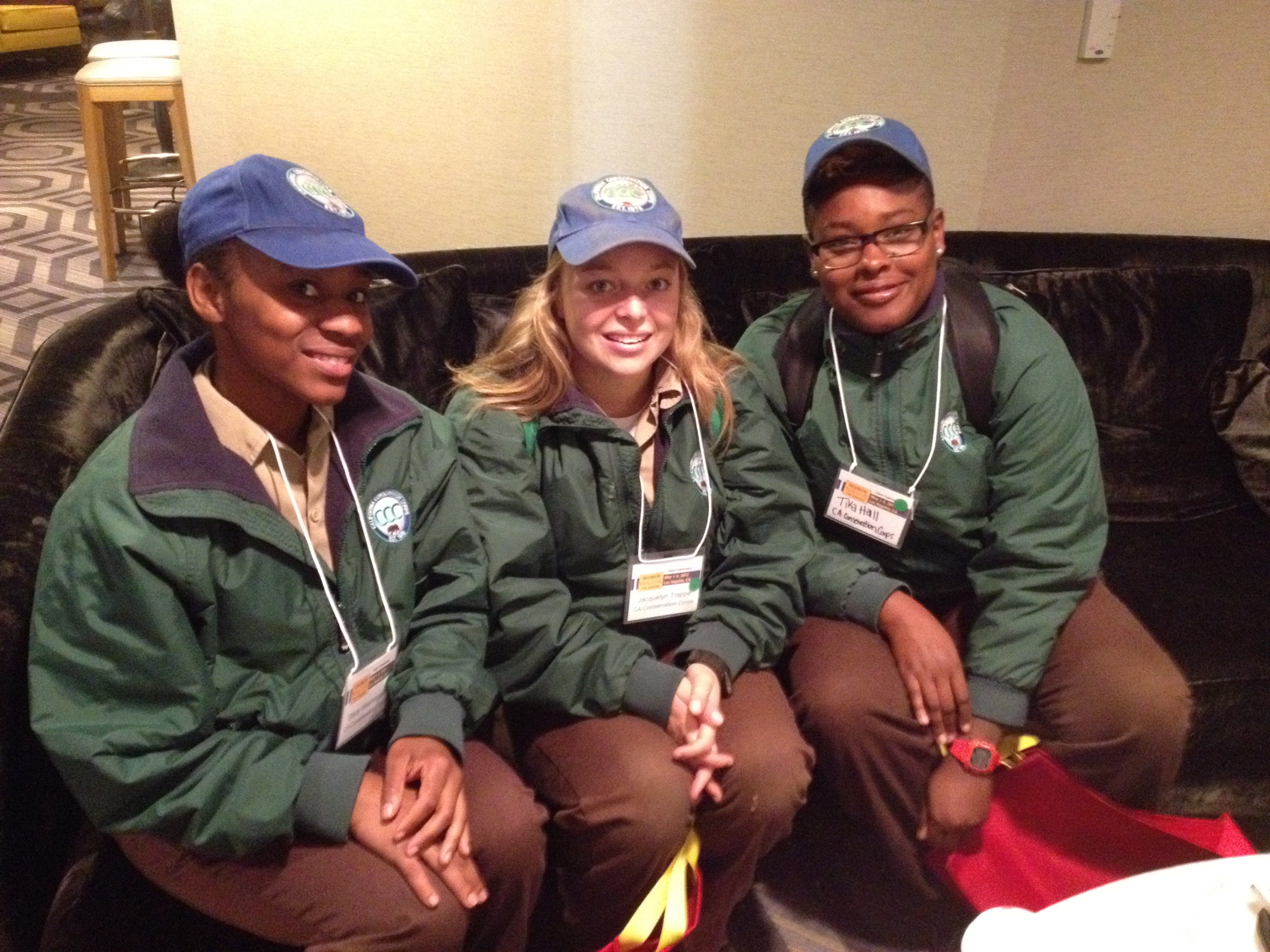
There is nothing like being in a room full of a thousand cheering sisters, and it was a new experience for me, a tradeswoman activist of 40 years. We are a diverse group of women, a rainbow of race, class and ethnicity, all part of the sisterhood. I spoke to many individual women—young members of the California Conservation Corps who drove all the way from Fortuna in Northern California, old timers greeting old friends, students who are working to get jobs in the trades. They all said the best thing about this conference was the camaraderie.

CCC
California Conservation Corps members

I’ve participated in the Women Building conferences since their beginning in 2002, and many tradeswomen conferences before that. But this conference was qualitatively as well as quantitatively different from past events and I think it portends a new chapter in our Tradeswomen Movement. I think three factors point to a sea change in our movement: first, the sponsorship of the North America’s Building Trades Unions (NABTU); second, the development of mature leadership at local, state and national levels; and third, the advent of social media and its use by the larger community of tradeswomen.

The NABTU sponsorship was the result of work by the National Women’s Committee, especially Patti Devlin, Debra Chaplan, and Caroline Williams. We now have leaders like these on a national level connected to union presidents and internationals as well as the Task Force on Tradeswomen’s Issues, which brings policy expertise to our movement. I was thrilled by the number of women who stood up when asked who had been elected to a leadership position in their unions. And this year the vast majority of women were sent by their unions to the conference.

ButureBuild
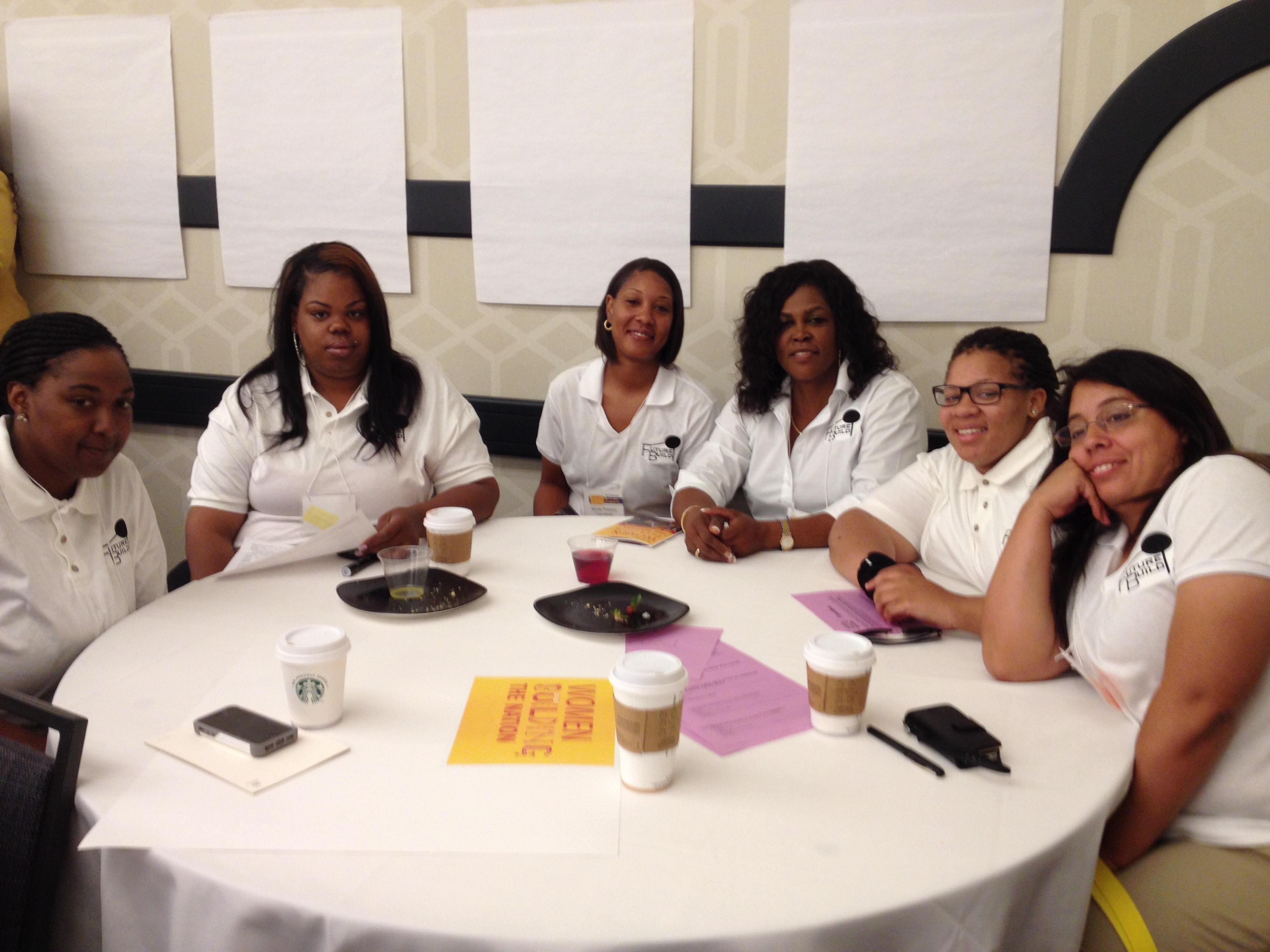
Women from the FutureBuild program

A new feature this year was the popular tradeswomen action clinic table. Organizers chose two primary issues that we could weigh in on: restoring federal WANTO funding for tradeswomen organizations, and resisting so-called Right-to-Work legislation in the states. The table was organized by elevator constructor LJ Dolin, Kelly Kupcak from Chicago Women in Trades, and Nicole Aro from the AFL-CIO. It was a great idea and organizers plan to expand it next year with more ties to workshops. The number of participants at the tradeswomen history workshop that I gave with historian Brigid O’Farrell showed us that women are interested in our history and in using what we have learned over the years to forge a new strategy for our movement.

When I got home and started friending folks on Facebook I could see that our community already has been successfully organized by Sisters in the Building Trades’ Melina Harris, who gets kudos for bringing so many women into the electronic media fold. I love that we can kvetch and share our stories instantly on groups like Trade Women Chat. It’s a far cry from our days publishing the quarterly Tradeswomen Magazine with writing, typesetting, layout and bulk mailing tasks taken on by volunteers.

What started as a conference for California tradeswomen (sponsored since 2002 by the California State Building and Construction Trades Council) has now become Women Building the Nation. Next year’s conference will take place in Chicago—the first of these outside of California. We’ve got the dates: April 29-May 1, 2016. It’s an opportunity to expand on existing networks of tradeswomen in the Midwest and to make our movement truly national.

Tradeswomen have long been virtually invisible on the front lines of the Feminist and Civil Rights Movements. We still are the ones who daily confront the most aggressive kind of sexism and racism in our traditionally male jobs. For decades now we have been devising strategies to counter isolation and harassment at work and to increase the numbers of women in the trades. The numbers and enthusiasm at this conference give me hope that we can build a better world for women in the trades. I’m looking forward to the 2025 conference: Women Building the Universe.

Advice from an Old Tradeswoman Activist

  1. Know your friends and know your enemies. Tradeswoman organizations are our friends, even when they are applying for the same funding. Those who want to keep us barefoot and pregnant and not allow us to work are our enemies. They will always try to divide us. Do not let them.


  1. Discrimination makes us crazy (and sick and angry). Sometimes we are called upon to support crazy women and tradeswomen organizations must be there for women when we are crazy.


  1. Tradeswomen are part of a larger movement for Civil Rights. We have more power when we coalesce with other people and organizations.


  1. Our community is small. Activists in the Tradeswomen Movement must know that you will encounter over and over the same people who are also active in the Movement. Build bridges, don’t burn them.


  1. One woman can change everything. In most cities where tradeswomen organizations have flourished, one woman organized the first meeting. Sometimes one righteous woman in a position of relative power in a state, federal or local government or a union organization can mean the difference between jobs for tradeswomen and none.


  1. Laws (and lawyers) can be our friends. Having the backing of government makes a world of difference when we are trying to change our world (unfortunately, the feds have neglected affirmative action since Jimmy Carter’s time).


  1. Mentor each other. Our job is to support each other. Our job is to inspire each other. Sometimes we don’t know the effect we have had on others until many years later.


  1. Women have the right to be mediocre. We shouldn’t always have to be the best at everything.


  1. Always try to be the best at everything. Otherwise you make women look bad. When we are the only one on the job, we embody the stereotype of all tradeswomen.


  1. Just going to work every day and putting on your toolbelt can be a revolutionary act.


Song: Sister in the Brotherhood

Along with my musical wife, Holly, I wrote a song. It will be included in an upcoming performance piece about women and work by Director Pat Wynne for our Rockin’ Solidarity Labor Chorus.

Sister in the Brotherhood

When I was a girl my mother said to me

When you’re grown what do you want to be

For choices I had only three

Teacher nurse or secretary


Typing and shorthand had paid mom’s rent

So I learned secretarial skills

I didn’t really get what that meant

Till I had to pay my bills


They made me wear pumps and pantyhose

To apply as a Kelly Girl clerk

I still only made minimum wage

Filing faster only got me more work


Chorus

I wanna be in the Brotherhood

Where I can build something and the pay is good

I’ll have a trade and I’ll have it made


I answered an ad for cocktail waitress

But they were hiring topless dancers

When the man who was hiring looked at my chest

He said you’ve got the answers


No experience necessary

You did not earn a thing

They said you could make 50 bucks a night

From tips stuffed in your g-string


I applied for a job in the construction trades

They said can you type, I said yes

I learned never to give that answer again

Cause you just get stuck behind a desk

Chorus

(Spoken)

I was too fat to be a stewardess

Too angry to be a waitress

Too allergic for hairdressing

Too messy for housecleaning

Hated kids too much to be a teacher

Typed too slow to be a secretary

Wasn’t into helping people

As a therapist or a nurse

Not social enough for social work

What could I do!


I finally got into the Brotherhood

Where I can build something and the pay is good

I’ve got a trade and I’ve got it made


Now in the morning I hop out of bed

Pull on my Carhartts and boots

Just stick that hard hat on my head

Forget the business suits


No more pushing papers around

And not creating a thing

Now I can proudly say I built that

When I look at a building


I finally got into the Brotherhood

But when I had to pay my dues

I wrote my check to the Sisterhood

And my check was never refused


(Spoken)

The International Sisterhood of Electrical Workers

Has a nice ring to it

The Birth of Our Movement: Tradeswomen in the San Francisco Bay Area

The tradeswomen movement might be the most unsung subset of the feminist movement of the late 20th century. Like the feminist movement, it did seem to erupt suddenly, simultaneously, across the country and the world. All at once in the mid-1970s women began demanding access to blue collar jobs that had been the exclusive domain of men, like construction, utility maintenance, driving, dock work, policing and firefighting.

But the movement was not as spontaneous as it appeared. Women had been working for decades toward equality under law. Women had been included—however disingenuously—in the Civil Rights Act of 1964 and then Title IX, the 1972 law requiring gender equity in education including sports programs. Young feminists, studying the statistics, were painfully aware that on average women working full-time made only 59 cents for every dollar made by men (in 2011 the proportion had risen to 77 cents). Inspired by the Civil Rights Movement and efforts by black men to enter the white world of union construction, women began to organize toward employment equity.

In the 1970s and 80s organizations advocating for women’s access to these jobs sprang up all over the U.S.: Chicago Women in Trades, TOP-Win in Philadelphia, Northern New England Tradeswomen, Hard-Hatted Women in Cleveland, Nontraditional Employment for Women in New York, Women in Trades in Seattle.

In the San Francisco BNEWay Area activists first formed Nontraditional Employment for Women (NEW) as a project of Union Women’s Alliance to Gain Equality (Union WAGE), a nonprofit organization for working women which included housewives, unemployed, retired, and women receiving welfare.

Early tactics included demonstrations and marches and efforts to enter union apprenticeships in the construction trades. The training programs, administered by joint committees made up of employers and unions, are comprehensive and free. An apprentice works full-time while completing training, usually at night during the program, usually four years. Hourly pay increases until you “turn out” as a journeyman in your trade. The apprenticeship system, especially in desirable high-paid trades like electrician, plumber, operating engineer, sheet metal and ironworker, had been closed to all but white men, primarily relatives of men already in the trade. The federal government had put in place agencies to enforce the new civil rights laws and women began to organize to tear down that wall.

Carpentry was a popular choice among women. The idea of working with wood, which it turns out construction carpenters don’t do much of—they mostly build forms for concrete–seemed romantic. The carpenters’ union was and still is the largest construction union with the biggest apprenticeship program and the most jobs. In the 1970s, it was one of the easiest apprenticeships to get into. Other crafts required applicants to take aptitude tests, submit to interviews and wait for months for a score but the carpenters used the “list” method, just creating a list of applicants, first come first served.

In 1975, with support from a sister nonprofit, Women in Apprenticeship Program (WAP) whose purpose was to place women in these apprenticeships, women learned that getting into the carpenters’ apprenticeship was just a matter of standing in line at the union office and signing up. The night before the apprenticeship opened, women formed a line outside the union door so there would be no question about who was first. Sleeping for one night on a concrete sidewalk seemed small payment for the opportunity to enter a training program which would also assist in placing trainees in construction jobs.

When the union’s doors opened the next morning the women who had waited in line all night found that their names did not appear first on the apprenticeship list. They also learned that carpentry was a “hunting license trade,” meaning that the apprentice must first find a contractor willing to hire him before he can be indentured into the apprenticeship. Hiring and, therefore, the apprenticeship was controlled by the contractor/employers who preferred to choose known workers rather than request new apprentices sight unseen from the union’s list. The women did travel to various job sites in the Bay Area seeking work, but no contractor would hire them. They decided to look for a lawyer.

Sue the Bastards

Filing a lawsuit was a decision not taken lightly. It almost certainly meant that the filer would become a martyr to the cause and would be blacklisted from future work. It could also mean months and years of shepherding a case through the system. And, as much as it was apparent that the unions were acting as the enemy of women, the women did not want to make the unions their enemy. The unions were the only reason trades jobs paid decent wages with decent working conditions.

Litigation cannot be the sole foundation of a mass movement, but litigation in the 1970s when class action lawsuits proliferated and very often resulted in wins, became an important part of activists’ strategy for change. San Francisco Bay Area tradeswomen activists were lucky to have advocate lawyers at Equal Rights Advocates, a law firm devoted to defending working women, and the Employment Law Center. Across the country, most women fighting employment discrimination were out of luck. No lawyer would take their cases.

Lawsuits filed by individuals rarely resulted in changes to laws or regulations. Women were pressured to settle for cash and to agree not to disclose the settlement. The lawsuit that had won affirmative action goals and timetables for women in the construction trades was filed by a coalition of feminist advocates against the U.S. Department of Labor in 1976.

BCAW by JEB
(c)2015 JEB (Joan E. Biren)

The case that resulted from the 1975 attempt by women to join Carpenters Local 22, Eldredge vs. Carpenters Trust, kicked around in the courts for 21 years and was finally decided in favor of the women. Judge Betty Fletcher of the Ninth Circuit Court of Appeals ordered the union to reserve 20 percent of its job referrals for women. In her opinion, an obviously exasperated Fletcher wrote, “The bottom line is that women historically have been systematically excluded from carpentry work and for more than two decades have sought relief through the courts while the Joint Apprenticeship Training Committee, the craft’s gatekeeping organization, has waged a relentless battle to preserve the status quo.” But the carpenters union ultimately was the real winner. For a time, the union complied. It found plenty of women in the San Francisco Bay Area anxious to enter the trade, putting the lie to its past complaints that women weren’t interested in construction work. Then, when the 20 percent apprenticeship goal was met, the union petitioned the court to end the consent decree. The settlement agreement failed to require follow up and when the judge’s decree ended so did the hiring of women.

The women’s lawyer, Alberta Blumin of Berkeley, essentially worked for free, but there is no accounting of the legal costs to the JATC for its “decades’-long legal recalcitrance and foot dragging” (Fletcher’s words).

Goals and Timetables

In 1978, when the new federal affirmative action rules and regulations went into effect, tradeswomen and women who aimed for careers in construction celebrated. The goal for women to be hired on federally funded jobs was 6.9 percent, increasing to 9 percent over five years. Apprenticeship programs were required to indenture 23 percent women (the number was one half the percentage of women in the general workforce—46 percent). If the unions and employers actually met the goals and the federal and state governments actually enforced them, it would only take a few years for women to achieve parity in the construction trades.

The new comprehensive federal guidelines that resulted from the Department of Labor lawsuit spelled out more than just numerical goals. Titled Executive Order 11246 and upgraded under President Jimmy Carter, the law acknowledged that a critical mass of women would be needed to counter the isolation and harassment women were experiencing in nontraditional jobs. The regulations pointed out working conditions and safety as paramount.

That year, 1978, union construction apprenticeships across the US were forced to induct their first women, but most women were still alone in apprenticeship classes with men. Many dropped out. In San Francisco’s IBEW Local 6, four women began the apprenticeship. One, Pat Snow, was able to retire with a full pension after 25 years as an “inside wireman.”

The large hope was not fulfilled. The 6.9 percent goal was never met except for a few isolated jobs, and never increased. Nor was the apprenticeship goal met, except in the Seattle IBEW Local 46 program, which for seven years was headed by a female electrician, Nancy Mason.

Anti-poverty strategy

A good percentage of women who entered the construction trades in the 1970s were college-educated and middle class. Economics was a driving factor. Unemployment was high and women had difficulty finding well-paid jobs in more traditional occupational sectors. But many women didn’t want to work as teachers, nurses or secretaries (the main historical choices). The feminist movement had posed the question: Why can’t I do this? Suddenly everything seemed possible. Women who didn’t want to dress in skirts and pantyhose, whose dream was other than sitting at a typewriter all day, who weren’t interested in teaching kids, found a welcome alternative in construction work. You could get up in the morning, throw on the same clothes you’d worn the day before, put a hard hat on uncombed hair and go to work. You could drive around town and point proudly to buildings you had built. In union construction work men and women make the same wages and the contract provides for decent working conditions and benefits.

Among the many reasons to choose construction work was free apprenticeship training and no requirement for college education. Activists saw the breaking of resistance to women in trades as a path out of poverty for women. Here was a way to counter the “feminization of poverty,” a shocking trend especially as more women in the U.S. became single heads of households. Such a demographic shift could end poverty for women and children all over the country.

Tradeswomen Inc.

Screen Shot 2015-04-18 at 1.32.07 PMIn 1979, Tradeswomen Inc., a 501c-3 nonprofit, was organized by a group of advocates including Madeline Mixer, director of District IX of the Women’s Bureau, US Department of Labor; and Susie Suafai, director of WAP. The goal was to access money to expand the already successful WAP project that was placing women in Bay Area union apprenticeship programs. For a short time, under President Jimmy Carter, construction jobs opened up to women. But after Ronald Reagan’s election in 1980 everything changed. The Reagan administration immediately dismantled and defunded whatever affirmative action programs it could, and stopped enforcing regulations already on the books.

Women, however, continued to fight to enter construction and nontraditional jobs.

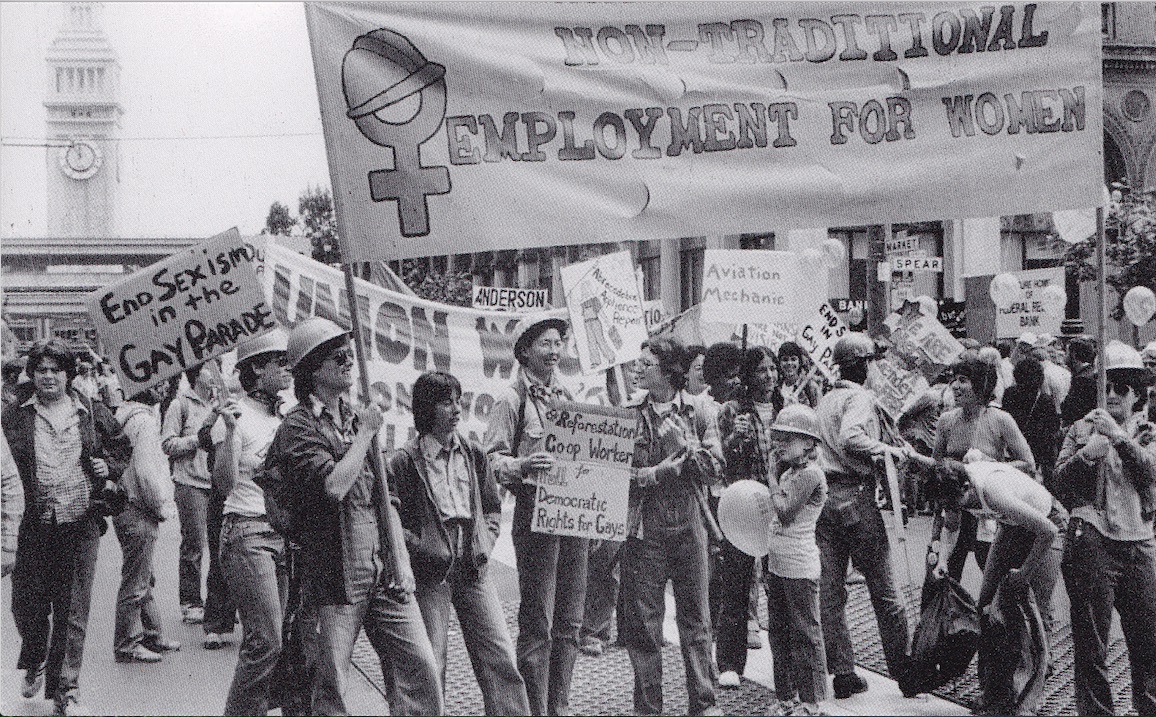
Photo of Nontraditional Employment for Women by Cathy Cade

To be continued.