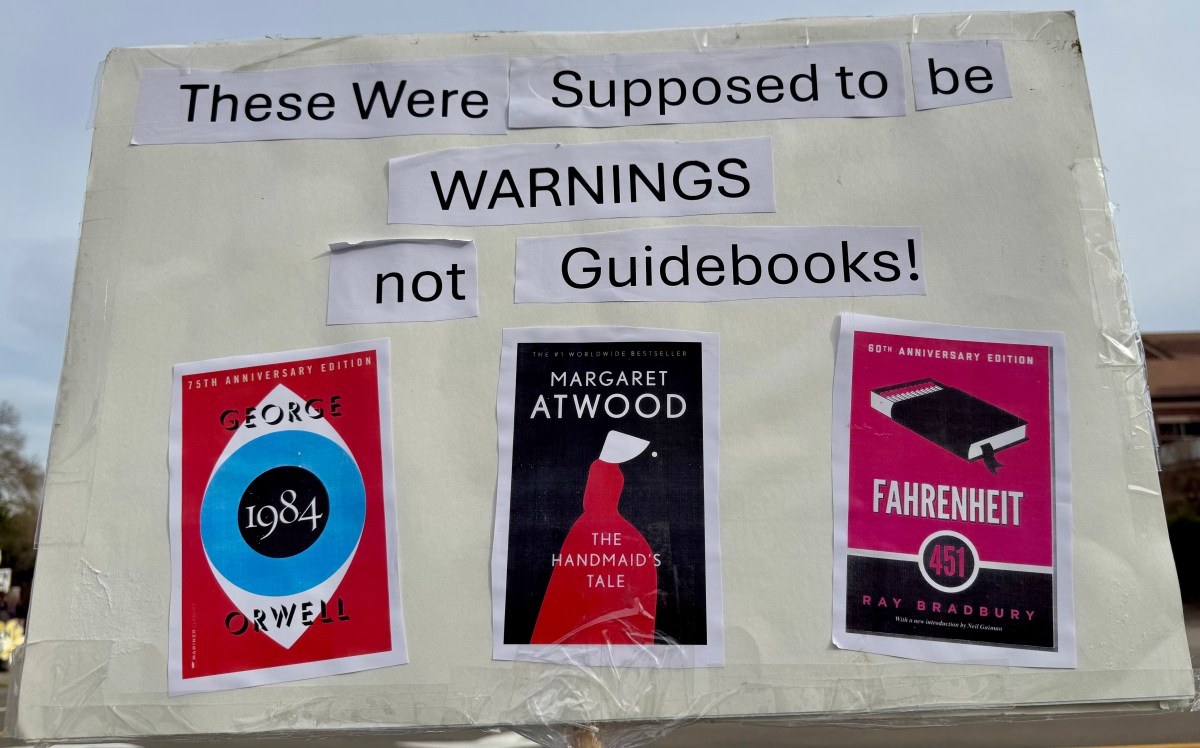
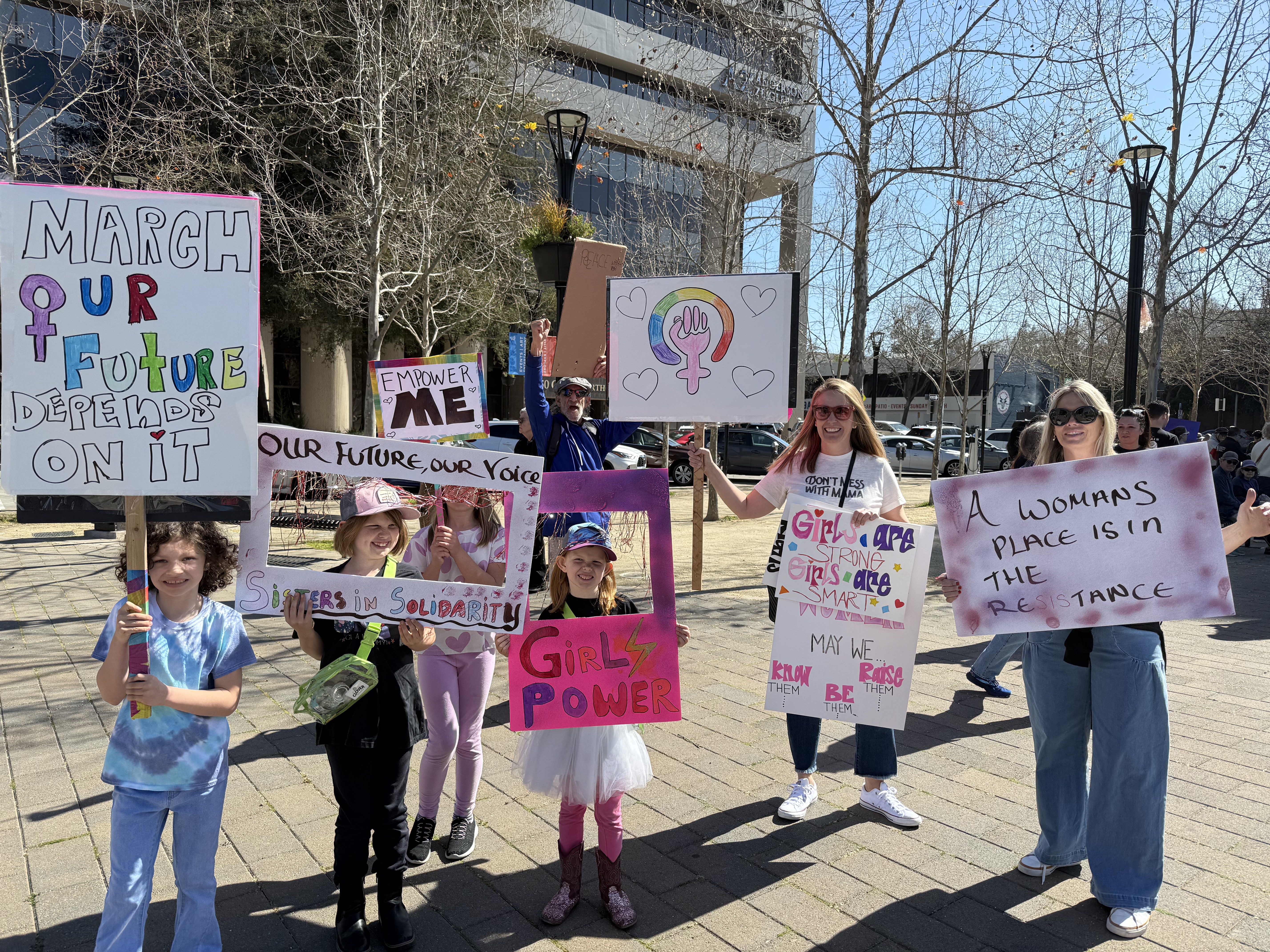
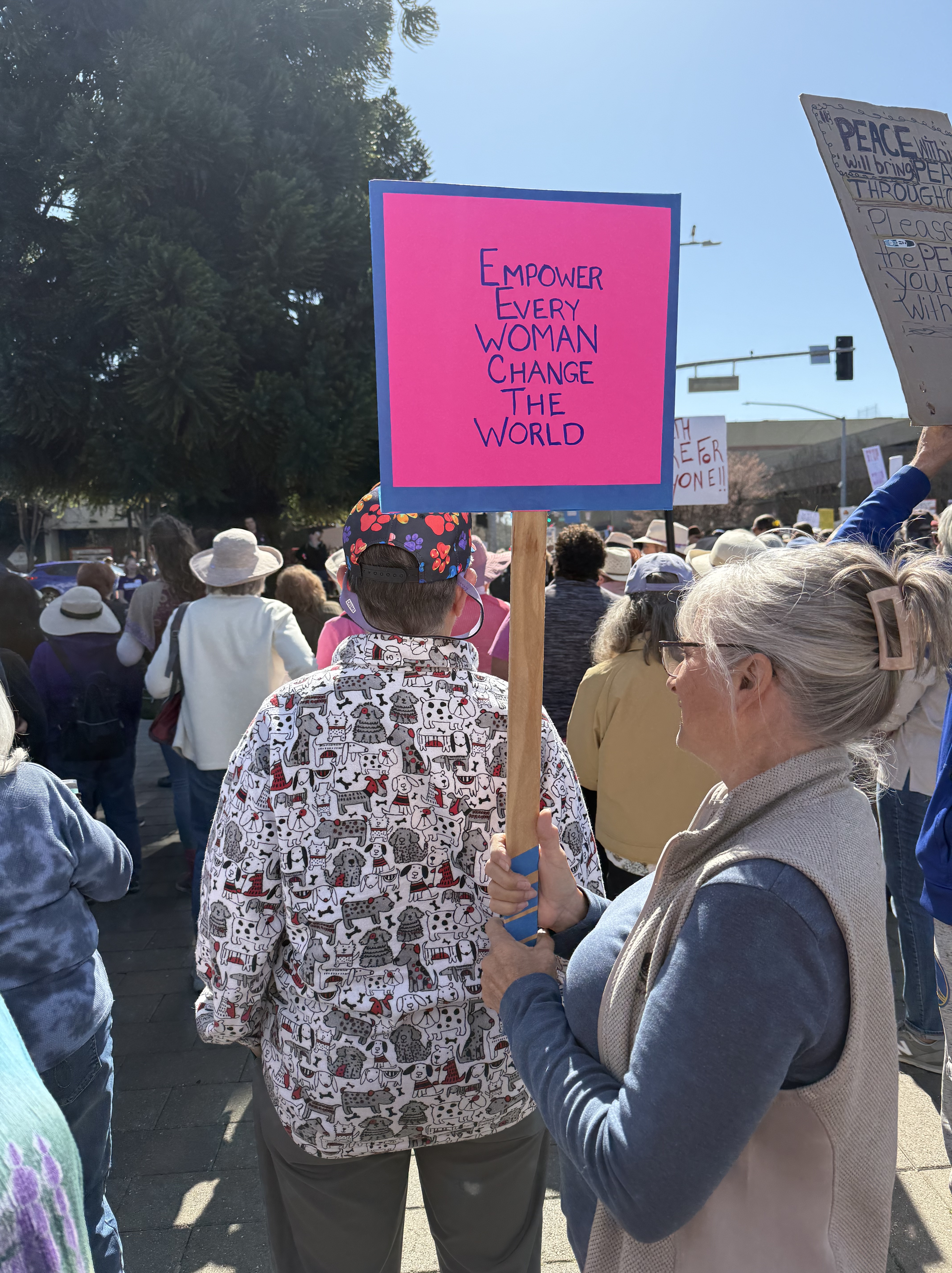
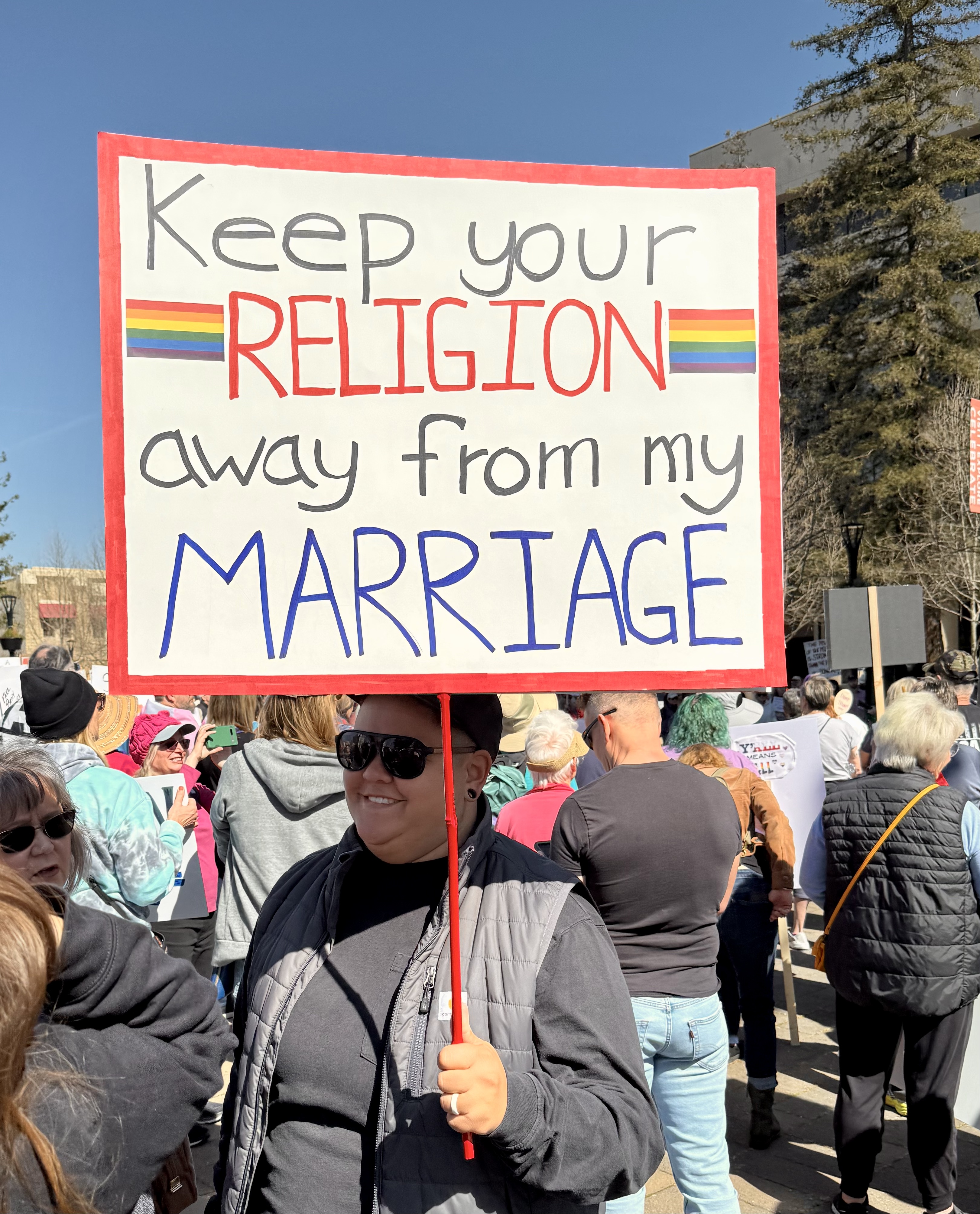
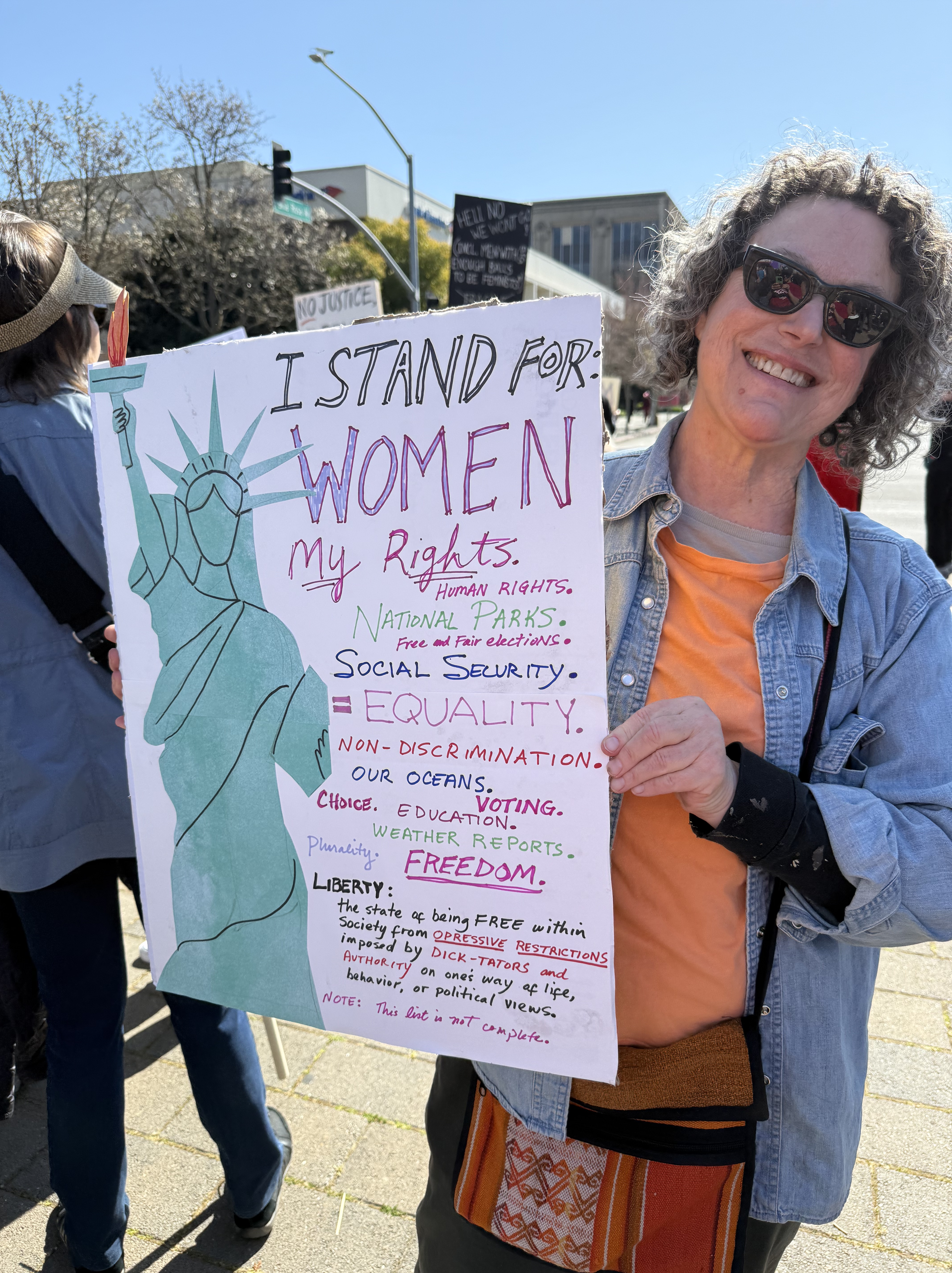
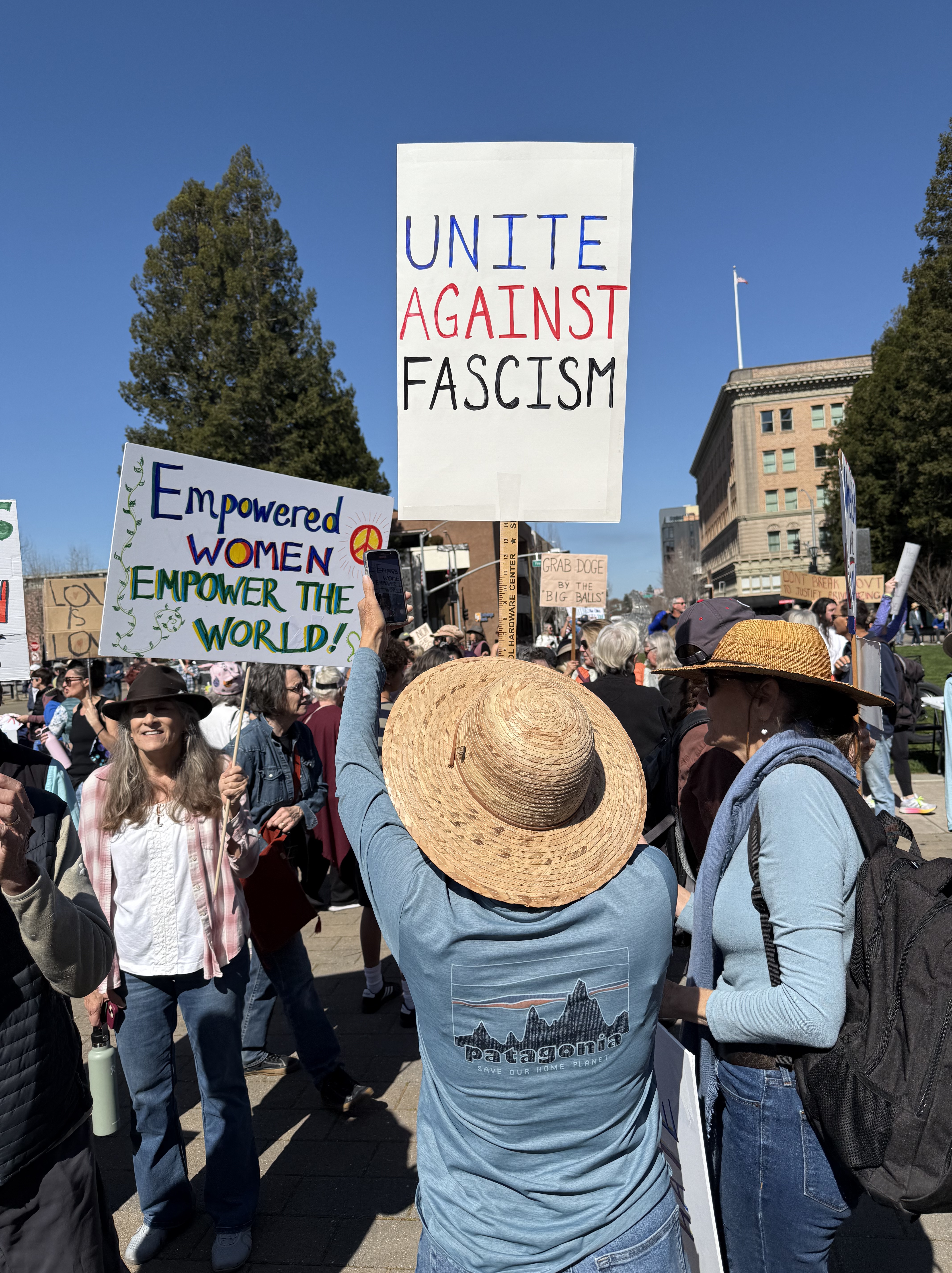
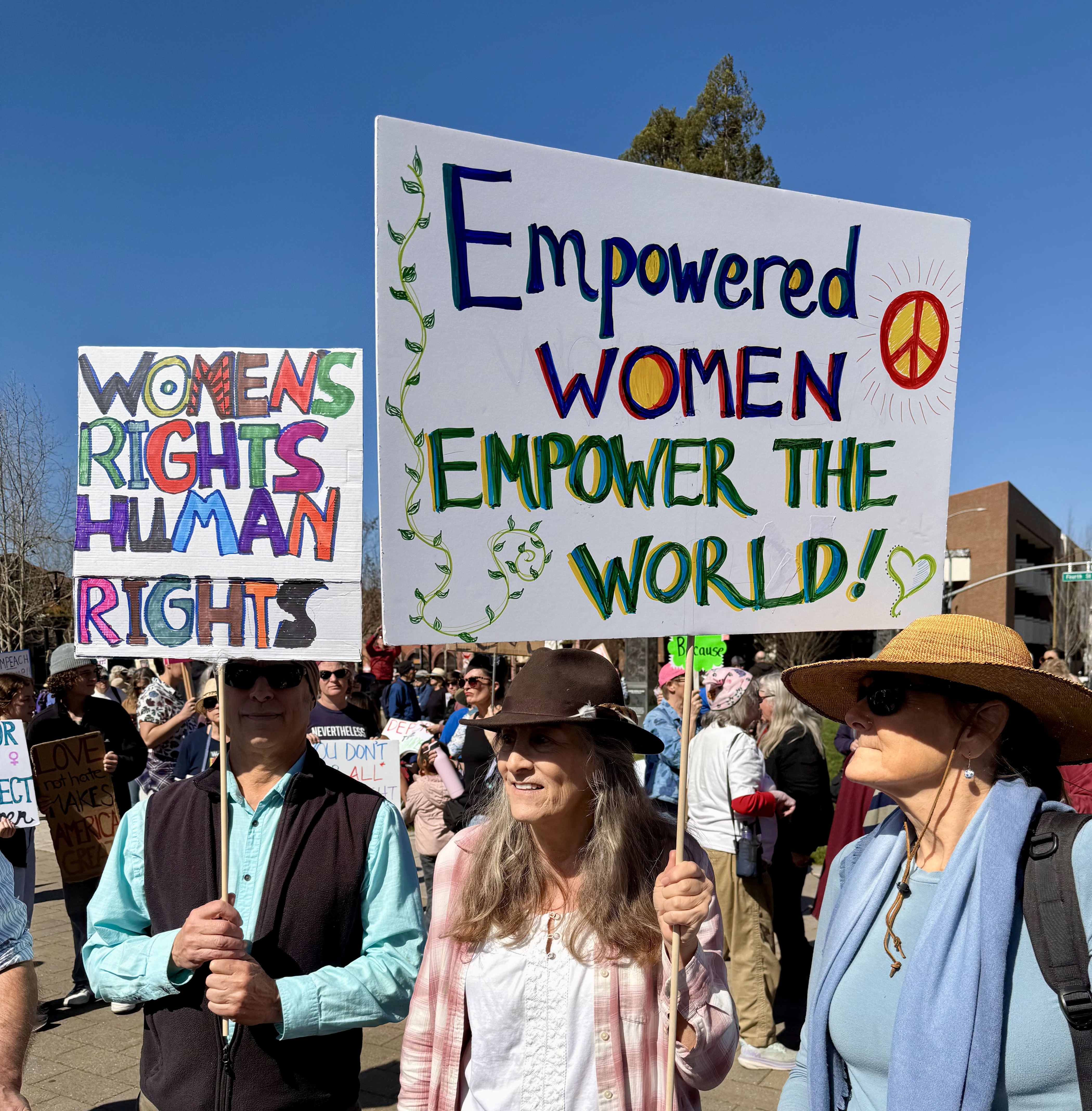
With Santa Rosa Women’s March and SEIU Local 2021
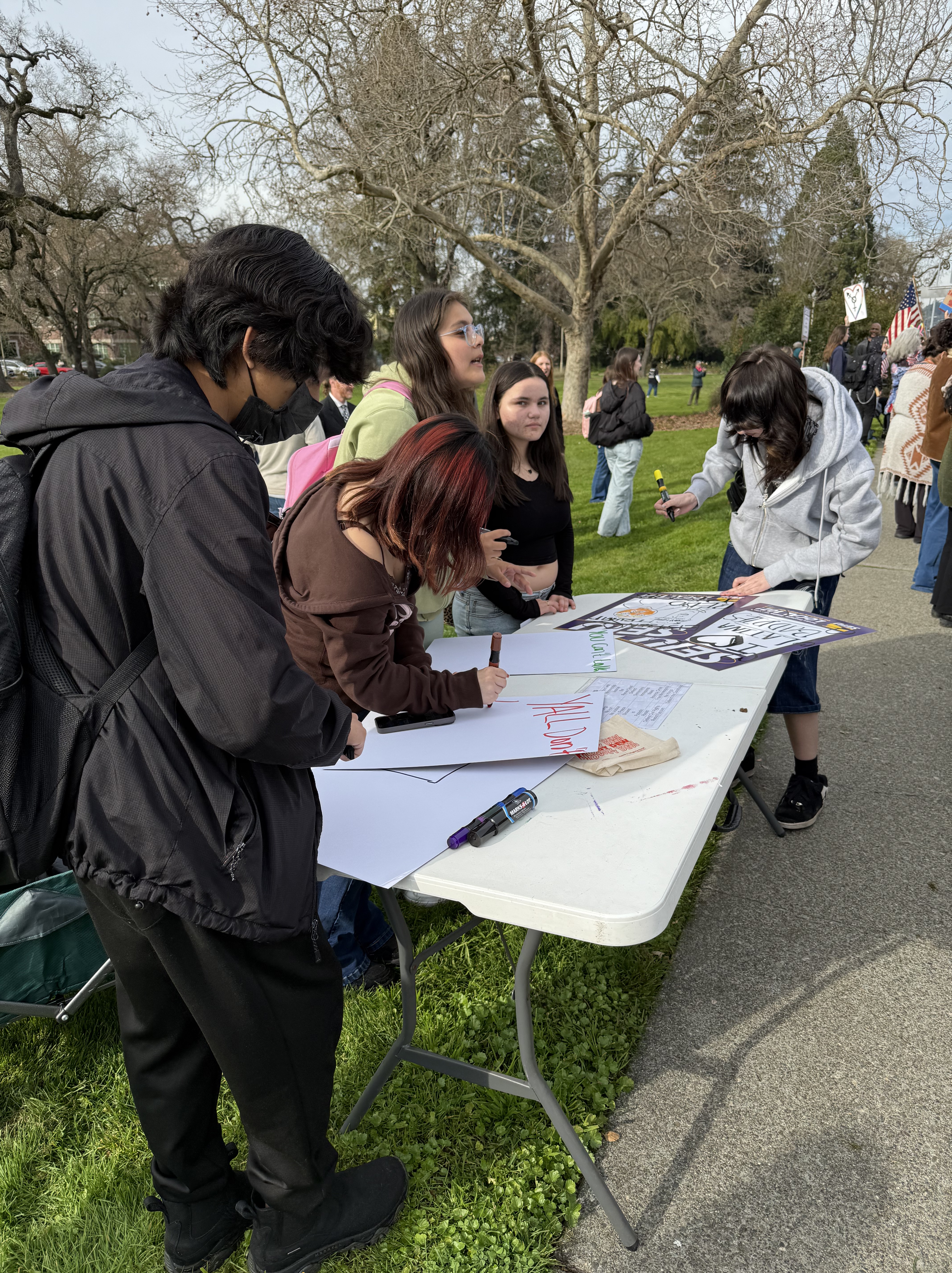
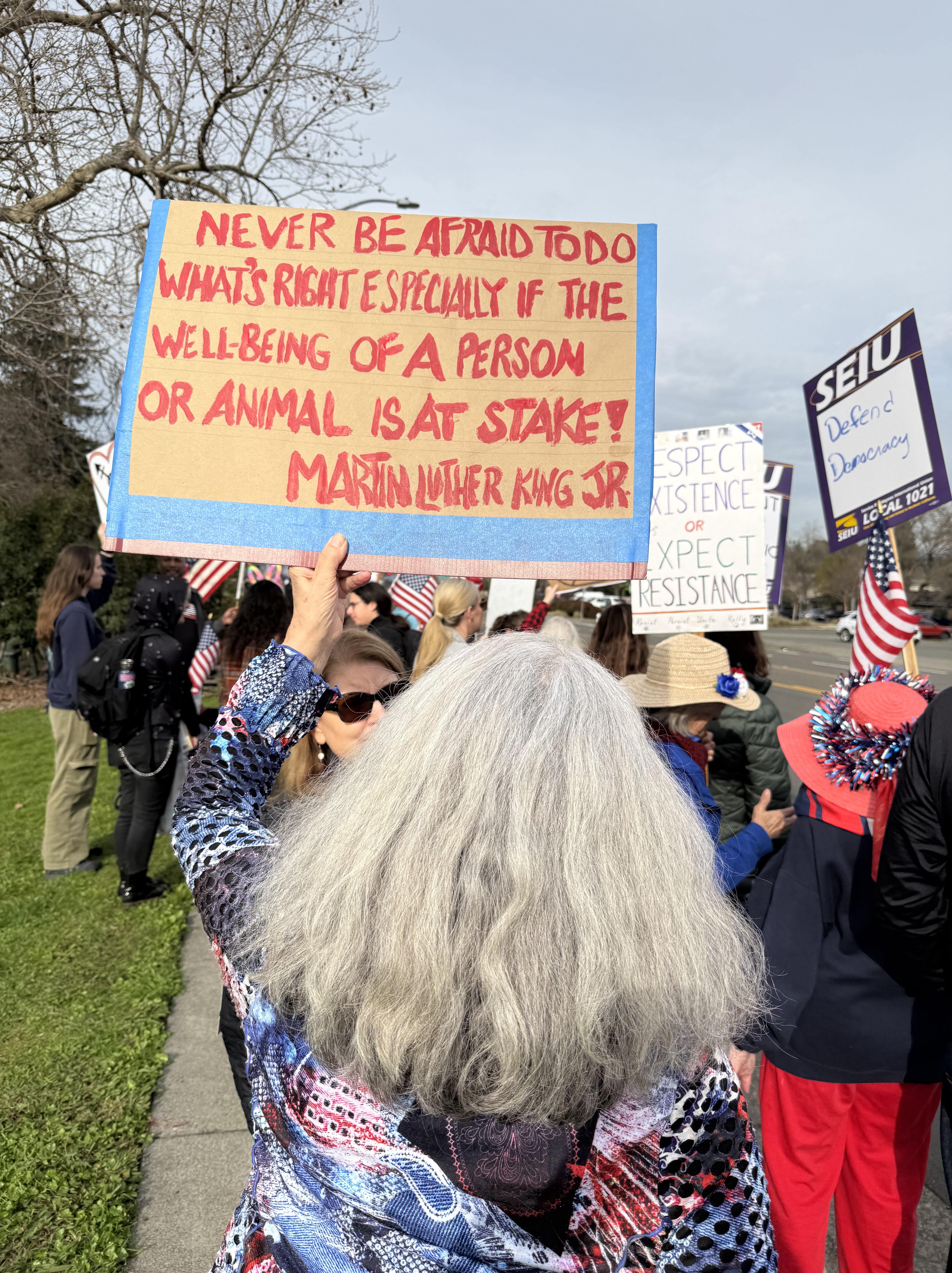
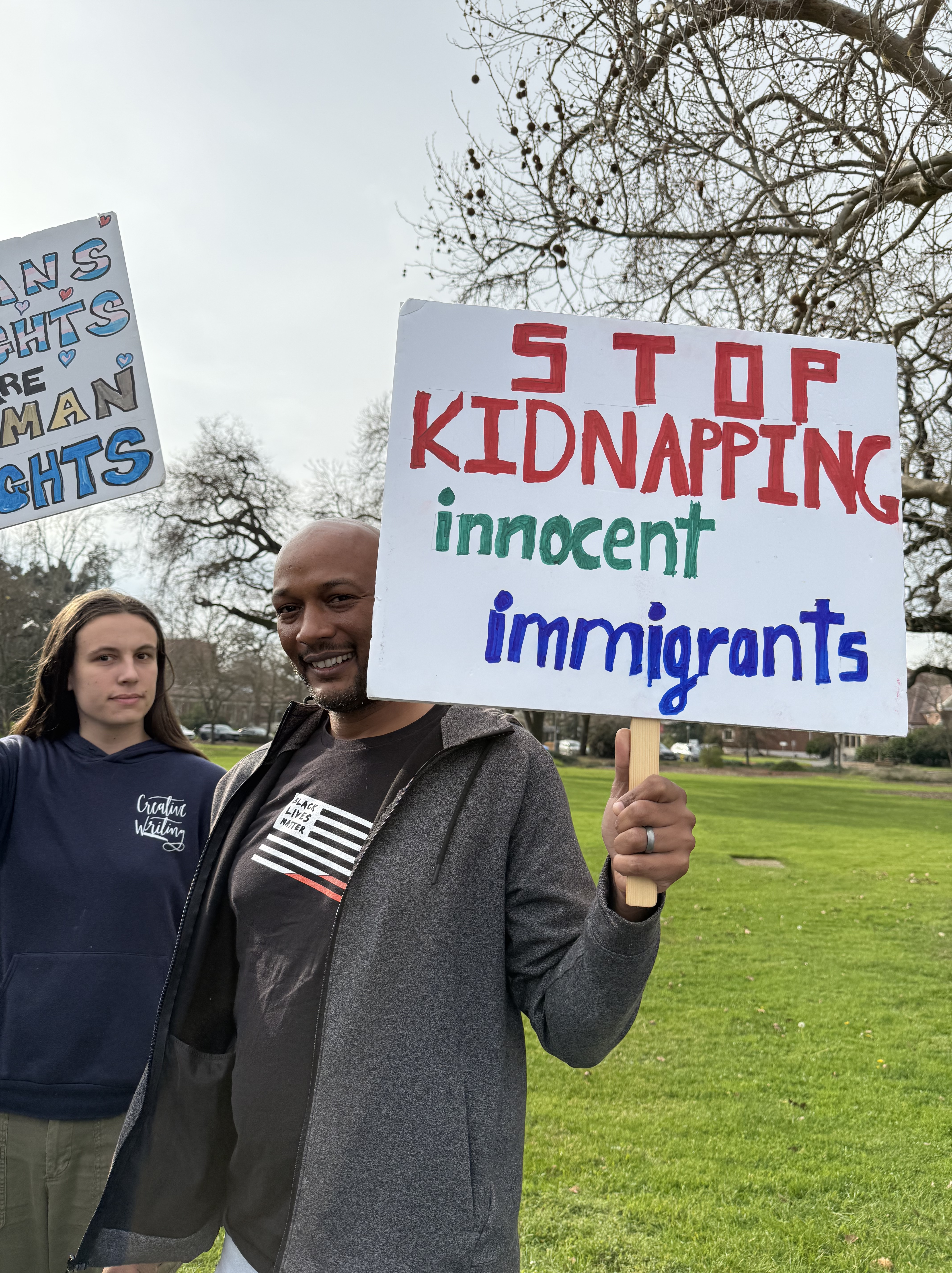
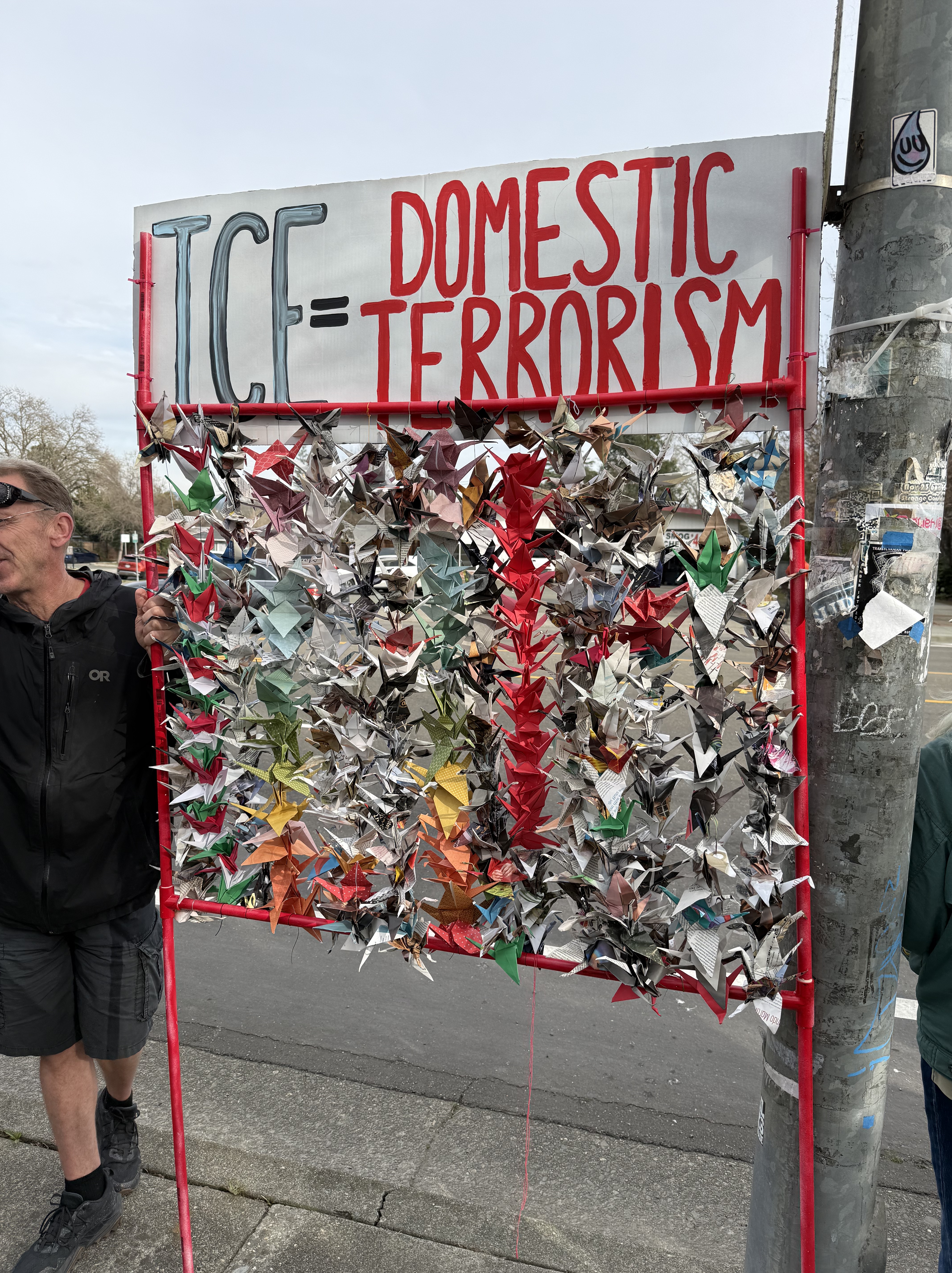
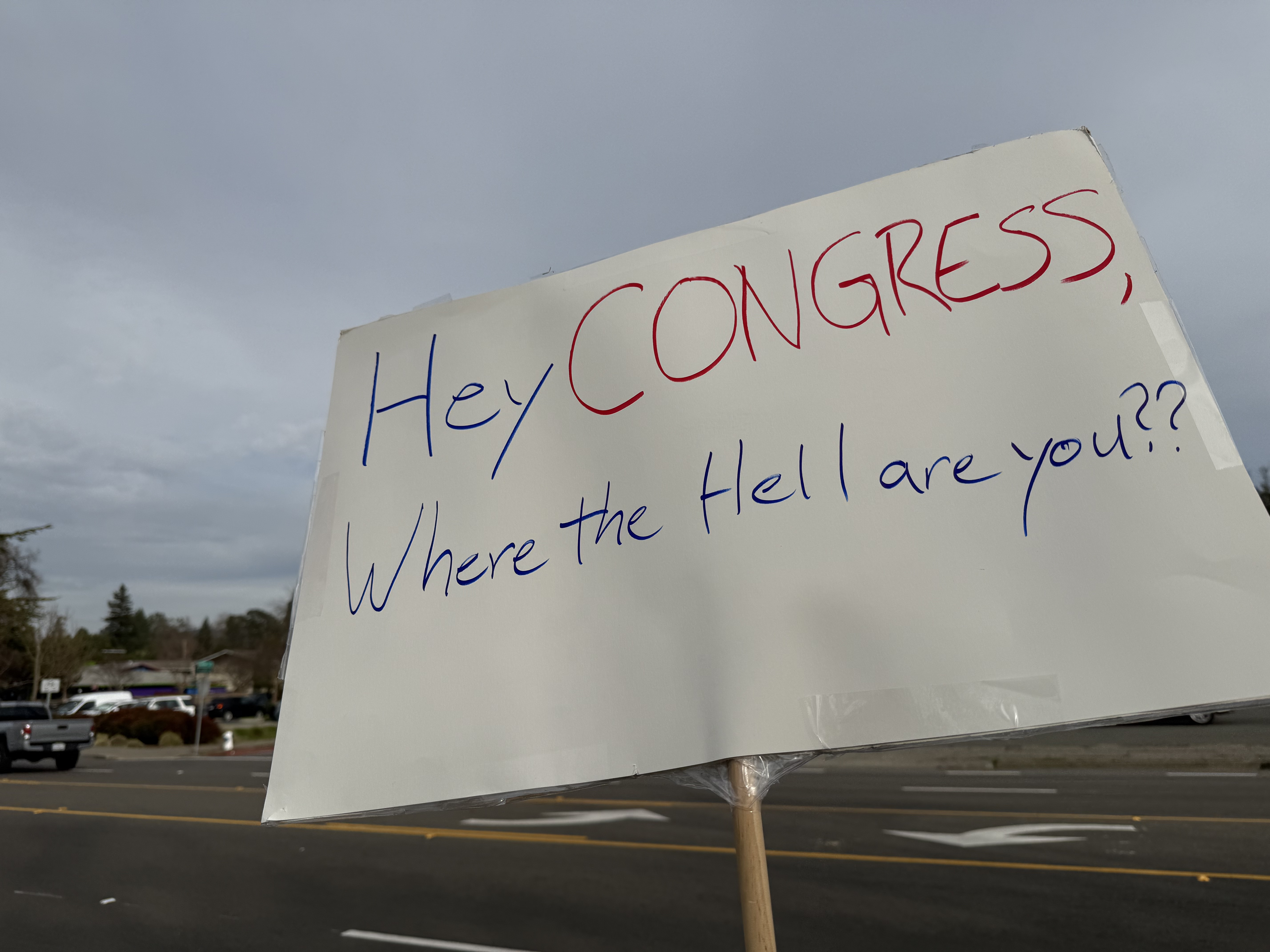
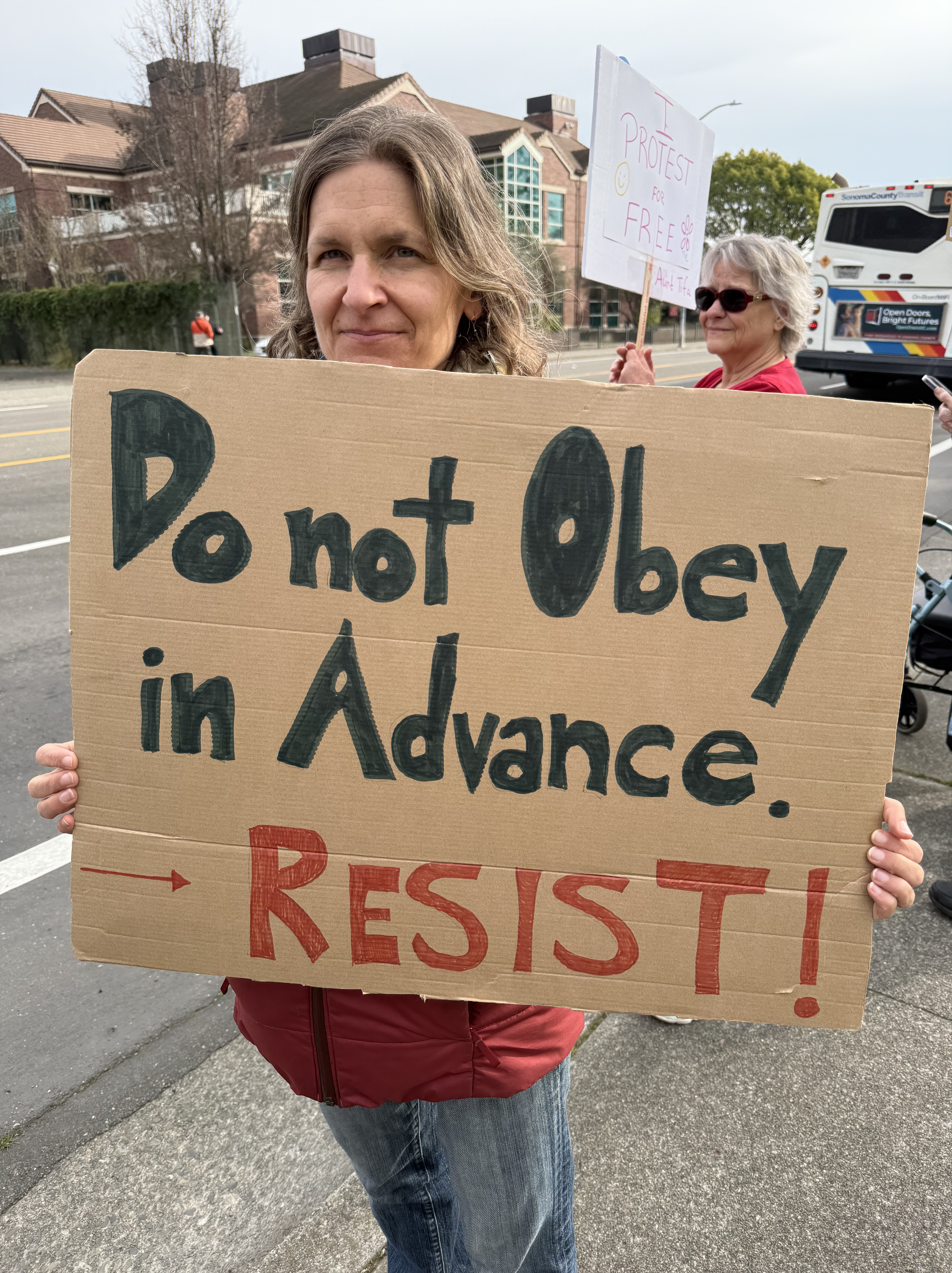
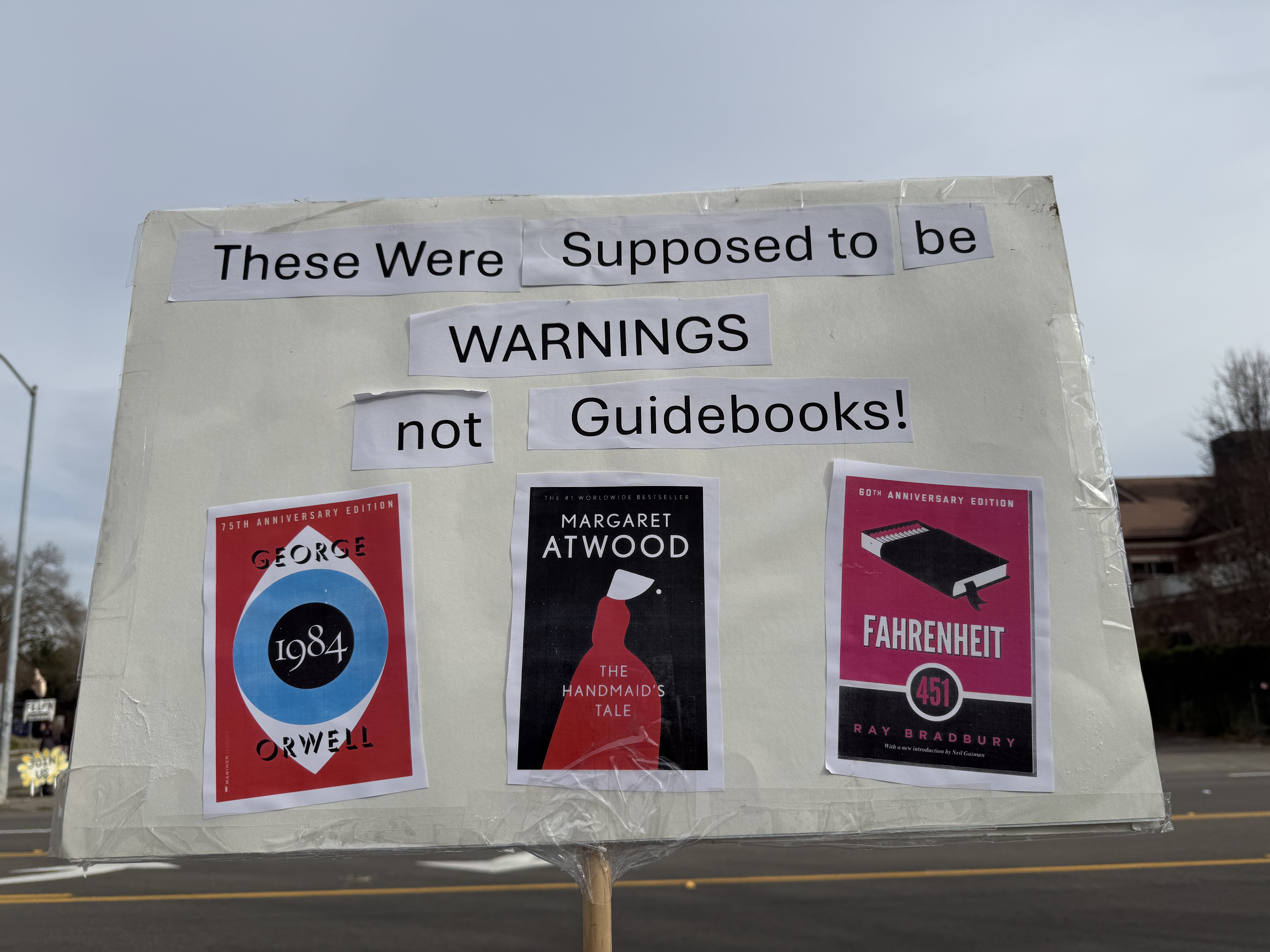
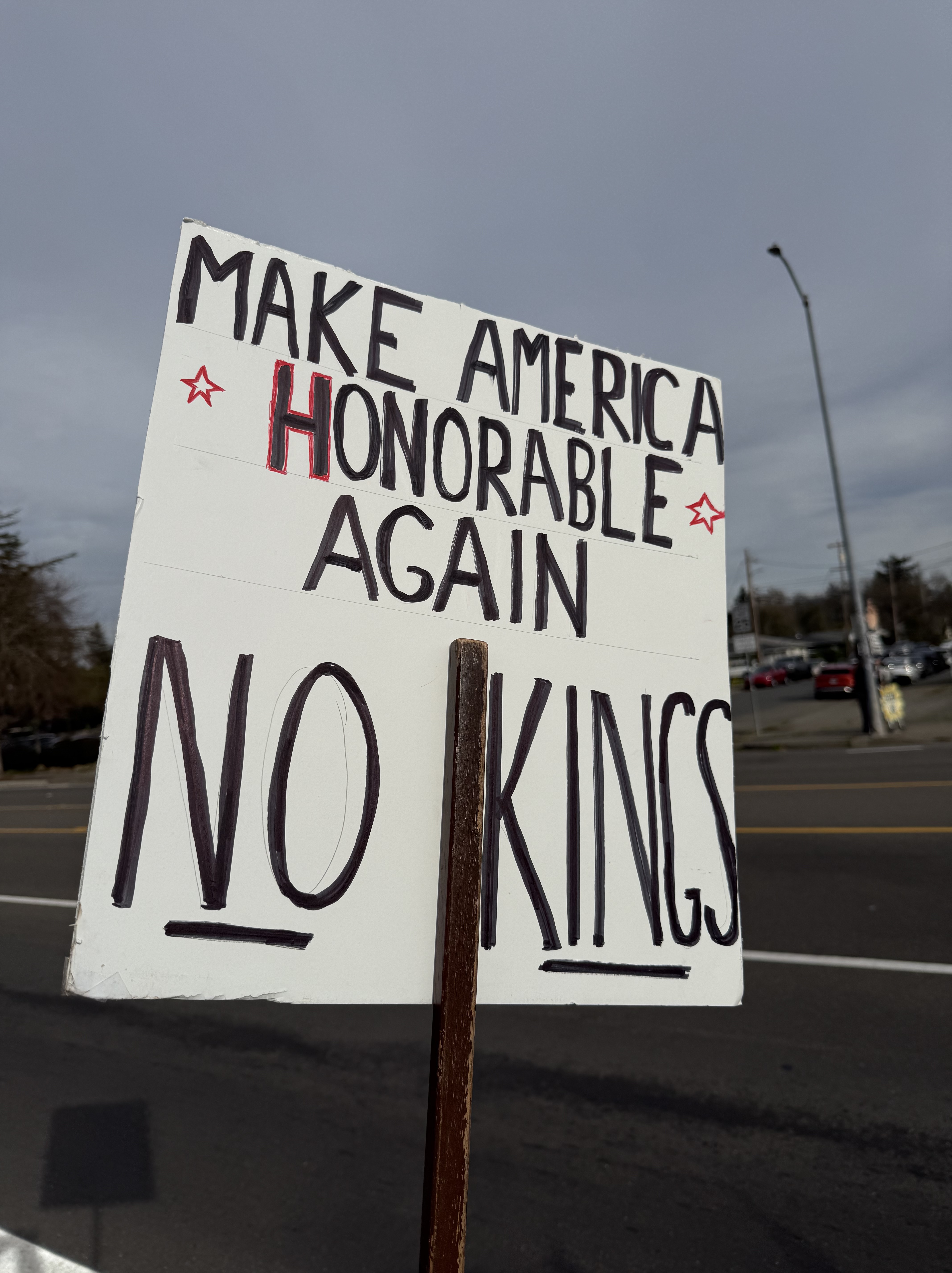
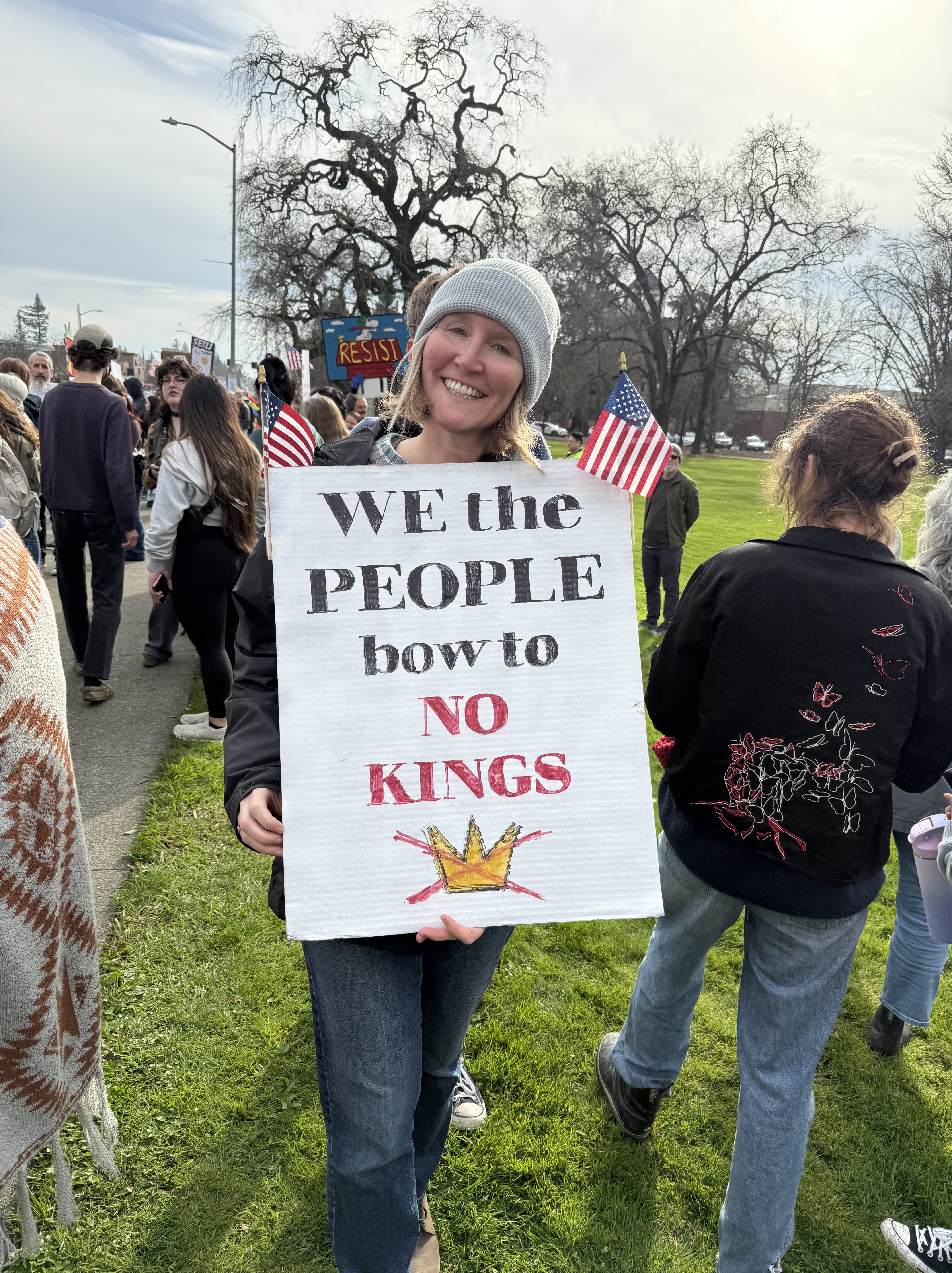
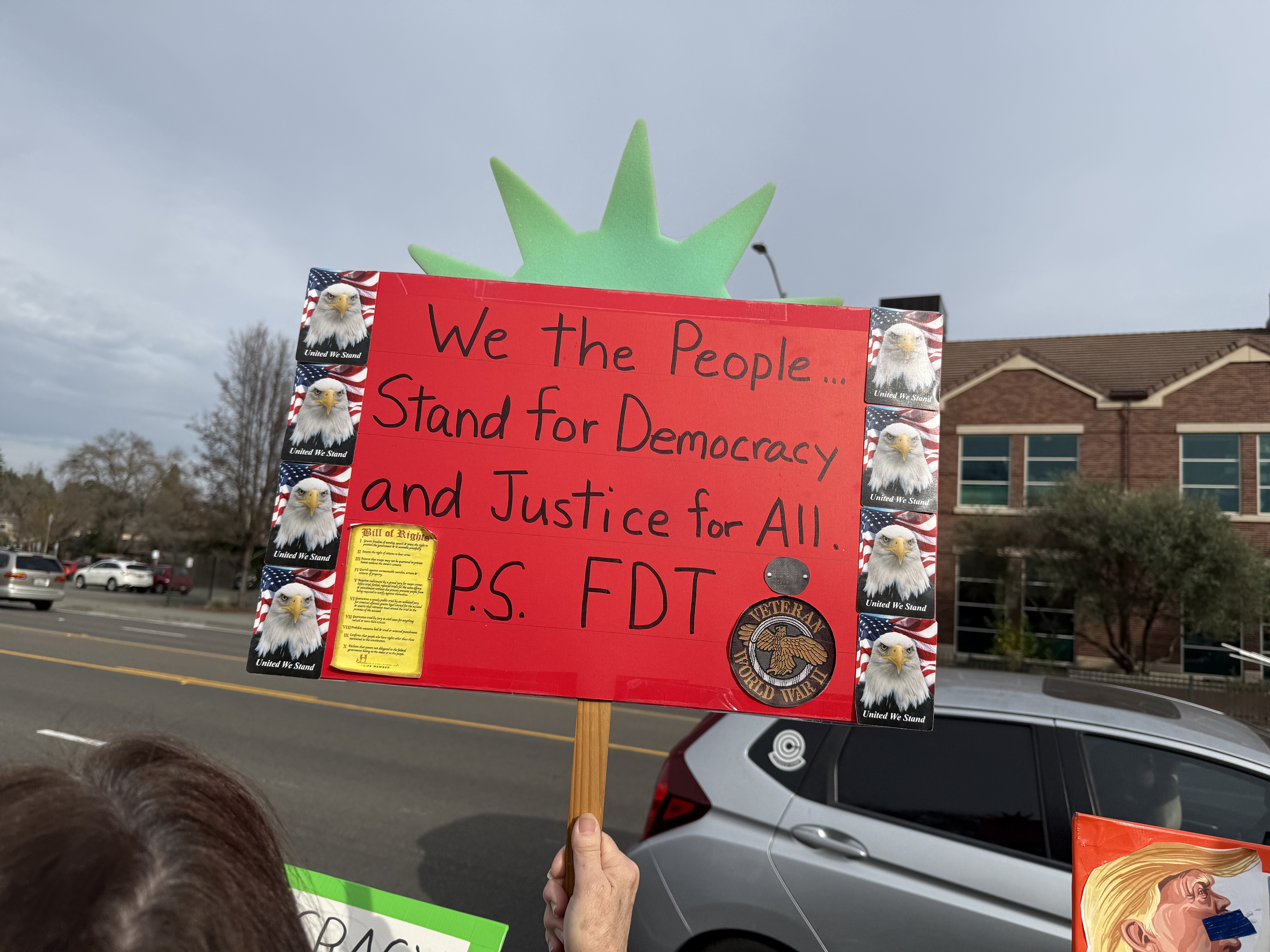
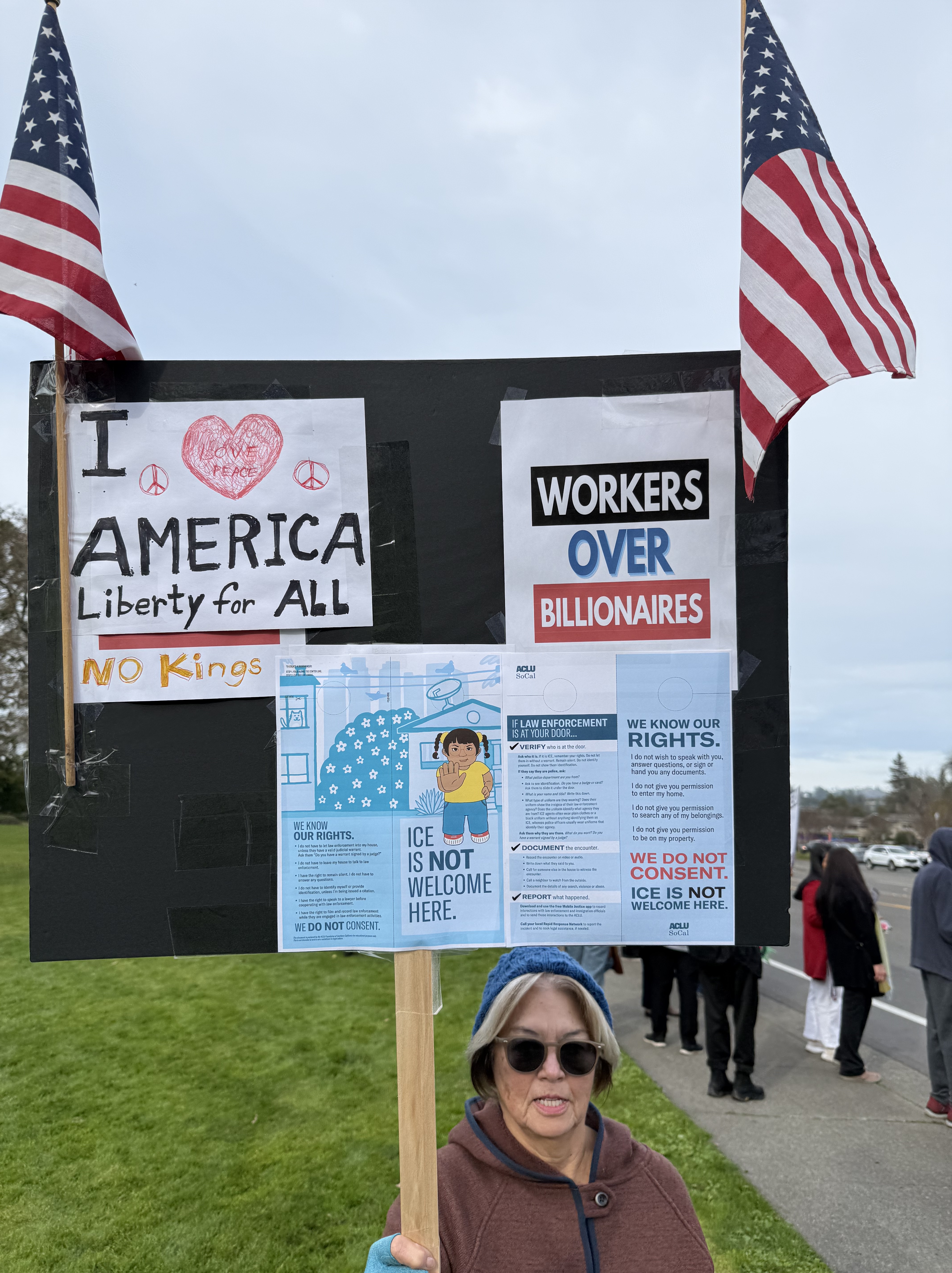
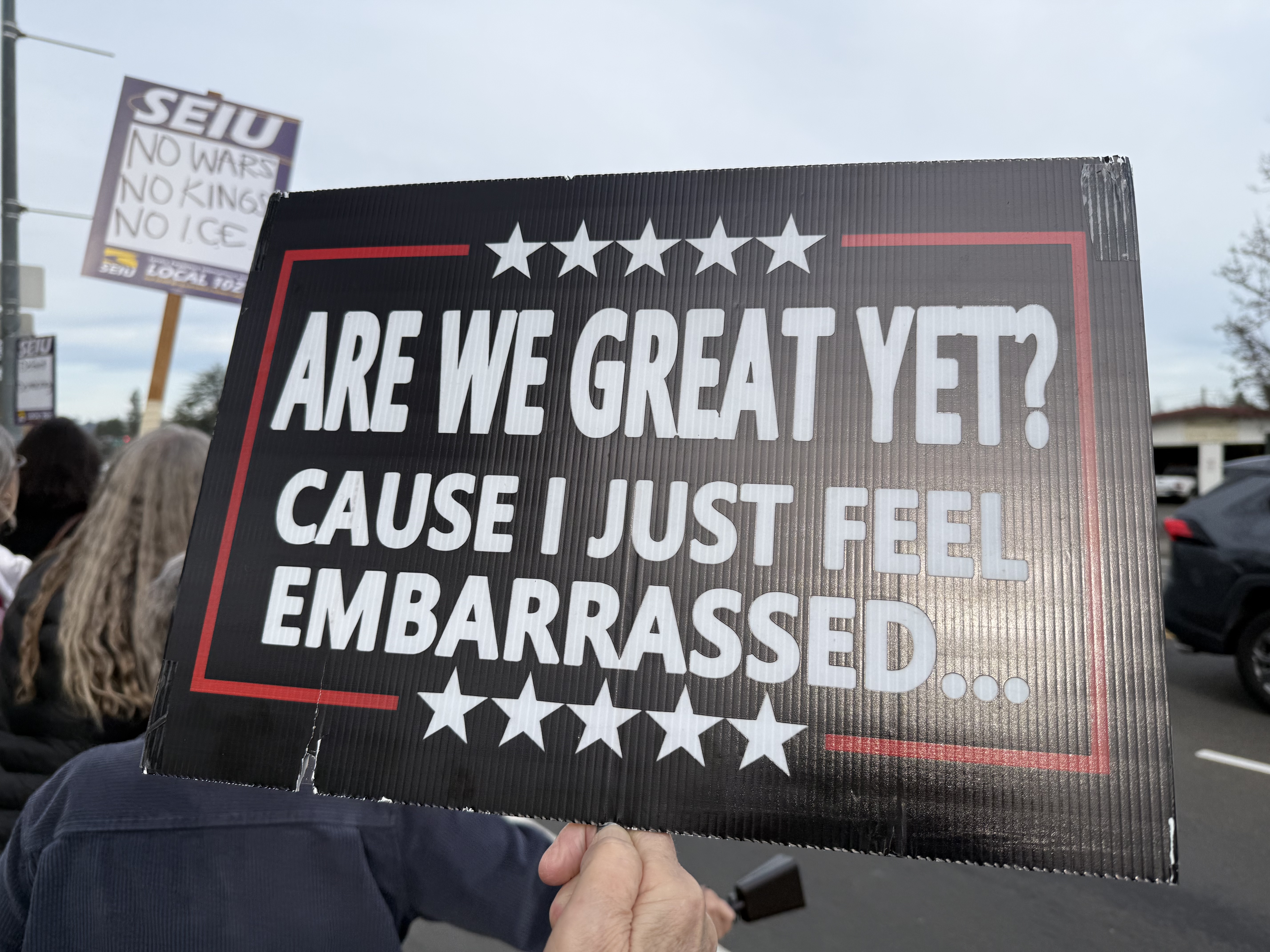
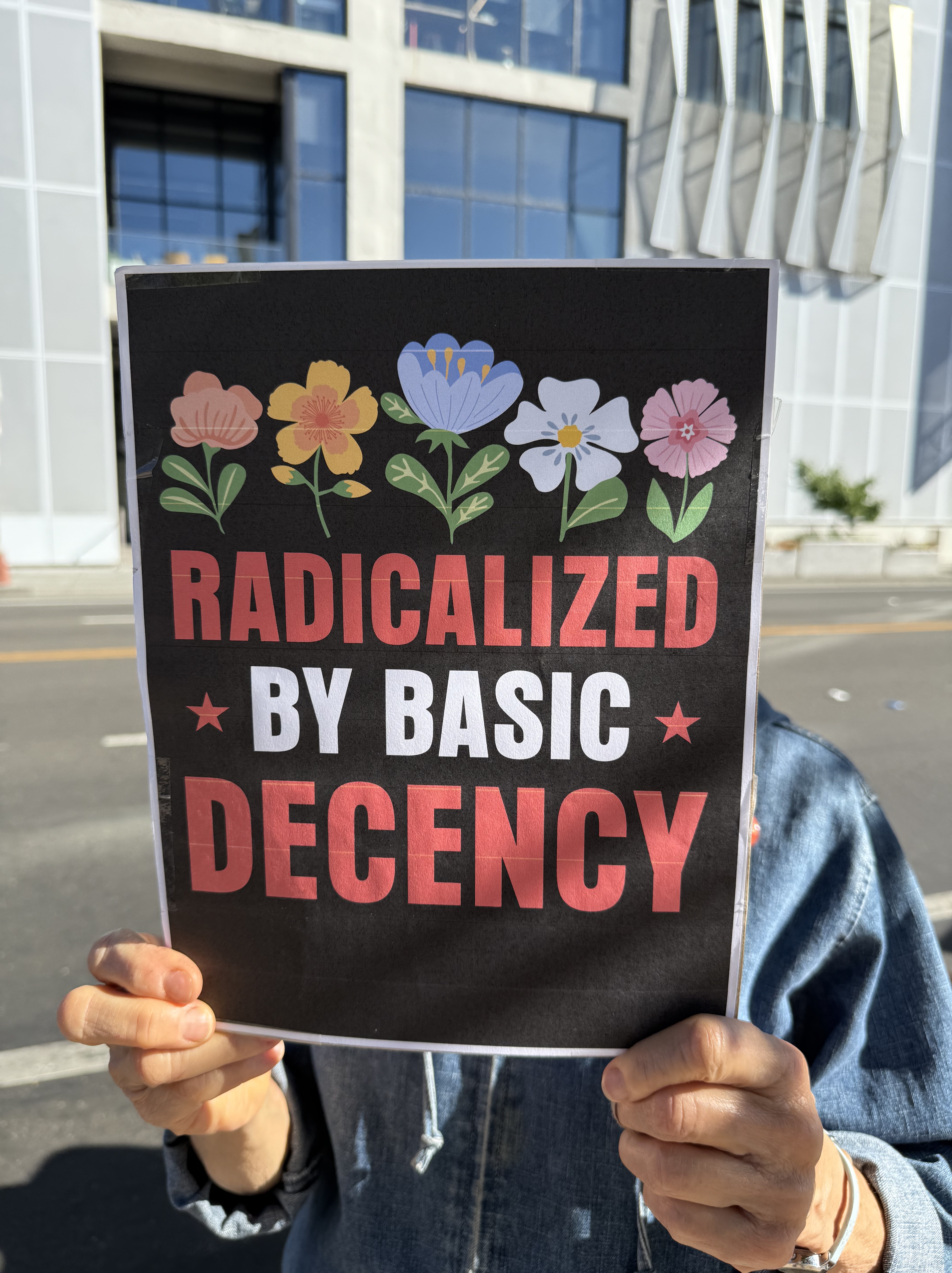
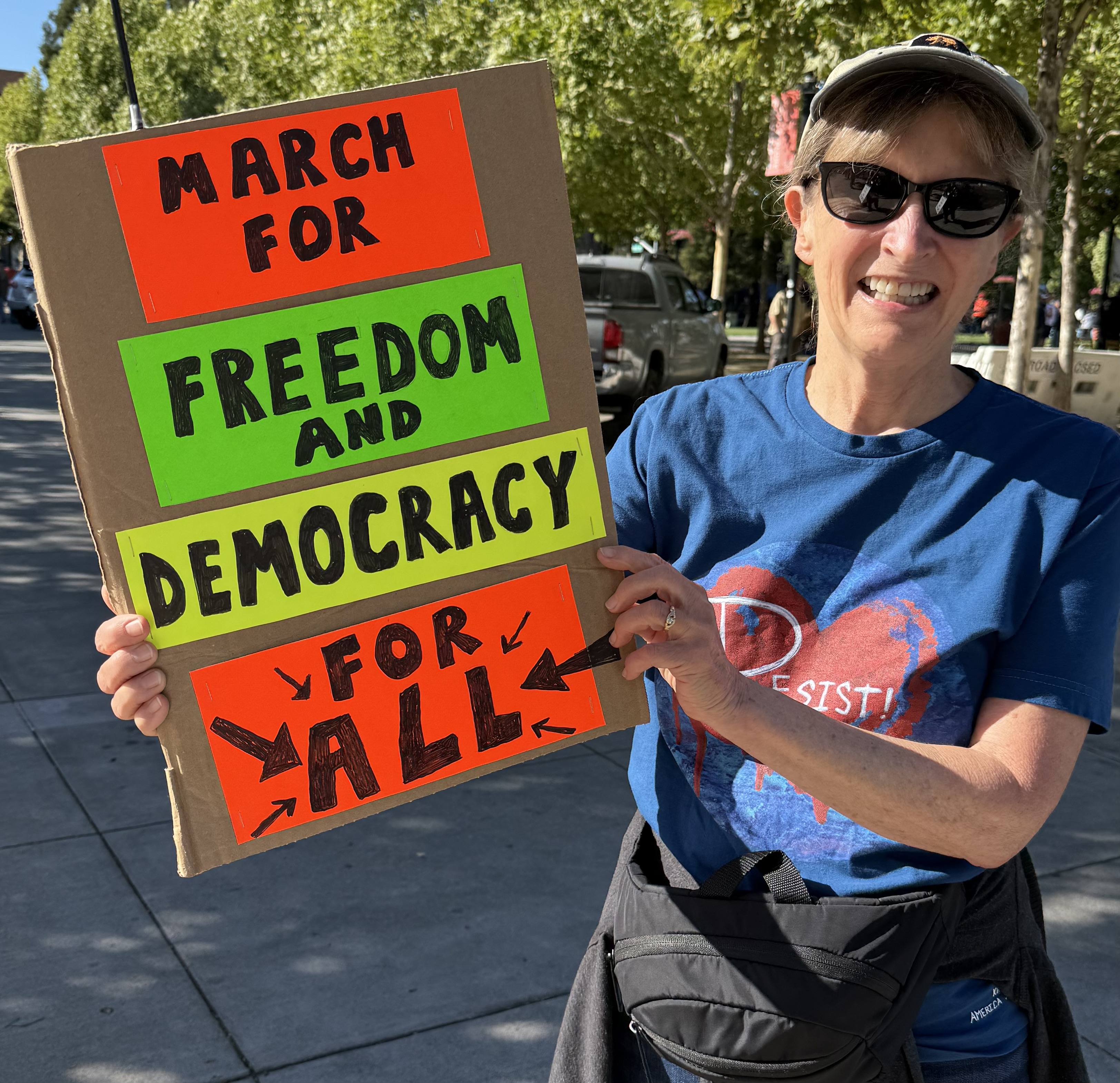
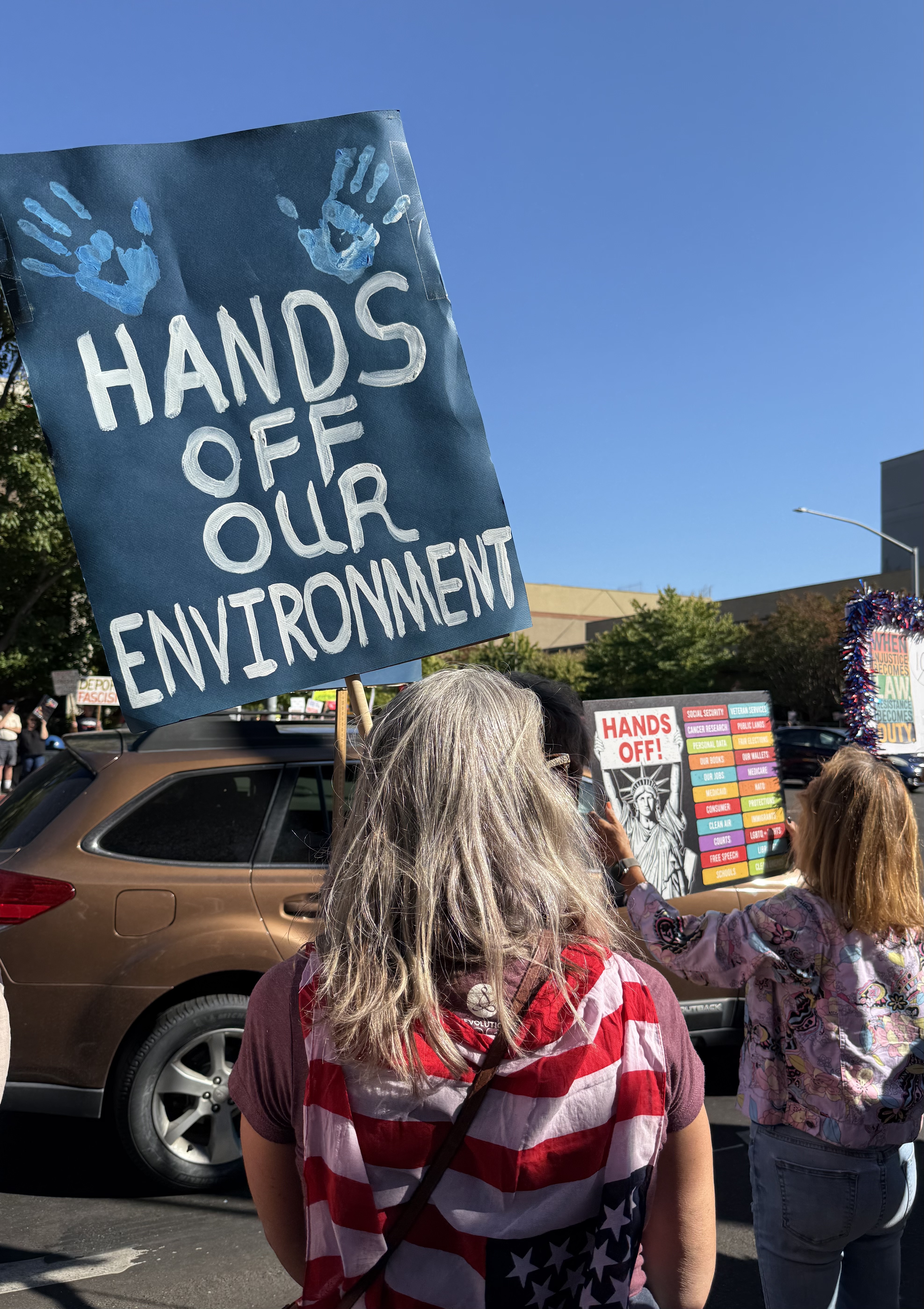
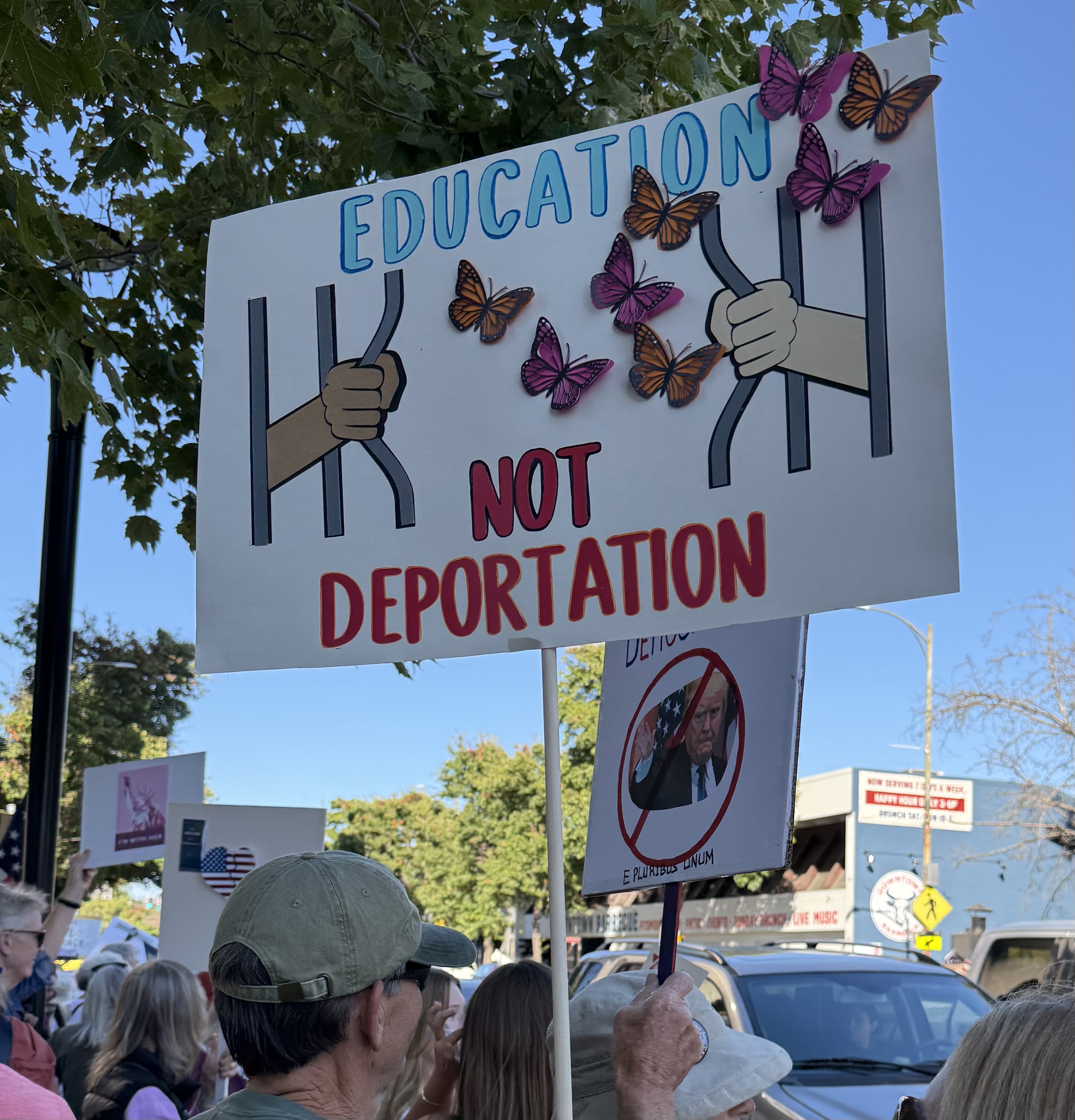
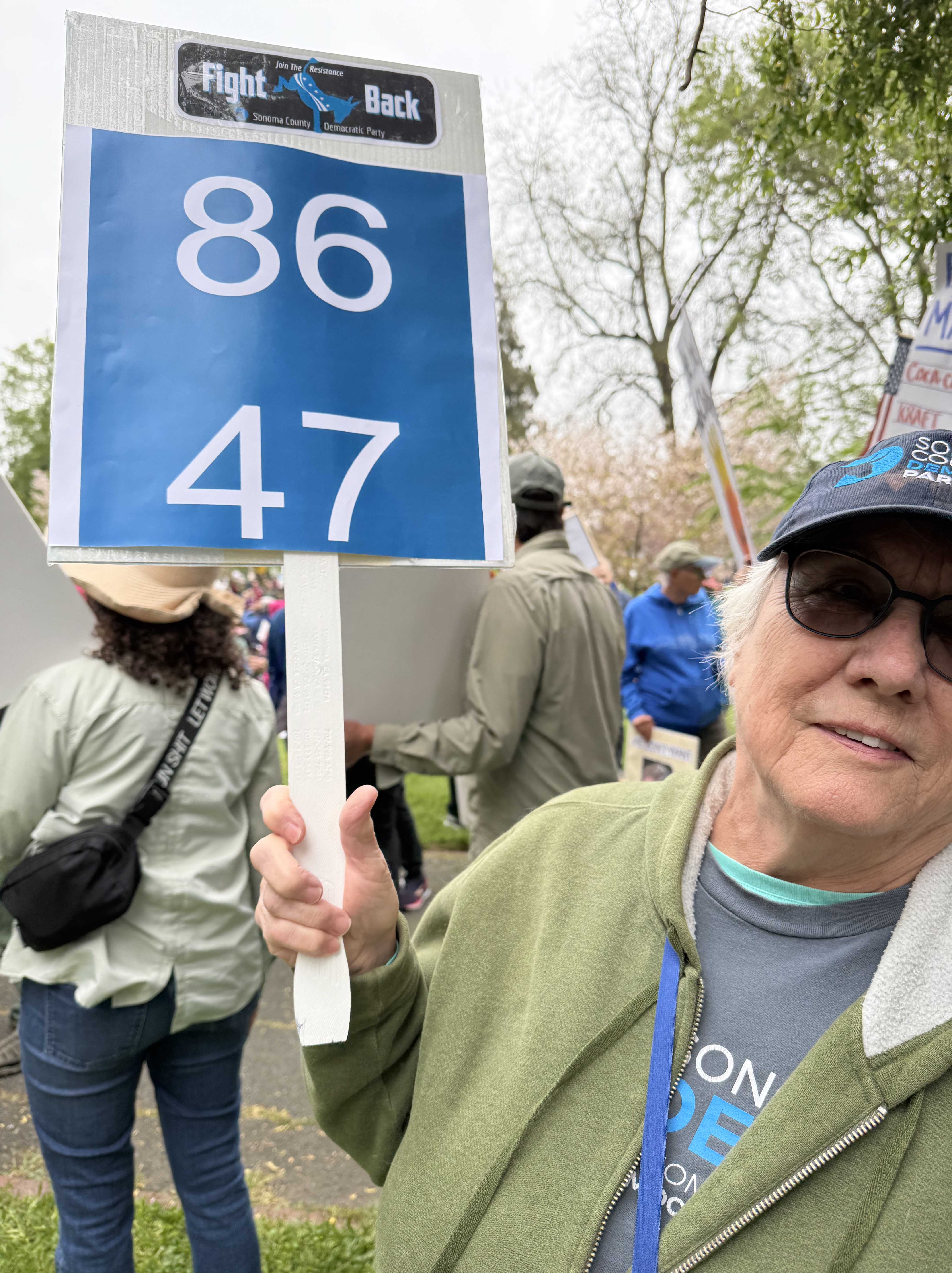
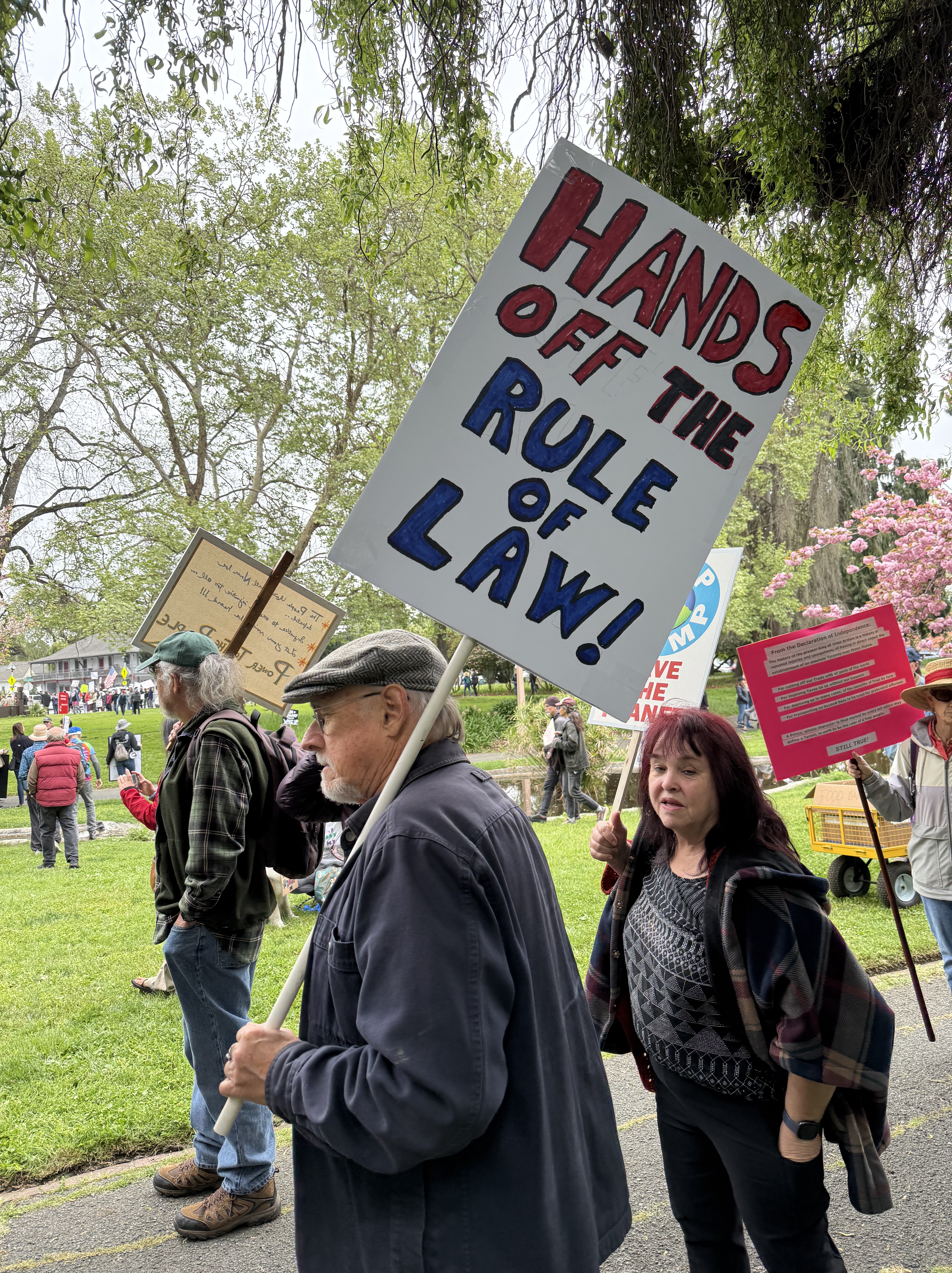
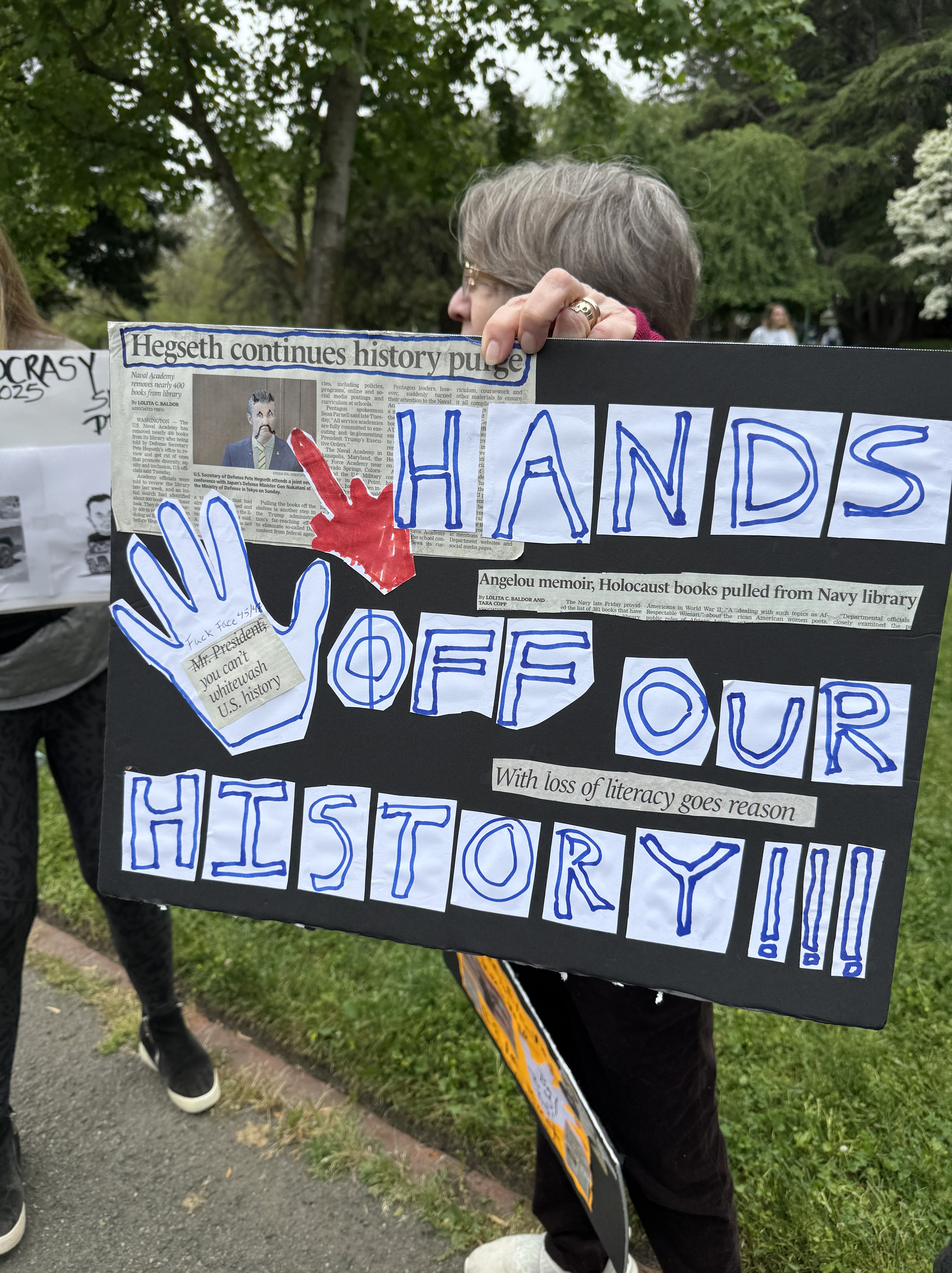
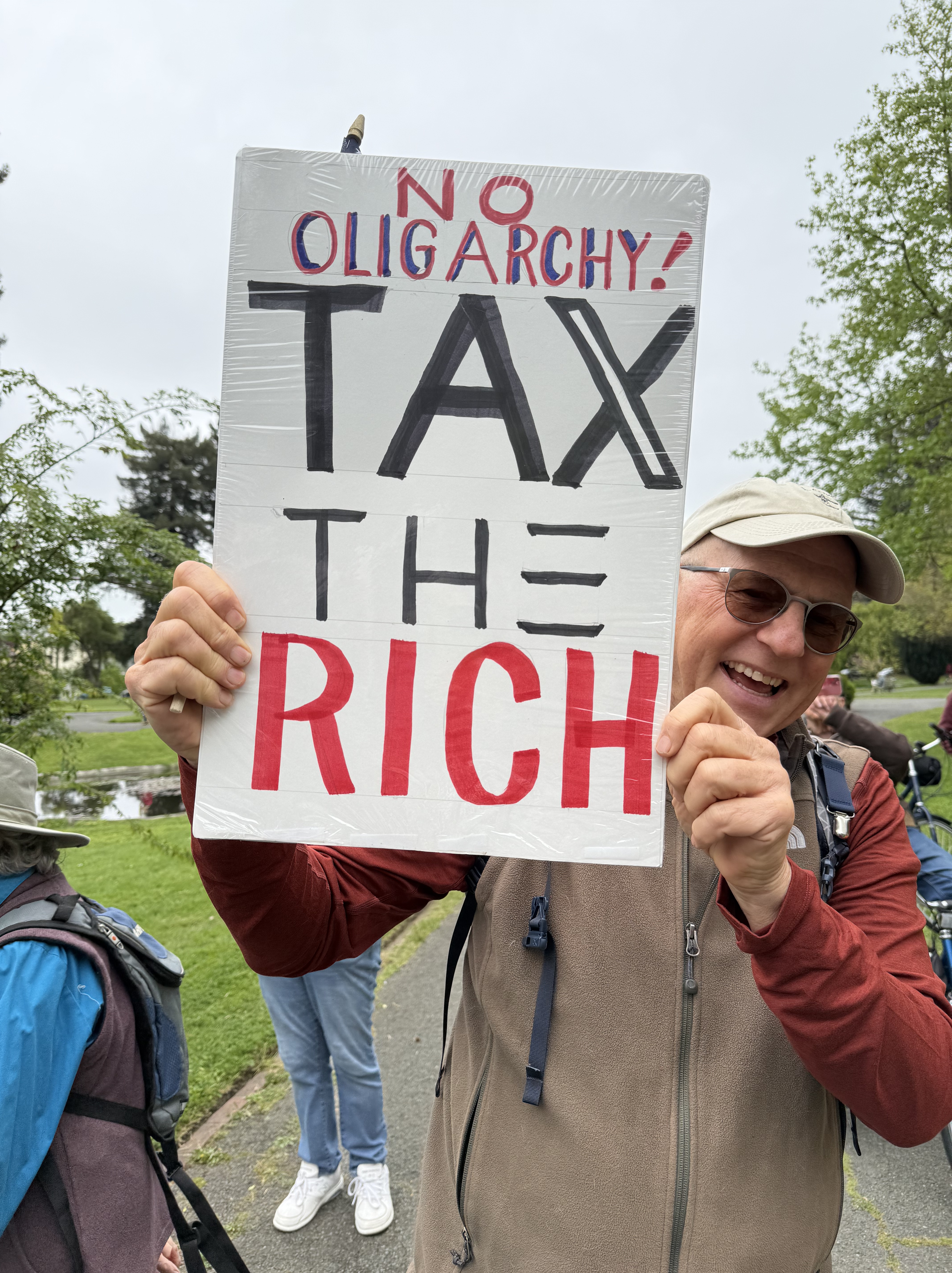
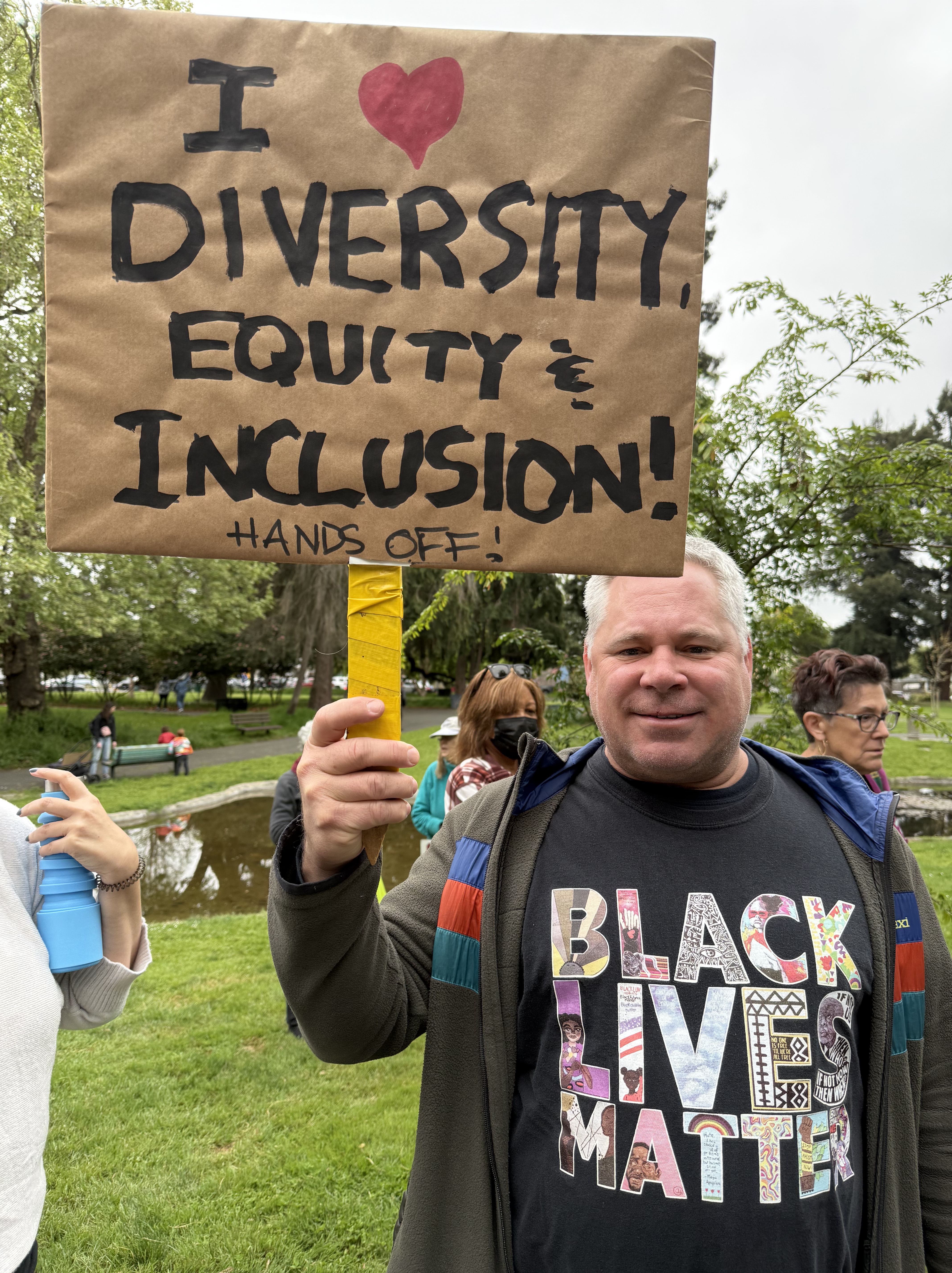
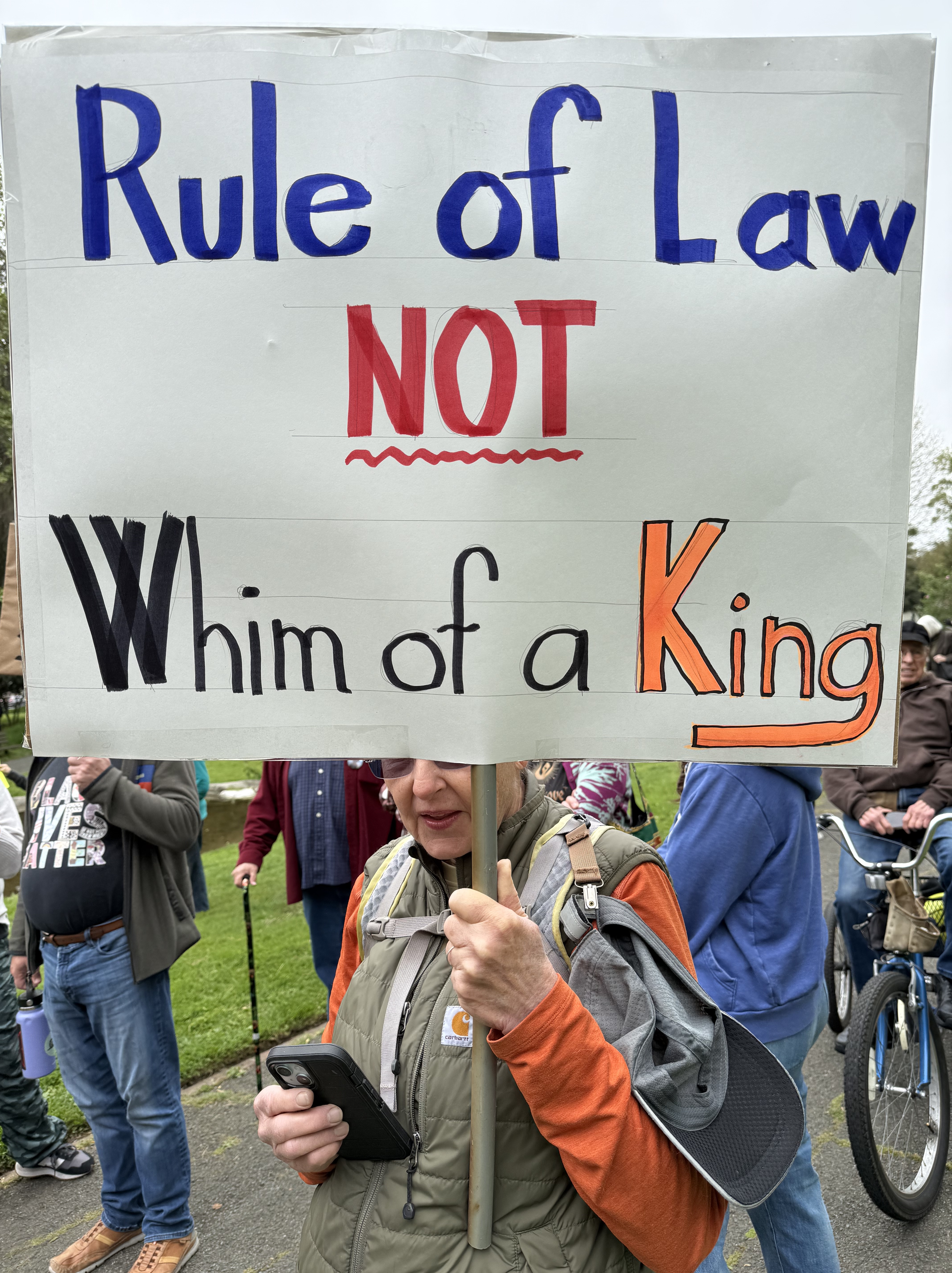
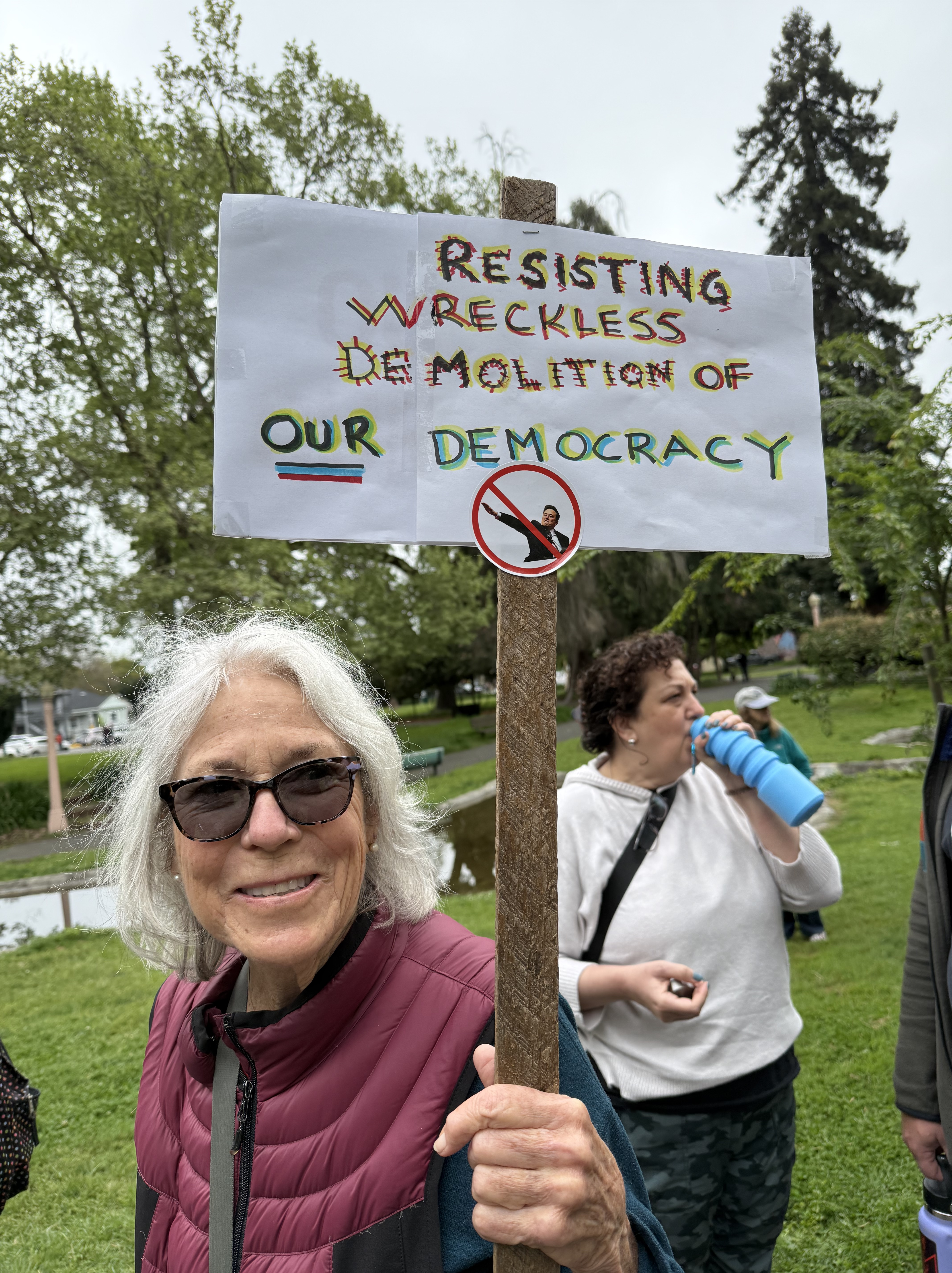
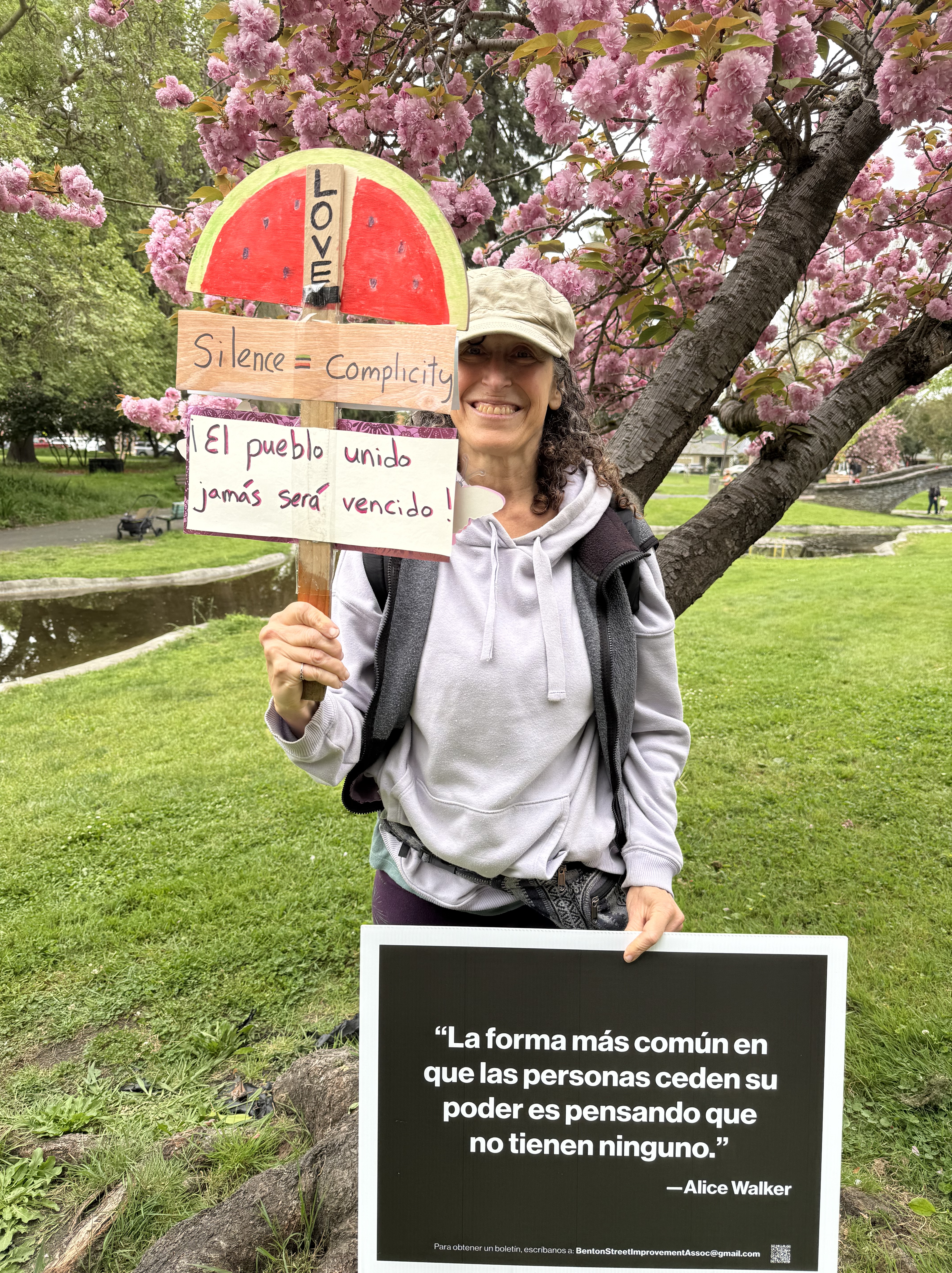
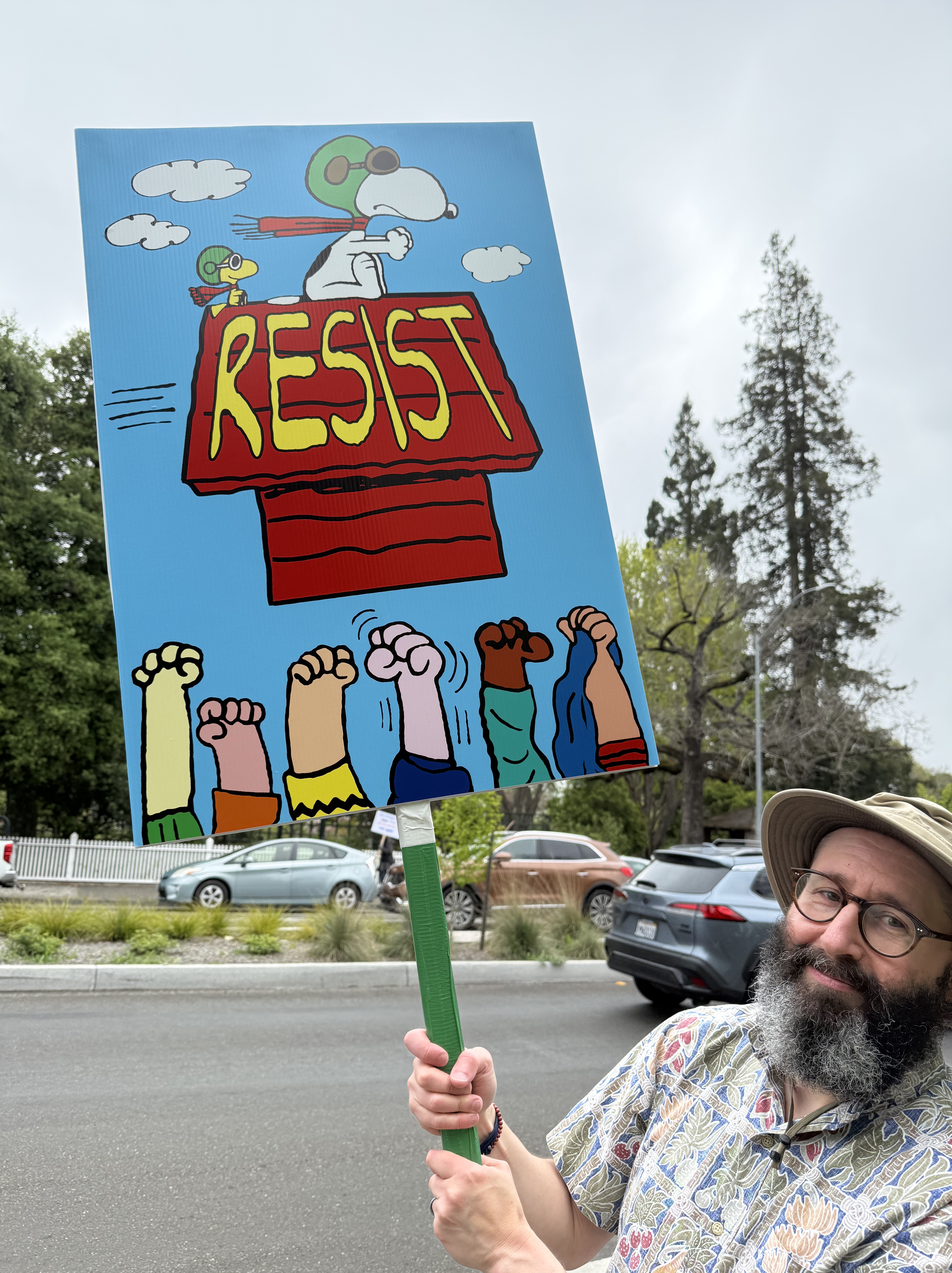
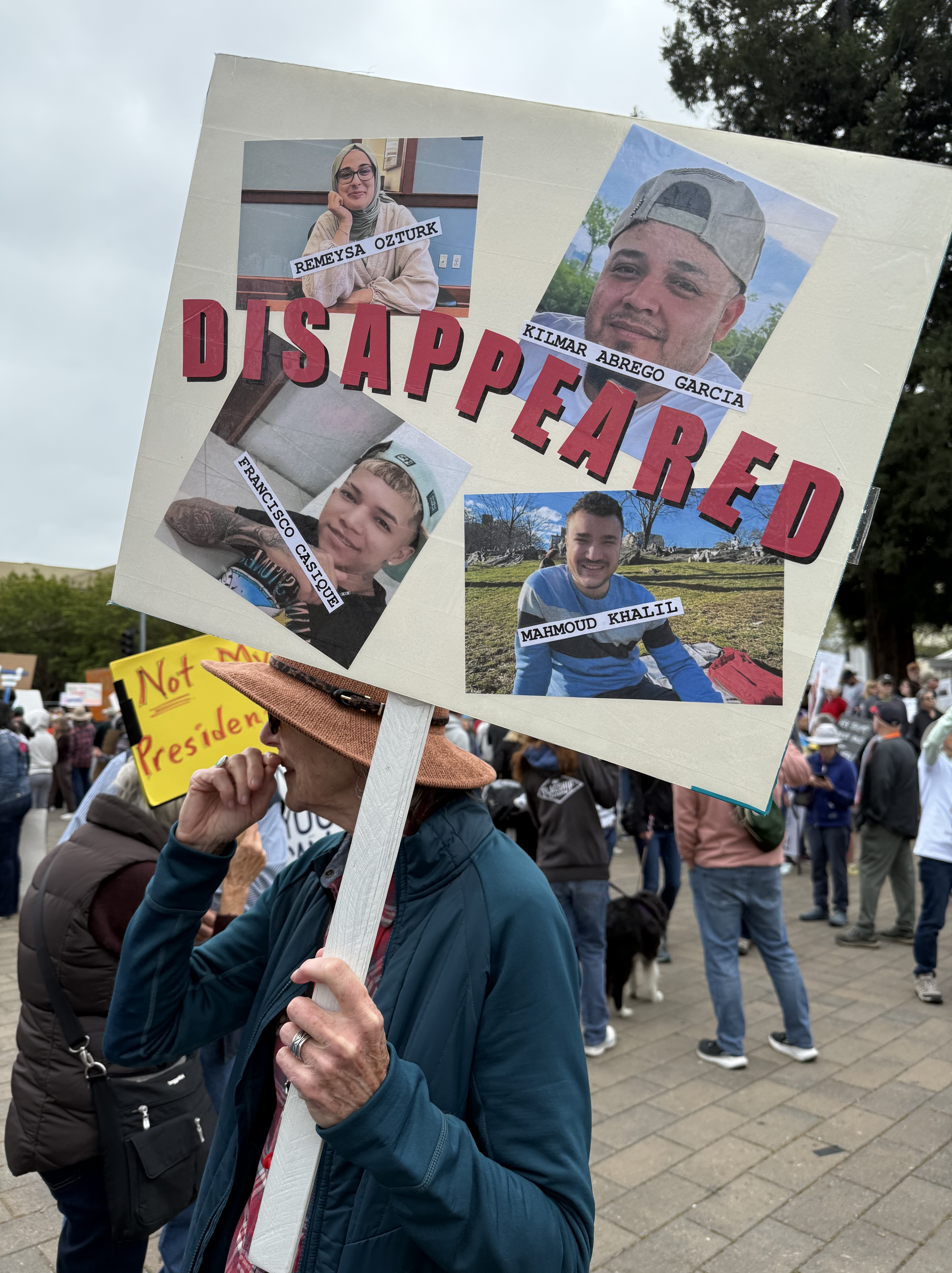
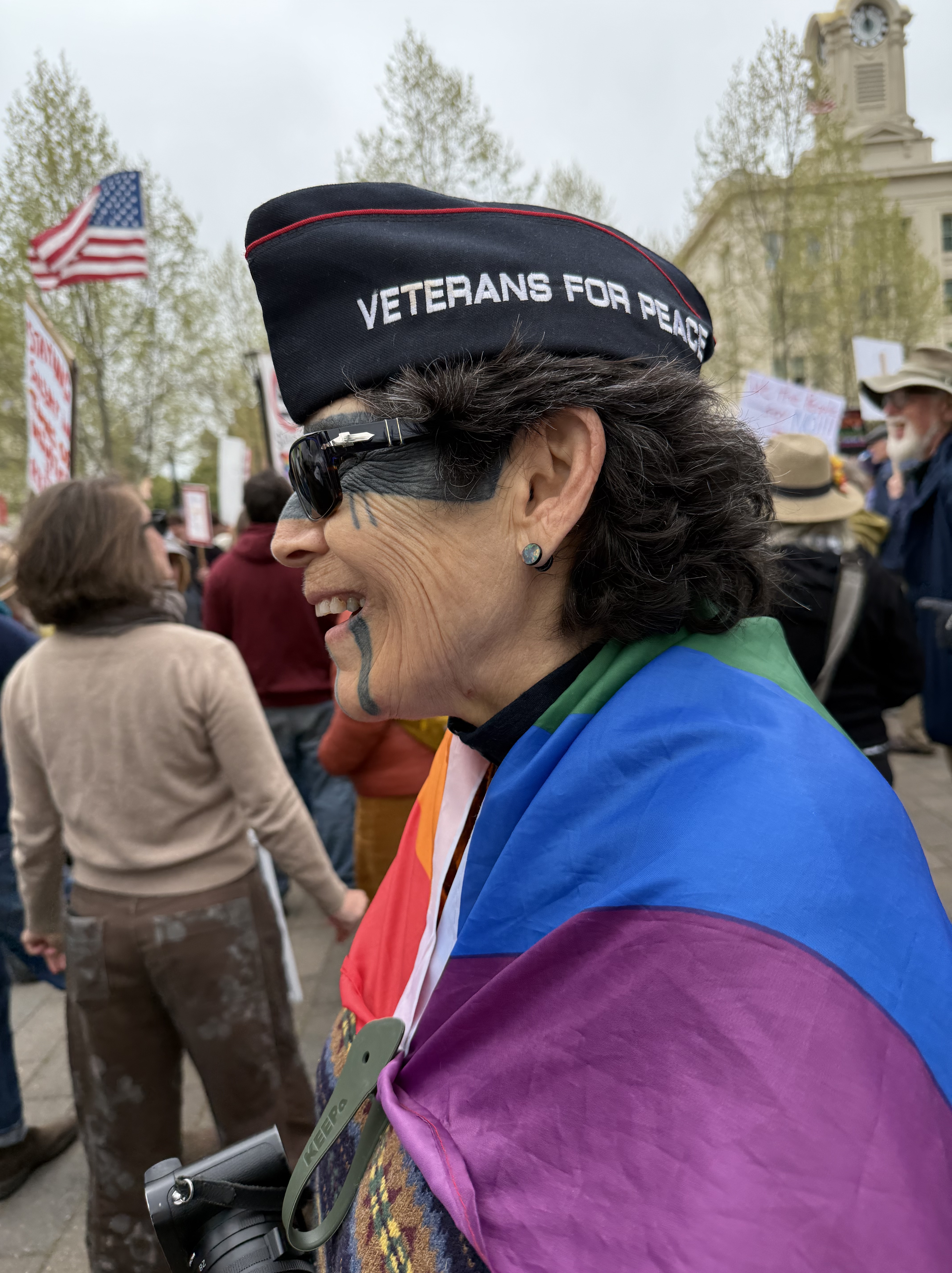
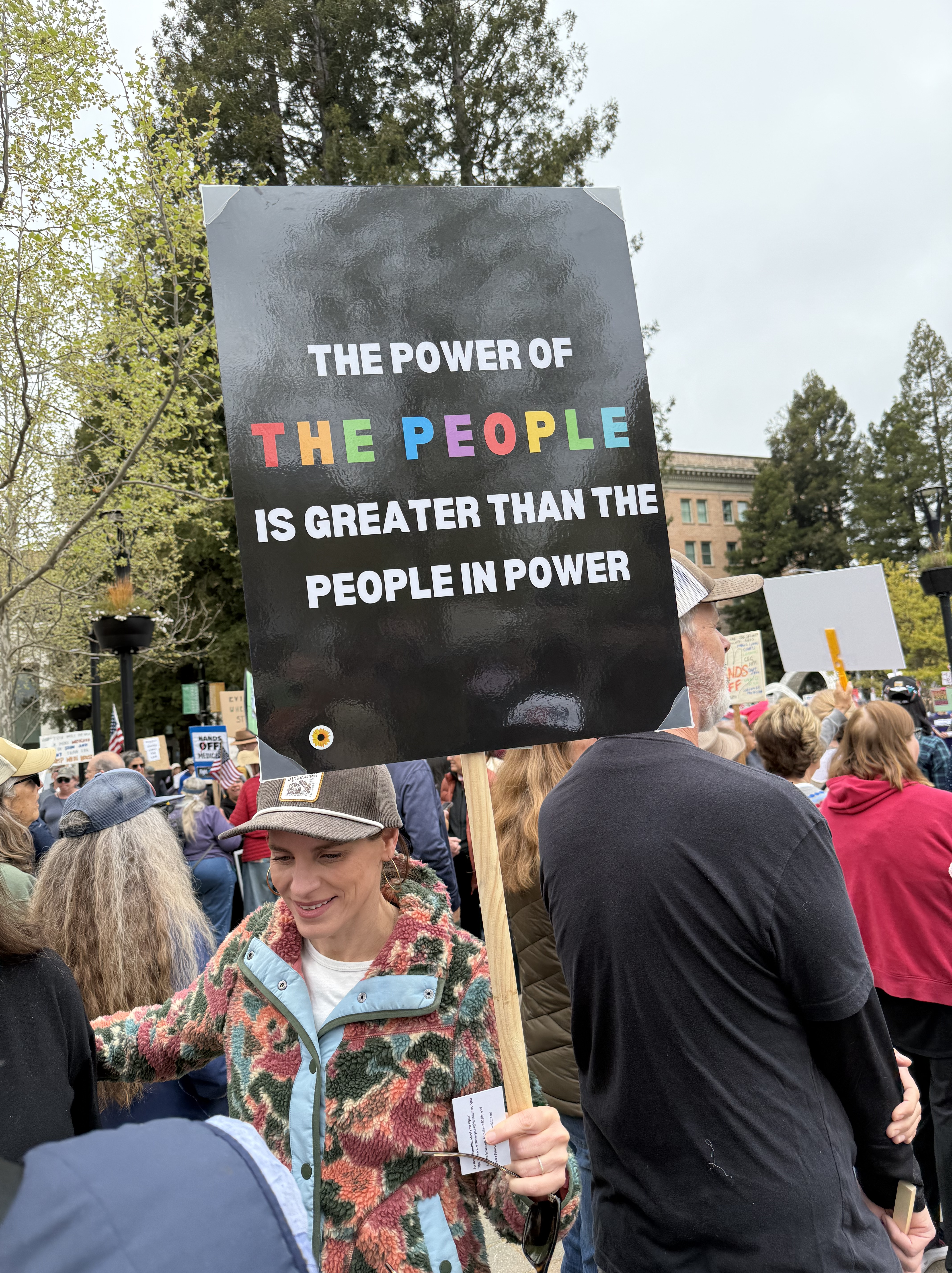
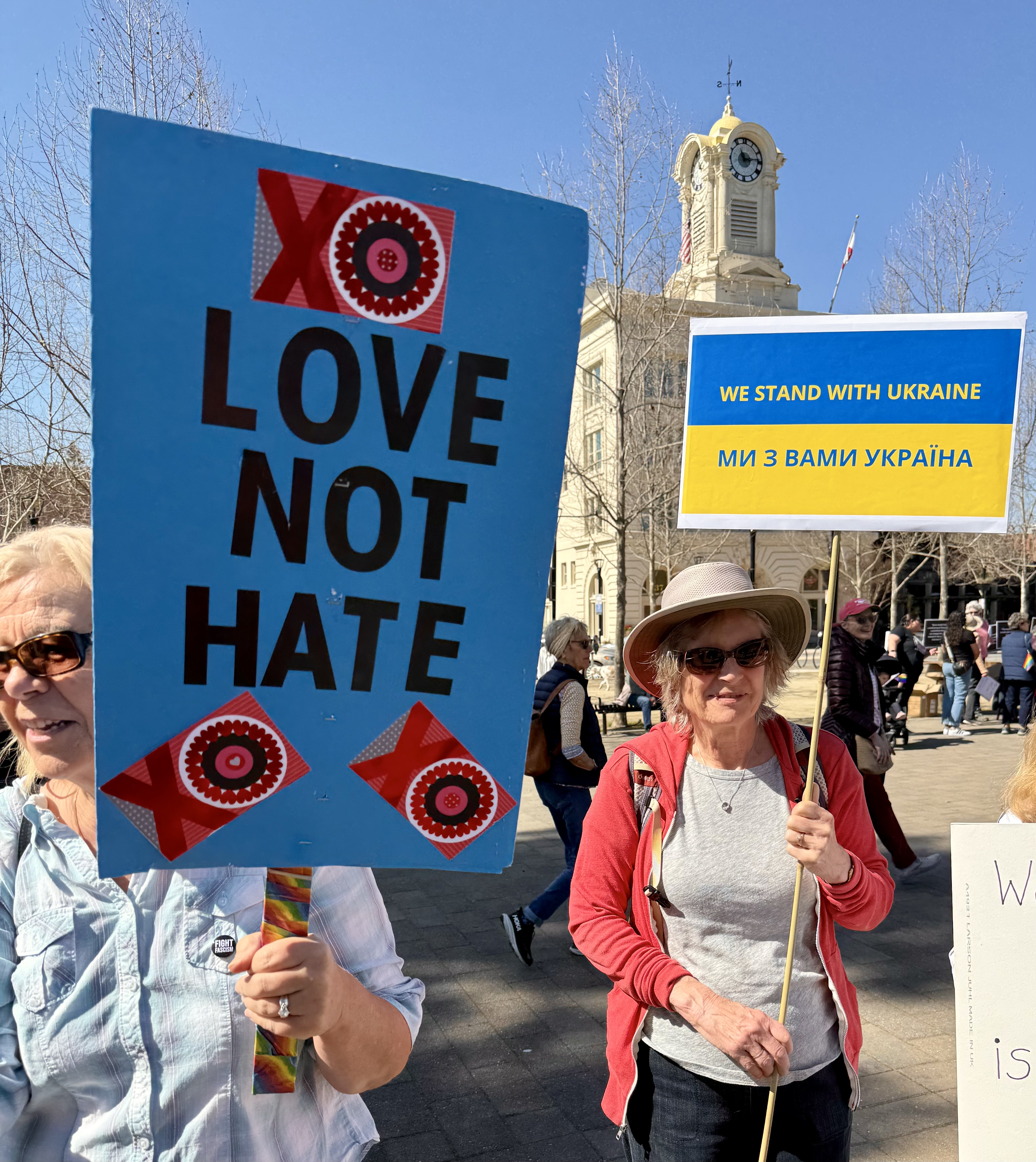
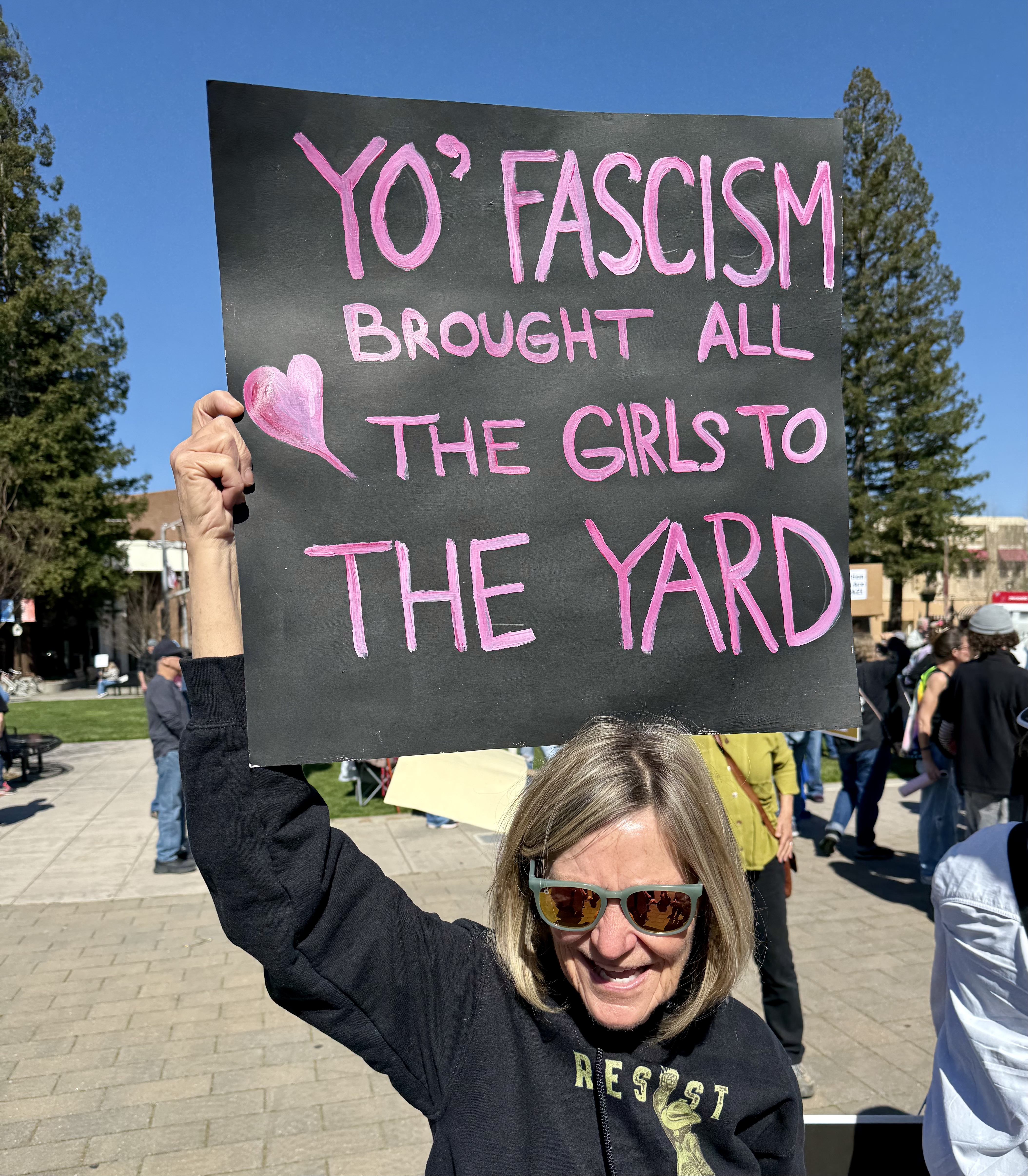
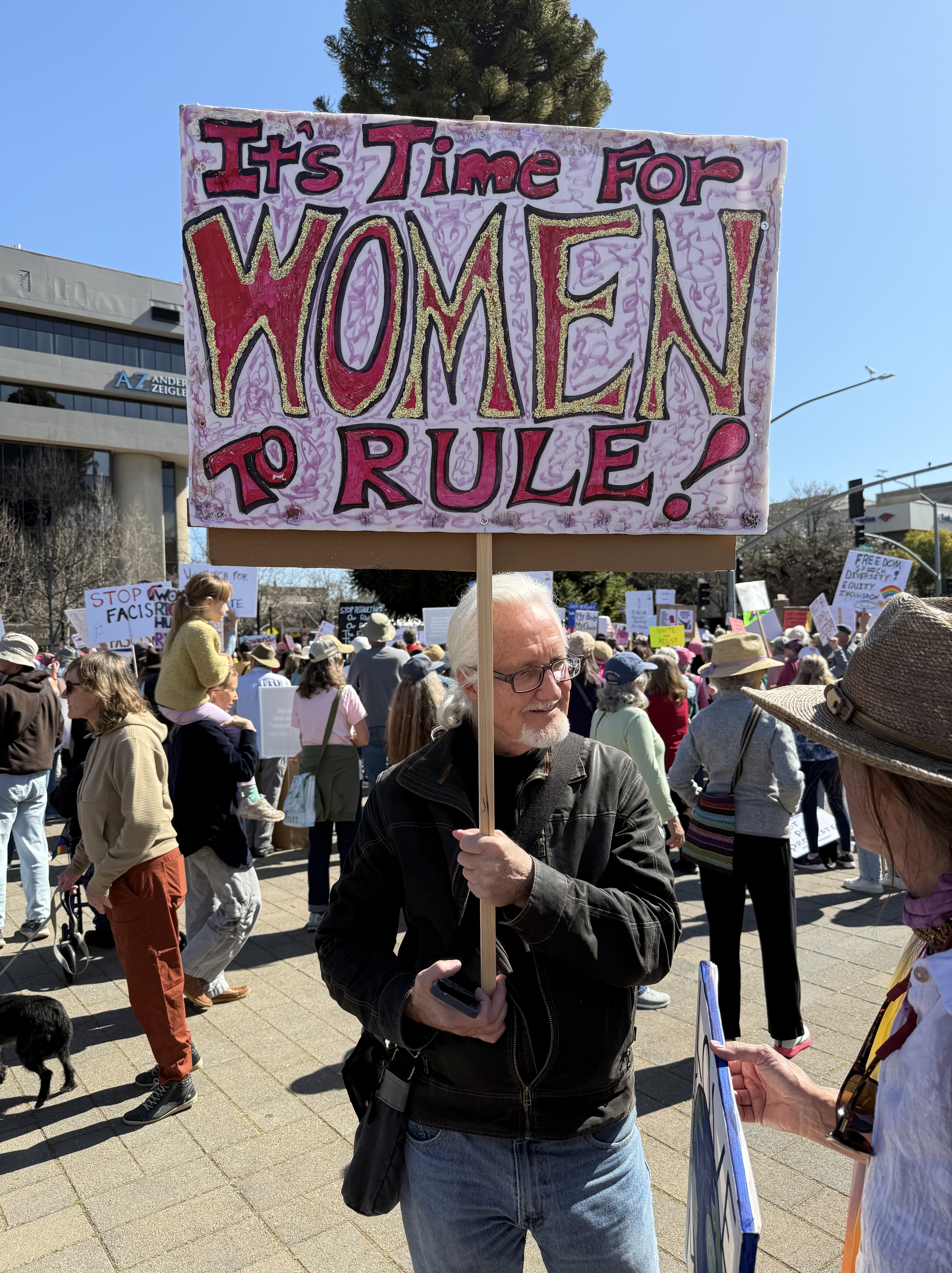
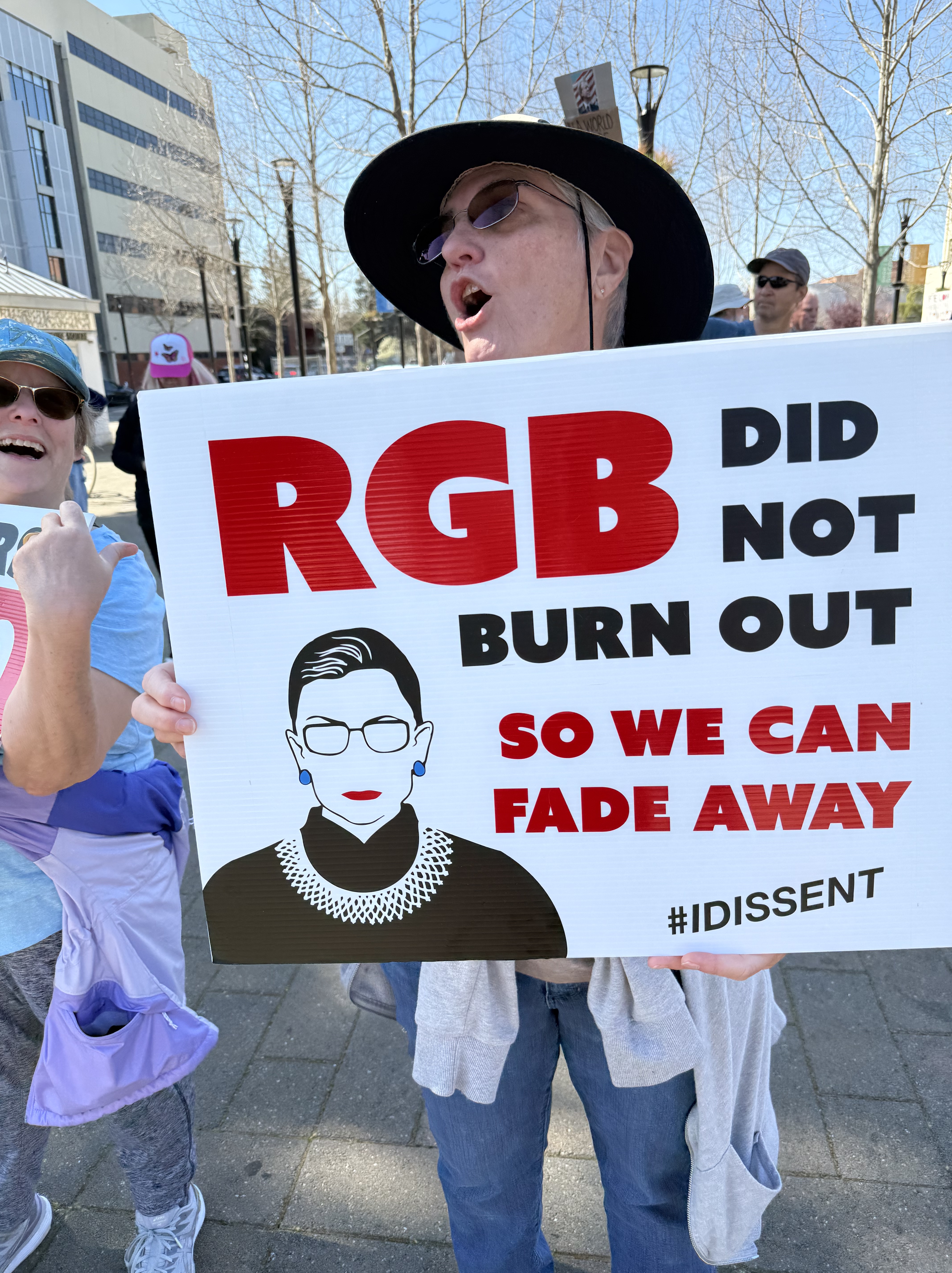
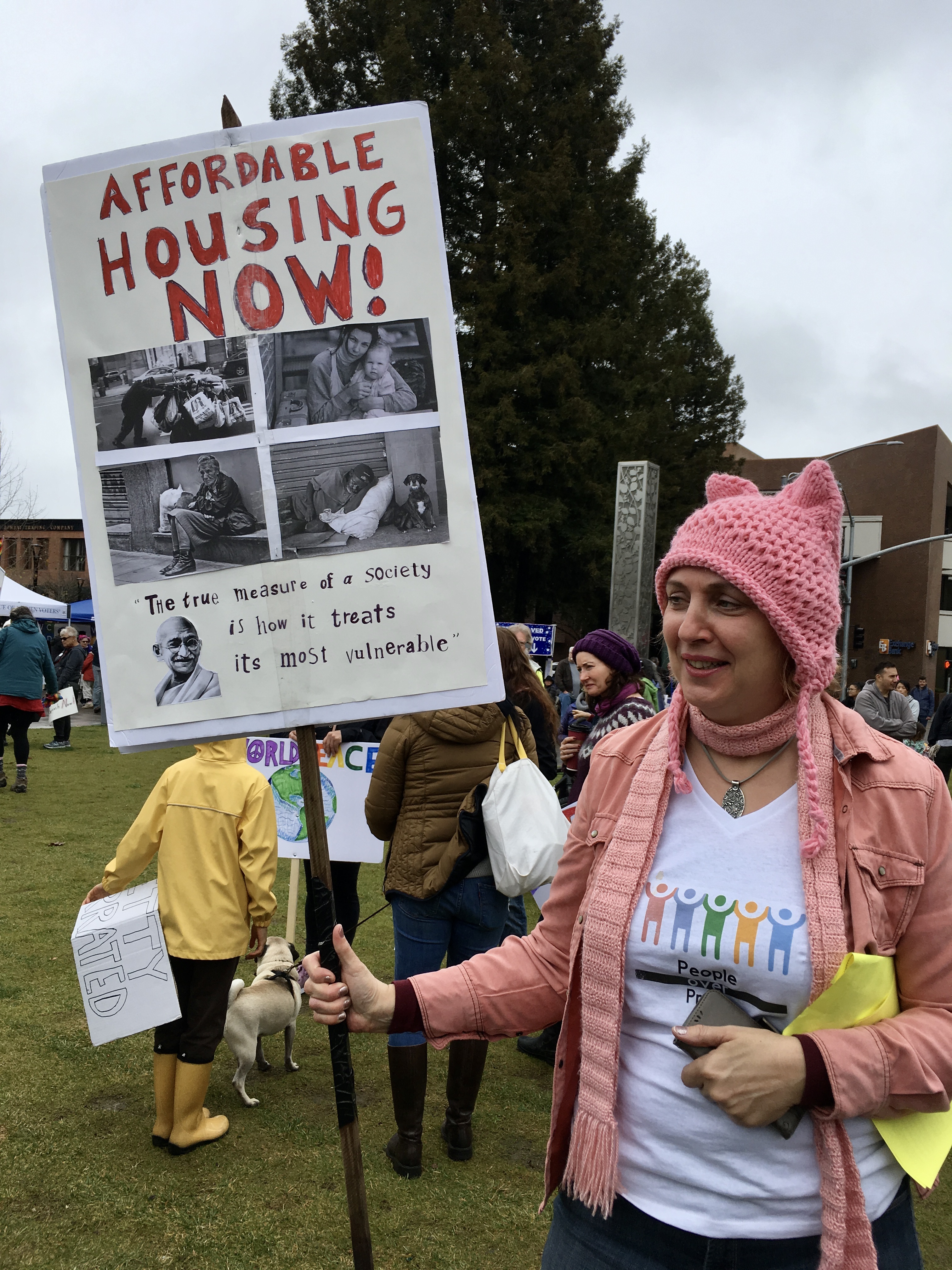
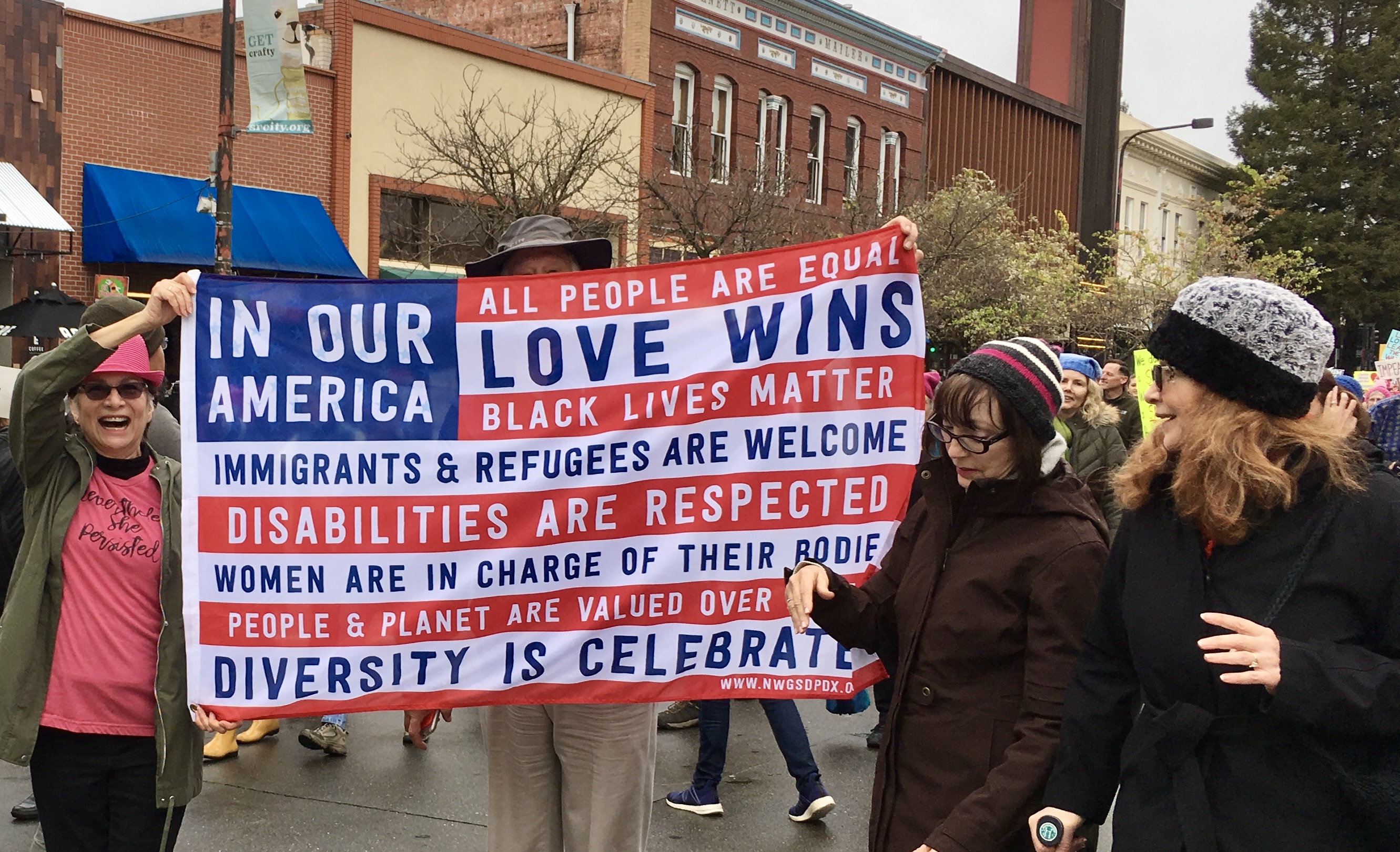
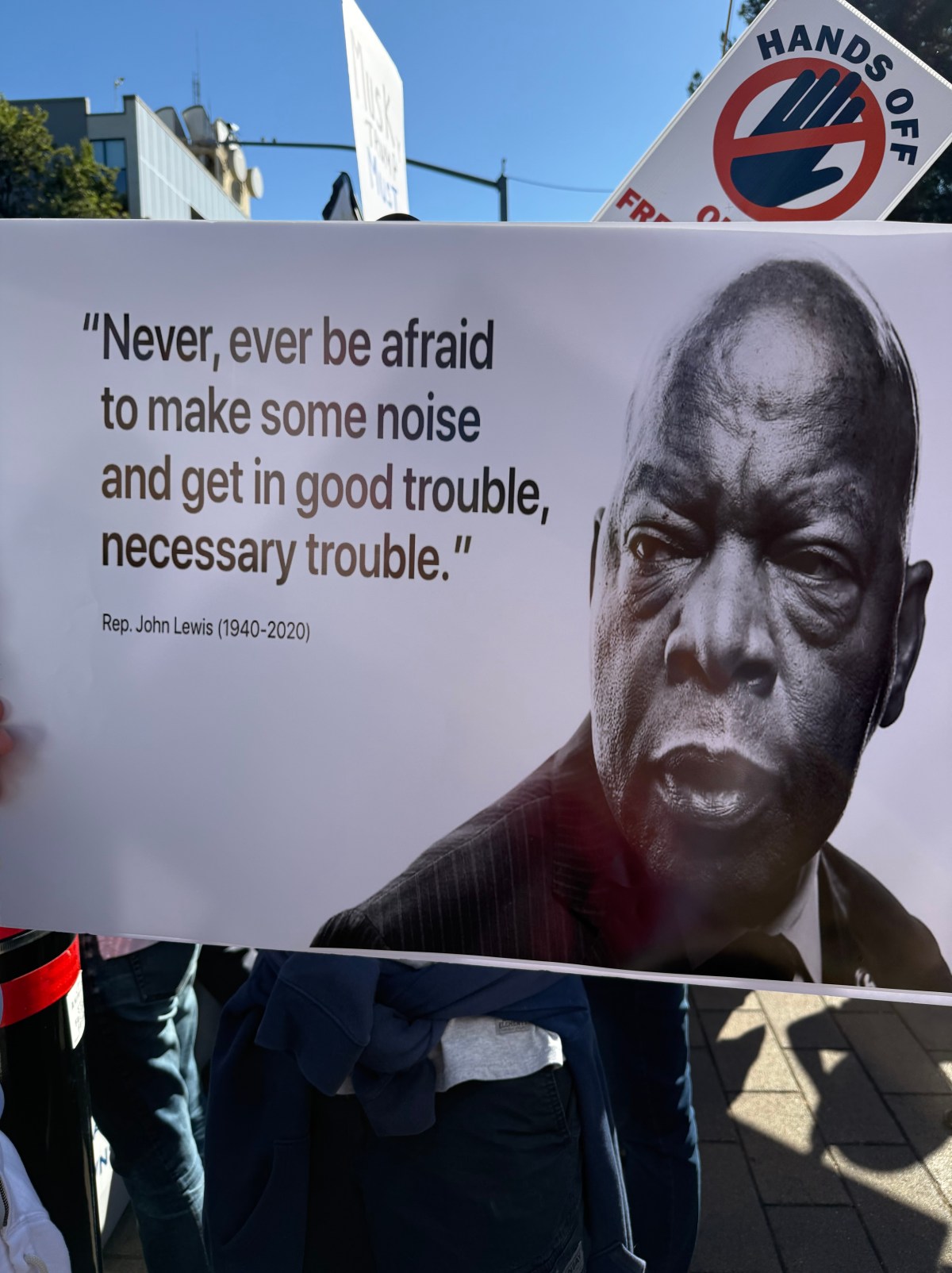
Folks Get Creative With Their Signs

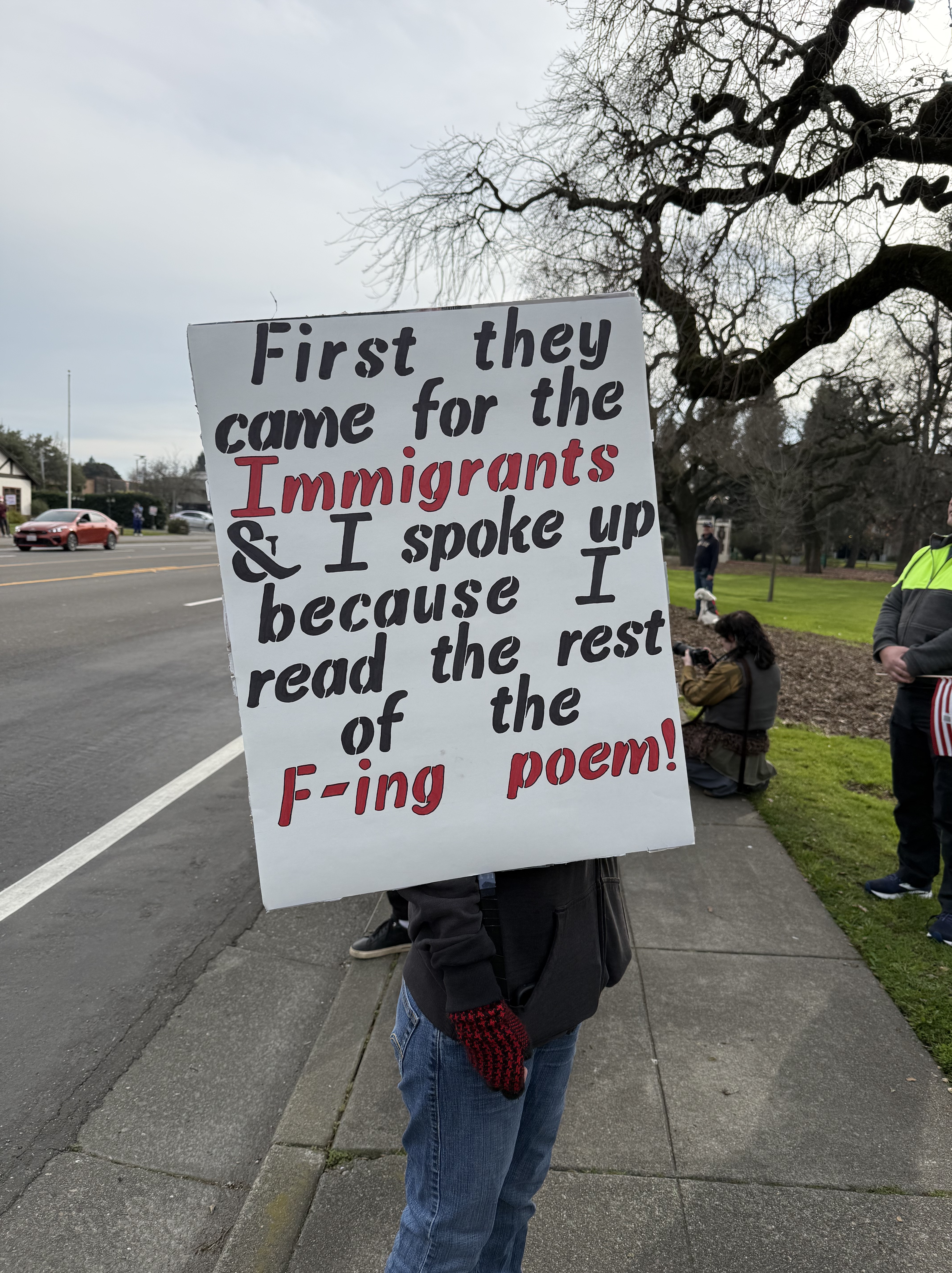

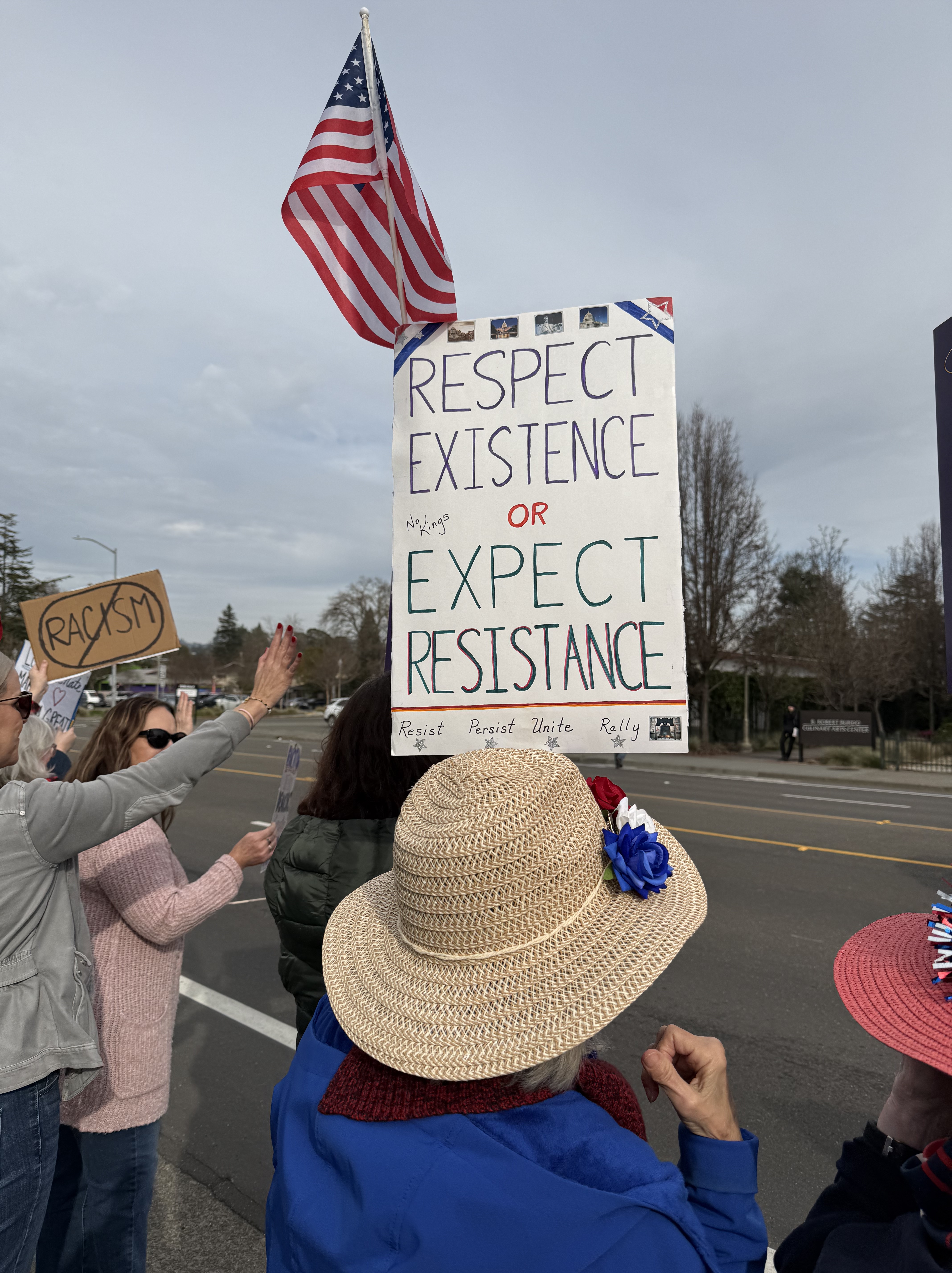

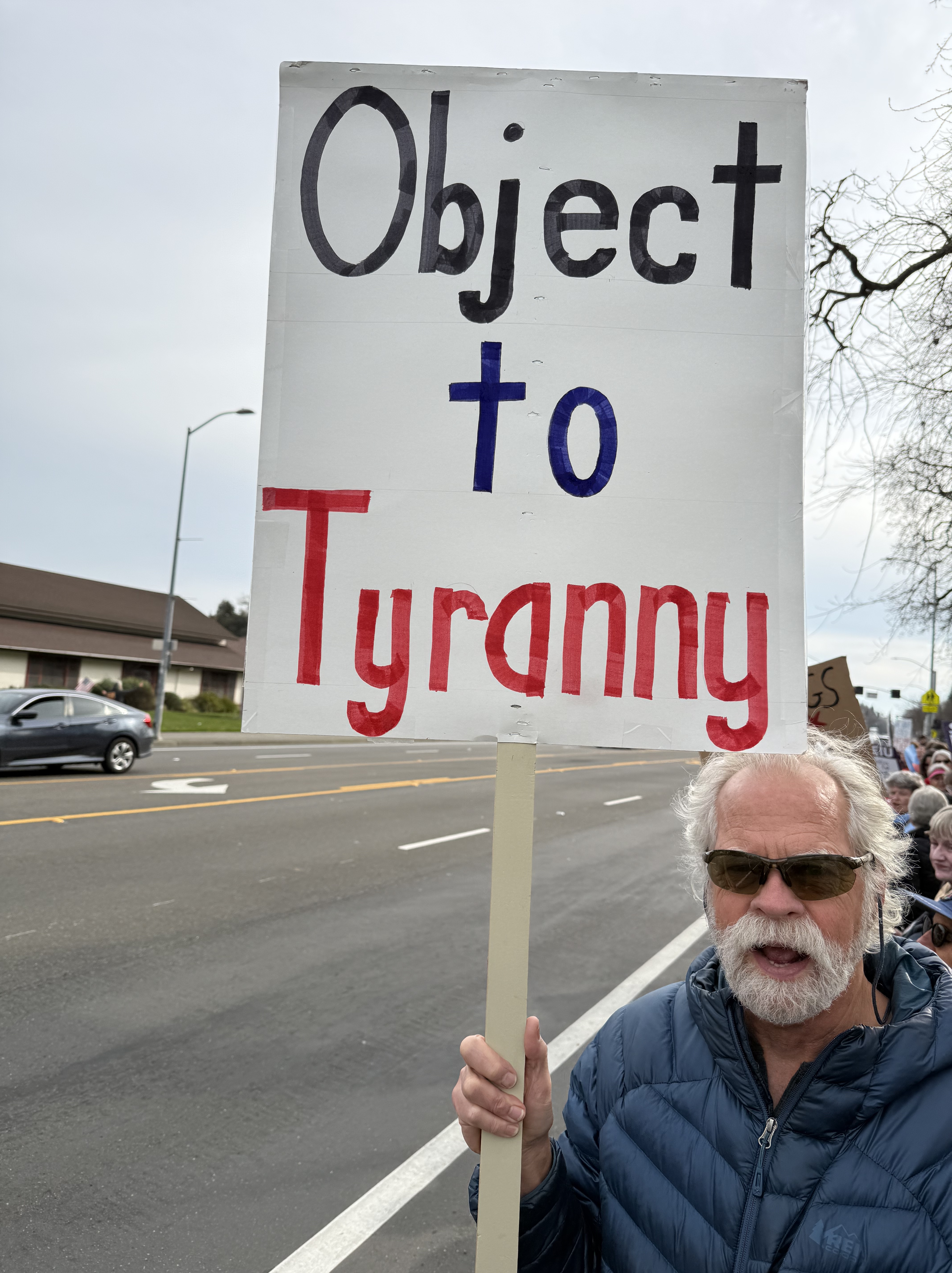
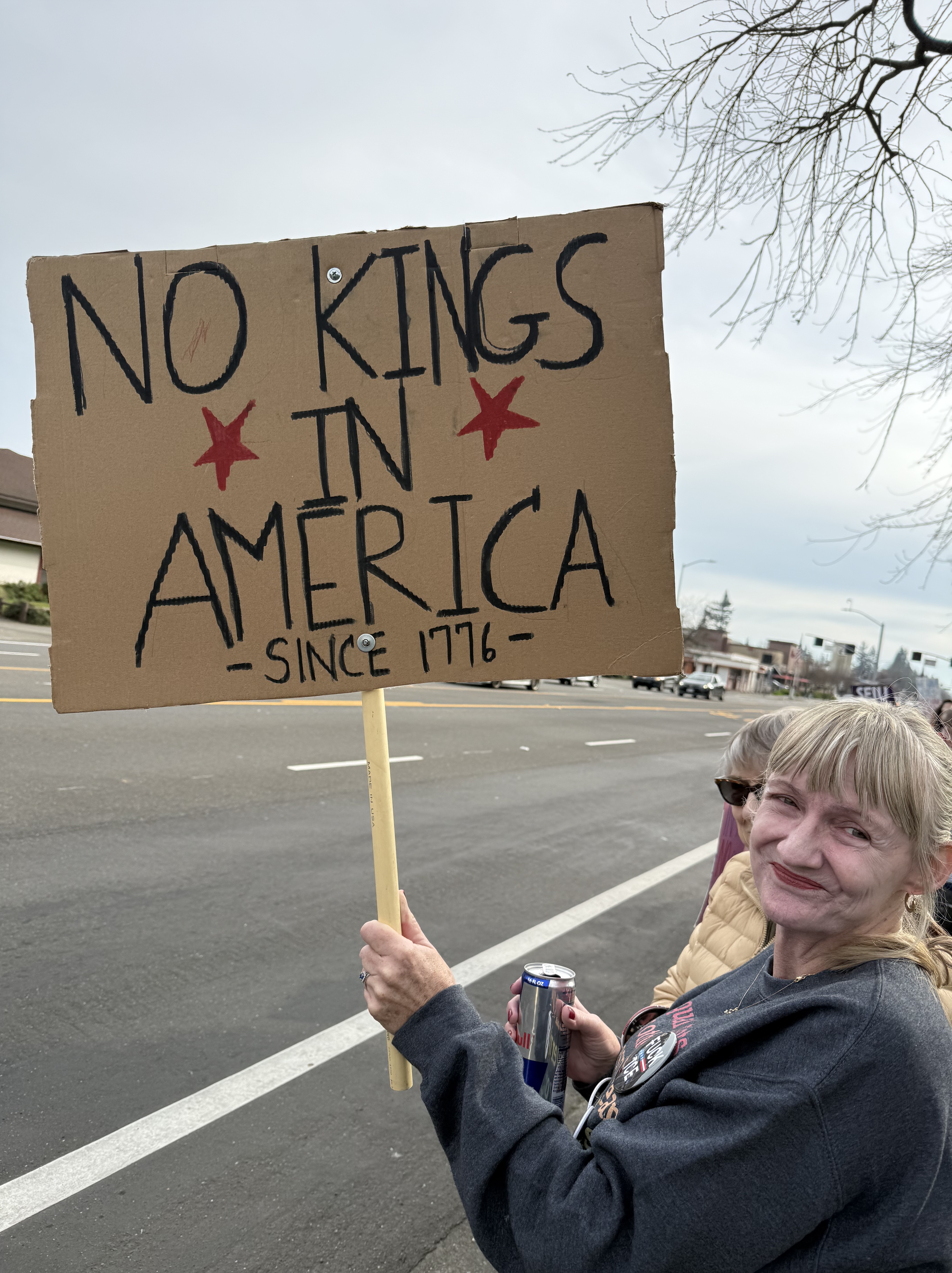



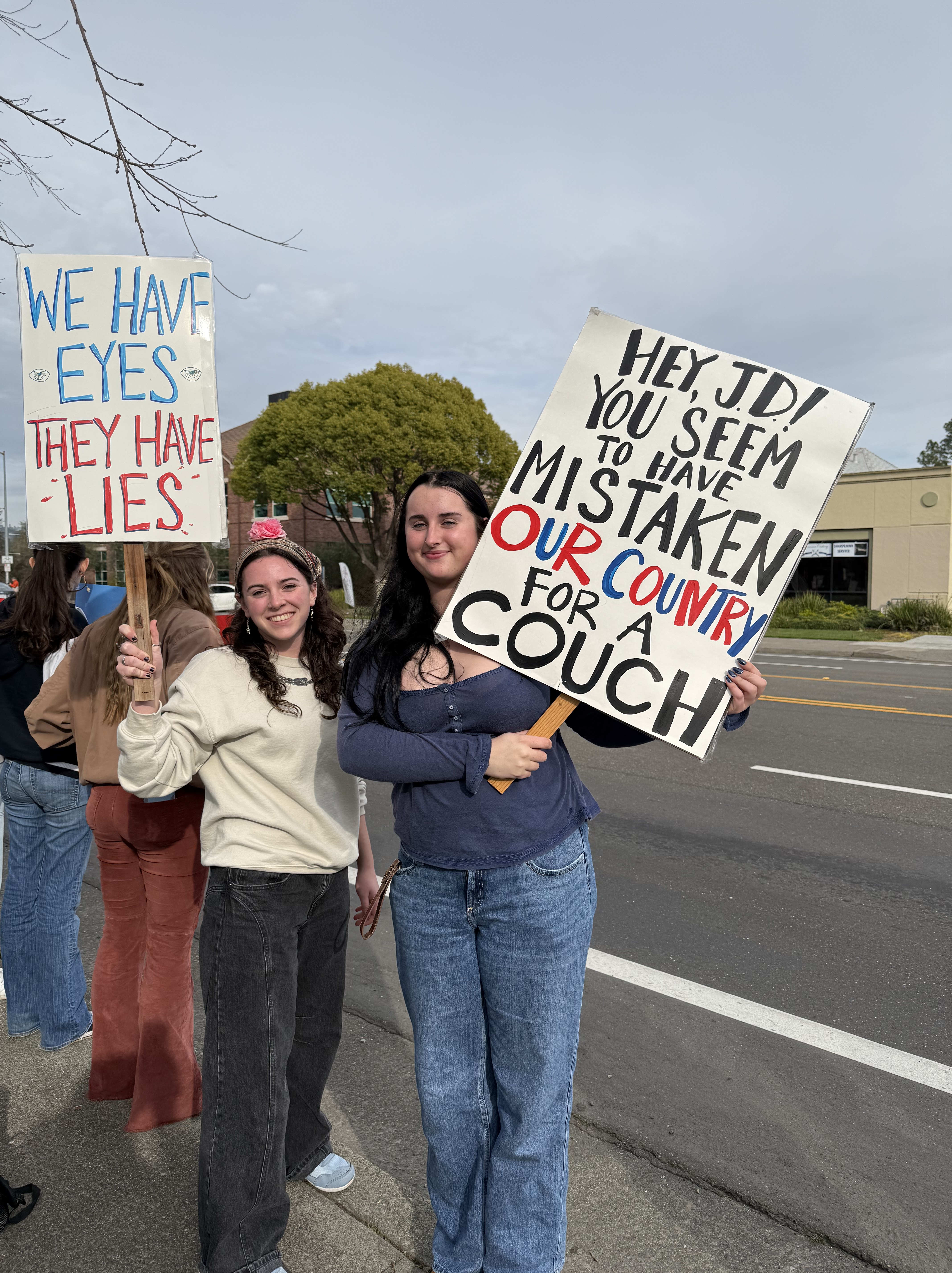


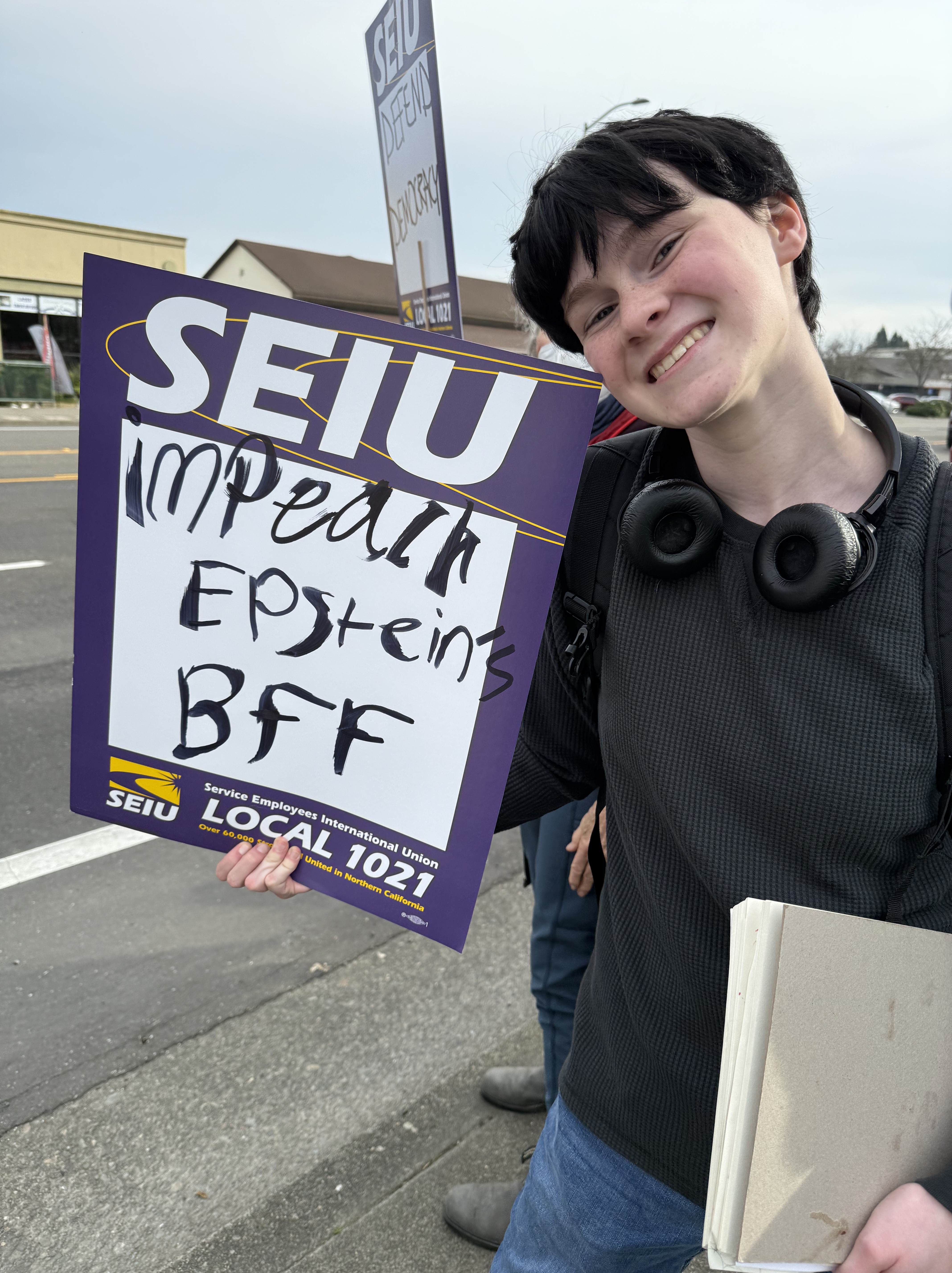


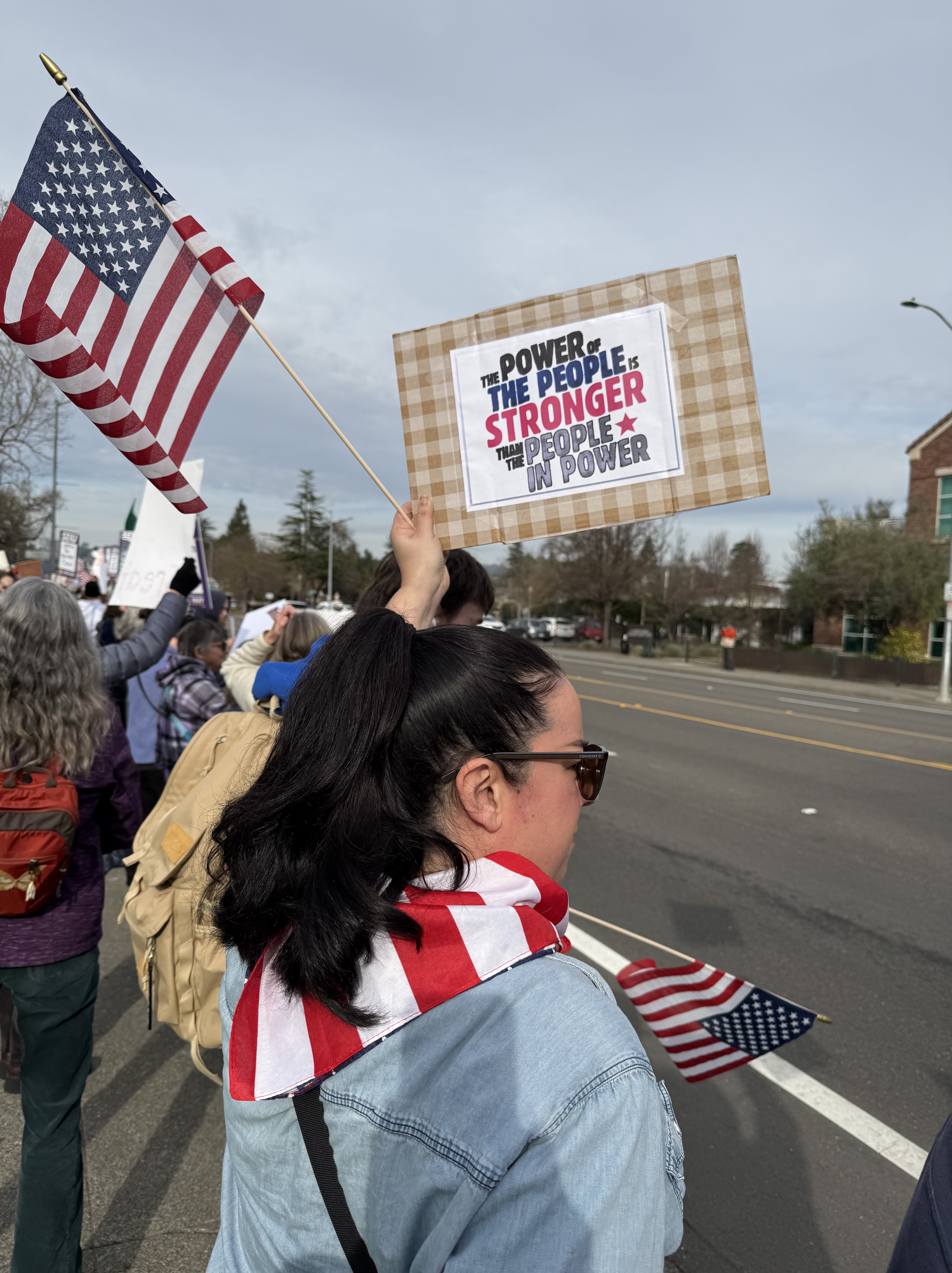




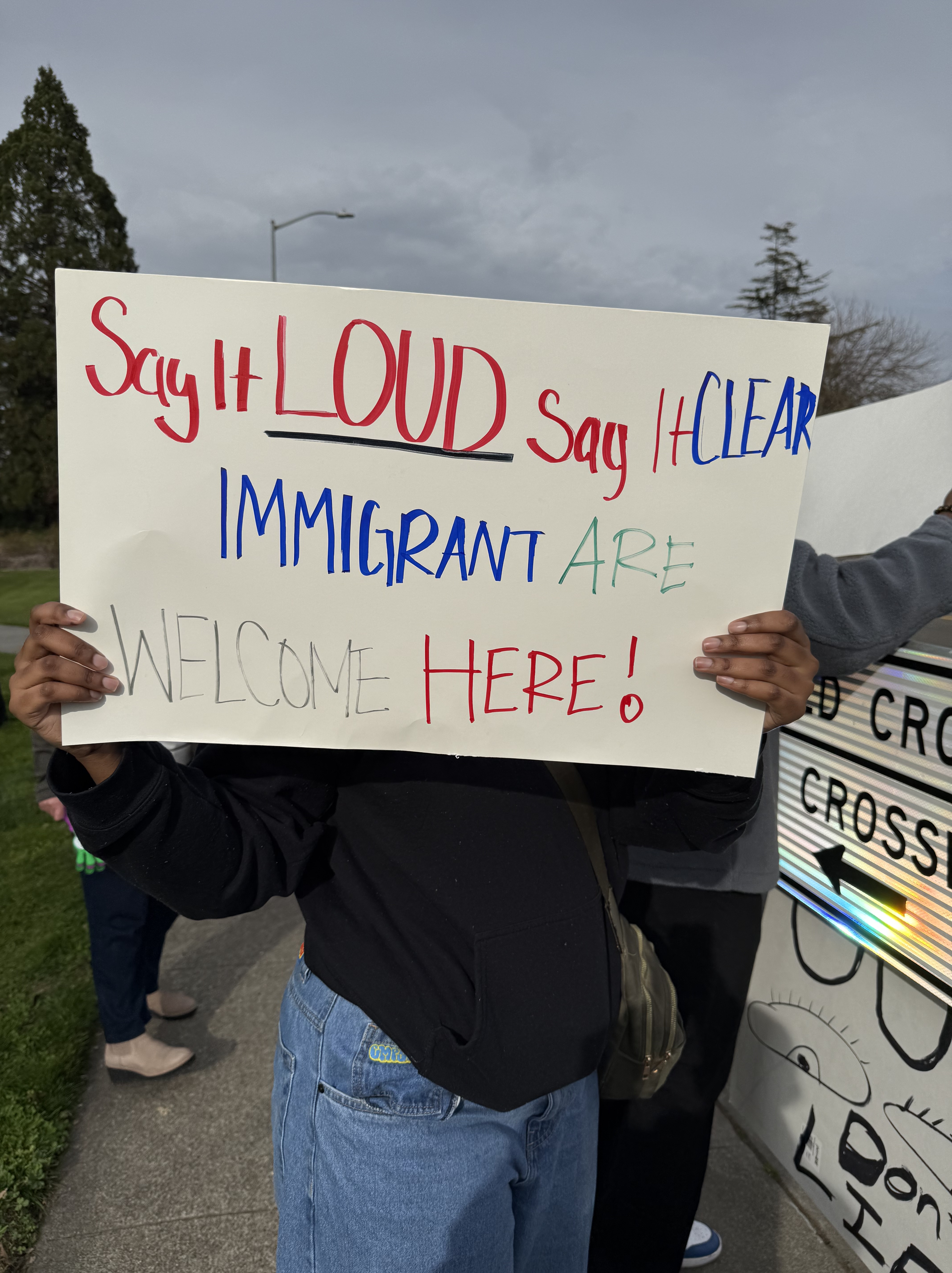
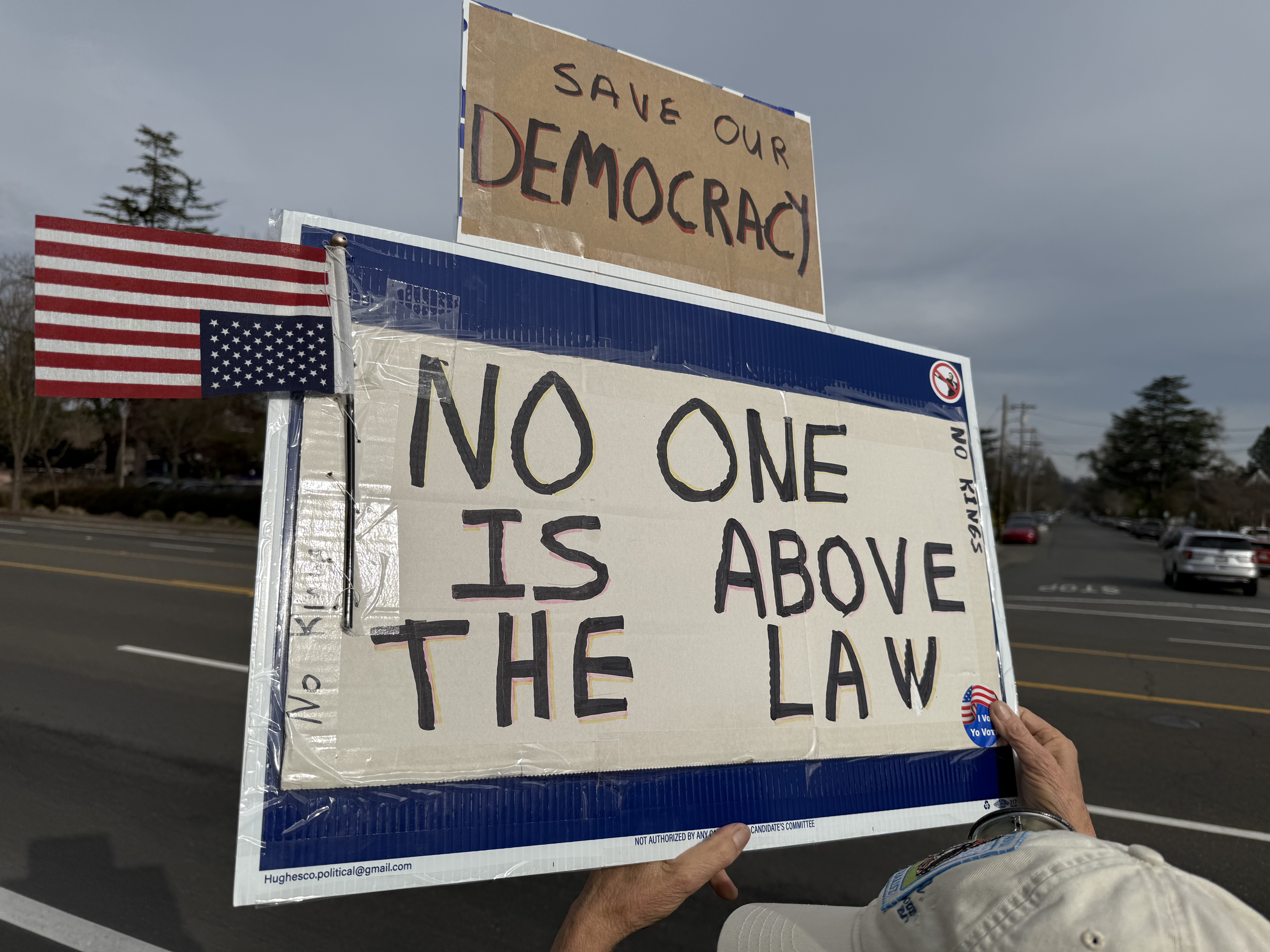
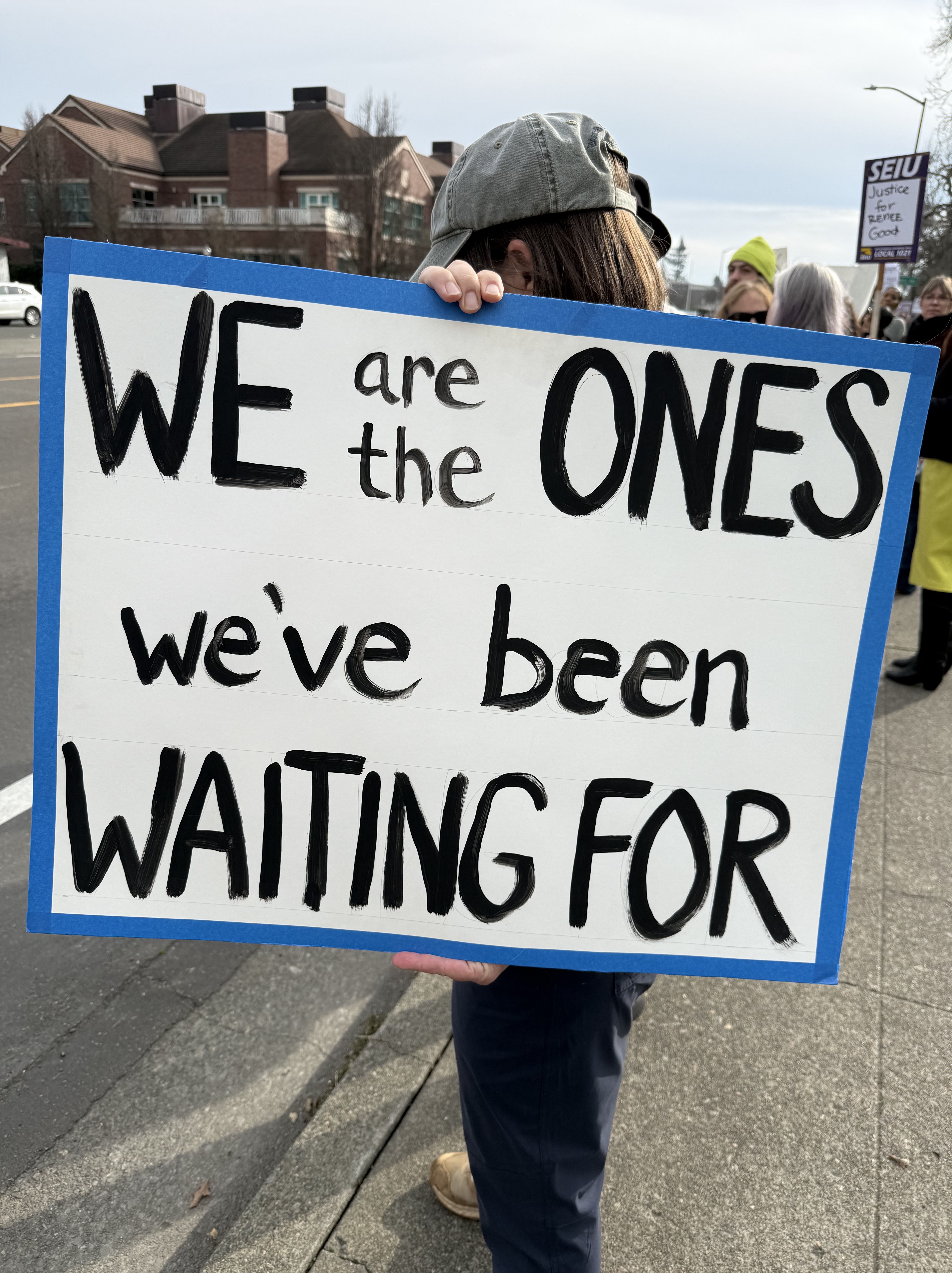
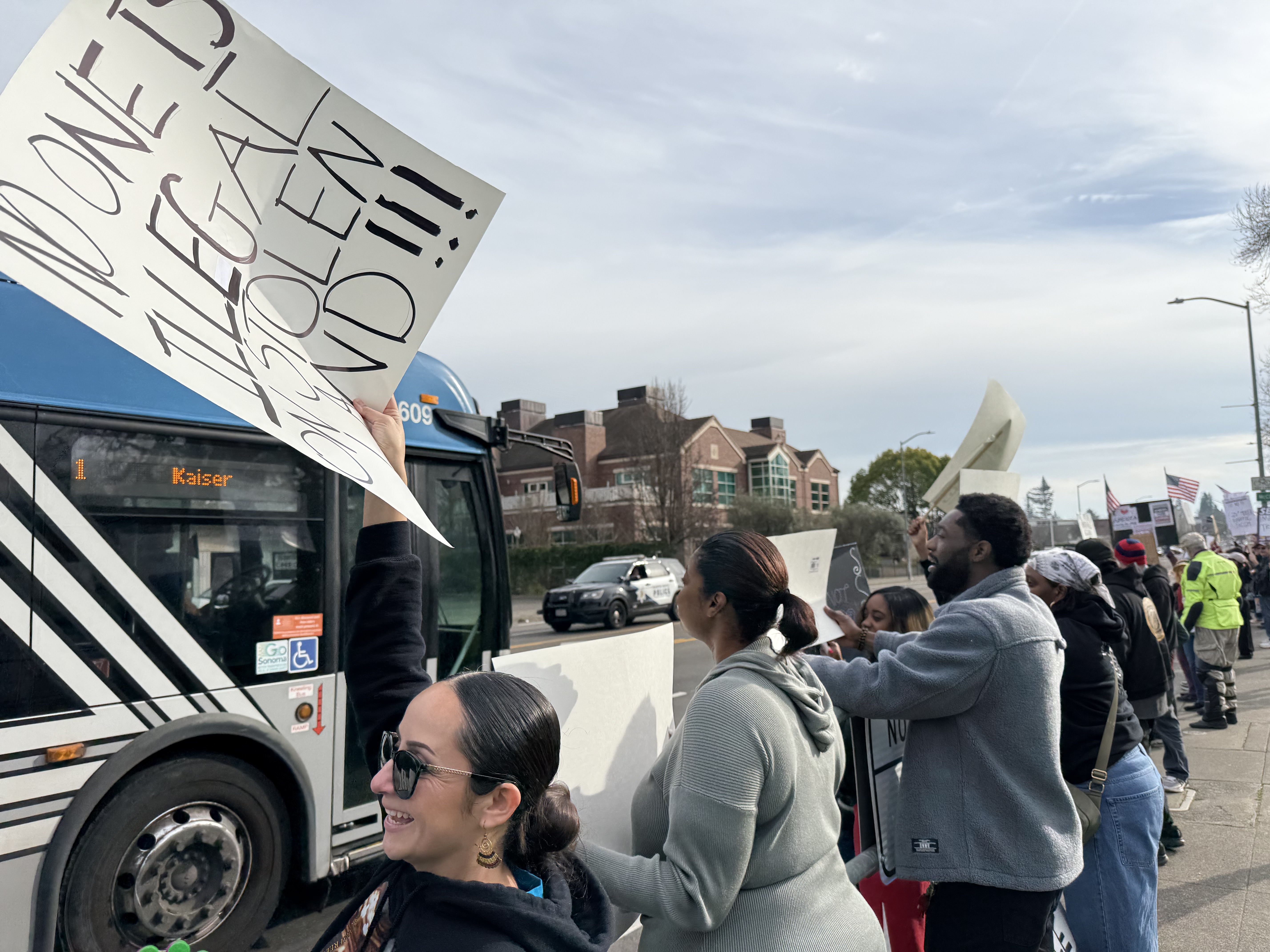










With Santa Rosa Women’s March and SEIU Local 2021
Folks Get Creative With Their Signs

Tradeswomen Reject Union’s Capitulation
Tradeswomn Inc. is a nonprofit I helped found in 1979. Still going strong, the organization helps women find jobs in the union construction trades. Here’s the text of a speech I gave October 30, 2025 at Tradeswomen’s annual fundraising event.
Sisters, we’ve come a long way.
When we first started Tradeswomen Inc., we had one goal:
to improve the lives of women — especially women heading households —by opening doors to good, high-paying union jobs.
It took us decades to be accepted by our unions.
Decades of proving ourselves on the job, standing our ground, demanding a seat at the table.
And now — by and large — we’re there.
We are leaders. Business agents. Organizers. Stewards.
We have changed the face of the labor movement.
But sisters, we are living in a dangerous time.
Our own federal government is attacking the labor movement.
And we cannot look away.
We all know that Donald Trump is gunning for unions.
Project 2025 is his blueprint — a plan to dismantle workers’ rights and roll back decades of progress.
Let me tell you some of what’s in that plan.
It would roll back affirmative action, regulations we worked so hard to secure,
Allow states to ban unions in the private sector,
Make it easier for corporations to fire workers who organize,
And even let employers toss out unions that already have contracts in place.
It would eliminate overtime protections,
Ignore the minimum wage,
End merit-based hiring in government so Trump can pack the system with loyalists,
And — unbelievably — it would weaken child labor protections.
Sisters and brothers, this is not reform.
It’s revenge on working people.
And yet, too many union members still vote against their own interests.
Why? Because propaganda works.
Because we are being lied to — by the media, by politicians, by billionaires who want to divide us.
That means our unions must do more than just bargain wages.
We must educate. Engage. Empower.
Because the fight ahead isn’t just about contracts
It’s about truth.
We women have proven ourselves to be strong union members — and strong union leaders.
We’ve built solidarity.
We’ve organized.
We’ve made our unions more inclusive and more reflective of the real working class.
And now it’s time for our unions to stand with us.
Many of our building trades unions have stood up to Trump, and to anyone who would divide working people.
But one union — the Carpenters — has turned its back on us.
The Carpenters leadership has disbanded Sisters in the Brotherhood, the women’s caucus that so many of us fought to build.
They have withdrawn support from the Tradeswomen Build Nations Conference, the largest gathering of union tradeswomen in the world.
They’ve withdrawn support for women’s, Black, Latino, and LGBTQ caucuses claiming they’re “complying” with Trump’s executive orders.
That’s not compliance.
That’s capitulation.
But the rank and file aren’t standing for it.
Across the country, Carpenters locals are rising up,
passing resolutions to restore Sisters in the Brotherhood
and to support Tradeswomen Build Nations.
Because they know:
You don’t build solidarity by silencing your own. And our movement — this movement — is built on inclusion, not fear.
While the Carpenters’ leadership retreats, others are stepping up.
The Painters sent their largest-ever delegation — nearly 400 women —to Tradeswomen Build Nations this year.
The Sheet Metal Workers are fighting the deportation of apprentice Kilmar Abrego Garcia.
The Electricians union is launching new caucuses, organizing immigrant defense committees, and they are saying loud and clear:
Every worker means every worker.
Over a century ago, the IWW — the Wobblies — said it best:
“An injury to one is an injury to all.”
That’s the spirit of the labor movement we believe in —and the one we will keep alive.
Our unions are some of the only institutions left with real power to stand up to the fascist agenda of Trump and his allies.
We have to use that power — boldly, collectively, fearlessly.
Because this fight is about more than paychecks.
It’s about democracy.
It’s about equality.
It’s about whether working people — all working people — will have a voice in this country.
Sisters and brothers, we’ve built this movement with our hands,
our sweat,
and our solidarity.
Now — it’s time to defend it. Together.
Solidarity forever!
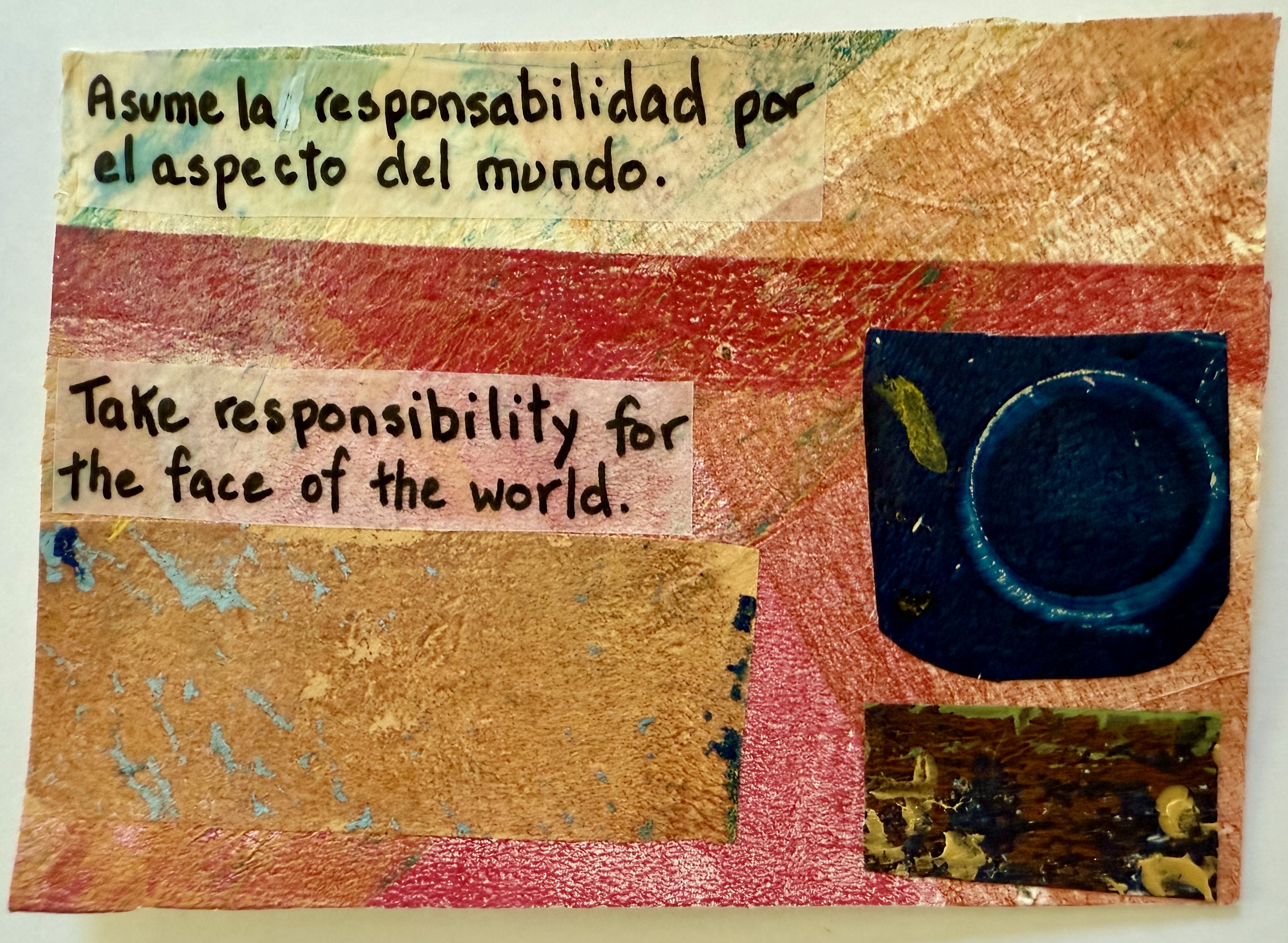
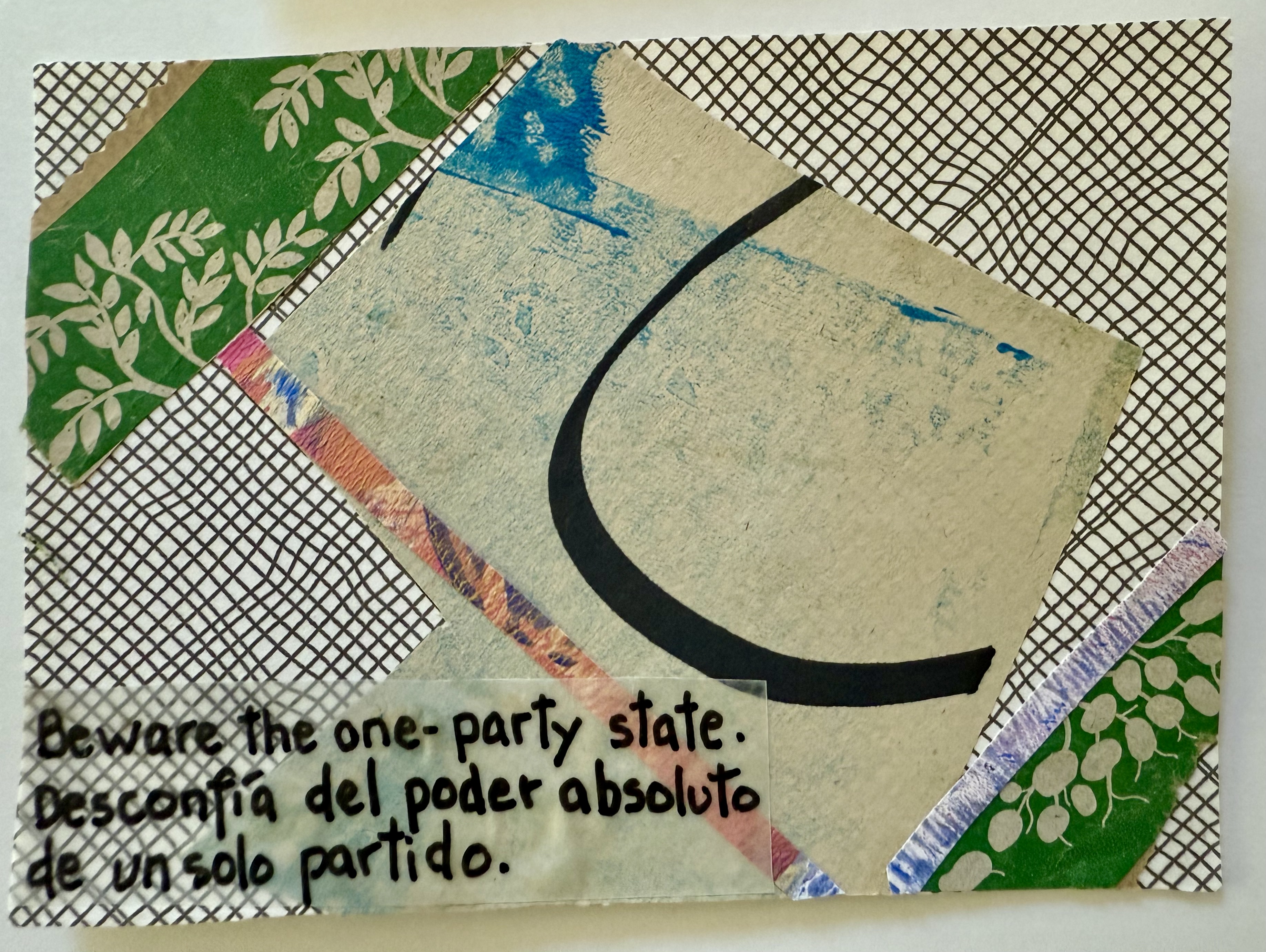
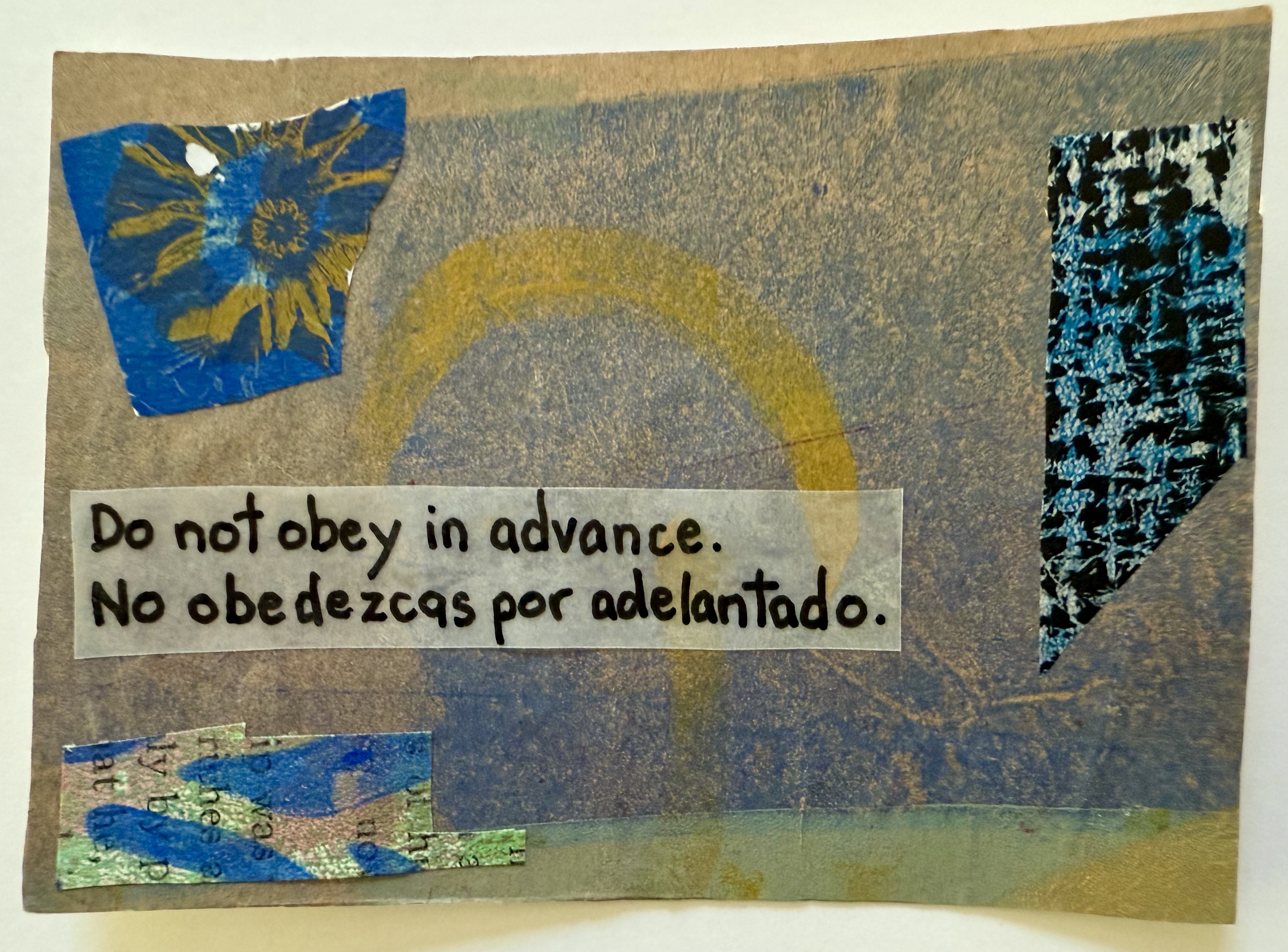
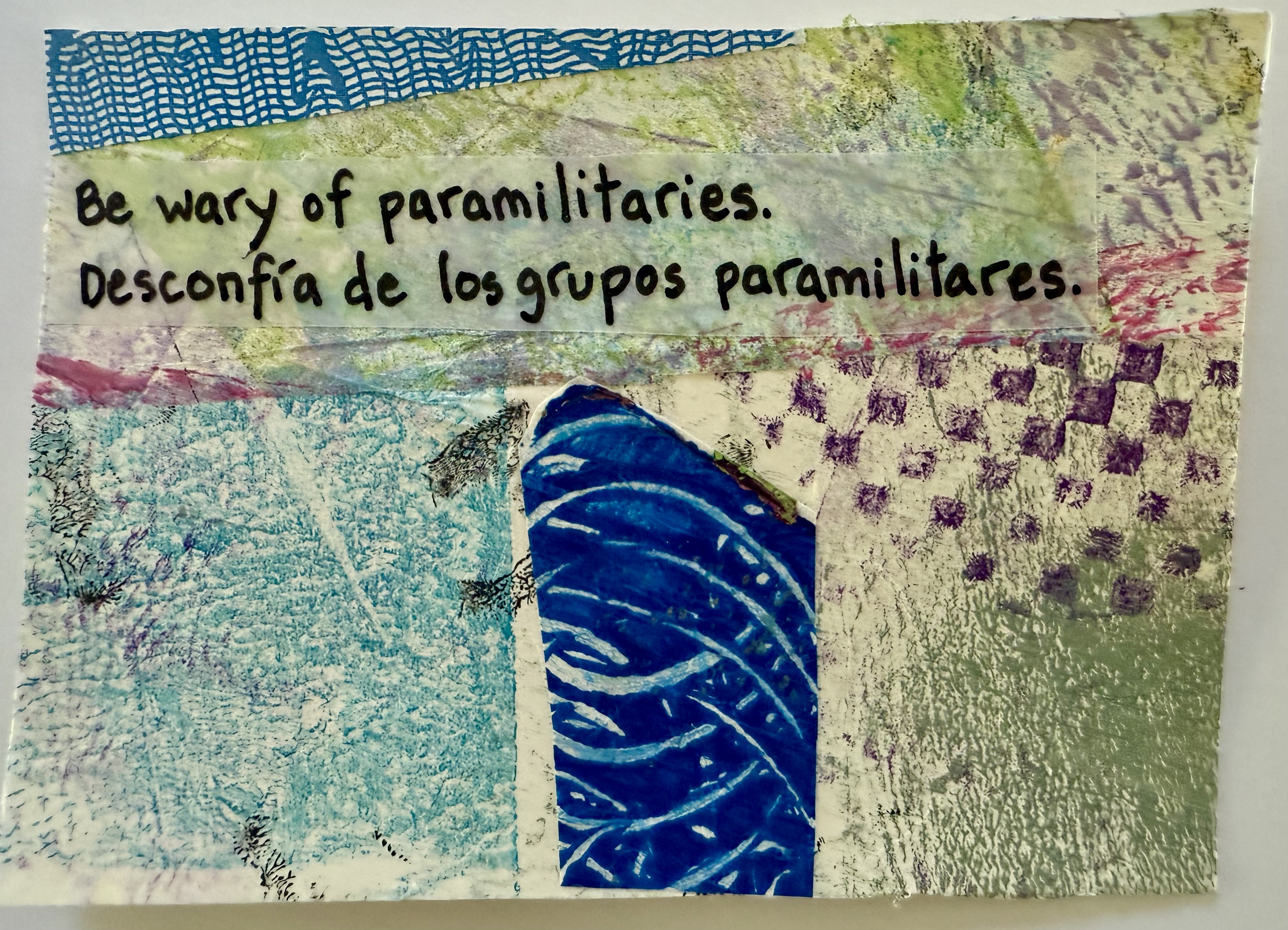
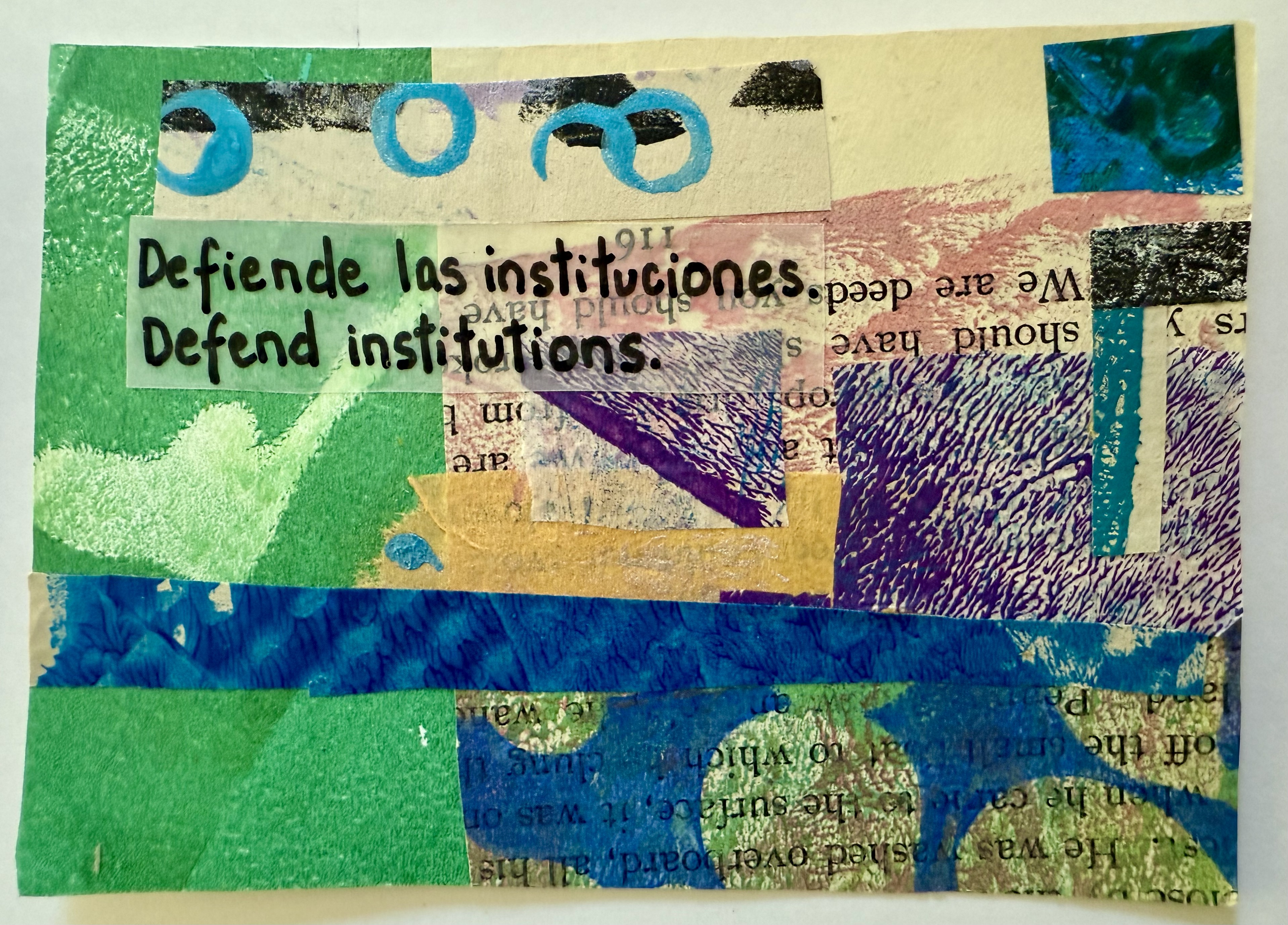
My friend and neighbor Laura Doty made these cards from the Timothy Snyder book.
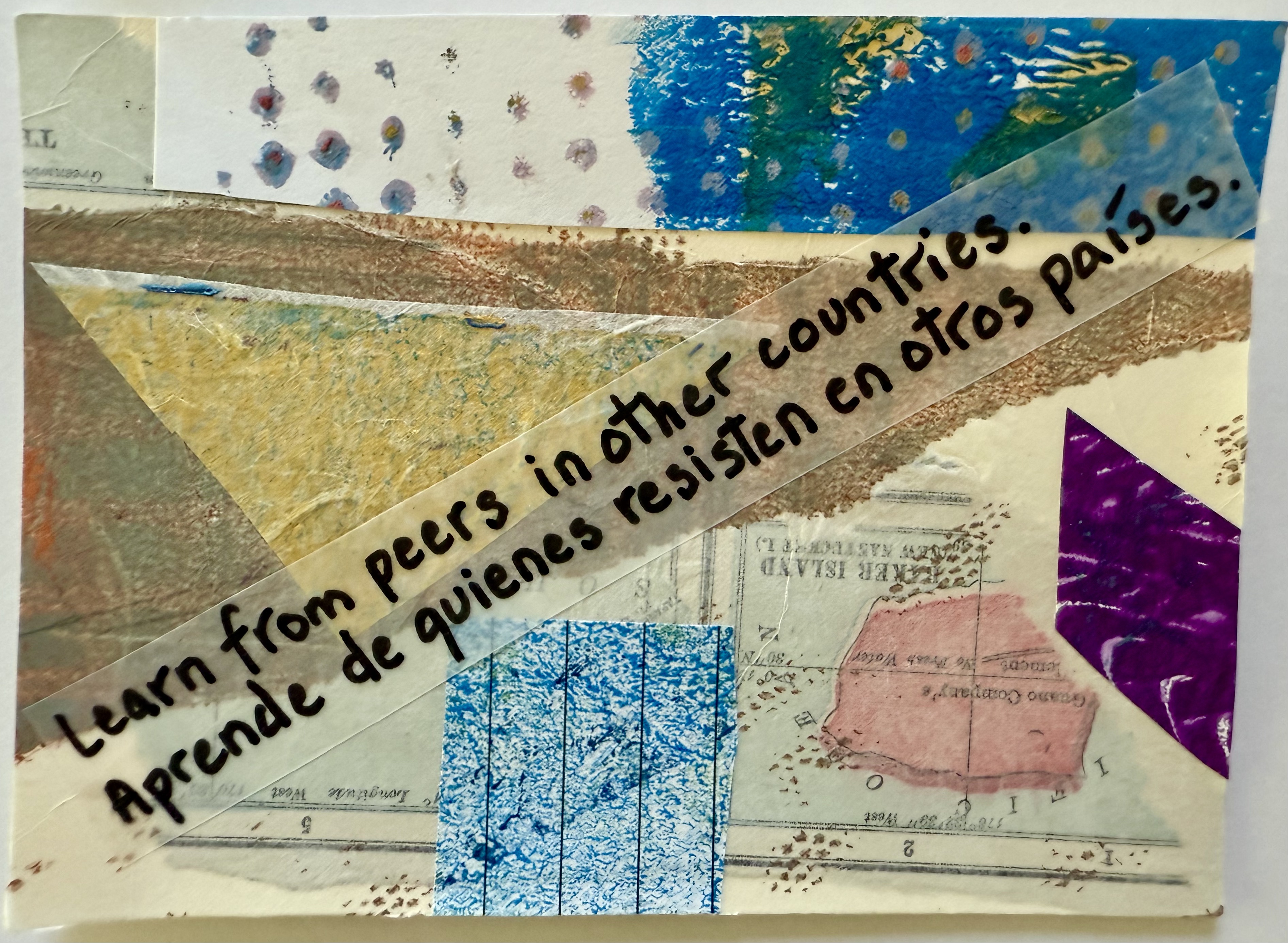

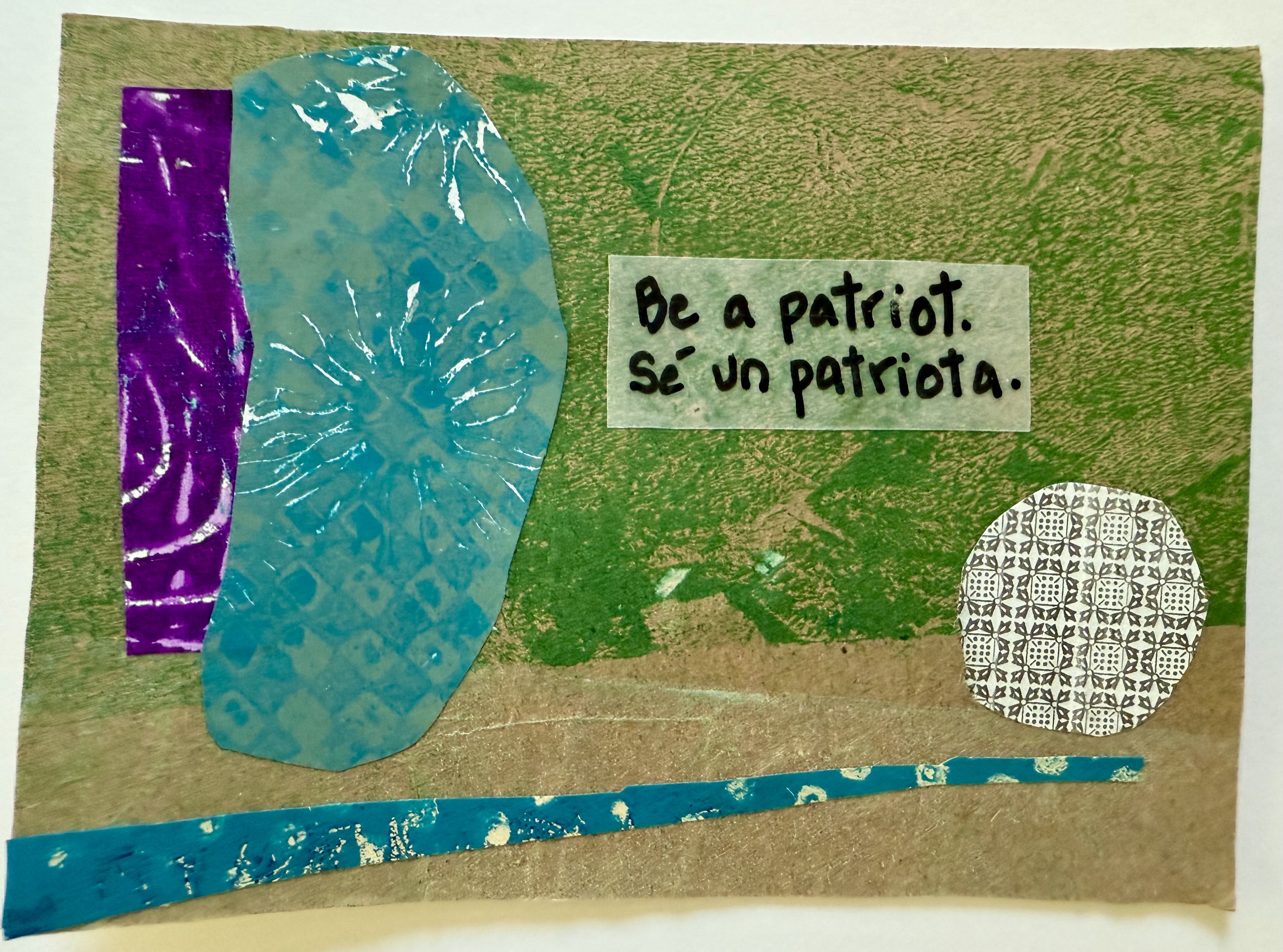
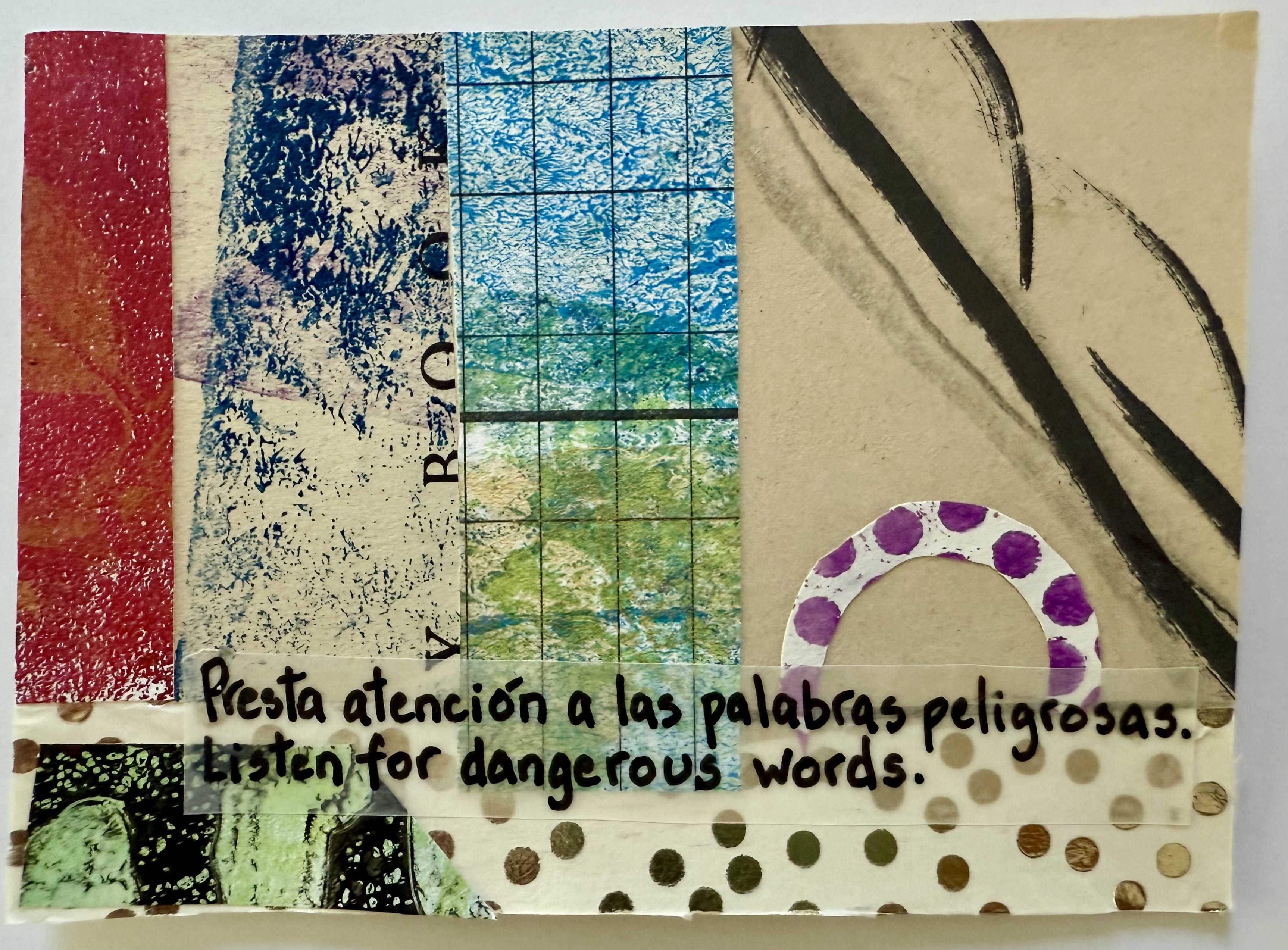


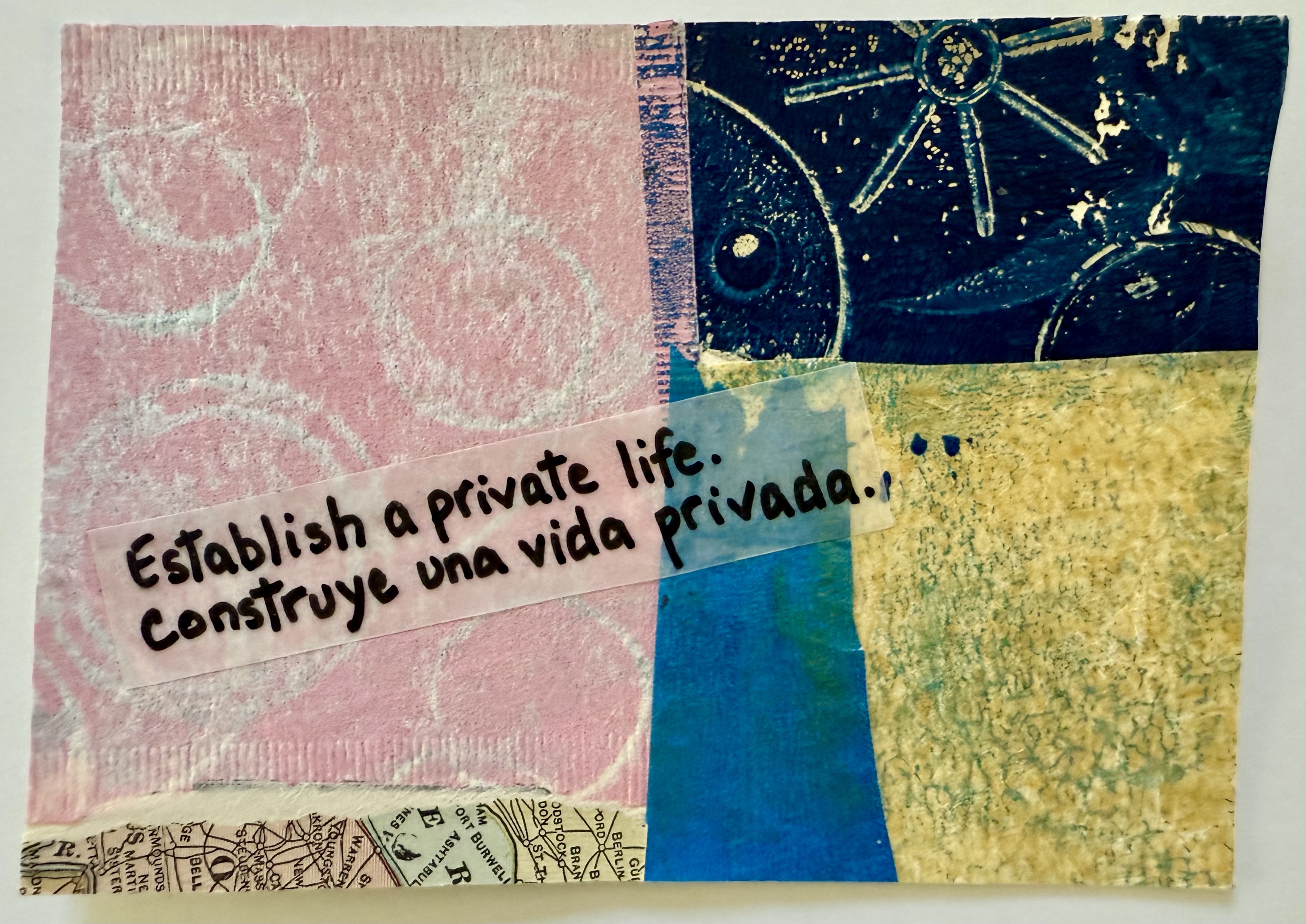
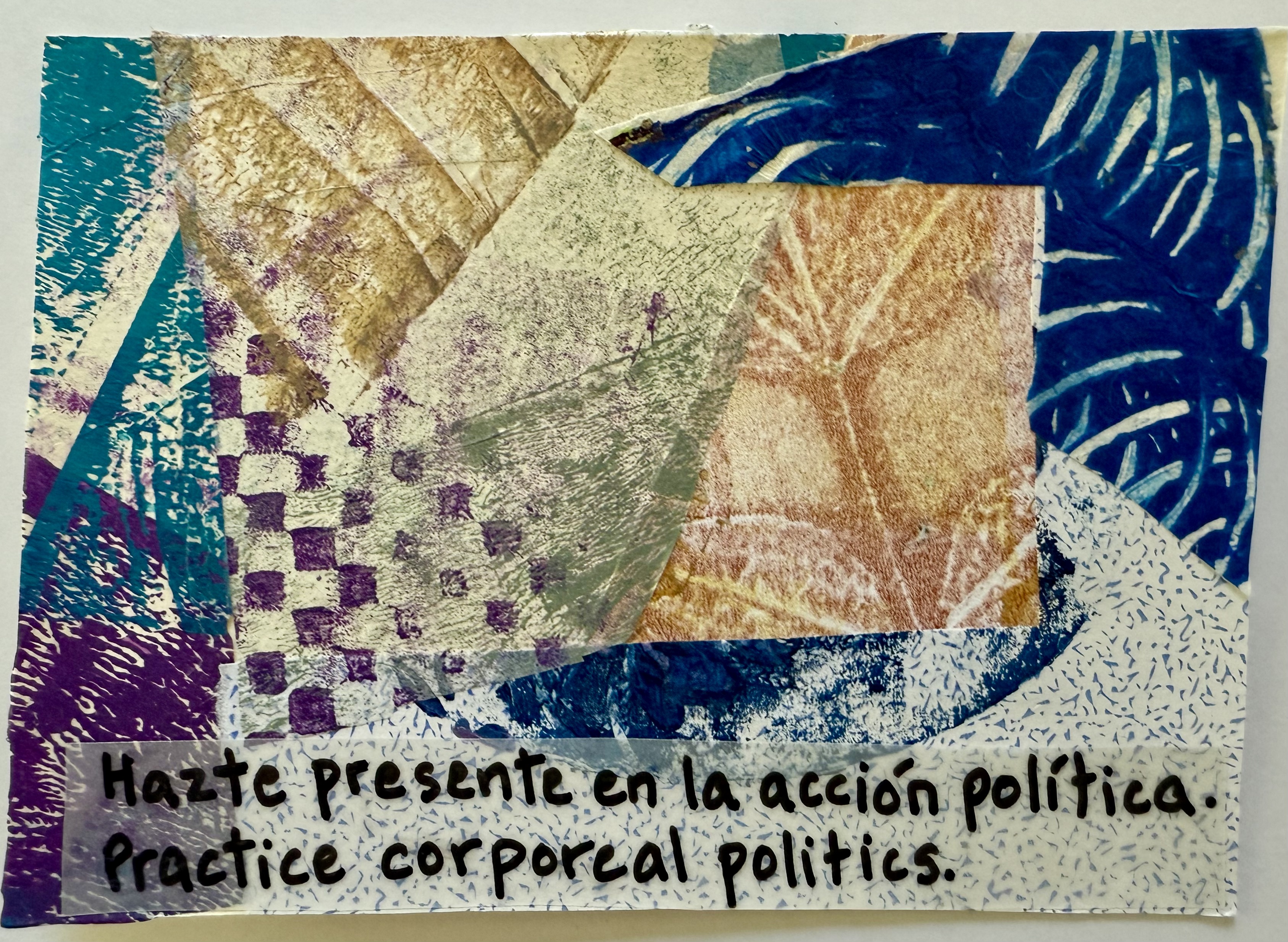
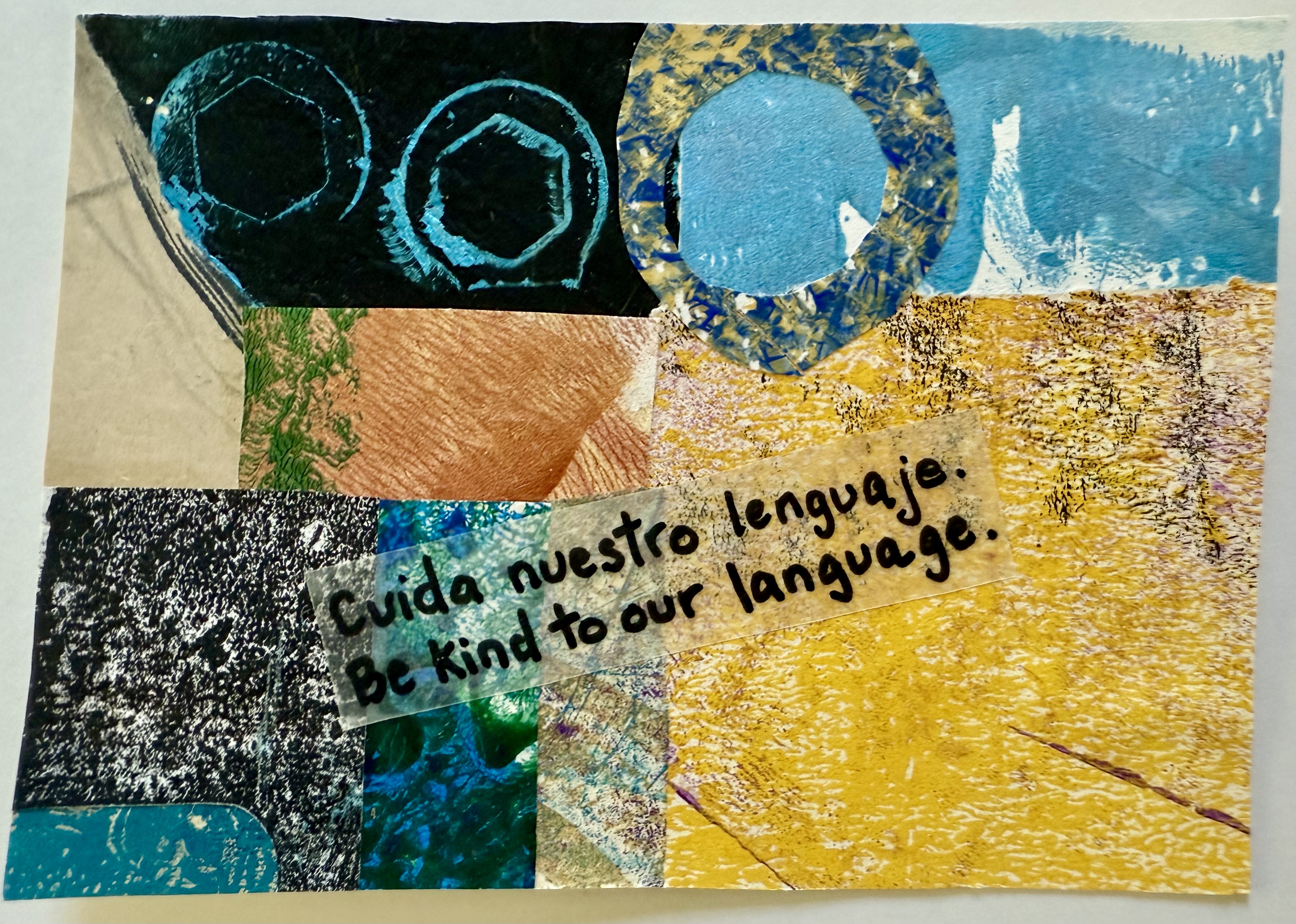


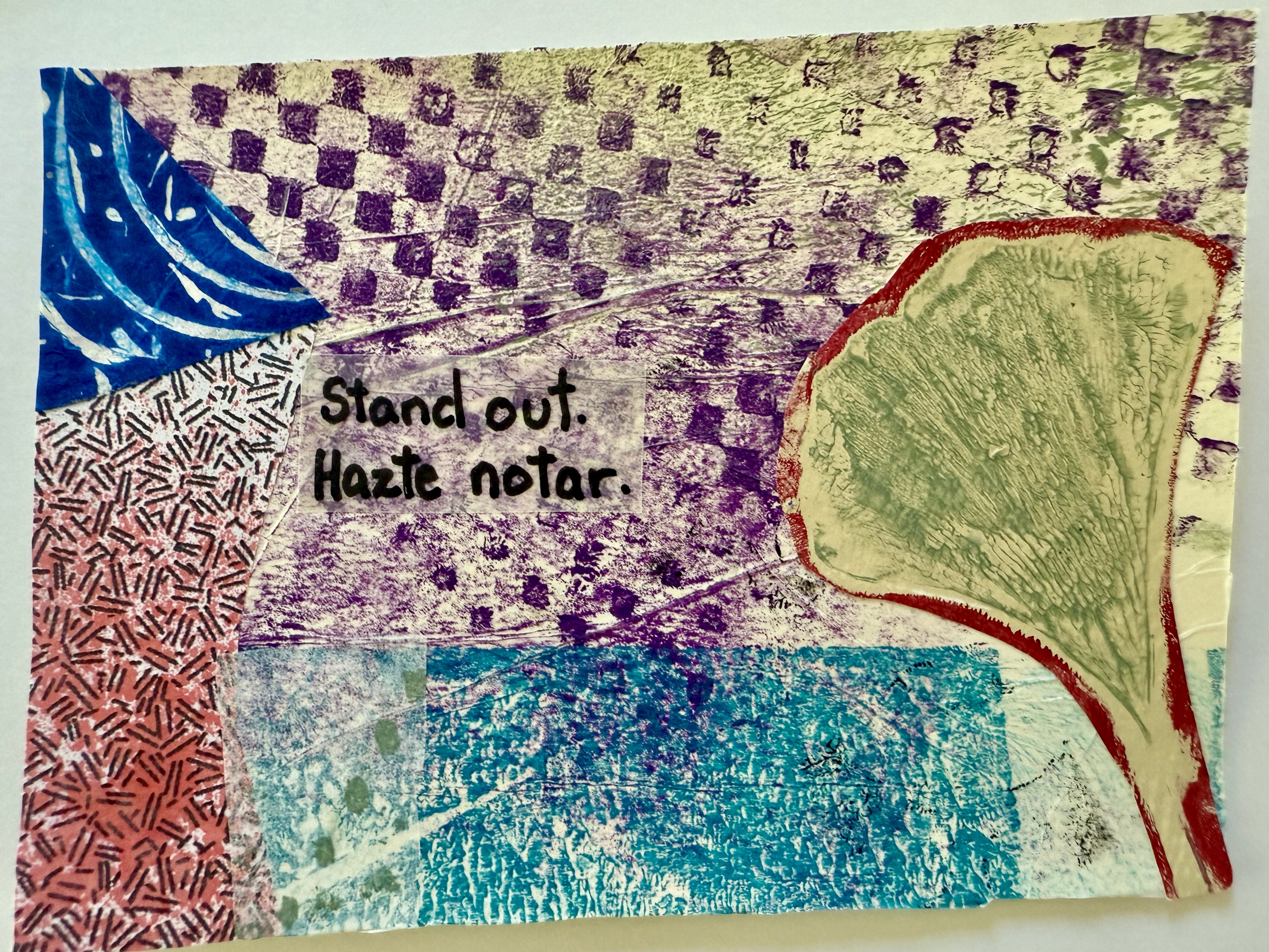
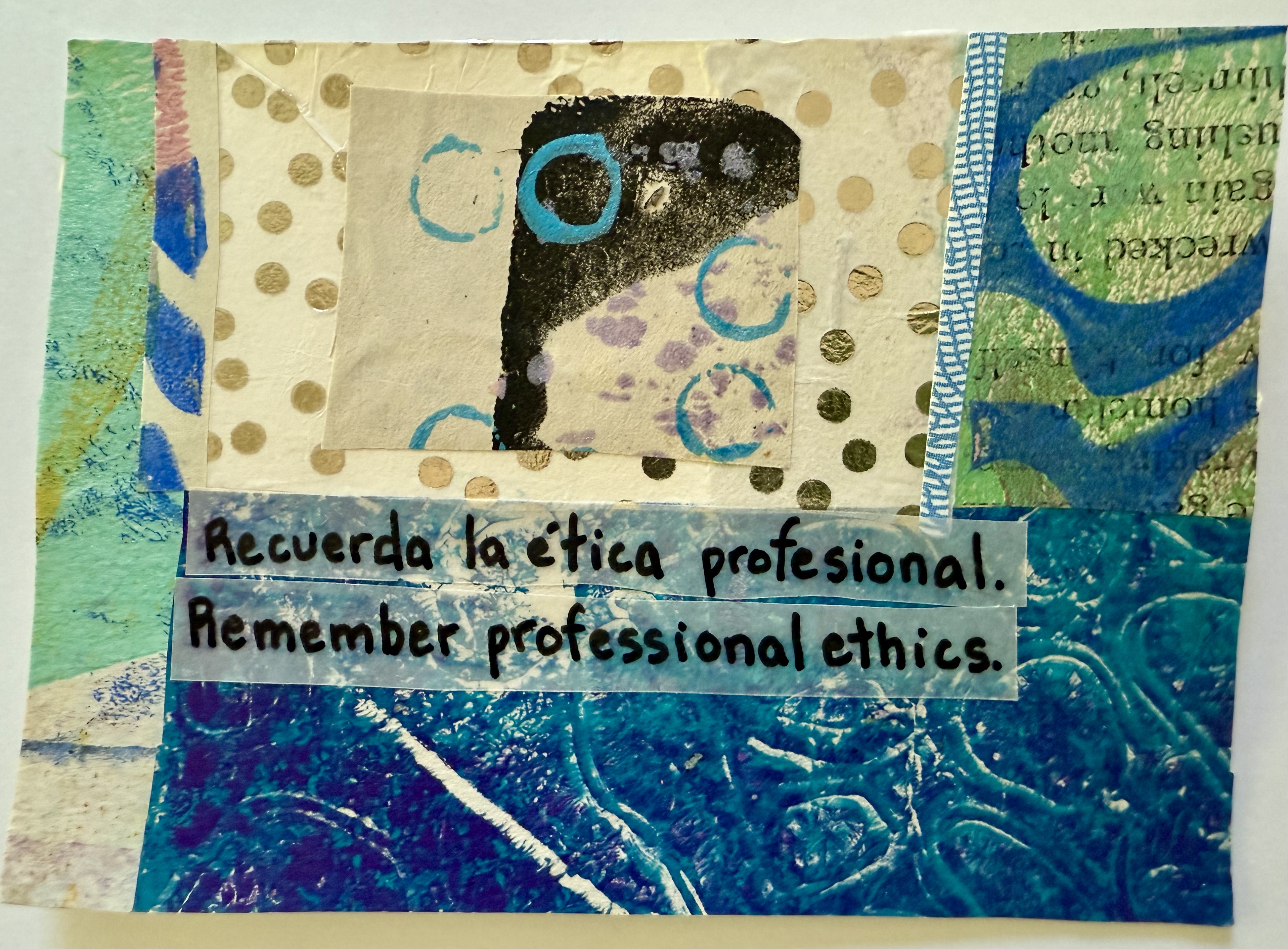

The Rise of Antifascist Art During WWII
My Mother and Audie Murphy Ch. 63
When Donald Trump illegally designated Antifa as a domestic terrorist organization, my concern for the future of our democracy deepened.
Antifa is not an organization, just a loose movement with no leaders. Because Antifa lacks structure, Trump’s move could target anyone the government assumes to be part of the movement, which could be you or me. I declare I am an antifascist. I object to the fascist takeover of my country.
Whatever you think of antifascists, probably you don’t think of the US government. But there was a time when the villains of US foreign policy were fascists. It was after the Spanish Civil War, 1936-39, in which the US refused to intervene, letting the fascists win with the help of Hitler, Mussolini and US oilmen (see Spain in Our Hearts by Adam Hochschild). It was before the CIA incorporated Nazi war criminals into its organization and focused our wrath on communists and the Soviet Union after WWII (see The Devil’s Chessboard by David Talbot).

In the aftermath of WWI, European writers sought to alert the world about the fascist threat and Americans—if they were paying attention—knew about what was happening in Europe. My mother, Florence Wick, was paying attention. What cultural influences caused her to join the American Red Cross (ARC) and serve in Europe during the second world war? What can we learn today from antifascist art?
Watch on the Rhine
In the years before television, theater played an influential role in shaping the culture. Visiting New York City in 1941, my mother saw Watch on the Rhine, an antifascist play written by Lillian Hellman. The popular play won the New York Drama Critics prize that year and was still on Broadway when Pearl Harbor was bombed on December 7, 1941. Made into a movie starring Bette Davis in 1943, Watch on the Rhine was representative of a genre of antifascist art popular in the US during the early years of WWII whose purpose was to persuade isolationist Americans to get involved in the European war. It certainly influenced my mother’s decision to join the Red Cross and go to war. I think it may have been one reason she chose to join the ARC, which promised a job overseas, rather than other slots that opened for women, which may have kept her behind a desk back in the States.

I watched the movie and several others with similar messages. Some are just naked propaganda with unbelievable characters and dialog. Others, like Hellman’s, seek to educate Americans about the crisis in Europe, about class and about anti-Semitism. Hellman, who had briefly joined the Communist Party, wrote the play in 1940 following the Nazi-Soviet non-aggression pact of 1939. Her call for a united international alliance against Hitler contradicted the party’s position at the time. She was labeled a “premature antifascist” by the Communist Party, ironically later a moniker used by the FBI during the McCarthy purges to target communists. Her lover, Dashiell Hammett, who had also joined the Communist Party, wrote the screenplay.
His introduction reads: In the first week of April 1940 there were few men in the world who could have believed that, in less than three months, Denmark, Norway, Belgium, Holland and France would fall to the German invaders. But there were some men, ordinary men, not prophets, who knew this mighty tragedy was on the way. They had fought it from the beginning, and they understood it. We are most deeply in their debt. This is the story of one of these men.
The man is Kurt Muller, a German who has devoted his life to the antifascist movement. We learn that he and many of his comrades fought in international brigades along with the Spanish Republicans to defend Spain’s democratically elected government against Francisco Franco’s fascists. They and others have constructed an underground antifascist organization in Europe. Watch on the Rhine shows us that fascists come in many shades; that Americans, naive about world politics, haven’t moved so far from slavery; that Bette Davis (bless her heart) excelled at overacting. The part played by Davis, Muller’s American wife, was expanded for the movie to make use of her star power at the box office.
The play is set in the Washington DC mansion of the wife’s family, whose dead patriarch had been a respected US Supreme Court justice. The family matriarch, Mama Fanny, runs it like a plantation, overseeing Black servants with strict control. When Joseph, the male servant, is summoned, he answers “Yasum.”
But Joseph gets some good lines. When Mama Fanny orders, “That silver has lasted 200 years. Now clean that silver,” Joseph says, “Not the way you take care of it Miss Fanny. I see you at the table and I say to myself, ‘There’s Miss Fanny doing it to that knife again.’ “
Hellman uses the three Muller children, sophisticated, language rich and worldly, to teach Americans about the outside world. “Grandma has not seen much of the world,” says the oldest, Joshua. “She does not understand that a great many work most hard to get something to eat.”
We learn that the antifascist movement is nonviolent. The youngest kid, Bodo, says, “We must not be angry. Anger is protest and should only be used for the good of one’s fellow man.”
The movie is both a critique of American culture and an attempt to school Americans about developments in Europe. Hellman did deep research for her script, and I thank her for helping me to understand this historical period and the forces that shaped it. Like most films from this era, it’s not available on Netflix, but I was able to check it out from the San Francisco Public Library.
The Moon Is Down

During Hitler’s rise, Nazis were winning the propaganda war. Leni Riefenstahl’s 1935 Nazi propaganda film, Triumph of the Will, was and still is much admired. Alarmed artists approached the US government with proposals for antifascist plays, movies and books, among them the famous writer John Steinbeck. The result of his effort, the novella, The Moon is Down, was published in March 1942. The next month it played on Broadway and a year later premiered as a movie. Its purpose was to motivate the resistance movements in occupied countries. The sinister title comes from Shakespeare’s Macbeth.
I accidentally discovered the thin book in a friend’s library and read it with great interest. It describes life in a town that has been invaded and occupied by the German fascist army.
There is bloodshed. Orders are followed. People resist, are arrested and executed. People flee. Some people collaborate. Others form an underground to communicate with those on the outside. At the end of the book, the war is still going. But the invaders have been surrounded and we are very aware that the invaders have become the harassed. In a way, the occupiers have become the occupied.
Steinbeck acknowledges the humanity of the enemy. We learn as much about the motivations and humanness of the invaders as the invaded. For that reason the book was criticized mercilessly in the US and Steinbeck’s patriotism questioned. But Europeans loved it. It was translated into many languages and became the most popular piece of Allied propaganda in WWII.
Five Came Back
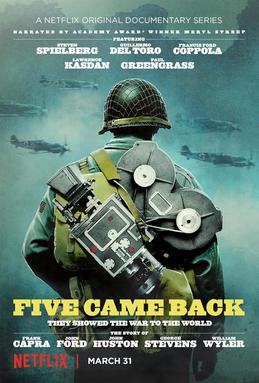
Things weren’t looking good for the Allies as the US joined the war effort after the Japanese attack on Pearl Harbor. Germany and Japan were conquering Europe and the Pacific. The US had only just started to gear up its factories to make war materiel and Europe feared we wouldn’t get it there in time to stop the Nazi advance. It was during this time that the US antifascist propaganda machine went into high gear.
From 1942 to 1945, Frank Capra directed a series of seven antifascist propaganda films, narrated by the actor Walter Huston. The series, called Why We Fight, was produced by the War Department to make the case for US involvement in WWII. These films can now be accessed online. I also saw Five Came Back, a three-part Netflix series about five American film directors, including Capra, who produced propaganda for the US government during the war. The others were John Ford, William Wyler, John Huston, and George Stevens.
Making movies of the war changed the filmmakers as well as audiences. We learn that they were haunted by what they saw. Wyler was shocked by racism against Black soldiers and refused to make a film meant to recruit Blacks. Stevens, at Dachau, realized he should be there to film evidence of crimes against humanity, not propaganda. Ford turned to drink after witnessing the bloodbath on D-Day. Huston took on PTSD only to have his film suppressed by the government. Racism was present in these films. While Germans were depicted as humans, Japanese were often seen as subhuman caricatures. The government worried, rightly, that violence against Japanese Americans would result. Then, in 1942, it incarcerated them until the end of the war.
Women in WWII: 13 short films featuring America’s Secret Weapon
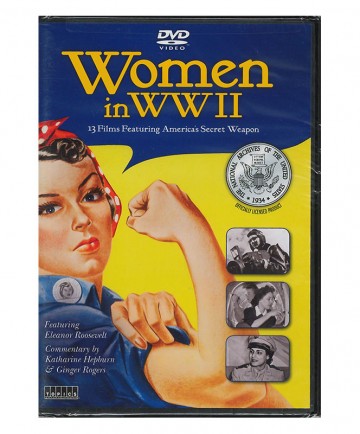
Most of these are US military propaganda films whose purpose was to convince women to join the WACS or other service, and also to persuade men that women could do the work. Some were written by Eleanor Roosevelt and narrated by famous actors like Katherine Hepburn. The American Red Cross, in which my mother served, wasn’t mentioned, but there was a picture of an ARC club in North Africa.
I wish the government had made films like this for women in the trades. In one scene a couple of men are talking on their front porch about how one’s sister wants to join the WACS and they think she’s crazy. It’s a man’s war, they say. Then the film counters their sexism and shows competent women doing all sorts of jobs. However, these films also endeavored to persuade women that they were taking men’s jobs and they needed to go back home after the war and relinquish their war jobs to returning soldiers. It was made clear that the jobs belonged to men.
I don’t know if my mother saw any of these films, but it was this sort of government propaganda that propelled her and her generation into World War II. When the enemy was fascism, she was “as patriotic as they come,” according to her sister. Only after the war did she begin to question the government-constructed enemies of the state.
Imaginary Witness: Hollywood and the Holocaust
Released in 2004, this film makes the case that the story of the Holocaust has been told to the world by films made in Hollywood, starting with Warner Bros. Confessions of a Nazi Spy in 1939, then MGM’s The Mortal Storm in 1940. Neither of these films used the word Jew. The Jewish studio heads wanted to stay in the closet and just be known as Americans. Also, the movie industry made a lot of money from selling its films to Germany during the early years of Hitler’s takeover. Some historians now view studio directors as Nazi collaborators.
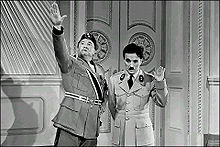

Finally in 1940 Charlie Chaplin used the word Jew in The Great Dictator, which he made with his own money. Imagining that an antifascist film can also be hysterically funny might be difficult until you see The Great Dictator. Chaplin slays as Adenoid Hynkel, a thinly disguised Hitler. Jack Oakie’s spoof of Mussolini inspires hilarity. This film is testament to Chaplin’s comic genius. In the globe scene, Chaplin/Hynkel performs a ballet dance with a balloon earth, achieving perfect domination. Chaplin impersonates Hitler to great comic effect. He watched Riefenstahl’s propaganda film Triumph of the Will to learn Hitler’s speech patterns and body movements. Chaplin later said that if he had known the extent of Nazi atrocities, he wouldn’t have made the film. I’m so glad he did.
My mother told us kids stories about her time in Europe during the war, but she never talked about the Holocaust and we were not taught about this historical period in school. So I didn’t learn until 1970 that she had been present at the liberation of Dachau. What finally got her talking was an American TV mini-series, QB VII, about a British court case involving concentration camp crimes. It exemplifies how American media jogged the memories and imaginations of war survivors even 25 years after the war.
Night Will Fall

In 1945 a team of British filmmakers overseen by Alfred Hitchcock went to Germany to document the Nazi death camps. Their documentary, German Concentration Camps Factual Survey, was suppressed and then lost for seven decades. Night Will Fall, a 2014 documentary directed by Andre Singer, chronicles the making of the 1945 film and includes original footage. These images are hard to watch, but I think we need to see them, to witness the consequences of fascism.
The death camp films were suppressed partly because they were thought too graphic for British and American tastes. And American tastes had changed almost as fast as superstate enemies revolved in Orwell’s dystopian novel, 1984. The Germans, our most recent deadly enemy, had become our friends. The Soviet Union, our recent ally, and communism, was now our mortal enemy.

Ch. 64: https://mollymartin.blog/2025/10/21/a-visit-from-marlene-dietrich/
Santa Rosa CA July 17, 2025








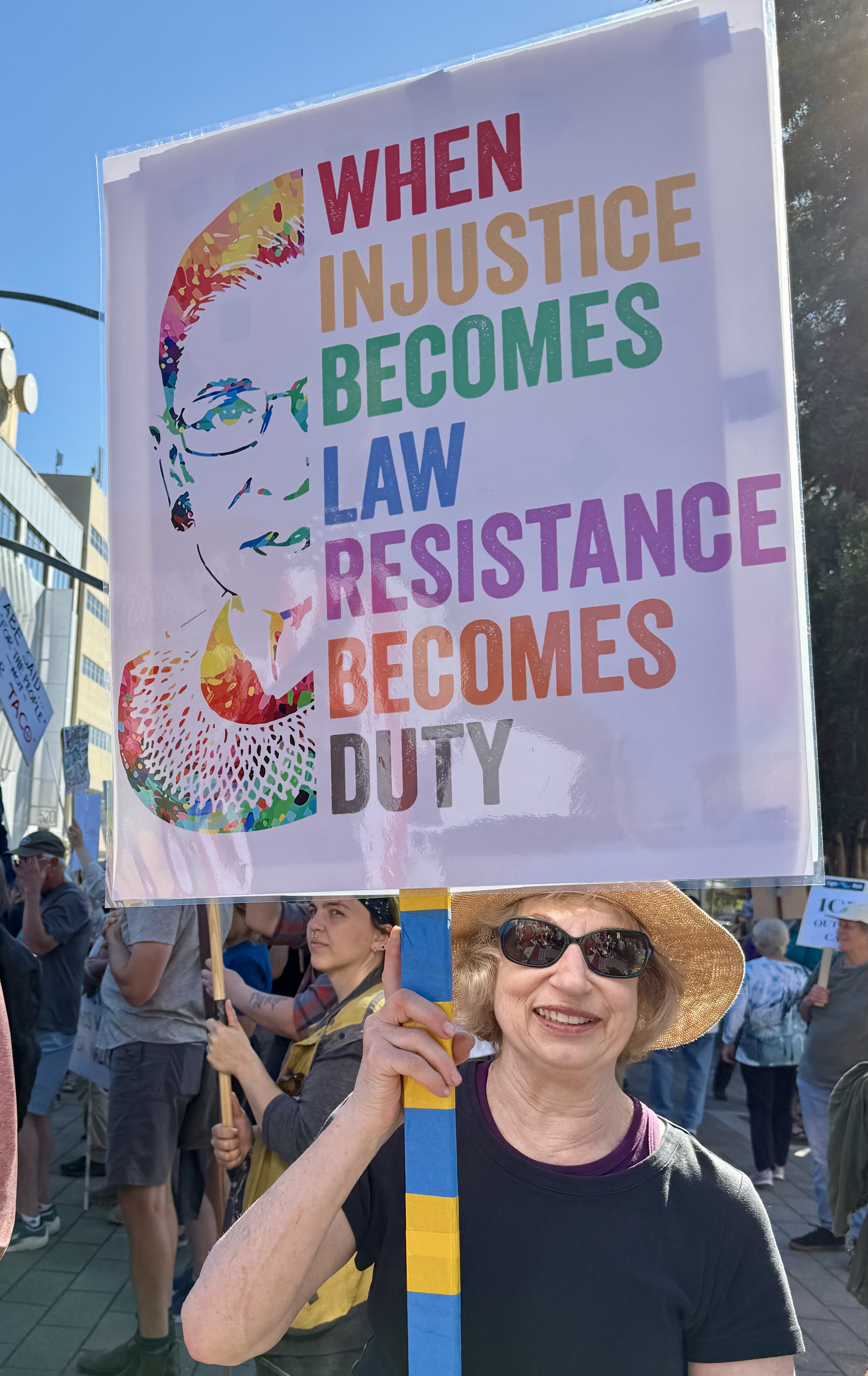




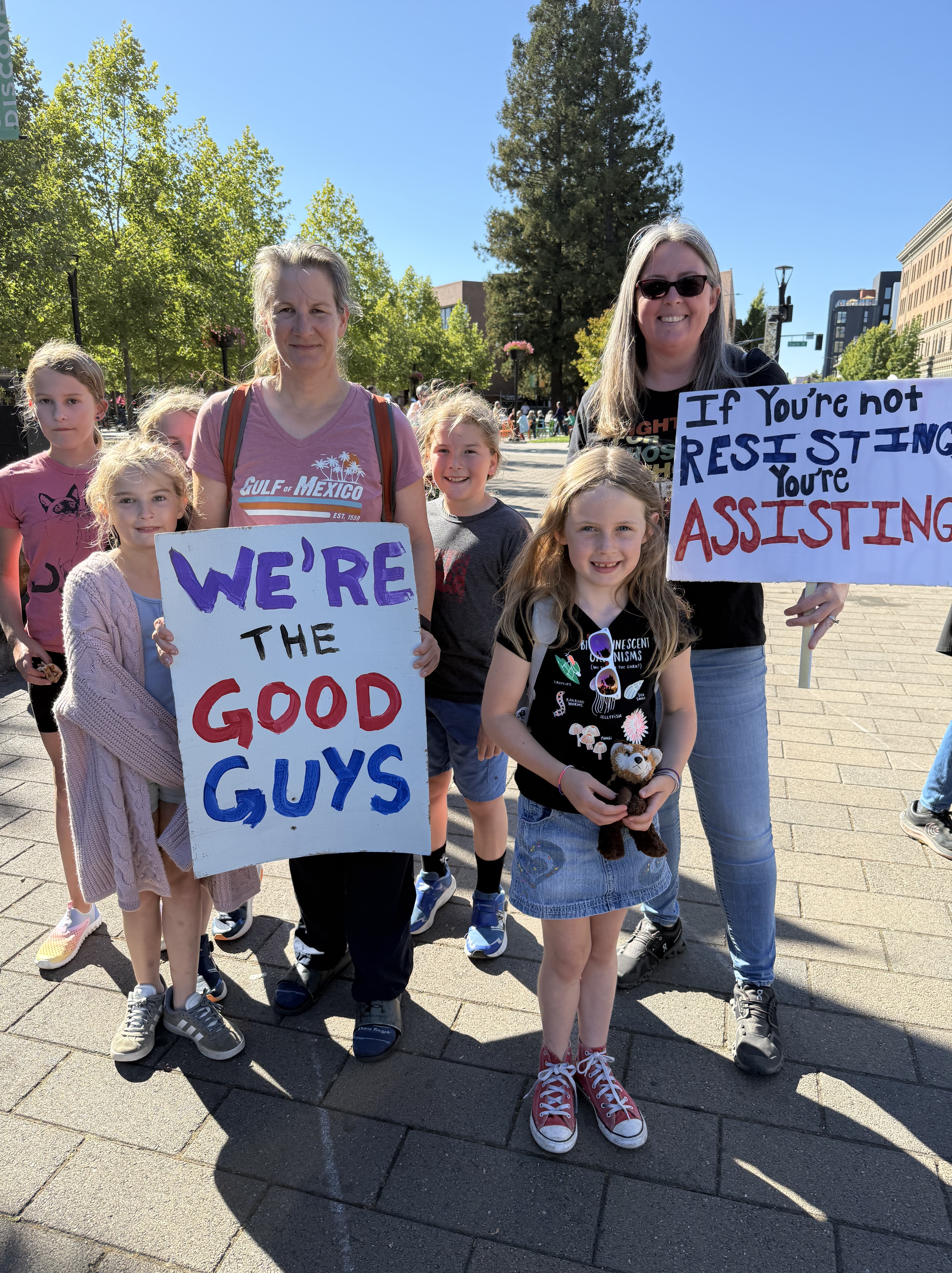
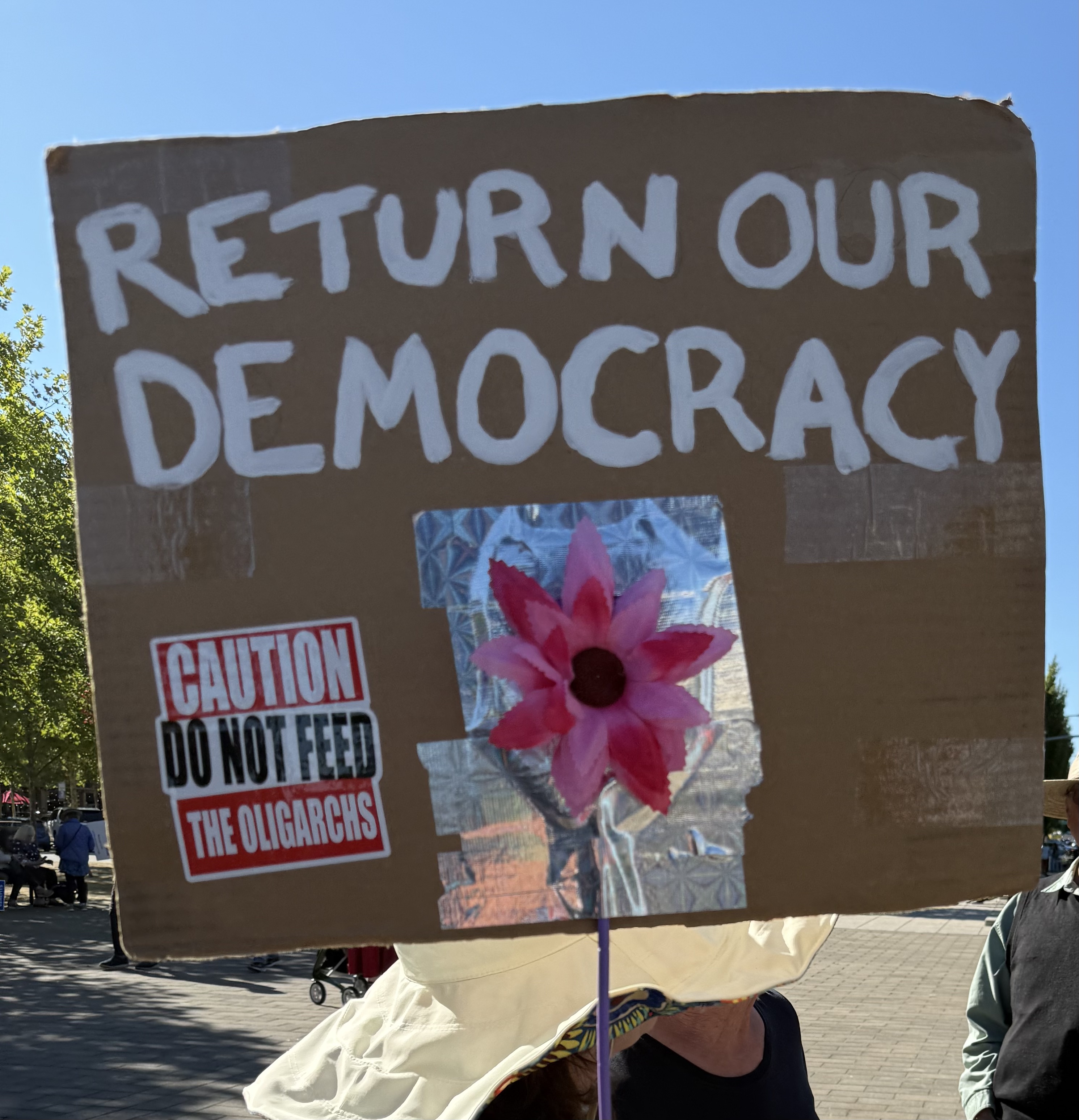

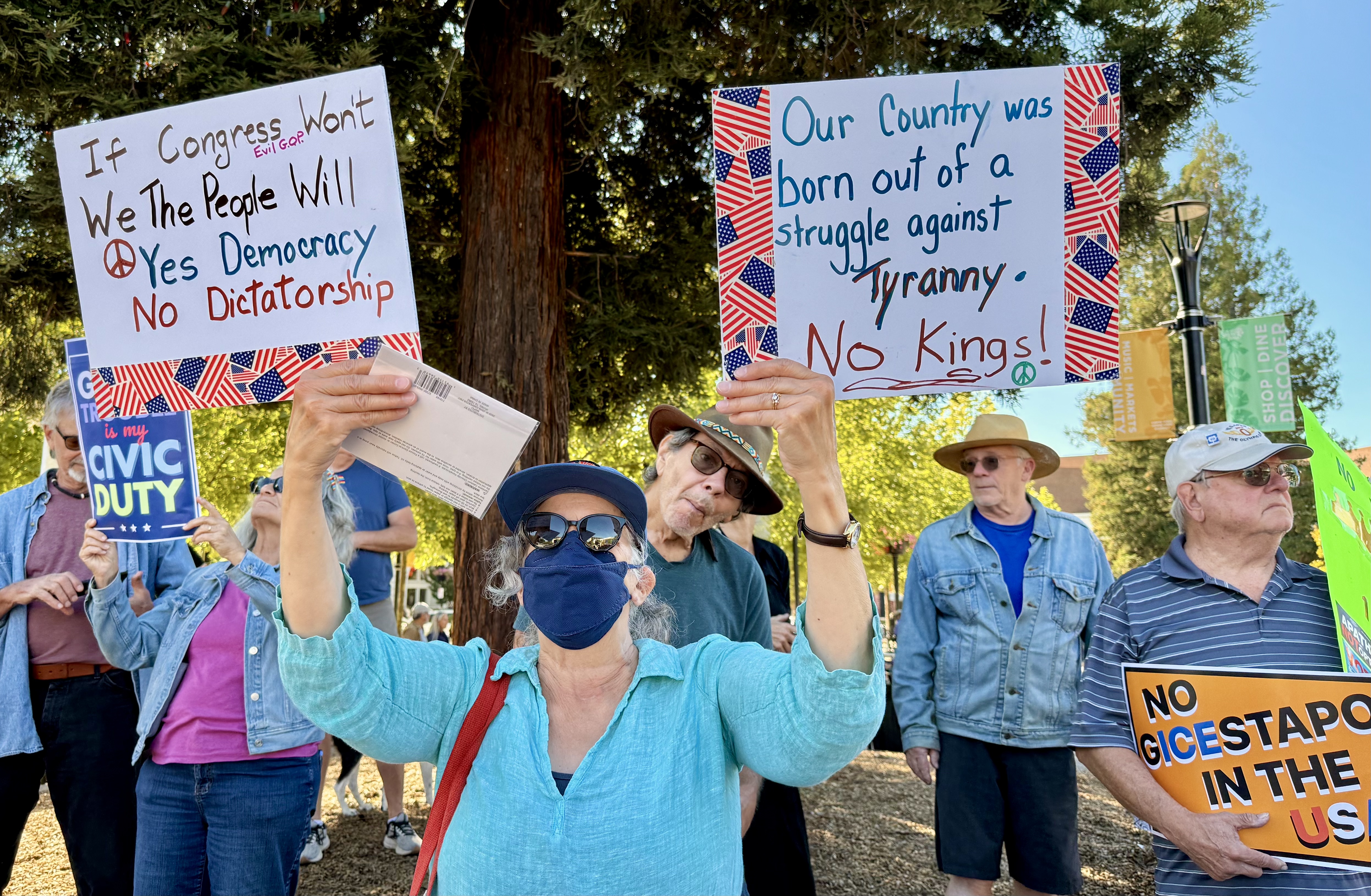


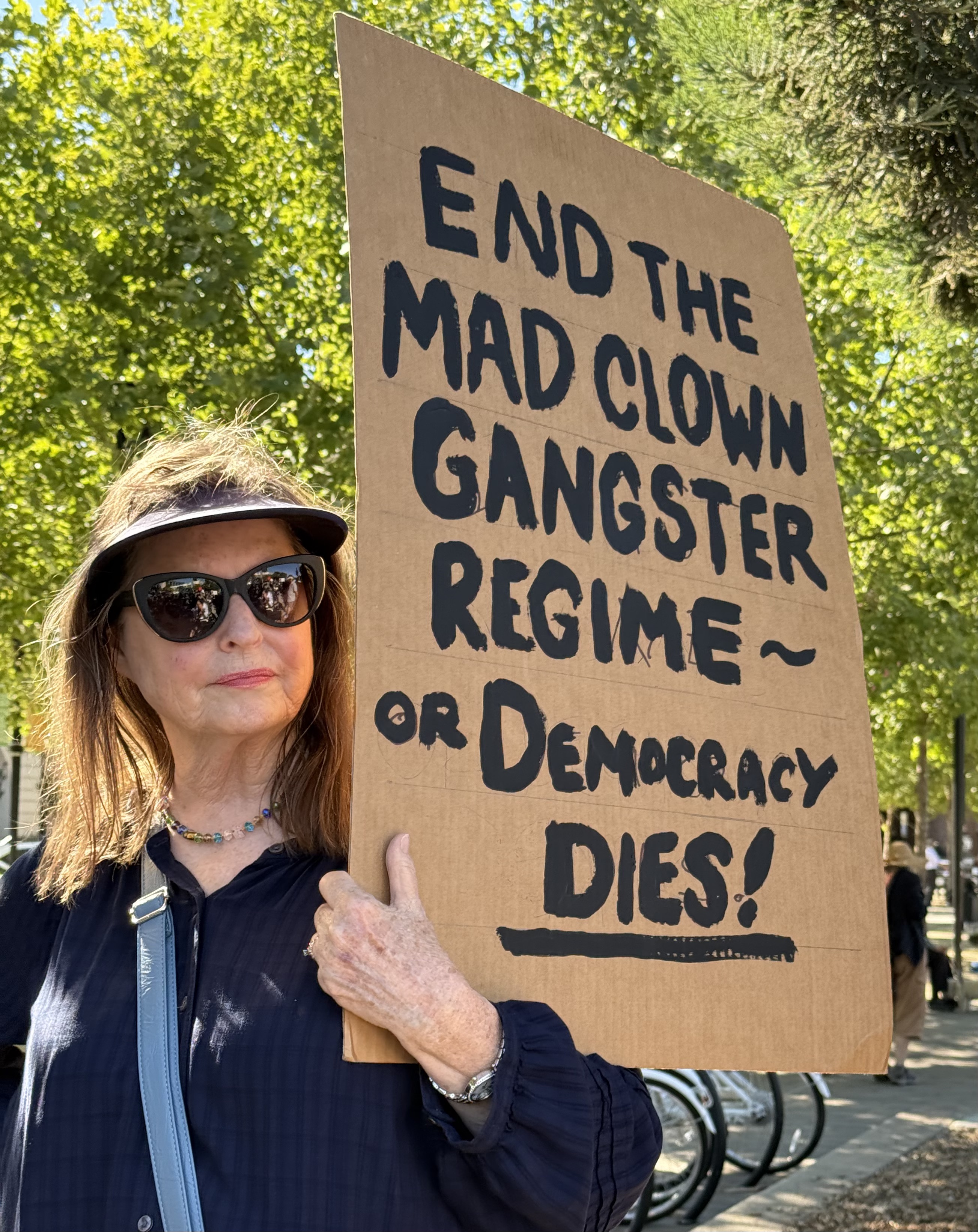

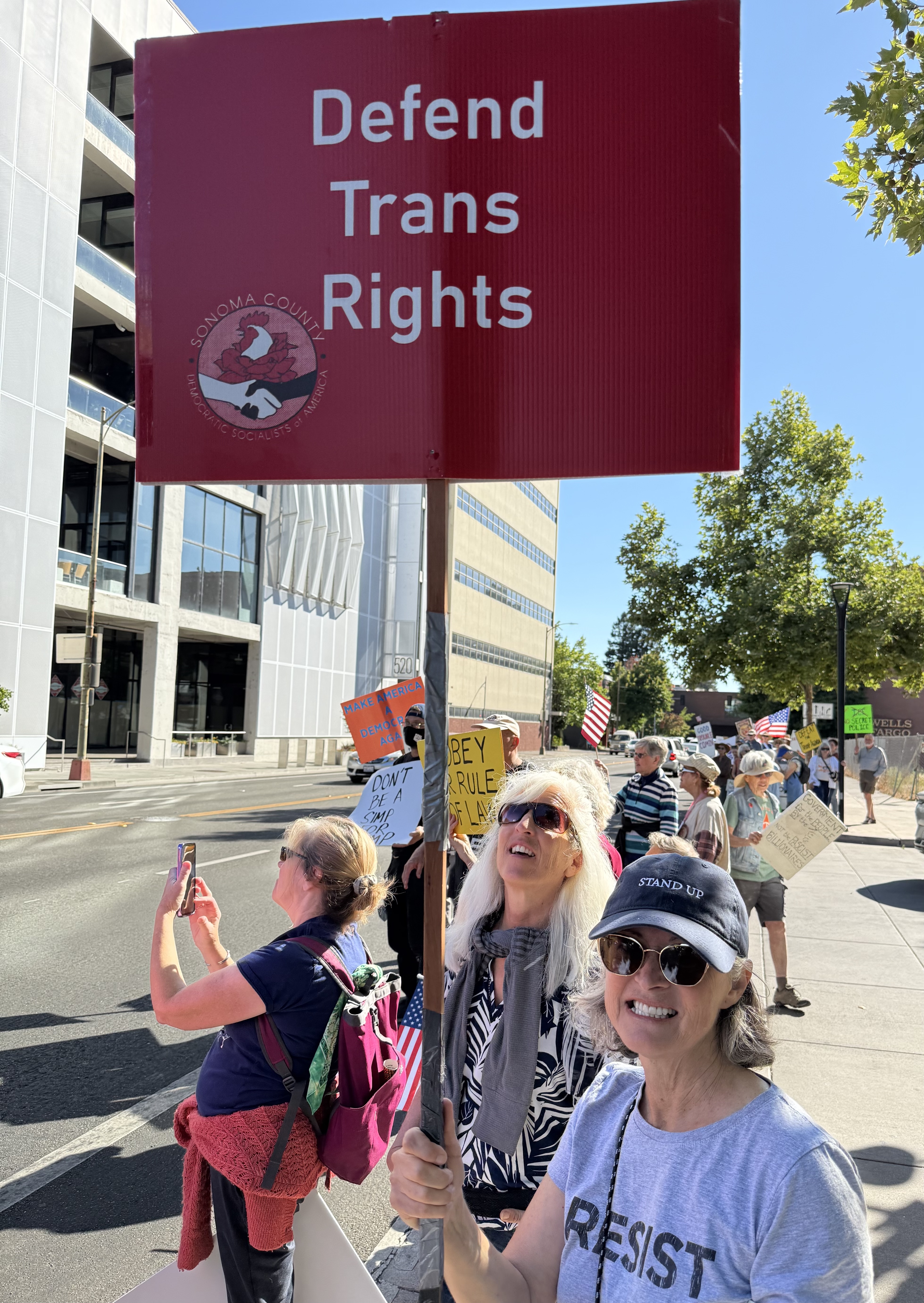



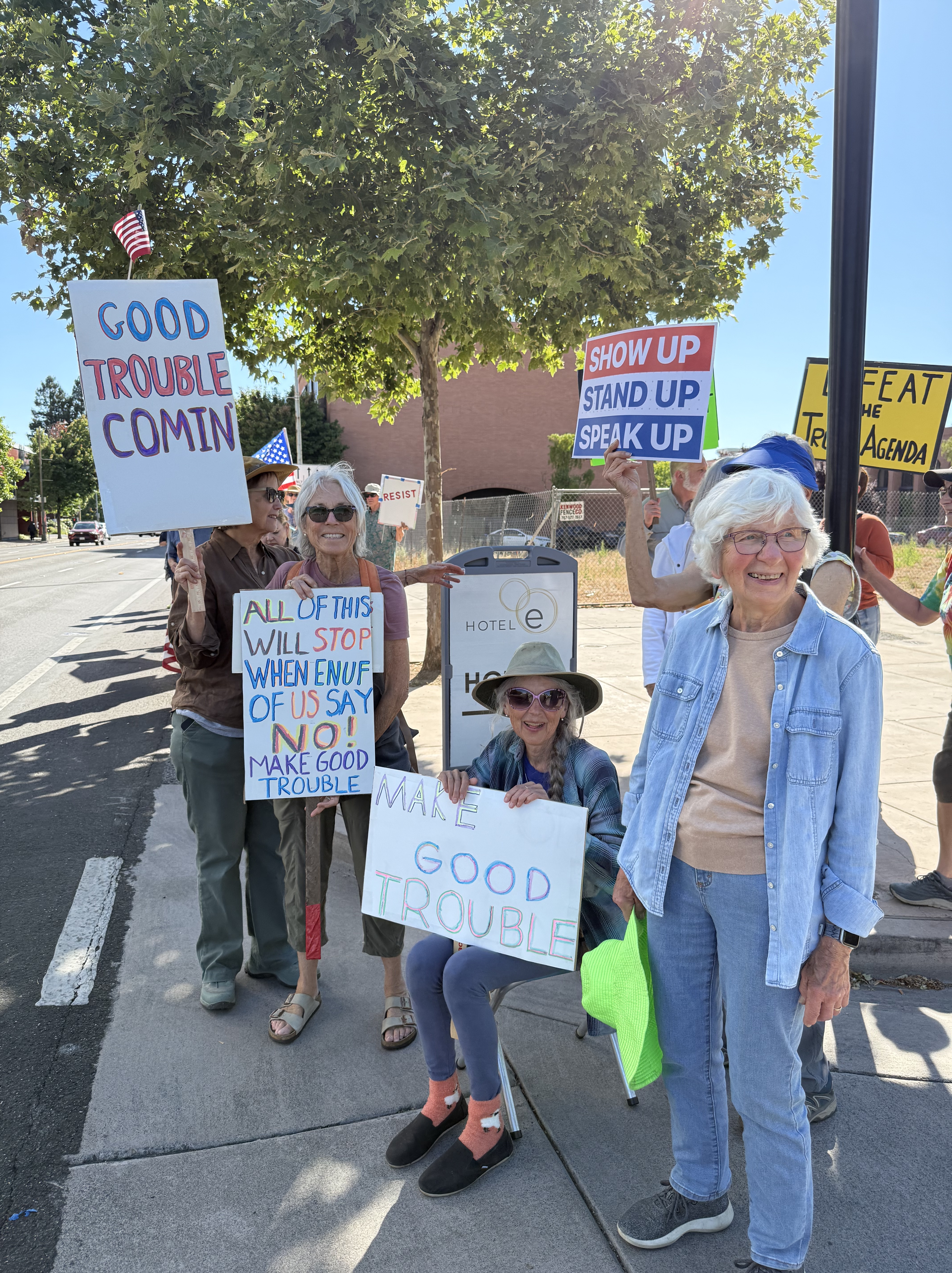
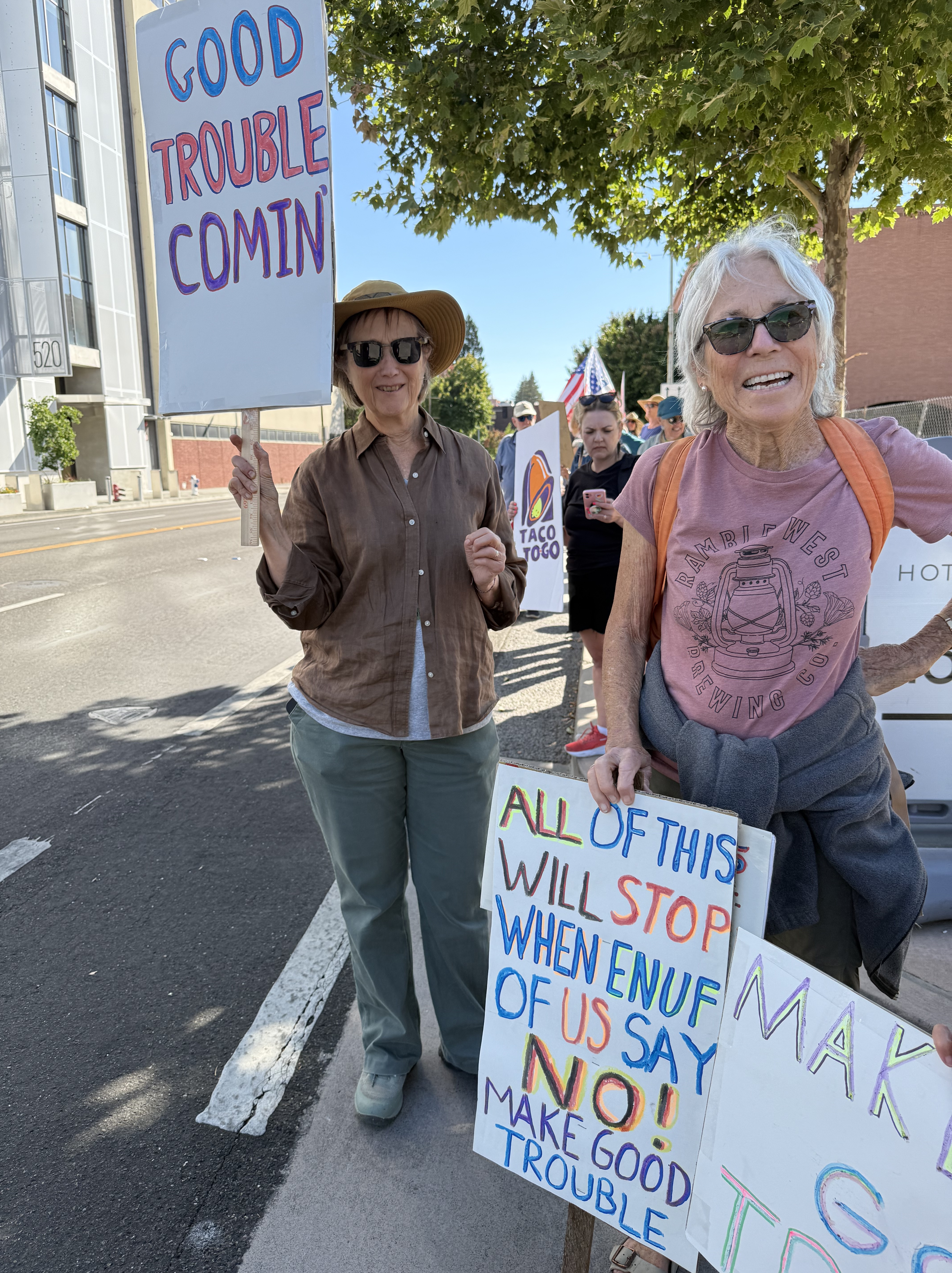










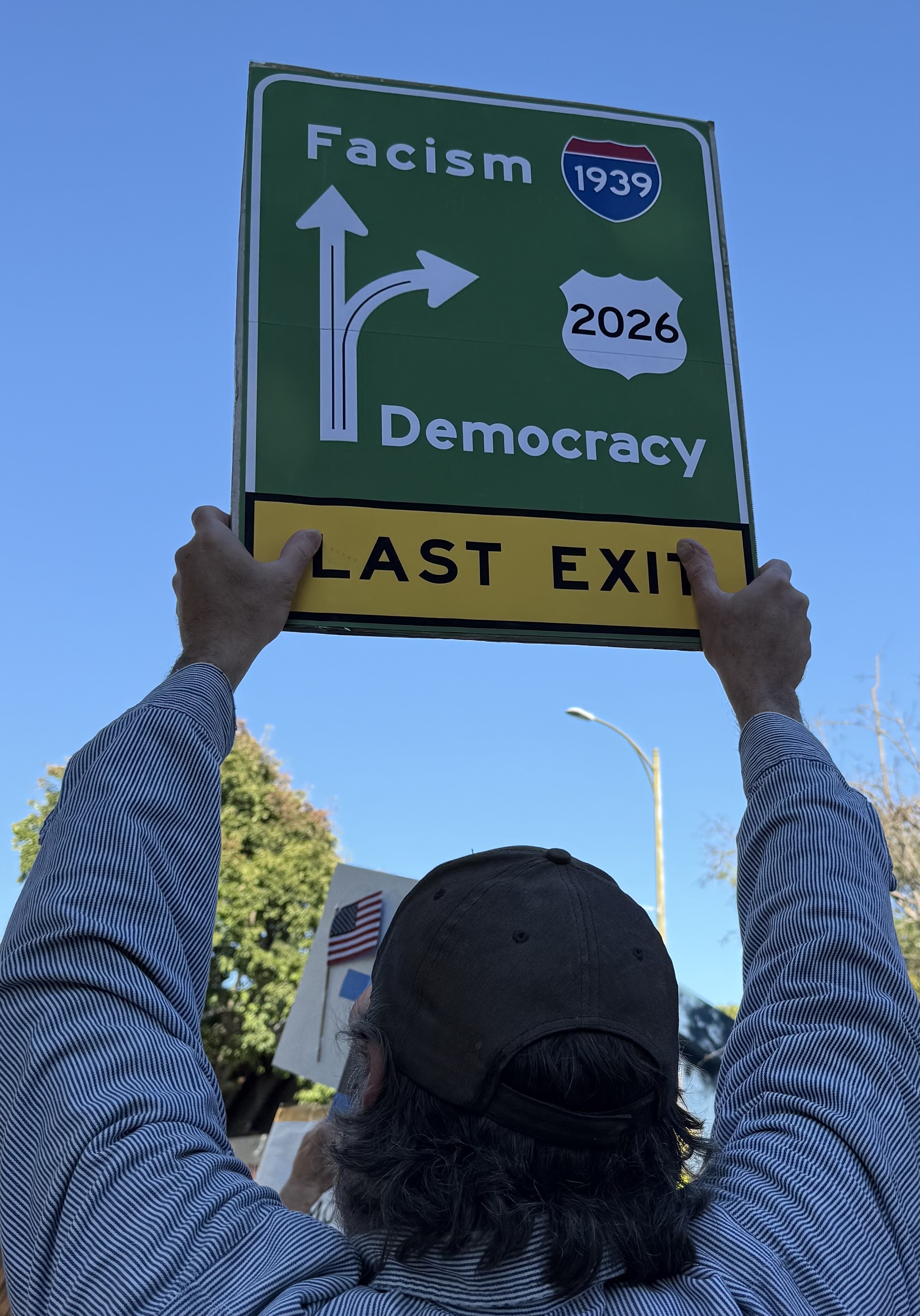




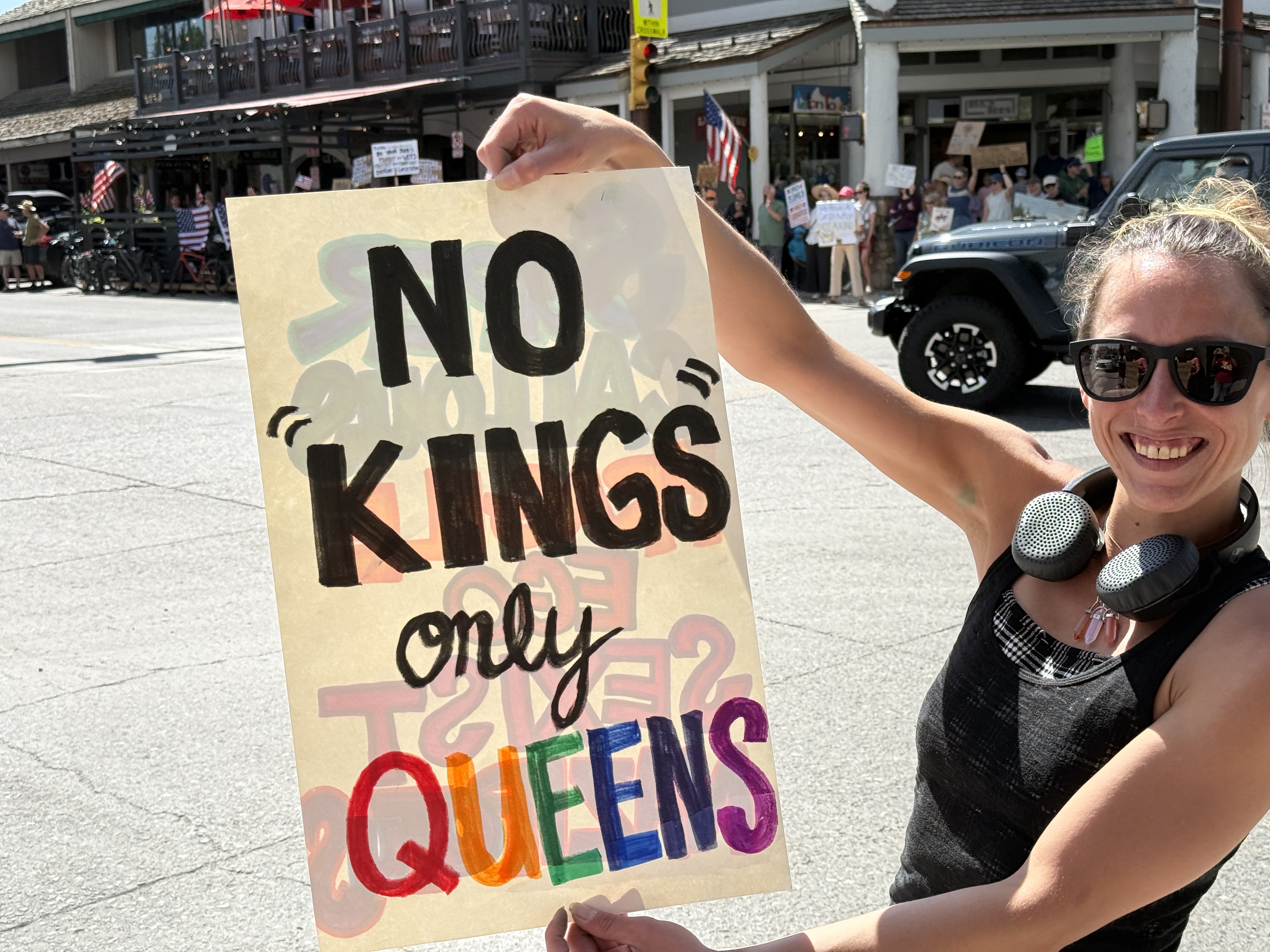
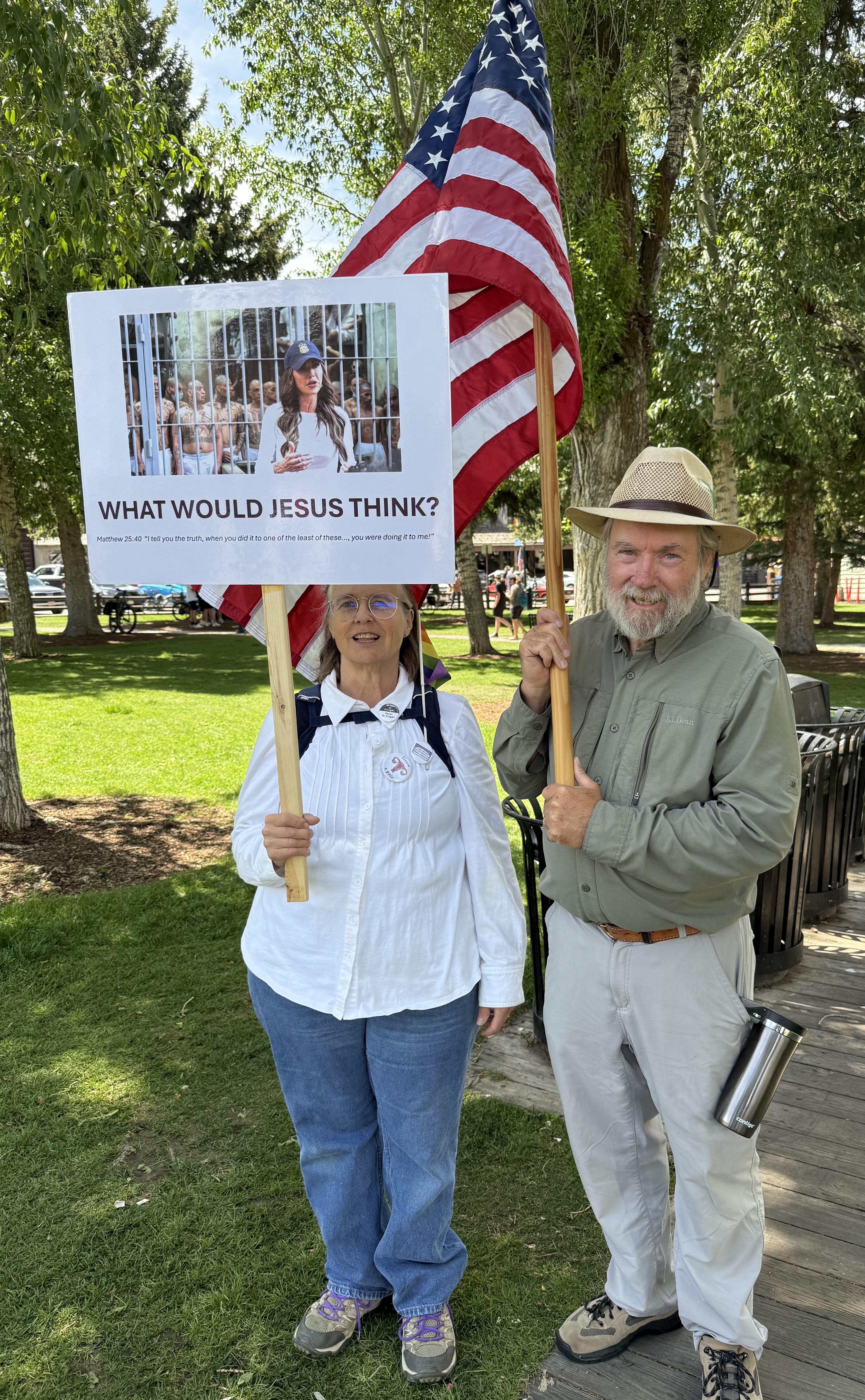
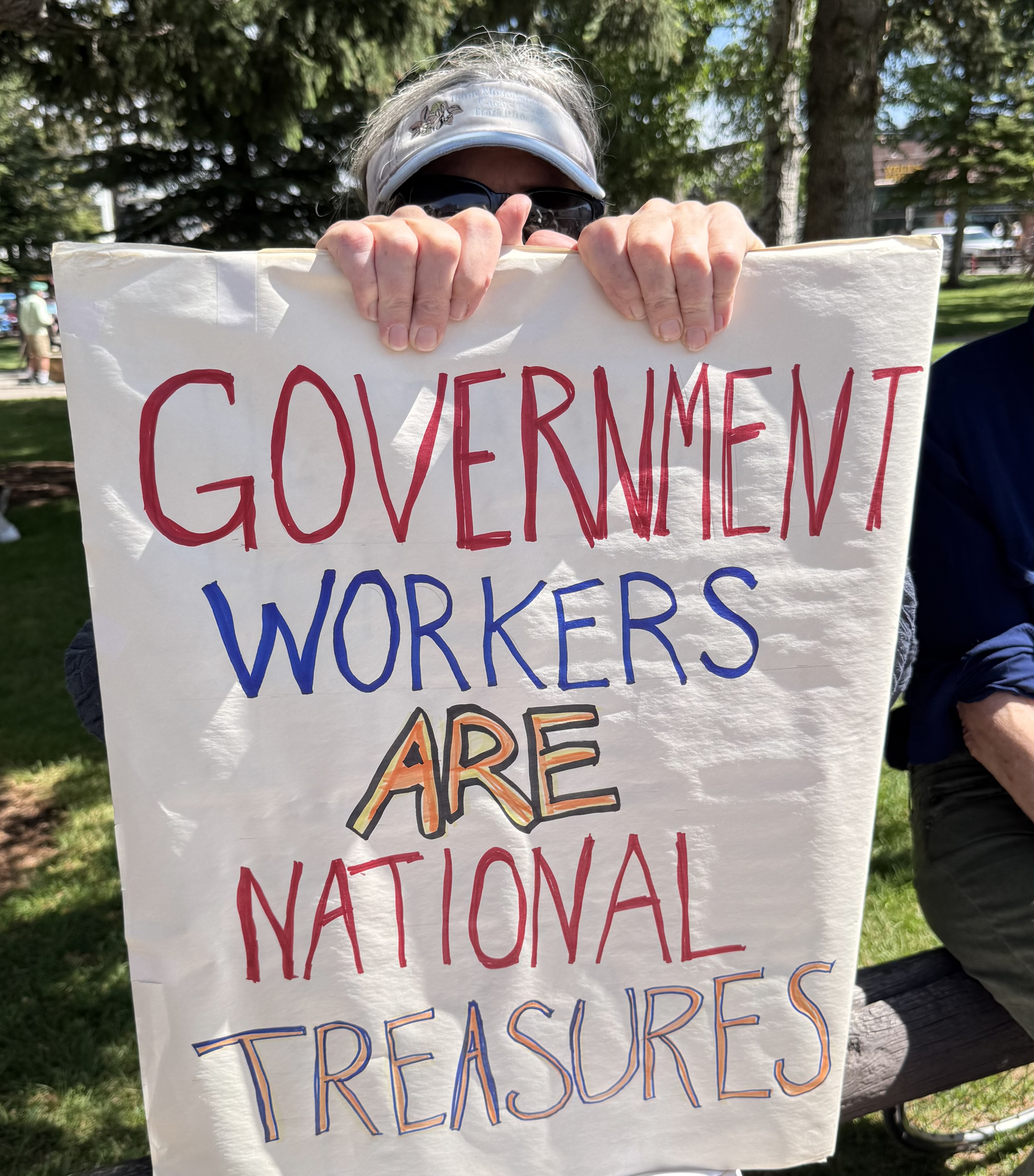
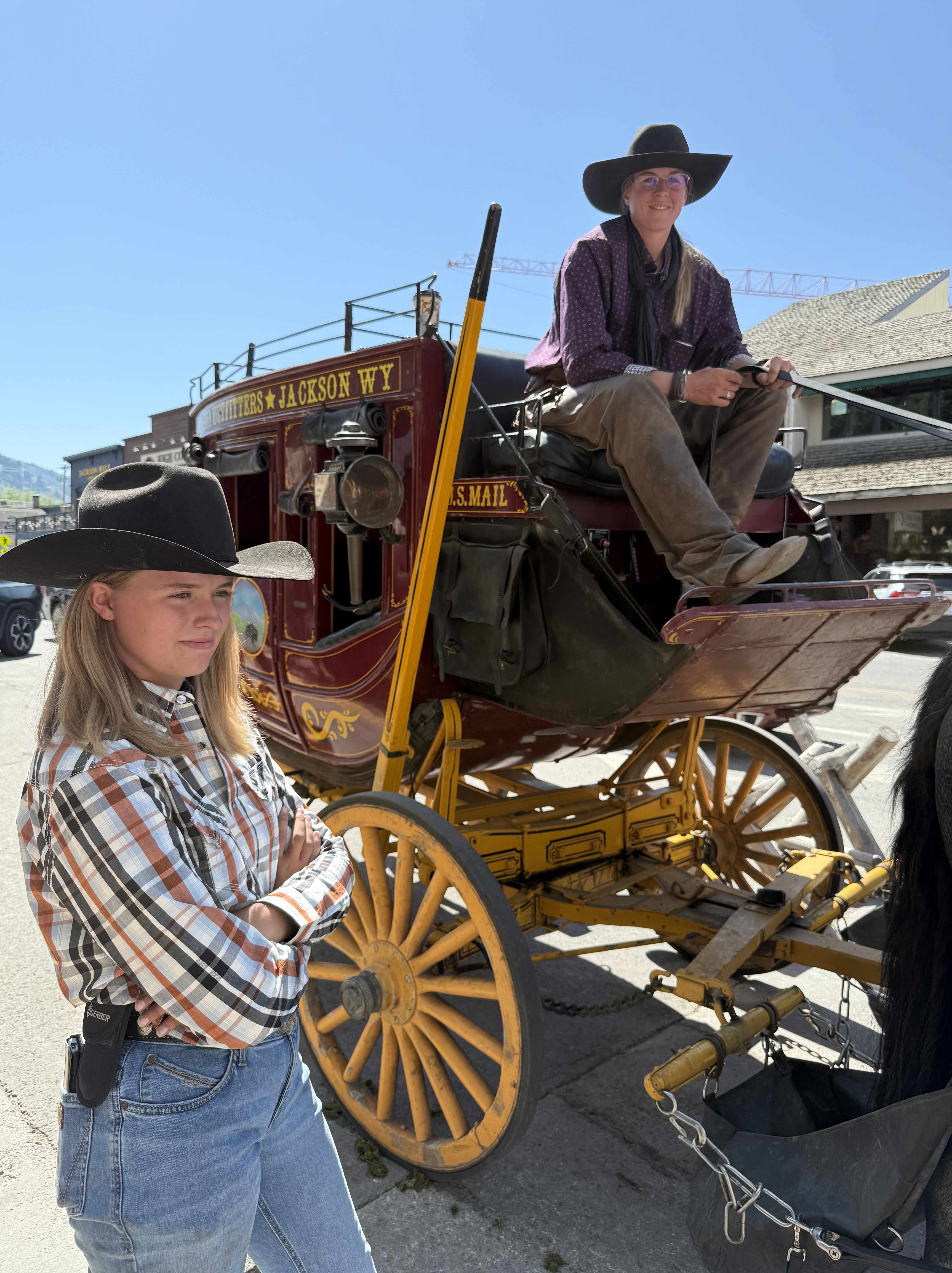
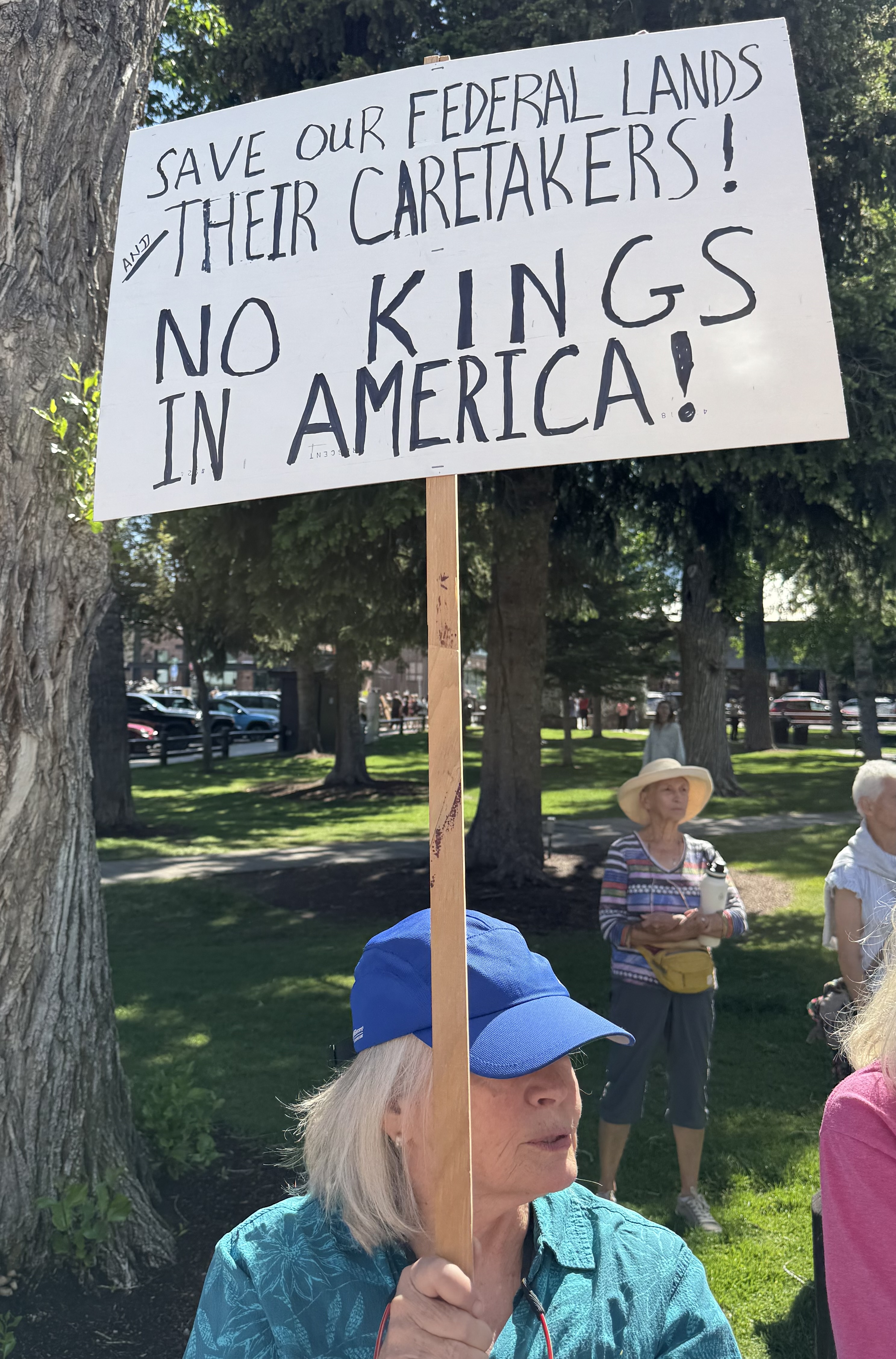
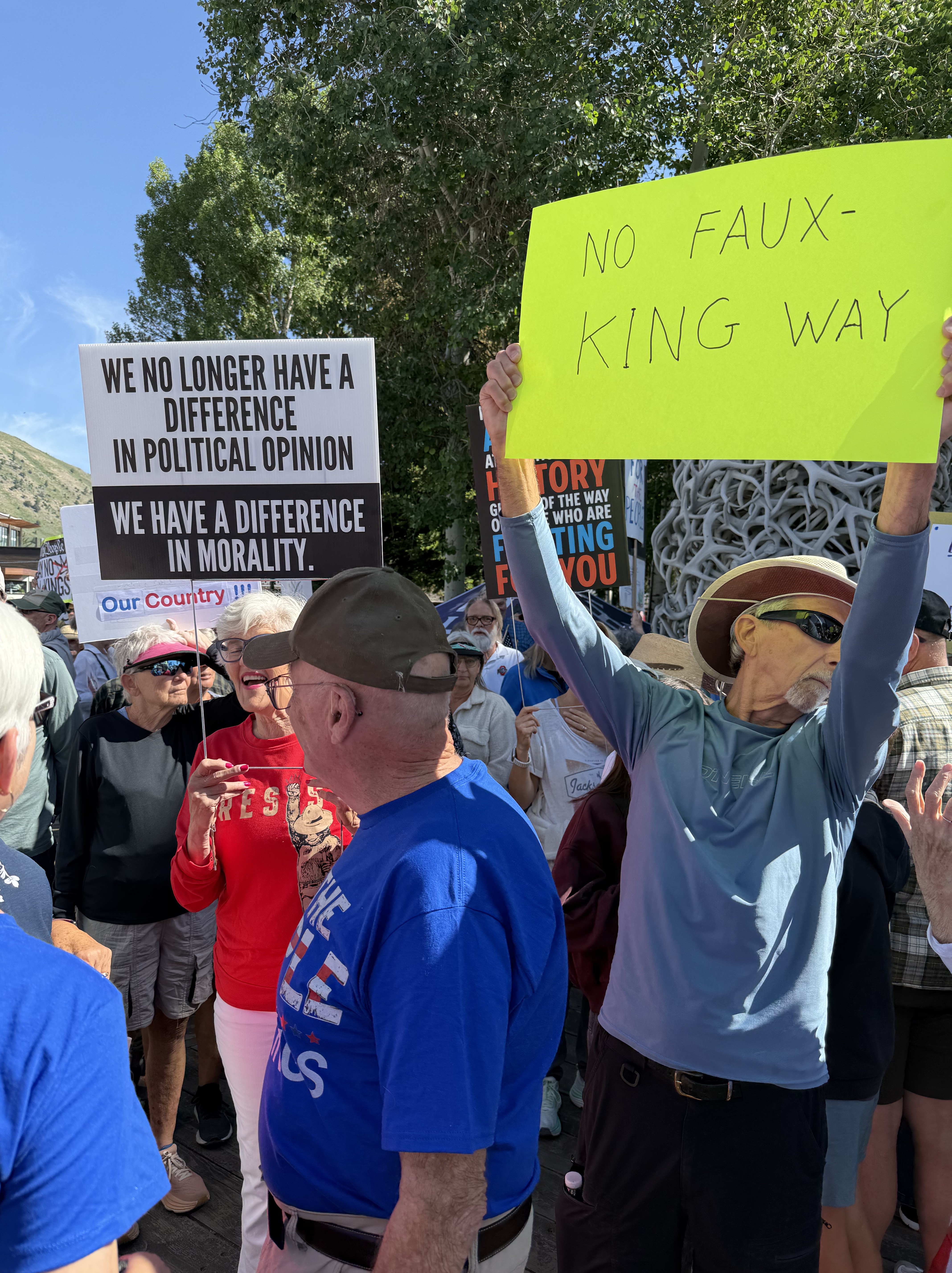
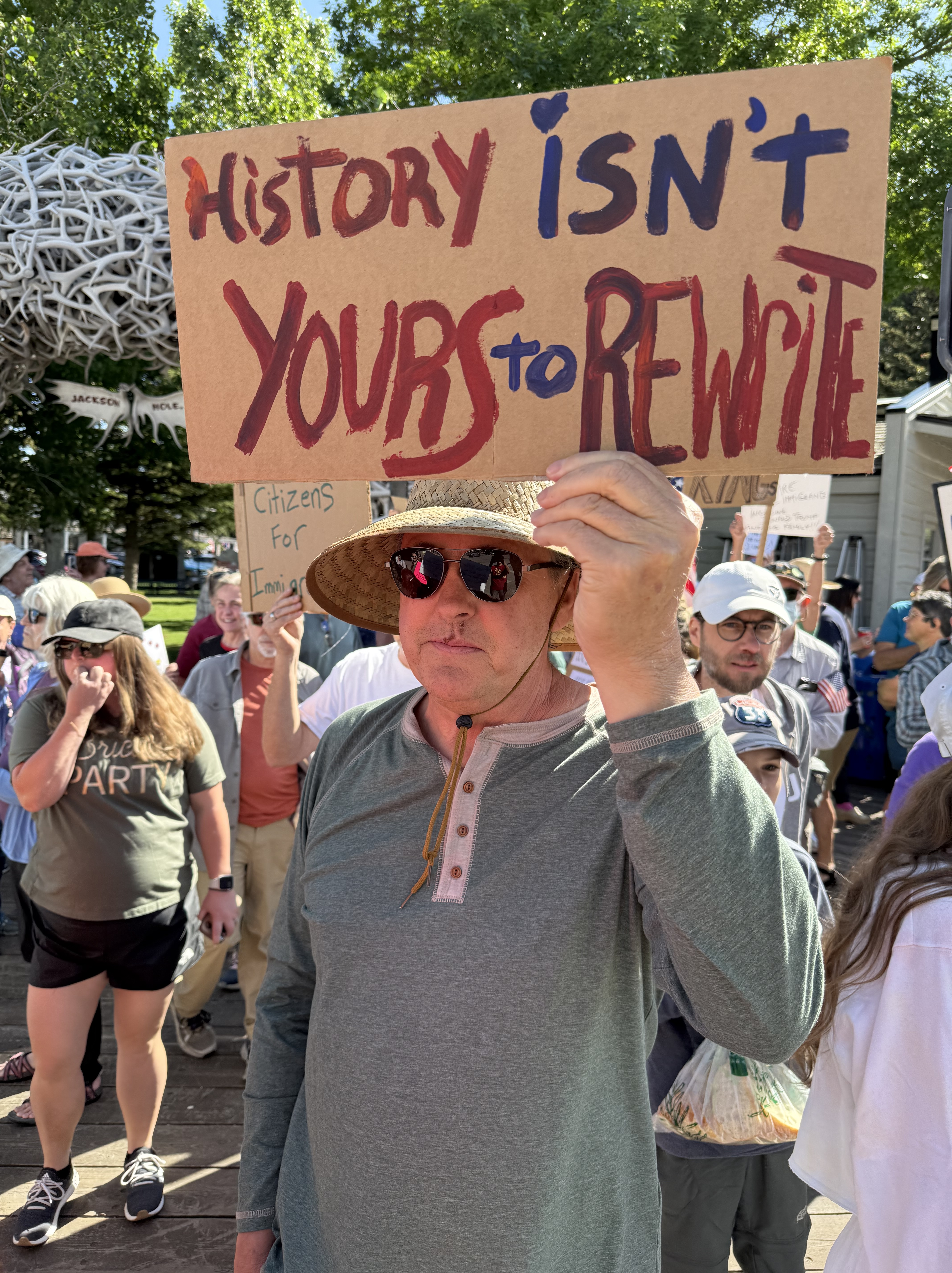
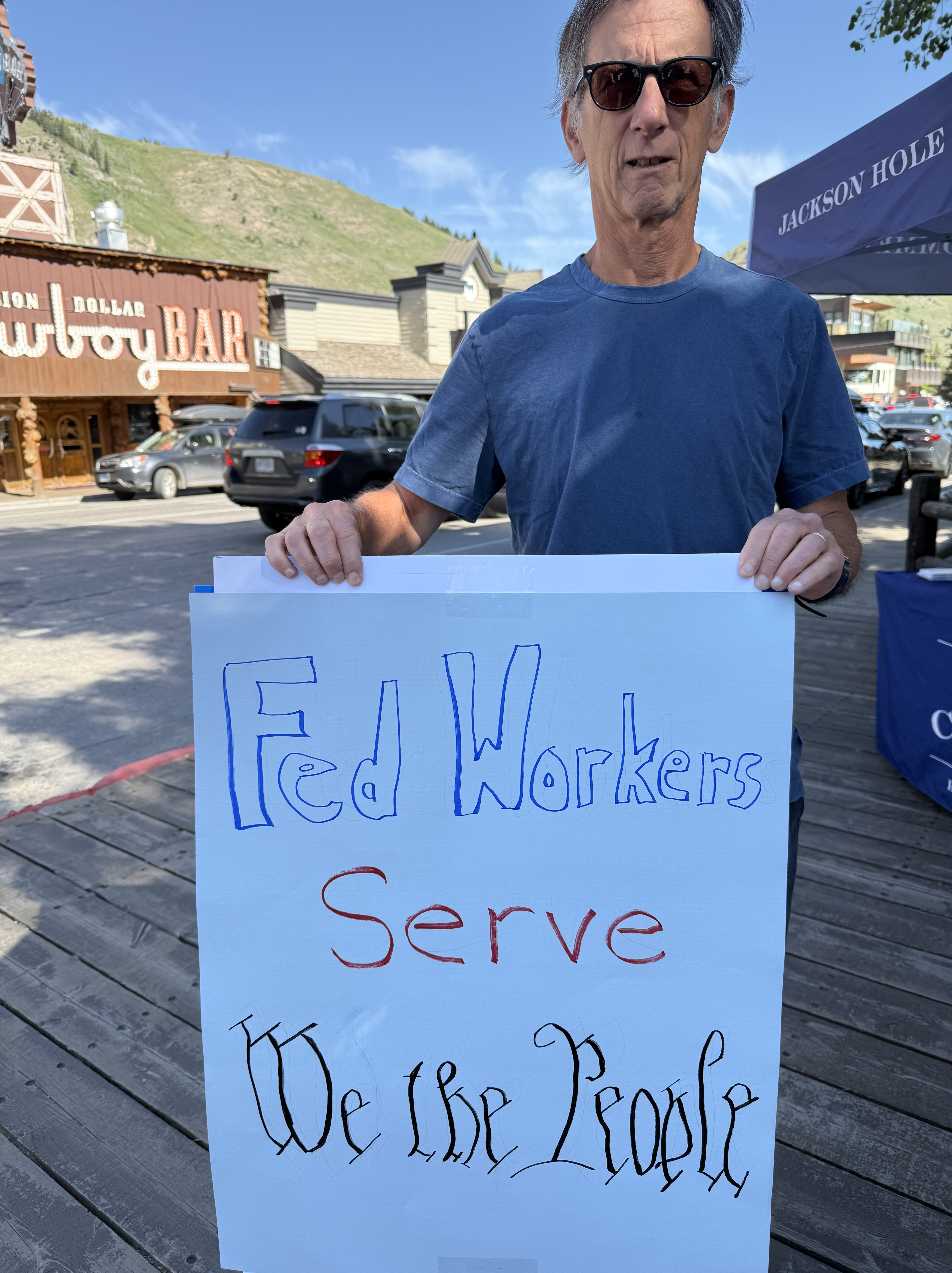
Long time community activists in Jackson Wyoming told me that the no Kings protest on June 14 was the biggest protest ever in that town.
Hundreds of people filled the sidewalks around the town Square on a warm sunny day.
My friend Leslie Levy and I were among the many tourists who participated in the rally. We were on our way from the San Francisco Bay Area to Yellowstone National Park and were glad to find a welcoming protest in Jackson.
As we gathered under the antler arches, a speaker related news of the assassinations of lawmakers in Minnesota and said it is clear that the Trump regime has made violence a method in its madness. He admonished protesters not to commit violence and to stay peaceful and safe.
Jackson is the Gateway to the Tetons national Park, and Yellowstone, just to the north. Its economy is dependent on tourism and the parks so people here are concerned about cuts to the National Park Service. NPS workers told me of layoffs and workers not being replaced. At the start of the summer season the system here is looking pretty ragged at the edges.
There were one or two police cars parked near the demonstration, but there was no police action except to remind demonstrators to stay on the sidewalks.
Two older women sat on horseback at one corner representing the Jackson police. They said they were volunteers and the horses belonged to them. The horses had no job except to allow many hands to pet them.






















My Regular Pagan Holiday Post
Summer (and Winter) Solstice will be June 20, 2025
For years, these pagan holiday letters have followed the rhythm of the Northern Hemisphere. So it’s about time we turned our gaze south. What is the summer solstice for us in the north is, of course, the winter solstice down under.
In Aotearoa (the Māori name for New Zealand, often translated as “Land of the Long White Cloud”), the winter solstice is marked by Matariki, a celebration that signals the Māori New Year. In 2022, Matariki was officially recognized as New Zealand’s first indigenous national holiday — a milestone in honoring the traditions of the land’s first people.
Rooted in ancient Māori astronomy and storytelling, Matariki revolves around the reappearance of a small but powerful star cluster in the early morning sky — known in Māori as Matariki, and in Western astronomy as the Pleiades or the Seven Sisters. Its rising marks a time of renewal, remembrance, and reconnection — with ancestors, the earth, and each other.
The date of Matariki shifts slightly each year, determined by both the lunar calendar and careful observation of the stars. Māori astronomers and iwi (tribal) experts consult mātauranga Māori — traditional Māori knowledge systems — to ensure the timing reflects ancestral wisdom. In precolonial times, the clarity and brightness of each star helped forecast the year’s weather, harvest, and overall wellbeing.
Unlike the linear passage of time in the Gregorian calendar, Māori time is circular — woven from moon phases, tides, seasons, and stars. Matariki is not just a new year, but a return point. A moment to pause, reflect on what has been, and plan how to move forward in harmony with the natural world.
At the heart of Matariki is kaitiakitanga — the ethic of guardianship. It’s the understanding that humans are not owners of the earth, but caretakers. We are part of the land, sea, and sky, and we carry the responsibility to protect and sustain them.
When Matariki rises just before dawn, it opens a space for both grief and celebration: to mourn those who’ve passed, give thanks for what we have, and set intentions for the year ahead. It reminds us of the interconnectedness of whānau(family), whakapapa (genealogy), and whenua (land).
The name Matariki is often translated as “the eyes of the chief,” from mata (eyes) and ariki (chief). According to one well-known Māori legend, the stars are the eyes of Tāwhirimātea, the god of winds and weather. In grief over the separation of his parents — Ranginui (Sky Father) and Papatūānuku (Earth Mother) — Tāwhirimātea tore out his own eyes and cast them into the heavens.
In a world that often values speed over stillness, Matariki offers a different rhythm. It’s a celestial breath — a reminder that time moves in cycles. That rest and reflection are just as important as action. That the sky still holds stories if we remember to look up.
The 9 Stars of Matariki
Each star in the Matariki cluster has its own role and significance:
For Māori, these stars are not just celestial objects — they are guardians. They watch over the land, sea, and sky, and in doing so, remind us of our responsibility to them.
As global conversations about climate change and sustainability grow more urgent, the values of Matariki — care, reverence, reflection, and renewal — feel especially resonant. It’s a time to return to what matters, to honor the past, and to move forward in a way that honors both our roots and our shared future on this earth.
North Bay Rising
In Santa Rosa and across the North Bay, we’re mad as hell—and we’ve taken to the streets. From the Hands Off! protest in April that brought 5,000 people to downtown Santa Rosa, to thousands more mobilizing in surrounding towns, resistance to the rise of fascism in the U.S. is fierce and growing.

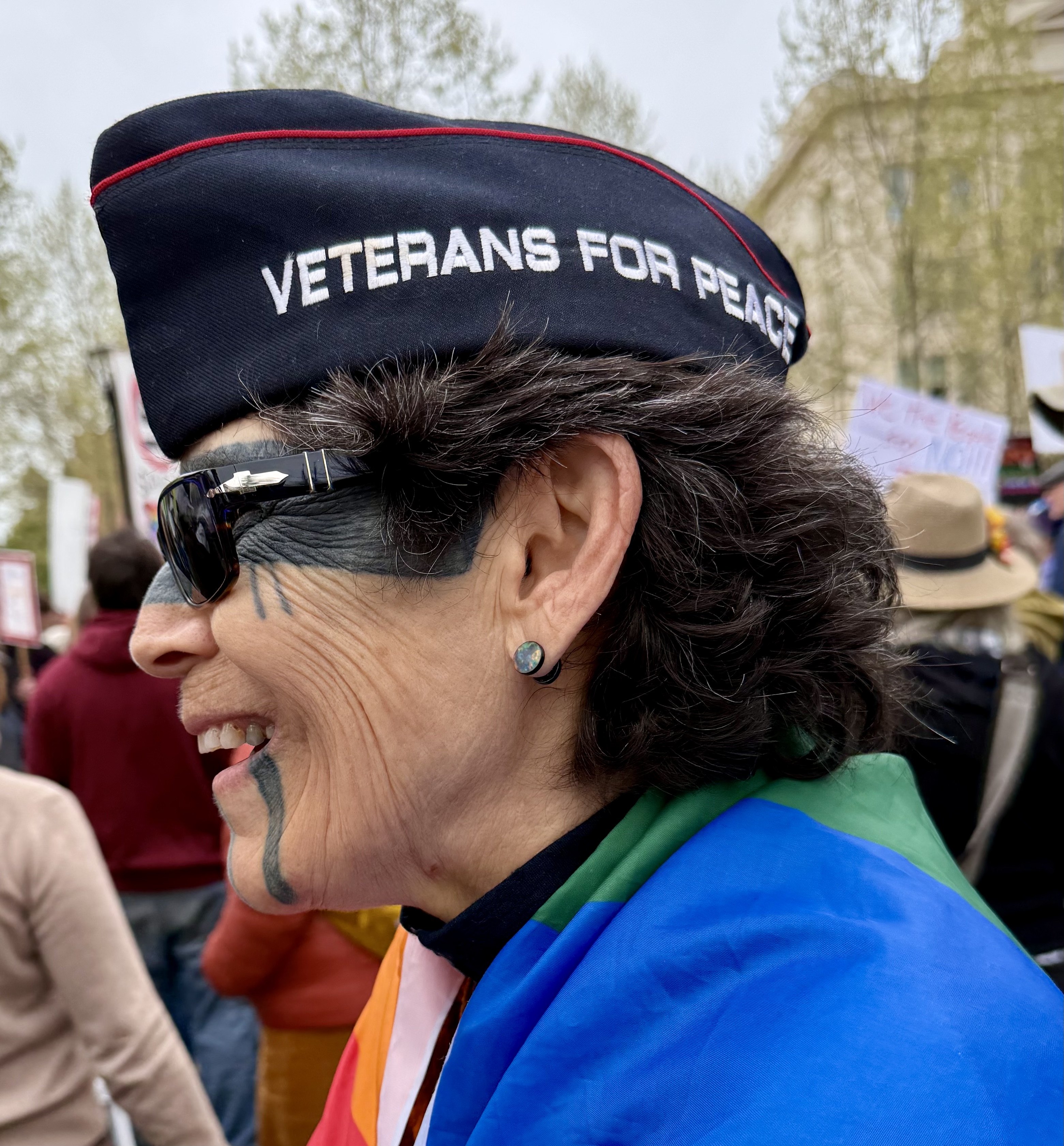

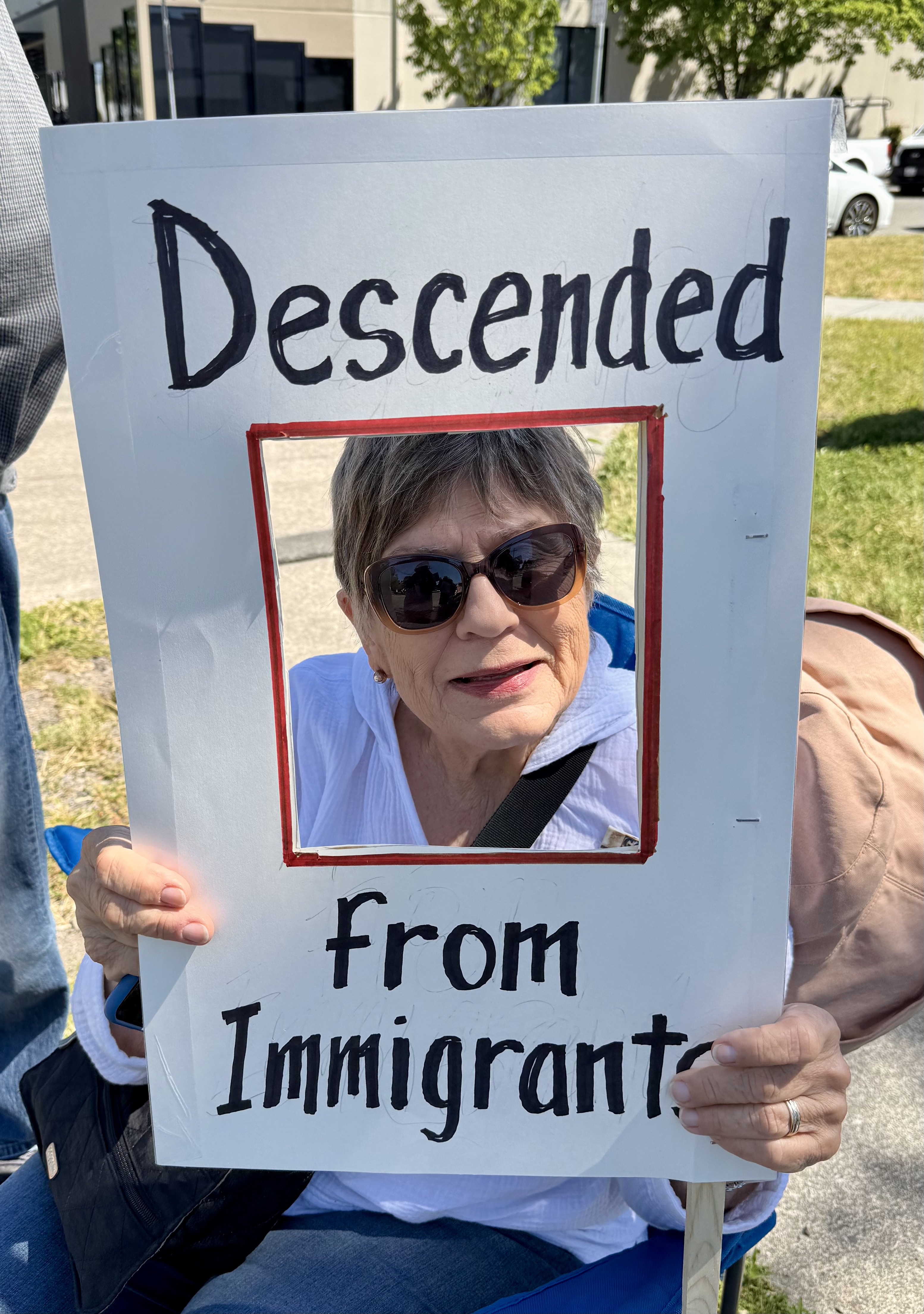
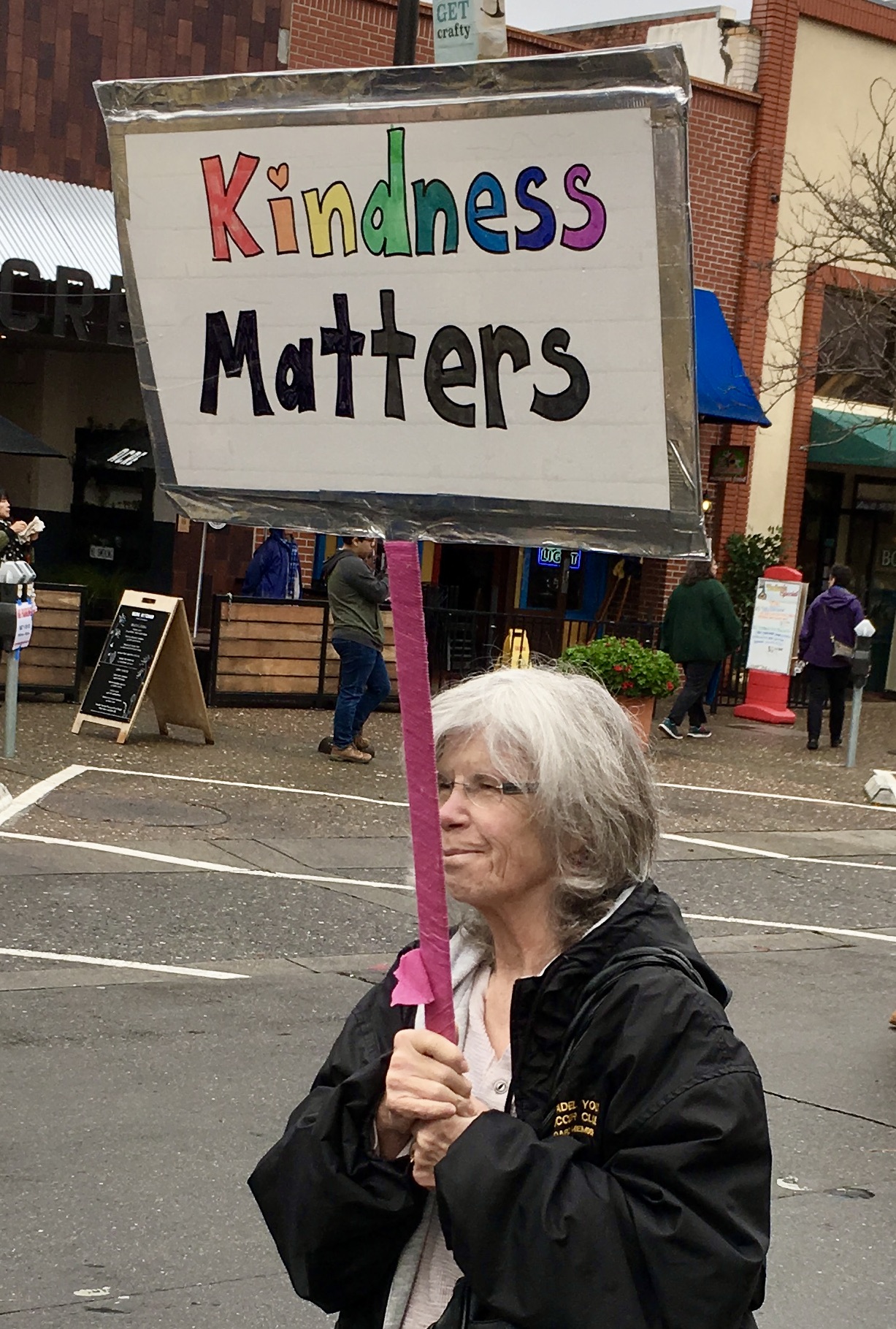
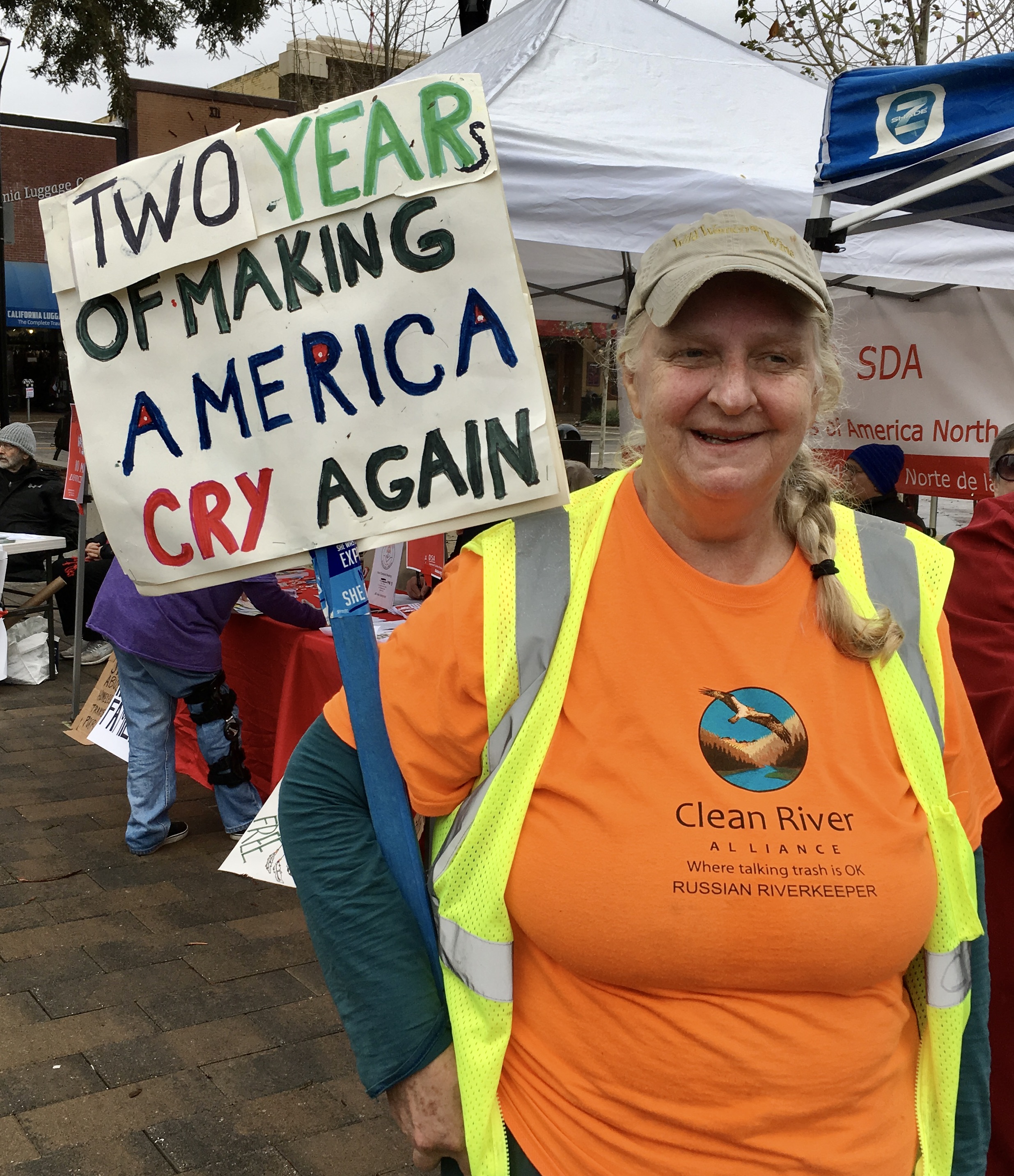
Some of the signs from our protests
Here in Sonoma County, protests are a near-daily occurrence. Demonstrators are targeting a wide range of issues: U.S. complicity in the genocide of Palestinians, Avelo Airline’s role in deportation flights, Elon Musk’s attacks on federal institutions like Social Security and Medicare/Medicaid, the gutting of the Veterans Administration, the criminalization of immigrants, assaults on free speech, and—by us tradeswomen—the dismantling of affirmative action and DEI initiatives.
The Palestinian community and its allies have been gathering every Sunday at the Santa Rosa town square since October 2023.
Weekly actions include:
In Sonoma Plaza, there’s a weekly vigil to resist Trump. Sebastopol hosts a Gaza solidarity vigil, along with Sitting for Survival, an environmental justice action.
Beyond the regular schedule, spontaneous and planned actions continue:
Trump’s goons are jailing citizens, and fear runs deep, especially among the undocumented and documented Latinx population—who make up roughly a third of Santa Rosa. But fear hasn’t silenced them. They continue to show up and speak out.
I’ve joined the North Bay Rapid Response Network, which mobilizes to defend our immigrant neighbors from ICE raids.
Meanwhile, our school systems are in crisis. Sonoma State University is slashing classes and programs in the name of austerity. Students and faculty are fighting back with protests, including a Gaza sit-in that nearly resulted in a breakthrough agreement with the administration.
Between all this, Holly and I made it to the Santa Rosa Rose Parade. The high school bands looked and sounded great—spirited and proud. Then, our Gay Day here on May 31, while clouded by conflict about participation by cops, still celebrated us queers.
And soon, I’ll hit the road heading to Yellowstone with a friend. On June 14, we’ll join protesting park rangers in Jackson, Wyoming as part of the No Kings! national day of action—a protest coordinated by Indivisible and partners taking place in hundreds of cities across the country.
On the Solstice, June 20 in the Northern Hemisphere, we expect to be in Winnemucca, Nevada, on the way home.
Happy Solstice to all—Winter and Summer!
Photo of the Pleiades: Digitized Sky Survey
Big coalition of citizens in the streets Saturday, April 19


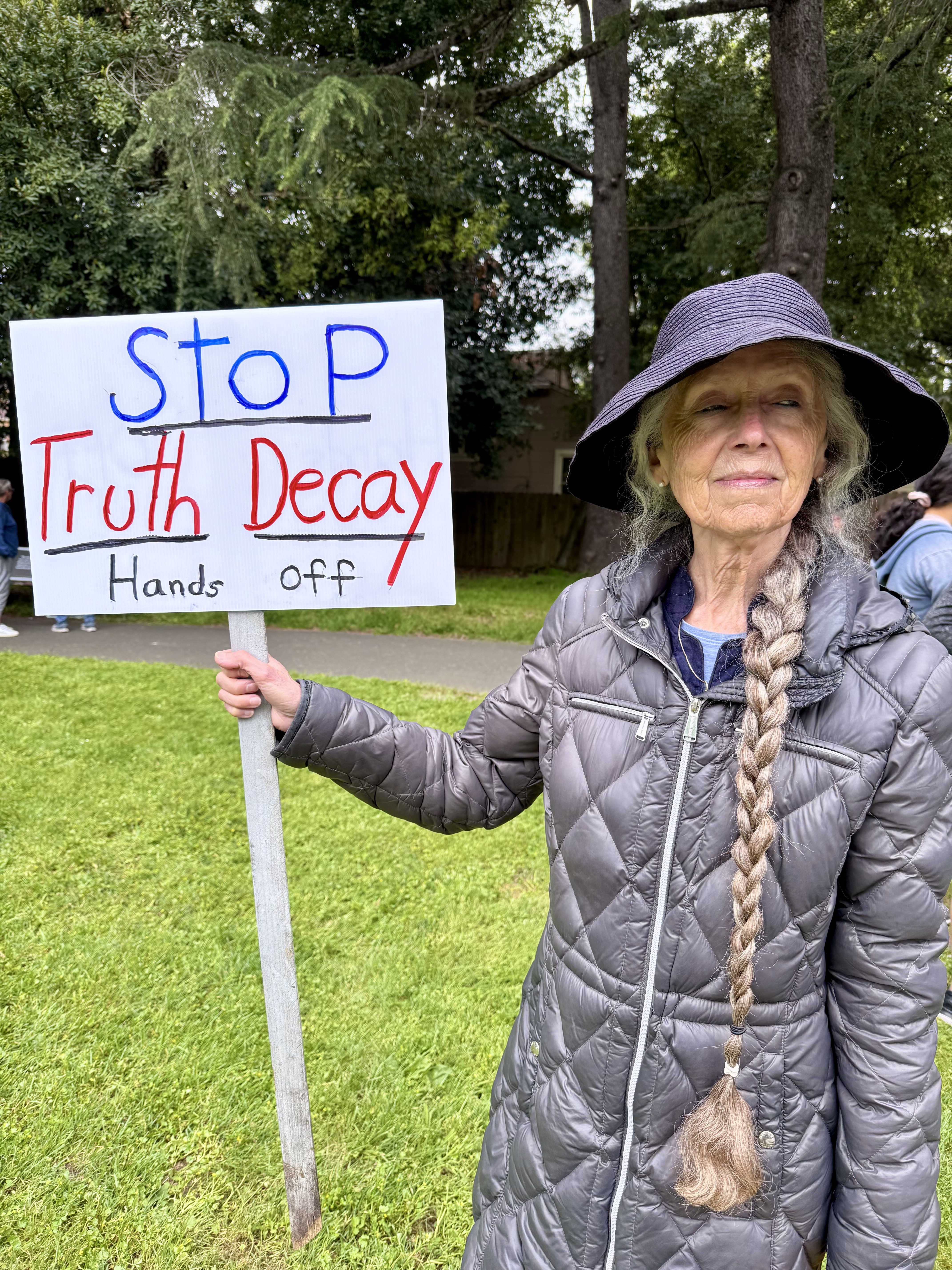



































March 8, 2025 Santa Rosa CA















I was inspired looking at old pictures














 tradeswomn musings