A Sister’s Murder Sparks Action

Black, Lesbian, or Just a Woman?

Tradeswomen Respond to Workplace Violence

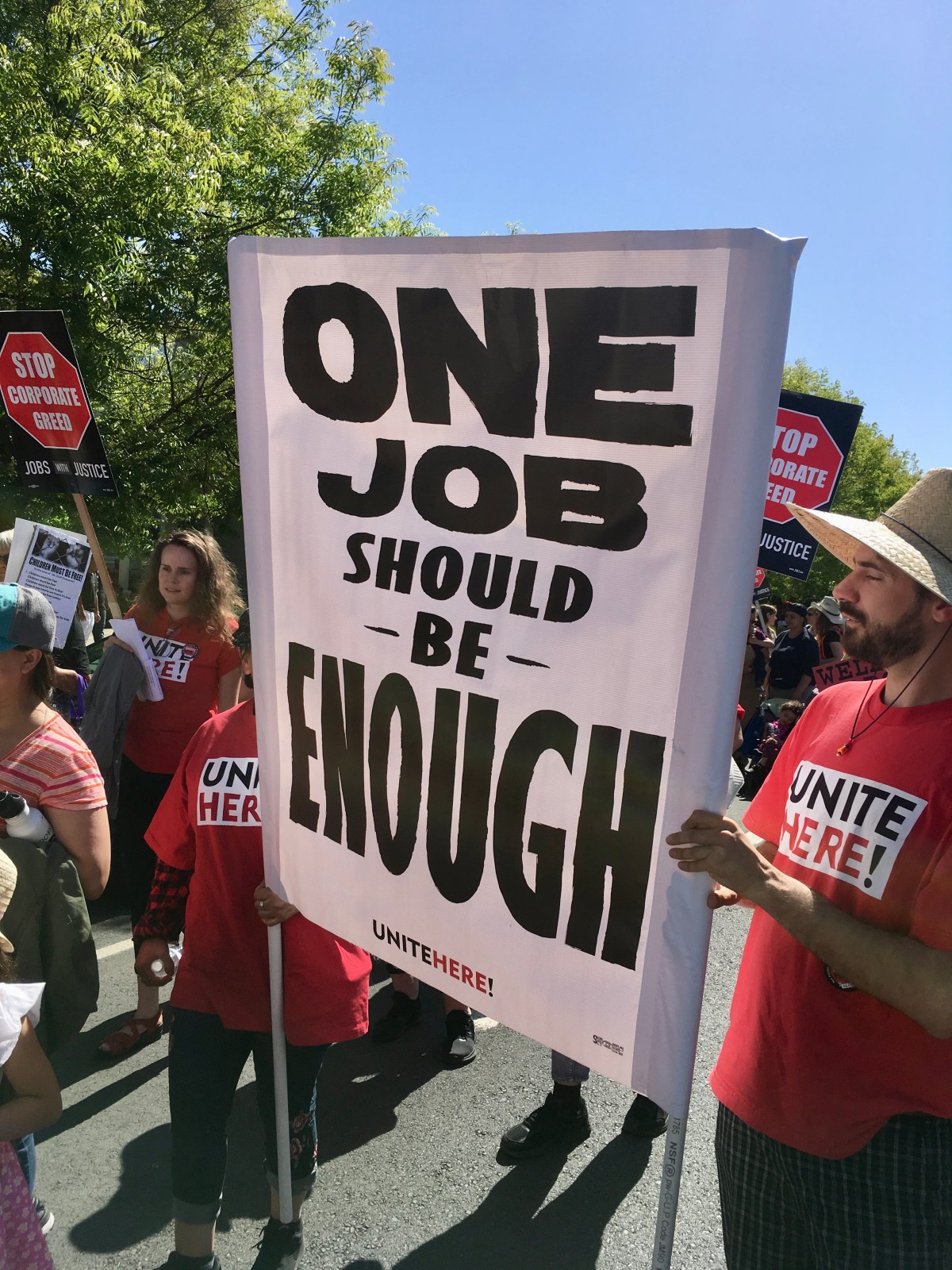
Carpenter apprentice Outi Hicks was working on a job in Fresno, California in 2017 when she encountered continuing harassment from another worker there. She didn’t complain and no one stood up for her. Then her harasser attacked her and beat her to death. 

We don’t know whether Outi (pronounced Ootee) was murdered because she was Black, lesbian or just female. But we do know that being all three put her at greater risk. Outi was 32 and a mother of three. 

In response, tradeswomen organized Sisters Against Workplace Violence and worked with the Ironworkers Union (IW) to launch a program called Be That One Guy. The program’s aim is to “turn bystanders into upstanders.” Participants learn how to defuse hostile situations and gain the confidence to be able to react when they see harassment. 

“Outi Hicks’ murder hit me hard,” says Vicki O’ Leary, the international IW general organizer for safety and diversity. “Companies and unions need to change the focus of their harassment policies and need to get tougher with harassers.” 

Often the victim of harassment is moved to a different crew or jobsite in an effort to defuse the situation. But such a response actually punishes the victim and not the aggressor, who remains unaffected and may continue to harass other workers. 

O’Leary says one of the most important parts of the program is when participants take the pledge:

“It only takes one guy to talk to the harasser or to file a complaint with the crew boss. It’s even better when the whole crew stands up together to end harassment, and we are now seeing this happen on job sites around the country,” says O’Leary. She tells of an apprentice who was being harassed by a supervisor. Seeing the harassment, everyone on the crew began to treat the supervisor the same way he was treating the apprentice. His behavior changed in a day.

The IW is rolling out the program through their district councils. They want to share it with other unions and, says O’Leary, they’re hoping general contractors will jump on.

Another anti-violence program started by tradeswomen and our allies also is specifically tailored to the construction industry.

ANEW, the pre-apprenticeship training program in Seattle, created its program, RISE Up, to counter the number of people, and especially women, who leave the construction trades because of a hostile work environment. ANEW director, Karen Dove, developed the program after meetings with contractors who would say “women just need tougher skin.”

The program focuses on empowering workers and employers to prevent and respond to workplace violence. It offers a range of services, including training sessions, risk assessments, and support for workers who have experienced violence.

Training sessions are designed to help workers and employers identify the warning signs of workplace violence and take proactive steps to prevent it. The training covers conflict resolution, de-escalation techniques, and the importance of creating a positive work environment.

The program is concerned with psychological well being and is now working with a union to develop mental health services for Black workers. 

RISE Up also offers risk assessments to construction companies, which help them identify areas of their workplace that may be at higher risk of violence.

Marquia Wooten, director of RISE Up, says the program is designed to change the culture of construction. Wooten worked in the trades for ten years as a laborer and an operating engineer. “When I was an apprentice they yelled and screamed at me,” she says. She notes that men suffer from harassment too. “The suicide rate of construction workers is number two after vets and first responders,” she said. “Substance abuse is high in construction.”

ANEW partners with cities, public entities, unions, schools and employers. “They do want change in the industry,” says Wooten. Less workplace violence is good for the bottom line.

But training workers is not enough. Union staff needs training in how to respond to harassment as well. Liz Skidmore recently retired as business representative/organizer at North Atlantic States Regional Council of Carpenters. They created a training to help union staff members know what to do when a member complains.

“New federal regulations require that every person on the construction job who comes into contact with apprentices go through anti-harassment and discrimination training,” says Skidmore.

“Most of corporate America requires annual training about sexual harassment, but most trainers don’t know the blue collar world,” she says. Trainers can be classist. “To be effective, the trainer has to like these guys.”

While tradeswomen have long been virtually invisible on the front lines of the Feminist and Civil Rights Movements, we still are the ones who daily confront the most aggressive kind of sexism and racism in our traditionally male jobs. For going on five decades now we have been devising strategies to counter isolation and harassment at work and to increase the numbers of women in the union construction trades. Now we are working to educate the construction industry about how to end workplace violence. Women in construction are still isolated and often the only woman on the job. We need our brothers to act as allies. 

As with women in construction, queer and transgender folks must depend on allies to stand up to bullies. We can’t do this by ourselves. The anti-violence programs developed by tradeswomen are programs that we queers can adapt to protect our communities. 

Sometimes you just have to say something.

Postscript 2025: Another sister has been murdered on the job by a coworker. Minneapolis. He killed her with a sledge hammer. Story on 19th: https://19thnews.org/2025/11/amber-czech-welder-murder-tradeswomen-demand-action/
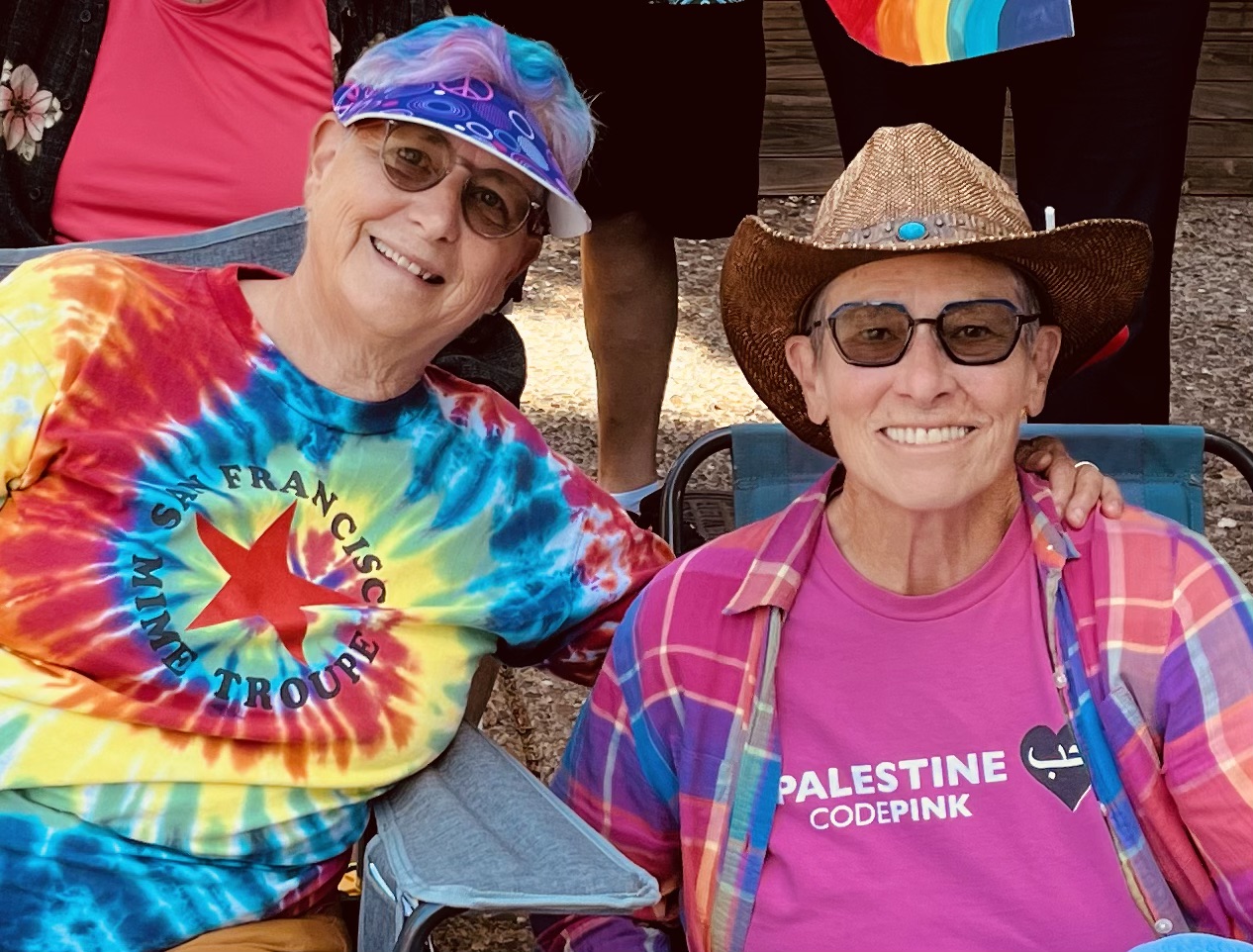
June 1 Biggest Best Pride Ever!

Reporting from Sonoma County CA

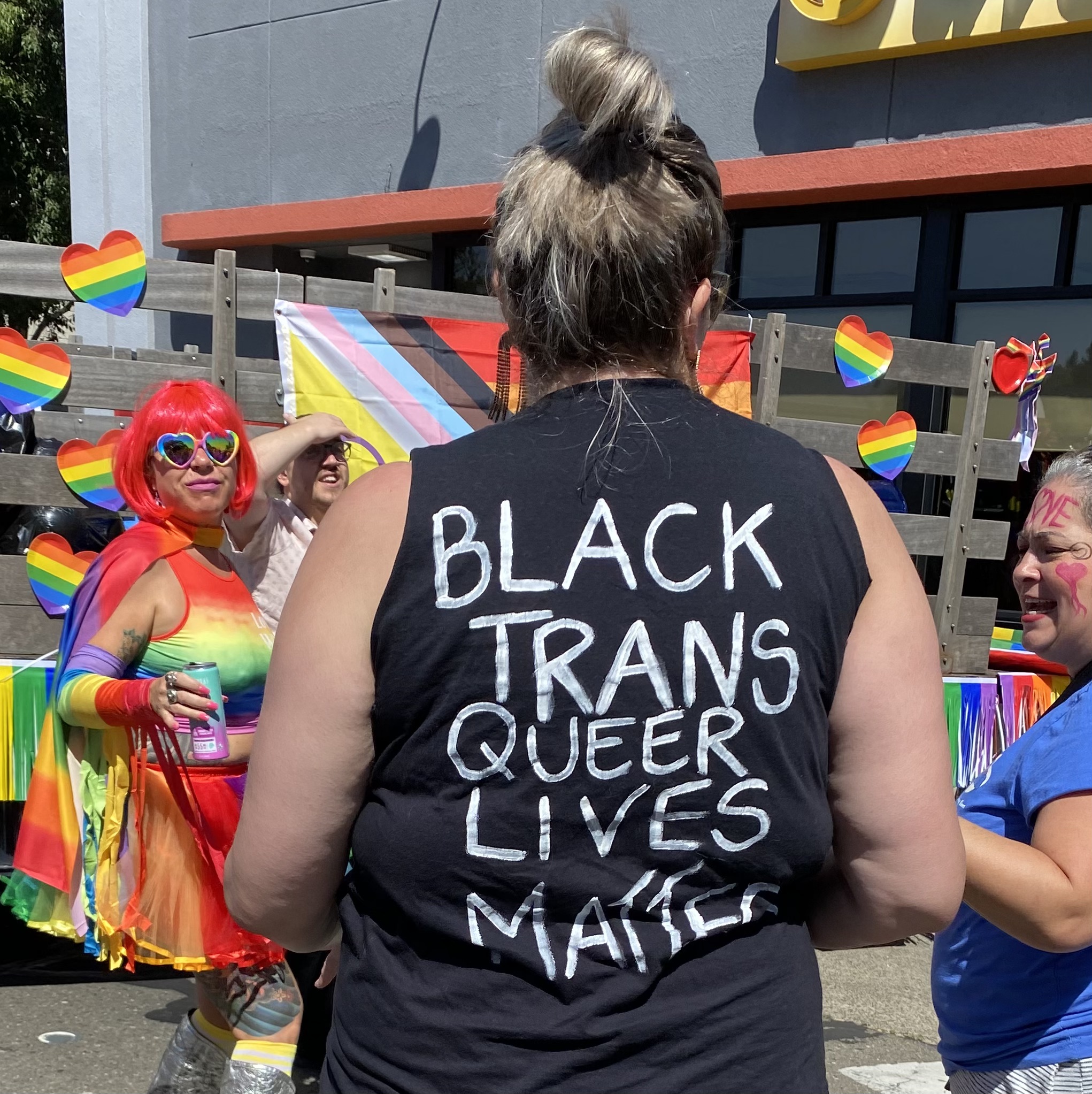
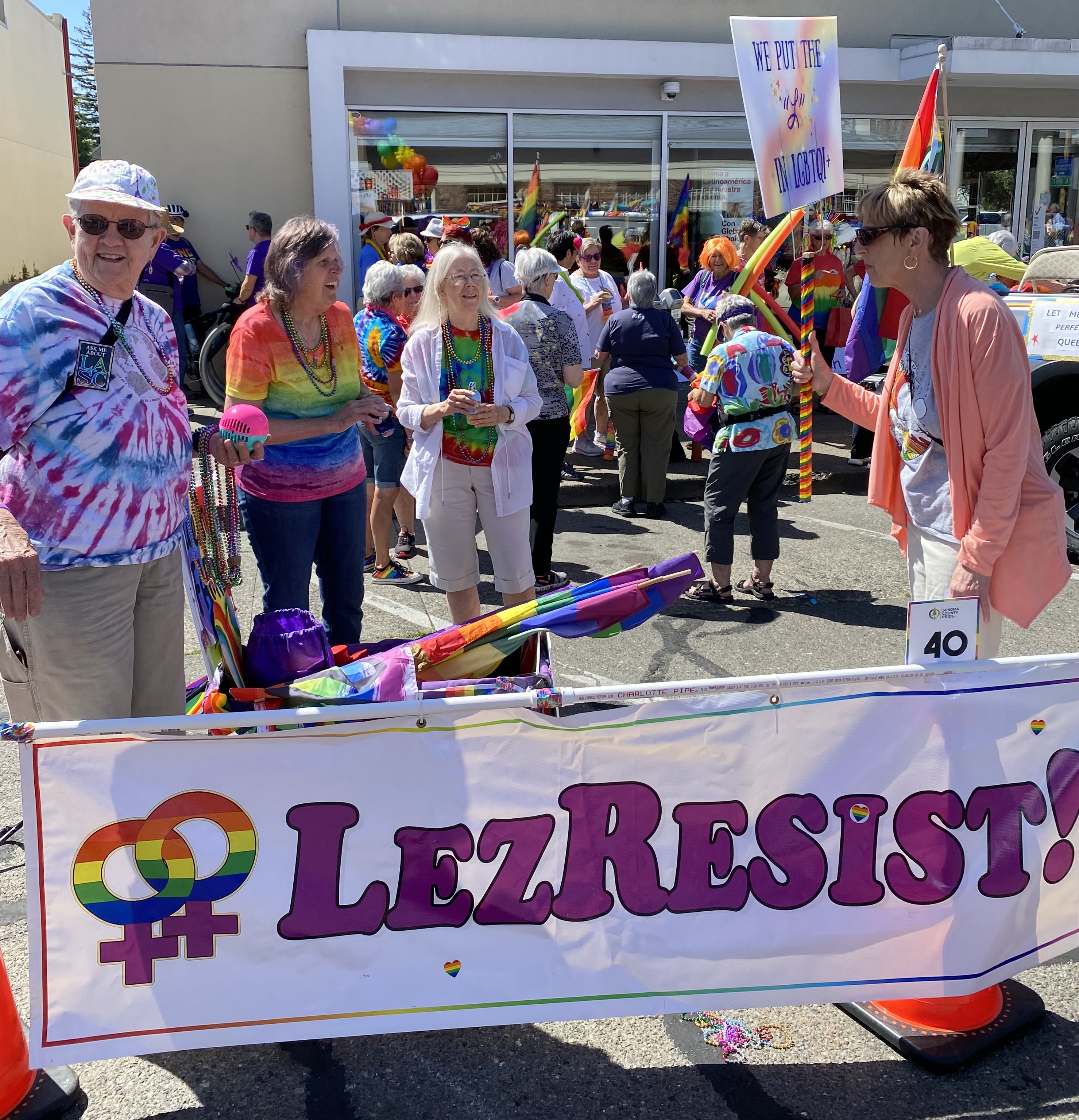
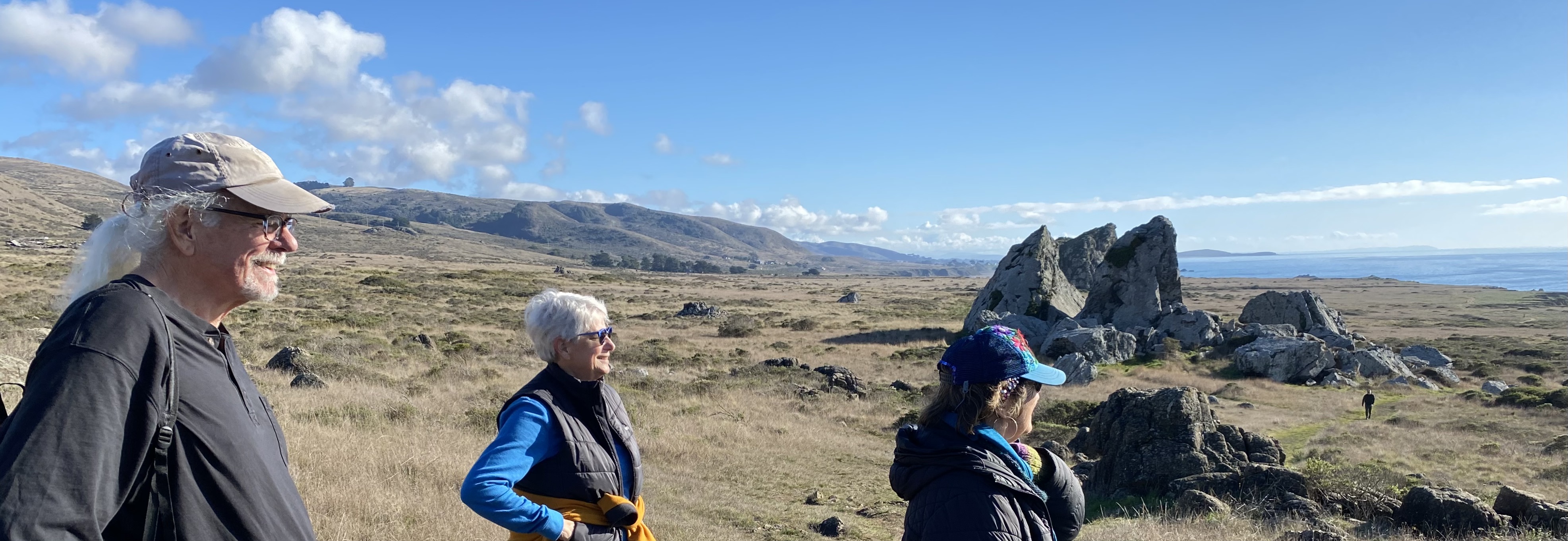
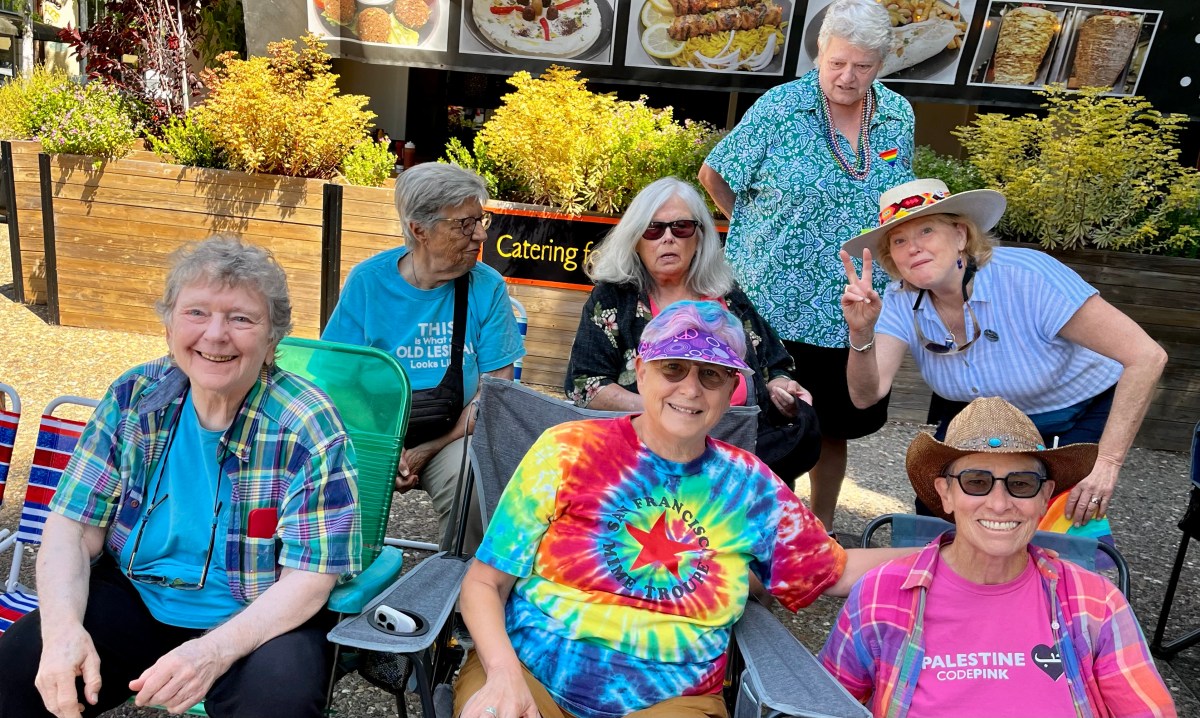
Our celebration took place in Santa Rosa, where we live, a city of 177,000. My honey, Holly (L), and I watched the parade with a group of friends. Afterward we checked out the booths and music at the town square. This year saw more marchers and watchers than ever. And if there were haters (as there have been in past years), I never saw them. The vibe was joyful.

The theme this year was Heroes Sheroes and Queeroes. So there were lots of superhero capes among the marchers. The Sebastopol (a nearby small town) Senior Center volunteers made 60 capes with messages, and they won the Best Overall Float prize.

I think maybe there are more old dykes in Sonoma County than anywhere else in the world! We were well represented at Pride. A new organization just started called Senior Lesbians in Community (SLIC). I’m also a member of Old Lesbians Organizing for Change (OLOC) and Lesbian Reunion. The village of Oakmont, a retirement community, has its own lesbo contingent.

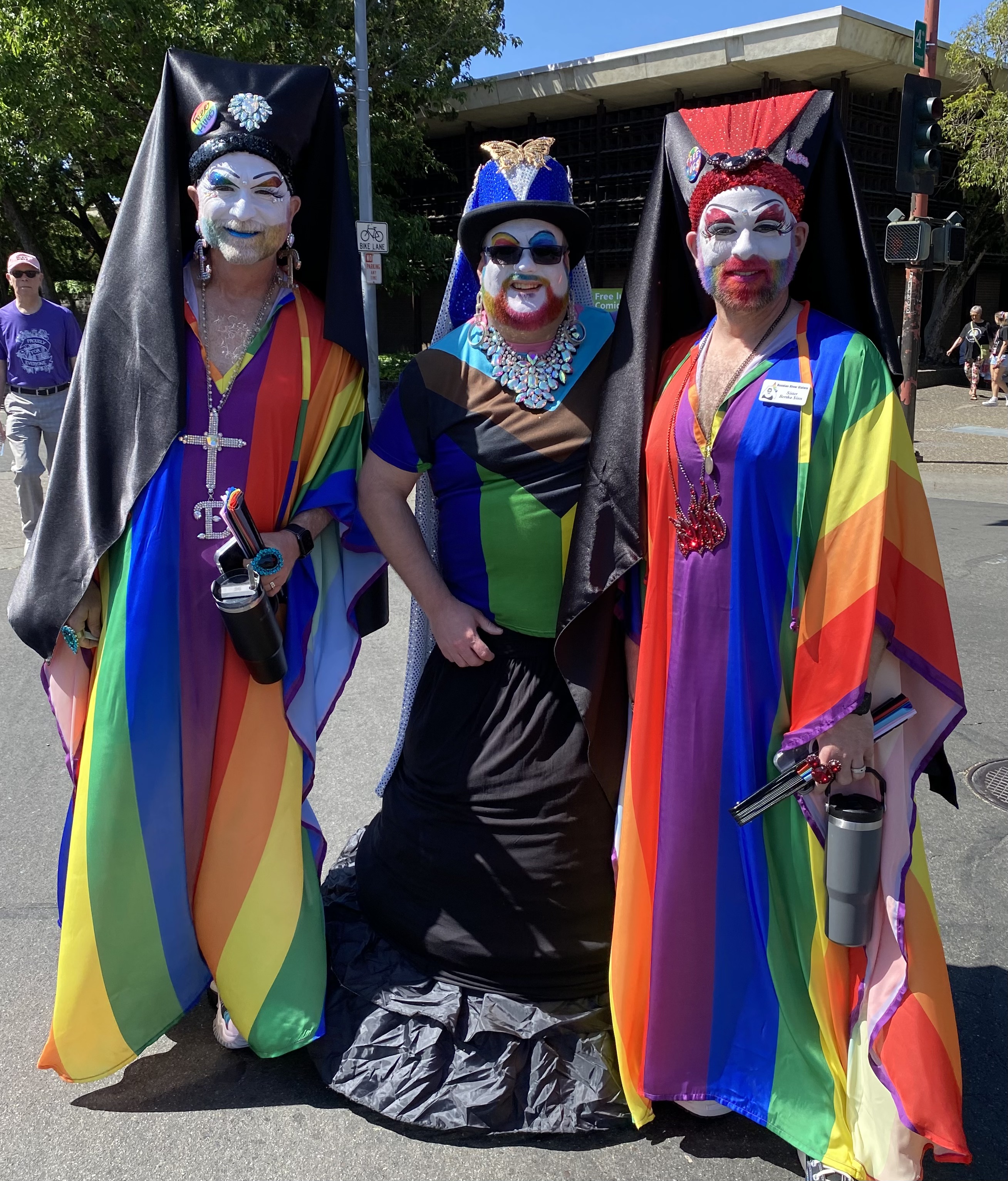
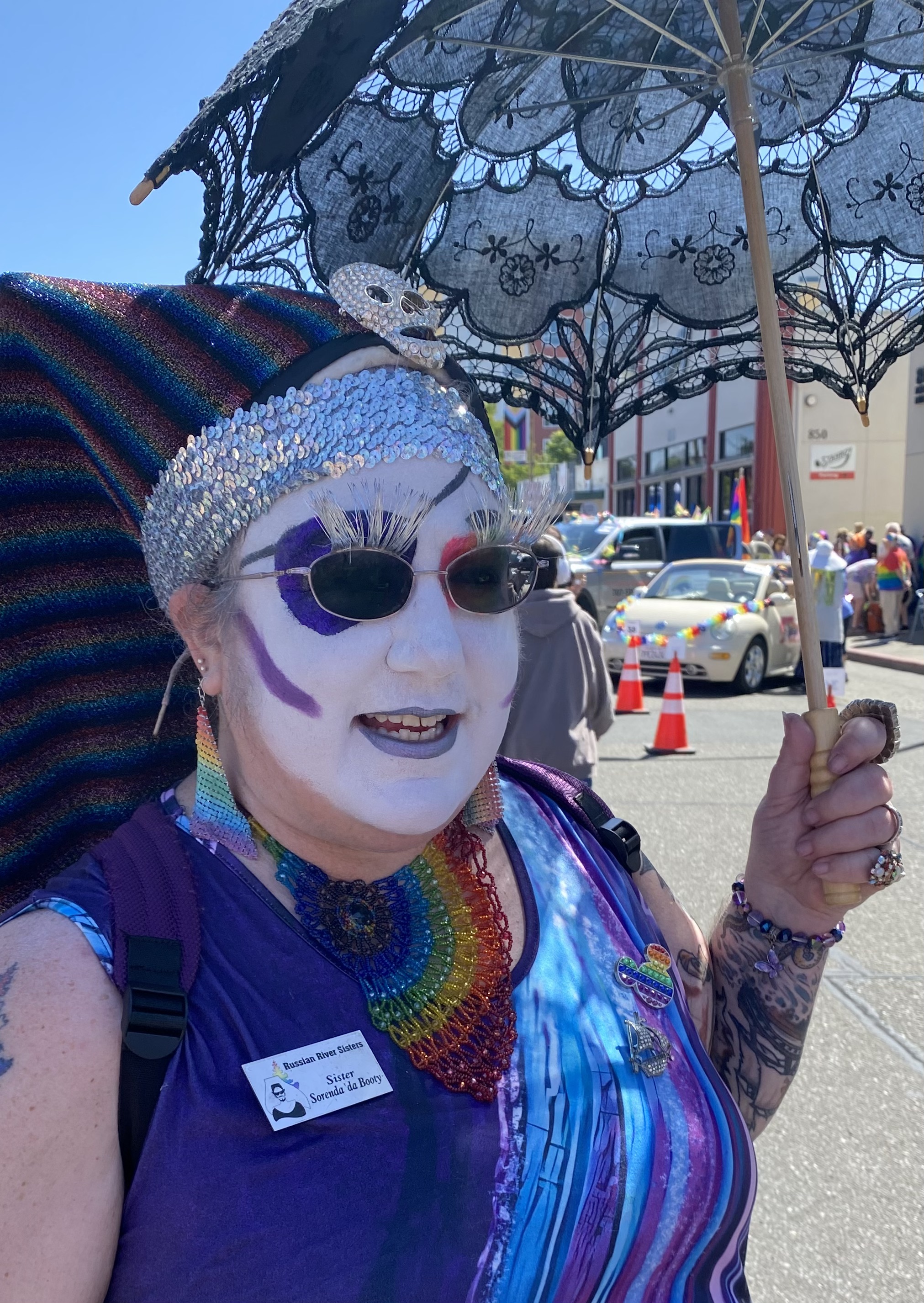
The Sisters of Perpetual Indulgence has a big congregation here in Sonoma County. They fundraise to support the comunity with fabulous parties, bingo games and campaigns. The Sisters were the sponsors of Gay Pride for many years when it was in Guerneville, a resort town on the Russian River.

So many queers, so little time!

The Democratic Party always shows up at Pride. They sponsor postcard writing parties to help get out the vote for Congressional races around the country. In California we are working to turn red districts blue this year.

Honoring Native Americans

Reinventing Some Holiday Myths

Dear Friends,

As we construct our ofrendas for Day of the Dead, decorate our yards for Halloween and celebrate the pagan holiday Samhain, I’ve been thinking about two other holidays we celebrate this time of year–Indigenous Peoples’ Day and Thanksgiving. This is a story about how the meaning and celebrations of American holidays can evolve to reflect new understanding of our history. 

As we learn more details about our history, in the last few years Americans have been rethinking the stories connected with Thanksgiving and Columbus Day. 

My generation of students learned to recite, “In 1492 Columbus sailed the ocean blue.” We learned about the Nina, the Pinta and the Santa Maria and that Christopher Columbus “discovered America.”

In elementary school in the 1950s I participated in those Thanksgiving pageants in which you were either a Pilgrim—boys with black buckled hats and shoes, girls in long, aproned dresses and bonnets—or an Indian with feathered headband and tomahawk. The story we enacted was a peaceful meeting and feast between Indians and pilgrims just off the Mayflower. It was the beginning of a happy long relationship between settlers and Indians.

Sadly, almost all of what we were taught was incorrect and incomplete; the myth conveniently left out the parts about genocide, slavery and land theft.

It turns out that Christopher Columbus was a homicidal tyrant who initiated the two greatest crimes in the history of the Western Hemisphere–the Atlantic slave trade, and the American Indian genocide. It’s not dissing Italians to say we no longer venerate this colonizer. Over the last few decades, Columbus Day has evolved into Italian Heritage Day in many locales. 

And we are witnessing a movement to honor Native peoples on Columbus Day. It originated in 1989 in South Dakota during its “Year of Reconciliation,” in an effort to atone for terrible history.

The phrase “merciless Indian savages” is written into the Declaration of Independence. That says all we need to know about how the founders of our country viewed the indigenous people in this land.

For centuries, the American government saw Indians as the enemy, sponsoring their slaughter and “removal.” Through a series of notorious atrocities, including the Trail of Tears, the Sand Creek Massacre and Wounded Knee, (and in California, our own Trail of Tears in 1863, and the Bloody Island Clear Lake massacre in 1850, among others) the United States adopted an official expansionist policy of discriminating against Native Americans in favor of encouraging white settlers in their territories. This policy led to the subjugation, oppression, and death of many Native Americans, whose communities still feel its effects. Only in 1924 were Native Americans allowed to become citizens of the United States, and it took decades more for all states to permit them to vote. 

But as we Americans acknowledge this history, our contemporary view of Native Americans is changing.

Congresswoman Norma Torres (D-CA) has introduced legislation to establish Indigenous Peoples’ Day as a federal holiday. Now, at least 13 states and over 130 cities have adopted Indigenous Peoples’ Day or Native American Day. In 2021, President Joe Biden formally recognized Indigenous Peoples Day. 

Here in Sonoma County indigenous people are well integrated into our local culture and community events. Tribes are consulted by land keepers and planners. Colleges, libraries and nonprofits sponsor classes about indigenous culture. My wife Holly and I attended the Indigenous Peoples’ Day gathering at Santa Rosa Junior College, which featured native dancing, music, drumming, food, speeches and vendors. The SRJC also has a native museum whose latest exhibit features the stories and art of local basket weavers. 

As with Columbus, Americans have been taught a false narrative about Thanksgiving.

Two different early gatherings may have inspired the American Thanksgiving holiday. At the first, in 1621, Wampanoagwere not invited to the pilgrims’ feast, but heard celebratory gunshots and came to the aid of the colonists. They had formed a mutual defense pact. Once there, the Indians stayed and feasted, but the feast did not resolve ongoing prejudices or differences between them. Contrary to the Thanksgiving myth, this was not the start of any long-standing tradition between the settlers and the Wampanoag tribe. The myth doesn’t address the deterioration of this relationship, culminating in one of the most horrific colonial Indian wars on record, King Philip’s War.

Ironically, Thanksgiving as a holiday originates from the Native American philosophy of giving without expecting anything in return. The Wampanoag tribe not only provided food for the first feast, but also the teachings of agriculture and hunting. Corn, beans, wild rice, and turkey are some examples of foods introduced by Native Americans.

The first written mention of a “Thanksgiving” celebration occurs in 1637, after the colonists brutally massacred an entire Pequot village of 700 people, then celebrated their barbaric victory, giving thanks to their god.

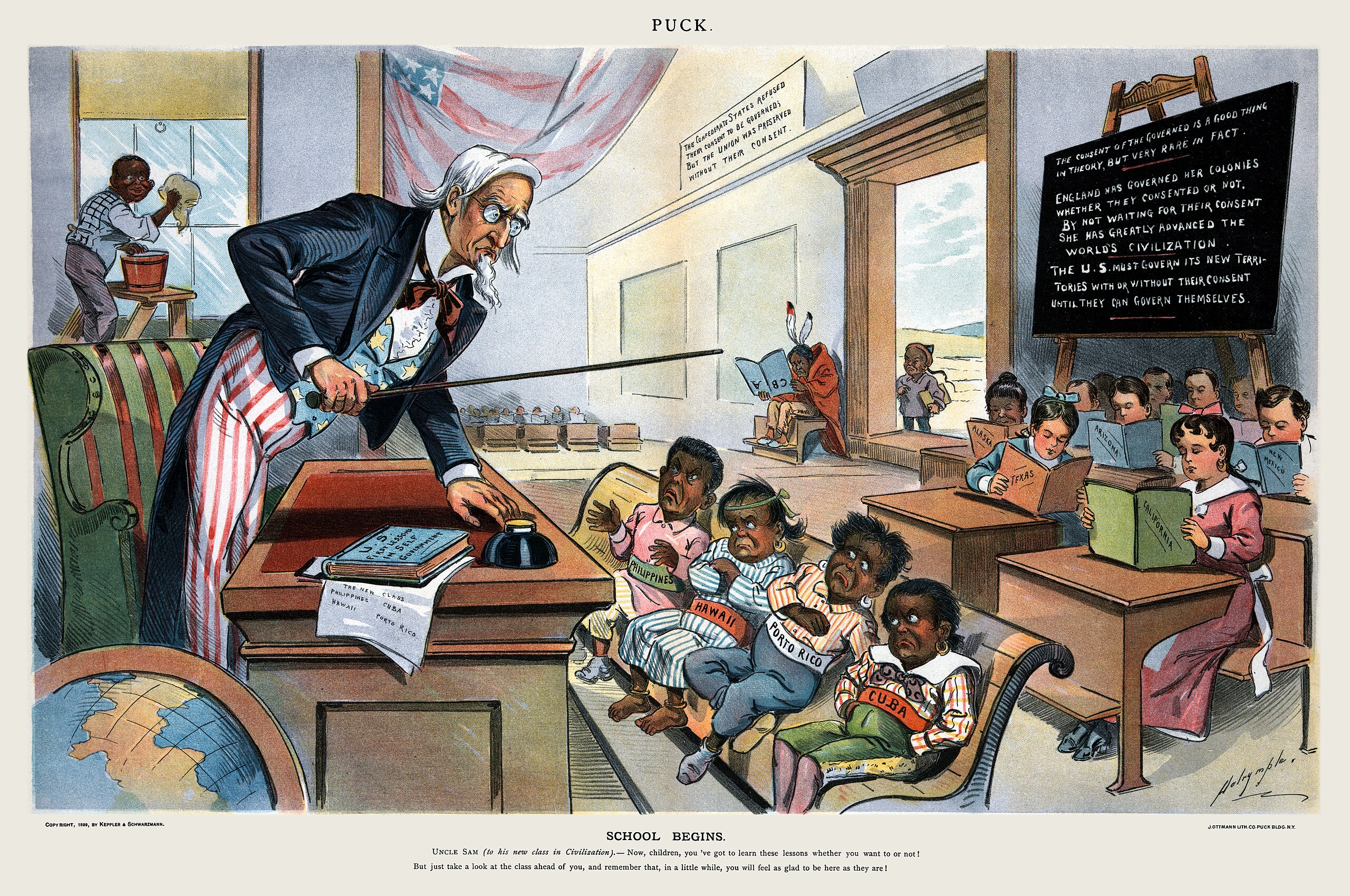
During Reconstruction, the Thanksgiving myth allowed New Englanders to create the idea of bloodless colonialism, ignoring the Indian Wars and slavery. Americans could feel good about their colonial past without having to confront its really dark characteristics.

Now children you’ve got to learn these lessons whether you want to or not! Puck Magazine 1899.

For many Native Americans, Thanksgiving is a day of mourning and protest since it commemorates the arrival of settlers in North America and the following centuries of oppression and genocide.

Indian protests in the 1960s and 70s often attacked the Thanksgiving myth. In 1969 after natives took over Alcatraz, allies and Indians of all tribes came together for Unthanksgiving Day, a gathering that’s become a tradition, welcoming all visitors to a dawn ceremony on the island.

In 1970 during a Thanksgiving celebration in Plymouth, activists from the American Indian Movement stormed the Mayflower II ship and occupied it in protest. It was then that the United American Indians of New England recognized the fourth Thursday in November as a National Day of Mourning, to bring awareness to the long lasting impacts that colonization had on the Wampanoag and other Native American tribes. This year the in-person event will also be livestreamed.

Americans are told and we want to believe that we are the saviors of the world. But historical truth is far different. 

Does the acceptance of Indigenous Peoples Day in place of Columbus Day and the updating of the Thanksgiving myth mean that we Americans are beginning to acknowledge our country’s history of imperialism and genocide? I hope so.

This time of year, and these two holidays, Thanksgiving and Indigenous Peoples Day, give us the opportunity to reflect on our collective history, to celebrate the beauty, strength, and resilience of the Native tribes of North America, and also to conduct our own rituals.

Long before settlers arrived, indigenous people were celebrating the autumn harvest and the gift of the earth’s abundance. Native American spirituality, both traditionally and today, emphasizes gratitude for creation, care for the environment, and recognition of the human need for communion with nature and others. I hope we can incorporate these ideals into our American harvest celebrations while we as a species still live.

Whether or not we cook a big turkey dinner, many of us practice Thanksgiving rituals. My and Holly’s ritual is to get together with our exes. We introduced them at a Thanksgiving dinner 13 years ago and they fell in love. We were surprised, and also delighted. Barb and Ana have become our exes and besties. We are participating in a lesbian tradition of incorporating our exes into our chosen families. 

No matter where you are in North America, you are on indigenous land. In Sonoma County we live on unceded territory of the Pomo, Wappo and Coast Miwok tribes.

Good Samhain, Halloween, Day of the Dead and Thanksgiving to you all.

Love, Molly (and Holly)

Invoking the Travel Goddesses

August 1, 2023 

My Regular Pagan Holiday Post: Lammas

It is the season for traveling in the northern hemisphere and I’ve been traveling along with millions of others, this year freed from covid restrictions. 

The Santa Rosa airport was packed with more people than I’ve ever seen there, and my destination, Seattle, was just as chaotic. I was one of very few folks wearing a mask. On the plane, people sitting around me discovered we are all from the same neighborhood. Two were flight attendants, relieved that they no longer are required to act as mask cops, risking physical confrontations with MAGAs (they wore masks).

My full flight was smooth and on time. At SeaTac I always rush through the baggage claim level to the far south end of the airport where I catch the bus to Kitsap peninsula towns and my destination, Gig Harbor. This time the bus was just boarding and there was an empty seat for me. My luck may have been the result of my friend Barbara Sjoholm’s invocation of (and my introduction to) the two Roman travel goddesses, Abeona and Adeona. The goddesses are often petitioned together to provide safe travels. 

Abeona–in Latin abeo means to depart—also indicates the birth of plant and animal life, including human beings.

Adeona–adeo means to return. “She who returns” is a goddess of plant and animal growth and death.

Betsy, Barbara and Cousin Gail

A prolific writer, Barbara has just published what I’d call her magnum opus, “From Lapland to Sápmi: Collecting and Returning Sámi Craft and Culture,” about the cultural history of the indigenous Scandinavian people. I know her from the murder mysteries she published in the 1980s and 90s, featuring a lesbian sleuth, Pam Nilsen. During covid she wrote and published two mysteries with an older lesbian protagonist, Cassandra Reilly. My cousin Gail, a student of Native American culture, is a big fan of Barbara’s writing about the Sámi, and I got to introduce them. At lunch in Port Townsend we met Barbara’s wife, Betsy Howell, who works for the US Forest Service and writes about it on her blog: https://betsylhowell.com/. She has a new book coming out in the fall. Mazel tov!

We Watch the Earth Burn

I left Santa Rosa as it was experiencing a heat wave. It was only 86 degrees when I arrived in Gig Harbor, also pretty hot for this time of year. For now, the West has mainly avoided heat domes and smoke from Canadian fires that have affected most of the rest of the country. Phoenix is experiencing nearly a month of temperatures above 110 degrees. July 4 was the hottest day in human history.

At one time I thought I would not live to see the effects of climate change, but the change is coming faster than anyone expected. It’s happening in my lifetime!

In California we worry this time of year about fire as well as heat. As a person with lung issues, I dread fire season and its smoky air, which starts earlier every year. It used to start in the fall with the diablo winds that come from the east. Our usual winds blow from the west, offshore, and while they contain pollution from China, they are not usually smoky.

On this trip I’m reuniting with my three brothers and two cousins. Then I’ll travel to Vancouver BC with my brother Don to commune with him and his husband. It’s gonna be great. 

Siblings Molly, Don, Tim and Terry

Celebrating the Cross Quarter Holiday

In the northern hemisphere, the autumn cross-quarter holiday was celebrated by the Celts as Lughnasa/Lammas on August 1. Astronomically the event occurs around August 6 or 7, the hottest time of the year in much of our hemisphere.

At Lammas we celebrate the harvest of first fruits. In Santa Rosa we’ve been harvesting beans for a while. Our first tomatoes are finally ripe. I look forward to summer BLTs and I ate the first one just before leaving town. The peaches are in the dehydrator. The neighbor’s apple tree that hangs over our fence is full of ripe Gravenstein apples. Holly made pies from the leftover last year’s apples so we’ll have room in the freezer for this year’s. Artichokes were prolific and I ate many but left some to flower. Bees love the purple-blue flowers and I love looking at them, but they are now over and the plants are ready to be cut down. 

At summer solstice I celebrated my mother’s birth day. On August 9 I mark her death day, which is also Nagasaki day, the day in 1945 when we, the Americans, dropped the atomic bomb on Nagasaki, Japan. August 6 was Hiroshima. 

Seen from Cousin Gail’s deck. Looking across Colvos Passage at Vashon Island

People all over the world mark the anniversary of the nuclear bombings. Some people fast from August 6 to 9, a nonviolent tradition to pause, reflect and create empathy for those who have suffered from nuclear weapons. Others fold 1,000 origami cranes, a long tradition in Japan, believed to bring a peaceful and healthy life. After the nuclear bombing, origami crane folding became an action for peace and nuclear abolition. It started in response to the story of Sadako Sasaki, a child who contracted leukemia from the radioactive fallout. She tried to make 1,000 cranes but died before she could finish. Her classmates finished the 1,000 cranes, then made crane making their message for peace, starting an international tradition. 

As we face threats of nuclear war and see a new arms race developing, this anniversary must remind us to strive for a nuclear free world.

If you haven’t read Hiroshima, John Hersey’s 1946 piece about the bombing, I recommend it. He personalizes the experience, telling the stories of six survivors. https://www.newyorker.com/magazine/1946/08/31/hiroshima

Sending best wishes for a safe and peaceful Lammas.

The T-Shirt

Feeling a little sexy? Go fuck yourself

I first encountered Dar on a job site. The contractor had moved me there so he could meet affirmative action requirements for females on the job. This was a popular practice. Rather than just hiring more women, the company would hire one woman and move her around from job to job so monitors would count the same woman repeatedly. The job, a low-income housing project in Chinatown, received federal funding and so had to meet federal affirmative action goals for women and minorities. This was in 1980 when some regulators actually took affirmative action laws seriously and monitored job sites. Those days are long gone.*

Art by Victoria Hamlin

In those days women would often ignore each other when we were dispatched to the same job. We tried to be invisible and often, when there was only one of us, we got away with it. But as soon as two women started talking or working together, an undercurrent of anxiety rippled among the men. For a brief period on one job I got to work with a female apprentice.

“What do you two talk about?” asked one of the electricians. “Are you talking about the size of our dicks?”

This hadn’t occurred to me. Women might talk about the harassment we endured on the job or, more likely, how to work together to complete the job at hand. Dicks, drawn in profusion on the walls of the porta potties, did seem to hold a prominent place in the imaginations of some of our coworkers.

Kathryn (Kathy) Goodwin Photo Victoria Hamlin

Women knew that if we spoke to each other our male coworkers would notice. Straight women didn’t want to be painted with the dyke brush, and most lesbians were still in the closet and didn’t want the brush either. Dar didn’t worry about such implications. She was a big mouthy white woman with buck teeth and a head of bleached blond hair. On the job site you couldn’t miss her. She did not melt into the woodwork. My first day on that job, the Chinatown low-income housing project, she introduced herself as we passed each other on the deck.

“So you’re the affirmative action hire,” she said. “I guess they needed another chick.”

I wasn’t wild about being called a chick, but she had a point. Federal affirmative action regulations were the only reason I was on that job. Our short conversation made me think Dar didn’t like women any more than the men on the job did. She didn’t seem like a feminist sister.

Jake Calabro sewage treatment plant utility plumber. Photo Victoria Hamlin

For a couple of days I was pulling Romex through holes punched in metal framing. Then they pulled me off that job and put me on another where the regulations said they needed a woman. Fine with me. It all paid the same—a good wage previously reserved for men only. Dar was likely in the same boat. The plumbing contractors had a reputation for hiring even fewer women than the electrical guys. After they could check off the number of female hours worked, they could lay us off.

A couple of years later after a couple more layoffs, I scored a full-time maintenance job with the San Francisco Water Department. I worked out of a corporation yard in the southeast industrial area of the city, looking after all the motors that ran pumps that supplied water to the city. That’s when I ran into Dar again. She had been hired for a job in the plumbing division. The crews of plumbers worked installing new services all over the city, usually in big holes in the street. Or they might be required to repair a main break. The job was wet and muddy.

Molly Martin and Kathy Goodwin Photo Victoria Hamlin

I didn’t see much of Dar, as the plumbers were out of the yard working in the street all day. But I heard about her. A story in the grapevine told of Dar punching out a coworker who had harassed her while they worked in a trench. I never heard what was said. That was before the rule was imposed that fighting on the job would get you fired immediately. Dar was not the first plumber to make use of fists to manage a dispute, but she was the last to do so and avoid getting fired. 

The day I saw the T-shirt was a maintenance nightmare for the water department. One of the big pump stations that housed 100 HP motors flooded. The motors sat in wells in the concrete floor and so were vulnerable to being overtaken by the quickly rising water. I could see it wouldn’t be long until the motors were under water. The team of plumbers worked fast to staunch the leak.

Carole Lee Photo Victoria Hamlin

My only job as electrician was to cut the power to the motors and that was just a matter of disconnecting circuit breakers in a huge panel on a higher level, though if the water rose high enough that panel, too, would be in peril.

That’s when I spotted Dar, down in the pit with a cluster of men. She wore a T-shirt with a message in big print:

Feeling a little sexy?

Go fuck yourself

No one said anything aloud about the message on Dar’s shirt, but it shocked me. I couldn’t imagine wearing it myself, as much as I agreed with the sentiment. I didn’t have the guts to wear that shirt.

I had to give Dar credit. Maybe she wasn’t my kind of feminist, but she was some kind of feminist.

Amy Gray Schlink Photo Victoria Hamlin

*Affirmative action in the construction industry really only lasted a short time before Reagan killed it. In California the death knell was dealt in 1996 when Ward Connerly put affirmative action on the ballot. In the meantime some of us were able to get a foot in the door and advocate for the hiring of more women. But women still make up only about three percent of the construction workforce. We were the forgotten recipients of affirmative action and we could benefit from a renewed commitment to it now as the Supreme Court threatens to end it entirely.

Solstice Came Early This Year

Winter Solstice 2022

My Regular Pagan Holiday Missive

Years ago my wife Holly and I invented a solstice ritual we named the Twelve Days of Solstice, starting on the solstice, December 21, and ending with New Year’s day. We made up our own daily rituals and customs, observing the natural world and the changing of the seasons.

Our invention was aimed at supplanting the christian holiday. We are both ex-christians, she tortured by a more evangelical denomination than me by my pale protestant presbyterian sect.

My antipathy has been mostly aimed toward catholicism, a particularly misogynist, patriarchal, racist, and homophobic cult whose latest endeavor is covering up its sexual abuse of children. It is only the most powerful example of christian horror, but there are many more worldwide who hide behind religion to perpetrate evil.

We want no part of this and so we eschew the trappings of christian holidays. However, we do feel the need for tradition and ritual in our lives and so must invent our own. This year in the wake of a worldwide fascist assault on democracy I was feeling a bit depressed in mid-November and sought holiday solace. 

“Let’s start celebrating solstice early!” I entreated.

The festive custom of tree decorating is not owned by the christians. It was stolen from pagan religions and so I feel very good about reclaiming this pagan tradition. The term pagan was historically used by christians to refer to everyone not christian, so it includes all of us non-christians.

I checked around and there were no trees nor boughs to be bought until the day after Thanksgiving. So, after considering and rejecting cutting our own, on the morning of November 25th we drove directly to Grandma’s tree farm a few miles out in the country. People had already stormed the farm, a magical place with a huge old barn decorated to the rafters for the season. There was hot chocolate waiting, a flocking room, a real antique sleigh for kids to play on and all the ornaments and boughs and trees of every size. 

We bought evergreen boughs for the mantle, adorable bird decorations and, of course, a tree, cut and carried by an agile worker who told me he has a landscape company in other seasons.

For the next couple of days we decorated the tree, taking all the time we felt like because why should we be in a hurry? One point of invention is to overcome all the obligations that make this holiday stressful. Like shopping. We are made to feel like we will be responsible for the U.S. economy failing if we don’t spend tons of money. Retailers depend on this holiday to bring in 40 percent of their annual revenue, an unsustainable economic program that bankrupts the poor and does not fit well with our effort to consume less.

With a much longer holiday schedule than usual, we were designing rituals for a month of celebrating instead of just the 12 days of solstice. Ok but no pressure. Instead, I decided to just appreciate the revelatory events that happened to me daily.

Nov. 24 As I planted 40 daffodils in the front yard, I thought bulb planting must be added to our annual constellation of solstice rituals.

Nov. 30 It froze! Contemplating the Japanese concept of Wabi-Sabi, we acknowledged the wilting of the big flowers in our yard. The tree dahlia, which at nearly 20 feet tall had only just started blooming, died. And the huge marigold that had appeared late in the fall, maybe from a wildflower mix, froze. We appreciate that nothing is truly perfect or permanent.

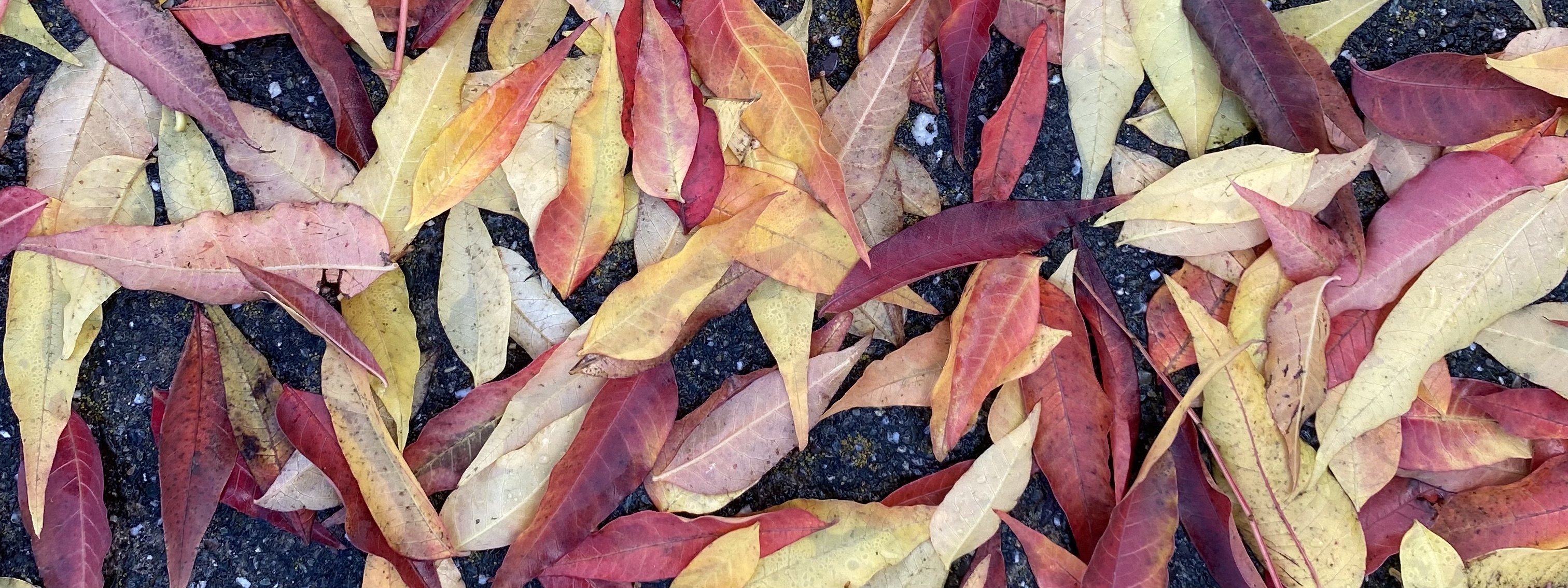
Dec. 1 Then it stormed! We got an inch of rain. We invoked Tefnut, the Egyptian goddess of rain and moisture, responsible for maintaining life, as we watched the bright leaves fall from the trees.

Dec. 3 As I picked the first oranges from our tree and made juice, I called in Demeter, the Greek goddess of agriculture and the harvest. When her daughter Persephone returns to Hades each winter, the plants die, only to be reborn when she returns in spring. The orange, one plant that the gods apparently overlooked, produces fruit all winter.

Dec. 7 I’m witness to a supernatural event at 5am while I soak in the hot tub. The sheet metal cap on the chimney glows with an amazingly bright light. I feel this is like seeing the virgin Mary on a slice of toast–positively spiritual. The cap continues to glow and I wonder what the universe is trying to tell me. It was so bright I couldn’t imagine what the light source could be. Could the light be coming from inside the house? Of course, it was the setting full moon shining at a direct angle, but so otherworldly that I wanted to take a picture to let someone else in on my religious experience. Who would believe me? Will I be the Cassandra of Hylandia?

I can find no goddess of chimneys nor sheet metal nor chimney caps, so I’ll have to decide whether to check in with one of many goddesses of the hearth. Or perhaps the moon was communicating with me through the chimney cap, in which case I can consult any number of moon goddesses like Selene, the Greek personification of the moon.

The universe is definitely talking to me.

Dec. 8 We spent a lovely couple of hours walking at the ocean with Holly’s brother and wife and afterward I happily consumed the sacred molluscs, oysters. Is there a seafood goddess? Maybe not exactly, but Venus, the Roman goddess of love and beauty, was born in an oyster so she knew something about them.

Then on our way back from the ocean we hit only green lights on Guerneville Road. A total miracle! I didn’t even have to invoke Asphalta, the goddess of roads and highways, because I know that she is watching over us, especially when we look for parking. We recite the prayer “Hail Asphalta full of grace, help me find a parking place.” Then we rub the sacred crystals which are pieces of asphalt adorned with the yellow line, enclosed in an orange bag that hangs from the car’s mirror. Asphalta’s priestesses are the flag women of the highways. The goddess was invented by my friend Morgan Grey for a book called Found Goddesses and so fits right in with our effort to invent rituals.

Finding the sacred in my everyday life has definitely improved my spirits. It’s worked so well that I might have to continue this practice for the rest of the year.

Happy solstice my friends, however you choose to celebrate it.

Equinox and the Middle Way

My Regular Pagan Holiday post

Dear Friends,

I’m writing this during a gentle rainstorm that has elicited delight among denizens here in Santa Rosa. Our weather station says it has brought a little less than an inch of rain. We are humbled when we think of raging floods elsewhere in the world but of course what we worry about at this time of the year is fire. Word is that the rain has dampened our biggest California fire, the Mosquito Fire, which has burned 75,000 acres in the Sierra foothills and is now 35 percent contained. This rain may not put an end to fire season, but we hope, as the fall equinox approaches, it marks the beginning of the end. This year the autumn equinox takes place on September 22, when the sun crosses the equator making night and day of equal length in all parts of the earth. 

In Japan the equinox symbolizes the middle way between the seasons. This week will mark the start of Higan, a seven-day Buddhist celebration and national holiday in Japan during the fall and spring equinoxes. The origin of the holiday dates from Emperor Shomu in the 8th century. Higan means the “other shore” and refers to the spirits of the dead reaching Nirvana. It is a time to remember the dead by visiting, cleaning, and decorating their graves. The red spider lily signals shūbun, the arrival of fall. 

Buddhist psychology is neither a path of denial nor of affirmation. It shows us the paradox of the universe, within and beyond the opposites. It teaches us to be in the world but not of the world. This realization is called the middle way.

If we seek happiness purely through indulgence, we are not free. If we fight against ourselves and reject the world, we are not free. It is the middle path that brings freedom. This is a universal truth discovered by all those who awaken.

The middle way describes the middle ground between attachment and aversion, between being and non-being, between form and emptiness, between free will and determinism. The more we delve into the middle way the more deeply we come to rest between the play of opposites.

When we discover the middle path, we neither remove ourselves from the world nor get lost in it. We can be with all our experience in its complexity, with our own exact thoughts and feelings and drama. We learn to embrace tension, paradox, change. Instead of seeking resolution, waiting for the chord at the end of a song, we let ourselves open and relax in the middle. In the middle we discover that the world is workable. From the book The Wise Heart by Jack Kornfield

Here in Sonoma County at fall equinox we celebrate the end of those super hot days of summer. There was a day in August when we set a heat record of 115 degrees here. 

We may still get some 90 degree days, but the withering heat is behind us and the cold of winter is yet to come. No more flex alerts! We look forward to enjoying the outdoors in this mild season.

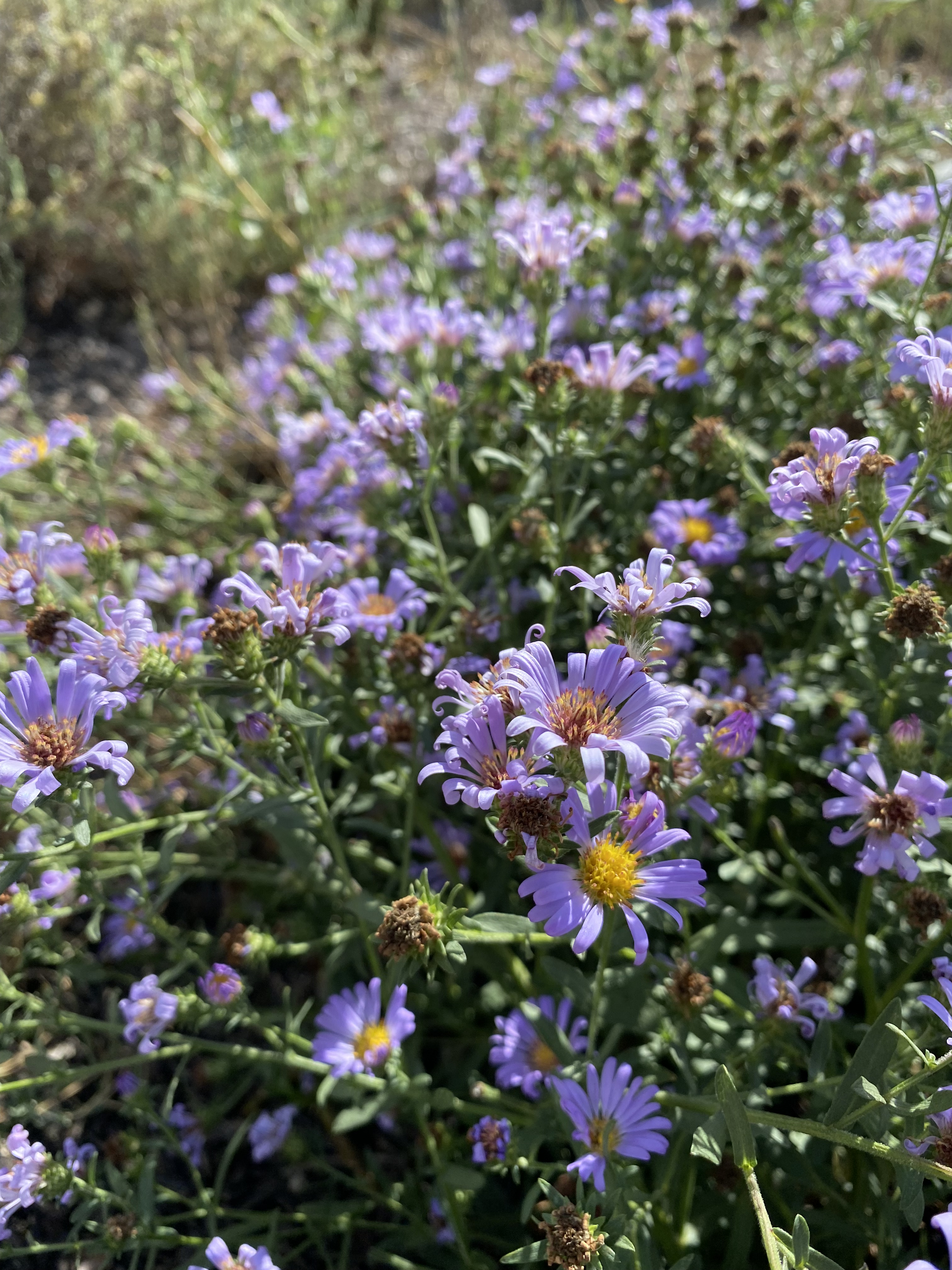
Native aster

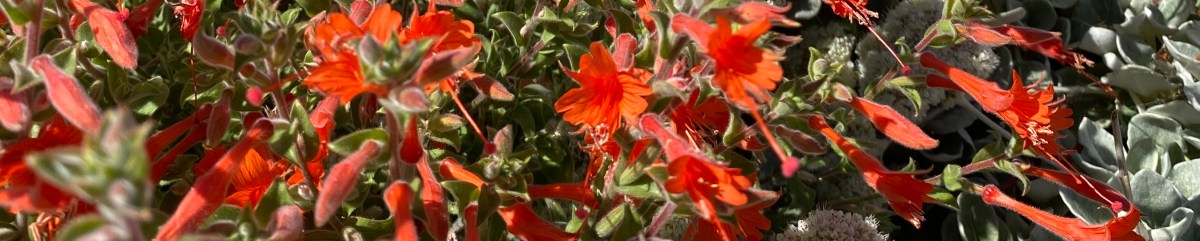
Like all Californians we are conserving water during an ongoing drought. Our vegetable garden is not as robust and productive as in wetter years, but native plants thrive. Favorites include native Epilobium in bright reds and pinks, eriogonum (wild buckwheat), and a purple native aster given to us by a neighbor, still blooming happily without water! Birds of all feathers converge on our garden to eat the seeds of spent wildflower blooms.

Wishing you a tranquil equinox.

Love, Molly (and Holly)

Sirius and the Summer Solstice

My Regular Pagan Holiday Post

Osama Elsayed on Unsplash

Summer solstice 2022

I think of summer solstice as the start of the dry season here in NoCal, but in ancient Egypt it presaged the start of the wet season when the Nile River began to flood.

Nile Valley civilizations acknowledged and celebrated the solstice, when the sun reached its highest point in the Northern Hemisphere, as the most important day of the year marking the African new year.  


Celebrations commemorated the longest day of Ra, the sun god, as well as the rising of the star Sirius, which heralded the Nile flooding and divine blessings on the land of Egypt. 

The ancient Egyptians recognized the importance of Sirius (one of the stars of the constellation Canis Major) as the brightest star in the sky, as well as the birthplace of the goddess Isis. They called this star Sopdet. The celebrations for new year’s day began at dawn when Sirius appeared on the horizon as the shining morning star emerging from the darkness of the underworld. 

Goddesses were involved too. The great triad of goddesses, Isis, Hathor and Nut, was intimately connected with this “divine rebirthing” of Egypt each year, as depicted in detail on the walls of Dendera Temple in upper Egypt, built by Cleopatra.  Traditional beliefs held that Isis was mourning her dead husband, Asar (Osiris), and that her tears made the Nile rise. 

 
This festival is one of the oldest in Egyptian history, celebrated from archaic times all the way through to the Roman occupation of Egypt. Ancient Egyptians aligned the Great Pyramids so that the sun, when viewed from the Sphinx, sets precisely between two of the pyramids on the summer solstice. Here on my block we stand out in the street to watch the sun set over the Coast Mountain range. 

How will I be celebrating the solstice? Well, my weather app says it’s forecast to be 100 degrees here in Santa Rosa on Tuesday June 21, so my daily walk will have to be early in the morning. After the longest day of summer solstice, the days will gradually get shorter until the winter solstice and the shortest day of the year. Some part of me is looking forward to shorter, cooler days, longer nights and the coming of winter. Now we just have to get through fire season.

Wishing you all a fire and flood-free solstice.

Love, Molly (and Holly)

We Thank Mexican Culture for Day of the Dead

My Regular Pagan Holiday Post

Day of the Dead, Dia de los Muertos, has become one of my favorite holidays. Credit should go to the influence of Mexican culture.

I couldn’t remember when I first started celebrating Day of the Dead, at this time of the year when the veil between the lands of the living and the dead thins and we celebrate the lives of our ancestors and others who have died. I asked friends and family when we first learned of this holiday. No one could really remember. It just seeped into American culture when we weren’t looking.

Now the holiday is a cross-cultural experience. Though it originated in Mexico, it is commonly celebrated worldwide, especially throughout Latin America. Day of the Dead is a joyful celebration of life and death that originated thousands of years ago among Aztec, Toltec and other Nahua people. They believed that death is a cyclical part of life and that when someone died, they would go to the Land of the Dead. This tradition differs vastly from Halloween in its life-affirming tone and its rejection of death as a finality. In a modern culture whose chief way of responding to death is denial, the addition of this celebration to American life seems much needed.

Posada illustration

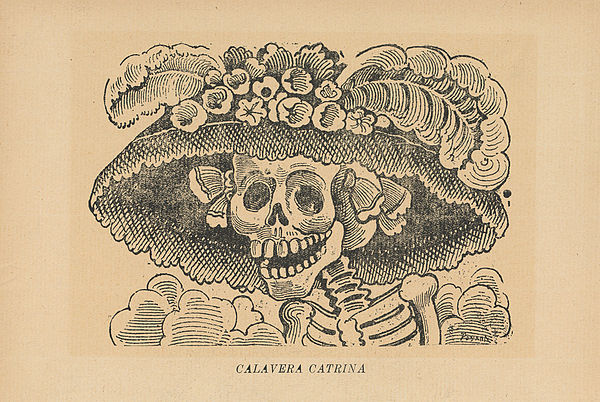
I was lucky to live in San Francisco where Rene Yanez and Ralph Maradiaga had launched our local version of the celebration in 1972. Day of the Dead evolved into a gigantic procession up 24th Street, the Latinx district, on November 2. The Mission Cultural Center would sponsor events and we gathered to erect altars, or ofrendas. My Old Lesbians group one year made a beautiful altar for our friend Tita Caldwell, who had been active in our Occupy Bernal organization in 2012. San Franciscans gather at Garfield Square Park (perhaps we should rename it Frida Kahlo Park) to walk through the park and view the altars. Rene describes the history here: https://www.foundsf.org/index.php?title=Day_of_the_Dead. In the interview Rene refers to Posada (Jose Guadelupe Posada Aguilar), the Mexican artist who created illustrations of la calavera catrina that have become ubiquitous symbols of this holiday.

Now I live in Sonoma County where we have many options for celebrating Day of the Dead. Our Sonoma County Museum and our art district have exhibits. The town of Petaluma sponsors events all month, ending with a candlelight procession at the fairgrounds that has been going for 19 years. This year the town of Windsor is sponsoring its 6th annual event. Every town now has one. These events are led by Mexican and Latinx people, who make up the largest ethnic group in Santa Rosa at around 30 percent of the population. 

October is Latinx Heritage Month. This month we also remember the murder by a deputy sheriff of 13-year-old Andy Lopez October 22, 2013. Andy was walking in his neighborhood when sheriffs spotted him carrying a toy gun. Erick Gelhaus fired eight shots that killed the boy. No charges were filed against the shooter, he returned to work and was later promoted before retiring. A civil suit filed by Andy’s parents resulted in a $3 million settlement. 

Sadly, Andy’s murder has defined the relationship between the Sonoma County Sheriff’s Department and its citizens, especially the Latinx population. In the seven years since the shooting, people have staged multiple protests, organized to build a park at the site of the shooting and pressured the county for more police accountability. This year we met at Andy’s Unity Park in the Latinx neighborhood of Roseland to remember Andy. 

Our fireplace mantel ofrenda

Holly and I celebrate this season by making clay catrina sculptures for our ofrenda on the fireplace mantle and telling stories about our friends and family who have died. I like to walk by our altar and commune with the figure of my mother who is sitting in an armchair reading Esquire (from a 1940s picture). Holly’s dad sits in a recliner nearby and her dog Mattie lies at his feet.

What do I say to Mom? She was a news junkie who kept a close watch on world events. She liked to imagine what the world would be like in 50 years. I tell her if she were alive today she absolutely would not believe it.

Sending big virtual hugs to all.

PLAs are Good for Us

Don’t scapegoat workers in the race for bigger profits

Here in Santa Rosa, in an era when small cities often have none, I’m pleased we have a decent local newspaper, the Press Democrat. I usually agree with their editorials, and when I don’t I write a letter to the editor. Here’s my latest.

Dear Editor,

You came out on the wrong side of project labor agreements in your October 12 editorial. Yes, our tax money is being used to build community structures we all will enjoy.  But it seems to me you are promoting union busting and lower wages for the construction workers who build our public spaces. A PLA is a pre-hire collective bargaining agreement with labor organizations that establishes the terms and conditions of employment for a specific construction project.

One difference between union and nonunion construction is training. My career as a union construction worker has allowed me to live a middle class life. In my union, apprentices must graduate from a five-year apprenticeship program to work as journey-level workers. 

How do nonunion construction workers learn their trades? You may not know that (free) union apprenticeship programs–certified by the state and run by both unions and industry–teach workers necessary skills. 

Building trades are skilled trades. When contractors employ unskilled workers to do skilled work they take the chance of mistakes that could cost lives down the line.

Let’s not scapegoat workers in the race for bigger contractor profits.

Molly Martin