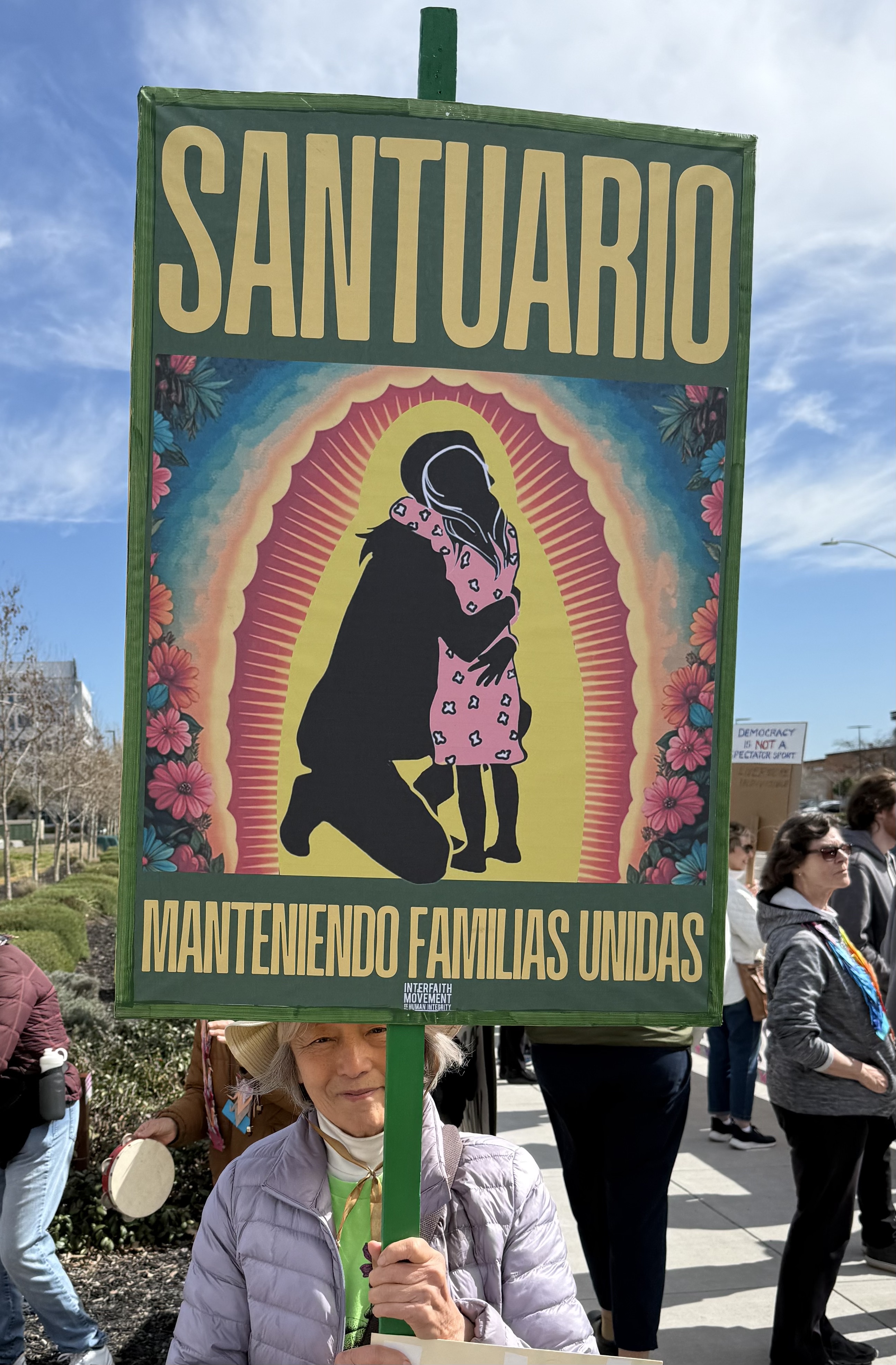
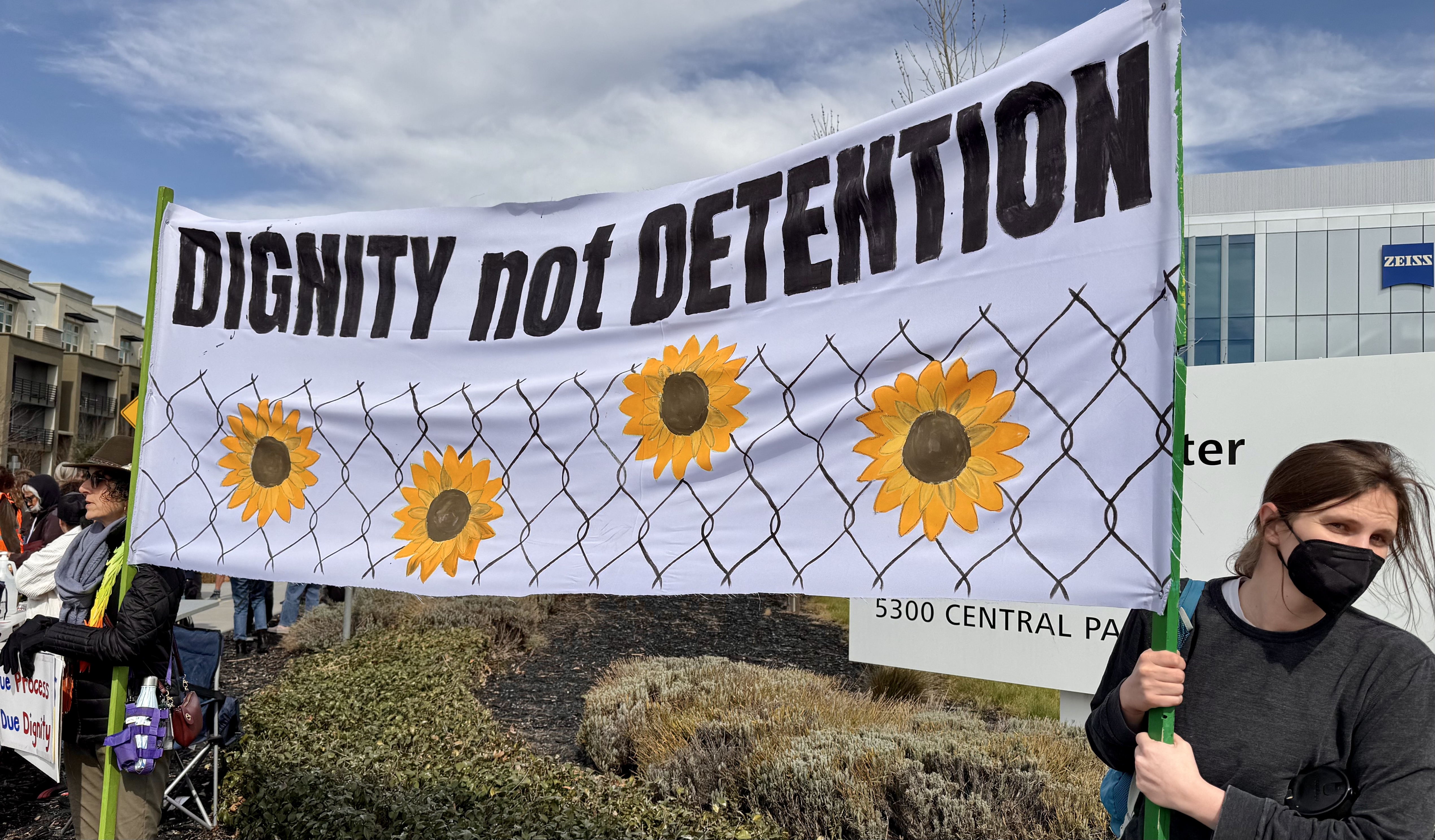
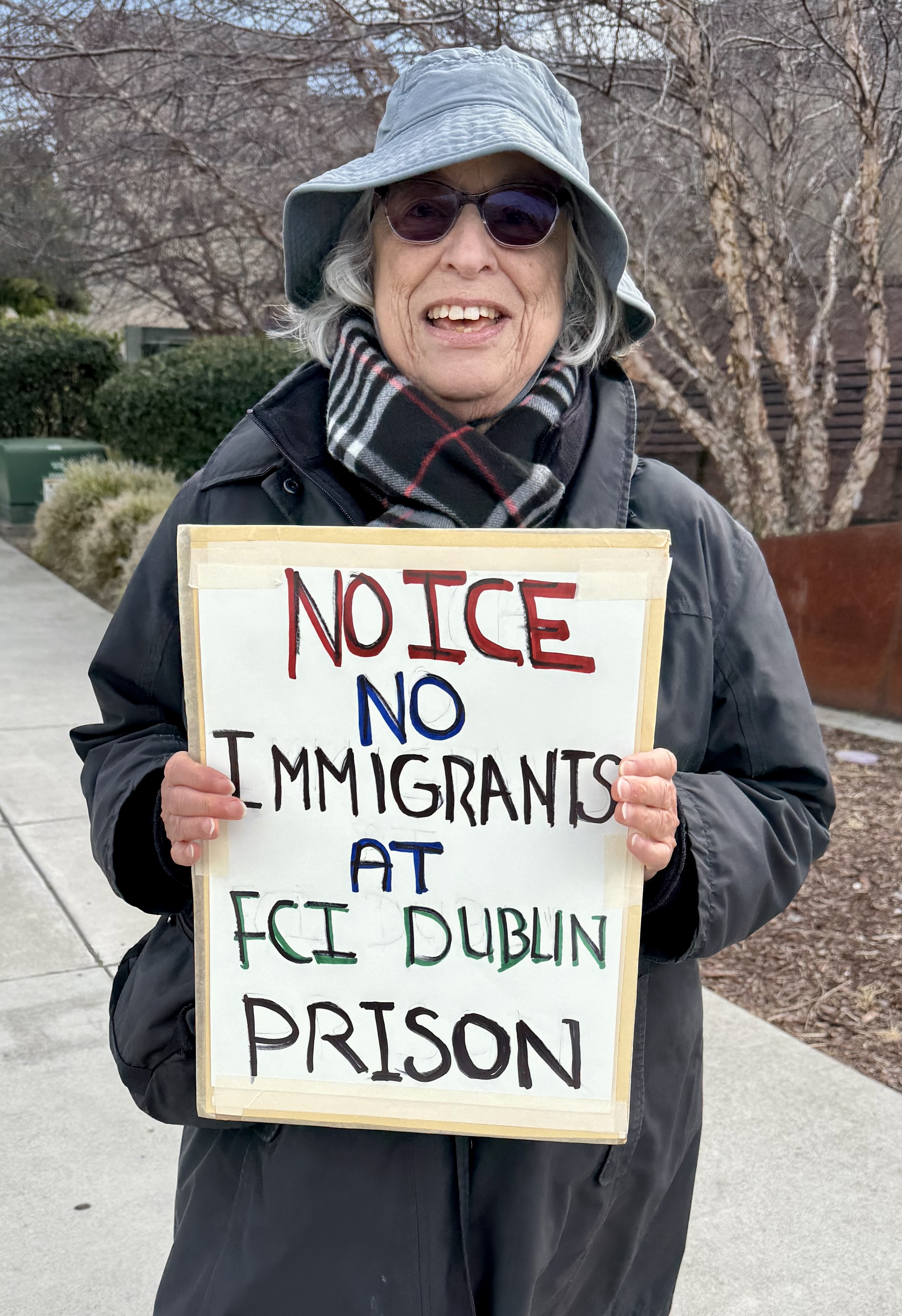
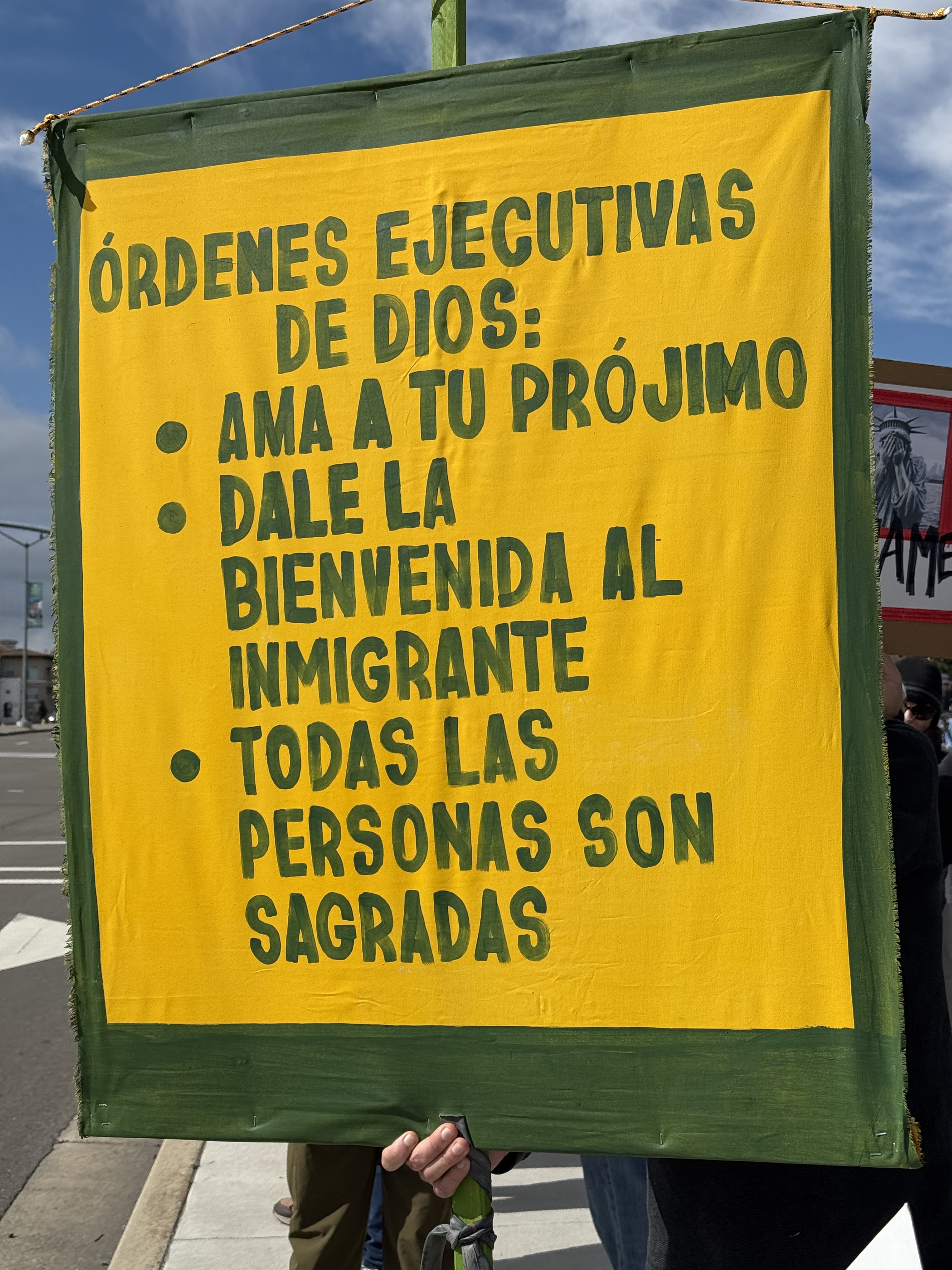
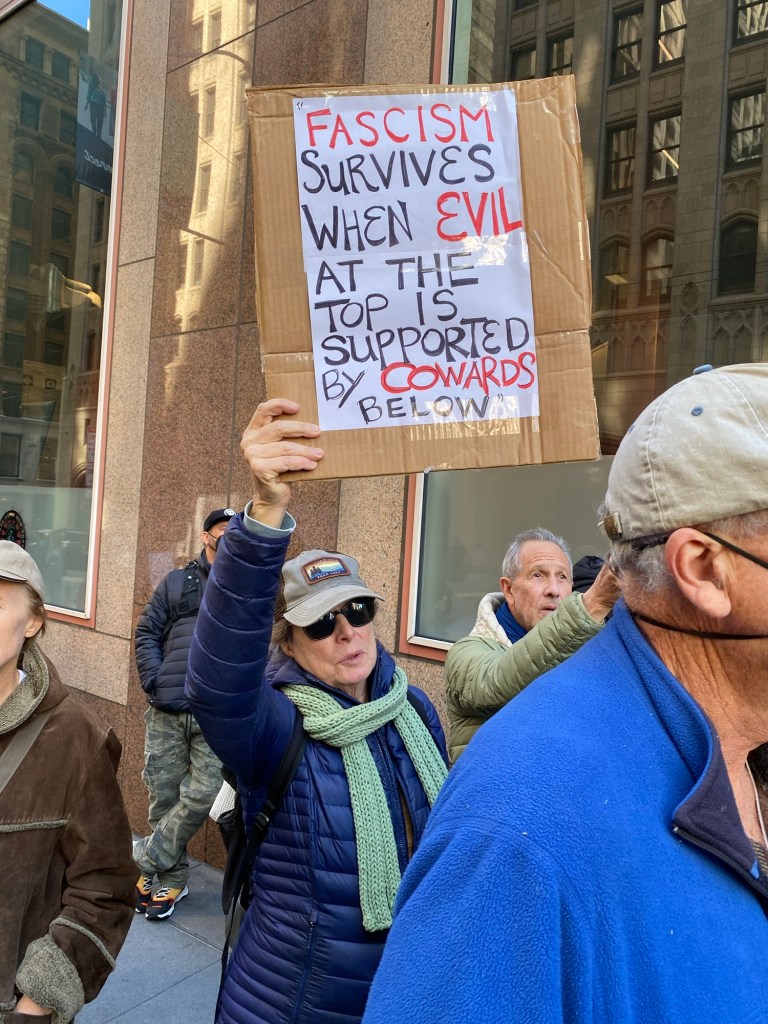
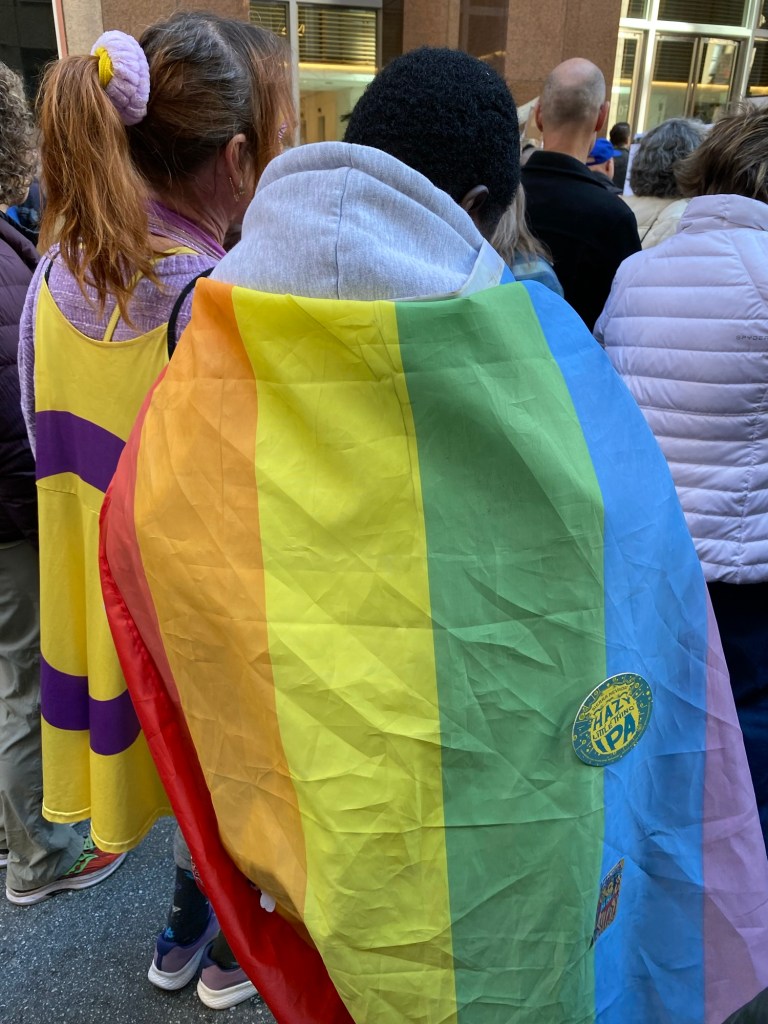
The federal prison at Dublin CA was closed last year following years of prisoner abuse and neglect. The feds now want to reopen it to house immigrants detained by U.S. Immigration and Customs Enforcement (ICE). Hundreds of community members protested the plan March 1, 2025.
“Loose lips sink ships.” That was the mantra drilled into the heads of American Red Cross (ARC) women during their training in Washington, D.C. If the FBI discovered that a secret had leaked because of something you said or wrote, you were sent home.
One instructor drove the point home with a cautionary tale: An ARC worker had called her parents in Montana, mentioning that she was in Colorado on her way to San Francisco. Her mother told the butcher, who told someone else, and within three hours, the FBI had traced the leak back to her. As a result, an entire convoy was delayed.
Flo took these warnings seriously. While she wrote to her mother in Yakima regularly, she was careful never to include anything that might be considered classified.
The Pentagon, opened 1943, displaced a Black town.
Fast-Tracked for War
The usual six-week training program had been slashed to just two weeks to push the women through faster. The military issued them canteens, helmets, and web belts, alongside yet another round of security warnings. Phone calls and letters were discouraged. Training even covered how to handle a poison gas attack, complete with gas mask drills.
Flo and her cohort began training on April 17, 1944. By May 8, they had their embarkation orders. On a warm May morning, the ARC women, clad in winter uniforms, marched two abreast to Union Station, where they boarded a train to New York City. From Penn Station, they were shuttled by bus to Brooklyn and housed at the massive St. George Hotel. There, they waited—alongside countless other uniformed Americans—until it was time to ship out.
No one knew where they were going. Not even the ship’s officers were told their destination. Only the captain held that information, as wartime security dictated.
The HNHS Atlantis
Aboard the HMHS Atlantis
Flo’s ship, the HMHS Atlantis, was a British hospital vessel that had already survived encounters with German U-boats. The Germans ignored Geneva Convention rules that forbade attacking hospital ships—these vessels made tempting targets. During submarine alerts, the Atlantis would zigzag wildly to evade torpedoes.
Once aboard, Flo learned that her destination was Italy, where she had been assigned to the North Africa theater. The ship carried British engineers, fellow ARC workers, and stacks of Italian phrasebooks. Flo tried to pick up a bit of the language during the long voyage.
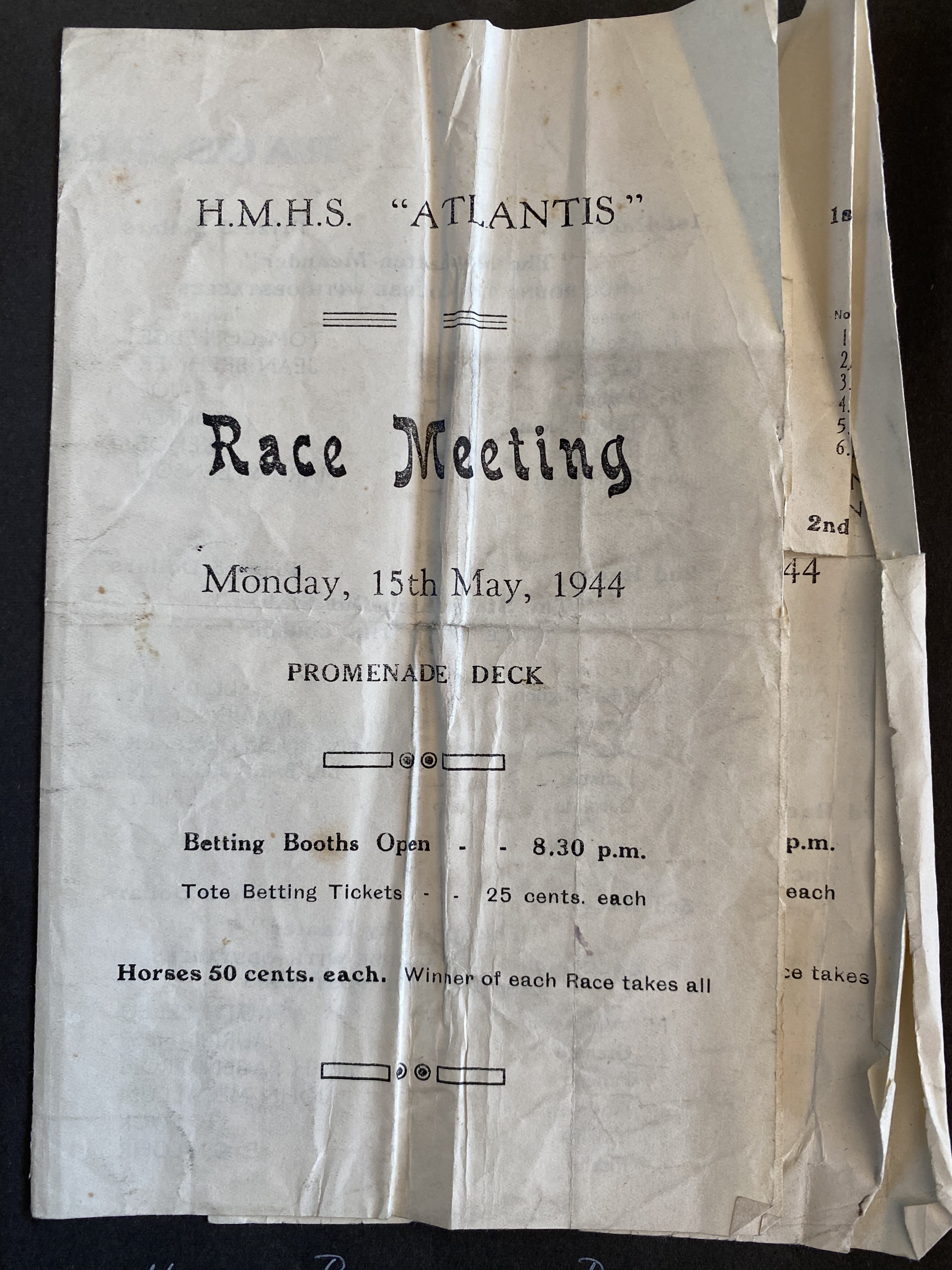
Crossing the Atlantic took nearly three weeks. To pass the time, Army journalists produced a daily mimeographed newsletter, Red Cross Currents, a few copies of which Flo saved in her scrapbook. She also kept menus and records of shipboard activities, which included: horse racing (the cardboard variety), a contract bridge tournament, shuffleboard, deck quoits, “angell golf”, ping pong and deck tennis. Prizes were cartons of cigarets.
Horserace program
Flo documented her voyage with snapshots—sunbathing with English engineers, uniformed officers on deck. Among the clippings in her album was an image of the newly built Pentagon, a source of national pride. What the public hadn’t been told, however, was that its construction had wiped out Queen City, a thriving Black town in Arlington, Virginia. The residents of the town were descendants of the residents of Freedman’s Village, which had been established by the federal government during the Civil War as a home for displaced freed slaves.
Letters, Friendships, and Missed Meetings
Flo befriended an Irish engineer who worked on the ship, R.H. Wilkinson. They kept in touch throughout the war, attempting—but failing—to meet again. In August 1945, after the war had ended, Wilkinson wrote to her, reminiscing about their time on the Atlantis and asking for copies of photos to complete his scrapbook. He had since been deployed to the Pacific and was now stationed on the India run, where, as he put it, it was “very hot!” If she ever made it to Belfast, he promised, she would receive a true Irish welcome.
Flo never did make it to Ireland.
Sunning on the deck. Flo in the middle
First Glimpse of Naples
As the Atlantis steamed past the lush, romance-laden Isle of Capri into Naples harbor, the passengers got their first look at war-torn Italy. The harbor was in ruins, bombed repeatedly during the Allied campaign to drive out the Germans. Though much of the destruction was confined to the waterfront, Naples itself—dirty, crowded, and overrun with American troops—had changed dramatically.
A military-issued guide described the city in blunt terms:
“The city of 1,000,000 still is the filthy, teeming tourist town, and now prices have trebled with the advent of thousands of Americans. There are gimcrack souvenirs, phoney tortoise-shell, dangerously bad wine and brandy, poor but expensive waterfront restaurants.
There are trips to Pompeii and Herculaneum, tours of Naples, and excursions up the slopes of Vesuvius (ARC trips). There’s an Allied Officers’ Club (dinner, drinks, dance, romance), an 82% venereally infected civilian population, an opera company and a symphony; buses, cabs, suburban trains; oranges, tangerines, grapes, lemons, and apples.
And 50 miles to the northwest there is a war, of which occasional bombers remind Neapolitans on infrequent nights of the dimout.”
Stamped at the bottom:
NO – SORRY – YOU CAN’T MAIL THIS PAPER HOME.
From a Life Magazine story pasted in Flo’s album
A New Reality
Flo later wrote to her mother, “The Rock of Gibraltar was the only stop our ship made on the way over, and it looked exactly like all the pictures we’ve seen. The Isle of Capri, I saw in a very early morning light, and it looked even more romantic that way.”
In lovely spring weather they sailed into Naples May 27, 1944. Allied bombing over the course of many months had destroyed much of the ancient city. Of course, the port had been a prime target and so what the passengers of the Atlantis saw when they first laid eyes on Italy was the ruins of war, patched ably by the American engineers. For Naples was now in Allied hands. The Nazis had retreated north.
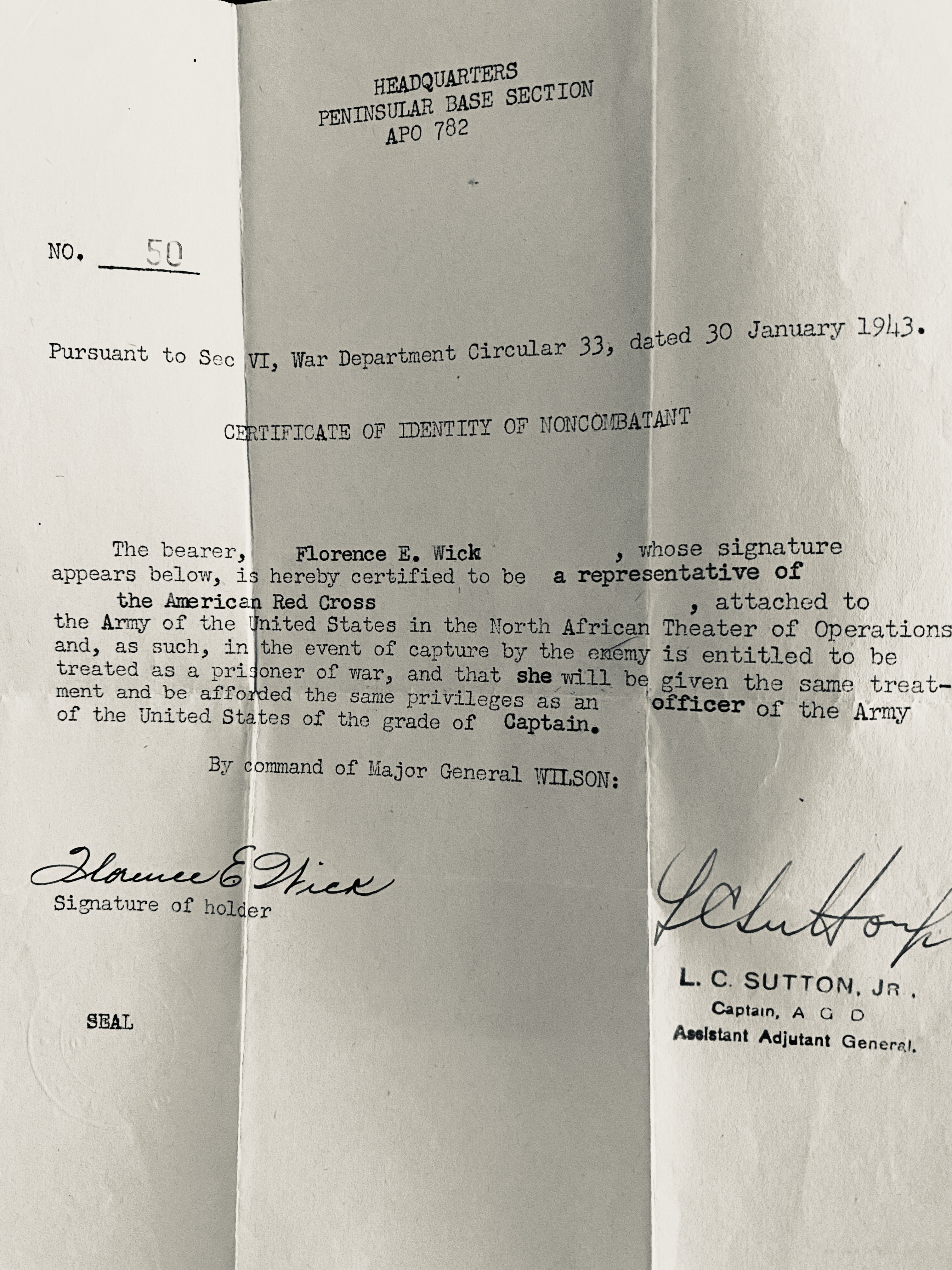
In event of capture, she will be treated as a captain.
Autumn, 1943. After many weeks on the front lines, Audie Murphy and his squad are given a reprieve.
Crawling with filth and exhausted to the bone, they are pulled out of the lines in mid-November. The valley below is now clear of the enemy; Mount Lungo has fallen. From its heights, they look toward Cassino. The war drags north, its roar receding into the distance. Burial squads already move across the slopes, searching for the bodies of men who have received their final order to go forward.
As the squad makes its way on foot down a shell-torn road, the relief is almost intoxicating. Despite the lateness of the season, the day is bright and mild. A breeze whispers through the trees, and the solid earth beneath their boots feels strangely kind. The simple rhythm of marching renews their spirits. They look at one another with foolish affection, aware that they have been handed back life.
They are transferred to a camp with tents and two full meals a day. Orders soon come down: amphibious training at a beachhead near Naples. Discipline tightens, and day and night they drill against an unseen enemy. Fully armed, they wade through surf up to their hips and crawl belly-down through marshes, their clothes crusted with salt and mud.
Bombing of Naples
None of the troops know what the training will lead to. Rumors fly. Are they being prepared for an assault on southern France, to be sent to England for a cross-channel D-Day, for assault on some new beachhead? The dogface soldiers are always strangers to the plan.
The mood darkens. Many are certain they are being prepared for slaughter. Tempers fray, and old comrades come to blows over small provocations.
Murphy’s squad gets overnight passes to Naples.
Poor Naples. The city endures relentless bombing raids from 1940 into 1944. While under German control, the Allies bombard it continuously—first the French, then the British, and finally American bombers. Italy surrenders to the Allies on September 8, 1943, but the Germans refuse to relinquish their hold, murdering civilians and those who resist the ongoing occupation.
Then, the citizens of Naples rise up against the Nazi forces. They successfully disrupt German plans to deport Neapolitans en masse to work camps, destroy the city, and block the Allies from securing a strategic foothold. A spontaneous insurrection erupts, and despite limited weapons and organization, the Neapolitans force the German troops to retreat just before Allied forces arrive.
This dramatic rebellion is later depicted in Nanni Loy’s 1962 film “The Four Days of Naples”, which earns Oscar nominations for Best Foreign Film and Best Screenplay.
Even after Naples falls to British and American forces on October 1, 1943, the bombing continues. The Germans respond with a scorched-earth campaign, destroying communication and transportation networks, water and power grids, and mining buildings. They burn the state archives of Naples and the national library, sink ships in the harbor, and leave devastation in their wake. Within a week of its capture, however, the Allies manage to reopen the port, restoring vital access to the city.
On the night that Murphy and his squad rest and recreate in Naples, there is an air raid. Murphy doesn’t drink or smoke, but his men get drunk, and one gets rolled by a hooker, returning to camp without his coat, gear and money. Murphy is set up with a date, but he sleeps through it and the air raid as well.
Winter settles over Naples. The clock strikes three. Light from a low January sun creeps along stone walls and rooftops. The war is still close enough to feel—but for the moment, Murphy and his men live, rest, and wait for whatever comes next.
From Life Magazine October 18, 1943
“Last week Italy’s autumn rain was soaking the plain of Campania. It dripped on the date and peach trees, on vineyards heavy with unharvested grapes, and on the rich bottom lands north of Naples. It trickled down the necks of British and American soldiers slogging across the marshes toward the Volturno river and chilled the Germans, dug into foxholes across the river, in the shadow of Mount Massico. Somewhere in that area in the rain, the Germans would try to halt the relentless Allied advance. If they failed, the road to Rome would be open.
Behind the lines, Naples, slowly and painfully returned to normal. But the wounds of battle would not be healed for many months. The city was still practically without water, gas or electricity. In one terrible explosion on October 7, more than 100 civilians were killed when a delayed-action German mine destroyed the post office. Hungry, homeless children wandered the streets, and there was no medicine in the hospitals. German demolition squads have made a shambles of the waterfront. Shops were looted, the telephone building blown up, the University fired, and the tourist hotels ruined by Nazi troops before their retreat.”
On Monday morning April 17, 1944 the three women from Washington state reported for training at the American University campus. They checked into a large classroom full of milling women and immediately lost track of each other. In the din Flo could hear accents from all over the country, and as she met and talked with the recruits, she was impressed by their high level of education and abilities.
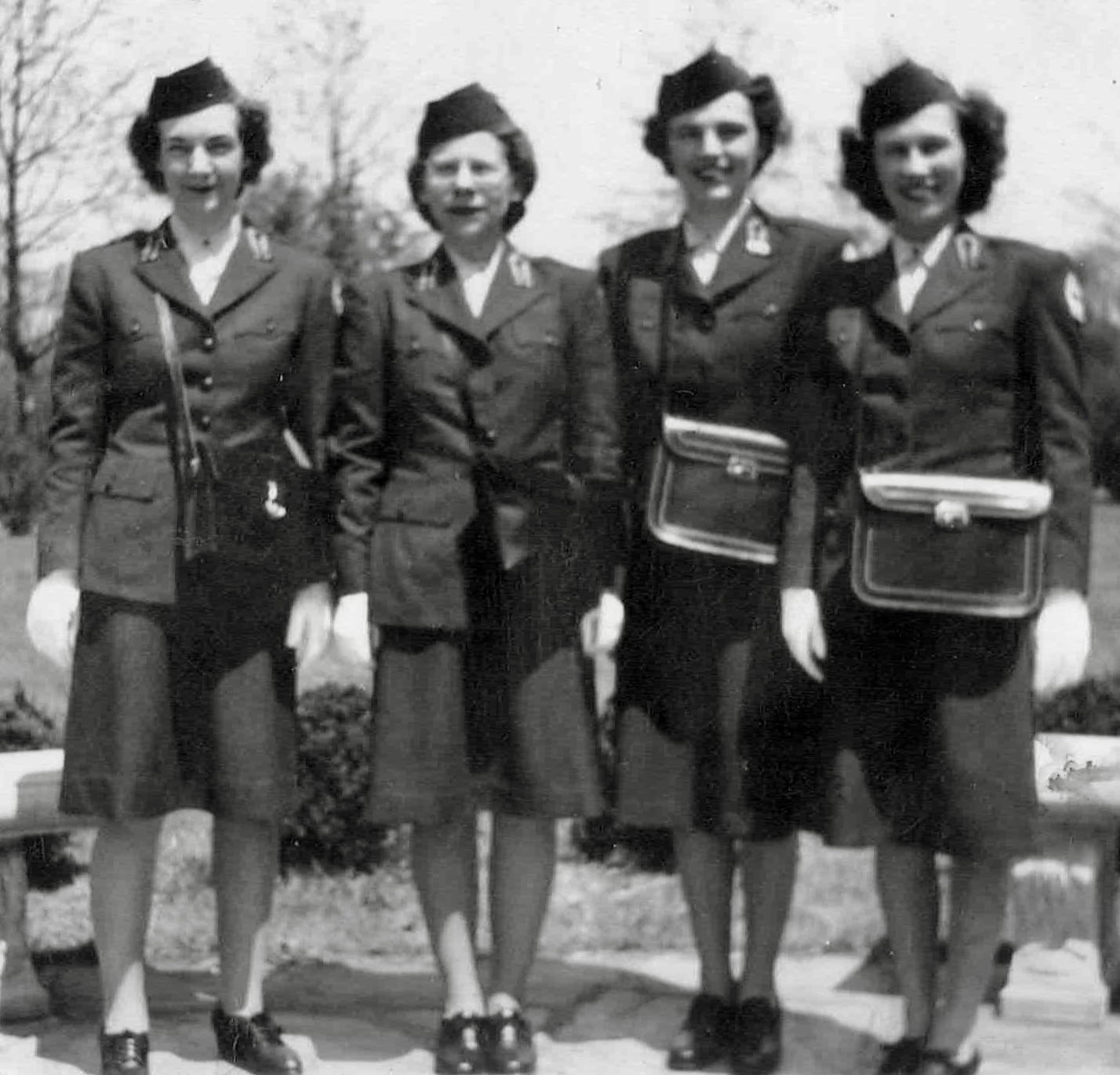
At graduation, Flo was photographed with her Washington State counterparts–the Suksdorf twins and a woman from Seattle, Josephine Ryan. Flo at right.
That first day was mostly filled with speeches from ARC directors, none particularly memorable. Then, the trainees fell into a routine: up at 6am, lectures and exams starting at 8am.
One instructor they dubbed Theda Bara. She was a thin older woman, hair drawn severely back from her face, who had served in France during “the last show” as she called the Great War. She warned of the pitfalls and perils women face in situations where they are sometimes outnumbered by men 100 to 1.
The women were admonished to date only officers and to “be careful not to let your heads be turned by all the attention.”
“As ARC staff assistants you are considered officers if captured, the equivalent of second lieutenants, and you are covered by the international rules of war,” she told them.
The women were allowed extra time to shop and they needed it. They hadn’t realized there was so much shopping involved–at their own expense. They were given one set of summer and winter Class A uniforms (dresses and skirts only; no pants), which they would need to have fitted. Flo was also issued a trench coat type raincoat, and a heavy topcoat with removable red lining. The Red Cross paid for the uniforms, but the women had to pay for a long list of required clothes and equipment. The list specified exactly how many white blouses, socks, cotton underpants, girdles, and cotton gloves they would need, plus odd items like canteen, web belt, musette bag (a shoulder bag, like a purse), boots, duffle bag and foot locker, leaving them to scurry all over town to track down every item on the list.
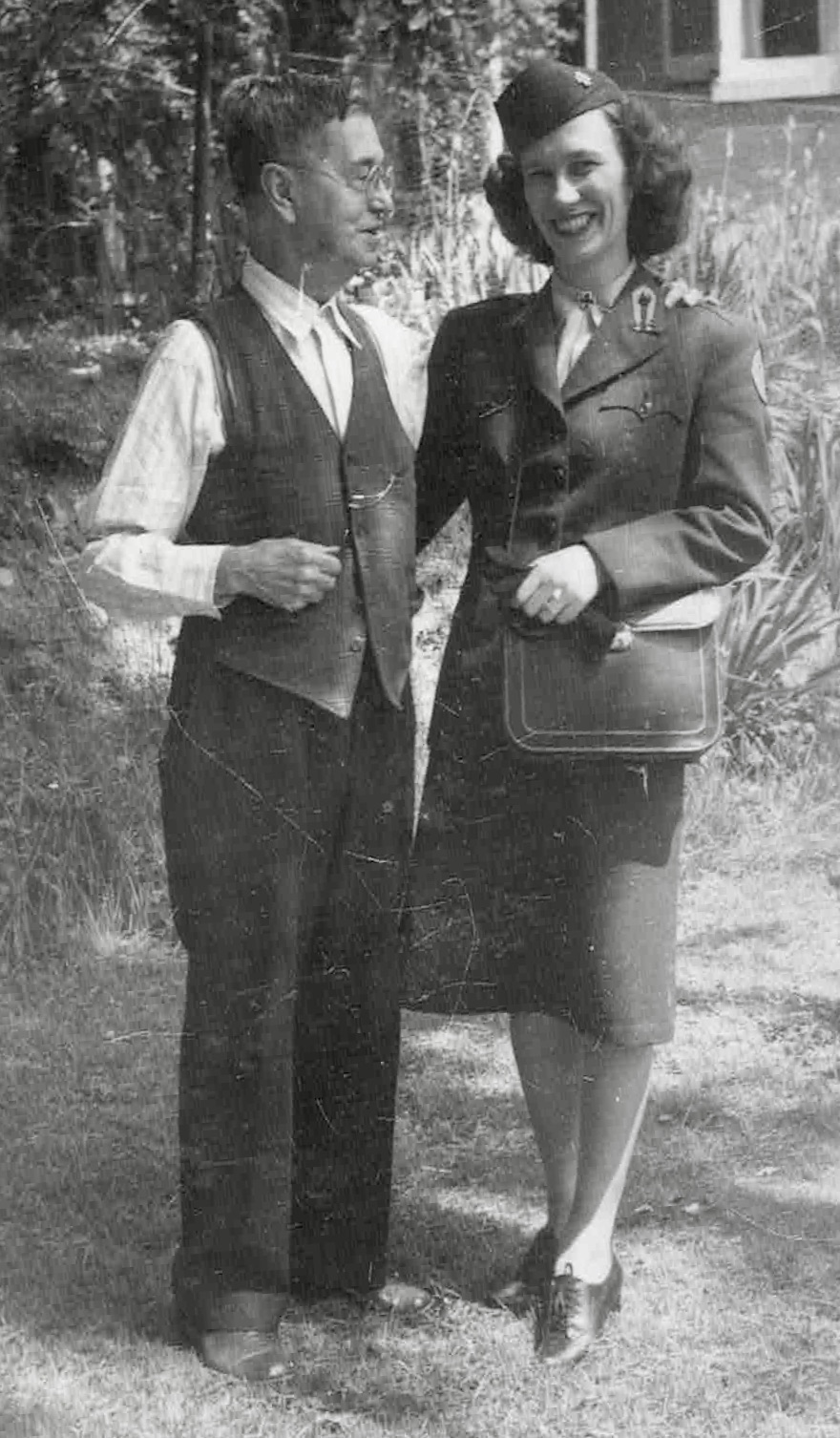
In her new uniform with “uncle” Alf
Once she had been fitted for her new uniforms, Flo paid a visit to “Uncle” Alf. The Wick family’s dear old friend, Alfred May, lived in Washington and Flo had telegrammed him of her arrival. She hadn’t seen her gay “uncle” since he had visited the family in 1929 when her father was still alive. Uncle Alf had been her father Ben’s partner in the family chicken farm business in Oregon and he was a presence in the four daughters’ lives until the business went bust and he joined the Navy in WWI. Alf, the son of a costume making English family–whose clients it was said had included the Queen–had dressed the girls and himself in Shakespearean outfits and produced plays. Flo had made a quite passable Hamlet. Alf was still living with the family who had taken him in, though he had retired from his job at the Naval Academy. Flo and Alf were photographed together in front of Alf’s apartment.
Back at the training school, a teacher admonished the women. “Once you get orders you’re incommunicado until you reach your destination, which might take as long as two months.”
On the packed trains from Yakima to Chicago and Chicago to D.C. were many others traveling to war. It seemed to Flo like the whole country was traveling east. Many on the train were wives of servicemen. Some fellow travelers were American Red Cross workers. Two sisters, identical twins, got on at Spokane on Washington’s far eastern border. Louise and Lucine Suksdorf grew up in the tiny Eastern Washington town of Rosalia. They were heading to D.C. and the ARC training school as well, and the women bonded immediately.
Flo was no rube. She had taken the train cross-country to YWCA meetings in Columbus, Chicago and Minneapolis, and she’d visited New York City in 1941. She had disembarked at Grand Central Station, the biggest train station in the country, but that was before the U.S. had entered the war. Nothing prepared her for Washington’s Union Station in April 1944, ground zero in war-related transport.
Stepping down from the train, the women found themselves in what felt like an anthill. The Beaux Arts vaulted ceiling arches of the station lent a turn-of-the-century air to the scene of rushing bodies down on its marble floors. They were just three of thousands (millions?) of people milling in all directions. The station itself was alive with frantic activity, its denizens dressed mostly in khaki uniforms. Soon, Flo would be one of them, shipping out to some unknown theater of war, somewhere in the world.
Washington, D.C. Interior view of the Union Station with Office of War Information (OWI) poster in the background reading Americans will always fight for liberty. Gordon Parks, 1912-2006, photographer. Library of Congress
The women had heard that the presidential suite in Union Station had been converted to a USO club during the war. They had to see it. Explaining at the door that they were about to enter service as ARC workers, they were ushered into the suite, admiring the opulent decorations. Service members in uniform lounged on leather-covered chairs and couches. They played cards and chatted at tables. This would not be Flo’s last encounter with the USO. She would work with the USO during her ARC service and she would later direct her own USO club back in Yakima after the war.
The Suksdorf sisters had received the same ARC letter as Flo and they would be staying at the same place while they went through the two-week training for overseas service workers. The Burlington Hotel was on 14th NW in downtown Washington, near the American University where they would attend training classes. The women succeeded in catching a cab to their destination, which was only a few blocks from the White House.
The women knew not where in the world they would be sent to work, but they kept close track of the war, raging in countries around the world. In April, 1944, in Europe and the Pacific, the war heated up. Bombs were dropped on cities; on April 18, the Allies dropped more than 4000 tons of bombs over Germany, the highest single-day total of the war so far. Submarines, liberty ships and destroyers were torpedoed and sunk, British and Indian forces fought against a Japanese offensive, Japan launched a series of battles against China, and Soviet forces invaded Romania. Hungarian authorities ordered all Jews to wear the yellow star. On the Italian front, the bloody battle for Anzio advanced.
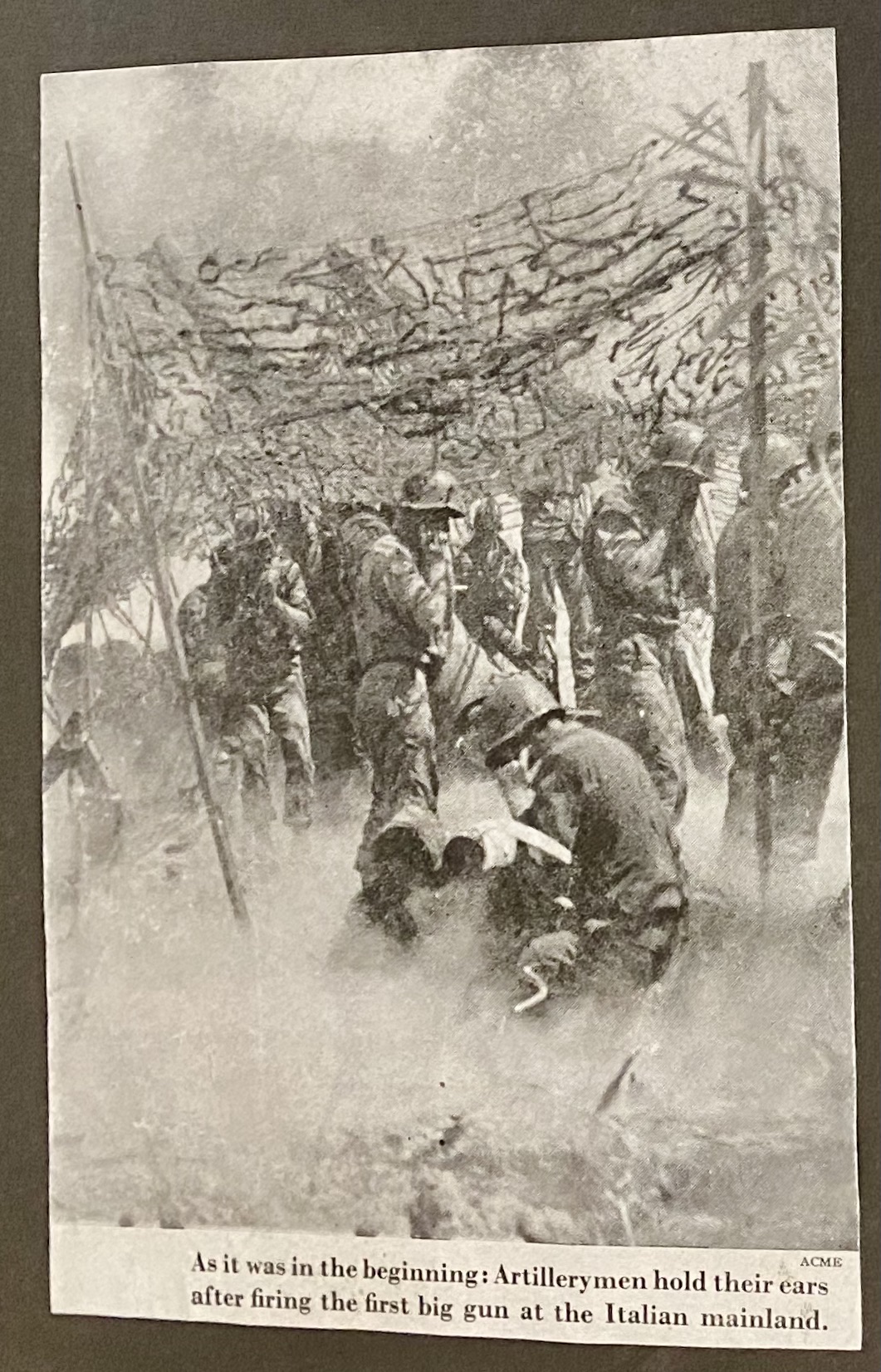
October 1943. Murphy lands at Salerno during the Allied invasion of the mainland.
Clip from a Life Magazine story pasted in Flo’s WWII album
Italy has surrendered, and the road to Rome appears deceptively simple. Yet, the journey is anything but straightforward. Many thousands of lives will be lost on the road to the Eternal City.
“We land with undue optimism on the Italian mainland near Salerno. The beachhead, bought dearly with the blood and guts of the men who preceded us, is secure….We are prepared for a quick dash to Rome,” wrote Murphy in his autobiography, To Hell and Back.
This was far too optimistic. The Third Division will be fighting and dying on the Italian beaches and mainland until May, 1944.
The troops of the Third Division must first push through Salerno, cross the Volturno River, and take Anzio, Mignano, Cassino, and Cisterna before they can approach Rome.
Audie Murphy leads a small, diverse squad of men. Among them are an Italian immigrant, a Cherokee Indian manning the machine gun, an Irishman, a Pole, a Swede, and a Smoky Mountain bootlegger.
Members of Murphy’s squad begin to fall almost immediately. One soldier hesitates under heavy Nazi fire as he runs for a bridge and is cut down. The squad carries his body to the highway where it can be easily found.
“In death, he still bears the look of innocent wonder. He could not have lived long after tumbling. The bullet ripped an artery in his throat,” wrote Murphy.
Another fighter takes out a German machine gun nest and a foxhole with grenades, killing five Germans.
From Flo’s WWII album
The small victory is short-lived.
Later, the five remaining men find themselves trapped in a cave, surrounded by the enemy. The cave is infested with fleas, and the men are bitten mercilessly as they wait, parched and desperate.
We come to know and care for the men in Murphy’s squad, only to witness their deaths or injuries that force them out of the fight. Murphy becomes the last man standing at the end.
“All my life I wait to come to Italy,” says the Italian soldier. “I write my old man that the country stinks. Wait till you get to Rome, he says. Wait’ll you see your grandfather’s place. Then you’ll see the real Italy.”
The Italian never makes it to Rome. After three days without water, he breaks under the strain, running out of the cave only to be hit and killed by enemy fire. “He has come home to the soil that gave his parents birth,” wrote Murphy.
Finally, American troops break through the German lines and rescue the remaining men. Relief arrives with rations, water, and ammunition.
The next morning, they cross the Volturno River and join the push toward their next major objective: the communications center at Mignano.
Quotes are from Audie Murphy’s autobiography, To Hell and Back.
The photo album that my mother, Flo Wick, shared with Audie Murphy when they reconnected in 1955 is massive. The scrapbook is filled with photographs, newspaper clippings, letters, and travel paraphernalia and it tells the story of Mom’s two years as an American Red Cross (ARC) “donut girl” in Europe during World War II.
It also tells the story of the Third Infantry Division, the only American division that fought the Nazis on every front—North Africa, Sicily, Italy, France, and Germany. “The Fightin’ Third” had more casualties—nearly 35,000—than any other division, and it holds the record for high combat citations.
Throughout our childhoods my brothers and I pulled out the album, looked through it, and listened to our mother’s war stories. We kids especially liked the sketches by Flo’s comrade Liz Elliott of the everyday lives of the “donut gals.”
When my mother died in 1983 at the age of 70, I claimed the album and it’s been stored in garages and closets ever since, occasionally brought out for perusal by relatives or friends with an interest in World War II. For a time, it lived in a mold-infected storage room and so it was infected along with other archives. I exposed each page to sunlight in an effort to reduce the mold and that helped, but when I really wanted to examine the book, I donned a respirator to avoid breathing in clouds of invisible mold spores.
Mom was a scrapbook maker and for that I am now grateful as I try to piece together the events of her life during the war. Perhaps she had the idea for the album even before she sailed to Europe on a hospital ship in May 1944. I do know that the act of putting it together when she returned home after the war in 1946 salved her sadness at the deaths of so many and helped her readjust to life stateside where it seemed Americans had moved on and no longer wanted to think or talk about the war.
Recently I went through the album page by page, photographing all. That’s when I discovered that Flo had had a friendship with Audie Murphy that began somewhere in France when she served him donuts and continued after the war.
This story follows two narratives: one chronicles Flo Wick and the other chronicles Audie Murphy. They were both attached to the Third Division but mostly in different parts of the North African and European theaters. Their paths intersect in the Vosges mountains of France and as the Third pushed its way into Germany. For Audie’s tale I’m referencing his autobiography To Hell and Back, as well as letters and artifacts saved in Flo’s album.
A Little Background
She came of age during the Depression
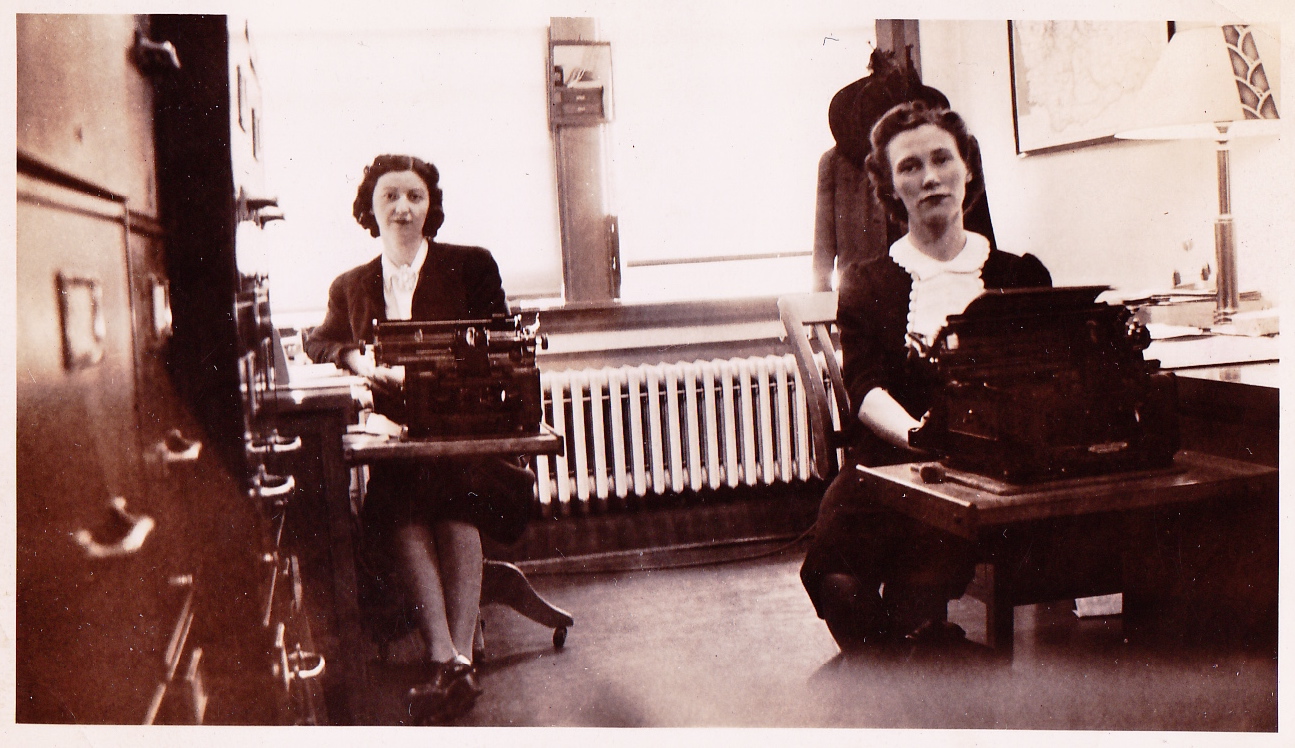
Born in 1913, Florence Wick had graduated high school at 16 after being allowed to skip ahead a grade. Her class graduated in 1929½. Flo was excited about the prospect of going to college. She planned to enroll at the state college, but the Great Depression intervened. Instead, she completed a secretarial course at a trade school. At 17 she started working to help support her family. In 1931 she found a job as a stenographer for the Washington State Department of Highways.
Flo (R) at the Highway Dept.
By the time she learned about the ARC program, Flo had been working full time at that job for more than a decade. No doubt she was ready to do something else—maybe anything else. This seemed like an opportunity to travel outside of Washington State and to see other places in the world. And she was anxious to help the war effort.
He always wanted to be a soldier
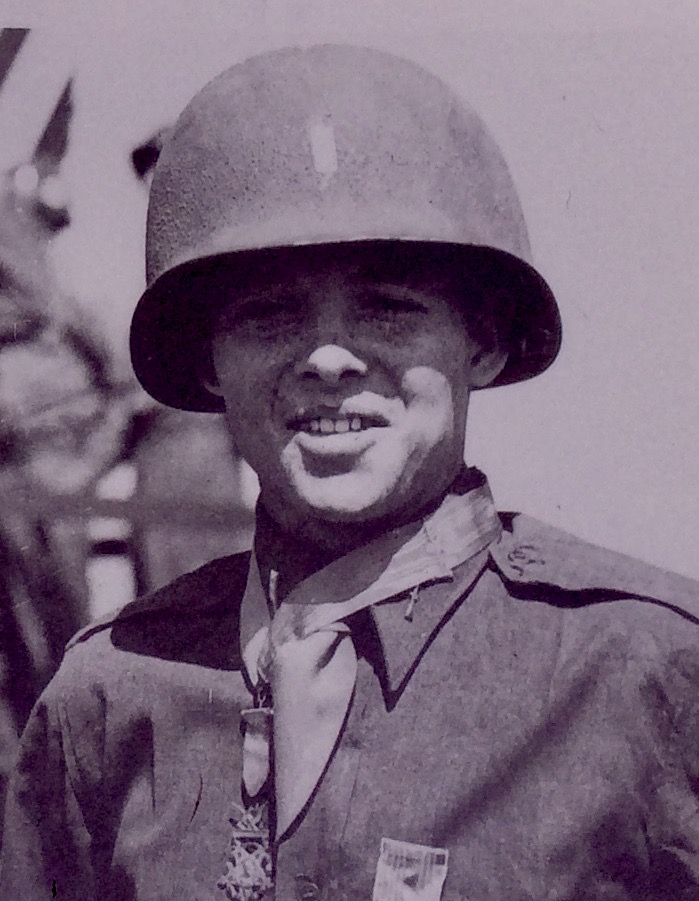
Flo’s photo of Audie 1945
Even as a little boy Audie Murphy had wanted to be a soldier. His share cropper father abandoned his mother and their children leaving the family destitute. Then, when he was 16, his mother died. Born in 1925, the seventh of twelve kids, Audie tried to provide for the others, dropping out of school in fifth grade to pick cotton for a dollar a day. But he knew he had to get out of Farmersville, Texas. He tried to join the paratroopers and the Marines, but was told he was too short at five feet five. The Army took him and trained him to be a soldier. The baby-faced kid earned the nickname Baby. He was already a good shot, having fed the family with wild game. He couldn’t wait to shoot the enemy.
Murphy was assigned to the Third Division, then part of the Third Army under the command of General George Patton. He joined them in Sicily in 1943, on the way from Morocco and North Africa. They would fight their way through Italy and France into Germany. Murphy would be one of a very few of his company left standing and would become the most decorated American soldier of the war.
My Regular Pagan holiday post:Mysteries of Santaland
Even as a little kid, I was skeptical. The story is preposterous: a jolly rotund man in a red suit operates a workshop at the North Pole where elves make toys for children. On Christmas Eve, he loads them into a sleigh pulled by flying reindeer and delivers gifts to every child in the world by descending through their chimneys.
Did adults really expect us to believe that! How could that fat guy even get down a chimney? And what if you don’t have a chimney? And visiting every child in the world on one night! Give me a break. And how can wingless reindeer fly anyway? Wouldn’t it make more sense to harness a herd of Pegasuses,* or even a flock of owls? My parents were unable to satisfactorily answer these questions.
But it all starts to make sense when you look at the traditions of Arctic indigenous peoples. Turns out, Santa’s origins might involve a bit more…tripping.
Santa is a modern counterpart of a shaman, who consumed mind-altering fungi by drinking the urine of reindeer.
A Ten Thousand Year High
Santa’s story bears striking similarities to the winter solstice practices of Arctic shamans—specifically those of the reindeer herding Koryaks of Siberia and the Sámi of Sápmi (formerly called Lapland) who used hallucinogenic mushrooms in their winter solstice ceremonies. These shamans consumed the mind-altering Amanita muscaria mushroom—the iconic red-and-white fungus often depicted in Christmas decorations—to commune with the spirit world.
Shamanic rituals involving A. muscaria date back over 10,000 years. During Siberian midwinter ceremonies of Annual Renewal, shamans, dressed in red-and-white fur-trimmed coats and tall black boots, gathered the mushrooms from beneath sacred pine trees. These mushrooms are the fruiting bodies of fungi whose mycelial networks interlace with tree roots underground. The association of red mushrooms with green pine trees might explain the colors of Christmas.
Gifts of Vision and Insight
In winter, heavy snow often blocked the doorways of Arctic yurts, forcing shamans to enter through the roof. They slid down the central birch pole, carrying a bag of dried A. muscaria—a probable origin of Santa’s descent through chimneys with a sack of gifts.
Amanita muscaria, found growing under pine trees in Northern California. Photos by author.
After consuming the mushrooms or drinking the urine of reindeer that had eaten them, shamans would enter altered states of consciousness. Amongst the Siberian shamans, the reindeer was an animal spirit to journey with in their vision quests. The gifts shamans brought to their communities included the visions and insights from their psychedelic experiences, as well as portions of the mushrooms themselves.
Flying Reindeer Explained
Reindeer play a crucial role in this story. These animals can eat A. muscaria without suffering its toxic effects, metabolizing the mushroom’s compounds in a way that makes their urine safe—and still hallucinogenic—for humans to consume. Drinking reindeer urine allowed people to experience the mushroom’s psychoactive effects while avoiding its more unpleasant toxins.
The hallucinations induced by A. muscaria often include sensations of flying, contributing to the myth of Santa’s airborne sleigh and reindeer. After ingesting the mushrooms, the shamans were said to experience heightened senses, bursts of energy, the desire to sing, feelings of joy, and increased muscle tone, so any physical effort was easier to perform.
Stockings Hung by the Fire
Indigenous peoples dried their mushrooms on tree branches or by hanging them in socks near fires, practices reminiscent of today’s Christmas stockings. As with many pagan traditions, Christians appropriated these shamanic elements, attributing them to Saint Nicholas, a 4th-century Turkish bishop known for his generosity to children and the needy.
Incidentally, the plural of shaman is shamans, not shamen. There were female shamans among the indigenous peoples, just as there are in many cultures today.
Koryak shaman woman, photo from Jesup North Pacific Expedition 1900. (PD-US)
The Arctic shamans might have been jolly, but probably were not fat. That image was exploited in ad campaigns by Coca cola, starting in 1930 (although folks are mad that the company’s latest AI video ad focuses on trucks instead of Santa).
Mushrooms and Me
My own relationship with mushrooms is one of wonder and deliciousness. Wonder-ful because mushrooms are witchy and mysterious. Scientists estimate that as many as 95% of fungal species on Earth are still unknown! Many mushrooms are associated with particular species of trees, so in learning about ‘shrooms, we learn about the forest and its ecosystem too.
Deliciousness because I’ve foraged, eaten and enjoyed many mushrooms. But A. muscaria is not one of them. The poison is not a deadly one like some of the other Amanitas, but it does make you sick. And while I am curious about hallucinations, I’m not so curious about regurgitations.
Still, A. muscaria fascinates me, not just for its beauty but also for its potential. Recent research explores its psychoactive compounds, muscimol and ibotenic acid, for therapeutic uses. These compounds show promise in treating conditions such as stress, anxiety, insomnia, addiction, and even neurodegenerative diseases like Parkinson’s and Alzheimer’s.
Solstice Spirits
As the winter solstice approaches on December 21, I’m reminded of the deep connections between ancient rituals and modern traditions. So, whether you celebrate with a cup of cocoa or an appreciation for fungi, happy solstice to all—and to all a good long night.
*The proper plural of Pegasus is Pegasi but I like Pegasuses better
Gay Man Will Rollins Running Against Anti-Gay Incumbent
Californians will be sidelined again in the upcoming presidential election. With nearly 40 million residents, the state won’t play a decisive role in choosing the next president until the electoral college system is changed. Instead, the focus remains on swing states, leaving many Californians feeling left out, and me outraged again.
But we are not twiddling our collective thumbs. We’re shifting our attention to key down ballot races. A strong coalition, Mobilize—comprising Indivisible, California Grassroots Alliance, and others—is targeting six red districts in an effort to flip the House blue.
One candidate I’m particularly excited about is Will Rollins, who is openly gay and has a great shot at winning. When the districts were reorganized, he gained the queer-friendly city of Palm Springs in California’s 41st District. Rollins, a former federal prosecutor, is running again after nearly defeating Republican Ken Calvert, an incumbent with a long anti-LGBTQ voting record, in the last election. Polls show Rollins with a six point lead. https://willrollinsforcongress.com
I can’t vote for Will. I’m in a safe blue Congressional district. But, like hundreds of other Californians, I’m writing postcards to voters, getting out the vote, posting yard signs, and wearing my Kamala swag. Let’s paint Congress blue!