My Mother and Audie Murphy

She took the only pictures as he was honored

Chapter One

“When are we going to get some more donuts?” asked Audie Murphy of the photographer after he received the highest of all military honors, the Congressional Medal of Honor, in the field in Salzburg, Germany.

Flo’s photo of Audie Murphy receiving the Congessional Medal of Honor

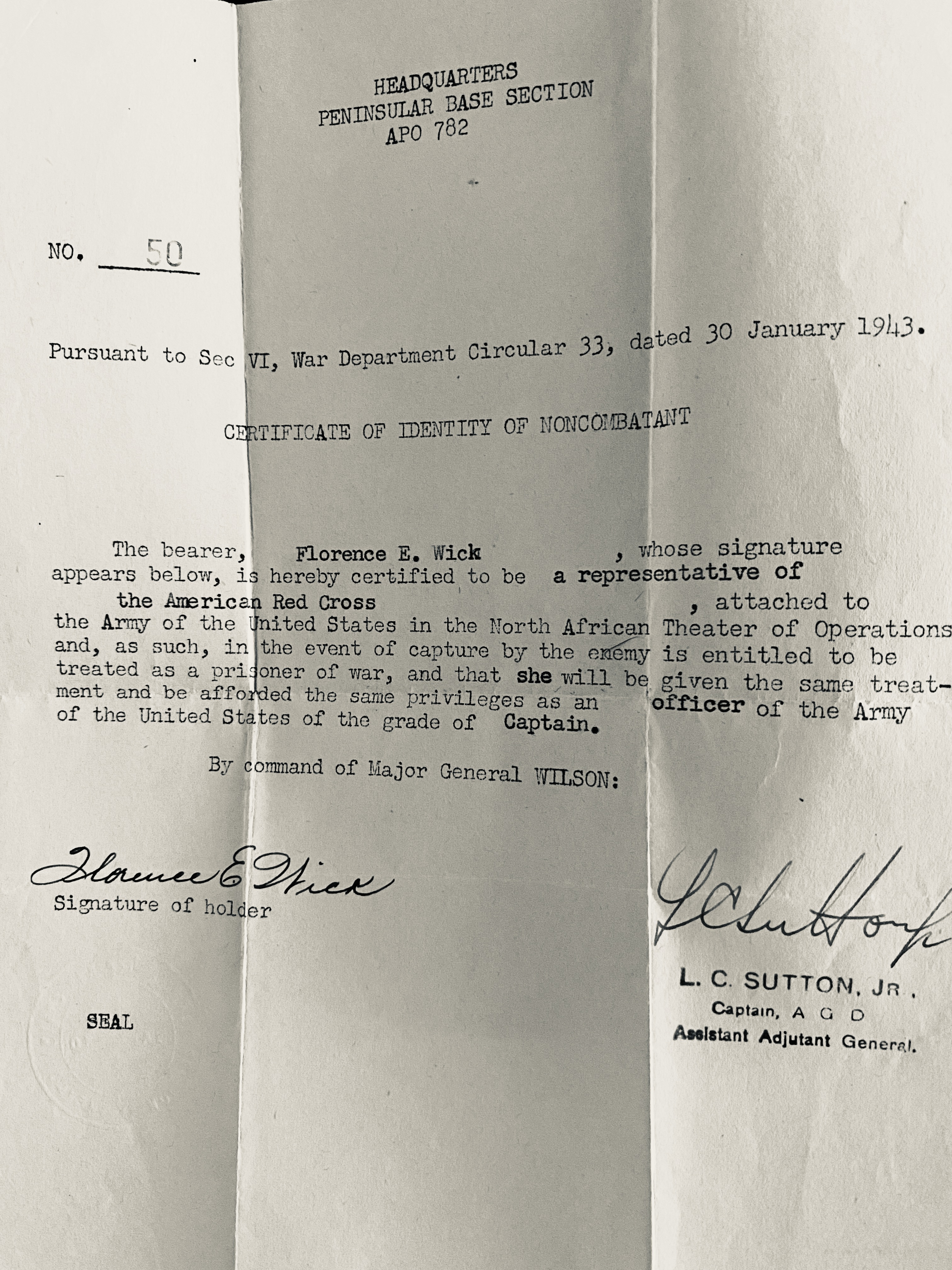
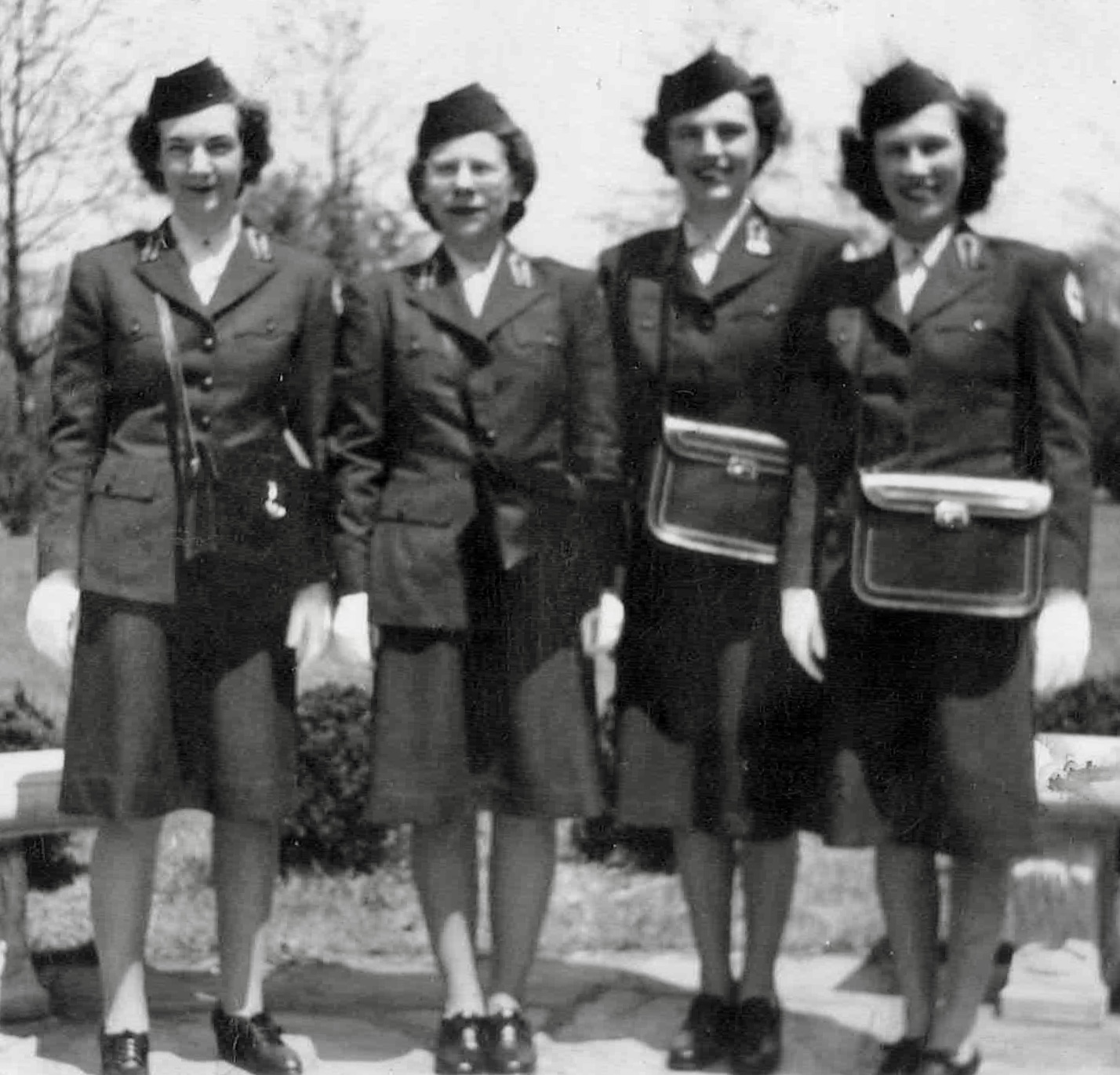
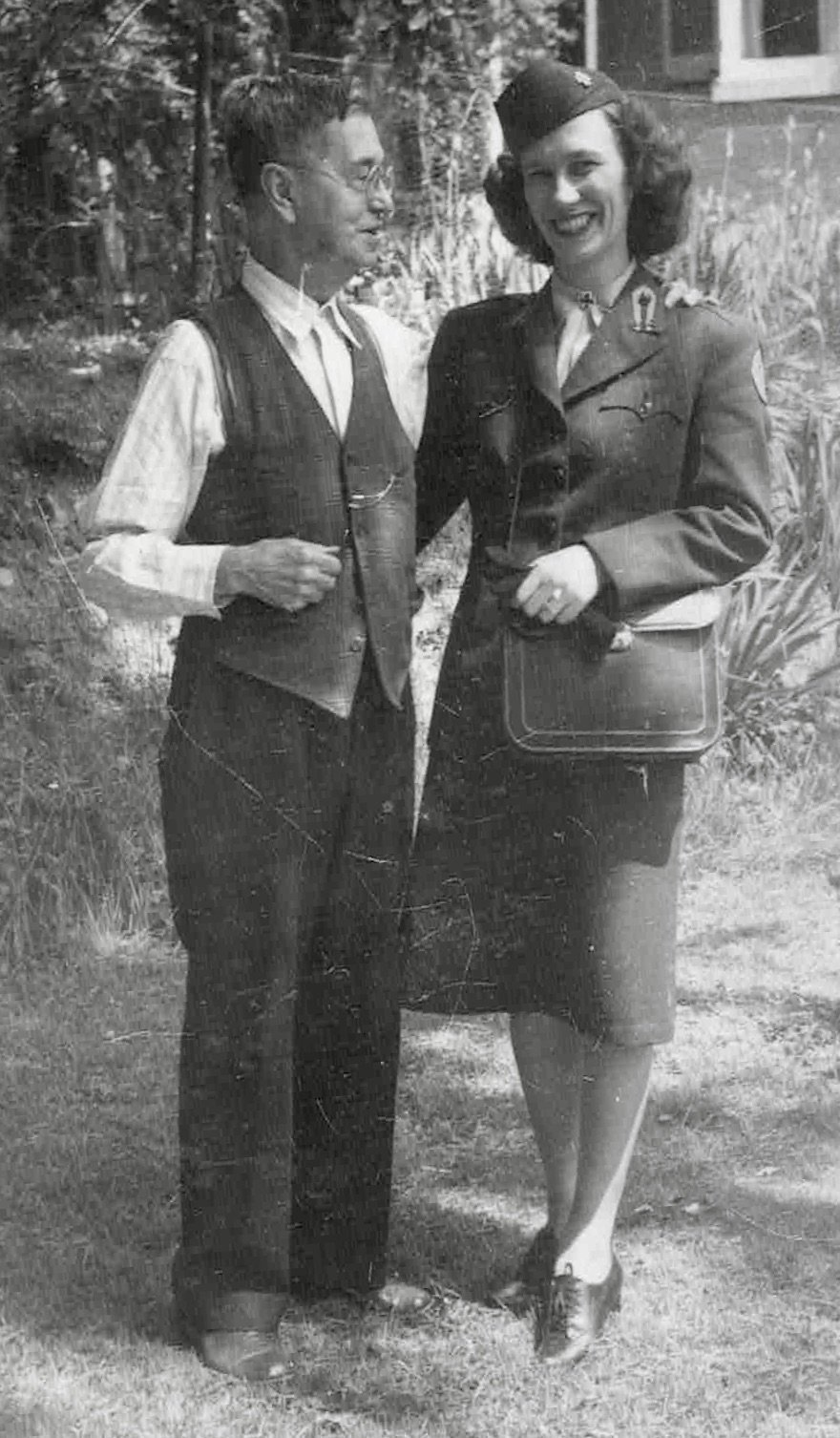
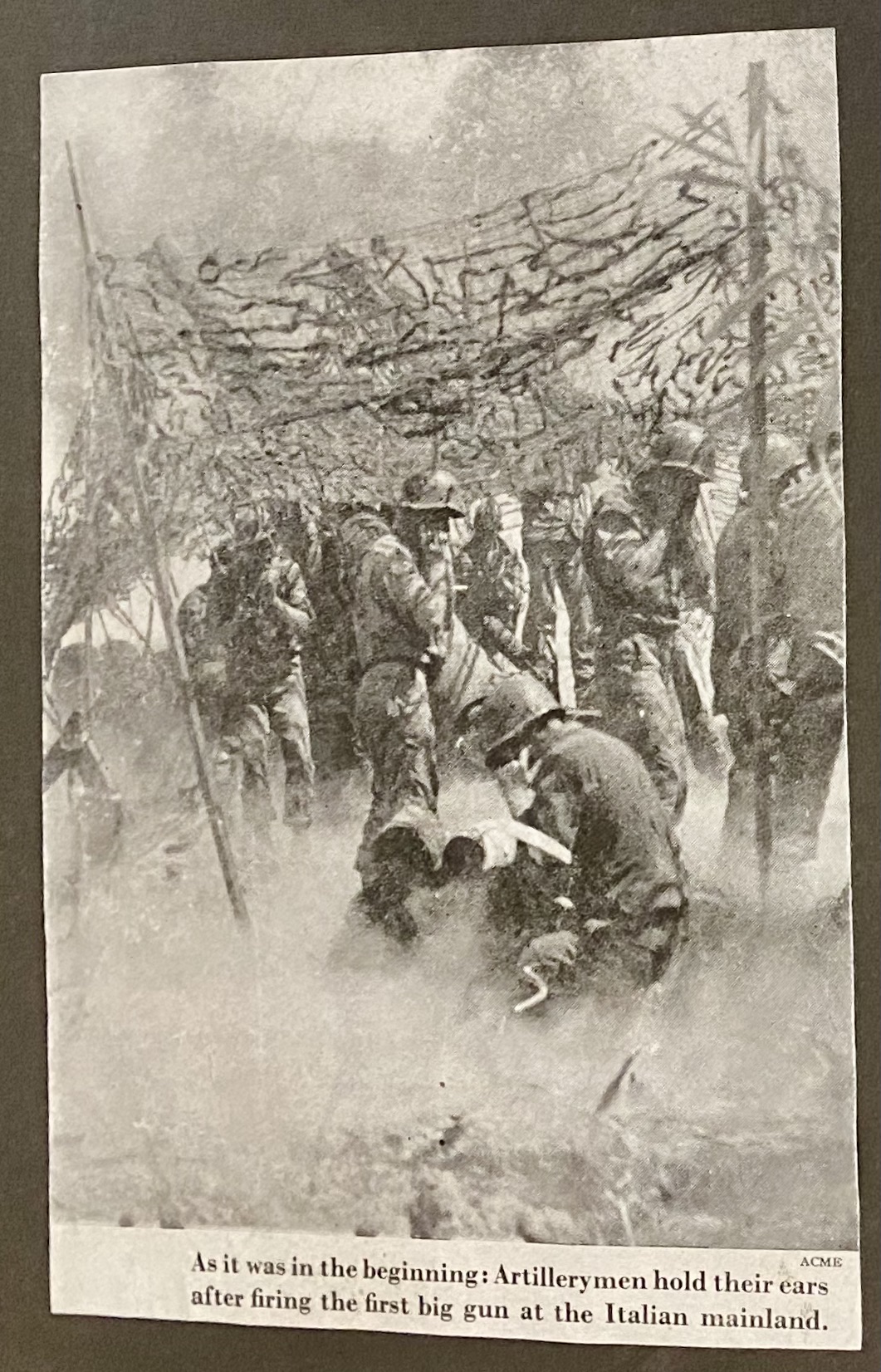
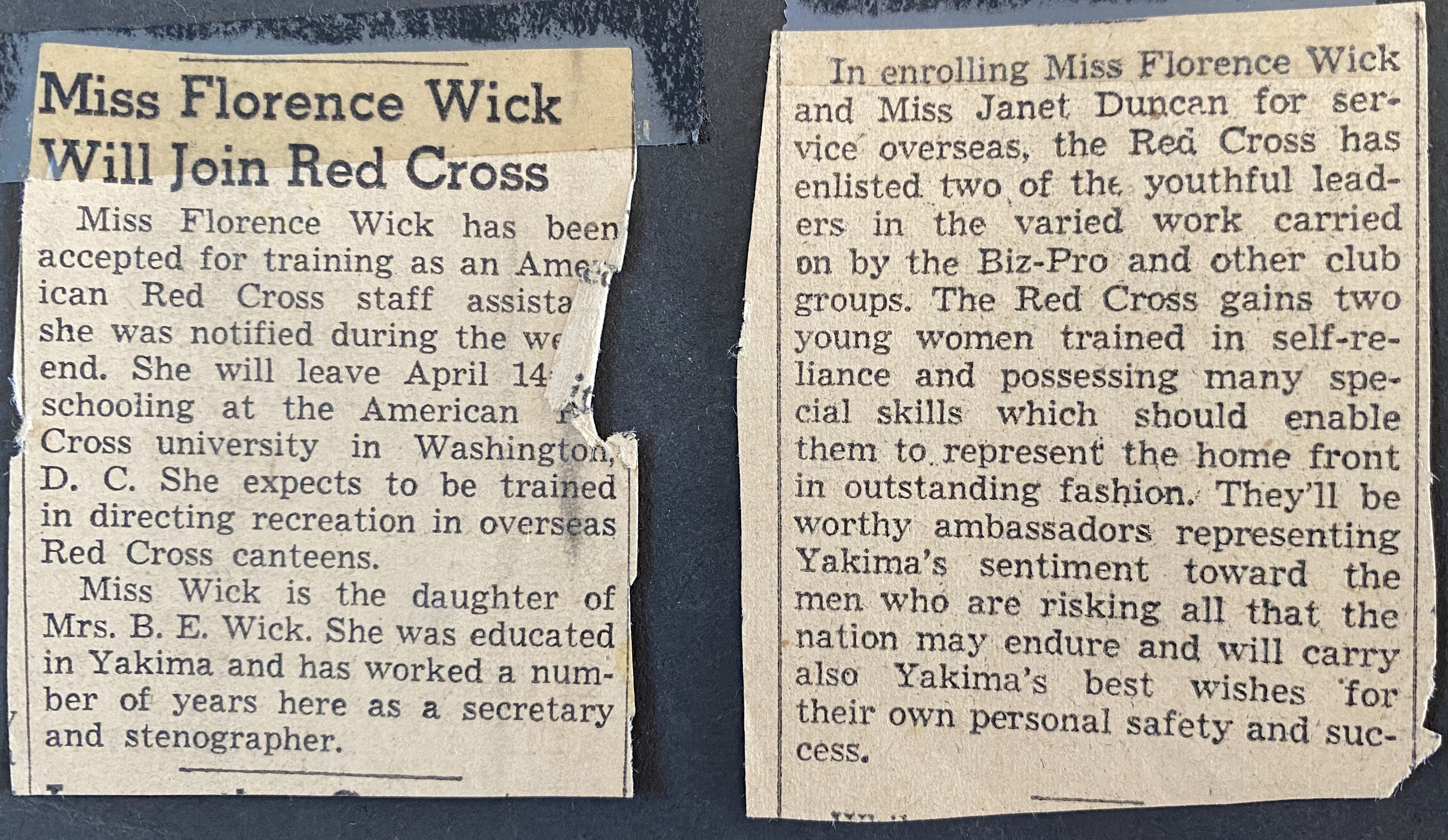
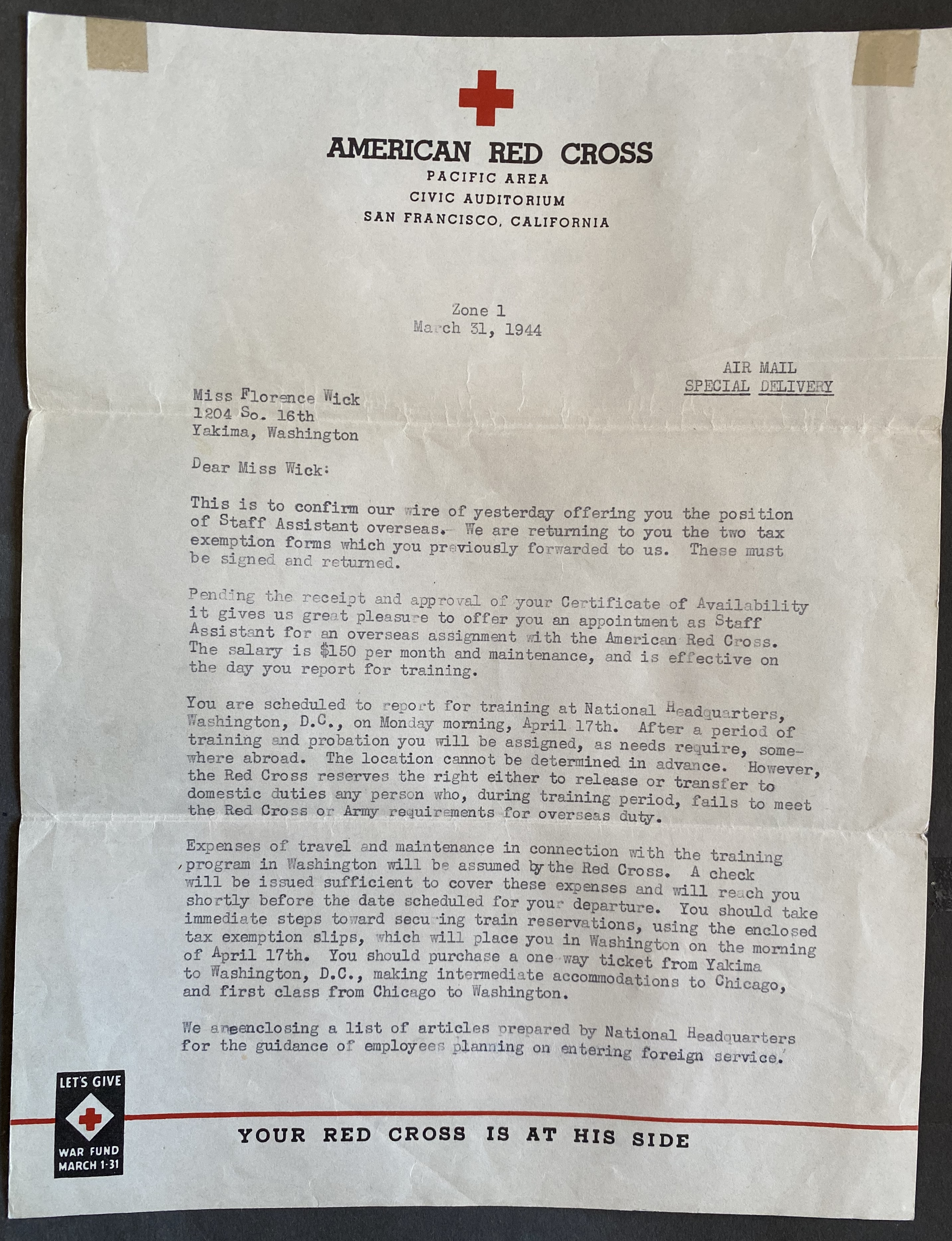
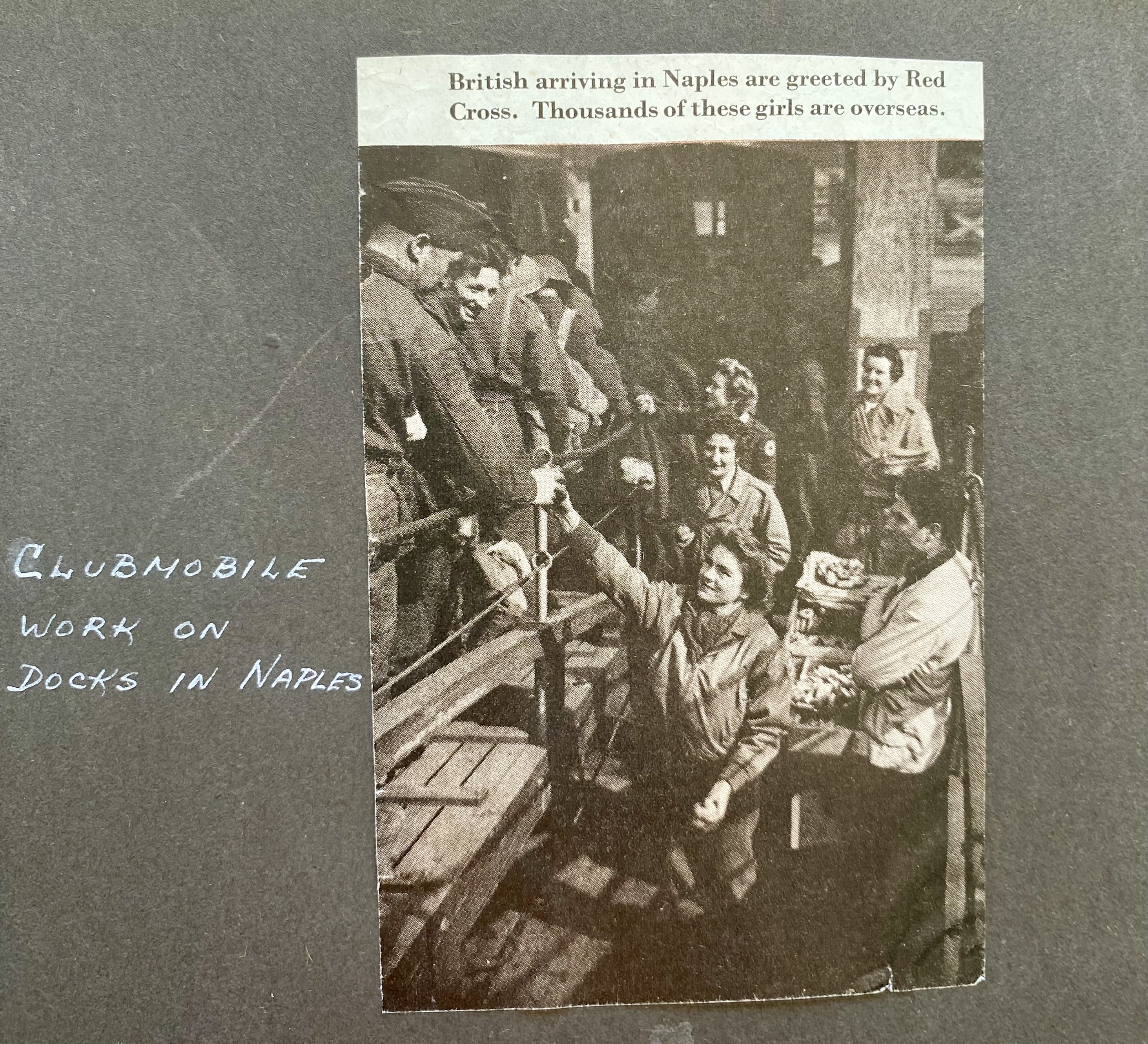
It was 1945 and the photographer was my mother, Florence Wick. She had been serving as a Red Cross “donut girl” with the Third Infantry Division in the Europe. She had met Murphy and served him donuts somewhere in France.

That photograph was the only one taken of Murphy at the awards ceremony and it was published worldwide and used to recreate the scene for the movie of his life story, “To Hell and Back.”

1955 Flo and Audie reconnected on the movie set of To Hell and Back. Photo by Rollie Lane. The photo at top is the one taken by Flo at the awards ceremony in Salzburg in 1945.

The most decorated soldier of WWII, Audie would cross paths with Flo again ten years later when he came to our hometown of Yakima, Washington to film the movie. There at the Yakima Firing Center the two of them looked through the scrapbook Flo had compiled of her adventures and heartbreaks in the European theater.

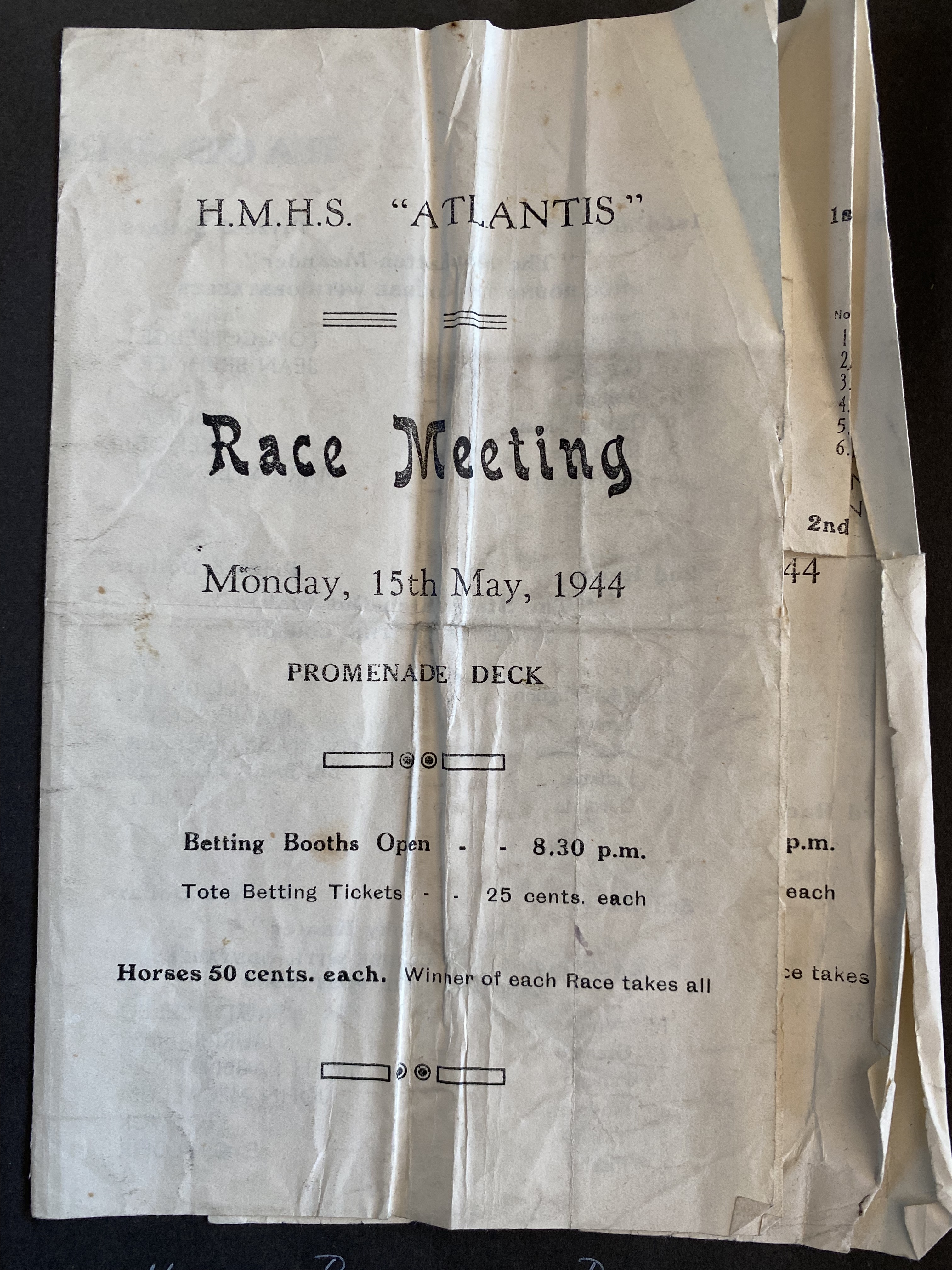
Now I have that scrapbook. It’s gigantic and weighs 25 pounds. I have wanted to use its contents to tell my mother’s story, but the project is overwhelming. Maybe I can start with Audie.

Audie Murphy was known worldwide after the war. He had a huge fan club and maybe still does (he died in 1971). One of his fans recently got in touch with me and asked if I could supply more stories and pictures. Yes! Flo stayed in touch with Audie. She corresponded with his biographer, his associates and those putting together a memorial in Texas. She saved mementos and newspaper clippings.

As for her photo that became famous, she gave it freely and others took credit. A post-war letter she saved warns that others are charging for the use of her photo. She never received credit.

Chapter 2: https://mollymartin.blog/2024/12/31/a-photo-album-tells-the-story/

Honoring Native Americans

Reinventing Some Holiday Myths

Dear Friends,

As we construct our ofrendas for Day of the Dead, decorate our yards for Halloween and celebrate the pagan holiday Samhain, I’ve been thinking about two other holidays we celebrate this time of year–Indigenous Peoples’ Day and Thanksgiving. This is a story about how the meaning and celebrations of American holidays can evolve to reflect new understanding of our history. 

As we learn more details about our history, in the last few years Americans have been rethinking the stories connected with Thanksgiving and Columbus Day. 

My generation of students learned to recite, “In 1492 Columbus sailed the ocean blue.” We learned about the Nina, the Pinta and the Santa Maria and that Christopher Columbus “discovered America.”

In elementary school in the 1950s I participated in those Thanksgiving pageants in which you were either a Pilgrim—boys with black buckled hats and shoes, girls in long, aproned dresses and bonnets—or an Indian with feathered headband and tomahawk. The story we enacted was a peaceful meeting and feast between Indians and pilgrims just off the Mayflower. It was the beginning of a happy long relationship between settlers and Indians.

Sadly, almost all of what we were taught was incorrect and incomplete; the myth conveniently left out the parts about genocide, slavery and land theft.

It turns out that Christopher Columbus was a homicidal tyrant who initiated the two greatest crimes in the history of the Western Hemisphere–the Atlantic slave trade, and the American Indian genocide. It’s not dissing Italians to say we no longer venerate this colonizer. Over the last few decades, Columbus Day has evolved into Italian Heritage Day in many locales. 

And we are witnessing a movement to honor Native peoples on Columbus Day. It originated in 1989 in South Dakota during its “Year of Reconciliation,” in an effort to atone for terrible history.

The phrase “merciless Indian savages” is written into the Declaration of Independence. That says all we need to know about how the founders of our country viewed the indigenous people in this land.

For centuries, the American government saw Indians as the enemy, sponsoring their slaughter and “removal.” Through a series of notorious atrocities, including the Trail of Tears, the Sand Creek Massacre and Wounded Knee, (and in California, our own Trail of Tears in 1863, and the Bloody Island Clear Lake massacre in 1850, among others) the United States adopted an official expansionist policy of discriminating against Native Americans in favor of encouraging white settlers in their territories. This policy led to the subjugation, oppression, and death of many Native Americans, whose communities still feel its effects. Only in 1924 were Native Americans allowed to become citizens of the United States, and it took decades more for all states to permit them to vote. 

But as we Americans acknowledge this history, our contemporary view of Native Americans is changing.

Congresswoman Norma Torres (D-CA) has introduced legislation to establish Indigenous Peoples’ Day as a federal holiday. Now, at least 13 states and over 130 cities have adopted Indigenous Peoples’ Day or Native American Day. In 2021, President Joe Biden formally recognized Indigenous Peoples Day. 

Here in Sonoma County indigenous people are well integrated into our local culture and community events. Tribes are consulted by land keepers and planners. Colleges, libraries and nonprofits sponsor classes about indigenous culture. My wife Holly and I attended the Indigenous Peoples’ Day gathering at Santa Rosa Junior College, which featured native dancing, music, drumming, food, speeches and vendors. The SRJC also has a native museum whose latest exhibit features the stories and art of local basket weavers. 

As with Columbus, Americans have been taught a false narrative about Thanksgiving.

Two different early gatherings may have inspired the American Thanksgiving holiday. At the first, in 1621, Wampanoagwere not invited to the pilgrims’ feast, but heard celebratory gunshots and came to the aid of the colonists. They had formed a mutual defense pact. Once there, the Indians stayed and feasted, but the feast did not resolve ongoing prejudices or differences between them. Contrary to the Thanksgiving myth, this was not the start of any long-standing tradition between the settlers and the Wampanoag tribe. The myth doesn’t address the deterioration of this relationship, culminating in one of the most horrific colonial Indian wars on record, King Philip’s War.

Ironically, Thanksgiving as a holiday originates from the Native American philosophy of giving without expecting anything in return. The Wampanoag tribe not only provided food for the first feast, but also the teachings of agriculture and hunting. Corn, beans, wild rice, and turkey are some examples of foods introduced by Native Americans.

The first written mention of a “Thanksgiving” celebration occurs in 1637, after the colonists brutally massacred an entire Pequot village of 700 people, then celebrated their barbaric victory, giving thanks to their god.

During Reconstruction, the Thanksgiving myth allowed New Englanders to create the idea of bloodless colonialism, ignoring the Indian Wars and slavery. Americans could feel good about their colonial past without having to confront its really dark characteristics.

Now children you’ve got to learn these lessons whether you want to or not! Puck Magazine 1899.

For many Native Americans, Thanksgiving is a day of mourning and protest since it commemorates the arrival of settlers in North America and the following centuries of oppression and genocide.

Indian protests in the 1960s and 70s often attacked the Thanksgiving myth. In 1969 after natives took over Alcatraz, allies and Indians of all tribes came together for Unthanksgiving Day, a gathering that’s become a tradition, welcoming all visitors to a dawn ceremony on the island.

In 1970 during a Thanksgiving celebration in Plymouth, activists from the American Indian Movement stormed the Mayflower II ship and occupied it in protest. It was then that the United American Indians of New England recognized the fourth Thursday in November as a National Day of Mourning, to bring awareness to the long lasting impacts that colonization had on the Wampanoag and other Native American tribes. This year the in-person event will also be livestreamed.

Americans are told and we want to believe that we are the saviors of the world. But historical truth is far different. 

Does the acceptance of Indigenous Peoples Day in place of Columbus Day and the updating of the Thanksgiving myth mean that we Americans are beginning to acknowledge our country’s history of imperialism and genocide? I hope so.

This time of year, and these two holidays, Thanksgiving and Indigenous Peoples Day, give us the opportunity to reflect on our collective history, to celebrate the beauty, strength, and resilience of the Native tribes of North America, and also to conduct our own rituals.

Long before settlers arrived, indigenous people were celebrating the autumn harvest and the gift of the earth’s abundance. Native American spirituality, both traditionally and today, emphasizes gratitude for creation, care for the environment, and recognition of the human need for communion with nature and others. I hope we can incorporate these ideals into our American harvest celebrations while we as a species still live.

Whether or not we cook a big turkey dinner, many of us practice Thanksgiving rituals. My and Holly’s ritual is to get together with our exes. We introduced them at a Thanksgiving dinner 13 years ago and they fell in love. We were surprised, and also delighted. Barb and Ana have become our exes and besties. We are participating in a lesbian tradition of incorporating our exes into our chosen families. 

No matter where you are in North America, you are on indigenous land. In Sonoma County we live on unceded territory of the Pomo, Wappo and Coast Miwok tribes.

Good Samhain, Halloween, Day of the Dead and Thanksgiving to you all.

Love, Molly (and Holly)

OTTERS in Wheelchairs

Wheelchairs were a highlight of my summer travel back home.

If you’ve never been disabled, it can be hard to appreciate disability. This is where construction workers have an advantage in sympathetic understanding. Most of us have been temporarily disabled at one time or other in our lives. We’ve had to butt crawl up the stairs, or learn to use the other hand with one arm in a sling, to navigate on knee scooters and crutches.

Buying lobbies. My first time in a store scooter. No crashes!

I’ve been temporarily disabled many times in my life, but returning from a trip to Maine was the first time I’ve ever gotten to ride in an airport wheelchair. It was awesome!

The wheelchair was a necessity after I sprained my foot getting out of bed. I know. Pretty dumb. I could tell my foot was asleep when I woke up, but I had to pee and thought I could walk on it. Not! I wonder why I’d never learned this lesson until now. Don’t try to walk if your foot is asleep! Wake it up first.

I had traveled to Maine to commune with the OTTERS (Old Tradeswomen Talking Eating and Remembering Shit). We are writing a book about the Tradeswomen Movement. For the last half century we have been agitating to help women enter the construction trades and other nontraditional jobs, and now we are recording our collective history.

OTTERS Dale McCormick, Elly Spicer, Ronnie Sandler, Lynn Shaw, Lisa Diehl, Liz Skidmore, me in front

It was great to see and hug my old friends from all over the country, many for the first time in years. Working together resulted in measurable progress on our book. We stayed in a beautiful country house. Plus we got our fill of lobbies (the Mainers’ word for lobster)!

Then the trip from Portland, Maine to Santa Rosa, California tested my enthusiasm for airplane travel. 

Our “cabin” is the red house, right near Wolf’s Neck Woods State Park

My long day of travel involved three airports. By the time I left Portland, on a warm muggy day, I still could not walk. My friend and Airbnb host, Marty Pottenger, loaned me a walker and, later, a cane. She suggested I call the airline to ask for wheelchair support. She drove me to the airport where I hobbled to the airline counter. She reclaimed the cane and I plopped into a streamlined wheelchair, pushed by a handsome gray-haired man. He said he was retired but worked at the airport two days a week to help make ends meet. I said, “Two days a week! That’s all any of us should have to work. The Wobblies called for a two-hour day but I think a two day week is better.” We talked about jobs we’d worked at as we crawled forward in the security line, and I realized it would have been hell standing in that line without the chair. He left me seated near the gate and went to pick up another disabled traveler.

I was relieved to be in the first group of passengers, those who need special assistance. My foot was healed enough to limp to my airplane seat without a cane.

My Airbnb host in South Portland, Marty Pottenger and her 1850 house

At the stopover in Charlotte, North Carolina there was one other disabled traveler besides me flying on to San Francisco. The young dreadlocked assistant grabbed both our wheelchairs at once, one in each hand, and pushed us at high speed through the packed airport. Charlotte is a big city of 880,000 people and its airport is huge. We flew through the foot traffic with some close calls, but never hitting any walkers. I felt like Casey Jones drivin’ that train. I wanted to see the airport art but was barely able to take in my surroundings. The distance from one gate to the other was far but we got there in plenty of time to make our flight.

At the San Francisco airport I was greeted by a man holding a wheelchair and a sign with my name on it. What service! This was another long trek that required an elevator. I was deposited right at the taxi stand where I caught a ride to a nearby hotel where my wife was waiting. 

I had first planned to take the Santa Rosa airport bus, which runs till midnight from SFO but it would have left me at a bus stop two and a half miles from my house at 2am. I had thought I could walk home from there if necessary. Sometimes Uber and Lyft can be problematic at that time. But Holly came to my rescue. After a good night’s sleep she drove me home from the hotel the next day. Home looked pretty darn good and I’m relieved to be back on solid ground.

Reuniting with my activist buddies was wonderful but I wonder if I’m too old and crabby to fly across the country again. Flying used to feel like a fun adventure. Now it’s just a trial, this time made manageable by wheelchairs and their pushers.

OTTERS Thank President Carter

For the past several years I’ve been meeting on zoom with a group of old women trades workers and organizers as we discuss and record our collective history. We call ourselves the OTTERS (Old Tradeswomen Talking Eating and Remembering Shit). Since the 1970s we have fought to open jobs for women and minorities that had been closed to us, like construction work. Affirmative action was our issue and for a short time during Jimmy Carter’s administration, we had support from the federal government. Our fortunes reversed after the election of Reagan, whose labor policies were crafted to push women out of the workforce and back into the kitchen. Our vision of employment equity became much harder to realize, but we didn’t stop. We’ve created training programs and tradeswomen organizations that have opened opportunities for women all over the U.S. We wanted to thank President Carter for his part in the success of our movement, so we wrote him a letter.

The Honorable Jimmy Carter
The Carter Center
453 Freedom Parkway NE
Atlanta, GA 30307

Dear President Carter,

We are writing to thank you for supporting Affirmative Action and Equal Employment Laws while you were in the White House and beyond. More importantly, we want to thank you for enforcing those laws. It made a difference for us and so many other women who were able to enter the construction trades because of your commitment. 

We are a group of older tradeswomen from around the country. We have come together to share stories, remember old times, and to document our history. 

We are the OTTERS. Old Tradeswomen Talking, Eating and Remembering Sh#*. 

During several of our meetings we were trying to figure out when and what was the ‘watershed’ moment when we began working together. We had been working in our respective states but then something happened. You may wonder what it was that brought us together and allowed us to begin meeting and working on a national level to reach out to women and Black, Indigenous, and People of Color (BIPOC) for training in trade and technical jobs.

We agreed it was, in large part, due to you and your administration’s commitment to equality. Enforcing the laws and ensuring those enforcement agencies were properly funded and staffed.

Many of our OTTERS members started Tradeswomen organizations that provide pre-apprenticeship training for women and find partnering with Habitat for Humanity a wonderful experience for our students. Many of us are still engaged in advocacy and still working toward a more diverse workforce. You continue to be an inspiration to all of us. Thank you. 

Yours in Equity, 

Lisa Diehl, West Virginia

United Brotherhood of Carpenters 7 years

Co-Chair 2nd National Tradeswomen Conference

Non-Traditional Advocacy 30 years

Founder, West Virginia Women Work

Dr. Lynn Shaw, California 

Miner/Steelworker/Longshoreworker/Electrician: 25 years 

Founder of WINTER, Women in Non-Traditional Employment Roles Los Angeles

Ronnie Sandler, New Hampshire

First woman in any of the building trades in Michigan 1976 

Carpenter and contractor for 12 years

First woman to work highway construction in the state of New Hampshire

Designed and ran trades training programs for women Michigan, Vermont, and New Hampshire

On site compliance officer for Maine Department of Transportation 3 major bridge projects

Nettie Dokes, Washington

International Brotherhood of Electrical Workers Line worker 30+ years

First African American woman Line worker (high voltage electrician) in US 

Seattle Women in Trades Executive Board 25+ years

Pre-apprenticeship instructor 15 years

President and CEO of Workforce Alchemist-a consulting firm for Women in Construction 5 years

Connie Ashbrook, Oregon

Elevator Constructor 17 years

Founder and Executive Director (retired) Oregon Tradeswomen Network

Dale McCormick, Maine

First woman Journeyman in US Carpenters Union, 51 years

Founder and Executive Director of Women Unlimited Maine

Northeast Women in Transportation

Elly Spicer, New York

United Brotherhood of Carpenters New York City, 35 years

Apprenticeship Training Director 3 years

Kathy Augustine, Ohio

Computer Systems Electronics Technician 15 years

Executive Director (retired) Hard Hatted Women, Cleveland 16 years

Kipp Dawson, Pennsylvania

Coal Miner 13 years

Public School teacher 23 years

Coal Miner and Activist in United Mineworkers of America 13 years

Coal Employment Project- Coal Mining Women Support Team since 1979

Betty Jean Hall, Florida

Executive Director & General Counsel

Coal Employment Project- Coal Mining Women Support Team 1977-1988

Lauren Sugerman, Illinois

Elevator Constructor 6 years

Founding Executive Director of Chicago Women in Trades 23 years

Founder and Director of the National Center for Women’s Equity in Apprenticeship and Employment 

Marge Wood, Wisconsin

Plumber 12 years

United Association UA union member 35 years, Madison

Apprenticeship Consultant, WI Technical College System 24 years

Molly Martin, California

Electrician 14 years

Electrical Inspector 10 years

Founder of Tradeswomen Inc., San Francisco

Beltane and a Black Heroine

My Regular Pagan Holiday Greeting

The entrance to Beltane Ranch on Hwy 12

Dear Friends,

Beltane, May 1, is a pagan holiday celebrating the spring at its peak and the coming of summer. It is halfway between the spring equinox and summer solstice. 

Driving by the Beltane Ranch, I’ve always wondered about its history and its association with the holiday. It turns out Beltane has historical representation right here in Sonoma County. Just outside the city of Santa Rosa, settled by pro-slavery Confederates from Missouri, Beltane Ranch has been recognized as a Black historic site by the National Park Service.

The reason is that Mary Ellen Pleasant, called the “Mother of California’s civil rights movement,” once owned Beltane Ranch in Sonoma Valley, near Jack London’s Glen Ellen home.

Mary Ellen Pleasant

Most stories about Mary Ellen Pleasant lead with the fact that she was the first Black female  millionaire in the U.S., years before Madam C.J. Walker earned that title. And this is true, but for me the most important fact about her is that she financed John Brown’s raid on the armory at Harper’s Ferry with $30,000, (about a million in today’s dollars) and secretly traveled to the Eastern Seaboard to rally slaves to Brown’s militant cause from 1857 until 1859. 

John Brown believed violence was the only path to end the institution of slavery and he planned to lead a slave rebellion with guns captured from the armory. After the raid failed, Brown was convicted of treason and hanged. In his pocket when he was arrested was a note signed with Mary Ellen Pleasant’s initials. She asked that her gravestone read “She was a friend of John Brown,” and that marker was placed on her grave in 1965 by the San Francisco Negro Historical and Cultural Society. 

Born in about 1814 in Virginia, Mary Ellen spent her early years in Nantucket, Massachusetts, where she worked for an abolitionist family. She was of mixed race and was able to pass as white. She married James Smith, a wealthy former plantation owner and abolitionist who died four years later. After her work on the Underground Railroad in the East attracted the attention of slaveholders, Pleasant relocated first to New Orleans and then to San Francisco in 1852 where she continued her abolitionist work. 

Mrs. Pleasant’s New Orleans style ranch house

In a city overwhelmingly rich and male, Mary Ellen put her skills to work as a cook and housekeeper, learning about finance and picking up investment tips from eavesdropping on her employers’ conversations. She encountered Thomas Bell, a native of Scotland, who would remain her close confidante and business partner for a lifetime. Among his future ventures, Bell would serve as director of the Virginia & Truckee Railroad of Nevada and then director of the Bank of California. Often, Mary Ellen would be a silent partner in his real estate and mining transactions.

The entrance to Calabazas Creek Open Space

In the 1860s and 70s Mrs. Pleasant filed several civil rights lawsuits mostly against the trolley companies fighting for the right of Black people to ride public transportation, most of which she won. She also rescued enslaved people from the Fugitive Slave Act and found jobs for former slaves in her many establishments.

Pleasant was regularly called the derogatory slur “Mammy Pleasant” by local whites and the press, but she did not approve.

“I don’t like to be called ‘Mammy’ by everybody. Put. that. down. I am not ‘Mammy’ to everybody in California. I received a letter from a pastor in Sacramento. It was addressed to Mammy Pleasant. I wrote back to him on his own paper that my name was ‘Mrs. Mary E. Pleasant.’ I wouldn’t waste any of my paper on him,” she said.

An old olive tree left at the remains of a ranch along Calabazas Creek

Mrs. Pleasant continued to maintain a close business association and friendship with Thomas Bell. She introduced him to his future wife, Teresa, and they married in 1879. Then Mary Ellen designed and constructed a 30-room gothic mansion on a lot she owned at Octavia and Bush streets where the three of them lived together. Mary Ellen handled all business matters for the residence and managed the Bells’ finances. 

In 1890, Mary Ellen and Thomas and Teresa Bell purchased the Nunn Ranch on Calabazas Creek in Sonoma Valley. They soon acquired several other homesteads in the area and in 1892 purchased the Drummond Ranch, where California’s first bottled cabernet sauvignon had been introduced in 1884. They named it Beltane, perhaps in recognition of Thomas Bell and his Celtic heritage. 

After Thomas Bell died in 1892, Teresa and Mary Ellen continued to run Beltane together, with Teresa owning the more mountainous 575 acres and Mary Ellen the lower 986 acres. Mary Ellen designed the ranch house with New Orleans influence and supervised its construction. She spent many weekends there in her later years. 

Wild lupine

With phylloxera present in Drummond’s prized vineyards, Teresa determined to convert the property to other uses, including starting a dairy, planting an apple orchard, and leasing the land to pasture livestock.

Mary Ellen Pleasant lost her fortune I would argue because of racism and sexism. After Thomas died, his widow sued for the estate and won in court. Teresa Bell took all the wealth Mary Ellen had created.

Despite being listed as the owner in Sonoma County records and as the result of ongoing litigation of the Thomas Bell estate, in 1895 Mary Ellen was declared an insolvent debtor. Even though Mary Ellen claimed her debts were due to guaranteeing Teresa’s debts, the titles to the San Francisco mansion and Beltane Ranch were transferred to Teresa Bell. 

Mrs. Pleasant spent her final years with her friends, Lyman and Olive Sherwood of Napa and when she died in 1904 she was buried in a Napa cemetery. She is seen by many historians as “The Harriet Tubman of California.”

Beltane Ranch and Mrs. Pleasant’s house are still here, right off Highway 12 between Santa Rosa and Napa. The house is now a bed and breakfast and most of the property is now part of the Sonoma County Agricultural Preservation and Open Space District. It will open to the public as a park in the future. I got to walk there recently with local naturalist Sarah Reid along Calabazas Creek, where remnants of old homesteads are still visible.

Mary Ellen Pleasant was indeed a fascinating historical figure and I’ve enjoyed researching her life, full of San Francisco stories and scandals not recounted here. I still want to read a couple of books about her. The Jamaican-American author Michelle Cliff wrote a fictional account of her life, Free Enterprise. And Lynn Hudson wrote a biography, published in 2008, The Making of Mammy Pleasant.

Here in Sonoma County on Beltane we celebrate the height of spring and our wildflower season.

Wishing you all a lovely holiday.

Women’s Equality Day 1970

Me and Mom and the Feminist Revolution

The feminist revolution in Yakima, Washington was not televised but I can testify that we were just as angry and militant as the sisters in New York who got all the press.

In the summer of 1970 I got a job as a reporter at the Yakima Herald-Republic, returning to my hometown to raise money to finance my senior year at college. I’d joined the feminist movement and I’d brought along my mom, Flo. She was already feminist material, a prolific writer of letters to the editor–an activist at heart. A look at my first paycheck radicalized her further. She’d been making a quarter of that all her life as the kind of secretary who actually runs the business while being paid as a typist.

Big Rally Our NOW group’s poster from 1970


At that time, newspaper reporter was a non-traditional job for women. It was ok for women to write for the women’s section and the food section and to work as secretaries, but reporter was a man’s job. The reporters at the YH-R had been organized into the Newspaper Guild and this was my first union job. I was elated, although I knew the Guild to be a weak union.

I felt strongly that the secretaries and office workers ought to have a union too so I started talking up the idea of organizing. That got shut down fast! The office workers made it clear that they felt joining a union would be treasonous. They identified with the owners of the paper, at that time the descendants of its founding family. So, at the outset, this radical feminist succeeded in making enemies of the women workers. But they had been predisposed to dislike me from the beginning, especially one territorial secretary who saw me as a threat and whose put-downs had me hiding in the bathroom crying—the only time in my working career.

cigar2 copy (2) Me at the news desk “smoking” a cigar and reading the paper, wearing a sleeveless dress, a Mary Tyler Moore hairdo and black-rimmed glasses


In the newsroom, the editor predictably assigned me to the women’s page, where readers turned to discover which of Yakima’s maidens were getting married that week. My job was to type up the wedding descriptions, which involved all of the fussy details like the cut of the bride’s dress and color of the bridesmaids’ frocks. In journalism school and as a student newspaper editor, I’d learned well the craft of editing. In my world, these unimportant details didn’t belong in any story. My wedding paragraphs got shorter and shorter until–busted! Brides’ mothers had begun calling my editor demanding to know why all the important details were missing. It turned out some people thought, and I venture to guess still think, that the color of the bride’s mother’s dress is big news. So my editor returned to writing up weddings and I went on to the news desk.

I did want to write about women, just not weddings. The features editor threw a few human-interest stories my way: a legally blind woman who’d become a pilot, a man who tatted, a dog that could ride on the back of a bike. I pitched a story to the news editor about where women in the Yakima Valley worked. Agriculture, mostly fruit orchards, was still the economic base of the region. My own grandmother had worked the line at a fruit processor and I’d picked apples in high school. I was truly interested in the demographics, but also wanted to investigate where we were not allowed to work. The editor thought it was a pretty good idea, but later reproached me, saying he had not known I was a feminist. How could I possibly write about this subject objectively, he wanted to know? Word sure got around fast.

gramonline
My Swedish grandmother, Gerda Wick (R), sorting cherries. Late 1930s?


When I pitched a story about the 50th anniversary of women’s suffrage, they bit. Maybe I could find some real suffragists who’d been part of the struggle to win the vote! Washington women got the vote in 1910, the fifth state to give women the vote, ten years before the 19th amendment became law, so I figured there must have been a suffrage movement. My mother, who’d grown up in Yakima, wasn’t born until 1913. She didn’t know any suffragists, but I got a few leads and started searching nursing homes. I did find women to interview, but they had been mostly too busy raising kids and running farms to pay attention to politics, they said. This I dutifully reported in a feature article. If there had been militant suffragists in the early 1900s in Yakima, I failed to find them.

flo and mollyFlo and I in about 1978. Photo by Ruth Mahaney


Yakima is a conservative place, infamous as the hometown of liberal Supreme Court Justice William O. Douglas. When FDR appointed Douglas to the Court, the Yakima paper disowned him. “Not From Here” said the headline. Douglas had been born in Minnesota and raised in Yakima. Ironically, Douglas was nominated to the Court as a representative of the West. But he couldn’t wait to get away from Yakima to seek his fortune. He wrote a book titled Go East Young Man.

Though I was undeniably a Yakima native, like Douglas I couldn’t wait to get away from my hometown. But the prospect of living with my parents, working as a reporter and making trouble just for the summer seemed like fun. A small group of us formed Yakima’s first National Organization for Women chapter, meeting at the home of a woman even older than my mom to document the inequality we experienced. We listed low pay, poor access to jobs and humiliating dress requirements, like having to wear hot pants to work as a waitress. There were restaurants and bars reserved for men only; and all those cultural expectations that we would serve our husbands, bear children and become homemakers. Also, everything we read placed the women’s movement in New York City. We chafed at that version and wanted to show that sisterhood was powerful in little towns in the West too.

In the back seat of a VW bug on the way to the first meeting, the young woman sharing the seat with me whispered that her female lover had left her. Distraught, closeted, and with no community, she was looking for a friend to talk to. She saw in me something I had yet to see: I was a sister dyke. Later, I regretted that my own life experience was too sparse to understand or even to sympathize. I had yet to love and lose. I had yet to come out, even to myself.

While not well schooled in romance, by this time I was an experienced organizer, having planned and executed anti-war and women’s liberation protests at college. I’d learned how to run a campaign, how to get media attention. I’d written and performed in guerrilla theater plays and given speeches, painted protest signs and silk-screened armbands. I’d participated in consciousness-raising and I was ready to act to change my world.

We aimed our first action at a restaurant where businessmen lunched that barred women. We had read about McSorley’s bar in Manhattan, which had denied women entry for 116 years until it was forced to admit us that very summer. A journalist, Lucy Komisar, the first to test the judge’s order, was dowsed in beer by jeering men. Our plan was to just walk in, sit down and demand service. We doubted beer dousing would follow, but who really knew what the reaction would be.

Resisting authority always made me nervous but also thrilled me. Just that spring we students had staged a giant strike and shut down Washington State University over racism. Flo had joined me at student demonstrations against the Vietnam War. My mother had saved me from threatened expulsion for moving off campus by making my case in a letter to the university president. Women’s protests had led to the college aborting in loco parentis rules requiring us to wear dresses and to observe curfew. Old sexist ways were crumbling in our wake, making us feel the power of sisterhood. We were on a roll.

We had cased the restaurant and, as planned, six of us marched in and took a table right under the sign that read “MEN ONLY.” Flustered waiters ran to the manager for advice and we were asked to leave. Would they call the police to arrest us, we wondered. We weren’t doing anything illegal were we? They refused to serve us but we did take up a table during the lunch hour. As it turned out, men didn’t give up their privileges easily, but no dousing followed our restaurant protest and after some resistance we helped the restaurant to see the light. We won! I don’t remember the names, or how many visits it took, but I do remember the determination, the camaraderie and the elation we felt when the restaurant gave up its policy and served us all lunch.

That summer our other protests involved wearing pants to work (handy tip: start with culottes) and pasting stickers that said “This Insults Women” on public signs and ads we deemed sexist (the ubiquity of these messages is hard for us to remember and for the young to imagine now).

Our NOW group chose as its summer coup de gras a rally to celebrate the 50th anniversary of women’s right to vote on August 26, 1970. One day, at my desk at the newspaper, I got a call from the New York Times. They were doing a story about how feminist groups across the country were celebrating Women’s Equality Day. Elated, I eagerly catalogued our victories and detailed our plans for the rally.

In preparation for our celebration, the artist in our group made signs that we posted about town, others secured a sound system and a soapbox. We planned to rally in Franklin Park, near the city center. We arrived dressed in 1920s garb, imagining throngs of women all excited to speak out about their oppression publicly, but the hoped-for crowd didn’t materialize as it had on the college campus. We gave a few short speeches, and then made the microphone available for other women to speak. No one stepped onto the soapbox except young boys experimenting with guttural sounds. Among the lessons we learned: maintain control of your mic and know your audience.

I couldn’t wait to see how my phone interview with the New York Times had come out. I rushed to the library to check out the paper and found the story–not in the women’s section. Our rally may not have been televised, but our little group of Yakima activists made the Times!

Epilogue: We went on to change our world.

Making America White Again

Contemplating the Roots of Racism in My Hometown

Mom was no communist. There’s no evidence that she even flirted with the idea like so many did during the volatile period between the world wars. It was hard to find a communist in Yakima, Washington to flirt with. Unless you count William O. Douglas, the US Supreme Court justice, whom John Birchers dubbed “the only known communist in Yakima County.”

No, during my mother’s early life, the county was run by racist xenophobes whose mission was to Make America White Again.

In such a reactionary environment, how did my mother turn into a liberal? Trying to understand her politics, I’ve been investigating the history of her hometown, which is also my hometown. Yakima, on the dry eastern side of the state with a population of about 20,000, was a conservative place when my mother, Florence Wick, was growing up in the 1920s and 30s. Today, with about 91,000 people, it remains a red blot in a blue state whose population is concentrated on the west coast.

walandscape
Eastern Washington is desert without irrigation

Catholic missionaries had settled in the valley and white settlers followed in the 1850s as the US Army drove the indigenous population onto a nearby reservation. The Indians had fiercely resisted in what were known as the Indian Wars of the 1850s. The Yakama (the tribe changed to this spelling) Indian reservation is home to several different groups that were forced to settle there in what we call the Lower Valley, a few miles south of the town of Yakima. The sagebrush country with fertile volcanic soil was partly developed and irrigated by Japanese immigrant farmers who began arriving before the turn of the 20th century.

floschoolgirl
Florence Wick at school in the 1920s

Researching what life was like in my hometown in this period, I found a book written by Thomas Heuterman, who was my journalism professor at Washington State U. The Burning Horse: The Japanese Experience in the Yakima Valley 1920-1942, documents discrimination against the Japanese community in Wapato, a town on the Yakama reservation where the farmers leased land. In emails Prof. Heuterman told me he had been surprised to find what his research showed: a long history of racism and exclusion in the Yakima Valley.

He wrote: “I went into the project predicting that the Valley Japanese were an exception among all the prejudice of the era.  That’s what I remembered as a child from my folks’ attitudes.  But, as you know, I found just the opposite.  Most of the Nisei (second generation) who have read the book also didn’t know that racism was going on; their folks had protected them from that too.”

Japanese farmers were persecuted relentlessly. Their houses, barns and crops were bombed and burned. Newspapers stoked the fires of racism. Prof. Heuterman’s research focused on stories in the local and state newspapers. Here is some of what he found. These were headlines in the Seattle Star during hearings to determine the fate of Japanese immigrants in Washington State in 1920.

WILL YOU HELP TO KEEP THIS A WHITE MAN’S COUNTRY?

JAPS PLANS MENACE WHITE CIVILIZATION

Japanese plans for expansion at the expense of the white race are a deeper menace to Caucasian civilization than were ever the dreams of Pan-German imperialists

In the 1920 version of fake news, testifiers at the hearings repeated lies about the Japanese and weird ideas about racial purity that were then amplified by newspapers across the state. A well-organized American Legion, the Veterans of Foreign Wars and the Anti-Japanese League perpetuated the apocryphal threat of the Yellow Peril. Then the Grange took up the cause. Anti-alien laws passed in Washington were modeled on those of California, which in turn had been promoted by influential Southern whites. The goal in Yakima was to drive all Japanese out of the valley.

Anti-immigrant sentiment reached a peak in the 1920s and 30s in the Yakima Valley and in the entire West. As a child and young adult, my mother must have been aware of it. I was shocked to learn that the KKK held a rally in 1924, which drew 40,000 people to a field outside the town after the state refused to grant them access to the state fairgrounds in Yakima. A thousand robed KKK members marched in the parade.

Farmers welcomed migrant laborers when labor was scarce. But when the economic cycle moved from boom to bust, these workers were targets of violence, forced removal and alien restriction laws. American workers who saw their jobs being taken by immigrants who would work for less were some of the worst perpetrators of racist violence. Racist organizations gained influence after World War I. In the Red Scare of 1917-20 nativism swept the whole country. During that time Alien and Sedition laws were used to deport hundreds of immigrants deemed by the government to be radicals, the anarchist Emma Goldman among them.

In Yakima, terrorism was directed at other groups as well as the Japanese. In 1933, the Industrial Workers of the World (the Wobblies) led a strike for higher wages of white migrant farmworkers that was put down by orchardists with pipes, clubs and bats. Then the strikers were marched five miles to a stockade that had been constructed in the middle of downtown Yakima. Some of those arrested were jailed for six months, and the stockade stayed up as a deterrent for a decade. In 1938, 200 men set upon blacks in Wapato, beating them and setting fire to one of their houses. Filipinos also became targets of harassment.

congdoncastle
Congdon Castle

I grew up near the Congdon orchard where the 1933 strike took place. The owner’s summerhouse mansion was called Congdon Castle and as kids we thought it was haunted. No one really lived there except caretakers. The wealthy owners had always lived in another state. I have a vague memory of Flo telling us about the “battle of Congdon Castle.” She surely knew about it. The primary industry in Yakima, then and now, was agriculture and agriculture was always big news.

Congdon Orchards label

Probably my mother already knew which side she was on by the time these events occurred. Her parents, immigrants themselves from Sweden and Norway, can’t have felt completely safe. Family lore has her father enduring taunts for his foreign accent from students at Yakima High School where he taught commercial arts. Her father’s thinking surely influenced young Flo. She told me she remembered his troubled reaction to the execution of Sacco and Vanzetti, Italian immigrants whose incarceration lasted from 1920 to 1927. She was 14 years old when they were executed by the US government. Flo’s Norwegian father took the side of the immigrants, who most agreed had been falsely accused.

wickfamily
My mother’s family in about 1922. She is the one on the right with glasses.

This was the Yakima of my mother’s youth, a place where, if you read the newspapers, you could not escape the dominant paradigm. But by the time I was growing up in the 1950s and 60s, this history escaped us. Our family often visited Fort Simcoe, the restored Army fort on the Yakama reservation, but I never learned about the Indian Wars as a child. Indians and revolution were scrubbed from our textbooks and xenophobia persisted.

My brother Don remembers as a freshman in high school in 1967 defending the rights of Native Americans in history class. The popular teacher launched into a diatribe against him in front of the whole class. She said Indians had an inferior culture and deserved to be conquered. She said they were dirty, barbaric and uncivilized. She believed it was right of a superior culture to war against them and subjugate them. This was the inevitable march of history, she said. When Don told Flo about it she was outraged. She and the teacher had been friends but that killed their friendship.

The xenophobes in Yakima and elsewhere were able to successfully construct a racial identity, the “white race,” made from hundreds of diverse cultures, people who spoke different languages and dialects, people who had themselves been the victims of oppression, as a way to successfully divide the population. In his book, Irish on the Inside, Tom Hayden posits that Irish immigrants had more in common with blacks and slaves than the white rulers who starved and oppressed them. Before epigenetics became a thing, Hayden made the case that we have all been affected by the plight of our ancestors. “That the Irish are white and European cannot erase the experience of our having been invaded, occupied, starved, colonized and forced out of our homeland,” he wrote.

Hayden wanted to break the assimilationist mold among Irish Americans.“If Irish Americans identify with the 10 percent of the world which is white, Anglo American and consumes half the global resources, we have chosen the wrong side of history and justice. We will become the inhabitants of the Big House ourselves, looking down on the natives we used to be. We will become our nightmare without a chance of awakening from its grip.”

My grandparents had a strong immigrant identity, but the advantage they had is that they were, in the language of the American Legion, of the “white race.” The Legion, the KKK and others demanded to make America white again. I’ve no clue how the xenophobes felt about Southern Italians, but it seems that if you came from Europe you were ok with them. In Yakima, they reserved deepest hatred for Japanese. But they also scorned anyone not of the “white race.” The irony was that these invading whites had themselves displaced indigenous people and it’s difficult to understand how they failed to see this giant contradiction. The trick, of course, was to make them subhuman.

flobookcase
Flo with her precious books

That Flo’s parents identified as immigrants rather than white informed her understanding of the world. Flo was also a voracious reader and certainly was influenced by what she read. She spent hours at the Yakima public library, receiving her first library card at a young age and migrating to the adult section before children were allowed. She was one of those kids who took a flashlight to bed and often read under the covers at night.

moms-library-card
Flo’s library card

She was also active in the YWCA, quite a progressive organization during that period just as it is today. Besides championing racial integration, the YW also lent support to Japanese families who were incarcerated during the war. Her involvement in the YW got Flo out of Yakima to meetings across Washington State and in the big cities of Chicago and Columbus, widening her worldview.

Flo’s father, Ben Wick, overlapped with William O. Douglas for a year in 1921-22 when they both taught at Yakima High School. Flo may have known Douglas as a child. She would have been nine years old when he got fed up with teaching school in Yakima and and left to make his fortune in the East. In any case, Flo admired Douglas greatly and I believe she shared his politics, which were shaped by class. He grew up fatherless and poor. When discussing how his personal experiences influenced his view of the law, Douglas said, “I worked among the very, very poor, the migrant laborers, the Chicanos and the IWWs who I saw being shot at by the police. I saw cruelty and hardness, and my impulse was to be a force in other developments in the law.”

He was no communist either but he did defend the concept of revolution in a 1969 screed. He is famously quoted in Points of Rebellion: “We must realize that today’s Establishment is the new George III. Whether it will continue to adhere to his tactics, we do not know. If it does, the redress, honored in tradition, is also revolution.” He survived two impeachment attempts.

When I asked my lawyer friend Judy Kurtz about Douglas she said, “Legal standing for trees!” He was famous for defending nature and the environment, often in dissenting opinions. She added, “I wish he was still on the court. God help us now.”

Douglas returned to our hometown later in his life and Flo and I ran into him and his wife Cathy in the 1970s. We had decided to splurge on lunch at the Larson Building, the town’s only high-rise, an elegant Art Deco architectural gem built in 1931. We spotted them as we walked into the lobby. “Justice Douglas, Justice Douglas,” my mother entreated as she ran up to him. He graciously remembered her father.

The wartime internment of Japanese did not happen in a vacuum. Finally, after decades of domestic terrorism, the American Legion and its ilk got their way. In June 1942, 1061 Japanese were evacuated from the valley, sent by rail to a processing center at the Portland livestock grounds, and then incarcerated at Heart Mountain, Wyoming for the remainder of the war—800 miles from home. Only a few resettled in the Yakima valley.

One of my heroes, the labor organizer Sister Addie Wyatt said, “If you don’t know where you come from, you don’t know where you’re going.”

This is where we come from. I fervently hope it is not where we’re going. I’m so glad people like immigrants and Americans of color, the Wobblies, my mother, my grandfather and William O. Douglas found the will to resist.

In the Company of Women

They were feminist activists in the 1930s


Florence Wick early 1930s

My mother used to wonder aloud why my generation of girls and young women chose to hang out in co-ed groups. Why was there so much pressure to be with boys? She told me that as a young woman she’d had loads of fun communing with sisters in same sex groups. They invited boys to dances and events that they organized, but otherwise they sought the companionship of other women. Now, looking through scrapbooks she made in the 1930s, I can see what she was talking about.

My mother, Florence Wick, had graduated from Yakima High School at age 16 in the class of 1929½, just as the country sank into the Great Depression. She was planning to enroll at Washington State University (my alma mater) when the stock market crashed and ended her dream of going to college. SeattleSecyInstead she went to secretarial school. She got a job as a stenographer and worked steadily throughout the decade, living at home and supporting her family when her father lost his teaching job. In the 1930s my mother actively participated in women’s organizations that I now see set the stage for the feminist movement of the 1970s.

Flo was Biz-Pro president in 1936 Flo was Biz-Pro president in 1936

While she could never afford college, she did join a sorority, Epsilon Sigma Alpha, which had been reorganized from a college group to include businesswomen. She was also a member and president of the Business and Professional Women’s Club (Biz-Pro) one of the “business girls” clubs that fell under the umbrella of the YWCA. These linked organizations provided opportunities for what we now call networking, but they also promoted the rights and welfare of workingwomen by sponsoring legislation for equal pay and to prohibit legislation denying jobs to married women. Founded to address the surge of women into the workforce during WWI, Biz-Pro still continues to advocate for workingwomen promoting equal pay, comparable worth and family leave legislation.


The sorority met twice a month, once for a study program and once for a social event. My mother saved programs and newspaper articles reporting on their events. Flo sometimes appears in the programs reviewing books (Stanley Walker’s Mrs. Astor’s Horse) or authoring skits. She participated in a bridge club and took home prizes. She directed a questionnaire on current event topics at one meeting. At another she reported on the biography of Nijinsky written by his wife. Politics was also on the agenda. On the Oct. 6, 1936 program, Miss Sylvia Murray presented a “Symposium of Nazism and Fascism.” Flo presented “Excerpts from Days of Wrath by Andre Malraux.” They had picnic summer potlucks. They played games. The local news reported: At the Thanksgiving party, 30 members and their friends were expected. The colors were yellow, orange and brown.


Smart cotton frocks of today’s vogue and demure fashions of 50 years ago vied for supremacy last evening when Epsilon Sigma Alpha sorority members entertained at a dessert bridge party in the Woman’s Century clubhouse. The sorority will have a horseback riding party as a feature of its next meeting, reported the local Yakima newspaper. In news articles the married women are referred to by their husbands’ names. A dinner and theater party were planned by sorority members at their meeting last evening in the home of Mrs. Malcolm Mays.

Bridge Tallies Bridge Tallies

The Biz-Pro meetings, too, sought to combine business and pleasure.

Miss Edith Livingston had charge of decorating the tables with white cellophane Christmas trees, snowmen, blue streamers and white tapers. Girls made a contribution to the iron lung fund.

Despite their name, the business and professional women were not above movie stars and gossip.

Mrs. Gledhill, the former Miss Margaret Buck of Yakima, related interesting Hollywood anecdotes and described the YWCA work in the southern city. She particularly mentioned the Studio club in Hollywood where girls who are hoping for a “break” live and rehearse, “even tap dancers,” she says. Among board members are Mary Pickford and Mrs. Cecil De Mille.pledge

Both my mother and I were active in the YWCA during the 1970s when its “One Imperative” was to “use its collective power to eliminate racism by any means necessary.” Together we attended the 1973 national conference in San Diego where the farmworker leader Cesar Chavez spoke. But I hadn’t realized how involved she had been in the YW during the 1930s. After its members demanded a focus on workingwomen at the 1910 world conference in Berlin, the YW’s objectives changed from protecting women from the vagaries of industrialization to promoting their equal inclusion. To this day the YW remains a worldwide force working against violence and supporting women, racial minorities, people with AIDS and refugees.


Flo represented Biz-Pro as a council member at its conference in Chicago in November 1937. A newspaper report of the meeting quoted her: “It was grand and I liked Chicago so much,” says Miss Florence Wick, all in one breath, of the National Business and Professional Women’s Council of the YWCA meeting in Chicago from which she returned this week. The article says of the 26 council members, she was the youngest (she was 24). The meetings were held in the McCormick residence in Chicago, a memorial to Harriet McCormick, an early supporter of the YW. “The loveliest building you ever saw,” according to Miss Wick. “I met so many notables in YWCA work, I feel so very insignificant,” Miss Wick remarks, laughing.

Flo as drawn by her sister Ruth Flo as drawn by her teenage (biological) sister Ruth Wick

In April 1938, she traveled to Columbus, Ohio to the national YWCA convention and later explained the “reorganization of the business girls’ groups” to her local chapter. She traveled around the Northwest to represent the local group along with others including her best friend and my namesake, Molly (Mildred) Hardin, another single workingwoman. By that time they called themselves the “Business and Professional and Industrial Girls.” Industrial referred to women who worked in factories and plants, as opposed to the “business girls” who worked in offices.

Flo told me she had accepted that she would be an “old maid” when, at 33, she met my father. Still working as a stenographer, she had assumed the identity of “career girl.” Her sister Eva, my aunt, told me Flo was always popular. She had lots of boyfriends but she was in no hurry to get married. She enjoyed the independence and self-esteem that came from earning her own living as a workingwoman. And she thoroughly enjoyed the rich friendships and associations she cultivated in the women’s organizations she joined.


The Last Survivor Was a Lesbian

You could say that she died at the hands of the white man too

The posse didn’t wait to start shooting as they drove their horses down into the wash where the Indians slept in their camp. The reward had been promised whether they were brought in dead or alive. It was easier to kill them all.

On a cold February day in the Nevada hinterlands, a battle raged for three hours, pitting 13 Indians with few guns and little ammunition against 19 well-armed vigilantes. The women defended themselves and their children with spears and arrows. The little children threw rocks at the invaders.

One of the whites was killed as he advanced when a girl held up her skirts and flashed her genitals, smiling and moving forward in a weaving dance. As the white man stared in astonishment, she dropped down and her brother shot him with the one bullet left in his gun.

The youngest baby was in a cradleboard on her mother’s back when her 19-year-old mother was shot and killed. Her head fell back into the snowy mud. The marauders heard the baby crying and retrieved her along with three other children who had run into the sagebrush.

sheriffchasferrel-w-survivors-battlek-creek-rg-j200pc
The four children were put in jail after capture. Mary Jo is a baby held by her aunt here.

That baby grew up to be Mary Jo Estep, the last surviving Indian of the last Indian massacre in 1911, a woman I would meet many years later.

She was one of four children who survived the massacre, but the other three died the following year of tuberculosis. Mary Jo was about 18 months old when the posse ambushed the remnants of her tribe. Her grandfather, “Shoshone Mike,” had led the band across 300 miles of western desert in northern Nevada and California after refusing to go to a reservation.

Mary Jo knew little of this and did not remember it. When, in 1973, the Oregon writer Dayton O. Hyde wrote a book about her grandfather and the massacre, he speculated that the children might still be living. He learned of Mary Jo and then agonized about how to approach her and tell her the story of the massacre.

In 1911 Indians had no rights and were not considered human. White men could get away with killing Indians with impunity. It was easy to blame crimes on Indians, and that is what happened to Shoshone Mike. A cattle rustling gang whose leader was the son of a prominent judge blamed their crimes on Mike. A vigilante group formed with eyes on the reward money. Federal marshals also were after Mike and posses began roaming the desert in northern Nevada looking for him.

Mike and his extended family evaded the posses for a year. But the winter of 1911 was the worst in a long time and, starving and tired, they were forced to camp in an unprotected spot where they were discovered.

The surviving children were taken to the jail in the nearest town and eventually moved to an Indian school. The murdered Indians’ bodies were never properly buried.

Until Hyde wrote the book it was still said that Shoshone Mike had committed crimes and the killing of his family was justified. Mike’s crime was that he wanted to live the nomadic life he had grown up with, camping every winter for 30 years on Rock Creek in southern Idaho and then moving to higher country for the summer season. The white man’s fences, sheep and cattle, mining waste, and development made his family’s lifestyle more and more difficult.

Hyde had been obsessed with the story of Shoshone Mike and his research included interviews with people who still remembered the massacre 60 years later. He traveled the route taken by Mike and his family, even collecting remaining bones of the Indians and reburying them.

Writing the book, he set the story straight. Mike and his family were innocent of the crimes whites accused them of. The murderers were never brought to justice; they were hailed as heroes by people in the surrounding towns. Hyde also uncovered evidence that Mike was Bannock, not Shoshone. His wife, Jennie, was Ute.

When she learned the story, Mary Jo’s first reaction was to discount it. “Most of my friends are non-Indians. I was raised in the white world,” she said.

Later she became a local celebrity of sorts in my hometown of Yakima, Washington, giving interviews and speaking to groups who wanted to hear her unique story.

Mary Jo Estep was raised by the family of the Fort Hall Indian reservation superintendent. She graduated from Central Washington College with a degree in music and spent 40 years teaching school before retiring in 1974. At the age of 82 in 1992, Mary Jo died in a nursing home because a nurse had given her the wrong medication and hospital staff determined that her non-resuscitate directive meant that they could not help her. The effects of the overdose could have been easily reversed. She took several hours to die and in that time her friends, who had come to pick her up for a party, surrounded and comforted her, but could not move the doctors to save her life.Office Lens 20160625-143648

“You look at what happened to her, and you could say that she died at the hands of the white man too,” said Louis Jarnecke, one of her friends.

I still have the newspaper article telling of Mary Jo’s death, and the book written about her grandfather, The Last Free Man. What they don’t say is that Mary Jo Estep was a lesbian. She lived with her “long-time companion” Ruth Sweany for more than 50 years on Summitview Avenue in Yakima.

My mother, Florence Martin, with the chapbook

I met Mary Jo and Ruth through my mother who had organized a seniors’ writing group in Yakima. My mom was interested in the history of our part of the world and she encouraged old people to tell and write their stories. She worked for the senior center there and for a time she produced a local TV program in which she interviewed old-timers and recorded their histories. The women told me they were part of a group called “Living Historians,” and laughed saying, “At least we’re still living!”

In 1980, my brother Don and his press, Hard Rain Printing Collective, printed a chapbook that includes the writing of all three: Mary Jo, Ruth, and my mother Florence Martin. Mary Jo’s only piece in the chapbook chronicles an incident from her childhood of an old man who is lost and then found the next day by neighbors. Two of the published entries are by my mother. Ruth Sweany has four; three are poems, but the fourth is a prose piece that describes her life with Mary Jo, particularly when their friend Mabel comes to visit on Fridays. I think the friend must be Mabel George, another writer published in the chapbook.

A photo in the archive Yakima Memory from the Yakima Herald-Republic newspaper shows Mabel George (born January 8, 1899) at the piano, and another entry is titled Mabel George Children’s Songs from 78 records, 1947. So Mabel was a musician and songwriter.

Ruth’s story never mentions Mary Jo, but clearly the “we” in the piece refers to Ruth and Mary Jo as a couple. It’s about the fun they have when their friend Mabel visits. They listen to music (a critique of modern loud disco music follows), they read poetry and plays to each other. They also write and produce plays, calling themselves “The Carload Players.” Ruth writes that they even produced a couple of plays before an audience. This makes me wish their papers had been archived but I can find no evidence that they were saved.

These women rejoiced in each other’s company. Ruth writes: “So our Fridays are always cheerful. Why not? We are doing things we enjoy, in a congenial group. After one of Mabel’s visits the world stops going to the dogs and the sunshine comes out a little brighter.”

Mary Jo died November 19, 1992. Ruth died November 28, nine days later. They were both buried in the Terrace Heights cemetery in Yakima. They chose identical gravestones.

Ruth and Mary Jo carved out their own woman-centered culture in the hostile environment of Eastern Washington before the advent of the modern women’s movement and lesbian pride. Living lightly on the cultural landscape served them well.

http://www.reviewjournal.com/news/shoshone-mike-s-story-endures-after-century

Singing the Old Wobbly Songs

  roadshow.small_On November 7, the Labor Chorus appeared with the Joe Hill Roadshow, a varying collection of musicians and spoken word artists traveling the country to remind us about Joe Hill and our labor history. It was our pleasure to back up the amazing performers David Rovics, Chris Chandler and George Mann. If the Joe Hill Roadshow is coming to your area, go see it. The show is now touring the West.

On the 100th anniversary of the execution of labor hero and songwriter Joe Hill, I’ve been reminiscing about our little chapter of the Industrial Workers of the World (Wobblies) in Pullman, Washington in the early 1970s. I still have my dues book in a box somewhere. We all had Little Red Songbooks and I remember we used to meet in a basement (must have been Koinonia House, where many radical gatherings took place) and sing the Wobbly songs. Most of us were students at Washington State University along with a few faculty members.

The IWW was headquartered in Chicago then (it has moved back to Chicago from San Francisco) and we would send to the international office for union materials, which seemed to have been stored there since the 1920s. My dues book had a space for the year that read 192_. You had to fill in which industry you worked in. That confused me until another member filled in Education. That’s when I understood that Education is an industry. Duh! There were wonderful pen and ink posters that were shipped in cardboard tubes too.Little_red_songbook

On the 100th anniversary of the birth of the IWW in 2005, I went to a celebration and conference at UC Santa Cruz. I went because I knew Archie Green would be there. Archie was a labor historian and folklorist who was singlehandedly responsible for the American Folklife Preservation Act. I had worked with both of Archie’s sons who were electricians in my IBEW local. One was an electrical inspector with me, but I could never get him to introduce me to Archie. I had to go to this public event to meet him.

I think it was Labor Day, 2007, when Archie was 90, that was declared Archie Green Day in SF. The Labor Archives and Research Center hosted a celebration at the ILWU local 34 hall. Archie stood onstage and spoke about his new book, which had just been published, The Big Red Songbook. He told us that this guy whom his parents had known through the Workman’s Circle in NYC had started the project of compiling all the Wobbly songs and their history. This guy, John Neuhaus, was dying of cancer in 1958 and when Archie went to visit him in the hospital he made Archie promise to finish the project. It only took him 49 years. Of course I have an autographed copy.

Archie became my mentor. He promised he would fund a book project about the history of the tradeswomen movement if I could just get the goddamned manuscript written. I submitted an outline and we argued about the focus. I interviewed Archie and learned that his Jewish family had emigrated from Ukraine and his father had been in the 1905 revolution. Archie was a fierce mentor. Two weeks before he died he was kicking my butt about the book. I said by the time I get the manuscript finished, books will be extinct (it’s still unfinished)MMchorus

Heres’ the thing: I’m still singing the old Wobbly songs! A couple of years ago I joined the Rockin’ Solidarity Labor Heritage Chorus (the name might even be longer than that. I can never remember). It’s part of a subculture of labor choruses, still here but dwindling. I regret that I didn’t get involved sooner.

The guy who was the inspiration for that little subculture in the Bay Area was Jon Fromer, a singer/songwriter who had worked on a TV show called We Do The Work and organized the Bolshevik Café, a kind of Commie variety show. The twice-yearly Bolshevik Café had been the project of the Billie Holiday sect of the CPUSA. Commies who knew how to put on a show! I got there as often as I could. One time I spotted Angela Davis in the audience. Jon also founded the annual Western Workers Cultural Heritage Festival in 1987. Volunteers have taken on the organizing, but the old commies are aging and 2016 will be the last year. It’s held on Martin Luther King Jr. weekend at the Plumbers’ Hall in Burlingame. Jon died a couple of years ago. I hadn’t gone to the Heritage Fest until I joined the chorus and we performed there, though I knew about it. Like much of the remnants of the Left, it’s a rather insular group of old timers with a tiny sprinkling of younger folks.

The work is carried on by people like my chorus director, Patricia Wynne, who founded our chorus in 1999. Although, she’s no spring chicken either. Most of the chorus members are old people—mostly labor activists–like me. We come out to sing at picket lines and demonstrations along with Occupella, a little group that formed during Occupy, which includes the daughter of Malvina Reynolds who is now 80 years old herself, and the Brass Liberation Orchestra, a lefty marching band.

cropped-laborchorusheader1Pat has of late taken to writing what I call operas for lack of a better term. They are stories told with song and spoken words. My favorite production was taken from The Warmth of Others Suns. We sang with Vukani Mawethu, a local group that sings South African choral music. For me this was our most inspirational “opera” because these old black people—members of both choral groups–got up on stage and told their own personal stories of migrating from the South. Two of them, Alex and Harriet Bagwell, were old CP members who I first heard sing at the Bolshevik Café. Very accomplished musicians, they will be singing with our chorus again for the next opera, about working women. I’ve written a song for it about the crappy jobs I did before becoming an electrician (called Sister in the Brotherhood) and Pat put it in the program.

IMG_0070
Musical sisters Pnina Tobin, Molly Martin, Ruth Mahaney

I can carry a tune, but I’ve got a lot to learn about being a singer. It turns out I’m a belter, like Ethel Merman. I always knew I had a loud voice but who knew it translated to singing? I call myself a failed alto because, although my goal was to learn to sing a part, my old brain never got good enough at it and I finally joined the soprano section so I can sing the melody. Sometimes I have to strain to reach the high notes.

Some of the old songs are kind of hokey and the music rather boring, but some—especially the old Joe Hill rewrites of old Christian hymns—I just love to sing. Some I remember from those basement sing-ins in Pullman, like The Preacher and the Slave. “You will eat by and by in that glorious land above the sky.” I especially love the Wobbly Doxology. “Praise boss whose bloody wars we fight. Praise him, fat leech and parasite!” Instead of Amen at the end of the song, we sing “Aww Hell!” But I never learned Rebel Girl, about Elizabeth Gurley Flynn, probably because we couldn’t stomach the condescending attitude toward women. “She’s a precious pearl.” Blech! My chorus sings it, but with some changed lyrics to make us feminists happy.