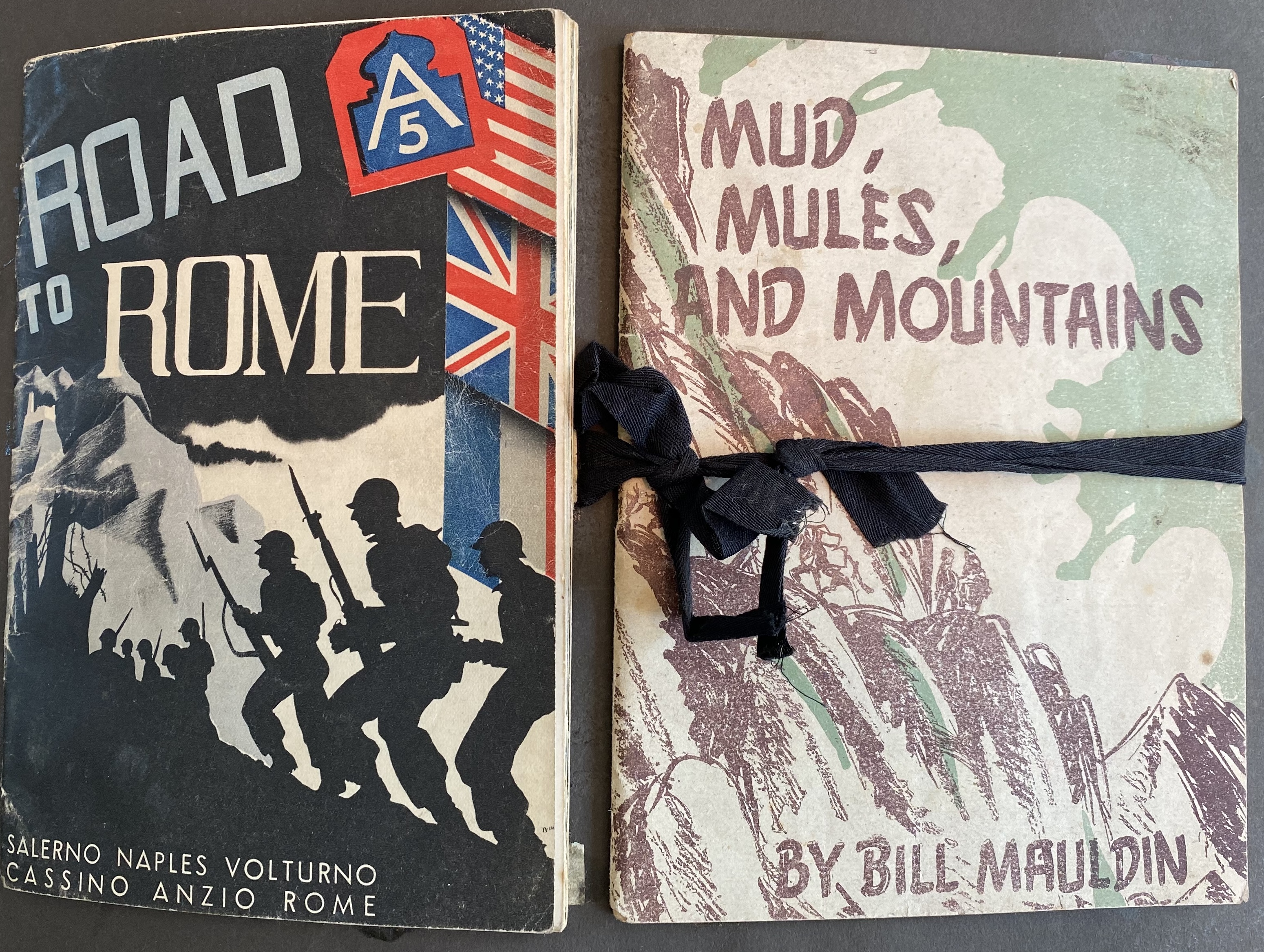
You’ve Got Mail–March 31, 1944

Flo Scheduled for ARC Training in D.C.

My Mother and Audie Murphy Ch. 5

March 31, 1944 began as a black day in Yakima. Farmers had lit smudge pots in the orchards during the night to protect delicate buds from frost. The fuel, which included old tires, diesel oil and whatever could be found to burn, had left a black oily residue on the landscape. The white horse in the field down the street was now charcoal black. And the polluted air had seeped inside houses, coating everything. 

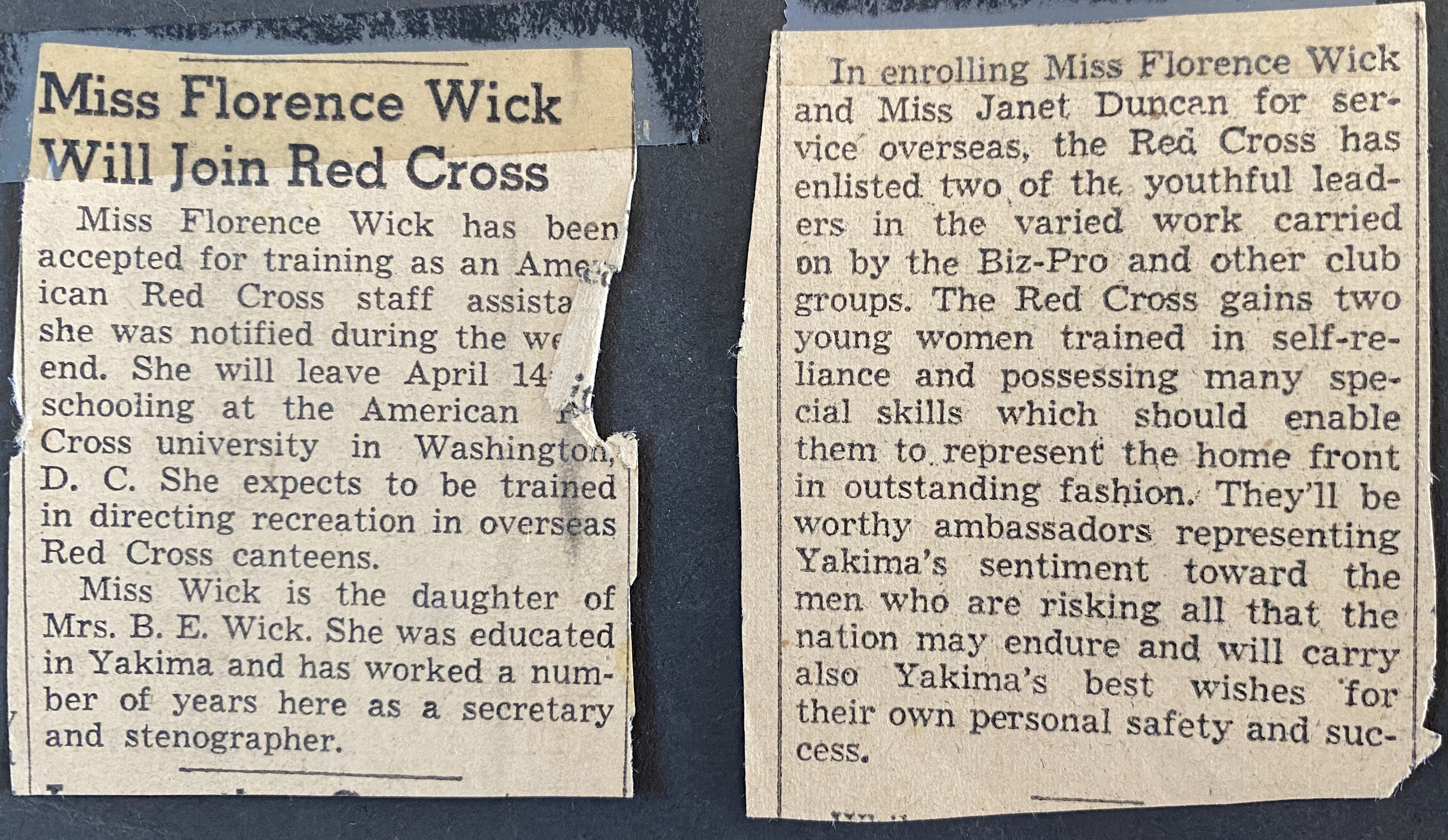
The local Yakima paper kept track of citizens in the war. From Flo’s album.

When Flo awoke and blew her nose, the snot was black. Still, for her the day was a happy one. In two weeks she would be in Washington D.C. starting a new job as an American Red Cross (ARC) staff assistant. Today she would tell her boss that next week would be her last. She would give herself a week to get to D.C., taking the train to Chicago and staying overnight there. It would be the start of an exciting adventure and she could hardly wait to get started. 

The ARC telegram that had come the day before said she would receive a letter with more details. She would have to send some telegrams herself to let friends and relatives know this good news. Her best friend, Molly, now working in Seattle, would need to know. And so would her sister Eve, stationed as a U.S. Army nurse at a hospital in Burford, England.

At work, the engineers were full of congratulations and good wishes. For them it was nothing new. Employers all over the country were having to deal with workers leaving for the war, either as draftees or volunteers. The U.S. had already been at war for more than two years, since Japan bombed Pearl Harbor December 7, 1941. The Europeans had been at war since September 1, 1939 when Germany invaded Poland.

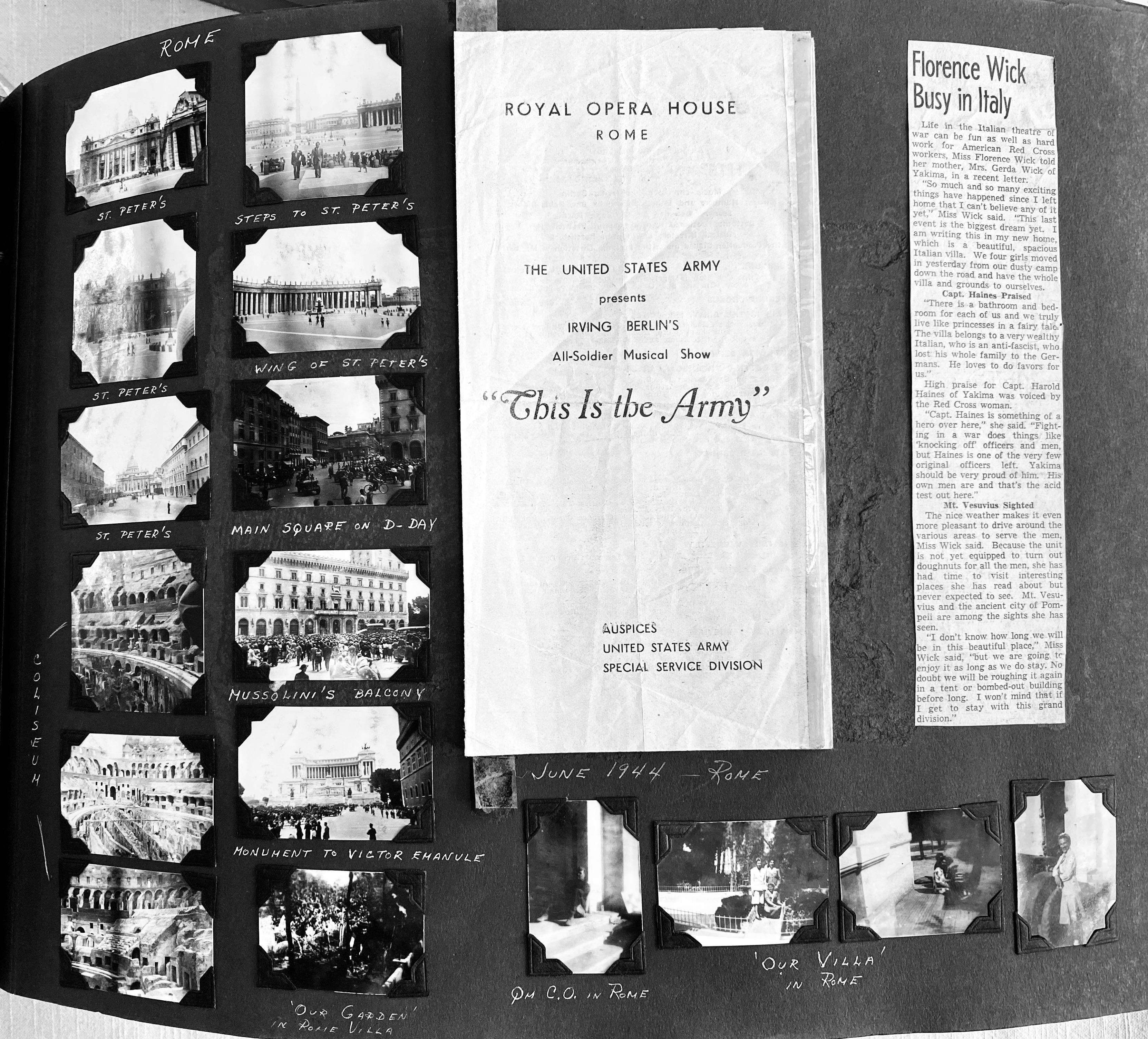
A page in Flo’s WWII album

In January, 1944 the Third Infantry Division had landed at Anzio, Italy and the campaign had become a stalemate, costing heavy losses on both sides. The Allies would not rout the Nazis there until May.

Flo agreed to finish out the next week to train her stenographer replacement, and she was happy to have one more week’s pay, but now that she knew she was leaving, she couldn’t wait to be finished with the Washington State Highway Department. It had been a fine place to work for more than a decade, but she was ready for new challenges. And she would have many.

When she got home that evening, her sister Betty ran from the house waving an envelope. 

Flo, still in her coat, opened the envelope carefully, thinking she would save the letter for a future scrapbook. Her life was about to change and she wanted to remember this moment.

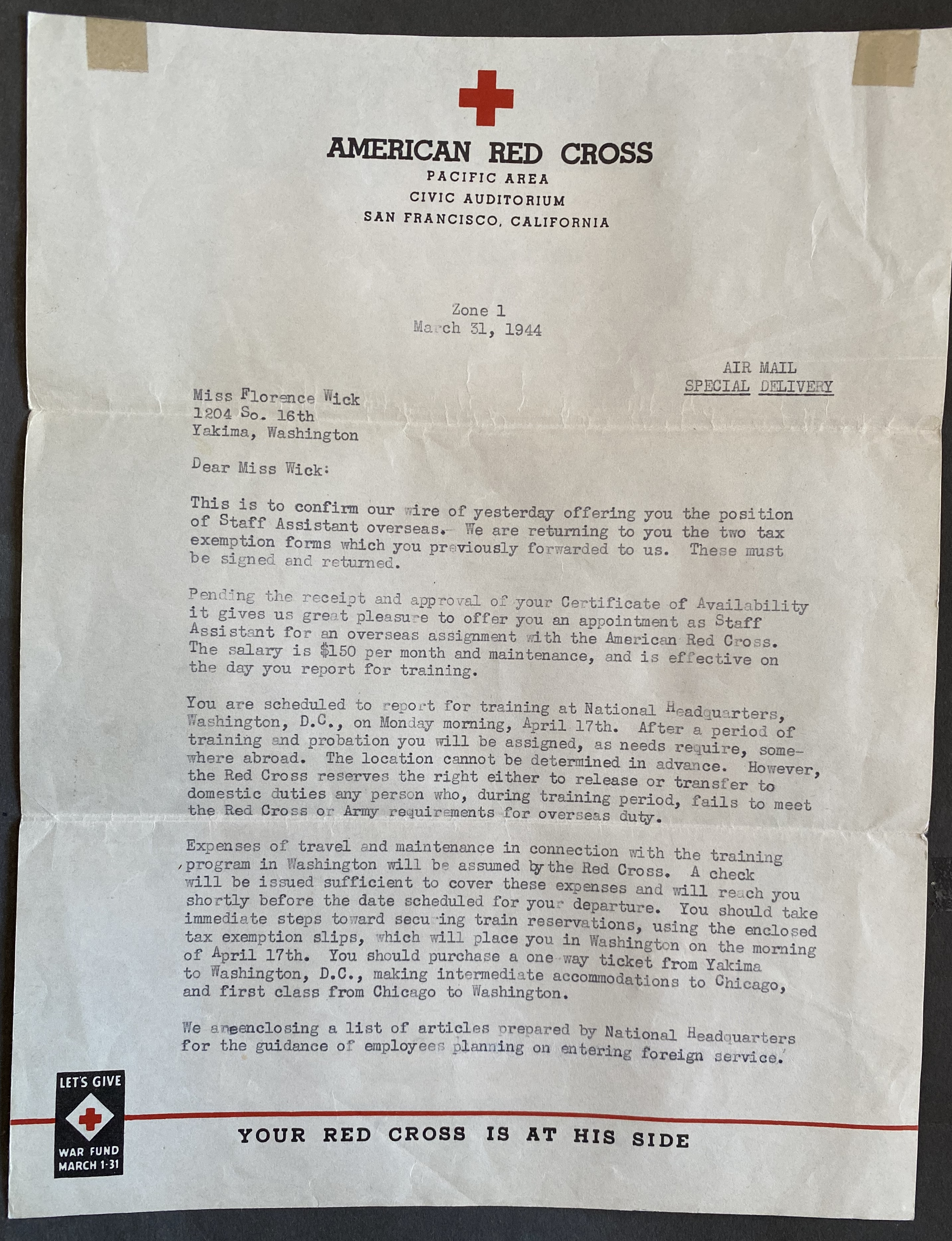
The letter was headed American Red Cross, Pacific Area, Civic Auditorium, San Francisco, California. It read:

“Dear Miss Wick:

This is to confirm our wire of yesterday offering you the position of Staff Assistant overseas.”

The “salary of $150 per month and maintenance” would be effective the day she was to report for training, April 17, 1944.  

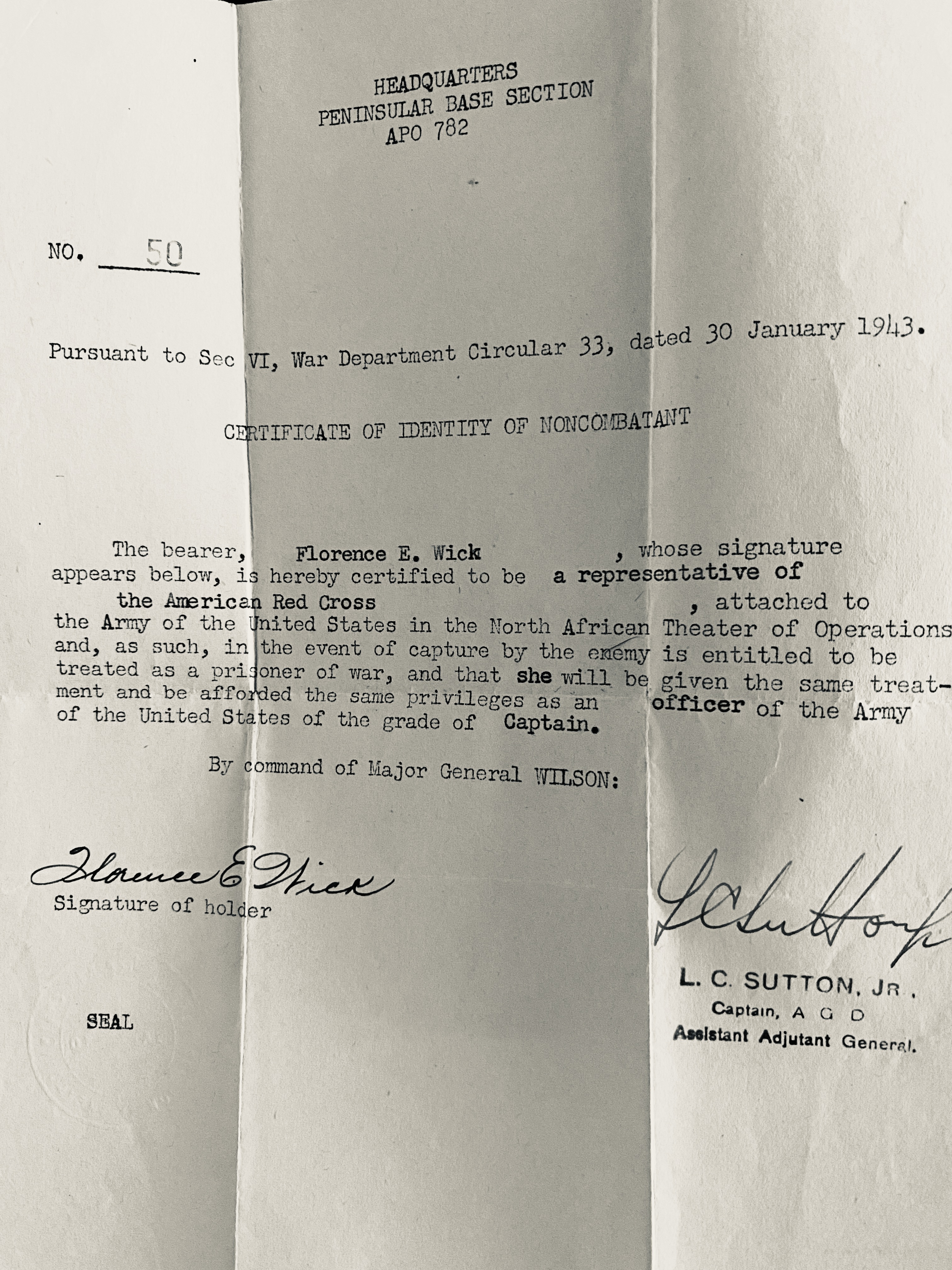
“You are scheduled to report for training at National Headquarters, Washington, D.C., on Monday morning, April 17th. After a period of training and probation you will be assigned, as needs require, somewhere abroad. The location cannot be determined in advance. However, the Red Cross reserves the right either to release or transfer to domestic duties any person who, during training period, fails to meet the Red Cross or Army requirements for overseas duty.”

“Expenses of travel and maintenance in connection with the training program in Washington will be assumed by the Red Cross. A check will be issued sufficient to cover these expenses and will reach you shortly before the date scheduled for your departure. You should take immediate steps toward securing train reservations, using the enclosed tax exemption slips, which will place you in Washington on the morning of April 17th. You should purchase a one-way ticket from Yakima to Washington, D.C., making intermediate accommodations to Chicago, and first class from Chicago to Washington.”

 It was signed by (Miss) Esther Bristol, Assistant to the Director. The letter came with a list of “articles prepared by National Headquarters for the guidance of employees planning on entering foreign service.” The list of items included everything the ARC thought a woman would need for a year abroad, such as four girdles(!), sanitary napkins, and panties.

Flo resolved to do whatever was necessary to carry out her job to the best of her ability. She would respond by collect wire as instructed and then she would be officially in the Red Cross.

Their mother, Gerda, was in the kitchen cooking dinner for her daughters and their two boarders, female students at the community college. 

She promised her daughter that she would write, and keep her supplied with homemade Swedish cookies.

Chapter 6: https://mollymartin.blog/2025/01/24/the-battle-for-salerno/

Audie Murphy Fights to Fight

Chapter 4: He Sheds First Nazi Blood in Sicily

They nicknamed him Baby and he couldn’t shed the tag. Audie Murphy had to fight for his place in combat. From the beginning of his military journey, he faced skepticism at every turn. Rejected by the Marines and paratroops, he was finally accepted by the infantry. 

Battle route of the Third Infantry Division

Immediately his first commanding officer tried to shove him into a cook and baker’s school where the going would be less rough.

“That was the supreme humiliation. To reach for the stars and end up stirring a pot of C-rations. I would not do it. I swore that I would take the guardhouse first. My stubborn attitude paid off. I was allowed to keep my combat classification; and the Army was spared the disaster of having another fourth-class cook in its ranks,” he wrote in his autobiography.

In training, officers took one look at his skinny body and boyish face and tried to steer Murphy away from the front lines.  At Fort Meade, one well-meaning officer attempted to save him from combat altogether by assigning him a clerical position at the post exchange. Again he stuck to his guns.

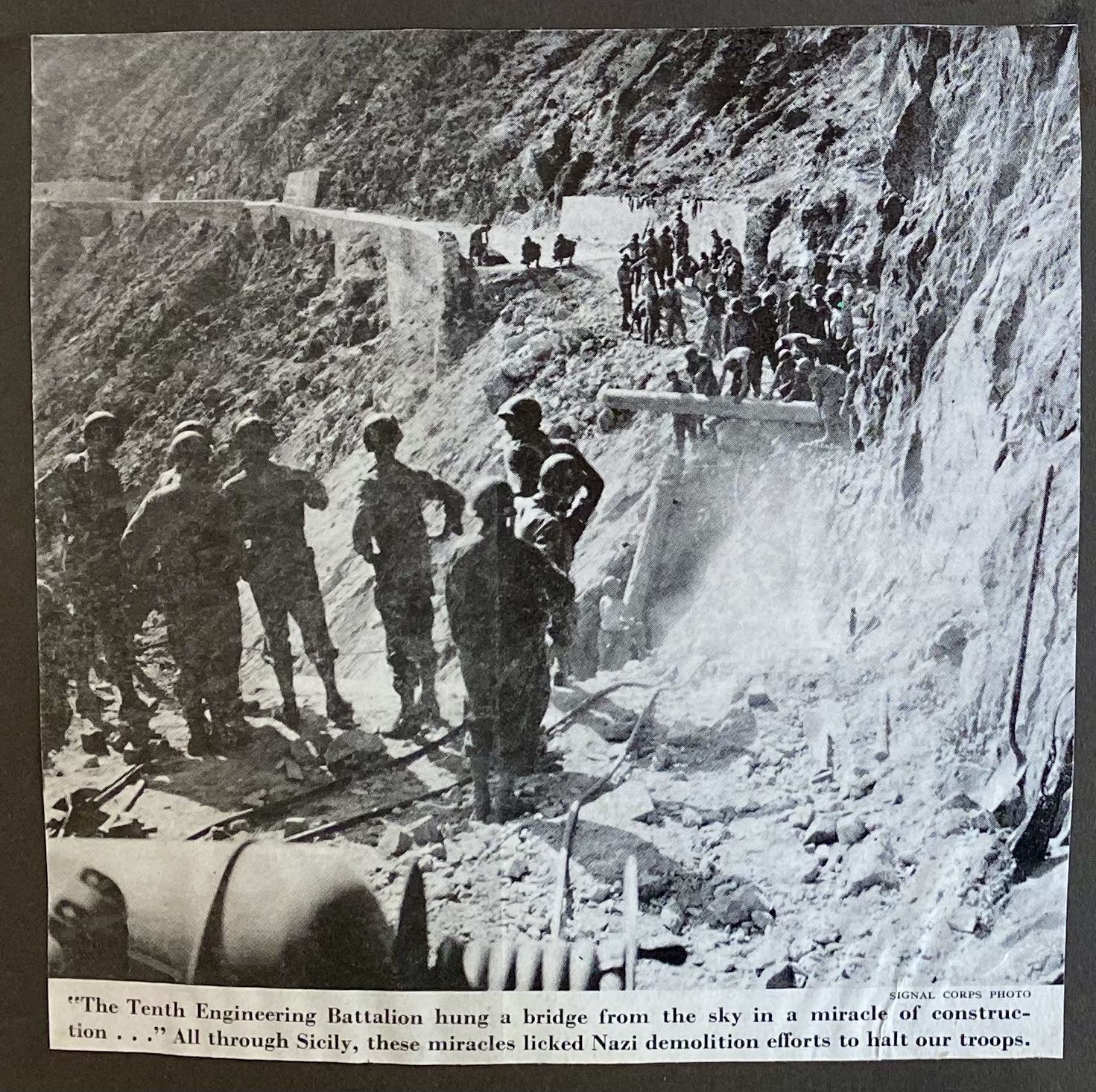
In July, 1943 he made it to the front in Sicily, but his youth and appearance worked against him even there. He was transferred to headquarters to serve as a runner. But Murphy wouldn’t stay away from the action. He repeatedly sneaked off on patrols and scouting missions. His determination eventually forced his commander’s hand. He was promoted to corporal.

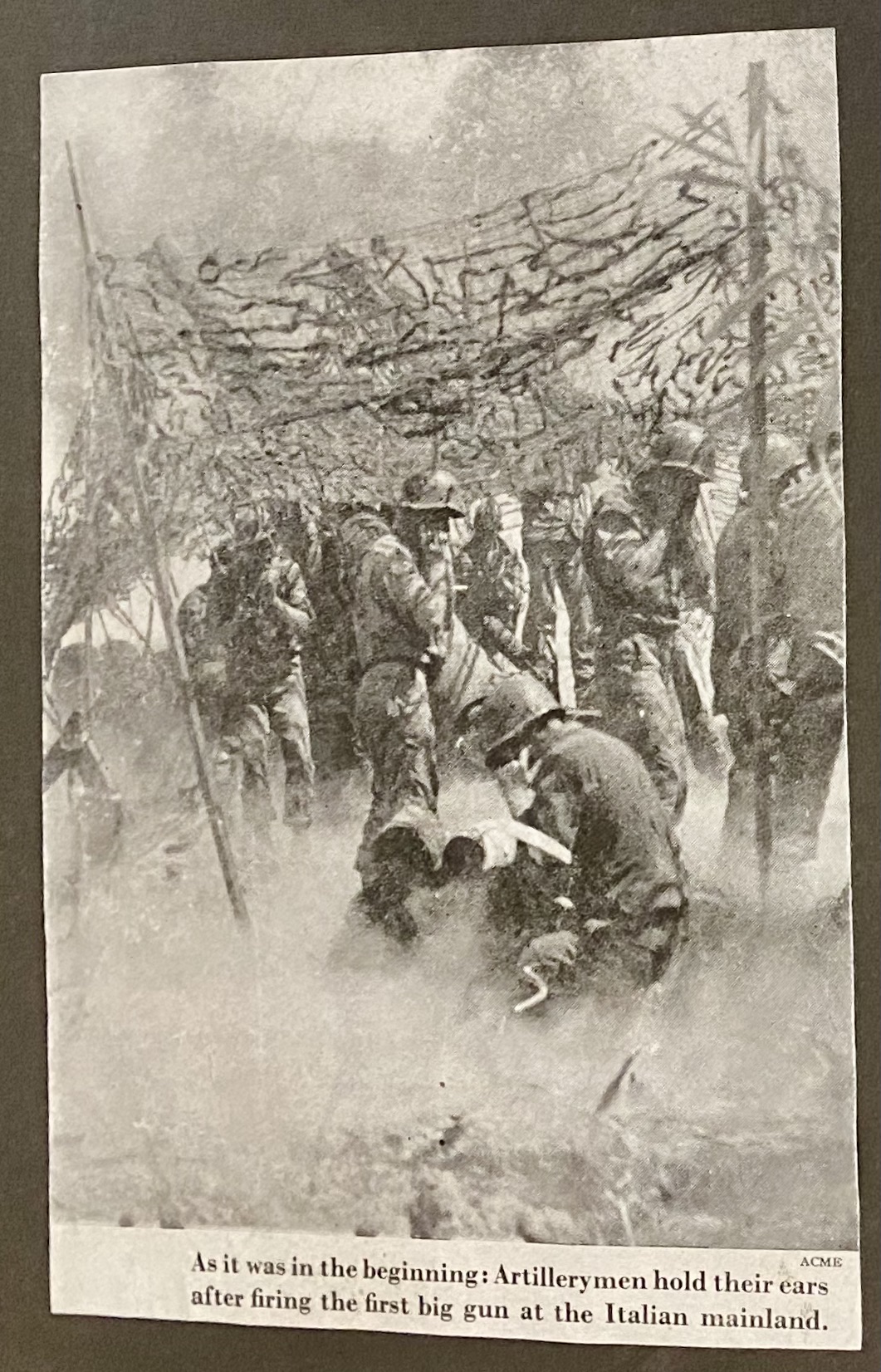
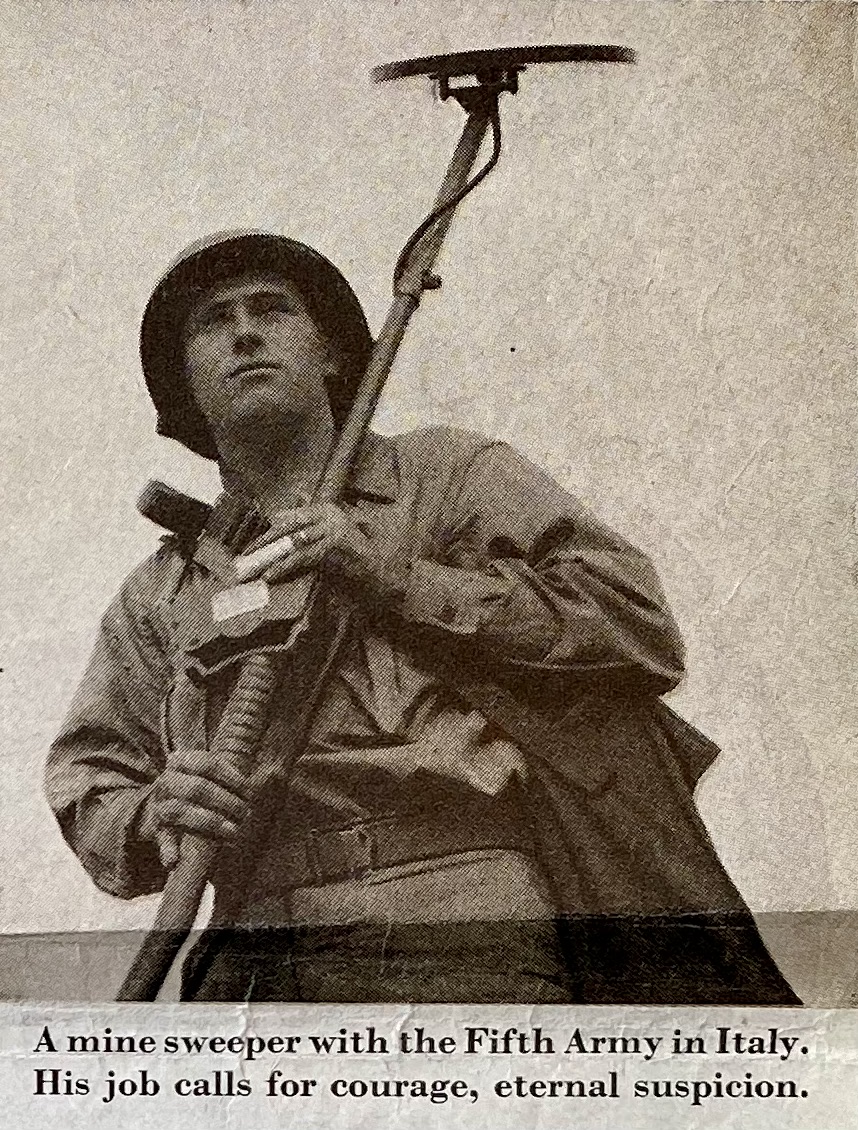
Life Magazine photo essay posted in Flo’s album

By then, Murphy had already missed his chance to fight in North Africa. His convoy had docked in Casablanca only after the battles were over. Instead of combat, he endured more training—much to his frustration. “I just wanted to fight,” he later said.  

Murphy finally got his chance in Sicily, but it was far from the glory he had imagined as a boy.  

On his first day in combat, a mortar attack killed a young soldier sitting nearby.  A boom, a whistle, the earth shakes, and the boy falls from the rock where he was sitting, just taking a break. As simple as that. One minute you’re sitting on a rock. The next minute you’re dead.  

This was not the war Murphy had dreamed of.  He had imagined men charging gallantly across flaming hills. Bugles blew, banners streamed, and the temperature was mild. Enemy bullets always miraculously missed, and his trusty rifle always hit home. As a kid, the dream was his escape from a grimly realistic world of poverty.

But now, as he trudged across the Sicilian battlefield, sweat soaking his uniform, his boyhood fantasies were shattered.  

“Maybe my notions about war are all cockeyed. How do you pit skill against skill if you cannot even see the enemy? Where is the glamour in blistered feet and a growling stomach? And where is the expected adventure? Well, whatever comes, it was my own idea. I had always wanted to be a soldier,” he wrote.  

His skill with a rifle, however, did not go unnoticed. In one skirmish, Murphy shot two German officers from their horses with two clean shots. He had shed his first blood. But he felt nothing except a weary indifference.

Even as malaria struck and forced him into a field hospital for a week, Murphy returned to the lines. The disease would haunt him throughout the war, but it didn’t stop him. 

He had loved the idea of war, but it didn’t take long to hate the real thing.

“The Sicilian campaign has taken the vinegar out of my spirit. I have seen war as it actually is, and I do not like it. But I will go on fighting,” he wrote.

*Quotes are from Audie Murphy’s autobiography, To Hell and Back

Flo Gets a Telegram

My Mother and Audie Murphy chapter 3

The winter of 1943-44 had been mild in Yakima with less than the usual snow. On March 30, some fruit trees already bloomed in the orchards of the Yakima Valley, but frost warnings loomed and could result in a smudge night with fires lit in the orchards to keep the buds from freezing. It was a Thursday and tomorrow would mark the last day of Flo’s workweek at the Washington State Highway Department where she had been a stenographer for 13 years. 

“You got a telegram!” sang her sister Betty as Flo pulled the car into the family driveway. 

Flo had been anticipating this telegram, eagerly awaiting news on her application to the American Red Cross (ARC) overseas program. She opened it carefully.

It read:

APPLICATION OVERSEAS STAFF ASSISTANT ACCEPTED. EMPLOYMENT CONTINGENT UPON RECEIPT AVAILABILITY CERTIFICATE. FORWARD TENTATIVELY SCHEDULED WASHINGTON TRAINING MONDAY APRIL 17TH. LETTER FOLLOWS=

                  ESTHER BRISTOL.==

Throwing her purse and coat on a chair in the entryway, Flo ran to the kitchen to show their mother, Gerda. 

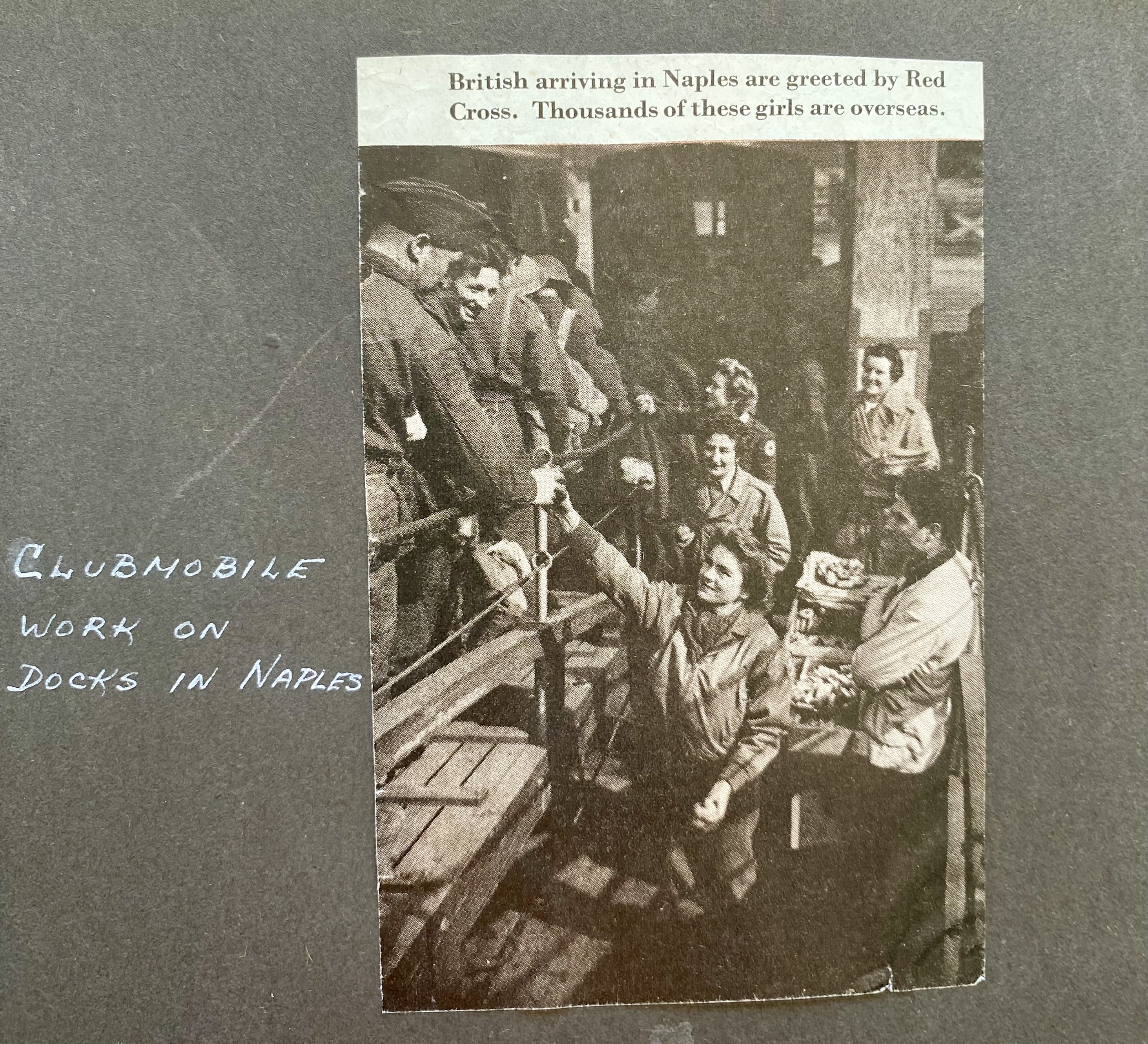
Flo had signed up for the ARC program as soon as she’d heard about it. She badly wanted to be in Europe where her sister Eve was already working as an Army nurse. Eve had written that when their troop ship had docked in Guroch, Scotland on January 7, they were met by a clubmobile with ARC women handing out donuts and coffee. 

The ARC had rolled out the clubmobile model in England in 1942 with repurposed buses modified as mobile canteens and now the program was to be expanded into the European theater of the war. The clubmobile “donut girls” were envisioned as one element that would keep American soldiers willing to fight and die on foreign soil.

In February 1944, a Life magazine article had described the ARC women as “handpicked for looks, education, personality and experience in recreational fields. They are hardy physically and have a sociable, friendly manner.” The qualifications included a high level of education, being between 25 and 35 years old, an upbeat attitude, social skills, and good health. The women were chosen for their attractiveness, embodying the wholesome, well-scrubbed appearance of the girl next door. Nearly all were unmarried. Flo had immediately pictured herself among them.

Handing out donuts from the Life Magazine story

Flo and her youngest sister Betty still lived at home, contributing their earnings to the family kitty. Gerda had found work at a fruit processing plant, and they had taken in boarders to make ends meet since their father, Ben, had died five years earlier. Times had been tough, but their finances had stabilized, and the ARC job paid $150 a month. Flo could send most of her paycheck back home. 

Flo wondered what her father would have said, although she thought she knew the answer. Her father would have been proud of her decision to do her part for the war effort. He was a Norwegian immigrant, and a patriotic American.

To apply for the job of ARC overseas Staff Assistant, women were required to have at least two years of college education. White skin was an unwritten modifier, although there were some Black women recruited to work with segregated Black troops. Flo was 30 in 1944. She met the minimum qualifications except for the college education part. But Flo had mastered a skill that she would use throughout her life. She knew how to write a convincing letter. She was sure that she could show the ARC that she was just as qualified as any college educated woman.

The application process had been rigorous. Besides a written application, Flo included reference letters from her employers, the Presbyterian minister, and members of the Business Professional and YWCA groups where she was active. She passed a medical fitness exam and traveled to Seattle for an in-person interview.

Pasted in Flo’s album from the Life Magazine story

Flo understood that the college requirement was based on class. The ARC aimed to hire middle or upper-class “girls.” In her application letter, Flo emphasized her middle-class status, morality, and responsibility as a church-going citizen. During the interview, she felt they had been impressed.

Other opportunities existed for women to become involved in the war, but most were situated in the U.S. You could volunteer to roll bandages, but for that you received no pay, so those who volunteered tended to be women of means or women supported by husbands. You could join the Women’s Auxiliary Army Corps (WAC), which did pay a salary about the same as the ARC. But WAC was not well thought of only because many people did not believe women should be involved in war, or even serve close to it. Few WACs were sent overseas, mostly performing office work to free men for combat roles.

The ARC flew under the radar because, even though the jobs were paid, the women were referred to as “girls” and “volunteers.” And the ARC was associated with nursing, which incited no prejudice. It was ok for women to take care of wounded soldiers as long as they weren’t allowed to fire the guns. As it turned out, the ARC women would be the first American women to fire guns in combat and Flo would be among them.

Flo knew she could be sent anywhere the war raged: the Pacific, England, North Africa, even India. She hoped for Europe where most of the fighting was. She had always dreamed of traveling to Europe. But she resolved to accept with enthusiasm whatever her assignment turned out to be.

Chapter 4: https://mollymartin.blog/2025/01/13/audie-murphy-fights-to-fight/

A Photo Album Tells the Story

My mother and Audie Murphy Chapter 2

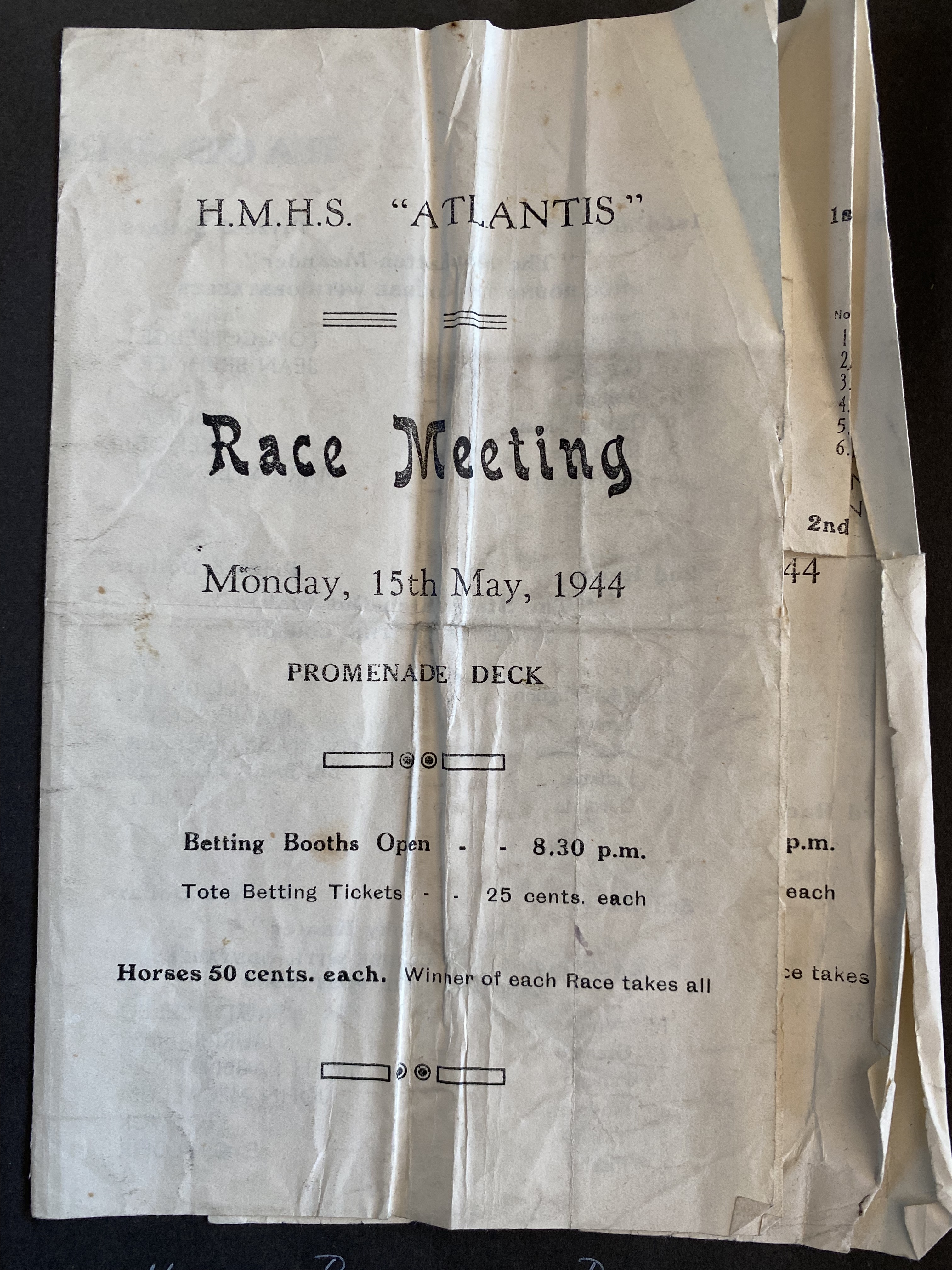
The photo album that my mother, Flo Wick, shared with Audie Murphy when they reconnected in 1955 is massive. The scrapbook is filled with photographs, newspaper clippings, letters, and travel paraphernalia and it tells the story of Mom’s two years as an American Red Cross (ARC) “donut girl” in Europe during World War II. 

It also tells the story of the Third Infantry Division, the only American division that fought the Nazis on every front—North Africa, Sicily, Italy, France, and Germany. “The Fightin’ Third” had more casualties—nearly 35,000—than any other division, and it holds the record for high combat citations. 

Throughout our childhoods my brothers and I pulled out the album, looked through it, and listened to our mother’s war stories. We kids especially liked the sketches by Flo’s comrade Liz Elliott of the everyday lives of the “donut gals.”

When my mother died in 1983 at the age of 70, I claimed the album and it’s been stored in garages and closets ever since, occasionally brought out for perusal by relatives or friends with an interest in World War II. For a time, it lived in a mold-infected storage room and so it was infected along with other archives. I exposed each page to sunlight in an effort to reduce the mold and that helped, but when I really wanted to examine the book, I donned a respirator to avoid breathing in clouds of invisible mold spores.

Mom was a scrapbook maker and for that I am now grateful as I try to piece together the events of her life during the war. Perhaps she had the idea for the album even before she sailed to Europe on a hospital ship in May 1944. I do know that the act of putting it together when she returned home after the war in 1946 salved her sadness at the deaths of so many and helped her readjust to life stateside where it seemed Americans had moved on and no longer wanted to think or talk about the war.

Recently I went through the album page by page, photographing all. That’s when I discovered that Flo had had a friendship with Audie Murphy that began somewhere in France when she served him donuts and continued after the war.

This story follows two narratives: one chronicles Flo Wick and the other chronicles Audie Murphy. They were both attached to the Third Division but mostly in different parts of the North African and European theaters. Their paths intersect in the Vosges mountains of France and as the Third pushed its way into Germany. For Audie’s tale I’m referencing his autobiography To Hell and Back, as well as letters and artifacts saved in Flo’s album.

A Little Background

She came of age during the Depression

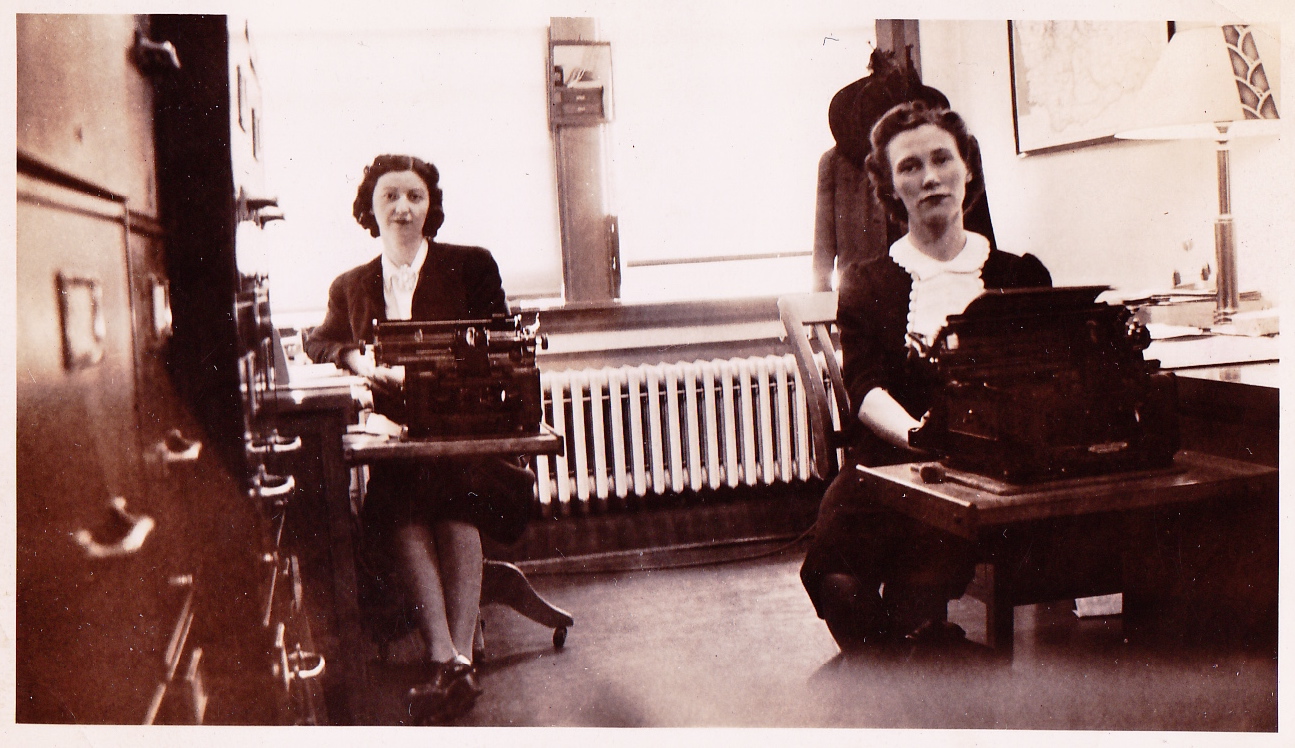
Born in 1913, Florence Wick had graduated high school at 16 after being allowed to skip ahead a grade. Her class graduated in 1929½. Flo was excited about the prospect of going to college. She planned to enroll at the state college, but the Great Depression intervened. Instead, she completed a secretarial course at a trade school. At 17 she started working to help support her family. In 1931 she found a job as a stenographer for the Washington State Department of Highways. 

Flo (R) at the Highway Dept.

By the time she learned about the ARC program, Flo had been working full time at that job for more than a decade. No doubt she was ready to do something else—maybe anything else. This seemed like an opportunity to travel outside of Washington State and to see other places in the world. And she was anxious to help the war effort.

He always wanted to be a soldier

Flo’s photo of Audie 1945

Even as a little boy Audie Murphy had wanted to be a soldier. His share cropper father abandoned his mother and their children leaving the family destitute. Then, when he was 16, his mother died. Born in 1925, the seventh of twelve kids, Audie tried to provide for the others, dropping out of school in fifth grade to pick cotton for a dollar a day. But he knew he had to get out of Farmersville, Texas. He tried to join the paratroopers and the Marines, but was told he was too short at five feet five. The Army took him and trained him to be a soldier. The baby-faced kid earned the nickname Baby. He was already a good shot, having fed the family with wild game. He couldn’t wait to shoot the enemy.

Murphy was assigned to the Third Division, then part of the Third Army under the command of General George Patton. He joined them in Sicily in 1943, on the way from Morocco and North Africa. They would fight their way through Italy and France into Germany. Murphy would be one of a very few of his company left standing and would become the most decorated American soldier of the war.

Chapter 3 https://mollymartin.blog/2025/01/07/flo-gets-a-telegram/

My Mother and Audie Murphy

She took the only pictures as he was honored

Chapter One

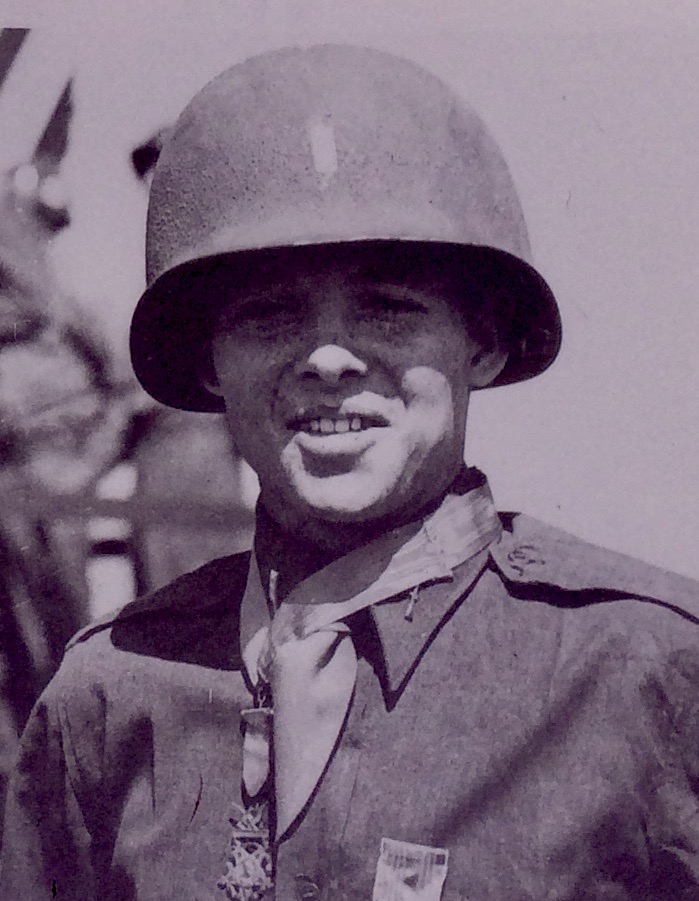
“When are we going to get some more donuts?” asked Audie Murphy of the photographer after he received the highest of all military honors, the Congressional Medal of Honor, in the field in Salzburg, Germany.

Flo’s photo of Audie Murphy receiving the Congessional Medal of Honor

It was 1945 and the photographer was my mother, Florence Wick. She had been serving as a Red Cross “donut girl” with the Third Infantry Division in the Europe. She had met Murphy and served him donuts somewhere in France.

That photograph was the only one taken of Murphy at the awards ceremony and it was published worldwide and used to recreate the scene for the movie of his life story, “To Hell and Back.”

1955 Flo and Audie reconnected on the movie set of To Hell and Back. Photo by Rollie Lane. The photo at top is the one taken by Flo at the awards ceremony in Salzburg in 1945.

The most decorated soldier of WWII, Audie would cross paths with Flo again ten years later when he came to our hometown of Yakima, Washington to film the movie. There at the Yakima Firing Center the two of them looked through the scrapbook Flo had compiled of her adventures and heartbreaks in the European theater.

Now I have that scrapbook. It’s gigantic and weighs 25 pounds. I have wanted to use its contents to tell my mother’s story, but the project is overwhelming. Maybe I can start with Audie.

Audie Murphy was known worldwide after the war. He had a huge fan club and maybe still does (he died in 1971). One of his fans recently got in touch with me and asked if I could supply more stories and pictures. Yes! Flo stayed in touch with Audie. She corresponded with his biographer, his associates and those putting together a memorial in Texas. She saved mementos and newspaper clippings.

As for her photo that became famous, she gave it freely and others took credit. A post-war letter she saved warns that others are charging for the use of her photo. She never received credit.

Chapter 2: https://mollymartin.blog/2024/12/31/a-photo-album-tells-the-story/

My Mother’s Lesbian Affair

Chapter 6 My Brother Finds Pictures

Group photo at the 1937 conference. Is that Eddie leaning against Flo (center)

Lately I’ve been walking around with my head in the 1930s.

I’ve been thinking about my mother  and what her life was like as a young person. Mom was born in 1913 and graduated high school in 1929. She came of age in the 1930s. Born in 1949, I came of age in the 1960s. They were two very different worlds.

I thought I’d gone through all the evidence we’d found of our mother’s dalliance with another woman. Love letters we discovered revealed attempts at seduction, but there was nothing to prove that they had been lovers. 

Then my brother called me. “I found pictures!” he said.

In an envelope in a forgotten file cabinet, Don found a slew of photos of my mother and her friends in the 1930s. Some were clearly pictures of the YWCA meetings in 1937 and 38 where our mother, Flo, met and roomed with her lesbian admirer, Edna Lauterbach (Eddie). Maybe Eddie is in the pictures! Of course Eddie is in the pictures! 

I’m posting some of the pictures here and I hope readers will weigh in. I think these photos are from the 1937 conference where Flo and Eddie first met in Chicago. I’m pretty sure Eddie is in one of these photos, but which one is she? Here is what we know: Flo was 24 and Eddie was 37 in 1937. I know from the census records that Eddie’s father was ethnically German. I would love to know what she looked like.

Flo on the left. Are her two handsome companions a lesbian couple?

The photos show groups of women, many with their arms around each other, hands on legs or shoulders. My mother had her hands on several of them. These women seem way more physically affectionate with each other than my generation of female friends ever were in public. Were they all lovers? 

In her seminal book Surpassing the Love of Men: Romantic Friendship and Love between Women from the Renaissance to the Present, Lillian Faderman posits that women in “Boston marriages” and “romantic couples” did not necessarily have sex. She writes that “romantic friendships” between women were accepted in the Western world up until WWI. After that, as women’s status in the culture changed, these friendships started to become less accepted. Today girls and women are not encouraged to hold hands in public or to enter into romantic friendships, presumably because they might turn lesbian. Today if there’s not a sexual component, we don’t take the relationship seriously. But Faderman argues that in the past these relationships were as serious as those between men and women. 

By the 1930s American culture was changing, but close physical friendships between women were still more accepted than they were in my youth. My mother couldn’t understand why my generation was so focused on co-ed activities. She told me she had much more fun with her girlfriends than she did with boys. Mom maintained life-long friendships with women. She even named me, her only daughter, after her best girlfriend. 

Flo and an unidentified girlfriend

Society was much more permissive by the time I was coming up than it was when Mom came of age. By the late 1960s, sex had become a hot topic. We thought about and experimented with sex all the time. For one thing, we had the birth control pill. For another thing, we had women’s and gay liberation. In three decades, our culture had changed. Women were now free agents. But women were no longer free to be so physically affectionate with each other in public.

From the moment we discovered the love letters, my question has been: Did Flo and Eddie have sex? From Eddie’s letters we know that she was crushed out on Flo. If any of Flo’s letters to Eddie existed it might be easier to determine how she was feeling. But even then we might not know whether they engaged in sex. Faderman uncovered letters throughout history in which women in nonsexual romantic friendships declared undying love for one another.

It’s not as if sex wasn’t going on. There were definitely lesbians involved in the YWCA, unions, and progressive organizations in the 1930s. Eleanor Roosevelt’s inner circle included women in Boston marriages, and Eleanor herself carried on a closeted affair with her press attache, Lorena Hickok. We know from their resurrected letters that they were deeply in love with each other, but there is no evidence that their relationship had a sexual component. 

Flo (left front) with hands on two others

By the 1960s, physical closeness between women had become suspect. I have a lesbian cousin, Sandy, who is ten years older than I. That’s a whole generation in the gay universe. I’ve depended on Sandy to school me about her older gay generation. She was closeted. She worked for the YWCA in Seattle in 1963 and told me there were many dykes there. They all knew each other and they were all closeted. You had to be if you wanted to keep your job. Sandy had affairs with a couple of them. They did not feel so free to show affection in public as my mother’s generation of women did. They worried about being outed.

My guess is Eddie knew what she was doing when she wooed Flo in 1938. She wanted a lover. But, at least in the beginning, I believe Flo was oblivious. I believe she thought Eddie just wanted to be friends. Eddie may have been the first lesbian she encountered in her life. She was probably shocked when Eddie came out to her.

Eddie was a good romancer. She managed to lure Flo to New York City from Yakima, Washington in 1941. She bought Flo gifts, took her out to dinner and the theater, and squired her around the city. And that is when I imagine Eddie came out to her and declared her love. At least, had I been in Eddie’s shoes, that’s what I would have done.

1937 group photo. Can you spot the lesbians?

A small town gal, Flo was pretty green when she first met Eddie at the YWCA conference in Chicago. She may not have even known what the word lesbian meant. By the time they met up in New York, Flo was no longer so young or naïve. She was 28 and had traveled to cities across the U.S.

My best guest. I think this is Eddie.

I just had an epiphany. What if I’m culturally biased?

I see now that I’ve been evaluating my mother’s generation through the lens of my own. My generation thinks the word lover describes people who have genital sex. Maybe I need to redefine the term lover. Perhaps we should expand the definition of lover to include what Faderman calls “romantic friendships.”

My mother and her friends were activists in women’s organizations who enjoyed working and playing together. Maybe being lovers then was not all about sex. If we expand our notion, then we can imagine a culture in which physical affection extended to all. It’s fun to contemplate an army of female lovers. 

Maybe for women like my mother the defining factor in a relationship was not sex. Maybe there’s a third choice: romantic friendship. Maybe I should stop asking whether they had sex. Maybe I should start with love.

Chapter 1: https://mollymartin.blog/2016/09/03/my-mothers-lesbian-affair/

Who Was My Mother’s Lesbian Admirer?

She came of age in New York City in the 1920s

Did My Mother Have an Affair With a Woman? Chapter 4

Flo (L) in the 1920s

After I discovered love letters from a woman to my mother in an old scrapbook from the 1930s, I endeavored to find out as much as I could about my mother’s admirer, Eddie. Who was she and what was her story?

Over a couple of years my brother Don and I uncovered some answers. A big breakthrough came when we discovered her last name in a letter stuffed in another scrapbook. Once we had that we looked her up in census records where we learned more details. She was Edna Lauterbach, born in 1900. She lived in Brooklyn with her family including two sisters. She worked in advertising and she was active in the Business and Professional Women’s group within the YWCA. She had encountered my mother, Florence Wick, at conferences in Chicago and Columbus in 1937 and 38 where they roomed together.

From one of Eddie’s letters

The letters convinced me that Eddie was at least a self-acknowledged lesbian who had a serious crush on my mother. There is so much more I want to know about her. Did she remain a closeted lesbian all her life? Was she part of a lesbian subculture? No doubt the environs of New York City afforded more possibilities than those of smaller towns. We know that, as in Berlin, gay culture flourished in the 1920s in New York City, the epicenter of the “Pansy Craze” and the accompanying “Sapphic Craze.” Eddie came of age at a time when gay and lesbian characters were featured in pulp novels, stage plays, radio songs and (before the Hays Code) in movies. Born at the cusp of the 20th century, she would have been just the right age to experience this flowering of gay culture in New York.

Did she frequent the lesbian and gay gathering places in Manhattan during the 20s and 30s? We know Eddie worked in advertising, though the census doesn’t tell us which firm she worked for. But we can assume she traveled daily from her home in Brooklyn to her work in Manhattan. My mother, Flo, was a small town gal from Yakima, Washington. But I imagine Eddie, who grew up in New York, to be far more citified and sophisticated. Maybe she taught my mom some things.

Did she know Eve Adams, the notorious lesbian café owner who was arrested in 1926, jailed, and later deported, and sent to Auschwitz where she was murdered? Eve Adams is a Jewish radical lesbian foremother, but I had never heard of her until I read her biography by the gay historian Jonathan Ned Katz. The New York Times recently included her obit in its Overlooked No More obituary section and she was profiled in the New Yorker. 

Eve Adams (a taken name alluding to Adam and Eve) was friends with anarchists Emma Goldman, Alexander Berkman and Ben Reitman. In New York she mingled with the likes of Margaret Sanger and Elizabeth Gurley Flynn. Adams came to the US in 1912 and spent four years hitchhiking around the country before settling in New York. I learned from Katz’s book that one of the places she visited was my hometown of Yakima. What drew her there at the height of the nativist backlash in 1922? I’m still trying to find out.

In 1925 Eve Adams published the first American book with lesbian in the title, Lesbian Love. In that year she opened a café in Greenwich Village called Eve’s Hangout, which became a destination for New York’s bohemian contingent. 

Did Eddie visit Eve’s Hangout? I bet she knew about the place. She may have been afraid to visit, especially after Eve was arrested in 1926 by an undercover policewoman for “disorderly conduct,” a charge that referred to her alleged sexual advances and for having written an “obscene” book. But if I had been in New York in 1925 you can bet I would have checked out Eve’s Hangout.

Gay culture flourished in the Roaring Twenties in New York. Then in the 30s with the Great Depression and the end of Prohibition, a backlash began and gay culture went underground. By the time Flo and Eddie met in Chicago in 1937 you were taking a chance going into a gay gathering place, if you could even find one. I speculate that Eddie’s two sisters may also have been lesbians. The 1940 census finds them all still single in their 30s and still living in the family apartment on 88th Street in Brooklyn. I bet Eddie and her sisters had fun together in New York. Flo traveled to New York to visit Eddie in 1941 and, whether or not she met the family, I know she met one of the sisters, Gertrude. The three women saw a Broadway play together, the antifascist play by Lillian Hellman, Watch on the Rhine.

Was Eddie involved in the blooming lesbian feminist culture in the 1970s? She would have been 70 in 1970, but there were plenty of older women who joined the feminist movement, including my mother. Did Eddie continue to be active in the YWCA? The YW may not have harbored anarchists, but my mother and Eddie did rub shoulders with a progressive element who wanted to change the world. J. Edgar Hoover and the FBI went after activists in the YW, calling them communists, but the attacks never stuck, maybe because of the Christian in the name or because they were allied with wives of industrialists. Researching the YW for this series, I am impressed with all the organization accomplished, and the stance it took against racism, even in its early years. It is a fascinating history, yet to be compiled into a book. I believe my mother’s progressive anti-racist politics were formed in the YW, and my own world view benefitted from activism in the organization.

The YW was at the forefront of the most critical social movements including women’s empowerment and civil rights. The activism of Flo and Eddie set the stage for my generation’s second wave of feminism and our gay rights movement.

I thought I had reached the end of my Eddie research and speculation. But now my brother has unearthed a batch of photos of our mother and her YW pals. We’ve been able to place them at the conferences in Chicago and Columbus. So in a final chapter of this story I’ll ask readers to weigh in on the possibilities.

To be continued.

Chapter 5: https://mollymartin.blog/2022/08/04/my-mothers-lesbian-affair-2/

Solving a WWII-era Mystery

My mother kept her abortions secret 

The most personal most shocking secret my mother never told me I had to find out from my cousin Sandy.

In 1974 Sandy had just returned from a decade working for the U.S. Army in Germany. She came home and she came out, returning with a female lover and a seven-year-old stepson. Sandy is ten years older than I, and so represents a generation of lesbians different from mine, women forced to live in the closet before the gay liberation and feminist movements burst upon our scene. Running away to Europe had been a good way to keep her secret.

Flo in her Red Cross uniform. She wasn’t a nurse. She ran a “clubmobile.”

Sandy and I hung out together in Seattle and one night after a bit too much whiskey (she’s been sober now for many years) she asked me if I’d ever heard the story about my mother’s trip to Paris during the war. My mother, Flo, had told me many stories about working for the American Red Cross as a “donut girl” during World War II in Europe, but I’d never heard that one.

“What was so special about a trip to Paris?”

“Did you know Flo had an abortion?”

“Wow! No kidding! She never told me. How do you know?

“Mom told me. I guess she was sworn to secrecy, but she couldn’t keep the secret. She had to tell someone.”

Sandy’s mother, Ruth, had told her that my mother had traveled from the front lines to Paris, where their sister Eve was working as an Army nurse, to get an abortion. This would have been in the fall of 1944. I had many questions, but Sandy couldn’t answer most of them. We speculated about who the father was and whether Eve had been involved in the abortion. 

I was shocked. Flo and I were close and I couldn’t believe she hadn’t told me, her only daughter, about this significant part of her own history. 

When Sandy told me the story of the abortion, my mother was still living and she still had three living sisters. I had time and abundant resources. I resolved to find out the answers.

There were times during my childhood when Flo talked about her experiences in Europe. She showed us kids the big scrapbook she had made after the war and I remember looking through it often. Our favorite part was a series of colored pencil drawings made by Liz, one of the Red Cross gals she traveled with in the Army’s Third Division. They showed the “girls” washing their hair in helmets, peeing by the side of the road, driving big trucks, and roughing it in tents. It wasn’t until I opened the album again as an adult that I looked more carefully. 

Flo did a pretty good job of documenting her time in Europe, taking photographs with a tiny Minox camera. She had traveled on a hospital ship to Italy in 1944. Her Red Cross unit followed General Mark Clark into Rome as it was liberated by the Allies. She was in France, Germany and Austria as well. She was the only person to photograph the field ceremony honoring war hero Audie Murphy and the photo from her album was later used in the making of a movie about him. She got lots of street cred from that, and several post-war newspaper stories about it are included in her album. 

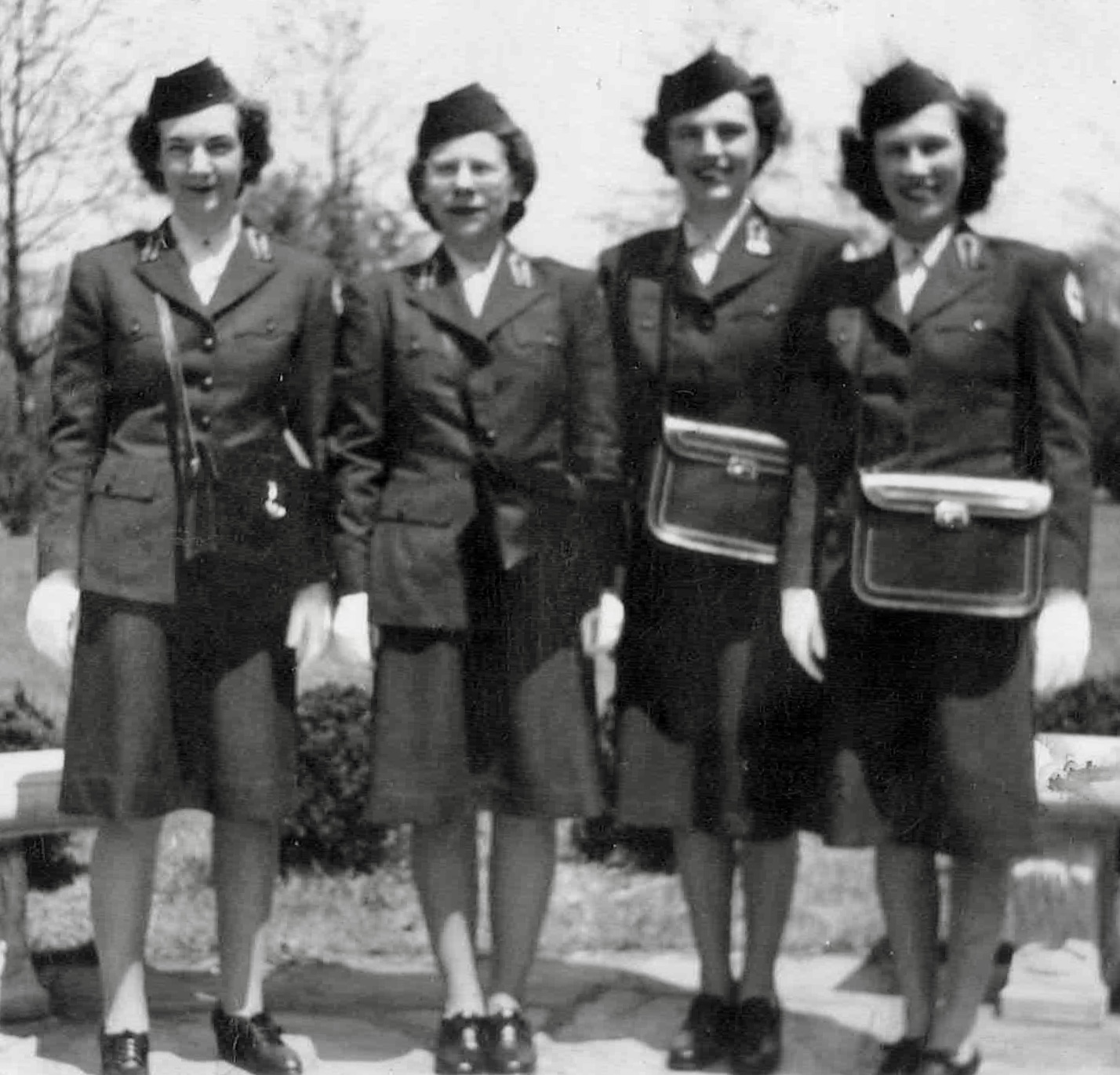
1944 Flo was captain of this crew. The clubmobile was a two-ton truck outfitted with a kitchen to make coffee and donuts for soldiers returning from the front. L-R Isabella Hughes (Jingles), Elizabeth Elliott (Liz), Dorothy Shands (Dottie), Florence Wick (Flo) in Italy

She hated Nazis and that translated into a hatred of Germans, whom she called Krauts. She distrusted Germans as a people, and believed they were all culpable for war crimes, even and maybe especially, those who claimed ignorance. She had witnessed the liberation of Dachau and took pictures, which were “lost” by a German photo shop. But she didn’t really talk about that part of the war until the 70s, sparked by a TV show, QBVII, based on a novel by Leon Uris. That discussion of concentration camp life allowed her to start thinking and writing about her experiences again. But until then she didn’t talk about the Holocaust and of course her album contained no pictures that might have induced questions from us kids. 

She did tell us about her fiancé who was killed by a mortar shell, but she didn’t say much. Most of what I know I learned from the album, which includes photos of her and her fiancé, Gene, and letters from his mother in Oregon. There are also letters from other paramours, but she was clearly heartbroken by Gene’s death and not interested in settling down with any other, at least then.

Was she pregnant when he was killed? Did she have an abortion in Europe? Why wouldn’t she ever tell me about it? Why couldn’t I ever bring myself to ask her point blank?

In 1979, Flo and I traveled to Sweden and Norway together to visit our relatives and visit the town in Norway where her father was born. We felt particularly familial. This seemed like a good time to ask and I put some thought into how to approach the question. I didn’t think she would give me a straight answer if I asked her directly. I would have to work up to it.

Me: It must have been difficult to avoid getting pregnant while you were with the Red Cross. Did they issue you birth control?

Her: What!!

Ok, poor opening line, I know. I guess I was implying that she had sex with lots of men. Which would have been understandable. That’s what I was doing.

I felt her withdraw and knew, I think, that she would not have told me the truth even if I’d asked point blank. I didn’t have a Plan B. 

In 1983, my mother died without ever giving up the story. But there were still two living sisters, Eve, the nurse, and Ruth, to whom she had told the story. Ruth wrote me a note after a story of mine was published in an anthology about the deaths of our mothers. The story was about Flo’s funeral. Ruth took issue with some of the “facts” of my story. I wrote back to say, essentially, this is my story and I get to tell it my way. If you want your story told, write it. Ruth responded with a wonderfully detailed descriptive story about her childhood. This made me hopeful she might “remember” other details about the family. Might she tell me something more about Flo’s trip to Paris? 

After I got Aunt Ruth’s letter, I considered how to respond. Should I start with trivia and slowly up the ante before she caught on? Should I just blurt out what I wanted to know and hope for the best? I decided on a compromise strategy. I did come right out and ask the Paris question, mixed in with a few other family history questions.

I don’t believe I ever heard from Ruth again, except she did send me Xmas cards every year, filled with trivia. Then she died.

Aunt Eve must know something, I reasoned. After all, she had been in Paris when Flo visited right after her fiancé was killed. Eve, the nurse, was terribly practical. She also had a knack for talking non-stop over anyone about her boys and her cats. I didn’t think she would lie to me. She asked me to edit a personal history she had written about her time as a nurse in WWII and I used that opening to question her. 

When I finally asked the question Eve seemed genuinely perplexed. She knew Flo had been pregnant. Was she pregnant by the fiancé who died? No, Eve didn’t think so. Well, who was the father then? She thought it might have been another guy Flo was dating. Really? I’m thinking: your fiancé dies, you are disconsolate, and then you get pregnant by another guy? I didn’t think so. But Eve remembered that Flo had told her she had miscarried while carrying heavy packages when moving to a new camp. She didn’t think Flo had had an abortion at all. My assumption that Ruth had gotten the information from Eve did a back flip. Flo hadn’t told Eve! She had only told Ruth, her closest sister, and sworn her to secrecy.

Flo and I got feminism together. As every new book came out about the movement, we rushed to the bookstore to buy it. I still have my copy of Sisterhood is Powerful, which she inscribed to me. She got angry about how she was treated at work. She was paid too little for what she did. When I went through her things after she died, in her jewelry box was a little pad of notes that could be pulled off, licked and stuck on something. They read “This Insults Women.” So many things then insulted women. We were sticking stickers on the world. 

Women Tell the Truth About Their Abortions 1972

In 1972 the first Issue of Ms. Magazine was published. Flo had kept it and I found it in her collections. In the very first issue was a section about abortion. Famous women, so many of them, admitted publicly to having had an abortion. It was liberating! Until then abortion was not talked about. I didn’t imagine at that time that my mother had had abortions. I myself had been very careful not to get pregnant. But by the time I became sexually active, birth control pills had become available and I made sure I was on them before I chose to have sex with men. It seemed to me that getting pregnant would be the end of my world. In high school (before I ever had sex) I once asked my parents what they would do if I got pregnant. They said they would find an abortionist. Later, when I became a feminist activist in college, I realized this was not so easy.

I wondered if my dad knew about Flo’s trip to Paris and the abortion. After Flo died, he came to visit me in San Francisco with one of his many girlfriends. 

“Hey, tell me something. Did you know Flo had an abortion when she was in Europe?”

He said he hadn’t known, but, he said, “I bet I know something that you don’t.” 

“What?” 

“She had an abortion before you were born. We had just gotten married and we didn’t see how we could afford kids. I drove her to Portland for the abortion.”

I was flabbergasted. Here was another secret she had kept from me! Now I wonder if my parents were even married then. In 1947 you didn’t go around telling folks you were pregnant and unmarried. Also, we could never believe anything Dad said; he was full of blarney. 

Later I learned of Ruth Barnett, the abortionist who ran her business in Portland from 1918 to 1968. After she became pregnant in 1911 at 16 and had an abortion, she was convinced that all women should have the opportunity to receive an abortion if they wanted one. Barnett was the target of frequent raids, and was in and out of jail, but she kept it going for 50 years, retiring only after being convicted and sent to prison.*

Flo had kept the story of both her abortions secret from me, and she’d kept the Paris abortion secret from her husband all her life. Was she afraid of having to talk about Gene, the love of her life, to her husband? Maybe, like the concentration camps, she just didn’t want to go there again. Or maybe the shame was too deep.

World War II was a global conflict on an unprecedented scale. Women all over the world were recruited to serve the armed forces in many different roles. Approximately 400,000 American women served in the armed forces. What did the Army do when they got pregnant? While I have no proof, I believe it offered abortions to those who didn’t want to bear children. I hope so. I hope my mother didn’t have to seek an underground abortion in Paris. 

*Ruth Barnett memoir: They Weep on My Doorstep. Also The Abortionist: A Woman Against the Law by Rickie Solinger

Women’s Equality Day 1970

Me and Mom and the Feminist Revolution

The feminist revolution in Yakima, Washington was not televised but I can testify that we were just as angry and militant as the sisters in New York who got all the press.

In the summer of 1970 I got a job as a reporter at the Yakima Herald-Republic, returning to my hometown to raise money to finance my senior year at college. I’d joined the feminist movement and I’d brought along my mom, Flo. She was already feminist material, a prolific writer of letters to the editor–an activist at heart. A look at my first paycheck radicalized her further. She’d been making a quarter of that all her life as the kind of secretary who actually runs the business while being paid as a typist.

Big Rally Our NOW group’s poster from 1970


At that time, newspaper reporter was a non-traditional job for women. It was ok for women to write for the women’s section and the food section and to work as secretaries, but reporter was a man’s job. The reporters at the YH-R had been organized into the Newspaper Guild and this was my first union job. I was elated, although I knew the Guild to be a weak union.

I felt strongly that the secretaries and office workers ought to have a union too so I started talking up the idea of organizing. That got shut down fast! The office workers made it clear that they felt joining a union would be treasonous. They identified with the owners of the paper, at that time the descendants of its founding family. So, at the outset, this radical feminist succeeded in making enemies of the women workers. But they had been predisposed to dislike me from the beginning, especially one territorial secretary who saw me as a threat and whose put-downs had me hiding in the bathroom crying—the only time in my working career.

cigar2 copy (2) Me at the news desk “smoking” a cigar and reading the paper, wearing a sleeveless dress, a Mary Tyler Moore hairdo and black-rimmed glasses


In the newsroom, the editor predictably assigned me to the women’s page, where readers turned to discover which of Yakima’s maidens were getting married that week. My job was to type up the wedding descriptions, which involved all of the fussy details like the cut of the bride’s dress and color of the bridesmaids’ frocks. In journalism school and as a student newspaper editor, I’d learned well the craft of editing. In my world, these unimportant details didn’t belong in any story. My wedding paragraphs got shorter and shorter until–busted! Brides’ mothers had begun calling my editor demanding to know why all the important details were missing. It turned out some people thought, and I venture to guess still think, that the color of the bride’s mother’s dress is big news. So my editor returned to writing up weddings and I went on to the news desk.

I did want to write about women, just not weddings. The features editor threw a few human-interest stories my way: a legally blind woman who’d become a pilot, a man who tatted, a dog that could ride on the back of a bike. I pitched a story to the news editor about where women in the Yakima Valley worked. Agriculture, mostly fruit orchards, was still the economic base of the region. My own grandmother had worked the line at a fruit processor and I’d picked apples in high school. I was truly interested in the demographics, but also wanted to investigate where we were not allowed to work. The editor thought it was a pretty good idea, but later reproached me, saying he had not known I was a feminist. How could I possibly write about this subject objectively, he wanted to know? Word sure got around fast.

gramonline
My Swedish grandmother, Gerda Wick (R), sorting cherries. Late 1930s?


When I pitched a story about the 50th anniversary of women’s suffrage, they bit. Maybe I could find some real suffragists who’d been part of the struggle to win the vote! Washington women got the vote in 1910, the fifth state to give women the vote, ten years before the 19th amendment became law, so I figured there must have been a suffrage movement. My mother, who’d grown up in Yakima, wasn’t born until 1913. She didn’t know any suffragists, but I got a few leads and started searching nursing homes. I did find women to interview, but they had been mostly too busy raising kids and running farms to pay attention to politics, they said. This I dutifully reported in a feature article. If there had been militant suffragists in the early 1900s in Yakima, I failed to find them.

flo and mollyFlo and I in about 1978. Photo by Ruth Mahaney


Yakima is a conservative place, infamous as the hometown of liberal Supreme Court Justice William O. Douglas. When FDR appointed Douglas to the Court, the Yakima paper disowned him. “Not From Here” said the headline. Douglas had been born in Minnesota and raised in Yakima. Ironically, Douglas was nominated to the Court as a representative of the West. But he couldn’t wait to get away from Yakima to seek his fortune. He wrote a book titled Go East Young Man.

Though I was undeniably a Yakima native, like Douglas I couldn’t wait to get away from my hometown. But the prospect of living with my parents, working as a reporter and making trouble just for the summer seemed like fun. A small group of us formed Yakima’s first National Organization for Women chapter, meeting at the home of a woman even older than my mom to document the inequality we experienced. We listed low pay, poor access to jobs and humiliating dress requirements, like having to wear hot pants to work as a waitress. There were restaurants and bars reserved for men only; and all those cultural expectations that we would serve our husbands, bear children and become homemakers. Also, everything we read placed the women’s movement in New York City. We chafed at that version and wanted to show that sisterhood was powerful in little towns in the West too.

In the back seat of a VW bug on the way to the first meeting, the young woman sharing the seat with me whispered that her female lover had left her. Distraught, closeted, and with no community, she was looking for a friend to talk to. She saw in me something I had yet to see: I was a sister dyke. Later, I regretted that my own life experience was too sparse to understand or even to sympathize. I had yet to love and lose. I had yet to come out, even to myself.

While not well schooled in romance, by this time I was an experienced organizer, having planned and executed anti-war and women’s liberation protests at college. I’d learned how to run a campaign, how to get media attention. I’d written and performed in guerrilla theater plays and given speeches, painted protest signs and silk-screened armbands. I’d participated in consciousness-raising and I was ready to act to change my world.

We aimed our first action at a restaurant where businessmen lunched that barred women. We had read about McSorley’s bar in Manhattan, which had denied women entry for 116 years until it was forced to admit us that very summer. A journalist, Lucy Komisar, the first to test the judge’s order, was dowsed in beer by jeering men. Our plan was to just walk in, sit down and demand service. We doubted beer dousing would follow, but who really knew what the reaction would be.

Resisting authority always made me nervous but also thrilled me. Just that spring we students had staged a giant strike and shut down Washington State University over racism. Flo had joined me at student demonstrations against the Vietnam War. My mother had saved me from threatened expulsion for moving off campus by making my case in a letter to the university president. Women’s protests had led to the college aborting in loco parentis rules requiring us to wear dresses and to observe curfew. Old sexist ways were crumbling in our wake, making us feel the power of sisterhood. We were on a roll.

We had cased the restaurant and, as planned, six of us marched in and took a table right under the sign that read “MEN ONLY.” Flustered waiters ran to the manager for advice and we were asked to leave. Would they call the police to arrest us, we wondered. We weren’t doing anything illegal were we? They refused to serve us but we did take up a table during the lunch hour. As it turned out, men didn’t give up their privileges easily, but no dousing followed our restaurant protest and after some resistance we helped the restaurant to see the light. We won! I don’t remember the names, or how many visits it took, but I do remember the determination, the camaraderie and the elation we felt when the restaurant gave up its policy and served us all lunch.

That summer our other protests involved wearing pants to work (handy tip: start with culottes) and pasting stickers that said “This Insults Women” on public signs and ads we deemed sexist (the ubiquity of these messages is hard for us to remember and for the young to imagine now).

Our NOW group chose as its summer coup de gras a rally to celebrate the 50th anniversary of women’s right to vote on August 26, 1970. One day, at my desk at the newspaper, I got a call from the New York Times. They were doing a story about how feminist groups across the country were celebrating Women’s Equality Day. Elated, I eagerly catalogued our victories and detailed our plans for the rally.

In preparation for our celebration, the artist in our group made signs that we posted about town, others secured a sound system and a soapbox. We planned to rally in Franklin Park, near the city center. We arrived dressed in 1920s garb, imagining throngs of women all excited to speak out about their oppression publicly, but the hoped-for crowd didn’t materialize as it had on the college campus. We gave a few short speeches, and then made the microphone available for other women to speak. No one stepped onto the soapbox except young boys experimenting with guttural sounds. Among the lessons we learned: maintain control of your mic and know your audience.

I couldn’t wait to see how my phone interview with the New York Times had come out. I rushed to the library to check out the paper and found the story–not in the women’s section. Our rally may not have been televised, but our little group of Yakima activists made the Times!

Epilogue: We went on to change our world.

Rich in Tolerance, Generosity and the Spirit of Simple Living

Chapter Five

Flo was awakened in the middle of the night by some kind of howling. It sounded like an animal in distress. She was a light sleeper, so she gained consciousness quickly and it didn’t take long to realize the sound was coming from downstairs, inside the house. She threw a robe over her nightgown and rushed down the stairs, her feet brushing the bare floor.

The howling emanated from her parents’ bedroom. There she found Gerda doubled over at the side of the bed keening, holding her husband’s head. Ben’s face was gray but his expression peaceful. He had died in his sleep, painlessly at least, thought Flo. She embraced her mourning mother, hugging her for several minutes as Gerda wailed.

They had known this day would come, but that had not lessened the shock. Ben had been ill with heart trouble for some years and had been recovering from a recent heart attack.

Flo tried to comfort her distraught mother. She would have to take control of the situation. She would grieve later.

Betty and Ruth came out of their rooms at once to find Flo consoling their mother.

“What happened?” they wanted to know, but it was a question born of shock. They knew it was Ben.

“This will ruin my wedding,” wailed Ruth without thinking. Flo glared at Ruth.

Gerda sat on the bed, still sobbing. Her girls surrounded her and offered comfort.

“He said to me this morning that his heart felt hollow,” sobbed Gerda. “If we had taken him to the doctor he might still be with us.”

The Wick family about 1930

Flo was closest to Ben of all the daughters. He had set great store by her and made his high expectations clear. Flo had loved him dearly, sharing his appreciation of reading and politics. She was proud of both her immigrant parents for having worked so hard to make a life in a new country. They were exemplary Americans and she had tried to follow their example in her own life. Ben was only 58. What a sad thing that his life had been cut short so young. He had done his very best to support their family during hard times, taking any jobs he could find during WWI and then the Great Depression.

Life on the farm at Meadowview for the girls had been a delight. They were too young to do much work and so they got to play, as long as they stayed away from the train tracks, which ran nearby. Ben and Gerda cut the meadow with a scythe and pitched the grass into piles with pitchforks.

Gerda pitching hay

The haystacks had been such fun to play in, but now Flo was keenly aware of the work that had gone into harvesting the hay for their one cow. In her mind she could taste the tart fresh buttermilk that was left after Gerda had made butter and paddled it into the buttermolds. But as a child she was unaware of the effort that went into the making of butter. Gerda had to milk the cow twice a day every day and churn the butter by hand. Then it was stored under the floor through a trap door that Ben had made with a screen-covered frame for foods that needed to be kept cool.

Father Ben and girls

Gerda now had an “Easy” copper washing machine with an electrically operated wringer. She used two tubs for rinsing and bluing. But on the farm she had washed clothes outdoors by hand using a galvanized tub and washboard. Clothes were hung to dry outdoors in the summer and on lines strung across the kitchen in the winter. Flo remembered her mother hunched over her treadle sewing machine making clothes by kerosene lantern, and her father’s rounded back as he worked at keeping the books, squinting to see in the dim light.

Flo pulls the cart

Ben had grown delicious strawberries and now Flo was thinking too of the work that went into planting, irrigating, harvesting and marketing. She remembered the brooder house where Ben had incubated the eggs and the pens where rabbits were raised for sale. Ben had taken all the produce and animals to the little town of Junction City five miles away to sell. During the school year he had also worked as teacher and janitor in a one-room schoolhouse nearby teaching all eight grades. The farm had been a losing proposition, but had failed not for a lack of hard work. Their parents had given it their all before they had reluctantly sold it and moved into town where Ben found a teaching job. At heart he had been a teacher and artist, not a farmer. Still, after they moved to Yakima he and Gerda had worked the hop fields in the summers when Ben was not teaching. The family also worked picking brush in Gerda’s sister Ellen’s apple orchard in Selah. Aunt Ellen often “forgot” to pay the girls, but Ben had earned 15 cents an hour, $1.50 at the end of the day, enough to buy some bread and hamburger.

He had worked until his heart gave out. After that Gerda and the girls took over. Flo pictured Gerda mowing the lawn, sweating in the sun in her house dress and straw bonnet while Ben lay in the hammock they had put up for him on the front porch, his nitroglycerin nearby in case of an angina attack. Was he ashamed to be seen there by people driving by on 16th Avenue, a man loafing while his wife did the man’s work?

Had Ben regretted fathering five daughters and no son? He had never once indicated that, but friends and family made the assumption. One relative had even put in writing in a letter how tragic it was that there had been no boy. Flo would not allow herself to believe that her father had shared such thinking. Besides, she thought to herself, she had been the best son that Ben could ever have.

“Uncle” Alf’s Ode to the Lay of the Last Hen

The setting full moon shone an eerie light into the kitchen window where Flo led Gerda, sat her down and lit the wood stove to make coffee. The family had prepared for this day and knew they needed to make funeral arrangements quickly in such hot weather. The doctor must be contacted to certify the death. A funeral date must be agreed upon and relatives must be contacted. Ben had two brothers in the US. Erick had gone to the Yukon during the gold rush and still lived there in a one-room cabin. Flo took out a pencil and note pad and began making a list of out-of-town relatives who would have to be sent telegrams. Ben had a small insurance policy and Gerda hoped it would cover the cost of his funeral.

Their father was gone. Life would never be the same in the Wick household.

Flo’s eulogy for her father