I think of the catholic church as a dangerous cult and that perspective was only reinforced when I watched the movie The Novitiate, about a cloistered order of nuns and its response to the directives of Vatican II in the early 1960s. From the movie, directed by Maggie Betts, I learned that 90,000 nuns left the church after Vatican II, which devalued nuns and left them without support of the church.
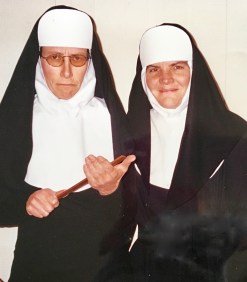
Barb and I as bad nun good nun
The protagonist is a 17-year-old novice played by Margaret Qualley, but the star of the show is the angry, strict mother superior played with force by Mellissa Leo (remembered fondly as the lawyer in Treme). She represents the old habits and choses to ignore the new catholic rules until the cigarette-smoking, newspaper-reading archbishop visits and “suggests” she begin implementing the protocols if she wants to keep her job. We learn that she has never set foot outside the convent in 40 years and we sympathize with her bitterness and frustration.
Some of the old disciplines that must be abandoned include the medieval practice of self-flagellation. In this order the novice must ask the reverend mother for the “discipline,” a stranded leather whip with knotted ends and she must tell mother the fault or lapse that deserves punishment. Another curious practice is an activity in which each novice kneels in the middle of a circle of kneeling novices and confesses her faults to the reverend mother. In an odd way it resembles the encounter groups that were just taking off in that era.
All who lived in the cloistered convent observed hours of silence and they developed a sign language to communicate. The novices spent time on their knees or crawling on hands and knees or prostrate on the floor in penance for sins against god. Touching other human beings was strictly forbidden. But the protagonist, sister Cathleen, seeks comfort in the infirmary after having starved herself in penance for a sexy dream. She hugs and kisses another novice, who it seems has been transferred here because of lesbian exploits in another order. And so the constant undercurrent of sexual attraction finds expression and then contrition. Guilt abounds.
For me, the catholic church represents a historically misogynist institution bent on maintaining control over women, our bodies, our reproductive lives, even our intimate relationships. It damages not just catholics, but all women and the cultures we live in all over the world. Hate is not too strong a word for my feelings, especially since the church continues its anti-woman postures and politics.
I believe no one truly recovers from catholic propaganda, especially when immersed as a child. The dictionary’s alternate meaning of propaganda: “A committee of cardinals of the Roman Catholic Church responsible for foreign missions, founded in 1622 by Pope Gregory XV.”
“Why didn’t the women’s movement ever embrace our struggle to bring women into nontraditional jobs? I never understood that and I still don’t.”
Susie Suafai, a longtime tradeswomen advocate, posed this question to me at the Women Build Nations conference in Chicago last spring. I can’t always catch up with Susie in the San Francisco Bay Area so I was happy to find her sitting alone at the conference where 1500 tradeswomen and allies convened in Chicago April 29-May 1, 2016. I sat down with her and learned things about her that I had never known in all our 35 years of working together.
Susie (R) working registration at the Women Build California Conference
Susie is a large woman, now with graying hair, and still formidable. She punctuates sentences with a chuckle. I guess she’s mellowed as she’s aged, but I remember her as powerful, brusque, businesslike, intimidating and a bit cynical. It seemed to me that arranging a meeting with Susie was like consulting the Oracle. She was the goddess of employment development. Susie was, and is, the one who understood the big picture, employment trends on a regional scale. Early on she learned the workings of the apprenticeship system, and understood them better than the men who ran it. I remember a workshop that Susie led in the mid-70s. She laid out the complicated apprenticeship system for us tradeswomen activists, taught us who were the men in power and how to approach them with our demands. Susie was passing on what she had learned to a generation of feminist activists.
Susie Suafai came to California via American Samoa and Hawai’i. She was studying history at San Francisco State University and fell into a job at Advocates for Women when she was asked to help prepare women for apprenticeship testing in 1974. Advocates, in San Francisco, had won one of two demonstration grants from the US Department of Labor to see if women could be recruited to construction work. The other was in Denver, Colorado. These were the first two federally funded experiments to recruit women to do this work. Susie went on to help place hundreds of women into union construction apprenticeships in the Bay Area and she later became the director of Women in Apprenticeship Program, which had spun off from Advocates for Women in 1976. She also spent about five years in Los Angeles working at the Century Freeway Project recruiting women into the trades. Electrician and filmmaker Vivian Price made a film about that project, called Hammering It Out. Susie was planning to be a history teacher but she ended up being an employment advocate, and there are many tradeswomen who credit her with creating their careers.
We are about the same age. I’m in my mid-60s and I am retired as an electrician and an electrical inspector but Susie continues working at her trade of employment advocacy. She’s now working part-time for Tradeswomen Inc. to invent new ways to bring women into the construction trades.
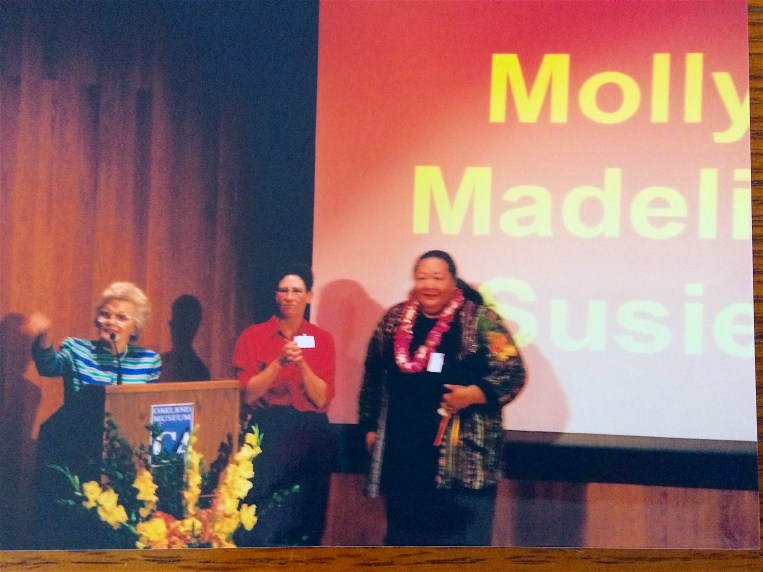
Madeline Mixer, Susie and I being honored at Tradeswomen Inc.’s 25th anniversary gala in 2004
Now, about Susie’s question, which is also my question: why didn’t the women’s movement embrace the tradeswomen’s movement? First, when people criticize the women’s movement for leaving out tradeswomen, I always object. I say we were the women’s movement and we are the women’s movement. I never felt separate from the women’s movement. I always felt like I was in the middle of it, like I was part of it.
Like Susie, as a young feminist I thought that employment was the bottom line for women. If you couldn’t get a decent paying job you could not be independent. A young woman in my history workshop at the conference voiced the issue. “If you have a good job, you don’t have to depend on a man. Once you have a trade, you can be financially independent.” It’s the same thing we said to each other in 1970.
My mother had very few choices and worked as an underpaid secretary all her life. My generation had some better choices but not many. Most often cited were teacher, nurse or secretary. In the 1970s I found other feminists who agreed with me about the importance of work. We founded organizations and allied with lawyers and advocates willing to help us fight for laws and regulations to end employment discrimination.
Though I participated in the other struggles of the feminist movement for abortion rights, for childcare, for equality in marriage, for an end to rape and discrimination, I still felt the jobs issue was primary. And for women who did not have access to a college education, trades jobs and jobs in the construction industry made a whole lot of sense. Ours was an anti-poverty movement. We talked a lot about what we called the feminization of poverty. Statistics showed that female single heads of households were getting poorer. We thought introducing women to trades jobs could reduce that trend.
Our issue was not at the top of the feminist movement’s list and I think there were many factors that contributed to invisibility. Partly it’s about class. The leaders of the feminist movement, mostly college-educated women, could not imagine themselves doing construction work and they probably did not have family members who were construction workers. Few of us knew how much money union construction workers made. For many Americans the idea of working construction was considered a step down. But workers with union contracts make more money than nonunion workers. And, in general, “men’s jobs” pay far more money than “women’s jobs.” Susie figures she would have made a lot more money in construction than she did in the nonprofit world.
It wasn’t like tradeswomen didn’t try to fit into feminist coalitions. I made many attempts to collaborate with other women’s organizations like NOW and like the San Francisco Commission on the Status of Women (COSW) of which I was a member in the 1990s. They didn’t brush me off, but they already had other projects. COSW was focused on domestic violence, a cause championed by local lesbian activists Del Martin and Phyllis Lyon, and they had created a successful network of organizations. It made sense to not spread ourselves too thin. But at least I was able to expand COSW’s attention to the issue of on-the-job sexual harassment, a universal concern of tradeswomen.
Tradeswomen collaborated with feminist lawyers—in the Bay Area Equal Rights Advocates and Employment Law Center—to secure rights to equal employment. In these efforts we had great success during the 1970s. We joined in coalition with racial minorites to fight the dismantling of affirmative action laws and regulations. In this, too, we were mostly successful. But having laws and regulations on the books is useless when they are not enforced, a strategy employed by Reagan/Bush. At that point the returns on our activism diminished, as did our support.
Funders didn’t take us seriously. I remember traveling to New York in the early 90s and meeting with the Ms. Foundation seeking funding for our efforts. The young woman I met with seemed anxious to find a way to not fund us and to get me out of her office. She categorized our organizations as “associations” and so not fundable. But I felt her rejection had more to do with other factors.
The barriers to women in the construction industry were seen as too great to spend resources on for too little gain. In fundraising meetings with the Women’s Foundation in San Francisco Tradeswomen Inc. was told that projects they had funded to support getting women into the trades had failed in the past and they had decided too few women were impacted by these projects. Many just did not think it was possible for women to do these jobs and to be happy doing them. But maybe that’s because most of the organizers couldn’t see themselves being happy doing them. They (and we) had internalized sexism and self hate. But organizers were also practical. They (and we) strategized to find ways to impact the greatest number of women.
A big part of our campaign to get women into the construction trades rested on the ability to get the word out to women about the money that could be made in these jobs. We needed the help of feminist and labor media to spread the word. Until the turn of the 21st century labor unions in the trades wanted nothing to do with us. We were accused of taking men’s jobs. But I think feminist publications could have made more of an effort to tell our story. Whenever an article did appear in a publication with a big subscription base (as in Ebony), hundreds of inquiries came in. High wages were a big draw. But traditional women’s magazines were only interested in matters of style, such as makeovers for women with “hard hat hair.”
Our fortunes changed after President Jimmy Carter left office. While some nontraditional jobs like bus driver began including women, we soon realized our efforts at integrating the construction trades were failing after Reagan took office in 1981 and began dismantling affirmative action programs.
Susie corrected me: “It’s true we lost footing during the second half of Reagan’s administration but we also made some headway in the first four years of his administration. At the end of the day, Title VII (of the 1964 Civil Rights Act) was and is the law of the land and we were willing to and are still willing to challenge under Title VII.” It’s this optimism that keeps Susie going, and the conviction that we can still improve the lives of women by helping them make careers in the trades.
In retrospect, whether or not we were dissed by the women’s movement seems a moot point. The women’s movement was an amorphous collection of activists with little money and few institutions. The partner with real money and power that could have helped our movement succeed is the federal government. The institutions we built in the 1970s never recovered from Reagan’s slashing of affirmative action and job training programs. I believe our efforts to bring a critical mass of women (at least ten percent) into construction trades would have succeeded if the Carter Administration’s programs that we fought so hard for had been left in place. As it is, the percentage of workers in the construction trades who are female has stayed at around two percent, roughly the same as it was in 1981 when Reagan took office.
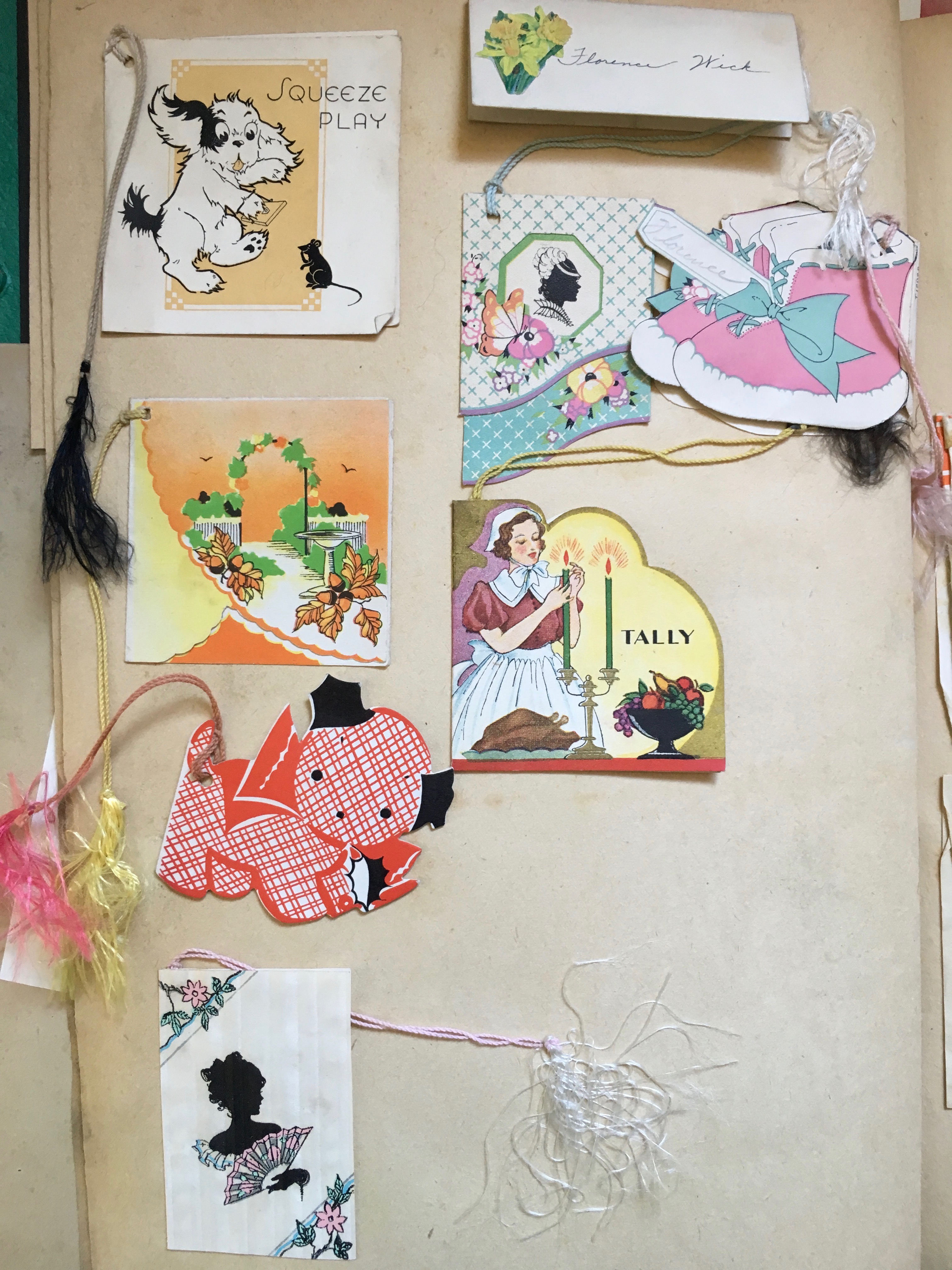
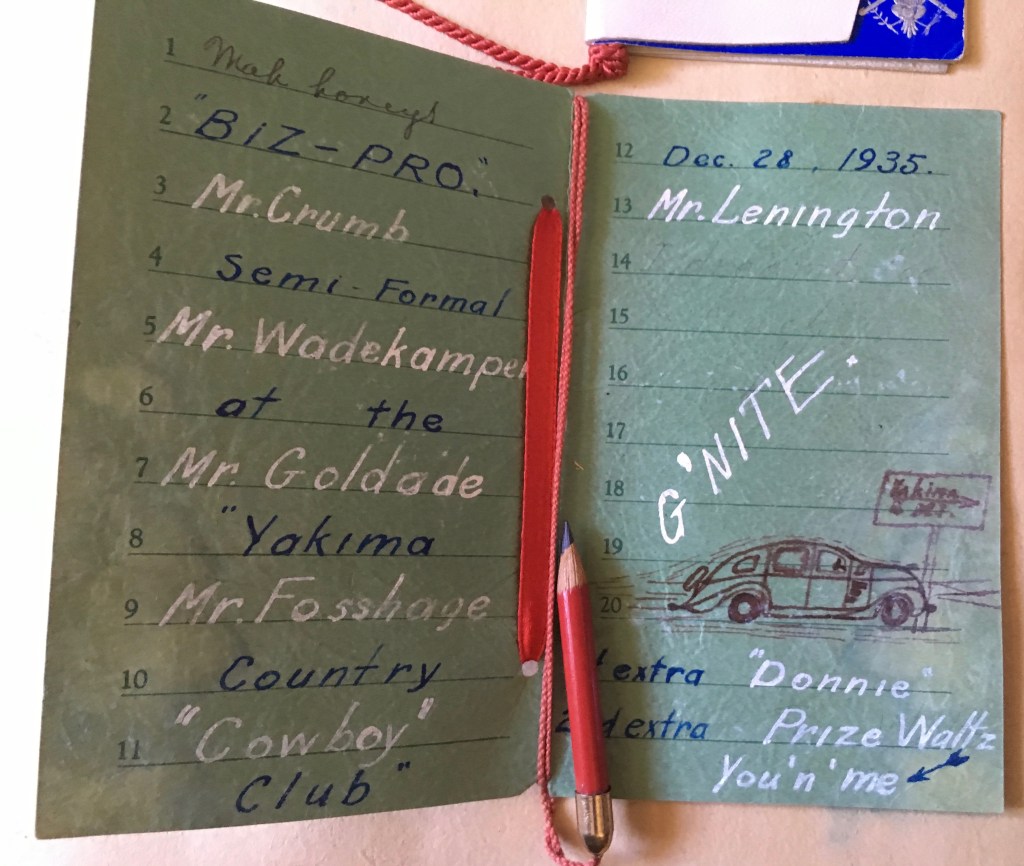
Rummaging through my mom’s scrapbooks from the 1930s I came across a packet of letters, a rare find. My mother saved minutiae from her life: bridge tallies, restaurant menus, cocktail napkins, greeting cards, dance cards, wedding invitations. But she saved almost no personal letters, although I know she wrote and received troves of them.
The envelopes are all addressed to Miss Florence Wick and marked on the outside: “Via the usual route,” “To be read on Friday,” “To be read on Saturday” and “To be read on Sunday.” Carefully opening the tattered envelopes, I found hand-written notes on stationery from the Neil House Hotel in Columbus, Ohio. They looked to me like love notes—from a woman named Edna L.
Florence, darlin’—
Haven’t we had fun with meetings and parties and “baths” and rushin’ ‘round! And what am I going to do without you when you are gone? You will just have to come to New York sometime soon so we can share some other experiences….
Love and a hug—Edna L.
What did she mean “baths”? OMGoddess! I had to call my brother Don immediately.
“Flo had an affair with a woman! I have proof!” I blurted. Perhaps I could have approached the delivery of this information differently, building up to the climax with more suspense. My brother’s lack of excitement revealed my failure.
“You’re making up things again.” He could have added, “just like Dad.” Our father was an accomplished teller of tales, amusing but not to be believed.
My wife Holly was equally suspicious. I hadn’t realized I’d built such a reputation for exaggeration. No one believed me. I just had to revel in my discovery alone.
I delved further, looking for more information about Edna L. I read the letters over. Edna sometimes signed her name Eddie or Edie, but she never included her last name. I love that she called herself Eddie, a definite lesbian cue. She illustrated the notes with endearing stick figure drawings. From the letters I learned that Eddie and Flo had roomed together at the national YWCA council meeting in Columbus. Eddie had written the notes during their time together and given them to Flo to be opened each day on the train ride home to Washington State. How romantic!
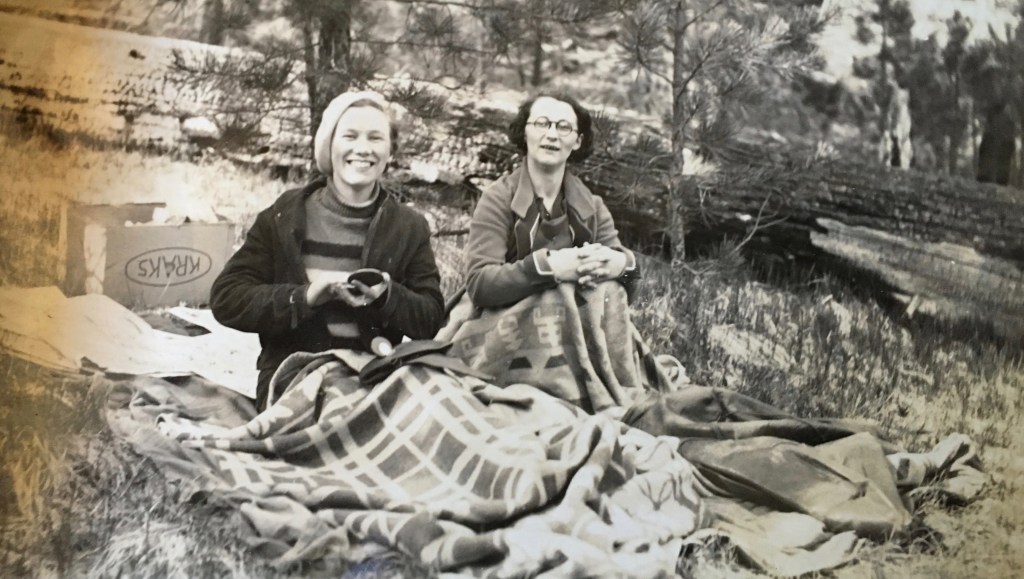
I read through all the accompanying articles and programs about the national YWCA council meetings that Flo had attended in Chicago and Columbus in 1937 and 1938, but I couldn’t find any mention of Eddie. I looked at every picture in the two scrapbooks. Flo had devoted two pages of one scrapbook to pictures of a woman who had died, kind of a shrine. The pictures show Flo and the friend on a camping trip in the mountains. The woman’s death photo, showing her body lying on a coffin-like bed, is in an envelope pasted in the scrapbook, but there is not a single clue as to who she was. I pulled up the photos to see if there was anything written on the reverse side. Nothing.
With the friend who died
The woman in the photos looked rather morose. Could the dead woman be Eddie? Did Eddie kill herself after Flo spurned her advances? Reading the letters, I can see she was clearly smitten, but there’s no indication that Flo felt the same. I let my imagination run wild. My poor mother! She must have felt terrible guilt. No wonder she left no clues about the identity of the dead woman.
She is still a mystery
My brother seemed slightly more interested in this new theory and he agreed to help me research the dead woman’s identity. We found one clue in a picture that decisively ties the dead woman to Flo’s hometown Biz-Pro group, and from her letters we know that Eddie was from New York, so I had to abandon my romantic story about Eddie. However, I’m holding onto the suicide theory until we can identify the dead woman. I can totally see how my adorable young mother might have inspired unrequited love.
My mother used to wonder aloud why my generation of girls and young women chose to hang out in co-ed groups. Why was there so much pressure to be with boys? She told me that as a young woman she’d had loads of fun communing with sisters in same sex groups. They invited boys to dances and events that they organized, but otherwise they sought the companionship of other women. Now, looking through scrapbooks she made in the 1930s, I can see what she was talking about.
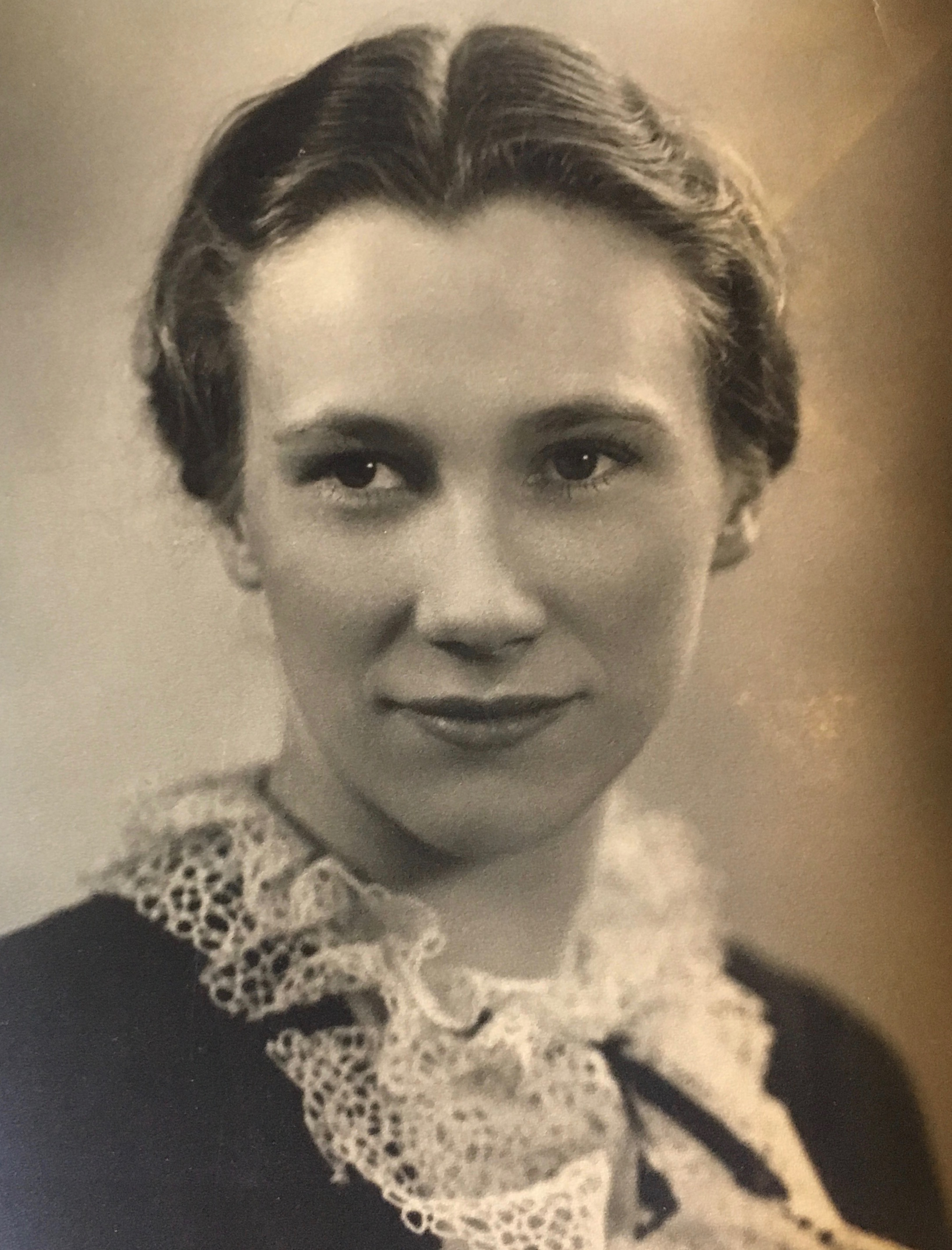
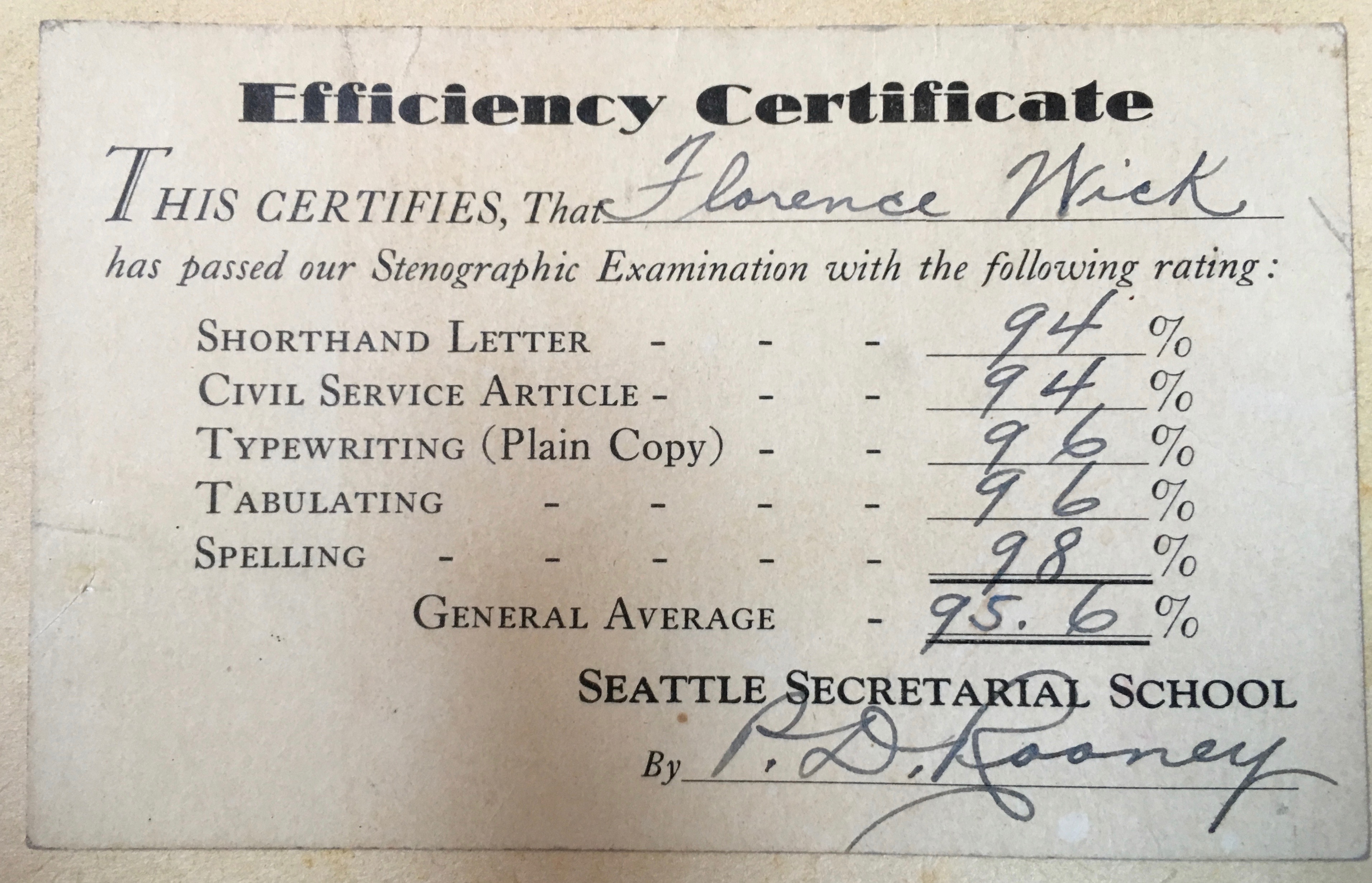
My mother, Florence Wick, had graduated from Yakima High School at age 16 in the class of 1929½, just as the country sank into the Great Depression. She was planning to enroll at Washington State University (my alma mater) when the stock market crashed and ended her dream of going to college. Instead she went to secretarial school. She got a job as a stenographer and worked steadily throughout the decade, living at home and supporting her family when her father lost his teaching job. In the 1930s my mother actively participated in women’s organizations that I now see set the stage for the feminist movement of the 1970s.
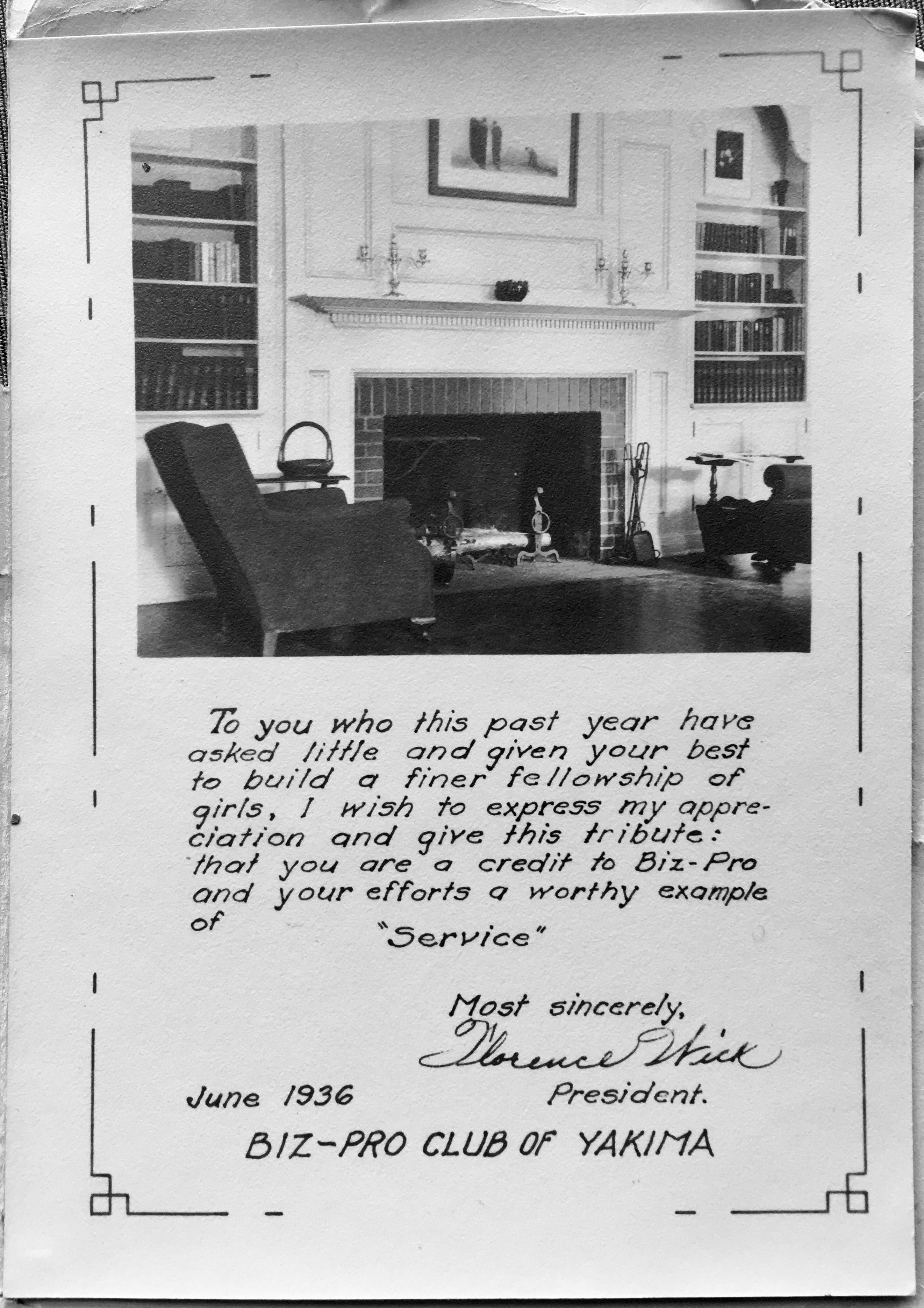
Flo was president of the Biz-Pro club in 1936
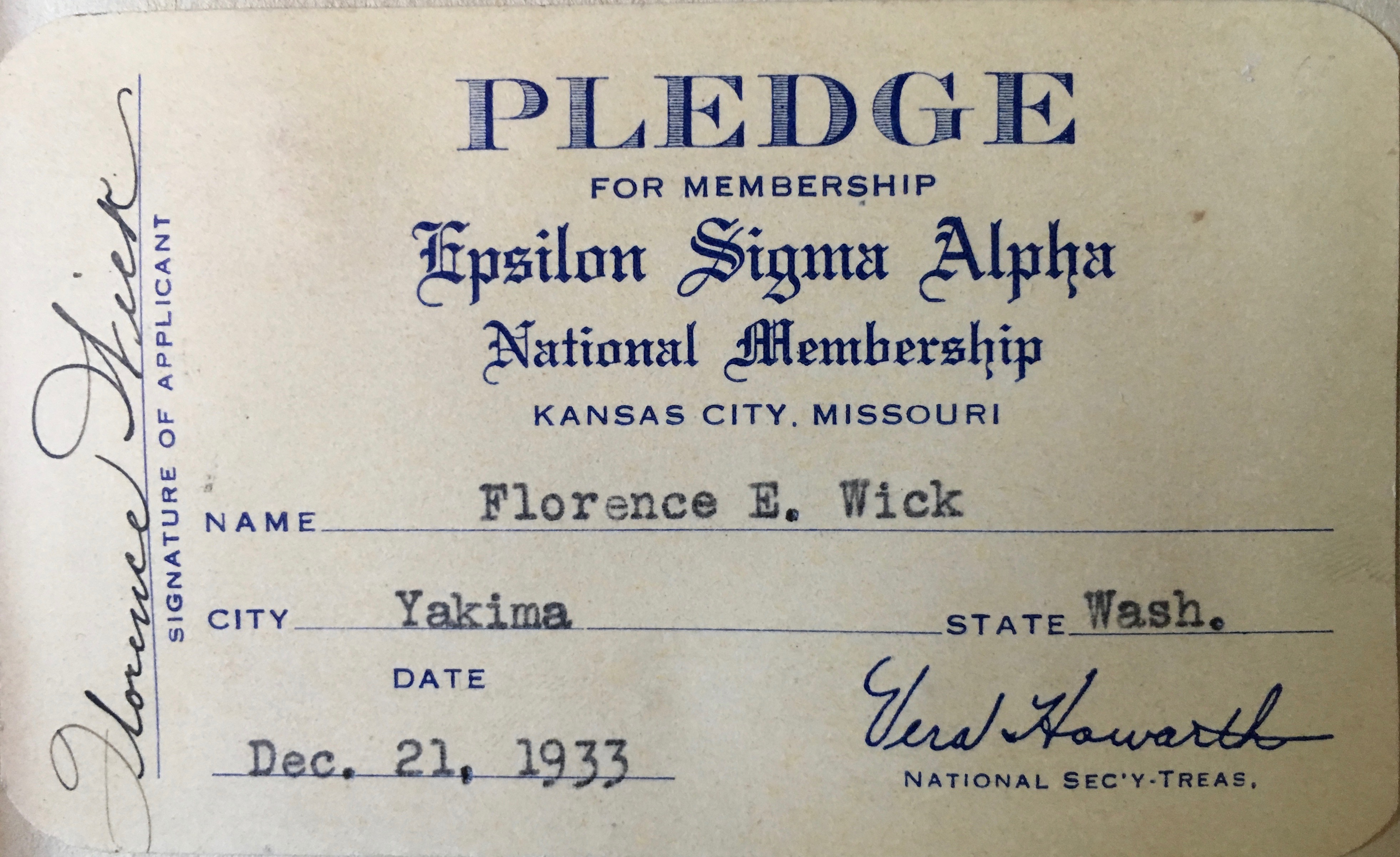
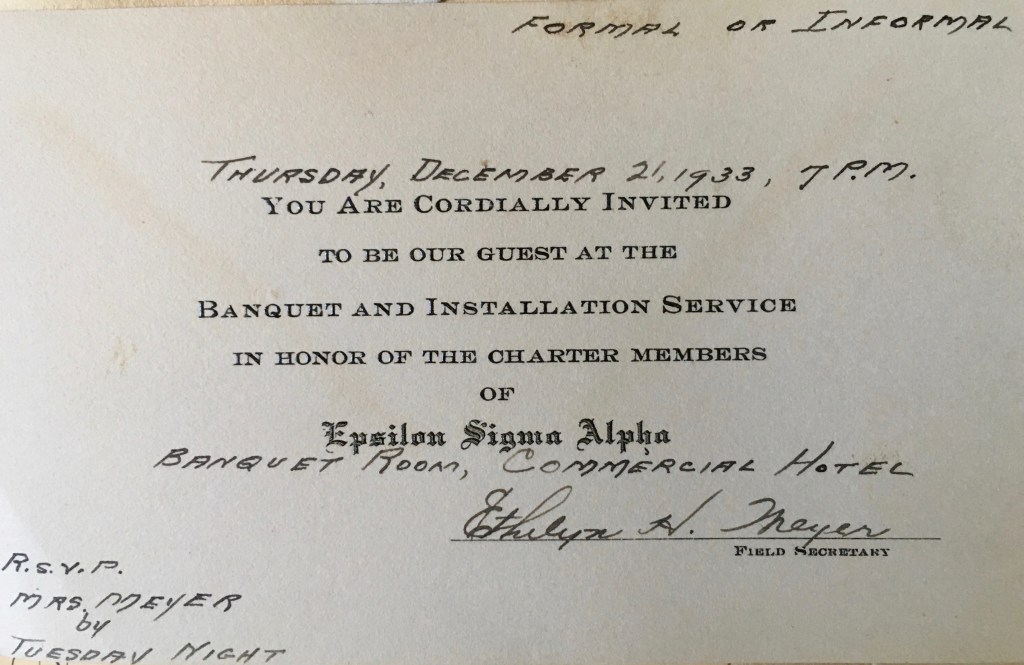
While she could never afford college, she did join a sorority, Epsilon Sigma Alpha, which had been reorganized from a college group to include businesswomen. She was also a member and president of the Business and Professional Women’s Club (Biz-Pro) one of the “business girls” clubs that fell under the umbrella of the YWCA. These linked organizations provided opportunities for what we now call networking, but they also promoted the rights and welfare of workingwomen by sponsoring legislation for equal pay and to prohibit legislation denying jobs to married women. Founded to address the surge of women into the workforce during WWI, Biz-Pro still continues to advocate for workingwomen promoting equal pay, comparable worth and family leave legislation.
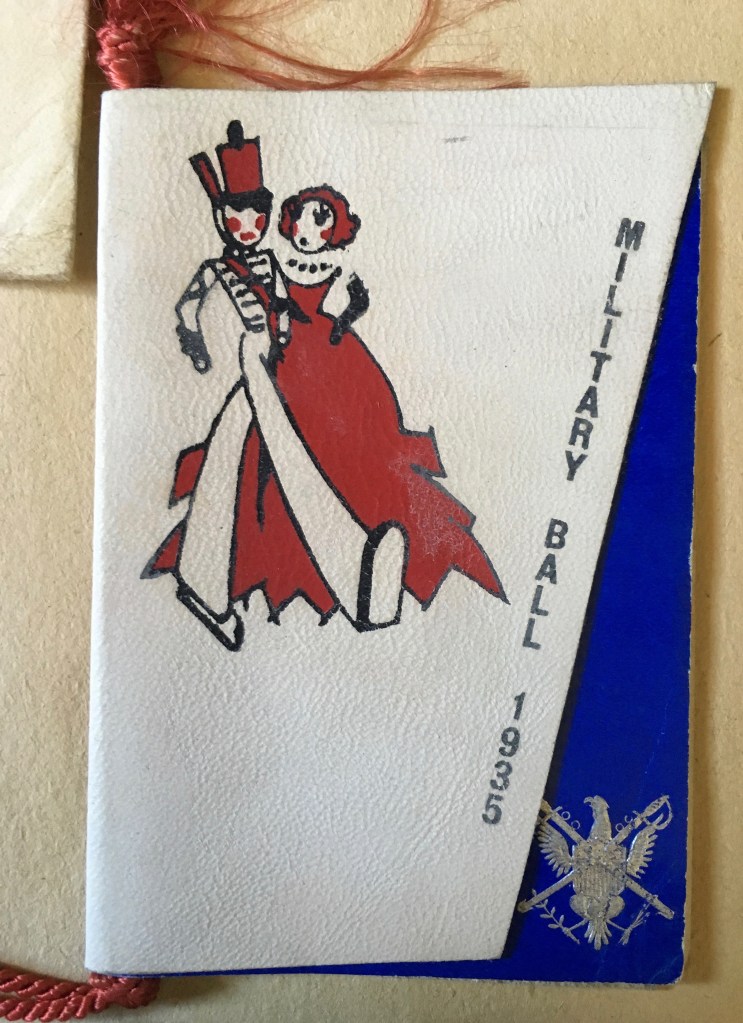
The ESA flower was jonquilShe saved dance programsBiz-Pro dance program
The sorority met twice a month, once for a study program and once for a social event. My mother saved programs and newspaper articles reporting on their events. Flo sometimes appears in the programs reviewing books (Stanley Walker’s Mrs. Astor’s Horse) or authoring skits. She participated in a bridge club and took home prizes. She directed a questionnaire on current event topics at one meeting. At another she reported on the biography of Nijinsky written by his wife. Politics was also on the agenda. On the Oct. 6, 1936 program, Miss Sylvia Murray presented a “Symposium of Nazism and Fascism.” Flo presented “Excerpts from Days of Wrath by Andre Malraux.” They had picnic summer potlucks. They played games. The local news reported: At the Thanksgiving party, 30 members and their friends were expected. The colors were yellow, orange and brown.
Sorority sistersSisters’ Ski Trip
Smart cotton frocks of today’s vogue and demure fashions of 50 years ago vied for supremacy last evening when Epsilon Sigma Alpha sorority members entertained at a dessert bridge party in the Woman’s Century clubhouse. The sorority will have a horseback riding party as a feature of its next meeting, reported the local Yakima newspaper. In news articles the married women are referred to by their husbands’ names. A dinner and theater party were planned by sorority members at their meeting last evening in the home of Mrs. Malcolm Mays.
Page from Flo’s scrapbook
The Biz-Pro meetings, too, sought to combine business and pleasure.
Miss Edith Livingston had charge of decorating the tables with white cellophane Christmas trees, snowmen, blue streamers and white tapers. Girls made a contribution to the iron lung fund.
Despite their name, the business and professional women were not above movie stars and gossip.
Mrs. Gledhill, the former Miss Margaret Buck of Yakima, related interesting Hollywood anecdotes and described the YWCA work in the southern city. She particularly mentioned the Studio club in Hollywood where girls who are hoping for a “break” live and rehearse, “even tap dancers,” she says. Among board members are Mary Pickford and Mrs. Cecil De Mille.
Both my mother and I were active in the YWCA during the 1970s when its “One Imperative” was to “use its collective power to eliminate racism by any means necessary.” Together we attended the 1973 national conference in San Diego where the farmworker leader Cesar Chavez spoke. But I hadn’t realized how involved she had been in the YW during the 1930s. After its members demanded a focus on workingwomen at the 1910 world conference in Berlin, the YW’s objectives changed from protecting women from the vagaries of industrialization to promoting their equal inclusion. To this day the YW remains a worldwide force working against violence and supporting women, racial minorities, people with AIDS and refugees.
ESA invitationBiz-Pro dance program
Flo represented Biz-Pro as a council member at its conference in Chicago in November 1937. A newspaper report of the meeting quoted her: “It was grand and I liked Chicago so much,” says Miss Florence Wick, all in one breath, of the National Business and Professional Women’s Council of the YWCA meeting in Chicago from which she returned this week. The article says of the 26 council members, she was the youngest (she was 24). The meetings were held in the McCormick residence in Chicago, a memorial to Harriet McCormick, an early supporter of the YW. “The loveliest building you ever saw,” according to Miss Wick. “I met so many notables in YWCA work, I feel so very insignificant,” Miss Wick remarks, laughing.
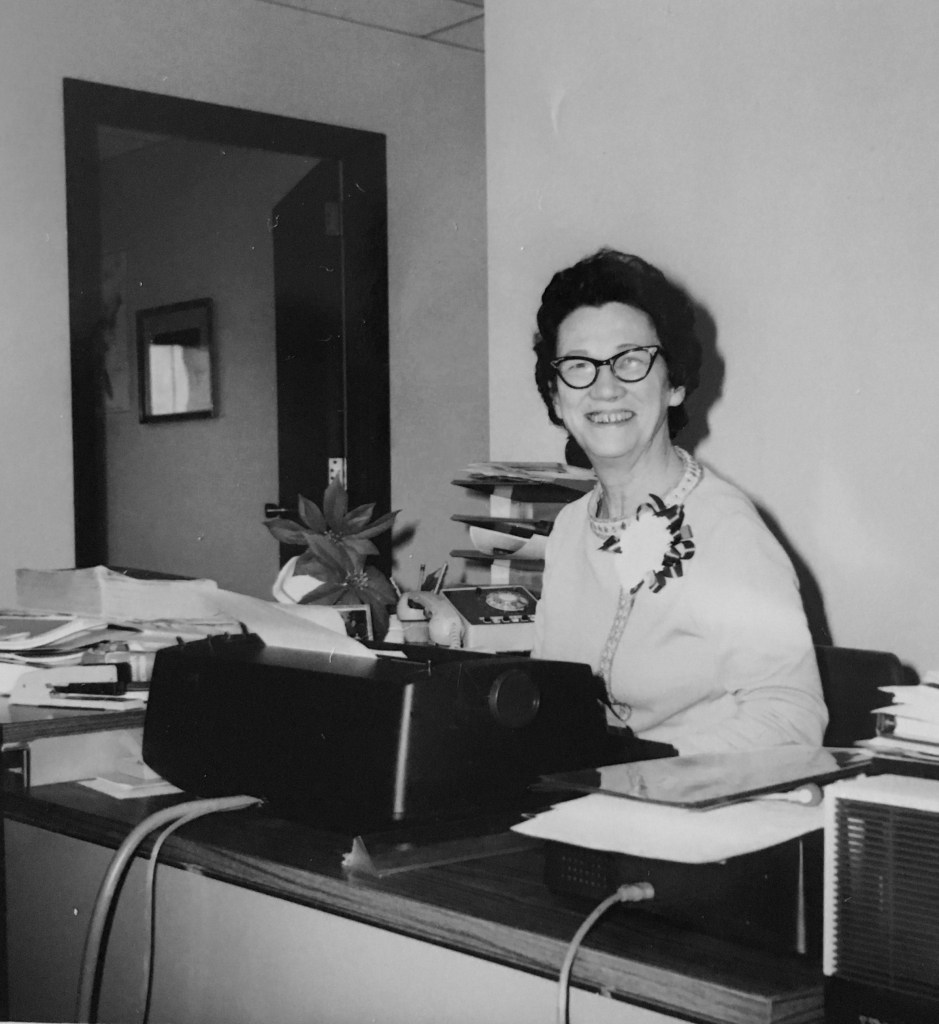
Flo at her desk. Drawing by her sister Ruth
In April 1938, she traveled to Columbus, Ohio to the national YWCA convention and later explained the “reorganization of the business girls’ groups” to her local chapter. She traveled around the Northwest to represent the local group along with others including her best friend and my namesake, Molly (Mildred) Hardin, another single workingwoman. By that time they called themselves the “Business and Professional and Industrial Girls.” Industrial referred to women who worked in factories and plants, as opposed to the “business girls” who worked in offices.
Flo told me she had accepted that she would be an “old maid” when, at 33, she met my father. Still working as a stenographer, she had assumed the identity of “career girl.” Her sister Eva, my aunt, told me Flo was always popular. She had lots of boyfriends but she was in no hurry to get married. She enjoyed the independence and self-esteem that came from earning her own living as a workingwoman. And she thoroughly enjoyed the rich friendships and associations she cultivated in the women’s organizations she joined.
Me at the ’73 YW conventionMe and my namesakeFlo in her office 1970s
Whenever I visit I always look for tradeswomen in this city of high rises and construction cranes. On this trip I was lucky to meet up with Kate Braid, the tradeswoman poet laureate of Canada (my christening). I’ve known Kate for decades, and we published her poems in Tradeswomen Magazine regularly, but she and I figured we hadn’t seen each other for 30 years. If you’re not familiar with her writing, go to her web page, Katebraid.com. Her book of poems about working construction, Covering Rough Ground, was published in 1991. Her newest book, Rough Ground Revisited, includes some of the original poems and new ones as well.
Kate has a memoir too: Journeywoman: Swinging a Hammer in a Man’s World, published in 2012. She speaks to tradeswomen all around Canada, and she reminded me as we reminisced that the very first national tradeswomen’s conference happened in the nation of Canada in 1980! We discussed the possibility of Canadians hosting the next tradeswomen conference, since it looks like our building trades in the US have dropped the ball. Come on Canadian tradeswomen: Pick it up and run with it!
One does not always plant one’s feet daintily when one is covering rough ground.
–Emily Carr, Journals
I was delighted to learn that Kate and I share an interest in the Victoria artist and writer Emily Carr. In fact, Kate is a Carr scholar, having published two books of poetry and a biography of Carr. These I can’t wait to read, but when I tried to order them from the San Francisco Public Library they were not in the stacks. So I have my work cut out for me when I return home. It seems we in the US are not very literate where Canadian authors are concerned, a prejudice that must be rectified.
Cranes are everywhere
Flaggers
Hard hat area
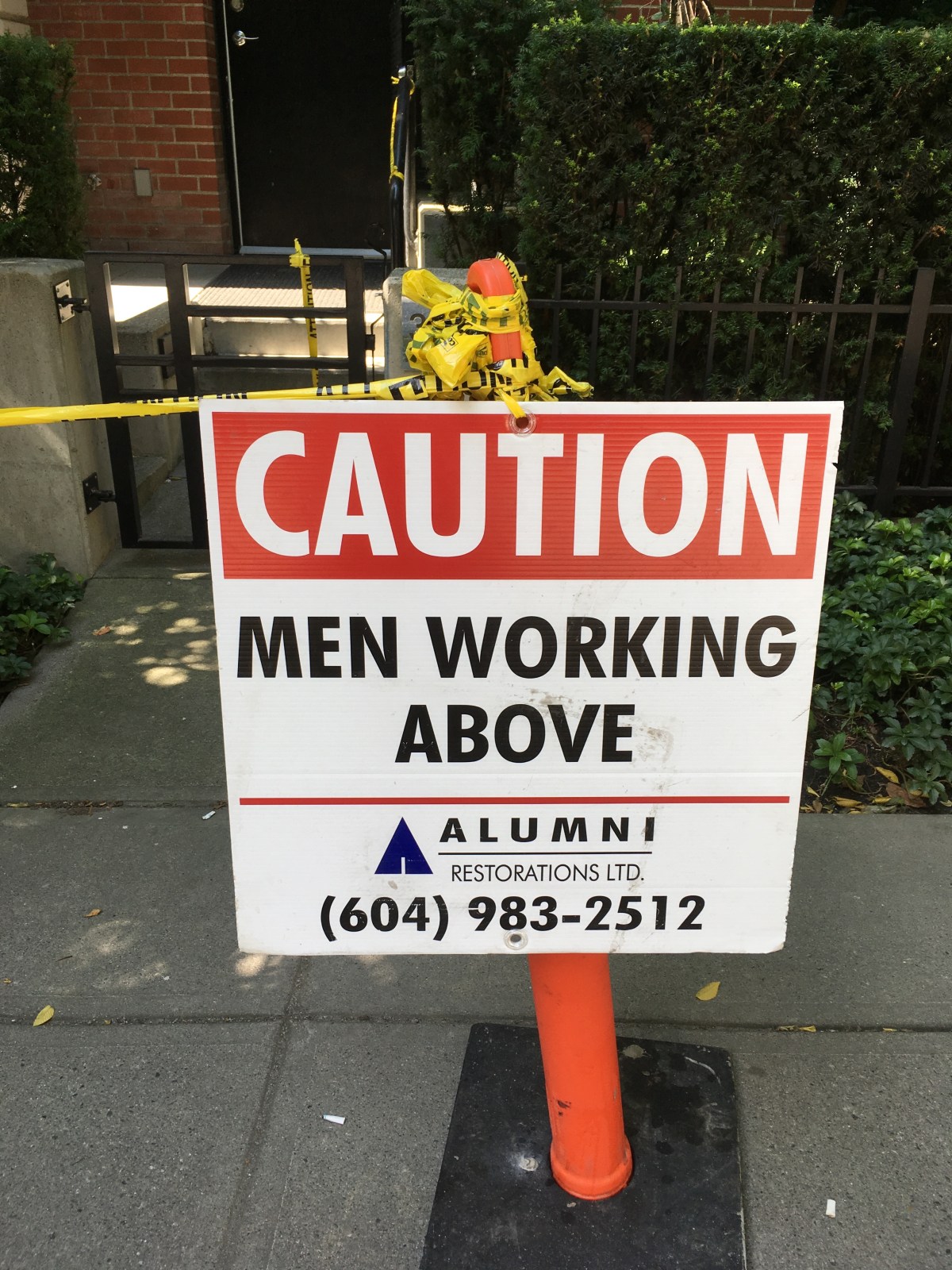
Walking around downtown Vancouver I passed many high-rise construction sites but the only tradeswomen I saw this time were flaggers. I flagged down two of them and they assured me there are lots of tradeswomen working up above. While most of the signs here are gender neutral, I did find one of the old Men Working kind, an advertisement that this contractor discriminates against women. Why would anyone want to advertise that?
Reporting on the Women Build Nations Conference in Chicago on May Day weekend: Two words: sensational and huge!
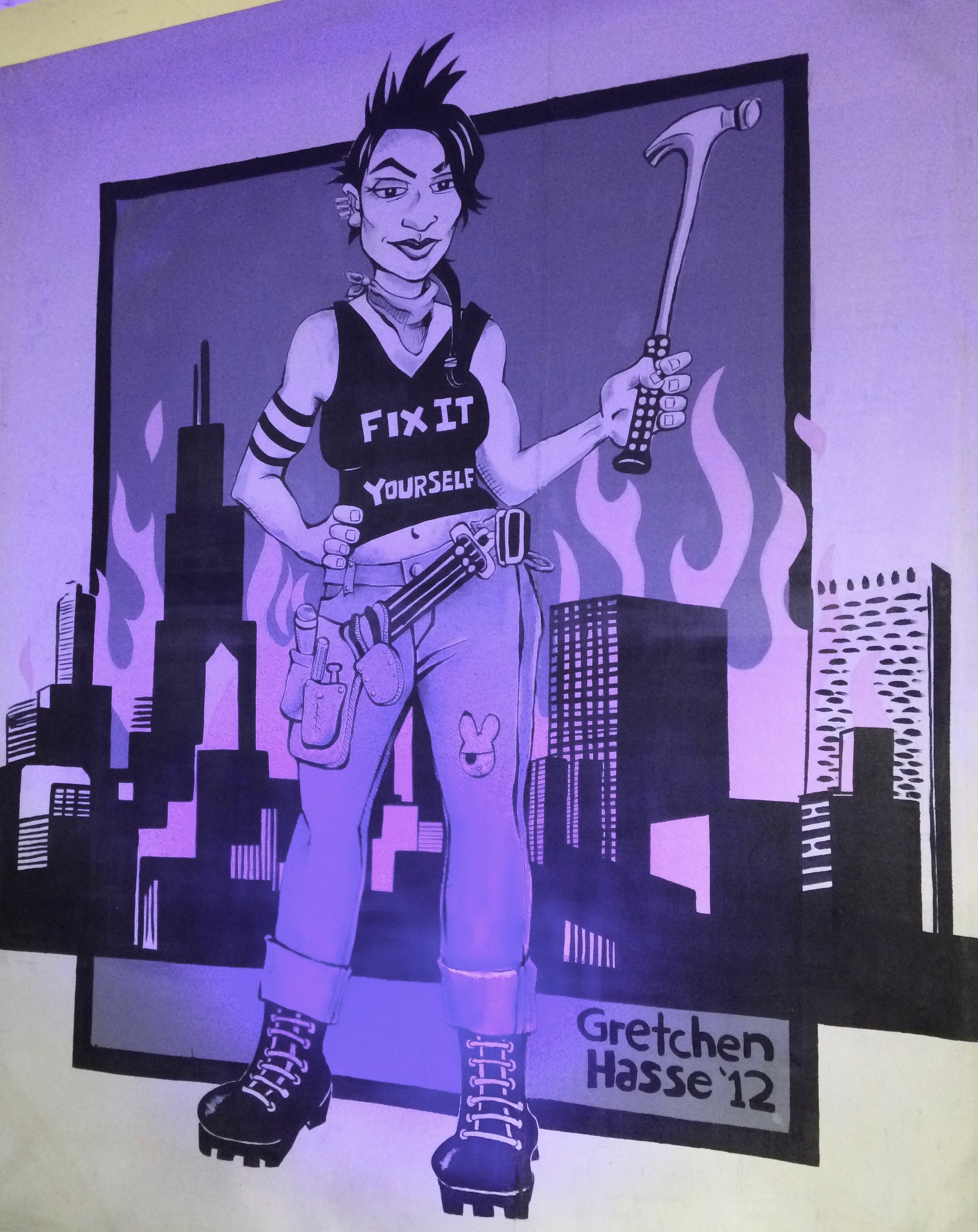
Mural at CWIT headquarters in Chicago
My old friend electrician Cynthia Long (IBEW Local 3 NYC) just texted me asking for news about the conference. Although it wasn’t her intention to guilt trip me, I felt bad for not having reported back to tradeswomen friends who couldn’t attend. Here are some highlights:
The climax for me was performing on stage for this gigantic audience of tradeswomen. My wife Holly and I wrote a song called Sister in the Brotherhood, and she accompanied me on the guitar. I was terribly nervous, but we didn’t blow it and that audience of rowdy construction workers liked us! Friends were kind enough to video our performance, and I will eventually figure out how to post the video on this site. (I’m old and tech challenged. It will happen). This week Donna Levitt brought me a copy of Organized Labor, the San Francisco Building and Construction Trades Council’s newspaper. There was our picture on page 4! We feel like rock stars and the glow hasn’t yet worn off.
The conference was hosted by Chicago Women in Trades (CWIT) and North America’s Building Trades Unions (NABTU). A high point before the conference even began: CWIT’s fabu party at their headquarters and training center. I was delighted to connect up with old activists from way back and also meet young tradeswomen and CWIT trainees, many acting as greeters and volunteers.
Sisterhood T shirt
Nigerian tradeswomen activists and American tradeswomen friends
CWIT staff were fab hosts
The new generation of tradeswomen
Trades sisters
Along with historian Brigid O’Farrell and sprinkler fitter Ella Jones, I gave a workshop called “Tradeswomen History: Learning From the Past to Change the Future.” We were able to include testimony from several “tradeswomen matriarchs” who are helping us learn from the past.
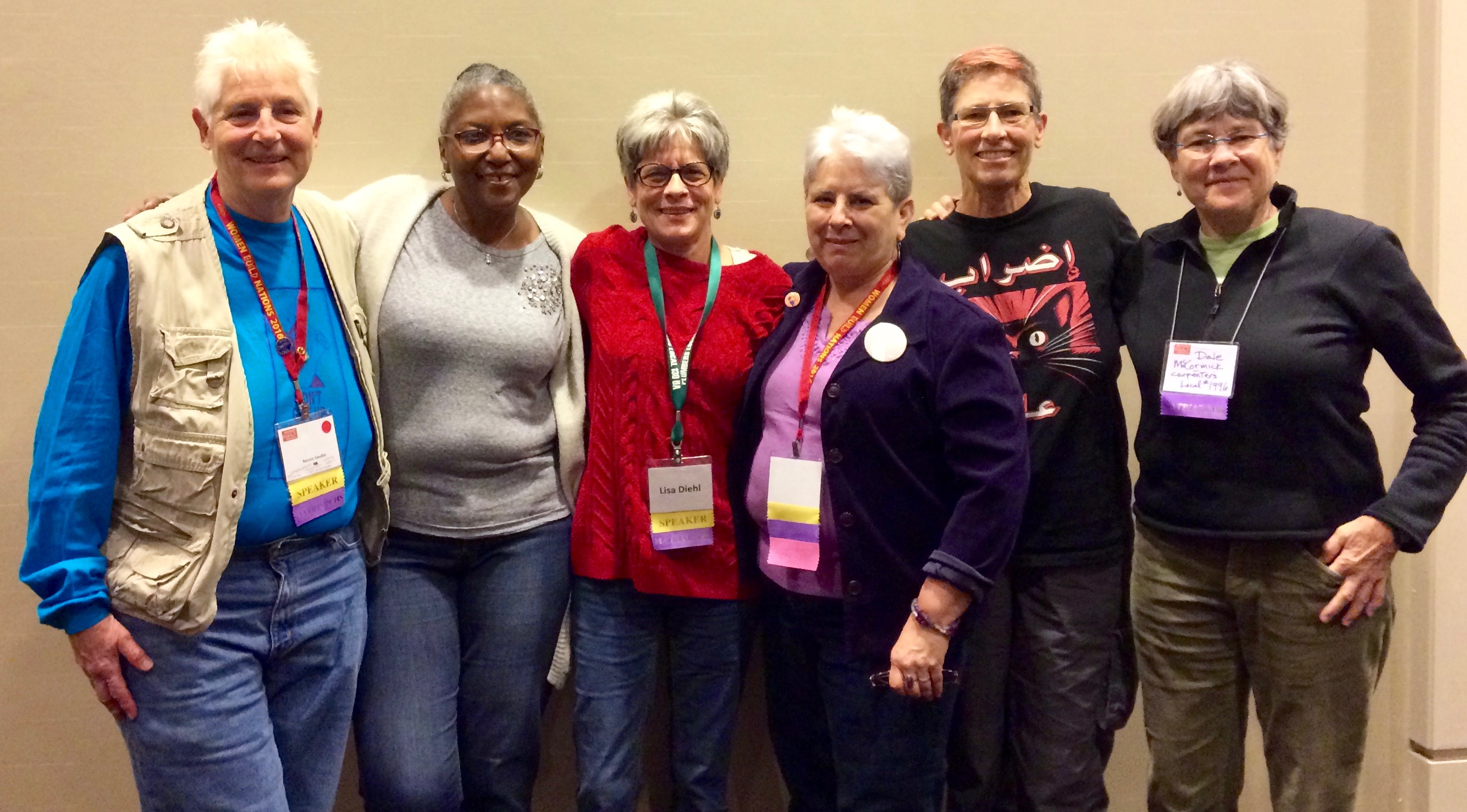
Old timers Ronnie Sandler, Paula Smith, Lisa Diehl, Lauren Sugerman, Molly Martin, Dale McCormick
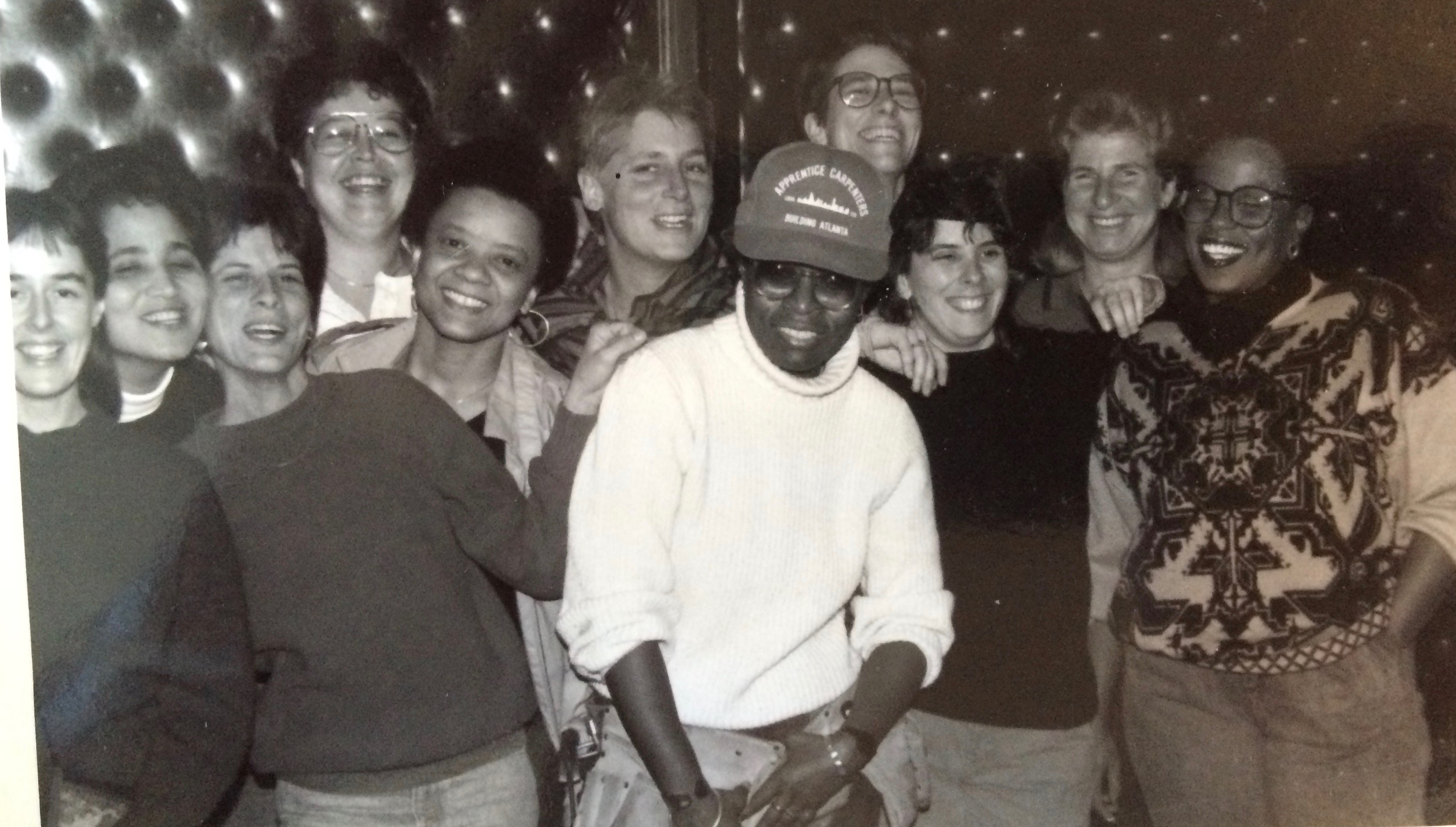
Some organizers of the 1989 second national conference, Chicago. I’m still looking over Lauren’s shoulder.
As it turned out we had a mini-reunion of some of us old tradeswomen activists from the 1970s and 80s. Carpenter Lisa Diehl, who’d been an organizer of Kansas City Tradeswomen, traveled from her home in West Virginia. She entertained us with stories of feminist actions from the radical 1970s. Ronnie Sandler, carpenter and job training wiz, came from New Hampshire. Dale McCormick, the first female in the country to turn out as a carpenter who went on to win a place in the Maine state legislature and become state treasurer, represented Maine. We reunited with Paula Smith and Lauren Sugerman, two organizers from Chicago we’d worked with to put on the 1989 second national tradeswomen conference there. And some of the early tradeswomen organizers from Chicago were in attendance too, sporting t-shirts and sweatshirts from the 1970s.
Elevator constructor and activist LJ Dolin
Los Angeles IBEW Local 11 sisters in solidarity. Long-time activist Jane Templin (L)
Lauren Sugerman (L) and early CWIT organizers
Old timers L to R: Author Brigid O’Farrell, Sprinklerfitter Ella Jones, Carpenter Ronnie Sandler, Maine DOT advocate Jane Gilbert, carpenter Dale McCormick, electrician Molly Martin
This was the 15th Women Build conference and the 6th we have renamed Women Build Nations, including women from all over North America and other countries. It was the first in this series of conferences to take place outside of California and it brought in hundreds of women from the Midwest and other parts of the U.S. who’d never participated in the past conferences. Fifteen hundred tradeswomen of all crafts, allies and union brothers attended—the biggest tradeswomen conference ever!
As a young reader I took umbrage at authors who insisted on referring to mankind and men when discussing all humans including women. It didn’t help when librarians and teachers patiently explained to me that the words mankind and men were meant to include women. I didn’t believe it and I just stopped reading those writers. But I was still angry at the dominant paradigm. You couldn’t escape it.
When I found feminism, I found sisters who agreed with me. Women were being left out of history and the present by the use of sexist language. Several feminists developed genderless languages and pronoun replacements, which unfortunately never caught on. Today transgender activists seem to agree on replacing “she” and “he” with “they,” but I find it cumbersome and difficult to adopt.
Gender specific job titles have always rankled women who work in or aspire to work in male dominated jobs. If a job title ends in man like lineman, mailman, policeman, craftsman, draughtsman, we get the point that women do not belong and are not welcome in these jobs. Girls and young women understand that they should seek careers elsewhere.
Sisters in the Brotherhood
So much more inclusive than MEN WORKING
I was just lucky that electrician, my own trade, is already gender neutral. Visiting Mexico, I was delighted to learn that electrician in Spanish is electricista. We haven’t had to fight battles about carpenter, plumber, ironworker or sheet metal worker. Unfortunately, however, all these unions are brotherhoods by title and all except the painters, bricklayers and the longshore workers have refused to consider changing to a neutral term. Instead of International Brotherhood of Electrical Workers, how about International Union of Electrical Workers? Over the years sister electricians have floated the idea of getting the International to change its title to a more inclusive one, but the men in power refuse to entertain the idea. My one defiant act was to write my dues checks to the “International Sisterhood of Electrical Workers.” No one ever said anything and the checks were always cashed. I guess the bank doesn’t care what term we use.
The one union to do battle with its membership about the brotherhood issue was the Teamsters, 30 percent of whose 1.4 million members are women. A proposal to change brotherhood to a more inclusive term was put forward by the progressive president Ron Carey at an international meeting in 1996. Members were consulted about the idea and debated the issue for months in union publications, but Carey’s rival, James P. Hoffa opposed the change. He famously said, “It’s gender neutral. The definition of brotherhood is that it’s neutral.” Supporters of inclusion lost the vote, Hoffa took over as president, and the Teamsters remain a brotherhood.
Taking an Ax to Fireman
Feminists have spent many years trying to retrain reporters and speakers to use the term firefighter instead of fireman. Mostly we have been successful, but it takes letters to writers in all genres to make a change. The New Yorker magazine is one recalcitrant actor. I think those New Yorkers must look at their own backward fire department and think, “Why should I use a gender neutral term? There are no women.” And this is almost true. But their response should be embarrassment at their city’s failure to integrate its fire department.
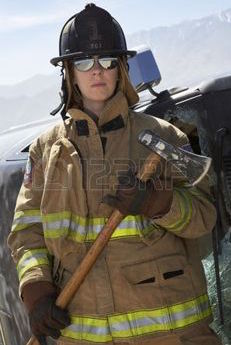
Firefighting gear renders gender unrecognizable
I’ve written many letters to my daily newspaper, the San Francisco Chronicle, about this issue over the years. One of the most grievous examples was a column by Rob Morse, a writer with liberal politics whom I read regularly while he was published. After a big fire destroyed one of the buildings at the old Ghirardelli chocolate factory, Morse thanked the brave “firemen” who extinguished the blaze. Ironically, the photo of one of the working firefighters that appeared on the front page of the Chronicle was a picture of a female. You just couldn’t tell the gender because of all the protective gear she wore. My outraged letter to the editor was published but only with poor edits which made me look stupid. Still, it brought the issue to the editors’ attention. The Chronicle eventually changed its style to firefighter.
One example of the prevalence of this misuse of the word in the culture is in the comics. I’m a regular reader of the comic Luann, whose central character is a teenage girl (kudos!). I was heartened when the artist, Greg Evans, introduced a female character who becomes a firefighter and eventually dates Luann’s older brother. In the comic she also must contend with an abusive boyfriend, an issue that doesn’t often make it into the comics. Still, the artist continued to use the term fireman even when referring to that character. In my letter I praised the artist for creating this female character and tried to explain how using a gender-neutral descriptor would make her an even better role model for girls who read the comic. Presumably mine was not the only complaint. The comic eventually changed the term.
The firefighter argument is closest to my heart. Feminist activists in San Francisco battled for 16 years with the SFFD before women were allowed to work as firefighters. Then for 12 years I was partnered with a female firefighter who eventually became the SF fire marshal. I don’t always fault women in the gunsights for not fighting this battle. Working in a male-dominated culture you have to pick your battles and descriptive terms may not be the most important issue. That’s why it is imperative that feminist activists outside these workplaces pile on to push for change. When I worked in the SF Department of Building Inspection I had a cordial relationship with the fire inspectors I worked with (that’s where I met my now ex-partner). I didn’t hesitate to correct their language. When they didn’t change, I would greet them in the elevator, “How are the firewomen today?” That got their attention.
During my stint as the “fire marshal’s wife,” I saw these guys at parties and social events. Just like in the building trades, they had no second thoughts about insulting me or women in general, right to my face. When you first hear “Women can’t do the job, women shouldn’t be in the fire department,” etc., you are shocked, but the fortunate thing about continually being subjected to insults (as with sexual harassment) is that it gives you practice in responding. I was never great at quick retorts, but I got better with lots of practice.
My ex-partner said: “Every time I read the word fireman, it’s like a punch in the stomach. It reminds me of when my brother (four years older, bigger, and stronger) would punch me, then hold me at arm’s length by putting his palm on my forehead and I’d be swinging away at him, never able to land a punch back.”
Fishing for Fishers
Lately I’ve been addressing writers about the term fisherman. Fisher is such an obvious and easy choice and I can’t understand why speakers and writers are so resistant to change. It’s not just men. Women are just as argumentative. Except there’s not a very good argument. “We’ve always done it that way,” the typical response, just doesn’t cut it.
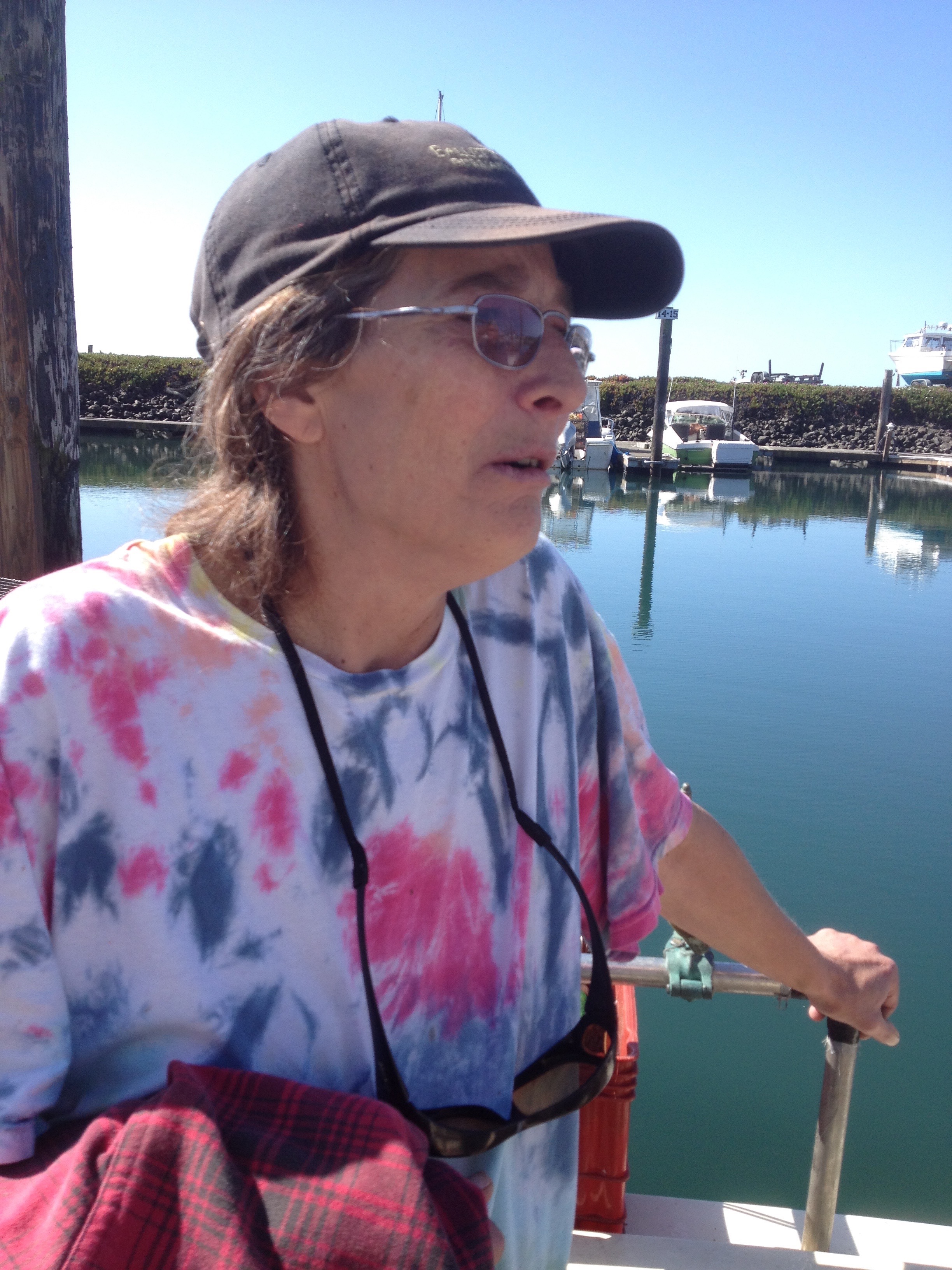
My fisher friend Tina Moreda on her boat at Bodega Bay Harbor
The last few times I’ve written to the Chronicle’s writers about the term fisherman (I love that the writer’s email address is listed at the end of the article), one didn’t reply, one wrote back to say simply “thank you,” and one wrote that she had thought of fisherman as a gender-neutral term.
Perhaps the reason this choice of words is ignored is that the fishing industry has been floundering and dying now for decades. Few choose to be fishers anymore, but I personally know women who integrated this industry in the 1970s and women who continue to make a living fishing. It’s still an important industry on the California coast, so the Chronicle runs fishing stories often. In recent stories, writers have used both the terms fisher and fisherman. I think my letters must have made an impact. They seem to be breaking their readers in slowly.
One wonders what they would think if all reporters were referred to as “newsmen.” Oh, wait. They were. And not that long ago.
News flash: From a story in The Guardian about the discovery of four new elements in the periodic table: “This article was amended on 4 January 2016. The reference to the new elements being “manmade” was changed to “synthetic” to follow Guardian style guidance on the use of gender-neutral terms.”
Postscript: This essay must be updated. Some unions have changed names but most are still brotherhoods. The laborers union changed to Laborers International Union of North America (LiUNA) in 2012. The Ironworkers do not use brotherhood in their name.
Short version: my boob hurts, I’m sad I’m having a mastectomy, I miss my mom, I’m angry about capitalism, we should revolt. Long version follows.
Marg goes into battle to rid the environment of pesticides
My mastectomy is this week. In reading about breast cancer I come across the concept of “sacrifice.” I think about my breast, soon to be sacrificed. There are 85,000 chemicals introduced into consumer products, the vast majority unregulated, many known to be carcinogenic. Commerce thrives in the absence of regulation. So does breast cancer. There are those who profit; there are those who pay the price. Business as usual demands sacrifice.
Four weeks post-lumpectomy, I gaze in the mirror at my left breast. It still feels hot, looks discolored, and appears angry. Below the anger is pain. I feel sad for what I (my doctors) have inflicted on my breast. Now they will amputate that breast because of a few misguided cells. This seems unfair, but I don’t want those cells to spread. They don’t stay put. They threaten the rest of me. Primitive solutions are all I have; still I feel remorse. It’s not my breasts’ fault.
I speculate anxiously about my post-surgery body. Will I feel as though a weight has been lifted? Will it help my chronic back pain or will my pain worsen from scar tissue? Will the uneven loading cause even more back pain? Then what? Will I wake up and feel a rush of regret? Loss? What about my right breast? Will I always wonder what’s going on inside there? Will I feel tenderer towards it? Will I be fearful or clinging?
I wonder about the fact that seven out of nine members of my immediate family have had cancer. Kaiser has offered me genetic counseling. I prepare a family history of aunts, uncles, cousins, grandparents, etc. The medical lens is narrow: risk factors, genetics. Zeno estrogens that reside in my breast, introduced by some of those 85,000 unregulated chemicals, are outside the scope. The counselor puzzles over the fact that both my brother and mother had thyroid cancer. This is very unusual. So, I explain: both were diagnosed within months of each other, both lived near a nuclear power plant, both were exposed 20 years previously to radioactive iodine in an accidental release. “Well,” she says, “that explains it”–on to the next question.
My brother still lives; my mother died within months–more “sacrifice” on capitalism’s altar. My mother, my brother, and those of us living and dying with cancer—we are “countless.” Nobody really counts us, at least in ways that could adequately uncover the links between the environment and our suffering. Those who benefit from this arrangement count on us to think of cancer as only a private matter, to bravely “battle” this disease as individuals, and to be polite enough to not speak of our cancer publically or in a political context. I wonder if I can have my breast back after surgery. Maybe I’ll mail my “sacrifice” directly to Monsanto.
My friend Marg’s mastectomy took place December 23, 2015. She is recuperating from the surgery but not from her anger at the chemical industry.
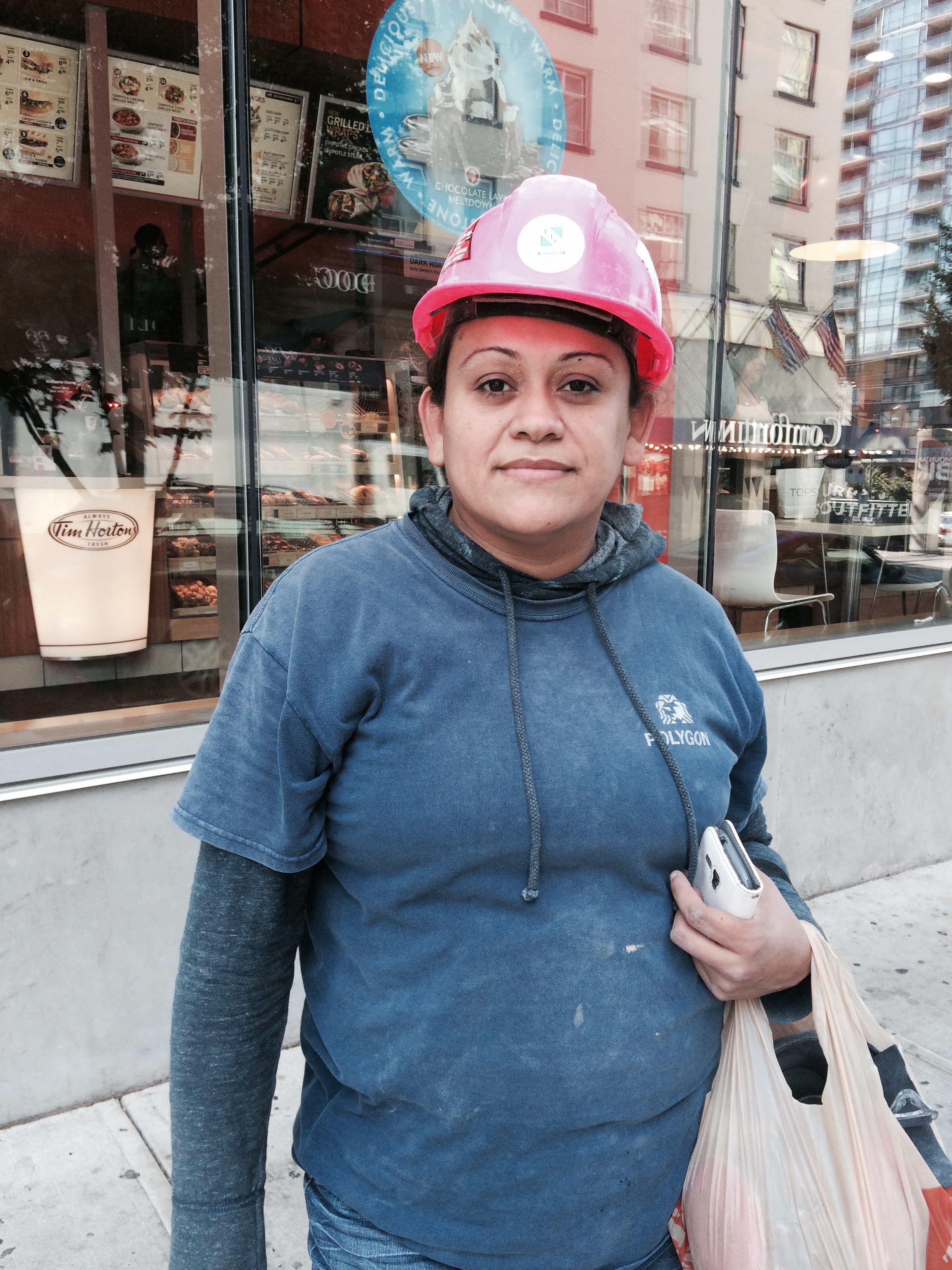
Carla is a cement mason and a first aid captain. When I noted her pink hard hat, she said, “It was free.”
Look up in this city of highrises and you will see cranes. There’s lots of construction going on and presumably lots of jobs for construction workers. As in the States, I’m always on the lookout for women, and I found quite a few here. Most of the women I saw were flaggers, just like at home. But I did run into a cement mason on the street, so I’m confident there are many more women inside the buildings working in different trades.
Her job is Terminal Attendant at BC Ferries. She’s a single mom who likes her job. Benefits are good.
That’s a female laborer beyond the sign.
Ironworkers laying rod
On our way to the west coast of Vancouver Island, we saw women working at non-traditional jobs on the BC Ferries, a public/private partnership. High voltage line workers were upgrading poles and lines along Highway 4 on the island, and I wondered if any of them were electrician sisters.
One of many big buildings going up in Vancouver
The crane is on the site of a new casino being built in Vancouver
Downtown Vancouver is full of big cranes. Lots of new construction.
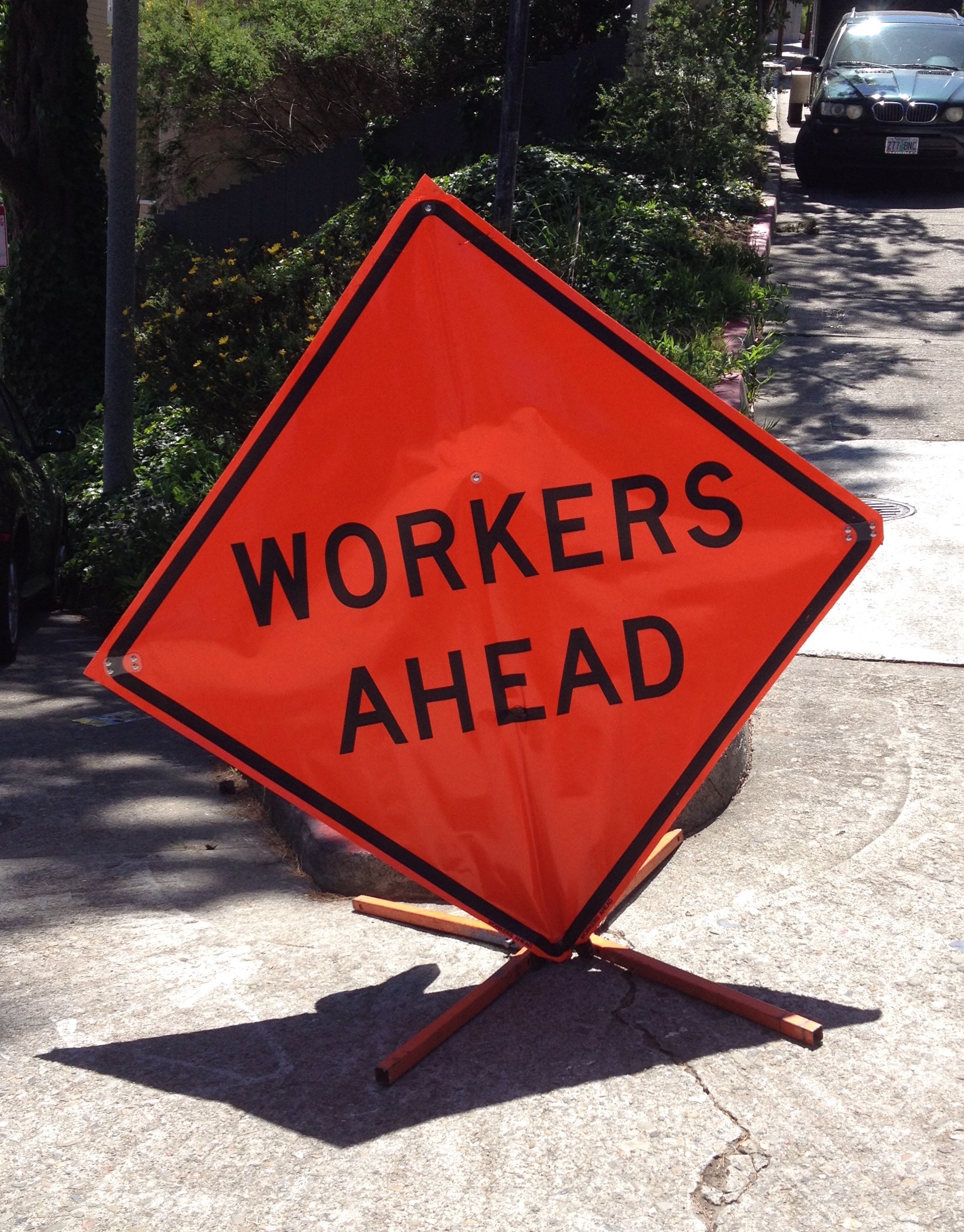
Just from my little anecdotal evidence, I think Canada is surpassing the US in breaking down barriers to women in construction. The signs are better here, too. Most are in a universal sign language that doesn’t require words. We saw not a single sign that said MEN WORKING.
Flagger on Hwy 4
Many flaggers are women
Workers were replacing high voltage lines along Highway 4 on Vancouver Island. I didn’t see women but it was hard to tell. Made me think of my Canadian high voltage electrician sisters.
Know your friends and know your enemies. Tradeswoman organizations are our friends, even when they are applying for the same funding. Those who want to keep us barefoot and pregnant and not allow us to work are our enemies. They will always try to divide us. Do not let them.
Discrimination makes us crazy (and sick and angry). Sometimes we are called upon to support crazy women and tradeswomen organizations must be there for women when we are crazy.
Tradeswomen are part of a larger movement for Civil Rights. We have more power when we coalesce with other people and organizations.
Our community is small. Activists in the Tradeswomen Movement must know that you will encounter over and over the same people who are also active in the Movement. Build bridges, don’t burn them.
One woman can change everything. In most cities where tradeswomen organizations have flourished, one woman organized the first meeting. Sometimes one righteous woman in a position of relative power in a state, federal or local government or a union organization can mean the difference between jobs for tradeswomen and none.
Laws (and lawyers) can be our friends. Having the backing of government makes a world of difference when we are trying to change our world (unfortunately, the feds have neglected affirmative action since Jimmy Carter’s time).
Mentor each other. Our job is to support each other. Our job is to inspire each other. Sometimes we don’t know the effect we have had on others until many years later.
Women have the right to be mediocre. We shouldn’t always have to be the best at everything.
Always try to be the best at everything. Otherwise you make women look bad. When we are the only one on the job, we embody the stereotype of all tradeswomen.
Just going to work every day and putting on your toolbelt can be a revolutionary act.