Sherman Alexie’s eulogy for his mother reads, “My mother was a dictionary. She was one of the last fluent speakers of our native language.” When she died the words died with her. He has one cassette tape of his mother and grandmother speaking together and singing a song.
My mother was maybe more like an encyclopedia. She collected the stories of old people on cassette tapes and in the 1970s she produced a public TV program on which she interviewed elders who lived in the Yakima Valley. I think some of those programs must be collected in the Yakima Valley Museum, but perhaps not. The words may have died with her.
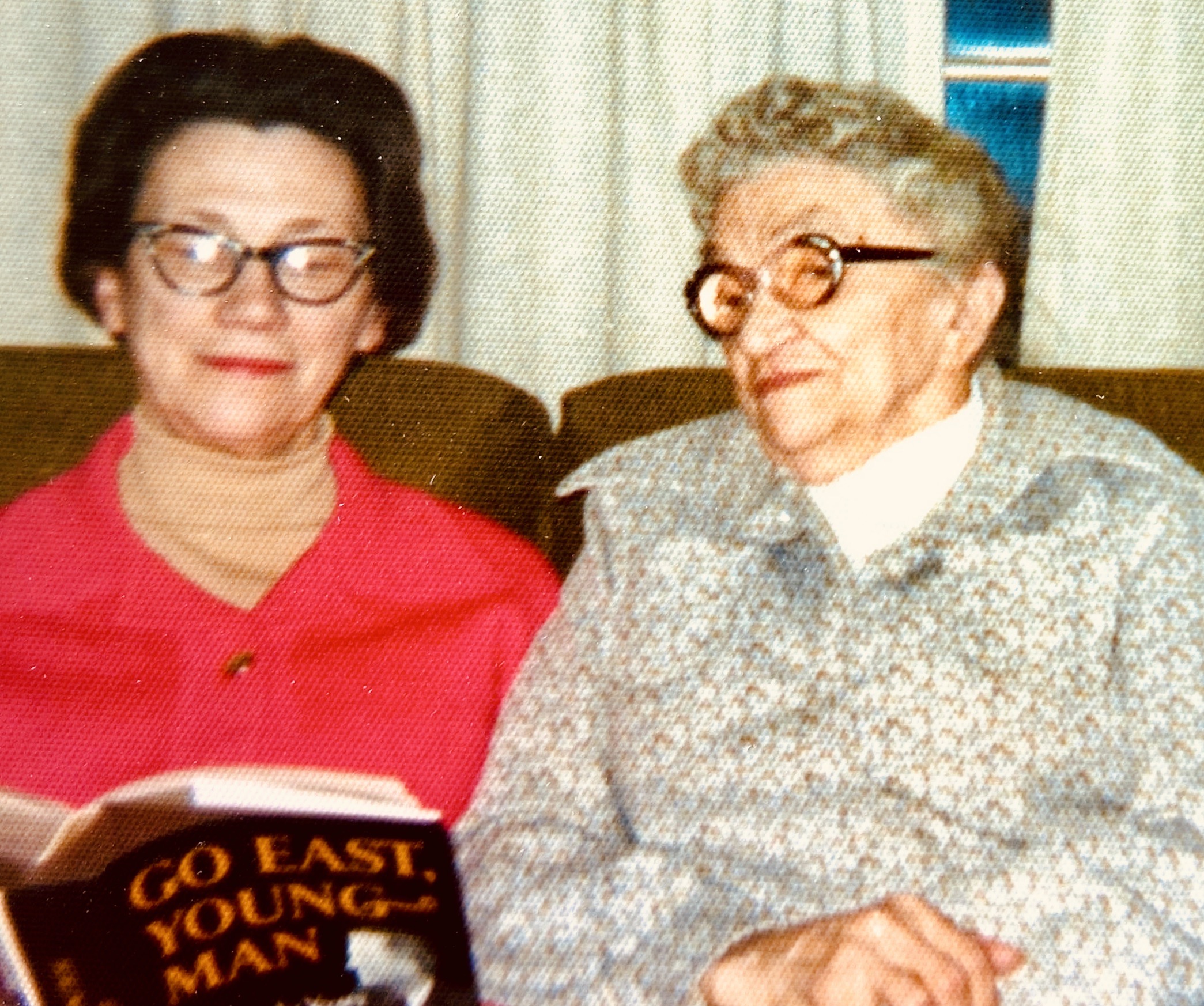
My mom, Flo, and her mother, Gerda, reading Wm O Douglas’s book
After my mother died, I asked myself the question so many of us ask. Why didn’t I record her story? She told me stories of her life as we sat at the butcher-block table in our country kitchen drinking tea late at night. I remember the film the Lipton’s left on the white cup, but I remember little of what she told me. Why didn’t I just turn on the tape recorder? Was it because I didn’t want to imagine a world without her in it?
Now I wish I had a recording of my mother talking, saying anything, but although I have looked through my saved cassette recordings, I haven’t found one. She had an unusually low voice, a result of allergies, asthma and post-nasal drip. When she answered the phone, sometimes the caller thought it was a man talking. But she had been a singer in her youth and I imagine her voice as a young person to have been clear and high.
There was one time when I did record my mother’s voice. It was after my boyfriend, Mark, and I had driven across the country and back in 1976. She had lent us her car for the trip, a VW station wagon, which very nearly didn’t make it over the Rockies. It was a big sacrifice on her part, I realize now. The trip took a month. My relationship with Mark didn’t survive the trip, but I think we felt we had to put on a good face for Mom on our return. I recorded her asking questions of Mark about the trip. In the recording, Mark unleashed pent-up anger at her. His condescending answers tagged her as a bourgeois reformist liberal. I thought he was abusive. Later he wrote her an apology and she replied in a thoughtful six-page letter, he told me.
I tried to listen to the tape later and it just made me mad. I have a vague memory of throwing it away, thinking I couldn’t bear to listen again. But my memory is terrible, which gives me hope. Perhaps I only thought I trashed it. It could be saved somewhere in the cases of cassette tapes in the basement. I’m making my way through them and I’ve already listened to many. It takes time. You have to listen till the end, as something important may have been recorded there. I have listened to hours of nothing—musical performances that could have been opera very far away but translated to audience coughing and fidgeting.
Some of the tapes are ones my mother made, labeled in her perfect cursive. She recorded the Camp David Accords, signed by Egyptian President Anwar Sadat and Israeli Prime Minister Menachem Begin in 1978. She was sure the treaty, facilitated by President Jimmy Carter, signaled the end of Middle East discord. Sadat and Begin were both awarded the Nobel Peace prize. Three years later Sadat was assassinated. The tapes are imbued with my mother’s optimistic desire for world peace. I’ll probably never listen to them, but I haven’t been able to throw them away.
I have not yet found any tape with my mother’s voice, but there are cassettes I have yet to listen to and I think I remember where I stored them. I still have hope.
Walking around my neighborhood watching folks put up holiday lights, I have to stop myself from admonishing them to be careful on those ladders. I recognize this as a fear born of age and experience. As an electrician, and then a home remodeler, I spent many hours working on ladders.
As a new electrician I was fascinated by electrocution. I did some research and found that while electricians do die from electrocution, more often they die due to falls from ladders or being run into by trucks. I got more careful around ladders. Trucks too.
Most electricians spend a good deal of their working careers on ladders. Upgrading the electrical service where the wires come in to the building from the street was a typical job for me as a small contractor. For an overhead service we would mount the electrical panel and conduit on an exterior wall. The last job—connecting the wires at the top of the conduit—we did live from a ladder. Not a metal ladder, which conducts electricity and could electrocute you if the hot wire touched it. I was well aware that a direct shock from a live wire could also throw me off the ladder. I would die not from the shock, but from falling on my head.
Nowadays ladders are made of light materials and there are all kinds of newfangled designs and inventions making them easier to use. Back in the 70s when I worked with Wonder Woman Electric we had an old-fashioned wooden 40-foot extension ladder. The thing felt like it weighed a hundred pounds, but I was young and strong and I could handle it all by myself. You lifted it by pushing one end against a wall then picking up the other end and “walking” the ladder up till it was vertical. Then you carried it upright with a rung on your shoulder, one hand holding a lower rung, and your other hand holding a rung as high as you could reach. Carrying it was relatively easy unless you failed to keep it exactly upright. If it started tilting it was almost impossible to right the thing before it crashed into whatever was in its path, tweaking your back as it fell.
I know people who have died or been severely injured falling off ladders. Our friend Chris died only last year trying to secure a gay flag at his home. Emma became a paraplegic, falling from a tall tripod ladder while picking apples. I worked with Ron who ended up in a wheelchair after falling while tree trimming, and knew Jack who died in a similar accident.
I’ve fallen a few times myself. The first time I remember was while working in a residential garage. I had propped my eight-foot step ladder against the wall. Each step is a foot and I might have been up on the fourth rung, not very high, strapping conduit to the ceiling when the ladder started to slip down the wall. Now most people know—and I knew—that when this happens the correct response is to ride the ladder down the wall. Instead, my sympathetic nervous system overrode my brain and I jumped off, landing on my feet. I fell over and when I tried to get up I couldn’t stand. There was no pain.
The homeowner drove me to St. Luke’s hospital where they told me I had torn the anterior cruciate ligament in my knee, that ACL injury that has plagued female basketball players. I butt-crawled up the stairs to our second-floor apartment and wasn’t able to leave for three months. If that didn’t make me wary of ladders, nothing would. Three months without work and no income. That’ll do it.
One time I was standing on the top of a three-foot ladder, it went out from under me and I landed flat on my back, sustaining not even a scratch. I knew—we all know—not to stand on the top rungs of a ladder, but I hadn’t felt like looking for a taller ladder.
Another time, at the top of a 32-foot extension ladder, I leaned backward slightly and nearly lost my balance. In that second I saw my life flash before my eyes. A fall from the height surely would have killed me. After that I made sure to tie off.
My most recent ladder incident happened in September. I was on the second rung of an eight-foot step ladder trying to pick the last apples on the neighbor’s tree that grows over the fence. I reached my left arm up and back, turning my head with it, and I lost consciousness. It was probably just for a second but I found myself with feet on the ground and arms stretched up, face up against the ladder. My body had just slipped down, my shins scraping against the lower rungs. Other than bloody shins I was ok. Just stunned. Here is something new that can happen on a ladder!
After that event I gained a new respect for the destructive power of ladders. Now I mostly stand below, holding the ladder for others. Our rule here: never get on a ladder without someone else here to hold it.
Advice from an old ladder climber: be careful out there. Those innocent looking ladders are killers.
Back in 1980 gun control was a big issue. Politicians and celebrities were victims as well as less famous citizens. After John Lennon was shot I had to admit to my mother that I had bought a hand gun, the same type that killed John. She was distraught. What could I have been thinking? I was thinking as a radical socialist lesbian feminist I might have to defend myself. I learned how to shoot at local gun clubs. I put the gun in a drawer next to my bed, but began to worry that a visiting child might find it. What if someone accidentally got shot with my gun! I soon put the gun far away out of anyone’s reach. My thinking changed, but the scourge of gun violence did not. Except that Mom is writing here about handguns rather than now-popular semiautomatic weapons.
She knew how to use a rifle. Did she shoot the buck while wearing pearls?
“We do have wild animals, but they are two-legged.”
I contend that bullets, bombs and mines are more to be deplored than garbage and stones (thrown by dissenters).
Paul Harvey pissed us off for half a century. During my childhood the right-wing commentator was on the radio twice a day on weekdays and at noon on Saturdays railing against welfare cheats and championing American individualism. A close friend of Sen Joe McCarthy, the Rev Billy Graham and J. Edgar Hoover, he supported Cold War campaigns against communists and opposed social programs as socialist. Advertisers loved Harvey as he could make any ad sound like news. Salon Magazine called him the “finest huckster ever to roam the airwaves.”
Millions of Americans who, like us, got their news and information from the radio, were subjected to his diatribes. Beginning in 1952, Harvey kept talking right up till his death at 90 in 2009. He always left us fuming.
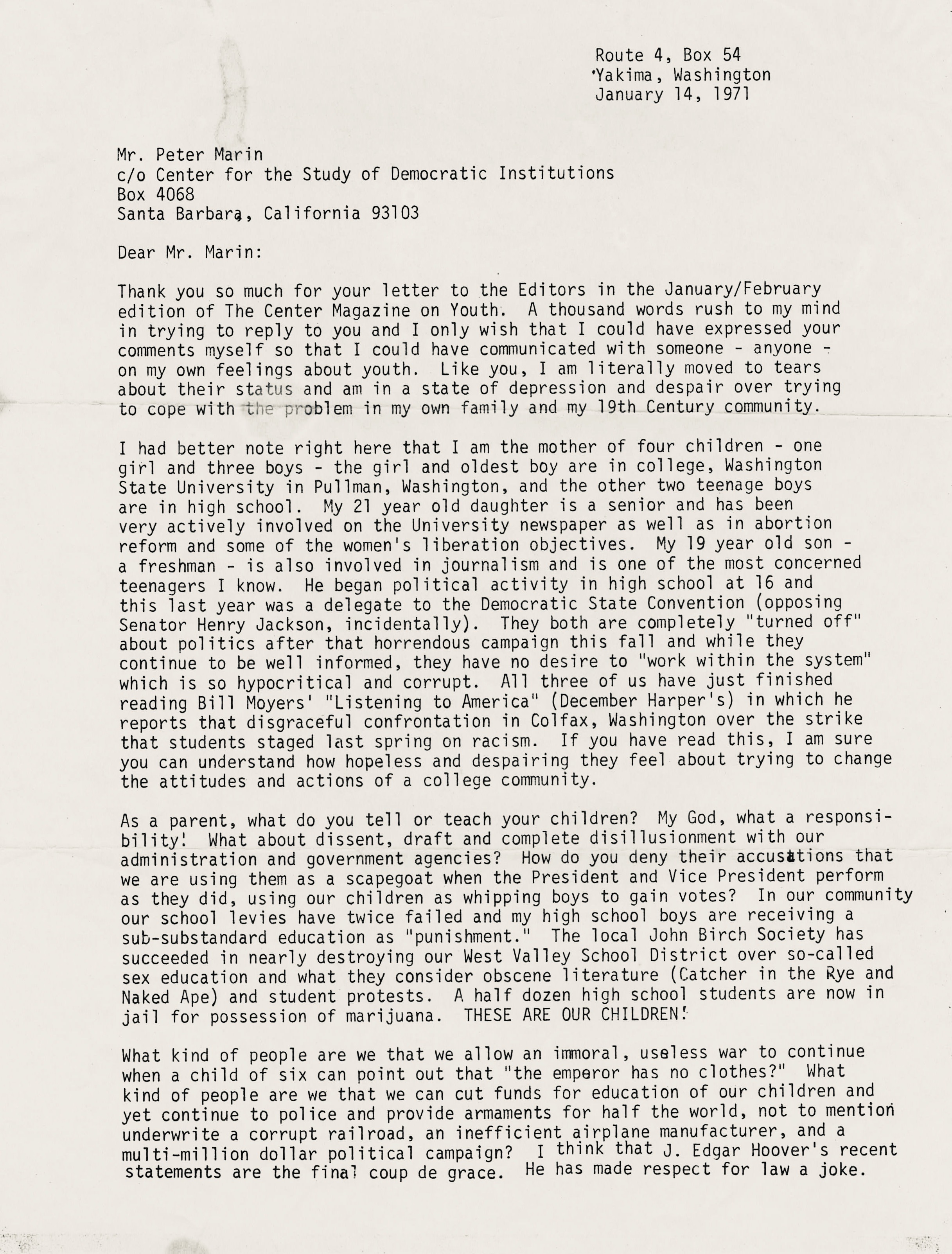
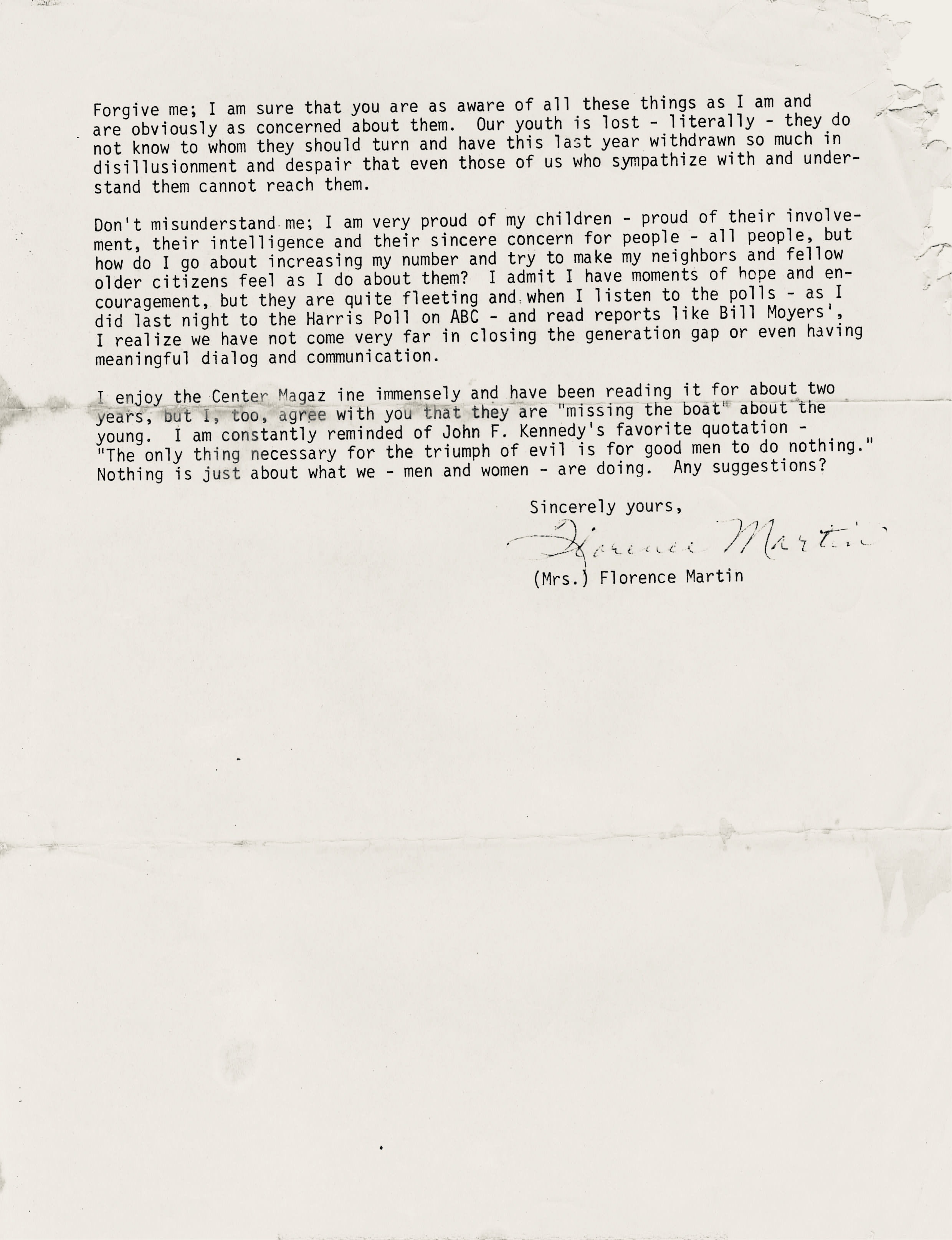
My mother got so mad at his attack on war protesters that she engaged her superpower—she wrote a letter.
“What kind of people are we that we allow an immoral, useless war to continue when a child of six can point out that the emperor has no clothes?”
Sadly, the box of letters, saved in my brother’s barn, contained none of my mother’s letters from the turbulent 1960s. Most are from the 1970s. Flo writes here about being moved to tears in a state of depression and despair. She felt the burden of American foreign policy personally and would often call me, weeping for its victims. She anguished about her children and a whole generation of young people losing faith in democracy.
My mother wrote letters. For her, letters were a means of communication, an art form, a way to express herself, and throughout her life one of the few ways an ordinary woman could make her views known.
Born in 1913, Florence Wick was a reader from the age of four. Like all grade school students at that time, she studied the Palmer Method, and she developed strikingly beautiful handwriting. An album made by a family friend contains letters she wrote at age six.
Besides regular handwritten correspondence to friends and relatives, Flo wrote letters to Congressional representatives, media people and writers commenting on their stories, and hundreds of letters to the editor of our local paper in Yakima, Washington. She’d had lots of practice. Taking shorthand and composing and typing letters was her job as a secretary.
I had thought all of her letters were lost, but while going through files helping my brother Don move to Canada we discovered a box containing copies of some of her letters. The earliest is a letter to the editor condemning bigotry and discrimination against immigrants, written in 1949. The last, disparaging toxic pesticides, she wrote a couple of months before her death on August 9, 1983. Most of the letters are from the 1970s. They deal with government policy; environmentalism; and the rights of women, minorities, prisoners and seniors. Many letters eloquently protest the war in Vietnam and its casualties.
My parents, Florence and Carroll Martin, on their wedding day 1947
My mother changed the course of her own life through letters. She told me that when she applied to work for the Red Cross during World War II, a college degree was a basic requirement. She had only a high school education but she made her case in a letter and was accepted. I’ve often wished I had a copy of that letter. Flo served in the Red Cross as a “donut gal” in Italy, France and Germany during and after the war, earning a bronze star. Although only two of her letters from Europe survive, the letters she wrote to her mother (her father had died in 1938) were passed on to a local newspaper reporter who turned them into reports from the front lines. Along with photos and mementos, these newspaper clippings were pasted into a huge album my mother made upon her return from Europe. The war had changed her. She had lost her fiancé to a land mine in 1944 and when she returned home it seemed Americans’ concerns had focused more on the dearth of gasoline and nylon stockings than the deaths of millions. People didn’t want to talk about the war. Making the giant album served as an antidote to her depression.
What strikes me about the letters is their universality and timelessness. I remember her phoning me to read me a letter she had written about war. In it she proposed that the government employ a department of peace instead of a department of war. “It’s great,” I said. “Send it!” “I did,” she said. “Twenty years ago.” Her letters illuminate conversations of her time, and they also instruct us now in the 21st century. I think they deserve to be read and I’ve scanned some of the most compelling to publish here.
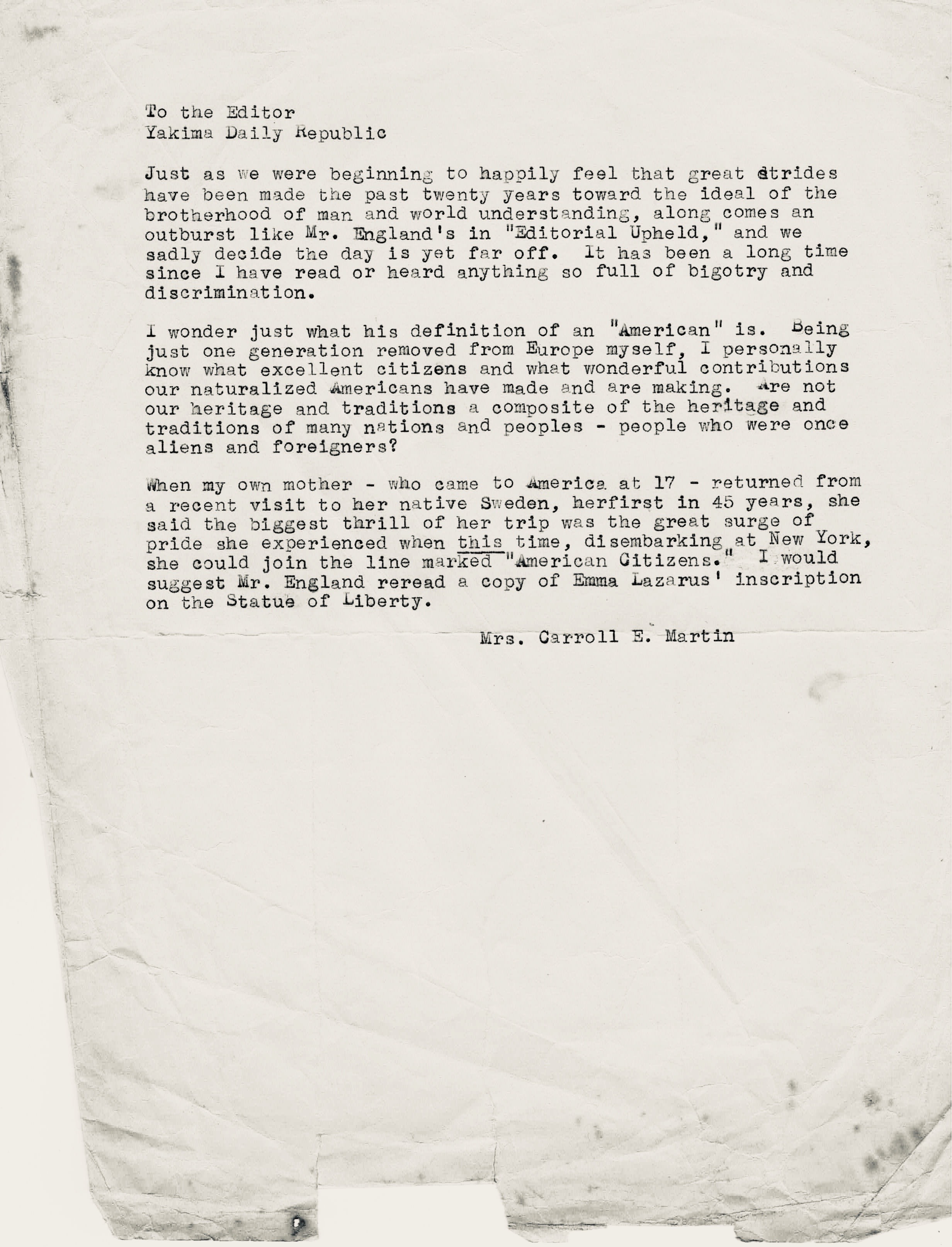
1949: Re-read Emma Lazarus’ inscription
Attacks on immigrants are a common feature of American history. Flo was proud of her parents, immigrants from Sweden and Norway, and she wrote many letters with this theme.
Autumn equinox greetings. My pagan holiday posts usually focus on our garden and the natural world–kind of an antidote to politics. But of course everything is political, even nature, and I’m immersed in the political world too. Like my proud immigrant grandmother I take voting seriously, especially now as we watch our voting rights being trampled.
We work to influence the coming presidential election, calling and writing postcards reminding voters in swing states to vote. Of course, what we do in California is of little consequence nationally but I worry about the consequences on a state level. Polls show that Proposition 16, the measure that would resurrect affirmative action, is headed for failure. Opponents have obscured its real intent. The discussion has revolved around race preferences in state colleges, but no one thinks about women in the construction trades. Here’s the letter I just sent to our local newspaper supporting Prop 16.
Dear Editor:
I am a woman who made a great career as a construction and maintenance electrician. I would never have gotten a job in the previously all-male, all-white industry without affirmative action. I’ve devoted my life to helping other women achieve success in the construction trades. Why? Because these union jobs pay wages substantially above what women can make in traditional female careers, decreasing the number of women (and children) in poverty.
Women got a foot in the door but we are still being denied entry to these jobs because of entrenched sexism and racism, especially after affirmative action was made illegal in California by the passage of Proposition 209 in 1996.
Proposition 16 on the November 3 ballot will overturn the 1996 law. Right now only about three percent of construction workers are women. That’s not enough. Women still experience isolation and harassment on the job. Working conditions in construction will not truly improve until discrimination ends and the numbers of women increase.
A YES vote on Proposition 16 will make programs like targeted recruitment for women and minorities possible again, restoring a level playing field for all.
Molly Martin, retired electrician
Then there are other propositions on the state ballot I fear will fail, so I’m already getting prepared for election letdown, a familiar feeling for those of us who support peace, justice and human rights.
Please vote yes on Prop 15 to restore property taxes on large commercial property, and yes on Prop 21 to allow local communities to decide whether to enact rent control (which is now prohibited statewide). And vote no on Prop 22. Don’t let Uber & Lyft turn this into a gig world where all workers are “independent contractors” and get no benefits.
The Gaelic festival Lughnasa, midway between summer solstice and autumn equinox, celebrates the first fruits of the harvest season.
Here in Santa Rosa, at a more southern latitude, we picked our first fruits at the beginning of July—tomatoes, cucumbers, eggplants, peaches and plums. The neighbor’s Gravenstein apple tree that hangs over into our yard was ready for harvest around August 1 last year, but this year the apples were a couple of weeks early, maybe because we are in a drought, or maybe it’s just global warming. Everything is early this year.
Apple harvest here is usually celebrated at the ides of August at the Sebastopol Apple Festival, but of course all of our local gatherings have been cancelled for covid.
We will miss the Sonoma County fall fairs and expositions. The Heirloom Expo in September is one of our favorites and last year we heard a presentation about native bees by a company based in Woodinville WA that propagates bees and sells them. We bought some—mason bees and leaf cutter bees. They came in the mail with detailed instructions. Native bees don’t live in hives like honey bees. They are solitary and nest in holes, often in undisturbed ground (so don’t dig up your whole garden) and they don’t sting like honey bees.
Introducing the mason bees to our garden went well. They are kept in the refrigerator until you place them in the top drawer of their bee house, mounted on the fence facing east so the morning sun hits it. Mason bees place their eggs in the wooden straws provided and then cement them in with mud to protect them from predators. They emerge with the daffodils in spring. The male bees fly only three weeks and the females seven weeks. We were instructed to leave a patch of wet clay in the garden for their masonry work.
The leaf cutter bees came in June and, before reading directions, we put them in the refrigerator till we could let them out. Only the next day did we read the directions which warned against refrigeration. We killed our bees! But we ran to the refrigerator and dumped them all out on a plate on the deck hoping for revival. Then we watched, transfixed, as they slowly crawled out of their shells, stumbled to the edge of the plate and flew off into the garden. Most of them survived.
For us humans 2020 has been a disastrous year, but for bees in our garden—honey bees as well as native bees—it’s been a great one.
Sending virtual hugs to all of you as we continue to shelter in place.
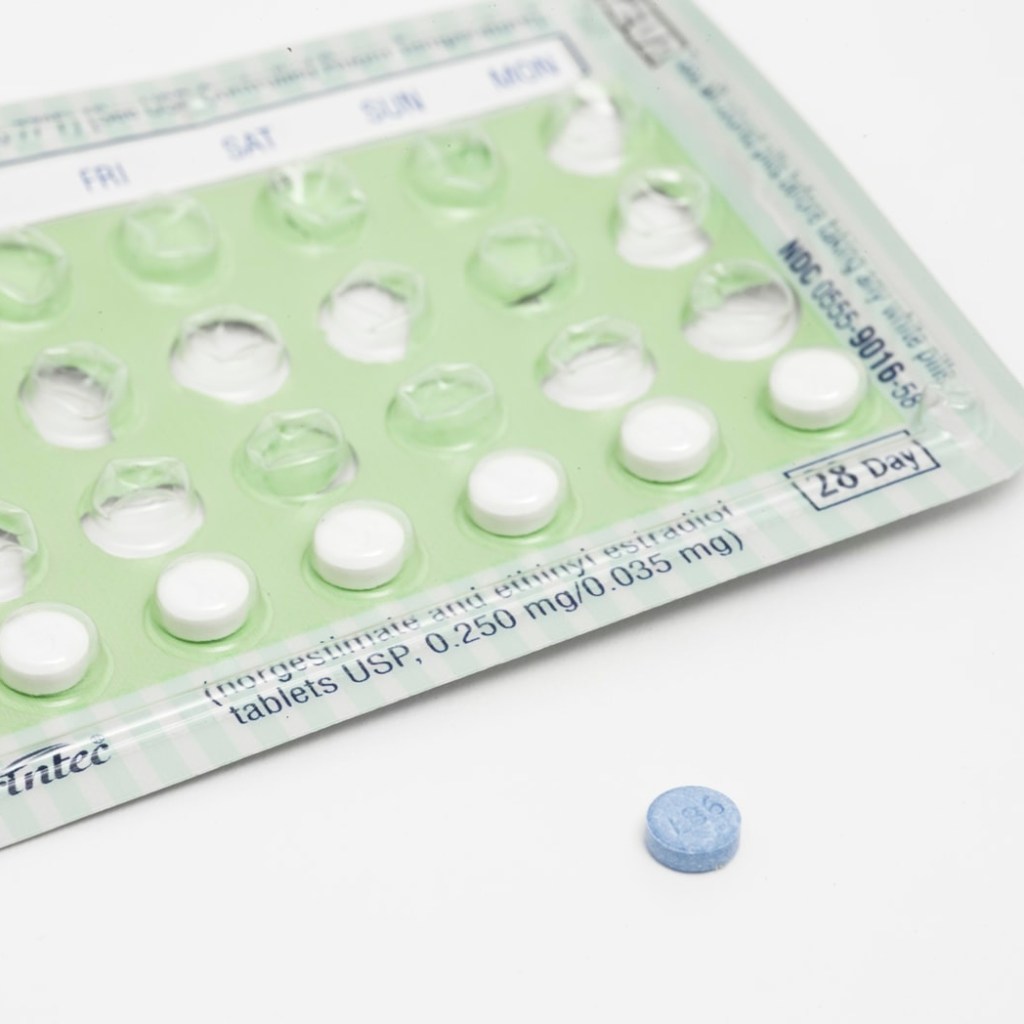
I had a hysterectomy in 1975 when I was 25 years old. I didn’t have cancer or uterine cysts. What I had was dysmenorrhea, or menstrual cramps.
This was an operation I had actively pursued and I felt lucky to get it, taking advantage of the remnants of the US Public Health system before it was abolished by the Reagan administration.
Buckets of Blood
Like 80 percent of women, I suffered from menstrual pain. Like 10 percent of women, the pain was severe enough to disrupt my life. Menstruation, since the age of 13, had been a trial for me that only worsened by the time I got to high school. Huge gobs of clotted blood would gush from my body every three weeks for a week at a time. The pain was debilitating. By the time I got to college I was unable to work for two days a month when my period was at its worst, a terrible embarrassment for a young militant feminist who passionately believed that women were equal to men.
Self portrait 1973
In high school I had friends who got pregnant and had to drop out of school, young women who gave up babies for adoption or had to get married. The lesson was clear to me: don’t get pregnant or you won’t get an education. Pregnancy, and marriage too, seemed like a kind of death. I was determined not to ruin my life. In high school I never had sex, but there wasn’t any boy I wanted to have sex with.
I asked my parents what they would do if I got pregnant. My mother said they would help me get an abortion. Much later, after she died, I learned that my mother had had at least two abortions. She never told me, even during the feminist campaign led by Ms. Magazine in which famous women publicly admitted to their abortions.
How I Got The Pill
By the time I got to college, I was embarrassed to be a virgin, so I set out to remedy that state of affairs. I was hanging out with a boy I met in bacteriology lab who seemed interested in me. I asked him if he wanted to have sex and he was happy to oblige. We shook on the deal. First, though, I wanted to be sure I was protected from getting pregnant and I didn’t want to leave that up to him. The Pill was newly available and I convinced a doctor at the student health clinic to give me a prescription. This was about 1968.
The Pill wasn’t all it was cracked up to be. The Pill makes your body think it’s pregnant, which meant for me morning sickness, bloating and sore breasts. And the periods were still bad. Only many years later did I learn that it’s not necessary to have a period when you’re on the Pill. That was the Catholic Church’s doing, part of a deal between the church and pill makers. The church agreed not to oppose the marketing of the Pill for birth control if certain requirements were met, one being that periods stayed. Even though I was never a Catholic, the church had an unseen hand in my reproductive life. Was I suffering for the sins of Eve? I was pissed when I learned that I could have controlled my painful periods by taking the Pill throughout the month if not for the Catholic Church. But at least by the late 60s the Pill was available to me and other unmarried women (for a time it was only prescribed to married women—another church requirement).
I’m Going to Throw Up
My menstrual periods continued to worsen, causing vomiting and diarrhea as well as pain. I developed a long-term relationship with the student health center, but they began to tell me and other female students that painful periods were not a health issue and that we would not be treated there. If I told them the reason, they would refuse to take me in, so I worked out a strategy where I would run into the clinic and say to the receptionist, “I’m going to throw up.” That got me into a room with a pan, and I was able to see a doctor. Not that they could do much for me. They gave me painkillers, usually a shot of something, and sent me home, where I would lie in bed for the rest of the day, still in pain, just duller pain. I was still useless.
This was no way to live. I resolved to do something about this devitalizing state of affairs. I began reading everything I could get on the subject of menstruation and birth control, frequenting the medical library at Washington State University. I learned about the effects of the female hormones estrogen and progesterone and how they control the menstrual cycle. I only understood about half of the medical terms, but could make out the general ideas. It seemed from my reading that I might have something called endometriosis, where the lining of the uterus gets into the body cavity and responds to hormones by bleeding into your insides.
At that time in the 1960s, research was still going on to refine the Pill. I read about different types of pills I could try and I convinced the one female doctor in the student health center to let me experiment on myself. She prescribed a kind of progesterone pill, but, as with previous experiments, the side effects cancelled out the positive. One day when I lay with my feet up suffering intense cramping and pain, I popped a progesterone pill. The pain stopped within minutes! Progesterone, my savior! Why didn’t women know about this? Why don’t women still know about this? Did the medical establishment want women to suffer just as the Catholic Church did? Reading the book, The Pill, I later discovered that developers of the Pill claimed to be developing a treatment for dysmenorrhea because it sounded better than birth control to the church and the powers that be. Too bad they didn’t tell the women like me who actually suffered from dysmenorrhea.
Taking Control of Our Bodies
My relationship with the medical establishment at WSU was not just based on my own complaints. Along with my Women’s Liberation group I had been working to help women get reproductive care. We set up a counseling center in the student union and I became a volunteer counselor. The typical “client” was a student who’d had sex once and gotten pregnant. She might be a rape victim. She’d had little or no sex education in school; she had never talked to anyone about sex or reproduction. She was confused and embarrassed. One young woman was so mortified that she ran out of the room soon after she’d walked in.
We set up underground networks to help women procure abortions and we worked with doctors in the community to provide reproductive care in the town and at the university. A book written by activists in Boston, Our Bodies Ourselves, reflected feminist organizing all over the country, even in small towns in the West. We were inspired to learn about our bodies and take control of our own health care.
During this time, women in Washington State organized to overturn the law criminalizing abortion and my Women’s Liberation group worked on that ballot campaign. Abortion became legal in Washington in 1970, three years before the Roe V. Wade Supreme Court decision legalized abortion nationwide. Washington was the first state in the country to make abortion legal by referendum.
If Men Could Get Pregnant Abortion Would Be a Sacrament
My search for the perfect method of birth control continued. I never liked condoms and felt that getting men to use them was not worth the effort, although I always carried one in my wallet. Still, I thought that men should be required to take responsibility for birth control. A popular feminist poster showed a picture of a big-bellied man and the slogan “If men could get pregnant, abortion would be a sacrament.” Feminists wanted control of our own reproductive lives. We wanted the freedom to have sex without guilt and without consequences, just like men had. But we certainly didn’t want to depend on abortion as a primary method of birth control. We wanted contraception that didn’t hurt and wasn’t a big hassle.
I Got IUD’d
IUDs (intrauterine devices) were becoming a popular form of birth control. It seemed like a great alternative to the Pill. You had to have it inserted by a doctor, but then presumably you never had to think about it again. Not so with me.
The Dalkon Shield was about the size of a dime
There were many types of IUDs, but the most popular at that time was the Dalkon Shield. I went to a health clinic in the community to have it inserted. The doctor there was an older man whom I’d worked with to help provide women with reproductive care. He was inserting the Dalkon Shield into many women’s uteruses. That part went smoothly, but soon I was in pain, which continued to worsen. The pain was constant. The pain radiated from the core of my body out to my limbs. No part of my body was free of the pain. I thought to myself at the time that I could not imagine any pain worse than that cramping, and I have never experienced anything close to it in my life. My uterus was trying to expel the IUD and so I was in constant labor. (Needless to say, sex was the last thing on my mind). But the Dalkon Shield was made to resist. You had to have it removed by a doctor, and after a couple of weeks of agony I did. When I visited the mild mannered old doctor again, he told me of anecdotal evidence that women were having some problems with the Dalkon Shield. He emphasized anecdotal. He was a science-based guy after all, and there were no studies. Still, I could see the worried look on his face and I celebrated being IUD free.
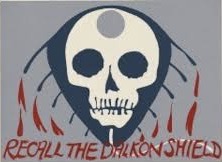
Recall the Dalkon Shield
Later, of course, we learned of the terrible problems caused by the Dalkon Shield. Women suffered from pelvic inflammatory disease. Women were made infertile. Women died. We had been experimental subjects. I joined a class action lawsuit against the manufacturer and eventually received $750, a big sum of money for me then. The manufacturer, A.H. Robins Co., went bankrupt.
Birth control never failed me. I never got pregnant. But I was pissed that it was so difficult. Later, when I sat down to chronicle my torturous, painful attempts to keep from getting pregnant I got angry all over again. Even for a relatively privileged white, college-educated woman, birth control had been arduous.
The People’s Health Care System
In 1973 I left the little college burg of Pullman for the big city of Seattle. But I had carefully laid the foundation for continuing reproductive care in my new home.
The People’s Health Care System, a grassroots response to inadequate health care, acted like a safety net, doctoring the poor and insurance-free. Led by the Black Panther Party, activists in Seattle had created the system, which later included the Women’s Clinic at the YWCA where I volunteered and community-built clinics in the city’s poorer underserved neighborhoods. Country Doctor, one of the first community clinics, is still operating.
Seattle still maintained a merchant seamen’s hospital, part of the U.S. Public Health Service, where medical care was free. Over the years, military dependents, Coast Guard personnel, American Indians and medically indigent citizens were added to the patient load. The USP hospital in Seattle by the 1970s was a center of people’s health care activism.
I arrived in Seattle at an auspicious time for public health care. I had documented well my battle with endometriosis (or whatever it was—I never got a diagnosis except the general term dysmenorrhea). My doctor at the WSU health center had given a written recommendation for a hysterectomy. And I made connections with the network of activist health care providers by volunteering at the Women’s Clinic. They put me in touch with a doctor who agreed to oversee the operation.
The US Public Health Service
The Seattle Public Health Hospital building, an imposing Art Deco edifice built in the 1930s, still crowns Beacon Hill in the south part of the city. I was admitted to a ward reserved for women undergoing reproductive surgery. The huge open room housed perhaps 15 or 20 beds. You could pull a curtain to separate yourself from the others, but I wanted to be part of the action. I made an effort to meet and talk to the other patients, and the atmosphere was friendly. Most of the women were wives of Navy men in for hysterectomies or removal of ovarian cysts. But one young woman told me she was a fisher and was in for a (free) abortion.
The Seattle Public Health Hospital
This was a teaching hospital. Young interns performed many of the surgeries and probably also did mine. I engaged one of the female interns, asking about endometriosis and hormone studies. Her answer chilled me. Few studies existed regarding the female reproductive system, she said. “We just don’t know very much.” At that time women were seldom the subjects of medical studies, which were almost all about men.
As I was being wheeled into surgery and before the drugs took effect, I thought to myself that I should have told my parents about the hysterectomy. I had been told there was a small chance that I wouldn’t wake up from the general anesthesia. What if I were to die? My poor mother! I was her only daughter, a very selfish daughter. But I’d been afraid my mother would try to dissuade me and I hadn’t wanted to have the argument with her. I felt strongly that this was my personal decision.
Early promotion of the public hospital
At that time there was unbelievable pressure on women to have children. Everyone told you you’d change your mind when the maternal instinct kicked in.“Every woman wants children! It’s in your genes. You are a freak if you don’t want children,” we were told repeatedly. Young women were not allowed to have hysterectomies because doctors thought we didn’t know our own minds. At the public health hospital they believed me when I told them I really didn’t want children. I never changed my mind.
Only my uterus was coming out, not ovaries. The interns had explained to me that they would try to do a vaginal hysterectomy. They wouldn’t cut my abdominal muscles unless they had to. But they wouldn’t know until they got in there, so I wouldn’t know until I came out of surgery and the anesthesia wore off. Some of the women in the ward had pretty ugly incisions and of course I had to see them all. As it turned out, the hysterectomy was vaginal, so I was left with no scar.
Because I got an infection (a common thing for younger people, they said), I had to live in the ward for 12 days. In that time I got to know the staff and the patients pretty well. I wanted to know how they funded the surgeries of people like me who were not seamen, fishers or Navy. They told me money came from a fund for special or interesting cases. I thought that was funny since my case seemed pretty routine. Later I learned that :
Hospital Director Dr. Willard P. Johnson had found an obscure regulation in the Public Health Service Act that allowed a director to allocate up to five percent of the care offered at the facility for “special studies.” The provision was intended to allow the admission of patients with rare diseases for the benefit of the medical education program. Dr. Johnson decided to interpret it differently, admitting every person referred from a community clinic as a special studies patient. This decision was the origin of the long-standing affiliation with the region’s community health centers.
The PHS hospital, because of its close relationship with the neighborhood clinics, became the center of the People’s Health Care System in Seattle. It was part of a vital community movement for control of our own health care, which had far reaching effects. Women did gain a measure of control and also won changes in the health care system. The women’s clinics in Seattle, set up to help women access abortion and reproductive care, continued to operate for many years. But our most important community partner, the PHS hospital and its federally funded public health care system, died a tortured death.
Republicans Shut It Down
The Republican assault on health care is not a new phenomenon. When politicians grouse that we can’t afford Medicare for all, they forget that the U.S. once actually had a well-run public health care system. It was destroyed by Ronald Reagan.
The Seattle PHS hospital was part of a network of public health hospitals and federally-funded free clinics all over the country. Soon after he took office Reagan shut down all the public hospitals. In Seattle he had to fight the community as well as Washington’s powerful Senators Warren Magnuson and Henry Jackson, and Seattle’s mayor, but Reagan pretty quickly won the fight.
The assault was unremitting. Between 1980 and 1991, more than 250 community health centers were closed, 309 rural hospitals and 294 urban hospitals were shuttered. Nearly one million Native Americans lost access to Indian Health Service care when eligibility was narrowed. Reagan’s budget cuts hacked at school lunches, Medicaid, the food stamp program, WIC and AFDC. He caused a two percent increase in the poverty rate, and the number of children in poverty rose nearly three percent.
Forty years later it’s clear that the Republicans’ answer to the prospect of socialized medicine is, for a growing number of Americans, no healthcare at all. And the attacks on women’s reproductive care continue with the recent Supreme Court decision allowing religious exemptions for birth control. Soon Roe v. Wade may be overturned and we’ll be back where we started. For a brief window in time American women enjoyed the right to control our bodies and reproduction. Now it looks like that window is closing.
















 tradeswomn musings